


Jean de Dunois

Encyclopedia
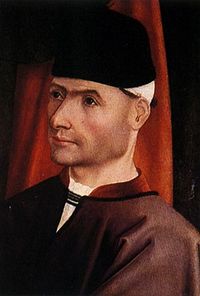
Louis of Valois, Duke of Orléans
Louis I was Duke of Orléans from 1392 to his death. He was also Count of Valois, Duke of Touraine , Count of Blois , Angoulême , Périgord, Dreux, and Soissons....
(Duc d'Orléans 1372-1407) by Mariette d'Enghien
Mariette d'Enghien
-Background:Mariette d'Enghien was the daughter of Jacques d'Enghien, Castellan of Mons, by either his first or his second wife. She was known as the Lady of Wiège and Fagnoles, lands she inherited from her uncle and grandfather....
.
The term "Bastard of Orléans" (bâtard d'Orléans) was the usual name for most of his career. In his era this was a term of respect since it acknowledged him as a first cousin to the king and acting head of a cadet branch
Cadet branch
Cadet branch is a term in genealogy to describe the lineage of the descendants of the younger sons of a monarch or patriarch. In the ruling dynasties and noble families of much of Europe and Asia, the family's major assets – titles, realms, fiefs, property and income – have...
of the royal family during his half-brother's captivity.
His father died in 1407. His legitimate half-brother became an English prisoner at the Battle of Agincourt
Battle of Agincourt
The Battle of Agincourt was a major English victory against a numerically superior French army in the Hundred Years' War. The battle occurred on Friday, 25 October 1415 , near modern-day Azincourt, in northern France...
and remained so for several decades. This left him the only adult male of the house of Orléans.
He joined the civil war in France in the time of Charles VI
Charles VI of France
Charles VI , called the Beloved and the Mad , was the King of France from 1380 to 1422, as a member of the House of Valois. His bouts with madness, which seem to have begun in 1392, led to quarrels among the French royal family, which were exploited by the neighbouring powers of England and Burgundy...
on the side of the Armagnacs, and was captured by the Burgundians
Burgundians
The Burgundians were an East Germanic tribe which may have emigrated from mainland Scandinavia to the island of Bornholm, whose old form in Old Norse still was Burgundarholmr , and from there to mainland Europe...
in 1418. Released in 1420, he entered the service of the Dauphin Charles
Charles VII of France
Charles VII , called the Victorious or the Well-Served , was King of France from 1422 to his death, though he was initially opposed by Henry VI of England, whose Regent, the Duke of Bedford, ruled much of France including the capital, Paris...
, fighting in the Hundred Years' War
Hundred Years' War
The Hundred Years' War was a series of separate wars waged from 1337 to 1453 by the House of Valois and the House of Plantagenet, also known as the House of Anjou, for the French throne, which had become vacant upon the extinction of the senior Capetian line of French kings...
against English forces.
The future count Dunois led the French defenses at the siege of Orléans
Siege of Orléans
The Siege of Orléans marked a turning point in the Hundred Years' War between France and England. This was Joan of Arc's first major military victory and the first major French success to follow the crushing defeat at Agincourt in 1415. The outset of this siege marked the pinnacle of English power...
. Together with Joan of Arc
Joan of Arc
Saint Joan of Arc, nicknamed "The Maid of Orléans" , is a national heroine of France and a Roman Catholic saint. A peasant girl born in eastern France who claimed divine guidance, she led the French army to several important victories during the Hundred Years' War, which paved the way for the...
he relieved the siege. He joined her on the campaigns of 1429 and remained active after her death.
He took part in the coronation of Charles VII and in 1436 he aided in the capture of Paris. He received the county of Dunois from his half brother Charles, duc d'Orléans
Charles, duc d'Orléans
Charles of Valois was Duke of Orléans from 1407, following the murder of his father, Louis I, Duke of Orléans, on the orders of John the Fearless, Duke of Burgundy...
in 1439. Charles VII later made him count of Longueville
Longueville
Longueville may refer to:Places:*Longueville, New South Wales, suburb of Sydney, AustraliaCommunes in France:*Longueville, Calvados, in the Calvados département*Longueville, Lot-et-Garonne, in the Lot-et-Garonne département...
.
Dunois was prominent in the conquest of Guienne and Normandy
Normandy
Normandy is a geographical region corresponding to the former Duchy of Normandy. It is in France.The continental territory covers 30,627 km² and forms the preponderant part of Normandy and roughly 5% of the territory of France. It is divided for administrative purposes into two régions:...
in the final years of the Hundred Years War. He participated in the Praguerie against Charles VII and was a leader of the League of the Public Weal
League of the Public Weal
The League of the Public Weal was an alliance of feudal nobles organized in 1465 in defiance of the centralized authority of King Louis XI of France...
against King Louis XI
Louis XI of France
Louis XI , called the Prudent , was the King of France from 1461 to 1483. He was the son of Charles VII of France and Mary of Anjou, a member of the House of Valois....
in 1465, but each time he regained favor at court.
Media
Dunois appears as a character in the following plays:- Shakespeare's Henry VI Part I
- Friedrich SchillerFriedrich SchillerJohann Christoph Friedrich von Schiller was a German poet, philosopher, historian, and playwright. During the last seventeen years of his life , Schiller struck up a productive, if complicated, friendship with already famous and influential Johann Wolfgang von Goethe...
's Die Jungfrau von Orleans - George Bernard ShawGeorge Bernard ShawGeorge Bernard Shaw was an Irish playwright and a co-founder of the London School of Economics. Although his first profitable writing was music and literary criticism, in which capacity he wrote many highly articulate pieces of journalism, his main talent was for drama, and he wrote more than 60...
's Saint JoanSaint JoanSaint Joan may refer to:People* Joan of Arc * Saint Joan of Portugal * Joan of Lestonnac Theatre* Saint Joan , by George Bernard Shaw* Saint Joan , adaptation directed by Otto Preminger...
He also appears in the following adaptations of Schiller's play:
- Giuseppe VerdiGiuseppe VerdiGiuseppe Fortunino Francesco Verdi was an Italian Romantic composer, mainly of opera. He was one of the most influential composers of the 19th century...
's opera Giovanna d'ArcoGiovanna d'ArcoGiovanna d'Arco is an operatic dramma lirico with a prologue and three acts by Giuseppe Verdi to an Italian libretto by Temistocle Solera.... - Tchaikovsky's opera The Maid of OrleansThe Maid of OrleansThe Maid of Orleans is an opera in 4 acts, 6 scenes, by Pyotr Ilyich Tchaikovsky. It was composed during 1878–1879 to a Russian libretto by the composer, based on several sources: Friedrich Schiller’s The Maid of Orleans as translated by Vasily Zhukovsky; Jules Barbier’s Jeanne d’Arc ; Auguste...
He was also portrayed in the Luc Besson
Luc Besson
Luc Besson is a French film director, writer, and producer. He is the creator of EuropaCorp film company. He has been involved with over 50 films, spanning 26 years, as writer, director, and/or producer.-Early life:...
film The Messenger: The Story of Joan of Arc
The Messenger: The Story of Joan of Arc
The Messenger: The Story of Joan of Arc is a French/American historical drama film directed by Luc Besson. The screenplay was written by Besson and Andrew Birkin, and the original music score was composed by Éric Serra....
.
Titles
- Lord of Valbonais (1421–1468)
- Count of Mortain (1424–1425)
- Viscount of Saint-Sauveur
- Count of PérigordCount of PérigordCount of Périgord is a noble title in the peerage of France, first created for Emenon, who was also Count of Poitiers and Count of Angoulême. Most likely, the title was bestowed on Emenon in 845 by Pepin I of Aquitaine as a reward for Emenon fighting with Pepin against Louis the Pious...
(1430–1439) - Count of DunoisCount of DunoisThe County of Dunois is an area occupying the area surrounding Orleans, France. Created in 1439, it combined with Comte de Longueville in 1443....
(1439–1468) - Count of Longueville (1443–1468)
Marriages and progeny
He married Marie Louvet (d. 1426) in April 1422 at BourgesBourges
Bourges is a city in central France on the Yèvre river. It is the capital of the department of Cher and also was the capital of the former province of Berry.-History:...
, by whom he had no children.
He married a second time to Marie of Harcourt (d. 1464), Lady of Parthenay 26 October 1439 and had two children:
- François d'Orléans-Longueville (1447–1491), Count of Dunois, Tancarville, Longueville, and Montgomery, Baron of Varenguebec, Viscount of Melun, Chamberlain of France, Governor of Normandy and the Dauphiné, Constable and Chamberlain of Normandy, married 2 July 1466 to Agnès de Savoie (1445–1508)
- Catherine d'Orléans (1449–1501), married 14 May 1468 to John II of Nassau-Saarbrücken (1430–1472), Count of Roucy