

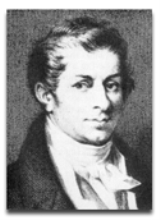
Jean-Baptiste Say

Encyclopedia
Jean-Baptiste Say was a French
economist
and businessman. He had classically liberal views and argued in favor of competition
, free trade
, and lifting restraints on business. He is best known due to Say's Law
, which is named after him and at times credited to him, but while he discussed and popularized it, he did not originate it.
. His father, Jean-Etienne Etienne Say, was of Protestant family which had moved from Nîmes
to Geneva
for some time in consequence of the revocation of the Edict of Nantes
. (His brother Louis Auguste
(1774–1840) was also an economist). Say was intended to follow a commercial career, and was sent, with his brother Horace, to England
: here he lived first in Croydon
, in the house of a merchant, to whom he acted as clerk, and afterwards in London
, where he was in the service of another employer. When, on the death of the latter, he returned to France
, he was employed in the office of a life assurance company directed by Étienne Clavière
.
Say's first literary attempt was a pamphlet on the liberty of the press, published in 1789. He later worked under Mirabeau
on the Courrier de Provence. In 1792 he took part as a volunteer in the campaign of Champagne; in 1793 he assumed, in conformity with the Revolutionary fashion, the pre-name of Atticus, and became secretary to Clavière, then finance minister.
In 1793 Say married Mlle Deloche, daughter of a former lawyer. From 1794 to 1800 Say edited a periodical entitled La Decade philosophique, litteraire, et politique, in which he expounded the doctrines of Adam Smith
. He had by this time established his reputation as a publicist
, and, when the consular government was established in 1799, he was selected as one of the hundred members of the tribunate, resigning the direction of the Decade.
In 1800 he published in Olbie, ou essai sur les moyens de reformer les moeurs d'une nation. In 1803 appeared Say's principal work, the Traité d'économie politique ou simple exposition de la manière dont se forment, se distribuent et se composent les richesses. In 1804, having shown his unwillingness to sacrifice his convictions for the purpose of furthering the designs of Napoleon, he was removed from the office of tribune. He then turned to industrial pursuits, and, having made himself acquainted with the processes of the cotton
manufacture, founded at Auchy, in the Pas de Calais, a spinning-mill which employed four or five hundred persons, principally women and children. He devoted his leisure to the improvement of his economic treatise, which had for some time been out of print, but which the censorship
did not permit him to republish.
In 1814 he "availed himself" (to use his own words) of the sort of liberty arising from the entrance of the allied powers into France to bring out a second edition of the work, dedicated to the emperor Alexander I of Russia
, who had professed himself his pupil. In the same year the French government sent him to study the economic condition of the United Kingdom
. The results of his observations appeared in A tract de l'Angleterre et des Anglais.
A third edition of the Traite appeared in 1817. A chair of industrial economy was founded for him in 1819 at the Conservatoire des Arts et Metiers. In 1831 he was made professor of political economy at the Collège de France
. Say in 1828–1830 published his Cours complet d'economie politique pratique. In 1826, he was elected a foreign member of the Royal Swedish Academy of Sciences
.
In his later years Say became subject to attacks of nervous apoplexy
. He lost his wife in January 1830; and from that time his health constantly declined.
When the revolution of that year broke out, he was named a member of the council-general of the department of the Seine
, but found it necessary to resign.
He died in Paris
on 15 November 1832, and is buried in the cemetery of Invalides.
(or Say's Law of Markets), often summarised as
The exact phrase "supply creates its own demand" was coined by John Maynard Keynes
, who criticized it, but this characterization is disputed as a misrepresentation by some advocates of Say's law. Similar sentiments, though different wordings, appear in the work of J. S. Mill (1848) and his father, James Mill
(1808). The Scottish classical economist James Mill
restates Say's Law in 1808, writing that "production of commodities creates, and is the one and universal cause which creates a market for the commodities produced."
In Say's language, "products are paid for with products" (1803: p. 153) or "a glut can take place only when there are too many means of production applied to one kind of product and not enough to another" (1803: p. 178-9). Explaining his point at length, he wrote that:
He also wrote, that it is not the abundance of money but the abundance of other products in general that facilitates sales:
Say's Law may also have been culled from Ecclesiastes
5:11 — "As goods increase, so do those who consume them. And what benefit are they to the owner except to feast his eyes on them?" (NIV
) Say's Law has been considered by John Kenneth Galbraith
as the most distinguished example of the stability of economic ideas, including when they are wrong.
"To encourage whale-hunting, the English government prohibits vegetable oils which we burn in France in draught-lamps. What results from this? That one of these lamps, which costs a Frenchmen 60 francs per year, costs an Englishman 150 francs. The intention, some say, is to support the navy and to multiply the number of sailors, that each lamp nozzle costs Englishmen 90 more francs than in France. In this case, it is to multiply the number of sailors by the means of a trade that generates losses: it would be better to multiply them by a lucrative trade."
"A hard working laborer, I was told, fancied working by candlelight. He had calculated that, during his vigil, he burned a 4-penny candle, earning 8 pennies by his work. A tax on tallows and another on the manufacture of the candles increased by 5 pennies the cost of his luminary, which became thus more expensive than the value of the product that it could shed light upon. From then on, as soon as night fell, the workman remained idle; he lost the 4 pennies which his work could obtain him, and without the tax service perceiving anything out of this production. Such a loss must be multiplied by the number of the workmen in a city and by the number of the days of the year."
On property rights:
"There is no security of property, where a despotic authority can possess itself of the property of the subject against his consent. Neither is there such security, where the consent is merely nominal and delusive."
"The property a man has in his own industry, is violated, whenever he is forbidden the free exercise of his faculties or talents, except insomuch as they would interfere with the rights of third parties."
-Jean-Baptiste Say, A Treatise on Political Economy, 1803
French people
The French are a nation that share a common French culture and speak the French language as a mother tongue. Historically, the French population are descended from peoples of Celtic, Latin and Germanic origin, and are today a mixture of several ethnic groups...
economist
Economics
Economics is the social science that analyzes the production, distribution, and consumption of goods and services. The term economics comes from the Ancient Greek from + , hence "rules of the house"...
and businessman. He had classically liberal views and argued in favor of competition
Competition
Competition is a contest between individuals, groups, animals, etc. for territory, a niche, or a location of resources. It arises whenever two and only two strive for a goal which cannot be shared. Competition occurs naturally between living organisms which co-exist in the same environment. For...
, free trade
Free trade
Under a free trade policy, prices emerge from supply and demand, and are the sole determinant of resource allocation. 'Free' trade differs from other forms of trade policy where the allocation of goods and services among trading countries are determined by price strategies that may differ from...
, and lifting restraints on business. He is best known due to Say's Law
Say's law
Say's law, or the law of market, is an economic principle of classical economics named after the French businessman and economist Jean-Baptiste Say , who stated that "products are paid for with products" and "a glut can take place only when there are too many means of production applied to one kind...
, which is named after him and at times credited to him, but while he discussed and popularized it, he did not originate it.
Biography
J. B. Say was born in LyonLyon
Lyon , is a city in east-central France in the Rhône-Alpes region, situated between Paris and Marseille. Lyon is located at from Paris, from Marseille, from Geneva, from Turin, and from Barcelona. The residents of the city are called Lyonnais....
. His father, Jean-Etienne Etienne Say, was of Protestant family which had moved from Nîmes
Nîmes
Nîmes is the capital of the Gard department in the Languedoc-Roussillon region in southern France. Nîmes has a rich history, dating back to the Roman Empire, and is a popular tourist destination.-History:...
to Geneva
Geneva
Geneva In the national languages of Switzerland the city is known as Genf , Ginevra and Genevra is the second-most-populous city in Switzerland and is the most populous city of Romandie, the French-speaking part of Switzerland...
for some time in consequence of the revocation of the Edict of Nantes
Edict of Nantes
The Edict of Nantes, issued on 13 April 1598, by Henry IV of France, granted the Calvinist Protestants of France substantial rights in a nation still considered essentially Catholic. In the Edict, Henry aimed primarily to promote civil unity...
. (His brother Louis Auguste
Louis Auguste Say
Louis Auguste Say, was a businessman, founding to large sugar refineries in Nantes and Paris, an economist and brother to the economist Jean-Baptiste Say...
(1774–1840) was also an economist). Say was intended to follow a commercial career, and was sent, with his brother Horace, to England
England
England is a country that is part of the United Kingdom. It shares land borders with Scotland to the north and Wales to the west; the Irish Sea is to the north west, the Celtic Sea to the south west, with the North Sea to the east and the English Channel to the south separating it from continental...
: here he lived first in Croydon
Croydon
Croydon is a town in South London, England, located within the London Borough of Croydon to which it gives its name. It is situated south of Charing Cross...
, in the house of a merchant, to whom he acted as clerk, and afterwards in London
London
London is the capital city of :England and the :United Kingdom, the largest metropolitan area in the United Kingdom, and the largest urban zone in the European Union by most measures. Located on the River Thames, London has been a major settlement for two millennia, its history going back to its...
, where he was in the service of another employer. When, on the death of the latter, he returned to France
France
The French Republic , The French Republic , The French Republic , (commonly known as France , is a unitary semi-presidential republic in Western Europe with several overseas territories and islands located on other continents and in the Indian, Pacific, and Atlantic oceans. Metropolitan France...
, he was employed in the office of a life assurance company directed by Étienne Clavière
Étienne Clavière
Étienne Clavière was a Swiss-born French financier and politician of the French Revolution.-Geneva and London:...
.
Say's first literary attempt was a pamphlet on the liberty of the press, published in 1789. He later worked under Mirabeau
Mirabeau
Mirabeau can refer to:People* Victor de Riqueti, marquis de Mirabeau, a French physiocrat and economist.* Honoré Gabriel Riqueti, comte de Mirabeau, renowned orator, a figure in the French Revolution and son of Victor....
on the Courrier de Provence. In 1792 he took part as a volunteer in the campaign of Champagne; in 1793 he assumed, in conformity with the Revolutionary fashion, the pre-name of Atticus, and became secretary to Clavière, then finance minister.
In 1793 Say married Mlle Deloche, daughter of a former lawyer. From 1794 to 1800 Say edited a periodical entitled La Decade philosophique, litteraire, et politique, in which he expounded the doctrines of Adam Smith
Adam Smith
Adam Smith was a Scottish social philosopher and a pioneer of political economy. One of the key figures of the Scottish Enlightenment, Smith is the author of The Theory of Moral Sentiments and An Inquiry into the Nature and Causes of the Wealth of Nations...
. He had by this time established his reputation as a publicist
Publicist
A publicist is a person whose job is to generate and manage publicity for a public figure, especially a celebrity, a business, or for a work such as a book, film or album...
, and, when the consular government was established in 1799, he was selected as one of the hundred members of the tribunate, resigning the direction of the Decade.
In 1800 he published in Olbie, ou essai sur les moyens de reformer les moeurs d'une nation. In 1803 appeared Say's principal work, the Traité d'économie politique ou simple exposition de la manière dont se forment, se distribuent et se composent les richesses. In 1804, having shown his unwillingness to sacrifice his convictions for the purpose of furthering the designs of Napoleon, he was removed from the office of tribune. He then turned to industrial pursuits, and, having made himself acquainted with the processes of the cotton
Cotton
Cotton is a soft, fluffy staple fiber that grows in a boll, or protective capsule, around the seeds of cotton plants of the genus Gossypium. The fiber is almost pure cellulose. The botanical purpose of cotton fiber is to aid in seed dispersal....
manufacture, founded at Auchy, in the Pas de Calais, a spinning-mill which employed four or five hundred persons, principally women and children. He devoted his leisure to the improvement of his economic treatise, which had for some time been out of print, but which the censorship
Censorship
thumb|[[Book burning]] following the [[1973 Chilean coup d'état|1973 coup]] that installed the [[Military government of Chile |Pinochet regime]] in Chile...
did not permit him to republish.
In 1814 he "availed himself" (to use his own words) of the sort of liberty arising from the entrance of the allied powers into France to bring out a second edition of the work, dedicated to the emperor Alexander I of Russia
Alexander I of Russia
Alexander I of Russia , served as Emperor of Russia from 23 March 1801 to 1 December 1825 and the first Russian King of Poland from 1815 to 1825. He was also the first Russian Grand Duke of Finland and Lithuania....
, who had professed himself his pupil. In the same year the French government sent him to study the economic condition of the United Kingdom
United Kingdom
The United Kingdom of Great Britain and Northern IrelandIn the United Kingdom and Dependencies, other languages have been officially recognised as legitimate autochthonous languages under the European Charter for Regional or Minority Languages...
. The results of his observations appeared in A tract de l'Angleterre et des Anglais.
A third edition of the Traite appeared in 1817. A chair of industrial economy was founded for him in 1819 at the Conservatoire des Arts et Metiers. In 1831 he was made professor of political economy at the Collège de France
Collège de France
The Collège de France is a higher education and research establishment located in Paris, France, in the 5th arrondissement, or Latin Quarter, across the street from the historical campus of La Sorbonne at the intersection of Rue Saint-Jacques and Rue des Écoles...
. Say in 1828–1830 published his Cours complet d'economie politique pratique. In 1826, he was elected a foreign member of the Royal Swedish Academy of Sciences
Royal Swedish Academy of Sciences
The Royal Swedish Academy of Sciences or Kungliga Vetenskapsakademien is one of the Royal Academies of Sweden. The Academy is an independent, non-governmental scientific organization which acts to promote the sciences, primarily the natural sciences and mathematics.The Academy was founded on 2...
.
In his later years Say became subject to attacks of nervous apoplexy
Apoplexy
Apoplexy is a medical term, which can be used to describe 'bleeding' in a stroke . Without further specification, it is rather outdated in use. Today it is used only for specific conditions, such as pituitary apoplexy and ovarian apoplexy. In common speech, it is used non-medically to mean a state...
. He lost his wife in January 1830; and from that time his health constantly declined.
When the revolution of that year broke out, he was named a member of the council-general of the department of the Seine
Seine
The Seine is a -long river and an important commercial waterway within the Paris Basin in the north of France. It rises at Saint-Seine near Dijon in northeastern France in the Langres plateau, flowing through Paris and into the English Channel at Le Havre . It is navigable by ocean-going vessels...
, but found it necessary to resign.
He died in Paris
Paris
Paris is the capital and largest city in France, situated on the river Seine, in northern France, at the heart of the Île-de-France region...
on 15 November 1832, and is buried in the cemetery of Invalides.
Say's Law
He is well known for Say's LawSay's law
Say's law, or the law of market, is an economic principle of classical economics named after the French businessman and economist Jean-Baptiste Say , who stated that "products are paid for with products" and "a glut can take place only when there are too many means of production applied to one kind...
(or Say's Law of Markets), often summarised as
- "Aggregate supplyAggregate supplyIn economics, aggregate supply is the total supply of goods and services that firms in a national economy plan on selling during a specific time period...
creates its own aggregate demandAggregate demandIn macroeconomics, aggregate demand is the total demand for final goods and services in the economy at a given time and price level. It is the amount of goods and services in the economy that will be purchased at all possible price levels. This is the demand for the gross domestic product of a...
", - "Supply creates its own demandSupply creates its own demand"Supply creates its own demand" is the formulation of Say's law by John Maynard Keynes, and is considered by him one of the defining characteristics of classical economics...
", - "Supply constitutes its own demand",
- "If you build it, they will come",
- "Inherent in supply is the wherewithal for its own consumption". (Direct translation from French Traité d'économie politique.)
The exact phrase "supply creates its own demand" was coined by John Maynard Keynes
John Maynard Keynes
John Maynard Keynes, Baron Keynes of Tilton, CB FBA , was a British economist whose ideas have profoundly affected the theory and practice of modern macroeconomics, as well as the economic policies of governments...
, who criticized it, but this characterization is disputed as a misrepresentation by some advocates of Say's law. Similar sentiments, though different wordings, appear in the work of J. S. Mill (1848) and his father, James Mill
James Mill
James Mill was a Scottish historian, economist, political theorist, and philosopher. He was a founder of classical economics, together with David Ricardo, and the father of influential philosopher of classical liberalism, John Stuart Mill.-Life:Mill was born at Northwater Bridge, in the parish of...
(1808). The Scottish classical economist James Mill
James Mill
James Mill was a Scottish historian, economist, political theorist, and philosopher. He was a founder of classical economics, together with David Ricardo, and the father of influential philosopher of classical liberalism, John Stuart Mill.-Life:Mill was born at Northwater Bridge, in the parish of...
restates Say's Law in 1808, writing that "production of commodities creates, and is the one and universal cause which creates a market for the commodities produced."
In Say's language, "products are paid for with products" (1803: p. 153) or "a glut can take place only when there are too many means of production applied to one kind of product and not enough to another" (1803: p. 178-9). Explaining his point at length, he wrote that:
It is worthwhile to remark that a product is no sooner created than it, from that instant, affords a market for other products to the full extent of its own value. When the producer has put the finishing hand to his product, he is most anxious to sell it immediately, lest its value should diminish in his hands. Nor is he less anxious to dispose of the money he may get for it; for the value of money is also perishable. But the only way of getting rid of money is in the purchase of some product or other. Thus the mere circumstance of creation of one product immediately opens a vent for other products. (J.B. Say, 1803: p.138-9)
He also wrote, that it is not the abundance of money but the abundance of other products in general that facilitates sales:
Money performs but a momentary function in this double exchange; and when the transaction is finally closed, it will always be found, that one kind of commodity has been exchanged for another.
Say's Law may also have been culled from Ecclesiastes
Ecclesiastes
The Book of Ecclesiastes, called , is a book of the Hebrew Bible. The English name derives from the Greek translation of the Hebrew title.The main speaker in the book, identified by the name or title Qoheleth , introduces himself as "son of David, king in Jerusalem." The work consists of personal...
5:11 — "As goods increase, so do those who consume them. And what benefit are they to the owner except to feast his eyes on them?" (NIV
New International Version
The New International Version is an English translation of the Christian Bible. Published by Zondervan in the United States and by Hodder & Stoughton in the UK, it has become one of the most popular modern translations in history.-History:...
) Say's Law has been considered by John Kenneth Galbraith
John Kenneth Galbraith
John Kenneth "Ken" Galbraith , OC was a Canadian-American economist. He was a Keynesian and an institutionalist, a leading proponent of 20th-century American liberalism...
as the most distinguished example of the stability of economic ideas, including when they are wrong.
Quotes
On taxes:"To encourage whale-hunting, the English government prohibits vegetable oils which we burn in France in draught-lamps. What results from this? That one of these lamps, which costs a Frenchmen 60 francs per year, costs an Englishman 150 francs. The intention, some say, is to support the navy and to multiply the number of sailors, that each lamp nozzle costs Englishmen 90 more francs than in France. In this case, it is to multiply the number of sailors by the means of a trade that generates losses: it would be better to multiply them by a lucrative trade."
"A hard working laborer, I was told, fancied working by candlelight. He had calculated that, during his vigil, he burned a 4-penny candle, earning 8 pennies by his work. A tax on tallows and another on the manufacture of the candles increased by 5 pennies the cost of his luminary, which became thus more expensive than the value of the product that it could shed light upon. From then on, as soon as night fell, the workman remained idle; he lost the 4 pennies which his work could obtain him, and without the tax service perceiving anything out of this production. Such a loss must be multiplied by the number of the workmen in a city and by the number of the days of the year."
On property rights:
"There is no security of property, where a despotic authority can possess itself of the property of the subject against his consent. Neither is there such security, where the consent is merely nominal and delusive."
"The property a man has in his own industry, is violated, whenever he is forbidden the free exercise of his faculties or talents, except insomuch as they would interfere with the rights of third parties."
-Jean-Baptiste Say, A Treatise on Political Economy, 1803
External links
- Say's Law and Economic Growth
- Bio at the Library of Economics and Liberty
- Nature of Things, by Jean-Baptiste Say. In Lalor's Cyclopedia at the Library of Economics and Liberty.
- Federal Reserve Bank of Dallas Economic Insights article (Volume 11, Number 1)
- A Treatise on Political Economy, by Jean-Baptiste Say at McMaster University Archive for the History of Economic Thought
- Letters to Malthus on Several Subjects of Political Economy (1821) at McMaster University Archive for the History of Economic Thought