

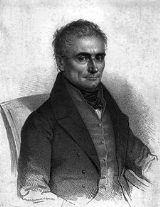
Jan Evangelista Purkyne

Encyclopedia
Jan Evangelista Purkyně (ˈjan ˈɛvaŋɡɛlɪsta ˈpurkɪɲɛ; also written Johannes Evangelist Purkinje) (17 December 1787 - 28 July 1869) was a Czech anatomist and physiologist
. He was one of the best known scientists of his time. His son was the painter Karel Purkyně
. Such was his fame that when people from outside Europe wrote letters to him, all that they needed to put as the address was "Purkyně, Europe".
He is buried in the Czech National Cemetery in Vyšehrad
, Prague
, Czech Republic.
). In 1818 he graduated from Charles University in Prague with a degree in medicine, where he was appointed a Professor of Physiology. He discovered the Purkinje effect
whereby as light intensity decreases, red objects seems to fade faster than blue objects of the same brightness. He published two volumes Observations and Experiments Investigating the Physiology of Senses and New Subjective Reports about Vision, which contributed to the emergence of the science of experimental psychology
. He created the world's first Department of Physiology at the University of Breslau in Prussia
in 1839 and the world's first official physiology laboratory in 1842. Here he was a founder of the Literary-Slav Society.
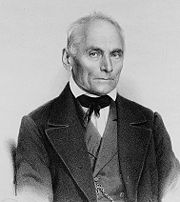 He is best known for his 1837 discovery of Purkinje cell
s, large neuron
s with many branching dendrite
s found in the cerebellum
. He is also known for his discovery, in 1839 of Purkinje fibres, the fibrous tissue that conducts electrical impulses from the atrioventricular node
to all parts of the ventricles of the heart
. Other discoveries include Purkinje images
, reflections of objects from structures of the eye, and the Purkinje shift
, the change in the brightness of red and blue colours as light intensity decreases gradually at dusk. Purkyně also introduced the scientific terms plasma
(for the component of blood left when the suspended cells have been removed) and protoplasm
(the substance found inside cells).
Purkyně was the first to use a microtome
to make wafer thin slices of tissue for microscopic examination and was among the first to use an improved version of the compound microscope. He described the effects of camphor
, opium
, belladonna and turpentine
on humans in 1829. He also experimented with nutmeg
that same year, when he "washed down three ground nutmegs with a glass of wine and experienced headaches, nausea, euphoria, and hallucinations that lasted several days, which remain a good description of today's average nutmeg binge." Purkyně discovered sweat glands
in 1833 and published a thesis that recognised 9 principal configuration groups of fingerprint
s in 1823.
Purkyně also recognised the importance of the work of Eadweard Muybridge
. Purkyně constructed his own version of zoetrope
which he called forolyt. He put nine photos of him shot from various sides to the disc and entertained his grandchildren by showing them how he, an old and famous professor, is turning around at great speed.
(1994 - 2004). Today a university in Ústí nad Labem
bears his name: Jan Evangelista Purkyně University in Ústí nad Labem
(Univerzita Jana Evangelisty Purkyně v Ústí nad Labem).
The crater Purkyně
on the Moon is named after him, as is the asteroid
3701 Purkyně
.
Physiology
Physiology is the science of the function of living systems. This includes how organisms, organ systems, organs, cells, and bio-molecules carry out the chemical or physical functions that exist in a living system. The highest honor awarded in physiology is the Nobel Prize in Physiology or...
. He was one of the best known scientists of his time. His son was the painter Karel Purkyně
Karel Purkyně
Karel Purkyně was a Czech painter. He was one of the most prominent proponents of realism in Czech art in the second half of the 19th century. He was the son of the physiologist and anatomist Jan Evangelista Purkyně, and developed an interest in art while still young...
. Such was his fame that when people from outside Europe wrote letters to him, all that they needed to put as the address was "Purkyně, Europe".
He is buried in the Czech National Cemetery in Vyšehrad
Vyšehrad
Vyšehrad is a castle located in the city of Prague, Czech Republic. It was probably built in the 10th century, on a hill over the Vltava River...
, Prague
Prague
Prague is the capital and largest city of the Czech Republic. Situated in the north-west of the country on the Vltava river, the city is home to about 1.3 million people, while its metropolitan area is estimated to have a population of over 2.3 million...
, Czech Republic.
Biography
Purkyně was born in Bohemia (then part of the Austrian monarchy, now Czech RepublicCzech Republic
The Czech Republic is a landlocked country in Central Europe. The country is bordered by Poland to the northeast, Slovakia to the east, Austria to the south, and Germany to the west and northwest....
). In 1818 he graduated from Charles University in Prague with a degree in medicine, where he was appointed a Professor of Physiology. He discovered the Purkinje effect
Purkinje effect
The Purkinje effect is the tendency for the peak luminance sensitivity of the human eye to shift toward the blue end of the color spectrum at low illumination levels.This effect introduces a difference in color contrast under different levels of...
whereby as light intensity decreases, red objects seems to fade faster than blue objects of the same brightness. He published two volumes Observations and Experiments Investigating the Physiology of Senses and New Subjective Reports about Vision, which contributed to the emergence of the science of experimental psychology
Experimental psychology
Experimental psychology is a methodological approach, rather than a subject, and encompasses varied fields within psychology. Experimental psychologists have traditionally conducted research, published articles, and taught classes on neuroscience, developmental psychology, sensation, perception,...
. He created the world's first Department of Physiology at the University of Breslau in Prussia
Prussia
Prussia was a German kingdom and historic state originating out of the Duchy of Prussia and the Margraviate of Brandenburg. For centuries, the House of Hohenzollern ruled Prussia, successfully expanding its size by way of an unusually well-organized and effective army. Prussia shaped the history...
in 1839 and the world's first official physiology laboratory in 1842. Here he was a founder of the Literary-Slav Society.
Purkinje cell
For the cells of the electrical conduction system of the heart, see Purkinje fibersPurkinje cells, or Purkinje neurons , are a class of GABAergic neurons located in the cerebellar cortex...
s, large neuron
Neuron
A neuron is an electrically excitable cell that processes and transmits information by electrical and chemical signaling. Chemical signaling occurs via synapses, specialized connections with other cells. Neurons connect to each other to form networks. Neurons are the core components of the nervous...
s with many branching dendrite
Dendrite
Dendrites are the branched projections of a neuron that act to conduct the electrochemical stimulation received from other neural cells to the cell body, or soma, of the neuron from which the dendrites project...
s found in the cerebellum
Cerebellum
The cerebellum is a region of the brain that plays an important role in motor control. It may also be involved in some cognitive functions such as attention and language, and in regulating fear and pleasure responses, but its movement-related functions are the most solidly established...
. He is also known for his discovery, in 1839 of Purkinje fibres, the fibrous tissue that conducts electrical impulses from the atrioventricular node
Atrioventricular node
The atrioventricular node is a part of the electrical control system of the heart that coordinates heart rate. It electrically connects atrial and ventricular chambers...
to all parts of the ventricles of the heart
Ventricle (heart)
In the heart, a ventricle is one of two large chambers that collect and expel blood received from an atrium towards the peripheral beds within the body and lungs. The Atria primes the Pump...
. Other discoveries include Purkinje images
Purkinje images
Purkinje images are reflections of objects from structure of the eye. They are also known as Purkinje reflexes and as Purkinje-Sanson images. There are at least four Purkinje images that are visible on looking at an eye. The first Purkinje image is the reflection from the outer surface of the cornea...
, reflections of objects from structures of the eye, and the Purkinje shift
Purkinje effect
The Purkinje effect is the tendency for the peak luminance sensitivity of the human eye to shift toward the blue end of the color spectrum at low illumination levels.This effect introduces a difference in color contrast under different levels of...
, the change in the brightness of red and blue colours as light intensity decreases gradually at dusk. Purkyně also introduced the scientific terms plasma
Blood plasma
Blood plasma is the straw-colored liquid component of blood in which the blood cells in whole blood are normally suspended. It makes up about 55% of the total blood volume. It is the intravascular fluid part of extracellular fluid...
(for the component of blood left when the suspended cells have been removed) and protoplasm
Protoplasm
Protoplasm is the living contents of a cell that is surrounded by a plasma membrane. It is a general term of the Cytoplasm . Protoplasm is composed of a mixture of small molecules such as ions, amino acids, monosaccharides and water, and macromolecules such as nucleic acids, proteins, lipids and...
(the substance found inside cells).
Purkyně was the first to use a microtome
Microtome
A microtome is a sectioning instrument that allows for the cutting of extremely thin slices of material, known as sections. Microtomes are an important device in microscopy preparation, allowing for the preparation of samples for observation under transmitted light or electron radiation...
to make wafer thin slices of tissue for microscopic examination and was among the first to use an improved version of the compound microscope. He described the effects of camphor
Camphor
Camphor is a waxy, white or transparent solid with a strong, aromatic odor. It is a terpenoid with the chemical formula C10H16O. It is found in wood of the camphor laurel , a large evergreen tree found in Asia and also of Dryobalanops aromatica, a giant of the Bornean forests...
, opium
Opium
Opium is the dried latex obtained from the opium poppy . Opium contains up to 12% morphine, an alkaloid, which is frequently processed chemically to produce heroin for the illegal drug trade. The latex also includes codeine and non-narcotic alkaloids such as papaverine, thebaine and noscapine...
, belladonna and turpentine
Turpentine
Turpentine is a fluid obtained by the distillation of resin obtained from trees, mainly pine trees. It is composed of terpenes, mainly the monoterpenes alpha-pinene and beta-pinene...
on humans in 1829. He also experimented with nutmeg
Nutmeg
The nutmeg tree is any of several species of trees in genus Myristica. The most important commercial species is Myristica fragrans, an evergreen tree indigenous to the Banda Islands in the Moluccas of Indonesia...
that same year, when he "washed down three ground nutmegs with a glass of wine and experienced headaches, nausea, euphoria, and hallucinations that lasted several days, which remain a good description of today's average nutmeg binge." Purkyně discovered sweat glands
Sweating
Perspiration is the production of a fluid consisting primarily of water as well as various dissolved solids , that is excreted by the sweat glands in the skin of mammals...
in 1833 and published a thesis that recognised 9 principal configuration groups of fingerprint
Fingerprint
A fingerprint in its narrow sense is an impression left by the friction ridges of a human finger. In a wider use of the term, fingerprints are the traces of an impression from the friction ridges of any part of a human hand. A print from the foot can also leave an impression of friction ridges...
s in 1823.
Purkyně also recognised the importance of the work of Eadweard Muybridge
Eadweard Muybridge
Eadweard J. Muybridge was an English photographer who spent much of his life in the United States. He is known for his pioneering work on animal locomotion which used multiple cameras to capture motion, and his zoopraxiscope, a device for projecting motion pictures that pre-dated the flexible...
. Purkyně constructed his own version of zoetrope
Zoetrope
A zoetrope is a device that produces an illusion of action from a rapid succession of static pictures. The term zoetrope is from the Greek words "ζωή – zoe", "life" and τρόπος – tropos, "turn". It may be taken to mean "wheel of life"....
which he called forolyt. He put nine photos of him shot from various sides to the disc and entertained his grandchildren by showing them how he, an old and famous professor, is turning around at great speed.
Legacy
The Masaryk University in Brno, Czech Republic, bore his name from 1960 to 1990, as did the standalone military medical academy in Hradec KrálovéHradec Králové
Hradec Králové is a city of the Czech Republic, in the Hradec Králové Region of Bohemia. The city's economy is based on food-processing technology, photochemical, and electronics manufacture. Traditional industries include musical instrument manufacturing – the best known being PETROF pianos...
(1994 - 2004). Today a university in Ústí nad Labem
Ústí nad Labem
Ústí nad Labem is a city of the Czech Republic, in the Ústí nad Labem Region. The city is the 7th-most populous in the country.Ústí is situated in a mountainous district at the confluence of the Bílina and the Elbe Rivers, and, besides being an active river port, is an important railway junction...
bears his name: Jan Evangelista Purkyně University in Ústí nad Labem
Jan Evangelista Purkyne University in Ústí nad Labem
Jan Evangelista Purkyně University in Ústí nad Labem is a public university in the Czech Republic. The institution was established on 28 September, 1991. It bears the name of famous Czech scientist Jan Evangelista Purkyně who was born in nearby Libochovice.-History:Originally, in 1954, the...
(Univerzita Jana Evangelisty Purkyně v Ústí nad Labem).
The crater Purkyně
Purkyne (crater)
Purkyně is a lunar impact crater that lies just beyond the eastern limb of the Moon, on the far side from the Earth. When conditions of libration and sunlight allow, this crater can be viewed from the Earth, although it is seen from a very low angle and not much detail can be seen...
on the Moon is named after him, as is the asteroid
Asteroid
Asteroids are a class of small Solar System bodies in orbit around the Sun. They have also been called planetoids, especially the larger ones...
3701 Purkyně
3701 Purkyne
3701 Purkyně is a main belt asteroid with an orbital period of 1709.9521256 days . The asteroid was discovered on February 20, 1985.-References:...
.
Sources
- Ludvík SoučekLudvík SoucekLudvík Souček was probably the best-known author of science fiction in Czechoslovakia.He graduated at Medical faculty of Charles University in Prague as a dentist in 1951 and started his professional life at the dental clinic as an assistant. Later, he joined the military and became an officer...
, Jak se světlo naučilo kreslit (How the light learned to draw), SNDK, PraguePraguePrague is the capital and largest city of the Czech Republic. Situated in the north-west of the country on the Vltava river, the city is home to about 1.3 million people, while its metropolitan area is estimated to have a population of over 2.3 million...
, 1963, p.106-7.