
All Topics  
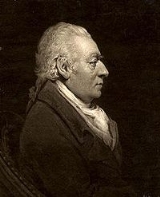
James Wyatt

 
James Wyatt

   Email Print
   Bookmark   Link


James Wyatt


James Wyatt RA
Royal Academy

The Royal Academy of Arts is an art institution based in Burlington House on Piccadilly, London, England. As an academy, it functions to encourage British art, and has a membership of practising artists....
 (August 3 1746 – September 4 1813), was an English
England

native_name =|conventional_long_name = England|common_name = England|image_flag = Flag of England.svg|image_coat = England COA.svg|symbol_type = Royal Coat of Arms...
 architect
Architect

An architect is trained and licenced in planning and designing buildings, and participates in supervising the construction of a building. Etymologically, architect derives from the Latin architectus, itself derived from the Greek arkhitekton , i.e....
, a rival of Robert Adam
Robert Adam

Robert Adam was a Scotland neoclassicism architect, interior designer and furniture designer. He was the son of William Adam , Scotland's foremost architect of the time, and trained under him....
 in the neoclassical
Neoclassicism

Neoclassicism is the name given to quite distinct Cultural movement in the Decorative art and visual arts, literature, theatre, music, and architecture that draw upon Western classical art and culture ....
 style, who far outdid Adam in his work in the neo-Gothic style.

t spent six years in Italy
Italy

Italy , officially the Italian Republic , is a country located on the Italian Peninsula in Southern Europe and on the two largest islands in the Mediterranean Sea, Sicily and Sardinia....
, 1762–1768, in company with Richard Bagot
Richard Bagot

Richard Bagot may refer to:*Richard Bagot , English novelist and essayist*Richard Bagot , English clericSee also*Bagot...
 of Staffordshire, who was Secretary to the Earl of Northampton's embassy to the Venetian Republic.


Discussion
Ask a question about 'James Wyatt'
Start a new discussion about 'James Wyatt'
Answer questions from other users
Full Discussion Forum


Recent Posts


Encyclopedia


James Wyatt
James Wyatt RA
Royal Academy

The Royal Academy of Arts is an art institution based in Burlington House on Piccadilly, London, England. As an academy, it functions to encourage British art, and has a membership of practising artists....
 (August 3 1746 – September 4 1813), was an English
England

native_name =|conventional_long_name = England|common_name = England|image_flag = Flag of England.svg|image_coat = England COA.svg|symbol_type = Royal Coat of Arms...
 architect
Architect

An architect is trained and licenced in planning and designing buildings, and participates in supervising the construction of a building. Etymologically, architect derives from the Latin architectus, itself derived from the Greek arkhitekton , i.e....
, a rival of Robert Adam
Robert Adam

Robert Adam was a Scotland neoclassicism architect, interior designer and furniture designer. He was the son of William Adam , Scotland's foremost architect of the time, and trained under him....
 in the neoclassical
Neoclassicism

Neoclassicism is the name given to quite distinct Cultural movement in the Decorative art and visual arts, literature, theatre, music, and architecture that draw upon Western classical art and culture ....
 style, who far outdid Adam in his work in the neo-Gothic style.

Early classical career

Wyatt spent six years in Italy
Italy

Italy , officially the Italian Republic , is a country located on the Italian Peninsula in Southern Europe and on the two largest islands in the Mediterranean Sea, Sicily and Sardinia....
, 1762–1768, in company with Richard Bagot
Richard Bagot

Richard Bagot may refer to:*Richard Bagot , English novelist and essayist*Richard Bagot , English clericSee also*Bagot...
 of Staffordshire, who was Secretary to the Earl of Northampton's embassy to the Venetian Republic. In Venice
Venice

Venice is a city in northern Italy, the capital city of the Italian regions Veneto, a population of 271,251 . Together with Padua, Italy, the city is included in the Padua-Venice Metropolitan Area ....
, Wyatt studied with Antonio Visentini
Antonio Visentini

Antonio Visentini was an Italian architectural designer, painter and engraver, known for his architectural fantasies and capricci, the author of treatises on perspective and professor at the Venetian Academy....
 (1688-1782) as an architectural draughtsman and painter. In Rome
Rome

Rome is the capital city of Italy and Lazio, and is Italy's largest and most populous city, with 2,724,347 residents in an urban area of some ....
 he made measured drawings of the dome of St. Peter's Basilica
St. Peter's Basilica

The Basilica of Saint Peter , officially known in Italian language as the Basilica di San Pietro in Vaticano and commonly known as St. Peter's Basilica, is located within the Vatican City....
, "being under the necessity of lying on his back on a ladder slung horizontally, without cradle or side-rail, over a frightful void of 300 feet".

Back in England, his selection as architect of the proposed Pantheon or "Winter Ranelagh" in Oxford Street
Oxford Street

Oxford Street is a major thoroughfare in London, England in the City of Westminster. With over 300 shops, it is Europe's busiest shopping street, as well as the most dense....
, London brought him almost unparalleled instant success. His brother Samuel
Samuel Wyatt

Samuel Wyatt was a member of a leading family of 18th and 19th century English architects....
 was one of the principal promoters of the scheme, and it was doubtless due to him that the designs of a young and almost unknown architect were accepted by the Committee. When the Pantheon was opened in 1772, their choice was at once endorsed by the fashionable public: Horace Walpole pronounced it to be "the most beautiful edifice in England".

Wyattpantheonoxfordst
Externally it was unremarkable (illustration, right), but the classicising domed hall surrounded by galleried aisles and apsidal ends, was something new in assembly rooms, and brought its architect immediate celebrity. The design was exhibited at the Royal Academy
Royal Academy

The Royal Academy of Arts is an art institution based in Burlington House on Piccadilly, London, England. As an academy, it functions to encourage British art, and has a membership of practising artists....
, private commissions followed, and at the age of 26 Wyatt found himself a fashionable domestic architect and an Associate of the Royal Academy
Royal Academy

The Royal Academy of Arts is an art institution based in Burlington House on Piccadilly, London, England. As an academy, it functions to encourage British art, and has a membership of practising artists....
. His polished manners secured him friends as well as patrons among the great, and when it was rumoured that he was about to leave the country to become architect to Catherine II of Russia
Catherine II of Russia

Catherine II, called Catherine the Great .The Russian empress Catherine II, known as Catherine the Great, reigned from 1762 to 1796. Under her direct auspices the Russian Empire expanded, improved in its administration, and underwent a dramatic policy of Westernization....
, a group of English noblemen is said to have offered him a retaining fee of £1,200 to remain in their service. His major neoclassical country houses include Heaton Hall near Manchester
Manchester

Manchester is a city and metropolitan borough of Greater Manchester, England. Manchester was granted City status in the United Kingdom in 1853....
 (1772), Heveningham Hall in Suffolk
Suffolk

Suffolk is a Non-metropolitan counties of England of Historic counties of England in East Anglia, England. It has borders with Norfolk to the north, Cambridgeshire to the west and Essex to the south....
 (circa 1788-99), and Castle Coole
Castle Coole

Castle Coole is a late-eighteenth-century Neoclassical architecture mansion situated in Enniskillen, County Fermanagh, Northern Ireland.Set in a 1200 acre wooded estate, it is one of three properties owned and managed by the National Trust for Places of Historic Interest or Natural Beauty in County Fermanagh, the others being Florence Cou...
 in Ireland
Ireland

Ireland is the List of islands by area in Europe, and the twentieth-largest island in the world. It lies to the north-west of continental Europe and is surrounded by hundreds of islands and islet....
, as well as Packington Hall in Staffordshire, the home of the Levett
Levett

Levett is an Anglo-Norman territorial surname deriving from the village of Livet-en-Ouche, now Jonquerets-de-Livet, in Eure, Normandy. Ancestors of the earliest Levett family in England, the de Livets were lord of the manor of the village of Livet, and undertenants of the de Henry de Ferrers, among the most powerful of William the Conqueror'...
 family for generations, and Dodington Park
Dodington Park

Dodington Park is a country house and estate in Dodington, Gloucestershire, England.The Codrington family acquired the estate in the late 16th century, when there was a large gables Elizabethan house and adjoining church....
 in Gloucestershire
Gloucestershire

Gloucestershire is a Counties of England in South West England England. The county comprises part of the Cotswold Hills, part of the flat fertile valley of the River Severn, and the entire Forest of Dean....
 for the Codrington family.

Later classical work

In later years, he carried out alterations at Frogmore
Frogmore

The Frogmore Estate or Gardens comprise of private gardens within the grounds of the Home Park, Windsor, adjoining Windsor Castle, in the England county of Berkshire....
 for Queen Charlotte, and was made Surveyor-General of the Works. In about 1800, he was commissioned to carry out alterations to Windsor Castle
Windsor Castle

Windsor Castle, in Windsor, Berkshire in the England county of Berkshire, is the largest inhabited castle in the world and, dating back to the time of William I of England, is the oldest in continuous occupation....
 which would probably have been much more considerable had it not been for the King's illness, and in 1802 he designed for the King the "strange castellated palace
Kew Palace

Three buildings at Kew, which is now a western suburb of London, have been known as Kew Palace. One of them survives and is open to visitors....
" at Kew
Kew

Kew is a place in the London Borough of Richmond upon Thames in South West London.Kew is best known for being the home of the Royal Botanic Gardens, Kew ....
 which was remarkable for the extensive employment of cast iron
Cast iron

Cast iron usually refers to Gray iron, but also identifies a large group of ferrous alloys, which solidify with a eutectic. The color of a fractured surface can be used to identify an alloy....
 in its construction.

Between 1805 and 1808 Wyatt remodelled West Dean House in West Dean, West Sussex
West Dean, West Sussex

West Dean is a village and civil parish in the Chichester in West Sussex, England located 7.5 kilometres north of Chichester on the A286 road just west of Singleton,_West_Sussex....
. Wyatt’s work was remarkable because it is built entirely of flint, even to the door and window openings, which would normally be lined with stone.

In 1776, Wyatt succeeded Henry Keene
Henry Keene

Henry Keene was an England architect, notable designing buildings in the Gothic Revival architecture and Neoclassical architecture style....
 as Surveyor to Westminster Abbey
Westminster Abbey

The Collegiate Church of St Peter at Westminster, which is almost always referred to popularly and informally as Westminster Abbey, is a large, mainly Gothic architecture Church , in Westminster, London, just to the west of the Palace of Westminster....
 (in which year he was appointed Elizabeth, Countess of Home
Elizabeth, Countess of Home

Elizabeth, Countess of Home was the wife of William Home, 8th Earl of Home. She had been born in Jamaica to William Gibbons, a wealthy West Indies merchant and his wife of Vere....
's architect on Home House
Home House

Home House is a Georgian town house at 20 Portman Square, London. James Wyatt was appointed to design it by Elizabeth, Countess of Home in 1776, but by 1777 he had been sacked and replaced by Robert Adam....
, though he was sacked and replaced by Robert Adam a year later). In 1782 or 1783 he became, in addition, Surveyor of the Ordnance. The death of Sir William Chambers
William Chambers (architect)

Sir William Chambers was a Scotland architect, born in Gothenburg, Sweden, where his father was a merchant. Between 1740 and 1749 he was employed by the Swedish East India Company making several voyages to China where he studied Chinese architecture and decoration....
 brought him the post of Surveyor General and Comptroller of the Works in 1796.

Wyatt was now the principal architect of the day, the recipient of more commissions than he could well fulfil. His widespread practice and the duties of his official posts left him little time to give proper attention to the individual needs of his clients. As early as 1790, when he was invited to submit designs for rebuilding St Chad's Church at Shrewsbury
Shrewsbury

Shrewsbury is the county town of Shropshire, in the West Midlands of England. Lying on the River Severn, it is home to 70,689 inhabitants, and is the primary settlement of the borough of Shrewsbury and Atcham, which has a population of 95,850....
, he broke his engagements with such frequency that the committee "became at length offended, and addressed themselves to Mr. George Stewart
George Stewart

George Stewart may refer to:*George Francis Stewart , Irish land agent*George E. Stewart, Philippine-American War Medal of Honor recipient*J....
". In 1804, Jeffry Wyatt told Farington that his uncle had lost "many great commissions" by such neglect. When approached by a new client, he would at first take the keenest interest in the commission, but when the work was about to begin he would lose interest in it and "employ himself upon trifling professional matters which others could do". His conduct of official business was no better than his treatment of his private clients, and there can be no doubt that it was Wyatt's irresponsible habits which led to the reorganization of the Board of Works after his death, as a result of which the Surveyor's office was placed in the hands of a political chief assisted by three "attached architects".

Oriel College Wyatt Building
Wyatt was a brilliant but facile designer, whose work is not characterized by any markedly individual style. At the time he began practice the fashionable architects were the brothers Adam, whose style of interior decoration he proceeded to imitate with such success that they complained of plagiarism in the introduction to their Works in Architecture, which appeared in 1773. Many years later Wyatt himself told George III that "there had been no regular architecture since Sir William Chambers – that when he came from Italy he found the public taste corrupted by the Adams, and he was obliged to comply with it". Much of Wyatt's classical work is, in fact, in a chastened Adam manner with ornaments in Coade stone
Coade stone

Coade stone was a ceramic material that has been described as an artificial stone. It was first created by Mrs Eleanor Coade , and sold commercially from 1769 to 1833....
 and "Etruscan
Etruscan civilization

Etruscan civilization is the modern English name given to the culture and way of life of a people of ancient Italy and Corsica whom the ancient Romans called Etrusci or Tusci....
" medallions executed in many cases by the painter Biagio Rebecca
Biagio Rebecca

Biagio Rebecca was an Italy painter, active mainly as a fresco decorator in England. Born in Rome, his apprenticeship is unknown. In England, he was known for Neoclassicism scenes from mythology, often collaborating with Robert Adam for example at Harewood House and at Kedleston Hall....
, who was also employed by his rivals. It was not until towards the end of his life that he and his brother Samuel (with whom must be associated their nephew Lewis) developed the severe and fastidious style of domestic architecture which is characteristic of the Wyatt manner at its best. (1) But among Wyatt's earlier works there are several (e.g., the Christ Church gateway and the mausoleum at Cobham
Cobham

Cobham may refer to:*Cobham, Kent, UK*Cobham, Surrey, UK*Cobham, Virginia, USA*Baron Cobham*Viscount Cobham* Sir Alan Cobham the aviation pioneer...
) which show a familiarity with Chambers Treatise on the Decorative Part of Civil Architecture, and so permit the belief that if his artistic integrity had been greater Wyatt might have continued the Chambers tradition instead of falling in with the "corrupt taste" of the brothers Adam. Had he been given the opportunity of designing some great public building, it is possible that he would have shown himself a true disciple of Chambers; (2) but his career as a government architect coincided with the Napoleonic wars, and his premature death deprived him of participation in the metropolitan improvements of the reign of George IV
George IV of the United Kingdom

George IV was the king of Kingdom of Hanover and the United Kingdom of Great Britain and Ireland from the death of his father, George III of the United Kingdom, on 29 January 1820 until his own death ten years later....
.

Gothic architecture

Fonthill Abbey
Meanwhile, Wyatt's reputation as a rival to Robert Adam
Robert Adam

Robert Adam was a Scotland neoclassicism architect, interior designer and furniture designer. He was the son of William Adam , Scotland's foremost architect of the time, and trained under him....
 had been eclipsed by his celebrity as a Gothic
Gothic architecture

Gothic architecture is a style of architecture which flourished during the high and late Middle Ages. It evolved from Romanesque architecture and was succeeded by Renaissance architecture....
 architect. Every Georgian
Georgian architecture

Georgian architecture is the name given in most English-speaking world to the set of architectural styles current between 1720 and 1840. It is eponymous for the first four Monarchy of the United Kingdom of the House of Hanover—George I of Great Britain, George II of Great Britain, George III of the United Kingdom, and George IV of the...
 architect was called upon from time to time to produce designs in the medieval style, and Wyatt was by no means the first in the field. However, whereas his predecessors had merely Gothicized their elevations by the addition of battlements and pointed windows, Wyatt went further and exploited to the full the picturesque qualities of medieval architecture by irregular grouping and the addition of towers and spires to his silhouettes. Never, indeed, have the romantic possibilities of Gothic architecture been more strikingly demonstrated than they were by Wyatt at Fonthill Abbey
Fonthill Abbey

Fonthill Abbey — also known as Beckford's Folly — was a large Gothic revival country house built at the turn of the 19th century in Wiltshire, England, at the direction of William Thomas Beckford....
 and Ashridge
Ashridge

File:Parque de Ashridge House.jpgAshridge is an estate and house in Hertfordshire, England; part of the land stretches into Buckinghamshire and it is close to the Bedfordshire border....
; and although crude in scale and often unscholarly in detail, these houses are among the landmarks of the Gothic revival in England. In his lifetime Wyatt enjoyed the reputation of having "revived in this country the long forgotten beauties of Gothic architecture", but the real importance of his Gothic work lay in the manner in which it bridged the gap between the rococo Gothic of the mid 18h century and the serious medievalism of the early 19th century.
Fonthillgallery
Of his cathedral restorations, inspired as they were by the mistaken idea that a medieval church ought to be homogeneous in style and unencumbered by screens, monuments, and other obtrusive relics of the past, it can only be said that the Chapters who employed him were no more enlightened than their architect, and that at Westminster Abbey at least he accomplished an urgent work of repair in an unexceptionable manner. His activities at Salisbury, Durham, Hereford, and Lichfield were bitterly criticized by John Carter
John Carter

John Carter may refer to:*John Carter * John Carter , Nottingham cricketer* John Carter * John Carter , Seventh-day Adventist evangelist* John Carter ...
 in his "Pursuits of Architectural Innovation", and it was due in large measure to Carter's persistent denunciation that, in 1796, Wyatt failed to secure election as a Fellow of the Society of Antiquaries
Society of Antiquaries

Society of Antiquaries can refer to:*Society of Antiquaries of London*Society of Antiquaries of Scotland*Society of Antiquaries of Newcastle-upon-Tyne...
. In the following year, however, he was permitted to add F.S.A. to his name by a majority of one hundred and twenty-three votes.

Wyatt was elected to the Royal Academy
Royal Academy

The Royal Academy of Arts is an art institution based in Burlington House on Piccadilly, London, England. As an academy, it functions to encourage British art, and has a membership of practising artists....
 in 1785, and took an active part in the politics of the Academy. In 1803 he was one of the members of the Council which attempted to assert its independence of the General Assembly of Academicians, and when the resultant dissensions led West to resign the Presidency in the following year, it was Wyatt who was elected to take his place. But his election was never formally approved by the King, and in the following year he appears to have acquiesced in West's resumption of office. Wyatt was one of the founders of the Architects' Club in 1791, and sometimes presided at its meetings at the Thatched House Tavern.

In 1802 Wyatt built a new house for the 7th Earl of Bridgewater on the Ashridge
Ashridge

File:Parque de Ashridge House.jpgAshridge is an estate and house in Hertfordshire, England; part of the land stretches into Buckinghamshire and it is close to the Bedfordshire border....
 estate in Hertfordshire
Hertfordshire

Hertfordshire is a Ceremonial counties of England and Metropolitan and non-metropolitan counties of England Counties of England in the East of England region of England....
 which is now a Grade 1 listed building. In 1803 Thomas Johnes
Thomas Johnes

Thomas Johnes , born in Ludlow, Shropshire, England was a Parliament of the United Kingdom, landscape architect, farmer, Printer , writer and social benefactor....
 hired Wyatt to design Saint Michel's Hafod
Hafod Uchtryd

The estate of Hafod Uchtryd is located in Ceredigion, Wales the Ystwyth valley near Devil's Bridge, Ceredigion, Cwmystwyth and Pont-rhyd-y-groes ....
 Church, Eglwys Newydd, in Ceredigion
Ceredigion

Ceredigion is a Principal areas of Wales and former kingdom in mid-west Wales. In extent it is more or less identical to the historic county of Cardiganshire, and it was reconstituted as a county under that name in 1996, reverting to Ceredigion a day later....
, Wales
Wales

native_name = Cymru|conventional_long_name = Wales|common_name = Wales|image_flag = Flag of Wales 2.svg|national_motto = ...
.

Death

He died on September 4, 1813, as the result of an accident to the carriage in which he was travelling over the Marlborough Downs with his friend and employer, Christopher Codrington
Christopher Codrington

Christopher Codrington , Kingdom of Great Britain soldier and colonial governor, whose father was captain-general of the Leeward Islands, was born in the island of Barbados, West Indies, in 1668....
 of Dodington Park
Dodington Park

Dodington Park is a country house and estate in Dodington, Gloucestershire, England.The Codrington family acquired the estate in the late 16th century, when there was a large gables Elizabethan house and adjoining church....
. He was buried in Westminster Abbey
Westminster Abbey

The Collegiate Church of St Peter at Westminster, which is almost always referred to popularly and informally as Westminster Abbey, is a large, mainly Gothic architecture Church , in Westminster, London, just to the west of the Palace of Westminster....
; he left a widow and four sons, of whom the eldest, Benjamin Dean
Benjamin Dean Wyatt

Benjamin Dean Wyatt was an English architect. He was the son and pupil of the architect James Wyatt, and the brother of Matthew Cotes Wyatt....
, and the youngest, Philip, were notable architects. Matthew Cotes
Matthew Cotes Wyatt

Matthew Cotes Wyatt was a Painting and sculptor and a member of the Wyatt family, who were well-known in the Victorian era as architects and sculptors....
 (1777–1862), the second son, became a well-known sculptor, whose best work is the bronze statue of George III in Cockspur Street off Trafalgar Square
Trafalgar Square

Trafalgar Square is a square in central London, England. With its position in the heart of London, it is a tourist attraction; its trademark is Nelson's Column which stands in the centre and the four lion statues that guard the column....
. Charles, the third son, was for a time in the service of the East India Company
British East India Company

The East India Company was an early England joint-stock company that was formed initially for pursuing trade with the Indies, but that ended up trading with the Indian subcontinent and China....
 at Calcutta, but returned to England in 1801. Nothing is known of his later career.

See also

  • Belvoir Castle
    Belvoir Castle

    Belvoir Castle is a stately home in the England county of Leicestershire, overlooking the Vale of Belvoir . It is a Grade I listed building....
  • Fawley Court
    Fawley Court

    Fawley Court stands on the banks of the River Thames at Fawley, Buckinghamshire in the England county of Buckinghamshire, just north of Henley-on-Thames....
  • Temple Island
    Temple Island

    Temple Island is an island in the River Thames in England just north of Henley-on-Thames, Oxfordshire. The island is on the reach above Hambleden Lock between the Buckinghamshire and Berkshire banks, and is part of Remenham in Berkshire....
  • Gaddesden Place
    Gaddesden Place

    Gaddesden Place, near Berkhamsted in Hertfordshire, England, was designed by architect James Wyatt and built between 1768 and 1773, and was the home of the noted Hertfordshire Halsey Baronets....
  • Wyatts, an architectural dynasty


External links

  • , the website for resources on the life and work of William Beckford of Fonthill.


Footnotes


  1. For an admirable analysis of the mature "Wyatt manner", see Arthur Oswald article on "Rudding Hall, Yorks"., in C. Life, Feb. 4, 1949. The architect of Rudding itself is unknown.
  2. The influence of Somerset House is, in fact, apparent in Wyatt's rejected design for Downing College, Cambridge, of c. 1800 (see Gavin Walkley, "A Recently Found James Wyatt Design", R.I.B.A. Jnl., Sept. 12, and Oct. 17, 1938).