Home      Discussion      Topics      Dictionary      Almanac
Signup       Login
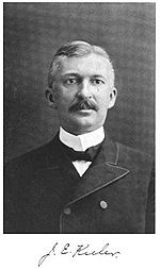
James Edward Keeler

James Edward Keeler

Overview

Keeler worked at Lick Observatory
Lick Observatory
The Lick Observatory is an astronomical observatory, owned and operated by the University of California. It is situated on the summit of Mount Hamilton, in the Diablo Range just east of San Jose, California, USA...

 beginning in 1888, but left after being appointed director of the University of Pittsburgh
University of Pittsburgh
The University of Pittsburgh, commonly referred to as Pitt, is a state-related research university located in Pittsburgh, Pennsylvania, United States. Founded as Pittsburgh Academy in 1787 on what was then the American frontier, Pitt is one of the oldest continuously chartered institutions of...

's Allegheny Observatory
Allegheny Observatory
The Allegheny Observatory is an American astronomical research institution, a part of the Department of Physics and Astronomy at the University of Pittsburgh. The facility is listed on the National Register of Historical Places The Allegheny Observatory is an American astronomical research...

 in 1891. He returned to Lick Observatory as its director in 1898, but died not long after in 1900. He had married in 1891 and left a widow and two children. His ashes were interred in a crypt at the base of the 31-inch Keeler Memorial telescope at the Allegheny Observatory
Allegheny Observatory
The Allegheny Observatory is an American astronomical research institution, a part of the Department of Physics and Astronomy at the University of Pittsburgh. The facility is listed on the National Register of Historical Places The Allegheny Observatory is an American astronomical research...

.

Along with George Hale, Keeler founded and edited the Astrophysical Journal
Astrophysical Journal
The Astrophysical Journal is a scientific journal covering astronomy and astrophysics. It was founded in 1895 by the American astronomers George Ellery Hale and James E. Keeler...

, which remains a major journal of astronomy today.

Keeler was the first to observe the gap in Saturn's rings now known as the Encke Gap, using the 36-inch refractor
James Lick telescope
The James Lick Telescope is an antique refracting 36 inch telescope built in 1889 that can still be viewed through today. Also called the "Great Lick Refractor" or simply "Lick Refractor", it is the third-largest refracting telescope in the world, surpassed by the Yerkes Observatory 40-inch and...

 at Lick Observatory
Lick Observatory
The Lick Observatory is an astronomical observatory, owned and operated by the University of California. It is situated on the summit of Mount Hamilton, in the Diablo Range just east of San Jose, California, USA...

 on 7 January 1888.
Discussion
Ask a question about 'James Edward Keeler'
Start a new discussion about 'James Edward Keeler'
Answer questions from other users
Full Discussion Forum
 
Encyclopedia

Career


Keeler worked at Lick Observatory
Lick Observatory
The Lick Observatory is an astronomical observatory, owned and operated by the University of California. It is situated on the summit of Mount Hamilton, in the Diablo Range just east of San Jose, California, USA...

 beginning in 1888, but left after being appointed director of the University of Pittsburgh
University of Pittsburgh
The University of Pittsburgh, commonly referred to as Pitt, is a state-related research university located in Pittsburgh, Pennsylvania, United States. Founded as Pittsburgh Academy in 1787 on what was then the American frontier, Pitt is one of the oldest continuously chartered institutions of...

's Allegheny Observatory
Allegheny Observatory
The Allegheny Observatory is an American astronomical research institution, a part of the Department of Physics and Astronomy at the University of Pittsburgh. The facility is listed on the National Register of Historical Places The Allegheny Observatory is an American astronomical research...

 in 1891. He returned to Lick Observatory as its director in 1898, but died not long after in 1900. He had married in 1891 and left a widow and two children. His ashes were interred in a crypt at the base of the 31-inch Keeler Memorial telescope at the Allegheny Observatory
Allegheny Observatory
The Allegheny Observatory is an American astronomical research institution, a part of the Department of Physics and Astronomy at the University of Pittsburgh. The facility is listed on the National Register of Historical Places The Allegheny Observatory is an American astronomical research...

.

Along with George Hale, Keeler founded and edited the Astrophysical Journal
Astrophysical Journal
The Astrophysical Journal is a scientific journal covering astronomy and astrophysics. It was founded in 1895 by the American astronomers George Ellery Hale and James E. Keeler...

, which remains a major journal of astronomy today.

Research


Keeler was the first to observe the gap in Saturn's rings now known as the Encke Gap, using the 36-inch refractor
James Lick telescope
The James Lick Telescope is an antique refracting 36 inch telescope built in 1889 that can still be viewed through today. Also called the "Great Lick Refractor" or simply "Lick Refractor", it is the third-largest refracting telescope in the world, surpassed by the Yerkes Observatory 40-inch and...

 at Lick Observatory
Lick Observatory
The Lick Observatory is an astronomical observatory, owned and operated by the University of California. It is situated on the summit of Mount Hamilton, in the Diablo Range just east of San Jose, California, USA...

 on 7 January 1888. After this feature had been named for Johann Encke, who had observed a much broader variation in the brightness of the A Ring, Keeler's contributions were brought to light. The second major gap in the A Ring, discovered by Voyager
Voyager program
The Voyager program is a series of U.S. unmanned space missions that consists of a pair of unmanned scientific probes, Voyager 1 and Voyager 2. They were launched in 1977 to take advantage of a favorable planetary alignment of the late 1970s...

, was named the Keeler Gap in his honor.
Asteroid
Asteroid
thumb|260px|right|[[253 Mathilde]], a [[C-type asteroid]] measuring about across. Photograph taken in 1997 by the [[NEAR Shoemaker]] probe.Asteroids, sometimes called minor planets or planetoids, are small Solar System bodies in orbit around the Sun, especially in the inner Solar System; they are...

s discovered: 2
452 Hamiltonia
452 Hamiltonia
452 Hamiltonia is an asteroid. It was discovered by James Edward Keeler on December 6 1899, but was then lost until 1987. Its provisional name was 1899 FD. The asteroid is named for Mount Hamilton, the site of Lick Observatory where Keeler was working when he discovered the asteroid.L. K...

 
December 6, 1899
(20958) A900 MA  June 29, 1900


In 1895, his spectroscopic study of the rings of Saturn
Rings of Saturn
The rings of Saturn are the most extensive planetary ring system of any planet in the Solar System. They consist of countless small particles, ranging in size from micrometres to metres, that form clumps that in turn orbit about Saturn...

 revealed that different parts of the rings reflect light with different Doppler shifts
Doppler effect
The Doppler effect , named after Austrian physicist Christian Doppler who proposed it in 1842, is the change in frequency of a wave for an observer moving relative to the source of the wave. It is commonly heard when a vehicle sounding a siren or horn approaches, passes, and recedes from an observer...

, due to their different rates of orbit
Kepler's laws of planetary motion
In astronomy, Kepler's three laws of planetary motion are:#The orbit of every planet is an ellipse with the sun at a focus.#A line joining a planet and the sun sweeps out equal areas during equal intervals of time....

 around Saturn. This was the first observational confirmation of the theory of James Clerk Maxwell
James Clerk Maxwell
James Clerk Maxwell was a Scottish theoretical physicist and mathematician. His most significant achievement was the development of the classical electromagnetic theory, synthesizing all previous unrelated observations, experiments and equations of electricity, magnetism and even optics into a...

 that the rings are made up of countless small objects, each orbiting Saturn at its own rate. These observations were made with a spectrograph attached to the 13-inch Fitz-Clark refracting telescope at Allegheny Observatory
Allegheny Observatory
The Allegheny Observatory is an American astronomical research institution, a part of the Department of Physics and Astronomy at the University of Pittsburgh. The facility is listed on the National Register of Historical Places The Allegheny Observatory is an American astronomical research...

.

His observations with the Lick Crossley telescope
Crossley telescope
The Crossley telescope is an reflector telescope located at Lick Observatory in the U.S. state of California. Given to the observatory in 1895 by British politician Edward Crossley, it was rebuilt from the ground up as it was on a very flimsy mounting. It is still being used today in the search...

 helped establish the importance of large optical reflecting telescopes, and expanded astronomers' understanding of nebulae. After his untimely death, his colleagues at Lick Observatory arranged for the publication of his photographs of nebulae and clusters in a special volume of the Lick Observatory publications.
Keeler discovered two asteroid
Asteroid
thumb|260px|right|[[253 Mathilde]], a [[C-type asteroid]] measuring about across. Photograph taken in 1997 by the [[NEAR Shoemaker]] probe.Asteroids, sometimes called minor planets or planetoids, are small Solar System bodies in orbit around the Sun, especially in the inner Solar System; they are...

s, one in 1899 and one in 1900, although the second was lost and only recovered about 100 years later.

Legacy


He won the Henry Draper Medal
Henry Draper Medal
The Henry Draper Medal was established by the widow of Henry Draper, and is awarded by the U.S. National Academy of Sciences for contributions to astrophysics.The recipients have been:-External links:*...

 in 1899.

In 1880, Allegheny Observatory director Samuel Pierpont Langley
Samuel Pierpont Langley
Samuel Pierpont Langley was an American astronomer, physicist, inventor of the bolometer and pioneer of aviation...

, accompanied by Keeler and others, went on a scientific expedition to the summit of Mount Whitney
Mount Whitney
Mount Whitney is the highest summit in the contiguous United States with an elevation of . It is located at the boundary between California's Inyo and Tulare counties, just west of the lowest point in North America at Badwater in Death Valley National Park...

. The purpose of the expedition was to study how the Sun
Sun
The Sun is the star at the center of the Solar System. The Earth and other matter orbit the Sun, which by itself accounts for about 99.86% of the Solar System's mass....

's radiation was selectively absorbed by the Earth
Earth
Earth is the third planet from the Sun. It is the fifth largest of the eight planets in the solar system, and the largest of the terrestrial planets in the Solar System in terms of diameter, mass and density...

's atmosphere, comparing the results at high altitude with those found at lower levels. As a result of the expedition, a 14,240-ft. peak near Mount Whitney
Mount Whitney
Mount Whitney is the highest summit in the contiguous United States with an elevation of . It is located at the boundary between California's Inyo and Tulare counties, just west of the lowest point in North America at Badwater in Death Valley National Park...

 was named the "Keeler Needle".

In addition to the Keeler Gap in Saturn's rings, crater
Impact crater
In the broadest sense, the term impact crater can be applied to any depression, natural or manmade, resulting from the high velocity impact of a projectile with a larger body...

s on Mars
Mars
Mars is the fourth planet from the Sun in the Solar System. The planet is named after Mars, the Roman god of war. It is also referred to as the "Red Planet" because of its reddish appearance, due to iron oxide prevalent on its surface....

 and the Moon
Keeler (lunar crater)
Keeler is a large lunar crater that lies on the Moon's far side. It is connected along the eastern edge to Heaviside, a walled plain of similar dimensions. Keeler, however, is the younger of the two formations, with more clearly delineated features...

 are named in his honor, as is the asteroid
Asteroid
thumb|260px|right|[[253 Mathilde]], a [[C-type asteroid]] measuring about across. Photograph taken in 1997 by the [[NEAR Shoemaker]] probe.Asteroids, sometimes called minor planets or planetoids, are small Solar System bodies in orbit around the Sun, especially in the inner Solar System; they are...

 2261 Keeler
2261 Keeler
2261 Keeler is a Main-belt Asteroid discovered on April 20, 1977 by A. R. Klemola at Mount Hamilton. It is named for the astronomer James Edward Keeler, who also discovered two asteroids...

.

External links

obituary, includes extensive list of published writings