

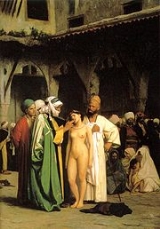
Islam and Slavery

Encyclopedia
Islamic views on slavery first developed out of the slavery practices of pre-Islamic Arabia. During the wars between different states/tribes in various parts of the world, prisoners/captives were either killed or enslaved. The Islamic prophet Muhammad
and many of his companions
reformed the existing system of slavery by placing captives / POWs in the private custody of Muslim soldiers (rather than public/state custody as is prevalent in the modern world) for there were no official prisons available in the newly created Muslim state in Madina headed by Muhammad
.
In Islamic law
the topic of slavery is covered at great length. The Qur'an
(the holy book) and the hadith
(the sayings of Muhammad) see slavery as an exceptional condition that can be entered into under certain limited circumstances. Only children of slaves or non-Muslim prisoners of war could become slaves, never a freeborn Muslim. They also consider manumission
of a slave to be one of many meritorious deeds available for the expiation of sins. According to Sharia
, slaves are considered human beings and possessed some rights on the basis of their humanity. In addition, a Muslim
slave is equal to a Muslim freeman in religious issues and superior to the free non-Muslim
.
In practice, slaves played various social and economic roles from Emir
to worker. Slaves were widely employed in irrigation, mining, pastoralism and the army. Some rulers even relied on military and administrative slaves to such a degree that they seized power. However, people did not always treat with slaves in accordance with Islamic law. In some cases the situation was so harsh it led to uprisings such as the Zanj Rebellion
. However, this was an exception rather than the norm, as the vast majority of labour in the medieval Islamic world
consisted of free, paid labour
. For a variety of reasons, internal growth of the slave population was not enough to fulfill the demand in Muslim society. This resulted in massive importation, which involved enormous suffering and loss of life from the capture and transportation of slaves from non-Muslim lands. In theory, slavery in Islamic law does not have a racial or color component, although this has not always been the case in practice.
The Arab slave trade
was most active in West Asia, North Africa
and East Africa
. By the end of the 19th century, such activity had reached a low ebb. In the early 20th century (post World War I
) slavery was gradually outlawed and suppressed in Muslim lands
, largely due to pressure exerted by Western nations such as Britain and France
. However, slavery claiming the sanction of Islam is documented presently in the African republics of Chad
, Mauritania
, Niger
, Mali
and Sudan
.
, as well as in the rest of the ancient and early medieval
world. The majority of slaves within Arabia were of Ethiopia
n origin, through whose sale merchants grew rich. The minority were white slaves of foreign extraction, likely brought in by Arab caravaners (or the product of Bedouin
captures) stretching back to biblical times. Native Arab
slaves had also existed, a prime example being Zayd ibn Harithah
, later to become Muhammad's adopted son. Arab slaves, however, usually obtained as captives, were generally ransomed off amongst nomad tribes. The slave population was added to by the custom of child abandonment
(see also infanticide
), the kidnapping, or, occasionally, the sale of small children. There is no conclusive evidence of the existence of enslavement for debt or the sale of children by their families; the late and rare accounts of such occurrences show them to be abnormal, Bruschvig states (According to Brockopp, debt slavery was persistent.) Free persons were also able to sell their offspring, or even themselves, into slavery. Enslavement was also possible as a consequence of committing certain offenses against the law, as in the Roman Empire
.
Two classes of slave were apparent: a purchased slave, and a slave born in the master's home. Over the latter the master had complete rights of ownership, though these slaves were unlikely to be sold or disposed of by the master. Female slaves were at times forced into prostitution
for the benefit of their masters in accordance with Near Eastern customs.
The historical accounts of the early years of Islam report that "slaves of non-Muslim masters ... suffered brutal punishments. Sumayya bint Khubbat is famous as the first martyr of Islam, having been killed with a spear by Abū Jahl when she refused to give up her faith. Likewise, Bilal
was freed by Abu Bakr
when his master, Umayya ibn Khalaf, placed a heavy rock on his chest in an attempt to force his conversion."
includes multiple references to slaves, slave women, slave concubinage, and the freeing of slaves. It accepts the institution of slavery. It may be noted that the word 'abd' (slave) is rarely used, being more commonly replaced by some periphrasis such as ma malakat aymanukum
("that which your right hands own"). The Qur'an recognizes the basic inequality between master and slave and the rights of the former over the latter. The historian Bruschvig states that from a spiritual perspective, "the slave has the same value as the free man, and the same eternity is in store for his soul; in this earthly life, failing emancipation, there remains the fact of his inferior status, to which he must piously resign himself." The Qur'an also recognizes concubinage. A master may make his female slave as his concubine and, if she is a Muslim, he can marry her. Abstinence however is said to be a better choice. The Qur'an urges, without commanding, kindness to the slave and recommends, their liberation by purchase or manumission. The freeing of slaves is recommended both for the expiation of sins and as an act of simple benevolence. It exhorts masters to allow slaves to earn or purchase their own freedom (manumission contracts
)."
Slaves are mentioned in at least twenty-nine verses of the Qur'an, most of these are Medinan and refer to the legal status of slaves. The legal material on slavery in the Qur'an is largely restricted to manumission and sexual relations
. According to Sikainga, the Qur'anic references to slavery as mainly contain "broad and general propositions of an ethical nature rather than specific legal formulations."
The Quran accepts the distinction between slave and free as part of the natural order and uses this distinction as an example of God's grace, regarding this discrimination between human beings as in accordance with the divinely established order of things. "The Qur'an, however, does not consider slaves to be mere chattel; their humanity is directly addressed in references to their beliefs, their desire for manumission and their feelings about being forced into prostitution. In one case, the Qur'an refers to master and slave with the same word, rajul. Later interpreters presume slaves to be spiritual equals of free Muslims. For example, urges believers to marry 'believing maids that your right hands own' and then states: "The one of you is as the other," which the Jalaalayn interpret as "You and they are equal in faith, so do not refrain from marrying them." The human aspect of slaves is further reinforced by reference to them as members of the private household, sometimes along with wives or children. Pious exhortations from jurists
to free men to address their slaves by such euphemistic terms as "my boy" and "my girl" stemmed from the belief that God, not their masters, was responsible for the slave's status.
There are many common features between the institution of slavery in the Qur'an and that of neighboring cultures. However, the Qur'anic institution had some unique new features. Bernard Lewis
states that the Qur'anic legislation brought two major changes to ancient slavery which were to have far-reaching effects: presumption of freedom, and the ban on the enslavement of free persons except in strictly defined circumstances. According to Brockopp, the idea of using alms for the manumission of slaves appears to be unique to the Qur'an, assuming the traditional interpretation of verses and . Similarly, the practice of freeing slaves in atonement for certain sins appears to be introduced by the Qur'an (but compare Exod 21:26-7). The forced prostitution of female slaves, a Near Eastern custom of great antiquity, is condemned in the Qur'an. Murray Gordon notes that this ban is "of no small significance." Brockopp writes: "Other cultures limit a master's right to harm a slave but few exhort masters to treat their slaves kindly, and the placement of slaves in the same category as other weak members of society who deserve protection is unknown outside the Qur'an. The unique contribution of the Qur'an, then, is to be found in its emphasis on the place of slaves in society and society's responsibility toward the slave, perhaps the most progressive legislation on slavery in its time."
of slaves, even if one had to purchase them first. On many occasions, Muhammad's companions, at his direction, freed slaves in abundance. Muhammad personally freed 63 slaves, and his wife Aisha freed 67. In total his household and friends freed 39,237 slaves. The most notable of Muhammad's slaves were: Safiyya bint Huyayy
, whom he freed and married; Maria al-Qibtiyya
, given to Muhammad by a Sassanid official
, whom he freed and who may have become his wife; Sirin
, Maria's sister, whom he freed and married to the poet Hassan ibn Thabit
and Zayd ibn Harithah
, whom Muhammad freed and adopted as a son.
, slavery was an exceptional condition, with the general rule being a presumption of freedom (al-'asl huwa 'l-hurriya — "The basic principle is liberty") for a person if his or her origins were unknown, though enslavement was sanctioned by God as punishment for unbelief. Lawful enslavement was restricted to two instances: capture in war (on the condition that the prisoner is not a Muslim), or birth in slavery. Islamic law did not recognize the classes of slave from pre-Islamic Arabia
including those sold or given into slavery by themselves and others, and those indebted into slavery. Though a free Muslim could not be enslaved, conversion to Islam
by a non-Muslim slave did not require that he or she then should be liberated. Slave status was not affected by conversion to Islam.
is considered a meritorious act. Based on the Quranic verse , the Islamic law permits a slave to ransom himself upon consent of his master through a contract known as mukataba
. Azizah Y. al-Hibri
, a professor of Law specializing in Islamic jurisprudence, states that both the Qur’an and Hadith are repeatedly exhorting Muslims to treat the slaves well and that Muhammad showed this both in action and in words. Levy concurs, adding that "cruelty to them was forbidden." Al-Hibri quotes the famous last speech of Muhammad and other hadiths emphasizing that all believers, whether free or enslaved, are siblings. Lewis explains, "the humanitarian tendency of the Qur'an and the early caliphs in the Islamic empire, was to some extent counteracted by other influences," notably the practice of various conquered people and countries Muslims encountered, especially in provinces previously under Roman law
(even the Christianized form of slavery was still harsh in its treatment of slaves). In spite of this, Lewis also states, "Islamic practice still represented a vast improvement on that inherited from antiquity, from Rome, and from Byzantium." Murray Gordon writes: "It was not surprising that Muhammad, who accepted the existing socio-political order, looked upon slavery as part of the natural order of things. His approach to what was already an age-old institution was reformist and not revolutionary. The Prophet had not in mind to bring about the abolition of slavery. Rather, his purpose was to improve the conditions of slaves by correcting abuses and appealing to the conscience of his followers to treat them humanely." The adoption of slaves as members of the family was common, according to Levy. If a slave was born and brought up in the master's household he was never sold, except in exceptional circumstances.
, and instances of this in history include the Mamluk
who ruled Egypt for almost 260 years and the eunuch
s who have held military and administrative positions of note. With the permission of their owners they are able to marry. Annemarie Schimmel
, a contemporary scholar on Islamic civilization
, asserts that because the status of slaves under Islam could only be obtained through either being a prisoner of war
(this was soon restricted only to infidels captured in a holy war
) or born from slave parents, slavery would be theoretically abolished with the expansion of Islam. Fazlur Rahman
agrees, stating that the Qur'anic acceptance of the institution of slavery on the legal plane was the only practical option available at the time of Muhammad since "slavery was ingrained in the structure of society, and its overnight wholesale liquidation would have created problems which it would have been absolutely impossible to solve, and only a dreamer could have issued such a visionary statement." Islam's reforms stipulating the conditions of enslavement seriously limited the supply of new slaves. Murray Gordon does not: "Muhammad took pains in urging the faithful to free their slaves as a way of expiating their sins. Some Muslim scholars have taken this mean that his true motive was to bring about a gradual elimination of slavery. Far more persuasive is the argument that by lending the moral authority of Islam to slavery, Muhammad assured its legitimacy. Thus, in lightening the fetter, he riveted it ever more firmly in place." In the early days of Islam, a plentiful supply of new slaves were brought due to rapid conquest and expansion. But as the frontiers were gradually stabilized, this supply dwindled to a mere trickle. The prisoners of later wars between Muslims and Christians were commonly ransomed or exchanged.
According to Lewis, this reduction resulted in Arabs who wanted slaves having to look elsewhere to avoid the restrictions in the Qur'an, meaning an increase of importing of slaves from non-Muslim lands, primarily from Africa. These slaves suffered a high death toll. Patrick Manning
states that Islamic legislations against the abuse of the slaves convincingly limited the extent of enslavement in Arabian peninsula
and to a lesser degree for the whole area of the whole Umayyad Caliphate
where slavery had existed since the most ancient times
. He however notes that with the passage of time and the extension of Islam, Islam by recognizing and codifying the slavery seems to have done more to protect and expand slavery than the reverse.
In theory free-born Muslims could not be enslaved, and the only way that a non-Muslim could be enslaved was being captured in the course of holy war. (In early Islam, neither a Muslim nor a Christian or Jew could be enslaved.) Slavery was also perceived as a means of converting non-Muslims to Islam: A task of the masters was religious instruction. Conversion and assimilation into the society of the master didn't automatically lead to emancipation, though there was normally some guarantee of better treatment and was deemed a prerequisite for emancipation. The majority of Sunni authorities approved the manumission
of all the "People of the Book
". According to some jurists -especially among the Shi’a- only Muslim slaves should be liberated. In practice, traditional propagators of Islam in Africa
often revealed a cautious attitude towards proselytizing because of its effect in reducing the potential reservoir of slaves.
"Morally as well as physically the slave is regarded in law as an inferior being," Levy writes. Under Islamic law, a slave possesses a composite quality of being both a person and a possession. The slave is entitled to receive sustenance from the master, which includes shelter, food, clothing, and medical attention. It is a requirement for this sustenance to be of the same standard generally found in the locality and it is also recommended for the slave to have the same standard of food and clothing as the master. If the master refuses to provide the required sustenance, the slave may complain to a judge, who may then penalize the master through sale of her or his goods as necessary for the slave's keep. If the master does not have sufficient wealth to facilitate this, she or he must either sell, hire out, or manumit the slave as ordered. Slaves also have the right to a period of rest during the hottest parts of the day during the summer.
Evidence from slaves is rarely viable in a court of law. As slaves are regarded as inferior in Islamic law, death at the hands of a free man does not require that the latter be killed in retaliation. The killer must pay the slave's master compensation equivalent to the slave's value, as opposed to blood-money. At the same time, slaves themselves possess a lessened responsibility for their actions, and receive half the penalty required upon a free man. For example: where a free man would be subject to a hundred lashes due to pre-marital relations, a slave would be subject to only fifty. Slaves are allowed to marry only with the owner's consent. Jurists differ over how many wives a slave may possess, with the Hanafi and Shafi'i schools allowing them two, and the Maliki school allowing four. Slaves are not permitted to possess or inherit property, or conduct independent business, and may conduct financial dealings only as a representative of the master. Offices of authority are generally not permitted for slaves, though a slave may act as a the leader (Imam
) in the congregational prayers, and he may also act as a subordinate officer in the governmental department of revenue. Masters may sell, bequeath, give away, pledge, hire out or compel them to earn money.
By the view of some madh'hab (but not others), a master may compel his/her slave(s) to marriage and determine the identity of their marriage partner(s)
The mahr
that is given for marriage to a female slave is taken by her owner, whereas all other women possess it absolutely for themselves
or "what your right hands possess". There are some restrictions on the master; he may not co-habit with a female slave belonging to his wife, neither can he have relations with a female slave if she is co-owned, or already married.
In ancient Arabian custom, the child of a freeman by his slave was also a slave unless he was recognized and liberated by his father. In theory, the recognition by a master of his offspring by a slave woman was optional in Islamic society, and in the early period was often withheld. By the high Middle Ages
it became normal and was unremarkable in a society where the sovereigns themselves were almost invariably the children of slave concubines. The mother receives the title of "umm walad" (lit. mother of a child), which is an improvement in her status as she can no longer be sold. Among Sunnis, she is automatically freed upon her master's death, however for Shi'a, she is only freed if her child is still alive; her value is then deducted from this child's share of the inheritance. Lovejoy writes that as an umm walad, they attained "an intermediate position between slave and free" pending their freedom, although they would sometimes be nominally freed as soon as they gave birth.
There is no limit on the number of concubines a master may possess. However, the general marital laws are to be observed, such as not having sexual relations with the sister of a female slave. In Islam, "men are enjoined to marry free women in the first instance, but if they cannot afford the bridewealth for free women, they are told to marry slave women rather than engage in wrongful acts." One rationale given for recognition of concubinage in Islam is that "it satisfied the sexual desire of the female slaves and thereby prevented the spread of immorality in the Muslim community
." Most schools restrict concubinage to a monogamous relationship between the slave woman and her master, According to Sikainga, "in reality, however, female slaves in many Muslim societies were prey for members of their owners' household, their neighbors, and their guests."
In Shiite jurisprudence it is unlawful for a master of a female slave to grant a third party the use of her for sexual relations. The Shiite scholar Shaykh al-Tusi stated:ولا يجوز إعارتها للاستمتاع بها لأن البضع لا يستباح بالإعارة
"It is not permissible to loan (the slave girl) for enjoyment purpose, because sexual intercourse cannot be legitimate through loaning" and the Shiite scholars al-Muhaqiq al-Kurki, Allamah al-Hilli and Ali Asghar Merwarid made the following ruling: ولا تجوز استعارة الجواري للاستمتاع
"It is not permissible to loan the slave girl for the purpose of sexual intercourse"
Under the legal doctrine
of kafa'a(lit."efficiency"), the purpose of which was to ensure that a man should be at least the social equal of the woman he marries, a freedman is not as good as the son of a freedman, and he in turn not as good as the grandson of a freedman. This principle is pursued up to three generations, after which all Muslims are deemed equally free. Lewis asserts that since kafa'a "does not forbid unequal marriages", it is in no sense a "Muslim equivalent of Nuremberg Laws
of Nazi Germany
or the apartheid laws of South Africa
. His purpose, he states, is not to try to set up a moral competition - to compare castration and apartheid as offenses against humanity."
. There are numerous ways in which a slave may become free. One way is through expiation for certain sins committed by the master, such as involuntary manslaughter
or perjury
. Other ways include emancipation through becoming an umm walad, who is freed upon her master's death along with her children, or an independent act of piety by the master, as recommended by the Qur'an. It is also commendable to manumit a slave who demands his freedom and is considered worthy of it. Another method is the mukataba
contract: Levy states that "the slave may redeem himself if his master agrees and contracts to let him go on payment of a stipulated sum of money, which may be paid in two or more instalments, or on the giving of stipulated services or other consideration. If the consideration is a sum of money, the master must grant the slave the right to earn and to own property."
If the master makes a declaration of the slave's freedom, whether in jest or earnest, in the presence of the slave or another, then such a declaration becomes legally binding. Similarly, the master may promise manumission (verbally or in writing) that the slave is to be freed upon the former's death. Lastly, a slave is also freed automatically if she or he comes into the possession of a master who is directly related to her or him.
Gordon opines that the Quran in particular and Islamic jurisprudence in general have not placed a premium on manumission but held it out as one way for atonement of sin. He states that "Manumission was only one of several virtuous observances that the pious could avail themselves of and was by no means the most important," noting that other options include reaffirming faith in God and giving food to the poor. He concludes that "there was no contradiction between being a devout Muslim and a slave-owing one as well."
According to Brunschvig, although the total abolition of slavery might seem a reprehensible innovation and contrary to the Qur'an and the practice of early Muslims, the realities of the modern world caused a "discernible evolution in the thought of many educated Muslims before the end of the 19th century." These Muslims argued that Islam on the whole has "bestowed an exceptionally favourable lot on the victims of slavery" and that the institution of slavery is linked to the particular economic and social stage in which Islam originated. According to the influential thesis of Ameer Ali, Islam only tolerated slavery through temporary necessity and that its complete abolition was not possible at the time of Muhammad.
According to Brockopp, some modern interpreters have accused the medieval interpreters of having subverted the Qur'an's demand for manumission contracts (see Mukataba
). They have used the dramatic change in the institution of slavery in the seventh and eighth centuries to argue that the Qur'an would not have condoned the slaving practices common in Islamic history. Others have argued that the original intent of the Qur'an, when understood properly, was to abolish slavery altogether (cf. Arafat, Attitude).
The idea that Islam only tolerated slavery due to necessity has to some extent found its way into the circle of the Ulema
. It has been unable to gain support among the Wahhabis.
was insufficient to maintain numbers right through to modern times, which contrasts markedly with rapidly rising slave populations in the New World. He writes that a contributing factor was the liberation of slaves as an act of piety, but the primary drain was the liberation by freemen of their own offspring born by slave mothers. Other factors Lewis describes for the low natural increase of slave populations in the Islamic world include:
Segal notes that recent slaves, weakened by their initial captivity and debilitating journey, would have been easy victim to climate changes and infection. Children were especially at risk, and the Islamic market demand for children was much greater than the American one. Many blacks, both slave and free, lived in conditions conducive to malnutrition and disease, with effects on their own life expectancy
, the fertility of women, and the infant mortality
rate.
Another factor was the Zanj Rebellion
against the plantation economy
of 9th-century southern Iraq. Due to fears of a similar uprising among slave gang
s occurring elsewhere, Muslims came to realize that large concentrations of slaves were not a suitable organization of labour and that slaves were best employed in smaller concentrations. As such, large-scale employment of slaves for manual labour became the exception rather than the norm, and the medieval Islamic world did not need to import vast numbers of slaves.
W. Montgomery Watt points out that Muhammad's expansion of Pax Islamica to the Arabian peninsula reduced warfare and raiding, and therefore cut off the sources of enslaving freemen. According to Patrick Manning
, the Islamic legislations against the abuse of the slaves convincingly limited the extent of enslavement in Arabian peninsula and to a lesser degree for the whole area of the whole Umayyad Caliphate where slavery existed since the most ancient times.
Later periods
Bernard Lewis writes: "In one of the sad paradoxes of human history
, it was the humanitarian reforms brought by Islam that resulted in a vast development of the slave trade
inside, and still more outside, the Islamic empire." He notes that the Islamic injunctions against the enslavement of Muslims led to massive importation of slaves from the outside. According to Patrick Manning
, Islam by recognizing and codifying the slavery seems to have done more to protect and expand slavery than the reverse.
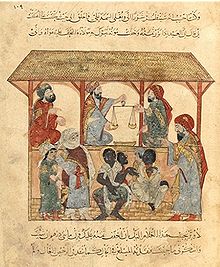
The 'Arab' slave trade is sometimes called the 'Islamic' slave trade. Bernard Lewis writes that "polytheists and idolaters were seen primarily as sources of slaves, to be imported into the Islamic world and molded in Islamic ways, and, since they possessed no religion of their own worth the mention, as natural recruits for Islam." Patrick Manning
states that religion was hardly the point of this slavery. Also, this term suggests comparison between Islamic slave trade and Christian slave trade
. Furthermore, usage of the terms "Islamic trade" or "Islamic world" implicitly and erroneously treats Africa as it were outside of Islam, or a negligible portion of the Islamic world. Propagators of Islam in Africa often revealed a cautious attitude towards proselytizing because of its effect in reducing the potential reservoir of slaves.
The author Ronald Segal distinguishes the Islamic slave trade from that of the Atlantic or European slave trade by highlighting the aspects of its duration and nature: "It began in the middle of the seventh century and survives today in Mauritania and Sudan. With the Islamic slave trade, we're talking of 14 centuries rather than four." Further, "whereas the gender ratio of slaves in the Atlantic trade was two males to every female, in the Islamic trade, it was two females to every male."
In the 8th century Africa
was dominated by Arab
-Berbers
in the north: Islam moved southwards along the Nile
and along the desert trails. The Solomonic dynasty
of Ethiopia
often exported Nilotic
slaves from their western borderland provinces, or from newly conquered or reconquered Muslim provinces. Native Muslim Ethiopian sultanates (rulership) exported slaves as well, such as the sometimes independent sultanate (rulership) of Adal
.
For a long time, until the early 18th century Crimean Khanate
maintained massive slave trade with the Ottoman Empire
and the Middle East. Between 1530 and 1780 there were almost certainly 1 million and quite possibly as many as 1.25 million white, European Christians enslaved by the Muslims of the Barbary Coast
.
On the coast of the Indian Ocean
too, slave-trading posts were set up by Arabs. The archipelago of Zanzibar
, along the coast of present-day Tanzania
, is undoubtedly the most notorious example of these trading colonies. East Africa and the Indian Ocean continued as an important region for the Oriental slave trade up until the 19th century. Livingstone
and Stanley
were then the first Europeans to penetrate to the interior of the Congo basin
and to discover the scale of slavery there. The Arab Tippu Tib extended his influence and made many people slaves. After Europeans had settled in the Gulf of Guinea
, the trans-Saharan slave trade became less important. In Zanzibar, slavery was abolished late, in 1897, under Sultan Hamoud bin Mohammed
. The rest of Africa had no direct contact with Muslim slave-traders.
Almost all female slaves had domestic occupations. This included the gratification of the master's sexual impulses. This was a lawful motive for their purchase, and the most common one.
In recruiting barbarians from the "martial races" beyond the frontiers into their imperial armies, the Arabs were doing what the Romans and the Chinese had done centuries before them. In the scale of this recruitment, however, and the preponderant role acquired by these recruits in the imperial and eventually metropolitan forces, Muslim rulers went far beyond any precedent. It was not until the medieval Islamic state that we find military slaves in significant numbers, forming a substantial and eventually predominant component in their armies.
While slaves were sometimes employed for manual labour
during the Arab slave trade, this was usually the exception rather than the norm. The vast majority of labour in the medieval Islamic world consisted of free, paid labour
. The only known exceptions to this general rule was in the plantation economy
of 9th-century southern Iraq (which led to the Zanj Revolt), in 9th-century Ifriqiya
(modern-day Tunisia
), and in 11th-century Bahrain
(during the Karmatian
state).
.
The Zanj Revolt took place near the city of Basra
, located in southern Iraq
over a period of fifteen years (869-883 AD). It grew to involve over 500,000 slaves who were imported from across the Muslim empire and claimed over “tens of thousands of lives in lower Iraq”. The revolt was said to have been led by Ali ibn Muhammad, who claimed to be a descendent of Caliph Ali ibn Abu Talib. Several historians, such as Al-Tabari and Al-Masudi, consider this revolt one of the “most vicious and brutal uprising” out of the many disturbances that plagued the Abbasid
central government.
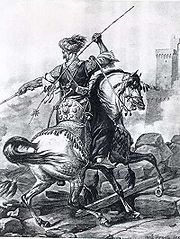 Mamluk
s were slave
soldier
s who were converted to Islam
and served the Muslim
caliph
s and the Ayyubid sultans during the Middle Ages
. Over time, they became a powerful military caste
numerously defeating the Crusader
s and, on more than one occasion, they seized power for themselves, for example ruling Egypt
in the Mamluk Sultanate
from 1250-1517.
and later in other Western countries
which gave rise to a strong abolitionist movement in Europe. Contrasting with ancient and colonial systems, slaves in Muslim lands had a certain legal status and had obligations to as well as rights over the slave owner. Slavery was not only recognized but was elaborately regulated by Sharia
law. Although emancipation of slaves was recommended, it was not compulsory. Lewis elucidates that it was for this reason that "the position of the domestic slave in Muslim society was in most respects better than in either classical antiquity
or the nineteenth-century Americas" and that the economic situation of such slaves were no worse than (and even in some cases better than) free poors.
Ironically, the enlightened incentives and opportunities for slaves to be emancipated meant there was a strong market for new slaves and thus strong incentive to enslave and sell human beings. The processes of acquisition and transportation of slaves to Muslim lands often imposed appalling loss of life and hardships. The hardships of acquisition and transportation of slaves to Muslim lands drew attention of European opponents of slavery. The continuing pressure from European countries eventually overcame the strong resistance of religious conservatives who were holding that forbidding what God permits is just as great an offence as to permit what God forbids. Slavery, in their eyes, was "authorized and regulated by the holy law". Even masters persuaded of their own piety and benevolence sexually exploited their concubines, without a thought of whether this constituted a violation of their humanity. There were also many pious Muslims who refused to have slaves and persuaded others to do so. Eventually, the Ottoman Empire's orders against the traffic of slaves were issued and put into effect.
According to Brockopp, in 19th century, "Some authorities made blanket pronouncements against slavery, arguing that it violated the qurʾānic ideals of equality and freedom. The great slave markets of Cairo were closed down at the end of the nineteenth century and even conservative Qurʾān interpreters continue to regard slavery as opposed to Islamic principles of justice and equality."
Slavery in the forms of carpetweavers, sugarcane cutters, camel jockeys, sex slaves
, and even chattel exists even today in some Muslim and non-Muslim countries (Some have questioned the use of the term slavery as an accurate description).
According to an article in The New York Times published on March 28, 1886, the Ottoman empire allowed a slave trade in girls to thrive during the late 1800s, while publicly denying it. The three main races of girls who were sold as sexual slaves in the Ottoman Empire were Circassian
, Syrian, and Nubian girls. Circassian girls were described by the American journalist as fair and light skinned. They were frequently sent by Circassian leaders as gifts to the Ottomans. They were the most expensive, reaching up to 500 Turkish lira
and the most popular with the Turks. The next most popular slaves were Syrian girls, with "dark eyes and hair", and light brown skin. Their price could reach to thirty lira. They were described by the American journalist as having "good figures when young". Throughout coastal regions in Anatolia
, Syrian girls were sold. The New York Times journalist stated Nubian girls were the cheapest and least popular, fetching up to 20 lira.
 Unlike Western societies which in their opposition to slavery spawned anti-slavery movements whose numbers and enthusiasm often grew out of church groups, no such grass-roots organizations ever developed in Muslim societies. In Muslim politics the state unquestioningly accepted the teachings of Islam and applied them as law. Islam, by sanctioning slavery - however mild a form it generally took - also extended legitimacy to the nefarious traffic in slaves.
Writing about 1862 the English traveler W.G. Palgrave says that in Arabia he constantly met with black slaves in large numbers. The effects of concubinage were apparent in the number of persons of mixed race
and the emancipation of slaves he found to be common. Doughty, writing about 25 years later, made similar reports.
Slavery was common in the East Indies
until the end of the 19th century. In Singapore in 1891 there was a regular trade in Chinese slaves by Muslim slaveowners, with girls and women used for concubinage.
At Istanbul
, the sale of black and Circassian women was conducted openly until the granting of the Constitution in 1908.
It was in the early 20th century (post World War I
) that slavery gradually became outlawed and suppressed in Muslim lands, largely due to pressure exerted by Western nations such as Britain and France
.
In 1925 slaves were still being bought and sold at Mecca
in the ordinary way of trade.
The slave market there consisted of the offspring of local slaves as well as those imported from the Yemen
, Africa, and Asia Minor
.
By the Treaty of Jedda
, May 1927 (art.7), concluded between the British Government and Ibn Sa'ud (King of Nejd and the Hijaz) it was finally agreed to suppress the slave trade in Saudi Arabia
. Then by a decree issued in 1936 the importation of slaves into Saudi Arabia was prohibited unless it could be proved that they were slaves at that date.
In 1953, sheikhs from Qatar
attending the coronation of Queen Elizabeth II included slaves in their retinues, and they did so again on another visit five years later.
It was not until 1962 that all slavery practice or trafficking in Saudi Arabia was prohibited.
By 1969 it could be observed that most Muslim states had abolished slavery although it existed in the deserts of Iraq bordering Arabia and it still flourished in Saudi Arabia, the Yemen
and Oman
. Slavery was not formally abolished in Yemen and Oman until the following year. The last nation to formally enact the abolition of slavery practice and slave trafficking was the Islamic Republic of Mauritania
in 1981.
Gordon describes the lack of homegrown Islamic abolition movements as owing much to the fact that it was deeply anchored in Islamic law. By legitimizing slavery and - by extension - traffic in slaves, Islam elevated those practices to an unassailable moral plain. As a result, in no part of the Muslim world was an ideological challenge ever mounted against slavery. The political and social system
in Muslim society would have taken a dim view of such a challenge. Some Muslim leaders, like Fatimid
caliph
Al-Hakim bi-Amr Allah
did ban slavery, but it had little influence in the Islamic world.
Islamic scholars after its "closing" earlier in the 20th century when Muslim countries banned slavery and "most Muslim scholars" found the practice "inconsistent with Qur'anic morality."
In 2003 a high-level Saudi jurist, Shaykh Saleh Al-Fawzan
, issued a fatwa claiming
“Slavery is a part of Islam. Slavery is part of jihad, and jihad will remain as long there is Islam.”
He attacked Muslim scholars who said otherwise maintaining, “They are ignorant, not scholars ... They are merely writers. Whoever says such things is an infidel.” At the time of the fatwa, al-Fawzan was a member of the Senior Council of Clerics, Saudi Arabia’s highest religious body, a member of the Council of Religious Edicts and Research, the Imam of Prince Mitaeb Mosque in Riyadh, and a professor at Imam Mohamed Bin Saud Islamic University, the main Wahhabi center of learning in the country.
According to multiple sources, religious calls have also been made to capture and enslave Jewish women. As American journalist John J. Miller
said, "It is hard to imagine a serious person calling for America to enslave its enemies. Yet a prominent Saudi cleric, Shaikh Saad Al-Buraik, recently urged Palestinians to do exactly that with Jews: 'Their women are yours to take, legitimately. God made them yours. Why don't you enslave their women?'"
Shaykh Fadhlalla Haeri of Karbala
expressed the view in 1993 that the enforcement of servitude can occur but is restricted to war captives and those born of slaves.
Dr. Abdul-Latif Mushtahari, the general supervisor and director of homiletics and guidance at the Azhar University, has said on the subject of justifications for Islamic permission of slavery:
scholars like Shaykh al-Fawzan, Islamist authors declared slavery outdated without actually clearly affirming and promoting its abolition. This has caused at least one scholar (William Clarence-Smith) to bemoan the 'dogged refusal of Mawlana Mawdudi to give up on slavery' and the notable 'evasions and silences of Muhammad Qutb.'
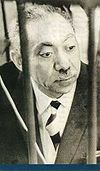 Syed Qutb, the scholar of the Islamist Muslim Brotherhood
said in his (Tafsir
) of the Quran
Qutb's brother Muhammad Qutb
contrasted sexual relations between Muslim slaveowners and their female slaves with (in his view), the widespread and depraved practice of casual consensual sex in contemporary Europe:
Maulana Mawdudi of Jamaat-e-Islami
has said:
 Shiekh Taqiuddin al-Nabhani
, a shariah judge and founder of Hizb ut-Tahrir
movement, gives the following explanation:
's fatwa, the proclamation carries weight among many Salafi
Muslims. According to reformist jurist and author Khaled Abou El Fadl, it "is particularly disturbing and dangerous because it effectively legitimates the trafficking in and sexual exploitation of so-called domestic workers in the Gulf region and especially Saudi Arabia." Organized criminal gangs smuggle children into Saudi Arabia where they are enslaved, sometimes mutilated, and forced to work as beggars. When caught, the children are deported as illegal aliens.
According to the U.S. State Department
:
Muhammad
Muhammad |ligature]] at U+FDF4 ;Arabic pronunciation varies regionally; the first vowel ranges from ~~; the second and the last vowel: ~~~. There are dialects which have no stress. In Egypt, it is pronounced not in religious contexts...
and many of his companions
Sahaba
In Islam, the ' were the companions, disciples, scribes and family of the Islamic prophet...
reformed the existing system of slavery by placing captives / POWs in the private custody of Muslim soldiers (rather than public/state custody as is prevalent in the modern world) for there were no official prisons available in the newly created Muslim state in Madina headed by Muhammad
Muhammad
Muhammad |ligature]] at U+FDF4 ;Arabic pronunciation varies regionally; the first vowel ranges from ~~; the second and the last vowel: ~~~. There are dialects which have no stress. In Egypt, it is pronounced not in religious contexts...
.
In Islamic law
Sharia
Sharia law, is the moral code and religious law of Islam. Sharia is derived from two primary sources of Islamic law: the precepts set forth in the Quran, and the example set by the Islamic prophet Muhammad in the Sunnah. Fiqh jurisprudence interprets and extends the application of sharia to...
the topic of slavery is covered at great length. The Qur'an
Qur'an
The Quran , also transliterated Qur'an, Koran, Alcoran, Qur’ān, Coran, Kuran, and al-Qur’ān, is the central religious text of Islam, which Muslims consider the verbatim word of God . It is regarded widely as the finest piece of literature in the Arabic language...
(the holy book) and the hadith
Hadith
The term Hadīth is used to denote a saying or an act or tacit approval or criticism ascribed either validly or invalidly to the Islamic prophet Muhammad....
(the sayings of Muhammad) see slavery as an exceptional condition that can be entered into under certain limited circumstances. Only children of slaves or non-Muslim prisoners of war could become slaves, never a freeborn Muslim. They also consider manumission
Manumission
Manumission is the act of a slave owner freeing his or her slaves. In the United States before the passage of the Thirteenth Amendment to the United States Constitution, which abolished most slavery, this often happened upon the death of the owner, under conditions in his will.-Motivations:The...
of a slave to be one of many meritorious deeds available for the expiation of sins. According to Sharia
Sharia
Sharia law, is the moral code and religious law of Islam. Sharia is derived from two primary sources of Islamic law: the precepts set forth in the Quran, and the example set by the Islamic prophet Muhammad in the Sunnah. Fiqh jurisprudence interprets and extends the application of sharia to...
, slaves are considered human beings and possessed some rights on the basis of their humanity. In addition, a Muslim
Muslim
A Muslim, also spelled Moslem, is an adherent of Islam, a monotheistic, Abrahamic religion based on the Quran, which Muslims consider the verbatim word of God as revealed to prophet Muhammad. "Muslim" is the Arabic term for "submitter" .Muslims believe that God is one and incomparable...
slave is equal to a Muslim freeman in religious issues and superior to the free non-Muslim
Dhimmi
A , is a non-Muslim subject of a state governed in accordance with sharia law. Linguistically, the word means "one whose responsibility has been taken". This has to be understood in the context of the definition of state in Islam...
.
In practice, slaves played various social and economic roles from Emir
Emir
Emir , meaning "commander", "general", or "prince"; also transliterated as Amir, Aamir or Ameer) is a title of high office, used throughout the Muslim world...
to worker. Slaves were widely employed in irrigation, mining, pastoralism and the army. Some rulers even relied on military and administrative slaves to such a degree that they seized power. However, people did not always treat with slaves in accordance with Islamic law. In some cases the situation was so harsh it led to uprisings such as the Zanj Rebellion
Zanj Rebellion
The Zanj Rebellion was the culmination of series of small revolts. It took place near the city of Basra, located in southern Iraq over a period of fifteen years . It grew to involve over 500,000 slaves who were imported from across the Muslim empire and claimed over “tens of thousands of lives in...
. However, this was an exception rather than the norm, as the vast majority of labour in the medieval Islamic world
Muslim world
The term Muslim world has several meanings. In a religious sense, it refers to those who adhere to the teachings of Islam, referred to as Muslims. In a cultural sense, it refers to Islamic civilization, inclusive of non-Muslims living in that civilization...
consisted of free, paid labour
Wage labour
Wage labour is the socioeconomic relationship between a worker and an employer, where the worker sells their labour under a formal or informal employment contract. These transactions usually occur in a labour market where wages are market determined...
. For a variety of reasons, internal growth of the slave population was not enough to fulfill the demand in Muslim society. This resulted in massive importation, which involved enormous suffering and loss of life from the capture and transportation of slaves from non-Muslim lands. In theory, slavery in Islamic law does not have a racial or color component, although this has not always been the case in practice.
The Arab slave trade
Arab slave trade
The Arab slave trade was the practice of slavery in the Arab World, mainly Western Asia, North Africa, East Africa and certain parts of Europe during their period of domination by Arab leaders. The trade was focused on the slave markets of the Middle East and North Africa...
was most active in West Asia, North Africa
North Africa
North Africa or Northern Africa is the northernmost region of the African continent, linked by the Sahara to Sub-Saharan Africa. Geopolitically, the United Nations definition of Northern Africa includes eight countries or territories; Algeria, Egypt, Libya, Morocco, South Sudan, Sudan, Tunisia, and...
and East Africa
East Africa
East Africa or Eastern Africa is the easterly region of the African continent, variably defined by geography or geopolitics. In the UN scheme of geographic regions, 19 territories constitute Eastern Africa:...
. By the end of the 19th century, such activity had reached a low ebb. In the early 20th century (post World War I
World War I
World War I , which was predominantly called the World War or the Great War from its occurrence until 1939, and the First World War or World War I thereafter, was a major war centred in Europe that began on 28 July 1914 and lasted until 11 November 1918...
) slavery was gradually outlawed and suppressed in Muslim lands
Muslim world
The term Muslim world has several meanings. In a religious sense, it refers to those who adhere to the teachings of Islam, referred to as Muslims. In a cultural sense, it refers to Islamic civilization, inclusive of non-Muslims living in that civilization...
, largely due to pressure exerted by Western nations such as Britain and France
France
The French Republic , The French Republic , The French Republic , (commonly known as France , is a unitary semi-presidential republic in Western Europe with several overseas territories and islands located on other continents and in the Indian, Pacific, and Atlantic oceans. Metropolitan France...
. However, slavery claiming the sanction of Islam is documented presently in the African republics of Chad
Chad
Chad , officially known as the Republic of Chad, is a landlocked country in Central Africa. It is bordered by Libya to the north, Sudan to the east, the Central African Republic to the south, Cameroon and Nigeria to the southwest, and Niger to the west...
, Mauritania
Mauritania
Mauritania is a country in the Maghreb and West Africa. It is bordered by the Atlantic Ocean in the west, by Western Sahara in the north, by Algeria in the northeast, by Mali in the east and southeast, and by Senegal in the southwest...
, Niger
Niger
Niger , officially named the Republic of Niger, is a landlocked country in Western Africa, named after the Niger River. It borders Nigeria and Benin to the south, Burkina Faso and Mali to the west, Algeria and Libya to the north and Chad to the east...
, Mali
Mali
Mali , officially the Republic of Mali , is a landlocked country in Western Africa. Mali borders Algeria on the north, Niger on the east, Burkina Faso and the Côte d'Ivoire on the south, Guinea on the south-west, and Senegal and Mauritania on the west. Its size is just over 1,240,000 km² with...
and Sudan
Sudan
Sudan , officially the Republic of the Sudan , is a country in North Africa, sometimes considered part of the Middle East politically. It is bordered by Egypt to the north, the Red Sea to the northeast, Eritrea and Ethiopia to the east, South Sudan to the south, the Central African Republic to the...
.
Slavery in pre-Islamic Arabia
Slavery was widely practiced in pre-Islamic ArabiaPre-Islamic Arabia
Pre-Islamic Arabia refers to the Arabic civilization which existed in the Arabian Plate before the rise of Islam in the 630s. The study of Pre-Islamic Arabia is important to Islamic studies as it provides the context for the development of Islam.-Studies:...
, as well as in the rest of the ancient and early medieval
Early Middle Ages
The Early Middle Ages was the period of European history lasting from the 5th century to approximately 1000. The Early Middle Ages followed the decline of the Western Roman Empire and preceded the High Middle Ages...
world. The majority of slaves within Arabia were of Ethiopia
Ethiopia
Ethiopia , officially known as the Federal Democratic Republic of Ethiopia, is a country located in the Horn of Africa. It is the second-most populous nation in Africa, with over 82 million inhabitants, and the tenth-largest by area, occupying 1,100,000 km2...
n origin, through whose sale merchants grew rich. The minority were white slaves of foreign extraction, likely brought in by Arab caravaners (or the product of Bedouin
Bedouin
The Bedouin are a part of a predominantly desert-dwelling Arab ethnic group traditionally divided into tribes or clans, known in Arabic as ..-Etymology:...
captures) stretching back to biblical times. Native Arab
Arab
Arab people, also known as Arabs , are a panethnicity primarily living in the Arab world, which is located in Western Asia and North Africa. They are identified as such on one or more of genealogical, linguistic, or cultural grounds, with tribal affiliations, and intra-tribal relationships playing...
slaves had also existed, a prime example being Zayd ibn Harithah
Zayd ibn Harithah
Zayd ibn Harithah or Zayd mawla Muhammad was a prominent figure in the early Islamic community and the only one of sahaba whose name is spelled directly in the Qur'an. As he was the adopted son of the Islamic prophet, Muhammad, before Islam abolished adoption in exchange of Kafala. He was an...
, later to become Muhammad's adopted son. Arab slaves, however, usually obtained as captives, were generally ransomed off amongst nomad tribes. The slave population was added to by the custom of child abandonment
Child abandonment
Child abandonment is the practice of relinquishing interests and claims over one's offspring with the intent of never again resuming or reasserting them. Causes include many social and cultural factors as well as mental illness. An abandoned child is called a foundling .-Causes:Poverty is often a...
(see also infanticide
Infanticide
Infanticide or infant homicide is the killing of a human infant. Neonaticide, a killing within 24 hours of a baby's birth, is most commonly done by the mother.In many past societies, certain forms of infanticide were considered permissible...
), the kidnapping, or, occasionally, the sale of small children. There is no conclusive evidence of the existence of enslavement for debt or the sale of children by their families; the late and rare accounts of such occurrences show them to be abnormal, Bruschvig states (According to Brockopp, debt slavery was persistent.) Free persons were also able to sell their offspring, or even themselves, into slavery. Enslavement was also possible as a consequence of committing certain offenses against the law, as in the Roman Empire
Roman Empire
The Roman Empire was the post-Republican period of the ancient Roman civilization, characterised by an autocratic form of government and large territorial holdings in Europe and around the Mediterranean....
.
Two classes of slave were apparent: a purchased slave, and a slave born in the master's home. Over the latter the master had complete rights of ownership, though these slaves were unlikely to be sold or disposed of by the master. Female slaves were at times forced into prostitution
Prostitution
Prostitution is the act or practice of providing sexual services to another person in return for payment. The person who receives payment for sexual services is called a prostitute and the person who receives such services is known by a multitude of terms, including a "john". Prostitution is one of...
for the benefit of their masters in accordance with Near Eastern customs.
The historical accounts of the early years of Islam report that "slaves of non-Muslim masters ... suffered brutal punishments. Sumayya bint Khubbat is famous as the first martyr of Islam, having been killed with a spear by Abū Jahl when she refused to give up her faith. Likewise, Bilal
Bilal ibn Ribah
Bilal ibn Rabah or Bilal al-Habashi was an Ethiopian born in Mecca in the late 6th century, sometime between 578 and 582.The Islamic prophet Muhammad chose a former African slave Bilal as his muezzin, effectively making him the first muezzin of the Islamic faith...
was freed by Abu Bakr
Abu Bakr
Abu Bakr was a senior companion and the father-in-law of the Islamic prophet Muhammad. He ruled over the Rashidun Caliphate from 632-634 CE when he became the first Muslim Caliph following Muhammad's death...
when his master, Umayya ibn Khalaf, placed a heavy rock on his chest in an attempt to force his conversion."
Slavery in the Qur'an
The Qur'anQur'an
The Quran , also transliterated Qur'an, Koran, Alcoran, Qur’ān, Coran, Kuran, and al-Qur’ān, is the central religious text of Islam, which Muslims consider the verbatim word of God . It is regarded widely as the finest piece of literature in the Arabic language...
includes multiple references to slaves, slave women, slave concubinage, and the freeing of slaves. It accepts the institution of slavery. It may be noted that the word 'abd' (slave) is rarely used, being more commonly replaced by some periphrasis such as ma malakat aymanukum
Ma malakat aymanukum
Ma malakat aymanukum is a reference in the Qur'an to slaves.-Overview:The term itself is normally considered to refer to prisoners of war, or more broadly to slaves in general, according to the classic tafsirs...
("that which your right hands own"). The Qur'an recognizes the basic inequality between master and slave and the rights of the former over the latter. The historian Bruschvig states that from a spiritual perspective, "the slave has the same value as the free man, and the same eternity is in store for his soul; in this earthly life, failing emancipation, there remains the fact of his inferior status, to which he must piously resign himself." The Qur'an also recognizes concubinage. A master may make his female slave as his concubine and, if she is a Muslim, he can marry her. Abstinence however is said to be a better choice. The Qur'an urges, without commanding, kindness to the slave and recommends, their liberation by purchase or manumission. The freeing of slaves is recommended both for the expiation of sins and as an act of simple benevolence. It exhorts masters to allow slaves to earn or purchase their own freedom (manumission contracts
Mukataba
In Islamic law, a mukataba is a contract of manumission between a master and a slave according to which the slave is required to pay a certain sum of money during a specific time period in exchange for freedom. In the legal literature, slaves who enter this contract are known as mukatab...
)."
Slaves are mentioned in at least twenty-nine verses of the Qur'an, most of these are Medinan and refer to the legal status of slaves. The legal material on slavery in the Qur'an is largely restricted to manumission and sexual relations
Human sexual behavior
Human sexual activities or human sexual practices or human sexual behavior refers to the manner in which humans experience and express their sexuality. People engage in a variety of sexual acts from time to time, and for a wide variety of reasons...
. According to Sikainga, the Qur'anic references to slavery as mainly contain "broad and general propositions of an ethical nature rather than specific legal formulations."
The Quran accepts the distinction between slave and free as part of the natural order and uses this distinction as an example of God's grace, regarding this discrimination between human beings as in accordance with the divinely established order of things. "The Qur'an, however, does not consider slaves to be mere chattel; their humanity is directly addressed in references to their beliefs, their desire for manumission and their feelings about being forced into prostitution. In one case, the Qur'an refers to master and slave with the same word, rajul. Later interpreters presume slaves to be spiritual equals of free Muslims. For example, urges believers to marry 'believing maids that your right hands own' and then states: "The one of you is as the other," which the Jalaalayn interpret as "You and they are equal in faith, so do not refrain from marrying them." The human aspect of slaves is further reinforced by reference to them as members of the private household, sometimes along with wives or children. Pious exhortations from jurists
Ulema
Ulama , also spelt ulema, refers to the educated class of Muslim legal scholars engaged in the several fields of Islamic studies. They are best known as the arbiters of shari‘a law...
to free men to address their slaves by such euphemistic terms as "my boy" and "my girl" stemmed from the belief that God, not their masters, was responsible for the slave's status.
There are many common features between the institution of slavery in the Qur'an and that of neighboring cultures. However, the Qur'anic institution had some unique new features. Bernard Lewis
Bernard Lewis
Bernard Lewis, FBA is a British-American historian, scholar in Oriental studies, and political commentator. He is the Cleveland E. Dodge Professor Emeritus of Near Eastern Studies at Princeton University...
states that the Qur'anic legislation brought two major changes to ancient slavery which were to have far-reaching effects: presumption of freedom, and the ban on the enslavement of free persons except in strictly defined circumstances. According to Brockopp, the idea of using alms for the manumission of slaves appears to be unique to the Qur'an, assuming the traditional interpretation of verses and . Similarly, the practice of freeing slaves in atonement for certain sins appears to be introduced by the Qur'an (but compare Exod 21:26-7). The forced prostitution of female slaves, a Near Eastern custom of great antiquity, is condemned in the Qur'an. Murray Gordon notes that this ban is "of no small significance." Brockopp writes: "Other cultures limit a master's right to harm a slave but few exhort masters to treat their slaves kindly, and the placement of slaves in the same category as other weak members of society who deserve protection is unknown outside the Qur'an. The unique contribution of the Qur'an, then, is to be found in its emphasis on the place of slaves in society and society's responsibility toward the slave, perhaps the most progressive legislation on slavery in its time."
Muhammad's traditions
The Islamic prophet Muhammad encouraged manumissionManumission
Manumission is the act of a slave owner freeing his or her slaves. In the United States before the passage of the Thirteenth Amendment to the United States Constitution, which abolished most slavery, this often happened upon the death of the owner, under conditions in his will.-Motivations:The...
of slaves, even if one had to purchase them first. On many occasions, Muhammad's companions, at his direction, freed slaves in abundance. Muhammad personally freed 63 slaves, and his wife Aisha freed 67. In total his household and friends freed 39,237 slaves. The most notable of Muhammad's slaves were: Safiyya bint Huyayy
Safiyya bint Huyayy
Safiyya bint Huyayy was a Jewish woman captured from the Banu Nadir tribe at age 17, who became Muhammad's wife. She was, along with all other wives of Muhammad, titled Umm-ul-Mo'mineen or the "Mother of Believers"....
, whom he freed and married; Maria al-Qibtiyya
Maria al-Qibtiyya
Maria al-Qibtiyya , or Maria the Copt, was an Egyptian Coptic Christian slave who was sent as a gift from Muqawqis, a Byzantine official, to the Islamic prophet Muhammad in 628. Some sources say she became his wife, taking the title "Mother of the Believers"...
, given to Muhammad by a Sassanid official
Muqawqis
Al-Muqawqis is mentioned in Islamic history as a ruler of Egypt, who corresponded with the Islamic prophet Muhammad. He is often identified with Cyrus, Patriarch of Alexandria, who administered Egypt on behalf of the Byzantine Empire. However, this identification is challenged as being based on...
, whom he freed and who may have become his wife; Sirin
Sirin (Islamic history)
Sîrîn bint Sham'ûn was an Egyptian Coptic Christian who became one of Muhammad's slaves. She and her sister Maria al-Qibtiyya were sent to Muhammad as gifts from the Sassanid official Muqawqis in 628. Muhammad married Maria and Sirin was married to his follower, the poet Hassan ibn Thabit. Hassan...
, Maria's sister, whom he freed and married to the poet Hassan ibn Thabit
Hassan ibn Thabit
Hassan ibn Thabit was an Arabian poet and one of the Sahaba, or companions of Muhammad. He was born in Yathrib , and was member of the Banu Khazraj tribe. According to tradition, he was the court poet to Muhammad.-Life:...
and Zayd ibn Harithah
Zayd ibn Harithah
Zayd ibn Harithah or Zayd mawla Muhammad was a prominent figure in the early Islamic community and the only one of sahaba whose name is spelled directly in the Qur'an. As he was the adopted son of the Islamic prophet, Muhammad, before Islam abolished adoption in exchange of Kafala. He was an...
, whom Muhammad freed and adopted as a son.
Principles
In Islamic jurisprudenceFiqh
Fiqh is Islamic jurisprudence. Fiqh is an expansion of the code of conduct expounded in the Quran, often supplemented by tradition and implemented by the rulings and interpretations of Islamic jurists....
, slavery was an exceptional condition, with the general rule being a presumption of freedom (al-'asl huwa 'l-hurriya — "The basic principle is liberty") for a person if his or her origins were unknown, though enslavement was sanctioned by God as punishment for unbelief. Lawful enslavement was restricted to two instances: capture in war (on the condition that the prisoner is not a Muslim), or birth in slavery. Islamic law did not recognize the classes of slave from pre-Islamic Arabia
Pre-Islamic Arabia
Pre-Islamic Arabia refers to the Arabic civilization which existed in the Arabian Plate before the rise of Islam in the 630s. The study of Pre-Islamic Arabia is important to Islamic studies as it provides the context for the development of Islam.-Studies:...
including those sold or given into slavery by themselves and others, and those indebted into slavery. Though a free Muslim could not be enslaved, conversion to Islam
Religious conversion
Religious conversion is the adoption of a new religion that differs from the convert's previous religion. Changing from one denomination to another within the same religion is usually described as reaffiliation rather than conversion.People convert to a different religion for various reasons,...
by a non-Muslim slave did not require that he or she then should be liberated. Slave status was not affected by conversion to Islam.
Treatment
In the instance of illness it would be required for the slave to be looked after. ManumissionManumission
Manumission is the act of a slave owner freeing his or her slaves. In the United States before the passage of the Thirteenth Amendment to the United States Constitution, which abolished most slavery, this often happened upon the death of the owner, under conditions in his will.-Motivations:The...
is considered a meritorious act. Based on the Quranic verse , the Islamic law permits a slave to ransom himself upon consent of his master through a contract known as mukataba
Mukataba
In Islamic law, a mukataba is a contract of manumission between a master and a slave according to which the slave is required to pay a certain sum of money during a specific time period in exchange for freedom. In the legal literature, slaves who enter this contract are known as mukatab...
. Azizah Y. al-Hibri
Azizah Y. al-Hibri
Azizah Y. al-Hibri is a professor at the T. C. Williams School of Law, University of Richmond. She is a former professor of Philosophy, founding editor of Hypatia: a Journal of Feminist Philosophy, and founder and president of KARAMAH: Muslim Women Lawyers for Human Rights...
, a professor of Law specializing in Islamic jurisprudence, states that both the Qur’an and Hadith are repeatedly exhorting Muslims to treat the slaves well and that Muhammad showed this both in action and in words. Levy concurs, adding that "cruelty to them was forbidden." Al-Hibri quotes the famous last speech of Muhammad and other hadiths emphasizing that all believers, whether free or enslaved, are siblings. Lewis explains, "the humanitarian tendency of the Qur'an and the early caliphs in the Islamic empire, was to some extent counteracted by other influences," notably the practice of various conquered people and countries Muslims encountered, especially in provinces previously under Roman law
Roman law
Roman law is the legal system of ancient Rome, and the legal developments which occurred before the 7th century AD — when the Roman–Byzantine state adopted Greek as the language of government. The development of Roman law comprises more than a thousand years of jurisprudence — from the Twelve...
(even the Christianized form of slavery was still harsh in its treatment of slaves). In spite of this, Lewis also states, "Islamic practice still represented a vast improvement on that inherited from antiquity, from Rome, and from Byzantium." Murray Gordon writes: "It was not surprising that Muhammad, who accepted the existing socio-political order, looked upon slavery as part of the natural order of things. His approach to what was already an age-old institution was reformist and not revolutionary. The Prophet had not in mind to bring about the abolition of slavery. Rather, his purpose was to improve the conditions of slaves by correcting abuses and appealing to the conscience of his followers to treat them humanely." The adoption of slaves as members of the family was common, according to Levy. If a slave was born and brought up in the master's household he was never sold, except in exceptional circumstances.
Legal status
Within Islamic jurisprudence, slaves were excluded from religious office and from any office involving jurisdiction over others. Freed slaves are able to occupy any office within the Islamic governmentCaliphate
The term caliphate, "dominion of a caliph " , refers to the first system of government established in Islam and represented the political unity of the Muslim Ummah...
, and instances of this in history include the Mamluk
Mamluk
A Mamluk was a soldier of slave origin, who were predominantly Cumans/Kipchaks The "mamluk phenomenon", as David Ayalon dubbed the creation of the specific warrior...
who ruled Egypt for almost 260 years and the eunuch
Eunuch
A eunuch is a person born male most commonly castrated, typically early enough in his life for this change to have major hormonal consequences...
s who have held military and administrative positions of note. With the permission of their owners they are able to marry. Annemarie Schimmel
Annemarie Schimmel
Annemarie Schimmel, SI, HI, was a well known and very influential German Orientalist and scholar, who wrote extensively on Islam and Sufism. She was a professor at Harvard University from 1967 to 1992.-Early life:...
, a contemporary scholar on Islamic civilization
Muslim world
The term Muslim world has several meanings. In a religious sense, it refers to those who adhere to the teachings of Islam, referred to as Muslims. In a cultural sense, it refers to Islamic civilization, inclusive of non-Muslims living in that civilization...
, asserts that because the status of slaves under Islam could only be obtained through either being a prisoner of war
Prisoner of war
A prisoner of war or enemy prisoner of war is a person, whether civilian or combatant, who is held in custody by an enemy power during or immediately after an armed conflict...
(this was soon restricted only to infidels captured in a holy war
Jihad
Jihad , an Islamic term, is a religious duty of Muslims. In Arabic, the word jihād translates as a noun meaning "struggle". Jihad appears 41 times in the Quran and frequently in the idiomatic expression "striving in the way of God ". A person engaged in jihad is called a mujahid; the plural is...
) or born from slave parents, slavery would be theoretically abolished with the expansion of Islam. Fazlur Rahman
Fazlur Rahman
Fazlur Rahman Malik was a well-known scholar of Islam; M. Yahya Birt of the Association of Islam Researchers described him as "probably the most learned of the major Muslim thinkers in the second-half of the twentieth century, in terms of both classical Islam and Western philosophical and...
agrees, stating that the Qur'anic acceptance of the institution of slavery on the legal plane was the only practical option available at the time of Muhammad since "slavery was ingrained in the structure of society, and its overnight wholesale liquidation would have created problems which it would have been absolutely impossible to solve, and only a dreamer could have issued such a visionary statement." Islam's reforms stipulating the conditions of enslavement seriously limited the supply of new slaves. Murray Gordon does not: "Muhammad took pains in urging the faithful to free their slaves as a way of expiating their sins. Some Muslim scholars have taken this mean that his true motive was to bring about a gradual elimination of slavery. Far more persuasive is the argument that by lending the moral authority of Islam to slavery, Muhammad assured its legitimacy. Thus, in lightening the fetter, he riveted it ever more firmly in place." In the early days of Islam, a plentiful supply of new slaves were brought due to rapid conquest and expansion. But as the frontiers were gradually stabilized, this supply dwindled to a mere trickle. The prisoners of later wars between Muslims and Christians were commonly ransomed or exchanged.
According to Lewis, this reduction resulted in Arabs who wanted slaves having to look elsewhere to avoid the restrictions in the Qur'an, meaning an increase of importing of slaves from non-Muslim lands, primarily from Africa. These slaves suffered a high death toll. Patrick Manning
Patrick Manning (Professor)
Patrick Manning is the Andrew W. Mellon Professor of World History at the University of Pittsburgh. He is also president of the World History Network, Inc., a nonprofit corporation fostering research in world history...
states that Islamic legislations against the abuse of the slaves convincingly limited the extent of enslavement in Arabian peninsula
Arabian Peninsula
The Arabian Peninsula is a land mass situated north-east of Africa. Also known as Arabia or the Arabian subcontinent, it is the world's largest peninsula and covers 3,237,500 km2...
and to a lesser degree for the whole area of the whole Umayyad Caliphate
Umayyad
The Umayyad Caliphate was the second of the four major Arab caliphates established after the death of Muhammad. It was ruled by the Umayyad dynasty, whose name derives from Umayya ibn Abd Shams, the great-grandfather of the first Umayyad caliph. Although the Umayyad family originally came from the...
where slavery had existed since the most ancient times
Ancient history
Ancient history is the study of the written past from the beginning of recorded human history to the Early Middle Ages. The span of recorded history is roughly 5,000 years, with Cuneiform script, the oldest discovered form of coherent writing, from the protoliterate period around the 30th century BC...
. He however notes that with the passage of time and the extension of Islam, Islam by recognizing and codifying the slavery seems to have done more to protect and expand slavery than the reverse.
In theory free-born Muslims could not be enslaved, and the only way that a non-Muslim could be enslaved was being captured in the course of holy war. (In early Islam, neither a Muslim nor a Christian or Jew could be enslaved.) Slavery was also perceived as a means of converting non-Muslims to Islam: A task of the masters was religious instruction. Conversion and assimilation into the society of the master didn't automatically lead to emancipation, though there was normally some guarantee of better treatment and was deemed a prerequisite for emancipation. The majority of Sunni authorities approved the manumission
Manumission
Manumission is the act of a slave owner freeing his or her slaves. In the United States before the passage of the Thirteenth Amendment to the United States Constitution, which abolished most slavery, this often happened upon the death of the owner, under conditions in his will.-Motivations:The...
of all the "People of the Book
People of the Book
People of the Book is a term used to designate non-Muslim adherents to faiths which have a revealed scripture called, in Arabic, Al-Kitab . The three types of adherents to faiths that the Qur'an mentions as people of the book are the Jews, Sabians and Christians.In Islam, the Muslim scripture, the...
". According to some jurists -especially among the Shi’a- only Muslim slaves should be liberated. In practice, traditional propagators of Islam in Africa
Islam in Africa
From its beginning, Islam has been a central feature in Africa. Africa was the first continent into which Islam expanded, and it has become an integral part of many African cultures and histories. According to World Book Encyclopedia, Islam is the largest religion in Africa, followed by Christianity...
often revealed a cautious attitude towards proselytizing because of its effect in reducing the potential reservoir of slaves.
Rights and restrictions
"Morally as well as physically the slave is regarded in law as an inferior being," Levy writes. Under Islamic law, a slave possesses a composite quality of being both a person and a possession. The slave is entitled to receive sustenance from the master, which includes shelter, food, clothing, and medical attention. It is a requirement for this sustenance to be of the same standard generally found in the locality and it is also recommended for the slave to have the same standard of food and clothing as the master. If the master refuses to provide the required sustenance, the slave may complain to a judge, who may then penalize the master through sale of her or his goods as necessary for the slave's keep. If the master does not have sufficient wealth to facilitate this, she or he must either sell, hire out, or manumit the slave as ordered. Slaves also have the right to a period of rest during the hottest parts of the day during the summer.
Evidence from slaves is rarely viable in a court of law. As slaves are regarded as inferior in Islamic law, death at the hands of a free man does not require that the latter be killed in retaliation. The killer must pay the slave's master compensation equivalent to the slave's value, as opposed to blood-money. At the same time, slaves themselves possess a lessened responsibility for their actions, and receive half the penalty required upon a free man. For example: where a free man would be subject to a hundred lashes due to pre-marital relations, a slave would be subject to only fifty. Slaves are allowed to marry only with the owner's consent. Jurists differ over how many wives a slave may possess, with the Hanafi and Shafi'i schools allowing them two, and the Maliki school allowing four. Slaves are not permitted to possess or inherit property, or conduct independent business, and may conduct financial dealings only as a representative of the master. Offices of authority are generally not permitted for slaves, though a slave may act as a the leader (Imam
Imam
An imam is an Islamic leadership position, often the worship leader of a mosque and the Muslim community. Similar to spiritual leaders, the imam is the one who leads Islamic worship services. More often, the community turns to the mosque imam if they have a religious question...
) in the congregational prayers, and he may also act as a subordinate officer in the governmental department of revenue. Masters may sell, bequeath, give away, pledge, hire out or compel them to earn money.
By the view of some madh'hab (but not others), a master may compel his/her slave(s) to marriage and determine the identity of their marriage partner(s)
The mahr
Mahr
In Islam, mahr is an amount of money paid by the groom to the bride at the time of marriage which she can spend as she wishes. The English concept of "dower", the gift of funds to the wife in the event she becomes widowed, closely approximates mahr. The terms "dowry" and "bride price" are...
that is given for marriage to a female slave is taken by her owner, whereas all other women possess it absolutely for themselves
Concubinage
Slave women were required mainly as concubines and menials. A Muslim slaveholder was entitled by law to the sexual enjoyment of his slave women. While free women might own male slaves, they had no such right. The purchase of female slaves for sex was lawful from the perspective of Islamic law, and this was the most common motive for the purchase of slaves throughout Islamic history. The property of a slave was owned by his or her master unless a contract of freedom of the slave had been entered into, which allowed the slave to earn money to purchase his or her freedom and similarly to pay bride wealth. The marriage of slaves required the consent of the owner. Under the Hanafi and Shafi'i schools of jurisprudence male slaves could marry two wives, but the Maliki permitted them to marry four wives like the free men. According to the Islamic law, a male slave could marry a free woman but this was discouraged in practice. Islam permits sexual relations between a male master and his female slave outside of marriage. This is referred to in the Qur'an as ma malakat aymanukumMa malakat aymanukum
Ma malakat aymanukum is a reference in the Qur'an to slaves.-Overview:The term itself is normally considered to refer to prisoners of war, or more broadly to slaves in general, according to the classic tafsirs...
or "what your right hands possess". There are some restrictions on the master; he may not co-habit with a female slave belonging to his wife, neither can he have relations with a female slave if she is co-owned, or already married.
In ancient Arabian custom, the child of a freeman by his slave was also a slave unless he was recognized and liberated by his father. In theory, the recognition by a master of his offspring by a slave woman was optional in Islamic society, and in the early period was often withheld. By the high Middle Ages
Middle Ages
The Middle Ages is a periodization of European history from the 5th century to the 15th century. The Middle Ages follows the fall of the Western Roman Empire in 476 and precedes the Early Modern Era. It is the middle period of a three-period division of Western history: Classic, Medieval and Modern...
it became normal and was unremarkable in a society where the sovereigns themselves were almost invariably the children of slave concubines. The mother receives the title of "umm walad" (lit. mother of a child), which is an improvement in her status as she can no longer be sold. Among Sunnis, she is automatically freed upon her master's death, however for Shi'a, she is only freed if her child is still alive; her value is then deducted from this child's share of the inheritance. Lovejoy writes that as an umm walad, they attained "an intermediate position between slave and free" pending their freedom, although they would sometimes be nominally freed as soon as they gave birth.
There is no limit on the number of concubines a master may possess. However, the general marital laws are to be observed, such as not having sexual relations with the sister of a female slave. In Islam, "men are enjoined to marry free women in the first instance, but if they cannot afford the bridewealth for free women, they are told to marry slave women rather than engage in wrongful acts." One rationale given for recognition of concubinage in Islam is that "it satisfied the sexual desire of the female slaves and thereby prevented the spread of immorality in the Muslim community
Ummah
Ummah is an Arabic word meaning "community" or "nation." It is commonly used to mean either the collective nation of states, or the whole Arab world...
." Most schools restrict concubinage to a monogamous relationship between the slave woman and her master, According to Sikainga, "in reality, however, female slaves in many Muslim societies were prey for members of their owners' household, their neighbors, and their guests."
In Shiite jurisprudence it is unlawful for a master of a female slave to grant a third party the use of her for sexual relations. The Shiite scholar Shaykh al-Tusi stated:ولا يجوز إعارتها للاستمتاع بها لأن البضع لا يستباح بالإعارة
"It is not permissible to loan (the slave girl) for enjoyment purpose, because sexual intercourse cannot be legitimate through loaning" and the Shiite scholars al-Muhaqiq al-Kurki, Allamah al-Hilli and Ali Asghar Merwarid made the following ruling: ولا تجوز استعارة الجواري للاستمتاع
"It is not permissible to loan the slave girl for the purpose of sexual intercourse"
Under the legal doctrine
Legal doctrine
A legal doctrine is a framework, set of rules, procedural steps, or test, often established through precedent in the common law, through which judgments can be determined in a given legal case. A doctrine comes about when a judge makes a ruling where a process is outlined and applied, and allows...
of kafa'a(lit."efficiency"), the purpose of which was to ensure that a man should be at least the social equal of the woman he marries, a freedman is not as good as the son of a freedman, and he in turn not as good as the grandson of a freedman. This principle is pursued up to three generations, after which all Muslims are deemed equally free. Lewis asserts that since kafa'a "does not forbid unequal marriages", it is in no sense a "Muslim equivalent of Nuremberg Laws
Racial policy of Nazi Germany
The racial policy of Nazi Germany was a set of policies and laws implemented by Nazi Germany, asserting the superiority of the "Aryan race", and based on a specific racist doctrine which claimed scientific legitimacy...
of Nazi Germany
Nazi Germany
Nazi Germany , also known as the Third Reich , but officially called German Reich from 1933 to 1943 and Greater German Reich from 26 June 1943 onward, is the name commonly used to refer to the state of Germany from 1933 to 1945, when it was a totalitarian dictatorship ruled by...
or the apartheid laws of South Africa
South Africa
The Republic of South Africa is a country in southern Africa. Located at the southern tip of Africa, it is divided into nine provinces, with of coastline on the Atlantic and Indian oceans...
. His purpose, he states, is not to try to set up a moral competition - to compare castration and apartheid as offenses against humanity."
Manumission
The Qur'an and Hadith, the primary Islamic texts, make it a praiseworthy act for masters to set their slaves freeManumission
Manumission is the act of a slave owner freeing his or her slaves. In the United States before the passage of the Thirteenth Amendment to the United States Constitution, which abolished most slavery, this often happened upon the death of the owner, under conditions in his will.-Motivations:The...
. There are numerous ways in which a slave may become free. One way is through expiation for certain sins committed by the master, such as involuntary manslaughter
Manslaughter
Manslaughter is a legal term for the killing of a human being, in a manner considered by law as less culpable than murder. The distinction between murder and manslaughter is said to have first been made by the Ancient Athenian lawmaker Dracon in the 7th century BC.The law generally differentiates...
or perjury
Perjury
Perjury, also known as forswearing, is the willful act of swearing a false oath or affirmation to tell the truth, whether spoken or in writing, concerning matters material to a judicial proceeding. That is, the witness falsely promises to tell the truth about matters which affect the outcome of the...
. Other ways include emancipation through becoming an umm walad, who is freed upon her master's death along with her children, or an independent act of piety by the master, as recommended by the Qur'an. It is also commendable to manumit a slave who demands his freedom and is considered worthy of it. Another method is the mukataba
Mukataba
In Islamic law, a mukataba is a contract of manumission between a master and a slave according to which the slave is required to pay a certain sum of money during a specific time period in exchange for freedom. In the legal literature, slaves who enter this contract are known as mukatab...
contract: Levy states that "the slave may redeem himself if his master agrees and contracts to let him go on payment of a stipulated sum of money, which may be paid in two or more instalments, or on the giving of stipulated services or other consideration. If the consideration is a sum of money, the master must grant the slave the right to earn and to own property."
If the master makes a declaration of the slave's freedom, whether in jest or earnest, in the presence of the slave or another, then such a declaration becomes legally binding. Similarly, the master may promise manumission (verbally or in writing) that the slave is to be freed upon the former's death. Lastly, a slave is also freed automatically if she or he comes into the possession of a master who is directly related to her or him.
Gordon opines that the Quran in particular and Islamic jurisprudence in general have not placed a premium on manumission but held it out as one way for atonement of sin. He states that "Manumission was only one of several virtuous observances that the pious could avail themselves of and was by no means the most important," noting that other options include reaffirming faith in God and giving food to the poor. He concludes that "there was no contradiction between being a devout Muslim and a slave-owing one as well."
Modern interpretations
The abolition movement starting in 19th century in England and later in other Western countries influenced the slavery in Muslim lands both in doctrine and in practice. One of the first religious decrees comes from the two highest dignitaries of the Hanafi and Maliki rites in the Ottoman Empire. These religious authorities declared that slavery is lawful in principle but it is regrettable in its consequences. They expressed two religious considerations in their support for abolition of slavery: "the initial enslaving of the people concerned comes under suspicion of illegality by reason of the present-day expansion of Islam in their countries; masters no longer comply with the rules of good treatment which regulate their rights and shelter them from wrong-doing."According to Brunschvig, although the total abolition of slavery might seem a reprehensible innovation and contrary to the Qur'an and the practice of early Muslims, the realities of the modern world caused a "discernible evolution in the thought of many educated Muslims before the end of the 19th century." These Muslims argued that Islam on the whole has "bestowed an exceptionally favourable lot on the victims of slavery" and that the institution of slavery is linked to the particular economic and social stage in which Islam originated. According to the influential thesis of Ameer Ali, Islam only tolerated slavery through temporary necessity and that its complete abolition was not possible at the time of Muhammad.
According to Brockopp, some modern interpreters have accused the medieval interpreters of having subverted the Qur'an's demand for manumission contracts (see Mukataba
Mukataba
In Islamic law, a mukataba is a contract of manumission between a master and a slave according to which the slave is required to pay a certain sum of money during a specific time period in exchange for freedom. In the legal literature, slaves who enter this contract are known as mukatab...
). They have used the dramatic change in the institution of slavery in the seventh and eighth centuries to argue that the Qur'an would not have condoned the slaving practices common in Islamic history. Others have argued that the original intent of the Qur'an, when understood properly, was to abolish slavery altogether (cf. Arafat, Attitude).
The idea that Islam only tolerated slavery due to necessity has to some extent found its way into the circle of the Ulema
Ulema
Ulama , also spelt ulema, refers to the educated class of Muslim legal scholars engaged in the several fields of Islamic studies. They are best known as the arbiters of shari‘a law...
. It has been unable to gain support among the Wahhabis.
Reasons for low natural increase in the internal slave population
According to Bernard Lewis, the growth of internal slave populations through natural increasePopulation growth
Population growth is the change in a population over time, and can be quantified as the change in the number of individuals of any species in a population using "per unit time" for measurement....
was insufficient to maintain numbers right through to modern times, which contrasts markedly with rapidly rising slave populations in the New World. He writes that a contributing factor was the liberation of slaves as an act of piety, but the primary drain was the liberation by freemen of their own offspring born by slave mothers. Other factors Lewis describes for the low natural increase of slave populations in the Islamic world include:
- Castration: A fair proportion of male slaves were imported as eunuchs. Levy states that according to the Qur'an and Islamic traditions, such emasculation was objectionable. Jurists such as al-Baydawi considered castration to be mutilation, stipulating law enforcement to prevent it. However, in practice, emasculation was frequent. In nineteenth century Mecca, the majority of eunuchs were in the service of the mosques.
- Liberation of military slaves: Military slaves that rose through the ranks were usually liberated at some stage in their careers.
- Restrictions on procreation: Among the menial, domestic, and manual worker slaves, casual mating was not permitted and marriage was not encouraged.
- High death toll: There was a high death toll among all classes of slaves. Slaves usually came from remote places and, lacking immunities, died in large numbers. As late as the nineteenth century, Western travellers in North AfricaNorth AfricaNorth Africa or Northern Africa is the northernmost region of the African continent, linked by the Sahara to Sub-Saharan Africa. Geopolitically, the United Nations definition of Northern Africa includes eight countries or territories; Algeria, Egypt, Libya, Morocco, South Sudan, Sudan, Tunisia, and...
and Egypt noted the high death rateMortality rateMortality rate is a measure of the number of deaths in a population, scaled to the size of that population, per unit time...
among imported black slaves.
Segal notes that recent slaves, weakened by their initial captivity and debilitating journey, would have been easy victim to climate changes and infection. Children were especially at risk, and the Islamic market demand for children was much greater than the American one. Many blacks, both slave and free, lived in conditions conducive to malnutrition and disease, with effects on their own life expectancy
Life expectancy
Life expectancy is the expected number of years of life remaining at a given age. It is denoted by ex, which means the average number of subsequent years of life for someone now aged x, according to a particular mortality experience...
, the fertility of women, and the infant mortality
Infant mortality
Infant mortality is defined as the number of infant deaths per 1000 live births. Traditionally, the most common cause worldwide was dehydration from diarrhea. However, the spreading information about Oral Re-hydration Solution to mothers around the world has decreased the rate of children dying...
rate.
Another factor was the Zanj Rebellion
Zanj Rebellion
The Zanj Rebellion was the culmination of series of small revolts. It took place near the city of Basra, located in southern Iraq over a period of fifteen years . It grew to involve over 500,000 slaves who were imported from across the Muslim empire and claimed over “tens of thousands of lives in...
against the plantation economy
Plantation economy
A plantation economy is an economy which is based on agricultural mass production, usually of a few staple products grown on large farms called plantations. Plantation economies rely on the export of cash crops as a source of income...
of 9th-century southern Iraq. Due to fears of a similar uprising among slave gang
Gang
A gang is a group of people who, through the organization, formation, and establishment of an assemblage, share a common identity. In current usage it typically denotes a criminal organization or else a criminal affiliation. In early usage, the word gang referred to a group of workmen...
s occurring elsewhere, Muslims came to realize that large concentrations of slaves were not a suitable organization of labour and that slaves were best employed in smaller concentrations. As such, large-scale employment of slaves for manual labour became the exception rather than the norm, and the medieval Islamic world did not need to import vast numbers of slaves.
Consequences of Muhammad's prescriptions on slavery
Early Islamic historyW. Montgomery Watt points out that Muhammad's expansion of Pax Islamica to the Arabian peninsula reduced warfare and raiding, and therefore cut off the sources of enslaving freemen. According to Patrick Manning
Patrick Manning
Patrick Augustus Mervyn Manning was the fourth and sixth Prime Minister of Trinidad and Tobago, as well as the former Political Leader of the People's National Movement . He served as Prime Minister from 17 December 1991 to 9 November 1995 and held that office again from 24 December 2001 until 26...
, the Islamic legislations against the abuse of the slaves convincingly limited the extent of enslavement in Arabian peninsula and to a lesser degree for the whole area of the whole Umayyad Caliphate where slavery existed since the most ancient times.
Later periods
Bernard Lewis writes: "In one of the sad paradoxes of human history
History of the world
The history of the world or human history is the history of humanity from the earliest times to the present, in all places on Earth, beginning with the Paleolithic Era. It excludes non-human natural history and geological history, except insofar as the natural world substantially affects human lives...
, it was the humanitarian reforms brought by Islam that resulted in a vast development of the slave trade
History of slavery
The history of slavery covers slave systems in historical perspective in which one human being is legally the property of another, can be bought or sold, is not allowed to escape and must work for the owner without any choice involved...
inside, and still more outside, the Islamic empire." He notes that the Islamic injunctions against the enslavement of Muslims led to massive importation of slaves from the outside. According to Patrick Manning
Patrick Manning
Patrick Augustus Mervyn Manning was the fourth and sixth Prime Minister of Trinidad and Tobago, as well as the former Political Leader of the People's National Movement . He served as Prime Minister from 17 December 1991 to 9 November 1995 and held that office again from 24 December 2001 until 26...
, Islam by recognizing and codifying the slavery seems to have done more to protect and expand slavery than the reverse.
Arab slave trade
The 'Arab' slave trade is sometimes called the 'Islamic' slave trade. Bernard Lewis writes that "polytheists and idolaters were seen primarily as sources of slaves, to be imported into the Islamic world and molded in Islamic ways, and, since they possessed no religion of their own worth the mention, as natural recruits for Islam." Patrick Manning
Patrick Manning
Patrick Augustus Mervyn Manning was the fourth and sixth Prime Minister of Trinidad and Tobago, as well as the former Political Leader of the People's National Movement . He served as Prime Minister from 17 December 1991 to 9 November 1995 and held that office again from 24 December 2001 until 26...
states that religion was hardly the point of this slavery. Also, this term suggests comparison between Islamic slave trade and Christian slave trade
Christianity and slavery
Christian views on slavery are varied both regionally and historically. Slavery in different forms has been imposed by Christians for over 18 centuries. In the early years of Christianity, slavery was a normal feature of the economy and society in the Roman Empire, and this remained well into the...
. Furthermore, usage of the terms "Islamic trade" or "Islamic world" implicitly and erroneously treats Africa as it were outside of Islam, or a negligible portion of the Islamic world. Propagators of Islam in Africa often revealed a cautious attitude towards proselytizing because of its effect in reducing the potential reservoir of slaves.
The author Ronald Segal distinguishes the Islamic slave trade from that of the Atlantic or European slave trade by highlighting the aspects of its duration and nature: "It began in the middle of the seventh century and survives today in Mauritania and Sudan. With the Islamic slave trade, we're talking of 14 centuries rather than four." Further, "whereas the gender ratio of slaves in the Atlantic trade was two males to every female, in the Islamic trade, it was two females to every male."
In the 8th century Africa
Africa
Africa is the world's second largest and second most populous continent, after Asia. At about 30.2 million km² including adjacent islands, it covers 6% of the Earth's total surface area and 20.4% of the total land area...
was dominated by Arab
Arab
Arab people, also known as Arabs , are a panethnicity primarily living in the Arab world, which is located in Western Asia and North Africa. They are identified as such on one or more of genealogical, linguistic, or cultural grounds, with tribal affiliations, and intra-tribal relationships playing...
-Berbers
Berber people
Berbers are the indigenous peoples of North Africa west of the Nile Valley. They are continuously distributed from the Atlantic to the Siwa oasis, in Egypt, and from the Mediterranean to the Niger River. Historically they spoke the Berber language or varieties of it, which together form a branch...
in the north: Islam moved southwards along the Nile
Nile
The Nile is a major north-flowing river in North Africa, generally regarded as the longest river in the world. It is long. It runs through the ten countries of Sudan, South Sudan, Burundi, Rwanda, Democratic Republic of the Congo, Tanzania, Kenya, Ethiopia, Uganda and Egypt.The Nile has two major...
and along the desert trails. The Solomonic dynasty
Solomonic dynasty
The Solomonic dynasty is the Imperial House of Abyssinia. Its members claim lineal descent from King Solomon and the Queen of Sheba, the latter of whom tradition asserts gave birth to the first King Menelik I after her Biblically described visit to Solomon in Jerusalem .-Overview:The dynasty, a...
of Ethiopia
Ethiopia
Ethiopia , officially known as the Federal Democratic Republic of Ethiopia, is a country located in the Horn of Africa. It is the second-most populous nation in Africa, with over 82 million inhabitants, and the tenth-largest by area, occupying 1,100,000 km2...
often exported Nilotic
Nilotic
Nilotic people or Nilotes, in its contemporary usage, refers to some ethnic groups mainly in South Sudan, Uganda, Kenya, and northern Tanzania, who speak Nilotic languages, a large sub-group of the Nilo-Saharan languages...
slaves from their western borderland provinces, or from newly conquered or reconquered Muslim provinces. Native Muslim Ethiopian sultanates (rulership) exported slaves as well, such as the sometimes independent sultanate (rulership) of Adal
Adal Sultanate
The Adal Sultanate or the Kingdom of Adal was a medieval multi-ethnic Muslim state located in the Horn of Africa.-Overview:...
.
For a long time, until the early 18th century Crimean Khanate
Crimean Khanate
Crimean Khanate, or Khanate of Crimea , was a state ruled by Crimean Tatars from 1441 to 1783. Its native name was . Its khans were the patrilineal descendants of Toqa Temür, the thirteenth son of Jochi and grandson of Genghis Khan...
maintained massive slave trade with the Ottoman Empire
Ottoman Empire
The Ottoman EmpireIt was usually referred to as the "Ottoman Empire", the "Turkish Empire", the "Ottoman Caliphate" or more commonly "Turkey" by its contemporaries...
and the Middle East. Between 1530 and 1780 there were almost certainly 1 million and quite possibly as many as 1.25 million white, European Christians enslaved by the Muslims of the Barbary Coast
Barbary Coast
The Barbary Coast, or Barbary, was the term used by Europeans from the 16th until the 19th century to refer to much of the collective land of the Berber people. Today, the terms Maghreb and "Tamazgha" correspond roughly to "Barbary"...
.
On the coast of the Indian Ocean
Indian Ocean
The Indian Ocean is the third largest of the world's oceanic divisions, covering approximately 20% of the water on the Earth's surface. It is bounded on the north by the Indian Subcontinent and Arabian Peninsula ; on the west by eastern Africa; on the east by Indochina, the Sunda Islands, and...
too, slave-trading posts were set up by Arabs. The archipelago of Zanzibar
Zanzibar
Zanzibar ,Persian: زنگبار, from suffix bār: "coast" and Zangi: "bruin" ; is a semi-autonomous part of Tanzania, in East Africa. It comprises the Zanzibar Archipelago in the Indian Ocean, off the coast of the mainland, and consists of numerous small islands and two large ones: Unguja , and Pemba...
, along the coast of present-day Tanzania
Tanzania
The United Republic of Tanzania is a country in East Africa bordered by Kenya and Uganda to the north, Rwanda, Burundi, and the Democratic Republic of the Congo to the west, and Zambia, Malawi, and Mozambique to the south. The country's eastern borders lie on the Indian Ocean.Tanzania is a state...
, is undoubtedly the most notorious example of these trading colonies. East Africa and the Indian Ocean continued as an important region for the Oriental slave trade up until the 19th century. Livingstone
David Livingstone
David Livingstone was a Scottish Congregationalist pioneer medical missionary with the London Missionary Society and an explorer in Africa. His meeting with H. M. Stanley gave rise to the popular quotation, "Dr...
and Stanley
Henry Morton Stanley
Sir Henry Morton Stanley, GCB, born John Rowlands , was a Welsh journalist and explorer famous for his exploration of Africa and his search for David Livingstone. Upon finding Livingstone, Stanley allegedly uttered the now-famous greeting, "Dr...
were then the first Europeans to penetrate to the interior of the Congo basin
Congo River
The Congo River is a river in Africa, and is the deepest river in the world, with measured depths in excess of . It is the second largest river in the world by volume of water discharged, though it has only one-fifth the volume of the world's largest river, the Amazon...
and to discover the scale of slavery there. The Arab Tippu Tib extended his influence and made many people slaves. After Europeans had settled in the Gulf of Guinea
Gulf of Guinea
The Gulf of Guinea is the northeasternmost part of the tropical Atlantic Ocean between Cape Lopez in Gabon, north and west to Cape Palmas in Liberia. The intersection of the Equator and Prime Meridian is in the gulf....
, the trans-Saharan slave trade became less important. In Zanzibar, slavery was abolished late, in 1897, under Sultan Hamoud bin Mohammed
Hamoud bin Mohammed of Zanzibar
Sayyid Sir Hamoud bin Mohammed Al-Said, GCSI, was the British-controlled Omani sultan of the protectorate of Zanzibar, who outlawed slavery on the island....
. The rest of Africa had no direct contact with Muslim slave-traders.
Roles filled by slaves
A system of plantation labor, much like that which would emerge in the Americas, developed early on, but with such dire consequences that subsequent engagements were relatively rare and reduced. Moreover, the need for agricultural labor, in an Islam with large peasant populations, was nowhere near as acute as in the Americas. Slaves in Islam were mainly directed at the service sector - concubines and cooks, porters and soldiers - with slavery itself primarily a form of consumption rather than a factor of production. The most telling evidence for this is found in the gender ratio; among black slaves traded in Islam across the centuries, there were roughly two females to every male.Almost all female slaves had domestic occupations. This included the gratification of the master's sexual impulses. This was a lawful motive for their purchase, and the most common one.
In recruiting barbarians from the "martial races" beyond the frontiers into their imperial armies, the Arabs were doing what the Romans and the Chinese had done centuries before them. In the scale of this recruitment, however, and the preponderant role acquired by these recruits in the imperial and eventually metropolitan forces, Muslim rulers went far beyond any precedent. It was not until the medieval Islamic state that we find military slaves in significant numbers, forming a substantial and eventually predominant component in their armies.
While slaves were sometimes employed for manual labour
Manual labour
Manual labour , manual or manual work is physical work done by people, most especially in contrast to that done by machines, and also to that done by working animals...
during the Arab slave trade, this was usually the exception rather than the norm. The vast majority of labour in the medieval Islamic world consisted of free, paid labour
Wage labour
Wage labour is the socioeconomic relationship between a worker and an employer, where the worker sells their labour under a formal or informal employment contract. These transactions usually occur in a labour market where wages are market determined...
. The only known exceptions to this general rule was in the plantation economy
Plantation economy
A plantation economy is an economy which is based on agricultural mass production, usually of a few staple products grown on large farms called plantations. Plantation economies rely on the export of cash crops as a source of income...
of 9th-century southern Iraq (which led to the Zanj Revolt), in 9th-century Ifriqiya
Ifriqiya
In medieval history, Ifriqiya or Ifriqiyah was the area comprising the coastal regions of what are today western Libya, Tunisia, and eastern Algeria. This area included what had been the Roman province of Africa, whose name it inherited....
(modern-day Tunisia
Tunisia
Tunisia , officially the Tunisian RepublicThe long name of Tunisia in other languages used in the country is: , is the northernmost country in Africa. It is a Maghreb country and is bordered by Algeria to the west, Libya to the southeast, and the Mediterranean Sea to the north and east. Its area...
), and in 11th-century Bahrain
Bahrain
' , officially the Kingdom of Bahrain , is a small island state near the western shores of the Persian Gulf. It is ruled by the Al Khalifa royal family. The population in 2010 stood at 1,214,705, including 235,108 non-nationals. Formerly an emirate, Bahrain was declared a kingdom in 2002.Bahrain is...
(during the Karmatian
Qarmatians
The Qarmatians were a Shi'a Ismaili group centered in eastern Arabia, where they attempted to established a utopian republic in 899 CE. They are most famed for their revolt against the Abbasid Caliphate...
state).
Rebellion
In some cases slaves joined to rebels or even uprose against governors. The most renowned of this rebellions was Zanj RebellionZanj Rebellion
The Zanj Rebellion was the culmination of series of small revolts. It took place near the city of Basra, located in southern Iraq over a period of fifteen years . It grew to involve over 500,000 slaves who were imported from across the Muslim empire and claimed over “tens of thousands of lives in...
.
The Zanj Revolt took place near the city of Basra
Basra
Basra is the capital of Basra Governorate, in southern Iraq near Kuwait and Iran. It had an estimated population of two million as of 2009...
, located in southern Iraq
Iraq
Iraq ; officially the Republic of Iraq is a country in Western Asia spanning most of the northwestern end of the Zagros mountain range, the eastern part of the Syrian Desert and the northern part of the Arabian Desert....
over a period of fifteen years (869-883 AD). It grew to involve over 500,000 slaves who were imported from across the Muslim empire and claimed over “tens of thousands of lives in lower Iraq”. The revolt was said to have been led by Ali ibn Muhammad, who claimed to be a descendent of Caliph Ali ibn Abu Talib. Several historians, such as Al-Tabari and Al-Masudi, consider this revolt one of the “most vicious and brutal uprising” out of the many disturbances that plagued the Abbasid
Abbasid
The Abbasid Caliphate or, more simply, the Abbasids , was the third of the Islamic caliphates. It was ruled by the Abbasid dynasty of caliphs, who built their capital in Baghdad after overthrowing the Umayyad caliphate from all but the al-Andalus region....
central government.
Capturing political power
Mamluk
A Mamluk was a soldier of slave origin, who were predominantly Cumans/Kipchaks The "mamluk phenomenon", as David Ayalon dubbed the creation of the specific warrior...
s were slave
Slavery
Slavery is a system under which people are treated as property to be bought and sold, and are forced to work. Slaves can be held against their will from the time of their capture, purchase or birth, and deprived of the right to leave, to refuse to work, or to demand compensation...
soldier
Soldier
A soldier is a member of the land component of national armed forces; whereas a soldier hired for service in a foreign army would be termed a mercenary...
s who were converted to Islam
Islam
Islam . The most common are and . : Arabic pronunciation varies regionally. The first vowel ranges from ~~. The second vowel ranges from ~~~...
and served the Muslim
Muslim
A Muslim, also spelled Moslem, is an adherent of Islam, a monotheistic, Abrahamic religion based on the Quran, which Muslims consider the verbatim word of God as revealed to prophet Muhammad. "Muslim" is the Arabic term for "submitter" .Muslims believe that God is one and incomparable...
caliph
Caliph
The Caliph is the head of state in a Caliphate, and the title for the ruler of the Islamic Ummah, an Islamic community ruled by the Shari'ah. It is a transcribed version of the Arabic word which means "successor" or "representative"...
s and the Ayyubid sultans during the Middle Ages
Middle Ages
The Middle Ages is a periodization of European history from the 5th century to the 15th century. The Middle Ages follows the fall of the Western Roman Empire in 476 and precedes the Early Modern Era. It is the middle period of a three-period division of Western history: Classic, Medieval and Modern...
. Over time, they became a powerful military caste
Caste
Caste is an elaborate and complex social system that combines elements of endogamy, occupation, culture, social class, tribal affiliation and political power. It should not be confused with race or social class, e.g. members of different castes in one society may belong to the same race, as in India...
numerously defeating the Crusader
Crusades
The Crusades were a series of religious wars, blessed by the Pope and the Catholic Church with the main goal of restoring Christian access to the holy places in and near Jerusalem...
s and, on more than one occasion, they seized power for themselves, for example ruling Egypt
Egypt
Egypt , officially the Arab Republic of Egypt, Arabic: , is a country mainly in North Africa, with the Sinai Peninsula forming a land bridge in Southwest Asia. Egypt is thus a transcontinental country, and a major power in Africa, the Mediterranean Basin, the Middle East and the Muslim world...
in the Mamluk Sultanate
Mamluk Sultanate (Cairo)
The Mamluk Sultanate of Egypt was the final independent Egyptian state prior to the establishment of the Muhammad Ali Dynasty in 1805. It lasted from the overthrow of the Ayyubid Dynasty until the Ottoman conquest of Egypt in 1517. The sultanate's ruling caste was composed of Mamluks, Arabised...
from 1250-1517.
19th century and post 19th century
Slavery in Muslim lands was influenced by the revolution against slavery in 19th century in EnglandEngland
England is a country that is part of the United Kingdom. It shares land borders with Scotland to the north and Wales to the west; the Irish Sea is to the north west, the Celtic Sea to the south west, with the North Sea to the east and the English Channel to the south separating it from continental...
and later in other Western countries
Western world
The Western world, also known as the West and the Occident , is a term referring to the countries of Western Europe , the countries of the Americas, as well all countries of Northern and Central Europe, Australia and New Zealand...
which gave rise to a strong abolitionist movement in Europe. Contrasting with ancient and colonial systems, slaves in Muslim lands had a certain legal status and had obligations to as well as rights over the slave owner. Slavery was not only recognized but was elaborately regulated by Sharia
Sharia
Sharia law, is the moral code and religious law of Islam. Sharia is derived from two primary sources of Islamic law: the precepts set forth in the Quran, and the example set by the Islamic prophet Muhammad in the Sunnah. Fiqh jurisprudence interprets and extends the application of sharia to...
law. Although emancipation of slaves was recommended, it was not compulsory. Lewis elucidates that it was for this reason that "the position of the domestic slave in Muslim society was in most respects better than in either classical antiquity
Classical antiquity
Classical antiquity is a broad term for a long period of cultural history centered on the Mediterranean Sea, comprising the interlocking civilizations of ancient Greece and ancient Rome, collectively known as the Greco-Roman world...
or the nineteenth-century Americas" and that the economic situation of such slaves were no worse than (and even in some cases better than) free poors.
Ironically, the enlightened incentives and opportunities for slaves to be emancipated meant there was a strong market for new slaves and thus strong incentive to enslave and sell human beings. The processes of acquisition and transportation of slaves to Muslim lands often imposed appalling loss of life and hardships. The hardships of acquisition and transportation of slaves to Muslim lands drew attention of European opponents of slavery. The continuing pressure from European countries eventually overcame the strong resistance of religious conservatives who were holding that forbidding what God permits is just as great an offence as to permit what God forbids. Slavery, in their eyes, was "authorized and regulated by the holy law". Even masters persuaded of their own piety and benevolence sexually exploited their concubines, without a thought of whether this constituted a violation of their humanity. There were also many pious Muslims who refused to have slaves and persuaded others to do so. Eventually, the Ottoman Empire's orders against the traffic of slaves were issued and put into effect.
According to Brockopp, in 19th century, "Some authorities made blanket pronouncements against slavery, arguing that it violated the qurʾānic ideals of equality and freedom. The great slave markets of Cairo were closed down at the end of the nineteenth century and even conservative Qurʾān interpreters continue to regard slavery as opposed to Islamic principles of justice and equality."
Slavery in the forms of carpetweavers, sugarcane cutters, camel jockeys, sex slaves
Sexual slavery
Sexual slavery is when unwilling people are coerced into slavery for sexual exploitation. The incidence of sexual slavery by country has been studied and tabulated by UNESCO, with the cooperation of various international agencies...
, and even chattel exists even today in some Muslim and non-Muslim countries (Some have questioned the use of the term slavery as an accurate description).
According to an article in The New York Times published on March 28, 1886, the Ottoman empire allowed a slave trade in girls to thrive during the late 1800s, while publicly denying it. The three main races of girls who were sold as sexual slaves in the Ottoman Empire were Circassian
Adyghe people
The Adyghe or Adygs , also often known as Circassians or Cherkess, are in origin a North Caucasian ethnic groupwho were displaced in the course of the Russian conquest of the Caucasus in the 19th century, especially after the Russian–Circassian War of 1862.Adyghe people mostly speak Adyghe and most...
, Syrian, and Nubian girls. Circassian girls were described by the American journalist as fair and light skinned. They were frequently sent by Circassian leaders as gifts to the Ottomans. They were the most expensive, reaching up to 500 Turkish lira
Turkish lira
The Turkish lira is the currency of Turkey and the de facto independent state of the Turkish Republic of Northern Cyprus. The lira is subdivided into 100 kuruş...
and the most popular with the Turks. The next most popular slaves were Syrian girls, with "dark eyes and hair", and light brown skin. Their price could reach to thirty lira. They were described by the American journalist as having "good figures when young". Throughout coastal regions in Anatolia
Anatolia
Anatolia is a geographic and historical term denoting the westernmost protrusion of Asia, comprising the majority of the Republic of Turkey...
, Syrian girls were sold. The New York Times journalist stated Nubian girls were the cheapest and least popular, fetching up to 20 lira.
Twentieth Century suppression and outlawry
Writing about 1862 the English traveler W.G. Palgrave says that in Arabia he constantly met with black slaves in large numbers. The effects of concubinage were apparent in the number of persons of mixed race
Multiracial
The terms multiracial and mixed-race describe people whose ancestries come from multiple races. Unlike the term biracial, which often is only used to refer to having parents or grandparents of two different races, the term multiracial may encompass biracial people but can also include people with...
and the emancipation of slaves he found to be common. Doughty, writing about 25 years later, made similar reports.
Slavery was common in the East Indies
East Indies
East Indies is a term used by Europeans from the 16th century onwards to identify what is now known as Indian subcontinent or South Asia, Southeastern Asia, and the islands of Oceania, including the Malay Archipelago and the Philippines...
until the end of the 19th century. In Singapore in 1891 there was a regular trade in Chinese slaves by Muslim slaveowners, with girls and women used for concubinage.
At Istanbul
Istanbul
Istanbul , historically known as Byzantium and Constantinople , is the largest city of Turkey. Istanbul metropolitan province had 13.26 million people living in it as of December, 2010, which is 18% of Turkey's population and the 3rd largest metropolitan area in Europe after London and...
, the sale of black and Circassian women was conducted openly until the granting of the Constitution in 1908.
It was in the early 20th century (post World War I
World War I
World War I , which was predominantly called the World War or the Great War from its occurrence until 1939, and the First World War or World War I thereafter, was a major war centred in Europe that began on 28 July 1914 and lasted until 11 November 1918...
) that slavery gradually became outlawed and suppressed in Muslim lands, largely due to pressure exerted by Western nations such as Britain and France
France
The French Republic , The French Republic , The French Republic , (commonly known as France , is a unitary semi-presidential republic in Western Europe with several overseas territories and islands located on other continents and in the Indian, Pacific, and Atlantic oceans. Metropolitan France...
.
In 1925 slaves were still being bought and sold at Mecca
Mecca
Mecca is a city in the Hijaz and the capital of Makkah province in Saudi Arabia. The city is located inland from Jeddah in a narrow valley at a height of above sea level...
in the ordinary way of trade.
The slave market there consisted of the offspring of local slaves as well as those imported from the Yemen
Yemen
The Republic of Yemen , commonly known as Yemen , is a country located in the Middle East, occupying the southwestern to southern end of the Arabian Peninsula. It is bordered by Saudi Arabia to the north, the Red Sea to the west, and Oman to the east....
, Africa, and Asia Minor
Asia Minor
Asia Minor is a geographical location at the westernmost protrusion of Asia, also called Anatolia, and corresponds to the western two thirds of the Asian part of Turkey...
.
By the Treaty of Jedda
Treaty of Jedda
The Treaty of Jeddah has been the name ascribed to three different treaties, each named after the Saudi Arabian city of Jeddah.-1927:The 1927 Treaty of Jeddah, signed on May 20, 1927, between King Abdul Aziz and the United Kingdom, recognized the sovereignty of King Abdul Aziz over what was then...
, May 1927 (art.7), concluded between the British Government and Ibn Sa'ud (King of Nejd and the Hijaz) it was finally agreed to suppress the slave trade in Saudi Arabia
Saudi Arabia
The Kingdom of Saudi Arabia , commonly known in British English as Saudi Arabia and in Arabic as as-Sa‘ūdiyyah , is the largest state in Western Asia by land area, constituting the bulk of the Arabian Peninsula, and the second-largest in the Arab World...
. Then by a decree issued in 1936 the importation of slaves into Saudi Arabia was prohibited unless it could be proved that they were slaves at that date.
In 1953, sheikhs from Qatar
Qatar
Qatar , also known as the State of Qatar or locally Dawlat Qaṭar, is a sovereign Arab state, located in the Middle East, occupying the small Qatar Peninsula on the northeasterly coast of the much larger Arabian Peninsula. Its sole land border is with Saudi Arabia to the south, with the rest of its...
attending the coronation of Queen Elizabeth II included slaves in their retinues, and they did so again on another visit five years later.
It was not until 1962 that all slavery practice or trafficking in Saudi Arabia was prohibited.
By 1969 it could be observed that most Muslim states had abolished slavery although it existed in the deserts of Iraq bordering Arabia and it still flourished in Saudi Arabia, the Yemen
Yemen
The Republic of Yemen , commonly known as Yemen , is a country located in the Middle East, occupying the southwestern to southern end of the Arabian Peninsula. It is bordered by Saudi Arabia to the north, the Red Sea to the west, and Oman to the east....
and Oman
Oman
Oman , officially called the Sultanate of Oman , is an Arab state in southwest Asia on the southeast coast of the Arabian Peninsula. It is bordered by the United Arab Emirates to the northwest, Saudi Arabia to the west, and Yemen to the southwest. The coast is formed by the Arabian Sea on the...
. Slavery was not formally abolished in Yemen and Oman until the following year. The last nation to formally enact the abolition of slavery practice and slave trafficking was the Islamic Republic of Mauritania
Mauritania
Mauritania is a country in the Maghreb and West Africa. It is bordered by the Atlantic Ocean in the west, by Western Sahara in the north, by Algeria in the northeast, by Mali in the east and southeast, and by Senegal in the southwest...
in 1981.
Gordon describes the lack of homegrown Islamic abolition movements as owing much to the fact that it was deeply anchored in Islamic law. By legitimizing slavery and - by extension - traffic in slaves, Islam elevated those practices to an unassailable moral plain. As a result, in no part of the Muslim world was an ideological challenge ever mounted against slavery. The political and social system
Social structure
Social structure is a term used in the social sciences to refer to patterned social arrangements in society that are both emergent from and determinant of the actions of the individuals. The usage of the term "social structure" has changed over time and may reflect the various levels of analysis...
in Muslim society would have taken a dim view of such a challenge. Some Muslim leaders, like Fatimid
Fatimid
The Fatimid Islamic Caliphate or al-Fāṭimiyyūn was a Berber Shia Muslim caliphate first centered in Tunisia and later in Egypt that ruled over varying areas of the Maghreb, Sudan, Sicily, the Levant, and Hijaz from 5 January 909 to 1171.The caliphate was ruled by the Fatimids, who established the...
caliph
Caliph
The Caliph is the head of state in a Caliphate, and the title for the ruler of the Islamic Ummah, an Islamic community ruled by the Shari'ah. It is a transcribed version of the Arabic word which means "successor" or "representative"...
Al-Hakim bi-Amr Allah
Al-Hakim bi-Amr Allah
Abu ‘Ali Mansur Tāriqu l-Ḥākim, called Al-Hakim bi Amr al-Lāh , was the sixth Fatimid caliph and 16th Ismaili imam .- History :...
did ban slavery, but it had little influence in the Islamic world.
Slavery in the contemporary Muslim world
The issue of slavery in the Islamic world in modern times is controversial. Critics argue there is hard evidence of its existence and destructive effects. Others maintain slavery in central Islamic lands has been virtually extinct since mid-twentieth century, and that reports from Sudan and Somalia showing practice of slavery is in border areas as a result of continuing war and not Islamic belief.Salafi and traditionalist juridical support for slavery
In recent years, according to some scholars, there has been a "worrying trend" of "reopening" of the issue of slavery by some conservative SalafiSalafi
A Salafi come from Sunni Islam is a follower of an Islamic movement, Salafiyyah, that is supposed to take the Salaf who lived during the patristic period of early Islam as model examples...
Islamic scholars after its "closing" earlier in the 20th century when Muslim countries banned slavery and "most Muslim scholars" found the practice "inconsistent with Qur'anic morality."
In 2003 a high-level Saudi jurist, Shaykh Saleh Al-Fawzan
Saleh Al-Fawzan
Sheikh Saleh Al-Fawzan, born 1933, is a well known scholar in Saudi Arabia and prolific author.His surname is also rendered Fozan or Fawzaan.He is also known as Sheikh/Shaykh Dr...
, issued a fatwa claiming
“Slavery is a part of Islam. Slavery is part of jihad, and jihad will remain as long there is Islam.”
He attacked Muslim scholars who said otherwise maintaining, “They are ignorant, not scholars ... They are merely writers. Whoever says such things is an infidel.” At the time of the fatwa, al-Fawzan was a member of the Senior Council of Clerics, Saudi Arabia’s highest religious body, a member of the Council of Religious Edicts and Research, the Imam of Prince Mitaeb Mosque in Riyadh, and a professor at Imam Mohamed Bin Saud Islamic University, the main Wahhabi center of learning in the country.
According to multiple sources, religious calls have also been made to capture and enslave Jewish women. As American journalist John J. Miller
John J. Miller
John J. Miller is the national political reporter for National Review and contributor to its Web component, National Review Online...
said, "It is hard to imagine a serious person calling for America to enslave its enemies. Yet a prominent Saudi cleric, Shaikh Saad Al-Buraik, recently urged Palestinians to do exactly that with Jews: 'Their women are yours to take, legitimately. God made them yours. Why don't you enslave their women?'"
Shaykh Fadhlalla Haeri of Karbala
Karbala
Karbala is a city in Iraq, located about southwest of Baghdad. Karbala is the capital of Karbala Governorate, and has an estimated population of 572,300 people ....
expressed the view in 1993 that the enforcement of servitude can occur but is restricted to war captives and those born of slaves.
Dr. Abdul-Latif Mushtahari, the general supervisor and director of homiletics and guidance at the Azhar University, has said on the subject of justifications for Islamic permission of slavery:
"Islam does not prohibit slavery but retains it for two reasons. The first reason is war (whether it is a civil war or a foreign war in which the captive is either killed or enslaved) provided that the war is not between Muslims against each other - it is not acceptable to enslave the violators, or the offenders, if they are Muslims. Only non-Muslim captives may be enslaved or killed. The second reason is the sexual propagation of slaves which would generate more slaves for their owner."
Islamist opinions
Earlier in the 20th century, prior to the "reopening" of slavery by SalafiSalafi
A Salafi come from Sunni Islam is a follower of an Islamic movement, Salafiyyah, that is supposed to take the Salaf who lived during the patristic period of early Islam as model examples...
scholars like Shaykh al-Fawzan, Islamist authors declared slavery outdated without actually clearly affirming and promoting its abolition. This has caused at least one scholar (William Clarence-Smith) to bemoan the 'dogged refusal of Mawlana Mawdudi to give up on slavery' and the notable 'evasions and silences of Muhammad Qutb.'
Muslim Brotherhood
The Society of the Muslim Brothers is the world's oldest and one of the largest Islamist parties, and is the largest political opposition organization in many Arab states. It was founded in 1928 in Egypt by the Islamic scholar and schoolteacher Hassan al-Banna and by the late 1940s had an...
said in his (Tafsir
Tafsir
Tafseer is the Arabic word for exegesis or commentary, usually of the Qur'an. Ta'wīl is a subset of tafsir and refers to esoteric or mystical interpretation. An author of tafsir is a mufassir .- Etymology :...
) of the Quran
"And concerning slavery, that was when slavery was a world-wide structure and which was conducted amongst Muslims and their enemies in the form of enslaving of prisoners of war. And it was necessary for Islam to adopt a similar line of practise until the world devised a new code of practise during war other than enslavement"
Qutb's brother Muhammad Qutb
Muhammad Qutb
Muhammad Qutb, , is an Islamist author, scholar and teacher best known as the younger brother of the Egyptian Islamist thinker Sayyid Qutb...
contrasted sexual relations between Muslim slaveowners and their female slaves with (in his view), the widespread and depraved practice of casual consensual sex in contemporary Europe:
Islam made it lawful for a master to have a number of slave-women captured in wars and enjoined that he alone may have sexual relations with them ... Europe abhors this law but at the same gladly allows that most odious form of animalism according to which a man may have illicit relations with any girl coming across him on his way to gratify his animal passions
Maulana Mawdudi of Jamaat-e-Islami
Jamaat-e-Islami
This article is about Jamaat-e-Islami Pakistan. For other organizations of similar name see Jamaat-e-Islami The Jamaat-e-Islami , is a Pro-Muslim political party in Pakistan...
has said:
Islam has clearly and categorically forbidden the primitive practice of capturing a free man, to make him a slave or to sell him into slavery. On this point the clear and unequivocal words of [Muhammad] are as follows:"There are three categories of people against whom I shall myself be a plaintiff on the Day of JudgementThe words of this Tradition of the Prophet are also general, they have not been qualified or made applicable to a particular nation, race, country or followers of a particular religion.....After this the only form of slavery which was left in Islamic society was the prisoners of war, who were captured on the battlefield. These prisoners of war were retained by the Muslim Government until their government agreed to receive them back in exchange for Muslim soldiers captured by them.....Last JudgmentThe Last Judgment, Final Judgment, Day of Judgment, Judgment Day, or The Day of the Lord in Christian theology, is the final and eternal judgment by God of every nation. The concept is found in all the Canonical gospels, particularly the Gospel of Matthew. It will purportedly take place after the...
. Of these three, one is he who enslaves a free man, then sells him and eats this money" (al-Bukhari and Ibn Majjah).
Taqiuddin al-Nabhani
Taqiuddin al-Nabhani was the founder of the Islamic political party Hizb ut-Tahrir.He died aged 68 in 1977.- Philosophy and Theology :Nabhani in his books 'Thought' and 'System of Islam' placed...
, a shariah judge and founder of Hizb ut-Tahrir
Hizb ut-Tahrir
Hizb ut-Tahrir is an international Sunni. pan-Islamic political organisation but keeps it open for all including shias,some of its beliefs are against sunni school of thought, whose goal is for all Muslim countries to unify as an Islamic state or caliphate ruled by Islamic law and with a caliph...
movement, gives the following explanation:
When Islam came, for the situations where people were taken into slavery (e.g. debt), Islam imposed Shari’ah solutions to those situations other than slavery. ... It (Islam) made the existing slave and owner form a business contract, based upon the freedom, not upon slavery ... As for the situation of war, ... it clarified the rule of the captive in that either they are favoured by releasing without any exchange, or they are ransomed for money or exchanged for Muslims or non-Muslim citizens of the Caliphateand the website of his organization insists: "nowadays there are no sharia circumstances where slavery can return."CaliphateThe term caliphate, "dominion of a caliph " , refers to the first system of government established in Islam and represented the political unity of the Muslim Ummah...
.
Current status
While slavery is illegal in Saudi Arabia despite Shaykh al-FawzanSaleh Al-Fawzan
Sheikh Saleh Al-Fawzan, born 1933, is a well known scholar in Saudi Arabia and prolific author.His surname is also rendered Fozan or Fawzaan.He is also known as Sheikh/Shaykh Dr...
's fatwa, the proclamation carries weight among many Salafi
Salafi
A Salafi come from Sunni Islam is a follower of an Islamic movement, Salafiyyah, that is supposed to take the Salaf who lived during the patristic period of early Islam as model examples...
Muslims. According to reformist jurist and author Khaled Abou El Fadl, it "is particularly disturbing and dangerous because it effectively legitimates the trafficking in and sexual exploitation of so-called domestic workers in the Gulf region and especially Saudi Arabia." Organized criminal gangs smuggle children into Saudi Arabia where they are enslaved, sometimes mutilated, and forced to work as beggars. When caught, the children are deported as illegal aliens.
According to the U.S. State Department
United States Department of State
The United States Department of State , is the United States federal executive department responsible for international relations of the United States, equivalent to the foreign ministries of other countries...
:
Saudi Arabia is a destination for men and women from South and East AsiaEast AsiaEast Asia or Eastern Asia is a subregion of Asia that can be defined in either geographical or cultural terms...
and East Africa trafficked for the purpose of labor exploitation, and for children from Yemen, Afghanistan, and Africa trafficking for forced begging. Hundreds of thousands of low-skilled workers from India, Indonesia, the Philippines, Sri LankaSri LankaSri Lanka, officially the Democratic Socialist Republic of Sri Lanka is a country off the southern coast of the Indian subcontinent. Known until 1972 as Ceylon , Sri Lanka is an island surrounded by the Indian Ocean, the Gulf of Mannar and the Palk Strait, and lies in the vicinity of India and the...
, Bangladesh, Ethiopia, Eritrea, Somalia, and Kenya migrate voluntarily to Saudi Arabia; some fall into conditions of involuntary servitudeInvoluntary servitudeInvoluntary servitude is a United States legal and constitutional term for a person laboring against that person's will to benefit another, under some form of coercion other than the worker's financial needs...
, suffering from physical and sexual abuseSexual abuseSexual abuse, also referred to as molestation, is the forcing of undesired sexual behavior by one person upon another. When that force is immediate, of short duration, or infrequent, it is called sexual assault. The offender is referred to as a sexual abuser or molester...
, non-payment or delayed payment of wages, the withholding of travel documents, restrictions on their freedom of movementFreedom of movementFreedom of movement, mobility rights or the right to travel is a human right concept that the constitutions of numerous states respect...
and non-consensual contract alterations.
The Government of Saudi Arabia does not comply with the minimum standards for the elimination of trafficking and is not making significant efforts to do so.
See also
- History of slaveryHistory of slaveryThe history of slavery covers slave systems in historical perspective in which one human being is legally the property of another, can be bought or sold, is not allowed to escape and must work for the owner without any choice involved...
- Slavery and religionSlavery and religionThe issue of religion and slavery is an area of historical research into the relationship between the world's major religions and the practice of slavery.- Slavery in the Bible :...
- Slavery in ancient GreeceSlavery in Ancient GreeceSlavery was common practice and an integral component of ancient Greece throughout its rich history, as it was in other societies of the time including ancient Israel and early Christian societies. It is estimated that in Athens, the majority of citizens owned at least one slave...
- Slavery in ancient RomeSlavery in ancient RomeThe institution of slavery in ancient Rome played an important role in society and the Roman economy. Besides manual labor on farms and in mines, slaves performed many domestic services and a variety of other tasks, such as accounting...
- Slavery in antiquitySlavery in antiquitySlavery in the ancient world, specifically, in Mediterranean cultures, comprised a mixture of debt-slavery, slavery as a punishment for crime, and the enslavement of prisoners of war....
- Slavery in medieval EuropeSlavery in medieval EuropeSlavery in early medieval Europe was relatively common. It was widespread at the end of antiquity. The etymology of the word slave comes from this period, the word sklabos meaning Slav. Slavery declined in the Middle Ages in most parts of Europe as serfdom slowly rose, but it never completely...
- Slavery in modern AfricaSlavery in modern AfricaSlavery in Africa continues today. Slavery existed in Africa before the arrival of the Atlantic slave trade, as did an internal African slave trade and an Arab slave trade...
- Slaves freed by Abu Bakr
General
- First Edition 1991; Expanded Edition : 1992.- Ahmad A. Sikainga, "Shari'a Courts and the Manumission of Female Slaves in the Sudan 1898-1939", The International Journal of African Historical Studies > Vol. 28, No. 1 (1995), pp. 1–24
External links
- Race and Slavery in the Middle East by Bernard LewisBernard LewisBernard Lewis, FBA is a British-American historian, scholar in Oriental studies, and political commentator. He is the Cleveland E. Dodge Professor Emeritus of Near Eastern Studies at Princeton University...
- BBC Domentary, Religion and Ethics - Islam and Slavery
- Islam and Slavery Discussion