


Iran-Contra Affair

Encyclopedia
The Iran–Contra affair also referred to as Irangate, Contragate or Iran-Contra-Gate, was a political scandal
in the United States
that came to light in November 1986. During the Reagan administration, senior Reagan administration officials and President Reagan secretly facilitated the sale of arms to Iran
, the subject of an arms embargo. Some U.S. officials also hoped that the arms sales would secure the release of hostages and allow U.S. intelligence agencies to fund the Nicaragua
n Contras
. Under the Boland Amendment
, further funding of the Contras by the government had been prohibited by Congress.
The scandal began as an operation to free six American hostages being held by a terrorist group with Iranian ties connected to the Army of the Guardians of the Islamic Revolution. It was planned that Israel
would ship weapons to Iran
, and then the U.S. would resupply Israel and receive the Israeli payment. The Iranian recipients promised to do everything in their power to achieve the release of six U.S. hostages. The plan deteriorated into an arms-for-hostages scheme, in which members of the executive branch sold weapons to Iran in exchange for the release of the American hostages. Large modifications to the plan were devised by Lieutenant Colonel Oliver North
of the National Security Council
in late 1985, in which a portion of the proceeds from the weapon sales was diverted to fund anti-Sandinista
and anti-communist rebels, or Contras
, in Nicaragua
.
While President Ronald Reagan
was a supporter of the Contra cause, no conclusive evidence has been found showing that he authorized the diversion of the money raised by the Iranian arms sales to the Contras. To this day, it is unclear exactly what Reagan knew and when, and whether the arms sales were motivated by his desire to save the U.S. hostages. After the weapon sales were revealed in November 1986, Reagan appeared on national television and stated that the weapons transfers had indeed occurred, but that the United States did not trade arms for hostages. The investigation was impeded when large volumes of documents relating to the scandal were destroyed or withheld from investigators by Reagan administration officials. On March 4, 1987, Reagan returned to the airwaves in a nationally televised address, taking full responsibility for any actions that he was unaware of, and admitting that "what began as a strategic opening to Iran deteriorated, in its implementation, into trading arms for hostages."
Several investigations ensued, including those by the United States Congress
and the three-man, Reagan-appointed Tower Commission
. Neither found any evidence that President Reagan himself knew of the extent of the multiple programs. In the end, fourteen administration officials were indicted, including then-Secretary of Defense
Caspar Weinberger
. Eleven convictions resulted, some of which were vacated on appeal. The rest of those indicted or convicted were all pardoned in the final days of the presidency of George H. W. Bush
, who had been vice-president at the time of the affair. Only one, Elliott Abrams
, was convicted of two misdemeanors and subsequently pardoned.
militants based in Honduras
waged a guerilla war to topple the government of Nicaragua
. The Contras' form of warfare was "one of consistent and bloody abuse of human rights, of murder, torture, mutilation, rape, arson, destruction and kidnapping." The "Contras systematically engage in violent abuses... so prevalent that these may be said to be their principal means of waging war." A Human Rights Watch
report found that the Contras were guilty of targeting health care clinics and health care workers for assassination; kidnapping civilians; torturing and executing civilians, including children, who were captured in combat; raping women; indiscriminately attacking civilians and civilian homes; seizing civilian property; and burning civilian houses in captured towns.
Direct funding of the Contras insurgency had been made illegal through the Boland Amendment
, the name given to three U.S. legislative amendments between 1982 and 1984 aimed at limiting US government assistance to the Contras militants. In violation of the Boland Amendment, senior officials of the Reagan administration continued to secretly arm and train the Contras and provide arms to Iran, an operation they called "the Enterprise".
, a consultant of National Security Adviser
Robert McFarlane
, requested assistance from Israeli Prime Minister
Shimon Peres
for help in the sale of arms to Iran. At the time, Iran was in the midst of the Iran–Iraq War and could find few Western nations willing to supply it with weapons. The idea behind the plan was for Israel
to ship weapons through an intermediary (identified as Manucher Ghorbanifar
) to a supposedly moderate, politically influential Iranian group opposed to the Ayatollah Khomeni; after the transaction, the U.S. would reimburse Israel with the same weapons, while receiving monetary benefits. The Israeli government required that the sale of arms meet high level approval from the United States government, and when Robert McFarlane convinced them that the U.S. government approved the sale, Israel obliged by agreeing to sell the arms.
In 1985, President Reagan entered Bethesda Naval Hospital for colon cancer surgery. While the President was recovering in the hospital, McFarlane met with him and told him that representatives from Israel had contacted the National Security Agency
to pass on confidential information from what Reagan later described as "moderate" Iranians opposed to the Ayatollah. According to Reagan, these Iranians sought to establish a quiet relationship with the United States, before establishing formal relationships upon the death of the Ayatollah. In Reagan's account, McFarlane told Reagan that the Iranians, to demonstrate their seriousness, offered to persuade the Hezbollah terrorists to release the seven U.S. hostages. McFarlane met with the Israeli intermediaries; Reagan claims that he allowed this because he believed that establishing relations with a strategically located country, and preventing the Soviet Union
from doing the same, was a beneficial move. Although Reagan claims that the arms sales were to a "moderate" faction of Iranians, the Walsh Iran/Contra Report states that the arms sales were "to Iran" itself, which was under the control of the Ayatollah.
Following the Israeli-U.S. meeting, Israel requested permission from the U.S. to sell a small number of TOW antitank missiles
(Tube-launched, Optically-tracked, Wire-guided) to the "moderate" Iranians, saying that it would demonstrate that the group actually had high-level connections to the U.S. government. Reagan initially rejected the plan, until Israel sent information to the U.S. showing that the "moderate" Iranians were opposed to terrorism and had fought against it. Now having a reason to trust the "moderates", Reagan approved the transaction, which was meant to be between Israel and the "moderates" in Iran, with the U.S. reimbursing Israel. In his 1990 autobiography An American Life
, Reagan claimed that he was deeply committed to securing the release of the hostages; it was this compassion that supposedly motivated his support for the arms initiatives. The president requested that the "moderate" Iranians do everything in their capability to free the hostages held by Hezbollah.
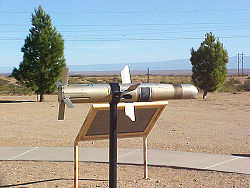 According to The New York Times
, the United States supplied the following arms to Iran:
antitank missiles to Iran through an arms dealer named Manucher Ghorbanifar
, a friend of Iran's Prime Minister
, Mir-Hossein Mousavi
. Hours after receiving the weapons, the Islamic fundamentalist group Islamic Jihad
(that later evolved into Hezbollah) released one hostage they had been holding in Lebanon, the Reverend Benjamin Weir
.
missiles, and a failed London meeting between McFarlane and Manucher Ghorbanifar
, Arrow Air Flight 1285
, a plane containing 248 American servicemen, crashed in Newfoundland
on December 12, 1985, killing all people aboard. On the day of the crash, responsibility was claimed by the Islamic Jihad Organization
, a wing of Hezbollah that had taken credit for the kidnapping of the very Americans in Lebanon whom the Reagan administration sought to have released. The crash came on the second anniversary of another attack for which Islamic Jihad took credit: the near-simultaneous bombings of six targets in Kuwait
, the French and American Embassies among them. Members of Hezbollah had participated in, and were jailed for, those attacks, but most of the conspirators were members of al-Dawa. The accident was investigated by the Canadian Aviation Safety Board (CASB), and was determined to have been caused by the aircraft's unexpectedly high drag and reduced lift condition, which was most likely due to ice contamination, although a minority report stated as part of its conclusions that "Fire broke out on board while the aircraft was in flight, possibly due to a detonation in a cargo compartment".
 Robert McFarlane resigned on December 5, 1985, citing that he wanted to spend more time with his family; he was replaced by Admiral John Poindexter
.
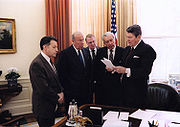
Two days later, Reagan met with his advisors at the White House, where a new plan was introduced. This one called for a slight change in the arms transactions: instead of the weapons going to the "moderate" Iranian group, they would go to "moderate" Iranian army leaders. As the weapons were delivered from Israel by air, the hostages held by Hezbollah would be released. Israel would still pay the United States for reimbursing the weapons. Though staunchly opposed by Secretary of State
George Shultz and Secretary of Defense
Caspar Weinberger
, the plan was authorized by Reagan, who stated that, "We were not trading arms for hostages, nor were we negotiating with terrorists." Now retired National Security Advisor McFarlane flew to London to meet with Israelis and Ghorbanifar in an attempt to persuade the Iranian to use his influence to release the hostages before any arms transactions occurred; this plan was rejected by Ghorbanifar.
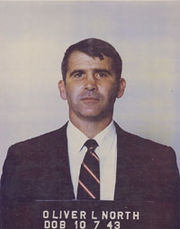
On the day of McFarlane's resignation, Oliver North
, a military aide to the United States National Security Council
(NSC), proposed a new plan for selling arms to Iran, which included two major adjustments: instead of selling arms through Israel, the sale was to be direct, and a portion of the proceeds would go to Contras
, or Nicaraguan guerilla fighters opposed to communism, at a markup. North proposed a $15 million markup, while contracted arms broker Ghorbanifar added a 41% markup of his own. Other members of the NSC were in favor of North's plan; with large support, Poindexter authorized it without notifying President Reagan, and it went into effect. At first, the Iranians refused to buy the arms at the inflated price because of the excessive markup imposed by North and Ghorbanifar. They eventually relented, and in February 1986, 1,000 TOW missiles were shipped to the country. From May to November 1986, there were additional shipments of miscellaneous weapons and parts.
Both the sale of weapons to Iran, and the funding of the Contras, attempted to circumvent not only stated administration policy, but also the Boland Amendment
. Administration officials argued that regardless of the Congress restricting the funds for the Contras, or any affair, the President (or in this case the administration) could carry on by seeking alternative means of funding such as private entities and foreign governments. Funding from one foreign country, Brunei
, was botched when North's secretary, Fawn Hall
, transposed the numbers of North's Swiss bank account number. A Swiss businessman, suddenly $10 million richer, alerted the authorities of the mistake. The money was eventually returned to the Sultan of Brunei, with interest.
On January 7, 1986, John Poindexter proposed to the president a modification of the approved plan: instead of negotiating with the "moderate" Iranian political group, the U.S. would negotiate with "moderate" members of the Iranian government. Poindexter told Reagan that Ghorbanifar had important connections within the Iranian government, so with the hope of the release of the hostages, Reagan approved this plan as well. Throughout February 1986, weapons were shipped directly to Iran by the United States (as part of Oliver North's plan, without the knowledge of President Reagan) and none of the hostages were released. Retired National Security Advisor McFarlane conducted another international voyage, this one to Tehran. He met directly with the "moderate" Iranian political group that sought to establish U.S.-Iranian relations in an attempt to free the four remaining hostages. This meeting also failed. The members requested concessions such as Israel's withdrawal from the Golan Heights, which the United States rejected.
in Lebanon. Following this, William Casey, head of the CIA, requested that the U.S. authorize sending a shipment of small missile parts to Iranian military forces as a way of expressing gratitude. Casey also justified this request by stating that the contact in the Iranian government might otherwise lose face, or be executed, and hostages killed. Reagan authorized the shipment to ensure that those potential events would not occur.
In September and October 1986 three more Americans — Frank Reed, Joseph Ciccipio, Edward Tracy — were abducted in Lebanon by a separate terrorist group. The reasons for their abduction are unknown, although it is speculated that they were kidnapped to replace the freed Americans. One more original hostage, David Jacobsen, was later released. The captors promised to release the remaining two, but the release never happened.
 After a leak by Iranian Mehdi Hashemi
, the Lebanese magazine Ash-Shiraa
exposed the arrangement on November 3, 1986. This was the first public reporting of the weapons-for-hostages deal. The operation was discovered only after an airlift of guns was downed over Nicaragua. Eugene Hasenfus
, who was captured by Nicaraguan authorities, initially alleged in a press conference on Nicaraguan soil that two of his coworkers, Max Gomez and Ramon Medina, worked for the Central Intelligence Agency
. He later said he did not know whether they did or not. The Iranian government confirmed the Ash-Shiraa story, and ten days after the story was first published, President Ronald Reagan appeared on national television from the Oval Office
on November 13 stating:
The scandal was compounded when Oliver North
destroyed or hid pertinent documents between November 21 and November 25, 1986. During North's trial in 1989, his secretary, Fawn Hall
, testified extensively about helping North alter, shred, and remove official United States National Security Council
(NSC) documents from the White House. According to The New York Times, enough documents were put into a government shredder to jam it. North's explanation for destroying some documents was to protect the lives of individuals involved in Iran
and Contra
operations. It was not until years after the trial that North's notebooks were made public, and only after the National Security Archive
and Public Citizen
sued the Office of the Independent Council
under the Freedom of Information Act
.
During the trial North testified that on November 21, 22, or 24, he witnessed Poindexter destroy what may have been the only signed copy of a presidential covert-action finding that sought to authorize CIA participation in the November 1985 Hawk missile
shipment to Iran. US Attorney General
Edwin Meese
admitted on November 25 that profits from weapons sales to Iran were made available to assist the Contra rebels in Nicaragua. On the same day, John Poindexter resigned, and Oliver North was fired by President Reagan. Poindexter was replaced by Frank Carlucci
on December 2, 1986.
In his expose Veil: The Secret Wars of the CIA 1981–1987, journalist Bob Woodward
chronicles the role of the CIA in facilitating the transfer of funds from the Iran arms sales to the Nicaraguan Contras spearheaded by Oliver North. Then Director of the CIA, William J. Casey
, admitted to Woodward in February 1987 that he was aware of the diversion of funds to the contras confirming a number of encounters documented by Woodward. The admission occurred while Casey was hospitalized for a stroke. On May 6, 1987 William Casey died the day after Congress began its public hearings on the Iran-contra affair.
, former Secretary of State Edmund Muskie
, and former National Security Adviser Brent Scowcroft
to serve as members. This Presidential Commission
took effect on December 1 and became known as the "Tower Commission". The main objectives of the commission were to inquire into "the circumstances surrounding the Iran-Contra matter, other case studies that might reveal strengths and weaknesses in the operation of the National Security Council system under stress, and the manner in which that system has served eight different Presidents since its inception in 1947." The commission was the first presidential commission to review and evaluate the National Security Council.
President Reagan appeared before the Tower Commission on December 2, 1986, to answer questions regarding his involvement in the affair. When asked about his role in authorizing the arms deals, he first stated that he had; later, he appeared to contradict himself by stating that he had no recollection of doing so. In his 1990 autobiography, An American Life
, Reagan acknowledges authorizing the shipments to Israel.
The report published by the Tower Commission was delivered to the President on February 26, 1987. The Commission had interviewed 80 witnesses to the scheme, including Reagan, and two of the arms trade middlemen: Manucher Ghorbanifar
and Adnan Khashoggi
. The 200 page report was the most comprehensive of any released, criticizing the actions of Oliver North, John Poindexter, Caspar Weinberger, and others. It determined that President Reagan did not have knowledge of the extent of the program, especially about the diversion of funds to the Contras, although it argued that the President ought to have had better control of the National Security Council staff. The report heavily criticized Reagan for not properly supervising his subordinates or being aware of their actions. A major result of the Tower Commission was the consensus that Reagan should have listened to his National Security Advisor more, thereby placing more power in the hands of that chair.
The Democratic-controlled United States Congress
issued its own report on November 18, 1987, stating that "If the president did not know what his national security advisers were doing, he should have." The congressional report wrote that the president bore "ultimate responsibility" for wrongdoing by his aides, and his administration exhibited "secrecy, deception and disdain for the law." It also read in part: "The central remaining question is the role of the President in the Iran-contra affair. On this critical point, the shredding of documents by Poindexter, North and others, and the death of Casey, leave the record incomplete."
, which in the case The Republic of Nicaragua v. The United States of America
ruled in favor of Nicaragua mandating the payment of compensation, which the United States refused to do. Compliance proved futile as the United States, a permanent member of the Security Council, blocked any enforcement mechanism attempted by Nicaragua.
Reagan expressed regret regarding the situation during a nationally televised address from the White House Oval Office on March 4, 1987 and two other speeches; Reagan had not spoken to the American people directly for three months amidst the scandal. President Reagan told the American people the reason why he did not update them on the scandal:
He then took full responsibility for the acts committed:
Finally, the president stated that his previous assertions that the U.S. did not trade arms for hostages were incorrect:
To this day Reagan's role in the transactions is not definitively known; it is unclear exactly what Reagan knew and when, and whether the arms sales were motivated by his desire to save the U.S. hostages. Oliver North wrote that "Ronald Reagan knew of and approved a great deal of what went on with both the Iranian initiative and private efforts on behalf of the contras and he received regular, detailed briefings on both.... I have no doubt that he was told about the use of residuals for the Contras, and that he approved it. Enthusiastically." Handwritten notes by Defense Secretary Weinberger indicate that the President was aware of potential hostages transfers with Iran, as well as the sale of Hawk and TOW missiles to what he was told were "moderate elements" within Iran. Notes taken on December 7, 1985, by Weinberger record that Reagan said that "he could answer charges of illegality but he couldn't answer charge [sic] that 'big strong President Reagan passed up a chance to free hostages.'"
Domestically, the scandal precipitated a drop in President Reagan's popularity as his approval ratings saw "the largest single drop for any U.S. president in history", from 67% to 46% in November 1986, according to a New York Times/CBS News poll. The "Teflon President", as Reagan was nicknamed by critics, survived the scandal, however, and by January 1989 a Gallup poll was "recording a 64% approval rating," the highest ever recorded for a departing President at that time.
Internationally the damage was more severe. Magnus Ranstorp
wrote, "U.S. willingness to engage in concessions with Iran and the Hezbollah not only signaled to its adversaries that hostage-taking was an extremely useful instrument in extracting political and financial concessions for the West but also undermined any credibility of U.S. criticism of other states' deviation from the principles of no-negotiation and no concession to terrorists and their demands."
In Iran Mehdi Hashemi
, the leaker of the scandal, was executed in 1987, allegedly for activities unrelated to the scandal. Though Hashemi made a full video confession to numerous serious charges, some observers find the coincidence of his leak and the subsequent prosecution highly suspicious.
rights may have been violated by the indirect use of his testimony to Congress which had been given under a grant of immunity. In 1990, Poindexter was convicted on several felony counts of conspiracy
, lying to Congress, obstruction of justice
, and altering and destroying documents pertinent to the investigation. His convictions were also overturned on appeal on similar grounds. Arthur L. Liman
served as chief counsel for the Senate during the Iran-Contra Scandal.
The Independent Counsel, Lawrence E. Walsh, chose not to re-try North or Poindexter. In total, several dozen people were investigated by Walsh's office.
During his election campaign in 1988, Vice President Bush denied any knowledge of the Iran-Contra affair by saying he was "out of the loop." Though his diaries included that he was "one of the few people that know fully the details," he repeatedly refused to discuss the incident and won the election. On December 24, 1992, nearing the end of his term in office after being defeated by Bill Clinton
the previous month, Bush pardoned six administration officials, namely Elliott Abrams
, Duane Clarridge, Alan Fiers, Clair George
, Robert McFarlane
, and Caspar Weinberger
.
In Poindexter's hometown of Odon, Indiana
, a street was renamed to John Poindexter Street. Bill Breeden, a former minister, stole the street's sign in protest of the Iran-Contra Affair. He claimed that he was holding it for a ransom of $30 million, in reference to the amount of money given to Iran to transfer to the Contras. He was later arrested and confined to prison, making him, as satirically noted by Howard Zinn
, "the only person to be imprisoned as a result of the Iran-Contra Scandal."
and held hearings in mid 1987. Transcripts were published as: Iran-Contra Investigation: Joint Hearings Before the Senate Select Committee on Secret Military Assistance to Iran and the Nicaraguan Opposition and the House Select Committee to Invesitgate Covert Arms Transactions with Iran (US GPO 1987-88). A closed Executive Session heard classified testimony from North & Poindexter; this transcript was published in a redacted format. The joint committee's final report was Report of the Congressional Committees Investigating the Iran-Contra Affair With Supplemental, Minority, and Additional Views (US GPO Nov 17 1987) The records of the committee are at the National Archives, but many are still non-public.
Testimony was also heard before the House Foreign Affairs Committee, House Permanent Select Committee on Intelligence, and Senate Select Committee on Intelligence and can be found in the Congressional Record
for those bodies. The Senate Intelligence Committee produced two reports: Preliminary Inquiry into the Sale of Arms to Iran and Possible Diversion of Funds to the Nicaraguan Resistance (February 2, 1987) and Were Relevant Documents Withheld from the Congressional Committees Investigating the Iran-Contra Affair? (June 1989).
The Tower Commission Report was published as the Report of the President's Special Review Board. US GPO Feb 26 1987. It was also published as The Tower Commission Report, Bantam Books, 1987, ISBN 0553269682
The Office of Independent Counsel/Walsh investigation produced four interim reports to Congress. Its final report was published as the Final Report of the Independent Counsel for Iran/Contra Matters. Walsh's records are available at the National Archives.
Political scandal
A political scandal is a kind of political corruption that is exposed and becomes a scandal, in which politicians or government officials are accused of engaging in various illegal, corrupt, or unethical practices...
in the United States
United States
The United States of America is a federal constitutional republic comprising fifty states and a federal district...
that came to light in November 1986. During the Reagan administration, senior Reagan administration officials and President Reagan secretly facilitated the sale of arms to Iran
Iran
Iran , officially the Islamic Republic of Iran , is a country in Southern and Western Asia. The name "Iran" has been in use natively since the Sassanian era and came into use internationally in 1935, before which the country was known to the Western world as Persia...
, the subject of an arms embargo. Some U.S. officials also hoped that the arms sales would secure the release of hostages and allow U.S. intelligence agencies to fund the Nicaragua
Nicaragua
Nicaragua is the largest country in the Central American American isthmus, bordered by Honduras to the north and Costa Rica to the south. The country is situated between 11 and 14 degrees north of the Equator in the Northern Hemisphere, which places it entirely within the tropics. The Pacific Ocean...
n Contras
Contras
The contras is a label given to the various rebel groups opposing Nicaragua's FSLN Sandinista Junta of National Reconstruction government following the July 1979 overthrow of Anastasio Somoza Debayle's dictatorship...
. Under the Boland Amendment
Boland Amendment
The Boland Amendment was the name given to three U.S. legislative amendments between 1982 and 1984, all aimed at limiting U.S. government assistance to the Contras in Nicaragua...
, further funding of the Contras by the government had been prohibited by Congress.
The scandal began as an operation to free six American hostages being held by a terrorist group with Iranian ties connected to the Army of the Guardians of the Islamic Revolution. It was planned that Israel
Israel
The State of Israel is a parliamentary republic located in the Middle East, along the eastern shore of the Mediterranean Sea...
would ship weapons to Iran
Iran
Iran , officially the Islamic Republic of Iran , is a country in Southern and Western Asia. The name "Iran" has been in use natively since the Sassanian era and came into use internationally in 1935, before which the country was known to the Western world as Persia...
, and then the U.S. would resupply Israel and receive the Israeli payment. The Iranian recipients promised to do everything in their power to achieve the release of six U.S. hostages. The plan deteriorated into an arms-for-hostages scheme, in which members of the executive branch sold weapons to Iran in exchange for the release of the American hostages. Large modifications to the plan were devised by Lieutenant Colonel Oliver North
Oliver North
Oliver Laurence North is a retired U.S. Marine Corps officer, political commentator, host of War Stories with Oliver North on Fox News Channel, a military historian, and a New York Times best-selling author....
of the National Security Council
United States National Security Council
The White House National Security Council in the United States is the principal forum used by the President of the United States for considering national security and foreign policy matters with his senior national security advisors and Cabinet officials and is part of the Executive Office of the...
in late 1985, in which a portion of the proceeds from the weapon sales was diverted to fund anti-Sandinista
Sandinista National Liberation Front
The Sandinista National Liberation Front is a socialist political party in Nicaragua. Its members are called Sandinistas in both English and Spanish...
and anti-communist rebels, or Contras
Contras
The contras is a label given to the various rebel groups opposing Nicaragua's FSLN Sandinista Junta of National Reconstruction government following the July 1979 overthrow of Anastasio Somoza Debayle's dictatorship...
, in Nicaragua
Nicaragua
Nicaragua is the largest country in the Central American American isthmus, bordered by Honduras to the north and Costa Rica to the south. The country is situated between 11 and 14 degrees north of the Equator in the Northern Hemisphere, which places it entirely within the tropics. The Pacific Ocean...
.
While President Ronald Reagan
Ronald Reagan
Ronald Wilson Reagan was the 40th President of the United States , the 33rd Governor of California and, prior to that, a radio, film and television actor....
was a supporter of the Contra cause, no conclusive evidence has been found showing that he authorized the diversion of the money raised by the Iranian arms sales to the Contras. To this day, it is unclear exactly what Reagan knew and when, and whether the arms sales were motivated by his desire to save the U.S. hostages. After the weapon sales were revealed in November 1986, Reagan appeared on national television and stated that the weapons transfers had indeed occurred, but that the United States did not trade arms for hostages. The investigation was impeded when large volumes of documents relating to the scandal were destroyed or withheld from investigators by Reagan administration officials. On March 4, 1987, Reagan returned to the airwaves in a nationally televised address, taking full responsibility for any actions that he was unaware of, and admitting that "what began as a strategic opening to Iran deteriorated, in its implementation, into trading arms for hostages."
Several investigations ensued, including those by the United States Congress
United States Congress
The United States Congress is the bicameral legislature of the federal government of the United States, consisting of the Senate and the House of Representatives. The Congress meets in the United States Capitol in Washington, D.C....
and the three-man, Reagan-appointed Tower Commission
Tower Commission
Commissioned on November 26, 1986 by American President Ronald Reagan, the Tower Commission was in response to the Iran Contra scandal. Taking effect on December 1, Reagan appointed Republican and former Senator John Tower of Texas, former Secretary of State Edmund Muskie, and former National...
. Neither found any evidence that President Reagan himself knew of the extent of the multiple programs. In the end, fourteen administration officials were indicted, including then-Secretary of Defense
United States Secretary of Defense
The Secretary of Defense is the head and chief executive officer of the Department of Defense of the United States of America. This position corresponds to what is generally known as a Defense Minister in other countries...
Caspar Weinberger
Caspar Weinberger
Caspar Willard "Cap" Weinberger , was an American politician, vice president and general counsel of Bechtel Corporation, and Secretary of Defense under President Ronald Reagan from January 21, 1981, until November 23, 1987, making him the third longest-serving defense secretary to date, after...
. Eleven convictions resulted, some of which were vacated on appeal. The rest of those indicted or convicted were all pardoned in the final days of the presidency of George H. W. Bush
George H. W. Bush
George Herbert Walker Bush is an American politician who served as the 41st President of the United States . He had previously served as the 43rd Vice President of the United States , a congressman, an ambassador, and Director of Central Intelligence.Bush was born in Milton, Massachusetts, to...
, who had been vice-president at the time of the affair. Only one, Elliott Abrams
Elliott Abrams
Elliott Abrams is an American attorney and neoconservative policy analyst who served in foreign policy positions for two Republican U.S. Presidents, Ronald Reagan and George W. Bush. While serving for Reagan and in the State Department, Abrams, Paul Wolfowitz, and retired U.S. Marine Corps officer...
, was convicted of two misdemeanors and subsequently pardoned.
Background
ContraContra
Contra is a Latin preposition meaning "against". It is very frequently abbreviated to con, which is a separate preposition. It may refer to:*Contras, Nicaraguan counter-revolutionaries opposed to the Sandinistas...
militants based in Honduras
Honduras
Honduras is a republic in Central America. It was previously known as Spanish Honduras to differentiate it from British Honduras, which became the modern-day state of Belize...
waged a guerilla war to topple the government of Nicaragua
Nicaragua
Nicaragua is the largest country in the Central American American isthmus, bordered by Honduras to the north and Costa Rica to the south. The country is situated between 11 and 14 degrees north of the Equator in the Northern Hemisphere, which places it entirely within the tropics. The Pacific Ocean...
. The Contras' form of warfare was "one of consistent and bloody abuse of human rights, of murder, torture, mutilation, rape, arson, destruction and kidnapping." The "Contras systematically engage in violent abuses... so prevalent that these may be said to be their principal means of waging war." A Human Rights Watch
Human Rights Watch
Human Rights Watch is an international non-governmental organization that conducts research and advocacy on human rights. Its headquarters are in New York City and it has offices in Berlin, Beirut, Brussels, Chicago, Geneva, Johannesburg, London, Los Angeles, Moscow, Paris, San Francisco, Tokyo,...
report found that the Contras were guilty of targeting health care clinics and health care workers for assassination; kidnapping civilians; torturing and executing civilians, including children, who were captured in combat; raping women; indiscriminately attacking civilians and civilian homes; seizing civilian property; and burning civilian houses in captured towns.
Direct funding of the Contras insurgency had been made illegal through the Boland Amendment
Boland Amendment
The Boland Amendment was the name given to three U.S. legislative amendments between 1982 and 1984, all aimed at limiting U.S. government assistance to the Contras in Nicaragua...
, the name given to three U.S. legislative amendments between 1982 and 1984 aimed at limiting US government assistance to the Contras militants. In violation of the Boland Amendment, senior officials of the Reagan administration continued to secretly arm and train the Contras and provide arms to Iran, an operation they called "the Enterprise".
Arms sales to Iran
Michael LedeenMichael Ledeen
Michael Arthur Ledeen is an American specialist on foreign policy. His research areas have included state sponsors of terrorism, Iran, the Middle East, Europe , U.S.-China relations, intelligence, and Africa and is a leading neoconservative...
, a consultant of National Security Adviser
National Security Advisor (United States)
The Assistant to the President for National Security Affairs, commonly referred to as the National Security Advisor , serves as the chief advisor to the President of the United States on national security issues...
Robert McFarlane
Robert McFarlane
Robert Carl "Bud" McFarlane was a National Security Advisor to President Ronald Reagan, serving from 1983 through 1985.After a career in the Marines, he became part of the Reagan administration, and was a leading architect of the Strategic Defense Initiative for defending the United States...
, requested assistance from Israeli Prime Minister
Prime Minister of Israel
The Prime Minister of Israel is the head of the Israeli government and the most powerful political figure in Israel . The prime minister is the country's chief executive. The official residence of the prime minister, Beit Rosh Hamemshala is in Jerusalem...
Shimon Peres
Shimon Peres
GCMG is the ninth President of the State of Israel. Peres served twice as the eighth Prime Minister of Israel and once as Interim Prime Minister, and has been a member of 12 cabinets in a political career spanning over 66 years...
for help in the sale of arms to Iran. At the time, Iran was in the midst of the Iran–Iraq War and could find few Western nations willing to supply it with weapons. The idea behind the plan was for Israel
Israel
The State of Israel is a parliamentary republic located in the Middle East, along the eastern shore of the Mediterranean Sea...
to ship weapons through an intermediary (identified as Manucher Ghorbanifar
Manucher Ghorbanifar
Manucher Ghorbanifar is an expatriate Iranian arms dealer. He is best known as a middleman in the Iran-Contra Affair during the Ronald Reagan presidency. He re-emerged in American politics during the lead-up to the 2003 invasion of Iraq during the first term of President George W...
) to a supposedly moderate, politically influential Iranian group opposed to the Ayatollah Khomeni; after the transaction, the U.S. would reimburse Israel with the same weapons, while receiving monetary benefits. The Israeli government required that the sale of arms meet high level approval from the United States government, and when Robert McFarlane convinced them that the U.S. government approved the sale, Israel obliged by agreeing to sell the arms.
In 1985, President Reagan entered Bethesda Naval Hospital for colon cancer surgery. While the President was recovering in the hospital, McFarlane met with him and told him that representatives from Israel had contacted the National Security Agency
National Security Agency
The National Security Agency/Central Security Service is a cryptologic intelligence agency of the United States Department of Defense responsible for the collection and analysis of foreign communications and foreign signals intelligence, as well as protecting U.S...
to pass on confidential information from what Reagan later described as "moderate" Iranians opposed to the Ayatollah. According to Reagan, these Iranians sought to establish a quiet relationship with the United States, before establishing formal relationships upon the death of the Ayatollah. In Reagan's account, McFarlane told Reagan that the Iranians, to demonstrate their seriousness, offered to persuade the Hezbollah terrorists to release the seven U.S. hostages. McFarlane met with the Israeli intermediaries; Reagan claims that he allowed this because he believed that establishing relations with a strategically located country, and preventing the Soviet Union
Soviet Union
The Soviet Union , officially the Union of Soviet Socialist Republics , was a constitutionally socialist state that existed in Eurasia between 1922 and 1991....
from doing the same, was a beneficial move. Although Reagan claims that the arms sales were to a "moderate" faction of Iranians, the Walsh Iran/Contra Report states that the arms sales were "to Iran" itself, which was under the control of the Ayatollah.
Following the Israeli-U.S. meeting, Israel requested permission from the U.S. to sell a small number of TOW antitank missiles
BGM-71 TOW
The BGM-71 TOW is an anti-tank missile. "BGM" is a weapon classification that stands for "Multiple Environment , Surface-Attack , Missile ". "TOW" is an acronym that stands for "Tube-launched, Optically-tracked, Wire command data link, guided missile"...
(Tube-launched, Optically-tracked, Wire-guided) to the "moderate" Iranians, saying that it would demonstrate that the group actually had high-level connections to the U.S. government. Reagan initially rejected the plan, until Israel sent information to the U.S. showing that the "moderate" Iranians were opposed to terrorism and had fought against it. Now having a reason to trust the "moderates", Reagan approved the transaction, which was meant to be between Israel and the "moderates" in Iran, with the U.S. reimbursing Israel. In his 1990 autobiography An American Life
An American Life
An American Life is the 1990 autobiography authored by former American President Ronald Reagan. Released almost two years after President Reagan left office, the book reached number eight on The New York Times bestsellers list.-Content:...
, Reagan claimed that he was deeply committed to securing the release of the hostages; it was this compassion that supposedly motivated his support for the arms initiatives. The president requested that the "moderate" Iranians do everything in their capability to free the hostages held by Hezbollah.
The New York Times
The New York Times is an American daily newspaper founded and continuously published in New York City since 1851. The New York Times has won 106 Pulitzer Prizes, the most of any news organization...
, the United States supplied the following arms to Iran:
- August 20, 1985. 96 TOWBGM-71 TOWThe BGM-71 TOW is an anti-tank missile. "BGM" is a weapon classification that stands for "Multiple Environment , Surface-Attack , Missile ". "TOW" is an acronym that stands for "Tube-launched, Optically-tracked, Wire command data link, guided missile"...
anti-tank missiles - September 14, 1985. 408 more TOWs
- November 24, 1985. 18 HawkMIM-23 HawkThe Raytheon MIM-23 Hawk is a U.S. medium range surface-to-air missile. The Hawk was initially designed to destroy aircraft and was later adapted to destroy other missiles in flight. The missile entered service in 1960, and a program of extensive upgrades has kept it from becoming obsolete. It was...
anti-aircraft missiles - February 17, 1986. 500 TOWs
- February 27, 1986. 500 TOWs
- May 24, 1986. 508 TOWs, 240 Hawk spare parts
- August 4, 1986. More Hawk spares
- October 28, 1986. 500 TOWs
First arms sale
On August 20, 1985, Israel sent 96 American-made BGM-71 TOWBGM-71 TOW
The BGM-71 TOW is an anti-tank missile. "BGM" is a weapon classification that stands for "Multiple Environment , Surface-Attack , Missile ". "TOW" is an acronym that stands for "Tube-launched, Optically-tracked, Wire command data link, guided missile"...
antitank missiles to Iran through an arms dealer named Manucher Ghorbanifar
Manucher Ghorbanifar
Manucher Ghorbanifar is an expatriate Iranian arms dealer. He is best known as a middleman in the Iran-Contra Affair during the Ronald Reagan presidency. He re-emerged in American politics during the lead-up to the 2003 invasion of Iraq during the first term of President George W...
, a friend of Iran's Prime Minister
Prime Minister of Iran
Prime Minister of Iran was a political post in Iran that had existed during several different periods of time starting with the Qajar era until its most recent revival from 1979 to 1989 following the Iranian Revolution.-Prime Ministers of Qajar era:In the Qajar era, prime ministers were known by...
, Mir-Hossein Mousavi
Mir-Hossein Mousavi
Mir-Hossein Mousavi Khameneh is an Iranian reformist politician, artist and architect who served as the seventy-ninth and last Prime Minister of Iran from 1981 to 1989. He was a Reformist candidate for the 2009 presidential election and eventually the leader of the opposition in the post-election...
. Hours after receiving the weapons, the Islamic fundamentalist group Islamic Jihad
Islamic Jihad Organization
The Islamic Jihad Organization – IJO or Organisation du Jihad Islamique in French, but best known as ‘Islamic Jihad’ for short, was a fundamentalist Shia group known for its activities in the 1980s during the Lebanese Civil War...
(that later evolved into Hezbollah) released one hostage they had been holding in Lebanon, the Reverend Benjamin Weir
Benjamin Weir
Benjamin Weir was an American hostage in Lebanon during the Iran-Contra Affair .Weir, who with his wife Carol served as missionaries in Lebanon with the Presbyterian Church for nearly 30 years, was kidnapped off the streets of Beirut in May 1984. The kidnapping was done by an Islamic...
.
Arrow Air 1285 crash
After a botched delivery of HawkMIM-23 Hawk
The Raytheon MIM-23 Hawk is a U.S. medium range surface-to-air missile. The Hawk was initially designed to destroy aircraft and was later adapted to destroy other missiles in flight. The missile entered service in 1960, and a program of extensive upgrades has kept it from becoming obsolete. It was...
missiles, and a failed London meeting between McFarlane and Manucher Ghorbanifar
Manucher Ghorbanifar
Manucher Ghorbanifar is an expatriate Iranian arms dealer. He is best known as a middleman in the Iran-Contra Affair during the Ronald Reagan presidency. He re-emerged in American politics during the lead-up to the 2003 invasion of Iraq during the first term of President George W...
, Arrow Air Flight 1285
Arrow Air Flight 1285
Arrow Air Flight 1285 was a McDonnell Douglas DC-8-63CF jetliner, registered N950JW, which operated as an international charter flight carrying U.S. troops from Cairo, Egypt, to their home base in Fort Campbell, Kentucky, via Cologne, Germany and Gander, Newfoundland...
, a plane containing 248 American servicemen, crashed in Newfoundland
Newfoundland and Labrador
Newfoundland and Labrador is the easternmost province of Canada. Situated in the country's Atlantic region, it incorporates the island of Newfoundland and mainland Labrador with a combined area of . As of April 2011, the province's estimated population is 508,400...
on December 12, 1985, killing all people aboard. On the day of the crash, responsibility was claimed by the Islamic Jihad Organization
Islamic Jihad Organization
The Islamic Jihad Organization – IJO or Organisation du Jihad Islamique in French, but best known as ‘Islamic Jihad’ for short, was a fundamentalist Shia group known for its activities in the 1980s during the Lebanese Civil War...
, a wing of Hezbollah that had taken credit for the kidnapping of the very Americans in Lebanon whom the Reagan administration sought to have released. The crash came on the second anniversary of another attack for which Islamic Jihad took credit: the near-simultaneous bombings of six targets in Kuwait
1983 Kuwait bombings
The 1983 Kuwait bombings were attacks on six key foreign and Kuwaiti installations on December 12, 1983, two months after the 1983 Beirut barracks bombing. The 90-minute coordinated attack on two embassies, the country's main airport and petro-chemical plant, was more notable for the damage it was...
, the French and American Embassies among them. Members of Hezbollah had participated in, and were jailed for, those attacks, but most of the conspirators were members of al-Dawa. The accident was investigated by the Canadian Aviation Safety Board (CASB), and was determined to have been caused by the aircraft's unexpectedly high drag and reduced lift condition, which was most likely due to ice contamination, although a minority report stated as part of its conclusions that "Fire broke out on board while the aircraft was in flight, possibly due to a detonation in a cargo compartment".
Modifications in plans
John Poindexter
John Marlan Poindexter is a retired United States naval officer and Department of Defense official. He was Deputy National Security Advisor and National Security Advisor for the Reagan administration. He was convicted in April 1990 of multiple felonies as a result of his actions in the Iran-Contra...
.
Two days later, Reagan met with his advisors at the White House, where a new plan was introduced. This one called for a slight change in the arms transactions: instead of the weapons going to the "moderate" Iranian group, they would go to "moderate" Iranian army leaders. As the weapons were delivered from Israel by air, the hostages held by Hezbollah would be released. Israel would still pay the United States for reimbursing the weapons. Though staunchly opposed by Secretary of State
United States Secretary of State
The United States Secretary of State is the head of the United States Department of State, concerned with foreign affairs. The Secretary is a member of the Cabinet and the highest-ranking cabinet secretary both in line of succession and order of precedence...
George Shultz and Secretary of Defense
United States Secretary of Defense
The Secretary of Defense is the head and chief executive officer of the Department of Defense of the United States of America. This position corresponds to what is generally known as a Defense Minister in other countries...
Caspar Weinberger
Caspar Weinberger
Caspar Willard "Cap" Weinberger , was an American politician, vice president and general counsel of Bechtel Corporation, and Secretary of Defense under President Ronald Reagan from January 21, 1981, until November 23, 1987, making him the third longest-serving defense secretary to date, after...
, the plan was authorized by Reagan, who stated that, "We were not trading arms for hostages, nor were we negotiating with terrorists." Now retired National Security Advisor McFarlane flew to London to meet with Israelis and Ghorbanifar in an attempt to persuade the Iranian to use his influence to release the hostages before any arms transactions occurred; this plan was rejected by Ghorbanifar.
On the day of McFarlane's resignation, Oliver North
Oliver North
Oliver Laurence North is a retired U.S. Marine Corps officer, political commentator, host of War Stories with Oliver North on Fox News Channel, a military historian, and a New York Times best-selling author....
, a military aide to the United States National Security Council
United States National Security Council
The White House National Security Council in the United States is the principal forum used by the President of the United States for considering national security and foreign policy matters with his senior national security advisors and Cabinet officials and is part of the Executive Office of the...
(NSC), proposed a new plan for selling arms to Iran, which included two major adjustments: instead of selling arms through Israel, the sale was to be direct, and a portion of the proceeds would go to Contras
Contras
The contras is a label given to the various rebel groups opposing Nicaragua's FSLN Sandinista Junta of National Reconstruction government following the July 1979 overthrow of Anastasio Somoza Debayle's dictatorship...
, or Nicaraguan guerilla fighters opposed to communism, at a markup. North proposed a $15 million markup, while contracted arms broker Ghorbanifar added a 41% markup of his own. Other members of the NSC were in favor of North's plan; with large support, Poindexter authorized it without notifying President Reagan, and it went into effect. At first, the Iranians refused to buy the arms at the inflated price because of the excessive markup imposed by North and Ghorbanifar. They eventually relented, and in February 1986, 1,000 TOW missiles were shipped to the country. From May to November 1986, there were additional shipments of miscellaneous weapons and parts.
Both the sale of weapons to Iran, and the funding of the Contras, attempted to circumvent not only stated administration policy, but also the Boland Amendment
Boland Amendment
The Boland Amendment was the name given to three U.S. legislative amendments between 1982 and 1984, all aimed at limiting U.S. government assistance to the Contras in Nicaragua...
. Administration officials argued that regardless of the Congress restricting the funds for the Contras, or any affair, the President (or in this case the administration) could carry on by seeking alternative means of funding such as private entities and foreign governments. Funding from one foreign country, Brunei
Brunei
Brunei , officially the State of Brunei Darussalam or the Nation of Brunei, the Abode of Peace , is a sovereign state located on the north coast of the island of Borneo, in Southeast Asia...
, was botched when North's secretary, Fawn Hall
Fawn Hall
Fawn Hall was a secretary to Lt. Colonel Oliver North and a notable figure in the Iran-Contra affair, helping him shred confidential documents....
, transposed the numbers of North's Swiss bank account number. A Swiss businessman, suddenly $10 million richer, alerted the authorities of the mistake. The money was eventually returned to the Sultan of Brunei, with interest.
On January 7, 1986, John Poindexter proposed to the president a modification of the approved plan: instead of negotiating with the "moderate" Iranian political group, the U.S. would negotiate with "moderate" members of the Iranian government. Poindexter told Reagan that Ghorbanifar had important connections within the Iranian government, so with the hope of the release of the hostages, Reagan approved this plan as well. Throughout February 1986, weapons were shipped directly to Iran by the United States (as part of Oliver North's plan, without the knowledge of President Reagan) and none of the hostages were released. Retired National Security Advisor McFarlane conducted another international voyage, this one to Tehran. He met directly with the "moderate" Iranian political group that sought to establish U.S.-Iranian relations in an attempt to free the four remaining hostages. This meeting also failed. The members requested concessions such as Israel's withdrawal from the Golan Heights, which the United States rejected.
Subsequent dealings
In late July 1986, Hezbollah released another hostage, Father Lawrence Martin Jenco, former head of Catholic Relief ServicesCatholic Relief Services
Catholic Relief Services is the international humanitarian agency of the Catholic community in the United States. Founded in 1943 by the U.S. bishops, the agency provides assistance to 130 million people in more than 90 countries and territories in Africa, Asia, Latin America, the Middle East and...
in Lebanon. Following this, William Casey, head of the CIA, requested that the U.S. authorize sending a shipment of small missile parts to Iranian military forces as a way of expressing gratitude. Casey also justified this request by stating that the contact in the Iranian government might otherwise lose face, or be executed, and hostages killed. Reagan authorized the shipment to ensure that those potential events would not occur.
In September and October 1986 three more Americans — Frank Reed, Joseph Ciccipio, Edward Tracy — were abducted in Lebanon by a separate terrorist group. The reasons for their abduction are unknown, although it is speculated that they were kidnapped to replace the freed Americans. One more original hostage, David Jacobsen, was later released. The captors promised to release the remaining two, but the release never happened.
U.S. knowledge of drug trafficking and the Contras
Col. North's handwritten notebooks and memoranda show that North and other U.S. officials were repeatedly informed that the Contras' ties to trafficking of drugs from Latin America into the United States and that airplanes from the U.S. used to supply arms to the Contras were being flown back with Contras personnel aboard carrying cocaine into the United States. The matter was further examined in the 1997 report of the US Department of Justice Inspector General, where the main question under investigation was whether CIA was instrumental in creating the crack cocaine epidemic in Los Angeles, and where evidence was presented of patronizing by CIA of drug trafficking to Los Angeles, California. The report however stated that the allegations were "exaggerated".Discovery and scandal
Mehdi Hashemi
Mehdi Hashemi was an Iranian Shi'a cleric, and after the 1979 Iranian Revolution, a senior official in the Islamic Revolutionary Guards; he was executed by the new Islamic Republic in its first decade...
, the Lebanese magazine Ash-Shiraa
Ash-Shiraa
Ash-Shiraa is a Lebanese magazine. It was the first to report that the United States had been selling weapons to Iran, a scandal that was later revealed to have been part of an arms-for-hostages deal ....
exposed the arrangement on November 3, 1986. This was the first public reporting of the weapons-for-hostages deal. The operation was discovered only after an airlift of guns was downed over Nicaragua. Eugene Hasenfus
Eugene Hasenfus
Eugene H. Hasenfus is a United States citizen who was alleged by Nicaragua Sandinista authorities to be employed by the U.S...
, who was captured by Nicaraguan authorities, initially alleged in a press conference on Nicaraguan soil that two of his coworkers, Max Gomez and Ramon Medina, worked for the Central Intelligence Agency
Central Intelligence Agency
The Central Intelligence Agency is a civilian intelligence agency of the United States government. It is an executive agency and reports directly to the Director of National Intelligence, responsible for providing national security intelligence assessment to senior United States policymakers...
. He later said he did not know whether they did or not. The Iranian government confirmed the Ash-Shiraa story, and ten days after the story was first published, President Ronald Reagan appeared on national television from the Oval Office
Oval Office
The Oval Office, located in the West Wing of the White House, is the official office of the President of the United States.The room features three large south-facing windows behind the president's desk, and a fireplace at the north end...
on November 13 stating:
"My purpose was... to send a signal that the United States was prepared to replace the animosity between [the U.S. and Iran] with a new relationship... At the same time we undertook this initiative, we made clear that Iran must oppose all forms of international terrorism as a condition of progress in our relationship. The most significant step which Iran could take, we indicated, would be to use its influence in Lebanon to secure the release of all hostages held there."
The scandal was compounded when Oliver North
Oliver North
Oliver Laurence North is a retired U.S. Marine Corps officer, political commentator, host of War Stories with Oliver North on Fox News Channel, a military historian, and a New York Times best-selling author....
destroyed or hid pertinent documents between November 21 and November 25, 1986. During North's trial in 1989, his secretary, Fawn Hall
Fawn Hall
Fawn Hall was a secretary to Lt. Colonel Oliver North and a notable figure in the Iran-Contra affair, helping him shred confidential documents....
, testified extensively about helping North alter, shred, and remove official United States National Security Council
United States National Security Council
The White House National Security Council in the United States is the principal forum used by the President of the United States for considering national security and foreign policy matters with his senior national security advisors and Cabinet officials and is part of the Executive Office of the...
(NSC) documents from the White House. According to The New York Times, enough documents were put into a government shredder to jam it. North's explanation for destroying some documents was to protect the lives of individuals involved in Iran
Iran
Iran , officially the Islamic Republic of Iran , is a country in Southern and Western Asia. The name "Iran" has been in use natively since the Sassanian era and came into use internationally in 1935, before which the country was known to the Western world as Persia...
and Contra
Contras
The contras is a label given to the various rebel groups opposing Nicaragua's FSLN Sandinista Junta of National Reconstruction government following the July 1979 overthrow of Anastasio Somoza Debayle's dictatorship...
operations. It was not until years after the trial that North's notebooks were made public, and only after the National Security Archive
National Security Archive
The National Security Archive is a 501 non-governmental, non-profit research and archival institution located in the George Washington University in Washington, D.C.. Founded in 1985 by Scott Armstrong, it archives and publishes declassified U.S. government files concerning selected topics of US...
and Public Citizen
Public Citizen
Public Citizen is a non-profit, consumer rights advocacy group based in Washington, D.C., United States, with a branch in Austin, Texas. Public Citizen was founded by Ralph Nader in 1971, headed for 26 years by Joan Claybrook, and is now headed by Robert Weissman.-Lobbying Efforts:Public Citizen...
sued the Office of the Independent Council
United States Office of the Independent Counsel
United States Office of the Independent Counsel was an independent prosecutor — distinct from the Attorney General of the United States Department of Justice — that provided reports to the Congress under . The office was terminated in 1999 and replaced by the U.S...
under the Freedom of Information Act
Freedom of Information Act (United States)
The Freedom of Information Act is a federal freedom of information law that allows for the full or partial disclosure of previously unreleased information and documents controlled by the United States government. The Act defines agency records subject to disclosure, outlines mandatory disclosure...
.
During the trial North testified that on November 21, 22, or 24, he witnessed Poindexter destroy what may have been the only signed copy of a presidential covert-action finding that sought to authorize CIA participation in the November 1985 Hawk missile
MIM-23 Hawk
The Raytheon MIM-23 Hawk is a U.S. medium range surface-to-air missile. The Hawk was initially designed to destroy aircraft and was later adapted to destroy other missiles in flight. The missile entered service in 1960, and a program of extensive upgrades has kept it from becoming obsolete. It was...
shipment to Iran. US Attorney General
United States Attorney General
The United States Attorney General is the head of the United States Department of Justice concerned with legal affairs and is the chief law enforcement officer of the United States government. The attorney general is considered to be the chief lawyer of the U.S. government...
Edwin Meese
Edwin Meese
Edwin "Ed" Meese, III is an attorney, law professor, and author who served in official capacities within the Ronald Reagan Gubernatorial Administration , the Reagan Presidential Transition Team , and the Reagan White House , eventually rising to hold the position of the 75th Attorney General of...
admitted on November 25 that profits from weapons sales to Iran were made available to assist the Contra rebels in Nicaragua. On the same day, John Poindexter resigned, and Oliver North was fired by President Reagan. Poindexter was replaced by Frank Carlucci
Frank Carlucci
Frank Charles Carlucci III is a former official in the United States Government, associated with the Republican Party. The most prominent office held by Carlucci was as Secretary of Defense from 1987 until 1989 in the Reagan Administration.-Early life and career:Carlucci was born in Scranton,...
on December 2, 1986.
In his expose Veil: The Secret Wars of the CIA 1981–1987, journalist Bob Woodward
Bob Woodward
Robert Upshur Woodward is an American investigative journalist and non-fiction author. He has worked for The Washington Post since 1971 as a reporter, and is currently an associate editor of the Post....
chronicles the role of the CIA in facilitating the transfer of funds from the Iran arms sales to the Nicaraguan Contras spearheaded by Oliver North. Then Director of the CIA, William J. Casey
William J. Casey
William Joseph Casey was the Director of Central Intelligence from 1981 to 1987. In this capacity he oversaw the entire United States Intelligence Community and personally directed the Central Intelligence Agency ....
, admitted to Woodward in February 1987 that he was aware of the diversion of funds to the contras confirming a number of encounters documented by Woodward. The admission occurred while Casey was hospitalized for a stroke. On May 6, 1987 William Casey died the day after Congress began its public hearings on the Iran-contra affair.
Tower Commission
On November 25, 1986, President Reagan announced the creation of a Special Review Board to look into the matter; the following day, he appointed former Senator John TowerJohn Tower
John Goodwin Tower was the first Republican United States senator from Texas since Reconstruction. He served from 1961 until his retirement in January 1985, after which time he was the chairman of the Reagan-appointed Tower Commission that investigated the Iran-Contra Affair. He was George H. W...
, former Secretary of State Edmund Muskie
Edmund Muskie
Edmund Sixtus "Ed" Muskie was an American politician from Rumford, Maine. He served as Governor of Maine from 1955 to 1959, as a member of the United States Senate from 1959 to 1980, and as Secretary of State under Jimmy Carter from 1980 to 1981...
, and former National Security Adviser Brent Scowcroft
Brent Scowcroft
Brent Scowcroft, KBE was the United States National Security Advisor under Presidents Gerald Ford and George H. W. Bush and a Lieutenant General in the United States Air Force. He also served as Military Assistant to President Richard Nixon and as Deputy Assistant to the President for National...
to serve as members. This Presidential Commission
Presidential Commission (United States)
In the United States, a Presidential Commission is a special task force ordained by the President to complete some special research or investigation...
took effect on December 1 and became known as the "Tower Commission". The main objectives of the commission were to inquire into "the circumstances surrounding the Iran-Contra matter, other case studies that might reveal strengths and weaknesses in the operation of the National Security Council system under stress, and the manner in which that system has served eight different Presidents since its inception in 1947." The commission was the first presidential commission to review and evaluate the National Security Council.
President Reagan appeared before the Tower Commission on December 2, 1986, to answer questions regarding his involvement in the affair. When asked about his role in authorizing the arms deals, he first stated that he had; later, he appeared to contradict himself by stating that he had no recollection of doing so. In his 1990 autobiography, An American Life
An American Life
An American Life is the 1990 autobiography authored by former American President Ronald Reagan. Released almost two years after President Reagan left office, the book reached number eight on The New York Times bestsellers list.-Content:...
, Reagan acknowledges authorizing the shipments to Israel.
The report published by the Tower Commission was delivered to the President on February 26, 1987. The Commission had interviewed 80 witnesses to the scheme, including Reagan, and two of the arms trade middlemen: Manucher Ghorbanifar
Manucher Ghorbanifar
Manucher Ghorbanifar is an expatriate Iranian arms dealer. He is best known as a middleman in the Iran-Contra Affair during the Ronald Reagan presidency. He re-emerged in American politics during the lead-up to the 2003 invasion of Iraq during the first term of President George W...
and Adnan Khashoggi
Adnan Khashoggi
Adnan Khashoggi is a Saudi Arabian arms-dealer and businessman. He is also noted for his engagements with high society in both the Occident and Arabic-speaking worlds, and for his involvement in the Iran–Contra and Lockheed bribery scandals, and numerous other affairs...
. The 200 page report was the most comprehensive of any released, criticizing the actions of Oliver North, John Poindexter, Caspar Weinberger, and others. It determined that President Reagan did not have knowledge of the extent of the program, especially about the diversion of funds to the Contras, although it argued that the President ought to have had better control of the National Security Council staff. The report heavily criticized Reagan for not properly supervising his subordinates or being aware of their actions. A major result of the Tower Commission was the consensus that Reagan should have listened to his National Security Advisor more, thereby placing more power in the hands of that chair.
The Democratic-controlled United States Congress
United States Congress
The United States Congress is the bicameral legislature of the federal government of the United States, consisting of the Senate and the House of Representatives. The Congress meets in the United States Capitol in Washington, D.C....
issued its own report on November 18, 1987, stating that "If the president did not know what his national security advisers were doing, he should have." The congressional report wrote that the president bore "ultimate responsibility" for wrongdoing by his aides, and his administration exhibited "secrecy, deception and disdain for the law." It also read in part: "The central remaining question is the role of the President in the Iran-contra affair. On this critical point, the shredding of documents by Poindexter, North and others, and the death of Casey, leave the record incomplete."
Aftermath
The Nicaraguan government sued the United States before the International Court of JusticeInternational Court of Justice
The International Court of Justice is the primary judicial organ of the United Nations. It is based in the Peace Palace in The Hague, Netherlands...
, which in the case The Republic of Nicaragua v. The United States of America
Nicaragua vs. United States
The Republic of Nicaragua v. The United States of America was a 1984 case of the International Court of Justice in which the ICJ ruled in favor of Nicaragua and against the United States and awarded reparations to Nicaragua. The ICJ held that the U.S...
ruled in favor of Nicaragua mandating the payment of compensation, which the United States refused to do. Compliance proved futile as the United States, a permanent member of the Security Council, blocked any enforcement mechanism attempted by Nicaragua.
Reagan expressed regret regarding the situation during a nationally televised address from the White House Oval Office on March 4, 1987 and two other speeches; Reagan had not spoken to the American people directly for three months amidst the scandal. President Reagan told the American people the reason why he did not update them on the scandal:
"The reason I haven't spoken to you before now is this: You deserve the truth. And as frustrating as the waiting has been, I felt it was improper to come to you with sketchy reports, or possibly even erroneous statements, which would then have to be corrected, creating even more doubt and confusion. There's been enough of that."
He then took full responsibility for the acts committed:
"First, let me say I take full responsibility for my own actions and for those of my administration. As angry as I may be about activities undertaken without my knowledge, I am still accountable for those activities. As disappointed as I may be in some who served me, I'm still the one who must answer to the American people for this behavior."
Finally, the president stated that his previous assertions that the U.S. did not trade arms for hostages were incorrect:
"A few months ago I told the American people I did not trade arms for hostages. My heart and my best intentions still tell me that's true, but the facts and the evidence tell me it is not. As the Tower board reported, what began as a strategic opening to Iran deteriorated, in its implementation, into trading arms for hostages. This runs counter to my own beliefs, to administration policy, and to the original strategy we had in mind."
To this day Reagan's role in the transactions is not definitively known; it is unclear exactly what Reagan knew and when, and whether the arms sales were motivated by his desire to save the U.S. hostages. Oliver North wrote that "Ronald Reagan knew of and approved a great deal of what went on with both the Iranian initiative and private efforts on behalf of the contras and he received regular, detailed briefings on both.... I have no doubt that he was told about the use of residuals for the Contras, and that he approved it. Enthusiastically." Handwritten notes by Defense Secretary Weinberger indicate that the President was aware of potential hostages transfers with Iran, as well as the sale of Hawk and TOW missiles to what he was told were "moderate elements" within Iran. Notes taken on December 7, 1985, by Weinberger record that Reagan said that "he could answer charges of illegality but he couldn't answer charge [sic] that 'big strong President Reagan passed up a chance to free hostages.'"
Domestically, the scandal precipitated a drop in President Reagan's popularity as his approval ratings saw "the largest single drop for any U.S. president in history", from 67% to 46% in November 1986, according to a New York Times/CBS News poll. The "Teflon President", as Reagan was nicknamed by critics, survived the scandal, however, and by January 1989 a Gallup poll was "recording a 64% approval rating," the highest ever recorded for a departing President at that time.
Internationally the damage was more severe. Magnus Ranstorp
Magnus Ranstorp
Dr Magnus Ranstorp, born March 13, 1965 in Hästveda, studies Hizballah, Hamas, al-Qaeda and other militant Islamic movements. He is the Research Director of the Centre for Asymmetric Threat Studies at the Swedish National Defence College, directing a project on Strategic Terrorist Threats to Europe...
wrote, "U.S. willingness to engage in concessions with Iran and the Hezbollah not only signaled to its adversaries that hostage-taking was an extremely useful instrument in extracting political and financial concessions for the West but also undermined any credibility of U.S. criticism of other states' deviation from the principles of no-negotiation and no concession to terrorists and their demands."
In Iran Mehdi Hashemi
Mehdi Hashemi
Mehdi Hashemi was an Iranian Shi'a cleric, and after the 1979 Iranian Revolution, a senior official in the Islamic Revolutionary Guards; he was executed by the new Islamic Republic in its first decade...
, the leaker of the scandal, was executed in 1987, allegedly for activities unrelated to the scandal. Though Hashemi made a full video confession to numerous serious charges, some observers find the coincidence of his leak and the subsequent prosecution highly suspicious.
Convictions
Oliver North and John Poindexter were indicted on multiple charges on March 16, 1988. North, indicted on 16 counts, was found guilty by a jury of three minor counts. The convictions were vacated on appeal on the grounds that North's Fifth AmendmentFifth Amendment to the United States Constitution
The Fifth Amendment to the United States Constitution, which is part of the Bill of Rights, protects against abuse of government authority in a legal procedure. Its guarantees stem from English common law which traces back to the Magna Carta in 1215...
rights may have been violated by the indirect use of his testimony to Congress which had been given under a grant of immunity. In 1990, Poindexter was convicted on several felony counts of conspiracy
Conspiracy (crime)
In the criminal law, a conspiracy is an agreement between two or more persons to break the law at some time in the future, and, in some cases, with at least one overt act in furtherance of that agreement...
, lying to Congress, obstruction of justice
Obstruction of justice
The crime of obstruction of justice, in United States jurisdictions, refers to the crime of interfering with the work of police, investigators, regulatory agencies, prosecutors, or other officials...
, and altering and destroying documents pertinent to the investigation. His convictions were also overturned on appeal on similar grounds. Arthur L. Liman
Arthur L. Liman
Arthur Lawrence Liman was a partner at the New York law firm Paul, Weiss, Rifkind, Wharton & Garrison, and was well known for his public service.-Life and career:...
served as chief counsel for the Senate during the Iran-Contra Scandal.
Summations
- Caspar WeinbergerCaspar WeinbergerCaspar Willard "Cap" Weinberger , was an American politician, vice president and general counsel of Bechtel Corporation, and Secretary of Defense under President Ronald Reagan from January 21, 1981, until November 23, 1987, making him the third longest-serving defense secretary to date, after...
(R) Secretary of Defense, was indicted on two counts of perjury and one count of obstruction of justice on June 16, 1992. http://www.fas.org/news/iran/1992/920606-231623.htm. Weinberger received a pardon from George H. W. BushGeorge H. W. BushGeorge Herbert Walker Bush is an American politician who served as the 41st President of the United States . He had previously served as the 43rd Vice President of the United States , a congressman, an ambassador, and Director of Central Intelligence.Bush was born in Milton, Massachusetts, to...
on December 24, 1992 before he was tried. - William Casey (R) Head of the CIA. Thought to have conceived the plan, was stricken ill hours before he would testify. Reporter Bob WoodwardBob WoodwardRobert Upshur Woodward is an American investigative journalist and non-fiction author. He has worked for The Washington Post since 1971 as a reporter, and is currently an associate editor of the Post....
records that Casey knew of and approved the plan. - Robert C. McFarlane (R) National Security Adviser, convicted of withholding evidence, but after a plea bargain was given only 2 years probation. Later pardoned by President George H. W. BushGeorge H. W. BushGeorge Herbert Walker Bush is an American politician who served as the 41st President of the United States . He had previously served as the 43rd Vice President of the United States , a congressman, an ambassador, and Director of Central Intelligence.Bush was born in Milton, Massachusetts, to...
- Elliott AbramsElliott AbramsElliott Abrams is an American attorney and neoconservative policy analyst who served in foreign policy positions for two Republican U.S. Presidents, Ronald Reagan and George W. Bush. While serving for Reagan and in the State Department, Abrams, Paul Wolfowitz, and retired U.S. Marine Corps officer...
(R) Assistant Secretary of StateSecretary of StateSecretary of State or State Secretary is a commonly used title for a senior or mid-level post in governments around the world. The role varies between countries, and in some cases there are multiple Secretaries of State in the Government....
, convicted of withholding evidence, but after a plea bargain was given only 2 years probation. Later pardoned by President George H. W. BushGeorge H. W. BushGeorge Herbert Walker Bush is an American politician who served as the 41st President of the United States . He had previously served as the 43rd Vice President of the United States , a congressman, an ambassador, and Director of Central Intelligence.Bush was born in Milton, Massachusetts, to...
http://www.fas.org/irp/offdocs/walsh/summpros.htm. - Alan D. FiersAlan D. FiersAlan D. Fiers, Jr, was President Ronald Reagan's Chief of the Central Intelligence Agency's Central American Task Force from October 1984 until his retirement in 1988....
Chief of the CIA's Central American Task Force, convicted of withholding evidence and sentenced to one year probation. Later pardoned by President George H. W. BushGeorge H. W. BushGeorge Herbert Walker Bush is an American politician who served as the 41st President of the United States . He had previously served as the 43rd Vice President of the United States , a congressman, an ambassador, and Director of Central Intelligence.Bush was born in Milton, Massachusetts, to... - Clair GeorgeClair GeorgeClair Elroy George was a widely respected veteran of the Central Intelligence Agency's clandestine service who oversaw all global espionage activities for the agency in the mid-1980s...
Chief of Covert Ops-CIA, convicted on 2 charges of perjury, but pardoned by President George H. W. BushGeorge H. W. BushGeorge Herbert Walker Bush is an American politician who served as the 41st President of the United States . He had previously served as the 43rd Vice President of the United States , a congressman, an ambassador, and Director of Central Intelligence.Bush was born in Milton, Massachusetts, to...
before sentencing. - Oliver NorthOliver NorthOliver Laurence North is a retired U.S. Marine Corps officer, political commentator, host of War Stories with Oliver North on Fox News Channel, a military historian, and a New York Times best-selling author....
(R) member of the National Security CouncilNational Security CouncilA National Security Council is usually an executive branch governmental body responsible for coordinating policy on national security issues and advising chief executives on matters related to national security...
convicted of accepting an illegal gratuity, obstruction of a congressional inquiry, and destruction of documents, but the ruling was overturned since he had been granted immunity. - Fawn HallFawn HallFawn Hall was a secretary to Lt. Colonel Oliver North and a notable figure in the Iran-Contra affair, helping him shred confidential documents....
, Oliver North's secretary was given immunity from prosecution on charges of conspiracy and destroying documents in exchange for her testimony. - John PoindexterJohn PoindexterJohn Marlan Poindexter is a retired United States naval officer and Department of Defense official. He was Deputy National Security Advisor and National Security Advisor for the Reagan administration. He was convicted in April 1990 of multiple felonies as a result of his actions in the Iran-Contra...
National Security Advisor (R) convicted of 5 counts of conspiracy, obstruction of justice, perjury, defrauding the government, and the alteration and destruction of evidence. The Supreme Court overturned this ruling. - Duane Clarridge An ex-CIA senior official, he was indicted in November 1991 on 7 counts of perjury and false statements relating to a November 1985 shipment to Iran. Pardoned before trial by President George H. W. BushGeorge H. W. BushGeorge Herbert Walker Bush is an American politician who served as the 41st President of the United States . He had previously served as the 43rd Vice President of the United States , a congressman, an ambassador, and Director of Central Intelligence.Bush was born in Milton, Massachusetts, to...
. - Richard V. Secord Ex-major general in the Air Force who organized the Iran arms sales and Contra aid. He pleaded guilty in November 1989 to making false statements to Congress. Sentenced to two years of probation.
- Albert HakimAlbert HakimAlbert Hakim was an Iranian businessman and a figure in the Iran-Contra affair.Born in Iran, Hakim attended California Polytechnic Institute for 3 years, beginning in 1955. Back in Iran, he established an export business specializing in advanced technologies, and in avoiding export restrictions...
A businessman, he pleaded guilty in November 1989 to supplementing the salary of North by buying a $13,800 fence for North with money from "the Enterprise", which was a set of foreign companies Hakim used in Iran-Contra. In addition, Swiss company Lake Resources Inc., used for storing money from arms sales to Iran to give to the Contras, plead guilty to stealing government property. Hakim was given two years of probation and a $5,000 fine, while Lake Resources Inc. was ordered to dissolve.
The Independent Counsel, Lawrence E. Walsh, chose not to re-try North or Poindexter. In total, several dozen people were investigated by Walsh's office.
During his election campaign in 1988, Vice President Bush denied any knowledge of the Iran-Contra affair by saying he was "out of the loop." Though his diaries included that he was "one of the few people that know fully the details," he repeatedly refused to discuss the incident and won the election. On December 24, 1992, nearing the end of his term in office after being defeated by Bill Clinton
Bill Clinton
William Jefferson "Bill" Clinton is an American politician who served as the 42nd President of the United States from 1993 to 2001. Inaugurated at age 46, he was the third-youngest president. He took office at the end of the Cold War, and was the first president of the baby boomer generation...
the previous month, Bush pardoned six administration officials, namely Elliott Abrams
Elliott Abrams
Elliott Abrams is an American attorney and neoconservative policy analyst who served in foreign policy positions for two Republican U.S. Presidents, Ronald Reagan and George W. Bush. While serving for Reagan and in the State Department, Abrams, Paul Wolfowitz, and retired U.S. Marine Corps officer...
, Duane Clarridge, Alan Fiers, Clair George
Clair George
Clair Elroy George was a widely respected veteran of the Central Intelligence Agency's clandestine service who oversaw all global espionage activities for the agency in the mid-1980s...
, Robert McFarlane
Robert McFarlane
Robert Carl "Bud" McFarlane was a National Security Advisor to President Ronald Reagan, serving from 1983 through 1985.After a career in the Marines, he became part of the Reagan administration, and was a leading architect of the Strategic Defense Initiative for defending the United States...
, and Caspar Weinberger
Caspar Weinberger
Caspar Willard "Cap" Weinberger , was an American politician, vice president and general counsel of Bechtel Corporation, and Secretary of Defense under President Ronald Reagan from January 21, 1981, until November 23, 1987, making him the third longest-serving defense secretary to date, after...
.
In Poindexter's hometown of Odon, Indiana
Odon, Indiana
Odon is a town in Madison Township, Daviess County, Indiana, United States. The population was 1,354 at the 2010 census.-Geography:Odon is located at ....
, a street was renamed to John Poindexter Street. Bill Breeden, a former minister, stole the street's sign in protest of the Iran-Contra Affair. He claimed that he was holding it for a ransom of $30 million, in reference to the amount of money given to Iran to transfer to the Contras. He was later arrested and confined to prison, making him, as satirically noted by Howard Zinn
Howard Zinn
Howard Zinn was an American historian, academic, author, playwright, and social activist. Before and during his tenure as a political science professor at Boston University from 1964-88 he wrote more than 20 books, which included his best-selling and influential A People's History of the United...
, "the only person to be imprisoned as a result of the Iran-Contra Scandal."
Reports & documents
The 100th Congress formed a joint committeeJoint committee
A Joint Committee is a term in politics that is used to refer to a committee made up of members of both chambers of a bicameral legislature. In other contexts, it refers to a committee with members from more than one organization.-Republic of Ireland:...
and held hearings in mid 1987. Transcripts were published as: Iran-Contra Investigation: Joint Hearings Before the Senate Select Committee on Secret Military Assistance to Iran and the Nicaraguan Opposition and the House Select Committee to Invesitgate Covert Arms Transactions with Iran (US GPO 1987-88). A closed Executive Session heard classified testimony from North & Poindexter; this transcript was published in a redacted format. The joint committee's final report was Report of the Congressional Committees Investigating the Iran-Contra Affair With Supplemental, Minority, and Additional Views (US GPO Nov 17 1987) The records of the committee are at the National Archives, but many are still non-public.
Testimony was also heard before the House Foreign Affairs Committee, House Permanent Select Committee on Intelligence, and Senate Select Committee on Intelligence and can be found in the Congressional Record
Congressional Record
The Congressional Record is the official record of the proceedings and debates of the United States Congress. It is published by the United States Government Printing Office, and is issued daily when the United States Congress is in session. Indexes are issued approximately every two weeks...
for those bodies. The Senate Intelligence Committee produced two reports: Preliminary Inquiry into the Sale of Arms to Iran and Possible Diversion of Funds to the Nicaraguan Resistance (February 2, 1987) and Were Relevant Documents Withheld from the Congressional Committees Investigating the Iran-Contra Affair? (June 1989).
The Tower Commission Report was published as the Report of the President's Special Review Board. US GPO Feb 26 1987. It was also published as The Tower Commission Report, Bantam Books, 1987, ISBN 0553269682
The Office of Independent Counsel/Walsh investigation produced four interim reports to Congress. Its final report was published as the Final Report of the Independent Counsel for Iran/Contra Matters. Walsh's records are available at the National Archives.
See also
- Lebanon hostage crisisLebanon hostage crisisThe Lebanon hostage crisis refers to the systematic kidnapping in Lebanon of 96 foreign hostages of 21 national origins – mostly American and western European – between 1982 and 1992...
- Political scandals of the United StatesPolitical scandals of the United StatesThis article provides a list of political scandals of the United States.This list is sorted from most recent date to least recent.-Scope and organization of political scandals:...
- Iran – United States relations
- Gary WebbGary WebbGary Webb was a Pulitzer prize-winning American investigative journalist.Webb was best known for his 1996 "Dark Alliance" series of articles written for the San Jose Mercury News and later published as a book...
- Robert ParryRobert ParryRobert Parry is an American investigative journalist. He was awarded the George Polk Award for National Reporting in 1984 for his work with the Associated Press on the Iran-Contra story and uncovered Oliver North's involvement in it as a Washington-based correspondent for Newsweek. In 1995, he...
- Medellin CartelMedellín CartelThe Medellín Cartel was an organized network of "drug suppliers and smugglers" originating in the city of Medellín, Colombia. The drug cartel operated in Colombia, Bolivia, Peru, Central America, the United States, as well as Canada and Europe throughout the 1970s and 1980s. It was founded and...
- Barry SealBarry SealAdler Berriman Seal , better known as Barry Seal, was a United States drug smuggler and aircraft pilot who flew covert flights for the Central Intelligence Agency and the Medellín Cartel.-Early life:...
- Cocaine CowboysCocaine CowboysCocaine Cowboys is a 2006 documentary film directed by Billy Corben and produced by Alfred Spellman and Billy Corben through their Miami-based media studio Rakontur. The film explores the rise of cocaine and resulting crime epidemic that swept the American city of Miami, Florida in the 1970s and...
- Porter Goss
- CIA Operation 40Operation 40Operation 40 was a Central Intelligence Agency-sponsored undercover operation in the early 1960s, which was active in the United States and the Caribbean , Central America, and Mexico. It was created by President Dwight D. Eisenhower in March 1960, after the January 1959 Cuban Revolution, and was...
- Nicaragua v. United States
- Nahum ManbarNahum ManbarNahum Manbar is an Israeli businessman who was involved in arms trade with Iran. He was convicted in series of crimes against Israel's national security and served 14.5 years in prison, prior his release in October 2011.-Career:...
- Eugene HasenfusEugene HasenfusEugene H. Hasenfus is a United States citizen who was alleged by Nicaragua Sandinista authorities to be employed by the U.S...
- Alfred W. McCoyAlfred W. McCoyAlfred William McCoy is a historian of Southeast Asia. He is the J.R.W. Smail Professor of History at the University of Wisconsin–Madison. McCoy graduated from the Kent School in 1964. He earned his B.A...
- Peter Dale ScottPeter Dale ScottPeter Dale Scott is a Canadian born, former English professor at the University of California, Berkeley, a former diplomat and a poet....
- CIA drug traffickingCIA Drug TraffickingA few sources indicate the United States Central Intelligence Agency might have been involved in several drug trafficking operations...
- List of people pardoned by George H. W. Bush
- October surprise conspiracy theory
External links
- Understanding the Iran-Contra Affairs, a comprehensive website
- Final Report of the Independent Counsel for Iran/Contra Matters (Walsh Report)
- Busby, Robert (2011-02-03) The scandal that almost destroyed Ronald Reagan, Salon.comSalon.comSalon.com, part of Salon Media Group , often just called Salon, is an online liberal magazine, with content updated each weekday. Salon was founded by David Talbot and launched on November 20, 1995. It was the internet's first online-only commercial publication. The magazine focuses on U.S...
- Time Article
- Arms for Hostages
- Story needs to be told
- The Iran-Contra Affair 20 Years On: Documents Spotlight Role of Reagan, Top Aides. By the National Security ArchiveNational Security ArchiveThe National Security Archive is a 501 non-governmental, non-profit research and archival institution located in the George Washington University in Washington, D.C.. Founded in 1985 by Scott Armstrong, it archives and publishes declassified U.S. government files concerning selected topics of US...
- How the Reagan Administration Taught Iran the Wrong Lessons – Middle East Review of International Affairs, June, 2007 article by Nathan Thrall
- Audio, "The Secret Government: The Constitution in Crisis", 1987 Bill MoyersBill MoyersBill Moyers is an American journalist and public commentator. He served as White House Press Secretary in the United States President Lyndon B. Johnson Administration from 1965 to 1967. He worked as a news commentator on television for ten years. Moyers has had an extensive involvement with public...
special on the Iran-Contra Affair - Condensed article outlining Iran-Contra