

International healthcare accreditation

Encyclopedia
Due to the near-universal desire for quality healthcare, there is a growing interest in international healthcare accreditation. Providing healthcare, especially of an adequate standard
, is a complex and challenging process. Healthcare is a vital and emotive issue—its importance pervades all aspects of societies
, and it has medical, dental
, social
, political, ethical, business
, and financial
ramifications. In any part of the world healthcare services can be provided either by the public sector
or by the private sector
, or by a combination of both, and the site of delivery of healthcare can be located in hospitals or be accessed through practitioners working in the community, such as general medical practitioners and dentists.
This is occurring in most parts of the developed world in a setting in which people are expressing ever-greater expectations of hospitals and healthcare services. This trend is especially strong where socialised medical systems
exist. For example, in the European Union
"... patients have ever-greater expectations of what health systems ought to deliver," although there has been a "... continuous rise in costs of services determined by scientific and technological innovation." And in one particular EU member state, the United Kingdom, "... People are going to increase demand and they have also got an increased expectation of what the NHS can deliver." Interestingly, the USA manifests some differences here, and is an unusual and distinct oddity among developed Western countries. In 2007, 45.7 million of the overall US population (i.e. 15.3%) had no health insurance whatsoever yet in 2007 the USA spent nearly $2.3 trillion on healthcare, or 16% of the country's gross domestic product, more than twice as much per capita as the OECD average. Because of this, some US citizens are having to look outside of their country to find affordable healthcare, through the medium of medical tourism
, also known as "Global Healthcare" (see below).
Apart from using hospital
s and healthcare services to regain their health if it has become impaired, or to prevent ill health occurring in the first place, people the world over may also use them for a wide variety of other services, for example “improving upon nature” (e.g. cosmetic surgery, gender re-assignment surgery
or acquiring help to overcome difficulties with becoming a parent (e.g. infertility
treatment).
is about improving how care is delivered to patients and the quality of the care they receive. Accreditation has been defined as "A self-assessment and external peer assessment process used by health care organisations to accurately assess their level of performance in relation to established standards and to implement ways to continuously improve" Interest in hospital
accreditation ascends as far as the World Health Organisation (see external links). Accreditation is one important component in patient safety
.
In the USA in the early 20th century, there was concern over how to best create an appropriate environment in which clinicians could work. Standards to improve the control of the hospital environment were thus generated, and these subsequently grew into accreditation schemes with the remit to facilitate and improve organisational development. Part of the process is not only about assessing quality, but also about promoting and improving quality. Similar accreditation schemes were soon developed elsewhere in the world.
In countries such as the United Kingdom
, the USA, Australia
, New Zealand
and Canada
, sophisticated accreditation groups have grown up to survey hospitals (and, in some cases, healthcare in the community). Furthermore, other accreditation groups have been set up with openly declared remits to look after just one particular area of healthcare, such as laboratory medicine or psychiatric services or sexual health.
Accreditation systems are structured so as to provide objective measures for the external evaluation of quality and quality management. Accreditation schemes should ideally focus primarily on the patient and their pathway through the healthcare system – this includes how they access care, how they are cared for after discharge from hospital, and the quality of the services provided for them. At the heart of these schemes is a list of standards which, ideally, serve to assess evaluate in a systematic and comprehensive way the standards of professional performance in a hospital. This includes not only hand-on patient care but also training and education of staff, credentials, clinical governance
and audit
, research
activity, ethical standards etc. The standards can also be used internally by hospitals to develop and improve their quality standards and quality management. Some international accreditation schemes believe that the standards applied should be fixed and are non-negotiable, while others operate a system of negotiation over standards - however, whatever approach is taken the every aspect of the process should be evidence-based
.
International standardization groups also exist, but it must be pointed out that the mere achieving of set standards is not the only factor involved in quality accreditation - there is also the significant matter of the incorporating into participating hospitals systems of self-examination, problem solving and self-improvement, and hence there is more to accreditation than following some sort of overall "standardization
" process.
As governments and the general public have increasingly come to demand more and more openness about health care and its delivery, including and especially hospital quality and safety and the clinical performance of doctors, and these accreditation systems have generally adapted to fulfill this extended role.
However, accreditation should ideally be independent of governmental control, and accreditation groups should assess hospitals “holistically”, and not just some isolated facet of the hospital’s activities or services such as the laboratories, pharmacy services, infection control, financial health or information technology services (indeed, partial accreditation of this type should be publicly acknowledged as such by both the accreditation scheme and the hospital). The best accreditation schemes also assess academic and intellectual activity (such as teaching and research) within those hospitals that they survey (see later) and have a clear and declared interest in medical ethics
.
In some parts of the world, accessing healthcare can be very expensive, even prohibitively so. While some countries have elected to provide comprehensive healthcare services for all of their populations, others appear to be satisfied with leaving portions of their population without access to healthcare. When it comes to who pays the bills for healthcare, it may be the government or it may be the individual (sometimes either by direct payment, and sometimes through employer-run schemes, insurance companies etc.), or a combination of both. However, healthcare can never be truly “free” – someone somewhere will always have to pay, and the payer will always want the best value for money possible. "Affordability" of healthcare can be the insurmountable hurdle for some human beings. Value for money is hence another factor in assessing the true quality of healthcare.
that is provided internally. Taking the USA as an example, numerous groups provide accreditation for internal healthcare organizations, including the Community Health Accreditation Program
(CHAP), the Joint Commission, DNV, the Accreditation Commission for Health Care
, Inc. (ACHC), the "Exemplary Provider Program" of The Compliance Team
and the Healthcare Quality Association on Accreditation
(HQAA).
Some other countries have looked towards accessing the services of the major international healthcare accreditation groups based in other countries to assess their healthcare services. There are many reasons for this, including cost, a desire to improve healthcare quality for one’s own citizens (good governance
is at the basis of all high-quality healthcare), or a desire to market one’s healthcare services to “medical tourists” (see below). Some hospitals go for international healthcare accreditation as a de facto form of advertising.
In response to this marketing opportunity, some national accreditation groups have expanded their wings internationally, and gone on to survey and accredit hospitals outside of their own national borders. When they choose to do this, such groups can be said to be providing "international healthcare accreditation".
This process of accreditation has been made increasingly complicated by the fact that in many parts of the world, more and more human beings are choosing to cross international borders to access healthcare, a phenomenon known as “medical tourism
” or "Global Healthcare". Medical tourism
/Global Healthcare cannot be ignored as a key issue in international healthcare accreditation - it is becoming increasingly important as millions of (especially) Europeans and Americans seek healthcare overseas outside of their own countries for a variety of reasons (including and especially affordability), and it represents a growing multi-billion euro/dollar/pound business of increasing importance to the economies of many countries, such as Singapore
, Thailand
, India
, Hong Kong
, Malaysia and the Philippines
. The importance of medical tourism
/Global Healthcare to the economy of developing countries is increasingly the subject of academic study. http://www.american.edu/ted/medical-tourism.htm, and this synergy has a clear "knock-on" effect for those organizations based within the developed world who are seeking to develop the medical tourism
/Global Healthcare market.
The reasons why patients are seeking out medical tourism
/Global Healthcare options are manifold; healthcare may be too expensive at home waiting lists may be too long patients wish to access treatments not available at home (e.g. stem cell therapy, termination of pregnancy, unlicensed medications, gender re-assignment surgery) patients wish for greater confidentiality than may be feasible at home (e.g. HIV/AIDS treatment, infertility
treatment, gender re-assignment surgery, face lifts) new challenges arise from time to time, such as new medical developments which are not universally accessible, the emergence of the so-called “superbugs” (e.g. MRSA, VRSA, VRE,
The following quotation, taken from the website of Partners Harvard Medical International
, crystallizes the increasing relevance of international health care accreditation and its growing commercial importance, particularly in relation to medical tourism
/global healthcare. "In competitive health care markets where patients have an increasing array of choices, quality is the most important differentiator for organizations striving for sustainability and both national and regional leadership. International accreditation has become a powerful indicator of a health care organization’s commitment to high-quality care and patient safety." Reflecting this, much of the discussion on medical tourism
blog sites reflects the increasing importance of international healthcare and hospital accreditation to this industry http://www.medtripinfo.com/articles/News%2Band%2Bblogs
The above list is not exhaustive, but it represents a good start. Also, the intending medical tourist should check whether or not a hospital is wholly accredited by an international accreditation group, or if it is only partly accredited (e.g. for infection control), the latter being less inclined to create confidence in a potential consumer.
How does the person in the street access this type of quality information? This can be very difficult. Accreditation schemes well-recognised as providing services in the international healthcare accreditation field include:
The different accreditation schemes vary in approach, quality, size, intent, sourcing of surveyors and the skill of their marketing. They also vary in terms of how much they charge hospitals and healthcare institutions for their services. They all have web sites.
The United Kingdom Accreditation Forum
, or UKAF
, is a UK-based umbrella organisation for organisations providing healthcare accreditation http://www.ukaf.org.uk/. Its offices are based in London. Like ISQua, UKAF does not actually survey and accredit hospitals itself.India becomes 12th nation to join ISQua.
There is a phrase in English – “horses for courses” – and no one healthcare system has a monopoly of excellence and no one provider country or scheme can claim to be the total arbiter of quality. The same is true of healthcare accreditation schemes.
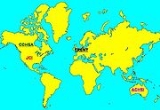
For example, some countries (such as the USA) perform very poorly when it comes to providing anything close to universal access to healthcare of adequate quality to the population living within their own borders, while others (such as the UK) have tried to create state-funded systems which provide everything without the assistance of the private sector. Other differences exist – for example, general medical practice ("GP", also sometimes known as Family Medicine) is strong in the UK but weak in the USA, while US hospitals generally have greater expertise in marketing and billing. Different accreditation schemes are sourced out of different parts of the world, for example JCI out of the USA and North America, QHA Trent out of Europe, and ACHSI out of Oceania (see map). As no single international accreditation scheme enjoys exclusive rights to be seen as an overall world-wide-relevant scheme, some hospitals are looking towards multiple accreditation to achieve performance credibility in different parts of the world.
 With respect to the cost of accreditation, this can vary enormously http://www.imtjonline.com/news/india-accreditation-a-must and it can be hard to find out precise data; in the case of JCI
, the costs can be substantial. http://www.imtjonline.com/news/india-accreditation-a-musthttp://joint-commission.blogspot.com/2008/02/jci-how-much-do-they-charge-hospitals.html
With respect to hospital work, ISO (the International Organization for Standardization
) is often mistakenly considered to be an international healthcare accreditation scheme. It is not.
Standard of care
In tort law, the standard of care is the degree of prudence and caution required of an individual who is under a duty of care.The requirements of the standard are closely dependent on circumstances. Whether the standard of care has been breached is determined by the trier of fact, and is usually...
, is a complex and challenging process. Healthcare is a vital and emotive issue—its importance pervades all aspects of societies
Society
A society, or a human society, is a group of people related to each other through persistent relations, or a large social grouping sharing the same geographical or virtual territory, subject to the same political authority and dominant cultural expectations...
, and it has medical, dental
Dentistry
Dentistry is the branch of medicine that is involved in the study, diagnosis, prevention, and treatment of diseases, disorders and conditions of the oral cavity, maxillofacial area and the adjacent and associated structures and their impact on the human body. Dentistry is widely considered...
, social
Social
The term social refers to a characteristic of living organisms...
, political, ethical, business
Business
A business is an organization engaged in the trade of goods, services, or both to consumers. Businesses are predominant in capitalist economies, where most of them are privately owned and administered to earn profit to increase the wealth of their owners. Businesses may also be not-for-profit...
, and financial
FINANCIAL
FINANCIAL is the weekly English-language newspaper with offices in Tbilisi, Georgia and Kiev, Ukraine. Published by Intelligence Group LLC, FINANCIAL is focused on opinion leaders and top business decision-makers; It's about world’s largest companies, investing, careers, and small business. It is...
ramifications. In any part of the world healthcare services can be provided either by the public sector
Public sector
The public sector, sometimes referred to as the state sector, is a part of the state that deals with either the production, delivery and allocation of goods and services by and for the government or its citizens, whether national, regional or local/municipal.Examples of public sector activity range...
or by the private sector
Private sector
In economics, the private sector is that part of the economy, sometimes referred to as the citizen sector, which is run by private individuals or groups, usually as a means of enterprise for profit, and is not controlled by the state...
, or by a combination of both, and the site of delivery of healthcare can be located in hospitals or be accessed through practitioners working in the community, such as general medical practitioners and dentists.
This is occurring in most parts of the developed world in a setting in which people are expressing ever-greater expectations of hospitals and healthcare services. This trend is especially strong where socialised medical systems
Socialized medicine
Socialized medicine is a term used to describe a system for providing medical and hospital care for all at a nominal cost by means of government regulation of health services and subsidies derived from taxation. It is used primarily and usually pejoratively in United States political debates...
exist. For example, in the European Union
European Union
The European Union is an economic and political union of 27 independent member states which are located primarily in Europe. The EU traces its origins from the European Coal and Steel Community and the European Economic Community , formed by six countries in 1958...
"... patients have ever-greater expectations of what health systems ought to deliver," although there has been a "... continuous rise in costs of services determined by scientific and technological innovation." And in one particular EU member state, the United Kingdom, "... People are going to increase demand and they have also got an increased expectation of what the NHS can deliver." Interestingly, the USA manifests some differences here, and is an unusual and distinct oddity among developed Western countries. In 2007, 45.7 million of the overall US population (i.e. 15.3%) had no health insurance whatsoever yet in 2007 the USA spent nearly $2.3 trillion on healthcare, or 16% of the country's gross domestic product, more than twice as much per capita as the OECD average. Because of this, some US citizens are having to look outside of their country to find affordable healthcare, through the medium of medical tourism
Medical tourism
Medical tourism is a term initially coined by travel agencies and the mass media to describe the rapidly-growing practice of travelling across international borders to obtain health care...
, also known as "Global Healthcare" (see below).
Apart from using hospital
Hospital
A hospital is a health care institution providing patient treatment by specialized staff and equipment. Hospitals often, but not always, provide for inpatient care or longer-term patient stays....
s and healthcare services to regain their health if it has become impaired, or to prevent ill health occurring in the first place, people the world over may also use them for a wide variety of other services, for example “improving upon nature” (e.g. cosmetic surgery, gender re-assignment surgery
Sex reassignment surgery
Sex reassignment surgery is a term for the surgical procedures by which a person's physical appearance and function of their existing sexual characteristics are altered to resemble...
or acquiring help to overcome difficulties with becoming a parent (e.g. infertility
Infertility
Infertility primarily refers to the biological inability of a person to contribute to conception. Infertility may also refer to the state of a woman who is unable to carry a pregnancy to full term...
treatment).
Healthcare and hospital accreditation
Fundamentally healthcare and hospital accreditationHospital accreditation
Hospital accreditation has been defined as “A self-assessment and external peer assessment process used by health care organizations to accurately assess their level of performance in relation to established standards and to implement ways to continuously improve”...
is about improving how care is delivered to patients and the quality of the care they receive. Accreditation has been defined as "A self-assessment and external peer assessment process used by health care organisations to accurately assess their level of performance in relation to established standards and to implement ways to continuously improve" Interest in hospital
Hospital
A hospital is a health care institution providing patient treatment by specialized staff and equipment. Hospitals often, but not always, provide for inpatient care or longer-term patient stays....
accreditation ascends as far as the World Health Organisation (see external links). Accreditation is one important component in patient safety
Patient safety
Patient safety is a new healthcare discipline that emphasizes the reporting, analysis, and prevention of medical error that often leads to adverse healthcare events. The frequency and magnitude of avoidable adverse patient events was not well known until the 1990s, when multiple countries reported...
.
In the USA in the early 20th century, there was concern over how to best create an appropriate environment in which clinicians could work. Standards to improve the control of the hospital environment were thus generated, and these subsequently grew into accreditation schemes with the remit to facilitate and improve organisational development. Part of the process is not only about assessing quality, but also about promoting and improving quality. Similar accreditation schemes were soon developed elsewhere in the world.
In countries such as the United Kingdom
United Kingdom
The United Kingdom of Great Britain and Northern IrelandIn the United Kingdom and Dependencies, other languages have been officially recognised as legitimate autochthonous languages under the European Charter for Regional or Minority Languages...
, the USA, Australia
Australia
Australia , officially the Commonwealth of Australia, is a country in the Southern Hemisphere comprising the mainland of the Australian continent, the island of Tasmania, and numerous smaller islands in the Indian and Pacific Oceans. It is the world's sixth-largest country by total area...
, New Zealand
New Zealand
New Zealand is an island country in the south-western Pacific Ocean comprising two main landmasses and numerous smaller islands. The country is situated some east of Australia across the Tasman Sea, and roughly south of the Pacific island nations of New Caledonia, Fiji, and Tonga...
and Canada
Canada
Canada is a North American country consisting of ten provinces and three territories. Located in the northern part of the continent, it extends from the Atlantic Ocean in the east to the Pacific Ocean in the west, and northward into the Arctic Ocean...
, sophisticated accreditation groups have grown up to survey hospitals (and, in some cases, healthcare in the community). Furthermore, other accreditation groups have been set up with openly declared remits to look after just one particular area of healthcare, such as laboratory medicine or psychiatric services or sexual health.
Accreditation systems are structured so as to provide objective measures for the external evaluation of quality and quality management. Accreditation schemes should ideally focus primarily on the patient and their pathway through the healthcare system – this includes how they access care, how they are cared for after discharge from hospital, and the quality of the services provided for them. At the heart of these schemes is a list of standards which, ideally, serve to assess evaluate in a systematic and comprehensive way the standards of professional performance in a hospital. This includes not only hand-on patient care but also training and education of staff, credentials, clinical governance
Clinical governance
Clinical governance is the term used to describe a systematic approach to maintaining and improving the quality of patient care within a health system. The term became widely used in health care following the Bristol heart scandal in 1995, during which anaesthetist Dr Stephen Bolsin exposed the...
and audit
Audit
The general definition of an audit is an evaluation of a person, organization, system, process, enterprise, project or product. The term most commonly refers to audits in accounting, but similar concepts also exist in project management, quality management, and energy conservation.- Accounting...
, research
Research
Research can be defined as the scientific search for knowledge, or as any systematic investigation, to establish novel facts, solve new or existing problems, prove new ideas, or develop new theories, usually using a scientific method...
activity, ethical standards etc. The standards can also be used internally by hospitals to develop and improve their quality standards and quality management. Some international accreditation schemes believe that the standards applied should be fixed and are non-negotiable, while others operate a system of negotiation over standards - however, whatever approach is taken the every aspect of the process should be evidence-based
Evidence-based medicine
Evidence-based medicine or evidence-based practice aims to apply the best available evidence gained from the scientific method to clinical decision making. It seeks to assess the strength of evidence of the risks and benefits of treatments and diagnostic tests...
.
International standardization groups also exist, but it must be pointed out that the mere achieving of set standards is not the only factor involved in quality accreditation - there is also the significant matter of the incorporating into participating hospitals systems of self-examination, problem solving and self-improvement, and hence there is more to accreditation than following some sort of overall "standardization
Standardization
Standardization is the process of developing and implementing technical standards.The goals of standardization can be to help with independence of single suppliers , compatibility, interoperability, safety, repeatability, or quality....
" process.
As governments and the general public have increasingly come to demand more and more openness about health care and its delivery, including and especially hospital quality and safety and the clinical performance of doctors, and these accreditation systems have generally adapted to fulfill this extended role.
However, accreditation should ideally be independent of governmental control, and accreditation groups should assess hospitals “holistically”, and not just some isolated facet of the hospital’s activities or services such as the laboratories, pharmacy services, infection control, financial health or information technology services (indeed, partial accreditation of this type should be publicly acknowledged as such by both the accreditation scheme and the hospital). The best accreditation schemes also assess academic and intellectual activity (such as teaching and research) within those hospitals that they survey (see later) and have a clear and declared interest in medical ethics
Medical ethics
Medical ethics is a system of moral principles that apply values and judgments to the practice of medicine. As a scholarly discipline, medical ethics encompasses its practical application in clinical settings as well as work on its history, philosophy, theology, and sociology.-History:Historically,...
.
In some parts of the world, accessing healthcare can be very expensive, even prohibitively so. While some countries have elected to provide comprehensive healthcare services for all of their populations, others appear to be satisfied with leaving portions of their population without access to healthcare. When it comes to who pays the bills for healthcare, it may be the government or it may be the individual (sometimes either by direct payment, and sometimes through employer-run schemes, insurance companies etc.), or a combination of both. However, healthcare can never be truly “free” – someone somewhere will always have to pay, and the payer will always want the best value for money possible. "Affordability" of healthcare can be the insurmountable hurdle for some human beings. Value for money is hence another factor in assessing the true quality of healthcare.
Background
A number of larger countries engage in hospital accreditationHospital accreditation
Hospital accreditation has been defined as “A self-assessment and external peer assessment process used by health care organizations to accurately assess their level of performance in relation to established standards and to implement ways to continuously improve”...
that is provided internally. Taking the USA as an example, numerous groups provide accreditation for internal healthcare organizations, including the Community Health Accreditation Program
Community Health Accreditation Program
The Community Health Accreditation Program is an independent, US not-for-profit accrediting body and is an alternative to the Joint Commission...
(CHAP), the Joint Commission, DNV, the Accreditation Commission for Health Care
Accreditation Commission for Health Care
The Accreditation Commission for Health Care is a US non-profit health care accrediting organization. It represents an alternative to the Joint Commission....
, Inc. (ACHC), the "Exemplary Provider Program" of The Compliance Team
The Compliance Team
The Compliance Team Inc., is a US for-profit organization which runs the "Exemplary Provider" accreditation programs, a US-based alternative to the Joint Commission...
and the Healthcare Quality Association on Accreditation
Healthcare Quality Association on Accreditation
The Healthcare Quality Association on Accreditation is a US not-for-profit health care accrediting body and is an alternative to the Accreditation Commission for Health Care and Joint Commission...
(HQAA).
Some other countries have looked towards accessing the services of the major international healthcare accreditation groups based in other countries to assess their healthcare services. There are many reasons for this, including cost, a desire to improve healthcare quality for one’s own citizens (good governance
Governance
Governance is the act of governing. It relates to decisions that define expectations, grant power, or verify performance. It consists of either a separate process or part of management or leadership processes...
is at the basis of all high-quality healthcare), or a desire to market one’s healthcare services to “medical tourists” (see below). Some hospitals go for international healthcare accreditation as a de facto form of advertising.
In response to this marketing opportunity, some national accreditation groups have expanded their wings internationally, and gone on to survey and accredit hospitals outside of their own national borders. When they choose to do this, such groups can be said to be providing "international healthcare accreditation".
This process of accreditation has been made increasingly complicated by the fact that in many parts of the world, more and more human beings are choosing to cross international borders to access healthcare, a phenomenon known as “medical tourism
Medical tourism
Medical tourism is a term initially coined by travel agencies and the mass media to describe the rapidly-growing practice of travelling across international borders to obtain health care...
” or "Global Healthcare". Medical tourism
Medical tourism
Medical tourism is a term initially coined by travel agencies and the mass media to describe the rapidly-growing practice of travelling across international borders to obtain health care...
/Global Healthcare cannot be ignored as a key issue in international healthcare accreditation - it is becoming increasingly important as millions of (especially) Europeans and Americans seek healthcare overseas outside of their own countries for a variety of reasons (including and especially affordability), and it represents a growing multi-billion euro/dollar/pound business of increasing importance to the economies of many countries, such as Singapore
Singapore
Singapore , officially the Republic of Singapore, is a Southeast Asian city-state off the southern tip of the Malay Peninsula, north of the equator. An island country made up of 63 islands, it is separated from Malaysia by the Straits of Johor to its north and from Indonesia's Riau Islands by the...
, Thailand
Thailand
Thailand , officially the Kingdom of Thailand , formerly known as Siam , is a country located at the centre of the Indochina peninsula and Southeast Asia. It is bordered to the north by Burma and Laos, to the east by Laos and Cambodia, to the south by the Gulf of Thailand and Malaysia, and to the...
, India
India
India , officially the Republic of India , is a country in South Asia. It is the seventh-largest country by geographical area, the second-most populous country with over 1.2 billion people, and the most populous democracy in the world...
, Hong Kong
Hong Kong
Hong Kong is one of two Special Administrative Regions of the People's Republic of China , the other being Macau. A city-state situated on China's south coast and enclosed by the Pearl River Delta and South China Sea, it is renowned for its expansive skyline and deep natural harbour...
, Malaysia and the Philippines
Philippines
The Philippines , officially known as the Republic of the Philippines , is a country in Southeast Asia in the western Pacific Ocean. To its north across the Luzon Strait lies Taiwan. West across the South China Sea sits Vietnam...
. The importance of medical tourism
Medical tourism
Medical tourism is a term initially coined by travel agencies and the mass media to describe the rapidly-growing practice of travelling across international borders to obtain health care...
/Global Healthcare to the economy of developing countries is increasingly the subject of academic study. http://www.american.edu/ted/medical-tourism.htm, and this synergy has a clear "knock-on" effect for those organizations based within the developed world who are seeking to develop the medical tourism
Medical tourism
Medical tourism is a term initially coined by travel agencies and the mass media to describe the rapidly-growing practice of travelling across international borders to obtain health care...
/Global Healthcare market.
The reasons why patients are seeking out medical tourism
Medical tourism
Medical tourism is a term initially coined by travel agencies and the mass media to describe the rapidly-growing practice of travelling across international borders to obtain health care...
/Global Healthcare options are manifold; healthcare may be too expensive at home waiting lists may be too long patients wish to access treatments not available at home (e.g. stem cell therapy, termination of pregnancy, unlicensed medications, gender re-assignment surgery) patients wish for greater confidentiality than may be feasible at home (e.g. HIV/AIDS treatment, infertility
Infertility
Infertility primarily refers to the biological inability of a person to contribute to conception. Infertility may also refer to the state of a woman who is unable to carry a pregnancy to full term...
treatment, gender re-assignment surgery, face lifts) new challenges arise from time to time, such as new medical developments which are not universally accessible, the emergence of the so-called “superbugs” (e.g. MRSA, VRSA, VRE,
Clostridium difficile, ESBL-producing E. coli), problems with the blood transfusion supply (e.g. Chaga's disease in the USA, HIV, HTLV-1 etc.), and the social imponderables such as war, political change and natural disasters. Any of these factors may lead to a loss of public confidence in healthcare services, and a desire to seek out healthcare overseas. The environmental and political situation will constantly vary throughout the world, and this will need to be factored into the equations.
The following quotation, taken from the website of Partners Harvard Medical International
Partners Harvard Medical International
Partners Harvard Medical International is a not-for-profit organization that provides advisory services and professional consulting to organizations outside the United States. PHMI is a subsidiary of Partners HealthCare System, a health care system based in Boston, Massachusetts.-History:PHMI was...
, crystallizes the increasing relevance of international health care accreditation and its growing commercial importance, particularly in relation to medical tourism
Medical tourism
Medical tourism is a term initially coined by travel agencies and the mass media to describe the rapidly-growing practice of travelling across international borders to obtain health care...
/global healthcare. "In competitive health care markets where patients have an increasing array of choices, quality is the most important differentiator for organizations striving for sustainability and both national and regional leadership. International accreditation has become a powerful indicator of a health care organization’s commitment to high-quality care and patient safety." Reflecting this, much of the discussion on medical tourism
Medical tourism
Medical tourism is a term initially coined by travel agencies and the mass media to describe the rapidly-growing practice of travelling across international borders to obtain health care...
blog sites reflects the increasing importance of international healthcare and hospital accreditation to this industry http://www.medtripinfo.com/articles/News%2Band%2Bblogs
Consumers
How does an individual contemplating becoming a medical tourist ensure that the overseas healthcare they are planning to access is as safe as possible and is of adequate quality? For sure, it is not simply a matter of looking at hospital buildings and at mattresses, and it is certainly not just an issue of looking only at the prices charged. While architecturally pleasing rooms and easier access to satellite television and the internet may improve personal comfort, and a bargain basement price may help the wallet, what is often more important may include such issues as:- the standards of governance in the hospital or clinic
- the healthcare providing establishment’s commitment to self-improvement, and to learn positively from errors
- the overall medical ethicalMedical ethicsMedical ethics is a system of moral principles that apply values and judgments to the practice of medicine. As a scholarly discipline, medical ethics encompasses its practical application in clinical settings as well as work on its history, philosophy, theology, and sociology.-History:Historically,...
standards operating within the organization - the clinical staff’s ethical standards and their personal and collective commitment to caring for patients and the wider community
- the quality of the clinical staff, including their background educational attainment and training, and evidence of continuing professional development by those staff
- the quality and ethical standards of the management and their personal and collective commitment to caring for patients and the wider community
- the clinical track record of the hospital or clinic
- the infection control track record of the hospital or clinic
- the hospital may be located in a country where the environment and climate may bring a patient into contact with infectious and/or tropical diseases that are unfamiliar to them
- evidence of a robust, just and fair system to deal with complaints made by patients when things go wrong, as they inevitably will from time to time, and where appropriate to compensate the injured party in a fair and reasonable way
The above list is not exhaustive, but it represents a good start. Also, the intending medical tourist should check whether or not a hospital is wholly accredited by an international accreditation group, or if it is only partly accredited (e.g. for infection control), the latter being less inclined to create confidence in a potential consumer.
How does the person in the street access this type of quality information? This can be very difficult. Accreditation schemes well-recognised as providing services in the international healthcare accreditation field include:
- Trent Accreditation SchemeTrent Accreditation SchemeThe Trent Accreditation Scheme , , was a British accreditation scheme formed with a mission to maintain and continually evaluate standards of quality, especially in health care delivery, through the surveying and accreditation of health care organisations, especially...
(based in UK-EuropeEuropeEurope is, by convention, one of the world's seven continents. Comprising the westernmost peninsula of Eurasia, Europe is generally 'divided' from Asia to its east by the watershed divides of the Ural and Caucasus Mountains, the Ural River, the Caspian and Black Seas, and the waterways connecting...
) The former Trent Scheme (which ended in 2010) was the first scheme to accredit a hospital in Asia, in Hong Kong in 2000 http://www.union.org/new/english/about_us/mission.htm. - QHA Trent AccreditationQHA Trent AccreditationQHA Trent Accreditation is a United Kingdom-based independent holistic accreditation scheme for hospitals and clinics that functions worldwide. It represents an option for healthcare providers to international accreditation schemes such as Joint Commission International from the USA...
, based in the UK http://www.qha-international.co.uk,http://www.imtj.com/news/?EntryId82=206991,http://www.imtjonline.com/articles/2011/qha-trent-international-hospital-accreditation-30100/ - Joint Commission International, or JCI (based in the USA) http://www.jointcommission.org/ The first hospital to be accredited in Asia by JCI was Bumrungrad International Hospital, in 2002.
- Australian Council for Healthcare Standards International, or ACHSI (based in AustraliaAustraliaAustralia , officially the Commonwealth of Australia, is a country in the Southern Hemisphere comprising the mainland of the Australian continent, the island of Tasmania, and numerous smaller islands in the Indian and Pacific Oceans. It is the world's sixth-largest country by total area...
) http://www.achs.org.au/ACHSI/ - Accreditation Canada (formerly the Canadian Council on Health Services Accreditation or CCHSA)(based in CanadaCanadaCanada is a North American country consisting of ten provinces and three territories. Located in the northern part of the continent, it extends from the Atlantic Ocean in the east to the Pacific Ocean in the west, and northward into the Arctic Ocean...
) http://www.accreditation.ca - Accreditation of France (La Haute Autorité de Santé) based in Paris, France. http://www.has-sante.fr
The different accreditation schemes vary in approach, quality, size, intent, sourcing of surveyors and the skill of their marketing. They also vary in terms of how much they charge hospitals and healthcare institutions for their services. They all have web sites.
Umbrella organizations
The International Society for Quality in Health Care (ISQua) is an umbrella organisation for such organisations providing international healthcare accreditation http://www.isqua.org/. Its offices are based in the Republic of Ireland. ISQua is a small non-profit limited company with members in over 70 countries. ISQua works to provide services to guide health professionals, providers, researchers, agencies, policy makers and consumers, to achieve excellence in healthcare delivery to all people, and to continuously improve the quality and safety of care. ISQua does not actually survey or accredit hospitals or clinics itself.The United Kingdom Accreditation Forum
United Kingdom Accreditation Forum
Founded in June 1998 by a group of leading healthcare accreditation organisations, the United Kingdom Accreditation Forum is a London-based network of healthcare accreditation organisations formed with the intention of sharing experience regarding good practice in accreditation, as well as sharing...
, or UKAF
United Kingdom Accreditation Forum
Founded in June 1998 by a group of leading healthcare accreditation organisations, the United Kingdom Accreditation Forum is a London-based network of healthcare accreditation organisations formed with the intention of sharing experience regarding good practice in accreditation, as well as sharing...
, is a UK-based umbrella organisation for organisations providing healthcare accreditation http://www.ukaf.org.uk/. Its offices are based in London. Like ISQua, UKAF does not actually survey and accredit hospitals itself.India becomes 12th nation to join ISQua.
Accreditation services
If a hospital or clinic simply wishes to improve its services to patients wherever those patients come from (locally or from further afield), or wishes to attract medical tourists, how do they choose who to go to when contemplating accessing external peer review by an accreditation group such as those listed above.There is a phrase in English – “horses for courses” – and no one healthcare system has a monopoly of excellence and no one provider country or scheme can claim to be the total arbiter of quality. The same is true of healthcare accreditation schemes.
For example, some countries (such as the USA) perform very poorly when it comes to providing anything close to universal access to healthcare of adequate quality to the population living within their own borders, while others (such as the UK) have tried to create state-funded systems which provide everything without the assistance of the private sector. Other differences exist – for example, general medical practice ("GP", also sometimes known as Family Medicine) is strong in the UK but weak in the USA, while US hospitals generally have greater expertise in marketing and billing. Different accreditation schemes are sourced out of different parts of the world, for example JCI out of the USA and North America, QHA Trent out of Europe, and ACHSI out of Oceania (see map). As no single international accreditation scheme enjoys exclusive rights to be seen as an overall world-wide-relevant scheme, some hospitals are looking towards multiple accreditation to achieve performance credibility in different parts of the world.
JCI
JCI is a three-letter abbreviation with multiple meanings, as described below:* JCI, Jakarta Composite Index of Indonesia Stock Exchange* JCI Limited or Johannesburg Consolidated Investment Company Limited - One of the oldest listed companies on the JSE Securities Exchange having been formed in 1889...
, the costs can be substantial. http://www.imtjonline.com/news/india-accreditation-a-musthttp://joint-commission.blogspot.com/2008/02/jci-how-much-do-they-charge-hospitals.html
With respect to hospital work, ISO (the International Organization for Standardization
International Organization for Standardization
The International Organization for Standardization , widely known as ISO, is an international standard-setting body composed of representatives from various national standards organizations. Founded on February 23, 1947, the organization promulgates worldwide proprietary, industrial and commercial...
) is often mistakenly considered to be an international healthcare accreditation scheme. It is not.
See also
- AccreditationAccreditationAccreditation is a process in which certification of competency, authority, or credibility is presented.Organizations that issue credentials or certify third parties against official standards are themselves formally accredited by accreditation bodies ; hence they are sometimes known as "accredited...
- Hospital accreditationHospital accreditationHospital accreditation has been defined as “A self-assessment and external peer assessment process used by health care organizations to accurately assess their level of performance in relation to established standards and to implement ways to continuously improve”...
- Evidence-based medicineEvidence-based medicineEvidence-based medicine or evidence-based practice aims to apply the best available evidence gained from the scientific method to clinical decision making. It seeks to assess the strength of evidence of the risks and benefits of treatments and diagnostic tests...
- Health tourism providerHealth tourism providerA health tourism provider or medical tourism provider is an organisation or a company which seeks to bring together a prospective patient with a service provider, usually a hospital or a clinic. If the patient is crossing international borders to obtain medical care, then that individual would...
- Health insuranceHealth insuranceHealth insurance is insurance against the risk of incurring medical expenses among individuals. By estimating the overall risk of health care expenses among a targeted group, an insurer can develop a routine finance structure, such as a monthly premium or payroll tax, to ensure that money is...
- HospitalHospitalA hospital is a health care institution providing patient treatment by specialized staff and equipment. Hospitals often, but not always, provide for inpatient care or longer-term patient stays....
- List of international healthcare accreditation organizations
- Medical tourismMedical tourismMedical tourism is a term initially coined by travel agencies and the mass media to describe the rapidly-growing practice of travelling across international borders to obtain health care...
- Patient safetyPatient safetyPatient safety is a new healthcare discipline that emphasizes the reporting, analysis, and prevention of medical error that often leads to adverse healthcare events. The frequency and magnitude of avoidable adverse patient events was not well known until the 1990s, when multiple countries reported...
- Patient safety organizationPatient safety organizationA patient safety organization is a group, institution or association that improves medical care by reducing medical errors. In the 1990s, reports in several countries revealed a staggering number of patient injuries and deaths each year due to avoidable adverse health care events...
- Medical ethicsMedical ethicsMedical ethics is a system of moral principles that apply values and judgments to the practice of medicine. As a scholarly discipline, medical ethics encompasses its practical application in clinical settings as well as work on its history, philosophy, theology, and sociology.-History:Historically,...
- International SOSInternational SOSInternational SOS provides integrated medical, clinical, and security services to organisations with international operations. Services include planning and preventative programs, in-country expertise, and emergency response. It has 9,000 employees, led by 1,100 full-time physicians and 200...
- International Organization for Standardization
- United Kingdom Accreditation ForumUnited Kingdom Accreditation ForumFounded in June 1998 by a group of leading healthcare accreditation organisations, the United Kingdom Accreditation Forum is a London-based network of healthcare accreditation organisations formed with the intention of sharing experience regarding good practice in accreditation, as well as sharing...
External links
- African Society for Quality in Healthcare ASQH.
- United Kingdom Accreditation Forum.
- Editorial. Arce H. Hospital accreditation as a means of achieving international quality standards in health. International Journal for Quality in Health Care, Volume 10, Number 6, December 1998 , pp. 469–472(4).
- Role of WHO in hospital accreditation. © 2004 WHO Regional Office for the Eastern Mediterranean
- Partners Harvard Medical International: Making Quality the Competitive Edge.
- Raik E. Aged Care Accreditation in Australia. BMJ rapid response, 7 November 2001.
- Robinson R. Book Review - "Accreditation: Protecting the Professional or the Consumer?" BMJ 1995;311:818-819.
- Rawlins R. Hospital accreditation is important. BMJ 2001;322:674
- http://www.nchc.org/facts/cost.shtml