


Intercession of saints

Encyclopedia
Intercession of the saints is a Christian
doctrine
held by Eastern Orthodox, Oriental Orthodox, Roman Catholic, and some Anglican churches, that deceased saints and the Blessed Virgin Mary intercede (or pray
) for believers, and that it is possible to ask deceased saints for their prayers. The doctrine of requesting intercession from deceased saints can be found in Christian writings from the 3rd century AD.
The 4th century Apostles' Creed
states belief in the communion of saints
.
' parable of The Rich Man and Lazarus in indicates the ability of the dead to pray for the living. On the basis of Christ's intercession for believers, who is present at the Right hand of God
, it is argued by extension that other people who have died but are alive in Christ may be able to intercede on behalf of the petitioner. On the basis of other texts it is argued that if those living here on earth can intercede on behalf of each other, then those already glorified in Heaven
, and even closer "in Christ", are made holy as "one" unified through him (the mediator between God and men – on earth and heaven) by his sacrifice, can certainly intercede for those on earth as well.
doctrine supports intercessory prayer to saints. Intercessory prayer to saints also plays an important role in the Eastern Orthodox and Oriental Orthodox churches. Also some Anglo-Catholics believe in saintly intercession. They may point to such Scriptural passages as , , or , which depict heavenly beings offering the prayers of mortals before God, and in addition to (where all those in heaven can be presumed to be living righteously), which states the prayer of the righteous is powerful and effective. Both those for and against the intercession of saints quote .
Intercessory prayer to saintly persons who have not yet been canonized is also practiced, and evidence of miracles produced as a result of such prayer is very commonly produced during the formal process of canonization
.
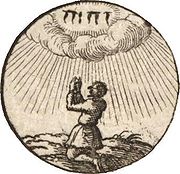 Many Protestant churches strongly reject all saintly intercession, in accordance with verses like , which says that Jesus is the sole mediator between God and man, as well as , which seems to forbid invoking departed souls. They also point to the fact that there are no examples in the Bible of living humans praying to dead humans — Jesus Christ being the lone exception, because He is believed to be alive and resurrected, and because He is believed to be both human and Divine. The practice was attacked both by the Waldensians of the 12th century, and the various Gnostic Bogomil groups (including the Albigensians). The Calvinists
and Zwinglians were particularly zealous in their rejection of saintly intercession .
had been an early opponent of the practice of praying to saints. The Thirty-Nine Articles
(1563) of the Church of England
condemned the "invocation of saints" as "a fond thing, vainly invented, and grounded upon no warranty of Scripture, but rather repugnant to the Word of God" (Article XXII). However, some within the Anglican Communion
make a distinction between a "Romish" and a "Patristic" doctrine concerning the invocation of saints, permitting the latter, but forbidding the former. The Oxford Movement
saw a revival of the Patristic practice, which is now found among High Church
Anglicans and especially Anglo-Catholics.
, the founder of Lutheranism, approved honouring the saints by saying they are honoured in three ways: firstly by thanking God for examples of His mercy ; secondly by using the saints as example for strengthening our faith, and thirdly by imitating their faith and other virtues.
belief in intercession, both in the form of the paternal blessings passed down from Abraham
to his children, and 2 Maccabees
, where Judas Maccabaeus sees the dead Onias and Jeremiah
giving blessing to the Jewish army. There are also opposing views in that to God alone only prayers may be offered.
In modern times one of the greatest divisions in Jewish theology (hashkafa
) is over the issue of whether one can beseech the help of a tzadik – an extremely righteous individual. The main conflict is over a practice of beseeching a tzadik who has already died to make intercession before the Almighty. This practice is common mainly among Chasidic Jews, but also found in varying degrees among other usually Chareidi communities. It strongest opposition is found largely among sectors of Modern Orthodox Judaism, Dor Daim
and Talmide haRambam, and among aspects of the Litvish Chareidi community. Those who oppose this practice usually do so over the problem of idolatry
, as Jewish Law strictly prohibits making use of a mediator (melitz) or agent (sarsur) between oneself and the Almighty.
The perspectives of those Jewish groups opposed to the use of intercessors is usually softer in regard to beseeching the Almighty alone merely in the "merit" (skhut) of a tzadik.
Those Jews who support the use of intercessors claim that their beseeching of the tzadik is not prayer or worship. The conflict between the groups is essentially over what constitutes prayer, worship, a mediator (melitz), and an agent (sarsur).
Christianity
Christianity is a monotheistic religion based on the life and teachings of Jesus as presented in canonical gospels and other New Testament writings...
doctrine
Doctrine
Doctrine is a codification of beliefs or a body of teachings or instructions, taught principles or positions, as the body of teachings in a branch of knowledge or belief system...
held by Eastern Orthodox, Oriental Orthodox, Roman Catholic, and some Anglican churches, that deceased saints and the Blessed Virgin Mary intercede (or pray
Christian prayer
Prayer is an important activity in Christianity, and there are several different forms of Christian prayer.Christian prayers are diverse: they can be completely spontaneous, or read entirely from a text, like the Anglican Book of Common Prayer. The most common prayer among Christians is the Lord's...
) for believers, and that it is possible to ask deceased saints for their prayers. The doctrine of requesting intercession from deceased saints can be found in Christian writings from the 3rd century AD.
The 4th century Apostles' Creed
Apostles' Creed
The Apostles' Creed , sometimes titled Symbol of the Apostles, is an early statement of Christian belief, a creed or "symbol"...
states belief in the communion of saints
Communion of Saints
The communion of saints , when referred to persons, is the spiritual union of the members of the Christian Church, living and the dead, those on earth, in heaven, and, for those who believe in purgatory, those also who are in that state of purification.They are all part of a single "mystical body",...
.
Biblical basis
Advocates of the doctrine say that JesusJesus
Jesus of Nazareth , commonly referred to as Jesus Christ or simply as Jesus or Christ, is the central figure of Christianity...
' parable of The Rich Man and Lazarus in indicates the ability of the dead to pray for the living. On the basis of Christ's intercession for believers, who is present at the Right hand of God
Right Hand of God
The Right Hand of God or God's Right Hand may refer to the Hand of God often referred to in the Bible and common speech as a metaphor for the omnipotence of God and as a motif in art...
, it is argued by extension that other people who have died but are alive in Christ may be able to intercede on behalf of the petitioner. On the basis of other texts it is argued that if those living here on earth can intercede on behalf of each other, then those already glorified in Heaven
Heaven (Christianity)
Traditionally, Christianity has taught Heaven as a place of eternal life and the dwelling place of Angels and the Throne of God, and a kingdom to which all the elect will be admitted...
, and even closer "in Christ", are made holy as "one" unified through him (the mediator between God and men – on earth and heaven) by his sacrifice, can certainly intercede for those on earth as well.
Roman Catholic views
Roman Catholic ChurchRoman Catholic Church
The Catholic Church, also known as the Roman Catholic Church, is the world's largest Christian church, with over a billion members. Led by the Pope, it defines its mission as spreading the gospel of Jesus Christ, administering the sacraments and exercising charity...
doctrine supports intercessory prayer to saints. Intercessory prayer to saints also plays an important role in the Eastern Orthodox and Oriental Orthodox churches. Also some Anglo-Catholics believe in saintly intercession. They may point to such Scriptural passages as , , or , which depict heavenly beings offering the prayers of mortals before God, and in addition to (where all those in heaven can be presumed to be living righteously), which states the prayer of the righteous is powerful and effective. Both those for and against the intercession of saints quote .
Intercessory prayer to saintly persons who have not yet been canonized is also practiced, and evidence of miracles produced as a result of such prayer is very commonly produced during the formal process of canonization
Canonization
Canonization is the act by which a Christian church declares a deceased person to be a saint, upon which declaration the person is included in the canon, or list, of recognized saints. Originally, individuals were recognized as saints without any formal process...
.
Protestant views
Calvinism
Calvinism is a Protestant theological system and an approach to the Christian life...
and Zwinglians were particularly zealous in their rejection of saintly intercession .
Anglican views
William TyndaleWilliam Tyndale
William Tyndale was an English scholar and translator who became a leading figure in Protestant reformism towards the end of his life. He was influenced by the work of Desiderius Erasmus, who made the Greek New Testament available in Europe, and by Martin Luther...
had been an early opponent of the practice of praying to saints. The Thirty-Nine Articles
Thirty-Nine Articles
The Thirty-Nine Articles of Religion are the historically defining statements of doctrines of the Anglican church with respect to the controversies of the English Reformation. First established in 1563, the articles served to define the doctrine of the nascent Church of England as it related to...
(1563) of the Church of England
Church of England
The Church of England is the officially established Christian church in England and the Mother Church of the worldwide Anglican Communion. The church considers itself within the tradition of Western Christianity and dates its formal establishment principally to the mission to England by St...
condemned the "invocation of saints" as "a fond thing, vainly invented, and grounded upon no warranty of Scripture, but rather repugnant to the Word of God" (Article XXII). However, some within the Anglican Communion
Anglican Communion
The Anglican Communion is an international association of national and regional Anglican churches in full communion with the Church of England and specifically with its principal primate, the Archbishop of Canterbury...
make a distinction between a "Romish" and a "Patristic" doctrine concerning the invocation of saints, permitting the latter, but forbidding the former. The Oxford Movement
Oxford Movement
The Oxford Movement was a movement of High Church Anglicans, eventually developing into Anglo-Catholicism. The movement, whose members were often associated with the University of Oxford, argued for the reinstatement of lost Christian traditions of faith and their inclusion into Anglican liturgy...
saw a revival of the Patristic practice, which is now found among High Church
High church
The term "High Church" refers to beliefs and practices of ecclesiology, liturgy and theology, generally with an emphasis on formality, and resistance to "modernization." Although used in connection with various Christian traditions, the term has traditionally been principally associated with the...
Anglicans and especially Anglo-Catholics.
Lutheran views
Traditional Lutheran belief accounts that saints pray for the Church in general, but are not mediators of redemption. Martin LutherMartin Luther
Martin Luther was a German priest, professor of theology and iconic figure of the Protestant Reformation. He strongly disputed the claim that freedom from God's punishment for sin could be purchased with money. He confronted indulgence salesman Johann Tetzel with his Ninety-Five Theses in 1517...
, the founder of Lutheranism, approved honouring the saints by saying they are honoured in three ways: firstly by thanking God for examples of His mercy ; secondly by using the saints as example for strengthening our faith, and thirdly by imitating their faith and other virtues.
Judaism
There is some evidence of a JewishJudaism
Judaism ) is the "religion, philosophy, and way of life" of the Jewish people...
belief in intercession, both in the form of the paternal blessings passed down from Abraham
Abraham
Abraham , whose birth name was Abram, is the eponym of the Abrahamic religions, among which are Judaism, Christianity and Islam...
to his children, and 2 Maccabees
2 Maccabees
2 Maccabees is a deuterocanonical book of the Bible, which focuses on the Jews' revolt against Antiochus IV Epiphanes and concludes with the defeat of the Syrian general Nicanor in 161 BC by Judas Maccabeus, the hero of the work....
, where Judas Maccabaeus sees the dead Onias and Jeremiah
Jeremiah
Jeremiah Hebrew:יִרְמְיָה , Modern Hebrew:Yirməyāhū, IPA: jirməˈjaːhu, Tiberian:Yirmĭyahu, Greek:Ἰερεμίας), meaning "Yahweh exalts", or called the "Weeping prophet" was one of the main prophets of the Hebrew Bible...
giving blessing to the Jewish army. There are also opposing views in that to God alone only prayers may be offered.
In modern times one of the greatest divisions in Jewish theology (hashkafa
Hashkafa
Hashkafa is a Hebrew term often used when referring to one's personal worldview as regards Jewish philosophy and Halacha. See Diversity within Orthodox Judaism under Orthodox Judaism....
) is over the issue of whether one can beseech the help of a tzadik – an extremely righteous individual. The main conflict is over a practice of beseeching a tzadik who has already died to make intercession before the Almighty. This practice is common mainly among Chasidic Jews, but also found in varying degrees among other usually Chareidi communities. It strongest opposition is found largely among sectors of Modern Orthodox Judaism, Dor Daim
Dor Daim
The Dardaim or Dor daim , are adherents of the Dor Deah movement in Judaism. That movement was founded in 19th century Yemen by Rabbi Yiḥyah Qafiḥ, and had its own network of synagogues and schools.Its objects were:...
and Talmide haRambam, and among aspects of the Litvish Chareidi community. Those who oppose this practice usually do so over the problem of idolatry
Idolatry
Idolatry is a pejorative term for the worship of an idol, a physical object such as a cult image, as a god, or practices believed to verge on worship, such as giving undue honour and regard to created forms other than God. In all the Abrahamic religions idolatry is strongly forbidden, although...
, as Jewish Law strictly prohibits making use of a mediator (melitz) or agent (sarsur) between oneself and the Almighty.
The perspectives of those Jewish groups opposed to the use of intercessors is usually softer in regard to beseeching the Almighty alone merely in the "merit" (skhut) of a tzadik.
Those Jews who support the use of intercessors claim that their beseeching of the tzadik is not prayer or worship. The conflict between the groups is essentially over what constitutes prayer, worship, a mediator (melitz), and an agent (sarsur).
Islam
Tawassul is the practice of using someone as a means or an intermediary in a supplication directed towards God. An example of this would be such: "O my Lord, help me with [such and such need] due to the love I have for Your Prophet."See also
- VenerationVenerationVeneration , or veneration of saints, is a special act of honoring a saint: an angel, or a dead person who has been identified by a church committee as singular in the traditions of the religion. It is practiced by the Eastern Orthodox Church, the Roman Catholic, and Eastern Catholic Churches...
- Patron saintPatron saintA patron saint is a saint who is regarded as the intercessor and advocate in heaven of a nation, place, craft, activity, class, clan, family, or person...
- Intercession of the Theotokos
- SlavaSlavaThe Slava , also called Krsna Slava and Krsno ime , is the Serbian Orthodox tradition of the ritual celebration and veneration of a family's own patron saint. The family celebrates the Slava annually on the patron saint's feast day...
- ShrineShrineA shrine is a holy or sacred place, which is dedicated to a specific deity, ancestor, hero, martyr, saint, daemon or similar figure of awe and respect, at which they are venerated or worshipped. Shrines often contain idols, relics, or other such objects associated with the figure being venerated....
- Efficacy of prayerEfficacy of prayerDetermining the efficacy of prayer has been attempted in various studies since Francis Galton first addressed it in 1872. Some studies have reported benefit, some have reported harm, and some have found no benefit from the act of praying. Others suggest that the topic is outside the realm of...
External links
- Church Fathers on the Intercession of the Saints
- Catholic Prayers to Saints
- Salatul Istisqa, Islamic prayer for rain ceremony
- http://www.nla.gov.au/apps/picturescatalogue?action=PCSearch&mode=search&term1=nla.pic-an24536504&attribute1=ParentPermanentName&PI=nla.pic-an24536504&Creator=Cosgrave%2C+Paul.&TI=Salatul+Istisqa%2C+Islamic+prayer+for+rain+ceremony%2C+Hunter+Valley%2C+New+South+Wales%2C+19+January+2003+%5Bpicture%5D+%2F&CN=PIC+PIC%2F7921%2F1-5+LOC+nla.pic-an24536504+Online+access*The performance of the Salatul Istisqa, the Islamic prayer for rain, in the parched bed of the Goulburn River in Denman, in the Hunter Valley, Sydney, Australia, 2003.]
- Hadith Proofs for Tawassul through the Prophet