

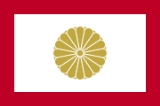
Imperial House of Japan

Encyclopedia
The , also referred to as the Imperial Family or the Yamato Dynasty, comprises those members of the extended family of the reigning Emperor of Japan
who undertake official and public duties. Under the present Constitution of Japan
, the emperor
is the symbol of the state and unity of the people. Other members of the imperial family perform ceremonial and social duties, but have no role in the affairs of government. The duties as an emperor are passed down the line to children and their children's children and so on.
The Japan
ese monarchy
is the oldest continuous hereditary monarchy in the world. The imperial house recognizes 125 monarch
s beginning with the legendary Emperor Jimmu
(traditionally dated to February 11, 660 BC) and continuing up to the current emperor, Akihito
; see its family tree
. However, there is no historical evidence for the genealogical relationships, and in most cases even the existence of, the first 25 emperors.
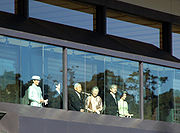 The 1947 Imperial Household Law
defines the imperial house as: the ; the ; the ; the ; the and ; the imperial grandson who is heir apparent (kōtaison, 皇太孫) and his consort; the male-line and their consorts; the unmarried male-line ; and their consorts; and the . The legitimate children and male line grandchildren of an emperor are 親王 shinnō (imperial princes) in the case of males and 内親王 naishinnō (imperial princesses) in the case of females. More distant male line descendants are ō (prince
s) or nyoō (princess
es).
After the removal of eleven collateral branches from the Imperial House in October 1947, the official membership of the imperial family has effectively been limited to the male line descendants of the Emperor Taishō
, excluding females who married outside the imperial family and their descendants.
There are presently 23 members of the imperial family:
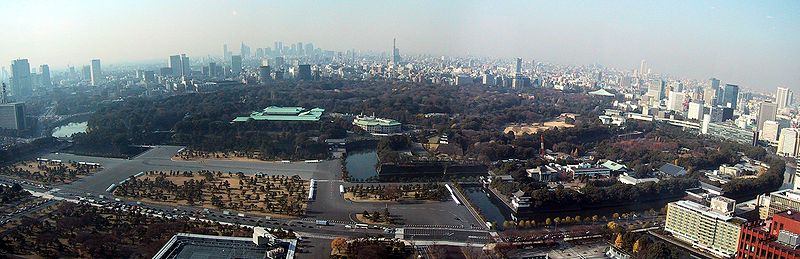 The following family tree shows the lineage of the current members of the Imperial family (living members in bold). Princesses who left the imperial family upon their marriage are indicated in italics:
, naishinnō (imperial princesses) and nyoō (princesses) lose their titles and membership in the imperial family upon marriage, unless they marry the Emperor or another member of the imperial family. Three of the five daughters of Emperor Shōwa
, the two daughters of Prince Mikasa, and most recently, the only daughter of the Emperor Akihito
left the imperial family upon marriage, taking the surnames of their husbands. The eldest daughter of Emperor Shōwa married the eldest son of Prince Higashikuni Naruhiko in 1943. The Higashikuni
family lost its imperial status along with the other collateral branches of the imperial family in October 1947. The living former imperial princesses are:
In addition to these former princesses, there are also several people of Imperial descent in the eleven cadet branch
es of the dynasty (Asaka, Fushimi
, Higashi-Fushimi, Higashi-kuni, Kan'in
, Kaya, Kitashirakawa, Kuni, Nashimoto, Takeda, and Yamashina) that left the imperial family in October 1947. The Shōwa emperor's eldest daughter, Higashikuni Morihito (Shigeko), and his third daughter, Takatukasa Toshimichi (Kazuko), died in 1961 and 1989, respectively.
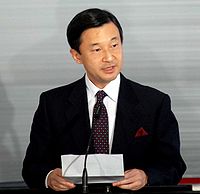 Historically, the succession
to the Chrysanthemum Throne has generally passed in male line of the imperial lineage. The imperial clan previously included specially designated collateral lines or shinnōke
(princely houses), too. The surviving shinnōke
and several other branches of the extended imperial clan (the ōke
) were reduced to commoner status in 1947.
Before the Meiji Restoration
, Japan had eight female tennō or reigning empresses, all of them daughters of male line of the imperial clan. None ascended purely as a wife or as a widow of an emperor. None of these empresses married or gave birth after ascending the throne.
Article 2 of the Constitution of Japan
provides that "the Imperial Throne shall be dynastic and succeeded to in accordance with the Imperial Household Law passed by the Diet." The Imperial Household Law of 1947
enacted by the 92nd and last session of the Imperial Diet, retained the exclusion on female dynasts found in the 1889 law. The government of Prime Minister Yoshida Shigeru hastily cobbled together the legislation to bring the Imperial House in compliance with the American-written Constitution of Japan
that went into effect in May 1947. In an effort to control the size of the imperial family, the law stipulates that only legitimate male descendants in the male line can be dynasts; that naishinnō (imperial princesses) and nyoō (princesses) lose their status as imperial family-members if they marry outside the imperial family; that shinnō (imperial princes), other than the crown prince, ō (princes), unmarried imperial princesses and princesses, and the widows of imperial princes and princesses may, upon their own request or in the event of special circumstances, renounce their membership in the imperial family with approval of the Imperial House Council; and that the Emperor and other members of the imperial family may not adopt children.
Before September 2006, there was a potential succession crisis since no male child had been born into the imperial family since Prince Akishino in 1965. Following the birth of Princess Aiko
, there was some public debate about amending the Imperial House Law to allow female descendants of an emperor and their descendants to succeed to the throne. In January 2005, Prime Minister Koizumi Junichiro appointed a special panel of judges, university professors, and civil servants to study changes to the Imperial House Law and to make recommendations to the government. On October 25, 2005, the commission recommended amending the law to allow females in the male line of imperial descent to succeed to the throne. Since the birth of a male son to another of Akihito's children the issue has been left in abeyance by both the public and successive governments. Also see Japanese Imperial succession controversy
.
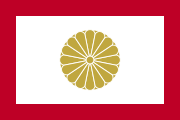 Ō (王) is a title (commonly translated "prince") given to male members of the Japanese Imperial Family who do not have the higher title of shinnō. The female equivalent is joō/nyoō (女王). Ō can also be translated as "king". The origin of this double meaning is a copying of the Chinese pattern
. Unlike in China, however, ō was only used for imperial family members.
Historically, any male member of the Imperial Family was titled ō by default, with shinnō (親王; literally relative-prince) and its female equivalent naishinnō (内親王; literally relative-princess
) being special titles granted by the Emperor
. After the Meiji Restoration
, the difference between ō and shinnō were altered. A shinnō or naishinnō was a legitimate Imperial Family member descended from an Emperor down to the great grandchild. The term "legitimate Imperial Family" excludes anyone not connected by a direct male line descent, as well as the descendants of anyone who renounced their membership in the Imperial Family, or were expelled from the Imperial Family. Shinnō also included the heads of any of the shinnōke
. A provision of law which never had an opportunity to be applied also stipulated that if the head of a shinnōke succeeded to the Chrysanthemum Throne
, then his brothers would acquire the title of shinnō, as well as their descendants (down to the grandchildren?). The Emperor could also specially grant the title of shinnō to any ō.
In 1947, the law was changed so that shinnō only extended to the male-line grandchildren of an Emperor. The Imperial Family was also drastically pruned, disestablishing the ōke and shinnōke. The consort of an ō or shinnō has the suffix -hi (妃) to ō or shinnō.
Emperor of Japan
The Emperor of Japan is, according to the 1947 Constitution of Japan, "the symbol of the state and of the unity of the people." He is a ceremonial figurehead under a form of constitutional monarchy and is head of the Japanese Imperial Family with functions as head of state. He is also the highest...
who undertake official and public duties. Under the present Constitution of Japan
Constitution of Japan
The is the fundamental law of Japan. It was enacted on 3 May, 1947 as a new constitution for postwar Japan.-Outline:The constitution provides for a parliamentary system of government and guarantees certain fundamental rights...
, the emperor
Emperor
An emperor is a monarch, usually the sovereign ruler of an empire or another type of imperial realm. Empress, the female equivalent, may indicate an emperor's wife or a woman who rules in her own right...
is the symbol of the state and unity of the people. Other members of the imperial family perform ceremonial and social duties, but have no role in the affairs of government. The duties as an emperor are passed down the line to children and their children's children and so on.
The Japan
Japan
Japan is an island nation in East Asia. Located in the Pacific Ocean, it lies to the east of the Sea of Japan, China, North Korea, South Korea and Russia, stretching from the Sea of Okhotsk in the north to the East China Sea and Taiwan in the south...
ese monarchy
Monarchy
A monarchy is a form of government in which the office of head of state is usually held until death or abdication and is often hereditary and includes a royal house. In some cases, the monarch is elected...
is the oldest continuous hereditary monarchy in the world. The imperial house recognizes 125 monarch
Monarch
A monarch is the person who heads a monarchy. This is a form of government in which a state or polity is ruled or controlled by an individual who typically inherits the throne by birth and occasionally rules for life or until abdication...
s beginning with the legendary Emperor Jimmu
Emperor Jimmu
was the first Emperor of Japan, according to the traditional order of succession. He is also known as Kamuyamato Iwarebiko and personally as Wakamikenu no Mikoto or Sano no Mikoto....
(traditionally dated to February 11, 660 BC) and continuing up to the current emperor, Akihito
Akihito
is the current , the 125th emperor of his line according to Japan's traditional order of succession. He acceded to the throne in 1989.-Name:In Japan, the emperor is never referred to by his given name, but rather is referred to as "His Imperial Majesty the Emperor" which may be shortened to . In...
; see its family tree
Japanese Emperors family tree
The following is a family tree of the Emperors of Japan, from Jimmu to the present day....
. However, there is no historical evidence for the genealogical relationships, and in most cases even the existence of, the first 25 emperors.
List of current members
Imperial Household Law
is a statute in Japanese law that governs the line of imperial succession, the membership of the imperial family, and several other matters pertaining to the administration of the Imperial Household.-Passage of the Law:...
defines the imperial house as: the ; the ; the ; the ; the and ; the imperial grandson who is heir apparent (kōtaison, 皇太孫) and his consort; the male-line and their consorts; the unmarried male-line ; and their consorts; and the . The legitimate children and male line grandchildren of an emperor are 親王 shinnō (imperial princes) in the case of males and 内親王 naishinnō (imperial princesses) in the case of females. More distant male line descendants are ō (prince
Prince
Prince is a general term for a ruler, monarch or member of a monarch's or former monarch's family, and is a hereditary title in the nobility of some European states. The feminine equivalent is a princess...
s) or nyoō (princess
Princess
Princess is the feminine form of prince . Most often, the term has been used for the consort of a prince, or his daughters....
es).
After the removal of eleven collateral branches from the Imperial House in October 1947, the official membership of the imperial family has effectively been limited to the male line descendants of the Emperor Taishō
Emperor Taishō
The was the 123rd emperor of Japan, according to the traditional order of succession, reigning from 30 July 1912, until his death in 1926.The Emperor’s personal name was . According to Japanese customs, the emperor has no name during his reign and is only called the Emperor...
, excluding females who married outside the imperial family and their descendants.
There are presently 23 members of the imperial family:
- The EmperorAkihitois the current , the 125th emperor of his line according to Japan's traditional order of succession. He acceded to the throne in 1989.-Name:In Japan, the emperor is never referred to by his given name, but rather is referred to as "His Imperial Majesty the Emperor" which may be shortened to . In...
was born at the Imperial Palace in Tokyo on 23 December 1933, the elder son and sixth child of the Shōwa EmperorHirohito, posthumously in Japan officially called Emperor Shōwa or , was the 124th Emperor of Japan according to the traditional order, reigning from December 25, 1926, until his death in 1989. Although better known outside of Japan by his personal name Hirohito, in Japan he is now referred to...
and Empress KōjunEmpress Kojun' was empress consort of Emperor Hirohito of Japan. Born , she was the mother of the present Emperor .Her posthumous name is Kōjun, which means "fragrant purity"...
. He was married on 10 April 1959 to Michiko Shōda. Emperor Akihito succeeded his father as emperor on 7 January 1989. - The Empress, formerly Michiko Shoda, was born in Tokyo on 24 October 1934, the eldest daughter of Hidesaburo Shoda, president and honorary chairman of Nisshin Flour Milling Inc..
- Naruhito, Crown Prince of JapanNaruhito, Crown Prince of Japanis the eldest son of Emperor Akihito and Empress Michiko, which makes him the heir apparent to the Chrysanthemum Throne of Japan.-Early life and education:...
, the eldest son of the Emperor and the Empress, was born at the Tsugo Palace in Tokyo on 23 February 1960. He became heir apparent upon his father's ascension to the throne. Crown Prince Naruhito was married on 10 June 1993 to Masako Owada. The Crown Prince and Crown Princess have one daughter. - Masako, Crown Princess of JapanMasako, Crown Princess of Japanis the wife of Crown Prince Naruhito, the first son of the Emperor Akihito and the Empress Michiko, and a member of the Imperial House of Japan through marriage.-Early life and education:...
was born on 9 December 1963, the daughter of Hisashi OwadaHisashi Owadais a former Japanese diplomat and a judge on the International Court of Justice, and currently serves as its President, having been elected to this post in 2009.-Early life:Hisashi Owada was born in Shibata, Niigata Prefecture, Japan. After earning a B.A...
, a former vice minister of foreign affairs and former permanent representative of Japan to the United Nations.- Aiko, Princess ToshiAiko, Princess Toshi, born 1 December 2001, is the daughter and only child of the heir apparent to the Japanese throne, Crown Prince Naruhito, and Crown Princess Masako....
, who was born on 1 December 2001 and who holds the childhood title "Princess Toshi".
- Aiko, Princess Toshi
- The Prince AkishinoPrince AkishinoFumihito, The Prince Akishino is a member of the Japanese imperial family...
, the Emperor's second son, was born on 11 November 1965. His childhood title was Prince Aya. He received the title Prince Akishino and permission to start a new branch of the imperial family upon his marriage to Kawashima Kiko on 29 June 1988. - The Princess Akishino was born on 11 September 1966, the daughter of Kawashima Tatsuhiko, professor of economics at Gakushuin University. Prince and Princess Akishino have two daughters and a son:
- Princess Mako of AkishinoPrincess Mako of Akishino, the older daughter of Prince Akishino and Princess Akishino , is a member of the Japanese imperial family. She is the first-born granddaughter of the reigning emperor Akihito and Empress Michiko.-Biography:...
(born 23 October 1991) - Princess Kako of AkishinoPrincess Kako of Akishino, the second daughter of Prince Akishino and Princess Akishino , is a member of the Imperial House of Japan.She is the second-born granddaughter of reigning emperor Akihito and Empress Michiko.-Biography:...
(born 29 December 1994) - Prince Hisahito of AkishinoPrince Hisahito of Akishinois the third child of the Prince and Princess Akishino, and their only son. He is third in line to become Emperor of Japan.Prince Hisahito has two older sisters, Princess Mako of Akishino and Princess Kako of Akishino .- Name :His personal name Hisahito in this case means "serene and virtuous,"...
(born 6 September 2006)
- Princess Mako of Akishino
- Naruhito, Crown Prince of Japan
- The Prince HitachiPrince Hitachiis a member of the Imperial House of Japan and the younger brother of current Emperor Akihito. He is the second son and sixth born child of HIM Emperor Shōwa and Empress Kōjun and is fourth in line to the Chrysanthemum throne...
was born on 28 November 1935, the second son and seventh child of the Emperor Shôwa and Empress Kojun. His childhood title was Prince Yoshi. He received the title Prince Hitachi and permission to set up a new branch of the imperial family on 1 October 1961, the day after his wedding. The Princess HitachiPrincess Hitachi, née was born on 19 July 1940. She is the fourth daughter of Count Yoshitaka Tsugaru, a descendant of the Tsugaru daimyō of Tsugaru Domain , née was born on 19 July 1940. She is the fourth daughter of Count Yoshitaka Tsugaru, a descendant of the Tsugaru daimyō of Tsugaru Domain , née was born...
was born on 19 July 1940, the daughter of former Count Tsugaru Yoshitaka. Prince and Princess Hitachi have no children. - The Prince MikasaPrince Mikasais a member of the Imperial House of Japan. He is the fourth and youngest son of Emperor Taishō and Empress Teimei. His eldest brother was Emperor Shōwa , and is the only surviving paternal uncle of Emperor Akihito. With the death of his sister-in-law, Princess Takamatsu , on 17 December 2004, he...
was born on 2 December 1915, the fourth son of the Taisho Emperor and Empress Teimei. He is the surviving brother of Emperor Shōwa and the surviving paternal uncle of Emperor Akihito. His childhood title was Prince Sumi (Sumi-no-miya). He received the title Prince Mikasa and permission to start a new branch of the imperial family on 2 December 1935. He married on 22 October 1941. The Princess MikasaPrincess Mikasawas second daughter of Viscount Masanari Takagi, and through marriage, a member of the Imperial House of Japan.-Biography:Princess Mikasa graduated from Gakushuin Women's Academy in 1941. She became engaged to the Takahito, Prince Mikasa on 3 October 1941, with the wedding held on 22 October...
was born on 6 June 1923, the second daughter of Viscount Takagi Masanori. Prince and Princess Mikasa have two daughters and three sons.- Prince Tomohito of MikasaPrince Tomohito of Mikasa, is a member of the Imperial House of Japan and the eldest son of the current HIH Prince Mikasa and HIH Princess Mikasa. He is a first cousin of Emperor Akihito, and is the heir apparent to the princely house of Mikasa-no-miya...
is the eldest son of the Prince and Princess Mikasa and a first cousin of Emperor Akihito. He is also heir apparent to his father's title, Mikasa-no-miya. He was born on 5 January 1946. Prince Tomohito married Aso Nobuko on 7 November 1980. Nobuko, Princess Tomohito of MikasaPrincess Tomohito of MikasaNobuko, Princess Tomohito of Mikasa was born on 9 April 1955. She was born as Nobuko Aso, the third daughter of the late Takakichi Asō. Her father was chairman of Asō Cement Co., her mother Kazuko was the daughter of former prime minister Shigeru Yoshida...
was born on 9 April 1955, the daughter of Aso Takakichi, chairman of Aso Cement Co. and his wife, Kazuko, a daughter of former prime minister Yoshida Shigeru. Prince and Princess Tomohito of Mikasa have two daughters:- Princess Akiko of MikasaPrincess Akiko of Mikasais a member of the Imperial House of Japan and the eldest daughter of HIH Prince Tomohito of Mikasa and HIH Princess Tomohito of Mikasa .-Biography:Princess Akiko graduated from Gakushuin University in Tokyo with a bachelor's degree in history...
(born 20 December 1981) - Princess Yōko of Mikasa (born 25 October 1983)
- Princess Akiko of Mikasa
- The Prince KatsuraPrince Katsurais a member of the Imperial House of Japan and the second son of HIH Prince Mikasa and HIH Princess Mikasa. He is a first cousin of Emperor Akihito...
is the second son of Prince and Princess Mikasa and a first cousin of Emperor Akihito. He was born on 11 February 1948. Originally known as Prince Yoshihito of Mikasa, he received the title Prince Katsura (Katsura-no-miya) and authorization to start a new branch of the imperial family on 1 January 1988. - The Princess TakamadoPrincess Takamadois, through marriage, a member of the Japanese Imperial Family.-Biography:She is the eldest daughter of Japanese industrialist Shigejiro Tottori. Hisako accompanied her father to England, where he was transferred for work, and while still a child became fluent in the English language...
is the widow of the Prince TakamadoPrince Takamadowas a member of the Imperial House of Japan and the third son of HIH Prince Mikasa and HIH Princess Mikasa. He was a first cousin of Emperor Akihito, and formerly was seventh in line to the Chrysanthemum throne.-Education:...
(born 29 December 1954, died 21 November 2002), the third son of the Prince and the Princess Mikasa and a first cousin of Emperor Akihito. The princess was born 10 July 1953, the daughter of Tottori Shigejiro. She married the prince on 6 December 1981. Originally known as Prince Norihito of Mikasa, he received the title Prince Takamado and permission to start a new branch of the imperial family on 1 December 1981. Princess Takamado has three daughters:- Princess Tsuguko of Takamado (born 6 March 1986)
- Princess Noriko of Takamado (born 22 July 1988)
- Princess Ayako of Takamado (born 15 September 1990)
- Prince Tomohito of Mikasa
Family tree
Living former members
Under the terms of the 1947 Imperial Household LawImperial Household Law
is a statute in Japanese law that governs the line of imperial succession, the membership of the imperial family, and several other matters pertaining to the administration of the Imperial Household.-Passage of the Law:...
, naishinnō (imperial princesses) and nyoō (princesses) lose their titles and membership in the imperial family upon marriage, unless they marry the Emperor or another member of the imperial family. Three of the five daughters of Emperor Shōwa
Hirohito
, posthumously in Japan officially called Emperor Shōwa or , was the 124th Emperor of Japan according to the traditional order, reigning from December 25, 1926, until his death in 1989. Although better known outside of Japan by his personal name Hirohito, in Japan he is now referred to...
, the two daughters of Prince Mikasa, and most recently, the only daughter of the Emperor Akihito
Akihito
is the current , the 125th emperor of his line according to Japan's traditional order of succession. He acceded to the throne in 1989.-Name:In Japan, the emperor is never referred to by his given name, but rather is referred to as "His Imperial Majesty the Emperor" which may be shortened to . In...
left the imperial family upon marriage, taking the surnames of their husbands. The eldest daughter of Emperor Shōwa married the eldest son of Prince Higashikuni Naruhiko in 1943. The Higashikuni
Oke
The , were branches of the Japanese Imperial Family created from branches of the Fushimi-no-miya house. All but one of the ōke were formed by the descendants of Prince Fushimi Kuniye. The ōke were stripped of their membership in the Imperial Family by the American Occupation Authorities in...
family lost its imperial status along with the other collateral branches of the imperial family in October 1947. The living former imperial princesses are:
- Atsuko IkedaAtsuko Ikeda, is the wife of Marquis Takamasa Ikeda and fourth daughter of Emperor Shōwa and Empress Kōjun. As such, she is the older sister to the present Emperor of Japan, Emperor Akihito.- Biography :...
, born 7 March 1931, fourth daughter of Emperor Shōwa and surviving elder sister of Emperor Akihito. - Takako ShimazuTakako Shimazu-Notes:...
, born 2 March 1939, fifth daughter and youngest child of Emperor Shōwa and younger sister of Emperor Akihito. - Yasuko Konoe, born 26 April 1944, eldest daughter and eldest child of Prince and Princess Mikasa.
- Masako Sen, born 23 October 1951, second daughter and fourth child of Prince and Princess Mikasa.
- Sayako KurodaSayako Kuroda, formerly , is the third child and only daughter of Emperor Akihito and Empress Michiko of Japan. She held the childhood appellation "Nori no miya" . She married Yoshiki Kuroda on 15 November 2005...
, born 18 April 1969, third child and only daughter of Emperor Akihito and Empress Michiko.
In addition to these former princesses, there are also several people of Imperial descent in the eleven cadet branch
Cadet branch
Cadet branch is a term in genealogy to describe the lineage of the descendants of the younger sons of a monarch or patriarch. In the ruling dynasties and noble families of much of Europe and Asia, the family's major assets – titles, realms, fiefs, property and income – have...
es of the dynasty (Asaka, Fushimi
Fushimi-no-miya
The ' is the oldest of the four shinnōke, branches of the Imperial Family of Japan which were eligible to succeed to the Chrysanthemum Throne in the event that the main line should die out....
, Higashi-Fushimi, Higashi-kuni, Kan'in
Kan'in-no-miya
The ' is the youngest of the four shinnōke, branches of the Imperial Family of Japan which were eligible to succeed to the Chrysanthemum Throne in the event that the main line should die out. It was founded by Prince Naohito, the son of Emperor Higashiyama....
, Kaya, Kitashirakawa, Kuni, Nashimoto, Takeda, and Yamashina) that left the imperial family in October 1947. The Shōwa emperor's eldest daughter, Higashikuni Morihito (Shigeko), and his third daughter, Takatukasa Toshimichi (Kazuko), died in 1961 and 1989, respectively.
Succession
Order of succession
An order of succession is a formula or algorithm that determines who inherits an office upon the death, resignation, or removal of its current occupant.-Monarchies and nobility:...
to the Chrysanthemum Throne has generally passed in male line of the imperial lineage. The imperial clan previously included specially designated collateral lines or shinnōke
Shinnoke
was the collective name for the four cadet branches of the Imperial Household of Japan, which were until 1947 entitled to provide a successor to the Chrysanthemum throne if the main line failed to produce an heir...
(princely houses), too. The surviving shinnōke
Shinnoke
was the collective name for the four cadet branches of the Imperial Household of Japan, which were until 1947 entitled to provide a successor to the Chrysanthemum throne if the main line failed to produce an heir...
and several other branches of the extended imperial clan (the ōke
Oke
The , were branches of the Japanese Imperial Family created from branches of the Fushimi-no-miya house. All but one of the ōke were formed by the descendants of Prince Fushimi Kuniye. The ōke were stripped of their membership in the Imperial Family by the American Occupation Authorities in...
) were reduced to commoner status in 1947.
Before the Meiji Restoration
Meiji Restoration
The , also known as the Meiji Ishin, Revolution, Reform or Renewal, was a chain of events that restored imperial rule to Japan in 1868...
, Japan had eight female tennō or reigning empresses, all of them daughters of male line of the imperial clan. None ascended purely as a wife or as a widow of an emperor. None of these empresses married or gave birth after ascending the throne.
Article 2 of the Constitution of Japan
Constitution of Japan
The is the fundamental law of Japan. It was enacted on 3 May, 1947 as a new constitution for postwar Japan.-Outline:The constitution provides for a parliamentary system of government and guarantees certain fundamental rights...
provides that "the Imperial Throne shall be dynastic and succeeded to in accordance with the Imperial Household Law passed by the Diet." The Imperial Household Law of 1947
Imperial Household Law
is a statute in Japanese law that governs the line of imperial succession, the membership of the imperial family, and several other matters pertaining to the administration of the Imperial Household.-Passage of the Law:...
enacted by the 92nd and last session of the Imperial Diet, retained the exclusion on female dynasts found in the 1889 law. The government of Prime Minister Yoshida Shigeru hastily cobbled together the legislation to bring the Imperial House in compliance with the American-written Constitution of Japan
Constitution of Japan
The is the fundamental law of Japan. It was enacted on 3 May, 1947 as a new constitution for postwar Japan.-Outline:The constitution provides for a parliamentary system of government and guarantees certain fundamental rights...
that went into effect in May 1947. In an effort to control the size of the imperial family, the law stipulates that only legitimate male descendants in the male line can be dynasts; that naishinnō (imperial princesses) and nyoō (princesses) lose their status as imperial family-members if they marry outside the imperial family; that shinnō (imperial princes), other than the crown prince, ō (princes), unmarried imperial princesses and princesses, and the widows of imperial princes and princesses may, upon their own request or in the event of special circumstances, renounce their membership in the imperial family with approval of the Imperial House Council; and that the Emperor and other members of the imperial family may not adopt children.
Before September 2006, there was a potential succession crisis since no male child had been born into the imperial family since Prince Akishino in 1965. Following the birth of Princess Aiko
Aiko, Princess Toshi
, born 1 December 2001, is the daughter and only child of the heir apparent to the Japanese throne, Crown Prince Naruhito, and Crown Princess Masako....
, there was some public debate about amending the Imperial House Law to allow female descendants of an emperor and their descendants to succeed to the throne. In January 2005, Prime Minister Koizumi Junichiro appointed a special panel of judges, university professors, and civil servants to study changes to the Imperial House Law and to make recommendations to the government. On October 25, 2005, the commission recommended amending the law to allow females in the male line of imperial descent to succeed to the throne. Since the birth of a male son to another of Akihito's children the issue has been left in abeyance by both the public and successive governments. Also see Japanese Imperial succession controversy
Japanese imperial succession controversy
The Japanese imperial succession controversy refers to desires to change the laws of succession to the Japanese Throne, which is currently limited to males of the Japanese imperial family.- Overview :...
.
History of titles
Chinese nobility
Chinese sovereignty and peerage, the nobility of China, were an important feature of traditional social and political organization of Imperial China. While the concepts of hereditary sovereign and peerage titles and noble families were featured as early as the semi-mythical, early historical...
. Unlike in China, however, ō was only used for imperial family members.
Historically, any male member of the Imperial Family was titled ō by default, with shinnō (親王; literally relative-prince) and its female equivalent naishinnō (内親王; literally relative-princess
Princess
Princess is the feminine form of prince . Most often, the term has been used for the consort of a prince, or his daughters....
) being special titles granted by the Emperor
Emperor of Japan
The Emperor of Japan is, according to the 1947 Constitution of Japan, "the symbol of the state and of the unity of the people." He is a ceremonial figurehead under a form of constitutional monarchy and is head of the Japanese Imperial Family with functions as head of state. He is also the highest...
. After the Meiji Restoration
Meiji Restoration
The , also known as the Meiji Ishin, Revolution, Reform or Renewal, was a chain of events that restored imperial rule to Japan in 1868...
, the difference between ō and shinnō were altered. A shinnō or naishinnō was a legitimate Imperial Family member descended from an Emperor down to the great grandchild. The term "legitimate Imperial Family" excludes anyone not connected by a direct male line descent, as well as the descendants of anyone who renounced their membership in the Imperial Family, or were expelled from the Imperial Family. Shinnō also included the heads of any of the shinnōke
Shinnoke
was the collective name for the four cadet branches of the Imperial Household of Japan, which were until 1947 entitled to provide a successor to the Chrysanthemum throne if the main line failed to produce an heir...
. A provision of law which never had an opportunity to be applied also stipulated that if the head of a shinnōke succeeded to the Chrysanthemum Throne
Chrysanthemum Throne
The is the English term used to identify the throne of the Emperor of Japan. The term can refer to very specific seating, such as the takamikura throne in the Shishin-den at Kyoto Imperial Palace....
, then his brothers would acquire the title of shinnō, as well as their descendants (down to the grandchildren?). The Emperor could also specially grant the title of shinnō to any ō.
In 1947, the law was changed so that shinnō only extended to the male-line grandchildren of an Emperor. The Imperial Family was also drastically pruned, disestablishing the ōke and shinnōke. The consort of an ō or shinnō has the suffix -hi (妃) to ō or shinnō.
See also
- Chrysanthemum ThroneChrysanthemum ThroneThe is the English term used to identify the throne of the Emperor of Japan. The term can refer to very specific seating, such as the takamikura throne in the Shishin-den at Kyoto Imperial Palace....
- Three Palace SanctuariesThree Palace SanctuariesThe precincts of the Japanese Imperial Palace in Tokyo include structures known as the Three Palace Sanctuaries or Kyuchusanden . They are used in imperial religious ceremonies, including weddings and coronations. The three sanctuaries are:...
- Tokyo Imperial Palace
- Emperor of JapanEmperor of JapanThe Emperor of Japan is, according to the 1947 Constitution of Japan, "the symbol of the state and of the unity of the people." He is a ceremonial figurehead under a form of constitutional monarchy and is head of the Japanese Imperial Family with functions as head of state. He is also the highest...
Related terms
- ShinnōkeShinnokewas the collective name for the four cadet branches of the Imperial Household of Japan, which were until 1947 entitled to provide a successor to the Chrysanthemum throne if the main line failed to produce an heir...
- FushimiFushimi-no-miyaThe ' is the oldest of the four shinnōke, branches of the Imperial Family of Japan which were eligible to succeed to the Chrysanthemum Throne in the event that the main line should die out....
- ŌkeOkeThe , were branches of the Japanese Imperial Family created from branches of the Fushimi-no-miya house. All but one of the ōke were formed by the descendants of Prince Fushimi Kuniye. The ōke were stripped of their membership in the Imperial Family by the American Occupation Authorities in...
- Ōke
- KatsuraKatsura-no-miyaThe ' was the one of the four shinnōke, branches of the Imperial Family of Japan which were eligible to succeed to the Chrysanthemum Throne in the event that the main line should die out. It was founded by Prince Toshihito, a grandson of Emperor Ōgimachi and brother of Emperor Go-Yōzei...
- ArisugawaArisugawa-no-miyaThe ' is one of the shinnōke, branches of the Imperial Family of Japan which were, until 1947, eligible to succeed to the Chrysanthemum Throne in the event that the main line should die out....
- Kan'inKan'in-no-miyaThe ' is the youngest of the four shinnōke, branches of the Imperial Family of Japan which were eligible to succeed to the Chrysanthemum Throne in the event that the main line should die out. It was founded by Prince Naohito, the son of Emperor Higashiyama....
- Fushimi