

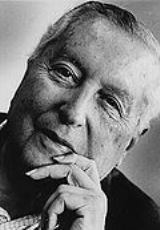
Ilya Prigogine

Encyclopedia
Ilya, Viscount Prigogine (25 January 1917 – 28 May 2003) was a Russia
n-born naturalized
Belgian
physical chemist
and Nobel Laureate
noted for his work on dissipative structures
, complex systems
, and irreversibility
.
a few months before the Russian Revolution
of 1917, into a Jewish family. His father, Roman (Ruvim Abramovich) Prigogine, was a chemical engineer
at the Moscow Institute of Technology; his mother, Yulia Vikhman, was a pianist. Because the family was critical of the new Soviet system
, they left Russia in 1921. They first went to Germany and in 1929, to Belgium, where Prigogine received Belgian citizenship in 1949.
Prigogine studied chemistry
at the Free University of Brussels
, where in 1950, he became professor. In 1959, he was appointed director of the International Solvay Institute
in Brussels, Belgium. In that year, he also started teaching at the University of Texas at Austin
in the United States
, where he later was appointed Regental Professor and Ashbel Smith Professor of Physics and Chemical Engineering. From 1961 until 1966 he was affiliated with the Enrico Fermi
Institute at the University of Chicago
. In Austin, in 1967, he co-founded what is now called The Center for Complex Quantum Systems
. In that year, he also returned to Belgium, where he became director of the Center for Statistical Mechanics and Thermodynamics.
He was a member of numerous scientific organizations, and received numerous awards, prizes and 53 honorary degrees. In 1955, Ilya Prigogine was awarded the Francqui Prize
for Exact Sciences. For this study in irreversible
thermodynamics
, he received the Rumford Medal
in 1976, and in 1977, the Nobel Prize
in Chemistry
. In 1989, he was awarded the title of Viscount
in the Belgian nobility
by the King of the Belgians. Until his death, he was president of the International Academy of Science and was in 1997, one of the founders of the International Commission on Distance Education (CODE), a worldwide accreditation agency. In 1998 he was awarded an honoris causa doctorate by the UNAM
in Mexico City
.
Prigogine was first married to Belgian poet Hélène Jofé /in literature Hélène Prigogine/(son Yves 1945). After their divorce, he married Polish-born chemist
Maria Prokopowicz(-Prigogine) in 1961 (son Pascal 1970).
s far from equilibrium
, a discovery that won him the Nobel Prize
in Chemistry in 1977. In summary, Ilya Prigogine discovered that importation and dissipation of energy into chemical systems could reverse the maximization of entropy rule imposed by the second law of thermodynamics
, that only applies to closed thermodynamic systems with no exchange of energy or entropy
with the environment .
s.
His work is seen by many as a bridge between natural sciences and social sciences. With professor Robert Herman
, he also developed the basis of the two fluid model, a traffic model in traffic engineering
for urban networks, in parallel to the two fluid model in Classical Statistical Mechanics.
Prigogine's formal concept of self-organization
was used also as a "complementary bridge" between General Systems Theory and Thermodynamics
, conciliating the cloudiness of some important systems theory concepts with scientific rigour.
in nonlinear systems on both the classical
and quantum level. Prigogine and coworkers proposed a Liouville space extension of quantum mechanics aimed to solving the arrow of time problem of thermodynamics and the measurement problem
of quantum mechanics. He also co-authored several books with Isabelle Stengers
, including End of Certainty and La Nouvelle Alliance (The New Alliance).
, Einstein
and Schrödinger
, all of whom expressed their theories in terms of deterministic equations. According to Prigogine, determinism loses its explanatory power in the face of irreversibility
and instability
.
Prigogine traces the dispute over determinism back to Darwin
, whose attempt to explain individual variability according to evolving populations inspired Ludwig Boltzmann
to explain the behavior of gases in terms of populations of particles rather than individual particles. This led to the field of statistical mechanics
and the realization that gases undergo irreversible processes. In deterministic physics, all processes are time-reversible, meaning that they can proceed backward as well as forward through time. As Prigogine explains, determinism is fundamentally a denial of the arrow of time
. With no arrow of time, there is no longer a privileged moment known as the "present," which follows a determined "past" and precedes an undetermined "future." All of time is simply given, with the future as determined or undetermined as the past. With irreversibility, the arrow of time is reintroduced to physics. Prigogine notes numerous examples of irreversibility, including diffusion
, radioactive decay
, solar radiation, weather
and the emergence and evolution of life
. Like weather systems, organisms are unstable systems existing far from thermodynamic equilibrium
. Instability resists standard deterministic explanation. Instead, due to sensitivity to initial conditions, unstable systems can only be explained statistically, that is, in terms of probability
.
Prigogine asserts that Newtonian physics has now been "extended" three times, first with the use of the wave function in quantum mechanics
, then with the introduction of spacetime in general relativity
and finally with the recognition of indeterminism in the study of unstable systems.
Russia
Russia or , officially known as both Russia and the Russian Federation , is a country in northern Eurasia. It is a federal semi-presidential republic, comprising 83 federal subjects...
n-born naturalized
Naturalization
Naturalization is the acquisition of citizenship and nationality by somebody who was not a citizen of that country at the time of birth....
Belgian
Belgium
Belgium , officially the Kingdom of Belgium, is a federal state in Western Europe. It is a founding member of the European Union and hosts the EU's headquarters, and those of several other major international organisations such as NATO.Belgium is also a member of, or affiliated to, many...
physical chemist
Physical chemistry
Physical chemistry is the study of macroscopic, atomic, subatomic, and particulate phenomena in chemical systems in terms of physical laws and concepts...
and Nobel Laureate
Nobel Prize
The Nobel Prizes are annual international awards bestowed by Scandinavian committees in recognition of cultural and scientific advances. The will of the Swedish chemist Alfred Nobel, the inventor of dynamite, established the prizes in 1895...
noted for his work on dissipative structures
Dissipative system
A dissipative system is a thermodynamically open system which is operating out of, and often far from, thermodynamic equilibrium in an environment with which it exchanges energy and matter....
, complex systems
Complex systems
Complex systems present problems in mathematical modelling.The equations from which complex system models are developed generally derive from statistical physics, information theory and non-linear dynamics, and represent organized but unpredictable behaviors of systems of nature that are considered...
, and irreversibility
Irreversibility
In science, a process that is not reversible is called irreversible. This concept arises most frequently in thermodynamics, as applied to processes....
.
Biography
Prigogine was born in MoscowMoscow
Moscow is the capital, the most populous city, and the most populous federal subject of Russia. The city is a major political, economic, cultural, scientific, religious, financial, educational, and transportation centre of Russia and the continent...
a few months before the Russian Revolution
October Revolution
The October Revolution , also known as the Great October Socialist Revolution , Red October, the October Uprising or the Bolshevik Revolution, was a political revolution and a part of the Russian Revolution of 1917...
of 1917, into a Jewish family. His father, Roman (Ruvim Abramovich) Prigogine, was a chemical engineer
Chemical engineer
In the field of engineering, a chemical engineer is the profession in which one works principally in the chemical industry to convert basic raw materials into a variety of products, and deals with the design and operation of plants and equipment to perform such work...
at the Moscow Institute of Technology; his mother, Yulia Vikhman, was a pianist. Because the family was critical of the new Soviet system
Soviet Union
The Soviet Union , officially the Union of Soviet Socialist Republics , was a constitutionally socialist state that existed in Eurasia between 1922 and 1991....
, they left Russia in 1921. They first went to Germany and in 1929, to Belgium, where Prigogine received Belgian citizenship in 1949.
Prigogine studied chemistry
Chemistry
Chemistry is the science of matter, especially its chemical reactions, but also its composition, structure and properties. Chemistry is concerned with atoms and their interactions with other atoms, and particularly with the properties of chemical bonds....
at the Free University of Brussels
Free University of Brussels
The Free University of Brussels was a university in Brussels, Belgium. In 1969, it split into the Université Libre de Bruxelles and the Dutch-speaking Vrije Universiteit Brussel....
, where in 1950, he became professor. In 1959, he was appointed director of the International Solvay Institute
Solvay Conference
The International Solvay Institutes for Physics and Chemistry, located in Brussels, were founded by the Belgian industrialist Ernest Solvay in 1912, following the historic invitation-only 1911 Conseil Solvay, the turning point in world physics...
in Brussels, Belgium. In that year, he also started teaching at the University of Texas at Austin
University of Texas at Austin
The University of Texas at Austin is a state research university located in Austin, Texas, USA, and is the flagship institution of the The University of Texas System. Founded in 1883, its campus is located approximately from the Texas State Capitol in Austin...
in the United States
United States
The United States of America is a federal constitutional republic comprising fifty states and a federal district...
, where he later was appointed Regental Professor and Ashbel Smith Professor of Physics and Chemical Engineering. From 1961 until 1966 he was affiliated with the Enrico Fermi
Enrico Fermi
Enrico Fermi was an Italian-born, naturalized American physicist particularly known for his work on the development of the first nuclear reactor, Chicago Pile-1, and for his contributions to the development of quantum theory, nuclear and particle physics, and statistical mechanics...
Institute at the University of Chicago
University of Chicago
The University of Chicago is a private research university in Chicago, Illinois, USA. It was founded by the American Baptist Education Society with a donation from oil magnate and philanthropist John D. Rockefeller and incorporated in 1890...
. In Austin, in 1967, he co-founded what is now called The Center for Complex Quantum Systems
The Center for Complex Quantum Systems
The Center for Complex Quantum Systems is a research institute within the Department of Physics of The University of Texas at Austin in the United States....
. In that year, he also returned to Belgium, where he became director of the Center for Statistical Mechanics and Thermodynamics.
He was a member of numerous scientific organizations, and received numerous awards, prizes and 53 honorary degrees. In 1955, Ilya Prigogine was awarded the Francqui Prize
Francqui Prize
The Francqui Prize is a prestigious Belgian scholarly and scientific prize, awarded each year since 1933 by the Francqui Foundation in recognition of the achievements of a young Belgian scholar or scientist...
for Exact Sciences. For this study in irreversible
Irreversibility
In science, a process that is not reversible is called irreversible. This concept arises most frequently in thermodynamics, as applied to processes....
thermodynamics
Thermodynamics
Thermodynamics is a physical science that studies the effects on material bodies, and on radiation in regions of space, of transfer of heat and of work done on or by the bodies or radiation...
, he received the Rumford Medal
Rumford Medal
The Rumford Medal is awarded by the Royal Society every alternating year for "an outstandingly important recent discovery in the field of thermal or optical properties of matter made by a scientist working in Europe". First awarded in 1800, it was created after a 1796 donation of $5000 by the...
in 1976, and in 1977, the Nobel Prize
Nobel Prize
The Nobel Prizes are annual international awards bestowed by Scandinavian committees in recognition of cultural and scientific advances. The will of the Swedish chemist Alfred Nobel, the inventor of dynamite, established the prizes in 1895...
in Chemistry
Nobel Prize in Chemistry
The Nobel Prize in Chemistry is awarded annually by the Royal Swedish Academy of Sciences to scientists in the various fields of chemistry. It is one of the five Nobel Prizes established by the will of Alfred Nobel in 1895, awarded for outstanding contributions in chemistry, physics, literature,...
. In 1989, he was awarded the title of Viscount
Viscount
A viscount or viscountess is a member of the European nobility whose comital title ranks usually, as in the British peerage, above a baron, below an earl or a count .-Etymology:...
in the Belgian nobility
Belgian nobility
In the Kingdom of Belgium there are at the moment approximately 1,300 noble families. Some 20,000 individuals are titled. The noble lineage of only ca. 400 families dates back to the 17th century. As Belgium is a democratic constitutional monarchy there are no legal privileges attached to bearing a...
by the King of the Belgians. Until his death, he was president of the International Academy of Science and was in 1997, one of the founders of the International Commission on Distance Education (CODE), a worldwide accreditation agency. In 1998 he was awarded an honoris causa doctorate by the UNAM
Unam
UNAM or UNaM may refer to:* National University of Misiones, a National University in Posadas, Argentina*National Autonomous University of Mexico , the large public autonomous university based in Mexico City...
in Mexico City
Mexico City
Mexico City is the Federal District , capital of Mexico and seat of the federal powers of the Mexican Union. It is a federal entity within Mexico which is not part of any one of the 31 Mexican states but belongs to the federation as a whole...
.
Prigogine was first married to Belgian poet Hélène Jofé /in literature Hélène Prigogine/(son Yves 1945). After their divorce, he married Polish-born chemist
Chemist
A chemist is a scientist trained in the study of chemistry. Chemists study the composition of matter and its properties such as density and acidity. Chemists carefully describe the properties they study in terms of quantities, with detail on the level of molecules and their component atoms...
Maria Prokopowicz(-Prigogine) in 1961 (son Pascal 1970).
Research
Prigogine is best known for his definition of dissipative structures and their role in thermodynamic systemThermodynamic system
A thermodynamic system is a precisely defined macroscopic region of the universe, often called a physical system, that is studied using the principles of thermodynamics....
s far from equilibrium
Thermodynamic equilibrium
In thermodynamics, a thermodynamic system is said to be in thermodynamic equilibrium when it is in thermal equilibrium, mechanical equilibrium, radiative equilibrium, and chemical equilibrium. The word equilibrium means a state of balance...
, a discovery that won him the Nobel Prize
Nobel Prize
The Nobel Prizes are annual international awards bestowed by Scandinavian committees in recognition of cultural and scientific advances. The will of the Swedish chemist Alfred Nobel, the inventor of dynamite, established the prizes in 1895...
in Chemistry in 1977. In summary, Ilya Prigogine discovered that importation and dissipation of energy into chemical systems could reverse the maximization of entropy rule imposed by the second law of thermodynamics
Second law of thermodynamics
The second law of thermodynamics is an expression of the tendency that over time, differences in temperature, pressure, and chemical potential equilibrate in an isolated physical system. From the state of thermodynamic equilibrium, the law deduced the principle of the increase of entropy and...
, that only applies to closed thermodynamic systems with no exchange of energy or entropy
Entropy
Entropy is a thermodynamic property that can be used to determine the energy available for useful work in a thermodynamic process, such as in energy conversion devices, engines, or machines. Such devices can only be driven by convertible energy, and have a theoretical maximum efficiency when...
with the environment .
Dissipative structures theory
Dissipative structure theory led to pioneering research in self-organizing systems, as well as philosophical inquiries into the formation of complexity on biological entities and the quest for a creative and irreversible role of time in the natural scienceNatural science
The natural sciences are branches of science that seek to elucidate the rules that govern the natural world by using empirical and scientific methods...
s.
His work is seen by many as a bridge between natural sciences and social sciences. With professor Robert Herman
Robert Herman
Robert Herman was a United States scientist, best known for his work with Ralph Alpher in 1948-50, on estimating the temperature of cosmic microwave background radiation from the Big Bang explosion....
, he also developed the basis of the two fluid model, a traffic model in traffic engineering
Traffic engineering (transportation)
For the engineering of communications and computer networks, see Teletraffic engineering.Traffic engineering is a branch of civil engineering that uses engineering techniques to achieve the safe and efficient movement of people and goods on roadways...
for urban networks, in parallel to the two fluid model in Classical Statistical Mechanics.
Prigogine's formal concept of self-organization
Self-organization
Self-organization is the process where a structure or pattern appears in a system without a central authority or external element imposing it through planning...
was used also as a "complementary bridge" between General Systems Theory and Thermodynamics
Thermodynamics
Thermodynamics is a physical science that studies the effects on material bodies, and on radiation in regions of space, of transfer of heat and of work done on or by the bodies or radiation...
, conciliating the cloudiness of some important systems theory concepts with scientific rigour.
Work on unsolved problems in physics
In his later years, his work concentrated on the fundamental role of IndeterminismIndeterminism
Indeterminism is the concept that events are not caused, or not caused deterministically by prior events. It is the opposite of determinism and related to chance...
in nonlinear systems on both the classical
Classical physics
What "classical physics" refers to depends on the context. When discussing special relativity, it refers to the Newtonian physics which preceded relativity, i.e. the branches of physics based on principles developed before the rise of relativity and quantum mechanics...
and quantum level. Prigogine and coworkers proposed a Liouville space extension of quantum mechanics aimed to solving the arrow of time problem of thermodynamics and the measurement problem
Measurement problem
The measurement problem in quantum mechanics is the unresolved problem of how wavefunction collapse occurs. The inability to observe this process directly has given rise to different interpretations of quantum mechanics, and poses a key set of questions that each interpretation must answer...
of quantum mechanics. He also co-authored several books with Isabelle Stengers
Isabelle Stengers
Professor Isabelle Stengers , is a Belgian philosopher and is the daughter of the historian Jean Stengers. She graduated in chemistry at the Université Libre de Bruxelles.-Biography:Professor Stengers writes about the philosophy of science...
, including End of Certainty and La Nouvelle Alliance (The New Alliance).
The End of Certainty
In his 1997 book, The End of Certainty, Prigogine contends that determinism is no longer a viable scientific belief. "The more we know about our universe, the more difficult it becomes to believe in determinism." This is a major departure from the approach of NewtonIsaac Newton
Sir Isaac Newton PRS was an English physicist, mathematician, astronomer, natural philosopher, alchemist, and theologian, who has been "considered by many to be the greatest and most influential scientist who ever lived."...
, Einstein
Albert Einstein
Albert Einstein was a German-born theoretical physicist who developed the theory of general relativity, effecting a revolution in physics. For this achievement, Einstein is often regarded as the father of modern physics and one of the most prolific intellects in human history...
and Schrödinger
Erwin Schrödinger
Erwin Rudolf Josef Alexander Schrödinger was an Austrian physicist and theoretical biologist who was one of the fathers of quantum mechanics, and is famed for a number of important contributions to physics, especially the Schrödinger equation, for which he received the Nobel Prize in Physics in 1933...
, all of whom expressed their theories in terms of deterministic equations. According to Prigogine, determinism loses its explanatory power in the face of irreversibility
Irreversibility
In science, a process that is not reversible is called irreversible. This concept arises most frequently in thermodynamics, as applied to processes....
and instability
Instability
In numerous fields of study, the component of instability within a system is generally characterized by some of the outputs or internal states growing without bounds...
.
Prigogine traces the dispute over determinism back to Darwin
Charles Darwin
Charles Robert Darwin FRS was an English naturalist. He established that all species of life have descended over time from common ancestry, and proposed the scientific theory that this branching pattern of evolution resulted from a process that he called natural selection.He published his theory...
, whose attempt to explain individual variability according to evolving populations inspired Ludwig Boltzmann
Ludwig Boltzmann
Ludwig Eduard Boltzmann was an Austrian physicist famous for his founding contributions in the fields of statistical mechanics and statistical thermodynamics...
to explain the behavior of gases in terms of populations of particles rather than individual particles. This led to the field of statistical mechanics
Statistical mechanics
Statistical mechanics or statistical thermodynamicsThe terms statistical mechanics and statistical thermodynamics are used interchangeably...
and the realization that gases undergo irreversible processes. In deterministic physics, all processes are time-reversible, meaning that they can proceed backward as well as forward through time. As Prigogine explains, determinism is fundamentally a denial of the arrow of time
Arrow of time
The arrow of time, or time’s arrow, is a term coined in 1927 by the British astronomer Arthur Eddington to describe the "one-way direction" or "asymmetry" of time...
. With no arrow of time, there is no longer a privileged moment known as the "present," which follows a determined "past" and precedes an undetermined "future." All of time is simply given, with the future as determined or undetermined as the past. With irreversibility, the arrow of time is reintroduced to physics. Prigogine notes numerous examples of irreversibility, including diffusion
Diffusion
Molecular diffusion, often called simply diffusion, is the thermal motion of all particles at temperatures above absolute zero. The rate of this movement is a function of temperature, viscosity of the fluid and the size of the particles...
, radioactive decay
Radioactive decay
Radioactive decay is the process by which an atomic nucleus of an unstable atom loses energy by emitting ionizing particles . The emission is spontaneous, in that the atom decays without any physical interaction with another particle from outside the atom...
, solar radiation, weather
Weather
Weather is the state of the atmosphere, to the degree that it is hot or cold, wet or dry, calm or stormy, clear or cloudy. Most weather phenomena occur in the troposphere, just below the stratosphere. Weather refers, generally, to day-to-day temperature and precipitation activity, whereas climate...
and the emergence and evolution of life
Life
Life is a characteristic that distinguishes objects that have signaling and self-sustaining processes from those that do not, either because such functions have ceased , or else because they lack such functions and are classified as inanimate...
. Like weather systems, organisms are unstable systems existing far from thermodynamic equilibrium
Thermodynamic equilibrium
In thermodynamics, a thermodynamic system is said to be in thermodynamic equilibrium when it is in thermal equilibrium, mechanical equilibrium, radiative equilibrium, and chemical equilibrium. The word equilibrium means a state of balance...
. Instability resists standard deterministic explanation. Instead, due to sensitivity to initial conditions, unstable systems can only be explained statistically, that is, in terms of probability
Probability
Probability is ordinarily used to describe an attitude of mind towards some proposition of whose truth we arenot certain. The proposition of interest is usually of the form "Will a specific event occur?" The attitude of mind is of the form "How certain are we that the event will occur?" The...
.
Prigogine asserts that Newtonian physics has now been "extended" three times, first with the use of the wave function in quantum mechanics
Quantum mechanics
Quantum mechanics, also known as quantum physics or quantum theory, is a branch of physics providing a mathematical description of much of the dual particle-like and wave-like behavior and interactions of energy and matter. It departs from classical mechanics primarily at the atomic and subatomic...
, then with the introduction of spacetime in general relativity
General relativity
General relativity or the general theory of relativity is the geometric theory of gravitation published by Albert Einstein in 1916. It is the current description of gravitation in modern physics...
and finally with the recognition of indeterminism in the study of unstable systems.
Publications
- Prigogine, I. "The Behavior of Matter under Nonequilibrium Conditions: Fundamental Aspects and Applications in Energy-oriented Problems: Progress Report for Period September 1984--November 1987", Department of Physics at the University of Texas-Austin, United States Department of EnergyUnited States Department of EnergyThe United States Department of Energy is a Cabinet-level department of the United States government concerned with the United States' policies regarding energy and safety in handling nuclear material...
, (7 October 1987). - Prigogine, I. "The Behavior of Matter under Nonequilibrium Conditions: Fundamental Aspects and Applications: Progress Report, April 15, 1988--April 14, 1989", Center for Studies in Statistical Mathematics at the University of Texas-Austin, United States Department of EnergyUnited States Department of EnergyThe United States Department of Energy is a Cabinet-level department of the United States government concerned with the United States' policies regarding energy and safety in handling nuclear material...
, (January 1989). - Prigogine, I. "The Behavior of Matter under Nonequilibrium Conditions: Fundamental Aspects and Applications: Progress Report for Period August 15, 1989 - April 14, 1990", Center for Studies in Statistical Mechanics at the University of Texas-Austin, United States Department of EnergyUnited States Department of EnergyThe United States Department of Energy is a Cabinet-level department of the United States government concerned with the United States' policies regarding energy and safety in handling nuclear material...
-Office of Energy Research (October 1989). - Prigogine, I. "Time, Dynamics and Chaos: Integrating Poincare's 'Non-Integrable Systems'", Center for Studies in Statistical Mechanics and Complex Systems at the University of Texas-Austin, United States Department of EnergyUnited States Department of EnergyThe United States Department of Energy is a Cabinet-level department of the United States government concerned with the United States' policies regarding energy and safety in handling nuclear material...
-Office of Energy Research, Commission of the European Communities (October 1990). - Prigogine, I. "The Behavior of Matter Under Nonequilibrium Conditions: Fundamental Aspects and Applications: Progress Report for Period April 15,1990 - April 14, 1991", Center for Studies in Statistical Mechanics and Complex Systems at the University of Texas-Austin, United States Department of EnergyUnited States Department of EnergyThe United States Department of Energy is a Cabinet-level department of the United States government concerned with the United States' policies regarding energy and safety in handling nuclear material...
-Office of Energy Research (December 1990). - Editor (with Stuart A. Rice) of the Advances in Chemical Physics book series published by John Wiley & SonsJohn Wiley & SonsJohn Wiley & Sons, Inc., also referred to as Wiley, is a global publishing company that specializes in academic publishing and markets its products to professionals and consumers, students and instructors in higher education, and researchers and practitioners in scientific, technical, medical, and...
(presently over 140 volumes)
See also
- Autocatalytic reactions and order creation
- List of Jewish Nobel laureates
- Systems theorySystems theorySystems theory is the transdisciplinary study of systems in general, with the goal of elucidating principles that can be applied to all types of systems at all nesting levels in all fields of research...
External links
- Biography and Bibliographic Resources, from the Office of Scientific and Technical InformationOffice of Scientific and Technical InformationThe Office of Scientific and Technical Information is a component of the Office of Science within the U.S. Department of Energy...
, United States Department of EnergyUnited States Department of EnergyThe United States Department of Energy is a Cabinet-level department of the United States government concerned with the United States' policies regarding energy and safety in handling nuclear material... - Nobel Lecture, 8 December 1977
- The Center for Complex Quantum Systems
- Emergent computation
- Hostile notes on Ilya Prigogine by Cosma Rohilla ShaliziCosma ShaliziCosma Rohilla Shalizi is an assistant professor in the Department of Statistics at Carnegie Mellon University in Pittsburgh....
- Video of Ilya Prigogine talking about complexity
- An interview of Ilya Prigogine with Giannis Zisis