


Humanitarian intervention

Encyclopedia
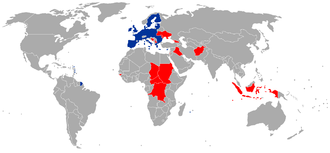
There is no one standard or legal definition of humanitarian intervention; the field of analysis (such as law, ethics, or politics) often influences the definition that is chosen. Differences in definition include variations in whether humanitarian interventions is limited to instances where there is an absence of consent from the host state; whether humanitarian intervention is limited to punishment actions; and whether humanitarian intervention is limited to cases where there has been explicit UN Security Council authorization for action. There is, however, a general consensus on some of its essential characteristics:
- Humanitarian intervention involves the threat and use of military forces as a central feature
- It is an intervention in the sense that it entails interfering in the internal affairs of a state by sending military forces into the territory or airspace of a sovereign state that has not committed an act of aggression against another state.
- The intervention is in response to situations that do not necessarily pose direct threats to states’ strategic interests, but instead is motivated by humanitarian objectives.
The subject of humanitarian intervention has remained a compelling foreign policy issue, especially since NATO’s intervention in Kosovo in 1999, as it highlights the tension between the principle of state sovereignty
Sovereignty
Sovereignty is the quality of having supreme, independent authority over a geographic area, such as a territory. It can be found in a power to rule and make law that rests on a political fact for which no purely legal explanation can be provided...
– a defining pillar of the UN system and international law
International law
Public international law concerns the structure and conduct of sovereign states; analogous entities, such as the Holy See; and intergovernmental organizations. To a lesser degree, international law also may affect multinational corporations and individuals, an impact increasingly evolving beyond...
– and evolving international norms related to human rights and the use of force. Moreover, it has sparked normative and empirical debates over its legality, the ethics of using military force to respond to human rights violations, when it should occur, who should intervene, and whether it is effective.
To its proponents, it marks imperative action in the face of human rights abuses, over the rights of state sovereignty, while to its detractors it is often viewed as a pretext for military intervention often devoid of legal sanction, selectively deployed and achieving only ambiguous ends. Its frequent use following the end of the Cold War
Cold War
The Cold War was the continuing state from roughly 1946 to 1991 of political conflict, military tension, proxy wars, and economic competition between the Communist World—primarily the Soviet Union and its satellite states and allies—and the powers of the Western world, primarily the United States...
suggested to many that a new norm of military humanitarian intervention was emerging in international politics, although some now argue that the 9/11 terrorist attacks and the US "war on terror
War on Terror
The War on Terror is a term commonly applied to an international military campaign led by the United States and the United Kingdom with the support of other North Atlantic Treaty Organisation as well as non-NATO countries...
" have brought the era of humanitarian intervention to an end.
History
Intervening in the affairs of another state has been a subject of discussion in public international law for as long as laws of nations were developed. Attitudes have changed considerably since the end of World War IIWorld War II
World War II, or the Second World War , was a global conflict lasting from 1939 to 1945, involving most of the world's nations—including all of the great powers—eventually forming two opposing military alliances: the Allies and the Axis...
, the Allied discovery of the Holocaust, and the Nuremberg trials
Nuremberg Trials
The Nuremberg Trials were a series of military tribunals, held by the victorious Allied forces of World War II, most notable for the prosecution of prominent members of the political, military, and economic leadership of the defeated Nazi Germany....
. One of the classic statements for intervention in the affairs of another country is found in John Stuart Mill
John Stuart Mill
John Stuart Mill was a British philosopher, economist and civil servant. An influential contributor to social theory, political theory, and political economy, his conception of liberty justified the freedom of the individual in opposition to unlimited state control. He was a proponent of...
's essay, A Few Words on Non-Intervention
A Few Words on Non-Intervention
A Few Words on Non-Intervention is a short essay by the philosopher, politician and economist, John Stuart Mill. It was written in 1859 in the context of the construction of the Suez Canal and the recent Crimean War...
(1859)
"There seems to be no little need that the whole doctrine of non-interference with foreign nations should be reconsidered, if it can be said to have as yet been considered as a really moral question at all... To go to war for an idea, if the war is aggressive, not defensive, is as criminal as to go to war for territory or revenue; for it is as little justifiable to force our ideas on other people, as to compel them to submit to our will in any other respect. But there assuredly are cases in which it is allowable to go to war, without having been ourselves attacked, or threatened with attack; and it is very important that nations should make up their minds in time, as to what these cases are... To suppose that the same international customs, and the same rules of international morality, can obtain between one civilized nation and another, and between civilized nations and barbarians, is a grave error..."
According to Mill's opinion (in 1859) barbarous peoples were found in Algeria
Algeria
Algeria , officially the People's Democratic Republic of Algeria , also formally referred to as the Democratic and Popular Republic of Algeria, is a country in the Maghreb region of Northwest Africa with Algiers as its capital.In terms of land area, it is the largest country in Africa and the Arab...
and India
India
India , officially the Republic of India , is a country in South Asia. It is the seventh-largest country by geographical area, the second-most populous country with over 1.2 billion people, and the most populous democracy in the world...
where the French
French Empire
The term French Empire can refer to:* Two Empires of the French founded by members of the House of Bonaparte,** The First French Empire of Napoleon I and II ** The Second French Empire of Napoleon III...
and British
British Empire
The British Empire comprised the dominions, colonies, protectorates, mandates and other territories ruled or administered by the United Kingdom. It originated with the overseas colonies and trading posts established by England in the late 16th and early 17th centuries. At its height, it was the...
armies had been involved. Mill's justification of intervention was overt imperialism
Imperialism
Imperialism, as defined by Dictionary of Human Geography, is "the creation and/or maintenance of an unequal economic, cultural, and territorial relationships, usually between states and often in the form of an empire, based on domination and subordination." The imperialism of the last 500 years,...
. First, he argued that with "barbarians" there is no hope for "reciprocity", an international fundamental. Second, barbarians are apt to benefit from civilized interveners, said Mill, citing Roman conquests of Gaul
Gaul
Gaul was a region of Western Europe during the Iron Age and Roman era, encompassing present day France, Luxembourg and Belgium, most of Switzerland, the western part of Northern Italy, as well as the parts of the Netherlands and Germany on the left bank of the Rhine. The Gauls were the speakers of...
, Spain
Spain
Spain , officially the Kingdom of Spain languages]] under the European Charter for Regional or Minority Languages. In each of these, Spain's official name is as follows:;;;;;;), is a country and member state of the European Union located in southwestern Europe on the Iberian Peninsula...
, Numidia
Numidia
Numidia was an ancient Berber kingdom in part of present-day Eastern Algeria and Western Tunisia in North Africa. It is known today as the Chawi-land, the land of the Chawi people , the direct descendants of the historical Numidians or the Massyles The kingdom began as a sovereign state and later...
and Dacia
Dacia
In ancient geography, especially in Roman sources, Dacia was the land inhabited by the Dacians or Getae as they were known by the Greeks—the branch of the Thracians north of the Haemus range...
. Barbarians,
"have no rights as a nation, except a right to such treatment as may, at the earliest possible period, fit them for becoming one. The only moral laws for the relation between a civilized and a barbarous government, are the universal rules of morality between man and man."
While seeming wildly out of kilter with modern discourse, a similar approach can be found in theory on intervention in failed state
Failed state
The term failed state is often used by political commentators and journalists to describe a state perceived as having failed at some of the basic conditions and responsibilities of a sovereign government...
s. Of more widespread relevance, Mill discussed the position between "civilized peoples".
"The disputed question is that of interfering in the regulation of another country’s internal concerns; the question whether a nation is justified in taking part, on either side, in the civil wars or party contests of another: and chiefly, whether it may justifiably aid the people of another country in struggling for liberty; or may impose on a country any particular government or institutions, either as being best for the country itself, or as necessary for the security of its neighbours.
Mill brushes over the situation of intervening on the side of governments who are trying to oppress an uprising of their own, saying "government which needs foreign support to enforce obedience from its own citizens, is one which ought not to exist". In the case however of a civil war, where both parties seem at fault, Mill argues that third parties are entitled to demand that the conflicts shall cease. He then moves to the more contentious situation of wars for liberation.
"When the contest is only with native rulers, and with such native strength as those rulers can enlist in their defence, the answer I should give to the question of the legitimacy of intervention is, as a general rule, No. The reason is, that there can seldom be anything approaching to assurance that intervention, even if successful, would be for the good of the people themselves. The only test possessing any real value, of a people’s having become fit for popular institutions, is that they, or a sufficient portion of them to prevail in the contest, are willing to brave labour and danger for their liberation. I know all that may be said, I know it may be urged that the virtues of freemen cannot be learnt in the school of slavery, and that if a people are not fit for freedom, to have any chance of becoming so they must first be free. And this would be conclusive, if the intervention recommended would really give them freedom. But the evil is, that if they have not sufficient love of liberty to be able to wrest it from merely domestic oppressors, the liberty which is bestowed on them by other hands than their own, will have nothing real, nothing permanent. No people ever was and remained free, but because it was determined to be so..."
Current Approaches to Humanitarian Intervention
Although most writers agree that humanitarian interventions should be undertaken multilaterally, ambiguity remains over which particular agents - the UN, regional organizations, or a group of states - should act in response to mass violations of human rights. The choice of actor has implications for overcoming collective action challenges through mobilization of political will and material resources. Questions of effectiveness, conduct and motives of the intervener, extent of internal and external support, and legal authorization have also been raised as possible criteria for evaluating the legitimacy of a potential intervener.UN Authorized Interventions
Most states clearly would prefer to secure UN authorization before using force for humanitarian purposes, and would probably agree that the UN Security Council, acting under Chapter VII of the UN CharterChapter VII of the United Nations Charter
Chapter VII of the United Nations Charter sets out the UN Security Council's powers to maintain peace. It allows the Council to "determine the existence of any threat to the peace, breach of the peace, or act of aggression" and to take military and nonmilitary action to "restore international peace...
, can authorize military action in response to severe atrocities and other humanitarian emergencies that it concludes constitute a threat to peace and security.
The understanding of what constitutes threats to international peace has been radically broadened since the 1990s to include such issues as mass displacement, and the UN Security Council has authorized use of force in situations that many states would have previously viewed as “internal” conflicts.
Unauthorized Interventions
In several instances states or groups of states have intervened with force, and without advance authorization from the UN Security Council, at least in part in response to alleged extreme violations of basic human rights. Fairly recent examples include the intervention after the Gulf War to protect the Kurds in northern IraqOperation Provide Comfort
Operation Provide Comfort and Provide Comfort II were military operations by the United States and some of its Gulf War allies, starting in April 1991, to defend Kurds fleeing their homes in northern Iraq in the aftermath of the Persian Gulf War and deliver humanitarian aid to them.-Operation...
as well as NATO’s intervention in Kosovo.
Four distinct attitudes or approaches to the legitimacy of humanitarian intervention in the absence of Security Council authorizations can be identified:
- Status quo: Categorically affirms that military intervention in response to atrocities is lawful only if authorized by the UN Security Council or if it qualifies as an exercise in the right of self-defense. Under this view, NATO’s intervention in Kosovo constituted a clear violation of Article 2(4). Defenders of this position include a number of states, most notably RussiaRussiaRussia or , officially known as both Russia and the Russian Federation , is a country in northern Eurasia. It is a federal semi-presidential republic, comprising 83 federal subjects...
and People's Republic of ChinaPeople's Republic of ChinaChina , officially the People's Republic of China , is the most populous country in the world, with over 1.3 billion citizens. Located in East Asia, the country covers approximately 9.6 million square kilometres...
. Proponents of this approach point to the literal text of the UN Charter, and stress that the high threshold for authorization of the use of force aims to minimize its use, and promote consensus as well as stability by ensuring a basic acceptance of military action by key states. However, Kosovo warKosovo WarThe term Kosovo War or Kosovo conflict was two sequential, and at times parallel, armed conflicts in Kosovo province, then part of FR Yugoslav Republic of Serbia; from early 1998 to 1999, there was an armed conflict initiated by the ethnic Albanian "Kosovo Liberation Army" , who sought independence...
has also highlighted the drawbacks of this approach, most notably when effective and consistent humanitarian intervention is made unlikely by the geopolitical realities of relations between the Permanent Five members of the Security Council, leading to the use of the vetoVetoA veto, Latin for "I forbid", is the power of an officer of the state to unilaterally stop an official action, especially enactment of a piece of legislation...
and inconsistent action in the face of a humanitarian crises.
- Excusable breach: Humanitarian intervention without a UN mandate is technically illegal under the rules of the UN Charter, but may be morally and politically justified in certain exceptional cases. Benefits of this approach include that it contemplates no new legal rules governing the use of force, but rather opens an “emergency exit” when there is a tension between the rules governing the use of force and the protection of fundamental human rights. Intervening states are unlikely to be condemned as law-breakers, although they take a risk of violating rules for a purportedly higher purpose. However, in practice, this could lead to questioning the legitimacy of the legal rules themselves if they are unable to justify actions the majority of the UN Security Council views as morally and politically justified.
- Customary law: This approach involves reviewing the evolution of customary law for a legal justification of non-authorized humanitarian intervention in rare cases. This approach asks whether an emerging norm of customary law can be identified under which humanitarian intervention can be understood not only as ethically and politically justified but also as legal under the normative framework governing the use of force. However, relatively few cases exist to provide justification for the emergence of a norm, and under this approach ambiguities and differences of view about the legality of an intervention may deter states from acting. The potential for an erosion of rules governing the use of force may also be a point of concern.
- Codification: The fourth approach calls for the codification of a clear legal doctrine or “right” of intervention, arguing that such a doctrine could be established through some formal or codified means such as a UN Charter Amendment or UN General Assembly declaration. Although states have been reluctant to advocate this approach, a number of scholars, as well as the Independent International Commission on Kosovo, have made the case for establishing such a right or doctrine with specified criteria to guide assessments of legality. A major argument advanced for codifying this right is that it would enhance the legitimacy of international law, and resolve the tension between human rights and sovereignty principles contained in the UN charter. However, the historical record on humanitarian intervention is sufficiently ambiguous that it argues for humility regarding efforts to specify in advance the circumstances in which states can use force, without Security Council authorizations, against other states to protect human rights.
Responsibility to Protect
See: Responsibility to ProtectResponsibility to protect
The responsibility to protect is a norm or set of principles based on the idea that sovereignty is not a privilege, but a responsibility. RtoP focuses on preventing and halting four crimes: genocide, war crimes, crimes against humanity, and ethnic cleansing, which it places under the generic...
Although usually considered to be categorically distinct from most definitions of humanitarian intervention, the emergence of a 'Responsibility to protect
Responsibility to protect
The responsibility to protect is a norm or set of principles based on the idea that sovereignty is not a privilege, but a responsibility. RtoP focuses on preventing and halting four crimes: genocide, war crimes, crimes against humanity, and ethnic cleansing, which it places under the generic...
' (R2P) deserves mention. Responsibility to Protect is the name of a report produced in 2001 by the International Commission on Intervention and State Sovereignty
International Commission on Intervention and State Sovereignty
The International Commission on Intervention and State Sovereignty was an ad hoc commission of participants which in 2001 worked to popularize the concept of humanitarian intervention and democracy-restoring intervention under the name of "Responsibility to protect."The Commission was founded by...
(ICISS) which was established by the Canadian government in response to the history of unsatisfactory humanitarian interventions. The report sought to establish a set of clear guidelines for determining when intervention is appropriate, what the appropriate channels for approving an intervention are and how the intervention itself should be carried out.
Responsibility to protect seeks to establish a clearer code of conduct for humanitarian interventions and also advocates a greater reliance on non-military measures. The report also criticises and attempts to change the discourse and terminology surrounding the issue of humanitarian intervention. It argues that the notion of a 'right to intervene' is problematic and should be replaced with the 'responsibility to protect'. Under Responsibility to Protect doctrine, rather than having a right to intervene in the conduct of other states, states are said to have a responsibility to intervene and protect the citizens of another state where that other state has failed in its obligation to protect its own citizens.
This responsibility is said to involve three stages: to prevent, to react and to rebuild. Responsibility to Protect has gained strong support in some circles, such as in Canada, a handful of European and African nations, and among proponents of human security
Human security
Human security is an emerging paradigm for understanding global vulnerabilities whose proponents challenge the traditional notion of national security by arguing that the proper referent for security should be the individual rather than the state...
, but has been criticised by others, with some Asian nations being among the chief dissenters.
Humanitarian Intervention in Foreign Policy Doctrines
See:- Clinton DoctrineClinton DoctrineThe Clinton Doctrine is not a clear statement in the way that many other United States Presidential doctrines were. However, in a February 26, 1999, speech, President Bill Clinton said the following, which was generally considered to summarize the Clinton Doctrine:Clinton later made statements that...
- Blair Doctrine
- Obama DoctrineObama DoctrineThe Obama Doctrine is a term frequently used to describe one or several unifying principles of the foreign policy of Barack Obama. Unlike the Monroe Doctrine, the Obama Doctrine is not a specific foreign policy introduced by the executive, but rather a phrase used to describe Obama's general style...
Examples of humanitarian intervention
Examples of past alleged humanitarian interventions include:- Russian, British and French Anti-Ottoman Intervention in the Greek War of IndependenceGreek War of IndependenceThe Greek War of Independence, also known as the Greek Revolution was a successful war of independence waged by the Greek revolutionaries between...
(1824) - French expedition in SyriaFrench expedition in SyriaThe French expedition in Syria took place between 1860 and 1861. The expedition took place following the killing of thousands of Maronite, Greek Orthodox, and Melkite Greek Catholic Christians by Druzes and Muslims on Mount Lebanon and in Damascus in June–July 1860...
(1860-1861) - Russian Anti-Ottoman Intervention in Bulgaria (1877)
- Spanish–American War (1898)
- United States occupation of Haiti (1915)
- United Nations Operation in the CongoUnited Nations Operation in the CongoOpération des Nations unies au Congo, abbreviated ONUC, was a United Nations peacekeeping force in Congo that was established after United Nations Security Council Resolution 143 of July 14, 1960...
(1964) - US intervention in Dominican RepublicOperation Power PackThe second United States occupation of the Dominican Republic began when the United States Marines Corps entered Santo Domingo on April 28, 1965. They were later joined by most of the United States Army's 82nd Airborne Division and its parent XVIIIth Airborne Corps...
(1965) - Vietnamese Intervention in Cambodia (1978)
- Uganda-Tanzania WarUganda-Tanzania WarThe Uganda–Tanzania War was fought between Uganda and Tanzania in 1978–1979, and led to the overthrow of Idi Amin's regime...
(1979) - Operation Provide ComfortOperation Provide ComfortOperation Provide Comfort and Provide Comfort II were military operations by the United States and some of its Gulf War allies, starting in April 1991, to defend Kurds fleeing their homes in northern Iraq in the aftermath of the Persian Gulf War and deliver humanitarian aid to them.-Operation...
(IraqIraqIraq ; officially the Republic of Iraq is a country in Western Asia spanning most of the northwestern end of the Zagros mountain range, the eastern part of the Syrian Desert and the northern part of the Arabian Desert....
, 1991) - Unified Task Force (SomaliaSomaliaSomalia , officially the Somali Republic and formerly known as the Somali Democratic Republic under Socialist rule, is a country located in the Horn of Africa. Since the outbreak of the Somali Civil War in 1991 there has been no central government control over most of the country's territory...
, 1992) - Operation Uphold DemocracyOperation Uphold DemocracyOperation Uphold Democracy was an intervention designed to remove the military regime installed by the 1991 Haitian coup d'état that overthrew the elected President Jean-Bertrand Aristide...
(HaitiHaitiHaiti , officially the Republic of Haiti , is a Caribbean country. It occupies the western, smaller portion of the island of Hispaniola, in the Greater Antillean archipelago, which it shares with the Dominican Republic. Ayiti was the indigenous Taíno or Amerindian name for the island...
, 1994) - UNAMIR (RwandaRwandaRwanda or , officially the Republic of Rwanda , is a country in central and eastern Africa with a population of approximately 11.4 million . Rwanda is located a few degrees south of the Equator, and is bordered by Uganda, Tanzania, Burundi and the Democratic Republic of the Congo...
, 1994) - UNTAET (East TimorEast TimorThe Democratic Republic of Timor-Leste, commonly known as East Timor , is a state in Southeast Asia. It comprises the eastern half of the island of Timor, the nearby islands of Atauro and Jaco, and Oecusse, an exclave on the northwestern side of the island, within Indonesian West Timor...
, 1999) - NATO bombing of Yugoslavia (1999)
- Coalition military intervention in Libya2011 military intervention in LibyaOn 19 March 2011, a multi-state coalition began a military intervention in Libya to implement United Nations Security Council Resolution 1973, which was taken in response to events during the 2011 Libyan civil war...
(2011)
The above are only "possible" examples of humanitarian intervention due to the advancement of other reasons of intervention (such as self-defence) as justifications of the use of force. They are, however, academically accepted 'incidences' of humanitarian intervention.
Criticism
Many criticisms have been levied against humanitarian intervention. Inter-governmental bodies and commission reports composed by persons associated with governmental and international careers have rarely discussed the distorting selectivity of geopolitics behind humanitarian intervention nor potential hidden motivations of intervening parties. To find less veiled criticism one must usually turn to civil society perspectives, especially those shaped by independent scholars who benefit from academic freedom.Some argue that humanitarian intervention is a modern manifestation of the Western colonialism
Colonialism
Colonialism is the establishment, maintenance, acquisition and expansion of colonies in one territory by people from another territory. It is a process whereby the metropole claims sovereignty over the colony and the social structure, government, and economics of the colony are changed by...
of the 19th century. Anne Orford's work is a major contribution along these lines, demonstrating the extent to which the perils of the present for societies experiencing humanitarian catastrophes are directly attributable to the legacy of colonial rule. In the name of reconstruction, a capitalist set of constraints is imposed on a broken society that impairs its right of self-determination and prevents its leadership from adopting an approach to development that benefits the people of the country rather than makes foreign investors happy. The essence of her position is that “legal narratives” justifying humanitarian intervention have had the primary effect of sustaining “an unjust and exploitative status quo”.
Others argue that dominant countries, especially the United States
United States
The United States of America is a federal constitutional republic comprising fifty states and a federal district...
and its coalition partners, are using humanitarian pretexts to pursue otherwise unacceptable geopolitical goals and to evade the non-intervention norm and legal prohibitions on the use of international force. Noam Chomsky
Noam Chomsky
Avram Noam Chomsky is an American linguist, philosopher, cognitive scientist, and activist. He is an Institute Professor and Professor in the Department of Linguistics & Philosophy at MIT, where he has worked for over 50 years. Chomsky has been described as the "father of modern linguistics" and...
and Tariq Ali
Tariq Ali
Tariq Ali , , is a British Pakistani military historian, novelist, journalist, filmmaker, public intellectual, political campaigner, activist, and commentator...
are at the forefront of this camp, viewing professions of humanitarian motivation with deep skepticism. They argue that the United States has continued to act with its own interests in mind, with the only change being that humanitarianism has become a legitimizing ideology for projection of U.S. hegemony in a post–Cold War world. Ali in particular argues that NATO intervention in Kosovo was conducted largely to boost NATO's credibility.
A third type of criticism centers on the event-based and inconsistent nature of most policies on humanitarian intervention. These critics argue that there is a tendency for the concept to be invoked in the heat of action, giving the appearance of propriety for Western television viewers, but that it neglects the conflicts that are forgotten by the media or occur based on chronic distresses rather than sudden crises. Henry Kissinger
Henry Kissinger
Heinz Alfred "Henry" Kissinger is a German-born American academic, political scientist, diplomat, and businessman. He is a recipient of the Nobel Peace Prize. He served as National Security Advisor and later concurrently as Secretary of State in the administrations of Presidents Richard Nixon and...
, for example, finds that Bill Clinton
Bill Clinton
William Jefferson "Bill" Clinton is an American politician who served as the 42nd President of the United States from 1993 to 2001. Inaugurated at age 46, he was the third-youngest president. He took office at the end of the Cold War, and was the first president of the baby boomer generation...
's practice of humanitarian intervention was wildly inconsistent. The US launched two military campaigns against Serbia
Serbia
Serbia , officially the Republic of Serbia , is a landlocked country located at the crossroads of Central and Southeast Europe, covering the southern part of the Carpathian basin and the central part of the Balkans...
while ignoring more widespread slaughter in Rwanda, justifying the Russian assault on Chechnya
First Chechen War
The First Chechen War, also known as the War in Chechnya, was a conflict between the Russian Federation and the Chechen Republic of Ichkeria, fought from December 1994 to August 1996...
, and welcoming to the United States the second-ranking military official of a widely recognized severe human rights violator - the communist government of North Korea.
Humanitarian intervention has historically consisted of actions directed by Northern states within the internal affairs of Southern states, and has also led to criticism from many non-Western
Western world
The Western world, also known as the West and the Occident , is a term referring to the countries of Western Europe , the countries of the Americas, as well all countries of Northern and Central Europe, Australia and New Zealand...
states. The norm of non-intervention and the primacy of sovereign equality are still cherished by the vast majority of states, which see in the new Western dispensation not a growing awareness of human rights, but a regression to the selective adherence to sovereignty
Sovereignty
Sovereignty is the quality of having supreme, independent authority over a geographic area, such as a territory. It can be found in a power to rule and make law that rests on a political fact for which no purely legal explanation can be provided...
of the pre–UN Charter world. During the G-77
Group of 77
The Group of 77 at the United Nations is a loose coalition of developing nations, designed to promote its members' collective economic interests and create an enhanced joint negotiating capacity in the United Nations. There were 77 founding members of the organization, but the organization has...
summit, which brought together 133 nation-states, the "so-called right of humanitarian intervention" claimed by powerful states was condemned.
See also
- PeacekeepingPeacekeepingPeacekeeping is an activity that aims to create the conditions for lasting peace. It is distinguished from both peacebuilding and peacemaking....
- Humanitarian aidHumanitarian aidHumanitarian aid is material or logistical assistance provided for humanitarian purposes, typically in response to humanitarian crises including natural disaster and man-made disaster. The primary objective of humanitarian aid is to save lives, alleviate suffering, and maintain human dignity...
- Nation state
- Responsibility to protectResponsibility to protectThe responsibility to protect is a norm or set of principles based on the idea that sovereignty is not a privilege, but a responsibility. RtoP focuses on preventing and halting four crimes: genocide, war crimes, crimes against humanity, and ethnic cleansing, which it places under the generic...
- Human securityHuman securityHuman security is an emerging paradigm for understanding global vulnerabilities whose proponents challenge the traditional notion of national security by arguing that the proper referent for security should be the individual rather than the state...
- ImperialismImperialismImperialism, as defined by Dictionary of Human Geography, is "the creation and/or maintenance of an unequal economic, cultural, and territorial relationships, usually between states and often in the form of an empire, based on domination and subordination." The imperialism of the last 500 years,...
- Humanitarian bombingHumanitarian bombingHumanitarian bombing is a phrase referring to the 1999 NATO bombing of the Federal Republic of Yugoslavia during the Kosovo War used by its opponents as an ironic oxymoron in response to the stated goal of NATO to protect Kosovo Albanians, and later about other military interventions stressing...
- Mogadishu LineMogadishu LineThe "Mogadishu Line" is a foreign policy term used to describe the point at which foreign involvement in a conflict shifts from peacekeeping or diplomacy to combat operations...
- Just War Theory
Further reading
- A RIGHT TO INTERFERE. BERNARD KOUCHNER AND THE NEW HUMANITARIANISM by TIM ALLEN and DAVID STYAN
- Nasimi Aghayev, "Humanitäre Intervention und Völkerrecht - Der NATO-Einsatz im Kosovo", Berlin, 2007. ISBN 978-3-89574-622-2
- Lepard, Brian, Rethinking Humanitarian Intervention, Penn State Press, 2002 ISBN 0-271-02313-9
- Kofi A. Annan, Two Concepts of Sovereignty, Economist, Sep. 18, 1999.
- Josef Bordat, "Globalisation and War. The Historical and Current Controversy on Humanitarian Interventions", in: International Journal of Social Inquiry 2 (2009), 1, 59-72.
- Mark R. Crovelli, "Humanitarian Intervention and the State" http://mises.org/journals/scholar/crovelli2.pdf
- Gareth Evans, Rethinking Collective Action - CASR - edited excerpts - 2004.
- Aidan Hehir, Humanitarian Intervention: An Introduction (Palgrave MacMillan, 2010).
- Gary Klintworth, 'The Right to Intervene in the Domestic Affairs of States', Australian Journal of International Affairs, 46(2) November 1992, pp. 248–266.
- Marjanovic, Marko, Is Humanitarian War the Exception?, Mises Institute (2011)
- Taylor B. Seybolt, "Humanitarian Military Intervention: The Conditions for Success and Failure" (Oxford University Press, 2007).
- Shawcross, W. Deliver Us From Evil: Warlords And Peacekeepers In A World Of Endless Conflict, (Bloomsbury, London, 2000)
- Lyal S. SungaLyal S. SungaProfessor Lyal S. Sunga is an internationally renowned specialist on international human rights law, international humanitarian law and international criminal law.-Career:...
, ["Is Humanitarian Intervention Legal?" at the e-International RelationsE-International Relationse-International Relations is a free to access e-magazine covering international relations and international politics. The site was launched in November 2007 by graduates from the universities of Oxford, Leicester, and Aberystwyth and is currently run by a network of young academics and former...
website: http://www.e-ir.info/?p=573] - Lyal S. Sunga, http://www.google.ca/books?vid=ISBN3900704236&id=4yRLXWX1xlMC&pg=PA41&lpg=PA41&ots=jOOScmbxKU&dq=sunga+guarantee+humanitarian+intervention&sig=Ofd_iby7b2GaFbOhe2OQa2S1XmU#PPP1,M1"The Role of Humanitarian Intervention in International Peace and Security: Guarantee or Threat?." The Use of Force in International Relations: Challenges to Collective Security, Int’l Progress Organization & Google Books (2006) 41-79.]
- Wheeler, N J, Saving Strangers: Humanitarian Intervention in International Society, (Oxford University Press, Oxford, 2002)
- Military Intervention on ecological grounds CANINAS, Osvaldo P. Military Intervention on ecological grounds: theoretical construction, legitimacy and repercussions on Brazilian Amazon Forest. Dissertation. MPhil Strategic Studies- Universidade Federal Fluminense. Brazil. 2010. (In Portuguese).
External links
This article relies heavily on the French Wikipedia entry on humanitarian intervention, which was accessed for translation on August 27, 2005.- Military intervention and the European Union, Chaillot Paper No. 45, March 2001, European Union Institute for Security StudiesEuropean Union Institute for Security StudiesThe European Union Institute for Security Studies is a Paris-based EU agency of the Common Foreign and Security Policy . Its goals are to find a common security culture for the EU, to help develop and project the CFSP, and to enrich Europe’s strategic debate.The EUISS is an autonomous agency with...
- The Ethics of Armed Humanitarian Intervention U.S. Institute of Peace August 2002
- The Argument about Humanitarian Intervention By Michael Walzer