
Home      Discussion      Topics      Dictionary      Almanac
Signup       Login
Hugh Capet of France

Hugh Capet of France

Overview
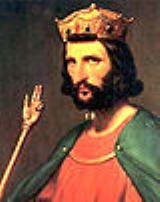
Hugh Capet called in contemporary sources "Hugh the Great" , was the first King of France of the eponymous Capetian dynasty
Capetian dynasty
The Capetian dynasty , also known as the House of France, is the largest and oldest European royal house, consisting of the descendants of King Hugh Capet of France in the male line. Hugh Capet himself was a cognatic descendant of the Carolingians and the Merovingians, earlier rulers of France...

 from his election to succeed the Carolingian
Carolingian
The Carolingian dynasty was a Frankish noble family with origins in the Arnulfing and Pippinid clans of the 7th century AD. The name "Carolingian", Medieval Latin karolingi, an altered form of an unattested Old High German *karling, kerling The Carolingian dynasty (known variously as the...

 Louis V
Louis V of France
Louis V , called the Indolent or the Sluggard , was the King of Western Francia from 986 until his early death...

 in 987 until his death.
Discussion
Ask a question about 'Hugh Capet of France'
Start a new discussion about 'Hugh Capet of France'
Answer questions from other users
Full Discussion Forum
 
Unanswered Questions
Encyclopedia
Hugh Capet called in contemporary sources "Hugh the Great" , was the first King of France of the eponymous Capetian dynasty
Capetian dynasty
The Capetian dynasty , also known as the House of France, is the largest and oldest European royal house, consisting of the descendants of King Hugh Capet of France in the male line. Hugh Capet himself was a cognatic descendant of the Carolingians and the Merovingians, earlier rulers of France...

 from his election to succeed the Carolingian
Carolingian
The Carolingian dynasty was a Frankish noble family with origins in the Arnulfing and Pippinid clans of the 7th century AD. The name "Carolingian", Medieval Latin karolingi, an altered form of an unattested Old High German *karling, kerling The Carolingian dynasty (known variously as the...

 Louis V
Louis V of France
Louis V , called the Indolent or the Sluggard , was the King of Western Francia from 986 until his early death...

 in 987 until his death.

Descent and inheritance


The son of Hugh the Great
Hugh the Great
Hugh the Great or Hugues le Grand was duke of the Franks and count of Paris, son of King Robert I of France and nephew of King Odo. He was born in Paris, Île-de-France, France. His eldest son was Hugh Capet who became King of France in 987...

, Duke of France
Duke of France
Duke of France equivalent to the title dux Franciae, is a title of nobility that refers to the rulers of the Île de France, informally Francia...

, and Hedwige of Saxony
Hedwige of Saxony
Hedwige of Saxony was a daughter of Henry I the Fowler, and his wife Matilda of Ringelheim.She was a sister of Otto I, Holy Roman Emperor; Henry I, Duke of Bavaria; Gerberga of Saxony; and Bruno I, Archbishop of Cologne....

, daughter of the German king Henry the Fowler, Hugh was born in 939. His paternal family, the Robertians, were powerful landowners in the Île-de-France
Île-de-France (province)
The province of Île-de-France or Isle de France is an historical province of France, and the one at the centre of power during most of French history...

. His grandfather had been King Robert I
Robert I of France
Robert I , King of Western Francia , was the younger son of Robert the Strong, count of Anjou, and the brother of Odo, who became king of the Western Franks in 888. West Francia evolved over time into France; under Odo, the capital was fixed on Paris, a large step in that direction...

 and his grandmother Beatrice
Béatrice of Vermandois
Béatrice of Vermandois was the wife of Robert I, King of France . She is sometimes stated to be the sister of Herbert II, Count of Vermandois. No contemporary source explicitly states that Heribert II and Beatrix were the children of Herbert I, and researchers are divided on the probablity of this...

 was a Carolingian, a daughter of Herbert I of Vermandois. This makes him the great-great-great-great-great grandson of Charlemagne
Charlemagne
Charlemagne was King of the Franks from 768 and Emperor of the Romans from 800 to his death in 814. He expanded the Frankish kingdom into an empire that incorporated much of Western and Central Europe. During his reign, he conquered Italy and was crowned by Pope Leo III on 25 December 800...

 through both of his parents, through Louis the Pious and Pepin of Italy. King Odo
Odo, Count of Paris
Odo was a King of Western Francia, reigning from 888 to 898. He was a son of Robert the Strong, count of Anjou, whose branch of the family is known as the Robertians....

 was his grand-uncle and King Rudolph
Rudolph of France
Rudolph was the Duke of Burgundy between 921 and 923 and King of Western Francia from thereafter to his death. Rudolph inherited the duchy of Burgundy from his father, Richard the Justiciar...

 the son-in-law of his grandfather, King Robert I. Hugh was born into a well-connected and powerful family with many ties to the reigning nobility of Europe. But for all this, Hugh's father was never king. When Rudolph died in 936, Hugh the Great organised the return of Louis d'Outremer, son of Charles the Simple
Charles the Simple
Charles III , called the Simple or the Straightforward , was the undisputed King of France from 898 until 922 and the King of Lotharingia from 911 until 919/23...

, from his exile at the court of Athelstan of England
Athelstan of England
Athelstan , called the Glorious, was the King of England from 924 or 925 to 939. He was the son of King Edward the Elder, grandson of Alfred the Great and nephew of Æthelflæd of Mercia...

. Hugh's motives are unknown, but it is presumed that he acted to forestall Rudolph's brother and successor as Duke of Burgundy, Hugh the Black, from taking the French throne, or to prevent it from falling into the grasping hands of Herbert II of Vermandois or Richard the Fearless
Richard I of Normandy
Richard I of Normandy , also known as Richard the Fearless , was the Duke of Normandy from 942 to 996; he is considered the first to have held that title.-Birth:He was born to William I of Normandy, ruler of Normandy, and Sprota...

, Duke of Normandy
Duke of Normandy
The Duke of Normandy is the title of the reigning monarch of the British Crown Dependancies of the Bailiwick of Guernsey and the Bailiwick of Jersey. The title traces its roots to the Duchy of Normandy . Whether the reigning sovereign is a male or female, they are always titled as the "Duke of...

.

In 956, Hugh inherited his father's estates and became one of the most powerful nobles in the much-reduced West Frankish kingdom. However, as he was not yet an adult, his uncle Bruno
Bruno I, Archbishop of Cologne
Bruno the Great was Archbishop of Cologne, Germany, from 953 until his death, and Duke of Lotharingia from 954. He was the brother of Otto I, king of Germany and later Holy Roman Emperor....

, Archbishop of Cologne, acted as regent
Regent
A regent, from the Latin regens "one who reigns", is a person selected to act as head of state because the ruler is a minor, not present, or debilitated. Currently there are only two ruling Regencies in the world, sovereign Liechtenstein and the Malaysian constitutive state of Terengganu...

. Young Hugh's neighbours made the most of the opportunity. Theobald I of Blois
Theobald I of Blois
Theobald I , called the Cheat or the Trickster , was the first count of Blois, Chartres, and Châteaudun from 960, and Tours from 945....

, a former vassal of Hugh the Great, took the counties of Chartres
Chartres
Chartres is a commune and capital of the Eure-et-Loir department in northern France. It is located southwest of Paris.-Geography:Chartres is built on the left bank of the Eure River, on a hill crowned by its famous cathedral, the spires of which are a landmark in the surrounding country...

 and Châteaudun
Châteaudun
Châteaudun is a commune in the Eure-et-Loir department in northern France. It is a sub-prefecture of Eure-et-Loir.-Geography:Châteaudun is located about 45 km northwest of Orléans, and about 50 km south-southwest of Chartres, on the river Loir, a tributary of the...

. Further south, on the border of the kingdom, Fulk II of Anjou
Fulk II of Anjou
Fulk II of Anjou , son of Fulk the Red, was count of Anjou from 942 to his death.He was often at war with the Bretons. He seems to have been a man of culture, a poet and an artist. He was succeeded by his son Geoffrey Greymantle....

, another former client of Hugh the Great, carved out a principality at Hugh's expense and that of the Bretons.
The realm in which Hugh grew up, and of which he would one day be king, bore no resemblance to modern France. Hugh's predecessors did not call themselves rois de France ("Kings of France"), and that title was not used until the time of his distant descendant Philip II Augustus
Philip II of France
Philip II Augustus was the King of France from 1180 until his death. A member of the House of Capet, Philip Augustus was born at Gonesse in the Val-d'Oise, the son of Louis VII and his third wife, Adela of Champagne...

. Kings ruled as rex Francorum ("King of the Franks") and the lands over which they ruled comprised only a very small part of the former Carolingian Empire
Carolingian Empire
Carolingian Empire is a historiographical term which has been used to refer to the realm of the Franks under the Carolingian dynasty in the Early Middle Ages. This dynasty is seen as the founders of France and Germany, and its beginning date is based on the crowning of Charlemagne, or Charles the...

. The eastern Frankish lands, the Holy Roman Empire
Holy Roman Empire
The Holy Roman Empire was a realm that existed from 962 to 1806 in Central Europe.It was ruled by the Holy Roman Emperor. Its character changed during the Middle Ages and the Early Modern period, when the power of the emperor gradually weakened in favour of the princes...

, were ruled by the Ottonian
Ottonian
The Ottonian dynasty was a dynasty of Germanic Kings , named after its first emperor but also known as the Saxon dynasty after the family's origin. The family itself is also sometimes known as the Liudolfings, after its earliest known member Liudolf and one of its primary leading-names...

 dynasty, represented by Hugh's first cousin Otto II
Otto II, Holy Roman Emperor
Otto II , called the Red, was the third ruler of the Saxon or Ottonian dynasty, the son of Otto the Great and Adelaide of Italy.-Early years and co-ruler with Otto I:...

 and then by Otto's son, Otto III
Otto III, Holy Roman Emperor
Otto III , a King of Germany, was the fourth ruler of the Saxon or Ottonian dynasty of the Holy Roman Empire. He was elected King in 983 on the death of his father Otto II and was crowned Holy Roman Emperor in 996.-Early reign:...

. The lands south of the river Loire had largely ceased to be part of the West Frankish kingdom in the years after Charles the Simple was deposed in 922. The Duchy of Normandy
Duchy of Normandy
The Duchy of Normandy stems from various Danish, Norwegian, Hiberno-Norse, Orkney Viking and Anglo-Danish invasions of France in the 9th century...

 and the Duchy of Burgundy
Duchy of Burgundy
The Duchy of Burgundy , was heir to an ancient and prestigious reputation and a large division of the lands of the Second Kingdom of Burgundy and in its own right was one of the geographically larger ducal territories in the emergence of Early Modern Europe from Medieval Europe.Even in that...

 were largely independent, and Brittany entirely so, although from 956 Burgundy was ruled by Hugh's brothers Odo
Odo, Duke of Burgundy
Otto of Paris was duke of Burgundy from 956 to his death. Otto was son of Hugh the Great, count of Paris by his wife Hedwige of Saxony, sister of Otto I, Holy Roman Emperor, and was brother of king Hugh I of France....

 and Henry
Otto-Henry, Duke of Burgundy
Eudes-Henry , called the Great, was Count of Autun, Avallon, and Beaune and Duke of Burgundy from 965 to his death...

.

Election and extent of power


From 977 to 986, Hugh Capet allied himself with the German emperors Otto II and Otto III and with Archbishop
Archbishop of Reims
The Roman Catholic Archdiocese of Reims is an archdiocese of the Latin Rite of the Roman Catholic Church in France. Erected as a diocese around 250 by St. Sixtus, the diocese was elevated to an archdiocese around 750...

 Adalberon of Reims
Adalberon, Archbishop of Reims
Adalberon was the archbishop of Reims, chancellor of Kings Lothair and Louis V of France.Upon the death of Louis V, in 987, Adalberon and Gerbert of Aurillac addressed the electoral assembly at Senlis in favour of Hugh Capet, to replace the Carolingian monarch. Adalberon pleaded:Capet was elected...

 to dominate the Carolingian king, Lothair
Lothair of France
Lothair , sometimes called Lothair IV, was the Carolingian king of West Francia , son of Louis IV and Gerberga of Saxony.-Regency:...

. By 986, he was king in all but name. After Lothair's son Louis died in May of 987, Adalberon and Gerbert of Aurillac convened an assembly of nobles to elect Hugh Capet as their king. In front of an electoral assembly at Senlis
Senlis, Oise
Senlis is a French commune located in the Oise department near Paris. It has a long and rich heritage, having traversed centuries of history. This medieval town has welcomed some of the most renowned figures in French history, including Hugh Capet, Louis IX, the Marshall of France, Anne of Kiev and...

, Adalberon gave a stirring oration and pleaded to the nobles:
Crown the Duke. He is most illustrious by his exploits, his nobility, his forces. The throne is not acquired by hereditary right; no one should be raised to it unless distinguished not only for nobility of birth, but for the goodness of his soul.

He was elected and crowned rex Francorum at Noyon
Noyon
Noyon is a commune in the Oise department in northern France.It lies on the Oise Canal, 100 km north of Paris.-History:...

 in Picardy
Picardy
This article is about the historical French province. For other uses, see Picardy .Picardy is a historical province of France, in the north of France...

 on 3 July 987, by the prelate of Reims, the first of the Capetian house. Immediately after his coronation, Hugh began to push for the coronation of his son Robert
Robert II of France
Robert II , called the Pious or the Wise , was King of France from 996 until his death. The second reigning member of the House of Capet, he was born in Orléans to Hugh Capet and Adelaide of Aquitaine....

. Hugh's own claimed reason was that he was planning an expedition against the Moorish armies harassing Borrel II of Barcelona, an invasion which never occurred, and that the stability of the country necessitated two kings should he die while on expedition. Ralph Glaber, however, attributes Hugh's request to his old age and inability to control the nobility. Modern scholarship has largely imputed to Hugh the motive of establishing a dynasty against the pretension of electoral power on the part of the aristocracy, but this is not the typical view of contemporaries and even some modern scholars have been less sceptical of Hugh's "plan" to campaign in Spain. Robert was eventually crowned on 25 December that same year.

Hugh Capet possessed minor properties near Chartres and Angers. Between Paris and Orléans
Orléans
-Prehistory and Roman:Cenabum was a Gallic stronghold, one of the principal towns of the Carnutes tribe where the Druids held their annual assembly. It was conquered and destroyed by Julius Caesar in 52 BC, then rebuilt under the Roman Empire...

 he possessed towns and estates amounting to approximately 400 square miles (1,036 km²). His authority ended there, and if he dared travel outside his small area, he risked being captured and held for ransom, though, as God's anointed, his life was largely safe. Indeed, there was a plot in 993, masterminded by Adalberon, Bishop of Laon
Adalberon, Bishop of Laon
Adalberon, or Ascelin was a French bishop and poet. He was a son of Reginar of Bastogne, and a nephew of Adalberon, Archbishop of Reims.-Life:...

 and Odo I of Blois, to deliver Hugh Capet into the custody of Otto III. The plot failed, but the fact that no one was punished illustrates how tenuous his hold on power was. Beyond his power base, in the rest of France, there were still as many codes of law as there were fiefdoms. The "country" operated with 150 different forms of currency and at least a dozen languages. Uniting all this into one cohesive unit was a formidable task and a constant struggle between those who wore the crown of France and its feudal lords. As such, Hugh Capet's reign was marked by numerous power struggles with the vassals on the borders of the Seine
Seine
The Seine is a -long river and an important commercial waterway within the Paris Basin in the north of France. It rises at Saint-Seine near Dijon in northeastern France in the Langres plateau, flowing through Paris and into the English Channel at Le Havre . It is navigable by ocean-going vessels...

 and the Loire.

While Hugh Capet's military power was limited and he had to seek military aid from Richard I of Normandy
Richard I of Normandy
Richard I of Normandy , also known as Richard the Fearless , was the Duke of Normandy from 942 to 996; he is considered the first to have held that title.-Birth:He was born to William I of Normandy, ruler of Normandy, and Sprota...

, his unanimous election as king gave him great moral authority and influence. Adémar de Chabannes
Adémar de Chabannes
Adémar de Chabannes was an eleventh-century French monk, a historian who wrote the first annals to have been compiled in Aquitaine since Late Antiquity, a musical composer and a successful literary forger....

 records, probably apocryphally, that during an argument with the Count of Auvergne, Hugh demanded of him: "Who made you count?" The count riposted: "Who made you king?".

Dispute with the papacy


Hugh made Arnulf
Arnulf, Archbishop of Reims
Arnulf was archbishop of Reims and the illegitimate son of King Lothair of France.Archbishop Adalberon wanted Gerbert of Aurillac to succeed him, but King Hugh Capet accepted the elected Arnulf, a Carolingian, in March 989. In September of that year, Arnulf supported an attempt to place his uncle...

 Archbishop of Reims in 988, even though Arnulf was the nephew of his bitter rival, Charles of Lorraine
Charles, Duke of Lower Lorraine
Charles of Lorraine was the son of Louis IV of France and Gerberga of Saxony and younger brother of King Lothair. He was a sixth generation descendant of Charlemagne...

. Charles thereupon succeeded in capturing Reims and took the archbishop prisoner. Hugh, however, considered Arnulf a turncoat and demanded his deposition by Pope John XV
Pope John XV
Pope John XV , Pope from 985 to 996, succeeding Boniface VII . He was said to have been Pope after another Pope John that reigned four months after Pope John XIV and was named "Papa Ioannes XIV Bis" or "Pope John XIVb"...

. The turn of events outran the messages, when Hugh captured both Charles and Arnulf and convoked a synod at Reims in June 991, which obediently deposed Arnulf and chose as his successor Gerbert of Aurillac. These proceedings were repudiated by Rome, although a second synod had ratified the decrees issued at Reims. John XV summoned the French bishops to hold an independent synod outside the King's realm, at Aachen
Aachen
Aachen has historically been a spa town in North Rhine-Westphalia, Germany. Aachen was a favoured residence of Charlemagne, and the place of coronation of the Kings of Germany. Geographically, Aachen is the westernmost town of Germany, located along its borders with Belgium and the Netherlands, ...

, to reconsider the case. When they refused, he called them to Rome, but they protested that the unsettled conditions en route and in Rome made that impossible. The Pope then sent a legate with instructions to call a council of French and German bishops at Mousson
Mousson
Mousson is a commune in the Meurthe-et-Moselle department in north-eastern France....

, where only the German bishops appeared, the French being stopped on the way by Hugh and Robert.

Through the exertions of the legate, the deposition of Arnulf was finally pronounced illegal. After Hugh's death, Arnulf was released from his imprisonment and soon restored to all his dignities.

Legacy


Hugh Capet died on 24 October 996 in Paris and was interred in the Saint Denis Basilica
Saint Denis Basilica
The Cathedral Basilica of Saint Denis is a large medieval abbey church in the commune of Saint-Denis, now a northern suburb of Paris. The abbey church was created a cathedral in 1966 and is the seat of the Bishop of Saint-Denis, Pascal Michel Ghislain Delannoy...

. His son Robert
Robert II of France
Robert II , called the Pious or the Wise , was King of France from 996 until his death. The second reigning member of the House of Capet, he was born in Orléans to Hugh Capet and Adelaide of Aquitaine....

 continued to reign.

Most historians regard the beginnings of modern France with the coronation of Hugh Capet. This is because, as Count of Paris
Count of Paris
Count of Paris was a title for the local magnate of the district around Paris in Carolingian times. Eventually, the count of Paris was elected to the French throne...

, he made the city his power centre. The monarch began a long process of exerting control of the rest of the country from there.

He is regarded as the founder of the Capetian dynasty
Capetian dynasty
The Capetian dynasty , also known as the House of France, is the largest and oldest European royal house, consisting of the descendants of King Hugh Capet of France in the male line. Hugh Capet himself was a cognatic descendant of the Carolingians and the Merovingians, earlier rulers of France...

. The direct Capetians, or the House of Capet
House of Capet
The House of Capet, or The Direct Capetian Dynasty, , also called The House of France , or simply the Capets, which ruled the Kingdom of France from 987 to 1328, was the most senior line of the Capetian dynasty – itself a derivative dynasty from the Robertians. As rulers of France, the dynasty...

, ruled France from 987 to 1328; thereafter, the Kingdom was ruled by cadet branches of the dynasty. All French kings through Louis Philippe
Louis-Philippe of France
Louis Philippe I was King of the French from 1830 to 1848 in what was known as the July Monarchy. His father was a duke who supported the French Revolution but was nevertheless guillotined. Louis Philippe fled France as a young man and spent 21 years in exile, including considerable time in the...

, and all royal pretenders since then, have belonged to the dynasty.

Marriage and issue


Hugh Capet married Adelaide
Adelaide of Aquitaine
Adbelahide or Adele or Adelaide of Aquitaine was the daughter of William III, Duke of Aquitaine and Adele of Normandy, daughter of Rollo of Normandy....

, daughter of William Towhead, Count of Poitou. Their children are as follows:
  • Gisela, or Gisele
    Gisèle Capet
    Gisèle Capet was the daughter of Hugh Capet and Adelaide of Aquitaine. She was married to Hugh I of Ponthieu around 994.Her children by the Count of Ponthieu included Enguerrand I of Ponthieu and Guy of Ponthieu....

    , who married HughI, Count of Ponthieu
    Count of Ponthieu
    The County of Ponthieu , centered on the mouth of the Somme, became a member of the Norman group of vassal states when Count Guy submitted to William of Normandy after the battle of Mortemer.....

  • Hedwig, or Hathui
    Hedwig of France
    Hedwig of France , also called Avoise, Hadevide or Haltude, was Countess of Mons. She was the daughter of Hugh Capet, the first King of France, and Adelaide of Aquitaine.-Family:...

    , who married Reginar IV
    Reginar IV, Count of Mons
    Regnier IV, Count of Mons was the son of Reginar III, Count of Hainaut. Lambert I of Leuven was his brother.-History:His father was Count of Hainaut until 958, but fell in disgrace with Otto I, Holy Roman Emperor and lost his County to Godfrey I, Duke of Lower Lorraine.He received the County of...

    , Count of Hainaut
  • Robert II
    Robert II of France
    Robert II , called the Pious or the Wise , was King of France from 996 until his death. The second reigning member of the House of Capet, he was born in Orléans to Hugh Capet and Adelaide of Aquitaine....

    , who became king after the death of his father


A number of other daughters are less reliably attested.