
See Also

Houseplant

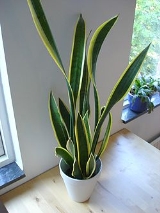
A houseplant is usually a tropical or semi-tropical plant Plant

Plants are a major group of living things [i] including familiar organism [i]s such as tree [i]s, flower [i] ... 

 that is grown indoors in places such as residences House

People construct houses as dwelling-spaces for human habitation.... 

 and office Office

An office is a room [i] or other area in which people work [i], but may also denote a positio ... 

s. Houseplants are commonly grown for decorative purposes and health reasons such as indoor air purification.

Discussions

  Discussion Features

   Ask a question about 'Houseplant'

   Start a new discussion about 'Houseplant'

   Answer questions about 'Houseplant'

   'Houseplant' discussion forum


Encyclopedia


A houseplant is usually a tropical or semi-tropical plant Plant

Plants are a major group of living things [i] including familiar organism [i]s such as tree [i]s, flower [i] ... 

 that is grown indoors in places such as residences House

People construct houses as dwelling-spaces for human habitation.... 

 and office Office

An office is a room [i] or other area in which people work [i], but may also denote a positio ... 

s. Houseplants are commonly grown for decorative purposes and health reasons such as indoor air purification.

Caring for a houseplant

Major factors that should be considered when caring for houseplants are moisture, light, soil Soil

Soil is the collection of natural bodies that form in earthy material on the land surface.... 

 mixture, temperature, humidity, fertilizer Fertilizer

Fertilizers or fertilisers are compounds given to plant [i]s with the intention of promoting grow ... 

s, potting, and pest control. The following includes some general guidelines for houseplant care. For specific houseplant needs, the tags that sometimes come with plants are notoriously unhelpful and generic. Find care instructions for the species in a book or online.

Moisture

Both under-watering and over-watering can be detrimental to a houseplant. The best way to determine whether a plant needs water is to check the soil moisture. To do this, use your finger, as moisture meters are notoriously inaccurate. Potted plants must be allowed to reach an appropriate level of dryness in between waterings, and what that is varies greatly depending on the type of plant. Proper soil moisture can range from still slightly moist on the soil surface to very dry to nearly the bottom of the pot. Watering a plant by the calendar is not recommended. If a plant does need to be watered, pour water slowly over the surface of the soil until it begins to drain out the bottom of the pot, ensuring complete saturation. However, sometimes the soil separates from the sides of the pot, allowing the water to flow down the sides of the rootball and out the bottom too quickly to be absorbed and retained by the soil and roots. If this is the case, it may be necessary to set the plant in a shallow dish of water long enough for it to soak up enough water to moisten the rootball to its center. Repotting should eliminate this problem.

Light

Through the process of photosynthesis Photosynthesis

Photosynthesis , generally, is the synthesis of sugar from light [i], carbon dioxide [i] and water, with ... 

, plants convert the energy in sunlight to chemical energy, which fuels plant growth. The two important factors for providing light to a house plant are intensity and duration.

Different plants require different light intensities. Intensity of light is difficult to measure without a light meter. It is usually measured in units of lux. 100 lux or less is usually considered "low intensity" or "indirect" lighting. A bright office has about 400 lux of illumination. 1,000 lux or more is usually considered "high intensity" lighting. Direct outdoor sunlight is in the range 32,000-100,000 lux.

The duration of light exposure is as important as the intensity. Quality exposure of 8 to 16 hours is ideal for most plants.

Windows are the most common sources of light for houseplants. In the Northern Hemisphere, south-facing windows have the most sun exposure, while western, eastern, and north-facing windows have progressively less exposure. Natural sunlight through windows is affected by seasonal changes, cloud cover, and window treatments.

Artificial light sources can provide an alternative or supplement to window lighting. Fluorescent lighting provides excellent light quality whereas standard incandescent bulbs do little to promote plant growth. "Cool", or "blue", fluorescent lights provide the light needed for green foliage plants, while "warm", or "red", fluorescent lights provide the light needed for blooming flowers. Fluorescent bulbs that fit into standard screw-in light sockets are readily available.

Soil

Houseplants are generally grown in specialized soils called potting compost or potting soil, not in local natural soil Soil

Soil is the collection of natural bodies that form in earthy material on the land surface.... 

. A good potting compost mixture includes soil conditioners to provide the plant with nutrients, support, adequate drainage, and proper aeration. Most potting composts contain a combination of peat Peat

Peat is an accumulation of partially decay [i]ed vegetation [i] matter [i]. ... 

 and vermiculite Vermiculite

Vermiculite is a natural, non toxic mineral [i] which expands with the application of heat [i]. ... 

 or perlite Perlite

Perlite is an amorphous [i] volcanic [i] glass [i] that has a relatively high water [i] content. ... 

. Concern over environment Natural environment

The natural environment comprises all living and non-living things that occur naturally [i] on Earth [i] ... 

al damage to peat bog Bog

A bog is a wetland [i] type that accumulates acid [i]ic peat [i], a deposit of dead plant material. ... 

s, however, is leading to the replacement of peat by coir Coir

Coir is a coarse fibre extracted from the fibrous outer shell of a coconut [i]. ... 

 , which is a sustainable resource. A nutrient rich compost can usually be bought wherever potted plants are sold.

If local natural soil is to be used, it should first be heat sterilized by placing the soil in an oven at 90°C Celsius

The Celsius scale is a temperature [i] scale named after the Swedish [i] astronomer Anders Celsius [i] ... 

  for at least 30 minutes. This will ensure that the soil does not contain any harmful bacteria. Most locals soils, especially those with a high proportion of clay, do not drain well enough to be a suitable growing medium for houseplants. Coir or peat is used to increase aeration and make heavy soils more absorbent. Vermiculite and perlite aid in drainage in a soil mixture. Perlite is recommended over vermiculite because it does not break down as easily. A coarse grade sand Sand

Sand is an example of a class of materials called granular matter [i]. ... 

 or grit can be used as a substitute for a drainage mechanism if needed. These three ingredients can be mixed in varying ratios to create different potting soil types. For a plant that requires fast drainage, such as a cactus Cactus

Cactus is the name given to any member of the flowering plant [i] family Cactaceae. ... 

, use plenty of coarse sand, grit or perlite. For a plant that requires plenty of moisture, use more coir. A good all purpose soil mixture is 2 parts coir and 1 part perlite or vermiculite. A so-called "heavy soil mix" will contain sterilised soil, milled sphagnum Sphagnum

Sphagnum is a genus [i] of between 150-350 species of moss [i]es commonly called peat moss, du ... 

 moss or coir, and perlite in equal proportions. It is also possible to make a soil mixture that actually contains no soil by mixing equal parts peat moss and perlite . The soiless mixture will retain more moisture.

Temperature

Most houseplants are tropical species selected for their adaptation to growth in a climate which ranges from 15°C to 25°C, similar to the temperature in most homes. Temperature control for other plants with differing requirements needs attantion to heating and/or cooling.

Humidity

Humidity Humidity

Humidity is the amount of water in the air [i].... 

 is slightly more difficult to control than temperature, but is less important. The more commonly used houseplants have established that they can survive in low humidity environments as long as their roots are kept properly irrigated. Most plants thrive in 80% relative humidity while most homes are usually kept around 20% to 60% relative humidity. Besides buying a humidifier, there are a few things that can be done to increase humidity around houseplants. One of the most popular methods used to raise the ambient humidity around a houseplant is to use a pebble tray which is made by filling the drainage pot used by the plant with small pebbles, rocks, polished glass or similar material. The tray is then filled with water and over time the water will evaporate and increase the humidity around the plant. Other methods of raising humidity include grouping plants closely together and not placing plants in drafty areas. Misting plants does little to raise the humidity of plants.

Fertilizers

In a potted environment, soil nutrients can eventually get depleted. Adding fertilizer can artificially provide these nutrients. However, adding unneeded fertilizer can be harmful to the plant. Because of this, careful consideration must be taken before fertilizing. If a plant has been in the same potting mix for a year or more and is growing vigorously, the it may be a candidate for nutrient replacement done by using a complete fertilizer at half the recommended label dilution rate.

Fertilizers are usually marked with a number such as 20-20-20. These numbers indicate the percentages of nitrogen Nitrogen

Nitrogen is a chemical element [i] which has the symbol N and atomic number [i] 7 in the periodic table [i] ... 

, phosphorus Phosphorus

|-
| Critical temperature [i] || 994 K [i]
... 

, and potassium Potassium

Potassium is a chemical element [i].... 

, elements that are needed for plant growth. A 3-1-2 ratio of these elements is usually good for green foliage plants, while a 1-2-1 ratio is usually better for flowering plants. A complete fertilizer will also include the minor and trace elements, such as calcium, magnesium and iron.

While variation may occur between brands, a general rule is to mix 1 tablespoon to every gallon of water. In all cases, it is better to under-fertilize than over-fertilize. The diluted mixture is then used to water the plants. The growth of the plants should be monitored to determine if the fertilizer is helping or harming, and how often it should be used. Schedules can range from every other week to every three months.


Pot types and sizes

Proper pot size is an important factor to consider. A pot that is too large will cause root disease because of the excess moisture retained in the soil, while a pot that is too small will restrict a plant's growth. Generally, a plant can stay in the same pot for two or so years. Pots come in a variety of types as well, but usually can be broken down into two groups: porous and non-porous. Porous pots are usually clay and are highly recommended because they provide better aeration as air passes laterally through the sides of the pot. Non-porous pots such as glazed or plastic pots tend to hold moisture longer and restrict airflow. Another needed feature is drainage holes. Usually pots come with holes in the bottom to allow excess water to flow out of the soil which helps to prevent root rot. If a pot does not have drainage holes, it is best to double pot that plant so the inner pot can be lifted out and the excess water accumulated in the bottom of the outer pot can be removed. Wash old pots thoroughly in a dishwasher or by hand to kill any bacteria that may remain.

List of common houseplants


Tropical houseplants

  • Asparagus Fern
  • Bromeliad Bromeliaceae

    Bromeliaceae is a large family of flowering plant [i]s native to the tropical and warm temperate New World [i] ... 

    s
  • Chinese Evergreen Aglaonema

    Aglaonema is a genus of about 20 species of flowering plant [i]s in the family Araceae [i], native t ... 

  • Dracaenas
  • Dumb Cane Dieffenbachia

    Dieffenbachia is a genus of tropical [i] plant [i]s in the Family Araceae [i] noted for their patter ... 

  • Fern Fern

    A fern is any one of a group of about 20,000 species [i] of plant [i]s classified in the phylum or divis ... 

    s
  • Gloxinia
  • Mother-in-law's Tongue
  • Neanthe bella palm
  • Palm Arecaceae

    Arecaceae , the Palm Family, is a family of flowering plant [i]s belonging to the monocot [i]... 

    s
  • Philodendron Philodendron

    Philodendron Schott [i] 1832, is a large genus of flowering plant [i]s from the ... 

    s
  • Pothos
  • Prayer Plant
  • Rubber Plant
  • Schefflera arboricola Schefflera arboricola

    Schefflera arboricola is a flowering plant [i] in the family Araliaceae [i], native to Taiwan [i] an ... 

  • Spathiphyllum Spathiphyllum

    Spathiphyllum is a genus of about 40 species of monocotyledon [i]ous flowering plant [i]s in the fam ... 

  • Ti Plant
  • Weeping Fig Weeping Fig

    The Weeping Fig or Benjamin's Fig is a species of fig [i] tree, native to south and southeast Asia [i] ... 

  • Zebra Plant
  • Orchids Orchidaceae

    Orchids are the largest and most diverse of the flowering plant [i] families, with over 800 described... 

     , see also Semi-hydroponic for growing orchids Semi-hydroponic for growing orchids

    Semi [i]-hydroponic [i](s)™ or semi-hydro, semi hydro, semi-hydro culture, s/h. ... 

  • Citrus Citrus

    Citrus is a common term and genus [i] of flowering plant [i]s in the family Rutaceae [i], originatin ... 


Succulent Succulent plant

Succulent plants, or succulents, are plant [i]s that store water [i] in enlarged fleshy leave [i] ... 

s

  • Aloe Aloe

    Aloe, also written Alo, is a genus [i] containing about four hundred species [i] of flowering [i] ... 

  • Cactus Cactus

    Cactus is the name given to any member of the flowering plant [i] family Cactaceae. ... 

  • Jade Plant Jade plant

    Commonly known as jade plant or friendship tree is a succulent plant [i] that sometimes has small pi ... 


Forced bulb Bulb

A bulb is an underground vertical shoot [i] that has modified leaves [i] that are used as food [i] ... 

s

  • Crocus Crocus

    Crocus is a genus [i] of perennial [i] flower [i]ing plant [i]s that grows from a corm [i], growing ... 

    es
  • Daffodil Narcissus (flower)

    Narcissus is the Latin name for a group of hardy, mostly spring-flowering, bulb [i]s. ... 

    s
  • Hyacinths

Others

  • African Violet Saintpaulia

    Saintpaulia is a genus of 20 species of herbaceous [i] perennial [i] flowering plant [i] ... 

    s
  • Begonia Begonia

    Begonia is a genus [i] in the flowering plant [i] family Begoniaceae [i]. ... 

    s
  • Bonsai Bonsai

    Bonsai is the art of aesthetic miniaturisation of trees [i] and plants [i] in containers. ... 

  • English Ivy Ivy

    Hedera is a genus of about ten species of climbing or ground-creeping evergreen [i] woody plants in ... 

  • Norfolk Island Pine Araucaria heterophylla

    Araucaria heterophylla is a distinctive conifer [i], a member of the ancient and now disjo ... 

  • Peperomia Peperomia

    Peperomia is one of the 2 large genera [i] of the Piperaceae [i] family [i], with more ... 


See also

  • List of garden plants List of garden plants

    This is a partial list of garden plants, plant [i]s that can be cultivated [i] in the garden [i] ... 

  • List of air filtering plants

References

  • , HGIC 1456, Clemson University Cooperative Extension Service
  • , National Sustainable Agriculture Information Service