

Homologous recombination

Encyclopedia
Homologous recombination is a type of genetic recombination
in which nucleotide
sequences are exchanged between two similar or identical molecules of DNA
. It is most widely used by cells to accurately repair
harmful breaks that occur on both strands of DNA, known as double-strand breaks. Homologous recombination also produces new combinations of DNA sequences during meiosis
, the process by which eukaryote
s make gamete
cells, like sperm
and egg cells
in animals. These new combinations of DNA represent genetic variation
in offspring, which in turn enables populations to adapt
during the course of evolution
. Homologous recombination is also used in horizontal gene transfer
to exchange genetic material between different strains and species of bacteria and virus
es.
Although homologous recombination varies widely among different organisms and cell types, most forms of it involve the same basic steps. After a double-strand break occurs, sections of DNA around the 5' ends of the break are cut away in a process called resection. In the strand invasion step that follows, an overhanging 3' end of the broken DNA molecule then "invades" a similar or identical DNA molecule that is not broken. After strand invasion, one or two cross-shaped structures called Holliday junction
s connect the two DNA molecules. Depending on how the two junctions are cut by enzyme
s, the type of homologous recombination that occurs in meiosis results in either chromosomal crossover
or non-crossover. Homologous recombination that occurs during DNA repair tends to result in non-crossover products, in effect restoring the damaged DNA molecule as it existed before the double-strand break.
Homologous recombination is conserved
across all three domains
of life as well as virus
es, suggesting that it is a nearly universal biological mechanism. The discovery of genes for homologous recombination in protist
s—a diverse group of eukaryotic microorganisms—has been interpreted as evidence that meiosis emerged early in the evolution of eukaryotes. Since their dysfunction has been strongly associated with increased susceptibility to several types of cancer
, the proteins that facilitate homologous recombination are topics of active research. Homologous recombination is also used as a technique in molecular biology
for introducing genetic changes into target organisms. The development of gene targeting
techniques that rely on homologous recombination was the subject of the 2007 Nobel Prize for Physiology or Medicine.
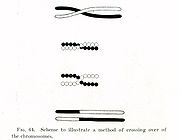 In the early 1900s, William Bateson
and Reginald Punnett
found an exception to one of the principles of inheritance
originally described by Gregor Mendel
in the 1860s. In contrast to Mendel's notion that traits are independently assorted when passed from parent to child—for example that a cat's hair color and its tail length are inherited
independent of each other—Bateson and Punnett showed that certain genes associated with physical traits can be inherited together, or genetically linked
. In 1911, after observing that linked traits could on occasion be inherited separately, Thomas Hunt Morgan
suggested that "crossovers
" can occur between linked genes, where one of the linked genes physically crosses over to a different chromosome
. Two decades later, Barbara McClintock
and Harriet Creighton
demonstrated that chromosomal crossover occurs during meiosis
, the process of cell division by which sperm
and egg cells are made. Within the same year as McClintock's discovery, Curt Stern
showed that crossing over—later called "recombination"—could also occur in somatic cell
s like white blood cell
s and skin cells that divide through mitosis
.
In 1947, the microbiologist Joshua Lederberg
showed that bacteria—which had been assumed to reproduce only asexually through binary fission—are capable of genetic recombination, which is more similar to sexual reproduction. This work established E. coli as a model organism
in genetics, and helped Lederberg win the 1958 Nobel Prize in Physiology or Medicine
. Building on studies in fungi
, in 1964 Robin Holliday
proposed a model for recombination in meiosis which introduced key details of how the process can work, including the exchange of material between chromosomes through Holliday junction
s. In 1983, Jack Szostak
and colleagues presented a model now known as the DSBR pathway, which accounted for observations not explained by the Holliday model. During the next decade, experiments in Drosophila
, budding yeast and mammalian cells led to the emergence of other models of homologous recombination, called SDSA pathways, which do not always rely on Holliday junctions.
in eukaryotes like plants, animals, fungi and protists. In cells that divide through mitosis
, homologous recombination repairs double-strand breaks in DNA caused by ionizing radiation
or DNA-damaging chemicals. Left unrepaired, these double-strand breaks can cause large-scale rearrangement of chromosomes in somatic cell
s, which can in turn lead to cancer.
In addition to repairing DNA, homologous recombination also helps produce genetic diversity
when cells divide in meiosis
to become specialized gamete
cells—sperm
or egg cells
in animals, pollen
or ovule
s in plants, and spore
s in fungi. It does so by facilitating chromosomal crossover
, in which regions of similar but not identical DNA are exchanged between homologous chromosomes. This creates new, possibly beneficial combinations of genes, which can give offspring an evolutionary advantage. Chromosomal crossover begins when a protein called Spo11
makes a targeted double-strand break in DNA. The sites of these double-strand breaks often occur at recombination hotspots, regions in chromosomes that are about 1,000–2,000 base pair
s in length and have high rates of recombination. The absence of a recombination hotspot between two genes on the same chromosome often means that those genes will be inherited by future generations in equal proportion. This represents linkage
between the two genes greater than would be expected from genes that independently assort during meiosis.
(NHEJ). NHEJ is a DNA repair mechanism which, unlike homologous recombination, does not require a long homologous
sequence to guide repair. Whether homologous recombination or NHEJ is used to repair double-strand breaks is largely determined by the phase of cell cycle
. Homologous recombination repairs DNA before the cell enters mitosis (M phase). It occurs during and shortly after DNA replication
, in the S
and G2 phases
of the cell cycle, when sister chromatids
are more easily available. Compared to homologous chromosomes, which are similar to another chromosome but often have different allele
s, sister chromatids are an ideal template for homologous recombination because they are an identical copy of a given chromosome. In contrast to homologous recombination, NHEJ is predominant in the G1 phase
of the cell cycle, when the cell is growing but not yet ready to divide. It occurs less frequently after the G1 phase, but maintains at least some activity throughout the cell cycle. The mechanisms that regulate homologous recombination and NHEJ throughout the cell cycle vary widely between species.
Cyclin-dependent kinase
s (CDKs), which modify the activity of other proteins by adding phosphate
groups to (that is, phosphorylating
) them, are important regulators of homologous recombination in eukaryotes. When DNA replication begins in budding yeast, the cyclin-dependent kinase Cdc28 begins homologous recombination by phosphorylating the Sae2 protein. After being so activated by the addition of a phosphate, Sae2 uses its endonuclease
activity to make a clean cut near a double-strand break in DNA. This allows a three-part
protein known as the MRX complex to bind to DNA, and begins a series of protein-driven reactions that exchange material between two DNA molecules.
helicase and the Exo1 and Dna2
nucleases. As a helicase
, Sgs1 "unzips" the double-strand DNA, while Exo1 and Dna2's nuclease
activity allows them to cut the single-stranded DNA produced by Sgs1.
 The RPA
protein, which has high affinity for single-stranded DNA, then binds the 3' overhangs. With the help of several other proteins that mediate the process, the Rad51
protein (and Dmc1, in meiosis) then forms a filament of nucleic acid and protein on the single strand of DNA coated with RPA. This nucleoprotein
filament then begins searching for DNA sequences similar to that of the 3' overhang. After finding such a sequence, the single-stranded nucleoprotein filament moves into (invades) the similar or identical recipient DNA duplex in a process called strand invasion. In cells that divide through mitosis, the recipient DNA duplex is generally a sister chromatid, which is identical to the damaged DNA molecule and provides a template for repair. In meiosis, however, the recipient DNA tends to be from a similar but not necessarily identical homologous chromosome. A displacement loop (D-loop) is formed during strand invasion between the invading 3' overhang strand and the homologous chromosome. After strand invasion, a DNA polymerase
extends the end of the invading 3' strand by synthesizing new DNA. This changes the D-loop to a cross-shaped structure known as a Holliday junction
. Following this, more DNA synthesis occurs on the invading strand (i.e., one of the original 3' overhangs), effectively restoring the strand on the homologous chromosome that was displaced during strand invasion.
Whether recombination in the DSBR pathway results in chromosomal crossover is determined by how the double Holliday junction is cut, or "resolved". Chromosomal crossover will occur if one Holliday junction is cut on the crossing strand and the other Holliday junction is cut on the non-crossing strand (in Figure 4, along the horizontal purple arrowheads at one Holliday junction and along the vertical orange arrowheads at the other). Alternatively, if the two Holliday junctions are cut on the crossing strands (along the horizontal purple arrowheads at both Holliday junctions in Figure 4), then chromosomes without crossover will be produced.
, of any remaining single-stranded gaps.
. The SSA pathway is unique in that it does not require a separate similar or identical molecule of DNA, like the DSBR or SDSA pathways of homologous recombination. Instead, the SSA pathway only requires a single DNA duplex, and uses the repeat sequences as the identical sequences that homologous recombination needs for repair. The pathway is relatively simple in concept: after two strands of the same DNA duplex are cut back around the site of the double-strand break, the two resulting 3' overhangs then align and anneal to each other, restoring the DNA as a continuous duplex.
As DNA around the double-strand break is cut back, the single-stranded 3' overhangs being produced are coated with the RPA
protein, which prevents the 3' overhangs from sticking to themselves. A protein called Rad52
then binds each of the repeat sequences on either side of the break, and aligns them to enable the two complementary
repeat sequences to anneal. After annealing is complete, leftover non-homologous flaps of the 3' overhangs are cut away by a set of nucleases, known as Rad1/Rad10, which are brought to the flaps by the Saw1 and Slx4
proteins. New DNA synthesis fills in any gaps, and ligation restores the DNA duplex as two continuous strands. The DNA sequence between the repeats is always lost, as is one of the two repeats. The SSA pathway is considered mutagen
ic since it results in such deletions of genetic material.
, double-strand breaks can sometimes be encountered at replication fork
s as DNA helicase
unzips the template strand. These defects are repaired in the break-induced replication (BIR) pathway of homologous recombination. The precise molecular mechanisms of the BIR pathway remain unclear. Three proposed mechanisms have strand invasion as an initial step, but differ in how they model the migration of the D-loop and later phases of recombination.
The BIR pathway can also help to maintain the length of telomeres, regions of DNA at the end of eukaryotic chromosomes, in the absence of (or in cooperation with) telomerase
. Without working copies of the telomerase enzyme, telomeres typically shorten with each cycle of mitosis, which eventually blocks cell division
and leads to senescence. In budding yeast cells where telomerase have been inactivated through mutations, two types of "survivor" cells have been observed to avoid senescence longer than expected by elongating their telomeres through BIR pathways.
Maintaining telomere length is critical for cell immortalization, a key feature of cancer. Most cancers maintain telomeres by upregulating telomerase. However, in several types of human cancer, a BIR-like pathway helps to sustain some tumors by acting as an alternative mechanism of telomere maintenance. This fact has lead scientists to investigate whether such recombination-based mechanisms of telomere maintenance could thwart anti-cancer drugs like telomerase inhibitors
.
 Homologous recombination is a major DNA repair process in bacteria. It is also important for producing genetic diversity in bacterial populations, although the process differs substantially from meiotic
recombination, which brings about diversity in eukaryotic genome
s. Homologous recombination has been most studied and is best understood for Escherichia coli
. Double-strand DNA breaks in bacteria are repaired by the RecBCD
pathway of homologous recombination. Breaks that occur on only one of the two DNA strands, known as single-strand gaps, are thought to be repaired by the RecF pathway. Both the RecBCD and RecF pathways include a series of reactions known as branch migration
, in which single DNA strands are exchanged between two intercrossed molecules of duplex DNA, and resolution, in which those two intercrossed molecules of DNA are cut apart and restored to their normal double-stranded state.
 The RecBCD pathway is the main recombination pathway used in bacteria to repair double-strand breaks in DNA. These double-strand breaks can be caused by UV light
and other radiation
, as well as chemical mutagen
s. Double-strand breaks may also arise by DNA replication
through a single-strand nick or gap. Such a situation causes what is known as a collapsed replication fork
and is fixed by several pathways of homologous recombination including the RecBCD pathway.
In this pathway, a three-subunit enzyme complex called RecBCD initiates recombination by binding to a blunt or nearly blunt end of a break in double-strand DNA. After RecBCD binds the DNA end, the RecB and RecD subunit
s begin unzipping the DNA duplex through helicase
activity. The RecB subunit also has a nuclease
domain, which cuts the single strand of DNA that emerges from the unzipping process. This unzipping continues until RecBCD encounters a specific nucleotide
sequence (5'-GCTGGTGG-3') known as a Chi site
.
Upon encountering a Chi site, the activity of the RecBCD enzyme changes drastically. DNA unwinding pauses for a few seconds and then resumes at roughly half the initial speed. This is likely because the slower RecB helicase unwinds the DNA after Chi, rather than the faster RecD helicase, which unwinds the DNA before Chi. Recognition of the Chi site also changes the RecBCD enzyme so that it cuts the DNA strand with Chi and begins loading multiple RecA
proteins onto the single-stranded DNA with the newly generated 3' end. The resulting RecA-coated nucleoprotein
filament then searches out similar sequences of DNA on a homologous chromosome. The search process induces stretching of the DNA duplex, which enhances homology recognition (a mechanism termed conformational proofreading
). Upon finding such a sequence, the single-stranded nucleoprotein filament moves into the homologous recipient DNA duplex in a process called strand invasion. The invading 3' overhang causes one of the strands of the recipient DNA duplex to be displaced, to form a D-loop. If the D-loop is cut, another swapping of strands forms a cross-shaped structure called a Holliday junction
. Resolution of the Holliday junction by some combination of RuvABC or RecG can produce two recombinant DNA molecules with reciprocal genetic types, if the two interacting DNA molecules differ genetically. Alternatively, the invading 3’ end near Chi can prime DNA synthesis and form a replication fork. This type of resolution produces only one type of recombinant (non-reciprocal).
Although the proteins and specific mechanisms involved in their initial phases differ, the two pathways are similar in that they both require single-stranded DNA with a 3’ end and the RecA protein for strand invasion. The pathways are also similar in their phases of branch migration
, in which the Holliday junction slides in one direction, and resolution, in which the Holliday junctions are cleaved apart by enzymes. The alternative, non-reciprocal type of resolution may also occur by either pathway.
s between the two homologous DNA duplexes are exchanged. To catalyze branch migration, the RuvA
protein first recognizes and binds to the Holliday junction and recruits the RuvB
protein to form the RuvAB complex. Two sets of the RuvB protein, which each form a ring-shaped ATPase
, are loaded onto opposite sides of the Holliday junction, where they act as twin pumps that provide the force for branch migration. Between those two rings of RuvB, two sets of the RuvA protein assemble in the center of the Holliday junction such that the DNA at the junction is sandwiched between each set of RuvA. The strands of both DNA duplexes—the "donor" and the "recipient" duplexes—are unwound on the surface of RuvA as they are guided by the protein from one duplex to the other.
complex. RuvC is an endonuclease
that cuts the degenerate sequence 5'-(A/T)TT(G/C)-3'. The sequence is found frequently in DNA, about once every 64 nucleotides. Before cutting, RuvC likely gains access to the Holliday junction by displacing one of the two RuvA tetramers covering the DNA there. Recombination results in either "splice" or "patch" products, depending on how RuvC cleaves the Holliday junction. Splice products are crossover products, in which there is a rearrangement of genetic material around the site of recombination. Patch products, on the other hand, are non-crossover products in which there is no such rearrangement and there is only a "patch" of hybrid DNA in the recombination product.
, the process by which an organism incorporates foreign DNA from another organism without being the offspring of that organism. Homologous recombination requires incoming DNA to be highly similar to the recipient genome, and so horizontal gene transfer is usually limited to similar bacteria. Studies in several species of bacteria have established that there is a log-linear decrease in recombination frequency with increasing difference in sequence between host and recipient DNA.
In bacterial conjugation
, where DNA is transferred between bacteria through direct cell-to-cell contact, homologous recombination helps integrate foreign DNA into the host genome via the RecBCD pathway. The RecBCD enzyme promotes recombination after DNA is converted from single-strand DNA–in which form it originally enters the bacterium–to double-strand DNA during replication. The RecBCD pathway is also essential for the final phase of transduction
, a type of horizontal gene transfer in which DNA is transferred from one bacterium to another by a virus
. Foreign, bacterial DNA is sometimes misincorporated in the capsid
head of bacteriophage
virus particles as DNA is packaged into new bacteriophages during viral replication. When these new bacteriophages infect other bacteria, DNA from the previous host bacterium is injected into the new bacterial host as double-strand DNA. The RecBCD enzyme then incorporates this double-strand DNA into the genome of the new bacterial host.
es such as herpesvirus, recombination occurs through a break-and-rejoin mechanism like in bacteria and eukaryotes. There is also evidence for recombination in some RNA virus
es, specifically positive-sense ssRNA viruses like retrovirus
es, picornavirus
es, and coronavirus
es. There is controversy over whether homologous recombination occurs in negative-sense ssRNA viruses like influenza
.
In RNA viruses, homologous recombination can be either precise or imprecise. In the precise type of RNA-RNA recombination, there is no difference between the two parental RNA sequences and the resulting crossover RNA region. Because of this, it is often difficult to determine the location of crossover events between two recombining RNA sequences. In imprecise RNA homologous recombination, the crossover region has some difference with the parental RNA sequences – caused by either addition, deletion, or other modification of nucleotides. The level of precision in crossover is controlled by the sequence context of the two recombining strands of RNA: sequences rich in adenine
and uracil
decrease crossover precision.
Homologous recombination is important in facilitating viral evolution. For example, if the genomes of two viruses with different disadvantageous mutations undergo recombination, then they may be able to regenerate a fully functional genome. Alternatively, if two similar viruses have infected the same host cell, homologous recombination can allow those two viruses to swap genes and thereby evolve more potent variations of themselves.
. This causes chromosomes to fail to properly segregate in a process called nondisjunction
. In turn, nondisjunction can cause sperm
and ova to have too few or too many chromosomes. Down's syndrome, which is caused by an extra copy of chromosome 21, is one of many abnormalities that result from such a failure of homologous recombination in meiosis.
Deficiencies in homologous recombination have been strongly linked to cancer formation in humans. For example, each of the cancer-related diseases Bloom's syndrome, Werner's syndrome and Rothmund-Thomson syndrome
are caused by malfunctioning copies of RecQ helicase genes involved in the regulation
of homologous recombination: BLM, WRN
and RECQ4, respectively. In the cells of Bloom's syndrome patients, who lack a working copy of the BLM protein, there is an elevated rate of homologous recombination. Experiments in mice deficient in BLM have suggested that the mutation gives rise to cancer through a loss of heterozygosity
caused by increased homologous recombination. A loss in heterozygosity refers to the loss of one of two versions—or alleles—of a gene. If one of the lost alleles helps to suppress tumors, like the gene for the retinoblastoma protein
for example, then the loss of heterozygosity can lead to cancer.
Decreased rates of homologous recombination cause inefficient DNA repair, which can also lead to cancer. This is the case with BRCA1
and BRCA2
, two similar tumor suppressor genes whose malfunctioning has been linked with considerably increased risk for breast
and ovarian cancer
. Cells missing BRCA1 and BRCA2 have a decreased rate of homologous recombination and increased sensitivity to ionizing radiation
, suggesting that decreased homologous recombination leads to increased susceptibility to cancer. Because the only known function of BRCA2 is to help initiate homologous recombination, researchers have speculated that more detailed knowledge of BRCA2's role in homologous recombination may be the key to understanding the causes of breast and ovarian cancer.
 Based on the similarity of their amino acid sequences, sets of proteins involved in homologous recombination are thought to share common evolutionary origins. One such set of proteins is the RecA/Rad51 protein family, which includes the RecA
protein from bacteria
, the Rad51
and Dmc1 proteins from eukaryotes and the RadA and RadB proteins from archaea
. These proteins play key roles in the beginning stages of homologous recombination in the organisms that express them. The proteins in the RecA/Rad51 protein family share a long conserved region
known as the RecA/Rad51 domain. Within this protein domain are two sequence motif
s, Walker A motif and Walker B motif
. The Walker A and B motifs allow members of the RecA/Rad51 protein family to engage in ATP hydrolysis
, which provides energy for the proteins to drive reactions in homologous recombination.
Studies modeling the evolutionary relationships between the Rad51, Dmc1 and RadA proteins indicate that they are monophyletic, or that they share a common molecular ancestor. Within this protein family, Rad51 and Dmc1 are grouped together in a separate clade
from RadA. One of the reasons for grouping these three proteins together is that they all possess a modified helix-turn-helix
motif, which helps the proteins bind to DNA, toward their N-terminal end
s. An ancient gene duplication
event of a eukaryotic RecA gene and subsequent mutation has been proposed as a likely origin of the modern RAD51 and DMC1 genes.
The discovery of Dmc1 in several species of Giardia
, one of the earliest protists to diverge as a eukaryote, suggests that meiotic homologous recombination—and thus meiosis itself—emerged very early in eukaryotic evolution. In addition to research on Dmc1, studies on the Spo11
protein have provided information on the origins of meiotic recombination. Spo11 is a type II topoisomerase
that initiates homologous recombination in meiosis by making targeted double-strand breaks in DNA. Phylogenetic tree
s based on the sequence of genes similar to SPO11 in animals, fungi, plants, protists and archaea have led scientists to believe that the version Spo11 currently in eukaryotes emerged in the last common ancestor of eukaryotes and archaea.
and genetically modified organism
s use the process of homologous recombination. Also called gene targeting
, the method is especially common in yeast and mouse genetics. The gene targeting method in knockout mice
uses mouse embryonic stem cells to deliver artificial genetic material (mostly of therapeutic interest), which represses the target gene of the mouse by the principle of homologous recombination. The mouse thereby acts as a working model to understand the effects of a specific mammalian gene. In recognition of their discovery of how homologous recombination can be used to introduce genetic modifications in mice through embryonic stem cells, Mario Capecchi
, Martin Evans
and Oliver Smithies
were awarded the 2007 Nobel Prize for Physiology or Medicine
.
Advances in gene targeting technologies which hijack the homologous recombination mechanics of cells are now leading to the development of a new wave of more accurate, isogenic human disease models
. These engineered human cell models are thought to more accurately reflect the genetics of human diseases than their mouse model predecessors. This is largely because mutations of interest are introduced into endogenous genes, just as they occur in the real patients, and because they are based on human genomes rather than rat genomes. Furthermore, certain technologies enable the knock-in of a particular mutation rather than just knock-outs associated with older gene targeting technologies.
with homologous recombination develops chimeric proteins by swapping fragments between two parental proteins. These techniques exploit the fact that recombination can introduce a high degree of sequence
diversity while preserving a protein's ability to fold into its tertiary structure
, or three-dimensional shape. This stands in contrast to other protein engineering techniques, like random point mutagenesis
, in which the probability of maintaining protein function declines exponentially with increasing amino acid
substitutions. The chimeras produced by recombination techniques are able to maintain their ability to fold because their swapped parental fragments are structurally and evolutionarily conserved. These recombinable "building blocks" preserve structurally important interactions like points of physical contact
between different amino acids in the protein's structure. Computational methods like SCHEMA
and statistical coupling analysis
can be used to identify structural subunits suitable for recombination.
Techniques that rely on homologous recombination have been used to engineer new proteins. In a study published in 2007, researchers were able to create chimeras of two enzymes involved in the biosynthesis of isoprenoids, a diverse class of compounds including hormone
s, visual pigments and certain pheromones
. The chimeric proteins acquired an ability to catalyze an essential reaction in isoprenoid biosynthesis—one of the most diverse pathways of biosynthesis
found in nature—that was absent in the parent proteins. Protein engineering through recombination has also produced chimeric enzymes with new function in members of a group of proteins known as the cytochrome P450 family, which in humans is involved in detoxifying foreign compounds like drugs, food additives and preservatives.
, ovarian
and prostate cancer
s caused by mutations in the BRCA1
or BRCA2
genes. BRCA1 and BRCA2 are necessary for DNA repair by homologous recombination. When BRCA1 or BRCA2 are absent, another type of DNA repair mechanism called base-excision repair usually compensates for the lack of DNA repair by homologous recombination. However, when the PARP1
protein – which is necessary for base-excision repair – is inhibited, DNA repair is drastically reduced, and the cell dies.
By stopping DNA repair in such a fashion, olaparib applies the concept of synthetic lethality
to specifically target cancer cells. An article in the New England Journal of Medicine
noted that exploiting synthetic lethality was a new direction in anti-cancer drug development. While PARP1 inhibitors represent a novel approach to cancer therapy, researchers have cautioned that they may prove insufficient for treating late-stage, metastatic
cancers. Cancer cells can become resistant to a PARP1 inhibitor if they experience deletions of mutations in BRCA2. This undermines the drug's synthetic lethality by restoring cancer cells' ability to repair DNA by homologous recombination.
Genetic recombination
Genetic recombination is a process by which a molecule of nucleic acid is broken and then joined to a different one. Recombination can occur between similar molecules of DNA, as in homologous recombination, or dissimilar molecules, as in non-homologous end joining. Recombination is a common method...
in which nucleotide
Nucleotide
Nucleotides are molecules that, when joined together, make up the structural units of RNA and DNA. In addition, nucleotides participate in cellular signaling , and are incorporated into important cofactors of enzymatic reactions...
sequences are exchanged between two similar or identical molecules of DNA
DNA
Deoxyribonucleic acid is a nucleic acid that contains the genetic instructions used in the development and functioning of all known living organisms . The DNA segments that carry this genetic information are called genes, but other DNA sequences have structural purposes, or are involved in...
. It is most widely used by cells to accurately repair
DNA repair
DNA repair refers to a collection of processes by which a cell identifies and corrects damage to the DNA molecules that encode its genome. In human cells, both normal metabolic activities and environmental factors such as UV light and radiation can cause DNA damage, resulting in as many as 1...
harmful breaks that occur on both strands of DNA, known as double-strand breaks. Homologous recombination also produces new combinations of DNA sequences during meiosis
Meiosis
Meiosis is a special type of cell division necessary for sexual reproduction. The cells produced by meiosis are gametes or spores. The animals' gametes are called sperm and egg cells....
, the process by which eukaryote
Eukaryote
A eukaryote is an organism whose cells contain complex structures enclosed within membranes. Eukaryotes may more formally be referred to as the taxon Eukarya or Eukaryota. The defining membrane-bound structure that sets eukaryotic cells apart from prokaryotic cells is the nucleus, or nuclear...
s make gamete
Gamete
A gamete is a cell that fuses with another cell during fertilization in organisms that reproduce sexually...
cells, like sperm
Sperm
The term sperm is derived from the Greek word sperma and refers to the male reproductive cells. In the types of sexual reproduction known as anisogamy and oogamy, there is a marked difference in the size of the gametes with the smaller one being termed the "male" or sperm cell...
and egg cells
Ovum
An ovum is a haploid female reproductive cell or gamete. Both animals and embryophytes have ova. The term ovule is used for the young ovum of an animal, as well as the plant structure that carries the female gametophyte and egg cell and develops into a seed after fertilization...
in animals. These new combinations of DNA represent genetic variation
Genetic variation
Genetic variation, variation in alleles of genes, occurs both within and among populations. Genetic variation is important because it provides the “raw material” for natural selection. Genetic variation is brought about by mutation, a change in a chemical structure of a gene. Polyploidy is an...
in offspring, which in turn enables populations to adapt
Adaptation
An adaptation in biology is a trait with a current functional role in the life history of an organism that is maintained and evolved by means of natural selection. An adaptation refers to both the current state of being adapted and to the dynamic evolutionary process that leads to the adaptation....
during the course of evolution
Evolution
Evolution is any change across successive generations in the heritable characteristics of biological populations. Evolutionary processes give rise to diversity at every level of biological organisation, including species, individual organisms and molecules such as DNA and proteins.Life on Earth...
. Homologous recombination is also used in horizontal gene transfer
Horizontal gene transfer
Horizontal gene transfer , also lateral gene transfer , is any process in which an organism incorporates genetic material from another organism without being the offspring of that organism...
to exchange genetic material between different strains and species of bacteria and virus
Virus
A virus is a small infectious agent that can replicate only inside the living cells of organisms. Viruses infect all types of organisms, from animals and plants to bacteria and archaea...
es.
Although homologous recombination varies widely among different organisms and cell types, most forms of it involve the same basic steps. After a double-strand break occurs, sections of DNA around the 5' ends of the break are cut away in a process called resection. In the strand invasion step that follows, an overhanging 3' end of the broken DNA molecule then "invades" a similar or identical DNA molecule that is not broken. After strand invasion, one or two cross-shaped structures called Holliday junction
Holliday junction
A Holliday junction is a mobile junction between four strands of DNA. The structure is named after Robin Holliday, who proposed it in 1964 to account for a particular type of exchange of genetic information he observed in yeast known as homologous recombination...
s connect the two DNA molecules. Depending on how the two junctions are cut by enzyme
Enzyme
Enzymes are proteins that catalyze chemical reactions. In enzymatic reactions, the molecules at the beginning of the process, called substrates, are converted into different molecules, called products. Almost all chemical reactions in a biological cell need enzymes in order to occur at rates...
s, the type of homologous recombination that occurs in meiosis results in either chromosomal crossover
Chromosomal crossover
Chromosomal crossover is an exchange of genetic material between homologous chromosomes. It is one of the final phases of genetic recombination, which occurs during prophase I of meiosis in a process called synapsis. Synapsis begins before the synaptonemal complex develops, and is not completed...
or non-crossover. Homologous recombination that occurs during DNA repair tends to result in non-crossover products, in effect restoring the damaged DNA molecule as it existed before the double-strand break.
Homologous recombination is conserved
Conserved sequence
In biology, conserved sequences are similar or identical sequences that occur within nucleic acid sequences , protein sequences, protein structures or polymeric carbohydrates across species or within different molecules produced by the same organism...
across all three domains
Three-domain system
The three-domain system is a biological classification introduced by Carl Woese in 1977 that divides cellular life forms into archaea, bacteria, and eukaryote domains. In particular, it emphasizes the separation of prokaryotes into two groups, originally called Eubacteria and Archaebacteria...
of life as well as virus
Virus
A virus is a small infectious agent that can replicate only inside the living cells of organisms. Viruses infect all types of organisms, from animals and plants to bacteria and archaea...
es, suggesting that it is a nearly universal biological mechanism. The discovery of genes for homologous recombination in protist
Protist
Protists are a diverse group of eukaryotic microorganisms. Historically, protists were treated as the kingdom Protista, which includes mostly unicellular organisms that do not fit into the other kingdoms, but this group is contested in modern taxonomy...
s—a diverse group of eukaryotic microorganisms—has been interpreted as evidence that meiosis emerged early in the evolution of eukaryotes. Since their dysfunction has been strongly associated with increased susceptibility to several types of cancer
Cancer
Cancer , known medically as a malignant neoplasm, is a large group of different diseases, all involving unregulated cell growth. In cancer, cells divide and grow uncontrollably, forming malignant tumors, and invade nearby parts of the body. The cancer may also spread to more distant parts of the...
, the proteins that facilitate homologous recombination are topics of active research. Homologous recombination is also used as a technique in molecular biology
Molecular biology
Molecular biology is the branch of biology that deals with the molecular basis of biological activity. This field overlaps with other areas of biology and chemistry, particularly genetics and biochemistry...
for introducing genetic changes into target organisms. The development of gene targeting
Gene targeting
Gene targeting is a genetic technique that uses homologous recombination to change an endogenous gene. The method can be used to delete a gene, remove exons, add a gene, and introduce point mutations. Gene targeting can be permanent or conditional...
techniques that rely on homologous recombination was the subject of the 2007 Nobel Prize for Physiology or Medicine.
History and discovery
William Bateson
William Bateson was an English geneticist and a Fellow of St. John's College, Cambridge...
and Reginald Punnett
Reginald Punnett
Professor Reginald Crundall Punnett FRS was a British geneticist who co-founded, with William Bateson, the Journal of Genetics in 1910. Punnett is probably best remembered today as the creator of the Punnett square, a tool still used by biologists to predict the probability of possible genotypes...
found an exception to one of the principles of inheritance
Mendelian inheritance
Mendelian inheritance is a scientific description of how hereditary characteristics are passed from parent organisms to their offspring; it underlies much of genetics...
originally described by Gregor Mendel
Gregor Mendel
Gregor Johann Mendel was an Austrian scientist and Augustinian friar who gained posthumous fame as the founder of the new science of genetics. Mendel demonstrated that the inheritance of certain traits in pea plants follows particular patterns, now referred to as the laws of Mendelian inheritance...
in the 1860s. In contrast to Mendel's notion that traits are independently assorted when passed from parent to child—for example that a cat's hair color and its tail length are inherited
Heredity
Heredity is the passing of traits to offspring . This is the process by which an offspring cell or organism acquires or becomes predisposed to the characteristics of its parent cell or organism. Through heredity, variations exhibited by individuals can accumulate and cause some species to evolve...
independent of each other—Bateson and Punnett showed that certain genes associated with physical traits can be inherited together, or genetically linked
Genetic linkage
Genetic linkage is the tendency of certain loci or alleles to be inherited together. Genetic loci that are physically close to one another on the same chromosome tend to stay together during meiosis, and are thus genetically linked.-Background:...
. In 1911, after observing that linked traits could on occasion be inherited separately, Thomas Hunt Morgan
Thomas Hunt Morgan
Thomas Hunt Morgan was an American evolutionary biologist, geneticist and embryologist and science author who won the Nobel Prize in Physiology or Medicine in 1933 for discoveries relating the role the chromosome plays in heredity.Morgan received his PhD from Johns Hopkins University in zoology...
suggested that "crossovers
Chromosomal crossover
Chromosomal crossover is an exchange of genetic material between homologous chromosomes. It is one of the final phases of genetic recombination, which occurs during prophase I of meiosis in a process called synapsis. Synapsis begins before the synaptonemal complex develops, and is not completed...
" can occur between linked genes, where one of the linked genes physically crosses over to a different chromosome
Chromosome
A chromosome is an organized structure of DNA and protein found in cells. It is a single piece of coiled DNA containing many genes, regulatory elements and other nucleotide sequences. Chromosomes also contain DNA-bound proteins, which serve to package the DNA and control its functions.Chromosomes...
. Two decades later, Barbara McClintock
Barbara McClintock
Barbara McClintock , the 1983 Nobel Laureate in Physiology or Medicine, was an American scientist and one of the world's most distinguished cytogeneticists. McClintock received her PhD in botany from Cornell University in 1927, where she was a leader in the development of maize cytogenetics...
and Harriet Creighton
Harriet Creighton
Harriet Baldwin Creighton was an American botanist, geneticist and educator.Born in Delavan, Illinois, Creighton graduated from Wellesley College in 1929, and went on to complete her Ph.D. at Cornell University in 1933...
demonstrated that chromosomal crossover occurs during meiosis
Meiosis
Meiosis is a special type of cell division necessary for sexual reproduction. The cells produced by meiosis are gametes or spores. The animals' gametes are called sperm and egg cells....
, the process of cell division by which sperm
Sperm
The term sperm is derived from the Greek word sperma and refers to the male reproductive cells. In the types of sexual reproduction known as anisogamy and oogamy, there is a marked difference in the size of the gametes with the smaller one being termed the "male" or sperm cell...
and egg cells are made. Within the same year as McClintock's discovery, Curt Stern
Curt Stern
Curt Stern was a German-born American geneticist.Curt Jacob Stern was born in Hamburg, Germany. He studied zoology at the University of Berlin and received his PhD in 1923 at the age of 21...
showed that crossing over—later called "recombination"—could also occur in somatic cell
Somatic cell
A somatic cell is any biological cell forming the body of an organism; that is, in a multicellular organism, any cell other than a gamete, germ cell, gametocyte or undifferentiated stem cell...
s like white blood cell
White blood cell
White blood cells, or leukocytes , are cells of the immune system involved in defending the body against both infectious disease and foreign materials. Five different and diverse types of leukocytes exist, but they are all produced and derived from a multipotent cell in the bone marrow known as a...
s and skin cells that divide through mitosis
Mitosis
Mitosis is the process by which a eukaryotic cell separates the chromosomes in its cell nucleus into two identical sets, in two separate nuclei. It is generally followed immediately by cytokinesis, which divides the nuclei, cytoplasm, organelles and cell membrane into two cells containing roughly...
.
In 1947, the microbiologist Joshua Lederberg
Joshua Lederberg
Joshua Lederberg ForMemRS was an American molecular biologist known for his work in microbial genetics, artificial intelligence, and the United States space program. He was just 33 years old when he won the 1958 Nobel Prize in Physiology or Medicine for discovering that bacteria can mate and...
showed that bacteria—which had been assumed to reproduce only asexually through binary fission—are capable of genetic recombination, which is more similar to sexual reproduction. This work established E. coli as a model organism
Model organism
A model organism is a non-human species that is extensively studied to understand particular biological phenomena, with the expectation that discoveries made in the organism model will provide insight into the workings of other organisms. Model organisms are in vivo models and are widely used to...
in genetics, and helped Lederberg win the 1958 Nobel Prize in Physiology or Medicine
Nobel Prize in Physiology or Medicine
The Nobel Prize in Physiology or Medicine administered by the Nobel Foundation, is awarded once a year for outstanding discoveries in the field of life science and medicine. It is one of five Nobel Prizes established in 1895 by Swedish chemist Alfred Nobel, the inventor of dynamite, in his will...
. Building on studies in fungi
Fungus
A fungus is a member of a large group of eukaryotic organisms that includes microorganisms such as yeasts and molds , as well as the more familiar mushrooms. These organisms are classified as a kingdom, Fungi, which is separate from plants, animals, and bacteria...
, in 1964 Robin Holliday
Robin Holliday
Robin Holliday PhD, FRS, FAA is a British molecular biologist. Heproposed a mechanism of DNA-strand exchange that attempted to explain gene-conversion events that occur during meiosis in fungi. That model first proposed in 1964 and is now known as the Holliday Junction.-Education and...
proposed a model for recombination in meiosis which introduced key details of how the process can work, including the exchange of material between chromosomes through Holliday junction
Holliday junction
A Holliday junction is a mobile junction between four strands of DNA. The structure is named after Robin Holliday, who proposed it in 1964 to account for a particular type of exchange of genetic information he observed in yeast known as homologous recombination...
s. In 1983, Jack Szostak
Jack W. Szostak
Jack William Szostak is a Canadian American biologist of Polish British descent and Professor of Genetics at Harvard Medical School and Alexander Rich Distinguished Investigator at Massachusetts General Hospital, Boston. He was awarded the 2009 Nobel Prize for Physiology or Medicine, along with...
and colleagues presented a model now known as the DSBR pathway, which accounted for observations not explained by the Holliday model. During the next decade, experiments in Drosophila
Drosophila
Drosophila is a genus of small flies, belonging to the family Drosophilidae, whose members are often called "fruit flies" or more appropriately pomace flies, vinegar flies, or wine flies, a reference to the characteristic of many species to linger around overripe or rotting fruit...
, budding yeast and mammalian cells led to the emergence of other models of homologous recombination, called SDSA pathways, which do not always rely on Holliday junctions.
In eukaryotes
Homologous recombination is essential to cell divisionCell division
Cell division is the process by which a parent cell divides into two or more daughter cells . Cell division is usually a small segment of a larger cell cycle. This type of cell division in eukaryotes is known as mitosis, and leaves the daughter cell capable of dividing again. The corresponding sort...
in eukaryotes like plants, animals, fungi and protists. In cells that divide through mitosis
Mitosis
Mitosis is the process by which a eukaryotic cell separates the chromosomes in its cell nucleus into two identical sets, in two separate nuclei. It is generally followed immediately by cytokinesis, which divides the nuclei, cytoplasm, organelles and cell membrane into two cells containing roughly...
, homologous recombination repairs double-strand breaks in DNA caused by ionizing radiation
Ionizing radiation
Ionizing radiation is radiation composed of particles that individually have sufficient energy to remove an electron from an atom or molecule. This ionization produces free radicals, which are atoms or molecules containing unpaired electrons...
or DNA-damaging chemicals. Left unrepaired, these double-strand breaks can cause large-scale rearrangement of chromosomes in somatic cell
Somatic cell
A somatic cell is any biological cell forming the body of an organism; that is, in a multicellular organism, any cell other than a gamete, germ cell, gametocyte or undifferentiated stem cell...
s, which can in turn lead to cancer.
In addition to repairing DNA, homologous recombination also helps produce genetic diversity
Genetic diversity
Genetic diversity, the level of biodiversity, refers to the total number of genetic characteristics in the genetic makeup of a species. It is distinguished from genetic variability, which describes the tendency of genetic characteristics to vary....
when cells divide in meiosis
Meiosis
Meiosis is a special type of cell division necessary for sexual reproduction. The cells produced by meiosis are gametes or spores. The animals' gametes are called sperm and egg cells....
to become specialized gamete
Gamete
A gamete is a cell that fuses with another cell during fertilization in organisms that reproduce sexually...
cells—sperm
Sperm
The term sperm is derived from the Greek word sperma and refers to the male reproductive cells. In the types of sexual reproduction known as anisogamy and oogamy, there is a marked difference in the size of the gametes with the smaller one being termed the "male" or sperm cell...
or egg cells
Ovum
An ovum is a haploid female reproductive cell or gamete. Both animals and embryophytes have ova. The term ovule is used for the young ovum of an animal, as well as the plant structure that carries the female gametophyte and egg cell and develops into a seed after fertilization...
in animals, pollen
Pollen
Pollen is a fine to coarse powder containing the microgametophytes of seed plants, which produce the male gametes . Pollen grains have a hard coat that protects the sperm cells during the process of their movement from the stamens to the pistil of flowering plants or from the male cone to the...
or ovule
Ovule
Ovule means "small egg". In seed plants, the ovule is the structure that gives rise to and contains the female reproductive cells. It consists of three parts: The integument forming its outer layer, the nucellus , and the megaspore-derived female gametophyte in its center...
s in plants, and spore
Spore
In biology, a spore is a reproductive structure that is adapted for dispersal and surviving for extended periods of time in unfavorable conditions. Spores form part of the life cycles of many bacteria, plants, algae, fungi and some protozoa. According to scientist Dr...
s in fungi. It does so by facilitating chromosomal crossover
Chromosomal crossover
Chromosomal crossover is an exchange of genetic material between homologous chromosomes. It is one of the final phases of genetic recombination, which occurs during prophase I of meiosis in a process called synapsis. Synapsis begins before the synaptonemal complex develops, and is not completed...
, in which regions of similar but not identical DNA are exchanged between homologous chromosomes. This creates new, possibly beneficial combinations of genes, which can give offspring an evolutionary advantage. Chromosomal crossover begins when a protein called Spo11
SPO11
Spo11 is a protein used in a complex along with Mre11 and Rad50 during meiotic recombination. It is also involved in the creation of double stranded breaks in the DNA in the early stages of this process. Its active site contains a tyrosine which ligates and dissociates with DNA to promote break...
makes a targeted double-strand break in DNA. The sites of these double-strand breaks often occur at recombination hotspots, regions in chromosomes that are about 1,000–2,000 base pair
Base pair
In molecular biology and genetics, the linking between two nitrogenous bases on opposite complementary DNA or certain types of RNA strands that are connected via hydrogen bonds is called a base pair...
s in length and have high rates of recombination. The absence of a recombination hotspot between two genes on the same chromosome often means that those genes will be inherited by future generations in equal proportion. This represents linkage
Genetic linkage
Genetic linkage is the tendency of certain loci or alleles to be inherited together. Genetic loci that are physically close to one another on the same chromosome tend to stay together during meiosis, and are thus genetically linked.-Background:...
between the two genes greater than would be expected from genes that independently assort during meiosis.
Timing within the cell cycle
Double-strand breaks can be repaired through homologous recombination or through non-homologous end joiningNon-homologous end joining
Non-homologous end joining is a pathway that repairs double-strand breaks in DNA. NHEJ is referred to as "non-homologous" because the break ends are directly ligated without the need for a homologous template, in contrast to homologous recombination, which requires a homologous sequence to guide...
(NHEJ). NHEJ is a DNA repair mechanism which, unlike homologous recombination, does not require a long homologous
Homology (biology)
Homology forms the basis of organization for comparative biology. In 1843, Richard Owen defined homology as "the same organ in different animals under every variety of form and function". Organs as different as a bat's wing, a seal's flipper, a cat's paw and a human hand have a common underlying...
sequence to guide repair. Whether homologous recombination or NHEJ is used to repair double-strand breaks is largely determined by the phase of cell cycle
Cell cycle
The cell cycle, or cell-division cycle, is the series of events that takes place in a cell leading to its division and duplication . In cells without a nucleus , the cell cycle occurs via a process termed binary fission...
. Homologous recombination repairs DNA before the cell enters mitosis (M phase). It occurs during and shortly after DNA replication
DNA replication
DNA replication is a biological process that occurs in all living organisms and copies their DNA; it is the basis for biological inheritance. The process starts with one double-stranded DNA molecule and produces two identical copies of the molecule...
, in the S
S phase
S-phase is the part of the cell cycle in which DNA is replicated, occurring between G1 phase and G2 phase. Precise and accurate DNA replication is necessary to prevent genetic abnormalities which often lead to cell death or disease. Due to the importance, the regulatory pathways that govern this...
and G2 phases
G2 phase
G2 phase is the 3rd and final subphase of Interphase in the cell cycle directly preceding Mitosis. It follows the successful completion of S phase, during which the cell’s DNA is replicated...
of the cell cycle, when sister chromatids
Sister chromatids
Sister chromatids are two identical copies of a chromatid connected by a centromere. Compare sister chromatids to homologous chromosomes, which are the two different copies of the same chromosome that diploid organisms inherit, one from each parent...
are more easily available. Compared to homologous chromosomes, which are similar to another chromosome but often have different allele
Allele
An allele is one of two or more forms of a gene or a genetic locus . "Allel" is an abbreviation of allelomorph. Sometimes, different alleles can result in different observable phenotypic traits, such as different pigmentation...
s, sister chromatids are an ideal template for homologous recombination because they are an identical copy of a given chromosome. In contrast to homologous recombination, NHEJ is predominant in the G1 phase
G1 phase
The G1 phase is a period in the cell cycle during interphase, before the S phase. For many cells, this phase is the major period of cell growth during its lifespan. During this stage new organelles are being synthesized, so the cell requires both structural proteins and enzymes, resulting in great...
of the cell cycle, when the cell is growing but not yet ready to divide. It occurs less frequently after the G1 phase, but maintains at least some activity throughout the cell cycle. The mechanisms that regulate homologous recombination and NHEJ throughout the cell cycle vary widely between species.
Cyclin-dependent kinase
Cyclin-dependent kinase
thumb|350px|Schematic of the cell cycle. outer ring: I=[[Interphase]], M=[[Mitosis]]; inner ring: M=Mitosis; G1=[[G1 phase|Gap phase 1]]; S=[[S phase|Synthesis]]; G2=[[G2 phase|Gap phase 2]]...
s (CDKs), which modify the activity of other proteins by adding phosphate
Phosphate
A phosphate, an inorganic chemical, is a salt of phosphoric acid. In organic chemistry, a phosphate, or organophosphate, is an ester of phosphoric acid. Organic phosphates are important in biochemistry and biogeochemistry or ecology. Inorganic phosphates are mined to obtain phosphorus for use in...
groups to (that is, phosphorylating
Phosphorylation
Phosphorylation is the addition of a phosphate group to a protein or other organic molecule. Phosphorylation activates or deactivates many protein enzymes....
) them, are important regulators of homologous recombination in eukaryotes. When DNA replication begins in budding yeast, the cyclin-dependent kinase Cdc28 begins homologous recombination by phosphorylating the Sae2 protein. After being so activated by the addition of a phosphate, Sae2 uses its endonuclease
Endonuclease
Endonucleases are enzymes that cleave the phosphodiester bond within a polynucleotide chain, in contrast to exonucleases, which cleave phosphodiester bonds at the end of a polynucleotide chain. Typically, a restriction site will be a palindromic sequence four to six nucleotides long. Most...
activity to make a clean cut near a double-strand break in DNA. This allows a three-part
Protein complex
A multiprotein complex is a group of two or more associated polypeptide chains. If the different polypeptide chains contain different protein domain, the resulting multiprotein complex can have multiple catalytic functions...
protein known as the MRX complex to bind to DNA, and begins a series of protein-driven reactions that exchange material between two DNA molecules.
Models
Two primary models for how homologous recombination repairs double-strand breaks in DNA are the DSBR pathway (sometimes called the double Holliday junction model) and the synthesis-dependent strand annealing (SDSA) pathway. The two pathways are similar in their first several steps. After a double-strand break occurs, the MRX complex (MRN complex in humans) binds to DNA on either side of the break. Next a resection, in which DNA around the 5' ends of the break is cut back, is carried out in two distinct steps. In the first step of resection, the MRX complex recruits the Sae2 protein. The two proteins then trim back the 5' ends on either side of the break to create short 3' overhangs of single-strand DNA. In the second step, 5'→3' resection is continued by the Sgs1Sgs1
Sgs1, also known as small growth suppressor 1, is a DNA helicase protein found in Saccharomyces cerevisiae. It is a homolog of the bacterial RecQ helicase. Like the other members of the RecQ helicase family, Sgs1 is important for DNA repair. In particular, Sgs1 collaborates with other proteins...
helicase and the Exo1 and Dna2
DNA2L
DNA2-like helicase is an enzyme that in humans is encoded by the DNA2 gene. Dna2, a homolog of DNA2KL present in budding yeast, possesses both helicase and nuclease activity, with which it helps catalyze early steps in homologous recombination....
nucleases. As a helicase
Helicase
Helicases are a class of enzymes vital to all living organisms. They are motor proteins that move directionally along a nucleic acid phosphodiester backbone, separating two annealed nucleic acid strands using energy derived from ATP hydrolysis.-Function:Many cellular processes Helicases are a...
, Sgs1 "unzips" the double-strand DNA, while Exo1 and Dna2's nuclease
Nuclease
A nuclease is an enzyme capable of cleaving the phosphodiester bonds between the nucleotide subunits of nucleic acids. Older publications may use terms such as "polynucleotidase" or "nucleodepolymerase"....
activity allows them to cut the single-stranded DNA produced by Sgs1.
Replication protein A
Replication protein A is a protein that binds single-stranded DNA in eukaryotic cells. During DNA replication, RPA prevents single-stranded DNA from winding back on itself or from forming secondary structures. This keeps DNA unwound for the polymerase to replicate it...
protein, which has high affinity for single-stranded DNA, then binds the 3' overhangs. With the help of several other proteins that mediate the process, the Rad51
RAD51
RAD51 is a human gene. The protein encoded by this gene is a member of the RAD51 protein family which assist in repair of DNA double strand breaks. RAD51 family members are homologous to the bacterial RecA and yeast Rad51...
protein (and Dmc1, in meiosis) then forms a filament of nucleic acid and protein on the single strand of DNA coated with RPA. This nucleoprotein
Nucleoprotein
A nucleoprotein is any protein that is structurally associated with nucleic acid .Many viruses harness this protein, and they are known for being host-specific...
filament then begins searching for DNA sequences similar to that of the 3' overhang. After finding such a sequence, the single-stranded nucleoprotein filament moves into (invades) the similar or identical recipient DNA duplex in a process called strand invasion. In cells that divide through mitosis, the recipient DNA duplex is generally a sister chromatid, which is identical to the damaged DNA molecule and provides a template for repair. In meiosis, however, the recipient DNA tends to be from a similar but not necessarily identical homologous chromosome. A displacement loop (D-loop) is formed during strand invasion between the invading 3' overhang strand and the homologous chromosome. After strand invasion, a DNA polymerase
DNA polymerase
A DNA polymerase is an enzyme that helps catalyze in the polymerization of deoxyribonucleotides into a DNA strand. DNA polymerases are best known for their feedback role in DNA replication, in which the polymerase "reads" an intact DNA strand as a template and uses it to synthesize the new strand....
extends the end of the invading 3' strand by synthesizing new DNA. This changes the D-loop to a cross-shaped structure known as a Holliday junction
Holliday junction
A Holliday junction is a mobile junction between four strands of DNA. The structure is named after Robin Holliday, who proposed it in 1964 to account for a particular type of exchange of genetic information he observed in yeast known as homologous recombination...
. Following this, more DNA synthesis occurs on the invading strand (i.e., one of the original 3' overhangs), effectively restoring the strand on the homologous chromosome that was displaced during strand invasion.
DSBR pathway
After the stages of resection, strand invasion and DNA synthesis, the DSBR and SDSA pathways become distinct. The DSBR pathway is unique in that the second 3' overhang (which was not involved in strand invasion) also forms a Holliday junction with the homologous chromosome. The double Holliday junctions are then converted into recombination products by nicking endonucleases, a type of restriction endonuclease which cuts only one DNA strand. The DSBR pathway commonly results in crossover, though it can sometimes result in non-crossover products; the ability of a broken DNA molecule to collect sequences from separated donor loci was shown in mitotic budding yeast using plasmids or endonuclease induction of chromosomal events. Because of this tendency for chromosomal crossover, the DSBR pathway is a likely model of how homologous recombination occurs during meiosis.Whether recombination in the DSBR pathway results in chromosomal crossover is determined by how the double Holliday junction is cut, or "resolved". Chromosomal crossover will occur if one Holliday junction is cut on the crossing strand and the other Holliday junction is cut on the non-crossing strand (in Figure 4, along the horizontal purple arrowheads at one Holliday junction and along the vertical orange arrowheads at the other). Alternatively, if the two Holliday junctions are cut on the crossing strands (along the horizontal purple arrowheads at both Holliday junctions in Figure 4), then chromosomes without crossover will be produced.
SDSA pathway
Homologous recombination via the SDSA pathway occurs in cells that divide through mitosis and results in non-crossover products. In this model, the invading 3' strand is extended along the recipient DNA duplex by a DNA polymerase, and is released as the Holliday junction between the donor and recipient DNA molecules slides in a process called branch migration. The newly synthesized 3' end of the invading strand is then able to anneal to the other 3' overhang in the damaged chromosome through complementary base pairing. After the strands anneal, a small flap of DNA can sometimes remain. Any such flaps are removed, and the SDSA pathway finishes with the resealing, also known as ligationDNA ligase
In molecular biology, DNA ligase is a specific type of enzyme, a ligase, that repairs single-stranded discontinuities in double stranded DNA molecules, in simple words strands that have double-strand break . Purified DNA ligase is used in gene cloning to join DNA molecules together...
, of any remaining single-stranded gaps.
SSA pathway
The single-strand annealing (SSA) pathway of homologous recombination repairs double-strand breaks between two repeat sequencesRepeated sequence (DNA)
In the study of DNA sequences, one can distinguish two main types of repeated sequence:*Tandem repeats:**Satellite DNA**Minisatellite**Microsatellite*Interspersed repeats:**SINEs...
. The SSA pathway is unique in that it does not require a separate similar or identical molecule of DNA, like the DSBR or SDSA pathways of homologous recombination. Instead, the SSA pathway only requires a single DNA duplex, and uses the repeat sequences as the identical sequences that homologous recombination needs for repair. The pathway is relatively simple in concept: after two strands of the same DNA duplex are cut back around the site of the double-strand break, the two resulting 3' overhangs then align and anneal to each other, restoring the DNA as a continuous duplex.
As DNA around the double-strand break is cut back, the single-stranded 3' overhangs being produced are coated with the RPA
Replication protein A
Replication protein A is a protein that binds single-stranded DNA in eukaryotic cells. During DNA replication, RPA prevents single-stranded DNA from winding back on itself or from forming secondary structures. This keeps DNA unwound for the polymerase to replicate it...
protein, which prevents the 3' overhangs from sticking to themselves. A protein called Rad52
RAD52
RAD52 homolog , also known as RAD52, is a protein which in humans is encoded by the RAD52 gene.- Function :The protein encoded by this gene shares similarity with Saccharomyces cerevisiae Rad52, a protein important for DNA double-strand break repair and homologous recombination...
then binds each of the repeat sequences on either side of the break, and aligns them to enable the two complementary
Complementarity (molecular biology)
In molecular biology, complementarity is a property of double-stranded nucleic acids such as DNA, as well as DNA:RNA duplexes. Each strand is complementary to the other in that the base pairs between them are non-covalently connected via two or three hydrogen bonds...
repeat sequences to anneal. After annealing is complete, leftover non-homologous flaps of the 3' overhangs are cut away by a set of nucleases, known as Rad1/Rad10, which are brought to the flaps by the Saw1 and Slx4
Slx4
SLX4 is a protein involved in DNA repair, where it has important roles in the final steps of homologous recombination. Mutations in the gene are associated with the disease Fanconi anemia...
proteins. New DNA synthesis fills in any gaps, and ligation restores the DNA duplex as two continuous strands. The DNA sequence between the repeats is always lost, as is one of the two repeats. The SSA pathway is considered mutagen
Mutagen
In genetics, a mutagen is a physical or chemical agent that changes the genetic material, usually DNA, of an organism and thus increases the frequency of mutations above the natural background level. As many mutations cause cancer, mutagens are therefore also likely to be carcinogens...
ic since it results in such deletions of genetic material.
BIR pathway
During DNA replicationDNA replication
DNA replication is a biological process that occurs in all living organisms and copies their DNA; it is the basis for biological inheritance. The process starts with one double-stranded DNA molecule and produces two identical copies of the molecule...
, double-strand breaks can sometimes be encountered at replication fork
Replication fork
The replication fork is a structure that forms within the nucleus during DNA replication. It is created by helicases, which break the hydrogen bonds holding the two DNA strands together. The resulting structure has two branching "prongs", each one made up of a single strand of DNA...
s as DNA helicase
Helicase
Helicases are a class of enzymes vital to all living organisms. They are motor proteins that move directionally along a nucleic acid phosphodiester backbone, separating two annealed nucleic acid strands using energy derived from ATP hydrolysis.-Function:Many cellular processes Helicases are a...
unzips the template strand. These defects are repaired in the break-induced replication (BIR) pathway of homologous recombination. The precise molecular mechanisms of the BIR pathway remain unclear. Three proposed mechanisms have strand invasion as an initial step, but differ in how they model the migration of the D-loop and later phases of recombination.
The BIR pathway can also help to maintain the length of telomeres, regions of DNA at the end of eukaryotic chromosomes, in the absence of (or in cooperation with) telomerase
Telomerase
Telomerase is an enzyme that adds DNA sequence repeats to the 3' end of DNA strands in the telomere regions, which are found at the ends of eukaryotic chromosomes. This region of repeated nucleotide called telomeres contains non-coding DNA material and prevents constant loss of important DNA from...
. Without working copies of the telomerase enzyme, telomeres typically shorten with each cycle of mitosis, which eventually blocks cell division
Cell division
Cell division is the process by which a parent cell divides into two or more daughter cells . Cell division is usually a small segment of a larger cell cycle. This type of cell division in eukaryotes is known as mitosis, and leaves the daughter cell capable of dividing again. The corresponding sort...
and leads to senescence. In budding yeast cells where telomerase have been inactivated through mutations, two types of "survivor" cells have been observed to avoid senescence longer than expected by elongating their telomeres through BIR pathways.
Maintaining telomere length is critical for cell immortalization, a key feature of cancer. Most cancers maintain telomeres by upregulating telomerase. However, in several types of human cancer, a BIR-like pathway helps to sustain some tumors by acting as an alternative mechanism of telomere maintenance. This fact has lead scientists to investigate whether such recombination-based mechanisms of telomere maintenance could thwart anti-cancer drugs like telomerase inhibitors
Enzyme inhibitor
An enzyme inhibitor is a molecule that binds to enzymes and decreases their activity. Since blocking an enzyme's activity can kill a pathogen or correct a metabolic imbalance, many drugs are enzyme inhibitors. They are also used as herbicides and pesticides...
.
In bacteria
Meiosis
Meiosis is a special type of cell division necessary for sexual reproduction. The cells produced by meiosis are gametes or spores. The animals' gametes are called sperm and egg cells....
recombination, which brings about diversity in eukaryotic genome
Genome
In modern molecular biology and genetics, the genome is the entirety of an organism's hereditary information. It is encoded either in DNA or, for many types of virus, in RNA. The genome includes both the genes and the non-coding sequences of the DNA/RNA....
s. Homologous recombination has been most studied and is best understood for Escherichia coli
Escherichia coli
Escherichia coli is a Gram-negative, rod-shaped bacterium that is commonly found in the lower intestine of warm-blooded organisms . Most E. coli strains are harmless, but some serotypes can cause serious food poisoning in humans, and are occasionally responsible for product recalls...
. Double-strand DNA breaks in bacteria are repaired by the RecBCD
RecBCD
RecBCD, also known as Exonuclease V, is an enzyme of the E. coli bacterium that initiates recombinational repair from potentially lethal double strand breaks in DNA which may result from ionizing radiation, replication errors, endonucleases, oxidative damage, and a host of other factors...
pathway of homologous recombination. Breaks that occur on only one of the two DNA strands, known as single-strand gaps, are thought to be repaired by the RecF pathway. Both the RecBCD and RecF pathways include a series of reactions known as branch migration
Branch migration
Branch migration describes the ability of a DNA strand partially paired with its complement in a duplex to extend its pairing by displacing the resident strand with which it is homologous. This usually happens when two homologous double strands form a Holliday junction and the whole structure...
, in which single DNA strands are exchanged between two intercrossed molecules of duplex DNA, and resolution, in which those two intercrossed molecules of DNA are cut apart and restored to their normal double-stranded state.
RecBCD pathway
Ultraviolet
Ultraviolet light is electromagnetic radiation with a wavelength shorter than that of visible light, but longer than X-rays, in the range 10 nm to 400 nm, and energies from 3 eV to 124 eV...
and other radiation
Ionizing radiation
Ionizing radiation is radiation composed of particles that individually have sufficient energy to remove an electron from an atom or molecule. This ionization produces free radicals, which are atoms or molecules containing unpaired electrons...
, as well as chemical mutagen
Mutagen
In genetics, a mutagen is a physical or chemical agent that changes the genetic material, usually DNA, of an organism and thus increases the frequency of mutations above the natural background level. As many mutations cause cancer, mutagens are therefore also likely to be carcinogens...
s. Double-strand breaks may also arise by DNA replication
DNA replication
DNA replication is a biological process that occurs in all living organisms and copies their DNA; it is the basis for biological inheritance. The process starts with one double-stranded DNA molecule and produces two identical copies of the molecule...
through a single-strand nick or gap. Such a situation causes what is known as a collapsed replication fork
Replication fork
The replication fork is a structure that forms within the nucleus during DNA replication. It is created by helicases, which break the hydrogen bonds holding the two DNA strands together. The resulting structure has two branching "prongs", each one made up of a single strand of DNA...
and is fixed by several pathways of homologous recombination including the RecBCD pathway.
In this pathway, a three-subunit enzyme complex called RecBCD initiates recombination by binding to a blunt or nearly blunt end of a break in double-strand DNA. After RecBCD binds the DNA end, the RecB and RecD subunit
Protein subunit
In structural biology, a protein subunit or subunit protein is a single protein molecule that assembles with other protein molecules to form a protein complex: a multimeric or oligomeric protein. Many naturally occurring proteins and enzymes are multimeric...
s begin unzipping the DNA duplex through helicase
Helicase
Helicases are a class of enzymes vital to all living organisms. They are motor proteins that move directionally along a nucleic acid phosphodiester backbone, separating two annealed nucleic acid strands using energy derived from ATP hydrolysis.-Function:Many cellular processes Helicases are a...
activity. The RecB subunit also has a nuclease
Endonuclease
Endonucleases are enzymes that cleave the phosphodiester bond within a polynucleotide chain, in contrast to exonucleases, which cleave phosphodiester bonds at the end of a polynucleotide chain. Typically, a restriction site will be a palindromic sequence four to six nucleotides long. Most...
domain, which cuts the single strand of DNA that emerges from the unzipping process. This unzipping continues until RecBCD encounters a specific nucleotide
Nucleotide
Nucleotides are molecules that, when joined together, make up the structural units of RNA and DNA. In addition, nucleotides participate in cellular signaling , and are incorporated into important cofactors of enzymatic reactions...
sequence (5'-GCTGGTGG-3') known as a Chi site
Chi site
A Chi site or Chi sequence is a short stretch of DNA in the genome of a bacterium near which homologous recombination is unusually likely to occur. Chi sites serve as stimulators of DNA double-strand break repair in bacteria, which can arise from radiation or chemical treatments, or result from...
.
Upon encountering a Chi site, the activity of the RecBCD enzyme changes drastically. DNA unwinding pauses for a few seconds and then resumes at roughly half the initial speed. This is likely because the slower RecB helicase unwinds the DNA after Chi, rather than the faster RecD helicase, which unwinds the DNA before Chi. Recognition of the Chi site also changes the RecBCD enzyme so that it cuts the DNA strand with Chi and begins loading multiple RecA
RecA
RecA is a 38 kilodalton Escherichia coli protein essential for the repair and maintenance of DNA. RecA has a structural and functional homolog in every species in which it has been seriously sought and serves as an archetype for this class of homologous DNA repair proteins...
proteins onto the single-stranded DNA with the newly generated 3' end. The resulting RecA-coated nucleoprotein
Nucleoprotein
A nucleoprotein is any protein that is structurally associated with nucleic acid .Many viruses harness this protein, and they are known for being host-specific...
filament then searches out similar sequences of DNA on a homologous chromosome. The search process induces stretching of the DNA duplex, which enhances homology recognition (a mechanism termed conformational proofreading
Conformational proofreading
Conformational proofreading is a general mechanism of molecular recognition systems, in which introducing a structural mismatch between a molecular recognizer and its target enhances the recognition specificity and quality....
). Upon finding such a sequence, the single-stranded nucleoprotein filament moves into the homologous recipient DNA duplex in a process called strand invasion. The invading 3' overhang causes one of the strands of the recipient DNA duplex to be displaced, to form a D-loop. If the D-loop is cut, another swapping of strands forms a cross-shaped structure called a Holliday junction
Holliday junction
A Holliday junction is a mobile junction between four strands of DNA. The structure is named after Robin Holliday, who proposed it in 1964 to account for a particular type of exchange of genetic information he observed in yeast known as homologous recombination...
. Resolution of the Holliday junction by some combination of RuvABC or RecG can produce two recombinant DNA molecules with reciprocal genetic types, if the two interacting DNA molecules differ genetically. Alternatively, the invading 3’ end near Chi can prime DNA synthesis and form a replication fork. This type of resolution produces only one type of recombinant (non-reciprocal).
RecF pathway
Bacteria appear to use the RecF pathway of homologous recombination to repair single-strand gaps in DNA. When the RecBCD pathway is inactivated by mutations and additional mutations inactivate the SbcCD and ExoI nucleases, the RecF pathway can also repair DNA double-strand breaks. In the RecF pathway the RecQ helicase unwinds the DNA and the RecJ nuclease degrades the strand with a 5’ end, leaving the strand with the 3’ end intact. RecA protein binds to this strand and is either aided by the RecF, RecO, and RecR proteins or stabilized by them. The RecA nucleoprotein filament then searches for a homologous DNA and exchanges places with the identical or nearly identical strand in the homologous DNA.Although the proteins and specific mechanisms involved in their initial phases differ, the two pathways are similar in that they both require single-stranded DNA with a 3’ end and the RecA protein for strand invasion. The pathways are also similar in their phases of branch migration
Branch migration
Branch migration describes the ability of a DNA strand partially paired with its complement in a duplex to extend its pairing by displacing the resident strand with which it is homologous. This usually happens when two homologous double strands form a Holliday junction and the whole structure...
, in which the Holliday junction slides in one direction, and resolution, in which the Holliday junctions are cleaved apart by enzymes. The alternative, non-reciprocal type of resolution may also occur by either pathway.
Branch migration
Immediately after strand invasion, the Holliday junction moves along the linked DNA during the branch migration process. It is in this movement of the Holliday junction that base pairBase pair
In molecular biology and genetics, the linking between two nitrogenous bases on opposite complementary DNA or certain types of RNA strands that are connected via hydrogen bonds is called a base pair...
s between the two homologous DNA duplexes are exchanged. To catalyze branch migration, the RuvA
RuvABC
RuvABC is a complex of three proteins that mediate branch migration and resolve the Holliday junction created during homologous recombination in bacteria. As such, RuvABC is critical to bacterial DNA repair....
protein first recognizes and binds to the Holliday junction and recruits the RuvB
RuvABC
RuvABC is a complex of three proteins that mediate branch migration and resolve the Holliday junction created during homologous recombination in bacteria. As such, RuvABC is critical to bacterial DNA repair....
protein to form the RuvAB complex. Two sets of the RuvB protein, which each form a ring-shaped ATPase
ATPase
ATPases are a class of enzymes that catalyze the decomposition of adenosine triphosphate into adenosine diphosphate and a free phosphate ion. This dephosphorylation reaction releases energy, which the enzyme harnesses to drive other chemical reactions that would not otherwise occur...
, are loaded onto opposite sides of the Holliday junction, where they act as twin pumps that provide the force for branch migration. Between those two rings of RuvB, two sets of the RuvA protein assemble in the center of the Holliday junction such that the DNA at the junction is sandwiched between each set of RuvA. The strands of both DNA duplexes—the "donor" and the "recipient" duplexes—are unwound on the surface of RuvA as they are guided by the protein from one duplex to the other.
Resolution
In the resolution phase of recombination, any Holliday junctions formed by the strand invasion process are cut, thereby restoring two separate DNA molecules. This cleavage is done by RuvAB complex interacting with RuvC, which together form the RuvABCRuvABC
RuvABC is a complex of three proteins that mediate branch migration and resolve the Holliday junction created during homologous recombination in bacteria. As such, RuvABC is critical to bacterial DNA repair....
complex. RuvC is an endonuclease
Endonuclease
Endonucleases are enzymes that cleave the phosphodiester bond within a polynucleotide chain, in contrast to exonucleases, which cleave phosphodiester bonds at the end of a polynucleotide chain. Typically, a restriction site will be a palindromic sequence four to six nucleotides long. Most...
that cuts the degenerate sequence 5'-(A/T)TT(G/C)-3'. The sequence is found frequently in DNA, about once every 64 nucleotides. Before cutting, RuvC likely gains access to the Holliday junction by displacing one of the two RuvA tetramers covering the DNA there. Recombination results in either "splice" or "patch" products, depending on how RuvC cleaves the Holliday junction. Splice products are crossover products, in which there is a rearrangement of genetic material around the site of recombination. Patch products, on the other hand, are non-crossover products in which there is no such rearrangement and there is only a "patch" of hybrid DNA in the recombination product.
Facilitating genetic transfer
Homologous recombination is an important method of integrating donor DNA into a recipient organism's genome in horizontal gene transferHorizontal gene transfer
Horizontal gene transfer , also lateral gene transfer , is any process in which an organism incorporates genetic material from another organism without being the offspring of that organism...
, the process by which an organism incorporates foreign DNA from another organism without being the offspring of that organism. Homologous recombination requires incoming DNA to be highly similar to the recipient genome, and so horizontal gene transfer is usually limited to similar bacteria. Studies in several species of bacteria have established that there is a log-linear decrease in recombination frequency with increasing difference in sequence between host and recipient DNA.
In bacterial conjugation
Bacterial conjugation
Bacterial conjugation is the transfer of genetic material between bacterial cells by direct cell-to-cell contact or by a bridge-like connection between two cells...
, where DNA is transferred between bacteria through direct cell-to-cell contact, homologous recombination helps integrate foreign DNA into the host genome via the RecBCD pathway. The RecBCD enzyme promotes recombination after DNA is converted from single-strand DNA–in which form it originally enters the bacterium–to double-strand DNA during replication. The RecBCD pathway is also essential for the final phase of transduction
Transduction (genetics)
Transduction is the process by which DNA is transferred from one bacterium to another by a virus. It also refers to the process whereby foreign DNA is introduced into another cell via a viral vector. Transduction does not require cell-to-cell contact , and it is DNAase resistant...
, a type of horizontal gene transfer in which DNA is transferred from one bacterium to another by a virus
Virus
A virus is a small infectious agent that can replicate only inside the living cells of organisms. Viruses infect all types of organisms, from animals and plants to bacteria and archaea...
. Foreign, bacterial DNA is sometimes misincorporated in the capsid
Capsid
A capsid is the protein shell of a virus. It consists of several oligomeric structural subunits made of protein called protomers. The observable 3-dimensional morphological subunits, which may or may not correspond to individual proteins, are called capsomeres. The capsid encloses the genetic...
head of bacteriophage
Bacteriophage
A bacteriophage is any one of a number of viruses that infect bacteria. They do this by injecting genetic material, which they carry enclosed in an outer protein capsid...
virus particles as DNA is packaged into new bacteriophages during viral replication. When these new bacteriophages infect other bacteria, DNA from the previous host bacterium is injected into the new bacterial host as double-strand DNA. The RecBCD enzyme then incorporates this double-strand DNA into the genome of the new bacterial host.
In viruses
Homologous recombination occurs in several groups of viruses. In DNA virusDNA virus
A DNA virus is a virus that has DNA as its genetic material and replicates using a DNA-dependent DNA polymerase. The nucleic acid is usually double-stranded DNA but may also be single-stranded DNA . DNA viruses belong to either Group I or Group II of the Baltimore classification system for viruses...
es such as herpesvirus, recombination occurs through a break-and-rejoin mechanism like in bacteria and eukaryotes. There is also evidence for recombination in some RNA virus
RNA virus
An RNA virus is a virus that has RNA as its genetic material. This nucleic acid is usually single-stranded RNA but may be double-stranded RNA...
es, specifically positive-sense ssRNA viruses like retrovirus
Retrovirus
A retrovirus is an RNA virus that is duplicated in a host cell using the reverse transcriptase enzyme to produce DNA from its RNA genome. The DNA is then incorporated into the host's genome by an integrase enzyme. The virus thereafter replicates as part of the host cell's DNA...
es, picornavirus
Picornavirus
A picornavirus is a virus belonging to the family Picornaviridae. Picornaviruses are non-enveloped, positive-stranded RNA viruses with an icosahedral capsid. The genome RNA is unusual because it has a protein on the 5' end that is used as a primer for transcription by RNA polymerase...
es, and coronavirus
Coronavirus
Coronaviruses are species in the genera of virus belonging to the subfamily Coronavirinae in the family Coronaviridae. Coronaviruses are enveloped viruses with a positive-sense single-stranded RNA genome and a helical symmetry. The genomic size of coronaviruses ranges from approximately 16 to 31...
es. There is controversy over whether homologous recombination occurs in negative-sense ssRNA viruses like influenza
Influenza
Influenza, commonly referred to as the flu, is an infectious disease caused by RNA viruses of the family Orthomyxoviridae , that affects birds and mammals...
.
In RNA viruses, homologous recombination can be either precise or imprecise. In the precise type of RNA-RNA recombination, there is no difference between the two parental RNA sequences and the resulting crossover RNA region. Because of this, it is often difficult to determine the location of crossover events between two recombining RNA sequences. In imprecise RNA homologous recombination, the crossover region has some difference with the parental RNA sequences – caused by either addition, deletion, or other modification of nucleotides. The level of precision in crossover is controlled by the sequence context of the two recombining strands of RNA: sequences rich in adenine
Adenine
Adenine is a nucleobase with a variety of roles in biochemistry including cellular respiration, in the form of both the energy-rich adenosine triphosphate and the cofactors nicotinamide adenine dinucleotide and flavin adenine dinucleotide , and protein synthesis, as a chemical component of DNA...
and uracil
Uracil
Uracil is one of the four nucleobases in the nucleic acid of RNA that are represented by the letters A, G, C and U. The others are adenine, cytosine, and guanine. In RNA, uracil binds to adenine via two hydrogen bonds. In DNA, the uracil nucleobase is replaced by thymine.Uracil is a common and...
decrease crossover precision.
Homologous recombination is important in facilitating viral evolution. For example, if the genomes of two viruses with different disadvantageous mutations undergo recombination, then they may be able to regenerate a fully functional genome. Alternatively, if two similar viruses have infected the same host cell, homologous recombination can allow those two viruses to swap genes and thereby evolve more potent variations of themselves.
Effects of dysfunction
Without proper homologous recombination, chromosomes often incorrectly align for the first phase of cell division in meiosisMeiosis
Meiosis is a special type of cell division necessary for sexual reproduction. The cells produced by meiosis are gametes or spores. The animals' gametes are called sperm and egg cells....
. This causes chromosomes to fail to properly segregate in a process called nondisjunction
Nondisjunction
Nondisjunction is the failure of chromosome pairs to separate properly during meiosis stage 1 or stage 2. This could arise from a failure of homologous chromosomes to separate in meiosis I, or the failure of sister chromatids to separate during meiosis II or mitosis. The result of this error is a...
. In turn, nondisjunction can cause sperm
Sperm
The term sperm is derived from the Greek word sperma and refers to the male reproductive cells. In the types of sexual reproduction known as anisogamy and oogamy, there is a marked difference in the size of the gametes with the smaller one being termed the "male" or sperm cell...
and ova to have too few or too many chromosomes. Down's syndrome, which is caused by an extra copy of chromosome 21, is one of many abnormalities that result from such a failure of homologous recombination in meiosis.
Deficiencies in homologous recombination have been strongly linked to cancer formation in humans. For example, each of the cancer-related diseases Bloom's syndrome, Werner's syndrome and Rothmund-Thomson syndrome
Rothmund-Thomson syndrome
Rothmund–Thomson syndrome , also known as poikiloderma atrophicans with cataract or poikiloderma congenitale, is a rare autosomal recessive skin condition originally described by August von Rothmund in 1868. Matthew Sydney Thomson published further descriptions in 1936.There have been several...
are caused by malfunctioning copies of RecQ helicase genes involved in the regulation
Regulation of gene expression
Gene modulation redirects here. For information on therapeutic regulation of gene expression, see therapeutic gene modulation.Regulation of gene expression includes the processes that cells and viruses use to regulate the way that the information in genes is turned into gene products...
of homologous recombination: BLM, WRN
WRN (gene)
WRN is a human gene that provides instructions for producing Werner protein, which is a type of enzyme called a helicase. Helicase enzymes generally unwind and separate double-stranded DNA. These activities are necessary before DNA can be copied in preparation for cell division...
and RECQ4, respectively. In the cells of Bloom's syndrome patients, who lack a working copy of the BLM protein, there is an elevated rate of homologous recombination. Experiments in mice deficient in BLM have suggested that the mutation gives rise to cancer through a loss of heterozygosity
Loss of heterozygosity
Loss of heterozygosity in a cell is the loss of normal function of one allele of a gene in which the other allele was already inactivated. This term is mostly used in the context of oncogenesis; after an inactivating mutation in one allele of a tumor suppressor gene occurs in the parent's germline...
caused by increased homologous recombination. A loss in heterozygosity refers to the loss of one of two versions—or alleles—of a gene. If one of the lost alleles helps to suppress tumors, like the gene for the retinoblastoma protein
Retinoblastoma protein
The retinoblastoma protein is a tumor suppressor protein that is dysfunctional in the majority types of cancer. One highly studied function of pRb is to prevent excessive cell growth by inhibiting cell cycle progression until a cell is ready to divide...
for example, then the loss of heterozygosity can lead to cancer.
Decreased rates of homologous recombination cause inefficient DNA repair, which can also lead to cancer. This is the case with BRCA1
BRCA1
BRCA1 is a human caretaker gene that produces a protein called breast cancer type 1 susceptibility protein, responsible for repairing DNA. The first evidence for the existence of the gene was provided by the King laboratory at UC Berkeley in 1990...
and BRCA2
BRCA2
BRCA2 is a protein that in humans is encoded by the BRCA2 gene.BRCA2 orthologs have been identified in most mammals for which complete genome data are available....
, two similar tumor suppressor genes whose malfunctioning has been linked with considerably increased risk for breast
Breast cancer
Breast cancer is cancer originating from breast tissue, most commonly from the inner lining of milk ducts or the lobules that supply the ducts with milk. Cancers originating from ducts are known as ductal carcinomas; those originating from lobules are known as lobular carcinomas...
and ovarian cancer
Ovarian cancer
Ovarian cancer is a cancerous growth arising from the ovary. Symptoms are frequently very subtle early on and may include: bloating, pelvic pain, difficulty eating and frequent urination, and are easily confused with other illnesses....
. Cells missing BRCA1 and BRCA2 have a decreased rate of homologous recombination and increased sensitivity to ionizing radiation
Ionizing radiation
Ionizing radiation is radiation composed of particles that individually have sufficient energy to remove an electron from an atom or molecule. This ionization produces free radicals, which are atoms or molecules containing unpaired electrons...
, suggesting that decreased homologous recombination leads to increased susceptibility to cancer. Because the only known function of BRCA2 is to help initiate homologous recombination, researchers have speculated that more detailed knowledge of BRCA2's role in homologous recombination may be the key to understanding the causes of breast and ovarian cancer.
Evolutionary origins
RecA
RecA is a 38 kilodalton Escherichia coli protein essential for the repair and maintenance of DNA. RecA has a structural and functional homolog in every species in which it has been seriously sought and serves as an archetype for this class of homologous DNA repair proteins...
protein from bacteria
Bacteria
Bacteria are a large domain of prokaryotic microorganisms. Typically a few micrometres in length, bacteria have a wide range of shapes, ranging from spheres to rods and spirals...
, the Rad51
RAD51
RAD51 is a human gene. The protein encoded by this gene is a member of the RAD51 protein family which assist in repair of DNA double strand breaks. RAD51 family members are homologous to the bacterial RecA and yeast Rad51...
and Dmc1 proteins from eukaryotes and the RadA and RadB proteins from archaea
Archaea
The Archaea are a group of single-celled microorganisms. A single individual or species from this domain is called an archaeon...
. These proteins play key roles in the beginning stages of homologous recombination in the organisms that express them. The proteins in the RecA/Rad51 protein family share a long conserved region
Conserved sequence
In biology, conserved sequences are similar or identical sequences that occur within nucleic acid sequences , protein sequences, protein structures or polymeric carbohydrates across species or within different molecules produced by the same organism...
known as the RecA/Rad51 domain. Within this protein domain are two sequence motif
Sequence motif
In genetics, a sequence motif is a nucleotide or amino-acid sequence pattern that is widespread and has, or is conjectured to have, a biological significance...
s, Walker A motif and Walker B motif
Walker motifs
The Walker A and Walker B motifs are protein sequence motifs. These were first reported in ATP-binding proteins by Walker and co-workers in 1982.-Walker A motif:...
. The Walker A and B motifs allow members of the RecA/Rad51 protein family to engage in ATP hydrolysis
ATP hydrolysis
ATP hydrolysis is the reaction by which chemical energy that has been stored and transported in the high-energy phosphoanhydridic bonds in ATP is released, for example in the muscles, to produce work. The product is ADP and an inorganic phosphate, orthophosphate...
, which provides energy for the proteins to drive reactions in homologous recombination.
Studies modeling the evolutionary relationships between the Rad51, Dmc1 and RadA proteins indicate that they are monophyletic, or that they share a common molecular ancestor. Within this protein family, Rad51 and Dmc1 are grouped together in a separate clade
Clade
A clade is a group consisting of a species and all its descendants. In the terms of biological systematics, a clade is a single "branch" on the "tree of life". The idea that such a "natural group" of organisms should be grouped together and given a taxonomic name is central to biological...
from RadA. One of the reasons for grouping these three proteins together is that they all possess a modified helix-turn-helix
Helix-turn-helix
In proteins, the helix-turn-helix is a major structural motif capable of binding DNA. It is composed of two α helices joined by a short strand of amino acids and is found in many proteins that regulate gene expression...
motif, which helps the proteins bind to DNA, toward their N-terminal end
N-terminal end
The N-terminus refers to the start of a protein or polypeptide terminated by an amino acid with a free amine group . The convention for writing peptide sequences is to put the N-terminus on the left and write the sequence from N- to C-terminus...
s. An ancient gene duplication
Gene duplication
Gene duplication is any duplication of a region of DNA that contains a gene; it may occur as an error in homologous recombination, a retrotransposition event, or duplication of an entire chromosome.The second copy of the gene is often free from selective pressure — that is, mutations of it have no...
event of a eukaryotic RecA gene and subsequent mutation has been proposed as a likely origin of the modern RAD51 and DMC1 genes.
The discovery of Dmc1 in several species of Giardia
Giardia
Giardia is a genus of anaerobic flagellated protozoan parasites of the phylum Metamonada in the supergroup "Excavata" that colonise and reproduce in the small intestines of several vertebrates, causing giardiasis, commonly known as Beaver fever...
, one of the earliest protists to diverge as a eukaryote, suggests that meiotic homologous recombination—and thus meiosis itself—emerged very early in eukaryotic evolution. In addition to research on Dmc1, studies on the Spo11
SPO11
Spo11 is a protein used in a complex along with Mre11 and Rad50 during meiotic recombination. It is also involved in the creation of double stranded breaks in the DNA in the early stages of this process. Its active site contains a tyrosine which ligates and dissociates with DNA to promote break...
protein have provided information on the origins of meiotic recombination. Spo11 is a type II topoisomerase
Type II topoisomerase
Type II topoisomerases cut both strands of the DNA helix simultaneously in order to manage DNA tangles and supercoils. They use the hydrolysis of ATP, unlike type I topoisomerase. In this process, these enzymes change the linking number of circular DNA by +/-2....
that initiates homologous recombination in meiosis by making targeted double-strand breaks in DNA. Phylogenetic tree
Phylogenetic tree
A phylogenetic tree or evolutionary tree is a branching diagram or "tree" showing the inferred evolutionary relationships among various biological species or other entities based upon similarities and differences in their physical and/or genetic characteristics...
s based on the sequence of genes similar to SPO11 in animals, fungi, plants, protists and archaea have led scientists to believe that the version Spo11 currently in eukaryotes emerged in the last common ancestor of eukaryotes and archaea.
Gene targeting
Many methods for introducing DNA sequences into organisms to create recombinant DNARecombinant DNA
Recombinant DNA molecules are DNA sequences that result from the use of laboratory methods to bring together genetic material from multiple sources, creating sequences that would not otherwise be found in biological organisms...
and genetically modified organism
Genetically modified organism
A genetically modified organism or genetically engineered organism is an organism whose genetic material has been altered using genetic engineering techniques. These techniques, generally known as recombinant DNA technology, use DNA molecules from different sources, which are combined into one...
s use the process of homologous recombination. Also called gene targeting
Gene targeting
Gene targeting is a genetic technique that uses homologous recombination to change an endogenous gene. The method can be used to delete a gene, remove exons, add a gene, and introduce point mutations. Gene targeting can be permanent or conditional...
, the method is especially common in yeast and mouse genetics. The gene targeting method in knockout mice
Knockout mouse
A knockout mouse is a genetically engineered mouse in which researchers have inactivated, or "knocked out," an existing gene by replacing it or disrupting it with an artificial piece of DNA...
uses mouse embryonic stem cells to deliver artificial genetic material (mostly of therapeutic interest), which represses the target gene of the mouse by the principle of homologous recombination. The mouse thereby acts as a working model to understand the effects of a specific mammalian gene. In recognition of their discovery of how homologous recombination can be used to introduce genetic modifications in mice through embryonic stem cells, Mario Capecchi
Mario Capecchi
Mario Renato Capecchi is an Italian-born American molecular geneticist and a co-winner of the 2007 Nobel Prize in Physiology or Medicine for discovering a method for introducing homologous recombination in mice employing embryonic stem cells, with Martin Evans and Oliver Smithies...
, Martin Evans
Martin Evans
Sir Martin John Evans FRS is a British scientist who, with Matthew Kaufman, was the first to culture mice embryonic stem cells and cultivate them in a laboratory in 1981...
and Oliver Smithies
Oliver Smithies
Oliver Smithies is a British-born American geneticist and Nobel laureate, credited with the invention of gel electrophoresis in 1955, and the simultaneous discovery, with Mario Capecchi and Martin Evans, of the technique of homologous recombination of transgenic DNA with genomic DNA, a much more...
were awarded the 2007 Nobel Prize for Physiology or Medicine
Nobel Prize in Physiology or Medicine
The Nobel Prize in Physiology or Medicine administered by the Nobel Foundation, is awarded once a year for outstanding discoveries in the field of life science and medicine. It is one of five Nobel Prizes established in 1895 by Swedish chemist Alfred Nobel, the inventor of dynamite, in his will...
.
Advances in gene targeting technologies which hijack the homologous recombination mechanics of cells are now leading to the development of a new wave of more accurate, isogenic human disease models
Isogenic human disease models
Isogenic human disease models are a family of cells that are selected or engineered to accurately model the genetics of a specific patient population, in vitro . They are provided with a genetically matched ‘normal cell’ to provide an isogenic system to research disease biology and novel...
. These engineered human cell models are thought to more accurately reflect the genetics of human diseases than their mouse model predecessors. This is largely because mutations of interest are introduced into endogenous genes, just as they occur in the real patients, and because they are based on human genomes rather than rat genomes. Furthermore, certain technologies enable the knock-in of a particular mutation rather than just knock-outs associated with older gene targeting technologies.
Protein engineering
Protein engineeringProtein engineering
Protein engineering is the process of developing useful or valuable proteins. It is a young discipline, with much research taking place into the understanding of protein folding and recognition for protein design principles....
with homologous recombination develops chimeric proteins by swapping fragments between two parental proteins. These techniques exploit the fact that recombination can introduce a high degree of sequence
Primary structure
The primary structure of peptides and proteins refers to the linear sequence of its amino acid structural units. The term "primary structure" was first coined by Linderstrøm-Lang in 1951...
diversity while preserving a protein's ability to fold into its tertiary structure
Tertiary structure
In biochemistry and molecular biology, the tertiary structure of a protein or any other macromolecule is its three-dimensional structure, as defined by the atomic coordinates.-Relationship to primary structure:...
, or three-dimensional shape. This stands in contrast to other protein engineering techniques, like random point mutagenesis
Mutagenesis
Mutagenesis is a process by which the genetic information of an organism is changed in a stable manner, resulting in a mutation. It may occur spontaneously in nature, or as a result of exposure to mutagens. It can also be achieved experimentally using laboratory procedures...
, in which the probability of maintaining protein function declines exponentially with increasing amino acid
Amino acid
Amino acids are molecules containing an amine group, a carboxylic acid group and a side-chain that varies between different amino acids. The key elements of an amino acid are carbon, hydrogen, oxygen, and nitrogen...
substitutions. The chimeras produced by recombination techniques are able to maintain their ability to fold because their swapped parental fragments are structurally and evolutionarily conserved. These recombinable "building blocks" preserve structurally important interactions like points of physical contact
Protein contact map
A protein contact map represents the distance between all possible residue pairs of a three-dimensional protein structure using a binary two-dimensional matrix. For two residues i and j, the ij element of the matrix is 1 if the two residues are closer than a predetermined threshold, and 0 otherwise...
between different amino acids in the protein's structure. Computational methods like SCHEMA
SCHEMA (bioinformatics)
SCHEMA is a computational algorithm used in protein engineering to identify fragments of proteins that can be recombined without disturbing the integrity of the proteins' three-dimensional structure...
and statistical coupling analysis
Statistical coupling analysis
Statistical coupling analysis or SCA is a technique used in bioinformatics to measure covariation between pairs of amino acids in a protein multiple sequence alignment . More specifically, it quantifies how much the amino acid distribution at some position i changes upon a perturbation of the...
can be used to identify structural subunits suitable for recombination.
Techniques that rely on homologous recombination have been used to engineer new proteins. In a study published in 2007, researchers were able to create chimeras of two enzymes involved in the biosynthesis of isoprenoids, a diverse class of compounds including hormone
Hormone
A hormone is a chemical released by a cell or a gland in one part of the body that sends out messages that affect cells in other parts of the organism. Only a small amount of hormone is required to alter cell metabolism. In essence, it is a chemical messenger that transports a signal from one...
s, visual pigments and certain pheromones
Monoterpene
Monoterpenes are a class of terpenes that consist of two isoprene units and have the molecular formula C10H16. Monoterpenes may be linear or contain rings...
. The chimeric proteins acquired an ability to catalyze an essential reaction in isoprenoid biosynthesis—one of the most diverse pathways of biosynthesis
Biosynthesis
Biosynthesis is an enzyme-catalyzed process in cells of living organisms by which substrates are converted to more complex products. The biosynthesis process often consists of several enzymatic steps in which the product of one step is used as substrate in the following step...
found in nature—that was absent in the parent proteins. Protein engineering through recombination has also produced chimeric enzymes with new function in members of a group of proteins known as the cytochrome P450 family, which in humans is involved in detoxifying foreign compounds like drugs, food additives and preservatives.
Cancer therapy
In 2009, researchers reported trial results of a cancer therapy that exploits deficiencies in homologous recombination in certain types of cancer. The drug, named olaparib, a PARP1 inhibitor, was shown to shrink or stop the growth of tumors from breastBreast cancer
Breast cancer is cancer originating from breast tissue, most commonly from the inner lining of milk ducts or the lobules that supply the ducts with milk. Cancers originating from ducts are known as ductal carcinomas; those originating from lobules are known as lobular carcinomas...
, ovarian
Ovarian cancer
Ovarian cancer is a cancerous growth arising from the ovary. Symptoms are frequently very subtle early on and may include: bloating, pelvic pain, difficulty eating and frequent urination, and are easily confused with other illnesses....
and prostate cancer
Prostate cancer
Prostate cancer is a form of cancer that develops in the prostate, a gland in the male reproductive system. Most prostate cancers are slow growing; however, there are cases of aggressive prostate cancers. The cancer cells may metastasize from the prostate to other parts of the body, particularly...
s caused by mutations in the BRCA1
BRCA1
BRCA1 is a human caretaker gene that produces a protein called breast cancer type 1 susceptibility protein, responsible for repairing DNA. The first evidence for the existence of the gene was provided by the King laboratory at UC Berkeley in 1990...
or BRCA2
BRCA2
BRCA2 is a protein that in humans is encoded by the BRCA2 gene.BRCA2 orthologs have been identified in most mammals for which complete genome data are available....
genes. BRCA1 and BRCA2 are necessary for DNA repair by homologous recombination. When BRCA1 or BRCA2 are absent, another type of DNA repair mechanism called base-excision repair usually compensates for the lack of DNA repair by homologous recombination. However, when the PARP1
PARP1
Poly [ADP-ribose] polymerase 1 also known as NAD+ ADP-ribosyltransferase 1 or poly[ADP-ribose] synthase 1 is an enzyme that in humans is encoded by the PARP1 gene.- Function :PARP1 works:...
protein – which is necessary for base-excision repair – is inhibited, DNA repair is drastically reduced, and the cell dies.
By stopping DNA repair in such a fashion, olaparib applies the concept of synthetic lethality
Synthetic lethality
Synthetic lethality arises when a combination of mutations in two or more genes leads to cell death, whereas a mutation in only one of these genes does not, and by itself is said to be viable In a synthetic lethal genetic screen, it is necessary to begin with a mutation that does not kill the cell,...
to specifically target cancer cells. An article in the New England Journal of Medicine
New England Journal of Medicine
The New England Journal of Medicine is an English-language peer-reviewed medical journal published by the Massachusetts Medical Society. It describes itself as the oldest continuously published medical journal in the world.-History:...
noted that exploiting synthetic lethality was a new direction in anti-cancer drug development. While PARP1 inhibitors represent a novel approach to cancer therapy, researchers have cautioned that they may prove insufficient for treating late-stage, metastatic
Metastasis
Metastasis, or metastatic disease , is the spread of a disease from one organ or part to another non-adjacent organ or part. It was previously thought that only malignant tumor cells and infections have the capacity to metastasize; however, this is being reconsidered due to new research...
cancers. Cancer cells can become resistant to a PARP1 inhibitor if they experience deletions of mutations in BRCA2. This undermines the drug's synthetic lethality by restoring cancer cells' ability to repair DNA by homologous recombination.
External links
- Animations – homologous recombination: Animations showing several models of homologous recombination
- Homologous recombination: Tempy & Trun: Animation of the bacterial RecBCD pathway of homologous recombination