

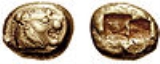
History of economic thought

Encyclopedia
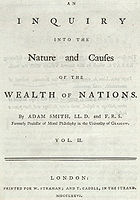
Political economy
Political economy originally was the term for studying production, buying, and selling, and their relations with law, custom, and government, as well as with the distribution of national income and wealth, including through the budget process. Political economy originated in moral philosophy...
and economics
Economics
Economics is the social science that analyzes the production, distribution, and consumption of goods and services. The term economics comes from the Ancient Greek from + , hence "rules of the house"...
from the ancient world to the present day. It encompasses many disparate schools of economic thought.
Greek writers such as the philosopher Aristotle
Aristotle
Aristotle was a Greek philosopher and polymath, a student of Plato and teacher of Alexander the Great. His writings cover many subjects, including physics, metaphysics, poetry, theater, music, logic, rhetoric, linguistics, politics, government, ethics, biology, and zoology...
examined ideas about the "art" of wealth acquisition and questioned whether property is best left in private or public hands. In medieval times, scholars
Scholasticism
Scholasticism is a method of critical thought which dominated teaching by the academics of medieval universities in Europe from about 1100–1500, and a program of employing that method in articulating and defending orthodoxy in an increasingly pluralistic context...
such as Thomas Aquinas
Thomas Aquinas
Thomas Aquinas, O.P. , also Thomas of Aquin or Aquino, was an Italian Dominican priest of the Catholic Church, and an immensely influential philosopher and theologian in the tradition of scholasticism, known as Doctor Angelicus, Doctor Communis, or Doctor Universalis...
argued that it was a moral
Morality
Morality is the differentiation among intentions, decisions, and actions between those that are good and bad . A moral code is a system of morality and a moral is any one practice or teaching within a moral code...
obligation of businesses to sell goods at a just price
Just price
The just price is a theory of ethics in economics that attempts to set standards of fairness in transactions. With intellectual roots in ancient Greek philosophy, it was advanced by Thomas Aquinas based on an argument against usury, which in his time referred to the making of any rate of interest...
.
British philosopher Adam Smith
Adam Smith
Adam Smith was a Scottish social philosopher and a pioneer of political economy. One of the key figures of the Scottish Enlightenment, Smith is the author of The Theory of Moral Sentiments and An Inquiry into the Nature and Causes of the Wealth of Nations...
is often cited as the father of modern economics for his treatise
Treatise
A treatise is a formal and systematic written discourse on some subject, generally longer and treating it in greater depth than an essay, and more concerned with investigating or exposing the principles of the subject.-Noteworthy treatises:...
The Wealth of Nations
The Wealth of Nations
An Inquiry into the Nature and Causes of the Wealth of Nations, generally referred to by its shortened title The Wealth of Nations, is the magnum opus of the Scottish economist and moral philosopher Adam Smith...
(1776). His ideas built upon a considerable body of work from predecessors in the eighteenth century particularly the Physiocrats
Physiocrats
Physiocracy is an economic theory developed by the Physiocrats, a group of economists who believed that the wealth of nations was derived solely from the value of "land agriculture" or "land development." Their theories originated in France and were most popular during the second half of the 18th...
. His book appeared on the eve of the Industrial Revolution
Industrial Revolution
The Industrial Revolution was a period from the 18th to the 19th century where major changes in agriculture, manufacturing, mining, transportation, and technology had a profound effect on the social, economic and cultural conditions of the times...
with associated major changes in the economy
Economy
An economy consists of the economic system of a country or other area; the labor, capital and land resources; and the manufacturing, trade, distribution, and consumption of goods and services of that area...
. Smith's successors included such classical economists
Classical economics
Classical economics is widely regarded as the first modern school of economic thought. Its major developers include Adam Smith, Jean-Baptiste Say, David Ricardo, Thomas Malthus and John Stuart Mill....
as the Rev. Thomas Malthus
Thomas Malthus
The Reverend Thomas Robert Malthus FRS was an English scholar, influential in political economy and demography. Malthus popularized the economic theory of rent....
, Jean-Baptiste Say
Jean-Baptiste Say
Jean-Baptiste Say was a French economist and businessman. He had classically liberal views and argued in favor of competition, free trade, and lifting restraints on business...
, David Ricardo
David Ricardo
David Ricardo was an English political economist, often credited with systematising economics, and was one of the most influential of the classical economists, along with Thomas Malthus, Adam Smith, and John Stuart Mill. He was also a member of Parliament, businessman, financier and speculator,...
, and John Stuart Mill
John Stuart Mill
John Stuart Mill was a British philosopher, economist and civil servant. An influential contributor to social theory, political theory, and political economy, his conception of liberty justified the freedom of the individual in opposition to unlimited state control. He was a proponent of...
. They examined ways the landed, capitalist and labouring classes produced and distributed national output and modeled
Model (economics)
In economics, a model is a theoretical construct that represents economic processes by a set of variables and a set of logical and/or quantitative relationships between them. The economic model is a simplified framework designed to illustrate complex processes, often but not always using...
the effects of population
An Essay on the Principle of Population
The book An Essay on the Principle of Population was first published anonymously in 1798 through J. Johnson . The author was soon identified as The Reverend Thomas Robert Malthus. While it was not the first book on population, it has been acknowledged as the most influential work of its era...
and international trade
International trade
International trade is the exchange of capital, goods, and services across international borders or territories. In most countries, such trade represents a significant share of gross domestic product...
. In London, Karl Marx
Karl Marx
Karl Heinrich Marx was a German philosopher, economist, sociologist, historian, journalist, and revolutionary socialist. His ideas played a significant role in the development of social science and the socialist political movement...
castigated the capitalist system, which he described as exploitative and alienating. From about 1870, neoclassical economics
Neoclassical economics
Neoclassical economics is a term variously used for approaches to economics focusing on the determination of prices, outputs, and income distributions in markets through supply and demand, often mediated through a hypothesized maximization of utility by income-constrained individuals and of profits...
attempted to erect a positive, mathematical and scientifically grounded field above normative politics.
After the wars of the early twentieth century, John Maynard Keynes
John Maynard Keynes
John Maynard Keynes, Baron Keynes of Tilton, CB FBA , was a British economist whose ideas have profoundly affected the theory and practice of modern macroeconomics, as well as the economic policies of governments...
led a reaction against what has been described as governmental abstention from economic affairs, advocating interventionist fiscal policy to stimulate economic demand and growth. With a world divided between the capitalist
Capitalism
Capitalism is an economic system that became dominant in the Western world following the demise of feudalism. There is no consensus on the precise definition nor on how the term should be used as a historical category...
first world, the communist second world, and the poor of the third world
Third World
The term Third World arose during the Cold War to define countries that remained non-aligned with either capitalism and NATO , or communism and the Soviet Union...
, the post-war consensus
Post-war consensus
The post-war consensus is a name given by historians to an era in British political history which lasted from the end of World War II in 1945 to the election of Margaret Thatcher as Prime Minister of the United Kingdom in 1979....
broke down. Others like Milton Friedman
Milton Friedman
Milton Friedman was an American economist, statistician, academic, and author who taught at the University of Chicago for more than three decades...
and Friedrich von Hayek warned of The Road to Serfdom
The Road to Serfdom
The Road to Serfdom is a book written by the Austrian-born economist and philosopher Friedrich von Hayek between 1940–1943, in which he "warned of the danger of tyranny that inevitably results from government control of economic decision-making through central planning," and in which he argues...
and socialism
Socialism
Socialism is an economic system characterized by social ownership of the means of production and cooperative management of the economy; or a political philosophy advocating such a system. "Social ownership" may refer to any one of, or a combination of, the following: cooperative enterprises,...
, focusing their theories on what could be achieved through better monetary policy
Monetarism
Monetarism is a tendency in economic thought that emphasizes the role of governments in controlling the amount of money in circulation. It is the view within monetary economics that variation in the money supply has major influences on national output in the short run and the price level over...
and deregulation. As Keynesian policies seemed to falter in the 1970s there emerged the so called New Classical
New classical macroeconomics
New classical macroeconomics, sometimes simply called new classical economics, is a school of thought in macroeconomics that builds its analysis entirely on a neoclassical framework. Specifically, it emphasizes the importance of rigorous foundations based on microeconomics...
school, with prominent theorists such as Robert Lucas
Robert Lucas, Jr.
Robert Emerson Lucas, Jr. is an American economist at the University of Chicago. He received the Nobel Prize in Economics in 1995 and is consistently indexed among the top 10 economists in the Research Papers in Economics rankings. He is married to economist Nancy Stokey.He received his B.A. in...
and Edward Prescott. Governmental economic policies from the 1980s were challenged, and development economists
Development economics
Development Economics is a branch of economics which deals with economic aspects of the development process in low-income countries. Its focus is not only on methods of promoting economic growth and structural change but also on improving the potential for the mass of the population, for example,...
like Amartya Sen
Amartya Sen
Amartya Sen, CH is an Indian economist who was awarded the 1998 Nobel Prize in Economic Sciences for his contributions to welfare economics and social choice theory, and for his interest in the problems of society's poorest members...
and information economists
Information economics
Information economics or the economics of informationis a branch of microeconomic theory that studies how information affects an economy and economic decisions. Information has special characteristics. It is easy to create but hard to trust. It is easy to spread but hard to control. It...
like Joseph Stiglitz introduced new ideas to economic thought in the twenty-first century.
Early economic thought
The earliest discussions of economics date back to ancient times (e.g. ChanakyaChanakya
Chānakya was a teacher to the first Maurya Emperor Chandragupta , and the first Indian emperor generally considered to be the architect of his rise to power. Traditionally, Chanakya is also identified by the names Kautilya and VishnuGupta, who authored the ancient Indian political treatise...
's Arthashastra
Arthashastra
The Arthashastra is an ancient Indian treatise on statecraft, economic policy and military strategy which identifies its author by the names Kautilya and , who are traditionally identified with The Arthashastra (IAST: Arthaśāstra) is an ancient Indian treatise on statecraft, economic policy and...
or Xenophon
Xenophon
Xenophon , son of Gryllus, of the deme Erchia of Athens, also known as Xenophon of Athens, was a Greek historian, soldier, mercenary, philosopher and a contemporary and admirer of Socrates...
's Oeconomicus). Back then, and until the industrial revolution, economics was not a separate discipline but part of philosophy. In Ancient Athens, a slave based society but also one developing an embryonic model of democracy, Plato
Plato
Plato , was a Classical Greek philosopher, mathematician, student of Socrates, writer of philosophical dialogues, and founder of the Academy in Athens, the first institution of higher learning in the Western world. Along with his mentor, Socrates, and his student, Aristotle, Plato helped to lay the...
's book The Republic contained references to specialization of labour and production. But it was his pupil Aristotle that made some of the most familiar arguments, still in economic discourse today.
Aristotle
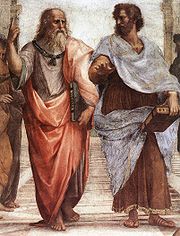
Politics (Aristotle)
Aristotle's Politics is a work of political philosophy. The end of the Nicomachean Ethics declared that the inquiry into ethics necessarily follows into politics, and the two works are frequently considered to be parts of a larger treatise, or perhaps connected lectures, dealing with the...
(c.a. 350 BC) was mainly concerned to analyse different forms of a state (monarchy
Monarchy
A monarchy is a form of government in which the office of head of state is usually held until death or abdication and is often hereditary and includes a royal house. In some cases, the monarch is elected...
, aristocracy
Aristocracy
Aristocracy , is a form of government in which a few elite citizens rule. The term derives from the Greek aristokratia, meaning "rule of the best". In origin in Ancient Greece, it was conceived of as rule by the best qualified citizens, and contrasted with monarchy...
, constitutional government
Constitution
A constitution is a set of fundamental principles or established precedents according to which a state or other organization is governed. These rules together make up, i.e. constitute, what the entity is...
, tyranny, oligarchy
Oligarchy
Oligarchy is a form of power structure in which power effectively rests with an elite class distinguished by royalty, wealth, family ties, commercial, and/or military legitimacy...
, democracy
Democracy
Democracy is generally defined as a form of government in which all adult citizens have an equal say in the decisions that affect their lives. Ideally, this includes equal participation in the proposal, development and passage of legislation into law...
) as a critique of Plato's advocacy of a ruling class of "philosopher-kings". In particular for economists, Plato had drawn a blueprint of society on the basis of common ownership of resources. Aristotle viewed this model as an oligarchical anathema
Anathema
Anathema originally meant something lifted up as an offering to the gods; it later evolved to mean:...
. In Politics, Book II, Part V, he argued that,
Though Aristotle certainly advocated there be many things held in common, he argued that not everything could be, simply because of the "wickedness of human nature". "It is clearly better that property should be private," wrote Aristotle, "but the use of it common; and the special business of the legislator is to create in men this benevolent disposition." In Politics Book I, Aristotle discusses the general nature of households and market exchanges. For him there is a certain "art of acquisition" or "wealth-getting". Money itself has the sole purpose of being a medium of exchange, which means on its own "it is worthless... not useful as a means to any of the necessities of life". Nevertheless, points out Aristotle, because the "instrument" of money is the same many people are obsessed with the simple accumulation of money. "Wealth-getting" for one's household is "necessary and honourable", while exchange on the retail trade for simple accumulation is "justly censured, for it is dishonourable". Aristotle disapproved highly of usury
Usury
Usury Originally, when the charging of interest was still banned by Christian churches, usury simply meant the charging of interest at any rate . In countries where the charging of interest became acceptable, the term came to be used for interest above the rate allowed by law...
and also cast scorn on making money through monopoly
Monopoly
A monopoly exists when a specific person or enterprise is the only supplier of a particular commodity...
.
Middle Ages
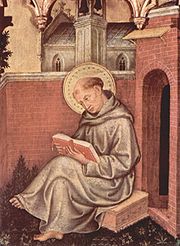
Thomas Aquinas
Thomas Aquinas, O.P. , also Thomas of Aquin or Aquino, was an Italian Dominican priest of the Catholic Church, and an immensely influential philosopher and theologian in the tradition of scholasticism, known as Doctor Angelicus, Doctor Communis, or Doctor Universalis...
(1225–1274) was an Italian theologian and writer on economic issues. He taught in both Cologne
Cologne
Cologne is Germany's fourth-largest city , and is the largest city both in the Germany Federal State of North Rhine-Westphalia and within the Rhine-Ruhr Metropolitan Area, one of the major European metropolitan areas with more than ten million inhabitants.Cologne is located on both sides of the...
and Paris
Paris
Paris is the capital and largest city in France, situated on the river Seine, in northern France, at the heart of the Île-de-France region...
, and was part of a group of Catholic scholars known as the Schoolmen, who moved their enquiries beyond theology to philosophical and scientific debates. In the treatise Summa Theologica
Summa Theologica
The Summa Theologiæ is the best-known work of Thomas Aquinas , and although unfinished, "one of the classics of the history of philosophy and one of the most influential works of Western literature." It is intended as a manual for beginners in theology and a compendium of all of the main...
Aquinas dealt with the concept of a just price
Just price
The just price is a theory of ethics in economics that attempts to set standards of fairness in transactions. With intellectual roots in ancient Greek philosophy, it was advanced by Thomas Aquinas based on an argument against usury, which in his time referred to the making of any rate of interest...
, which he considered necessary for the reproduction of the social order. Bearing many similarities with the modern concept of long run equilibrium a just price was supposed to be one just sufficient to cover the costs of production, including the maintenance of a worker and his family. He argued it was immoral for sellers to raise their prices simply because buyers were in pressing need for a product.
Aquinas discusses a number of topics in the format of questions and replies, substantial tracts dealing with Aristotle's theory. Questions 77 and 78 concern economic issues, mainly relate to what a just price
Just price
The just price is a theory of ethics in economics that attempts to set standards of fairness in transactions. With intellectual roots in ancient Greek philosophy, it was advanced by Thomas Aquinas based on an argument against usury, which in his time referred to the making of any rate of interest...
is, and to the fairness of a seller dispensing faulty goods. Aquinas argued against any form of cheating and recommended compensation always be paid in lieu of good service. Whilst human laws might not impose sanctions for unfair dealing, divine law
Divine law
Divine law is any law that in the opinion of believers, comes directly from the will of God . Like natural law it is independent of the will of man, who cannot change it. However it may be revealed or not, so it may change in human perception in time through new revelation...
did, in his opinion. One of Aquinas' main critics was Duns Scotus
Duns Scotus
Blessed John Duns Scotus, O.F.M. was one of the more important theologians and philosophers of the High Middle Ages. He was nicknamed Doctor Subtilis for his penetrating and subtle manner of thought....
(1265–1308) in his work Sententiae
Sententiae
Sententiae are brief moral sayings, such as proverbs, adages, aphorisms, maxims, or apophthegms taken from ancient or popular or other sources, often quoted without context. A sententia , also called a "sentence," is a kind of rhetorical proof...
(1295). Originally from Duns
Duns
Duns is the county town of the historic county of Berwickshire, within the Scottish Borders.-Early history:Duns law, the original site of the town of Duns, has the remains of an Iron Age hillfort at its summit...
Scotland, he taught in Oxford, Cologne and Paris. Scotus thought it possible to be more precise than Aquinas in calculating a just price, emphasising the costs of labour and expenses – though he recognised that the latter might be inflated by exaggeration, because buyer and seller usually have different ideas of what a just price comprises. If people did not benefit from a transaction, in Scotus' view, they would not trade. Scotus defended merchants as performing a necessary and useful social role, transporting goods and making them available to the public.
Mercantilists and nationalism
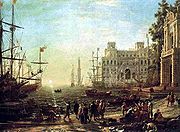
Localism (politics)
Localism describes a range of political philosophies which prioritize the local. Generally, localism supports local production and consumption of goods, local control of government, and promotion of local history, local culture and local identity...
of the Middle Ages, the waning feudal
Feudalism
Feudalism was a set of legal and military customs in medieval Europe that flourished between the 9th and 15th centuries, which, broadly defined, was a system for ordering society around relationships derived from the holding of land in exchange for service or labour.Although derived from the...
lords, new national economic frameworks began to be strengthened. From 1492 and explorations like Christopher Columbus
Christopher Columbus
Christopher Columbus was an explorer, colonizer, and navigator, born in the Republic of Genoa, in northwestern Italy. Under the auspices of the Catholic Monarchs of Spain, he completed four voyages across the Atlantic Ocean that led to general European awareness of the American continents in the...
' voyages, new opportunities for trade with the New World
New World
The New World is one of the names used for the Western Hemisphere, specifically America and sometimes Oceania . The term originated in the late 15th century, when America had been recently discovered by European explorers, expanding the geographical horizon of the people of the European middle...
and Asia were opening. New powerful monarchies wanted a powerful state to boost their status. Mercantilism was a political movement and an economic theory that advocated the use of the state's military
Military
A military is an organization authorized by its greater society to use lethal force, usually including use of weapons, in defending its country by combating actual or perceived threats. The military may have additional functions of use to its greater society, such as advancing a political agenda e.g...
power to ensure local markets and supply sources were protected
Protectionism
Protectionism is the economic policy of restraining trade between states through methods such as tariffs on imported goods, restrictive quotas, and a variety of other government regulations designed to allow "fair competition" between imports and goods and services produced domestically.This...
. Mercantile theorists thought international trade
International trade
International trade is the exchange of capital, goods, and services across international borders or territories. In most countries, such trade represents a significant share of gross domestic product...
could not benefit all countries at the same time. Because money
Money
Money is any object or record that is generally accepted as payment for goods and services and repayment of debts in a given country or socio-economic context. The main functions of money are distinguished as: a medium of exchange; a unit of account; a store of value; and, occasionally in the past,...
and gold
Gold
Gold is a chemical element with the symbol Au and an atomic number of 79. Gold is a dense, soft, shiny, malleable and ductile metal. Pure gold has a bright yellow color and luster traditionally considered attractive, which it maintains without oxidizing in air or water. Chemically, gold is a...
were the only source of riches, there was a limited quantity of resources to be shared between countries. Therefore, tariff
Tariff
A tariff may be either tax on imports or exports , or a list or schedule of prices for such things as rail service, bus routes, and electrical usage ....
s could be used to encourage exports (meaning more money comes into the country) and discourage imports (sending wealth abroad). In other words a positive balance of trade
Balance of trade
The balance of trade is the difference between the monetary value of exports and imports of output in an economy over a certain period. It is the relationship between a nation's imports and exports...
ought to be maintained, with a surplus of exports. The term mercantilism was not in fact coined until the late 1763 by Victor de Riqueti, marquis de Mirabeau
Victor de Riqueti, marquis de Mirabeau
Victor de Riquetti, marquis de Mirabeau was a French economist of the Physiocratic school. He was the father of great Honoré, Comte de Mirabeau and is, in distinction, often referred to as the elder Mirabeau....
and popularised by Adam Smith
Adam Smith
Adam Smith was a Scottish social philosopher and a pioneer of political economy. One of the key figures of the Scottish Enlightenment, Smith is the author of The Theory of Moral Sentiments and An Inquiry into the Nature and Causes of the Wealth of Nations...
, who vigorously opposed its ideas.
Thomas Mun
English businessman Thomas Mun (1571–1641) represents early mercantile policy in his book England's Treasure by Foraign Trade . Although it was not published until 1664 it was widely circulated as a manuscript before then. He was a member of the East India Company and also wrote about his experiences there in A Discourse of Trade from England unto the East Indies (1621). According to Mun, trade was the only way to increase England's treasure (i.e., national wealth) and in pursuit of this end he suggested several courses of action. Important were frugal consumption to increase the amount of goods available for export, increased utilisation of land and other domestic natural resources to reduce import requirements, lowering of export duties on goods produced domestically from foreign materials, and the export of goods with inelasticPrice elasticity of demand
Price elasticity of demand is a measure used in economics to show the responsiveness, or elasticity, of the quantity demanded of a good or service to a change in its price. More precisely, it gives the percentage change in quantity demanded in response to a one percent change in price...
demand because more money could be made from higher prices.
Philipp von Hörnigk
Philipp von Hörnigk (1640–1712, sometimes spelt Hornick or Horneck) was born in Frankfurt am Main and became an Austrian civil servant writing in a time when his country was constantly threatened by Ottoman invasionOttoman-Habsburg wars
The Ottoman–Habsburg wars refers to the military conflicts between the Ottoman Empire and the Habsburg dynasties of the Austrian Empire, Habsburg Spain and in certain times, the Holy Roman Empire and the Kingdom of Hungary. The war would be dominated by land campaigns in Hungary and present day...
. In Österreich Über Alles, Wenn Sie Nur Will (1684, Austria Over All, If She Only Will) he laid out one of the clearest statements of mercantile policy. He listed nine principal rules of national economy.
Nationalism
Nationalism
Nationalism is a political ideology that involves a strong identification of a group of individuals with a political entity defined in national terms, i.e. a nation. In the 'modernist' image of the nation, it is nationalism that creates national identity. There are various definitions for what...
, self-sufficiency and national power were the basic policies proposed.
Jean Baptiste Colbert
Jean Baptiste Colbert (1619–1683) was Minister of Finance under King Louis XIV of FranceLouis XIV of France
Louis XIV , known as Louis the Great or the Sun King , was a Bourbon monarch who ruled as King of France and Navarre. His reign, from 1643 to his death in 1715, began at the age of four and lasted seventy-two years, three months, and eighteen days...
. He set up national guild
Guild
A guild is an association of craftsmen in a particular trade. The earliest types of guild were formed as confraternities of workers. They were organized in a manner something between a trade union, a cartel, and a secret society...
s to regulate major industries. Silk, linen, tapestry, furniture manufacture and wine were examples of the crafts in which France specialised, all of which came to require membership of a guild to operate in. These remained until the French revolution
French Revolution
The French Revolution , sometimes distinguished as the 'Great French Revolution' , was a period of radical social and political upheaval in France and Europe. The absolute monarchy that had ruled France for centuries collapsed in three years...
. According to Colbert, "It is simply, and solely, the abundance of money within a state [which] makes the difference in its grandeur and power."
British enlightenment
Britain had gone through some of its most troubling times through the 17th century, enduring not only political and religious division in the English Civil WarEnglish Civil War
The English Civil War was a series of armed conflicts and political machinations between Parliamentarians and Royalists...
, King Charles I's
Charles I of England
Charles I was King of England, King of Scotland, and King of Ireland from 27 March 1625 until his execution in 1649. Charles engaged in a struggle for power with the Parliament of England, attempting to obtain royal revenue whilst Parliament sought to curb his Royal prerogative which Charles...
execution and the Cromwellian dictatorship
Oliver Cromwell
Oliver Cromwell was an English military and political leader who overthrew the English monarchy and temporarily turned England into a republican Commonwealth, and served as Lord Protector of England, Scotland, and Ireland....
, but also the plagues
Great Plague of London
The Great Plague was a massive outbreak of disease in the Kingdom of England that killed an estimated 100,000 people, 20% of London's population. The disease is identified as bubonic plague, an infection by the bacterium Yersinia pestis, transmitted through a flea vector...
and fires
Great Fire of London
The Great Fire of London was a major conflagration that swept through the central parts of the English city of London, from Sunday, 2 September to Wednesday, 5 September 1666. The fire gutted the medieval City of London inside the old Roman City Wall...
. The monarchy was restored under Charles II
Charles II of England
Charles II was monarch of the three kingdoms of England, Scotland, and Ireland.Charles II's father, King Charles I, was executed at Whitehall on 30 January 1649, at the climax of the English Civil War...
, who had catholic sympathies, but his successor King James II
James II of England
James II & VII was King of England and King of Ireland as James II and King of Scotland as James VII, from 6 February 1685. He was the last Catholic monarch to reign over the Kingdoms of England, Scotland, and Ireland...
was swiftly ousted. Invited in his place were Protestant William of Orange
William III of England
William III & II was a sovereign Prince of Orange of the House of Orange-Nassau by birth. From 1672 he governed as Stadtholder William III of Orange over Holland, Zeeland, Utrecht, Guelders, and Overijssel of the Dutch Republic. From 1689 he reigned as William III over England and Ireland...
and Mary
Mary II of England
Mary II was joint Sovereign of England, Scotland, and Ireland with her husband and first cousin, William III and II, from 1689 until her death. William and Mary, both Protestants, became king and queen regnant, respectively, following the Glorious Revolution, which resulted in the deposition of...
, who assented to the Bill of Rights 1689
Bill of Rights 1689
The Bill of Rights or the Bill of Rights 1688 is an Act of the Parliament of England.The Bill of Rights was passed by Parliament on 16 December 1689. It was a re-statement in statutory form of the Declaration of Right presented by the Convention Parliament to William and Mary in March 1689 ,...
ensuring that the Parliament
Parliament of England
The Parliament of England was the legislature of the Kingdom of England. In 1066, William of Normandy introduced a feudal system, by which he sought the advice of a council of tenants-in-chief and ecclesiastics before making laws...
was dominant in what became known as the Glorious revolution
Glorious Revolution
The Glorious Revolution, also called the Revolution of 1688, is the overthrow of King James II of England by a union of English Parliamentarians with the Dutch stadtholder William III of Orange-Nassau...
. The upheaval had seen a number of huge scientific advances, including Robert Boyle's
Robert Boyle
Robert Boyle FRS was a 17th century natural philosopher, chemist, physicist, and inventor, also noted for his writings in theology. He has been variously described as English, Irish, or Anglo-Irish, his father having come to Ireland from England during the time of the English plantations of...
discovery of the gas pressure constant
Boyle's law
Boyle's law is one of many gas laws and a special case of the ideal gas law. Boyle's law describes the inversely proportional relationship between the absolute pressure and volume of a gas, if the temperature is kept constant within a closed system...
(1660) and Sir Isaac Newton's
Isaac Newton
Sir Isaac Newton PRS was an English physicist, mathematician, astronomer, natural philosopher, alchemist, and theologian, who has been "considered by many to be the greatest and most influential scientist who ever lived."...
publication of Philosophiae Naturalis Principia Mathematica
Philosophiae Naturalis Principia Mathematica
Philosophiæ Naturalis Principia Mathematica, Latin for "Mathematical Principles of Natural Philosophy", often referred to as simply the Principia, is a work in three books by Sir Isaac Newton, first published 5 July 1687. Newton also published two further editions, in 1713 and 1726...
(1687), which described the three laws of motion and his law of universal gravitation. All these factors spurred the advancement of economic thought. For instance, Richard Cantillon
Richard Cantillon
Richard Cantillon was an Irish-French economist and author of Essai sur la Nature du Commerce en Général , a book considered by William Stanley Jevons to be the "cradle of political economy". Although little information exists on Cantillon's life, it is known that he became a successful banker and...
(1680–1734) consciously imitated Newton's forces of inertia and gravity in the natural world with human reason and market competition in the economic world. In his Essay on the Nature of Commerce in General, he argued rational self interest in a system of freely adjusting markets would lead to order and mutually compatible prices. Unlike the mercantilist thinkers however, wealth was found not in trade but in human labour. The first person to tie these ideas into a political framework was John Locke
John Locke
John Locke FRS , widely known as the Father of Liberalism, was an English philosopher and physician regarded as one of the most influential of Enlightenment thinkers. Considered one of the first of the British empiricists, following the tradition of Francis Bacon, he is equally important to social...
.
John Locke
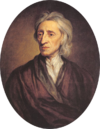
John Locke
John Locke FRS , widely known as the Father of Liberalism, was an English philosopher and physician regarded as one of the most influential of Enlightenment thinkers. Considered one of the first of the British empiricists, following the tradition of Francis Bacon, he is equally important to social...
(1632–1704) was born near Bristol and educated in London and Oxford. He is considered one of the most significant philosophers of his era mainly for his critique of Thomas Hobbes'
Thomas Hobbes
Thomas Hobbes of Malmesbury , in some older texts Thomas Hobbs of Malmsbury, was an English philosopher, best known today for his work on political philosophy...
defense of absolutism in Leviathan
Leviathan (book)
Leviathan or The Matter, Forme and Power of a Common Wealth Ecclesiasticall and Civil — commonly called simply Leviathan — is a book written by Thomas Hobbes and published in 1651. Its name derives from the biblical Leviathan...
(1651) and the development of social contract theory. Locke believed that people contracted into society which was bound to protect their rights of property. He defined property broadly to include people's lives and liberties, as well as their wealth. When people combined their labour with their surroundings, then that created property rights. In his words from his Second Treatise on Civil Government
Two Treatises of Government
The Two Treatises of Government is a work of political philosophy published anonymously in 1689 by John Locke...
(1689),
Locke was arguing that not only should the government cease interference with people's property (or their "lives, liberties and estates") but also that it should positively work to ensure their protection. His views on price and money were laid out in a letter to a Member of Parliament
Member of Parliament
A Member of Parliament is a representative of the voters to a :parliament. In many countries with bicameral parliaments, the term applies specifically to members of the lower house, as upper houses often have a different title, such as senate, and thus also have different titles for its members,...
in 1691 entitled Some Considerations on the Consequences of the Lowering of Interest and the Raising of the Value of Money (1691). Here Locke argued that the "price of any commodity rises or falls, by the proportion of the number of buyers and sellers," a rule which "holds universally in all things that are to be bought and sold."
Dudley North
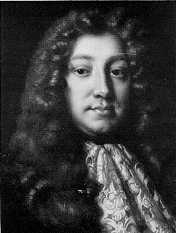
Division of labour
Division of labour is the specialisation of cooperative labour in specific, circumscribed tasks and likeroles. Historically an increasingly complex division of labour is closely associated with the growth of total output and trade, the rise of capitalism, and of the complexity of industrialisation...
and produces an increase in wealth for everyone. Regulation of trade interfered with these benefits by reducing the flow of wealth.
David Hume
David HumeDavid Hume
David Hume was a Scottish philosopher, historian, economist, and essayist, known especially for his philosophical empiricism and skepticism. He was one of the most important figures in the history of Western philosophy and the Scottish Enlightenment...
(1711–1776) agreed with North's philosophy and denounced mercantile
Mercantilism
Mercantilism is the economic doctrine in which government control of foreign trade is of paramount importance for ensuring the prosperity and security of the state. In particular, it demands a positive balance of trade. Mercantilism dominated Western European economic policy and discourse from...
assumptions. His contributions were set down in Political Discourses (1752), later consolidated in his Essays, Moral, Political, Literary (1777). Added to the fact that it was undesirable to strive for a favourable balance of trade
Balance of trade
The balance of trade is the difference between the monetary value of exports and imports of output in an economy over a certain period. It is the relationship between a nation's imports and exports...
it is, said Hume, in any case impossible. Hume held that any surplus of export
Export
The term export is derived from the conceptual meaning as to ship the goods and services out of the port of a country. The seller of such goods and services is referred to as an "exporter" who is based in the country of export whereas the overseas based buyer is referred to as an "importer"...
s that might be achieved would be paid for by imports of gold and silver. This would increase the money supply
Money supply
In economics, the money supply or money stock, is the total amount of money available in an economy at a specific time. There are several ways to define "money," but standard measures usually include currency in circulation and demand deposits .Money supply data are recorded and published, usually...
, causing prices to rise. That in turn would cause a decline in exports until the balance with imports is restored.
The circular flow
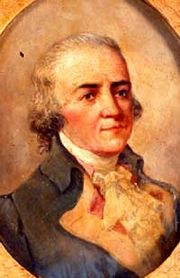
David B. Danbom
David B. Danbom is a historian, author, columnist, and retired professor of agricultural history at North Dakota State University. Danbom spent nine years on the Fargo Historic Preservation Commission...
wrote, the Physiocrats "damned cities for their artificiality and praised more natural styles of living. They celebrated farmers." Over the end of the seventeenth and beginning of the eighteenth century big advances in natural science
Natural science
The natural sciences are branches of science that seek to elucidate the rules that govern the natural world by using empirical and scientific methods...
and anatomy
Anatomy
Anatomy is a branch of biology and medicine that is the consideration of the structure of living things. It is a general term that includes human anatomy, animal anatomy , and plant anatomy...
were being made, including the discovery of blood circulation through the human body. This concept was mirrored in the physiocrats' economic theory, with the notion of a circular flow of income
Circular flow of income
In economics, the terms circular flow of income or circular flow refer to a simple economic model which describes the reciprocal circulation of income between producers and consumers...
throughout the economy.
François Quesnay
François Quesnay
François Quesnay was a French economist of the Physiocratic school. He is known for publishing the "Tableau économique" in 1758, which provided the foundations of the ideas of the Physiocrats...
(1694–1774) was the court physician to King Louis XV of France
Louis XV of France
Louis XV was a Bourbon monarch who ruled as King of France and of Navarre from 1 September 1715 until his death. He succeeded his great-grandfather at the age of five, his first cousin Philippe II, Duke of Orléans, served as Regent of the kingdom until Louis's majority in 1723...
. He believed that trade and industry were not sources of wealth, and instead in his book, Tableau économique
Tableau économique
The Tableau économique or Economic Table is an economic model first described in François Quesnay in 1759, which lay the foundation of the Physiocrats’ economic theories....
(1758, Economic Table) argued that agricultural surpluses, by flowing through the economy in the form of rent, wages and purchases were the real economic movers. Firstly, said Quesnay, regulation impedes the flow of income throughout all social classes and therefore economic development. Secondly, taxes on the productive classes, such as farmer
Farmer
A farmer is a person engaged in agriculture, who raises living organisms for food or raw materials, generally including livestock husbandry and growing crops, such as produce and grain...
s, should be reduced in favour of rises for unproductive classes, such as landowners, since their luxurious way of life distorts the income flow.
Jacques Turgot (1727–1781) was born in Paris and from an old Norman
Normans
The Normans were the people who gave their name to Normandy, a region in northern France. They were descended from Norse Viking conquerors of the territory and the native population of Frankish and Gallo-Roman stock...
family. His best known work, Réflexions sur la formation et la distribution des richesses (1766, Reflections on the Formation and Distribution of Wealth) developed Quesnay's theory that land
Land (economics)
In economics, land comprises all naturally occurring resources whose supply is inherently fixed. Examples are any and all particular geographical locations, mineral deposits, and even geostationary orbit locations and portions of the electromagnetic spectrum. Natural resources are fundamental to...
is the only source of wealth
Wealth
Wealth is the abundance of valuable resources or material possessions. The word wealth is derived from the old English wela, which is from an Indo-European word stem...
. Turgot viewed society in terms of three classes: the productive agricultural class, the salaried artisan class (classe stipendice) and the landowning class (classe disponible). He argued that only the net product of land should be taxed and advocated the complete freedom of commerce
Commerce
While business refers to the value-creating activities of an organization for profit, commerce means the whole system of an economy that constitutes an environment for business. The system includes legal, economic, political, social, cultural, and technological systems that are in operation in any...
and industry
Industry
Industry refers to the production of an economic good or service within an economy.-Industrial sectors:There are four key industrial economic sectors: the primary sector, largely raw material extraction industries such as mining and farming; the secondary sector, involving refining, construction,...
. In August 1774, Turgot was appointed to be Minister of Finance and in the space of two years introduced many anti-mercantile and anti-feudal measures supported by the King. A statement of his guiding principles, given to the King were "no bankruptcy
Bankruptcy
Bankruptcy is a legal status of an insolvent person or an organisation, that is, one that cannot repay the debts owed to creditors. In most jurisdictions bankruptcy is imposed by a court order, often initiated by the debtor....
, no tax
Tax
To tax is to impose a financial charge or other levy upon a taxpayer by a state or the functional equivalent of a state such that failure to pay is punishable by law. Taxes are also imposed by many subnational entities...
increases, no borrowing." Turgot's ultimate wish was to have a single tax on land and abolish all other indirect taxes, but measures he introduced before that were met with overwhelming opposition from landed interests. Two edict
Edict
An edict is an announcement of a law, often associated with monarchism. The Pope and various micronational leaders are currently the only persons who still issue edicts.-Notable edicts:...
s in particular, one suppressing corvée
Corvée
Corvée is unfree labour, often unpaid, that is required of people of lower social standing and imposed on them by the state or a superior . The corvée was the earliest and most widespread form of taxation, which can be traced back to the beginning of civilization...
s (charges from farmers to aristocrats) and another renouncing privileges given to guilds inflamed influential opinion. He was forced from office in 1776.
Adam Smith and The Wealth of Nations
Adam SmithAdam Smith
Adam Smith was a Scottish social philosopher and a pioneer of political economy. One of the key figures of the Scottish Enlightenment, Smith is the author of The Theory of Moral Sentiments and An Inquiry into the Nature and Causes of the Wealth of Nations...
(1723–1790) is popularly seen as the father of modern political economy. His publication of the An Inquiry Into the Nature and Causes of the Wealth of Nations in 1776 happened to coincide not only with the American Revolution
American Revolution
The American Revolution was the political upheaval during the last half of the 18th century in which thirteen colonies in North America joined together to break free from the British Empire, combining to become the United States of America...
, shortly before the Europe wide upheavals of the French Revolution
French Revolution
The French Revolution , sometimes distinguished as the 'Great French Revolution' , was a period of radical social and political upheaval in France and Europe. The absolute monarchy that had ruled France for centuries collapsed in three years...
, but also the dawn of a new industrial revolution
Industrial Revolution
The Industrial Revolution was a period from the 18th to the 19th century where major changes in agriculture, manufacturing, mining, transportation, and technology had a profound effect on the social, economic and cultural conditions of the times...
that allowed more wealth to be created on a larger scale than ever before. Smith was a Scottish moral philosopher, whose first book was The Theory of Moral Sentiments
The Theory of Moral Sentiments
The Theory of Moral Sentiments was written by Adam Smith in 1759. It provided the ethical, philosophical, psychological, and methodological underpinnings to Smith's later works, including The Wealth of Nations , A Treatise on Public Opulence , Essays on Philosophical Subjects , and Lectures on...
(1759). He argued in it that people's ethical systems develop through personal relations with other individuals, that right and wrong are sensed through others' reactions to one's behaviour. This gained Smith more popularity than his next work, The Wealth of Nations
The Wealth of Nations
An Inquiry into the Nature and Causes of the Wealth of Nations, generally referred to by its shortened title The Wealth of Nations, is the magnum opus of the Scottish economist and moral philosopher Adam Smith...
, which the general public initially ignored. Yet Smith's political economic
Political economy
Political economy originally was the term for studying production, buying, and selling, and their relations with law, custom, and government, as well as with the distribution of national income and wealth, including through the budget process. Political economy originated in moral philosophy...
magnum opus
Magnum opus
Magnum opus , from the Latin meaning "great work", refers to the largest, and perhaps the best, greatest, most popular, or most renowned achievement of a writer, artist, or composer.-Related terms:Sometimes the term magnum opus is used to refer to simply "a great work" rather than "the...
was successful in circles that mattered.
Context
William Pitt, the ToryTory
Toryism is a traditionalist and conservative political philosophy which grew out of the Cavalier faction in the Wars of the Three Kingdoms. It is a prominent ideology in the politics of the United Kingdom, but also features in parts of The Commonwealth, particularly in Canada...
Prime Minister in the late 1780s based his tax proposals on Smith's ideas and advocated free trade
Free trade
Under a free trade policy, prices emerge from supply and demand, and are the sole determinant of resource allocation. 'Free' trade differs from other forms of trade policy where the allocation of goods and services among trading countries are determined by price strategies that may differ from...
as a devout disciple of The Wealth of Nations
The Wealth of Nations
An Inquiry into the Nature and Causes of the Wealth of Nations, generally referred to by its shortened title The Wealth of Nations, is the magnum opus of the Scottish economist and moral philosopher Adam Smith...
. Smith was appointed a commissioner of customs
Her Majesty's Customs and Excise
HM Customs and Excise was, until April 2005, a department of the British Government in the UK. It was responsible for the collection of Value added tax , Customs Duties, Excise Duties, and other indirect taxes such as Air Passenger Duty, Climate Change Levy, Insurance Premium Tax, Landfill Tax and...
and within twenty years Smith had a following of new generation writers who were intent on building the science
Science
Science is a systematic enterprise that builds and organizes knowledge in the form of testable explanations and predictions about the universe...
of political economy.
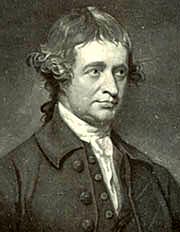
Edmund Burke
Edmund Burke PC was an Irish statesman, author, orator, political theorist and philosopher who, after moving to England, served for many years in the House of Commons of Great Britain as a member of the Whig party....
, known widely as a political philosopher, a Member of Parliament
Member of Parliament
A Member of Parliament is a representative of the voters to a :parliament. In many countries with bicameral parliaments, the term applies specifically to members of the lower house, as upper houses often have a different title, such as senate, and thus also have different titles for its members,...
.
Burke was an established political economist himself, with his book Thoughts and Details on Scarcity
Thoughts and Details on Scarcity
Thoughts and Details on Scarcity, Originally Presented to the Right Hon. William Pitt, in the month of November, 1795 is a memorandum written by the Whig MP Edmund Burke to the Prime Minister of Great Britain William Pitt the Younger...
. He was widely critical of liberal politics, and condemned the French Revolution
French Revolution
The French Revolution , sometimes distinguished as the 'Great French Revolution' , was a period of radical social and political upheaval in France and Europe. The absolute monarchy that had ruled France for centuries collapsed in three years...
which began in 1789. In Reflections on the Revolution in France (1790) he wrote that the "age of chivalry is dead, that of sophisters, economists and calculators has succeeded, and the glory of Europe is extinguished forever." Smith's contemporary influences included Francois Quesnay
François Quesnay
François Quesnay was a French economist of the Physiocratic school. He is known for publishing the "Tableau économique" in 1758, which provided the foundations of the ideas of the Physiocrats...
and Jacques Turgot who he met on a stay in Paris, and David Hume, his Scottish compatriot. The times produced a common need among thinkers to explain social upheavals of the Industrial revolution
Industrial Revolution
The Industrial Revolution was a period from the 18th to the 19th century where major changes in agriculture, manufacturing, mining, transportation, and technology had a profound effect on the social, economic and cultural conditions of the times...
taking place, and in the seeming chaos without the feudal and monarchical structures of Europe, show there was order still.
The invisible hand
| "It is not from the benevolence of the butcher, the brewer or the baker, that we expect our dinner, but from their regard to their own self interest. We address ourselves, not to their humanity but to their self-love, and never talk to them of our own necessities but of their advantages." |
| Adam Smith's famous statement on self interest |
Smith argued for a "system of natural liberty" where individual effort was the producer of social good. Smith believed even the selfish within society were kept under restraint and worked for the good of all when acting in a competitive market. Prices are often unrepresentative of the true value of goods and services. Following John Locke
John Locke
John Locke FRS , widely known as the Father of Liberalism, was an English philosopher and physician regarded as one of the most influential of Enlightenment thinkers. Considered one of the first of the British empiricists, following the tradition of Francis Bacon, he is equally important to social...
, Smith thought true value of things derived from the amount of labour invested in them.
When the butchers, the brewers and the bakers acted under the restraint of an open market economy, their pursuit of self interest, thought Smith, paradoxically drives the process to correct real life price
Price
-Definition:In ordinary usage, price is the quantity of payment or compensation given by one party to another in return for goods or services.In modern economies, prices are generally expressed in units of some form of currency...
s to their just values. His classic statement on competition goes as follows.
Smith believed that a market produced what he dubbed the "progress of opulence". This involved a chain of concepts, that the division of labour
Division of labour
Division of labour is the specialisation of cooperative labour in specific, circumscribed tasks and likeroles. Historically an increasingly complex division of labour is closely associated with the growth of total output and trade, the rise of capitalism, and of the complexity of industrialisation...
is the driver of economic efficiency, yet it is limited to the widening process of markets. Both labour division and market widening requires more intensive accumulation of capital
Capital accumulation
The accumulation of capital refers to the gathering or amassing of objects of value; the increase in wealth through concentration; or the creation of wealth. Capital is money or a financial asset invested for the purpose of making more money...
by the entrepreneurs and leaders of business and industry. The whole system is underpinned by maintaining the security of property
Property
Property is any physical or intangible entity that is owned by a person or jointly by a group of people or a legal entity like a corporation...
rights.
Limitations
In addition to the necessity of public leadership in certain sectors Smith argued, secondly, that cartel
Cartel
A cartel is a formal agreement among competing firms. It is a formal organization of producers and manufacturers that agree to fix prices, marketing, and production. Cartels usually occur in an oligopolistic industry, where there is a small number of sellers and usually involve homogeneous products...
s were undesirable because of their potential to limit production and quality of goods and services. Thirdly, Smith criticised government support of any kind of monopoly
Monopoly
A monopoly exists when a specific person or enterprise is the only supplier of a particular commodity...
which always charges the highest price "which can be squeezed out of the buyers". The existence of monopoly
Monopoly
A monopoly exists when a specific person or enterprise is the only supplier of a particular commodity...
and the potential for cartel
Cartel
A cartel is a formal agreement among competing firms. It is a formal organization of producers and manufacturers that agree to fix prices, marketing, and production. Cartels usually occur in an oligopolistic industry, where there is a small number of sellers and usually involve homogeneous products...
s, which would later form the core of competition law
Competition law
Competition law, known in the United States as antitrust law, is law that promotes or maintains market competition by regulating anti-competitive conduct by companies....
policy, could distort the benefits of free markets to the advantage of businesses at the expense of consumer sovereignty
Consumer sovereignty
Consumer sovereignty is a term used in economics. It refers to consumers determining the production of goods. The term can prescribe what consumers should be permitted, or describe what consumers are permitted...
.
Classical political economy
The classical economists were referred to as a group for the first time by Karl MarxKarl Marx
Karl Heinrich Marx was a German philosopher, economist, sociologist, historian, journalist, and revolutionary socialist. His ideas played a significant role in the development of social science and the socialist political movement...
. One unifying part of their theories was the labour theory of value, contrasting to value deriving from a general equilibrium
General equilibrium
General equilibrium theory is a branch of theoretical economics. It seeks to explain the behavior of supply, demand and prices in a whole economy with several or many interacting markets, by seeking to prove that a set of prices exists that will result in an overall equilibrium, hence general...
of supply and demand. These economists had seen the first economic and social transformation brought by the Industrial Revolution: rural depopulation, precariousness, poverty, apparition of a working class. They wondered about the population growth, because the demographic transition
Demographic transition
The demographic transition model is the transition from high birth and death rates to low birth and death rates as a country develops from a pre-industrial to an industrialized economic system. The theory is based on an interpretation of demographic history developed in 1929 by the American...
had begun in Great Britain at that time. They also asked many fundamental questions, about the source of value, the causes of economic growth and the role of money in the economy. They supported a free-market economy, arguing it was a natural system based upon freedom and property. However, these economists were divided and did not make up a unified current of thought.
A notable current within classical economics was underconsumption
Underconsumption
In underconsumption theory in economics, recessions and stagnation arise due to inadequate consumer demand relative to the amount produced. The theory has been replaced since the 1930s by Keynesian economics and the theory of aggregate demand, both of which were influenced by...
theory, as advanced by the Birmingham School
Birmingham School (economics)
The Birmingham School was a school of economic thought that emerged in Birmingham, England during the Post-Napoleonic depression that affected England following the end of the Napoleonic wars in 1815....
and Malthus in the early 19th century. These argued for government action to mitigate unemployment and economic downturns, and was an intellectual predecessor of what later became Keynesian economics
Keynesian economics
Keynesian economics is a school of macroeconomic thought based on the ideas of 20th-century English economist John Maynard Keynes.Keynesian economics argues that private sector decisions sometimes lead to inefficient macroeconomic outcomes and, therefore, advocates active policy responses by the...
in the 1930s. Another notable school was Manchester capitalism
Manchester capitalism
Manchester Capitalism, Manchester School, Manchester Liberalism, and Manchesterism are terms for the political, economic, and social movements of the 19th century that originated in Manchester, England....
, which advocated free trade, against the previous policy of mercantilism
Mercantilism
Mercantilism is the economic doctrine in which government control of foreign trade is of paramount importance for ensuring the prosperity and security of the state. In particular, it demands a positive balance of trade. Mercantilism dominated Western European economic policy and discourse from...
.
Jeremy Bentham
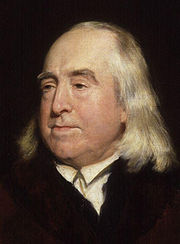
Utilitarianism
Utilitarianism is an ethical theory holding that the proper course of action is the one that maximizes the overall "happiness", by whatever means necessary. It is thus a form of consequentialism, meaning that the moral worth of an action is determined only by its resulting outcome, and that one can...
. Bentham was an atheist, a prison reform
Prison reform
Prison reform is the attempt to improve conditions inside prisons, aiming at a more effective penal system.-History:Prisons have only been used as the primary punishment for criminal acts in the last couple of centuries...
er, animal rights
Animal rights
Animal rights, also known as animal liberation, is the idea that the most basic interests of non-human animals should be afforded the same consideration as the similar interests of human beings...
activist, believer in universal suffrage
Universal suffrage
Universal suffrage consists of the extension of the right to vote to adult citizens as a whole, though it may also mean extending said right to minors and non-citizens...
, free speech, free trade
Free trade
Under a free trade policy, prices emerge from supply and demand, and are the sole determinant of resource allocation. 'Free' trade differs from other forms of trade policy where the allocation of goods and services among trading countries are determined by price strategies that may differ from...
and health insurance
Health insurance
Health insurance is insurance against the risk of incurring medical expenses among individuals. By estimating the overall risk of health care expenses among a targeted group, an insurer can develop a routine finance structure, such as a monthly premium or payroll tax, to ensure that money is...
at a time when few dared to argue for any. He was schooled rigorously from an early age, finishing university and being called to the bar at 18. His first book, A Fragment on Government (1776) published anonymously was a trenchant critique of William Blackstone
William Blackstone
Sir William Blackstone KC SL was an English jurist, judge and Tory politician of the eighteenth century. He is most noted for writing the Commentaries on the Laws of England. Born into a middle class family in London, Blackstone was educated at Charterhouse School before matriculating at Pembroke...
's Commentaries of the laws of England. This gained wide success until it was found that the young Bentham, and not a revered Professor had penned it. In The Principles of Morals and Legislation (1791) Bentham set out his theory of utility.
The aim of legal
Law
Law is a system of rules and guidelines which are enforced through social institutions to govern behavior, wherever possible. It shapes politics, economics and society in numerous ways and serves as a social mediator of relations between people. Contract law regulates everything from buying a bus...
policy must be to decrease misery and suffering so far as possible while producing the greatest happiness for the greatest number. Bentham even designed a comprehensive methodology for the calculation of aggregate happiness in society that a particular law produced, a felicific calculus
Felicific calculus
The felicific calculus is an algorithm formulated by utilitarian philosopher Jeremy Bentham for calculating the degree or amount of pleasure that a specific action is likely to cause. Bentham, an ethical hedonist, believed the moral rightness or wrongness of an action to be a function of the...
. Society, argued Bentham, is nothing more than the total of individuals, so that if one aims to produce net social good then one need only to ensure that more pleasure is experienced across the board than pain, regardless of numbers. For example, a law is proposed to make every bus in the city wheel chair accessible, but slower moving as a result than its predecessors
Routemaster
The AEC Routemaster is a model of double-decker bus that was built by Associated Equipment Company in 1954 and produced until 1968. Primarily front-engined, rear open-platform buses, a small number of variants were produced with doors and/or front entrances...
because of the new design. Millions of bus users will therefore experience a small amount of displeasure (or "pain") in increased traffic and journey times, but a minority of people using wheel chairs will experience a huge amount of pleasure at being able to catch public transport, which outweighs the aggregate displeasure of other users. Interpersonal comparisons of utility were allowed by Bentham, the idea that one person's vast pleasure can count more than many others' pain. Much criticism later showed how this could be twisted, for instance, would the felicific calculus
Felicific calculus
The felicific calculus is an algorithm formulated by utilitarian philosopher Jeremy Bentham for calculating the degree or amount of pleasure that a specific action is likely to cause. Bentham, an ethical hedonist, believed the moral rightness or wrongness of an action to be a function of the...
allow a vastly happy dictator to outweigh the dredging misery of his exploited populus? Despite Bentham's methodology there were severe obstacles in measuring people's happiness.
Jean-Baptiste Say
Jean-Baptiste SayJean-Baptiste Say
Jean-Baptiste Say was a French economist and businessman. He had classically liberal views and argued in favor of competition, free trade, and lifting restraints on business...
(1767–1832) was a Frenchman, born in Lyon
Lyon
Lyon , is a city in east-central France in the Rhône-Alpes region, situated between Paris and Marseille. Lyon is located at from Paris, from Marseille, from Geneva, from Turin, and from Barcelona. The residents of the city are called Lyonnais....
who helped to popularise Adam Smith's work in France. His book, A Treatise on Political Economy (1803) contained a brief passage, which later became orthodoxy in political economics until the Great Depression
Great Depression
The Great Depression was a severe worldwide economic depression in the decade preceding World War II. The timing of the Great Depression varied across nations, but in most countries it started in about 1929 and lasted until the late 1930s or early 1940s...
and known as Say's Law
Say's law
Say's law, or the law of market, is an economic principle of classical economics named after the French businessman and economist Jean-Baptiste Say , who stated that "products are paid for with products" and "a glut can take place only when there are too many means of production applied to one kind...
of markets. Say argued that there could never be a general deficiency of demand or a general glut of commodities in the whole economy. People produce things, said Say, to fulfill their own wants, rather than those of others. Production is therefore not a question of supply, but an indication of producers demanding goods. Say agreed that a part of the income is saved by the households, but in the long term, savings are invested. Investment and consumption are the two elements of demand, so that production is demand, so it is impossible for production to outrun demand, or for there to be a "general glut" of supply. Say also argued that money was neutral, because its sole role is to facilitate exchanges: therefore, people demand money only to buy commodities. Say said that "money is a veil". To sum up these two ideas, Say said "products are exchanged for products". At most, there will be different economic sectors whose demands are not fulfilled. But over time supplies will shift, businesses will retool for different production and the market will correct itself. An example of a "general glut" could be unemployment, in other words, too great a supply of workers, and too few jobs. Say's Law advocates would suggest that this necessarily means there is an excess demand for other products that will correct itself. This remained a foundation of economic theory until the 1930s. Say's Law was first put forward by James Mill
James Mill
James Mill was a Scottish historian, economist, political theorist, and philosopher. He was a founder of classical economics, together with David Ricardo, and the father of influential philosopher of classical liberalism, John Stuart Mill.-Life:Mill was born at Northwater Bridge, in the parish of...
(1773–1836) in English, and was advocated by David Ricardo
David Ricardo
David Ricardo was an English political economist, often credited with systematising economics, and was one of the most influential of the classical economists, along with Thomas Malthus, Adam Smith, and John Stuart Mill. He was also a member of Parliament, businessman, financier and speculator,...
, Henry Thornton and John Stuart Mill
John Stuart Mill
John Stuart Mill was a British philosopher, economist and civil servant. An influential contributor to social theory, political theory, and political economy, his conception of liberty justified the freedom of the individual in opposition to unlimited state control. He was a proponent of...
. However two political economists, Thomas Malthus and Sismondi, were unconvinced.
Thomas Malthus
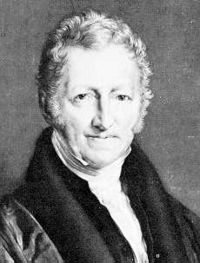
Thomas Malthus
The Reverend Thomas Robert Malthus FRS was an English scholar, influential in political economy and demography. Malthus popularized the economic theory of rent....
(1766–1834) was a Tory
Tory
Toryism is a traditionalist and conservative political philosophy which grew out of the Cavalier faction in the Wars of the Three Kingdoms. It is a prominent ideology in the politics of the United Kingdom, but also features in parts of The Commonwealth, particularly in Canada...
minister in the United Kingdom Parliament who, contrasting to Bentham, believed in strict government abstention from social ills. Malthus devoted the last chapter of his book Principles of Political Economy
Principles of Political Economy (Malthus)
Principles of Political Economy was a successful book by Thomas Malthus . The last chapter of the book was devoted to rebutting Say's law, and argued that the economy could stagnate with a lack of "effectual demand". In other words, wages if less than the total costs of production cannot purchase...
(1820) to rebutting Say's law, and argued that the economy could stagnate with a lack of "effectual demand". In other words, wages if less than the total costs of production cannot purchase the total output of industry and that this would cause prices to fall. Price falls decrease incentives to invest, and the spiral could continue indefinitely. Malthus is more notorious however for his earlier work, An Essay on the Principle of Population
An Essay on the Principle of Population
The book An Essay on the Principle of Population was first published anonymously in 1798 through J. Johnson . The author was soon identified as The Reverend Thomas Robert Malthus. While it was not the first book on population, it has been acknowledged as the most influential work of its era...
. This argued that intervention was impossible because of two factors. "Food is necessary to the existence of man," wrote Malthus. "The passion between the sexes is necessary and will remain nearly in its present state," he added, meaning that the "power of the population is infinitely greater than the power in the Earth to produce subsistence for man." Nevertheless growth in population is checked by "misery and vice". Any increase in wages for the masses would cause only a temporary growth in population, which given the constraints in the supply of the Earth's produce would lead to misery, vice and a corresponding readjustment to the original population. However more labour could mean more economic growth, either one of which was able to be produced by an accumulation of capital.
David Ricardo
David RicardoDavid Ricardo
David Ricardo was an English political economist, often credited with systematising economics, and was one of the most influential of the classical economists, along with Thomas Malthus, Adam Smith, and John Stuart Mill. He was also a member of Parliament, businessman, financier and speculator,...
(1772–1823) was born in London. By the age of 26, he had become a wealthy stock market trader and bought himself a constituency seat in Ireland to gain a platform in the British parliament's
Parliament of the United Kingdom
The Parliament of the United Kingdom of Great Britain and Northern Ireland is the supreme legislative body in the United Kingdom, British Crown dependencies and British overseas territories, located in London...
House of Commons
British House of Commons
The House of Commons is the lower house of the Parliament of the United Kingdom, which also comprises the Sovereign and the House of Lords . Both Commons and Lords meet in the Palace of Westminster. The Commons is a democratically elected body, consisting of 650 members , who are known as Members...
. Ricardo's best known work is his Principles of Political Economy and Taxation, which contains his critique of barriers to international trade and a description of the manner the income is distributed in the population. Ricardo made a distinction between the workers, who received a wage fixed to a level at which they can survive, the landowners, who earn a rent, and capitalists, who own capital and receive a profit, a residual part of the income. If population grows, it becomes necessary to cultivate additional land, whose fertility is lower than that of already cultivated fields, because of the law of decreasing productivity. Therefore, the cost of the production of the wheat increases, as well as the price of the wheat: The rents increase also, the wages, indexed to inflation (because they must allow workers to survive) too. Profits decrease, until the capitalists can no longer invest. The economy, Ricardo concluded, is bound to tend towards a steady state.
To postpone the steady state, Ricardo advocates to promote international trade to import wheat at a low price to fight landowners. The Corn Laws
Corn Laws
The Corn Laws were trade barriers designed to protect cereal producers in the United Kingdom of Great Britain and Ireland against competition from less expensive foreign imports between 1815 and 1846. The barriers were introduced by the Importation Act 1815 and repealed by the Importation Act 1846...
of the UK had been passed in 1815, setting a fluctuating system of tariffs to stabilise the price of wheat
Wheat
Wheat is a cereal grain, originally from the Levant region of the Near East, but now cultivated worldwide. In 2007 world production of wheat was 607 million tons, making it the third most-produced cereal after maize and rice...
in the domestic market. Ricardo argued that raising tariffs, despite being intended to benefit the incomes of farmers, would merely produce a rise in the prices of rents that went into the pockets of landowners. Furthermore, extra labour would be employed leading to an increase in the cost of wages across the board, and therefore reducing exports and profits coming from overseas business. Economics for Ricardo was all about the relationship between the three "factors of production": land
Land (economics)
In economics, land comprises all naturally occurring resources whose supply is inherently fixed. Examples are any and all particular geographical locations, mineral deposits, and even geostationary orbit locations and portions of the electromagnetic spectrum. Natural resources are fundamental to...
, labour
Workforce
The workforce is the labour pool in employment. It is generally used to describe those working for a single company or industry, but can also apply to a geographic region like a city, country, state, etc. The term generally excludes the employers or management, and implies those involved in...
and capital
Capital (economics)
In economics, capital, capital goods, or real capital refers to already-produced durable goods used in production of goods or services. The capital goods are not significantly consumed, though they may depreciate in the production process...
. Ricardo demonstrated mathematically that the gains from trade
Gains from trade
Gains from trade in economics refers to net benefits to agents from allowing an increase in voluntary trading with each other. In technical terms, it is the increase of consumer surplus plus producer surplus from lower tariffs or otherwise liberalizing trade...
could outweigh the perceived advantages of protectionist policy. The idea of comparative advantage
Comparative advantage
In economics, the law of comparative advantage says that two countries will both gain from trade if, in the absence of trade, they have different relative costs for producing the same goods...
suggests that even if one country is inferior at producing all of its goods than another, it may still benefit from opening its borders since the inflow of goods produced more cheaply than at home, produces a gain for domestic consumers. According then to Ricardo, this concept would lead to a shift in prices, so that eventually England would be producing goods in which its comparative advantages were the highest.
John Stuart Mill

John Stuart Mill
John Stuart Mill was a British philosopher, economist and civil servant. An influential contributor to social theory, political theory, and political economy, his conception of liberty justified the freedom of the individual in opposition to unlimited state control. He was a proponent of...
(1806–1873) was the dominant figure of political economic thought of his time, as well as being a Member of Parliament
Member of Parliament
A Member of Parliament is a representative of the voters to a :parliament. In many countries with bicameral parliaments, the term applies specifically to members of the lower house, as upper houses often have a different title, such as senate, and thus also have different titles for its members,...
for the seat of Westminster
Westminster (UK Parliament constituency)
Westminster was a parliamentary constituency in the Parliament of England to 1707, the Parliament of Great Britain 1707-1800 and the Parliament of the United Kingdom from 1801. It returned two members to 1885 and one thereafter....
, and a leading political philosopher. Mill was a child prodigy, reading Ancient Greek from the age of 3, and being vigorously schooled by his father James Mill
James Mill
James Mill was a Scottish historian, economist, political theorist, and philosopher. He was a founder of classical economics, together with David Ricardo, and the father of influential philosopher of classical liberalism, John Stuart Mill.-Life:Mill was born at Northwater Bridge, in the parish of...
. Jeremy Bentham
Jeremy Bentham
Jeremy Bentham was an English jurist, philosopher, and legal and social reformer. He became a leading theorist in Anglo-American philosophy of law, and a political radical whose ideas influenced the development of welfarism...
was a close mentor and family friend, and Mill was heavily influenced by David Ricardo
David Ricardo
David Ricardo was an English political economist, often credited with systematising economics, and was one of the most influential of the classical economists, along with Thomas Malthus, Adam Smith, and John Stuart Mill. He was also a member of Parliament, businessman, financier and speculator,...
. Mill's textbook, first published in 1848 and titled Principles of Political Economy
Principles of Political Economy
Principles of Political Economy by John Stuart Mill was arguably the most important economics or political economy textbook of the mid nineteenth century. It was revised until its seventh edition in 1871, shortly before Mill's death in 1873, and republished in numerous other editions...
was essentially a summary of the economic wisdom of the mid nineteenth century. It was used as the standard texts by most universities well into the beginning of the twentieth century. On the question of economic growth
Economic growth
In economics, economic growth is defined as the increasing capacity of the economy to satisfy the wants of goods and services of the members of society. Economic growth is enabled by increases in productivity, which lowers the inputs for a given amount of output. Lowered costs increase demand...
Mill tried to find a middle ground between Adam Smith's view of ever expanding opportunities for trade and technological innovation and Thomas Malthus' view of the inherent limits of population. In his fourth book Mill set out a number of possible future outcomes, rather than predicting one in particular. The first followed the Malthusian line that population grew quicker than supplies, leading to falling wages and rising profits. The second, per Smith, said if capital accumulated faster than population grew then real wage
Real wage
The term real wages refers to wages that have been adjusted for inflation. This term is used in contrast to nominal wages or unadjusted wages. Real wages provide a clearer representation of an individual's wages....
s would rise. Third, echoing David Ricardo
David Ricardo
David Ricardo was an English political economist, often credited with systematising economics, and was one of the most influential of the classical economists, along with Thomas Malthus, Adam Smith, and John Stuart Mill. He was also a member of Parliament, businessman, financier and speculator,...
, should capital accumulate and population increase at the same rate, yet technology stay stable, there would be no change in real wages because supply and demand for labour would be the same. However growing populations would require more land use, increasing food production costs and therefore decreasing profits. The fourth alternative was that technology advanced faster than population and capital stock increased. The result would be a prospering economy. Mill felt the third scenario most likely, and he assumed technology advanced would have to end at some point. But on the prospect of continuing economic growth, Mill was more ambivalent.
Mill is also credited with being the first person to speak of supply and demand as a relationship rather than mere quantities of goods on markets, the concept of opportunity cost
Opportunity cost
Opportunity cost is the cost of any activity measured in terms of the value of the best alternative that is not chosen . It is the sacrifice related to the second best choice available to someone, or group, who has picked among several mutually exclusive choices. The opportunity cost is also the...
and the rejection of the wage fund doctrine
Wage-fund doctrine
The Wage-Fund Doctrine is an expression that comes from early economic theory that seeks to show that the amount of money a worker earns in wages, paid to them from a fixed amount of funds available to employers each year , is determined by the relationship of wages and capital to any changes in...
.
Capitalism and Marx
Adam Smith
Adam Smith was a Scottish social philosopher and a pioneer of political economy. One of the key figures of the Scottish Enlightenment, Smith is the author of The Theory of Moral Sentiments and An Inquiry into the Nature and Causes of the Wealth of Nations...
, so was the term "capitalism" or Kapitalismus used by its dissidents, primarily Karl Marx
Karl Marx
Karl Heinrich Marx was a German philosopher, economist, sociologist, historian, journalist, and revolutionary socialist. His ideas played a significant role in the development of social science and the socialist political movement...
. Karl Marx (1818–1883) was, and in many ways still remains the pre-eminent socialist economist. His combination of political theory represented in the Communist Manifesto and the dialectic theory of history
Dialectical materialism
Dialectical materialism is a strand of Marxism synthesizing Hegel's dialectics. The idea was originally invented by Moses Hess and it was later developed by Karl Marx and Friedrich Engels...
inspired by Friedrich Hegel provided a revolutionary critique of capitalism
Capitalism
Capitalism is an economic system that became dominant in the Western world following the demise of feudalism. There is no consensus on the precise definition nor on how the term should be used as a historical category...
as he saw it in the nineteenth century. The socialist movement that he joined had emerged in response to the conditions of people in the new industrial era and the classical economics which accompanied it. He wrote his magnum opus Das Kapital
Das Kapital
Das Kapital, Kritik der politischen Ökonomie , by Karl Marx, is a critical analysis of capitalism as political economy, meant to reveal the economic laws of the capitalist mode of production, and how it was the precursor of the socialist mode of production.- Themes :In Capital: Critique of...
at the British Museum
British Museum
The British Museum is a museum of human history and culture in London. Its collections, which number more than seven million objects, are amongst the largest and most comprehensive in the world and originate from all continents, illustrating and documenting the story of human culture from its...
's library.
Context
Robert OwenRobert Owen
Robert Owen was a Welsh social reformer and one of the founders of utopian socialism and the cooperative movement.Owen's philosophy was based on three intellectual pillars:...
(1771–1858) was one industrialist who determined to improve the conditions of his workers. He bought textile mills in New Lanark
New Lanark
New Lanark is a village on the River Clyde, approximately 1.4 miles from Lanark, in South Lanarkshire, Scotland. It was founded in 1786 by David Dale, who built cotton mills and housing for the mill workers. Dale built the mills there to take advantage of the water power provided by the river...
, Scotland
Scotland
Scotland is a country that is part of the United Kingdom. Occupying the northern third of the island of Great Britain, it shares a border with England to the south and is bounded by the North Sea to the east, the Atlantic Ocean to the north and west, and the North Channel and Irish Sea to the...
where he forbade children under ten to work, set the workday from 6 a.m. to 7 p.m. and provided evening schools for children when they finished. Such meagre measures were still substantial improvements and his business remained solvent through higher productivity, though his pay rates were lower than the national average. He published his vision in The New View of Society (1816) during the passage of the Factory Acts
Factory Acts
The Factory Acts were a series of Acts passed by the Parliament of the United Kingdom to limit the number of hours worked by women and children first in the textile industry, then later in all industries....
, but his attempt from 1824 to begin a new utopian community in New Harmony, Indiana
New Harmony, Indiana
New Harmony is a historic town on the Wabash River in Harmony Township, Posey County, Indiana, United States. It lies north of Mount Vernon, the county seat. The population was 916 at the 2000 census. It is part of the Evansville metropolitan area. Many of the old Harmonist buildings still stand...
ended in failure.
One of Marx's own influences was the French anarchist/socialist Pierre-Joseph Proudhon
Pierre-Joseph Proudhon
Pierre-Joseph Proudhon was a French politician, mutualist philosopher and socialist. He was a member of the French Parliament, and he was the first person to call himself an "anarchist". He is considered among the most influential theorists and organisers of anarchism...
. While deeply critical of capitalism and in favour of workers' associations to replace it, he also objected to those contemporary socialists who idolized centralised state-run association. In System of Economic Contradictions (1846) Proudhon made a wide-ranging critique of capitalism, analysing the contradictory effects of machinery, competition, property, monopoly and other aspects of the economy. . Instead of capitalism, he argued for a mutualist system “based upon equality, – in other words, the organisation of labour, which involves the negation of political economy and the end of property.” In his book What is Property?
What Is Property?
What Is Property?: or, An Inquiry into the Principle of Right and of Government is an influential work of nonfiction on the concept of property and its relation to anarchist philosophy by the French anarchist and mutualist Pierre-Joseph Proudhon, first published in 1840.In the book, Proudhon most...
(1840) he argue that property is theft
Theft
In common usage, theft is the illegal taking of another person's property without that person's permission or consent. The word is also used as an informal shorthand term for some crimes against property, such as burglary, embezzlement, larceny, looting, robbery, shoplifting and fraud...
, a different view than the classical Mill
John Stuart Mill
John Stuart Mill was a British philosopher, economist and civil servant. An influential contributor to social theory, political theory, and political economy, his conception of liberty justified the freedom of the individual in opposition to unlimited state control. He was a proponent of...
, who had written that "partial taxation is a mild form of robbery". However, towards the end of his life, Proudhon modified some of his earlier views. In the posthumously published Theory of Property, he argued that "property is the only power that can act as a counterweight to the State."
Friedrich Engels
Friedrich Engels
Friedrich Engels was a German industrialist, social scientist, author, political theorist, philosopher, and father of Marxist theory, alongside Karl Marx. In 1845 he published The Condition of the Working Class in England, based on personal observations and research...
, a published radical author, released a book titled The Condition of the Working Class in England in 1844
The Condition of the Working Class in England in 1844
The Condition of the Working Class in England in 1844 is one of the best-known works of Friedrich Engels.Originally written in German as Die Lage der arbeitenden Klasse in England, it is a study of the working class in Victorian England. It was also Engels' first book, written during his stay in...
describing people's positions as "the most unconcealed pinnacle of social misery in our day." After Marx died, it was Engels that completed the second volume of Das Kapital
Das Kapital
Das Kapital, Kritik der politischen Ökonomie , by Karl Marx, is a critical analysis of capitalism as political economy, meant to reveal the economic laws of the capitalist mode of production, and how it was the precursor of the socialist mode of production.- Themes :In Capital: Critique of...
from Marx's notes.
Das Kapital
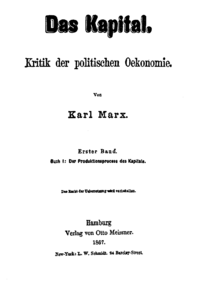
Slavery
Slavery is a system under which people are treated as property to be bought and sold, and are forced to work. Slaves can be held against their will from the time of their capture, purchase or birth, and deprived of the right to leave, to refuse to work, or to demand compensation...
(e.g. in ancient Rome
Ancient Rome
Ancient Rome was a thriving civilization that grew on the Italian Peninsula as early as the 8th century BC. Located along the Mediterranean Sea and centered on the city of Rome, it expanded to one of the largest empires in the ancient world....
) before moving to feudal
Feudalism
Feudalism was a set of legal and military customs in medieval Europe that flourished between the 9th and 15th centuries, which, broadly defined, was a system for ordering society around relationships derived from the holding of land in exchange for service or labour.Although derived from the...
serfdom
Serfdom
Serfdom is the status of peasants under feudalism, specifically relating to Manorialism. It was a condition of bondage or modified slavery which developed primarily during the High Middle Ages in Europe and lasted to the mid-19th century...
(e.g. in mediaeval Europe). As society has advanced, economic bondage has become looser, but the current nexus of labour exchange has produced an equally erratic and unstable situation allowing the conditions for revolution
Revolution
A revolution is a fundamental change in power or organizational structures that takes place in a relatively short period of time.Aristotle described two types of political revolution:...
. People buy and sell their labour in the same way as people buy and sell goods and services. People themselves are disposable commodities. As he wrote in the Communist Manifesto,
And furthermore from the first page of Das Kapital,
Marx's use of the word "commodity" is tied into an extensive metaphysical
Metaphysics
Metaphysics is a branch of philosophy concerned with explaining the fundamental nature of being and the world, although the term is not easily defined. Traditionally, metaphysics attempts to answer two basic questions in the broadest possible terms:...
discussion of the nature of material wealth, how the objects of wealth are perceived and how they can be used. The concept of a commodity contrasts to objects of the natural world. When people mix their labour with an object it becomes a "commodity". In the natural world there are tree
Tree
A tree is a perennial woody plant. It is most often defined as a woody plant that has many secondary branches supported clear of the ground on a single main stem or trunk with clear apical dominance. A minimum height specification at maturity is cited by some authors, varying from 3 m to...
s, diamond
Diamond
In mineralogy, diamond is an allotrope of carbon, where the carbon atoms are arranged in a variation of the face-centered cubic crystal structure called a diamond lattice. Diamond is less stable than graphite, but the conversion rate from diamond to graphite is negligible at ambient conditions...
s, iron ore and people
People
People is a plurality of human beings or other beings possessing enough qualities constituting personhood. It has two usages:* as the plural of person or a group of people People is a plurality of human beings or other beings possessing enough qualities constituting personhood. It has two usages:*...
. In the economic world they become chair
Chair
A chair is a stable, raised surface used to sit on, commonly for use by one person. Chairs are most often supported by four legs and have a back; however, a chair can have three legs or could have a different shape depending on the criteria of the chair specifications. A chair without a back or...
s, rings
Ring (finger)
A finger ring is a circular band worn as a type of ornamental jewelry around a finger; it is the most common current meaning of the word ring. Other types of metal bands worn as ornaments are also called rings, such as arm rings and neck rings....
, factories
Factory
A factory or manufacturing plant is an industrial building where laborers manufacture goods or supervise machines processing one product into another. Most modern factories have large warehouses or warehouse-like facilities that contain heavy equipment used for assembly line production...
and workers. However, says Marx, commodities have a dual nature, a dual value. He distinguishes the use value
Use value
Use value or value in use is the utility of consuming a good; the want-satisfying power of a good or service in classical political economy. In Marx's critique of political economy, any labor-product has a value and a use-value, and if it is traded as a commodity in markets, it additionally has an...
of a thing from its exchange value
Exchange value
In political economy and especially Marxian economics, exchange value refers to one of four major attributes of a commodity, i.e., an item or service produced for, and sold on the market...
, which can be entirely different. The use value of a thing derives from the amount of labour used to produce it, says Marx, following the classical economists in the labour theory of value. However, Marx did not believe labour only was the source of use value in things. He believed value can derive too from natural goods and refined his definition of use value to "socially necessary labour time
Socially necessary labour time
Socially necessary labour time in Marx's critique of political economy is what regulates the exchange value of commodities in trade and consequently guides producers in their attempt to economise on labour....
" (the time people need to produce things when they are not lazy or inefficient). Furthermore, people subjectively inflate the value of things, for instance because there's a commodity fetish for glimmering diamonds, and oppressive power relations involved in commodity production. These two factors mean exchange values differ greatly. An oppressive power relation, says Marx applying the use/exchange distinction to labour itself, in work-wage bargains derives from the fact that employers pay their workers less in "exchange value" than the workers produce in "use value". The difference makes up the capitalist's profit
Profit (economics)
In economics, the term profit has two related but distinct meanings. Normal profit represents the total opportunity costs of a venture to an entrepreneur or investor, whilst economic profit In economics, the term profit has two related but distinct meanings. Normal profit represents the total...
, or in Marx's terminology, "surplus value
Surplus value
Surplus value is a concept used famously by Karl Marx in his critique of political economy. Although Marx did not himself invent the term, he developed the concept...
". Therefore, says Marx, capitalism is a system of exploitation
Exploitation
This article discusses the term exploitation in the meaning of using something in an unjust or cruel manner.- As unjust benefit :In political economy, economics, and sociology, exploitation involves a persistent social relationship in which certain persons are being mistreated or unfairly used for...
.
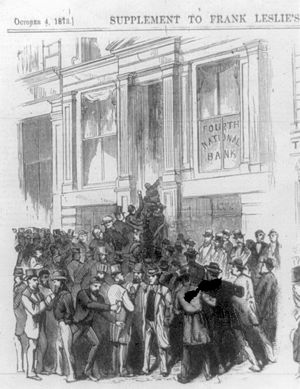
Marx's theory of alienation
Marx's theory of alienation , as expressed in the writings of the young Karl Marx , refers to the separation of things that naturally belong together, or to put antagonism between things that are properly in harmony...
from both the fruits of production and the means to realise their potential, psychologically, by their oppressed position in the labour market. But the tale told alongside exploitation and alienation is one of capital accumulation
Capital accumulation
The accumulation of capital refers to the gathering or amassing of objects of value; the increase in wealth through concentration; or the creation of wealth. Capital is money or a financial asset invested for the purpose of making more money...
and economic growth
Economic growth
In economics, economic growth is defined as the increasing capacity of the economy to satisfy the wants of goods and services of the members of society. Economic growth is enabled by increases in productivity, which lowers the inputs for a given amount of output. Lowered costs increase demand...
. Employers are constantly under pressure from market competition to drive their workers harder, and at the limits invest in labour displacing technology (e.g. an assembly line packer for a robot). This raises profits and expands growth, but for the sole benefit of those who have private property in these means of production
Means of production
Means of production refers to physical, non-human inputs used in production—the factories, machines, and tools used to produce wealth — along with both infrastructural capital and natural capital. This includes the classical factors of production minus financial capital and minus human capital...
. The working classes meanwhile face progressive immiseration, having had the product of their labour exploited from them, having been alienated from the tools of production. And having been fired from their jobs for machines, they end unemployed. Marx believed that a reserve army of the unemployed would grow and grow, fuelling a downward pressure on wages as desperate people accept work for less. But this would produce a deficit of demand
Demand
- Economics :*Demand , the desire to own something and the ability to pay for it*Demand curve, a graphic representation of a demand schedule*Demand deposit, the money in checking accounts...
as the people's power to purchase
Purchasing power
Purchasing power is the number of goods/services that can be purchased with a unit of currency. For example, if you had taken one dollar to a store in the 1950s, you would have been able to buy a greater number of items than you would today, indicating that you would have had a greater purchasing...
products lagged. There would be a glut in unsold products, production would be cut back, profits decline until capital accumulation halts in an economic depression. When the glut clears, the economy again starts to boom before the next cyclical bust begins. With every boom and bust
Boom and bust
A credit boom-bust cycle is an episode characterized by a sustained increase in several economics indicators followed by a sharp and rapid contraction. Commonly the boom is driven by a rapid expansion of credit to the private sector accompanied with rising prices of commodities and stock market index...
, with every capitalist crisis, thought Marx, tension and conflict
Class conflict
Class conflict is the tension or antagonism which exists in society due to competing socioeconomic interests between people of different classes....
between the increasingly polarised classes of capitalists and workers heightens. Moreover smaller firms are being gobbled by larger ones in every business cycle, as power is concentrated in the hands of the few and away from the many. Ultimately, led by the Communist party
Communist party
A political party described as a Communist party includes those that advocate the application of the social principles of communism through a communist form of government...
, Marx envisaged a revolution and the creation of a classless society. How this may work, Marx never suggested. His primary contribution was not in a blue print for how society would be, but a criticism of what he saw it was.
After Marx
The first volume of Das Kapital was the only one Marx alone published. The second and third volumes were done with the help of Friedrich EngelsFriedrich Engels
Friedrich Engels was a German industrialist, social scientist, author, political theorist, philosopher, and father of Marxist theory, alongside Karl Marx. In 1845 he published The Condition of the Working Class in England, based on personal observations and research...
, and Karl Kautsky, who had become a friend of Engels, saw through the publication of volume four.
Marx had begun a tradition of economists who concentrated equally on political affairs. Also in Germany, Rosa Luxemburg
Rosa Luxemburg
Rosa Luxemburg was a Marxist theorist, philosopher, economist and activist of Polish Jewish descent who became a naturalized German citizen...
was a member of the SPD
Social Democratic Party of Germany
The Social Democratic Party of Germany is a social-democratic political party in Germany...
, who later turned towards the Communist Party
Communist Party of Germany
The Communist Party of Germany was a major political party in Germany between 1918 and 1933, and a minor party in West Germany in the postwar period until it was banned in 1956...
because of their stance against the First World War. Beatrice Webb
Beatrice Webb
Martha Beatrice Webb, Lady Passfield was an English sociologist, economist, socialist and social reformer. Although her husband became Baron Passfield in 1929, she refused to be known as Lady Passfield...
in England was a socialist, who helped found both the London School of Economics
London School of Economics
The London School of Economics and Political Science is a public research university specialised in the social sciences located in London, United Kingdom, and a constituent college of the federal University of London...
(LSE) and the Fabian Society
Fabian Society
The Fabian Society is a British socialist movement, whose purpose is to advance the principles of democratic socialism via gradualist and reformist, rather than revolutionary, means. It is best known for its initial ground-breaking work beginning late in the 19th century and continuing up to World...
.
Neoclassical thought
In the 1860s, a revolution took place in economics. The new ideas were that of the Marginalist school. Writing simultaneously and independently, a Frenchman (Leon WalrasLéon Walras
Marie-Esprit-Léon Walras was a French mathematical economist associated with the creation of the general equilibrium theory.-Life and career:...
), an Austrian (Carl Menger
Carl Menger
Carl Menger was the founder of the Austrian School of economics, famous for contributing to the development of the theory of marginal utility, which contested the cost-of-production theories of value, developed by the classical economists such as Adam Smith and David Ricardo.- Biography :Menger...
) and an Englishman (Stanley Jevons) were developing the theory, which had some antecedents. Instead of the price of a good or service reflecting the labor that has produced it, it reflects the marginal usefulness (utility) of the last purchase. This meant that in equilibrium, people's preferences determined prices, including, indirectly the price of labor.
This current of thought was not united, and there were three main schools working independently. The Lausanne school
Lausanne School
The Lausanne School of economics, sometimes referred to as the Mathematical School, refers to the neoclassical economics school of thought surrounding Léon Walras and Vilfredo Pareto. The central feature of the Lausanne School was its development of general equilibrium theory...
, whose two main representants were Walras and Vilfredo Pareto
Vilfredo Pareto
Vilfredo Federico Damaso Pareto , born Wilfried Fritz Pareto, was an Italian engineer, sociologist, economist, political scientist and philosopher. He made several important contributions to economics, particularly in the study of income distribution and in the analysis of individuals' choices....
, developed the theories of general equilibrium
General equilibrium
General equilibrium theory is a branch of theoretical economics. It seeks to explain the behavior of supply, demand and prices in a whole economy with several or many interacting markets, by seeking to prove that a set of prices exists that will result in an overall equilibrium, hence general...
and optimality
Pareto efficiency
Pareto efficiency, or Pareto optimality, is a concept in economics with applications in engineering and social sciences. The term is named after Vilfredo Pareto, an Italian economist who used the concept in his studies of economic efficiency and income distribution.Given an initial allocation of...
. The main written work of this school was Walras' Elements of Pure Economics. The Cambridge school
Neoclassical economics
Neoclassical economics is a term variously used for approaches to economics focusing on the determination of prices, outputs, and income distributions in markets through supply and demand, often mediated through a hypothesized maximization of utility by income-constrained individuals and of profits...
appeared with Jevons' Theory of Political Economy in 1871. This English school has developed the theories of the partial equilibrium and has insisted on markets' failures. The main representatives were Alfred Marshall
Alfred Marshall
Alfred Marshall was an Englishman and one of the most influential economists of his time. His book, Principles of Economics , was the dominant economic textbook in England for many years...
, Stanley Jevons and Arthur Pigou. The Vienna school
Austrian School
The Austrian School of economics is a heterodox school of economic thought. It advocates methodological individualism in interpreting economic developments , the theory that money is non-neutral, the theory that the capital structure of economies consists of heterogeneous goods that have...
was made up of Austrian economists Menger, Eugen von Böhm-Bawerk
Eugen von Böhm-Bawerk
Eugen Ritter von Böhm-Bawerk was an Austrian economist who made important contributions to the development of the Austrian School of economics.-Biography:...
and Friedrich von Wieser
Friedrich von Wieser
Friedrich Freiherr von Wieser was an early member of the Austrian School of economics. Born in Vienna, the son of Privy Councillor Leopold von Wieser, a high official in the war ministry he first trained in sociology and law...
. They developed the theory of capital and has tried to explain the presence of economic crises. It appeared in 1871 with Menger's Principles of Economics.
Marginal utility
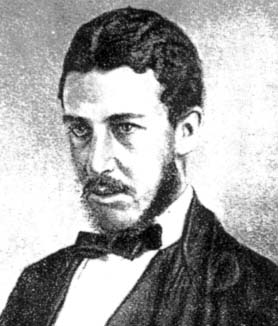
Austrian School
The Austrian School of economics is a heterodox school of economic thought. It advocates methodological individualism in interpreting economic developments , the theory that money is non-neutral, the theory that the capital structure of economies consists of heterogeneous goods that have...
stated the basic principle of marginal utility in Grundsätze der Volkswirtschaftslehre (1871, Principles of Economics
Principles of Economics
Principles of Economics is a book by economist Carl Menger which is credited with the founding of the Austrian School of economics...
). Consumers act rationally by seeking to maximise satisfaction of all their preferences. People allocate their spending so that the last unit of a commodity bought creates no more than a last unit bought of something else. Stanley Jevons
William Stanley Jevons
William Stanley Jevons was a British economist and logician.Irving Fisher described his book The Theory of Political Economy as beginning the mathematical method in economics. It made the case that economics as a science concerned with quantities is necessarily mathematical...
(1835–1882) was his English counterpart, and worked as tutor and later professor at Owens College, Manchester and University College, London. He emphasised in the Theory of Political Economy (1871) that at the margin, the satisfaction of goods and services decreases. An example of the theory of diminishing returns
Diminishing returns
In economics, diminishing returns is the decrease in the marginal output of a production process as the amount of a single factor of production is increased, while the amounts of all other factors of production stay constant.The law of diminishing returns In economics, diminishing returns (also...
is that for every orange one eats, the less pleasure one gets from the last orange (until one stops eating). Then Leon Walras
Léon Walras
Marie-Esprit-Léon Walras was a French mathematical economist associated with the creation of the general equilibrium theory.-Life and career:...
(1834–1910), again working independently, generalised marginal theory across the economy in Elements of Pure Economics (1874). Small changes in people's preferences, for instance shifting from beef to mushrooms, would lead to a mushroom price rise, and beef price fall. This stimulates producers to shift production, increasing mushrooming investment, which would increase market supply and a new price equilibrium between the products – e.g. lowering the price of mushrooms to a level between the two first levels. For many products across the economy the same would go, if one assumes markets are competitive, people choose on self interest and no cost in shifting production.
Early attempts to explain away the periodical crises of which Marx had spoken were not initially as successful. After finding a statistical correlation of sunspot
Sunspot
Sunspots are temporary phenomena on the photosphere of the Sun that appear visibly as dark spots compared to surrounding regions. They are caused by intense magnetic activity, which inhibits convection by an effect comparable to the eddy current brake, forming areas of reduced surface temperature....
s and business fluctuations and following the common belief at the time that sunspots had a direct effect on weather and hence agricultural output, Stanley Jevons wrote,
Mathematical analysis
Vilfredo Pareto (1848–1923) was an Italian economist, best known for developing the concept of an economy that would permit maximizing the utility level of each individual, given the feasible utility level of others from production and exchange. Such a result came to be called "Pareto efficientPareto efficiency
Pareto efficiency, or Pareto optimality, is a concept in economics with applications in engineering and social sciences. The term is named after Vilfredo Pareto, an Italian economist who used the concept in his studies of economic efficiency and income distribution.Given an initial allocation of...
". Pareto devised mathematical representations for such a resource allocation, notable in abstracting from institutional arrangements and monetary measures of wealth or income distribution
Distribution (economics)
Distribution in economics refers to the way total output, income, or wealth is distributed among individuals or among the factors of production .. In general theory and the national income and product accounts, each unit of output corresponds to a unit of income...
.
Alfred Marshall is also credited with an attempt to put economics on a more mathematical footing. He was the first Professor of Economics at the University of Cambridge
University of Cambridge
The University of Cambridge is a public research university located in Cambridge, United Kingdom. It is the second-oldest university in both the United Kingdom and the English-speaking world , and the seventh-oldest globally...
and his work, Principles of Economics
Principles of Economics (Marshall)
Principles of Economics was a leading political economy or economics textbook of Alfred Marshall , first published in 1890. It ran into many editions and was the standard text for generations of economics students.-Writing:...
coincided with the transition of the subject from "political economy
Political economy
Political economy originally was the term for studying production, buying, and selling, and their relations with law, custom, and government, as well as with the distribution of national income and wealth, including through the budget process. Political economy originated in moral philosophy...
" to his favoured term, "economics
Economics
Economics is the social science that analyzes the production, distribution, and consumption of goods and services. The term economics comes from the Ancient Greek from + , hence "rules of the house"...
". He viewed maths as a way to simplify economic reasoning, though had reservations, revealed in a letter to his student Arthur Cecil Pigou
Arthur Cecil Pigou
Arthur Cecil Pigou was an English economist. As a teacher and builder of the school of economics at the University of Cambridge he trained and influenced many Cambridge economists who went on to fill chairs of economics around the world...
.
Coming after the marginal revolution, Marshall concentrated on reconciling the classical labour theory of value, which had concentrated on the supply side of the market, with the new marginalist theory that concentrated on the consumer demand side. Marshall's graphical representation is the famous supply and demand
Supply and demand
Supply and demand is an economic model of price determination in a market. It concludes that in a competitive market, the unit price for a particular good will vary until it settles at a point where the quantity demanded by consumers will equal the quantity supplied by producers , resulting in an...
graph, the "Marshallian cross". He insisted it is the intersection of both supply and demand that produce an equilibrium of price in a competitive market. Over the long run, argued Marshall, the costs of production and the price of goods and services tend towards the lowest point consistent with continued production. Arthur Cecil Pigou
Arthur Cecil Pigou
Arthur Cecil Pigou was an English economist. As a teacher and builder of the school of economics at the University of Cambridge he trained and influenced many Cambridge economists who went on to fill chairs of economics around the world...
in Wealth and Welfare (1920), insisted on the existence of market failure
Market failure
Market failure is a concept within economic theory wherein the allocation of goods and services by a free market is not efficient. That is, there exists another conceivable outcome where a market participant may be made better-off without making someone else worse-off...
s. Markets are inefficient in case of economic externalities
Externality
In economics, an externality is a cost or benefit, not transmitted through prices, incurred by a party who did not agree to the action causing the cost or benefit...
, and the State must interfere. However, Pigou retained free-market beliefs, and in 1933, in the face of the economic crisis, he explained in The Theory of Unemployment that the excessive intervention of the state in the labor market was the real cause of massive unemployment
Unemployment
Unemployment , as defined by the International Labour Organization, occurs when people are without jobs and they have actively sought work within the past four weeks...
, because the governments had established a minimal wage, which prevented the wages from adjusting automatically. This was to be the focus of attack from Keynes.
The Austrian school
While the end of the nineteenth century and the beginning of the twentieth were dominated increasingly by mathematical analysis, the followers of Carl MengerCarl Menger
Carl Menger was the founder of the Austrian School of economics, famous for contributing to the development of the theory of marginal utility, which contested the cost-of-production theories of value, developed by the classical economists such as Adam Smith and David Ricardo.- Biography :Menger...
, in the tradition of Eugen von Böhm-Bawerk
Eugen von Böhm-Bawerk
Eugen Ritter von Böhm-Bawerk was an Austrian economist who made important contributions to the development of the Austrian School of economics.-Biography:...
, followed a different route, advocating the use of deductive logic instead. This group became known as the Austrian School, reflecting the Austrian origin of many of the early adherents. Thorstein Veblen
Thorstein Veblen
Thorstein Bunde Veblen, born Torsten Bunde Veblen was an American economist and sociologist, and a leader of the so-called institutional economics movement...
in 1900, in his Preconceptions of Economic Science, contrasted neoclassical marginalist
Marginalism
Marginalism refers to the use of marginal concepts in economic theory. Marginalism is associated with arguments concerning changes in the quantity used of a good or service, as opposed to some notion of the over-all significance of that class of good or service, or of some total quantity...
s in the tradition of Alfred Marshall
Alfred Marshall
Alfred Marshall was an Englishman and one of the most influential economists of his time. His book, Principles of Economics , was the dominant economic textbook in England for many years...
from the philosophies of the Austrian school.
Joseph Alois Schumpeter (1883–1950) was an Austrian economist and political scientist most known for his works on business cycles and innovation
Innovation
Innovation is the creation of better or more effective products, processes, technologies, or ideas that are accepted by markets, governments, and society...
. He insisted on the role of the entrepreneurs in an economy. In Business Cycles: A theoretical, historical and statistical analysis of the Capitalist process(1939), Schumpeter made a synthesis of the theories about business cycles. He suggested that those cycles could explain the economic situations. According to Schumpeter, capitalism necessarily goes through long-term cycles, because it is entirely based upon scientific inventions and innovations. A phase of expansion is made possible by innovations, because they bring productivity gains
Productivity
Productivity is a measure of the efficiency of production. Productivity is a ratio of what is produced to what is required to produce it. Usually this ratio is in the form of an average, expressing the total output divided by the total input...
and encourage entrepreneurs to invest. However, when investors have no more opportunities to invest, the economy goes into recession, several firms collapse, closures and bankruptcy occur. This phase lasts until new innovations bring a creative destruction
Creative destruction
Creative destruction is a term originally derived from Marxist economic theory which refers to the linked processes of the accumulation and annihilation of wealth under capitalism. These processes were first described in The Communist Manifesto and were expanded in Marx's Grundrisse and "Volume...
process, i.e. they destroy old products, reduce the employment, but they allow the economy to start a new phase of growth, based upon new products and new factors of production
Factors of production
In economics, factors of production means inputs and finished goods means output. Input determines the quantity of output i.e. output depends upon input. Input is the starting point and output is the end point of production process and such input-output relationship is called a production function...
.
Ludwig von Mises
Ludwig von Mises
Ludwig Heinrich Edler von Mises was an Austrian economist, philosopher, and classical liberal who had a significant influence on the modern Libertarian movement and the "Austrian School" of economic thought.-Biography:-Early life:...
(1881–1973) was an Austrian economist who contributed the idea of praxeology
Praxeology
Praxeology is the study of human action. Praxeology rejects the empirical methods of the natural sciences for the study of human action, because the observation of how humans act in simple situations cannot predict how they will act in complex situations...
, "The science of human action". Praxeology views economics as a series of voluntary trades that increase the satisfaction of the involved parties. Mises also argued that socialism suffers from an unsolvable economic calculation problem
Economic calculation problem
The economic calculation problem is a criticism of central economic planning. It was first proposed by Ludwig von Mises in 1920 and later expounded by Friedrich Hayek. The problem referred to is that of how to distribute resources rationally in an economy...
, which according to him, could only be solved through free market
Free market
A free market is a competitive market where prices are determined by supply and demand. However, the term is also commonly used for markets in which economic intervention and regulation by the state is limited to tax collection, and enforcement of private ownership and contracts...
price mechanisms.
Mises' outspoken criticisms of socialism
Criticisms of socialism
Criticism of socialism refers to a critique of socialist models of economic organization, their efficiency and feasibility; as well as the political and social implications of such a system. Some criticisms are not directed toward socialism as a system, but are directed toward the socialist...
had a large influence on the economic thinking of Friedrich von Hayek (1899–1992), who, while initially sympathetic to socialism, became one of the leading academic critics of collectivism
Collectivism
Collectivism is any philosophic, political, economic, mystical or social outlook that emphasizes the interdependence of every human in some collective group and the priority of group goals over individual goals. Collectivists usually focus on community, society, or nation...
in the 20th century. In echoes of Smith's "system of natural liberty", Hayek argued that the market is a "spontaneous order" and actively disparaged the concept of "social justice
Social justice
Social justice generally refers to the idea of creating a society or institution that is based on the principles of equality and solidarity, that understands and values human rights, and that recognizes the dignity of every human being. The term and modern concept of "social justice" was coined by...
". Hayek believed that all forms of collectivism (even those theoretically based on voluntary cooperation) could only be maintained by a central authority. In his book, The Road to Serfdom
The Road to Serfdom
The Road to Serfdom is a book written by the Austrian-born economist and philosopher Friedrich von Hayek between 1940–1943, in which he "warned of the danger of tyranny that inevitably results from government control of economic decision-making through central planning," and in which he argues...
(1944) and in subsequent works, Hayek claimed that socialism required central economic planning and that such planning in turn would lead towards totalitarianism
Totalitarianism
Totalitarianism is a political system where the state recognizes no limits to its authority and strives to regulate every aspect of public and private life wherever feasible...
. Hayek attributed the birth of civilization to private property
Private property
Private property is the right of persons and firms to obtain, own, control, employ, dispose of, and bequeath land, capital, and other forms of property. Private property is distinguishable from public property, which refers to assets owned by a state, community or government rather than by...
in his book The Fatal Conceit
The Fatal Conceit
The Fatal Conceit: The Errors of Socialism is a non-fiction book written by the economist and political philosopher Friedrich Hayek and edited by William Warren Bartley.-Main thesis and arguments:...
(1988). According to him, price signals are the only means of enabling each economic decision maker to communicate tacit knowledge
Tacit knowledge
Tacit knowledge is knowledge that is difficult to transfer to another person by means of writing it down or verbalising it. For example, stating to someone that London is in the United Kingdom is a piece of explicit knowledge that can be written down, transmitted, and understood by a recipient...
or dispersed knowledge
Dispersed knowledge
In economics, dispersed knowledge is information that is dispersed throughout the marketplace, and is not in the hands of any single agent. All agents in the market have imperfect knowledge; however, they all have a good indicator of everyone else's knowledge and intentions, and that is the...
to each other, to solve the economic calculation problem
Economic calculation problem
The economic calculation problem is a criticism of central economic planning. It was first proposed by Ludwig von Mises in 1920 and later expounded by Friedrich Hayek. The problem referred to is that of how to distribute resources rationally in an economy...
. Along with his contemporary Gunnar Myrdal
Gunnar Myrdal
Karl Gunnar Myrdal was a Swedish Nobel Laureate economist, sociologist, and politician. In 1974, he received the Nobel Memorial Prize in Economic Sciences with Friedrich Hayek for "their pioneering work in the theory of money and economic fluctuations and for their penetrating analysis of the...
, Hayek was awarded the Nobel Prize in 1974.
Depression and reconstruction
Alfred MarshallAlfred Marshall
Alfred Marshall was an Englishman and one of the most influential economists of his time. His book, Principles of Economics , was the dominant economic textbook in England for many years...
was still working on his last revisions of his Principles of Economics
Principles of Economics (Marshall)
Principles of Economics was a leading political economy or economics textbook of Alfred Marshall , first published in 1890. It ran into many editions and was the standard text for generations of economics students.-Writing:...
at the outbreak of the First World War (1914–1918). The new twentieth century's climate of optimism was soon violently dismembered in the trenches of the Western front, as the civilised world tore itself apart. For four years the production of Britain, Germany and France was geared entirely towards the war economy
War economy
War economy is the term used to describe the contingencies undertaken by the modern state to mobilise its economy for war production. Philippe Le Billon describes a war economy as a "system of producing, mobilising and allocating resources to sustain the violence".Many states increase the degree of...
's industry of death. In 1917 Russia crumbled into revolution led by Vladimir Lenin
Vladimir Lenin
Vladimir Ilyich Lenin was a Russian Marxist revolutionary and communist politician who led the October Revolution of 1917. As leader of the Bolsheviks, he headed the Soviet state during its initial years , as it fought to establish control of Russia in the Russian Civil War and worked to create a...
's Bolshevik party. They carried Marxist theory as their saviour, and promised a broken country "peace, bread and land" by collectivising the means of production. Also in 1917, the United States of America entered the war on the side of France and Britain, President Woodrow Wilson
Woodrow Wilson
Thomas Woodrow Wilson was the 28th President of the United States, from 1913 to 1921. A leader of the Progressive Movement, he served as President of Princeton University from 1902 to 1910, and then as the Governor of New Jersey from 1911 to 1913...
carrying the slogan of "making the world safe for democracy". He devised a peace plan of Fourteen Points
Fourteen Points
The Fourteen Points was a speech given by United States President Woodrow Wilson to a joint session of Congress on January 8, 1918. The address was intended to assure the country that the Great War was being fought for a moral cause and for postwar peace in Europe...
. In 1918 Germany launched a spring offensive which failed, and as the allies counter-attacked and more millions were slaughtered, Germany slid into revolution
German Revolution
The German Revolution was the politically-driven civil conflict in Germany at the end of World War I, which resulted in the replacement of Germany's imperial government with a republic...
, its interim government suing for peace on the basis of Wilson's Fourteen Points. Europe lay in ruins, financially, physically, psychologically, and its future with the arrangements of the Versailles conference in 1919. John Maynard Keynes
John Maynard Keynes
John Maynard Keynes, Baron Keynes of Tilton, CB FBA , was a British economist whose ideas have profoundly affected the theory and practice of modern macroeconomics, as well as the economic policies of governments...
was the representative of Her Majesty's Treasury at the conference and the most vocal critic of its outcome.
John Maynard Keynes
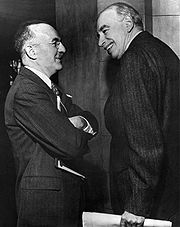
John Maynard Keynes (1883–1946) was born in Cambridge, educated at Eton
Eton College
Eton College, often referred to simply as Eton, is a British independent school for boys aged 13 to 18. It was founded in 1440 by King Henry VI as "The King's College of Our Lady of Eton besides Wyndsor"....
and supervised by both A. C. Pigou and Alfred Marshall
Alfred Marshall
Alfred Marshall was an Englishman and one of the most influential economists of his time. His book, Principles of Economics , was the dominant economic textbook in England for many years...
at Cambridge University. He began his career as a lecturer, before working in the British government during the Great War, and rose to be the British government's financial representative at the Versailles conference. His observations were laid out in his book The Economic Consequences of the Peace (1919) where he documented his outrage at the collapse of the Americans' adherence to the Fourteen Points
Fourteen Points
The Fourteen Points was a speech given by United States President Woodrow Wilson to a joint session of Congress on January 8, 1918. The address was intended to assure the country that the Great War was being fought for a moral cause and for postwar peace in Europe...
and the mood of vindictiveness that prevailed towards Germany. Keynes quit from the conference and using extensive economic data provided by the conference records, Keynes argued that if the victors forced war reparations
War reparations
War reparations are payments intended to cover damage or injury during a war. Generally, the term war reparations refers to money or goods changing hands, rather than such property transfers as the annexation of land.- History :...
to be paid by the defeated Axis, then a world financial crisis would ensue, leading to a second world war. Keynes finished his treatise by advocating, first, a reduction in reparation payments by Germany to a realistically manageable level, increased intra-governmental management of continental coal production and a free trade union through the League of Nations
League of Nations
The League of Nations was an intergovernmental organization founded as a result of the Paris Peace Conference that ended the First World War. It was the first permanent international organization whose principal mission was to maintain world peace...
; second, an arrangement to set off debt repayments between the Allied countries; third, complete reform of international currency exchange and an international loan fund; and fourth, a reconciliation of trade relations with Russia and Eastern Europe.
The book was an enormous success, and though it was criticised for false predictions by a number of people, without the changes he advocated, Keynes' dark forecasts matched the world's experience through the Great Depression
Great Depression
The Great Depression was a severe worldwide economic depression in the decade preceding World War II. The timing of the Great Depression varied across nations, but in most countries it started in about 1929 and lasted until the late 1930s or early 1940s...
which ensued in 1929, and the descent into a new outbreak of war in 1939. World War One had been the "war to end all wars", and the absolute failure of the peace settlement generated an even greater determination to not repeat the same mistakes. With the defeat of fascism
Fascism
Fascism is a radical authoritarian nationalist political ideology. Fascists seek to rejuvenate their nation based on commitment to the national community as an organic entity, in which individuals are bound together in national identity by suprapersonal connections of ancestry, culture, and blood...
, the Bretton Woods conference
United Nations Monetary and Financial Conference
The United Nations Monetary and Financial Conference, commonly known as the Bretton Woods conference, was a gathering of 730 delegates from all 44 Allied nations at the Mount Washington Hotel, situated in Bretton Woods, New Hampshire, to regulate the international monetary and financial order after...
was held to establish a new economic order. Keynes was again to play a leading role.
The General Theory
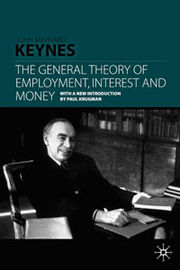
Wall Street Crash of 1929
The Wall Street Crash of 1929 , also known as the Great Crash, and the Stock Market Crash of 1929, was the most devastating stock market crash in the history of the United States, taking into consideration the full extent and duration of its fallout...
, leading to massive rises in unemployment in the United States, leading to debts being recalled from European borrowers, and an economic domino effect across the world. Orthodox economics called for a tightening of spending, until business confidence and profit levels could be restored. Keynes by contrast, had argued in A Tract on Monetary Reform (1923) that a variety of factors determined economic activity, and that it was not enough to wait for the long run market equilibrium to restore itself. As Keynes famously remarked,
On top of the supply of money
Money supply
In economics, the money supply or money stock, is the total amount of money available in an economy at a specific time. There are several ways to define "money," but standard measures usually include currency in circulation and demand deposits .Money supply data are recorded and published, usually...
, Keynes identified the propensity to consume, inducement to invest, the marginal efficiency of capital, liquidity preference and the multiplier effect as variables which determine the level of the economy's output, employment and level of prices. Much of this esoteric terminology was invented by Keynes especially for his General Theory, though some simple ideas lay behind. Keynes argued that if savings were being kept away from investment
Investment
Investment has different meanings in finance and economics. Finance investment is putting money into something with the expectation of gain, that upon thorough analysis, has a high degree of security for the principal amount, as well as security of return, within an expected period of time...
through financial market
Financial market
In economics, a financial market is a mechanism that allows people and entities to buy and sell financial securities , commodities , and other fungible items of value at low transaction costs and at prices that reflect supply and demand.Both general markets and...
s, total spending falls. Falling spending leads to reduced incomes and unemployment, which reduces savings again. This continues until the desire to save becomes equal to the desire to invest, which means a new "equilibrium" is reached and the spending decline halts. This new "equilibrium" is a depression, where people are investing less, have less to save and less to spend.
Keynes argued that employment depends on total spending, which is composed of consumer spending and business investment in the private sector
Private sector
In economics, the private sector is that part of the economy, sometimes referred to as the citizen sector, which is run by private individuals or groups, usually as a means of enterprise for profit, and is not controlled by the state...
. Consumers only spend "passively", or according to their income fluctuations. Businesses, on the other hand, are induced to invest by the expected rate of return on new investments (the benefit) and the rate of interest paid (the cost). So, said Keynes, if business expectations remained the same, and government reduces interest rates (the costs of borrowing), investment would increase, and would have a multiplied effect on total spending. Interest rate
Interest rate
An interest rate is the rate at which interest is paid by a borrower for the use of money that they borrow from a lender. For example, a small company borrows capital from a bank to buy new assets for their business, and in return the lender receives interest at a predetermined interest rate for...
s, in turn, depend on the quantity of money and the desire to hold money in bank accounts (as opposed to investing). If not enough money is available to match how much people want to hold, interest rates rise until enough people are put off. So if the quantity of money were increased, while the desire to hold money remained stable, interest rates would fall, leading to increased investment, output and employment. For both these reasons, Keynes therefore advocated low interest rates and easy credit, to combat unemployment.
But Keynes believed in the 1930s, conditions necessitated public sector action. Deficit spending, said Keynes, would kick-start economic activity. This he had advocated in an open letter to U.S. President Franklin D. Roosevelt
Franklin D. Roosevelt
Franklin Delano Roosevelt , also known by his initials, FDR, was the 32nd President of the United States and a central figure in world events during the mid-20th century, leading the United States during a time of worldwide economic crisis and world war...
in the New York Times (1933). The New Deal
New Deal
The New Deal was a series of economic programs implemented in the United States between 1933 and 1936. They were passed by the U.S. Congress during the first term of President Franklin D. Roosevelt. The programs were Roosevelt's responses to the Great Depression, and focused on what historians call...
programme in the U.S. had been well underway by the publication of the General Theory. It provided conceptual reinforcement for policies already pursued. Keynes also believed in a more egalitarian distribution of income, and taxation on unearned income
Unearned income
Unearned income is a term in economics that has different meanings and implications depending on the theoretical frame. To classical economists, with their emphasis on dynamic competition, income not subject to competition are “rents” or unearned income, such as incomes attributable to...
arguing that high rates of savings (to which richer folk are prone) are not desirable in a developed economy. Keynes therefore advocated both monetary management and an active fiscal policy.
Keynesian economics
During the Second World War, Keynes acted as advisor to HM TreasuryHM Treasury
HM Treasury, in full Her Majesty's Treasury, informally The Treasury, is the United Kingdom government department responsible for developing and executing the British government's public finance policy and economic policy...
again, negotiating major loans from the US. He helped formulate the plans for the International Monetary Fund
International Monetary Fund
The International Monetary Fund is an organization of 187 countries, working to foster global monetary cooperation, secure financial stability, facilitate international trade, promote high employment and sustainable economic growth, and reduce poverty around the world...
, the World Bank
World Bank
The World Bank is an international financial institution that provides loans to developing countries for capital programmes.The World Bank's official goal is the reduction of poverty...
and an International Trade Organisation at the Bretton Woods conference
United Nations Monetary and Financial Conference
The United Nations Monetary and Financial Conference, commonly known as the Bretton Woods conference, was a gathering of 730 delegates from all 44 Allied nations at the Mount Washington Hotel, situated in Bretton Woods, New Hampshire, to regulate the international monetary and financial order after...
, a package designed to stabilise world economy fluctuations that had occurred in the 1920s and create a level trading field across the globe. Keynes passed away little more than a year later, but his ideas had already shaped a new global economic order, and all Western governments followed the Keynesian prescription of deficit spending to avert crises and maintain full employment. One of Keynes' pupils at Cambridge was Joan Robinson
Joan Robinson
Joan Violet Robinson FBA was a post-Keynesian economist who was well known for her knowledge of monetary economics and wide-ranging contributions to economic theory...
, who contributed to the notion that competition
Competition
Competition is a contest between individuals, groups, animals, etc. for territory, a niche, or a location of resources. It arises whenever two and only two strive for a goal which cannot be shared. Competition occurs naturally between living organisms which co-exist in the same environment. For...
is seldom perfect in a market, an indictment of the theory of markets setting prices. In The Production Function and the Theory of Capital (1953) Robinson tackled what she saw to be some of the circularity in orthodox economics. Neoclassicists assert that a competitive market forces producers to minimise the costs of production. Robinson said that costs of production are merely the prices of inputs, like capital
Capital (economics)
In economics, capital, capital goods, or real capital refers to already-produced durable goods used in production of goods or services. The capital goods are not significantly consumed, though they may depreciate in the production process...
. Capital goods get their value from the final products. And if the price of the final products determines the price of capital, then it is, argued Robinson, utterly circular to say that the price of capital determines the price of the final products. Goods cannot be priced until the costs of inputs are determined. This would not matter if everything in the economy happened instantaneously, but in the real world, price setting takes time – goods are priced before they are sold. Since capital cannot be adequately valued in independently measurable units, how can one show that capital earns a return equal to the contribution to production? Piero Sraffa
Piero Sraffa
Piero Sraffa was an influential Italian economist whose book Production of Commodities by Means of Commodities is taken as founding the Neo-Ricardian school of Economics.- Early life :...
came to England from fascist Italy
Italian Empire
The Italian Empire was created after the Kingdom of Italy joined other European powers in establishing colonies overseas during the "scramble for Africa". Modern Italy as a unified state only existed from 1861. By this time France, Spain, Portugal, Britain, and the Netherlands, had already carved...
in the 1920s, and worked with Keynes in Cambridge. In 1960 he published a small book called Production of Commodities by Means of Commodities, which explained how technological relationships are the basis for production of goods and services. Prices result from wage-profit tradeoffs, collective bargaining, labour and management conflict and the intervention of government planning. Like Robinson, Sraffa was showing how the major force for price setting in the economy was not necessarily market adjustments.
The "American Way"
After World War IIWorld War II
World War II, or the Second World War , was a global conflict lasting from 1939 to 1945, involving most of the world's nations—including all of the great powers—eventually forming two opposing military alliances: the Allies and the Axis...
, the United States
United States
The United States of America is a federal constitutional republic comprising fifty states and a federal district...
had become the pre-eminent global economic power. Europe and the Soviet Union
Soviet Union
The Soviet Union , officially the Union of Soviet Socialist Republics , was a constitutionally socialist state that existed in Eurasia between 1922 and 1991....
lay in ruins and the British Empire
British Empire
The British Empire comprised the dominions, colonies, protectorates, mandates and other territories ruled or administered by the United Kingdom. It originated with the overseas colonies and trading posts established by England in the late 16th and early 17th centuries. At its height, it was the...
was at its end. Until then, American economists had played a minor role. The institutional economists had been largely critical of the "American Way" of life, especially regarding conspicuous consumption
Conspicuous consumption
Conspicuous consumption is spending on goods and services acquired mainly for the purpose of displaying income or wealth. In the mind of a conspicuous consumer, such display serves as a means of attaining or maintaining social status....
of the Roaring Twenties
Roaring Twenties
The Roaring Twenties is a phrase used to describe the 1920s, principally in North America, but also in London, Berlin and Paris for a period of sustained economic prosperity. The phrase was meant to emphasize the period's social, artistic, and cultural dynamism...
before the Wall Street Crash of 1929
Wall Street Crash of 1929
The Wall Street Crash of 1929 , also known as the Great Crash, and the Stock Market Crash of 1929, was the most devastating stock market crash in the history of the United States, taking into consideration the full extent and duration of its fallout...
. After the war, however, a more orthodox body of thought took root, reacting against the lucid debating style of Keynes, and re-mathematizing the profession. The orthodox centre was also challenged by a more radical group of scholars based at the University of Chicago. They advocated "liberty" and "freedom", looking back to 19th century-style non-interventionist governments.
Institutionalism
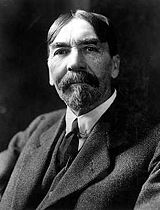
Thorsten Veblen (1857–1929), who came from rural mid-western America and worked at the University of Chicago
University of Chicago
The University of Chicago is a private research university in Chicago, Illinois, USA. It was founded by the American Baptist Education Society with a donation from oil magnate and philanthropist John D. Rockefeller and incorporated in 1890...
, is one of the best known early critics of the "American Way". In The Theory of the Leisure Class
The Theory of the Leisure Class
The Theory of the Leisure Class: An Economic Study of Institutions is a book, first published in 1899, by the Norwegian-American economist and sociologist Thorstein Veblen while he was a professor at the University of Chicago....
(1899) he scorned materialistic
Materialism
In philosophy, the theory of materialism holds that the only thing that exists is matter; that all things are composed of material and all phenomena are the result of material interactions. In other words, matter is the only substance...
culture and wealthy people who conspicuously consumed
Conspicuous consumption
Conspicuous consumption is spending on goods and services acquired mainly for the purpose of displaying income or wealth. In the mind of a conspicuous consumer, such display serves as a means of attaining or maintaining social status....
their riches as a way of demonstrating success and in The Theory of Business Enterprise
The Theory of Business Enterprise
The Theory of Business Enterprise is an economics book by Thorstein Veblen published in 1904 that looks at the growing corporate domination of culture and the economy....
(1904) Veblen distinguished production for people to use things and production for pure profit, arguing that the former is often hindered because businesses pursue the latter. Output and technological advance are restricted by business practices and the creation of monopolies. Businesses protect their existing capital investments and employ excessive credit, leading to depressions and increasing military expenditure and war through business control of political power. These two books, focusing on criticism first of consumerism
Consumerism
Consumerism is a social and economic order that is based on the systematic creation and fostering of a desire to purchase goods and services in ever greater amounts. The term is often associated with criticisms of consumption starting with Thorstein Veblen...
, and second of profiteering, did not advocate change. However, in 1911, Veblen joined the faculty of the University of Missouri
University of Missouri
The University of Missouri System is a state university system providing centralized administration for four universities, a health care system, an extension program, five research and technology parks, and a publishing press. More than 64,000 students are currently enrolled at its four campuses...
, where he had support from Herbert Davenport, the head of the economics department. Veblen remained at Columbia, Missouri
Columbia, Missouri
Columbia is the fifth-largest city in Missouri, and the largest city in Mid-Missouri. With a population of 108,500 as of the 2010 Census, it is the principal municipality of the Columbia Metropolitan Area, a region of 164,283 residents. The city serves as the county seat of Boone County and as the...
through 1918. In that year, he moved to New York to begin work as an editor of a magazine called The Dial, and then in 1919, along with Charles A. Beard
Charles A. Beard
Charles Austin Beard was, with Frederick Jackson Turner, one of the most influential American historians of the first half of the 20th century. He published hundreds of monographs, textbooks and interpretive studies in both history and political science...
, James Harvey Robinson
James Harvey Robinson
James Harvey Robinson was an American historian.Robinson was born Bloomington, Illinois. He taught history at the University of Pennsylvania and Columbia University , becoming a full professor in 1895...
and John Dewey
John Dewey
John Dewey was an American philosopher, psychologist and educational reformer whose ideas have been influential in education and social reform. Dewey was an important early developer of the philosophy of pragmatism and one of the founders of functional psychology...
, helped found the New School for Social Research (known today as The New School
The New School
The New School is a university in New York City, located mostly in Greenwich Village. From its founding in 1919 by progressive New York academics, and for most of its history, the university was known as the New School for Social Research. Between 1997 and 2005 it was known as New School University...
). He was also part of the Technical Alliance
Technical Alliance
Towards the end of 1919, American engineer Howard Scott formed the Technical Alliance, a group of engineers, scientists, and technicians based in New York. The Technical Alliance started an Energy Survey of North America, aimed at documenting the wastefulness of the capitalist system...
, created in 1919 by Howard Scott
Howard Scott
Howard Scott was a controversial engineer who had an interest in technocracy, and helped to form the Technical Alliance, Committee on Technocracy, and Technocracy Incorporated.-Early life:...
. From 1919 through 1926 Veblen continued to write and to be involved in various activities at The New School. During this period he wrote The Engineers and the Price System (1921).
John R. Commons
John R. Commons
John Rogers Commons was an American institutional economist and labor historian at the University of Wisconsin–Madison.-Biography:Born in Hollansburg, Ohio, John R. Commons had a religious upbringing which led him to be an advocate for social justice early in life...
(1862–1945) also came from mid-Western America. Underlying his ideas, consolidated in Institutional Economics (1934) was the concept that the economy is a web of relationships between people with diverging interests. There are monopolies, large corporations, labour disputes and fluctuating business cycles. They do however have an interest in resolving these disputes. Government, thought Commons, ought to be the mediator between the conflicting groups. Commons himself devoted much of his time to advisory and mediation work on government boards and industrial commissions.
Great Depression
The Great Depression was a severe worldwide economic depression in the decade preceding World War II. The timing of the Great Depression varied across nations, but in most countries it started in about 1929 and lasted until the late 1930s or early 1940s...
was a time of significant upheaval in the States. One of the most original contributions to understanding what had gone wrong came from a Harvard University
Harvard University
Harvard University is a private Ivy League university located in Cambridge, Massachusetts, United States, established in 1636 by the Massachusetts legislature. Harvard is the oldest institution of higher learning in the United States and the first corporation chartered in the country...
lawyer
Lawyer
A lawyer, according to Black's Law Dictionary, is "a person learned in the law; as an attorney, counsel or solicitor; a person who is practicing law." Law is the system of rules of conduct established by the sovereign government of a society to correct wrongs, maintain the stability of political...
, named Adolf Berle (1895–1971), who like John Maynard Keynes
John Maynard Keynes
John Maynard Keynes, Baron Keynes of Tilton, CB FBA , was a British economist whose ideas have profoundly affected the theory and practice of modern macroeconomics, as well as the economic policies of governments...
had resigned from his diplomatic job at the Paris Peace Conference, 1919
Paris Peace Conference, 1919
The Paris Peace Conference was the meeting of the Allied victors following the end of World War I to set the peace terms for the defeated Central Powers following the armistices of 1918. It took place in Paris in 1919 and involved diplomats from more than 32 countries and nationalities...
and was deeply disillusioned by the Versailles Treaty. In his book with Gardiner C. Means, The Modern Corporation and Private Property
The Modern Corporation and Private Property
The Modern Corporation and Private Property is a book written by Adolf Berle and Gardiner Means published in 1932. It explores the evolution of big business through a legal and economic lens, and argues that in the modern world those who legally have ownership over companies have been separated...
(1932), he detailed the evolution in the contemporary economy of big business, and argued that those who controlled big firms should be better held to account. Directors
Board of directors
A board of directors is a body of elected or appointed members who jointly oversee the activities of a company or organization. Other names include board of governors, board of managers, board of regents, board of trustees, and board of visitors...
of companies are held to account to the shareholder
Shareholder
A shareholder or stockholder is an individual or institution that legally owns one or more shares of stock in a public or private corporation. Shareholders own the stock, but not the corporation itself ....
s of companies, or not, by the rules found in company law statutes. This might include rights to elect and fire the management, require for regular general meetings, accounting standards, and so on. In 1930s America, the typical company laws (e.g. in Delaware
Delaware corporation
The Delaware General Corporation Law is the statute governing corporate law in the state of Delaware. Delaware is well known as a corporate haven. Over 50% of U.S...
) did not clearly mandate such rights. Berle argued that the unaccountable directors of companies were therefore apt to funnel the fruits of enterprise profits into their own pockets, as well as manage in their own interests. The ability to do this was supported by the fact that the majority of shareholders in big public companies
Public company
This is not the same as a Government-owned corporation.A public company or publicly traded company is a limited liability company that offers its securities for sale to the general public, typically through a stock exchange, or through market makers operating in over the counter markets...
were single individuals, with scant means of communication, in short, divided and conquered. Berle served in President Franklin Delano Roosevelt's administration through the depression, and was a key member of the so called "Brain trust
Brain Trust
Brain trust began as a term for a group of close advisors to a political candidate or incumbent, prized for their expertise in particular fields. The term is most associated with the group of advisors to Franklin Roosevelt during his presidential administration...
" developing many of the New Deal
New Deal
The New Deal was a series of economic programs implemented in the United States between 1933 and 1936. They were passed by the U.S. Congress during the first term of President Franklin D. Roosevelt. The programs were Roosevelt's responses to the Great Depression, and focused on what historians call...
policies. In 1967, Berle and Means issued a revised edition of their work, in which the preface added a new dimension. It was not only the separation of controllers of companies from the owners as shareholders at stake. They posed the question of what the corporate structure was really meant to achieve.
John Kenneth Galbraith
John Kenneth Galbraith
John Kenneth "Ken" Galbraith , OC was a Canadian-American economist. He was a Keynesian and an institutionalist, a leading proponent of 20th-century American liberalism...
(1908–2006) became one of the standard bearers for pro-active government and liberal-democrat politics. In The Affluent Society
The Affluent Society
The Affluent Society is a 1958 book by Harvard economist John Kenneth Galbraith. The book sought to clearly outline the manner in which the post-World War II America was becoming wealthy in the private sector but remained poor in the public sector, lacking social and physical infrastructure, and...
(1958), Galbraith argued voters reaching a certain material wealth begin to vote against the common good. He argued that the "conventional wisdom
Conventional wisdom
Conventional wisdom is a term used to describe ideas or explanations that are generally accepted as true by the public or by experts in a field. Such ideas or explanations, though widely held, are unexamined. Unqualified societal discourse preserves the status quo. It codifies existing social...
" of the conservative consensus was not enough to solve the problems of social inequality. In an age of big business, he argued, it is unrealistic to think of markets of the classical kind. They set prices and use advertising
Advertising
Advertising is a form of communication used to persuade an audience to take some action with respect to products, ideas, or services. Most commonly, the desired result is to drive consumer behavior with respect to a commercial offering, although political and ideological advertising is also common...
to create artificial demand for their own products, distorting people's real preferences. Consumer preferences actually come to reflect those of corporations—a "dependence effect"—and the economy as a whole is geared to irrational goals. In The New Industrial State
The New Industrial State
The New Industrial State is a 1967 book by John Kenneth Galbraith. In it, Galbraith asserts that within the industrial sectors of modern capitalist societies, the traditional mechanism of supply and demand is supplanted by the planning of large corporations, using techniques such as advertising...
Galbraith argued that economic decisions are planned by a private-bureaucracy, a technostructure
Technostructure
Technostructure is a term coined by the economist John Kenneth Galbraith in "The New Industrial State" to describe the group of technicians within an enterprise with considerable influence and control on its economy...
of experts who manipulate marketing
Marketing
Marketing is the process used to determine what products or services may be of interest to customers, and the strategy to use in sales, communications and business development. It generates the strategy that underlies sales techniques, business communication, and business developments...
and public relations
Public relations
Public relations is the actions of a corporation, store, government, individual, etc., in promoting goodwill between itself and the public, the community, employees, customers, etc....
channels. This hierarchy is self serving, profits are no longer the prime motivator, and even managers are not in control. Because they are the new planners, corporations detest risk, require steady economic and stable markets. They recruit governments to serve their interests with fiscal and monetary policy, for instance adhering to monetarist policies which enrich money-lenders in the City through increases in interest rates. While the goals of an affluent society and complicit government serve the irrational technostructure, public space is simultaneously impoverished. Galbraith paints the picture of stepping from penthouse villas onto unpaved streets, from landscaped gardens to unkempt public parks. In Economics and the Public Purpose
Economics and the Public Purpose
Economics and the Public Purpose is a 1973 book by Harvard economist John Kenneth Galbraith. Galbraith advocates a "new socialism" as the solution, nationalising military production and public services such as health care. He also advocates introducing disciplined wage, salary, profit and price...
(1973) Galbraith advocates a "new socialism" as the solution, nationalising
Nationalization
Nationalisation, also spelled nationalization, is the process of taking an industry or assets into government ownership by a national government or state. Nationalization usually refers to private assets, but may also mean assets owned by lower levels of government, such as municipalities, being...
military production and public services such as health care
Health care
Health care is the diagnosis, treatment, and prevention of disease, illness, injury, and other physical and mental impairments in humans. Health care is delivered by practitioners in medicine, chiropractic, dentistry, nursing, pharmacy, allied health, and other care providers...
, introducing disciplined salary and price controls to reduce inequality.
Paul Samuelson
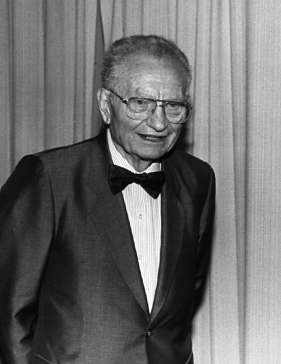
Neoclassical synthesis
Neoclassical synthesis is a postwar academic movement in economics that attempts to absorb the macroeconomic thought of John Maynard Keynes into the thought of neoclassical economics...
. "Positive economics
Positive economics
Positive economics is the branch of economics that concerns the description and explanation of economic phenomena. It focuses on facts and cause-and-effect behavioral relationships and includes the development and testing of economics theories...
" became the term created to describe certain trends and "laws" of economics that could be objectively observed and described in a value free way, separate from "normative economic
Normative economics
Normative economics is that part of economics that expresses value judgments about economic fairness or what the economy ought to be like or what goals of public policy ought to be....
" evaluations and judgments. The best selling textbook writer of this generation was Paul Samuelson
Paul Samuelson
Paul Anthony Samuelson was an American economist, and the first American to win the Nobel Memorial Prize in Economic Sciences. The Swedish Royal Academies stated, when awarding the prize, that he "has done more than any other contemporary economist to raise the level of scientific analysis in...
(1915–2009). His Ph.D.
Ph.D.
A Ph.D. is a Doctor of Philosophy, an academic degree.Ph.D. may also refer to:* Ph.D. , a 1980s British group*Piled Higher and Deeper, a web comic strip*PhD: Phantasy Degree, a Korean comic series* PhD Docbook renderer, an XML renderer...
was an attempt to show that mathematical methods could represent
Mathematical problem
A mathematical problem is a problem that is amenable to being represented, analyzed, and possibly solved, with the methods of mathematics. This can be a real-world problem, such as computing the orbits of the planets in the solar system, or a problem of a more abstract nature, such as Hilbert's...
a core of testable economic theory. It was published as Foundations of Economic Analysis
Foundations of Economic Analysis
Foundations of Economic Analysis is a book by Paul A. Samuelson published in 1947 by Harvard University Press. It sought to demonstrate a common mathematical structure underlying multiple branches of economics from two basic principles: maximizing behavior of agents and stability of equilibrium...
in 1947. Samuelson started with two assumptions. First, people and firms will act to maximise
Rational choice theory
Rational choice theory, also known as choice theory or rational action theory, is a framework for understanding and often formally modeling social and economic behavior. It is the main theoretical paradigm in the currently-dominant school of microeconomics...
their self interested goals. Second, markets tend towards an equilibrium of prices, where demand matches supply. He extended the mathematics to describe equilibrating behaviour of economic systems, including that of the then new macroeconomic theory of John Maynard Keynes
John Maynard Keynes
John Maynard Keynes, Baron Keynes of Tilton, CB FBA , was a British economist whose ideas have profoundly affected the theory and practice of modern macroeconomics, as well as the economic policies of governments...
. Whilst Richard Cantillon
Richard Cantillon
Richard Cantillon was an Irish-French economist and author of Essai sur la Nature du Commerce en Général , a book considered by William Stanley Jevons to be the "cradle of political economy". Although little information exists on Cantillon's life, it is known that he became a successful banker and...
had imitated Isaac Newton
Isaac Newton
Sir Isaac Newton PRS was an English physicist, mathematician, astronomer, natural philosopher, alchemist, and theologian, who has been "considered by many to be the greatest and most influential scientist who ever lived."...
's mechanical physics of inertia and gravity in competition and the market, the physiocrats
Physiocrats
Physiocracy is an economic theory developed by the Physiocrats, a group of economists who believed that the wealth of nations was derived solely from the value of "land agriculture" or "land development." Their theories originated in France and were most popular during the second half of the 18th...
had copied the body's blood system into circular flow of income models, William Jevons had found growth cycles to match the periodicity of sunspot
Sunspot
Sunspots are temporary phenomena on the photosphere of the Sun that appear visibly as dark spots compared to surrounding regions. They are caused by intense magnetic activity, which inhibits convection by an effect comparable to the eddy current brake, forming areas of reduced surface temperature....
s, Samuelson adapted thermodynamics
Thermodynamics
Thermodynamics is a physical science that studies the effects on material bodies, and on radiation in regions of space, of transfer of heat and of work done on or by the bodies or radiation...
formulae to economic theory. Reasserting economics as a hard science was being done in the United Kingdom also, and one celebrated "discovery", of A. W. Phillips, was of a correlative relationship between inflation and unemployment. The workable policy conclusion was that securing full employment could be traded-off against higher inflation. Samuelson incorporated the idea of the Phillips curve
Phillips curve
In economics, the Phillips curve is a historical inverse relationship between the rate of unemployment and the rate of inflation in an economy. Stated simply, the lower the unemployment in an economy, the higher the rate of inflation...
into his work. His introductory textbook Economics
Economics (textbook)
Economics is an influential introductory textbook by American economists Paul Samuelson and William Nordhaus. It was first published in 1948, and has appeared in nineteen different editions, the most recent in 2010. It was the best selling economics textbook for many decades and still remains...
was influential and widely adopted. It became the most successful economics text ever. Paul Samuelson was awarded the new Nobel Prize in Economics
Nobel Memorial Prize in Economic Sciences
The Nobel Memorial Prize in Economic Sciences, commonly referred to as the Nobel Prize in Economics, but officially the Sveriges Riksbank Prize in Economic Sciences in Memory of Alfred Nobel , is an award for outstanding contributions to the field of economics, generally regarded as one of the...
in 1970 for his merging of mathematics and political economy.
Kenneth Arrow
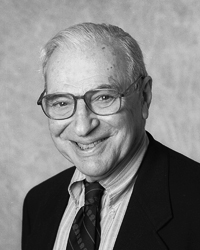
Kenneth Arrow
Kenneth Joseph Arrow is an American economist and joint winner of the Nobel Memorial Prize in Economics with John Hicks in 1972. To date, he is the youngest person to have received this award, at 51....
(born 1921) is Paul Samuelson's brother-in-law. His first major work, forming his doctoral dissertation at Columbia University
Columbia University
Columbia University in the City of New York is a private, Ivy League university in Manhattan, New York City. Columbia is the oldest institution of higher learning in the state of New York, the fifth oldest in the United States, and one of the country's nine Colonial Colleges founded before the...
was Social Choice and Individual Values
Social Choice and Individual Values
Kenneth Arrow's monograph Social Choice and Individual Values and a theorem within it created modern social choice theory, a rigorous melding of social ethics and voting theory with an economic flavor...
(1951), which brought economics into contact with political theory. This gave rise to social choice theory
Social choice theory
Social choice theory is a theoretical framework for measuring individual interests, values, or welfares as an aggregate towards collective decision. A non-theoretical example of a collective decision is passing a set of laws under a constitution. Social choice theory dates from Condorcet's...
with the introduction of his "Possibility Theorem
Arrow's impossibility theorem
In social choice theory, Arrow’s impossibility theorem, the General Possibility Theorem, or Arrow’s paradox, states that, when voters have three or more distinct alternatives , no voting system can convert the ranked preferences of individuals into a community-wide ranking while also meeting a...
". In his words,
This sparked widespread discussion over how to interpret the different conditions of the theorem and what implications it had for democracy and voting. Most controversial of his four (1963) or five (1950/1951) conditions is the independence of irrelevant alternatives
Independence of irrelevant alternatives
Independence of irrelevant alternatives is an axiom of decision theory and various social sciences.The word is used in different meanings in different contexts....
.
In the 1950s, Arrow and Gerard Debreu
Gerard Debreu
Gérard Debreu was a French economist and mathematician, who also came to have United States citizenship. Best known as a professor of economics at the University of California, Berkeley, where he began work in 1962, he won the 1983 Nobel Memorial Prize in Economics.-Biography:His father was the...
developed the Arrow-Debreu model
Arrow-Debreu model
In mathematical economics, the Arrow–Debreu model suggests that under certain economic assumptions there must be a set of prices such that aggregate supplies will equal aggregate demands for every commodity in the economy.The model is central to the theory of...
of general equilibria
General equilibrium
General equilibrium theory is a branch of theoretical economics. It seeks to explain the behavior of supply, demand and prices in a whole economy with several or many interacting markets, by seeking to prove that a set of prices exists that will result in an overall equilibrium, hence general...
. In 1971 Arrow with Frank Hahn
Frank Hahn
Frank Horace Hahn is a British economist whose work has focused on general equilibrium theory, monetary theory, Keynesian economics and monetarism...
co-authored General Competitive Analysis (1971), which reasserted a theory of general equilibrium of prices through the economy. In 1969 the Swedish Central Bank
Sveriges Riksbank
Sveriges Riksbank, or simply Riksbanken, is the central bank of Sweden and the world's oldest central bank. It is sometimes called the Swedish National Bank or the Bank of Sweden .-History:...
began awarding a prize in economics, as an analogy to the Nobel prize
Nobel Prize
The Nobel Prizes are annual international awards bestowed by Scandinavian committees in recognition of cultural and scientific advances. The will of the Swedish chemist Alfred Nobel, the inventor of dynamite, established the prizes in 1895...
s awarded in Chemistry, Physics, Medicine as well as Literature and Peace (though Alfred Nobel never endorsed this in his will). With John Hicks
John Hicks
Sir John Richard Hicks was a British economist and one of the most important and influential economists of the twentieth century. The most familiar of his many contributions in the field of economics were his statement of consumer demand theory in microeconomics, and the IS/LM model , which...
, Arrow won the Bank of Sweden prize in 1972, the youngest recipient ever. The year before, US President Richard Nixon
Richard Nixon
Richard Milhous Nixon was the 37th President of the United States, serving from 1969 to 1974. The only president to resign the office, Nixon had previously served as a US representative and senator from California and as the 36th Vice President of the United States from 1953 to 1961 under...
's had declared that "We are all Keynesians now
We are all Keynesians now
"We are all Keynesians now" is a now-famous phrase coined by Milton Friedman and attributed to U.S. president Richard Nixon. It is popularly associated with the reluctant embrace in a time of financial crisis of Keynesian economics by individuals such as Nixon who had formerly favored monetarist...
". The irony was that this was the beginning of a new revolution in economic thought.
Monetarism and the Chicago school
The interventionist monetary and fiscal policies that the orthodox post-war economics recommended came under attack in particular by a group of theorists working at the University of ChicagoUniversity of Chicago
The University of Chicago is a private research university in Chicago, Illinois, USA. It was founded by the American Baptist Education Society with a donation from oil magnate and philanthropist John D. Rockefeller and incorporated in 1890...
, which came to be known as the Chicago School
Chicago school (economics)
The Chicago school of economics describes a neoclassical school of thought within the academic community of economists, with a strong focus around the faculty of The University of Chicago, some of whom have constructed and popularized its principles...
. This more conservative strand of thought reasserted a "libertarian
Libertarianism
Libertarianism, in the strictest sense, is the political philosophy that holds individual liberty as the basic moral principle of society. In the broadest sense, it is any political philosophy which approximates this view...
" view of market activity, that people are best left to themselves, free to choose how to conduct their own affairs.
Ronald Coase
Ronald Coase (born 1910) is the most prominent economic analyst of law and the 1991 Nobel Prize winner. His first major article, The Nature of the FirmThe Nature of the Firm
The Nature of the Firm 4 Economica 386–405, is an influential article by Ronald Coase. It offered an economic explanation of why individuals choose to form partnerships, companies and other business entities rather than trading bilaterally through contracts on a market.-Summary:Given that...
(1937), argued that the reason for the existence of firms (companies, partnerships, etc.) is the existence of transaction cost
Transaction cost
In economics and related disciplines, a transaction cost is a cost incurred in making an economic exchange . For example, most people, when buying or selling a stock, must pay a commission to their broker; that commission is a transaction cost of doing the stock deal...
s. Rational individuals
Homo economicus
Homo economicus, or Economic human, is the concept in some economic theories of humans as rational and narrowly self-interested actors who have the ability to make judgments toward their subjectively defined ends...
trade through bilateral contracts on open markets until the costs of transactions mean that using corporations to produce things is more cost-effective. His second major article, The Problem of Social Cost (1960), argued that if we lived in a world without transaction costs, people would bargain with one another to create the same allocation of resources, regardless of the way a court might rule in property disputes. Coase used the example of an old legal
Law
Law is a system of rules and guidelines which are enforced through social institutions to govern behavior, wherever possible. It shapes politics, economics and society in numerous ways and serves as a social mediator of relations between people. Contract law regulates everything from buying a bus...
case about nuisance
Nuisance
Nuisance is a common law tort. It means that which causes offence, annoyance, trouble or injury. A nuisance can be either public or private. A public nuisance was defined by English scholar Sir J. F...
named Sturges v Bridgman
Sturges v Bridgman
Sturges v Bridgman LR 11 Ch D 852 is a landmark case in nuisance. It decides that what constitutes reasonable use of one's property depends on the character of the locality...
, where a noisy sweetmaker and a quiet doctor were neighbours and went to court to see who should have to move. Coase said that regardless of whether the judge ruled that the sweetmaker had to stop using his machinery, or that the doctor had to put up with it, they could strike a mutually beneficial bargain
Bargaining
Bargaining or haggling is a type of negotiation in which the buyer and seller of a good or service dispute the price which will be paid and the exact nature of the transaction that will take place, and eventually come to an agreement. Bargaining is an alternative pricing strategy to fixed prices...
about who moves house that reaches the same outcome of resource distribution. Only the existence of transaction costs may prevent this. So the law ought to pre-empt what would happen, and be guided by the most efficient
Efficiency (economics)
In economics, the term economic efficiency refers to the use of resources so as to maximize the production of goods and services. An economic system is said to be more efficient than another if it can provide more goods and services for society without using more resources...
solution. The idea is that law and regulation are not as important or effective at helping people as lawyers and government planners believe. Coase and others like him wanted a change of approach, to put the burden of proof for positive effects on a government that was intervening in the market, by analysing the costs of action.
Milton Friedman
Milton Friedman (1912–2006) stands as one of the most influential economists of the late twentieth century. He won the Nobel Prize in Economics in 1976, among other things, for A Monetary History of the United States (1963). Friedman argued that the Great Depression had been caused by the Federal Reserve's policies through the 1920s, and worsened in the 1930s. Friedman argues laissez-faire government policy is more desirable than government intervention in the economy. Governments should aim for a neutral monetary policy oriented toward long-run economic growthEconomic growth
In economics, economic growth is defined as the increasing capacity of the economy to satisfy the wants of goods and services of the members of society. Economic growth is enabled by increases in productivity, which lowers the inputs for a given amount of output. Lowered costs increase demand...
, by gradual expansion of the money supply. He advocates the quantity theory of money
Quantity theory of money
In monetary economics, the quantity theory of money is the theory that money supply has a direct, proportional relationship with the price level....
, that general prices are determined by money. Therefore active monetary (e.g. easy credit) or fiscal (e.g. tax and spend) policy can have unintended negative effects. In Capitalism and Freedom
Capitalism and Freedom
Capitalism and Freedom is a book by Milton Friedman originally published in 1962 by the University of Chicago Press which discusses the role of economic capitalism in liberal society. It sold over 400,000 copies in the first 18 years and more than half a million since 1962. It has been translated...
(1967) Friedman wrote:
Friedman was also known for his work on the consumption function, the permanent income hypothesis
Permanent income hypothesis
The permanent income hypothesis is a theory of consumption that was developed by the American economist Milton Friedman. In its simplest form, the hypothesis states that the choices made by consumers regarding their consumption patterns are determined not by current income but by their longer-term...
(1957), which Friedman himself referred to as his best scientific work. This work contended that rational consumers would spend a proportional amount of what they perceived to be their permanent income. Windfall gains would mostly be saved. Tax reductions likewise, as rational consumers would predict that taxes would have to rise later to balance public finances. Other important contributions include his critique of the Phillips curve
Phillips curve
In economics, the Phillips curve is a historical inverse relationship between the rate of unemployment and the rate of inflation in an economy. Stated simply, the lower the unemployment in an economy, the higher the rate of inflation...
and the concept of the natural rate of unemployment
Natural rate of unemployment
The natural rate of unemployment is a concept of economic activity developed in particular by Milton Friedman and Edmund Phelps in the 1960s, both recipients of the Nobel prize in economics...
(1968). This critique associated his name with the insight that a government that brings about higher inflation cannot permanently reduce unemployment by doing so. Unemployment may be temporarily lower, if the inflation is a surprise, but in the long run unemployment will be determined by the frictions and imperfections in the labour market.
Amartya Sen
Amartya Sen (born 1933) is a leading development and welfare economist and has expressed considerable skepticism on the validity of neo-classical assumptions. He was highly critical of rational expectationsRational expectations
Rational expectations is a hypothesis in economics which states that agents' predictions of the future value of economically relevant variables are not systematically wrong in that all errors are random. An alternative formulation is that rational expectations are model-consistent expectations, in...
theory, and devoted his work to development and human rights. He won the Nobel Prize in Economics
Nobel Memorial Prize in Economic Sciences
The Nobel Memorial Prize in Economic Sciences, commonly referred to as the Nobel Prize in Economics, but officially the Sveriges Riksbank Prize in Economic Sciences in Memory of Alfred Nobel , is an award for outstanding contributions to the field of economics, generally regarded as one of the...
in 1998.
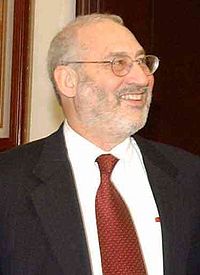
Joseph E. Stiglitz
Joseph Stiglitz (born 1943) Received the Nobel Prize in 2001 for his work in information economicsInformation economics
Information economics or the economics of informationis a branch of microeconomic theory that studies how information affects an economy and economic decisions. Information has special characteristics. It is easy to create but hard to trust. It is easy to spread but hard to control. It...
. He has served as chairman of President Clinton's Council of Economic Advisors and as chief economist for the World Bank
World Bank
The World Bank is an international financial institution that provides loans to developing countries for capital programmes.The World Bank's official goal is the reduction of poverty...
. Stiglitz has taught at many universities, including Columbia, Stanford, Oxford, Manchester, Yale, and MIT. In recent years he has become an outspoken critic of global economic institutions. He is a popular and academic author. In Making Globalization Work (2007), he offers an account of his perspectives on issues of international economics.
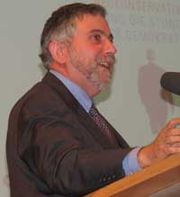
Paul Krugman
Paul Krugman (born 1953) is a contemporary economist. His textbook International Economics (2007) appears on many undergraduate reading lists. Well known as a representative of progressivism, he writes a weekly column on economics, American economic policyEconomic policy
Economic policy refers to the actions that governments take in the economic field. It covers the systems for setting interest rates and government budget as well as the labor market, national ownership, and many other areas of government interventions into the economy.Such policies are often...
, and American politics
Politics of the United States
The United States is a federal constitutional republic, in which the President of the United States , Congress, and judiciary share powers reserved to the national government, and the federal government shares sovereignty with the state governments.The executive branch is headed by the President...
more generally in the New York Times. He was awarded the Nobel Prize in Economics in 2008 for his work on New Trade Theory
New Trade Theory
New Trade Theory is a collection of economic models in international trade which focuses on the role of increasing returns to scale and network effects, which were developed in the late 1970s and early 1980s....
and economic geography
Economic geography
Economic geography is the study of the location, distribution and spatial organization of economic activities across the world. The subject matter investigated is strongly influenced by the researcher's methodological approach. Neoclassical location theorists, following in the tradition of Alfred...
.
Macroeconomics since the Bretton Woods era
From the 1970s onwards Friedman's monetarist critique of Keynesian macroeconomics formed the starting point for a number of trends in macroeconomic theory opposed to the idea that government intervention can or should stabilise the economy. Robert LucasRobert Lucas, Jr.
Robert Emerson Lucas, Jr. is an American economist at the University of Chicago. He received the Nobel Prize in Economics in 1995 and is consistently indexed among the top 10 economists in the Research Papers in Economics rankings. He is married to economist Nancy Stokey.He received his B.A. in...
criticized Keynesian thought for its inconsistency with microeconomic theory. Lucas's critique
Lucas critique
The Lucas critique, named for Robert Lucas′ work on macroeconomic policymaking, argues that it is naïve to try to predict the effects of a change in economic policy entirely on the basis of relationships observed in historical data, especially highly aggregated historical data.The basic idea...
set the stage for a neoclassical school of macroeconomics, New Classical economics based on the foundation of classical economics. Lucas also popularized the idea of rational expectations
Rational expectations
Rational expectations is a hypothesis in economics which states that agents' predictions of the future value of economically relevant variables are not systematically wrong in that all errors are random. An alternative formulation is that rational expectations are model-consistent expectations, in...
, which was used as the basis for several new classical theories including the Policy Ineffectiveness Proposition
Policy Ineffectiveness Proposition
The Policy Ineffectiveness Proposition is a new classical theory proposed in 1976 by Thomas J. Sargent and Neil Wallace based upon the theory of rational expectations...
.
The standard model for new classical economics is the real business cycle theory
Real business cycle theory
Real business cycle theory are a class of macroeconomic models in which business cycle fluctuations to a large extent can be accounted for by real shocks. Unlike other leading theories of the business cycle, RBC theory sees recessions and periods of economic growth as the efficient response to...
, which sought to explain observed fluctuations in output and employment in terms of real variables such as changes in technology and tastes. Assuming competitive markets, real business cycle theory implied that cyclical fluctuations are optimal responses to variability in technology and tastes, and that macroeconomic stabilisation policies must reduce welfare.
Keynesian economics made a comeback among mainstream economists with the advent of New Keynesian macroeconomics. The central theme of new Keynesianism was the provision of a microeconomic foundation for Keynesian macroeconomics, obtained by identifying minimal deviations from the standard microeconomic assumptions which yield Keynesian macroeconomic conclusions, such as the possibility of significant welfare benefits from macroeconomic stabilization. Akerlof's 'menu costs' arguments, showing that, under imperfect competition, small deviations from rationality generate significant (in welfare terms) price stickiness, are good example of this kind of work.
Economists have combined the methodology of real business cycle theory with theoretical elements, like sticky prices, from new Keynesian theory to produce the new neoclassical synthesis
New neoclassical synthesis
New neoclassical synthesis or new synthesis is the fusion of the major, modern macroeconomic schools of thought, new classical and new Keynesian, into a consensus on the best way to explain short-run fluctuations in the economy.Mankiw , 38. This new synthesis is analogous to the neoclassical...
. Dynamic stochastic general equilibrium
Dynamic stochastic general equilibrium
Dynamic stochastic general equilibrium modeling is a branch of applied general equilibrium theory that is influential in contemporary macroeconomics...
(DSGE) models, large systems of microeconomic equations combined into models of the general economy, are central to this new synthesis. The synthesis dominates present day economics.
See also
Articles- History of international tradeHistory of international tradeThe history of international trade chronicles notable events that have affected the trade between various countries.In the era before the rise of the nation state, the term 'international' trade cannot be literally applied, but simply means trade over long distances; the sort of movement in goods...
- Marshall PlanMarshall PlanThe Marshall Plan was the large-scale American program to aid Europe where the United States gave monetary support to help rebuild European economies after the end of World War II in order to combat the spread of Soviet communism. The plan was in operation for four years beginning in April 1948...
- Competition lawCompetition lawCompetition law, known in the United States as antitrust law, is law that promotes or maintains market competition by regulating anti-competitive conduct by companies....
- Contract law
- Corporate lawCorporate lawCorporate law is the study of how shareholders, directors, employees, creditors, and other stakeholders such as consumers, the community and the environment interact with one another. Corporate law is a part of a broader companies law...
- Energy economicsEnergy economicsEnergy economics is a broad scientific subject area which includes topics related to supply and use of energy in societies. Due to diversity of issues and methods applied and shared with a number of academic disciplines, energy economics does not present itself as a self contained academic...
- Labour lawLabour lawLabour law is the body of laws, administrative rulings, and precedents which address the legal rights of, and restrictions on, working people and their organizations. As such, it mediates many aspects of the relationship between trade unions, employers and employees...
- Perspectives on CapitalismPerspectives on capitalismThroughout modern history, a variety of influential perspectives on capitalism have shaped modern economic thought. Adam Smith was one of the first influential writers on the topic, with his book The Wealth of Nations, which is generally considered to be the start of classical economics which...
- RegulationRegulationRegulation is administrative legislation that constitutes or constrains rights and allocates responsibilities. It can be distinguished from primary legislation on the one hand and judge-made law on the other...
- Torts
- World Trade Organisation
- Constitutional economicsConstitutional economicsConstitutional economics is a research program in economics and constitutionalism that has been described as extending beyond the definition of 'the economic analysis of constitutional law' in explaining the choice "of alternative sets of legal-institutional-constitutional rules that constrain the...
Lists
- List of economists
- List of economics topics
- List of economic systems
- List of international trade topics
- List of publications in economics
- List of scholarly journals in economics
Journals
- European Journal of the History of Economic Thought (U.K.)
- History of Economic Ideas (Italy)
- History of Economics Review (Australia)
- History of Economic Thought (Japan)
- History of Political Economy (U.S.)
- Journal of the History of Economic Thought (U.K.)
External links
- Pioneers of the social sciences London School of Economics and Political Science
- The History of Economic Thought website
- Archive for the History of Economic Thought
- Biographies of economists
- Library of Economics and Liberty
- The Prehistory of Modern Economic Thought by Justin Ptak
- Chapter One and Chapter Sixteen from An Austrian Perspective on the History of Economic ThoughtAn Austrian Perspective on the History of Economic ThoughtAn Austrian Perspective on the History of Economic Thought is a work of economic history written by Murray N. Rothbard. Rothbard notes in the introduction that the book was originally conceived as a "standard Adam Smith-to-the-present moderately sized book"; however, in the process of writing it,...
by Murray RothbardMurray RothbardMurray Newton Rothbard was an American author and economist of the Austrian School who helped define capitalist libertarianism and popularized a form of free-market anarchism he termed "anarcho-capitalism." Rothbard wrote over twenty books and is considered a centrally important figure in the...
.