


Higher education in Portugal

Encyclopedia
Higher education in Portugal is divided into two main subsystems: university
and polytechnic
education. It is provided in autonomous public universities
, private universities
, public or private university institutes, polytechnic institutions and higher education institutions of other types. Higher education in state-run educational establishments is provided on a competitive basis, a system of numerus clausus
is enforced through a national database on student admissions. In addition, every higher education institution offers also a number of additional vacant places through other extraordinary admission processes for sportsmen, mature applicants (over 23 years old), international students, foreign students from the Lusosphere, degree owners from other institutions, students from other institutions (academic transfer), former students (readmission), and course change, which are subject to specific standards and regulations set by each institution or course department. Portuguese universities have existed since 1290. The oldest such institution, the University of Coimbra, was first established in Lisbon
before moving to Coimbra
. Historically, within the scope of the now defunct Portuguese Empire
, the Portuguese founded in 1792 the oldest engineering school of Latin America
(the Real Academia de Artilharia, Fortificação e Desenho), as well as the oldest medical college of Asia
(the Escola Médico-Cirúrgica de Goa) in 1842.
, the university system has a strong theoretical basis and is highly research-oriented while the polytechnical system provides a more practical training and is profession-oriented. Degrees in fields such as medicine
, law
, pharmaceutical sciences
, natural sciences, economics
, psychology
or veterinary medicine
are taught only in university institutions. Other fields like engineering
, technology
, management
, education
, agriculture
, sports, or humanities
are taught both in university and polytechnic institutions. Specifically vocationally oriented degrees such as, nursing
, health care technician, accounting technician, preschool and primary school teaching, are only offered by the polytechnic institutions.
The oldest university is the University of Coimbra founded in 1290. The largest university, by number of enrolled students, is the University of Porto
- with approximately 28,000 students. The Catholic University of Portugal, the oldest non-state-run university (concordat
ary status), was instituted by decree of the Holy See
and has been recognized by the State of Portugal since 1971. A few polytechnical higher education institutions, though formed as such in the 1980s, have their origin in 19th century educational institutions - this is the case of the Instituto Superior de Engenharia de Lisboa
, the Instituto Superior de Engenharia do Porto
and the Escola Superior Agrária de Coimbra
.
Public or private higher education institutions or courses cannot operate, or are not accredited, if they are not recognized by the Ministério da Ciência, Tecnologia e Ensino Superior (Ministry of Science, Technology and Higher Education). The two systems of higher education - university and polytechnic - are linked, and it is possible to transfer from one to the other through extraordinary effort. It is also possible to transfer from a private institution to a public one (or vice-versa) on the same basis.
Many universities are usually organized by faculty
(faculdade). Institute (instituto) and school (escola) are also common designations for autonomous units of Portuguese higher learning institutions, and are always used in the polytechnical system, though several universities also use these systems.
Access to public higher education institutions is subject to enrollment restrictions (numerus clausus
), and students must compete for admission. Students who hold a diploma of secondary education (12th grade) or the equivalent, who meet all legal requirements, particularly exams in specific subjects
in which minimum marks must be obtained, may apply. Any citizen over 23 years old who does not have the secondary education diploma (12th grade) can attempt to gain admission to a limited number of vacant places available, through special examination which includes an interview (Decree law: Decreto-Lei 64/2006, de 21 de Março). Public university's tution fees are higher than polytechnics', and polytechnic weekend and evening classes are usually organized. For a large number of academic fields, undergraduate and graduate admission criteria and student evaluation in most public university institutions are usually more selective and demanding than in many private institutions or polytechnic institutions. Access to private higher education institutions is regulated by each institution.
After 2006, with the approval of new legislation on the frame of the Bologna Process
, any polytechnic or university institution of Portugal is able to award a first cycle of study, known as licenciatura
(licentiate) plus a second cycle which confers a mestrado
(master's degree). Before then, only university institutions awarded master's degrees. All institutions award master's degrees after a second cycle of study, and some universities award integrated master's degrees (joint degrees) through a longer single cycle of study, with fields such as medicine having an initial 6-year study cycle needed for a master's degree. Doutoramento
s (Ph.D. degrees) are only awarded by university institutions. Only university institutions carry out fundamental research in addition to research and development
. However, since after the Bologna Process
(2006/2007) an increasingly large number of polytechnical institutions have established to some extent their own research and development units.
There are also special higher education institutions linked with the military
and the police
. These institutions generally have good reputations and are popular among students because their courses are a passport to the military/police career. These state-run institutions are the Air Force Academy
, the Military Academy
, the Naval School
and the Instituto Superior de Ciências Policiais e Segurança Interna
.
According to the OECD's Programme for International Student Assessment
(PISA), the average Portuguese 15-years old student was for many years underrated and underachieving in terms of reading literacy, mathematics and science knowledge in the OECD, nearly tied with the Italian and just above those from countries like Greece, Turkey and Mexico. However, since 2010, PISA results for Portuguese students improved dramatically. If this was true, it could be translated into a higher average level of readiness and academic skill among freshmen attending Portuguese universities and other higher education institutions. However, the Portuguese Ministry of Education announced a 2010 report published by its office for educational evaluation GAVE (Gabinete de Avaliação do Ministério da Educação) which criticized the results of PISA 2009 report and claimed that the average Portugese teenage student had profund handicaps in terms of expression, communication and logic, as well as a low performance when asked to solve problems. They also claimed that those fallacies are not exclusive of Portugal but indeed occur in other countries due to the way PISA was designed.
 In Portugal, university and college attendance before the 1960s, including for the period of Portuguese monarchy which ended in 1910, and for most of the Estado Novo regime (1920s - 1974), was very limited to the tiny elites, like members of the bourgeoise and high ranked political and military authorities. In addition, there were few institutions of higher education, low levels of secondary education
attainment, and a high illiteracy rate for Western European standards. However, during the last decade of the Estado Novo regime, from the 1960s to the 1974 Carnation Revolution
, secondary and university education experienced the fastest growth of Portuguese education's history. Today higher education, which includes polytechnic institutions and university institutions, is generalized but very heterogeneous, with different tonalities and subsystems. Overcrowded classrooms, obsolete curricula, unequal competition among institutions, frequent rule changing in the sector and increasingly higher tuition fees (inside the public higher education system, although much smaller than private institution fees) that can be a financial burden for many students, have been a reality until the present day, though some improvements have been made since the Bologna Process
implementation in 2007/2008. The Bologna Process created a more uniform and homogeneous higher educational system, at least within the public university and polytechnical institutions. Nearly 40% of the higher education students do not finish their degrees, although an undisclosed number of those students are subsequently readmitted into other courses or institutions of their choice. Despite their problems, many good institutions have a long tradition of excellence in teaching and research, where students and professors can attain their highest academic ambitions.
In Portugal, the university system has a strong theoretical basis and is highly research-oriented while the polytechnical system provides a more practical training and is profession-oriented. Degrees in fields such as medicine, law, pharmaceutical sciences, natural sciences, economics, psychology or veterinary medicine are taught only in university institutions. Other fields like engineering, technology, management, education, agriculture, sports, or humanities are taught both in university and polytechnic institutions.
Public or private higher education institutions or courses cannot operate, or are not accredited, if they are not recognized by the Ministerio da Ciencia, Tecnologia e Ensino Superior (Ministry of Science, Technology and Higher Education). The two systems of higher education - university and polytechnic - are linked, and it is possible to transfer from one to the other through extraordinary effort. It is also possible to transfer from a private institution to a public one (or vice-versa) on the same basis.
Access to public higher education institutions is subject to enrollment restrictions (numerus clausus), and students must compete for admission. Students who hold a diploma of secondary education (12th grade) or the equivalent, who meet all legal requirements, particularly exams in specific subjects in which minimum marks must be obtained, may apply. Any citizen over 23 years old who does not have the secondary education diploma (12th grade) can attempt to gain admission to a limited number of vacant places available, through special examination which includes an interview .
After 2006, with the approval of new legislation on the frame of the Bologna Process, any polytechnic or university institution of Portugal is able to award a first cycle of study, known as licenciatura (licentiate) plus a second cycle which confers a mestrado (master's degree). Before then, only university institutions awarded master's degrees. All institutions award master's degrees after a second cycle of study, and some universities award integrated master's degrees (joint degrees) through a longer single cycle of study, with fields such as medicine having an initial 6-year study cycle needed for a master's degree.
There are also special higher education institutions linked with the military and the police. These institutions generally have good reputations and are popular among students because their courses are a passport to the military/police career. These state-run institutions are the Air Force Academy, the Military Academy, the Naval School and the Instituto Superior de Ciências Policiais e Segurança Interna.
Over 35% of college-age citizens (20 years old) attend one of the country's higher education institutions (compared with 50% in the United States and 35% in the OECD countries).
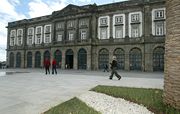 The state-run universities (Universidades) are governed by a Rector
, and are groupings of faculties
, and university institutes, departments or schools. They have been created mostly in the most populated and industrialized areas near the coast (although strategically balanced with three establishments opened after 1970 in the northern, central and southern interior regions), being established in the main cities. Two of these universities are located in the Azores and Madeira Islands, and the remaining eleven in Continental Portugal
. Three of them are located in Lisbon, the capital of Portugal (four considering also the Lisbon University Institute ISCTE, a large public university institute). Public universities have full autonomy in the creation and delivery of degree programmes, which are to be registered at DGES - Direcção-Geral do Ensino Superior (State Agency for Higher Education). Universities are regulated by the Ministry of Science, Technology and Higher Education, and are represented as a whole by the CRUP - Conselho de Reitores das Universidades Portuguesas.
The state-run polytechnic institutes (Institutos Politécnicos) are governed by a President
, and are groupings of superior schools (escolas superiores) and institutes, in major cities these also include superior institutes (institutos superiores). They have been created across the country after 1980. The fast expansion of the polytechnic institutes, whose entrance and teaching requirements before the mid 2000s were in general less demanding than the universities' criteria, was an administrative attempt to reduce the elevated rate of pre-higher education abandon and to increase the number of (under)graduates per one million inhabitants in Portugal which were dramatically below the European average (this does not imply that its students haven't become competent professionals). For the Portuguese State it was also considerably faster and cheaper to build the Institutos Politécnicos (Polytechnic Institutes) in almost all district capitals across the country, than build a few new universities - in average, state-funding per student is about 60% higher for university students than for polytechnic students; however, even university students' average funding per capita is about 60% lower in Portugal than in Scandinavia or North America. The number of doctorate-level teaching staff in the universities has been much larger than polytechnic's - only after the 2006 Bologna Process
, polytechnics reached a 10% share of doctorate-level teachers, while universities had always been home to a teaching staff with over 40% of doctorates. Since the mid 2000s, after many reforms, upgrades and changes, including the Bologna process
, the polytechnic institutes have become de facto
technical universities with little formal difference between them and the classic full chartered universities (polytechnics can't award doctorate degrees and, in general, they are not true research institutions, with few exceptions). The creation of degree programmes by public polytechnics require their prior approval from Government, through DGES - Direccção Geral do Ensino Superior (State Agency for Higher Education). Polytechnics are regulated by the Ministry of Science, Technology and Higher Education, and are represented as a whole by the CCISP - Conselho Coordenador dos Institutos Superiores Politécnicos Portugueses.
The creation of private institutions and delivery of degree programmes by them, require prior approval from Government, through DGES - Direccção Geral do Ensino Superior, after assessment by experts teams, which are nominated by the Government.
This system has resulted in increasing manifestations of concern from polytechnic and, above all, private institutions, arguing against discretionary attitudes and unnecessary bureaucracy. Government replies defend the necessity of maintaining selective mechanisms to secure a minimum level of institution quality, rationalize the whole system, and protect educational standards. In the 1990s and 2000s, there was anyway a fast growth and proliferation of private higher education
and state-run polytechnical institutions
with lower educational standards and ambiguous academic integrity.
Admission to public university programmes are often more demanding and selective than to their equivalent in public polytechnic and private institutions. Many specific university institutions and degrees are also regarded as more prestigious and academically robust than their peers from the polytechnic system or from certain less notable university institutions.
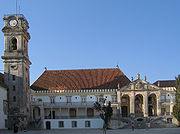
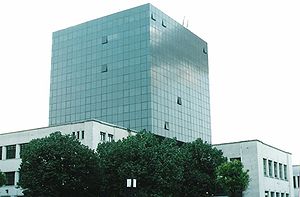 Public university schools have a long history in Portugal. They started in the Middle Ages
, and like other Europe
an medieval universities at the time, they were founded by the monarchs under the authority and supervision of the Catholic Church. For many centuries there was only one university, the University of Coimbra, founded in 1290 in Lisbon
. It was founded as a Studium Generale
(Estudo Geral). Scientiae thesaurus mirabilis, the royal charter announcing the institution of the current University of Coimbra was dated 1 March of that year, although efforts had been made at least since 1288 to create this first university studies in Portugal. Throughout history it transferred between Coimbra
and Lisbon several times, definitely settling in Coimbra during the 16th century (1537). The Colégio do Espírito Santo, a university
college
, was an old higher learning institution which operated between 1559 and 1759 in Évora
, but it was shut down during the Marquis of Pombal government, because it was run by the Jesuits, and the marquis implemented strong secular policies. A new state-run university at Évora was founded in 1973 - the University of Évora
. Within the scope of the Portuguese Empire
, the Portuguese founded in 1792 the oldest engineering school of Latin America
(the Real Academia de Artilharia, Fortificação e Desenho), as well as the oldest medical college of Asia
(the Goa Medical College
) in 1842.
Since the population was largely illiterate, the two universities at Coimbra and Évora, and some later higher-education schools in Lisbon (e.g. (Escola Politécnica: 1837-1911; Curso Superior de Letras: 1859-1911; and Curso Superior de Comércio: 1884-1911)) and Porto (successively Aula Náutica: 1762-1803; Real Academia da Marinha e Comércio: 1803-1837; and the Academia Politécnica: 1837-1911), were enough for a small population inside a territory like Continental Portugal
of the 16th-19th centuries. During the 19th century some other isolated higher-education schools were established. For instance, two medical school
s were established: the Lisbon Royal Medical-Surgical School and Porto Royal Medical-Surgical School opened in 1825. They were later incorporated into two new universities created in 1911 in Lisbon and Porto, which also absorbed Lisbon's former Escola Politécnica and Curso Superior de Letras, and Porto's Academia Politécnica, which were reformed and upgraded their facilities in the same year. Other successive institutions were the IST - Instituto Superior Técnico
and the Instituto Superior de Comércio, successor of the former Curso Superior de Comércio, (today ISEG - Instituto Superior de Economia e Gestão), both born from the former Lisbon Institute of Industry and Commerce which originated the creation of university schools in 1911.
With the advent of the Republic, the University of Lisbon and the University of Porto
were created in 1911. In 1930, a new university in Lisbon was created, the Technical University of Lisbon
, which incorporated the Instituto Superior Técnico and some other university institutes and colleges such as the Instituto Superior de Comércio, and agriculture and veterinary schools.
 In 1972 the ISCTE, a public university institute, was created in Lisbon by the decree Decreto-Lei nº 522/72, of 15 December, as a first step towards a new and innovative public university in the city. Due to the carnation revolution
of 1974 this first facility of a never-completed projected larger university stayed alone. In 1973 a new wave of state-run universities opened in Lisbon
- the New University of Lisbon
, Braga
- the Minho University and Évora
- the University of Évora
. These last days of the Estado Novo regime were marked by the most significant growth in enrolments for both secondary and university education in Portugal. After 1974, the anti-Estado Novo revolution's year
, new public universities were created in Vila Real - the University of Trás-os-Montes and Alto Douro
, Aveiro - the University of Aveiro, Covilhã
- the University of Beira Interior
(upgraded from the former Polytechnic Institute of Covilhã which was created in 1973), Faro
- the University of the Algarve
, Madeira
- the University of Madeira
, and the Azores
- the University of the Azores
.
In 1988, the Portuguese government founded a public distance university, the Universidade Aberta (Aberta University), an "Open University" with headquarters in Lisbon, regional branches in Porto and Coimbra, and study centres all over the country.
In the 1980s and 1990s, a boom of private institutions was experienced and many private universities started to open. Most private universities had a poor reputation and were known for making it easy for students to enter and also to get high grades. In 2007, several of those private institutions or their heirs, were investigated and faced compulsory closing (for example, the infamous Independente University
closing) or official criticism with recommendations that the state-managed investigation proposed for improving their quality and avoid termination.
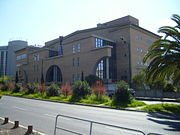 Without large endowments like those received, for example, by many US private universities and colleges which are attractive to the best researchers and students, the private higher education institutions of Portugal, with a few exceptions, do not have neither the financial support nor the academic profile to reach the highest teaching and research standards of the top Portuguese public universities. In addition, the private universities have faced a restrictive lack of collaboration with the major enterprises which, however, have developed fruitful relationships with many public higher education institutions.
Nowadays, the Catholic University of Portugal, a private university with branches in the cities of Lisbon
, Porto
, Braga
, Viseu
, and Figueira da Foz
(founded before the others, in 1967, and officially recognized in 1971), offers some well-recognized degrees. This private university has a unique status, being run by the Catholic Church.
The Portuguese universities have been the exclusive granters of master's
and doctoral degrees in the country and are to this day the major source of research and development
in Portugal. Today, as in the past, they have full autonomy to offer all levels of academic degrees and the power to create new graduate or undergraduate courses in almost every major field of study. By the time of the implementation of the Bologna Process
(2006) in Portuguese higher education, 42.5% of the state-run university teaching staff had a doctorate degree in 2005 - 65% in 2007 after the Bologna Process. (see list of universities in Portugal)
The 19th century - the industrialization era - created the need for new education programs in the country, the "industrial studies". In 1837, the Escola Politécnica (Polytechnic School) in Lisbon and the Academia Politécnica (Polytechnic Academy) in Porto were opened. They were university higher learning
institutions conferring academic degrees, fully focused on the sciences, mathematics
, and engineering
. Apart from sharing the name, they were not related to the polytechnic subsystem which has existed in Portugal since the 1970s, or to any current institution belonging to it.
The label and legal statute of University had been reserved for exclusive use by the University of Coimbra, but with the Republican revolution in 1911, two new universities were founded. The Escola Politécnica and Academia Politécnica were the core from which the sciences and engineering faculties
, respectively, of the new universities of Lisbon and Porto
emerged.
The Prime Minister of the Kingdom, Fontes Pereira de Melo
, was not satisfied with the excessive academism of both schools (Escola Politécnica (Polytechnic School) in Lisbon and the Academia Politécnica (Polytechnic Academy)), as he considered the institutions excessively theoretical for industrial labour force needs, as both were modelled on the only Portuguese university - the ancient University of Coimbra. Thus, in 1852, the minister created the Instituto Industrial de Lisboa (Lisbon Industrial Institute) which awarded higher education degrees between 1898 and 1911, and the Escola Industrial do Porto (Porto Industrial School), which a decade later was also declared an Institute and awarded higher education degrees between 1905 and 1918. The Instituto Industrial de Lisboa gave birth to the IST
in 1911, which with other institutions formed the Technical University of Lisbon
in 1930.
The Industrial Superior Studies were cut in 1918 by the minister Azevedo Neves reforms, as the country suffered many social and political convulsions, and the creation in 1911 of the new universities in Lisbon and Porto covered the highest educational needs of the country at the time. Between 1918 to 1974 (until the approval of decree Decreto-Lei 830/74 of 31 December 1974), the Industrial and Commercial Institutes in Porto and Lisbon, plus new ones created in Coimbra (1965) and Aveiro, provided vocational
and technical education, instead of higher education.
The idea of creating a polytechnic sector in Portugal can be traced back to the OECD's
Mediterranean Regional Project, MRP, of 1959. This project aimed at assessing future needs for skilled labour in five Mediterranean countries (Italy, Greece, Spain, Yugoslavia and Portugal) and had a lasting impact in terms of the political and social perception of education, with significant effects on the educational structure of the participating countries. These changes included the expansion of the higher education network by creating new university-level institutions, while a binary system was initiated through the establishment of polytechnic institutes and several colleges of teacher training (Parliament Act 5/73 of 25 July). After 1974 the existing polytechnics were transformed into University Institutes under the allegation that they should not remain "second class" institutions. It was in this context that successive governments established contact with the World Bank
and, from 1978 to 1984, about nineteen different missions visited Portugal. A final statement was based on two main principles:
Although the final report welcomed the expansion of higher education, correcting the prior situation of unequal and limited access, the World Bank did not favour further expansion: "...the enrolment represents 8% of the 18-22 age group and could be considered adequate. ...In view of the rapidly increased university enrolments, which represent an uneconomical drain in the economy...[the Bank recommends a] gradual introduction of quantitative restraints" (World Bank, 1977 Progress report). At the same time, the World Bank urged the Portuguese authorities to restrain enrolment quotas so as to make "better use" and rationalise the supply of higher education
and improve the management of the system, namely in terms of accountability
, coordination, and efficiency. Future expansions should be planned, taking into account manpower needs, and demographic and enrolment trends. Subsequently, the World Bank produced two "Staff Appraisal Reports", which provided insights about the negotiations between the Bank's Mission and the Portuguese government, and further confirmed the Bank's priorities. In the first Report of Assessment (No. 1807-PO, 1978), the Bank insisted on three criteria: balancing the supply of higher education graduates with the economic needs of the country, developing a persistent and consistent policy towards vocational education
, and upgrading teacher training programs. The Bank suggested that Portugal needed not only to train high level technicians but also middle level personnel (on a yearly basis: 1400 technicians with short cycle post-secondary education, 500 agricultural technicians and 6000 middle level managers). Subsequently, the government passed Decree-Law 397/77 of 17 September, which established a numerus clausus
for every university study programme and eliminated the threat to the new short vocational education programs – that without reducing the supply of engineering jobs, graduates of the technician training institutes would find employment too scarce. The World Bank was critical of the erratic policies toward the existing technical institutes, and of the excessive enrolment in university engineering programs and the lax approach on managing vacancy quotas, and raised the issue of diseconomies of scale in the system, suggesting that there were too many institutions with small dimensions. The government replied to the Bank’s demands with Decree-Law 513-T/79, which established a network of polytechnic institutes, including Higher Schools of Education. The main objectives of Polytechnic education were: to provide education with an applied and technical emphasis and strong vocational orientation, and for training intermediate-level technicians for industries, service companies and educational units (first cycle of basic education).
During the 1970s and 1980s, a network of polytechnic institutes
replaced short-cycle technical training with polytechnic higher education. This network include the Higher Schools of Education (Escolas Superiores de Educação) They were opened in many cities as confederations of Escolas Superiores and Institutos Superiores providing short-cycle bacharelato degrees (in education, music, engineering, management, agriculture, and other areas), many of which lacked a solid and realistic strategy. Between 1979 and 1986, a few were almost immediately upgraded to create new universities, like the University of Trás-os-Montes and Alto Douro
, the University of Beira Interior
, or the University of the Algarve
. Some of those first polytechnics were transformed into University Institutes so that they would not remain "second class" institutions, and a few years later were upgraded to full chartered universities. The polytechnic institutes, heirs of a large network of reputable but discontinued intermediate schools with traditions in technical and vocational education
, which also incorporated other older institutions formerly known as industrial institutes (see Instituto Industrial de Lisboa, Instituto Superior de Engenharia de Lisboa
and Instituto Superior de Engenharia do Porto
), were originally created to produce skilled intermediate technicians in specific areas. The short-cycle polytechnical degrees were mainly aimed at training of intermediate technicians for industry and commerce but also for basic health and education, instead of academicians (like biologists, chemists, economists, geographers, historians, lawyers, mathematicians, philosophers, physicians, physicists, et al.), engineers, lecturers, researchers and scientists that were already produced by Portuguese universities. In 1974, the Industrial and Commercial Institutes of vocational education
were transformed into higher learning
Superior Institutes of Engineering and Accounting and Administration and initially integrated in the university subsector; although originally exclusively focused on providing short-cycle degrees, the need for a stronger polytechnic
sector, and these schools' history and purpose, led them to be integrated in the polytechnic subsector in the late 1980s (Administrative Rule 389/88 of 25 October 1988 - Decreto-Lei n.º 389/88, de 25 de Outubro). However, in the following decades the polytechnic institutions didn't assume their specific role as tertiary education vocational schools, which were created to award practical diplomas in more technical or basic fields. Non-university intermediate professionals and skilled workers for the industry, agriculture, commerce and other services where needed. As more new public university institutions were founded or expanded, polytechnics didn't feel comfortable with their subaltern status in the Portuguese higher education system and a desire to be upgraded into university-like institutions grew among the polytechnic institutions' administrations. This desire of emancipation and evolution from polytechnic status to university status, was not followed by better qualified teaching staff, better facilities for teaching or researching, or by a stronger curricula with a more selective admission criteria, comparable with those enforced by almost all public university institutions. Criteria ambiguity and the general lower standards in polytechnic higher education and admission, were fiercely criticised by education personalities like university rector
s, regarding issues like the lack of admission exams in mathematics for polytechnic engineering applicants, and the proliferation of administration and management courses everywhere, many without a proper curriculum in mathematics, statistics and economics-related disciplines.
After its creation in the late 1970s, polytechnic institutions used to offer a 3-year course (the engineering superior institutes created in 1974, awarded 4-year bacharelato degrees before have been integrated into the polytechnic sector in 1988), awarding a bacharelato degree (lower than a bachelor's degree) instead of a university licenciatura (licentiate
) degree which was four to six years. The Portuguese licenciatura was a longer undergraduate degree, which included a licensure
for working in a particular profession and an accreditation by the respective professional orders - ordens profissionais. The licenciatura diploma was also required for those applicants who wished to undertake masters and doctorate programs.
The publication of Administrative Rule 645/88 of 21 September 1988 authorised polytechnic schools to teach two-year courses of specialised higher education (CESE - Curso de Estudos Superiores Especializados) within the fields already taught at the school. This system guaranteed a prominent independence between the two levels (bachelor's and CESE) since it was not compulsory to maintain a coherence of subjects. The diploma of specialised higher education (DESE - Diploma de Estudos Superiores Especializados) thus emerged much more as a post-graduate diploma than a complementary education to the bachelor student who wanted a licentiate degree. Changing the structure of the CESE into two-stage degrees obtained in two levels known as licenciatura bietápica (bachelor's and licentiate, in which access to the second level is granted immediately after completing the first), as consigned in Administrative Rule 413A/98 of 17 July 1998, removed the formal differences between the university licenciatura and the new two-stage polytechnic licenciatura (licenciatura bietápica).
By the government decree of July 1998 the polytechnics started to offer a two-stage curriculum (the first three years conferring a bacharelato degree, the following two years a licenciatura bietápica degree); both are undergraduate degrees, but the universities were offering a single licentiate
degree (licenciatura) of four to five years. This was changed with the Bologna process
with a new system of three years for a bachelor degree (licenciatura). Two additional years grant a masters degree (mestrado) which is conferred by the polytechnic institute under protocols with a partner university or alone when the polytechnic institution is in full compliance with the necessary requirements (proper research activity, doctoral teaching staff, and budget). The doctoral degree (doutoramento) is conferred only by the universities, as it always has been. By the time of the implementation of the Bologna Process
(2006) in Portuguese higher education, 9.5% of the state-run polytechnic teaching staff had a doctorate degree in 2005 - 15% in 2007 after the Bologna Process.
The Lisbon Superior Institute of Engineering
(ISEL, one of the colleges resulting from the former Lisbon Institute of Industry, today part of the Polytechnical Institute of Lisbon
), with the support of the University of Lisbon (UL), approved in 2005 the express will to reintegrate the university subsector as part of the University of Lisbon which do not have a Faculty of Engineering and through the assimilation and reorganization of ISEL could transform that polytechnic engineering school to a new university engineering school inside UL. For ISEL itself, this change could represent an emancipation from the limited polytechnic system, which has been regarded as a minor higher education subsystem in Portugal (although by mid 2000s with many upgrades and the Bologna process
, the formal differences are less notorious), due to limitations that were imposed by State Education Laws on polytechnics (such as the professor's career, the professor's wages, the State funds spending and the teaching competences of the polytechnics). The Porto Superior Institute of Engineering
(ISEP) was never merged into the University of Porto (or one of its predecessor schools, the Polytechnic Academy). The original proposal was dropped, partially because the University of Porto has owned its own engineering school since 1911 - the Faculdade de Engenharia da Universidade do Porto
, known as Faculdade de Engenharia since 1926, unlike the University of Lisbon.
Nursing
and health technologies technicians (technicians in clinical analysis, radiology, audiology, nuclear medicine and other technical fields in health) are also polytechnic higher education courses offered by nursing schools and schools of health technologies which are grouped into polytechnic institutes, and, in some cases, into universities (remaining in each of those situations as autonomous schools belonging to the polytechnic
subsector). The nursing schools were legally defined as comparable to polytechnic institutions in 1988 (Administrative Rule 480/88 of 23 December 1988 - Decreto Lei n.º 480/88, de 23 de Dezembro), and started to provide higher education
degrees in nursing in 1990 (Rule 821/89 of 15 September 1990 - Portaria n.º 821/89, de 15 de Setembro). Before 1990 nursing schools were not academic-degree-conferring institutions, and did not belong to the higher education
al system. In 1995 they were fully integrated into the polytechnic subsystem (Administrative Rule 205/95 of 5 August 1995 - Decreto Lei n.º 205/95, de 5 de Agosto), and in 1999 the new courses in nursing were approved, conferring a licenciatura diploma (Administrative Rule 353/99 of 8 September 1999 - Decreto Lei n.º 353/99, de 8 de Setembro).
Between 1918 and 1974, some older schools that are today integrated into the polytechnic subsector were industrial and commercial schools of vocational education
, as well as intermediate schools for primary-education-teacher training, schools of agriculture, or nursing schools. Current establishments for polytechnic studies in engineering such as the Instituto Superior de Engenharia de Lisboa
, Instituto Superior de Engenharia do Porto
, Instituto Superior de Engenharia de Coimbra
, the nursing school
s, and the current polytechnic schools of education (Escolas Superiores de Educação) during that period had no relation with higher education
, and were known by other names. Admission to these schools was open to people with no complete secondary education
, with universities reserved for secondary school graduates. For decades, these vocational schools of intermediate education (known as ensino médio) did not have the higher education status or credentials they have now. However, the majority of current polytechnical institutes was fully created in the 1980s and 1990s. It must be remembered that the Instituto Superior de Engenharia de Lisboa
and the Instituto Superior de Engenharia do Porto
, both born from the earlier industrial institutes (Instituto Industrial), were higher education degree-conferring institutions in technical engineering during a short period before 1919, and were known by other institutional names in their long histories.
However, in the 1990s and 2000s, a fast growth and proliferation of and state-run polytechnical institutions
with lower educational standards and ambiguous academic integrity, was responsible for unnecessary and uneconomic allocation of resources with no adequate quality output in terms of both new highly qualified graduates and research.
During the 1980s, the former Polytechnical Institute of Faro, in the Algarve region, southern Portugal, was incorporated into the University of the Algarve
, but as a totally independent institution in terms of staff, curricula and competences, remaining a full public polytechnic institution within a larger and independent public university. The former and short-lived Polytechnical Institute of Vila Real, in northern Portugal, was closed and then reformed, having been reorganized into a university in the 1980s - the University of Trás-os-Montes e Alto Douro. The University of Beira Interior
in Covilhã
was founded in 1979 after the closing of a former (also short-lived) polytechnical institute - the PIC - Polytechnical Institute of Covilhã (Instituto Politécnico da Covilhã) (1973–1979). A remarkable level of achievements and a successful political lobbying, allowed PIC in 1979 to be promoted by the Portuguese Ministry of Education to a higher institutional level, university institute. Seven years later, in 1986, the University Institute of Beira Interior was granted full university status, becoming the current University of Beira Interior.
reported on 2 April 2007, that according to the study, pre-higher education students from families with a higher educational and cultural background have a 10 times higher probability of becoming higher education students than the others. And among all higher education students, the family economic and cultural background are decisive on the type of course a student can attain in the higher education system.
According to the study, using as an example medicine, it shows that 73,2% of the 2003/2004 medicine freshman admitted to Portuguese universities have graduated parents. On the other side, 73% of nursing and health technician students (polytechnic
courses), have parents without higher education
.
The study shows a relation between parental very low educational levels and the students' options in higher education, where 39% of basic education teacher students, and 20% of management students, have parents with 4 years of study or less, the 4th grade (4ª classe). On the other side, law
, natural sciences and related fields (particularly medicine
), and fine arts, are preferred courses of students from families with higher educational and cultural backgrounds.
The study reports that about 42,000 unemployed people registered in the employment centers and seeking for a job have a higher education academic degree, with the fields of teaching and education accounting for 32% of those unemployed people, and art and humanities accounting for 12%.
The study also concludes that the higher is the financial and educational background of a family, more evident is the student preference of applying to university institutions, and the lower is the number of students desiring to apply to polytechnic institutions.
The study was also expected to be published in the European Journal of Higher Education.
Another study made by the University of Lisbon for its own students in the period 2003-2008, concluded that popular selective courses with restricted numerus clausus
and demanding high grades to the new applicants (examples include the university degrees of medicine, fine arts, and pharmacy), are mainly attained by students arrived from a wealthier background than that of those students enrolled at unpopular and less selective degree programmes and departments.
After the Bologna process
implementation in the late 2000s, although most state-run higher education student costs are supported with public money, the increasing tuition fees a student has to pay to attend the a public college or university and the attraction of new types of mature students (enrolled as part time or evening class students) like employees, businessmen, parents, and pensioners, many departments make a substantial profit from every additional student enrolled in courses, with benefits for the college or university's gross tuition revenue and without loss of educational quality (teacher per student, computer per student, classroom size per student, etc).
was a Europe
an reform process aimed at establishing a European Higher Education Area
by 2010. It was an unusual process in that it was loosely structured and driven by the 45 countries participating in it in cooperation with a number of international organisations, including the Council of Europe
.
The broad objectives of the Bologna Process are to remove the obstacles to student mobility across Europe; to enhance the attractiveness of European higher education worldwide; to establish a common structure of higher education systems across Europe, and for this common structure to be based on two main cycles: undergraduate (1st cycle of study) and graduate (2nd cycle of study).
In its drive to improve the quality of higher education and, in turn, human resources across Europe, the Bologna Process play a key role in contributing to the EU's Lisbon Strategy
goals which aim to deliver stronger, lasting growth and to create more and better jobs.
The reform aim was to create a higher education system in Europe, organised in such a way that:
This reform was elaborated in order to attain an education system based on the development of competences rather than on the transmission of knowledge, and included the development of a system of easily readable and comparable degrees aimed to simplify comparison between qualifications across Europe. The flexibility and transparency enabled students to have their qualifications recognised more widely, facilitating freedom of movement around a more transparent EHEA (European Higher Education Area
). This was aided by the establishment of a system of credits in the form of the European Credit Transfer System (ECTS) and the adoption of the Diploma Supplement by all countries involved. One academic year corresponds to 60 ECTS-credits that are equivalent to 1500–1800 hours of study. The new model comes closer to the North American and Japanese systems. It gives greater weight to practical training, intensive research projects and the way credits are measured reflects how hard a student has worked. The new evaluation methods reflect not only a student's performance on exams, but also his or her lab experiments, presentations, hours spent on study, innovation capacities and so forth.
, master
and doctorate
's level, that is:
(since 2006 - 2007) maintained the degree names but their significance changed. In ascending order of importance:
Bacharelato (Not academically equivalent to Bachelor's degree
) - title: Bacharel or Engenheiro Técnico for technical engineers - abbreviation: none or Bach.
Licenciatura (Academic License) - title: Licenciado (popular: Doutor or Engenheiro for a License in engineering
) - abbreviation used in front of holder's name: Lic. (popular: Dr. or Eng. for Engineer
, used extensively (formal and colloquially))
Pós-Graduação or Especialização (Postgraduate degree) - no specific title
Mestrado (Master's degree
) - title: Mestre
Doutorado (Doctorate
) - used in front of holder's name: Doutor
Agregação (Agrégation
) - used in front of holder's name: Professor Doutor
systems, they are known as Ordens (these include several Ordens like the Ordem dos Engenheiros
; Ordem dos Advogados; Ordem dos Farmacêuticos; Ordem dos Enfermeiros; Ordem dos Arquitectos; Ordem dos Médicos; Ordem dos Biólogos
; Ordem dos Economistas; Ordem dos Revisores Oficiais de Contas; etc.). In general, registration with such associations is a requisite for the legal practice of the profession and it normally requires an admission examination. In some orders (e.g. Ordem dos Engenheiros
for the exercice of engineering profession), the accreditation process exemptes candidates, possessing an accredited degree, of such examination. But some orders, as well as some other professional associations, only allow candidates possessing an accredited course to be admitted to examination but do not exempt them from this examination (e.g. Ordem dos Advogados for lawyers and the Ordem dos Técnicos Oficiais de Contas
for accountants).
and were awarded a limited range of engineering projects, and most teachers with the polytechnic degrees were not able to teach school students after the 6th grade). In 1999, over 15,000 students enrolled in Portuguese higher learning institutions and newly graduates in the fields of engineering and architecture, were enrolled or were awarded a degree in a non-accredited course. Those students and graduates with no official recognition were not admitted to any Ordem and were unable to sign projects in their presumed field of expertise. At the same time, only one accredited engineering course was offered by a private university, and over 90% of the accredited courses with recognition in the fields of engineering, architecture, and law were provided by state-run universities.
and university
licenciatura degrees are in general null and they have an equivalent denomination and course duration, and due to the Bologna process
both graduates should be recognized equally all across Europe. However, there are many courses whose degrees are still not recognized by the Ordens Profissionais (the highest Portuguese authorities in accreditation of graduated professionals), especially those courses conferred by several polytechnic institutes and many private institutions. For instance, there are many courses in engineering, law, or architecture, among many other fields, which are not recognized by its respective highest professional association authority (Ordens Profissionais). Among the oldest recognized and most extensively accredited courses in Portugal, are those university degrees awarded by the state-run universities. After the large 1998 - 2000s reforms and upgrades, many polytechnic licenciatura degrees started to be offered by the largest state-run polytechnic institutes, like those in the cities of Lisbon and Porto, have been awarded in the same way with wide official recognition by the concerned Ordens Profissionais and the State.
, but they are not required to have previously specialised in any specific area at the secondary school. Students sit for one or more entrance exams, Concurso nacional for public institutions or Concurso local for private institutions. In addition to passing entrance exams, students must fulfill particular prerequisites for the chosen course. Enrollment is limited; each year the institution establishes the number of places available. At the universities this is called the numerus clausus
. For the public institutions the exam scores count for the final evaluation, which includes the secondary school average marks. Then the students have to choose six institutions/courses they prefer to attend, in preferential order. The ones who reach the marks needed to attend the desired institution/course, given the number of vacancies, will be admitted. This means that the students could not be admitted at its first or second choice, but be admitted at the third or even sixth choice. In some cases, those entering polytechnics or nursing and health technologies schools with previous vocational training will receive institutional preference.
, different programmes have different admission rules and each institution sets the entrance ENES
exams needed for admission which may vary greatly from one institution to another.
ENES
examination requirement. In these cases, application is considered on the basis of one's educational background and work and life experience will be fully taken into account, as well as an interview.
The process consists of the general Portuguese exam, an interview to evaluate motivation and CV, and additional written and/or oral exams specific to each school and course.
Candidates approved go through a separate numerus clausus or enroll directly at the discretion of the school's board. As what happens with the Concurso Nacional through the Exames Nacionais do Ensino Secundário (ENES), the Extraordinary Exam Process for over-23 years old candidates is more demanding and has a much higher selectiveness in public universities than in the public polytechnics. Humanities and other non-mathematical-intensive fields have also much higher admission rates than classical university engineerings, economics or medicine. This implies that almost all new students admitted by this extraordinary process enter a polytechnic institution
, private institution
, or humanities
programmes.
In the 2000s, there was a growing effort to define nonaccredited universities or accredited institutions which awarded nonaccredited degrees, as diploma mill
s, in order to raise awareness about the problem. In 2007, the State had planned to enforce in a near future more stringent rules for all kind of public and private degree-conferring institutions. Currently, after changes introduced by the Bologna process
, master's degree
programmes can be offered to any student who had completed the first study cycle (licenciatura) and enroll in the second study cycle (mestrado).
For instance, medicine
is traditionally one of the most popular courses in Portugal, and therefore one of the most selective, with some of the highest rated secondary school top students competing with the best of the best for a place in a medicine course. Normally, a student who wants to attend the Medical School (Faculdade de Medicina) at one of the Portuguese public universities which exclusively offer this graduation course, has to get very high grades in the entrance exams (it may include exams in fields like chemistry, biology, and mathematics) and to have done an almost-brilliant secondary school course. Admission marks of the applicants admitted in medicine, are never less than 180 out of 200. Architecture
, a number of engineering
s, dentistry
, law
, pharmacy
, or veterinary medicine
at most public universities, are, in general, another examples of courses which are traditionally the most selective and popular. In contrast with these, like in any other educational system in the world, there are many courses offered by private universities, polytechnic institutes, and public universities, where the entrance requirements are sharply below the average. There are also some courses with low or even no demand and condemned to be extinguished.
The offer of law degrees in Portugal is widespread across the entire country through both public and private university institutions, and is done with varying selectiviness and different academic integrity levels, according to the head of the Ordem dos Advogados Marinho Pinto.
, and a larger proportion are underemployed. In 2008, the number of degree owners registered in the national network of job centers reached 60,000 (a registered graduate unemployment
rate of nearly 8%).
After students graduate from a higher education institution, factors like the field of studies, the grade point average and the prestige of the teaching institution, are relatively important for getting a job. But most important is the current employment market.
Due to these factors, higher education courses with a higher employability
rate include medicine
(there is a very high demand for medical doctors across the whole country), some classic engineering
specializations, and computer sciences
.
Low employability is found among teaching, humanities
and some social sciences
fields of study, like history
, geography
, linguistics
, philosophy
, sociology
; or to a lesser degree among the exact sciences and natural sciences, such as mathematics
, physics
, chemistry
, biology
or geology
, when these courses are oriented towards a teaching career instead of a more technical or scientific research career.
Despite their generally high reputation, economics
, law
and architecture
degrees, even from some of the most selective and prestigious schools, have had an increasingly low employability rate due to an excessive number of new graduates each year.
There are courses which used to have high or very high employability rates (at least during the 1990s) and currently are among the most precarious in terms of employment for new graduates. These include business administration, management
, nursing
and some health technician courses. The reduction of (a traditionally high) State expenditure allocated to job creation inside the public sector
of the Portuguese economy since 2002-2003, in addition to the boom of the number of places offered to new students in those fields by an increasing number of private and public teaching institutions, disrupted supply and demand
equilibrium.
Higher wages and better job conditions are usually offered by companies to the best fresh graduates of a number of highly reputed universities. Most Portuguese civil servants usually have better-than-average pay and benefits regardless of their personal educational quality.
An article was published by the Expresso
dated 2004 which listed the most desirable graduates of universities and polytechnics by Protuguese companies in the fields of engineering
, structural engineering
, marketing
, management
, economics
and finance
. This non-scientific report used a survey made by some human resources
recruiting firms, which means that the population surveyed comprised only the candidates who were seeking a job through those recruiting firms, and excluded the highly-qualified candidates who were recruited directly by the companies, by other important recruiting firms, or were recruited by headhunters before graduation. Additionally, some graduates are recruited from local higher learning institutions through partnerships with local companies or other institutions, bypassing full and open competition.
World Bank
research on human capital flight by country, reported in 2005 a rate of 20% of Portuguese graduates leaving the country for working abroad, one of the largest rates for countries with over 5 million inhabitants.
among fresh and senior graduates has increased since the early 1990s. Among the degree owners with the highest rates of underemployment are those who earned degrees in teaching, psychology, philosophy, economics, business administration, management, technical accounting, sociology, short-cycle engineering (technical engineering), some non-traditional engineerings, law, journalism, languages, history, and related fields of study. Several thousand people in this situation, have part-time or full-time occupations in a range of unspecialized jobs for unskilled or marginally skilled workers.
of multi-criteria evaluation on higher education institutions may be controversial and are not definitive proof of the higher standard of one institution over the others. However, ranking-based evaluation could be useful to point out certain characteristics or trends of a given institution, like notability and growth, both nationwide and internationally.
) for higher education, and formally founded in 2007, will be responsible for the publication of the national ranking of higher education institutions and degrees.
(2007 QS World University Rankings, by QS - Quacquarelli Symonds), the University of Coimbra is ranked number 3 among the universities in the Portuguese-speaking countries (behind the University of São Paulo
and the University of Campinas), and ranked 318 in the overall world rank. In 2006, according to The Times Higher Education Supplement (2006 QS World University Rankings, by QS - Quacquarelli Symonds), the University of Coimbra is ranked number 1 university in the Portuguese-speaking countries, and ranked 266 in the overall world rank.
's ranking placed the University of Porto
in the first position among the Portuguese universities by research output
. The Ranking Iberoamericano de Instituciones de Investigación have placed the University of Porto in the 11th place by research output in Iberoamerican countries (Portugal, Spain, Brazil, Argentina, Chile, Colombia, Cuba, Mexico, Peru, and Venezuela), and first in Portugal. In 2007, a Higher Education Evaluation and Accreditation Council of Taiwan's ranking, placed the University of Porto in 459. It was the only Portuguese university in the top 500 according to the Taiwanese ranking.
ranking, 2007 - Top 20 ranked according to indicators measuring web presence and impact.
In 2001 Portugal was, for the first time in history, one of the countries of excellence that contributed to the top 1% of the world's highly-cited publications. Spain was responsible for 2.08%, while Ireland and Greece accounted for 0.36% and 0.3%, respectively.
Within the higher education system, only university institutions carry out fundamental research.
Source: FCT - Fundação para a Ciência e Tecnologia http://www.fct.mctes.pt/
University
A university is an institution of higher education and research, which grants academic degrees in a variety of subjects. A university is an organisation that provides both undergraduate education and postgraduate education...
and polytechnic
Polytechnic (Portugal)
A polytechnic is a higher education educational institution in Portugal created in the 1980s. After 1998 they were upgraded to institutions which are allowed to confer licenciatura degrees. Before then, they only awarded short-cycle degrees which were known as bacharelatos and didn't provide...
education. It is provided in autonomous public universities
Public university
A public university is a university that is predominantly funded by public means through a national or subnational government, as opposed to private universities. A national university may or may not be considered a public university, depending on regions...
, private universities
Private university
Private universities are universities not operated by governments, although many receive public subsidies, especially in the form of tax breaks and public student loans and grants. Depending on their location, private universities may be subject to government regulation. Private universities are...
, public or private university institutes, polytechnic institutions and higher education institutions of other types. Higher education in state-run educational establishments is provided on a competitive basis, a system of numerus clausus
Numerus clausus
Numerus clausus is one of many methods used to limit the number of students who may study at a university. In many cases, the goal of the numerus clausus is simply to limit the number of students to the maximum feasible in some particularly sought-after areas of studies.However, in some cases,...
is enforced through a national database on student admissions. In addition, every higher education institution offers also a number of additional vacant places through other extraordinary admission processes for sportsmen, mature applicants (over 23 years old), international students, foreign students from the Lusosphere, degree owners from other institutions, students from other institutions (academic transfer), former students (readmission), and course change, which are subject to specific standards and regulations set by each institution or course department. Portuguese universities have existed since 1290. The oldest such institution, the University of Coimbra, was first established in Lisbon
Lisbon
Lisbon is the capital city and largest city of Portugal with a population of 545,245 within its administrative limits on a land area of . The urban area of Lisbon extends beyond the administrative city limits with a population of 3 million on an area of , making it the 9th most populous urban...
before moving to Coimbra
Coimbra
Coimbra is a city in the municipality of Coimbra in Portugal. Although it served as the nation's capital during the High Middle Ages, it is better-known for its university, the University of Coimbra, which is one of the oldest in Europe and the oldest academic institution in the...
. Historically, within the scope of the now defunct Portuguese Empire
Portuguese Empire
The Portuguese Empire , also known as the Portuguese Overseas Empire or the Portuguese Colonial Empire , was the first global empire in history...
, the Portuguese founded in 1792 the oldest engineering school of Latin America
Latin America
Latin America is a region of the Americas where Romance languages – particularly Spanish and Portuguese, and variably French – are primarily spoken. Latin America has an area of approximately 21,069,500 km² , almost 3.9% of the Earth's surface or 14.1% of its land surface area...
(the Real Academia de Artilharia, Fortificação e Desenho), as well as the oldest medical college of Asia
Asia
Asia is the world's largest and most populous continent, located primarily in the eastern and northern hemispheres. It covers 8.7% of the Earth's total surface area and with approximately 3.879 billion people, it hosts 60% of the world's current human population...
(the Escola Médico-Cirúrgica de Goa) in 1842.
Overview
In PortugalPortugal
Portugal , officially the Portuguese Republic is a country situated in southwestern Europe on the Iberian Peninsula. Portugal is the westernmost country of Europe, and is bordered by the Atlantic Ocean to the West and South and by Spain to the North and East. The Atlantic archipelagos of the...
, the university system has a strong theoretical basis and is highly research-oriented while the polytechnical system provides a more practical training and is profession-oriented. Degrees in fields such as medicine
Medicine
Medicine is the science and art of healing. It encompasses a variety of health care practices evolved to maintain and restore health by the prevention and treatment of illness....
, law
Law
Law is a system of rules and guidelines which are enforced through social institutions to govern behavior, wherever possible. It shapes politics, economics and society in numerous ways and serves as a social mediator of relations between people. Contract law regulates everything from buying a bus...
, pharmaceutical sciences
Pharmaceutical sciences
The pharmaceutical sciences are a group of interdisciplinary areas of study involved with the design, action, delivery, disposition, and use of drugs...
, natural sciences, economics
Economics
Economics is the social science that analyzes the production, distribution, and consumption of goods and services. The term economics comes from the Ancient Greek from + , hence "rules of the house"...
, psychology
Psychology
Psychology is the study of the mind and behavior. Its immediate goal is to understand individuals and groups by both establishing general principles and researching specific cases. For many, the ultimate goal of psychology is to benefit society...
or veterinary medicine
Veterinary medicine
Veterinary Medicine is the branch of science that deals with the prevention, diagnosis and treatment of disease, disorder and injury in non-human animals...
are taught only in university institutions. Other fields like engineering
Engineering
Engineering is the discipline, art, skill and profession of acquiring and applying scientific, mathematical, economic, social, and practical knowledge, in order to design and build structures, machines, devices, systems, materials and processes that safely realize improvements to the lives of...
, technology
Technology
Technology is the making, usage, and knowledge of tools, machines, techniques, crafts, systems or methods of organization in order to solve a problem or perform a specific function. It can also refer to the collection of such tools, machinery, and procedures. The word technology comes ;...
, management
Management
Management in all business and organizational activities is the act of getting people together to accomplish desired goals and objectives using available resources efficiently and effectively...
, education
Education
Education in its broadest, general sense is the means through which the aims and habits of a group of people lives on from one generation to the next. Generally, it occurs through any experience that has a formative effect on the way one thinks, feels, or acts...
, agriculture
Agriculture
Agriculture is the cultivation of animals, plants, fungi and other life forms for food, fiber, and other products used to sustain life. Agriculture was the key implement in the rise of sedentary human civilization, whereby farming of domesticated species created food surpluses that nurtured the...
, sports, or humanities
Humanities
The humanities are academic disciplines that study the human condition, using methods that are primarily analytical, critical, or speculative, as distinguished from the mainly empirical approaches of the natural sciences....
are taught both in university and polytechnic institutions. Specifically vocationally oriented degrees such as, nursing
Nursing
Nursing is a healthcare profession focused on the care of individuals, families, and communities so they may attain, maintain, or recover optimal health and quality of life from conception to death....
, health care technician, accounting technician, preschool and primary school teaching, are only offered by the polytechnic institutions.
The oldest university is the University of Coimbra founded in 1290. The largest university, by number of enrolled students, is the University of Porto
University of Porto
The University of Porto is a Portuguese public university located in Porto, and founded 22 March 1911. It is the largest Portuguese university by number of enrolled students and has one of the most noted research outputs in Portugal...
- with approximately 28,000 students. The Catholic University of Portugal, the oldest non-state-run university (concordat
Concordat
A concordat is an agreement between the Holy See of the Catholic Church and a sovereign state on religious matters. Legally, they are international treaties. They often includes both recognition and privileges for the Catholic Church in a particular country...
ary status), was instituted by decree of the Holy See
Holy See
The Holy See is the episcopal jurisdiction of the Catholic Church in Rome, in which its Bishop is commonly known as the Pope. It is the preeminent episcopal see of the Catholic Church, forming the central government of the Church. As such, diplomatically, and in other spheres the Holy See acts and...
and has been recognized by the State of Portugal since 1971. A few polytechnical higher education institutions, though formed as such in the 1980s, have their origin in 19th century educational institutions - this is the case of the Instituto Superior de Engenharia de Lisboa
Instituto Superior de Engenharia de Lisboa
The Instituto Superior de Engenharia de Lisboa is a Portuguese higher education polytechnic institution of engineering. Headquartered in Lisbon, it belongs to the Instituto Politécnico de Lisboa.-History:...
, the Instituto Superior de Engenharia do Porto
Instituto Superior de Engenharia do Porto
The Instituto Superior de Engenharia do Porto or Porto Superior Institute of Engineering is a public polytechnic higher learning and research institute of engineering, located in the city of Porto, Portugal...
and the Escola Superior Agrária de Coimbra
Escola Superior Agrária de Coimbra
The Escola Superior Agrária de Coimbra , in English the Agrarian School of Coimbra, is a state-run polytechnic higher education school of agriculture, based in Coimbra, Portugal...
.
Public or private higher education institutions or courses cannot operate, or are not accredited, if they are not recognized by the Ministério da Ciência, Tecnologia e Ensino Superior (Ministry of Science, Technology and Higher Education). The two systems of higher education - university and polytechnic - are linked, and it is possible to transfer from one to the other through extraordinary effort. It is also possible to transfer from a private institution to a public one (or vice-versa) on the same basis.
Many universities are usually organized by faculty
Faculty (university)
A faculty is a division within a university comprising one subject area, or a number of related subject areas...
(faculdade). Institute (instituto) and school (escola) are also common designations for autonomous units of Portuguese higher learning institutions, and are always used in the polytechnical system, though several universities also use these systems.
Access to public higher education institutions is subject to enrollment restrictions (numerus clausus
Numerus clausus
Numerus clausus is one of many methods used to limit the number of students who may study at a university. In many cases, the goal of the numerus clausus is simply to limit the number of students to the maximum feasible in some particularly sought-after areas of studies.However, in some cases,...
), and students must compete for admission. Students who hold a diploma of secondary education (12th grade) or the equivalent, who meet all legal requirements, particularly exams in specific subjects
ENES
In Portugal, ENES is an acronym for Exames Nacionais do Ensino Secundário' . Specifically, the ENES Sheet is a document containing the students final secondary education classification as well as the exam results of the "provas específicas" used to apply to university or polytechnical...
in which minimum marks must be obtained, may apply. Any citizen over 23 years old who does not have the secondary education diploma (12th grade) can attempt to gain admission to a limited number of vacant places available, through special examination which includes an interview (Decree law: Decreto-Lei 64/2006, de 21 de Março). Public university's tution fees are higher than polytechnics', and polytechnic weekend and evening classes are usually organized. For a large number of academic fields, undergraduate and graduate admission criteria and student evaluation in most public university institutions are usually more selective and demanding than in many private institutions or polytechnic institutions. Access to private higher education institutions is regulated by each institution.
After 2006, with the approval of new legislation on the frame of the Bologna Process
Bologna process
The purpose of the Bologna Process is the creation of the European Higher Education Area by making academic degree standards and quality assurance standards more comparable and compatible throughout Europe, in particular under the Lisbon Recognition Convention...
, any polytechnic or university institution of Portugal is able to award a first cycle of study, known as licenciatura
Licentiate
Licentiate is the title of a person who holds an academic degree called a licence. The term may derive from the Latin licentia docendi, meaning permission to teach. The term may also derive from the Latin licentia ad practicandum, which signified someone who held a certificate of competence to...
(licentiate) plus a second cycle which confers a mestrado
Master's degree
A master's is an academic degree granted to individuals who have undergone study demonstrating a mastery or high-order overview of a specific field of study or area of professional practice...
(master's degree). Before then, only university institutions awarded master's degrees. All institutions award master's degrees after a second cycle of study, and some universities award integrated master's degrees (joint degrees) through a longer single cycle of study, with fields such as medicine having an initial 6-year study cycle needed for a master's degree. Doutoramento
Doctorate
A doctorate is an academic degree or professional degree that in most countries refers to a class of degrees which qualify the holder to teach in a specific field, A doctorate is an academic degree or professional degree that in most countries refers to a class of degrees which qualify the holder...
s (Ph.D. degrees) are only awarded by university institutions. Only university institutions carry out fundamental research in addition to research and development
Research and development
The phrase research and development , according to the Organization for Economic Co-operation and Development, refers to "creative work undertaken on a systematic basis in order to increase the stock of knowledge, including knowledge of man, culture and society, and the use of this stock of...
. However, since after the Bologna Process
Bologna process
The purpose of the Bologna Process is the creation of the European Higher Education Area by making academic degree standards and quality assurance standards more comparable and compatible throughout Europe, in particular under the Lisbon Recognition Convention...
(2006/2007) an increasingly large number of polytechnical institutions have established to some extent their own research and development units.
There are also special higher education institutions linked with the military
Military
A military is an organization authorized by its greater society to use lethal force, usually including use of weapons, in defending its country by combating actual or perceived threats. The military may have additional functions of use to its greater society, such as advancing a political agenda e.g...
and the police
Police
The police is a personification of the state designated to put in practice the enforced law, protect property and reduce civil disorder in civilian matters. Their powers include the legitimized use of force...
. These institutions generally have good reputations and are popular among students because their courses are a passport to the military/police career. These state-run institutions are the Air Force Academy
Portuguese Air Force Academy
The Air Force Academy is a Portuguese military higher education institution whose aim is to provide all its students with the training and the experience that will enable them to graduate having gained the knowledge and the character qualities that are essential for leadership, and the motivation...
, the Military Academy
Portuguese Military Academy
The Military Academy is a Portuguese military establishment, which has the ability to confer educational qualifications equivalent to a university...
, the Naval School
Portuguese Naval School
The Portuguese Naval School is a university-level naval academy in Lisbon, Portugal. Founded in 1845, the school is located at the Lisbon Naval Base, on the south bank of the Tagus river.-Academics:...
and the Instituto Superior de Ciências Policiais e Segurança Interna
Instituto Superior de Ciências Policiais e Segurança Interna
The Instituto Superior de Ciências Policiais e Segurança Interna is a Portuguese higher education institution, a police university institute or Police academy of the PSP - Polícia de Segurança Pública. It is located in Lisbon, Portugal.-External links:*...
.
According to the OECD's Programme for International Student Assessment
Programme for International Student Assessment
The Programme for International Student Assessment is a worldwide evaluation in OECD member countries of 15-year-old school pupils' scholastic performance, performed first in 2000 and repeated every three years...
(PISA), the average Portuguese 15-years old student was for many years underrated and underachieving in terms of reading literacy, mathematics and science knowledge in the OECD, nearly tied with the Italian and just above those from countries like Greece, Turkey and Mexico. However, since 2010, PISA results for Portuguese students improved dramatically. If this was true, it could be translated into a higher average level of readiness and academic skill among freshmen attending Portuguese universities and other higher education institutions. However, the Portuguese Ministry of Education announced a 2010 report published by its office for educational evaluation GAVE (Gabinete de Avaliação do Ministério da Educação) which criticized the results of PISA 2009 report and claimed that the average Portugese teenage student had profund handicaps in terms of expression, communication and logic, as well as a low performance when asked to solve problems. They also claimed that those fallacies are not exclusive of Portugal but indeed occur in other countries due to the way PISA was designed.
Situation
Secondary education
Secondary education is the stage of education following primary education. Secondary education includes the final stage of compulsory education and in many countries it is entirely compulsory. The next stage of education is usually college or university...
attainment, and a high illiteracy rate for Western European standards. However, during the last decade of the Estado Novo regime, from the 1960s to the 1974 Carnation Revolution
Carnation Revolution
The Carnation Revolution , also referred to as the 25 de Abril , was a military coup started on 25 April 1974, in Lisbon, Portugal, coupled with an unanticipated and extensive campaign of civil resistance...
, secondary and university education experienced the fastest growth of Portuguese education's history. Today higher education, which includes polytechnic institutions and university institutions, is generalized but very heterogeneous, with different tonalities and subsystems. Overcrowded classrooms, obsolete curricula, unequal competition among institutions, frequent rule changing in the sector and increasingly higher tuition fees (inside the public higher education system, although much smaller than private institution fees) that can be a financial burden for many students, have been a reality until the present day, though some improvements have been made since the Bologna Process
Bologna process
The purpose of the Bologna Process is the creation of the European Higher Education Area by making academic degree standards and quality assurance standards more comparable and compatible throughout Europe, in particular under the Lisbon Recognition Convention...
implementation in 2007/2008. The Bologna Process created a more uniform and homogeneous higher educational system, at least within the public university and polytechnical institutions. Nearly 40% of the higher education students do not finish their degrees, although an undisclosed number of those students are subsequently readmitted into other courses or institutions of their choice. Despite their problems, many good institutions have a long tradition of excellence in teaching and research, where students and professors can attain their highest academic ambitions.
In Portugal, the university system has a strong theoretical basis and is highly research-oriented while the polytechnical system provides a more practical training and is profession-oriented. Degrees in fields such as medicine, law, pharmaceutical sciences, natural sciences, economics, psychology or veterinary medicine are taught only in university institutions. Other fields like engineering, technology, management, education, agriculture, sports, or humanities are taught both in university and polytechnic institutions.
Public or private higher education institutions or courses cannot operate, or are not accredited, if they are not recognized by the Ministerio da Ciencia, Tecnologia e Ensino Superior (Ministry of Science, Technology and Higher Education). The two systems of higher education - university and polytechnic - are linked, and it is possible to transfer from one to the other through extraordinary effort. It is also possible to transfer from a private institution to a public one (or vice-versa) on the same basis.
Access to public higher education institutions is subject to enrollment restrictions (numerus clausus), and students must compete for admission. Students who hold a diploma of secondary education (12th grade) or the equivalent, who meet all legal requirements, particularly exams in specific subjects in which minimum marks must be obtained, may apply. Any citizen over 23 years old who does not have the secondary education diploma (12th grade) can attempt to gain admission to a limited number of vacant places available, through special examination which includes an interview .
After 2006, with the approval of new legislation on the frame of the Bologna Process, any polytechnic or university institution of Portugal is able to award a first cycle of study, known as licenciatura (licentiate) plus a second cycle which confers a mestrado (master's degree). Before then, only university institutions awarded master's degrees. All institutions award master's degrees after a second cycle of study, and some universities award integrated master's degrees (joint degrees) through a longer single cycle of study, with fields such as medicine having an initial 6-year study cycle needed for a master's degree.
There are also special higher education institutions linked with the military and the police. These institutions generally have good reputations and are popular among students because their courses are a passport to the military/police career. These state-run institutions are the Air Force Academy, the Military Academy, the Naval School and the Instituto Superior de Ciências Policiais e Segurança Interna.
Over 35% of college-age citizens (20 years old) attend one of the country's higher education institutions (compared with 50% in the United States and 35% in the OECD countries).
University and polytechnic
Portugal has two main systems of higher education:- The universityUniversityA university is an institution of higher education and research, which grants academic degrees in a variety of subjects. A university is an organisation that provides both undergraduate education and postgraduate education...
system, which is the oldest, has its origins in the 13th century. It is composed of thirteen public universities, one public university institute, a public open university, and several private universities and university institutes.
- The polytechnicPolytechnic (Portugal)A polytechnic is a higher education educational institution in Portugal created in the 1980s. After 1998 they were upgraded to institutions which are allowed to confer licenciatura degrees. Before then, they only awarded short-cycle degrees which were known as bacharelatos and didn't provide...
system, that began offering higher education in the 1980s after the former industrial and commercial schools were converted into engineering and administration higher education schools (so its origins could be traced back to some earlier vocational educationVocational educationVocational education or vocational education and training is an education that prepares trainees for jobs that are based on manual or practical activities, traditionally non-academic, and totally related to a specific trade, occupation, or vocation...
schools of the 19th century). It is composed of fifteen state-run polytechnic institutes, public and private non-integrated polytechnic institutions, and other similar institutions.
Rector
The word rector has a number of different meanings; it is widely used to refer to an academic, religious or political administrator...
, and are groupings of faculties
Faculty (university)
A faculty is a division within a university comprising one subject area, or a number of related subject areas...
, and university institutes, departments or schools. They have been created mostly in the most populated and industrialized areas near the coast (although strategically balanced with three establishments opened after 1970 in the northern, central and southern interior regions), being established in the main cities. Two of these universities are located in the Azores and Madeira Islands, and the remaining eleven in Continental Portugal
Continental Portugal
Continental Portugal or Mainland Portugal is the designation of the mainland Portuguese territory, located on Europe's Iberian Peninsula....
. Three of them are located in Lisbon, the capital of Portugal (four considering also the Lisbon University Institute ISCTE, a large public university institute). Public universities have full autonomy in the creation and delivery of degree programmes, which are to be registered at DGES - Direcção-Geral do Ensino Superior (State Agency for Higher Education). Universities are regulated by the Ministry of Science, Technology and Higher Education, and are represented as a whole by the CRUP - Conselho de Reitores das Universidades Portuguesas.
The state-run polytechnic institutes (Institutos Politécnicos) are governed by a President
President
A president is a leader of an organization, company, trade union, university, or country.Etymologically, a president is one who presides, who sits in leadership...
, and are groupings of superior schools (escolas superiores) and institutes, in major cities these also include superior institutes (institutos superiores). They have been created across the country after 1980. The fast expansion of the polytechnic institutes, whose entrance and teaching requirements before the mid 2000s were in general less demanding than the universities' criteria, was an administrative attempt to reduce the elevated rate of pre-higher education abandon and to increase the number of (under)graduates per one million inhabitants in Portugal which were dramatically below the European average (this does not imply that its students haven't become competent professionals). For the Portuguese State it was also considerably faster and cheaper to build the Institutos Politécnicos (Polytechnic Institutes) in almost all district capitals across the country, than build a few new universities - in average, state-funding per student is about 60% higher for university students than for polytechnic students; however, even university students' average funding per capita is about 60% lower in Portugal than in Scandinavia or North America. The number of doctorate-level teaching staff in the universities has been much larger than polytechnic's - only after the 2006 Bologna Process
Bologna process
The purpose of the Bologna Process is the creation of the European Higher Education Area by making academic degree standards and quality assurance standards more comparable and compatible throughout Europe, in particular under the Lisbon Recognition Convention...
, polytechnics reached a 10% share of doctorate-level teachers, while universities had always been home to a teaching staff with over 40% of doctorates. Since the mid 2000s, after many reforms, upgrades and changes, including the Bologna process
Bologna process
The purpose of the Bologna Process is the creation of the European Higher Education Area by making academic degree standards and quality assurance standards more comparable and compatible throughout Europe, in particular under the Lisbon Recognition Convention...
, the polytechnic institutes have become de facto
De facto
De facto is a Latin expression that means "concerning fact." In law, it often means "in practice but not necessarily ordained by law" or "in practice or actuality, but not officially established." It is commonly used in contrast to de jure when referring to matters of law, governance, or...
technical universities with little formal difference between them and the classic full chartered universities (polytechnics can't award doctorate degrees and, in general, they are not true research institutions, with few exceptions). The creation of degree programmes by public polytechnics require their prior approval from Government, through DGES - Direccção Geral do Ensino Superior (State Agency for Higher Education). Polytechnics are regulated by the Ministry of Science, Technology and Higher Education, and are represented as a whole by the CCISP - Conselho Coordenador dos Institutos Superiores Politécnicos Portugueses.
The creation of private institutions and delivery of degree programmes by them, require prior approval from Government, through DGES - Direccção Geral do Ensino Superior, after assessment by experts teams, which are nominated by the Government.
This system has resulted in increasing manifestations of concern from polytechnic and, above all, private institutions, arguing against discretionary attitudes and unnecessary bureaucracy. Government replies defend the necessity of maintaining selective mechanisms to secure a minimum level of institution quality, rationalize the whole system, and protect educational standards. In the 1990s and 2000s, there was anyway a fast growth and proliferation of private higher education
Private school
Private schools, also known as independent schools or nonstate schools, are not administered by local, state or national governments; thus, they retain the right to select their students and are funded in whole or in part by charging their students' tuition, rather than relying on mandatory...
and state-run polytechnical institutions
Polytechnic (Portugal)
A polytechnic is a higher education educational institution in Portugal created in the 1980s. After 1998 they were upgraded to institutions which are allowed to confer licenciatura degrees. Before then, they only awarded short-cycle degrees which were known as bacharelatos and didn't provide...
with lower educational standards and ambiguous academic integrity.
Admission to public university programmes are often more demanding and selective than to their equivalent in public polytechnic and private institutions. Many specific university institutions and degrees are also regarded as more prestigious and academically robust than their peers from the polytechnic system or from certain less notable university institutions.
History of the university subsector
Middle Ages
The Middle Ages is a periodization of European history from the 5th century to the 15th century. The Middle Ages follows the fall of the Western Roman Empire in 476 and precedes the Early Modern Era. It is the middle period of a three-period division of Western history: Classic, Medieval and Modern...
, and like other Europe
Europe
Europe is, by convention, one of the world's seven continents. Comprising the westernmost peninsula of Eurasia, Europe is generally 'divided' from Asia to its east by the watershed divides of the Ural and Caucasus Mountains, the Ural River, the Caspian and Black Seas, and the waterways connecting...
an medieval universities at the time, they were founded by the monarchs under the authority and supervision of the Catholic Church. For many centuries there was only one university, the University of Coimbra, founded in 1290 in Lisbon
Lisbon
Lisbon is the capital city and largest city of Portugal with a population of 545,245 within its administrative limits on a land area of . The urban area of Lisbon extends beyond the administrative city limits with a population of 3 million on an area of , making it the 9th most populous urban...
. It was founded as a Studium Generale
Studium Generale
Studium generale is the old customary name for a Medieval university.- Definition :There is no clear official definition of what constituted a Studium generale...
(Estudo Geral). Scientiae thesaurus mirabilis, the royal charter announcing the institution of the current University of Coimbra was dated 1 March of that year, although efforts had been made at least since 1288 to create this first university studies in Portugal. Throughout history it transferred between Coimbra
Coimbra
Coimbra is a city in the municipality of Coimbra in Portugal. Although it served as the nation's capital during the High Middle Ages, it is better-known for its university, the University of Coimbra, which is one of the oldest in Europe and the oldest academic institution in the...
and Lisbon several times, definitely settling in Coimbra during the 16th century (1537). The Colégio do Espírito Santo, a university
University
A university is an institution of higher education and research, which grants academic degrees in a variety of subjects. A university is an organisation that provides both undergraduate education and postgraduate education...
college
College
A college is an educational institution or a constituent part of an educational institution. Usage varies in English-speaking nations...
, was an old higher learning institution which operated between 1559 and 1759 in Évora
Évora
Évora is a municipality in Portugal. It has total area of with a population of 55,619 inhabitants. It is the seat of the Évora District and capital of the Alentejo region. The municipality is composed of 19 civil parishes, and is located in Évora District....
, but it was shut down during the Marquis of Pombal government, because it was run by the Jesuits, and the marquis implemented strong secular policies. A new state-run university at Évora was founded in 1973 - the University of Évora
University of Évora
The University of Évora is a public university in Évora, Portugal.-History:The University of Évora, the second oldest in Portugal, was founded in the 16th century by Cardinal Infante Dom Henrique , and by the Pope Paul IV, and it was delivered to the Society of Jesus.The Jesuit college...
. Within the scope of the Portuguese Empire
Portuguese Empire
The Portuguese Empire , also known as the Portuguese Overseas Empire or the Portuguese Colonial Empire , was the first global empire in history...
, the Portuguese founded in 1792 the oldest engineering school of Latin America
Latin America
Latin America is a region of the Americas where Romance languages – particularly Spanish and Portuguese, and variably French – are primarily spoken. Latin America has an area of approximately 21,069,500 km² , almost 3.9% of the Earth's surface or 14.1% of its land surface area...
(the Real Academia de Artilharia, Fortificação e Desenho), as well as the oldest medical college of Asia
Asia
Asia is the world's largest and most populous continent, located primarily in the eastern and northern hemispheres. It covers 8.7% of the Earth's total surface area and with approximately 3.879 billion people, it hosts 60% of the world's current human population...
(the Goa Medical College
Goa Medical College
Goa Medical College is a medical college and hospital in Goa, India. It was built by the Portuguese in 1842 as the Escola Médico-Cirúrgica de Goa . It is the oldest Medical College in Asia...
) in 1842.
Since the population was largely illiterate, the two universities at Coimbra and Évora, and some later higher-education schools in Lisbon (e.g. (Escola Politécnica: 1837-1911; Curso Superior de Letras: 1859-1911; and Curso Superior de Comércio: 1884-1911)) and Porto (successively Aula Náutica: 1762-1803; Real Academia da Marinha e Comércio: 1803-1837; and the Academia Politécnica: 1837-1911), were enough for a small population inside a territory like Continental Portugal
Continental Portugal
Continental Portugal or Mainland Portugal is the designation of the mainland Portuguese territory, located on Europe's Iberian Peninsula....
of the 16th-19th centuries. During the 19th century some other isolated higher-education schools were established. For instance, two medical school
Medical school
A medical school is a tertiary educational institution—or part of such an institution—that teaches medicine. Degree programs offered at medical schools often include Doctor of Osteopathic Medicine, Bachelor/Doctor of Medicine, Doctor of Philosophy, master's degree, or other post-secondary...
s were established: the Lisbon Royal Medical-Surgical School and Porto Royal Medical-Surgical School opened in 1825. They were later incorporated into two new universities created in 1911 in Lisbon and Porto, which also absorbed Lisbon's former Escola Politécnica and Curso Superior de Letras, and Porto's Academia Politécnica, which were reformed and upgraded their facilities in the same year. Other successive institutions were the IST - Instituto Superior Técnico
Instituto Superior Técnico
Instituto Superior Técnico is a reputed school of engineering, part of Universidade Técnica de Lisboa . IST is the largest and the most prestigious school of engineering in Portugal...
and the Instituto Superior de Comércio, successor of the former Curso Superior de Comércio, (today ISEG - Instituto Superior de Economia e Gestão), both born from the former Lisbon Institute of Industry and Commerce which originated the creation of university schools in 1911.
With the advent of the Republic, the University of Lisbon and the University of Porto
University of Porto
The University of Porto is a Portuguese public university located in Porto, and founded 22 March 1911. It is the largest Portuguese university by number of enrolled students and has one of the most noted research outputs in Portugal...
were created in 1911. In 1930, a new university in Lisbon was created, the Technical University of Lisbon
Technical University of Lisbon
The Technical University of Lisbon is a Portuguese public university. It was created in 1930 in Lisbon, as a confederation of older schools, and comprises, nowadays, the faculties and institutes of veterinary medicine; agricultural sciences; economics and business administration; engineering,...
, which incorporated the Instituto Superior Técnico and some other university institutes and colleges such as the Instituto Superior de Comércio, and agriculture and veterinary schools.
Carnation Revolution
The Carnation Revolution , also referred to as the 25 de Abril , was a military coup started on 25 April 1974, in Lisbon, Portugal, coupled with an unanticipated and extensive campaign of civil resistance...
of 1974 this first facility of a never-completed projected larger university stayed alone. In 1973 a new wave of state-run universities opened in Lisbon
Lisbon
Lisbon is the capital city and largest city of Portugal with a population of 545,245 within its administrative limits on a land area of . The urban area of Lisbon extends beyond the administrative city limits with a population of 3 million on an area of , making it the 9th most populous urban...
- the New University of Lisbon
New University of Lisbon
Universidade NOVA de Lisboa, , also known as NOVA ) was established in 1973 and is the youngest of the three public universities of Lisbon, in Portugal....
, Braga
Braga
Braga , a city in the Braga Municipality in northwestern Portugal, is the capital of the Braga District, the oldest archdiocese and the third major city of the country. Braga is the oldest Portuguese city and one of the oldest Christian cities in the World...
- the Minho University and Évora
Évora
Évora is a municipality in Portugal. It has total area of with a population of 55,619 inhabitants. It is the seat of the Évora District and capital of the Alentejo region. The municipality is composed of 19 civil parishes, and is located in Évora District....
- the University of Évora
University of Évora
The University of Évora is a public university in Évora, Portugal.-History:The University of Évora, the second oldest in Portugal, was founded in the 16th century by Cardinal Infante Dom Henrique , and by the Pope Paul IV, and it was delivered to the Society of Jesus.The Jesuit college...
. These last days of the Estado Novo regime were marked by the most significant growth in enrolments for both secondary and university education in Portugal. After 1974, the anti-Estado Novo revolution's year
Carnation Revolution
The Carnation Revolution , also referred to as the 25 de Abril , was a military coup started on 25 April 1974, in Lisbon, Portugal, coupled with an unanticipated and extensive campaign of civil resistance...
, new public universities were created in Vila Real - the University of Trás-os-Montes and Alto Douro
University of Trás-os-Montes and Alto Douro
The University of Trás-os-Montes and Alto Douro is a public university located in Vila Real, Portugal. It was created in 1986 from the structure of the former Instituto Politécnico de Vila Real, a polytechnic institution dating from 1974. Today UTAD has campuses in Chaves and Miranda do Douro...
, Aveiro - the University of Aveiro, Covilhã
Covilhã
Covilhã is a city in Covilha Municipality in Centro region, Portugal. The city proper has 36,723 inhabitants, and the municipality has an area of 555.6 km² with a total population of 53,501, being composed of 31 parishes. It is located in the Cova da Beira subregion, in the district of...
- the University of Beira Interior
University of Beira Interior
The University of Beira Interior is a public university located in the city of Covilhã, Portugal...
(upgraded from the former Polytechnic Institute of Covilhã which was created in 1973), Faro
Faro, Portugal
Faro is the southernmost city in Portugal. It is located in the Faro Municipality in southern Portugal. The city proper has 41,934 inhabitants and the entire municipality has 58,305. It is the seat of the Faro District and capital of the Algarve region...
- the University of the Algarve
University of the Algarve
The University of the Algarve is a Portuguese public university with administrative and financial autonomy. Its two campuses and the central administration are located in Faro, the capital city of the Algarve region. It has about 9,000 students.- History and organisation :It was founded at the end...
, Madeira
Madeira
Madeira is a Portuguese archipelago that lies between and , just under 400 km north of Tenerife, Canary Islands, in the north Atlantic Ocean and an outermost region of the European Union...
- the University of Madeira
University of Madeira
The University of Madeira is a Portuguese public university, created in 1988 in Funchal. It houses the following departments and autonomous sections.-Departments:* Art and Design - * Biology - * Educational Sciences -...
, and the Azores
Azores
The Archipelago of the Azores is composed of nine volcanic islands situated in the middle of the North Atlantic Ocean, and is located about west from Lisbon and about east from the east coast of North America. The islands, and their economic exclusion zone, form the Autonomous Region of the...
- the University of the Azores
University of the Azores
The University of the Azores , or commonly abbreviated as UAç, is the only public university in the Autonomous Region of the Azores, It was founded on January 9, 1976, two years after the Carnation Revolution that ended several decades of dictatorship in Portugal, but before the Portuguese Third...
.
In 1988, the Portuguese government founded a public distance university, the Universidade Aberta (Aberta University), an "Open University" with headquarters in Lisbon, regional branches in Porto and Coimbra, and study centres all over the country.
In the 1980s and 1990s, a boom of private institutions was experienced and many private universities started to open. Most private universities had a poor reputation and were known for making it easy for students to enter and also to get high grades. In 2007, several of those private institutions or their heirs, were investigated and faced compulsory closing (for example, the infamous Independente University
Independente University
Independente University was a private university, headquartered in Lisbon, Portugal, founded in 1993 by Luís Arouca, Rui Verde and Amadeu Lima Carvalho...
closing) or official criticism with recommendations that the state-managed investigation proposed for improving their quality and avoid termination.
Nowadays, the Catholic University of Portugal, a private university with branches in the cities of Lisbon
Lisbon
Lisbon is the capital city and largest city of Portugal with a population of 545,245 within its administrative limits on a land area of . The urban area of Lisbon extends beyond the administrative city limits with a population of 3 million on an area of , making it the 9th most populous urban...
, Porto
Porto
Porto , also known as Oporto in English, is the second largest city in Portugal and one of the major urban areas in the Iberian Peninsula. Its administrative limits include a population of 237,559 inhabitants distributed within 15 civil parishes...
, Braga
Braga
Braga , a city in the Braga Municipality in northwestern Portugal, is the capital of the Braga District, the oldest archdiocese and the third major city of the country. Braga is the oldest Portuguese city and one of the oldest Christian cities in the World...
, Viseu
Viseu
Viseu is both a city and a municipality in the Dão-Lafões Subregion of Centro Region, Portugal. The municipality, with an area of 507.1 km², has a population of 99,593 , and the city proper has 47,250...
, and Figueira da Foz
Figueira da Foz
Figueira da Foz , also known as Figueira for short, is a municipality in the Coimbra District, in Portugal. It is located at the mouth of the Mondego River, 40 km west of Coimbra, and sheltered by hills ....
(founded before the others, in 1967, and officially recognized in 1971), offers some well-recognized degrees. This private university has a unique status, being run by the Catholic Church.
The Portuguese universities have been the exclusive granters of master's
Master's degree
A master's is an academic degree granted to individuals who have undergone study demonstrating a mastery or high-order overview of a specific field of study or area of professional practice...
and doctoral degrees in the country and are to this day the major source of research and development
Research and development
The phrase research and development , according to the Organization for Economic Co-operation and Development, refers to "creative work undertaken on a systematic basis in order to increase the stock of knowledge, including knowledge of man, culture and society, and the use of this stock of...
in Portugal. Today, as in the past, they have full autonomy to offer all levels of academic degrees and the power to create new graduate or undergraduate courses in almost every major field of study. By the time of the implementation of the Bologna Process
Bologna process
The purpose of the Bologna Process is the creation of the European Higher Education Area by making academic degree standards and quality assurance standards more comparable and compatible throughout Europe, in particular under the Lisbon Recognition Convention...
(2006) in Portuguese higher education, 42.5% of the state-run university teaching staff had a doctorate degree in 2005 - 65% in 2007 after the Bologna Process. (see list of universities in Portugal)
History of the polytechnic subsector
Portuguese learning institutions called "polytechnics" or "industrial and commercial institutes" were established in various periods with very different roles and objectives. They were designations for institutions ranging from university or polytechnic institutes to technical and vocational institutes.- The Polytechnic Schools at Lisbon and Porto:
The 19th century - the industrialization era - created the need for new education programs in the country, the "industrial studies". In 1837, the Escola Politécnica (Polytechnic School) in Lisbon and the Academia Politécnica (Polytechnic Academy) in Porto were opened. They were university higher learning
Higher education
Higher, post-secondary, tertiary, or third level education refers to the stage of learning that occurs at universities, academies, colleges, seminaries, and institutes of technology...
institutions conferring academic degrees, fully focused on the sciences, mathematics
Mathematics
Mathematics is the study of quantity, space, structure, and change. Mathematicians seek out patterns and formulate new conjectures. Mathematicians resolve the truth or falsity of conjectures by mathematical proofs, which are arguments sufficient to convince other mathematicians of their validity...
, and engineering
Engineering
Engineering is the discipline, art, skill and profession of acquiring and applying scientific, mathematical, economic, social, and practical knowledge, in order to design and build structures, machines, devices, systems, materials and processes that safely realize improvements to the lives of...
. Apart from sharing the name, they were not related to the polytechnic subsystem which has existed in Portugal since the 1970s, or to any current institution belonging to it.
The label and legal statute of University had been reserved for exclusive use by the University of Coimbra, but with the Republican revolution in 1911, two new universities were founded. The Escola Politécnica and Academia Politécnica were the core from which the sciences and engineering faculties
Faculty (university)
A faculty is a division within a university comprising one subject area, or a number of related subject areas...
, respectively, of the new universities of Lisbon and Porto
University of Porto
The University of Porto is a Portuguese public university located in Porto, and founded 22 March 1911. It is the largest Portuguese university by number of enrolled students and has one of the most noted research outputs in Portugal...
emerged.
- The Industrial Institutes at Lisbon and Porto:
The Prime Minister of the Kingdom, Fontes Pereira de Melo
Fontes Pereira de Melo
António Maria de Fontes Pereira de Melo GCTE KGF was a Portuguese statesman, politician, and engineer. He was the son of João de Fontes Pereira de Melo and wife and first cousin Jacinta Venância Rosa da Cunha Matos...
, was not satisfied with the excessive academism of both schools (Escola Politécnica (Polytechnic School) in Lisbon and the Academia Politécnica (Polytechnic Academy)), as he considered the institutions excessively theoretical for industrial labour force needs, as both were modelled on the only Portuguese university - the ancient University of Coimbra. Thus, in 1852, the minister created the Instituto Industrial de Lisboa (Lisbon Industrial Institute) which awarded higher education degrees between 1898 and 1911, and the Escola Industrial do Porto (Porto Industrial School), which a decade later was also declared an Institute and awarded higher education degrees between 1905 and 1918. The Instituto Industrial de Lisboa gave birth to the IST
Instituto Superior Técnico
Instituto Superior Técnico is a reputed school of engineering, part of Universidade Técnica de Lisboa . IST is the largest and the most prestigious school of engineering in Portugal...
in 1911, which with other institutions formed the Technical University of Lisbon
Technical University of Lisbon
The Technical University of Lisbon is a Portuguese public university. It was created in 1930 in Lisbon, as a confederation of older schools, and comprises, nowadays, the faculties and institutes of veterinary medicine; agricultural sciences; economics and business administration; engineering,...
in 1930.
- The Industrial and Commercial Institutes and Schools:
The Industrial Superior Studies were cut in 1918 by the minister Azevedo Neves reforms, as the country suffered many social and political convulsions, and the creation in 1911 of the new universities in Lisbon and Porto covered the highest educational needs of the country at the time. Between 1918 to 1974 (until the approval of decree Decreto-Lei 830/74 of 31 December 1974), the Industrial and Commercial Institutes in Porto and Lisbon, plus new ones created in Coimbra (1965) and Aveiro, provided vocational
Vocational education
Vocational education or vocational education and training is an education that prepares trainees for jobs that are based on manual or practical activities, traditionally non-academic, and totally related to a specific trade, occupation, or vocation...
and technical education, instead of higher education.
- Modern-day polytechnic sub sector development:
The idea of creating a polytechnic sector in Portugal can be traced back to the OECD's
Mediterranean Regional Project, MRP, of 1959. This project aimed at assessing future needs for skilled labour in five Mediterranean countries (Italy, Greece, Spain, Yugoslavia and Portugal) and had a lasting impact in terms of the political and social perception of education, with significant effects on the educational structure of the participating countries. These changes included the expansion of the higher education network by creating new university-level institutions, while a binary system was initiated through the establishment of polytechnic institutes and several colleges of teacher training (Parliament Act 5/73 of 25 July). After 1974 the existing polytechnics were transformed into University Institutes under the allegation that they should not remain "second class" institutions. It was in this context that successive governments established contact with the World Bank
World Bank
The World Bank is an international financial institution that provides loans to developing countries for capital programmes.The World Bank's official goal is the reduction of poverty...
and, from 1978 to 1984, about nineteen different missions visited Portugal. A final statement was based on two main principles:
- A basic emphasis on an economic approach to higher education to improve efficiency by attaining objectives at the lowest possible cost, e.g. containing long term university degrees while promoting shorter technical degrees, shorter teacher training degrees, higher student/staff ratios, etc.
- A perspective of a world division of labour that led defining country specific roles.
Although the final report welcomed the expansion of higher education, correcting the prior situation of unequal and limited access, the World Bank did not favour further expansion: "...the enrolment represents 8% of the 18-22 age group and could be considered adequate. ...In view of the rapidly increased university enrolments, which represent an uneconomical drain in the economy...[the Bank recommends a] gradual introduction of quantitative restraints" (World Bank, 1977 Progress report). At the same time, the World Bank urged the Portuguese authorities to restrain enrolment quotas so as to make "better use" and rationalise the supply of higher education
Higher education
Higher, post-secondary, tertiary, or third level education refers to the stage of learning that occurs at universities, academies, colleges, seminaries, and institutes of technology...
and improve the management of the system, namely in terms of accountability
Accountability
Accountability is a concept in ethics and governance with several meanings. It is often used synonymously with such concepts as responsibility, answerability, blameworthiness, liability, and other terms associated with the expectation of account-giving...
, coordination, and efficiency. Future expansions should be planned, taking into account manpower needs, and demographic and enrolment trends. Subsequently, the World Bank produced two "Staff Appraisal Reports", which provided insights about the negotiations between the Bank's Mission and the Portuguese government, and further confirmed the Bank's priorities. In the first Report of Assessment (No. 1807-PO, 1978), the Bank insisted on three criteria: balancing the supply of higher education graduates with the economic needs of the country, developing a persistent and consistent policy towards vocational education
Vocational education
Vocational education or vocational education and training is an education that prepares trainees for jobs that are based on manual or practical activities, traditionally non-academic, and totally related to a specific trade, occupation, or vocation...
, and upgrading teacher training programs. The Bank suggested that Portugal needed not only to train high level technicians but also middle level personnel (on a yearly basis: 1400 technicians with short cycle post-secondary education, 500 agricultural technicians and 6000 middle level managers). Subsequently, the government passed Decree-Law 397/77 of 17 September, which established a numerus clausus
Numerus clausus
Numerus clausus is one of many methods used to limit the number of students who may study at a university. In many cases, the goal of the numerus clausus is simply to limit the number of students to the maximum feasible in some particularly sought-after areas of studies.However, in some cases,...
for every university study programme and eliminated the threat to the new short vocational education programs – that without reducing the supply of engineering jobs, graduates of the technician training institutes would find employment too scarce. The World Bank was critical of the erratic policies toward the existing technical institutes, and of the excessive enrolment in university engineering programs and the lax approach on managing vacancy quotas, and raised the issue of diseconomies of scale in the system, suggesting that there were too many institutions with small dimensions. The government replied to the Bank’s demands with Decree-Law 513-T/79, which established a network of polytechnic institutes, including Higher Schools of Education. The main objectives of Polytechnic education were: to provide education with an applied and technical emphasis and strong vocational orientation, and for training intermediate-level technicians for industries, service companies and educational units (first cycle of basic education).
During the 1970s and 1980s, a network of polytechnic institutes
Polytechnic (Portugal)
A polytechnic is a higher education educational institution in Portugal created in the 1980s. After 1998 they were upgraded to institutions which are allowed to confer licenciatura degrees. Before then, they only awarded short-cycle degrees which were known as bacharelatos and didn't provide...
replaced short-cycle technical training with polytechnic higher education. This network include the Higher Schools of Education (Escolas Superiores de Educação) They were opened in many cities as confederations of Escolas Superiores and Institutos Superiores providing short-cycle bacharelato degrees (in education, music, engineering, management, agriculture, and other areas), many of which lacked a solid and realistic strategy. Between 1979 and 1986, a few were almost immediately upgraded to create new universities, like the University of Trás-os-Montes and Alto Douro
University of Trás-os-Montes and Alto Douro
The University of Trás-os-Montes and Alto Douro is a public university located in Vila Real, Portugal. It was created in 1986 from the structure of the former Instituto Politécnico de Vila Real, a polytechnic institution dating from 1974. Today UTAD has campuses in Chaves and Miranda do Douro...
, the University of Beira Interior
University of Beira Interior
The University of Beira Interior is a public university located in the city of Covilhã, Portugal...
, or the University of the Algarve
University of the Algarve
The University of the Algarve is a Portuguese public university with administrative and financial autonomy. Its two campuses and the central administration are located in Faro, the capital city of the Algarve region. It has about 9,000 students.- History and organisation :It was founded at the end...
. Some of those first polytechnics were transformed into University Institutes so that they would not remain "second class" institutions, and a few years later were upgraded to full chartered universities. The polytechnic institutes, heirs of a large network of reputable but discontinued intermediate schools with traditions in technical and vocational education
Vocational education
Vocational education or vocational education and training is an education that prepares trainees for jobs that are based on manual or practical activities, traditionally non-academic, and totally related to a specific trade, occupation, or vocation...
, which also incorporated other older institutions formerly known as industrial institutes (see Instituto Industrial de Lisboa, Instituto Superior de Engenharia de Lisboa
Instituto Superior de Engenharia de Lisboa
The Instituto Superior de Engenharia de Lisboa is a Portuguese higher education polytechnic institution of engineering. Headquartered in Lisbon, it belongs to the Instituto Politécnico de Lisboa.-History:...
and Instituto Superior de Engenharia do Porto
Instituto Superior de Engenharia do Porto
The Instituto Superior de Engenharia do Porto or Porto Superior Institute of Engineering is a public polytechnic higher learning and research institute of engineering, located in the city of Porto, Portugal...
), were originally created to produce skilled intermediate technicians in specific areas. The short-cycle polytechnical degrees were mainly aimed at training of intermediate technicians for industry and commerce but also for basic health and education, instead of academicians (like biologists, chemists, economists, geographers, historians, lawyers, mathematicians, philosophers, physicians, physicists, et al.), engineers, lecturers, researchers and scientists that were already produced by Portuguese universities. In 1974, the Industrial and Commercial Institutes of vocational education
Vocational education
Vocational education or vocational education and training is an education that prepares trainees for jobs that are based on manual or practical activities, traditionally non-academic, and totally related to a specific trade, occupation, or vocation...
were transformed into higher learning
Higher education
Higher, post-secondary, tertiary, or third level education refers to the stage of learning that occurs at universities, academies, colleges, seminaries, and institutes of technology...
Superior Institutes of Engineering and Accounting and Administration and initially integrated in the university subsector; although originally exclusively focused on providing short-cycle degrees, the need for a stronger polytechnic
Polytechnic (Portugal)
A polytechnic is a higher education educational institution in Portugal created in the 1980s. After 1998 they were upgraded to institutions which are allowed to confer licenciatura degrees. Before then, they only awarded short-cycle degrees which were known as bacharelatos and didn't provide...
sector, and these schools' history and purpose, led them to be integrated in the polytechnic subsector in the late 1980s (Administrative Rule 389/88 of 25 October 1988 - Decreto-Lei n.º 389/88, de 25 de Outubro). However, in the following decades the polytechnic institutions didn't assume their specific role as tertiary education vocational schools, which were created to award practical diplomas in more technical or basic fields. Non-university intermediate professionals and skilled workers for the industry, agriculture, commerce and other services where needed. As more new public university institutions were founded or expanded, polytechnics didn't feel comfortable with their subaltern status in the Portuguese higher education system and a desire to be upgraded into university-like institutions grew among the polytechnic institutions' administrations. This desire of emancipation and evolution from polytechnic status to university status, was not followed by better qualified teaching staff, better facilities for teaching or researching, or by a stronger curricula with a more selective admission criteria, comparable with those enforced by almost all public university institutions. Criteria ambiguity and the general lower standards in polytechnic higher education and admission, were fiercely criticised by education personalities like university rector
Rector
The word rector has a number of different meanings; it is widely used to refer to an academic, religious or political administrator...
s, regarding issues like the lack of admission exams in mathematics for polytechnic engineering applicants, and the proliferation of administration and management courses everywhere, many without a proper curriculum in mathematics, statistics and economics-related disciplines.
After its creation in the late 1970s, polytechnic institutions used to offer a 3-year course (the engineering superior institutes created in 1974, awarded 4-year bacharelato degrees before have been integrated into the polytechnic sector in 1988), awarding a bacharelato degree (lower than a bachelor's degree) instead of a university licenciatura (licentiate
Licentiate
Licentiate is the title of a person who holds an academic degree called a licence. The term may derive from the Latin licentia docendi, meaning permission to teach. The term may also derive from the Latin licentia ad practicandum, which signified someone who held a certificate of competence to...
) degree which was four to six years. The Portuguese licenciatura was a longer undergraduate degree, which included a licensure
Licensure
Licensure refers to the granting of a license, which gives a "permission to practice." Such licenses are usually issued in order to regulate some activity that is deemed to be dangerous or a threat to the person or the public or which involves a high level of specialized skill...
for working in a particular profession and an accreditation by the respective professional orders - ordens profissionais. The licenciatura diploma was also required for those applicants who wished to undertake masters and doctorate programs.
The publication of Administrative Rule 645/88 of 21 September 1988 authorised polytechnic schools to teach two-year courses of specialised higher education (CESE - Curso de Estudos Superiores Especializados) within the fields already taught at the school. This system guaranteed a prominent independence between the two levels (bachelor's and CESE) since it was not compulsory to maintain a coherence of subjects. The diploma of specialised higher education (DESE - Diploma de Estudos Superiores Especializados) thus emerged much more as a post-graduate diploma than a complementary education to the bachelor student who wanted a licentiate degree. Changing the structure of the CESE into two-stage degrees obtained in two levels known as licenciatura bietápica (bachelor's and licentiate, in which access to the second level is granted immediately after completing the first), as consigned in Administrative Rule 413A/98 of 17 July 1998, removed the formal differences between the university licenciatura and the new two-stage polytechnic licenciatura (licenciatura bietápica).
By the government decree of July 1998 the polytechnics started to offer a two-stage curriculum (the first three years conferring a bacharelato degree, the following two years a licenciatura bietápica degree); both are undergraduate degrees, but the universities were offering a single licentiate
Licentiate
Licentiate is the title of a person who holds an academic degree called a licence. The term may derive from the Latin licentia docendi, meaning permission to teach. The term may also derive from the Latin licentia ad practicandum, which signified someone who held a certificate of competence to...
degree (licenciatura) of four to five years. This was changed with the Bologna process
Bologna process
The purpose of the Bologna Process is the creation of the European Higher Education Area by making academic degree standards and quality assurance standards more comparable and compatible throughout Europe, in particular under the Lisbon Recognition Convention...
with a new system of three years for a bachelor degree (licenciatura). Two additional years grant a masters degree (mestrado) which is conferred by the polytechnic institute under protocols with a partner university or alone when the polytechnic institution is in full compliance with the necessary requirements (proper research activity, doctoral teaching staff, and budget). The doctoral degree (doutoramento) is conferred only by the universities, as it always has been. By the time of the implementation of the Bologna Process
Bologna process
The purpose of the Bologna Process is the creation of the European Higher Education Area by making academic degree standards and quality assurance standards more comparable and compatible throughout Europe, in particular under the Lisbon Recognition Convention...
(2006) in Portuguese higher education, 9.5% of the state-run polytechnic teaching staff had a doctorate degree in 2005 - 15% in 2007 after the Bologna Process.
The Lisbon Superior Institute of Engineering
Instituto Superior de Engenharia de Lisboa
The Instituto Superior de Engenharia de Lisboa is a Portuguese higher education polytechnic institution of engineering. Headquartered in Lisbon, it belongs to the Instituto Politécnico de Lisboa.-History:...
(ISEL, one of the colleges resulting from the former Lisbon Institute of Industry, today part of the Polytechnical Institute of Lisbon
Polytechnical Institute of Lisbon
The Polytechnical Institute of Lisbon ' is one of the biggest state-run polytechnic institutes in Portugal. It was founded in Lisbon during the 1980s, being composed by several higher education institutes and schools, some of them with a longer history...
), with the support of the University of Lisbon (UL), approved in 2005 the express will to reintegrate the university subsector as part of the University of Lisbon which do not have a Faculty of Engineering and through the assimilation and reorganization of ISEL could transform that polytechnic engineering school to a new university engineering school inside UL. For ISEL itself, this change could represent an emancipation from the limited polytechnic system, which has been regarded as a minor higher education subsystem in Portugal (although by mid 2000s with many upgrades and the Bologna process
Bologna process
The purpose of the Bologna Process is the creation of the European Higher Education Area by making academic degree standards and quality assurance standards more comparable and compatible throughout Europe, in particular under the Lisbon Recognition Convention...
, the formal differences are less notorious), due to limitations that were imposed by State Education Laws on polytechnics (such as the professor's career, the professor's wages, the State funds spending and the teaching competences of the polytechnics). The Porto Superior Institute of Engineering
Instituto Superior de Engenharia do Porto
The Instituto Superior de Engenharia do Porto or Porto Superior Institute of Engineering is a public polytechnic higher learning and research institute of engineering, located in the city of Porto, Portugal...
(ISEP) was never merged into the University of Porto (or one of its predecessor schools, the Polytechnic Academy). The original proposal was dropped, partially because the University of Porto has owned its own engineering school since 1911 - the Faculdade de Engenharia da Universidade do Porto
Faculdade de Engenharia da Universidade do Porto
The Faculdade de Engenharia da Universidade do Porto is the engineering faculty of the University of Porto, in Porto, Portugal. With its origins in the 18th century, the institution became known as Faculdade de Engenharia in 1926. It awards degrees from the licentiate to doctorate, in several...
, known as Faculdade de Engenharia since 1926, unlike the University of Lisbon.
Nursing
Nursing
Nursing is a healthcare profession focused on the care of individuals, families, and communities so they may attain, maintain, or recover optimal health and quality of life from conception to death....
and health technologies technicians (technicians in clinical analysis, radiology, audiology, nuclear medicine and other technical fields in health) are also polytechnic higher education courses offered by nursing schools and schools of health technologies which are grouped into polytechnic institutes, and, in some cases, into universities (remaining in each of those situations as autonomous schools belonging to the polytechnic
Polytechnic (Portugal)
A polytechnic is a higher education educational institution in Portugal created in the 1980s. After 1998 they were upgraded to institutions which are allowed to confer licenciatura degrees. Before then, they only awarded short-cycle degrees which were known as bacharelatos and didn't provide...
subsector). The nursing schools were legally defined as comparable to polytechnic institutions in 1988 (Administrative Rule 480/88 of 23 December 1988 - Decreto Lei n.º 480/88, de 23 de Dezembro), and started to provide higher education
Higher education
Higher, post-secondary, tertiary, or third level education refers to the stage of learning that occurs at universities, academies, colleges, seminaries, and institutes of technology...
degrees in nursing in 1990 (Rule 821/89 of 15 September 1990 - Portaria n.º 821/89, de 15 de Setembro). Before 1990 nursing schools were not academic-degree-conferring institutions, and did not belong to the higher education
Higher education
Higher, post-secondary, tertiary, or third level education refers to the stage of learning that occurs at universities, academies, colleges, seminaries, and institutes of technology...
al system. In 1995 they were fully integrated into the polytechnic subsystem (Administrative Rule 205/95 of 5 August 1995 - Decreto Lei n.º 205/95, de 5 de Agosto), and in 1999 the new courses in nursing were approved, conferring a licenciatura diploma (Administrative Rule 353/99 of 8 September 1999 - Decreto Lei n.º 353/99, de 8 de Setembro).
Between 1918 and 1974, some older schools that are today integrated into the polytechnic subsector were industrial and commercial schools of vocational education
Vocational education
Vocational education or vocational education and training is an education that prepares trainees for jobs that are based on manual or practical activities, traditionally non-academic, and totally related to a specific trade, occupation, or vocation...
, as well as intermediate schools for primary-education-teacher training, schools of agriculture, or nursing schools. Current establishments for polytechnic studies in engineering such as the Instituto Superior de Engenharia de Lisboa
Instituto Superior de Engenharia de Lisboa
The Instituto Superior de Engenharia de Lisboa is a Portuguese higher education polytechnic institution of engineering. Headquartered in Lisbon, it belongs to the Instituto Politécnico de Lisboa.-History:...
, Instituto Superior de Engenharia do Porto
Instituto Superior de Engenharia do Porto
The Instituto Superior de Engenharia do Porto or Porto Superior Institute of Engineering is a public polytechnic higher learning and research institute of engineering, located in the city of Porto, Portugal...
, Instituto Superior de Engenharia de Coimbra
Instituto Superior de Engenharia de Coimbra
The Instituto Superior de Engenharia de Coimbra ' is an higher education polytechnic institution of engineering, based in Coimbra, Portugal...
, the nursing school
Nursing school
A nursing school is a type of educational institution, or part thereof, providing education and training to become a fully qualified nurse. The nature of nursing education and nursing qualifications varies considerably across the world.-United Kingdom:...
s, and the current polytechnic schools of education (Escolas Superiores de Educação) during that period had no relation with higher education
Higher education
Higher, post-secondary, tertiary, or third level education refers to the stage of learning that occurs at universities, academies, colleges, seminaries, and institutes of technology...
, and were known by other names. Admission to these schools was open to people with no complete secondary education
Secondary education
Secondary education is the stage of education following primary education. Secondary education includes the final stage of compulsory education and in many countries it is entirely compulsory. The next stage of education is usually college or university...
, with universities reserved for secondary school graduates. For decades, these vocational schools of intermediate education (known as ensino médio) did not have the higher education status or credentials they have now. However, the majority of current polytechnical institutes was fully created in the 1980s and 1990s. It must be remembered that the Instituto Superior de Engenharia de Lisboa
Instituto Superior de Engenharia de Lisboa
The Instituto Superior de Engenharia de Lisboa is a Portuguese higher education polytechnic institution of engineering. Headquartered in Lisbon, it belongs to the Instituto Politécnico de Lisboa.-History:...
and the Instituto Superior de Engenharia do Porto
Instituto Superior de Engenharia do Porto
The Instituto Superior de Engenharia do Porto or Porto Superior Institute of Engineering is a public polytechnic higher learning and research institute of engineering, located in the city of Porto, Portugal...
, both born from the earlier industrial institutes (Instituto Industrial), were higher education degree-conferring institutions in technical engineering during a short period before 1919, and were known by other institutional names in their long histories.
However, in the 1990s and 2000s, a fast growth and proliferation of and state-run polytechnical institutions
Polytechnic (Portugal)
A polytechnic is a higher education educational institution in Portugal created in the 1980s. After 1998 they were upgraded to institutions which are allowed to confer licenciatura degrees. Before then, they only awarded short-cycle degrees which were known as bacharelatos and didn't provide...
with lower educational standards and ambiguous academic integrity, was responsible for unnecessary and uneconomic allocation of resources with no adequate quality output in terms of both new highly qualified graduates and research.
- Former polytechnic institutes:
During the 1980s, the former Polytechnical Institute of Faro, in the Algarve region, southern Portugal, was incorporated into the University of the Algarve
University of the Algarve
The University of the Algarve is a Portuguese public university with administrative and financial autonomy. Its two campuses and the central administration are located in Faro, the capital city of the Algarve region. It has about 9,000 students.- History and organisation :It was founded at the end...
, but as a totally independent institution in terms of staff, curricula and competences, remaining a full public polytechnic institution within a larger and independent public university. The former and short-lived Polytechnical Institute of Vila Real, in northern Portugal, was closed and then reformed, having been reorganized into a university in the 1980s - the University of Trás-os-Montes e Alto Douro. The University of Beira Interior
University of Beira Interior
The University of Beira Interior is a public university located in the city of Covilhã, Portugal...
in Covilhã
Covilhã
Covilhã is a city in Covilha Municipality in Centro region, Portugal. The city proper has 36,723 inhabitants, and the municipality has an area of 555.6 km² with a total population of 53,501, being composed of 31 parishes. It is located in the Cova da Beira subregion, in the district of...
was founded in 1979 after the closing of a former (also short-lived) polytechnical institute - the PIC - Polytechnical Institute of Covilhã (Instituto Politécnico da Covilhã) (1973–1979). A remarkable level of achievements and a successful political lobbying, allowed PIC in 1979 to be promoted by the Portuguese Ministry of Education to a higher institutional level, university institute. Seven years later, in 1986, the University Institute of Beira Interior was granted full university status, becoming the current University of Beira Interior.
Socio-economic composition of students
Based on a research study (Preferências dos estudantes, co-authored by Diana Amado Tavares, from CIPS - Centro de Investigação de Políticas do Ensino Superior (Centre For Research In Higher Education Policies), among others), the Portuguese newspaper Diário de NotíciasDiário de Notícias
Diário de Notícias is a Portuguese daily newspaper, founded in Lisbon, on December 29, 1864 by Tomás Quintino Antunes and Eduardo Coelho. It gradually became one of the best known Portuguese newspapers...
reported on 2 April 2007, that according to the study, pre-higher education students from families with a higher educational and cultural background have a 10 times higher probability of becoming higher education students than the others. And among all higher education students, the family economic and cultural background are decisive on the type of course a student can attain in the higher education system.
According to the study, using as an example medicine, it shows that 73,2% of the 2003/2004 medicine freshman admitted to Portuguese universities have graduated parents. On the other side, 73% of nursing and health technician students (polytechnic
Polytechnic (Portugal)
A polytechnic is a higher education educational institution in Portugal created in the 1980s. After 1998 they were upgraded to institutions which are allowed to confer licenciatura degrees. Before then, they only awarded short-cycle degrees which were known as bacharelatos and didn't provide...
courses), have parents without higher education
Higher education
Higher, post-secondary, tertiary, or third level education refers to the stage of learning that occurs at universities, academies, colleges, seminaries, and institutes of technology...
.
The study shows a relation between parental very low educational levels and the students' options in higher education, where 39% of basic education teacher students, and 20% of management students, have parents with 4 years of study or less, the 4th grade (4ª classe). On the other side, law
Law
Law is a system of rules and guidelines which are enforced through social institutions to govern behavior, wherever possible. It shapes politics, economics and society in numerous ways and serves as a social mediator of relations between people. Contract law regulates everything from buying a bus...
, natural sciences and related fields (particularly medicine
Medicine
Medicine is the science and art of healing. It encompasses a variety of health care practices evolved to maintain and restore health by the prevention and treatment of illness....
), and fine arts, are preferred courses of students from families with higher educational and cultural backgrounds.
The study reports that about 42,000 unemployed people registered in the employment centers and seeking for a job have a higher education academic degree, with the fields of teaching and education accounting for 32% of those unemployed people, and art and humanities accounting for 12%.
The study also concludes that the higher is the financial and educational background of a family, more evident is the student preference of applying to university institutions, and the lower is the number of students desiring to apply to polytechnic institutions.
The study was also expected to be published in the European Journal of Higher Education.
Another study made by the University of Lisbon for its own students in the period 2003-2008, concluded that popular selective courses with restricted numerus clausus
Numerus clausus
Numerus clausus is one of many methods used to limit the number of students who may study at a university. In many cases, the goal of the numerus clausus is simply to limit the number of students to the maximum feasible in some particularly sought-after areas of studies.However, in some cases,...
and demanding high grades to the new applicants (examples include the university degrees of medicine, fine arts, and pharmacy), are mainly attained by students arrived from a wealthier background than that of those students enrolled at unpopular and less selective degree programmes and departments.
After the Bologna process
Bologna process
The purpose of the Bologna Process is the creation of the European Higher Education Area by making academic degree standards and quality assurance standards more comparable and compatible throughout Europe, in particular under the Lisbon Recognition Convention...
implementation in the late 2000s, although most state-run higher education student costs are supported with public money, the increasing tuition fees a student has to pay to attend the a public college or university and the attraction of new types of mature students (enrolled as part time or evening class students) like employees, businessmen, parents, and pensioners, many departments make a substantial profit from every additional student enrolled in courses, with benefits for the college or university's gross tuition revenue and without loss of educational quality (teacher per student, computer per student, classroom size per student, etc).
European Higher Education Area
The Bologna ProcessBologna process
The purpose of the Bologna Process is the creation of the European Higher Education Area by making academic degree standards and quality assurance standards more comparable and compatible throughout Europe, in particular under the Lisbon Recognition Convention...
was a Europe
Europe
Europe is, by convention, one of the world's seven continents. Comprising the westernmost peninsula of Eurasia, Europe is generally 'divided' from Asia to its east by the watershed divides of the Ural and Caucasus Mountains, the Ural River, the Caspian and Black Seas, and the waterways connecting...
an reform process aimed at establishing a European Higher Education Area
European Higher Education Area
The European Higher Education Area was launched along with the Bologna Process' decade anniversary, in March 2010, during the Budapest-Vienna Ministerial Conference....
by 2010. It was an unusual process in that it was loosely structured and driven by the 45 countries participating in it in cooperation with a number of international organisations, including the Council of Europe
Council of Europe
The Council of Europe is an international organisation promoting co-operation between all countries of Europe in the areas of legal standards, human rights, democratic development, the rule of law and cultural co-operation...
.
The broad objectives of the Bologna Process are to remove the obstacles to student mobility across Europe; to enhance the attractiveness of European higher education worldwide; to establish a common structure of higher education systems across Europe, and for this common structure to be based on two main cycles: undergraduate (1st cycle of study) and graduate (2nd cycle of study).
In its drive to improve the quality of higher education and, in turn, human resources across Europe, the Bologna Process play a key role in contributing to the EU's Lisbon Strategy
Lisbon Strategy
The Lisbon Strategy, also known as the Lisbon Agenda or Lisbon Process, was an action and development plan devised in 2000, for the economy of the European Union between 2000 and 2010....
goals which aim to deliver stronger, lasting growth and to create more and better jobs.
The reform aim was to create a higher education system in Europe, organised in such a way that:
- it is easy to move from one country to the other (within the European Higher Education Area) – for the purpose of further study or employment;
- the attractiveness of European higher education is increased so many people from non-European countries also come to study and/or work in Europe;
- the European Higher Education Area provides Europe with a broad, high quality and advanced knowledge base, and ensures the further development of Europe as a stable, peaceful and tolerant community.
- there will also be a greater convergence between the U.S. and Europe as European higher education adopts aspects of the American system.
Changes
Portugal, like other European States, has conducted educational policies and reforms to accomplish these objectives. This included the reorganization of both university and polytechnic subsystems and the implementation of extensive legal and curricular changes and the adoption of innovative teaching methods. Its field application process was mostly visible in 2006 and 2007.This reform was elaborated in order to attain an education system based on the development of competences rather than on the transmission of knowledge, and included the development of a system of easily readable and comparable degrees aimed to simplify comparison between qualifications across Europe. The flexibility and transparency enabled students to have their qualifications recognised more widely, facilitating freedom of movement around a more transparent EHEA (European Higher Education Area
European Higher Education Area
The European Higher Education Area was launched along with the Bologna Process' decade anniversary, in March 2010, during the Budapest-Vienna Ministerial Conference....
). This was aided by the establishment of a system of credits in the form of the European Credit Transfer System (ECTS) and the adoption of the Diploma Supplement by all countries involved. One academic year corresponds to 60 ECTS-credits that are equivalent to 1500–1800 hours of study. The new model comes closer to the North American and Japanese systems. It gives greater weight to practical training, intensive research projects and the way credits are measured reflects how hard a student has worked. The new evaluation methods reflect not only a student's performance on exams, but also his or her lab experiments, presentations, hours spent on study, innovation capacities and so forth.
Cycles
The European higher education area adopted a system based on three cycles of study, at bachelorBachelor's degree
A bachelor's degree is usually an academic degree awarded for an undergraduate course or major that generally lasts for three or four years, but can range anywhere from two to six years depending on the region of the world...
, master
Master's degree
A master's is an academic degree granted to individuals who have undergone study demonstrating a mastery or high-order overview of a specific field of study or area of professional practice...
and doctorate
Doctorate
A doctorate is an academic degree or professional degree that in most countries refers to a class of degrees which qualify the holder to teach in a specific field, A doctorate is an academic degree or professional degree that in most countries refers to a class of degrees which qualify the holder...
's level, that is:
- 1st cycle of study lasting three or four years to attain a bachelor's degree, in Portugal called a licenciatura
- 2nd cycle of study lasting one or two years to attain a master's degree, in Portugal called a mestrado
- 3rd cycle of study lasting three years to attain a doctorate, in Portugal called a doutoramento
1st cycle degree
- Licenciatura (1st cycle degree): This cycle of study has a curricular units structure geared to the employment market, in which the student can have teaching sessions of a collective nature, sessions of tutorial style personal orientation, stages, and field projects and assignments. This cycle has 180 to 240 credits, called ECTS and normally takes three to four years of full-time study to complete the degree (six to eight curricular semesters). To attain this degree, the student must pass all the curricular units that integrate the course's curricula.
2nd cycle degree
- Mestrado (2nd cycle degree): This cycle of study has 90 to 120 credits (ECTS) and the duration of one to two years (three to four curricular semesters). To attain this degree one must pass all the units that integrate the curricula of the course as well as a successful public defence of a thesis, project or stage report. Holders of a national or foreign higher education degree or equivalent can apply to the master degree's cycle of study. Applicants possessing a scholarly, scientific or professional curriculum, which is recognized as certifying the capacity to accomplish this course can also apply to the master degree's cycle of study. In engineering, although the use by some institutions of two separated cycles, only having the masters' degree (2nd cycle of study) one can be a full chartered engineer.
- Mestrado Integrado (Joint degree): According to European regulations the access to several professional activities (medical doctor, engineer, pharmacist, psychologist, architect, lawyer, etc.) can be limited to one who holds a master's degree obtained through an integrated cycle of study with 300 to 360 credits (ECTS) and the duration of 10 to 12 curricular semesters. The access to this cycle of studies is governed by the same norms as access to the 1st cycle of studies.
3rd cycle degree
- Doutoramento (Doctorate cycle): The cycle of studies that leads to the doctoral degree includes the elaboration of an original thesis, especially produced for this purpose and coherent with the branch of knowledge or specialty which may also require the completion of research based curricular units. Applicants already possessing a master's degree or equivalent can apply to the PhD degree's cycle of studies. Applicants holding a bachelor's degree who also possess an excellent scholarly, scientific or professional curriculum which demonstrates the capacity to accomplish this cycle of studies can also apply to the PhD degree's cycle of studies. In addition, applicants possessing a scholarly, scientific or professional curriculum recognised by the University as demonstrating the capacity for the completion of this cycle of studies may also be allowed to apply.
Degrees
Schools that adhered to the Bologna processBologna process
The purpose of the Bologna Process is the creation of the European Higher Education Area by making academic degree standards and quality assurance standards more comparable and compatible throughout Europe, in particular under the Lisbon Recognition Convention...
(since 2006 - 2007) maintained the degree names but their significance changed. In ascending order of importance:
Bacharelato (Not academically equivalent to Bachelor's degree
Bachelor's degree
A bachelor's degree is usually an academic degree awarded for an undergraduate course or major that generally lasts for three or four years, but can range anywhere from two to six years depending on the region of the world...
) - title: Bacharel or Engenheiro Técnico for technical engineers - abbreviation: none or Bach.
- Non-Bologna: three-year course in a polytechnic (before 2007)
- Bologna: not used
Licenciatura (Academic License) - title: Licenciado (popular: Doutor or Engenheiro for a License in engineering
Engineering
Engineering is the discipline, art, skill and profession of acquiring and applying scientific, mathematical, economic, social, and practical knowledge, in order to design and build structures, machines, devices, systems, materials and processes that safely realize improvements to the lives of...
) - abbreviation used in front of holder's name: Lic. (popular: Dr. or Eng. for Engineer
Engineer
An engineer is a professional practitioner of engineering, concerned with applying scientific knowledge, mathematics and ingenuity to develop solutions for technical problems. Engineers design materials, structures, machines and systems while considering the limitations imposed by practicality,...
, used extensively (formal and colloquially))
- Non-Bologna: four- to six-year course in a university, or a Bacharelato complemented with one or two extra years in a polytechnic (called licenciatura bietápica, meaning dual-stage license) or university (before 2007)
- Bologna: three-year course in a university or polytechnic.
Pós-Graduação or Especialização (Postgraduate degree) - no specific title
- Usually one year of specific study for holders of a Licenciatura or Mestrado.
Mestrado (Master's degree
Master's degree
A master's is an academic degree granted to individuals who have undergone study demonstrating a mastery or high-order overview of a specific field of study or area of professional practice...
) - title: Mestre
- Non-Bologna: advanced degree in a specific scientific field, indicating capacity for conducting practical research. Courses last two to four semesters, including lectures and the preparation and discussion of an original dissertation. It is only open to those who have obtained a grade average of 14/20 or higher in the Licenciatura course. Those with less than 14/20 may also be eligible for a Mestrado course after analysis of the curriculum by the university.
- Bologna: Licenciatura complemented with one or two extra years in a polytechnic or university; or, in some cases, a 5- to 6-year joint degree (Mestrado Integrado) in a university. Students have to present their public thesis defense in order to be awarded the degree.
Doutorado (Doctorate
Doctorate
A doctorate is an academic degree or professional degree that in most countries refers to a class of degrees which qualify the holder to teach in a specific field, A doctorate is an academic degree or professional degree that in most countries refers to a class of degrees which qualify the holder...
) - used in front of holder's name: Doutor
- The Doutorado is conferred by universities to those who have passed the Doctorate examinations and have defended a thesis, usually to pursue a teaching and researching career at university level. There is no fixed period to prepare for the Doctorate examinations. Candidates must hold a degree of Mestrado or Licenciatura (or a legally equivalent qualification) and have competences and merit that are recognized by the university.
Agregação (Agrégation
Agrégation
In France, the agrégation is a civil service competitive examination for some positions in the public education system. The laureates are known as agrégés...
) - used in front of holder's name: Professor Doutor
- This is the highest qualification reserved to holders of the Doutor degree. It requires the capacity to undertake high level research and special pedagogical competence in a specific field. It is awarded after passing specific examinations.
Accreditation
Professional associations of some of the regulated professions run their own accreditationEducational accreditation
Educational accreditation is a type of quality assurance process under which services and operations of educational institutions or programs are evaluated by an external body to determine if applicable standards are met...
systems, they are known as Ordens (these include several Ordens like the Ordem dos Engenheiros
Ordem dos Engenheiros
The Ordem dos Engenheiros is the regulatory and licensing body for the engineer profession in Portugal. It is headquartered in Lisbon, and has several regional branches in other Portuguese cities....
; Ordem dos Advogados; Ordem dos Farmacêuticos; Ordem dos Enfermeiros; Ordem dos Arquitectos; Ordem dos Médicos; Ordem dos Biólogos
Ordem dos Biólogos
The Ordem dos Biólogos is a professional body for biologists, primarily those working in Portugal. The Ordem dos Biólogos is headquartered in Lisbon, and has regional branches in several other cities across Portugal. It was founded in 1998 by the decree Decreto Lei número 183/98 de 1998 ...
; Ordem dos Economistas; Ordem dos Revisores Oficiais de Contas; etc.). In general, registration with such associations is a requisite for the legal practice of the profession and it normally requires an admission examination. In some orders (e.g. Ordem dos Engenheiros
Ordem dos Engenheiros
The Ordem dos Engenheiros is the regulatory and licensing body for the engineer profession in Portugal. It is headquartered in Lisbon, and has several regional branches in other Portuguese cities....
for the exercice of engineering profession), the accreditation process exemptes candidates, possessing an accredited degree, of such examination. But some orders, as well as some other professional associations, only allow candidates possessing an accredited course to be admitted to examination but do not exempt them from this examination (e.g. Ordem dos Advogados for lawyers and the Ordem dos Técnicos Oficiais de Contas
Ordem dos Técnicos Oficiais de Contas
Ordem dos Técnicos Oficiais de Contas is a professional organization responsible for regulating the accountancy practice in Portugal. OTOC runs an admittance examination every four months and everyone that passes it becomes a Técnico Oficial de Contas , the authorized tax and accountancy...
for accountants).
History
During many years (at least during most of the 20th century to the 2000s), a graduate in Portugal used to have a compulsory 4 to 5 year course (an exception included medicine, with a 6 years course) known as licenciatura which was granted exclusively by universities. Only graduates having the licenciatura diploma exclusively conferred by the universities were fully able to develop professional activity in their respective field (like engineering, or secondary school teaching) and were universally recognized and regulated by its Ordem (the highest professional association authority) and/or the State. Other higher education courses offering a 3-year bacharelato degree that the newly created polytechnic institutes started to award in the 1970s and 1980s, like the technical engineering courses, the accounting technician courses, or the basic education teaching courses, had its own regulation scheme and were not recognized by the respective Ordens Profissionais in the field or by the State to perform the same professional activities university's licenciados were habilitated for (for instance, technical engineers did not belong to the Ordem of engineersOrdem dos Engenheiros
The Ordem dos Engenheiros is the regulatory and licensing body for the engineer profession in Portugal. It is headquartered in Lisbon, and has several regional branches in other Portuguese cities....
and were awarded a limited range of engineering projects, and most teachers with the polytechnic degrees were not able to teach school students after the 6th grade). In 1999, over 15,000 students enrolled in Portuguese higher learning institutions and newly graduates in the fields of engineering and architecture, were enrolled or were awarded a degree in a non-accredited course. Those students and graduates with no official recognition were not admitted to any Ordem and were unable to sign projects in their presumed field of expertise. At the same time, only one accredited engineering course was offered by a private university, and over 90% of the accredited courses with recognition in the fields of engineering, architecture, and law were provided by state-run universities.
Today's situation
Currently, after many major reforms and changes in higher education started in 1998 which originated a process that spans across the 2000s, the formal differences between polytechnicPolytechnic (Portugal)
A polytechnic is a higher education educational institution in Portugal created in the 1980s. After 1998 they were upgraded to institutions which are allowed to confer licenciatura degrees. Before then, they only awarded short-cycle degrees which were known as bacharelatos and didn't provide...
and university
University
A university is an institution of higher education and research, which grants academic degrees in a variety of subjects. A university is an organisation that provides both undergraduate education and postgraduate education...
licenciatura degrees are in general null and they have an equivalent denomination and course duration, and due to the Bologna process
Bologna process
The purpose of the Bologna Process is the creation of the European Higher Education Area by making academic degree standards and quality assurance standards more comparable and compatible throughout Europe, in particular under the Lisbon Recognition Convention...
both graduates should be recognized equally all across Europe. However, there are many courses whose degrees are still not recognized by the Ordens Profissionais (the highest Portuguese authorities in accreditation of graduated professionals), especially those courses conferred by several polytechnic institutes and many private institutions. For instance, there are many courses in engineering, law, or architecture, among many other fields, which are not recognized by its respective highest professional association authority (Ordens Profissionais). Among the oldest recognized and most extensively accredited courses in Portugal, are those university degrees awarded by the state-run universities. After the large 1998 - 2000s reforms and upgrades, many polytechnic licenciatura degrees started to be offered by the largest state-run polytechnic institutes, like those in the cities of Lisbon and Porto, have been awarded in the same way with wide official recognition by the concerned Ordens Profissionais and the State.
Admission
Admission to state-run higher education level studies requires either a secondary school credential, Diploma de Ensino Secundário, given after twelve study years, allowing the student to be examined through the Exames Nacionais de Acesso ao Ensino Superior, or an extraordinary exam process available to anyone aged 23 or older. Admission to private institutions is at the total discretion of each school. Every higher education institution has also a number of other extraordinary admission processes for sportsmen, international students, foreign students from the Lusosphere, degree owners from other institutions, students from other institutions (academic transfer), former students (readmission), and course change, which are subject to specific standards and regulations set by each institution or course department.With secondary school credential
Students must have studied the subjects for which they are entering to be prepared for the entrance examsENES
In Portugal, ENES is an acronym for Exames Nacionais do Ensino Secundário' . Specifically, the ENES Sheet is a document containing the students final secondary education classification as well as the exam results of the "provas específicas" used to apply to university or polytechnical...
, but they are not required to have previously specialised in any specific area at the secondary school. Students sit for one or more entrance exams, Concurso nacional for public institutions or Concurso local for private institutions. In addition to passing entrance exams, students must fulfill particular prerequisites for the chosen course. Enrollment is limited; each year the institution establishes the number of places available. At the universities this is called the numerus clausus
Numerus clausus
Numerus clausus is one of many methods used to limit the number of students who may study at a university. In many cases, the goal of the numerus clausus is simply to limit the number of students to the maximum feasible in some particularly sought-after areas of studies.However, in some cases,...
. For the public institutions the exam scores count for the final evaluation, which includes the secondary school average marks. Then the students have to choose six institutions/courses they prefer to attend, in preferential order. The ones who reach the marks needed to attend the desired institution/course, given the number of vacancies, will be admitted. This means that the students could not be admitted at its first or second choice, but be admitted at the third or even sixth choice. In some cases, those entering polytechnics or nursing and health technologies schools with previous vocational training will receive institutional preference.
Admissions table
Portuguese ordinary admissions are based in a competitive system of numerus claususNumerus clausus
Numerus clausus is one of many methods used to limit the number of students who may study at a university. In many cases, the goal of the numerus clausus is simply to limit the number of students to the maximum feasible in some particularly sought-after areas of studies.However, in some cases,...
, different programmes have different admission rules and each institution sets the entrance ENES
ENES
In Portugal, ENES is an acronym for Exames Nacionais do Ensino Secundário' . Specifically, the ENES Sheet is a document containing the students final secondary education classification as well as the exam results of the "provas específicas" used to apply to university or polytechnical...
exams needed for admission which may vary greatly from one institution to another.
2008 admissions
2008 table of new alumni by institution in state-run universities and polytechnics, excluding international students and extraordinary admissions.| Institution | Initial vacancies | New Alumni | Percentage |
|---|---|---|---|
| University of Porto University of Porto The University of Porto is a Portuguese public university located in Porto, and founded 22 March 1911. It is the largest Portuguese university by number of enrolled students and has one of the most noted research outputs in Portugal... |
4025 | 4008 | 99.6% |
| Technical University of Lisbon Technical University of Lisbon The Technical University of Lisbon is a Portuguese public university. It was created in 1930 in Lisbon, as a confederation of older schools, and comprises, nowadays, the faculties and institutes of veterinary medicine; agricultural sciences; economics and business administration; engineering,... |
3160 | 3133 | 99.1% |
| Polytechnic Institute of Lisbon | 2268 | 2220 | 97.9% |
| University of Minho University of Minho The University of Minho is a public university in Portugal, divided in the following spaces:* Largo do Paço , in Braga* Campus of Gualtar, in Braga* Superior School of Nursing, in Braga... |
2392 | 2326 | 97.2% |
| Porto Polytechnic Institute | 2874 | 2785 | 96.9% |
| New University of Lisbon New University of Lisbon Universidade NOVA de Lisboa, , also known as NOVA ) was established in 1973 and is the youngest of the three public universities of Lisbon, in Portugal.... |
2575 | 2494 | 96.9% |
| University of Trás-os-Montes and Alto Douro University of Trás-os-Montes and Alto Douro The University of Trás-os-Montes and Alto Douro is a public university located in Vila Real, Portugal. It was created in 1986 from the structure of the former Instituto Politécnico de Vila Real, a polytechnic institution dating from 1974. Today UTAD has campuses in Chaves and Miranda do Douro... |
1337 | 1286 | 96.2% |
| University of Madeira University of Madeira The University of Madeira is a Portuguese public university, created in 1988 in Funchal. It houses the following departments and autonomous sections.-Departments:* Art and Design - * Biology - * Educational Sciences -... |
585 | 557 | 95.2% |
| Polytechnic Institute of Coimbra | 1800 | 1711 | 95.1% |
| University of Coimbra | 3102 | 2935 | 94.6% |
| University of Aveiro | 2039 | 1910 | 93.7% |
| University of Beira Interior University of Beira Interior The University of Beira Interior is a public university located in the city of Covilhã, Portugal... |
1270 | 1167 | 91.9% |
| University of Évora University of Évora The University of Évora is a public university in Évora, Portugal.-History:The University of Évora, the second oldest in Portugal, was founded in the 16th century by Cardinal Infante Dom Henrique , and by the Pope Paul IV, and it was delivered to the Society of Jesus.The Jesuit college... |
1035 | 927 | 89.6% |
| University of the Azores University of the Azores The University of the Azores , or commonly abbreviated as UAç, is the only public university in the Autonomous Region of the Azores, It was founded on January 9, 1976, two years after the Carnation Revolution that ended several decades of dictatorship in Portugal, but before the Portuguese Third... |
653 | 564 | 86.4% |
| University of the Algarve University of the Algarve The University of the Algarve is a Portuguese public university with administrative and financial autonomy. Its two campuses and the central administration are located in Faro, the capital city of the Algarve region. It has about 9,000 students.- History and organisation :It was founded at the end... |
1755 | 1506 | 85.8% |
| University of Lisbon | 3675 | 3147 | 85.6% |
| Polytechnic Institute of Viana do Castelo Polytechnic Institute of Viana do Castelo The Polytechnic Institute of Viana do Castelo is a state-run polytechnic institute of higher education in Portugal. Its five schools are located in several cities of the Viana do Castelo district in Portugal... |
876 | 747 | 85.3% |
| Polytechnic Institute of Cávado and Ave Polytechnic Institute of Cávado and Ave The Polytechnic Institute of Cávado and Ave, , is the youngest polytechnic institute in Portugal. It was created on December 19, 1994 in Barcelos, with two higher Schools: the Management School and the Technology School.... |
612 | 521 | 85.1% |
| Polytechnic Institute of Leiria | 2040 | 1733 | 85.0% |
| Polytechnic Institute of Setúbal | 1406 | 1119 | 79.6% |
| Polytechnic Institute of Viseu | 1517 | 1093 | 72.1% |
| Polytechnic Institute of Castelo Branco | 972 | 676 | 69.5% |
| Polytechnic Institute of Santarém | 1044 | 689 | 66.0% |
| Polytechnic Institute of Beja | 655 | 431 | 65.8% |
| Polytechnic Institute of Bragança | 1743 | 1047 | 60.1% |
| Polytechnic Institute of Portalegre | 835 | 481 | 57.6% |
| Polytechnic Institute of Tomar | 750 | 405 | 54.0% |
| Polytechnic Institute of Guarda | 799 | 382 | 47.8% |
Extraordinary exam process
After the approval of decree law Decreto-Lei 64/2006, de 21 de Março in 2006, even without a complete secondary school education, anyone 23 or older can apply to state-run higher learning institution through the Exame Extraordinário de Avaliação de Capacidade para Acesso ao Ensino Superior (extraordinary exam to assess the capacity to enter higher-level studies), also called the Ad-Hoc exam. Over 23 years old applicants are considered mature applicants and may be admitted without meeting theENES
ENES
In Portugal, ENES is an acronym for Exames Nacionais do Ensino Secundário' . Specifically, the ENES Sheet is a document containing the students final secondary education classification as well as the exam results of the "provas específicas" used to apply to university or polytechnical...
examination requirement. In these cases, application is considered on the basis of one's educational background and work and life experience will be fully taken into account, as well as an interview.
The process consists of the general Portuguese exam, an interview to evaluate motivation and CV, and additional written and/or oral exams specific to each school and course.
Candidates approved go through a separate numerus clausus or enroll directly at the discretion of the school's board. As what happens with the Concurso Nacional through the Exames Nacionais do Ensino Secundário (ENES), the Extraordinary Exam Process for over-23 years old candidates is more demanding and has a much higher selectiveness in public universities than in the public polytechnics. Humanities and other non-mathematical-intensive fields have also much higher admission rates than classical university engineerings, economics or medicine. This implies that almost all new students admitted by this extraordinary process enter a polytechnic institution
Polytechnic (Portugal)
A polytechnic is a higher education educational institution in Portugal created in the 1980s. After 1998 they were upgraded to institutions which are allowed to confer licenciatura degrees. Before then, they only awarded short-cycle degrees which were known as bacharelatos and didn't provide...
, private institution
Private school
Private schools, also known as independent schools or nonstate schools, are not administered by local, state or national governments; thus, they retain the right to select their students and are funded in whole or in part by charging their students' tuition, rather than relying on mandatory...
, or humanities
Humanities
The humanities are academic disciplines that study the human condition, using methods that are primarily analytical, critical, or speculative, as distinguished from the mainly empirical approaches of the natural sciences....
programmes.
Inequalities
Most public university courses often demand much higher admission marks than most similar courses at the polytechnic institutes or private institutions. This has been a major statistical fact among the higher education subsystems in Portugal. However, it is not possible today to characterize precisely a course's quality level by its higher education subsystem (polytechnic or university) because some polytechnical courses demand high grades and have a better reputation and popularity than in the past, after many years of reforms and reorganization in the polytechnical subsystem. But in general, the majority of the most highly regarded degrees, noted for their selectiveness and popularity, are provided by some institutions of the university system, with many of the polytechnic system's institutions being often regarded as a second choice alternative to the major universities for a number of students. There was a historic connotation that polytechnical institutes were often considered the schools of last resort, because of their general low selectiveness (which was clearly substandard from the 1980s to the mid-2000s), lack of historical notability, and diminute number of highly distinguished alumni and professors, which some feel hurts their reputation. In parallel with the Bologna reform, two major regulatory initiatives have been implemented from the academic year 2005/06, namely: access rules have enforced minimum grades of 95/200 in the national access examinations for all candidates in every sector of higher education; and a minimum number of 10 students per degree programme has been required for public funding, with this limit to increase to 20 students in 2006/07. The measures provoked great alarm and concern among the polytechnical institutions who criticised the more rigorous requirements as "bad and elitist". However, specific field entrance exams that are required for admission to many institutions are notorious for their inconsistencies, with courses which for instance may traditionally require mathematics, physics or chemistry entrance exams, allowing non-related entrance exams to catch a large number of underachieving applicants who otherwise would not be admitted, and do not have a place at more selective institutions in the same field. For the other side, higher grades inside the higher education institutions were more frequent for those students of private, public polytechnic and some public university courses that were globally the worst pre-higher education applicants. This implied a long-lasting reputation of lower teaching standards and easier entrance requirements in many public polytechnic and private institutions, as well as in some public university departments, which seemed rather relaxed. A number of scandals, suspicions and affairs involving private higher education institutions (for example, major private universities like Universidade Moderna (1998), Universidade Independente (2007) and Universidade Internacional (2007), among others), and a general perception of many of those institutions as having a tendentially relaxed teaching style with less rigorous criteria, have contributed to their poor reputation which originated a state-run inspection of private higher education institutions in 2007. Many institutions did not provide degree programs of academic integrity comparable to those of traditional universities. Like in any other country in the world, this appears to be an injustice for thousands of others students admitted to more rigorous and selective institutions that will face the same competition in the labour market, where the graduation marks are often decisive. This has allowed other inequalities such as the future impossibility of obtaining a masters or doctoral degree for students with lower marks (usually less than 14, out of 20 for masters degree, or 16 out of 20 for doctorate), and the higher average completion time for graduation and subsequent entrance into the labour market, with different standards in so many heterogeneous institutions.In the 2000s, there was a growing effort to define nonaccredited universities or accredited institutions which awarded nonaccredited degrees, as diploma mill
Diploma mill
A diploma mill is an organization that awards academic degrees and diplomas with substandard or no academic study and without recognition by official educational accrediting bodies. The purchaser can then claim to hold an academic degree, and the organization is motivated by making a profit...
s, in order to raise awareness about the problem. In 2007, the State had planned to enforce in a near future more stringent rules for all kind of public and private degree-conferring institutions. Currently, after changes introduced by the Bologna process
Bologna process
The purpose of the Bologna Process is the creation of the European Higher Education Area by making academic degree standards and quality assurance standards more comparable and compatible throughout Europe, in particular under the Lisbon Recognition Convention...
, master's degree
Master's degree
A master's is an academic degree granted to individuals who have undergone study demonstrating a mastery or high-order overview of a specific field of study or area of professional practice...
programmes can be offered to any student who had completed the first study cycle (licenciatura) and enroll in the second study cycle (mestrado).
For instance, medicine
Medicine
Medicine is the science and art of healing. It encompasses a variety of health care practices evolved to maintain and restore health by the prevention and treatment of illness....
is traditionally one of the most popular courses in Portugal, and therefore one of the most selective, with some of the highest rated secondary school top students competing with the best of the best for a place in a medicine course. Normally, a student who wants to attend the Medical School (Faculdade de Medicina) at one of the Portuguese public universities which exclusively offer this graduation course, has to get very high grades in the entrance exams (it may include exams in fields like chemistry, biology, and mathematics) and to have done an almost-brilliant secondary school course. Admission marks of the applicants admitted in medicine, are never less than 180 out of 200. Architecture
Architecture
Architecture is both the process and product of planning, designing and construction. Architectural works, in the material form of buildings, are often perceived as cultural and political symbols and as works of art...
, a number of engineering
Engineering
Engineering is the discipline, art, skill and profession of acquiring and applying scientific, mathematical, economic, social, and practical knowledge, in order to design and build structures, machines, devices, systems, materials and processes that safely realize improvements to the lives of...
s, dentistry
Dentistry
Dentistry is the branch of medicine that is involved in the study, diagnosis, prevention, and treatment of diseases, disorders and conditions of the oral cavity, maxillofacial area and the adjacent and associated structures and their impact on the human body. Dentistry is widely considered...
, law
Law
Law is a system of rules and guidelines which are enforced through social institutions to govern behavior, wherever possible. It shapes politics, economics and society in numerous ways and serves as a social mediator of relations between people. Contract law regulates everything from buying a bus...
, pharmacy
Pharmacy
Pharmacy is the health profession that links the health sciences with the chemical sciences and it is charged with ensuring the safe and effective use of pharmaceutical drugs...
, or veterinary medicine
Veterinary medicine
Veterinary Medicine is the branch of science that deals with the prevention, diagnosis and treatment of disease, disorder and injury in non-human animals...
at most public universities, are, in general, another examples of courses which are traditionally the most selective and popular. In contrast with these, like in any other educational system in the world, there are many courses offered by private universities, polytechnic institutes, and public universities, where the entrance requirements are sharply below the average. There are also some courses with low or even no demand and condemned to be extinguished.
The offer of law degrees in Portugal is widespread across the entire country through both public and private university institutions, and is done with varying selectiviness and different academic integrity levels, according to the head of the Ordem dos Advogados Marinho Pinto.
Employability
In Portugal, about 15% of the people with a degree are unemployedGraduate unemployment
Graduate unemployment is unemployment among people with an academic degree. Research undertaken proved that the unemployment, and much more so, the underemployment...
, and a larger proportion are underemployed. In 2008, the number of degree owners registered in the national network of job centers reached 60,000 (a registered graduate unemployment
Graduate unemployment
Graduate unemployment is unemployment among people with an academic degree. Research undertaken proved that the unemployment, and much more so, the underemployment...
rate of nearly 8%).
After students graduate from a higher education institution, factors like the field of studies, the grade point average and the prestige of the teaching institution, are relatively important for getting a job. But most important is the current employment market.
Due to these factors, higher education courses with a higher employability
Employability
Employability refers to a person's capability of gaining initial employment, maintaining employment, and obtaining new employment if required . In simple terms, employability is about being capable of getting and keeping fulfilling work...
rate include medicine
Medicine
Medicine is the science and art of healing. It encompasses a variety of health care practices evolved to maintain and restore health by the prevention and treatment of illness....
(there is a very high demand for medical doctors across the whole country), some classic engineering
Engineering
Engineering is the discipline, art, skill and profession of acquiring and applying scientific, mathematical, economic, social, and practical knowledge, in order to design and build structures, machines, devices, systems, materials and processes that safely realize improvements to the lives of...
specializations, and computer sciences
Computer Sciences
Computer Sciences can refer to:*The general field of computer science*Computer Sciences Corporation, the Fortune 500 Information Technology company...
.
Low employability is found among teaching, humanities
Humanities
The humanities are academic disciplines that study the human condition, using methods that are primarily analytical, critical, or speculative, as distinguished from the mainly empirical approaches of the natural sciences....
and some social sciences
Social sciences
Social science is the field of study concerned with society. "Social science" is commonly used as an umbrella term to refer to a plurality of fields outside of the natural sciences usually exclusive of the administrative or managerial sciences...
fields of study, like history
History
History is the discovery, collection, organization, and presentation of information about past events. History can also mean the period of time after writing was invented. Scholars who write about history are called historians...
, geography
Geography
Geography is the science that studies the lands, features, inhabitants, and phenomena of Earth. A literal translation would be "to describe or write about the Earth". The first person to use the word "geography" was Eratosthenes...
, linguistics
Linguistics
Linguistics is the scientific study of human language. Linguistics can be broadly broken into three categories or subfields of study: language form, language meaning, and language in context....
, philosophy
Philosophy
Philosophy is the study of general and fundamental problems, such as those connected with existence, knowledge, values, reason, mind, and language. Philosophy is distinguished from other ways of addressing such problems by its critical, generally systematic approach and its reliance on rational...
, sociology
Sociology
Sociology is the study of society. It is a social science—a term with which it is sometimes synonymous—which uses various methods of empirical investigation and critical analysis to develop a body of knowledge about human social activity...
; or to a lesser degree among the exact sciences and natural sciences, such as mathematics
Mathematics
Mathematics is the study of quantity, space, structure, and change. Mathematicians seek out patterns and formulate new conjectures. Mathematicians resolve the truth or falsity of conjectures by mathematical proofs, which are arguments sufficient to convince other mathematicians of their validity...
, physics
Physics
Physics is a natural science that involves the study of matter and its motion through spacetime, along with related concepts such as energy and force. More broadly, it is the general analysis of nature, conducted in order to understand how the universe behaves.Physics is one of the oldest academic...
, chemistry
Chemistry
Chemistry is the science of matter, especially its chemical reactions, but also its composition, structure and properties. Chemistry is concerned with atoms and their interactions with other atoms, and particularly with the properties of chemical bonds....
, biology
Biology
Biology is a natural science concerned with the study of life and living organisms, including their structure, function, growth, origin, evolution, distribution, and taxonomy. Biology is a vast subject containing many subdivisions, topics, and disciplines...
or geology
Geology
Geology is the science comprising the study of solid Earth, the rocks of which it is composed, and the processes by which it evolves. Geology gives insight into the history of the Earth, as it provides the primary evidence for plate tectonics, the evolutionary history of life, and past climates...
, when these courses are oriented towards a teaching career instead of a more technical or scientific research career.
Despite their generally high reputation, economics
Economics
Economics is the social science that analyzes the production, distribution, and consumption of goods and services. The term economics comes from the Ancient Greek from + , hence "rules of the house"...
, law
Law
Law is a system of rules and guidelines which are enforced through social institutions to govern behavior, wherever possible. It shapes politics, economics and society in numerous ways and serves as a social mediator of relations between people. Contract law regulates everything from buying a bus...
and architecture
Architecture
Architecture is both the process and product of planning, designing and construction. Architectural works, in the material form of buildings, are often perceived as cultural and political symbols and as works of art...
degrees, even from some of the most selective and prestigious schools, have had an increasingly low employability rate due to an excessive number of new graduates each year.
There are courses which used to have high or very high employability rates (at least during the 1990s) and currently are among the most precarious in terms of employment for new graduates. These include business administration, management
Management
Management in all business and organizational activities is the act of getting people together to accomplish desired goals and objectives using available resources efficiently and effectively...
, nursing
Nursing
Nursing is a healthcare profession focused on the care of individuals, families, and communities so they may attain, maintain, or recover optimal health and quality of life from conception to death....
and some health technician courses. The reduction of (a traditionally high) State expenditure allocated to job creation inside the public sector
Public sector
The public sector, sometimes referred to as the state sector, is a part of the state that deals with either the production, delivery and allocation of goods and services by and for the government or its citizens, whether national, regional or local/municipal.Examples of public sector activity range...
of the Portuguese economy since 2002-2003, in addition to the boom of the number of places offered to new students in those fields by an increasing number of private and public teaching institutions, disrupted supply and demand
Supply and demand
Supply and demand is an economic model of price determination in a market. It concludes that in a competitive market, the unit price for a particular good will vary until it settles at a point where the quantity demanded by consumers will equal the quantity supplied by producers , resulting in an...
equilibrium.
Higher wages and better job conditions are usually offered by companies to the best fresh graduates of a number of highly reputed universities. Most Portuguese civil servants usually have better-than-average pay and benefits regardless of their personal educational quality.
An article was published by the Expresso
Expresso (Portuguese newspaper)
right||thumb|Expresso Expresso is the flagship publication of the Group IMPRESA, and was founded by Francisco Pinto Balsemão in 1973...
dated 2004 which listed the most desirable graduates of universities and polytechnics by Protuguese companies in the fields of engineering
Engineering
Engineering is the discipline, art, skill and profession of acquiring and applying scientific, mathematical, economic, social, and practical knowledge, in order to design and build structures, machines, devices, systems, materials and processes that safely realize improvements to the lives of...
, structural engineering
Structural engineering
Structural engineering is a field of engineering dealing with the analysis and design of structures that support or resist loads. Structural engineering is usually considered a specialty within civil engineering, but it can also be studied in its own right....
, marketing
Marketing
Marketing is the process used to determine what products or services may be of interest to customers, and the strategy to use in sales, communications and business development. It generates the strategy that underlies sales techniques, business communication, and business developments...
, management
Management
Management in all business and organizational activities is the act of getting people together to accomplish desired goals and objectives using available resources efficiently and effectively...
, economics
Economics
Economics is the social science that analyzes the production, distribution, and consumption of goods and services. The term economics comes from the Ancient Greek from + , hence "rules of the house"...
and finance
Finance
"Finance" is often defined simply as the management of money or “funds” management Modern finance, however, is a family of business activity that includes the origination, marketing, and management of cash and money surrogates through a variety of capital accounts, instruments, and markets created...
. This non-scientific report used a survey made by some human resources
Human resources
Human resources is a term used to describe the individuals who make up the workforce of an organization, although it is also applied in labor economics to, for example, business sectors or even whole nations...
recruiting firms, which means that the population surveyed comprised only the candidates who were seeking a job through those recruiting firms, and excluded the highly-qualified candidates who were recruited directly by the companies, by other important recruiting firms, or were recruited by headhunters before graduation. Additionally, some graduates are recruited from local higher learning institutions through partnerships with local companies or other institutions, bypassing full and open competition.
World Bank
World Bank
The World Bank is an international financial institution that provides loans to developing countries for capital programmes.The World Bank's official goal is the reduction of poverty...
research on human capital flight by country, reported in 2005 a rate of 20% of Portuguese graduates leaving the country for working abroad, one of the largest rates for countries with over 5 million inhabitants.
Underemployment
UnderemploymentUnderemployment
Underemployment refers to an employment situation that is insufficient in some important way for the worker, relative to a standard. Examples include holding a part-time job despite desiring full-time work, and overqualification, where the employee has education, experience, or skills beyond the...
among fresh and senior graduates has increased since the early 1990s. Among the degree owners with the highest rates of underemployment are those who earned degrees in teaching, psychology, philosophy, economics, business administration, management, technical accounting, sociology, short-cycle engineering (technical engineering), some non-traditional engineerings, law, journalism, languages, history, and related fields of study. Several thousand people in this situation, have part-time or full-time occupations in a range of unspecialized jobs for unskilled or marginally skilled workers.
Rankings
The results and rankingsCollege and university rankings
College and university rankings are lists of institutions in higher education, ordered by combinations of factors. In addition to entire institutions, specific programs, departments, and schools are ranked...
of multi-criteria evaluation on higher education institutions may be controversial and are not definitive proof of the higher standard of one institution over the others. However, ranking-based evaluation could be useful to point out certain characteristics or trends of a given institution, like notability and growth, both nationwide and internationally.
Official state-managed ranking
The Portuguese Agência de Acreditação (state-managed Accreditation AgencyEducational accreditation
Educational accreditation is a type of quality assurance process under which services and operations of educational institutions or programs are evaluated by an external body to determine if applicable standards are met...
) for higher education, and formally founded in 2007, will be responsible for the publication of the national ranking of higher education institutions and degrees.
The Times Higher Education Supplement
In 2007, according to The Times Higher Education SupplementThe Times Higher Education Supplement
The Times Higher Education , formerly Times Higher Education Supplement , is a weekly British magazine based in London reporting specifically on news and other issues related to higher education...
(2007 QS World University Rankings, by QS - Quacquarelli Symonds), the University of Coimbra is ranked number 3 among the universities in the Portuguese-speaking countries (behind the University of São Paulo
University of São Paulo
Universidade de São Paulo is a public university in the Brazilian state of São Paulo. It is the largest Brazilian university and one of the country's most prestigious...
and the University of Campinas), and ranked 318 in the overall world rank. In 2006, according to The Times Higher Education Supplement (2006 QS World University Rankings, by QS - Quacquarelli Symonds), the University of Coimbra is ranked number 1 university in the Portuguese-speaking countries, and ranked 266 in the overall world rank.
Higher Education Evaluation and Accreditation Council of Taiwan
In 2008, a Higher Education Evaluation and Accreditation Council of TaiwanHigher Education Evaluation and Accreditation Council of Taiwan
Higher Education Evaluation and Accreditation Council of Taiwan was founded in May 2005. HEEACT applied for ISO certification in July 2008 and received certification on February 4, 2009...
's ranking placed the University of Porto
University of Porto
The University of Porto is a Portuguese public university located in Porto, and founded 22 March 1911. It is the largest Portuguese university by number of enrolled students and has one of the most noted research outputs in Portugal...
in the first position among the Portuguese universities by research output
Science and technology in Portugal
Science and technology in Portugal is mainly conducted within a network of research and development units belonging to public universities and state-managed autonomous research institutions...
. The Ranking Iberoamericano de Instituciones de Investigación have placed the University of Porto in the 11th place by research output in Iberoamerican countries (Portugal, Spain, Brazil, Argentina, Chile, Colombia, Cuba, Mexico, Peru, and Venezuela), and first in Portugal. In 2007, a Higher Education Evaluation and Accreditation Council of Taiwan's ranking, placed the University of Porto in 459. It was the only Portuguese university in the top 500 according to the Taiwanese ranking.
Webometrics
Portuguese higher education institutions webometricsWebometrics
The science of webometrics tries to measure the World Wide Web to get knowledge about the number and types of hyperlinks, structure of the World Wide Web and usage patterns...
ranking, 2007 - Top 20 ranked according to indicators measuring web presence and impact.
| National Rank | World Rank | Name | Type | Headquarters |
|---|---|---|---|---|
| 1 | 264 | University of Porto University of Porto The University of Porto is a Portuguese public university located in Porto, and founded 22 March 1911. It is the largest Portuguese university by number of enrolled students and has one of the most noted research outputs in Portugal... |
public university Public university A public university is a university that is predominantly funded by public means through a national or subnational government, as opposed to private universities. A national university may or may not be considered a public university, depending on regions... |
Porto Porto Porto , also known as Oporto in English, is the second largest city in Portugal and one of the major urban areas in the Iberian Peninsula. Its administrative limits include a population of 237,559 inhabitants distributed within 15 civil parishes... |
| 2 | 343 | Technical University of Lisbon Technical University of Lisbon The Technical University of Lisbon is a Portuguese public university. It was created in 1930 in Lisbon, as a confederation of older schools, and comprises, nowadays, the faculties and institutes of veterinary medicine; agricultural sciences; economics and business administration; engineering,... |
public university Public university A public university is a university that is predominantly funded by public means through a national or subnational government, as opposed to private universities. A national university may or may not be considered a public university, depending on regions... |
Lisbon Lisbon Lisbon is the capital city and largest city of Portugal with a population of 545,245 within its administrative limits on a land area of . The urban area of Lisbon extends beyond the administrative city limits with a population of 3 million on an area of , making it the 9th most populous urban... |
| 3 | 400 | University of Coimbra | public university Public university A public university is a university that is predominantly funded by public means through a national or subnational government, as opposed to private universities. A national university may or may not be considered a public university, depending on regions... |
Coimbra Coimbra Coimbra is a city in the municipality of Coimbra in Portugal. Although it served as the nation's capital during the High Middle Ages, it is better-known for its university, the University of Coimbra, which is one of the oldest in Europe and the oldest academic institution in the... |
| 4 | 500 | Minho University | public university Public university A public university is a university that is predominantly funded by public means through a national or subnational government, as opposed to private universities. A national university may or may not be considered a public university, depending on regions... |
Braga Braga Braga , a city in the Braga Municipality in northwestern Portugal, is the capital of the Braga District, the oldest archdiocese and the third major city of the country. Braga is the oldest Portuguese city and one of the oldest Christian cities in the World... |
| 5 | 501 | University of Lisbon | public university Public university A public university is a university that is predominantly funded by public means through a national or subnational government, as opposed to private universities. A national university may or may not be considered a public university, depending on regions... |
Lisbon Lisbon Lisbon is the capital city and largest city of Portugal with a population of 545,245 within its administrative limits on a land area of . The urban area of Lisbon extends beyond the administrative city limits with a population of 3 million on an area of , making it the 9th most populous urban... |
| 6 | 521 | New University of Lisbon New University of Lisbon Universidade NOVA de Lisboa, , also known as NOVA ) was established in 1973 and is the youngest of the three public universities of Lisbon, in Portugal.... |
public university Public university A public university is a university that is predominantly funded by public means through a national or subnational government, as opposed to private universities. A national university may or may not be considered a public university, depending on regions... |
Lisbon Lisbon Lisbon is the capital city and largest city of Portugal with a population of 545,245 within its administrative limits on a land area of . The urban area of Lisbon extends beyond the administrative city limits with a population of 3 million on an area of , making it the 9th most populous urban... |
| 7 | 756 | University of Aveiro | public university Public university A public university is a university that is predominantly funded by public means through a national or subnational government, as opposed to private universities. A national university may or may not be considered a public university, depending on regions... |
Aveiro |
| 8 | 1086 | University of Évora University of Évora The University of Évora is a public university in Évora, Portugal.-History:The University of Évora, the second oldest in Portugal, was founded in the 16th century by Cardinal Infante Dom Henrique , and by the Pope Paul IV, and it was delivered to the Society of Jesus.The Jesuit college... |
public university Public university A public university is a university that is predominantly funded by public means through a national or subnational government, as opposed to private universities. A national university may or may not be considered a public university, depending on regions... |
Évora Évora Évora is a municipality in Portugal. It has total area of with a population of 55,619 inhabitants. It is the seat of the Évora District and capital of the Alentejo region. The municipality is composed of 19 civil parishes, and is located in Évora District.... |
| 9 | 1342 | University of Beira Interior University of Beira Interior The University of Beira Interior is a public university located in the city of Covilhã, Portugal... |
public university Public university A public university is a university that is predominantly funded by public means through a national or subnational government, as opposed to private universities. A national university may or may not be considered a public university, depending on regions... |
Covilhã Covilhã Covilhã is a city in Covilha Municipality in Centro region, Portugal. The city proper has 36,723 inhabitants, and the municipality has an area of 555.6 km² with a total population of 53,501, being composed of 31 parishes. It is located in the Cova da Beira subregion, in the district of... |
| 10 | 1446 | Porto Polytechnic Institute | public polytechnic Polytechnic (Portugal) A polytechnic is a higher education educational institution in Portugal created in the 1980s. After 1998 they were upgraded to institutions which are allowed to confer licenciatura degrees. Before then, they only awarded short-cycle degrees which were known as bacharelatos and didn't provide... |
Porto Porto Porto , also known as Oporto in English, is the second largest city in Portugal and one of the major urban areas in the Iberian Peninsula. Its administrative limits include a population of 237,559 inhabitants distributed within 15 civil parishes... |
| 11 | 1448 | University of the Algarve University of the Algarve The University of the Algarve is a Portuguese public university with administrative and financial autonomy. Its two campuses and the central administration are located in Faro, the capital city of the Algarve region. It has about 9,000 students.- History and organisation :It was founded at the end... |
public university Public university A public university is a university that is predominantly funded by public means through a national or subnational government, as opposed to private universities. A national university may or may not be considered a public university, depending on regions... |
Faro Faro, Portugal Faro is the southernmost city in Portugal. It is located in the Faro Municipality in southern Portugal. The city proper has 41,934 inhabitants and the entire municipality has 58,305. It is the seat of the Faro District and capital of the Algarve region... |
| 12 | 1529 | Catholic University of Portugal | private university Private university Private universities are universities not operated by governments, although many receive public subsidies, especially in the form of tax breaks and public student loans and grants. Depending on their location, private universities may be subject to government regulation. Private universities are... |
Lisbon Lisbon Lisbon is the capital city and largest city of Portugal with a population of 545,245 within its administrative limits on a land area of . The urban area of Lisbon extends beyond the administrative city limits with a population of 3 million on an area of , making it the 9th most populous urban... |
| 13 | 1644 | Lisbon University Institute ISCTE | public university institute | Lisbon Lisbon Lisbon is the capital city and largest city of Portugal with a population of 545,245 within its administrative limits on a land area of . The urban area of Lisbon extends beyond the administrative city limits with a population of 3 million on an area of , making it the 9th most populous urban... |
| 14 | 1816 | University of Trás-os-Montes and Alto Douro University of Trás-os-Montes and Alto Douro The University of Trás-os-Montes and Alto Douro is a public university located in Vila Real, Portugal. It was created in 1986 from the structure of the former Instituto Politécnico de Vila Real, a polytechnic institution dating from 1974. Today UTAD has campuses in Chaves and Miranda do Douro... |
public university Public university A public university is a university that is predominantly funded by public means through a national or subnational government, as opposed to private universities. A national university may or may not be considered a public university, depending on regions... |
Vila Real Vila Real, Portugal Vila Real is a city in Vila Real Municipality, Trás-os-Montes, northern Portugal.According to the 2001 census, the city had a total of 24,481 inhabitants.- History :... |
| 15 | 1884 | University of Madeira University of Madeira The University of Madeira is a Portuguese public university, created in 1988 in Funchal. It houses the following departments and autonomous sections.-Departments:* Art and Design - * Biology - * Educational Sciences -... |
public university Public university A public university is a university that is predominantly funded by public means through a national or subnational government, as opposed to private universities. A national university may or may not be considered a public university, depending on regions... |
Funchal Funchal Funchal is the largest city, the municipal seat and the capital of Portugal's Autonomous Region of Madeira. The city has a population of 112,015 and has been the capital of Madeira for more than five centuries.-Etymology:... |
| 16 | 2087 | Beja Polytechnic Institute | public polytechnic Polytechnic (Portugal) A polytechnic is a higher education educational institution in Portugal created in the 1980s. After 1998 they were upgraded to institutions which are allowed to confer licenciatura degrees. Before then, they only awarded short-cycle degrees which were known as bacharelatos and didn't provide... |
Beja Beja (Portugal) Beja is a city in the Beja Municipality in the Alentejo region, Portugal. The municipality has a total area of 1,147.1 km² and a total population of 34,970 inhabitants. The city proper has a population of 21,658.... |
| 17 | 2106 | Lisbon Polytechnic Institute | public polytechnic Polytechnic (Portugal) A polytechnic is a higher education educational institution in Portugal created in the 1980s. After 1998 they were upgraded to institutions which are allowed to confer licenciatura degrees. Before then, they only awarded short-cycle degrees which were known as bacharelatos and didn't provide... |
Lisbon Lisbon Lisbon is the capital city and largest city of Portugal with a population of 545,245 within its administrative limits on a land area of . The urban area of Lisbon extends beyond the administrative city limits with a population of 3 million on an area of , making it the 9th most populous urban... |
| 18 | 2173 | Viseu Polytechnic Institute | public polytechnic Polytechnic (Portugal) A polytechnic is a higher education educational institution in Portugal created in the 1980s. After 1998 they were upgraded to institutions which are allowed to confer licenciatura degrees. Before then, they only awarded short-cycle degrees which were known as bacharelatos and didn't provide... |
Viseu Viseu Viseu is both a city and a municipality in the Dão-Lafões Subregion of Centro Region, Portugal. The municipality, with an area of 507.1 km², has a population of 99,593 , and the city proper has 47,250... |
| 19 | 2266 | University of the Azores University of the Azores The University of the Azores , or commonly abbreviated as UAç, is the only public university in the Autonomous Region of the Azores, It was founded on January 9, 1976, two years after the Carnation Revolution that ended several decades of dictatorship in Portugal, but before the Portuguese Third... |
public university Public university A public university is a university that is predominantly funded by public means through a national or subnational government, as opposed to private universities. A national university may or may not be considered a public university, depending on regions... |
Ponta Delgada Ponta Delgada Ponta Delgada is a city and municipality on the island of São Miguel in the archipelago of the Azores, an autonomous region of Portugal. It includes 44,403 residents in the urban area, and approximately 20,113 inhabitants in the three central parishes that comprise the historical city: São Pedro,... |
| 20 | 2423 | Bragança Polytechnic Institute | public polytechnic Polytechnic (Portugal) A polytechnic is a higher education educational institution in Portugal created in the 1980s. After 1998 they were upgraded to institutions which are allowed to confer licenciatura degrees. Before then, they only awarded short-cycle degrees which were known as bacharelatos and didn't provide... |
Bragança Bragança (Portugal) Bragança is a city and municipality in north-eastern Portugal, capital of district of Bragança, in Alto Trás-os-Montes subregion of Portugal. In 2001, the population of the municipality was 34,774, in an area of 1173.57 km².-History:... |
Research at institutions of higher learning
Academic research in 2003 represented about 50% of total expenditure in R&D (including expenditure by higher education and related non-profit institutions). Total expenditure (public and private) in R&D was 0.78% of the GDP, which had reached 0.85% in 2001, when the European average was 1.98% for the then-15 EU member-states. Overall, higher education and related non-profit institutions represented in 2003 about 74% of Portuguese researchers, with a total value of 24.726 researchers (i.e., head counts), representing 13.008 FTE researchers. In December 2004, higher education institutions included 11.316 teaching-staff members holding a PhD degree.In 2001 Portugal was, for the first time in history, one of the countries of excellence that contributed to the top 1% of the world's highly-cited publications. Spain was responsible for 2.08%, while Ireland and Greece accounted for 0.36% and 0.3%, respectively.
Within the higher education system, only university institutions carry out fundamental research.
- Research centers belonging to higher learning institutions accredited by FCT - Fundação para a Ciência e a Tecnologia, 2004
Type of institution Number of research centers Number of institutions Public universities 384 14 Public polytechnics 8 15 Catholic University 14 1 Private universities 7 N/A Other private institutions 20 N/A Total 433 N/A
Source: FCT - Fundação para a Ciência e Tecnologia http://www.fct.mctes.pt/
International partnership agreements
International partnership programmes and international conventions or agreements in higher education include:- Portugal is a signatory of the Bologna processBologna processThe purpose of the Bologna Process is the creation of the European Higher Education Area by making academic degree standards and quality assurance standards more comparable and compatible throughout Europe, in particular under the Lisbon Recognition Convention...
and therefore belongs to the European Higher Education AreaEuropean Higher Education AreaThe European Higher Education Area was launched along with the Bologna Process' decade anniversary, in March 2010, during the Budapest-Vienna Ministerial Conference....
. (see Higher education in Portugal#European Higher Education Area) - Portugal is an active member of Socrates programmeSocrates programmeThe SOCRATES programme was an educational initiative of the European Commission; 31 countries took part. The initial Socrates programme ran from 1994 until 31 December 1999 when it was replaced by the Socrates II programme on 24 January 2000, which ran until 2006...
and Erasmus programmeErasmus programmeThe Erasmus Programme , a.k.a. Erasmus Project is a European Union student exchange programme established in 1987...
exchange scheme. - Programa MIT-Portugal (see MIT-Portugal official site): is a partnership in graduate education and researchResearchResearch can be defined as the scientific search for knowledge, or as any systematic investigation, to establish novel facts, solve new or existing problems, prove new ideas, or develop new theories, usually using a scientific method...
in advanced systems engineeringSystems engineeringSystems engineering is an interdisciplinary field of engineering that focuses on how complex engineering projects should be designed and managed over the life cycle of the project. Issues such as logistics, the coordination of different teams, and automatic control of machinery become more...
, bioengineering, energy and transportation systems, and also in managementManagementManagement in all business and organizational activities is the act of getting people together to accomplish desired goals and objectives using available resources efficiently and effectively...
, involving the Massachusetts Institute of TechnologyMassachusetts Institute of TechnologyThe Massachusetts Institute of Technology is a private research university located in Cambridge, Massachusetts. MIT has five schools and one college, containing a total of 32 academic departments, with a strong emphasis on scientific and technological education and research.Founded in 1861 in...
(U.S.A.), Portuguese universities, other research institutions, and companies. Mariano GagoMariano GagoMariano Gago, ComSE , fullname José Mariano Rebelo Pires Gago, graduated as an electrical engineer by the Technical University of Lisbon's Instituto Superior Técnico in Lisbon, and did advanced research work in Paris at the École Polytechnique as a high-energy physicist...
the Portuguese Minister of Science Technology and Higher Education said, in his perspective, about MIT-Portugal programme: "The worst (higher education institutions) should learn and the best should be ready to face the challenges". The institutions in this programme include: the Instituto Superior de Ciências do Trabalho e da Empresa (only in management), Minho University, New University of LisbonNew University of LisbonUniversidade NOVA de Lisboa, , also known as NOVA ) was established in 1973 and is the youngest of the three public universities of Lisbon, in Portugal....
, Catholic University of Portugal (only in management), Technical University of LisbonTechnical University of LisbonThe Technical University of Lisbon is a Portuguese public university. It was created in 1930 in Lisbon, as a confederation of older schools, and comprises, nowadays, the faculties and institutes of veterinary medicine; agricultural sciences; economics and business administration; engineering,...
, University of Coimbra, and the University of PortoUniversity of PortoThe University of Porto is a Portuguese public university located in Porto, and founded 22 March 1911. It is the largest Portuguese university by number of enrolled students and has one of the most noted research outputs in Portugal...
. The program includes companies like VolkswagenVolkswagenVolkswagen is a German automobile manufacturer and is the original and biggest-selling marque of the Volkswagen Group, which now also owns the Audi, Bentley, Bugatti, Lamborghini, SEAT, and Škoda marques and the truck manufacturer Scania.Volkswagen means "people's car" in German, where it is...
's AutoEuropa, AmorimAmorimAmorim is a Portuguese surname. A habitational name from any of the various places named Amorim, originally Amorini, from the name of the estate owner.It may refer to:- People :*Ana Amorim, Brazilian handball player...
, and SimoldesSimoldesSimoldes is a Portuguese mould maker company headquartered in Oliveira de Azeméis.Claimed to be Europe's largest mould maker, Simoldes Group Mould Division supplies plastic injection moulds for the automotive industry....
, among others. The project is financed by the Government of PortugalGovernment of PortugalThe Government is one of the four sovereignty organs of the Portuguese Republic. It is also the organ that conducts politics in general in the country and is also the superior body in public administration...
and participants were selected by the Portuguese Ministry of Science, Technology and Higher Education based on multicriteria MIT's evaluation of the Portuguese institutions. - Programa CMU-Portugal (see CMU-Portugal official site): is a partnership in information technologyInformation technologyInformation technology is the acquisition, processing, storage and dissemination of vocal, pictorial, textual and numerical information by a microelectronics-based combination of computing and telecommunications...
and communicationTelecommunicationTelecommunication is the transmission of information over significant distances to communicate. In earlier times, telecommunications involved the use of visual signals, such as beacons, smoke signals, semaphore telegraphs, signal flags, and optical heliographs, or audio messages via coded...
s, part of the national policy for the hi-tech boom, involving the Carnegie Mellon UniversityCarnegie Mellon UniversityCarnegie Mellon University is a private research university in Pittsburgh, Pennsylvania, United States....
(U.S.A.) and several Portuguese institutions including companies, such as Portugal TelecomPortugal TelecomPortugal Telecom is the largest telecommunications service provider in Portugal. Although it operates mainly in Portugal and Brazil, it has also a significant presence in Guinea-Bissau, Cape Verde, Mozambique, Timor-Leste, Angola, Kenya, the People's Republic of China, and São Tomé and...
, SiemensSiemens AGSiemens AG is a German multinational conglomerate company headquartered in Munich, Germany. It is the largest Europe-based electronics and electrical engineering company....
, NovabaseNovabaseEstablished in 1989, Novabase is a Portuguese IT company. In 2009, its turnover was €241 million, and the company employed about 2000 employees in 2009. Novabase has been listed on the Euronext Lisbon stock exchange since July 2000....
and Critical SoftwareCritical SoftwareCritical Software is a Portuguese information systems and software company, headquartered in Coimbra. Critical Software specialises in the development and deployment of software solutions or COTS based systems...
, the eight faculties and colleges that integrate various research centres involved in the CMU-Portugal Program: Faculty of Sciences of Lisbon University, School of Engineering of Minho University, Faculty of Sciences and Technology of the New University of LisbonNew University of LisbonUniversidade NOVA de Lisboa, , also known as NOVA ) was established in 1973 and is the youngest of the three public universities of Lisbon, in Portugal....
, Faculty of Sciences and Technology of the University of Coimbra, Faculty of Economical and Enterprise Sciences of the Catholic University of Portugal, Faculty of Engineering of the University of Porto, Instituto Superior de Engenharia do PortoInstituto Superior de Engenharia do PortoThe Instituto Superior de Engenharia do Porto or Porto Superior Institute of Engineering is a public polytechnic higher learning and research institute of engineering, located in the city of Porto, Portugal...
(IPP), and Instituto Superior TécnicoInstituto Superior TécnicoInstituto Superior Técnico is a reputed school of engineering, part of Universidade Técnica de Lisboa . IST is the largest and the most prestigious school of engineering in Portugal...
(UTLTechnical University of LisbonThe Technical University of Lisbon is a Portuguese public university. It was created in 1930 in Lisbon, as a confederation of older schools, and comprises, nowadays, the faculties and institutes of veterinary medicine; agricultural sciences; economics and business administration; engineering,...
). It also includes several other higher education institutions, such as the universities of Aveiro, Beira InteriorUniversity of Beira InteriorThe University of Beira Interior is a public university located in the city of Covilhã, Portugal...
and AlgarveUniversity of the AlgarveThe University of the Algarve is a Portuguese public university with administrative and financial autonomy. Its two campuses and the central administration are located in Faro, the capital city of the Algarve region. It has about 9,000 students.- History and organisation :It was founded at the end...
. This project will be financed by the national government and major hi-tech companies. - Programa UTAustin-Portugal (see UTAustin-Portugal official site): is a partnership in graduate education and researchResearchResearch can be defined as the scientific search for knowledge, or as any systematic investigation, to establish novel facts, solve new or existing problems, prove new ideas, or develop new theories, usually using a scientific method...
involving the University of Texas at AustinUniversity of Texas at AustinThe University of Texas at Austin is a state research university located in Austin, Texas, USA, and is the flagship institution of the The University of Texas System. Founded in 1883, its campus is located approximately from the Texas State Capitol in Austin...
(U.S.A.), several Portuguese universities, other research institutions and companies, including: the Instituto de Engenharia de Sistemas e Computadores do Porto, Instituto de Medicina Molecular, Instituto Pedro NunesInstituto Pedro NunesInstituto Pedro Nunes is a non-profit private organization for innovation and technology transfer based in Coimbra, Portugal. It is named after the Portuguese 16th century mathematician and professor Pedro Nunes, who lived in the city of Coimbra and worked for the local university.-IPN profile:The...
, University of PortoUniversity of PortoThe University of Porto is a Portuguese public university located in Porto, and founded 22 March 1911. It is the largest Portuguese university by number of enrolled students and has one of the most noted research outputs in Portugal...
, New University of LisbonNew University of LisbonUniversidade NOVA de Lisboa, , also known as NOVA ) was established in 1973 and is the youngest of the three public universities of Lisbon, in Portugal....
, University of Aveiro, University of Coimbra, University of Lisbon, Instituto Superior de Ciências do Trabalho e da Empresa, and the Instituto Superior TécnicoInstituto Superior TécnicoInstituto Superior Técnico is a reputed school of engineering, part of Universidade Técnica de Lisboa . IST is the largest and the most prestigious school of engineering in Portugal...
of the Technical University of LisbonTechnical University of LisbonThe Technical University of Lisbon is a Portuguese public university. It was created in 1930 in Lisbon, as a confederation of older schools, and comprises, nowadays, the faculties and institutes of veterinary medicine; agricultural sciences; economics and business administration; engineering,...
. - Portuguese higher education students may be eligible to benefit from agreements with a number of other noted foreign universities and research organizations like the Harvard UniversityHarvard UniversityHarvard University is a private Ivy League university located in Cambridge, Massachusetts, United States, established in 1636 by the Massachusetts legislature. Harvard is the oldest institution of higher learning in the United States and the first corporation chartered in the country...
, the European Space AgencyEuropean Space AgencyThe European Space Agency , established in 1975, is an intergovernmental organisation dedicated to the exploration of space, currently with 18 member states...
(ESA), the European Laboratory for Particle Physics (CERN), the ITERITERITER is an international nuclear fusion research and engineering project, which is currently building the world's largest and most advanced experimental tokamak nuclear fusion reactor at Cadarache in the south of France...
, and the European Southern ObservatoryEuropean Southern ObservatoryThe European Southern Observatory is an intergovernmental research organisation for astronomy, supported by fifteen countries...
(ESO). - The Lisbon MBA, an International MBA program offered in tie up of two leading Portuguese universities (UNL and UCP) in colloboration with the MIT Sloan School of ManagementMIT Sloan School of ManagementThe MIT Sloan School of Management is the business school of the Massachusetts Institute of Technology, in Cambridge, Massachusetts....
gained lot of attention among the international students and received positive feedback. - Harvard Medical School-Portugal, a program that facilitates new translational and clinical research, and will launch and streamline post-graduate medical training, and produce and publish quality medical and health information in Portugal.
See also
- Education in PortugalEducation in PortugalEducation in Portugal is regulated by the State through two ministries - the Ministry of Education, and the Ministry of Science, Technology and Higher Education. There are a system of public education and also many private schools at all levels of education...
- Higher educationHigher educationHigher, post-secondary, tertiary, or third level education refers to the stage of learning that occurs at universities, academies, colleges, seminaries, and institutes of technology...
- List of colleges and universities in Portugal
- Science and technology in PortugalScience and technology in PortugalScience and technology in Portugal is mainly conducted within a network of research and development units belonging to public universities and state-managed autonomous research institutions...
Other resources
- Quality Assurance of Higher Education in Portugal - An Assessment of the Existing System and Recommendations for a Future System, Report by an ENQA (the European Association for Quality Assurance in Higher Education) review panel, November 2006
- Tertiary Education in Portugal - Background Report prepared to support the international assessment of the Portuguese system of tertiary education, Ministry of Science, Technology and Higher Education, (April 2006)
- CHEPS - Higher Education Monitor, Higher Education in Portugal, Ana-Maria Dima, February 2005 Country Report
- Education in Portugal - country-studies.com
- Euroeducation.net - Structure of Educational System in Portugal
- country-data.com Portugal - EDUCATION
- Funding higher education in Portugal: between State and market, Educ. Soc. vol.25 no.88 special, Campinas Oct. 2004
- Selected Statistics for Portugal, Source: UNESCO, Institute for Statistics
- NATIONAL REPORT ON THE IMPLEMENTATION OF THE BOLOGNA PROCESS (AUGUST 2003)
- Contribuição para a discussão pública do documento elaborado pelo Grupo de Trabalho para a reorganização do Ensino Superior, José Filipe dos Santos Oliveira, Professor at the F.C.T. - Universidade Nova de Lisboa (in Portuguese)
- Engenharia do Séc.XX (in Portuguese)
- JVCosta - Higher Education in Portugal (in Portuguese)
- MIT Portugal Program