
All Topics  
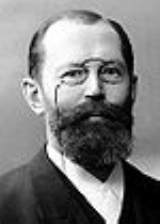
Hermann Emil Fischer

 
Hermann Emil Fischer

   Email Print
   Bookmark   Link


Hermann Emil Fischer


Hermann Emil Fischer (9 October 1852 - 15 July 1919) was a German
Germany

Germany , officially the Federal Republic of Germany , is a country in Central Europe. It is bordered to the north by the North Sea, Denmark, and the Baltic Sea; to the east by Poland and the Czech Republic; to the south by Austria and Switzerland; and to the west by France, Luxembourg, Belgium, and the Netherlands....
 chemist
Chemist

A chemist is a scientist trained in the science of chemistry. Chemists study the composition of matter and its properties such as density, acidity, size and shape....
 and recipient of the Nobel Prize for Chemistry in 1902.

her was born in Euskirchen
Euskirchen

Euskirchen is a town in North Rhine-Westphalia, Germany, capital of the Euskirchen . While Euskirchen resembles a modern shopping town, it also has a history dating back over 700 years, having been granted town-status in 1302....
, near Cologne
Cologne

Cologne is Germany's fourth-largest city , and is the largest city both in the German Federal State of North Rhine-Westphalia and within the Rhine-Ruhr, one of the major European metropolitan areas with more than ten million inhabitants....
, the son of a businessman.  After graduating he wished to study natural science
Natural science

In science, the term natural science refers to a methodological naturalism approach to the study of the universe, which is understood as obeying rules or law of nature origin....
s, but his father compelled him to work in the family business until determining that his son was unsuitable.  Fischer then attended the University of Bonn
University of Bonn

The University of Bonn is a public research university located in Bonn, Germany. Founded in 1818 the University of Bonn is today one of the leading universities in Germany....
 in 1872, but switched to the University of Strasbourg
University of Strasbourg

The University of Strasbourg in Strasbourg, Alsace, France, is the largest university in France, with 43,000 students and over 4,000 researchers....
 in 1872.  He earned his doctorate
Doctorate

A doctorate is an academic degree that in most countries represents the highest level of formal study or research in a given field. In some countries it also refers to a class of degrees which qualify the holder to practice in a specific profession ....
 in 1874 with his study of phthalein and was appointed to a position at the university.

875 von Baeyer was asked to succeed Liebig at the University of Munich and Fischer went there with him to become an assistant in organic chemistry
Organic chemistry

Organic chemistry is a discipline within chemistry which involves the science study of the structure, properties, composition, chemical reaction, and preparation of chemical compounds that contain carbon....
.

In 1878 Fischer qualified as a Privatdozent at Munich
Munich

Munich is the capital city of Bavaria, Germany. Munich is located on the River Isar north of the Northern Limestone Alps. Munich is the third largest city in Germany, after Berlin and Hamburg....
, where he was appointed Associate Professor of Analytical Chemistry in 1879.


Discussion
Ask a question about 'Hermann Emil Fischer'
Start a new discussion about 'Hermann Emil Fischer'
Answer questions from other users
Full Discussion Forum


Encyclopedia


Hermann Emil Fischer (9 October 1852 - 15 July 1919) was a German
Germany

Germany , officially the Federal Republic of Germany , is a country in Central Europe. It is bordered to the north by the North Sea, Denmark, and the Baltic Sea; to the east by Poland and the Czech Republic; to the south by Austria and Switzerland; and to the west by France, Luxembourg, Belgium, and the Netherlands....
 chemist
Chemist

A chemist is a scientist trained in the science of chemistry. Chemists study the composition of matter and its properties such as density, acidity, size and shape....
 and recipient of the Nobel Prize for Chemistry in 1902.

Biography


Early years

Fischer was born in Euskirchen
Euskirchen

Euskirchen is a town in North Rhine-Westphalia, Germany, capital of the Euskirchen . While Euskirchen resembles a modern shopping town, it also has a history dating back over 700 years, having been granted town-status in 1302....
, near Cologne
Cologne

Cologne is Germany's fourth-largest city , and is the largest city both in the German Federal State of North Rhine-Westphalia and within the Rhine-Ruhr, one of the major European metropolitan areas with more than ten million inhabitants....
, the son of a businessman.  After graduating he wished to study natural science
Natural science

In science, the term natural science refers to a methodological naturalism approach to the study of the universe, which is understood as obeying rules or law of nature origin....
s, but his father compelled him to work in the family business until determining that his son was unsuitable.  Fischer then attended the University of Bonn
University of Bonn

The University of Bonn is a public research university located in Bonn, Germany. Founded in 1818 the University of Bonn is today one of the leading universities in Germany....
 in 1872, but switched to the University of Strasbourg
University of Strasbourg

The University of Strasbourg in Strasbourg, Alsace, France, is the largest university in France, with 43,000 students and over 4,000 researchers....
 in 1872.  He earned his doctorate
Doctorate

A doctorate is an academic degree that in most countries represents the highest level of formal study or research in a given field. In some countries it also refers to a class of degrees which qualify the holder to practice in a specific profession ....
 in 1874 with his study of phthalein and was appointed to a position at the university.

Academic career

In 1875 von Baeyer was asked to succeed Liebig at the University of Munich and Fischer went there with him to become an assistant in organic chemistry
Organic chemistry

Organic chemistry is a discipline within chemistry which involves the science study of the structure, properties, composition, chemical reaction, and preparation of chemical compounds that contain carbon....
.

In 1878 Fischer qualified as a Privatdozent at Munich
Munich

Munich is the capital city of Bavaria, Germany. Munich is located on the River Isar north of the Northern Limestone Alps. Munich is the third largest city in Germany, after Berlin and Hamburg....
, where he was appointed Associate Professor of Analytical Chemistry in 1879. In the same year he was offered, but refused, the Chair of Chemistry at Aix-la-Chapelle.

In 1881 he was appointed Professor of Chemistry at the University of Erlangen and in 1883 he was asked by the Badische Anilin- und Soda-Fabrik to direct its scientific laboratory. Fischer, however, whose father had now made him financially independent, preferred academic work.

In 1888 he was asked to become Professor of Chemistry at the University of Würzburg
University of Würzburg

The University of W?rzburg is a university in W?rzburg, Germany, founded in 1402. The university is a member of the Coimbra Group....
 and here he remained until 1892, when he was asked to succeed A. W. Hofmann in the Chair of Chemistry at the University of Berlin. Here he remained until his death in 1919.

Research work

Fischer's early discovery of phenylhydrazine
Phenylhydrazine

Phenylhydrazine is the chemical compound with the formula C6H5NHNH2. Organic chemists abbreviate the compound PhNHNH2....
 and its influence on his later work have already been mentioned. While he was at Munich, Fischer continued to work on the hydrazine
Hydrazine

Hydrazine is a chemical compound with the chemical formula N2H4. It is a colourless liquid with an ammonia-like odor and is derived from the same industrial chemistry processes that manufacture ammonia....
s and, working there with his cousin Otto Fischer, who had followed him to Munich, he and Otto worked out a new theory of the constitution of the dyes derived from triphenylmethane
Triphenylmethane

Triphenylmethane, or triphenyl methane, is the hydrocarbon with the chemical formula 3CH. This colorless solid is soluble in nonpolar organic solvents, but not water....
, proving this by experimental work to be correct.

At Erlangen Fischer studied the active principles of tea
Tea

Tea refers to the agricultural products of the leaves, leaf buds, and internodes of the Camellia sinensis plant, prepared and cured by various methods....
, coffee
Coffee

Coffee is a brewed drink prepared from roasted seeds, commonly called coffee beans, of the Coffea. Caffeinated coffee has a stimulating effect in humans....
 and cocoa
Cocoa

Cocoa is the dried and fully fermented fatty seed of the cacao from which chocolate is made. "Cocoa" can often also refer to the drink commonly known as hot chocolate; Cocoa solids, the dry powder made by grinding cocoa seeds and removing the cocoa butter from the dark, bitter cocoa solids; or it may refer to the combination of both cocoa p...
, namely, caffeine
Caffeine

Caffeine is a bitter, white crystalline xanthine alkaloid that acts as a psychoactive stimulant drug and a mild diuretic. Caffeine was discovered by a German chemist, Friedrich Ferdinand Runge, in 1819....
 and theobromine
Theobromine

Theobromine, also known as xantheose, is a bitter alkaloid of the cacao plant, found in chocolate, as well as in a number of chocolate-free foods made from theobromine sources including the leaves of the tea plant, the kola or cola nut, and acai berries....
, and established the constitution of a series of compounds in this field, eventually synthesizing them.

The work, however, on which Fischer's fame chiefly rests, was his studies of the purine
Purine

Purine is a heterocyclic compound aromatic organic compound, consisting of a pyrimidine ring fused to an imidazole ring. Purines, including substituted purines and their tautomers, are the most widely distributed kind of nitrogen-containing heterocycle in nature....
s and the sugar
Sugar

Sugar is a class of edible crystalline substances, mainly sucrose, lactose, and fructose. Human taste buds interpret its flavor as sweet. Sugar as a basic food carbohydrate primarily comes from sugar cane and from sugar beet, but also appears in fruit, honey, sorghum, sugar maple , and in many other sources....
s. This work, carried out between 1882 and 1906 showed that various substances, little known at that time, such as adenine
Adenine

Adenine is a nucleobase with a variety of roles in biochemistry including cellular respiration, in the form of both the energy-rich adenosine triphosphate and the cofactor s nicotinamide adenine dinucleotide and flavin adenine dinucleotide , and Protein biosynthesis, as a chemical component of DNA and RNA....
, xanthine
Xanthine

Xanthine , , is a purine base found in most body tissues and fluids and in other organisms. A number of mild stimulants are derived from xanthine, including caffeine and theobromine....
, in vegetable substances, caffeine and, in animal excrement, uric acid
Uric acid

Uric acid is an organic compound of carbon, nitrogen, oxygen and hydrogen with the formula C5H4N4O3....
 and guanine
Guanine

Guanine is one of the five main nucleobases found in the nucleic acids DNA and RNA, the others being adenine, cytosine, thymine, and uracil. In DNA, guanine is paired with cytosine....
, all belonged to one homogeneous family and could be derived from one another and that they corresponded to different hydroxyl
Hydroxyl

Hydroxyl in chemistry stands for a molecule consisting of an oxygen atom and a hydrogen atom connected by a covalent bond. The neutral form is a hydroxyl Radical and the hydroxyl anion is called a hydroxide....
 and amino derivatives of the same fundamental system formed by a bicyclic nitrogen
Nitrogen

Nitrogen is a chemical element that has the symbol N and atomic number 7 and atomic mass 14.00674?. Elemental nitrogen is a colorless, odorless, tasteless and mostly inert diatomic gas at standard conditions, constituting 78% by volume of Earth's atmosphere....
ous structure into which the characteristic urea
Urea

Urea is an organic compound with the chemical formula 2carbonoxygen.Urea is also known by the International Nonproprietary Name carbamide, as established by the World Health Organization....
 group entered. This parent substance, which at first he regarded as being hypothetical, he called purine in 1884, and he synthesized it in 1898. Numerous artificial derivatives, more or less analogous to the naturally-occurring substances, came from his laboratory between 1882 and 1896.

In 1884 Fischer began his great work on the sugars, which transformed the knowledge of these compounds and welded the new knowledge obtained into a coherent whole. Even before 1880 the aldehyde
Aldehyde

An aldehyde is an organic compound containing a terminal carbonyl group. This functional group, which consists of a carbon atom bonded to a hydrogen atom and double bond to an oxygen atom , is called the aldehyde group....
 formula of glucose
Glucose

Glucose , a monosaccharide also known as grape sugar, blood sugar, or corn sugar, is a very important carbohydrate in biology....
 had been indicated, but Fischer established it by a series of transformations such as oxidation into aldonic acid
Aldonic acid

An aldonic acid is any of a family of sugar acids obtained by oxidation of the aldehyde functional group of an aldoses to form a carboxylic acid functional group....
 and the action of phenylhydrazine which he had discovered and which made possible the formation of the phenylhydrazones and the osazone
Osazone

Osazones are a class of carbohydrate derivatives found in organic chemistry formed when sugars are reacted with phenylhydrazine. The famous Germany chemist Emil Fischer developed and used the reaction to identify sugars whose stereochemistry differed by only one Chirality ....
s. By passage to a common osazone, he established the relation between glucose, fructose
Fructose

Fructose is a simple Reducing sugar sugar found in many foods and is one of the three important dietary monosaccharides along with glucose and galactose....
 and mannose
Mannose

Mannose is a sugar monomer of the hexose series of carbohydrates....
, which he discovered in 1888. In 1890, by epimer
Epimer

In chemistry, epimers are diastereomers that differ in configuration of only one stereogenic center. Diastereomers are a class of stereoisomers that are non-superposable, non-mirror images of one another, unlike enantiomers which are non-superposable mirror images of one another....
ization between gluconic
Gluconic acid

Gluconic acid is an organic compound with molecular formula C6H12O7 and condensed structural formula chemical formula HOCH24COOH....
 and mannonic acids, he established the stereochemical
Stereochemistry

Stereochemistry, a subdiscipline of chemistry, involves the study of the relative spatial arrangement of atoms within molecules. An important branch of stereochemistry is the study of chirality molecules ....
 and isomer
Isomer

In chemistry, isomers are compounds with the same molecular formula but different structural formulae. Isomers do not necessarily share similar properties unless they also have the same functional groups....
ic nature of the sugars, and between 1891 and 1894 he established the stereochemical configuration of all the known sugars and exactly foretold the possible isomers, by an ingenious application of the theory of the asymmetrical carbon atom of Van't Hoff and Le Bel, published in 1874. Reciprocal syntheses between different hexose
Hexose

In organic chemistry, a hexose is a monosaccharide with six carbon atoms, having the chemical formula C6H12O6. Hexoses are classified by functional group, with aldohexoses having an aldehyde at position 1, and ketohexoses having a ketone at position 2....
s by isomerization and then between pentose
Pentose

A pentose is a monosaccharide with five carbon atoms.They either have an aldehyde functional group in position 1 , or a ketone functional group in position 2 ....
s, hexoses, and heptose
Heptose

A heptose is a monosaccharide with seven carbon atoms.They either have an aldehyde functional group in position 1 , or a ketone functional group in position 2 ....
s by reaction of degradation and synthesis proved the value of the systematics he had established. His greatest success was his synthesis of glucose, fructose and mannose in 1890, starting from glycerol
Glycerol

Glycerol is a chemical compound also commonly called glycerin or glycerine. It is a colorless, odorless, Viscosity liquid that is widely used in pharmaceutical formulations....
.

This monumental work on the sugars, carried out between 1884 and 1894, was extended by other work, the most important being his studies of the glucoside
Glucoside

A glucoside is a glycoside that is derived from glucose. Glucosides are common in plants, but rare in animals. Glucose is produced when a glucoside is Hydrolysis by purely chemical means, or decomposed by fermentation or enzymes....
s.

Between 1899 and 1908 Fischer made his great contributions to knowledge of the protein
Protein

Proteins are organic compounds made of amino acids arranged in a linear chain and joined together by peptide bonds between the carboxyl and amino groups of adjacent amino acid Residue ....
s. He sought effective analytical methods of separating and identifying the individual amino acid
Amino acid

In chemistry, an amino acid is a molecule containing both amine and carboxyl functional groups. These molecules are particularly important in biochemistry, where this term refers to alpha-amino acids with the general formula H2NCHRCOOH, where R is an organic substituent....
s, discovering a new type, the cyclic amino acids: proline
Proline

Proline is an a-amino acid, one of the twenty DNA-encoded amino acids. Its codons are CCU, CCC, CCA, and CCG. It is not an essential amino acid, which means that humans can synthesize it....
 and oxyproline. He also studied the synthesis of proteins by obtaining the various amino acids in an optically active form in order to unite them. He was able to establish the type of bond that would connect them together in chains, namely, the peptide bond
Peptide bond

A peptide bond is a chemical bond formed between two molecules when the carboxyl group of one molecule reacts with the amine group of the other molecule, thereby releasing a molecule of water ....
, and by means of this he obtained the dipeptides and later the tripeptides and polypeptides. In 1901 he discovered, in collaboration with Fourneau, the synthesis of the dipeptide, glycyl-glycine and in that year he also published his work on the hydrolysis
Hydrolysis

Hydrolysis is a chemical reaction during which one or more water are split into hydrogen and hydroxide ions which may go on to participate in further reactions....
 of casein
Casein

Casein is the predominant phosphoprotein that accounts for nearly 80% of proteins in cow milk and cheese. Milk-clotting proteases act on the soluble portion of the caseins, K-Casein, thus originating an unstable micelle state that results in clot formation....
. Amino acids occurring in nature were prepared in the laboratory and new ones were discovered. His synthesis of the oligopeptides culminated in an octodecapeptide, which had many characteristics of natural proteins. This and his subsequent work led to a better understanding of the proteins and laid the foundations for later studies of them.

In addition to his work in the fields already mentioned, Fischer also studied the enzyme
Enzyme

Enzymes are biomolecules that catalysis chemical reactions. Almost all enzymes are proteins. In enzymatic reactions, the molecules at the beginning of the process are called Substrate , and the enzyme converts them into different molecules, the products....
s and the chemical substances in the lichen
Lichen

Lichens are composite organisms consisting of a symbiosis association of a fungus with a Photosynthesis partner , usually either a green algae or Cyanobacteria ....
s which he found during his frequent holidays in the Black Forest
Black Forest

The Black Forest is a forest mountain range in Baden-W?rttemberg, southwestern Germany. It is bordered by the Rhine valley to the west and south....
, and also substances used in tanning
Tanning

Tanning is the process of making leather, which does not easily Decomposition, from the skins of animals, which do. Often this uses tannin, an acidic chemical compound....
 and, during the final years of his life, the fat
Fat

Fats consist of a wide group of compounds that are generally soluble in organic solvents and largely insoluble in water. Chemistry, fats are generally ester of glycerol and fatty acids....
s. In 1890, he also proposed a "Lock and Key Model" to visualize the substrate and enzyme interaction. Though, later studies did not support this model in all enzymatic reactions.

Fischer is noted for his work on sugars among other work the organic synthesis
Organic synthesis

Organic synthesis is a special branch of chemical synthesis and is concerned with the construction of organic compounds via organic reactions. Organic_chemistry molecules can often contain a higher level of complexity compared to purely Inorganic_chemistry compounds, so the synthesis of organic compounds has developed into one of the most im...
 of (+) glucose and purines (including the first synthesis of caffeine
Caffeine

Caffeine is a bitter, white crystalline xanthine alkaloid that acts as a psychoactive stimulant drug and a mild diuretic. Caffeine was discovered by a German chemist, Friedrich Ferdinand Runge, in 1819....
).

Personal life

At the age of 18, before he went to the University of Bonn, Fischer suffered from gastritis
Gastritis

Gastritis is an inflammation of the lining of the stomach, and has many possible causes. The main acute causes are excessive alcohol consumption or prolonged use of nonsteroidal anti-inflammatory drugs such as aspirin or ibuprofen....
, which attacked him again towards the end of his tenure of the Chair at Erlangen and caused him to refuse a tempting offer to follow Victor Meyer at the Federal Technical University at Zurich and to take a year's leave of absence before he went, in 1888, to Würzburg. Throughout his life he was well served by his excellent memory
Memory

In psychology, memory is an organism's mental ability to store, retain and recall information. Traditional studies of memory began in the fields of philosophy, including techniques of mnemonic....
, which enabled him, although he was not a naturally good speaker, to memorize manuscripts of lectures that he had written.

He was particularly happy at Würzburg where he enjoyed walks among the hills and he also made frequent visits to the Black Forest. His administrative work, especially when he went to Berlin, revealed him as a tenacious campaigner for the establishment of scientific foundations, not only in chemistry, but in other fields of work as well. His keen understanding of scientific problems, his intuition and love of truth
Truth

semantic fields for the word truth extend from honesty, good faith, and sincerity in general, to agreement with fact or reality in particular....
 and his insistence on experiment
Experiment

In scientific inquiry, an experiment is a method of investigating causal relationships among variables. An experiment is a cornerstone of the empiricism approach to acquiring data about the world and is used in both natural sciences and social sciences....
al proof of hypotheses, marked him as one of the truly great scientist
Scientist

A scientist, in the broadest sense, refers to any person that engages in a system activity to acquire knowledge or an individual that engages in such practices and traditions that are linked to schools of thought or philosophy....
s of all time.

In 1888 Fischer married Agnes Gerlach, daughter of Joseph von Gerlach
Joseph von Gerlach

Joseph von Gerlach was a Germany professor of anatomy at the University of Erlangen.Gerlach was a pioneer of histological staining and anatomical microphotography....
, Professor of Anatomy at Erlangen. Unhappily his wife died seven years after their marriage. They had three sons, one of whom was killed in World War I
World War I

World War I, or the First World War , was a global military conflict which involved the Great powers, organized into two opposing military alliances: the Allies of World War I and the Central Powers....
; another took his own life at the age of 25 as a result of compulsory military training. The third son, Hermann Otto Laurenz Fischer, who died in 1960, was Professor of Biochemistry in the University of California at Berkeley. In 1919 in Berlin, Fischer, like his son, took his own life.

Honours, awards, and legacy

Fischer was made a Prussian Geheimrat (Excellenz), and held honorary doctorates of the Universities of Christiania, Cambridge (England), Manchester and Brussels. He was also awarded the Prussian Order of Merit and the Maximilian Order for Arts and Sciences. In 1902 he was awarded the Nobel Prize in Chemistry for his work on sugar and purine syntheses.

Many consider Fischer to be the most brilliant chemist who ever lived, as his numerous contributions to science, especially chemistry and biochemistry. Many names of chemical reactions and concepts are named after him:

  • Fischer indole synthesis
    Fischer indole synthesis

    The Fischer indole synthesis is a chemical reaction that produces the aromatic Heterocyclic compound indole from a phenylhydrazine and an aldehyde or ketone under acidic conditions....
  • Fischer projection
    Fischer projection

    The Fischer projection, devised by Hermann Emil Fischer in 1891, is a two-dimensional representation of a Three-dimensional space organic molecule by projection....
  • Fischer oxazole synthesis
    Fischer oxazole synthesis

    The Fischer oxazole synthesis is a chemical synthesis of the aromatic heterocycle oxazole from cyanohydrins and aldehydes in the presence of anhydrous hydrochloric acid....
  • Fischer peptide synthesis
  • Fischer phenylhydrazine and oxazone reaction
  • Fischer reduction
  • Fischer-Speier esterification
  • Fischer glycosidation
    Fischer glycosidation

    Fischer glycosidation refers to the formation of a glycoside by the reaction of an aldose or ketose with an alcohol in the presence of an acid catalyst....


When Fischer died in 1919, the Emil Fischer Memorial Medal was instituted by the German Chemical Society.

Note that the Fischer-Tropsch process
Fischer-Tropsch process

The Fischer-Tropsch process is a catalyst chemistry in which synthesis gas , a mixture of carbon monoxide and hydrogen, is converted into liquid hydrocarbons of various forms....
 is named after Franz Emil Fischer a chemist who was no relation, head of the Institut fuer Kohlenforschung in Muelheim.

See also


External links

  • Syntheses in the Purine and Sugar Group from Nobelprize.org website
  • Biography from Nobelprize.org website
  • By Benjamin Harrow pages 216-239, published 1920 by Von Nostrand Company at books.google.com.
  • by Emil Abderhalden, translated by William Thomas Hall and George Defren; published 1908 by Wiley Company, has many technical references to Fischer's work in Chemistry.
  • volume 2 by the American Medical Association also refers to Fischer's work.
  • edited by Hugh Chisholm, Volume 10 page 426 short biography of Fischer, published 1910.
  • by Fielding Hudson Garrison?, page 708 refers to Fischer and Merings discovery of the drugs veronal(1904) and proponal(1905), published 1921 by Saunders Company.
  • , page 438 abstracts Fischer and Strauss's work on Phenol-Glucosides - Synthetic Production from Berlin d.D Chem. Germany, page 45(1912) No. 12.