
|
|
|
|
Helen Zille
|
| |
|
| |
Helen Zille (born 9 March 1951, in Johannesburg) is the Mayor of Cape Town, leader of South Africa's opposition Democratic Alliance political party, and candidate for Premier of the Western Cape in the 2009 South African elections.
Zille is a former journalist and anti-apartheid activist, and famously exposed the truth behind the death of Black Consciousness leader Steve Biko while working for the Rand Daily Mail in the late 1970s. She also worked with the Black Sash and other pro-democracy groups during the 1980s.

Discussion
Ask a question about 'Helen Zille'
Start a new discussion about 'Helen Zille'
Answer questions from other users
|
Encyclopedia
Helen Zille (born 9 March 1951, in Johannesburg) is the Mayor of Cape Town, leader of South Africa's opposition Democratic Alliance political party, and candidate for Premier of the Western Cape in the 2009 South African elections.
Zille is a former journalist and anti-apartheid activist, and famously exposed the truth behind the death of Black Consciousness leader Steve Biko while working for the Rand Daily Mail in the late 1970s. She also worked with the Black Sash and other pro-democracy groups during the 1980s. In the political arena, Zille has worked in all three tiers of government - as the Western Cape province's education MEC (1999-2004), as a Member of Parliament (2004-2006), and as Mayor of Cape Town (2006-present).
Zille's work as mayor, and in particular her successes in tackling crime, drug abuse and unemployment in Cape Town, led to her selection as World Mayor of the Year in 2008 - from a field of 820 candidates. She was also chosen as Newsmaker of the year 2006 by the National Press Club in July 2007, and is a former finalist in the South African Woman of the Year Award. Zille reflects the multilingualism of the country, and speaks English, Afrikaans and Xhosa (as well as the language of her parents, German).
Early life and career
Early years, education and family
Helen Zille was born in Johannesburg, the eldest child of parents who separately left Germany in the 1930s. Her grandfather (on her mother's side) and her grandmother (on her father's side) were Jewish. She was educated at Johannesburg's St Mary's School, Waverley and the University of the Witwatersrand, where she obtained a Bachelor of Arts degree.
She married Professor Johann Maree in 1982, and they have two sons — Paul (born in 1984) and Thomas (1989). She is a member of the Rondebosch United Church in Cape Town.
Political journalism
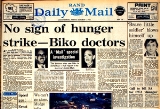
Zille began her career as a political correspondent for the Rand Daily Mail in 1974. During September 1977, Minister of Justice and the Police J.T. Kruger announced that anti-apartheid activist Steve Biko had died in prison as the result of an extended hunger strike. Zille and her editor Allister Sparks were conviced Kruger's story was a cover-up, and Zille obtained concrete proof of this after tracking down and interviewing various doctors involved in the case.
The Rand Daily Mails lead story, headlined "No sign of hunger strike - Biko doctors", sent shockwaves through South Africa, and Kruger immediately threatened to ban the paper, while Zille received death threats. Zille and Sparks were represented at the subsequent quasi-judicial Press Council by leading defence lawyer Sydney Kentridge, but the two were nonetheless found guilty of "tendentious reporting", and the paper was forced to issue a "correction". Kentridge later helped confirm the accuracy of Zille's account when he represented the Biko family at the inquest into his death. That inquest found Biko's death had been the result of a serious head injury, but failed to find any individual responsible.
Anti-apartheid movement
Zille was heavily involved in the Black Sash movement during the 1980s. She served on the regional and national executives of the organisation, and was also vice-chair of the End Conscription Campaign in the Western Cape. During this time she was arrested for being in a "group area" wihout a permit, and received a suspended prison sentence. Zille and her husband later offered their home as a safe house for political activists during the 1986 State of Emergency, and she was temporarily forced into hiding with their two-year-old son.
Zille was also actively involved in the South Africa Beyond Apartheid Project and the Cape Town Peace Committee. She later gathered evidence for the Goldstone Commission which investigated attempts to destabilise the Western Cape before the elections in 1994.
Education policy work
Zille formed a public policy consultancy in 1989 and in 1993 she was offered the position of Director of Development and Public Affairs at the University of Cape Town. During this time Zille also chaired the governing body of Grove Primary School, and in 1996 led a successful challenge against government policy limiting governing bodies' powers to appoint staff.
Zille was then invited by the then Democratic Party to write a draft policy for Education in the Western Cape. In 1999 she became a Member of the Western Cape Provincial Legislature, and was appointed MEC for Education.
In 2004 Zille became a Member of Parliament with the Democratic Alliance. Within the DA she rose to the level of deputy federal chairperson and served as national party spokesperson and spokesperson for education.
Mayoralty
2006 municipal elections and aftermath
In the 2006 municipal elections, the DA became the single largest party in Cape Town with 42% of the vote, ahead of the African National Congress (ANC). Zille was elected mayor by 106 votes to 103 on 15 March 2006, after the DA obtained the support of several smaller parties.
After assuming office, Zille's first major test of strength involved the decision by her multi-party government to revoke the appointment of the Cape Town City Manager, Wallace Mgoqi, whose term of appointment had been controversially extended by the outgoing ANC executive mayor, Nomaindia Mfeketo. Zille's decision was upheld by the High Court which ruled that the extension of Mgoqi's appointment by the previous mayor had been unlawful.
Zille has faced considerable opposition and confrontation with the ANC. In September 2006, the provincial ANC MEC Richard Dyantyi, announced he planned to replace the city's political system. Dyantyi wanted to impose an executive committee system, changing the mayoral committee system. The move would have resulted in Zille being stripped of her executive mayoral powers and her power considerably reduced.
Under this policy, the winning party would not be able to assign every one of the ten seats — rather these would be allocated on a proportional representation basis. The matter was later resolved, with Dyanti and Zille settling on the terms of retaining the current mayoral system whilst the ANC was provided with two additional sub-committees in areas of the city controlled by the ANC.
Issues
Zille has tackled many issues in the city during her term and she has announced that she is committed to service delivery and delivering the city's mandate. Her commitments have included the imminent 2010 World Cup, as Cape Town is a designated host city. Zille has been overseeing the construction and financing of the Green Point Stadium, which will host matches.
A particular concern of Zille's is the problem of drug abuse in Cape Town, particularly tik abuse. She has called for the decentralisation of the police force and the promotion of drug rehabilitation centres. Zille has also called for further funding from the government to battle drug abuse, and has met with local communities to discuss the issue - even attending a nighttime vigil.
Zille has objected to plans to incorporate the metro police into the broader police service. She argues that such a move would remove considerable power from local government and instead would vest more control in the hands of the National Police Commissioner, Jackie Selebi.
Major achievements
Economic growth and employment
As mayor, Zille has presided over rapid growth and development in the City of Cape Town. Gross geographic product (GGP) increased by over 12% - from R116.6 billion in 2005 under the ANC, to R130.77 billion in 2007 - two years into her tenure. During this time unemployment also declined from 20.7% to 17.9%.
Under Zille, the city's debt was also cut by nearly R1 billion, which allowed capital for service delivery to be increased by 15%.
Crime and urban renewal
Crime has declined by 90% in the city's CBD over a period of five years, thanks to ongoing collaboration between the DA-led municipality, the police service, metro police, local businesses and the Cape Town Partnership. As a consequence, 3 500 residents have moved back into inner city departments, and there has been a 9.5% growth in fixed investment in Cape Town.
Housing and service delivery
Though provincial rather than local government is tasked with housing delivery, the DA-led municipality's efforts to reform housing lists and improve verification processes has also allowed housing delivery to be increased from 3000 units per annum under the ANC, to 7000 units per annum since 2006, the year Zille took over as mayor.
Free service provisions to the poor allocated in the 2008/09 financial year amounted to R586 million. While under the ANC administration no budget allocation existed for upgrading informal settlements, Zille began a process of consultation with the residents of the city's informal settlements, and a dedicated budget was set up in July 2007 for provision of water, electricity and sanitation.
In addition to maintaining existing water and electricity subsidies, Zille also raised the subsidies on the indigent database, and ensured that electricity is supplied to informal settlements that Eskom refused to electrify, such as Happy Valley and Site B Khayelitsha.
DA Leader
Election
On 15 March 2007, Zille declared herself a candidate to succeed outgoing leader of the Democratic Alliance Tony Leon. Firm favourite from the start, with rich backing from the Western Cape, Gauteng, KwaZulu-Natal, Mpumalanga, Northern Cape, the Free State and even the Eastern Cape (regarded during much of the build-up as the stronghold of main rival Athol Trollip), she was elected as the new leader by a large majority on 6 May 2007. She indicated that she would lead the party from outside Parliament, while continuing in her position as executive mayor of Cape Town.
Issues
Since becoming leader of the Democratic Alliance, Zille has challenged the ruling government on a number of issues.
Crime
Of particular concern to Zille was the government's response to alarming crime statistics released in July 2007. She has accused the government of rewarding criminals by placing individuals convicted of serious crimes high up on their national parliamentary lists.. Zille has said that the DA would reinstate child protection units, the South African Narcotics Bureau and the Scorpions unit, all of which have been disbanded.
In August 2008, Zille announced proposals to boost the size of the police force to 250 000, employ an additional 30 000 detectives, improve detention programmes and use of information technology, and radically overhaul the justice system. She also said the party's comprehensive new crime plan would include provisions for a Victims of Crime Fund.
Health
Zille has warned against the controversial National Health Amendment Bill, legislation allowing greater state intervention in private health care. She has warned that the state will destroy the system, that is rated as the fifth best of its kind in the world. She outlined the possibility that the Bill could drive away thousands of skilled medical professionals. Together with her political party, she proposed an alternative health plan, for the privatisation of state healthcare.
Judicial independence
As DA leader, Zille has also frequently questioned judicial independence in South Africa, in light of the alleged behaviour of the Cape judge president John Hlophe in trying to influence the Constitutional Court judges to rule in favour of ANC president Jacob Zuma. She also cited racism directed towards those in the judiciary, and has criticised the perceived double standards vocally:
On Hlophe she said:
Zimbabwe
Zille has also publicly denounced the Zimbabwean regime, calling for President Thabo Mbeki to abandon his 'quiet diplomacy' policy and take a tougher stance towards the Zimbabwean president, Robert Mugabe. She has called for the South African president to publicly acknowledge that the Mugabe regime in Zimbabwe is illegal and illegitimate; to sever all formal diplomatic ties with Zimbabwe and withdraw all diplomatic representatives; to impose smart sanctions on the Zanu-PF elite, including travel bans to South Africa and the freezing of all South African assets linked to Mugabe and Zanu-PF; and to lobby for the suspension of Zimbabwe from the United Nations, the African Union and the South African Development Community.
Political debate
In June 2008, she challenged the president of the ANC and the 2009 presidential candidate, Jacob Zuma to a public debate on ten key issues such as the arms deal, disbanding of the Scorpions, the situation in Zimbabwe, HIV/Aids and labour legislation. Zuma has since declined to participate. She has since requested a public debate again:
Campaign against drug and alcohol abuse
Zille and eight other persons were arrested on Sunday 9 September 2007 outside the Mitchell's Plain police station. Zille was arrested when she visited the police station to investigate the arrest of the group. The group, called the People's Anti-Drug and Liquor Action Committee (PADLAC), had been distributing pamphlets in the campaign against the abuse of alcohol and drugs in Cape Town. Police have alleged that she supports vigilante groups opposed to drug abuse. She appeared in the Mitchell's Plain Magistrates Court later that week for contravening the Regulation of Gatherings Act. Zille is expected to sue the Minister of Police for wrongful arrest.On Tuesday 11 September 2007 Zille appeared briefly before the Mitchell's Plain Magistrates Court together with a group of ten persons who had been arrested with her.
On Sunday 30 September 2007 it was reported that senior intelligence sources, who were unhappy with the ANC's plans to subvert state institutions to do ANC bidding, had leaked information to Zille that operatives with weapons were infiltrating PADLAC with the ultimate objective of bringing down the leader of the opposition.On October 23, 2007, Zille was acquitted of all charges brought before the Mitchell's Plain Magistrates Court on the grounds that the prosecution's case against her and nine other defendants did not stand a chance of succeeding. Zille has reiterated her intention to sue the South African Police Services (SAPS) branch in the Western Cape for wrongful arrest.
On March 8, 2008], Helen Zille took her anti-drugs campaign to Johannesburg, leading a protest march. Marchers wore DA t-shirts, bearing the message No to drugs and save our children.
United Nations
In April 2008, Zille was asked to address the UN in New York on population and development, offering her experience and lessons as mayor of Cape Town.
World's best mayor award
Zille was nominated as one of 820 world mayors and has made it into the shortlist of 50 mayors. She has since reached the final shortlist of 11 world mayors, and she is the only remaining mayor of an African city. The winner was announced in October 2008. Helen Zille, Mayor of Cape Town won the 2008 World Mayor Award.
There was controversy when the ruling ANC used its majority in the National Assembly to block (without notice) a motion by the Democratic Alliance acknowledging Zille's achievement in winning the 2008 World Mayor Award.
External links
|
| |
|
|