
All Topics  
Hashish

 
Hashish

   Email Print
   Bookmark   Link


Hashish


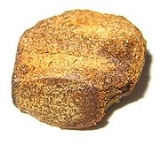
Hashish (from Arabic: , lit. "dry herb", from hashsha "to become dry"; also Hash) is a preparation of cannabis
Cannabis (drug)

Cannabis, also known as Marijuana or marihuana, or ganja , is a psychoactive drug extracted from the plant Cannabis sativa, or more often, Cannabis sativa subsp....
 composed of the compressed trichome
Trichome

Trichomes, from the Greek language meaning "growth of hair", are fine outgrowths or appendages on plants and certain protists. These are of diverse structure and function....
s collected from the cannabis
Cannabis

Cannabis is a genus of flowering plants that includes three putative species, Cannabis sativa L., Cannabis indica Lam., and Cannabis ruderalis Janisch....
 plant. It contains the same active ingredients but in higher concentrations than other parts of the plant such as the buds or the leaves. Psychoactive effects are the same as those of other cannabis preparations such as marijuana.


Discussion
Ask a question about 'Hashish'
Start a new discussion about 'Hashish'
Answer questions from other users
Full Discussion Forum


Recent Posts


Encyclopedia


Hashish (from Arabic: , lit. "dry herb", from hashsha "to become dry"; also Hash) is a preparation of cannabis
Cannabis (drug)

Cannabis, also known as Marijuana or marihuana, or ganja , is a psychoactive drug extracted from the plant Cannabis sativa, or more often, Cannabis sativa subsp....
 composed of the compressed trichome
Trichome

Trichomes, from the Greek language meaning "growth of hair", are fine outgrowths or appendages on plants and certain protists. These are of diverse structure and function....
s collected from the cannabis
Cannabis

Cannabis is a genus of flowering plants that includes three putative species, Cannabis sativa L., Cannabis indica Lam., and Cannabis ruderalis Janisch....
 plant. It contains the same active ingredients but in higher concentrations than other parts of the plant such as the buds or the leaves. Psychoactive effects are the same as those of other cannabis preparations such as marijuana. It is sometimes believed that the effects are different, but those differences usually stem from variations between regionally different Cannabis specimens, that are more traditionally processed into Hashish.

Hashish is often a solid or paste-like substance of varying hardness and pliability, and will soften under heat. Its color can vary from green, black, reddish brown, or most commonly light to dark brown.

It is consumed in much the same way as cannabis buds, used by itself in a miniature smoking pipe, hookah
Hookah

A hookah is a single or multi-stemmed water pipe for smoking. Originally from alongside the borders of India and Pakistan, the hookah has gained immense popularity, especially in the Middle East....
, bong
Bong

A bong, also commonly known as a water pipe, is a smoking device, generally used to smoke cannabis , tobacco, or other substances. The construction of a bong and its principle of action is similar to that of the hookah, which is also called "water pipe ." A bong may be constructed from any air- and water-tight vessel by adding a bowl...
 or bubbler
Bong

A bong, also commonly known as a water pipe, is a smoking device, generally used to smoke cannabis , tobacco, or other substances. The construction of a bong and its principle of action is similar to that of the hookah, which is also called "water pipe ." A bong may be constructed from any air- and water-tight vessel by adding a bowl...
, vaporized
Vaporizer

A vaporizer is a device used to sublimate the active ingredients of plant material, commonly cannabis , tobacco, or any of many other therapeutic or medicinal herbs or blends ....
, hot knife
Spots (cannabis)

Spots are a method of smoking Cannabis . In this method, small pieces of cannabis are rolled to form the "spot". Generally, the tips of two knife blades are heated, the spot is compressed between the two blades, and the subsequent smoke is inhaled....
d, or smoked in joints
Joint (cannabis)

Joint is drug slang for a cigarette rolled using cannabis . Rolling papers are the most common rolling medium among industrialised countries, however brown paper, cigarettes with the tobacco removed, and newspaper are commonly used throughout the developing world....
 mixed with tobacco
Tobacco

Tobacco is an agricultural product processed from the fresh leaves of plants in the genus Nicotiana. It can be consumed, used as an organic pesticide, and in the form of nicotine tartrate it is used in some medicines....
, cannabis bud
Bud

In botany, a bud is an undeveloped or Plant embryogenesis shoot and normally occurs in the axil of a leaf or at the tip of the Plant stem. Once formed, a bud may remain for some time in a dormant condition, or it may form a shoot immediately....
s or other herb
Herb

A herb is a plant that is valued for qualities such as medicinal properties, flavor, scent, or the like....
s.

It can also be eaten alone (pure hash is described as having a spicy or peppery flavor depending on the type, there are different flavors with the different types of hash) as well as used as an ingredient in food (baked into cookies, brownies, or cakes, or added to stews and chocolate).

History


It is believed that hash first originated from Middle East
Middle East

File:GreaterMiddleEast1.pngThe Middle East is a region that spans southwestern Asia, western Asia, and northeastern Africa. It has no clear boundaries, often used as a synonym to Near East, in opposition to Far East....
, as this region was among the first to be populated by the cannabis plant, although the plant itself is thought to have originated in the Hindu Kush
Hindu Kush

The Hindu Kush is a mountain range located in eastern and central Afghanistan, northwestern Pakistan and northeastern India.The origin of the name Hindu Kush is disputed, despite its coinage apparently dating back no further than c.1330....
. More reliably, it may have originated in Northern India which also has a very long social tradition in the production of Hashish which is locally known as Charas. Cannabis sativa subsp. indica
Cannabis sativa

Cannabis sativa is an annual plant in the Cannabaceae family. It is a herb that has been used throughout recorded history by humans as a source of fiber, for its seed oil, as food , as a drug , as medicine , and for spiritual purposes ....
 grows wild almost everywhere in the Indian sub-continent and special strains have been particularly cultivated for production of 'ganja' and 'hashish' particularly in Kerala, Rajasthan and the Himalayas. The earliest hashish was created without the use of sieves. The ancients would gently rub their palms and fingers on cannabis buds for hours while resin accumulated on their hands and then scrape that resin off. This sort of primitive harvesting is undertaken even today in the Cannabis growing farms of Manali, Naggar and Upper Himachal Pradesh. The earliest use of hashish was most likely from farmers scraping resin off their hands after a day's harvest of commercial hemp and at that time hashish was normally eaten, not smoked.

The word assassin may have been derived from the Arabic word ??????? (haššašin), or "Hashshashin"
Hashshashin

The Hashshashin from which the word Assassinations is thought to originate, was the Persian Empire derived designation of the Nizari branch of the Ismailism Shia Islam during the Middle Ages....
. The Hashashin were allegedly inspired to commit murder under the influence of hashish. The legend of hashish-eating assassins began with a vague mention by Marco Polo, and was embellished by 19th century French and American writers, fascinated by orientalism and eager to present hashish as a menace. The legend gained great popularity especially through Charles Baudelaire's Artificial Paradises of 1857, just as the marketing of pre-rolled tobacco cigarettes was getting underway after the Crimean War (1853). Others argue that the term could have been created due to political reasons, in order to discredit the sect. It has also been suggested that if hashish were in fact consumed, it had been adulterated with stronger materials, the effects of hashish being well-known and easily recognizable at that time and place. No reports of a statistical linkage between hashish and violent crime have been published in known scientific literature, and instead has been found to generally inhibit aggressive impulses.

Consumption of hashish saw an increase in the 20th century, in Europe
Europe

Europe is, conventionally, one of the world's seven continents. Comprising the westernmost peninsula of Eurasia, Europe is generally divided from Asia to its east by the water divide of the Ural Mountains, the Ural , the Caspian Sea, and by the Caucasus Mountains to the southeast....
 and America
United States

The United States of America is a Federal government constitutional republic comprising U.S. state and a federal district. The country is situated mostly in central North America, where its Contiguous United States and Washington, D.C., the Capital districts and territories, lie between the Pacific Ocean and Atlantic Oceans, Borders of the U...
, associated with the hippie
Hippie

The hippie subculture was originally a youth movement that began in the United States during the early 1960s and spread around the world. The word hippie derives from hipster , and was initially used to describe beatniks who had moved into San Francisco's Haight-Ashbury district....
 scene which promoted pacifism and introspection. Hashish use declined significantly in the United States
United States

The United States of America is a Federal government constitutional republic comprising U.S. state and a federal district. The country is situated mostly in central North America, where its Contiguous United States and Washington, D.C., the Capital districts and territories, lie between the Pacific Ocean and Atlantic Oceans, Borders of the U...
 starting in the 1980s for several reasons, including U. S. political pressures against Afghanistan
Afghanistan

Afghanistan , officially the Islamic republic of Afghanistan, is a landlocked country that is located approximately in the center of Asia....
 and the ensuing Soviet invasion
Soviet war in Afghanistan

The Soviet war in Afghanistan was a nine-year war involving Soviet Union Military of the Soviet Union supporting the Marxism People's Democratic Party of Afghanistan government against the Mujahideen#Afghanistan resistance movement....
, the Reagan-initiated War on Drugs, a huge jump in price, and the success of marijuana cultivators in North America
North America

North America is the northern continent of the Americas, situated in the Earth's northern hemisphere and almost totally in the western hemisphere....
 with new growing methods for increasing THC
THC

The acronym THC has several possible meanings:* Tetrahydrocannabinol, the main active chemical compound in Cannabis* Toronto Hemp Company, the world's largest Hemp and Cannabis Culture store, located in Toronto, Canada....
 production, such as growing marijuana indoors.

Manufacturing processes

Sp3r500w
Hashish is made from tetrahydrocannabinol
Tetrahydrocannabinol

Tetrahydrocannabinol , also known as THC, ?9-THC, ?9-tetrahydrocannabinol, ?1-tetrahydrocannabinol , or dronabinol, is the main psychoactive substance found in the Cannabis plant....
-rich glandular hairs known as trichomes, as well as varying amounts of cannabis flower and leaf fragments. The flowers of a mature female plant contain the most trichomes, though trichomes are found on other parts of the plant. Certain strains of cannabis are cultivated
Cannabis (drug) cultivation

Cannabis cultivation is the cultivation of the Cannabis Sativa plant. Subspecies are C. sativa subsp. sativa and C. sativa subsp....
 specifically for their ability to produce large amounts of trichomes. The resin reservoirs of the trichomes, sometimes erroneously called pollen
Pollen

Pollen is a fine to coarse powder consisting of Gametophyte , which produce the male gametes of spermatophyta. A hard coat covering the pollen grain protects the sperm cells during the process of their movement between the stamens of the flower to the pistil of the next flower....
, are separated from the plant through various methods. The resulting concentrate is formed into blocks of hashish, which can be easily stored and transported. Alternatively, the powder consisting of uncompressed, dry trichomes is often referred to as kief
Kief

Not to be confused with "Kieff", an obsolete translation of "Kiev".Kif, Kef, Keef, Jeef , Keethan or kief refers to the loose, dried resin glands of cannabis which may accumulate on containers, in grinders, or be removed with a kiefing screen or sieve....
 instead of hashish.

Mechanical separation methods use physical action to remove the trichomes from the plant. Sieving through a fine screen is a vital part of most methods. The plants may be sifted by hand or in motorized tumblers. Hash made in this way is sometimes called dry sift. Finger hash is produced by rolling the ripe trichome-covered flowers of the plant between the fingers and collecting the resin that sticks to the fingers. Yet another means of harvest is effected by having workers bustle through the cannabis fields wearing specially designed leather aprons, upon which the trichomes collect and adhere. Trichomes and resins can also be collected passively through cleaning of scissors that have been used to cut the plant, or containers like a kief-box used to store it.

Ice water separation is a more modern mechanical separation method which submerges the plant in ice and water and stirs the mixture. Trichomes are broken off the plant as the ice moves and the low temperature makes the trichomes so brittle they break off easily. The waste plant matter, detached trichomes, and water are separated by filtering through a series of increasingly fine screens. Kits are commercially available which provide a series of filter screens meant to fit inside standard bucket sizes. Hash made in this way is sometimes called ice hash, or bubble hash.

Chemical separation methods generally use a solvent
Solvent

A solvent is a liquid or gas that dissolves a solid, liquid, or gaseous solute, resulting in a solution.The most common solvent in everyday life is water....
 to dissolve the desirable resins in the plant while not dissolving undesirable components. Solid plant material is then filtered out of the solution and sent to the compost. The solvent may then be evaporated, leaving behind the desirable resins. As THC
THC

The acronym THC has several possible meanings:* Tetrahydrocannabinol, the main active chemical compound in Cannabis* Toronto Hemp Company, the world's largest Hemp and Cannabis Culture store, located in Toronto, Canada....
 is fat-soluble, it also dissolves in butter, which can then be used for cooking (see hash cookies and Alice B. Toklas brownies). The product of chemical separations is more commonly referred to as honey oil
Honey oil

Honey oil is an essential oil that has a viscosity ranging from thick to runny, extracted from the Cannabis through a process known as separation process....
, hash oil, or just oil. Some believe that hash oil is best avoided, due both to the dangerous nature of its production and the fear of residual chemicals left in the oil by the solvent. By using the proper cooking and evaporing methods it is even possible to turn this oil into crystal form.

Quality


The main factors affecting quality are potency and purity. Different cannabis plants will produce resins with unique chemical profiles that vary in potency. Some forms of hashish are described as producing a "body stone" while others are more of a "head high." This depends on the genetic strain and relative amount of different cannabis plants used as well as the manufacturing process involved.

Tiny pieces of leaf matter or even purposefully added adulterant
Adulterant

Adulterants are chemical substances which should not be contained within other substances for legal or other reasons. Adulterants may be intentionally added to substances to reduce manufacturing costs, or for some deceptive or malicious purpose....
s introduced when the hash is being produced will reduce the purity of the material. The THC
Tetrahydrocannabinol

Tetrahydrocannabinol , also known as THC, ?9-THC, ?9-tetrahydrocannabinol, ?1-tetrahydrocannabinol , or dronabinol, is the main psychoactive substance found in the Cannabis plant....
 content of hashish usually ranges from 15–20%, and that of hash oil from 30–40%.

Fresh hashish of good quality is soft and pliable and becomes progressively harder and less potent as it oxidizes.

Hash is generally said to be black, brown or blond. There is also hashish of greenish or reddish hue. A green tinge may indicate that the hashish is impure, has been cut with low-quality leaf or contains high quantities of chlorophyll. A yellow tint can indicate presence of cannabis pollen, which has a sandy color.

Low quality forms of hash often contain adulterants used as cutting agent
Cutting agent

A cutting agent is a chemical used to "cut" illicit drugs with something less expensive than the drug itself....
s added to exaggerate the value of hash by increasing the mass or including other cheaper drugs. Such forms usually possess a low potency, may have an unpleasant strangeness in taste and feel, and produce hard, dark "cinders" in the ash which should be soft and white. Adulterants in hash may range from waste material from the cannabis plant (generally not harmful) to products such as food oils and soap, hence the name soap bar. (Some say soap bar is so-called due to the way it is pressed into large, 9-ounce bars, resembling a large bar of soap; it is often cut with henna oil.)

A low-quality hashish product may lead users to smoke more to get the same effect, increasing exposure to carbon monoxide and adverse effects upon the lungs. Smoking hashish mixed with tobacco may make it more difficult for users to detect by taste whether the cannabis is adulterated, and lead to nicotine addiction.

A general rule of thumb is that good hashish produces effects which should be rapidly, unmistakably apparent, even with experienced users who have developed tolerance to THC
Tetrahydrocannabinol

Tetrahydrocannabinol , also known as THC, ?9-THC, ?9-tetrahydrocannabinol, ?1-tetrahydrocannabinol , or dronabinol, is the main psychoactive substance found in the Cannabis plant....
; being unsure of the effects or wanting to use more within a short amount of time means the hashish is either very weak and/or, more likely, adulterated
Adulterant

Adulterants are chemical substances which should not be contained within other substances for legal or other reasons. Adulterants may be intentionally added to substances to reduce manufacturing costs, or for some deceptive or malicious purpose....
.

Some users have started boiling their hash in water for a few minutes and then drying it before smoking. This is thought to remove all water-soluble adulterants while the psychoactive cannabinols remain intact as the temperature is not sufficient to destroy them and they are not soluble in water.

The smoke and ashes of burnt hash should be light-gray or white in color. The ash (which is edible) should be soft enough to break apart easily, taste good, and contain no hard "cinders". Dark, acrid smoke and poor ease of inhaling smoke signify that the material is contaminated. It is always best to compost any such unacceptable hashish rather than continue using it in hopes of achieving a high.

Hashish by region


Production


Hashish is traditionally produced in warm conditions. It is traditionally found in a belt extending from North Africa
North Africa

North Africa or Northern Africa is the northernmost region of the African continent, separated by the Sahara from Sub-Saharan Africa.Geopolitically, the United Nations subregion of Northern Africa includes the following seven countries or territories:...
, Egypt
Egypt

Egypt is a country mainly in North Africa, with the Sinai Peninsula forming a land bridge in Western Asia. Covering an area of about , Egypt borders the Mediterranean Sea to the north, the Gaza Strip and Israel to the northeast, the Red Sea to the east, Sudan to the south and Libya to the west....
 to North India
North India

Northern India is a loosely defined region in the northern part of India. The exact meaning of the term varies by usage. The dominant geographical features of northern India are the Indo-Gangetic Plain and the Himalayas, which demarcate the region from Tibet and Central Asia....
 and into Central Asia
Central Asia

Central Asia is a region of Asia from the Caspian Sea in the west to central China in the east, and from southern Russia in the north to northern India in the south....
 . The primary hash-producing countries are India
India

India, officially the Republic of India , is a country in South Asia. It is the List of countries and outlying territories by total area country by geographical area, the List of countries by population country, and the most populous liberal democracy in the world....
, Afghanistan
Afghanistan

Afghanistan , officially the Islamic republic of Afghanistan, is a landlocked country that is located approximately in the center of Asia....
, Pakistan
Pakistan

Pakistan , officially the Islamic Republic of Pakistan, is a country located in South Asia and borders Central Asia and the Middle East. It has a 1,046 kilometre coastline along the Arabian Sea and Gulf of Oman in the south, and is bordered by Afghanistan and Iran in the west, India in the east and People's Republic of China in th...
, Nepal
Nepal

Nepal , officially the Federal Democratic Republic of Nepal, is a landlocked country in South Asia and is the world's youngest republic. It is bordered to the north by the People's Republic of China, and to the south, east, and west by India....
, Morocco
Morocco

Morocco , officially the Kingdom of Morocco , is a country located in North Africa with a population of nearly 34 million and an area just under 447,000 km2....
, Lebanon
Lebanon

Lebanon , officially the Republic of Lebanon or Lebanese Republic , is a country in Western Asia, on the eastern shore of the Mediterranean Sea....
 and Egypt
Egypt

Egypt is a country mainly in North Africa, with the Sinai Peninsula forming a land bridge in Western Asia. Covering an area of about , Egypt borders the Mediterranean Sea to the north, the Gaza Strip and Israel to the northeast, the Red Sea to the east, Sudan to the south and Libya to the west....
 in that order.

Charas
Charas

Charas is the name given to hand-made hashish in Afghanistan,Pakistan, Nepal and India.It is made from the extract of the cannabis plant . The plant grows wild throughout Northern India, Pakistan and the Himalayas and is an important cash crop for the local people....
 is the primary product. Charas, a substance that is hand-rubbed directly from the cannabis plant, is generally produced in Afghanistan and Pakistan primarily; and to a smaller extent the rest of the subcontinent (ganja). Today, the word charas is common word for hash in a majority of the subcontinent, despite the fact that different methods may be used other than the hand-rubbed method. The most popular and sought after form of charas is produced in the tribal areas of Pakistan bordering Afghanistan. Popular destinations include the tribal areas themselves as well as adjacent Pakistani states Peshawar
Peshawar

is the capital of the North-West Frontier Province and the administrative centre for the Federally Administered Tribal Areas of Pakistan."Peshawar" literally means The High Fort in Persian language and is known as Pekhawar in Pashto....
 etc. The charas produced in this area is specially known for its fresh relaxing feeling. A visitor to the Rif Mountains and the town of Ketama
Ketama

Ketama are a Spain flamenco group in the fusion flamenco style. Formed in Madrid in the early 1980s.They released many popular albums that have crossed over to gain mainstream success outside the flamenco area....
 in Morocco in December 1976 described the production of hashish. In unheated huts, each worker placed his hands and arms inside a fertiliser sack (these are the same bags familiar on farms all over the world, holding one hundredweight or 50 kg of ammonium nitrate or similar). The depths of the bag was filled with leaves of the cannabis plant. In the mouth of the bag was a plastic washing-up bowl, over which was stretched a sheet of "zero-zero" grade muslin. The worker rubbed the leaves of the cannabis plant against the muslin, resulting in a fine powder falling into the bowl. 100 grams (just under 4 ounces) of the powder would be wrapped in more of the same fine "0-0" muslin, put onto a heated metal plate, and rolled down with a bottle. This process produces a slightly sticky solid brown mass in the form of a rectangular slab, quite a bit smaller than a paperback book and 5 mm thick. The block was then wrapped in cellophane. (A bulk order of the product is multiple slabs, eg 10 of them comes to 1Kg, 2.2 pounds-weight). Sellers of this Moroccan hashish pointed to the imprint of the muslin on the surface of the block, and declared it proof that the product was "zero-zero", top quality.

In Afghanistan there is a method of making hash that resembles charas. First, cannabis resin is placed on a large heated mortar, then the resin is threshed with a heavy object. The result is a very gooey, sticky black hash. This method is mostly used in villages around the Hindu Kush
Hindu Kush

The Hindu Kush is a mountain range located in eastern and central Afghanistan, northwestern Pakistan and northeastern India.The origin of the name Hindu Kush is disputed, despite its coinage apparently dating back no further than c.1330....
 mountain region. After the suppression of hashish production in Afghanistan through United States foreign policy since the 1970s, Afghanistan has become the world's largest supplier of heroin with over 90% of the market.

Hashish is also produced now in the deserts of northern Mexico
Mexico

The United Mexican States , commonly known as Mexico , is a federalism constitutionalism republic in North America. It is bordered on the north by the United States; on the south and west by the Pacific Ocean; on the southeast by Guatemala, Belize, and the Caribbean Sea; and on the east by the Gulf of Mexico....
; however, demand and production are both insignificant compared to those for "fresh" Mexican marijuana, especially into the lucrative North American market.

Consumption

Hashish was always the variety of preference in Europe
Europe

Europe is, conventionally, one of the world's seven continents. Comprising the westernmost peninsula of Eurasia, Europe is generally divided from Asia to its east by the water divide of the Ural Mountains, the Ural , the Caspian Sea, and by the Caucasus Mountains to the southeast....
 , although this preference is slowly changing towards the buds of the plant. It is basically the dominant form of THC
THC

The acronym THC has several possible meanings:* Tetrahydrocannabinol, the main active chemical compound in Cannabis* Toronto Hemp Company, the world's largest Hemp and Cannabis Culture store, located in Toronto, Canada....
 in the Middle East
Middle East

File:GreaterMiddleEast1.pngThe Middle East is a region that spans southwestern Asia, western Asia, and northeastern Africa. It has no clear boundaries, often used as a synonym to Near East, in opposition to Far East....
 and was widely available in North Africa and parts of Asia
Asia

Asia is the world's largest and most populous continent. It covers 8.6% of the Earth's total surface area and, with over 4 billion people, it contains more than 60% of the world's current human population....
. It is generally less preferred by cannabis users in the US. Hashish is more compact than marijuana, it keeps better, and is easier to smuggle than marijuana. When it has been smuggled by amateurs, it often suffers from long periods of bad storage, so the quality can vary considerably. Older hashish can easily be recognized as it is hard and has no smell (heating with a lighter is a common test).

By the 1990s, the use of marijuana in the developed world was increasing, as more potent versions were being grown. The Cannabis Cup
Cannabis Cup

The Cannabis Cup is a festival that was started in 1987 by High Times editor Steven Hager, who came to The Netherlands for an interview with the founder of the first Dutch cannabis-seed company....
 held every year in Amsterdam attempts to evaluate the quality of the latest varieties.

In France and the German- and French-speaking parts of Switzerland, hashish is known as Marocain (Maroc meaning "Morocco" in French). In Ireland
Ireland

Ireland is the List of islands by area in Europe, and the twentieth-largest island in the world. It lies to the north-west of continental Europe and is surrounded by hundreds of islands and islet....
 its is known as "Hash","smoke" and "Ganj" . In Germany
Germany

Germany , officially the Federal Republic of Germany , is a country in Central Europe. It is bordered to the north by the North Sea, Denmark, and the Baltic Sea; to the east by Poland and the Czech Republic; to the south by Austria and Switzerland; and to the west by France, Luxembourg, Belgium, and the Netherlands....
 it is known colloquially as "Piece". In Spain
Spain

Spain or the Kingdom of Spain , is a country located in Southern Europe on the Iberian Peninsula.The Spanish constitution does not establish any official denomination of the country, even though Espa?a , Estado espa?ol and Naci?n espa?ola are used interchangeably....
 it is called Costo, Chocolate, Grifa or Hachís. In Great Britain, hash, resin, draw or solid. In the Netherlands, it is called Hasj or Assi (although coffee shops will maintain a wide variety of types, i.e.: Polm, Blond, Tempel Bol, Isolator, Zero-Zero or Waterwerks, generally relating to either the method of production, country of origin or type of marijuana used.). In Brazil, it is commonly called haxixe. Also, there is a branch of nearly white powder hash (pollen or kief hash) that is the result of not pressing the raw material for the more common compressed hashish.

Soft hash is usually dark brown to black in color and goes under the name black in France, squidgey or soft black (named due to the color and properties of the hash) in Great Britain. The very potent Paki Black is so named because it originates in Pakistan. Soft, dark hash in the Netherlands is often referred to as Afghan. Common Kashmiri brands are Citral and Fungus.

Hashish use is experiencing a resurgence in parts of North America
North America

North America is the northern continent of the Americas, situated in the Earth's northern hemisphere and almost totally in the western hemisphere....
 (especially the Pacific Northwest
Pacific Northwest

The Pacific Northwest is a region in the northwest of North America . There are several partially overlapping definitions but the term Pacific Northwest should not be confused with the Northwest Territory or the Northwest Territories of Canada....
) with the use and commercial availability of ice-water extraction kits.

Preparation and methods of use

Like ordinary cannabis preparations, hashish is usually smoked, though it can also be eaten or vaporised
Vaporizer

A vaporizer is a device used to sublimate the active ingredients of plant material, commonly cannabis , tobacco, or any of many other therapeutic or medicinal herbs or blends ....
.

Hash is sometimes prepared for smoking by heating it with a flame for a couple of seconds, producing some bubbling or sizzling. It then softens and can be sliced with a sharp knife, crumbled into tiny pieces or formed into shapes to obtain maximum surface area when burning. The resulting lower burning temperature permits more THC
THC

The acronym THC has several possible meanings:* Tetrahydrocannabinol, the main active chemical compound in Cannabis* Toronto Hemp Company, the world's largest Hemp and Cannabis Culture store, located in Toronto, Canada....
 to be released in its active form.

Vaporization

Vaporong 001
Used with hashish as with any cannabis, tobacco or other herb material, a vaporizer
Vaporizer

A vaporizer is a device used to sublimate the active ingredients of plant material, commonly cannabis , tobacco, or any of many other therapeutic or medicinal herbs or blends ....
 can extract cannabinoids
Cannabinoids

Cannabinoids are a group of terpenephenolic compounds present in Cannabis . The broader definition of cannabinoids refers to a group of substances that are structurally related to tetrahydrocannabinol or that bind to cannabinoid receptors....
 at a temperature of 140°C., protecting against loss of this ingredient which occurs in burning, and eliminating carbon monoxide and other combustion toxins. Since hashish is solid, its surface area may be enlarged by cutting slices or breaking into small crumbs to achieve maximum cannabinoid vaporization.

Screened single-toke utensil

Midwakh
The next lowest temperature is achieved with a narrow-diameter mini-pipe such as the traditional kiseru
Kiseru

is an old style Japanese smoking pipe. Kiseru were used for smoking a very fine, shredded tobacco. It is typically made out of metal on the ends , with a shaft typically made out of bamboo....
 or midwakh
Midwakh

A midwakh is a small smoking pipe of Arabian origin, in which dokha, an Iranian tobacco mixed with leaves, bark and herbs, is smoked.These are primarily found in the UAE and are quite popular, especially in Abu Dhabi and Al Ain....
, or a long-stemmed piece hand-made from a 1/4"/6-mm. inner diameter socket wrench or hose nipple, preferably with a mesh-40 (i.e. having 1/40" or 0.6-mm. windows) pre-shaped screen nested snugly in the crater, permitting the practiced user to draw air slowly through a long draw-tube (an art akin to pranayama
Pranayama

Pranayama is a Sanskrit word meaning "lengthening of the prana or breath". The word is composed of two Sanskrit words, Prana, life force, or vital energy, particularly, the breath, and "ayama", to lengthen or extend....
 yoga
Yoga

Yoga refers to traditional physical and mental disciplines originating in India. The word is associated with meditative practices in both Buddhism and Hinduism....
) and control the burning temperature, whereby the cannabinoids in any part of the hashish have time to vaporize out prior to combustion, being heated by an already burning adjacent part of the hashish. For this purpose a razor knife (hashish hatchet) may be used to cut very thin slices or sticks of which about 25-mg. worth are then gathered in the crater for a single serving.

Semivaporizer technique

Prevaporization is assisted by holding a lighter flame near the outside of the (metal or glass) crater wall on various sides, eventually heating contents of the crater prior to their catching on fire, while always continually sucking slowly through the draw-tube.

Herbal helpers: auxiliary herbs

Of herbs, if any, to use as an aid to this minimal burning technique, hops
Hops

Hops are the female flower cones, also known as strobiles, of the hop . They are used primarily as a flavoring and stability agent in beer, though hops are also used for various purposes in other beverages and Herbalism....
 (Humulus lupulus
Humulus lupulus

Humulus lupulus is a species of Humulus in the Cannabaceae family.Common hop is a dioecious, Perennial plant herbaceous climbing plant which sends up new shoots in early spring and dies back to the cold-hardy rhizome in autumn....
) flowers, ground to a fine particle size in a mesh-16 screen strainer, are the most delicate and interfere least with perceiving the taste of the hashish. Eucalyptus leaf
Eucalyptus

Eucalyptus is a diverse genus of Flowering plant trees in the Myrtus family, Myrtaceae. Members of the genus dominate the tree flora of Australia....
 also has a low combustion point but adds a strong flavor, as does oregano
Oregano

Oregano or is a species of Origanum, native to Europe, the Mediterranean region and southern and central Asia. It is a perennial plant herb, growing to 20-80 cm tall, with opposite leaf 1-4 cm long....
. Mild species include various flowers, basil
Basil

Basil , of the Family Lamiaceae. Basil is a tender low-growing herb that is grown as a Perennial plant in warm, tropical climates. Basil is originally native to Iran, India and other tropical regions of Asia, having been cultivated there for more than 5,000 years....
, catnip (Nepeta cataria
Nepeta cataria

Nepeta cataria is a plant in the Lamiaceae family....
), damiana
Damiana

Damiana is a shrub native to Central America, Mexico, South America, and the Caribbean. It belongs to the family Turneraceae.Damiana is a relatively small shrub that produces small, aromatic flowers....
, dandelion, ginseng
Ginseng

Ginseng refers to species within Panax, a genus of 11 species of slow-growing perennial plants with fleshy roots, in the family Araliaceae....
 (leaf), lemon balm
Lemon balm

Lemon balm , not to be confused with bee balm, Monarda species, is a perennial plant herb in the mentha family Lamiaceae, native to southern Europe and the Mediterranean region....
 (melissa
Melissa

Melissa is a given name for a female. It is of Greek language origin, meaning honey bee."Mellissa" Can mean Scornful, or Full of wrath.In 2007, Melissa was the 137th most popular name for girls born in the United States, dropping steadily from its peak of second place in 1977....
), marjoram
Marjoram

Marjoram is a somewhat cold-sensitive perennial plant herb or undershrub with sweet pine and citrus flavours. It is also called Sweet Marjoram or Knotted Marjoram and Majorana hortensis....
, parsley
Parsley

Parsley is a bright green, biennial plant herb, also used as spice. It is very common in Middle Eastern cuisine, European cuisine, and American cuisine cooking....
, savory
Savory

Savory or Savoury may refer to:* Savory , herbs of the genus Satureja, particularly :** Summer savory , an annual herb** Winter savory , a perennial herb...
, tarragon
Tarragon

Tarragon or dragon's-wort is a perennial plant herb in the family Asteraceae related to Artemisia . Corresponding to its species name, a common term for the plant is "dragon herb." It is native to a wide area of the Northern Hemisphere from easternmost Europe across central and eastern Asia to India, western North America, and south to...
, thyme
Thyme

Thyme is a well known herb; in common usage the name may refer to* any or all members of the plant genus Thymus ,* common thyme, Thymus vulgaris, and some other species that are used as culinary herbs or for medicinal purposes....
, uva ursi (kinnickinnick).

Dabous

A piece of hash may be ignited by cigarette coals or other means and placed inside a container, such as a plastic bottle. The smoke that collects inside can then be inhaled. Dabous or Khabour, but most commonly "shi-sha" (glass in Arabic) is a North African technique. This technique is commonly referred to as "Bots" or "BTs" ("Bottle-Tokes") or simply "Ts/Tees" in Canada
Canada

Canada is a country occupying most of northern North America, extending from the Atlantic Ocean in the east to the Pacific Ocean in the west and northward into the Arctic Ocean....
.

See also

  • Cannabis (drug)
    Cannabis (drug)

    Cannabis, also known as Marijuana or marihuana, or ganja , is a psychoactive drug extracted from the plant Cannabis sativa, or more often, Cannabis sativa subsp....
  • Cannabis (hashish) rosin
    Cannabis (hashish) rosin

    Cannabis Rosin is a solventless extract of cannabis . It is a byproduct produced by heating the hashish to vaporize the most volatile terpene components....
  • Honey Oil
    Honey oil

    Honey oil is an essential oil that has a viscosity ranging from thick to runny, extracted from the Cannabis through a process known as separation process....
  • Club des Hashischins
    Club des Hashischins

    The Club des Hashischins , was a Paris group dedicated to the exploration of drug-induced experiences, notably with hashish.It was active from about 1844 to 1849 and counted the literary and intellectual elite of Paris among its members, including Dr....
     - A club in Paris in the 1840s, dedicated to explore the effect of drugs, specifically hashish.
  • Charles Baudelaire
    Charles Baudelaire

    Charles Pierre Baudelaire was a nineteenth century French poetry, critic and translator. A controversial figure in his lifetime, Baudelaire's name has become a byword for literary and artistic Decadent movement....
     - A member of the club mentioned above, who in Les paradis artificiels
    Les paradis artificiels

    Les paradis artificiels is a book by France poet Charles Baudelaire, first published in 1860, about the state of being under the influence of opium and hashish....
     (1860) described the effects of opium and hashish.
  • Fitz Hugh Ludlow
    Fitz Hugh Ludlow

    Fitz Hugh Ludlow, sometimes seen as ?Fitzhugh Ludlow,? was an American author, journalist, and explorer; best-known for his autobiographical book The Hasheesh Eater ....
     and his autobiographical The Hasheesh Eater
    The Hasheesh Eater

    The Hasheesh Eater is an autobiographical book by Fitz Hugh Ludlow describing the author's altered states of consciousness and philosophical flights of fancy while he was using a cannabis sativa extract....
     (1857).
  • Charas
    Charas

    Charas is the name given to hand-made hashish in Afghanistan,Pakistan, Nepal and India.It is made from the extract of the cannabis plant . The plant grows wild throughout Northern India, Pakistan and the Himalayas and is an important cash crop for the local people....
  • Kief
    Kief

    Not to be confused with "Kieff", an obsolete translation of "Kiev".Kif, Kef, Keef, Jeef , Keethan or kief refers to the loose, dried resin glands of cannabis which may accumulate on containers, in grinders, or be removed with a kiefing screen or sieve....
  • Legality of cannabis
  • Legality of cannabis by country
    Legality of cannabis by country

    This is a list of the legality of cannabis by country....


Further history


Further reading

  • Hashish by Robert Connell Clarke, ISBN 0-929349-05-9
  • Artificial Paradises by Charles Baudelaire
    Charles Baudelaire

    Charles Pierre Baudelaire was a nineteenth century French poetry, critic and translator. A controversial figure in his lifetime, Baudelaire's name has become a byword for literary and artistic Decadent movement....
    ; first edition 1860
  • The Hasheesh Eater by Fitz Hugh Ludlow
    Fitz Hugh Ludlow

    Fitz Hugh Ludlow, sometimes seen as ?Fitzhugh Ludlow,? was an American author, journalist, and explorer; best-known for his autobiographical book The Hasheesh Eater ....
    ; first edition 1857
  • Indoor Marijuana Horticulture, by Jorge Cervantes, ISBN 1-878823-29-9 ; 2001, reprinted 2005


External links

  • . (Updated to include article abstracts.)