
|
|
|
|
Harold Pinter
|
| |
|
| |
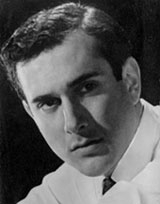
Harold Pinter, CH, CBE (10 October 1930 – 24 December 2008), an English playwright, screenwriter, actor, director, poet, author, political activist, and the 2005 Nobel Laureate in Literature, was at the time of his death considered by many "the most influential and imitated dramatist of his generation."
After publishing poetry as a teenager and acting in school plays, Pinter began his theatrical career in the mid-1950s as a repertory actor using the stage name David Baron.

Discussion
Ask a question about 'Harold Pinter'
Start a new discussion about 'Harold Pinter'
Answer questions from other users
|
Quotations

Encyclopedia
Harold Pinter, CH, CBE (10 October 1930 – 24 December 2008), an English playwright, screenwriter, actor, director, poet, author, political activist, and the 2005 Nobel Laureate in Literature, was at the time of his death considered by many "the most influential and imitated dramatist of his generation."
After publishing poetry as a teenager and acting in school plays, Pinter began his theatrical career in the mid-1950s as a repertory actor using the stage name David Baron. Beginning with his first play, The Room (1957), Pinter's writing career spanned over half a century and produced 29 stage plays; 26 screenplays; many dramatic sketches, radio and TV plays; poetry; one novel; short fiction; and essays, speeches, and letters—many of whose manuscripts are owned and catalogued by the British Library. His best-known works include The Birthday Party (1957), The Caretaker (1959), The Homecoming (1964), and Betrayal (1978), each of which he adapted to film, and his screenplay adaptations of others' works, such as The Servant (1963), The Go-Between (1970), The French Lieutenant's Woman (1981), The Trial (1993), and Sleuth (2007). He directed almost 50 stage, television, and film productions. Despite frail health since being diagnosed with oesophageal cancer late in 2001, he continued to act on stage and screen, performing the title role in a critically-acclaimed production of Samuel Beckett's one-act monologue Krapp's Last Tape for the 50th anniversary season of the Royal Court Theatre, in October 2006.
Pinter's dramas often involve strong conflicts among ambivalent characters who struggle for verbal and territorial dominance and for their own versions of the past; stylistically, these works are marked by theatrical pauses and silences, comedic timing, irony, and menace. Thematically ambiguous, they raise complex issues of individual identity oppressed by social forces, language, and vicissitudes of memory. Although Pinter publicly eschewed applying the term "political theatre" to his own work in 1981, he began writing overtly political plays in the mid-1980s, reflecting his own heightening political interests and changes in his personal life. This "new direction" in his work and his left-wing political activism stimulated additional critical debate about Pinter's politics. Pinter, his work, and his politics have been the subject of voluminous critical commentary.
In addition to the Nobel Prize in Literature and the French Légion d'honneur, Pinter received 20 honorary degrees and numerous other prizes and awards. Academic institutions and performing arts organizations have devoted symposia, festivals, and celebrations to him and his work, in recognition of his cultural influence and achievements across genres and media. In awarding Pinter's Nobel Prize, instigating some public controversy and criticism, the Swedish Academy cited him for being "generally regarded as the foremost representative of British drama in the second half of the 20th century" and noted: "That he occupies a position as a modern classic is illustrated by his name entering the language as an adjective used to describe a particular atmosphere and environment in drama: 'Pinteresque' "—a word he detested and found meaningless. Two weeks after withdrawing from the honorary degree ceremony at the Central School of Speech and Drama due to illness and receiving it in absentia, he died from cancer and was buried the following week at Kensal Green Cemetery, in North West London.
Biography
Personal background
Pinter was born on 10 October 1930, in Hackney, East London, to "very respectable, Jewish, lower middle class," native English parents of Eastern-European ancestry; his father, Jack Pinter (1902–1997), was a "ladies' tailor" and his mother, Frances (née Moskowitz; 1904–1992), "kept what is called an immaculate house" and was "a wonderful cook." Correcting general knowledge about Pinter's family background, Michael Billington, Pinter's authorised biographer, documents that "three of Pinter's grandparents hail from Poland and one from Odessa, making them Ashkenazic rather than Sephardic Jews" (Harold Pinter 1–5). His evacuation from the family home at 19 Thistlewaite Road, "a solid, red-brick, three-storey villa just off the noisy, bustling, traffic-ridden thoroughfare of the Lower Clapton Road" (2), to Cornwall and Reading during 1940 and 1941, before and during the Blitz, and facing "the life-and-death intensity of daily experience" at that time influenced him profoundly, with Pinter's "prime memories of evacuation" being "of loneliness, bewilderment, separation and loss: themes that are in all his works" (5–10).
Education
Although he was a "solitary" only child, he "discovered his true potential" as a student at Hackney Downs School, the London grammar school "where Pinter spent the formative years from 1944 to 1948. … Partly through the school and partly through the social life of Hackney Boys' Club … he formed an almost sacerdotal belief in the power of male friendship. The friends he made in those days—most particularly Henry Woolf, Michael (Mick) Goldstein and Morris (Moishe) Wernick—have always been a vital part of the emotional texture of his life" (Billington, Harold Pinter 11; cf. Woolf). Significantly "inspired" by his English teacher, mentor, and friend Joseph Brearley, "Pinter shone at English, wrote for the school magazine and discovered a gift for acting" (Billington, Harold Pinter 10–11). He wrote poetry frequently and published some of it as a teenager, as he has continued to do throughout his career. He played Romeo and Macbeth in 1947 and 1948, in productions directed by Brearley (Billington, Harold Pinter 13–14). He especially enjoyed running and broke the Hackney Downs School sprinting record (Gussow, Conversations with Pinter 28–29).
Sport and friendship
Pinter was an avid cricket enthusiast most of his life, taking his cricket bat with him when he was evacuated as a pre-teenager during the Blitz (Billington, Life and Work 7–9; 410). In 1971 he told Gussow: "one of my main obsessions in life is the game of cricket—I play and watch and read about it all the time" (Conversations with Pinter 25). Being Chairman of the Gaieties Cricket Club and a "lifetime support[er] of the Yorkshire Cricket Club (8), Pinter devoted a section of his official website to "Cricket" ("Gaieties Cricket Club"). One wall of his study is dominated by "A huge portrait of a younger, vigorous Mr. Pinter playing cricket, one of his great passions … The painted Mr. Pinter, poised to swing his bat, has a wicked glint in his eye; testosterone all but flies off the canvas" (Lyall, "Still Pinteresque" 16 [illus.]). As Billington documents, "Robert Winder observes how even Pinter's passion for cricket was far removed from a jocular, country-house pursuit: 'Harold stands for a different tradition, a more urban and exacting idea of cricket as a bold theatre of aggression' " (Harold Pinter 410). His last interview, conducted by Andy Bull, of the Guardian, two months before Pinter's death and published a few days after it, was "on a subject very dear to the playwright's heart: cricket," revealing "his childhood love of cricket and why it is better than sex."
Other main loves or interests that he mentioned to Gussow, Billington, and other interviewers (in varying order of priority) are family, love (of women) and sex, drinking, writing, and reading. According to Billington, "If the notion of male loyalty, competitive rivalry and fear of betrayal forms a constant thread in Pinter's work from The Dwarfs onwards, its origins can be found in his teenage Hackney years. Pinter adores women, enjoys flirting with them, worships their resilience and strength. But, in his early work especially, they are often seen as disruptive influences on some pure, Platonic ideal of male friendship: one of the most crucial of all Pinter's lost Edens" (Harold Pinter 10–12).
Early theatrical training and stage experience
Beginning in late 1948, Pinter attended the Royal Academy of Dramatic Art (RADA) for two terms, but "loathing" RADA, he missed most of his classes, feigned a nervous breakdown, and dropped out in 1949. That year he was also "called up for National Service," registered as a conscientious objector, was brought to trial twice, and ultimately fined by the magistrate for refusing to serve (Billington, Harold Pinter 20–25).
He had a "walk-on" role in Dick Whittington and His Cat at the Chesterfield Hippodrome in 1949 to 1950. From January to July 1951, he "endured six months at the Central School of Speech and Drama." From 1951 to 1952, he toured Ireland with the Anew McMaster repertory company, playing over a dozen roles. In 1952 he began regional repertory acting jobs in England; from 1953 to 1954, he worked for the Donald Wolfit Company, King's Theatre, Hammersmith, performing eight roles. From 1954 until 1959, Pinter acted under the stage name David Baron. As Batty observes: "Following his brief stint with Wolfit's company in 1953, this was to be Pinter's daily life for five years, and his prime manner of earning a living alongside stints as a waiter, a postman, a bouncer and snow-clearer whilst all the time harbouring ambitions as a poet and writer" (About Pinter 10).
In Pinter: The Player's Playwright, David Thompson "itemises all the performances Pinter gave in the [David] Baron years," including those in English regional repertory companies, nearly twenty-five roles. In October 1989, Pinter told Mel Gussow: "I was in English rep as an actor for about 12 years. My favourite roles were undoubtedly the sinister ones. They're something to get your teeth into" (Conversations with Pinter 83). During that period, he also performed occasional roles in his own and others' works (for radio, TV, and film), as he did later as well.
Marriage and family life
From 1956 until 1980, Pinter was married to Vivien Merchant, a rep actress whom he met on tour, probably best known for her performance in the original film Alfie (1966); their son, Daniel, was born in 1958 (Billington, Harold Pinter 54, 75). Through the early 1970s, Merchant appeared in many of Pinter's works, most notably The Homecoming on stage (1965) and screen (1973), but the marriage was turbulent and began disintegrating in the mid-1960s (252–56). For seven years, from 1962 to 1969, Pinter was engaged in a clandestine affair with Joan Bakewell, which inspired his play Betrayal (1978) (264–66).
In January 1975, he became romantically involved with historian Lady Antonia Fraser, wife of Sir Hugh Fraser, confessing their affair to Vivien Merchant "in late March" and then, after "Life in Hanover Terrace [with Merchant] gradually became impossible," moving out of their house on 28 April 1975, five days into Peter Hall's premiere of No Man's Land; several months after he had already moved in with Lady Antonia and after "threatening all summer to sue Pinter for divorce, publicly citing Antonia if he did not return to her," on 27 July 1975, Merchant finally filed for divorce, resulting in "press fascination" with their break up (Billington, Harold Pinter 253–54; "People"). At first, Daniel lived with him, for "According to Pinter, Vivien couldn't cope with bringing up Daniel alone" (253). From temporary borrowed and rented quarters, Pinter and Antonia Fraser eventually "moved back into her Holland Park family home in August 1977" (254–55). After the Frasers' divorce had become final in 1977 and the Pinters' in 1980, in the third week of October 1980, Pinter married Antonia Fraser; however, due to a two-week delay in Merchant's signing the divorce papers, the reception had to precede the actual ceremony, originally scheduled "to coincide with Pinter's fiftieth birthday" on 10 October 1980 (271–72).
Unable to overcome her bitterness and grief at the loss of her husband, Vivien Merchant died of acute alcoholism in the first week of October 1982 at the age of 53 (Billington, Harold Pinter 276). According to Billington, who cites Merchant's close friends and Pinter's associates, Pinter "did everything possible to support" her until her death and regrets that he ultimately became estranged from their son, Daniel, after their separation, Pinter's remarriage, and Merchant's death (276, 345–47). A reclusive gifted musician and writer (345), Daniel stopped using the surname Pinter, having adopted instead "his maternal grandmother's maiden name," Brand, at the time that he was living with Pinter and Fraser in the summer of 1975; according to Billington, Pinter did not regard Daniel's change of name as "a symbolic rejection of himself" but rather as "a largely pragmatic move on Daniel's part designed to keep the press, who [at that time] had been relentlessly hounding him also, at bay" (255).
While Billington observes that "The break-up with Vivien and the new life with Antonia was to have a profound effect on Pinter's personality and his work," he also acknowledges that she herself "is quick to qualify the idea that she had any direct input into his plays and points out that other people [such as Pinter's good friend actress Peggy Ashcroft, among others] had a shaping influence on his politics," attributing later changes in his writing and his "engagement with the public world" to the "drastic change" from "an unhappy, complicated personal life … to a happy, uncomplicated personal life," so that "a side of Harold which had always been there was somehow released. I think you can see that in his work after No Man's Land [1975,] which was a very bleak play" (255).
Pinter stated publicly in interviews that he was "very happy" in his second marriage and enjoyed family life with his six adult stepchildren and 17 step-grandchildren, and, after battling cancer for a long period, considered himself "a very lucky man in every respect." According to Lyall, who interviewed him in London for her Sunday New York Times preview of Sleuth, Pinter's "latest work, a slim pamphlet called 'Six Poems for A.,' comprises poems written over 32 years, with 'A' being Lady Antonia. The first of the poems was written in Paris, where she and Pinter travelled soon after they met. More than three decades later the two were rarely apart, and Mr. Pinter turned soft, even cozy, when he talked about his wife" ("Still Pinteresque" 16). In the interview conducted by Lyall, Pinter "acknowledged that his plays––full of infidelity, cruelty, inhumanity, the lot––seem at odds with his domestic contentment. 'How can you write a happy play?' he said. 'Drama is about conflict and degrees of perturbation, disarray. I've never been able to write a happy play, but I've been able to enjoy a happy life' " ("Still Pinteresque" 16).
Career
Pinter was the author of 29 plays, 15 dramatic sketches, 26 screenplays and film scripts for cinema and television, a novel, and other prose fiction, essays, and speeches, many poems, and co-author of two works for stage and radio. Along with the 1967 Tony Award for Best Play for The Homecoming and several other American awards and award nominations, he and his plays received many awards in the UK and elsewhere throughout the world. His screenplays for The French Lieutenant's Woman and Betrayal were nominated for Academy Awards in the category of "Writing: Screenplay Based on Material from Another Medium" in 1981 and 1983, respectively.
1957–2001
The Room (1957)
Pinter's first play, The Room, written in 1957, was a student production at the University of Bristol, "commissioned" and directed by his good friend (later acclaimed) actor Henry Woolf, who also originated the role of Mr. Kidd (which he reprised in 2001 and 2007). After Pinter had mentioned that he had an "idea" for a play, Woolf asked him to write it so that he could direct it as part of fulfilling requirements for his postgraduate work. Pinter wrote it in three days. To mark and celebrate the 50th anniversary of that first production of The Room, Woolf reprised his role of Mr. Kidd, as well as his role of the Man in Pinter's play Monologue, in April 2007, as part of an international conference at the University of Leeds, Artist and Citizen: 50 Years of Performing Pinter.
"Comedies of menace"
The Birthday Party (1957), Pinter's second play and among his best-known, was initially both a commercial and critical disaster, despite a rave review in the Sunday Times by its influential drama critic Harold Hobson, which appeared only after the production had closed and could not be reprieved (Hobson, "The Screw Turns Again"). Critical accounts often quote Hobson's prophetic words: Hobson was generally credited by Pinter himself and other critics as bolstering him and perhaps even rescuing his career (Billington, Harold Pinter 85); for example, in their September 1993 interview, Pinter told the New York Times critic Mel Gussow: "I felt pretty discouraged before Hobson. He had a tremendous influence on my life" (141).
In a review published in 1958, borrowing from the subtitle of The Lunatic View: A Comedy of Menace, a play by David Campton (1924–2006), critic Irving Wardle called Pinter's early plays "comedy of menace"—a label that people have applied repeatedly to his work, at times "pigeonholing" and attempting to "tame" it. Such plays begin with an apparently innocent situation that becomes both threatening and "absurd" as Pinter's characters behave in ways often perceived as inexplicable by his audiences and one another. Pinter acknowledges the influence of Samuel Beckett, particularly on his early work; they became friends), sending each other drafts of their works in progress for comments.
In 1964, four years after the success of The Caretaker in 1960, which established Pinter's theatrical reputation (Jones), The Birthday Party was revived both on television (with Pinter himself in the role of Goldberg) and on stage (directed by Pinter at the Aldwych) and well received (Merritt, Pinter in Play 18, 219–20). By the time Peter Hall's London production of The Homecoming (1964) reached Broadway (1967), Harold Pinter had become a celebrity playwright, and the play garnered four Tony awards, among other awards ("Harold Pinter" at the Internet Broadway Database).
"Memory plays"
From the late sixties through the early eighties, Pinter wrote Landscape (1968), Silence (1969), "Night" (1969), Old Times (1971), No Man's Land (1975), The Proust Screenplay (1977), Betrayal (1978), Family Voices (1981), and A Kind of Alaska (1982), all of which dramatise complex ambiguities, elegiac mysteries, comic vagaries, and other "quicksand"-like characteristics of memory and which critics sometimes categorise as Pinter's "memory plays".
Pinter's more-recent plays Party Time (1991), Moonlight (1993), Ashes to Ashes (1996), and Celebration (2000) draw upon some features of his "memory" dramaturgy in their focus on the past in the present, but they have personal and political resonances and other tonal differences from these more-clearly-identifiable "memory plays".
Pinter as director
Pinter began to direct more frequently during the 1970s, becoming an associate director of the National Theatre (NT) in 1973, and he directed almost 50 productions of his own and others' plays for stage, film, and television. As a director, Pinter helmed productions of work by Simon Gray ten times, including directing the stage premières of Butley (1971), Otherwise Engaged (1975), The Rear Column (stage 1978; TV, 1980), Close of Play (NT, 1979), Quartermaine's Terms (1981), Life Support (1997), The Late Middle Classes (1999), and The Old Masters (2004), and the film, Butley (1974), several of which starred Alan Bates (1934–2003), who originated (on stage and screen) the role of Mick in Pinter's first commercial success, The Caretaker (1960), and played the roles of Nicolas in One for the Road and the cab driver in Victoria Station in Pinter's own double-bill production at the Lyric Hammersmith in 1984.
Pinter's overtly-political plays
During the 1980s, after the three-year period of "creative blankness in the early 1980s" following his marriage to Lady Antonia Fraser and the death of Vivien Merchant, as mentioned by Billington (Harold Pinter 258), Pinter's plays tended to become shorter and more overtly political, serving as critiques of oppression, torture, and other abuses of human rights, linked by the apparent "invulnerability of power" (Grimes 119). After writing the brief dramatic sketch Precisely (1983), a duologue between two bureaucrats exposing the absurd power politics of mutual nuclear annihilation and deterrence, he wrote his first full-length overtly-political one-act play, One for the Road (1984). In a 1985 interview called "A Play and Its Politics", conducted by Nicholas Hern, published in the Grove Press edition of One for the Road, Pinter states that whereas his earlier plays presented "metaphors" for power and powerlessness (8–9), the later ones present literal "realities" of power and its abuse (16–17, 21). Grimes proposes, "If it is too much to say that Pinter faults himself for his earlier political inactivity, his political theater dramatizes the interplay and conflict of the opposing poles of involvement and disengagement" (19).
In the 1990s, he also wrote the political satire Party Time, first as a play for the stage (Faber and Faber, 1991), and then revised and adapted it as a television screenplay (Faber and Faber, 1994). From 1992 to 1999, reflecting both personal and political concerns, Pinter wrote Moonlight (1993) and Ashes to Ashes (1996), full-length plays with domestic settings relating to death and dying and (in the latter case) to such atrocities as the Holocaust. In this period, after the deaths of first his mother and then his father, again merging the personal and the political, Pinter wrote the poems "Death" (1997) (which he read in his 2005 Nobel Lecture) and "The Disappeared" (1998).
Lincoln Center Harold Pinter Festival (Summer 2001)
In July and August 2001, a Harold Pinter Festival celebrating his work curated by Michael Colgan, artistic director of the Gate Theatre, Dublin, was held at Lincoln Center in New York City, in which he participated as both a director (of a double bill pairing his newest play, Celebration, with his first play, The Room) and an actor (as Nicolas in One for the Road).
Harold Pinter Homage at World Leaders (Autumn 2001)
In October 2001, as part of the "Harold Pinter Homage" at the World Leaders Festival of Creative Genius, at Harbourfront Centre, in Toronto, following the reception and during the dinner honouring him, he presented a dramatic reading of Celebration (2000) and also participated in a public interview as part of the International Festival of Authors.
Later that year, Pinter's collaboration with director Di Trevis resulted in their stage adaptation of his as-yet unfilmed 1972 work The Proust Screenplay, entitled Remembrance of Things Past (both based on Marcel Proust's famous seven-volume novel In Search of Lost Time), being produced at the National Theatre, in London. There was also a revival of The Caretaker in the West End.
2002–2008
Late in 2001, Pinter was diagnosed with oesophageal cancer, for which, in 2002, he underwent what he described afterwards in published and broadcast interviews as a "successful" operation and chemotherapy, thanking both his "brilliant surgeon" and his "brilliant wife" for their efforts on his behalf during that period. During the course of his treatment, he directed a production of his play No Man's Land, wrote and performed in his new sketch "Press Conference" for a two-part otherwise-retrospective production of his dramatic sketches at the National Theatre (415–16), and was seen on television in America in the role of Vivian Bearing's father in the HBO television film of Margaret Edson's Pulitzer Prize-winning play Wit. Since then, having become increasingly "engaged" as "a citizen" (Merritt, Pinter in Play 179), Pinter continued to write and present politically-charged poetry, essays, speeches and two new screenplay adaptations of plays, based on Shakespeare's King Lear (completed in 2000 but unfilmed) and on Anthony Shaffer's Sleuth (written in 2005, with revisions completed later for the 2007 film Sleuth). Pinter's most recent stage play, Celebration (2000), is a social satire, with fewer political resonances than such plays as One for the Road (1984), Mountain Language (1988), Party Time (1991), and Ashes to Ashes (1996), the last three of which extend expressionistic aspects of Pinter's "memory plays" (Billington, Harold Pinter; Grimes). His most recent dramatic work for radio, Voices (2005), a collaboration with composer James Clarke, adapting such selected works by Pinter to music, premièred on BBC Radio 3 on his 75th birthday (10 October 2005), three days before the October 13th announcement that he had won the 2005 Nobel Prize in Literature (Billington, Harold Pinter 420).
PinterFest, Manitoba Theatre Centre, 9–25 January 2003
In 2003, the Manitoba Theatre Centre, in Manitoba, Canada, held a nearly month-long PinterFest, in which "over a 130 performances" of a dozen of Pinter's plays were produced by a dozen different theatre companies.
Public announcement of "retirement" from playwriting (February 2005)
On 28 February 2005, in an interview conducted by Mark Lawson on the BBC Radio 4 programme Front Row, Pinter announced publicly that he would stop writing plays to dedicate himself to his political activism and writing poetry: "I think I've written 29 plays. I think it's enough for me. I think I've found other forms now. My energies are going in different directions—over the last few years I've made a number of political speeches at various locations and ceremonies … I'm using a lot of energy more specifically about political states of affairs, which I think are very, very worrying as things stand."
In later interviews and correspondence, he vowed to " 'keep fighting' " politically, remaining committed to writing and publishing poetry (e.g., his poems "The Special Relationship", "Laughter", and "The Watcher") and to continuing political pressure against the "status quo," battling politically what he considered social injustices. Personally, he was also battling post-oesophageal cancer bouts of ill health, including "a rare skin disease called pemphigus"—that "very, very mysterious skin condition which emanated from the Brazilian jungle", as he described it—and "a form of septicaemia which afflict[ed] his feet and [made] movement slow and laborious" (Billington, Harold Pinter 394). Yet, despite these afflictions, Pinter completed his screenplay for Sleuth in 2005 (418–20).
Europe Theatre Prize (March 2006)
In an interview of Pinter conducted as part of the Europe Theatre Prize ceremony in Turin, Italy, which was part of the cultural program of the XX Winter Olympic Games, including an evening of dramatic readings curated by the Gate Theatre's artistic director Michael Colgan (BWW News Desk), Billington asked Pinter, "Is the itch to put pen to paper still there?" He replied, "Yes. It's just a question of what the form is … I've been writing poetry since my youth and I'm sure I'll keep on writing it till I conk out. I've said it before and I'll say it again. I've written 29 damn plays. Isn't that enough?" (Billington, " 'I've written' "). In response, audience members shouted "in unison" a resounding No, urging him to keep writing (Merritt, "Europe Theatre Prize Celebration").
BAFTA Celebration (June 2006)
In June 2006, prevailing over persistent health challenges, Pinter attended "a celebration of his work in cinema organised by the British Academy of Film and Television Arts," for which his friend and fellow playwright David Hare "organised a brilliant selection of film clips ... [saying] 'To jump back into the world of Pinter's movies ... is to remind yourself of a literate mainstream cinema, focused as much as Bergman's is on the human face, in which tension is maintained by a carefully crafted mix of image and dialogue.' "
Interview on Newsnight (June 2006)
Pinter occasionally left open the possibility that if a compelling dramatic "image" were to come to mind (though "not likely"), he would perhaps have pursued it. After making this point, with Rupert Graves in another location on screen, Pinter performed a dramatic reading of his "new work," Apart From That, at the end of the interview conducted by Wark, broadcast live on Newsnight on 23 June 2006. This "very funny" dramatic sketch was inspired by Pinter's strong aversion to mobile telephones; "as two people trade banalities over their mobile phones there is a hint of something ominous and unspoken behind the clichéd chat" (Billington, Harold Pinter 429).
Krapp's Last Tape (October 2006)
In an account of Pinter's interview conducted by Ramona Koval at the Edinburgh Book Festival "Meet the Author" in late August 2006, Robinson reports: "Pinter, whose last published play came out in 2000, said the reason he had given up writing was that he had 'written himself out', adding: 'I recently had a holiday in Dorset and took a couple of my usual yellow writing pads. I didn't write a damn word. Fondly, I turned them over and put them in a drawer.' " It appeared to Robinson that "despite giving up writing [Pinter] will carry on his acting career." From another perspective, however, as Eden and Walker observe: "So keenly is Harold Pinter relishing his return to the stage this autumn [in Samuel Beckett's one-act monologue Krapp's Last Tape] that he has put his literary career on the back burner." Pinter said: "It's a great challenge and I'm going to have a crack at it."
After returning to London from Edinburgh, in September 2006, he began rehearsing for his performance of the role of Krapp, which, the next month, he performed from a motorized wheelchair in a limited run at the Royal Court Theatre to sold-out audiences and "ecstatic" critical reviews.
The production of only nine performances, from 12 October, two days after Pinter's 76th birthday, to 24 October 2006, was the most sought-after ticket in London during the 50th-anniversary celebration season of the Royal Court Theatre; his performances sold out within minutes on the first morning of general ticket sales (4 September 2006). One performance was filmed, produced on DVD, and shown on BBC Four on 21 June 2007.
Pinter: A Celebration (October–November 2006)
Sheffield Theatres hosted Pinter: A Celebration for a full month (11 Oct.–11 Nov. 2006). The program featured selected productions of Pinter's plays (in order of presentation): The Caretaker, Voices, No Man's Land, Family Voices, Tea Party, The Room, One for the Road, and The Dumb Waiter; films (most his screenplays; some in which Pinter appears as an actor): The Go-Between, Accident, The Birthday Party, The French Lieutenant's Woman, Reunion, Mojo, The Servant, and The Pumpkin Eater; and other related program events: "Pause for Thought" (Penelope Wilton and Douglas Hodge in conversation with Michael Billington), "Ashes to Ashes –– A Cricketing Celebration", a "Pinter Quiz Night", "The New World Order", the BBC Two documentary film Arena: Harold Pinter (introd. Anthony Wall, producer of Arena), and "The New World Order –– A Pause for Peace" (a consideration of "Pinter's pacifist writing" [both poems and prose] supported by the Sheffield Quakers), and a screening of "Pinter's passionate and antagonistic 45-minute Nobel Prize Lecture."
50th anniversary West-End revival of The Dumb Waiter; Celebration (February 2007)
Coinciding with the 50th anniversary of The Dumb Waiter, Lee Evans and Jason Isaacs starred as Gus and Ben in "a major West end revival," directed by Harry Burton, "in a limited seven week run" at the Trafalgar Studios, from 2 February 2007 through 24 March 2007. John Crowley's film version of Pinter's play Celebration (2000) was shown on More 4 (Channel 4, UK), in late February 2007, "with a cast including James Bolam, Janie Dee, Colin Firth, James Fox, Michael Gambon, Julia McKenzie, Sophie Okonedo, Stephen Rea and Penelope Wilton."
Radio broadcast of The Homecoming (March 2007)
On 18 March 2007, BBC Radio 3 broadcast a new radio production of The Homecoming, directed by Thea Sharrock and produced by Martin J. Smith, with Pinter performing the role of Max (for the first time; he had previously played Lenny on stage in 1964), Michael Gambon as Max's brother Sam, Rupert Graves as Teddy, Samuel West as Lenny, James Alexandrou as Joey, and Gina McKee as Ruth (Martin J. Smith; West).
Revival of The Hothouse (11–27 July 2007)
A revival of The Hothouse, directed by Ian Rickson, with a cast including Stephen Moore (Roote), Lia Williams (Miss Cutts), and Henry Woolf (Tubb), among others, opened at the Royal National Theatre, in London, on 11 July 2007, playing through 27 July, concurrently with a revival of Betrayal at the Donmar Warehouse, starring Toby Stephens (Jerry), Dervla Kirwan (Emma), and Samuel West (Robert), as directed by Roger Michell (West).
Sleuth (August 2007)
Pinter's screenplay adaptation of the 1970 Tony Award-winning play Sleuth, by Anthony Shaffer, is the basis for the 2007 film Sleuth, directed by Kenneth Branagh and starring Michael Caine (in the role of Andrew Wyke, played by Laurence Olivier in the 1972 film Sleuth) and Jude Law (in the role of Milo Tindle, played by Caine in the 1972 film). Law also produced it. Scheduled for release on 12 October, the film debuted at the 64th Venice International Film Festival on 31 August 2007 and was screened at the 2007 Toronto International Film Festival on 10 September.
Broadway revival of The Homecoming (December 2007–April 2008)
A Broadway revival of The Homecoming, starring James Frain as Teddy, Ian McShane as Max, Raul Esparza as Lenny, Michael McKean as Sam, and Eve Best as Ruth, and directed by Daniel Sullivan, opened on 16 December 2007, for a "20-week limited engagement … through 13 April 2008" at the Cort Theatre (Gans; Horwitz).
50th anniversary revival of The Birthday Party (8–24 May 2008)
The Lyric Hammersmith celebrated the play's 50th anniversary with a revival, directed by artistic director David Farr, and related events from 8 to 24 May 2008, including a gala performance and reception hosted by Harold Pinter on 19 May 2008, exactly fifty years after its London première there.
No Man's Land at the Gate Theatre, Dublin (August 2008), and the Duke of York's Theatre, London (through 3 January 2009)
A revival of No Man's Land (1975), directed by Rupert Goold, opened at the Gate Theatre, Dublin, whose artistic director is Michael Colgan, in August 2008, and then transferred to the Duke of York's Theatre, London, where it played through Saturday, 3 January 2009 (BWW News Desk).
On the Monday before Christmas 2008, during its break, Pinter "was admitted to Hammersmith Hospital," where he died "two days later on Christmas Eve" from cancer, after having "suffered for more than five years from cancer of the oesophagus" ("Pinter Ends"). On Friday, 26 December, when the production reopened, expressing great sadness and appreciation for their playwright, the actors paid tribute to Pinter from the stage, with Gambon reading Hirst's monologue about his "photograph album" from Act Two that, in August, Pinter had selected for him to read at his funeral, ending with a standing ovation from the audience, many of whom were in tears:
Posthumous events
Pinter's funeral (31 December 2008)
Several accounts of the private funeral held for Pinter, a "half-hour ceremony conducted around the graveside" at Kensal Green Cemetery, on Wednesday afternoon, 31 December 2008, the week after his death, describe it as "directed" or "conducted" or "scripted" by Pinter himself, perhaps recalling the Father who speaks "from the grave" in his play Family Voices. As Pinter's official biographer Michael Billington, who was among approximately 50 family and friends who attended the graveside ceremony, reports: "As recently as last August [2008], [Pinter] had sat down with his wife, Antonia Fraser, and selected the readings he wanted for his funeral." Michael Gambon read "a speech he nightly delivers on stage in No Man's Land, in which Hirst pays tribute to the emotion trapped in photo albums and asks us to 'tender the dead, as you would yourself be tendered, now, in what you would describe as your life' " (as qtd. above) and the poem "Death" (1997), which Pinter read toward the end of his 2005 Nobel Lecture, "Art, Truth and Politics"; Penelope Wilton "delivered with impeccable gravitas" a passage ending T. S. Eliot's "Little Gidding" (1942), the last of his Four Quartets: "So, while the light falls/On a winter's afternoon, in a secluded chapel,/History is now and England"; Matthew Burton, an actor, director, and member of Pinter's cricket team The Gaieties, "read Pinter's favourite cricket poem, Francis Thompson's At Lord's, in which the run-stealers eternally flicker to and fro"; and Stella Powell-Jones, Pinter's step-granddaughter, "read beautifully a love poem dedicated to [her grandmother] Antonia Fraser It Is Here, recalling the coup de foudre at Pinter's first meeting with his future wife." According to the Mail Online, "The only departure from his 'script' was at the end, when a tearful Antonia stepped forward to his grave and said: 'I always get this quotation wrong. I hope I get it right today,' " going on to quote Horatio's speech after the death of Prince Hamlet: "Good night sweet prince:/And flights of angels sing thee to thy rest!"
Theatrical dimming of lights
The night before Pinter's New Year's Eve burial, theatre marquees on Broadway dimmed their lights for a minute in tribute ("Friends"), and the final night of No Man's Land at the Duke of York's Theatre, on 3 January 2009, starting at 6:30 p.m., all of the Ambassador Theatre Group in the West End also dimmed their lights for an hour to honour the playwright (Smith, "Pinter to Be Honoured").
Public memorial
A "more public commemoration" is being planned, with friends and family proposing that Pinter "be accorded the honour of a memorial in Westminster Abbey's 'Poets' Corner'," where one of Pinter's most revered poets, Wilfred Owen, is commemorated among many others, though, reportedly, their proposal may be meeting some resistance due to Pinter's " 'anti-religious views' " (Eden).
Other tributes and retrospectives
Prior to Pinter's death, Colgan, who helmed "four major festivals of [Pinter's] work" starting in 1994, including the 2001 Harold Pinter Festival, which he curated at the Lincoln Center for the Performing Arts, in New York City, announced that he "is preparing for another major retrospective of his work in Dublin to take place in 2010," marking Pinter's 80th birthday (BWW News Desk).
After Pinter's death, at the end of January 2009, the Sydney Festival (then in progress), Dublin's Gate Theatre, and the Sydney Theatre Company, whose co-artistic directors are Australian actress Cate Blanchett and her husband, Andrew Upton, announced that, on Sunday, 1 February, there would be a free, hour-long performance of readings from Pinter's works as a tribute to him, directed and introduced by Colgan and featuring Blanchett, fellow Australian actor Robert Menzies (grandson of former Australian Prime Minister Robert Menzies and her co-star in The War of the Roses Cycle), and Gate Theatre actors Niall Buggy and Owen Roe; in their public statement, Blanchett and Upton "acknowledged the playwright's legacy," saying: "We are delighted to join with Sydney Festival and Ireland's celebrated Gate Theatre in this event marking the passing of one of the 20th century's theatre greats, Harold Pinter, whose influence over playwriting and performance has been so profound."
Diane Abbott, the MP for Hackney North & Stoke Newington proposed "an Early Day Motion in the Commons [signed by 22 other MPs so far] calling on the government to 'do all it can' to support the [residents'] campaign to restore the old Clapton Cinematograph Theatre, which opened in Lower Clapton Road in 1910" and to turn it into "a memorial to the great dramatist" ("MP Backs Pinter Tribute Campaign"). In speaking to the House of Commons on 16 January 2009, Abbott said: "Harold Pinter is a brilliant example of the creativity that thrives in Hackney. The area has always been a hub for the arts and many successful artists, writers, actors and film producers and journalists now live in the area. The idea of turning the building into a cinematic centre as a memorial to Harold Pinter is fantastic. I can think of no better way to honour this Hackney boy turned literary great and I fully support the campaign."
Civic activities and political activism
Political development
Opposed to the politics of the Cold War, in 1946 to 1947, when he was eighteen, Pinter was a conscientious objector, refusing compulsory conscription; however, he was not a pacifist, as he told Billington and others that, if he had been old enough at the time, he would have fought against the Nazis in World War II (Harold Pinter 21–24, 92, & 286). Although Pinter seemed to express ambivalence about "politicians" in his 1966 Paris Review interview conducted by Lawrence M. Bensky, he had actually been an early member of the Campaign for Nuclear Disarmament in the United Kingdom and also had supported the British Anti-Apartheid Movement (1959–1994), participating in British artists' refusal to permit professional productions of their work in South Africa in 1963 ("Playwrights in Apartheid Protest") and in subsequent related campaigns (Mbeki; Reddy).
Later political views
In his last twenty-five years, Pinter increasingly focused his essays, speeches, interviews, literary readings, and other public appearances directly on contemporary political issues. He strongly opposed the 1991 Gulf War, the 1999 NATO bombing campaign in Yugoslavia during the Kosovo War, the United States' 2001 War in Afghanistan, and the 2003 Invasion of Iraq. His political statements have evoked some strong public criticism and even, at times, ridicule and personal attacks.
In accepting an honorary degree at the University of Turin (27 November 2002), he stated: "I believe that [the United States] will [attack Iraq] not only to take control of Iraqi oil, but also because the American administration is now a bloodthirsty wild animal. Bombs are its only vocabulary." Distinguishing between "the American administration" and American citizens, he added the following qualification: "Many Americans, we know, are horrified by the posture of their government but seem to be helpless" (Various Voices 243). He was very active in the anti-war movement in the United Kingdom, speaking at rallies held by the Stop the War Coalition (StWC), which reprinted his Turin speech.
In later speeches, describing former President of the United States George W. Bush as a "mass murderer" and former Prime Minister of the United Kingdom Tony Blair as both "mass-murdering" and a "deluded idiot", Pinter specified that, along with other past U.S. officials, under the Geneva conventions, they are "war criminals". He also compared the Bush administration ("a bunch of criminal lunatics") with Adolf Hitler's Nazi Germany, saying that, under Bush, the United States ("a monster out of control") strives to attain "world domination" through "Full spectrum dominance". Pinter further described Great Britain under Tony Blair as "pathetic and supine," portraying the British nation metaphorically as a "bleating little lamb tagging behind [the United States] on a lead." In a public reading Pinter charged that Blair was participating in "an act of premeditated mass murder" instigated on behalf of "the American people," who, Pinter noted, were increasingly protesting "their government's actions."
On his official website, Pinter published his remarks to the mass peace protest demonstration held in London on 15 February 2003: "The United States is a monster out of control. Unless we challenge it with absolute determination American barbarism will destroy the world. The country is run by a bunch of criminal lunatics, with Blair as their hired Christian thug. The planned attack on Iraq is an act of premeditated mass murder" ("Speech at Hyde Park"). Those remarks anticipated his observation in his 2005 Nobel Lecture, "Art, Truth and Politics": "Many thousands, if not millions, of people in the United States itself are demonstrably sickened, shamed and angered by their government's actions, but as things stand they are not a coherent political force–yet. But the anxiety, uncertainty and fear which we can see growing daily in the United States is unlikely to diminish" (21).
In accepting the Wilfred Owen Award for Poetry, on 18 March 2005, wondering "What would Wilfred Owen make of the invasion of Iraq? A bandit act, an act of blatant state terrorism, demonstrating absolute contempt for the conception of international law?", Pinter concluded: "I believe Wilfred Owen would share our contempt, our revulsion, our nausea and our shame at both the language and the actions of the American and British governments" (Various Voices 247–48).
In March 2006, upon accepting the Europe Theatre Prize, in Turin, Pinter exhorted the mostly-European audience "to resist the power of the United States," stating, "I'd like to see Europe echo the example of Latin America in withstanding the economic and political intimidation of the United States. This is a serious responsibility for Europe and all of its citizens."
Related political activities
Pinter was active in International PEN, serving as a vice-president, along with American playwright Arthur Miller. In 1985, Pinter and Miller travelled to Turkey, on a mission co-sponsored by International PEN and a Helsinki Watch committee to investigate and protest the torture of imprisoned writers. There he met victims of political oppression and their families. At an American embassy dinner in Ankara, held in Miller's honour, at which Pinter was also an invited guest, speaking on behalf of those imprisoned Turkish writers, Pinter confronted the ambassador with (in Pinter's words) "the reality … of electric current on your genitals": Pinter's outspokenness apparently angered their host and led to indications for his desired departure, and Miller left the embassy with him. Recounting this episode for a tribute to Miller on his 80th birthday, Pinter concluded: "Being thrown out of the US embassy in Ankara with Arthur Miller—a voluntary exile—was one of the proudest moments in my life" ("Arthur Miller's Socks", Various Voices 56–57). Pinter's experiences in Turkey and his knowledge of the Turkish suppression of the Kurdish language "inspired" his 1988 play Mountain Language.
He was an active delegate of the Cuba Solidarity Campaign in the United Kingdom, an organization that defends Cuba, supports the government of Fidel Castro, and campaigns against the U.S. embargo on the country (Hands Off Cuba!). In 2001 Pinter joined the International Committee to Defend Slobodan Miloševic (ICDSM), which appealed for a fair trial for and the freedom of Slobodan Miloševic; he signed a related "Artists' Appeal for Miloševic" in 2004., when accessed on 29 Jan. 2009. Pinter's support of this appeal received some condemnation in the public media; e.g., see Hari.
Pinter contributed letters to the editor, essays, speeches, and poetry strongly expressing his artistic and political viewpoints, which were frequently published initially in British periodicals, both in print and electronic media, and distributed and re-distributed extensively over the internet and throughout the blogosphere. These were distributed more widely after his winning the Nobel Prize in Literature in 2005; his subsequent publications and related news accounts cite his status as a Nobel Laureate.
In later life he continued to sign petitions on behalf of artistic and political causes that he supported. For example, he became a signatory of the mission statement of Jews for Justice for Palestinians in 2005 and of its full-page advertisement, "What Is Israel Doing? A Call by Jews in Britain" featured in The Times on 6 July 2006. He also co-signed an open letter about events in the Middle East dated 19 July 2006, distributed to major news publications on 21 July 2006, and posted on the website of Noam Chomsky.
On 5 February 2007 The Independent reported that, along with historian Eric Hobsbawm, human rights lawyer Geoffrey Bindman, fashion designer Nicole Farhi, film director Mike Leigh, and actors Stephen Fry and Zoë Wanamaker, among others, Harold Pinter launched the organization Independent Jewish Voices in the United Kingdom "to represent British Jews … in response to a perceived pro-Israeli bias in existing Jewish bodies in the UK", and, according to Hobsbawm, "as a counter-balance to the uncritical support for Israeli policies by established bodies such as the Board of Deputies of British Jews" (Hodgson; IJV Declaration).
In March 2007 Charlie Rose had "A Conversation with Harold Pinter" on Charlie Rose, filmed at the Old Vic, in London, and broadcast on television in the United States on PBS. They discussed highlights of his career and the politics of his life and work. They debated his ongoing opposition to the Iraq War, with Rose challenging some of Pinter's views about the United States. They also discussed some of his other public protests and positions in public controversies, such as that involving the New York Theatre Workshop's cancellation of their production of My Name Is Rachel Corrie, which Pinter viewed as an act of cowardice amounting to self-censorship.
In mid-June 2008, opposing "a police ban on the George Bush Not Welcome Here" demonstration organized by the Stop the War Coalition (StWC), "Pinter commented, 'The ban on the Stop The War Coalition march in protest at the visit of President Bush to this country [England] is a totalitarian act. In what is supposed to be a free country the Coalition has every right to express its views peacefully and openly. This ban is outrageous and makes the term "democracy" laughable'."
Retrospective political perspective on earlier work
In "A Play and Its Politics", the interview conducted by Nicholas Hern in February 1985 and published in the 1986 Grove Press edition of One for the Road, Pinter described his earlier plays retrospectively from the perspective of the politics of power and the dynamics of oppression. He also expressed such a perspective on his work when he participated in "Meet the Author" with Ramona Koval, at the Edinburgh Book Festival, in Edinburgh, Scotland, on the evening of 25 August 2006. It was his first public appearance in Britain since he had won the 2005 Nobel Prize in Literature and his near-death experience in hospital in the first week of December 2005, which had prevented him from travelling to Stockholm and giving his Nobel Lecture in person. Pinter described how he felt while almost dying (as if he were "drowning"). After reading an interrogation scene from The Birthday Party, he provided a rare "explanation" of his work, according to McDowell. Pinter "wanted to say that Goldberg and McCann represented the forces in society who wanted to snuff out dissent, to stifle Stanley's voice, to silence him," and that in 1958 "One thing [the critics who almost unanimously hated the play] got wrong … was the whole history of stifling, suffocating and destroying dissent. Not too long before, the Gestapo had represented order, discipline, family life, obligation—and anyone who disagreed with that was in trouble."
In both his writing and his public speaking, as McDowell observes,
Honours
An Honorary Associate of the National Secular Society, a Fellow of the Royal Society of Literature, and an Honorary Fellow of the Modern Language Association of America (1970), Pinter was appointed CBE in 1966 and became a Companion of Honour in 2002 (having previously declined a knighthood in 1996). In 1995 and 1996 he accepted the David Cohen Prize, in recognition of a lifetime's literary achievement, and the Laurence Olivier Special Award for a lifetime's achievement in the theatre, respectively. In 1997 he became a BAFTA Fellow. He received the World Leaders Award for "Creative Genius", as the subject of a week-long "Homage" in Toronto, in October 2001. A few years later, in 2004, he received the Wilfred Owen Award for Poetry—"in recognition of Pinter's lifelong contribution to literature, 'and specifically for his collection of poetry entitled War, published in 2003' " (Wilfred Owen Association Newsletter). In March 2006 he was awarded the Europe Theatre Prize, in recognition of lifetime achievements pertaining to drama and theatre ("Letter of Motivation"). In conjunction with that award, from 10 March to 14 March 2006, Michael Billington coordinated an international conference on "Pinter: Passion, Poetry, Politics", including scholars and critics from Europe and the Americas (Harold Pinter 427–28).
Nobel Prize in Literature
On 13 October 2005 the Swedish Academy announced that it had decided to award the Nobel Prize in Literature for that year to "Harold Pinter … Who in his plays uncovers the precipice under everyday prattle and forces entry into oppression's closed rooms" (press release), instigating some public controversy and criticism relating both to characteristics of Pinter's work and to his politics.
When interviewed that day about his own reaction to the Nobel Prize announcement by Billington, Pinter joked: "I was told today that one of the Sky channels said this morning that 'Harold Pinter is dead'. Then they changed their mind and said, 'No, he's won the Nobel prize.' So I've risen from the dead" (Billington, " 'They said' ").
Nobel Week, including the Nobel Prize Awards Ceremony in Stockholm and related events throughout Scandinavia, began in the first few days of December 2005. Due to medical concerns about his health, Pinter and his family could not attend the Awards Ceremony and those events. After the Academy notified him of his award, although he had arranged for his publisher (Stephen Page of Faber and Faber) to accept his Nobel Diploma and Nobel Medal at the Awards Ceremony scheduled for 10 December, he had still planned to travel to Stockholm, to present his lecture in person a few days earlier (Honigsbaum). In November, however, discovering the infection that would nearly kill him, his doctor hospitalised him and barred such travel (Billington, Harold Pinter 423–24).
Art, Truth and Politics: The Nobel Lecture
Though still hospitalised, Pinter went to a Channel 4 studio to videotape his Nobel Lecture: "Art, Truth and Politics", which was projected on three large screens at the Swedish Academy in Stockholm on the evening of 7 December 2005.
Simultaneously transmitted on Channel 4 in the UK that evening, but "totally ignored by the BBC" (Billington, Harold Pinter 424), the 46-minute television broadcast was introduced by friend and fellow playwright David Hare. Subsequently, the full text and streaming video formats were posted for the public on the Nobel Prize and Swedish Academy official websites. In these formats Pinter's Nobel Lecture has been widely watched, cited, quoted, and distributed by print and online media and the source of much commentary and debate (425–27).
Pinter's Nobel Lecture, Art, Truth and Politics provoked extensive public controversy, with some media commentators accusing Pinter of "anti-Americanism" (Allen-Mills). Yet he emphasizes that he criticizes policies and practices of American administrations (and those who voted for them), not all American citizens, many of whom he recognizes as "demonstrably sickened, shamed and angered by their government's actions"
As a result of his Nobel Prize and his controversial Nobel Lecture, interest in Pinter's life and work surged. They led to new revivals of his plays, to Billington's updating his biography (retitled Harold Pinter), and to new editions of Pinter's works, such as The Essential Pinter and The Dwarfs, by Grove Press, and a three-volume box set including The Birthday Party, No Man's Land, and Mountain Language and Celebration entitled Four Plays, by Faber and Faber.
Illuminations released its DVD and VHS video recordings of Pinter's Nobel Lecture (without Hare's introduction).
Légion d'honneur
On 18 January 2007 the French Prime Minister Dominique de Villepin, himself a published poet, presented Pinter with France's highest civil honour, the Légion d'honneur, at a ceremony at the French embassy in London, shortly after holding talks with Tony Blair. Prime Minister de Villepin "praised Mr Pinter's poem American Football (1991)," saying: " 'With its violence and its cruelty, it is for me one of the most accurate images of war, one of the most telling metaphors of the temptation of imperialism and violence.' " "In return," Pinter "praised France for its opposition to the war in Iraq." M. de Villepin concluded: "The poet stands still and observes what doesn't deserve other men's attention. Poetry teaches us how to live and you, Harold Pinter, teach us how to live." He said that Pinter received the award particularly "because in seeking to capture all the facets of the human spirit, [Pinter's] works respond to the aspirations of the French public, and its taste for an understanding of man and of what is truly universal." Lawrence Pollard observed that "the award for the great playwright underlines how much Mr Pinter is admired in countries like France as a model of the uncompromising radical intellectual."
Pinter and academia
Some scholars and critics challenge the validity of Pinter's critiques of what he terms "the modes of thinking of those in power" (Merritt, Pinter in Play 171–89; 180) or dissent from his retrospective viewpoints on his own work (Begley; Karwowski; and Quigley).
In his personal political history, however, Scholars agree that Pinter's dramatic rendering of power relations results from such astute "critical and moral scrutiny".
Pinter's aversion to any censorship by "the authorities" is epitomised in Petey's line at the end of The Birthday Party. As the broken-down and reconstituted Stanley is being carted off by the figures of authority Goldberg and McCann, Petey calls out after him, "Stan, don't let them tell you what to do!" "I've lived that line all my damn life. Never more than now," he told Gussow in 1988. Pinter's ongoing opposition to what he terms "the modes of thinking of those in power"—the "brick wall" of the "minds" perpetuating the "status quo" (Merritt, Pinter in Play 180)—infuses the "vast political pessimism" that some academic critics may perceive in his artistic work (Grimes 220), its "drowning landscape" of harsh contemporary realities, with some residual "hope for restoring the dignity of man" (Pinter, Art, Truth and Politics 9, 24).
Pinter's longtime friends the directors and actors David Jones and Henry Woolf would remind analytically-inclined scholars and dramatic critics that Pinter is a "great comic writer" (Coppa); yet, as Pinter himself said of The Caretaker, his work is only "funny, up to a point." "After that point," his dramatic conflicts present serious implications for his characters and his audiences, leading to sustained inquiry about his work and multiple "critical strategies" for dealing with their responses to it (Merritt, Pinter in Play).
On 9 October 2008, the Central School of Speech and Drama announced that Pinter had agreed to become its president and to receive an honorary fellowship in the School's graduation ceremony on 10 December 2008 ("Central Announces"). On his appointment Pinter commented: "I was a student at Central in 1950–51. I enjoyed my time there very much and I am delighted to become president of a remarkable institution" (Smith, "Pinter Replaces"). But Pinter had to receive that honorary degree, his 20th, in absentia, due to ill health ("Degree Honour"; "2008 Central School"). His presidency of the School was very brief, as he died just two weeks after the graduation ceremony, on 24 December 2008.
Archive
Unpublished manuscripts relating to Harold Pinter and his works, and letters to and from him are held in the Modern Literary Manuscripts division of the British Library (BL), where the catalogued Harold Pinter Archive reopened on 2 February 2009 (O'Brien), and at the Harry Ransom Humanities Research Center, at the University of Texas at Austin; The Lilly Library, at Indiana University at Bloomington; the Mandeville Special Collections Library, Geisel Library, at the University of California, San Diego; at the British Film Institute, in London, England; in the Margaret Herrick Library, Pickford Center for Motion Picture Study, at the Academy of Motion Picture Arts and Sciences, in Beverly Hills, California; and in other public and private collections.
After Pinter's death, the British Library updated its official Harold Pinter Archive Blog, posting a memorial notice on 29 December 2008, stating that "Harold was a formidable and generous champion of the Library and its work, and the British Library was immensely proud to have added the Pinter archive to our Manuscript Collections in 2007," and promising that "more detailed tributes" would be appearing there soon. On 6 January 2009, Jamie Andrews, Head of Modern Literary Manuscripts at the British Library and custodian of Pinter's Archive, posted " 'Tender the dead, as you yourself would be tendered...' ", alluding to Hirst's monologue about the faces of the dead in his photograph album from No Man's Land. He begins by relating his experience as an invited panelist in the Allied Organization program arranged by the Harold Pinter Society at the 2008 MLA Convention, on 28 December, after having seen Goold's production "just a few days before news of Harold's passing" on the 24th. "Already carrying the lines and images around" in his head when he "read of the use of Hirst's monologue as part of the funeral," he concludes: "As always with Pinter, there's a certain ambiguity to [Briggs's] swift response 'They're blank, mate, blank. The blank dead'. Personally, I'm with Hirst who, after a trademark 'silence', ripostes quite simply: 'Nonsense'."
See also
Works cited
Bio-bibliography The Swedish Academy. : Harold Pinter, Nobel Prize in Literature 2005". NobelPrize.org. The Swedish Academy and The Nobel Foundation, 2005. Web. 5 Jan. 2009. (Contains both and ", with the latter hyperlinked separately in site menu.)
Obituaries and related articles Abbott, Diane. . DianeAbbott.org.uk. Diane Abbott Labour MP for Hackney North and Stoke Newington (site funded from the Parliamentary Members Communications Allowance), 16 Jan. 2009. Web. 28 Jan. 2009. (Press release.)
Adams, Stephen. . Daily Telegraph. Telegraph Media Group, 31 Dec. 2008. Web. 6 Jan. 2009. ("His plays were masterpieces of artistic control. And even at his own funeral Harold Pinter made sure he exerted a director's influence.")
Andrews, Jamie. . Harold Pinter Archive Blog: British Library Curators on Cataloguing the Pinter Archive. British Library, 6 Jan. 2009. Web. 6 Jan. 2009.
Billington, Michael. . Guardian.co.uk. Guardian Media Group, 1 Jan. 2009. Web. 1 Jan. 2009.
–––. . Guardian.co.uk. Guardian Media Group, 25 Dec. 2008. Web. 25 Dec. 2008.
British Library. . Harold Pinter Archive Blog: British Library Curators on Cataloguing the Pinter Archive. British Library, 29 Dec. 2008. Web. 2 Jan. 2009.
Daily Mail Reporter. . Daily Mail. Associated Newspapers Ltd, 25 Dec. 2008. Web. 25 Dec. 2008.
Dodds, Paisley (Associated Press). . Associated Press. Rpt. in Google Hosted News. Google, 25 Dec. 2008. Web. 26 Dec. 2008.
Dorfman, Ariel. . Washington Post. Washington Post, 27 Dec. 2008, A15. Print. The Washington Post Company, 27 Dec. 2008. Web. 9 Jan. 2009.
–––. . New Statesman, Jan. 2009. New Statesman, 8 Jan. 2009. World Wide Web. 9 Jan. 2009. ("Ariel Dorfman on the life and work of Harold Pinter [1930–2008].")
Driscoll, Margarette. . Times Online. News International (News Corporation), 11 Jan. 2009. Web. 11 Jan. 2009. ("After Harold Pinter's death, his grandson [Simon Soros] celebrated the playwright with a rap. ... Simon began his offering, which is being considered for publication in the scholarly American journal The Pinter Review, on the way home from hospital. ... He finished the second stanza of the poem while the rest of the family attended Christmas mass. ... The poem reveals a surprisingly tender side to the otherwise prickly and opinionated auteur. ... Simon's creation touchingly reveals how fully the playwright had been absorbed into the sprawling Fraser clan after he became stepfather to her six children in 1980." See the poem "Grandpa", © Simon Soros 2008, listed below.)
Eden, Richard. . Daily Telegraph. Telegraph Media Group, 3 Jan. 2009. Web. 3 Jan. 2009.
. Guardian.co.uk. Guardian Media Group, 27 Dec. 2008. Web. 7 Mar. 2009. ("Pinter broke the rules in art and in life.")
Fenton, Anna, and Lucy Jackson. . Journal. The Edinburgh Journal Limited, 11 Jan. 2009. Web. 12 Jan. 2009. ("One of the most important writers of his generation, Harold Pinter's literary genius and tireless political activism will continue to make a formidable impact long after his death. ... What made him such a remarkable playwright—and political activist—is that he held on to his unrelenting non-conformity to the end.")
. BBC News. BBC, 1 Jan. 2009. Web. 1 Jan. 2009.
Gussow, Mel, and Ben Brantley.. New York Times. New York Times, 25 Dec. 2008, Theater. Web. 26 Dec. 2008. (Web version of article listed below.)
–––. "Harold Pinter, Whose Silences Redefined Drama, Dies at 78". New York Times 26 Dec. 2008, national ed., sec. A: 1, A22–23. Print. [Cites "Online: A Pinter Appraisal: An audio evaluation by Ben Brantley, reviews of Mr. Pinter's plays and more". Print version of article listed above.]
. Economist, People: Obituary. The Economist Group, 30 Dec. 2008. Web. 15 Jan. 2009. ("Harold Pinter, playwright and polemicist, died on December 24, aged 78.")
. English PEN, News. The English Centre of International PEN, 25 Dec. 2008. Web. 11 Jan. 2009. (Includes an introductory tribute written by Jonathan Heawood and a selection of messages received from around the world.)
. The Times Literary Supplement. News International (News Corporation), 29 Dec. 2008. Web. 9 Jan. 2009.
. Granta. Granta, 25 Dec. 2008. Web. 2 Jan. 2009.
Lafferty, Julia. . Hackney Gazette, Letters. Archant, 7 Jan. 2009. Web. 28 Jan. 2009.
Marowitz, Charles. . Swans, Commentary. Swans, 29 Dec. 2008 – 1 Jan. 2009. Web. 13 Jan. 2009.
Morgan, Clare. . Sydney Morning Herald. Fairfax Digital, 28 Jan.2009. Web, 28 Jan. 2009.
. Hackney Gazette, News. Archant, 27 Jan. 2009. Web. 28 Jan. 2009.
. BBC News. BBC, 25 Dec. 2008. Web. 25 Dec. 2008.
. Mail Online. Associated Newspapers Ltd, 1 Jan. 2009. Web. 4 Jan. 2009.
Smith, Alastair. . The Stage, News. The Stage Newspaper Group Ltd, 2 Jan. 2009. Web. 4 Jan. 2009.
Soros, Simon. . Sunday Times. News International (News Corporation), 11 Jan. 2009. Web. 11 Jan. 2009. (© Simon Soros 2008). [See hyperlinked account by Driscoll listed above.]
Stothard, Peter. . Times Literary Supplement (TLS). Times Online. News International (News Corporation), 7 Jan. 2009. Web. 8 Jan. 2009. (Rpt. from blog of TLS ed. Peter Stothard; first posted on 25 Dec. 2008.)
Taylor-Batty, Mark, comp. . Harold Pinter Society Webpages. The Harold Pinter Society, 1 Jan. 2009. Web. 1 Jan. 2009. ("Harold Pinter - playwright, poet, actor, director, political activist - died on 24 December 2008, aged 78 ... Here are a few of the obituaries and commentaries released by the international press and online theatre community. [Contains "Key links" and a hyperlinked "Full list" periodically being updated.])
. Times. News International (News Corporation), 25 Dec. 2008. Web. 25 Dec. 2008.
Ulaby, Neda. . Day to Day. National Public Radio, 25 Dec. 2008. Web. 25 Dec. 2008. (Includes audio clip.)
Wainwright, Hilary. ". Red Pepper. Red Pepper magazine, Dec. 2008. Web. 3 Jan. 2009. ("Hilary Wainwright reflects on Harold Pinter and Red Pepper.")
Walker, Peter, David Smith, and Haroon Siddique. . Guardian.co.uk. Guardian Media Group, 26 Dec. 2008. Web. 10 Jan. 2009. ("Multi-award winning playwright lauded by dignitaries of theatrical and political spheres. ... Tributes are being paid to the playwright Harold Pinter today from both the theatrical and political worlds after his death from cancer, aged 78.")
. BBC News. BBC, 27 Dec. 2008. Web. 1 Jan. 2009. (Includes video clip.)
Westwood, Matthew. . Australian. News Limited, 27 Jan. 2009. Web, 28 Jan. 2009.
Winer, Linda. . Newsday. Newsday Inc., 25 Dec. 2008. Web. 10 Jan. 2009.
External links
- : The Official Website for the International Playwright Harold Pinter (home and index page).
- at The Artists Network of Refuse & Resist!. (17 pages.) (A selection of writings by and commentary about Pinter; rpt. Pinter's 2005 Nobel Lecture: "Art, Truth & Politics".)
- at Books and Writing with Ramona Koval. Broadcast on Radio National on 15 September 2002. (Interview conducted at the Edinburgh International Book Festival on 25 August 2002.)
- . (Brief biography, critical account, and selected bibliography, compiled by Roger Phillip Mellor, in the Encyclopedia of British Film. Includes hyperlinked filmography ["Film and TV Credits"], with featured works.)
- at Faber and Faber (Pinter's publisher in the UK). (Includes hyperlinked list of Pinter's works published by Faber and Faber.)
- at Grove Press, an imprint of Grove/Atlantic, Inc. (Pinter's U.S. publisher). (Includes hyperlinked list of Pinter's works published by Grove Press.)
- at Guardian.co.uk ("The best of the Guardian's coverage, including tributes, reviews and articles from the archive." Hyperlinked content; periodically updated.)
- at the Internet Broadway Database.
- in Books and Writers. Biography and critical account. . (Featured Nobel Prize in Literature winner for 2005.)
- in Contemporary Writers. (Biography and critical account by Michael Billington for British Council: Arts.)
- in the Literary Encyclopedia. (Biography and critical account, by Andrew Wyllie, University of the West of England.)
- in "Times Topics" of The New York Times. (Index of hyperlinked collected news articles, reviews, commentaries, and photographs published in the newspaper; featured links to media clips and additional external resources.)
- on The Mark Shenton Show, TheatreVoice, recorded on 21 Feb. 2007. (Audio player clip.) ["Focuses on Harold Pinter, with critics Michael Billington and Alastair Macaulay reviewing Pinter's People (Haymarket) and The Dumb Waiter (Trafalgar). Director and actor Harry Burton talks about his experiences with Pinter, and host Mark Shenton discusses upcoming Pinter productions".]
- : British Library Curators on Cataloguing the Pinter Archive. Official blog. Developed by BL Cataloguer Kate O'Brien, primary contributor. (See "Pinter Archive" below.)
- . British Library Online Gallery: What's On. British Library, 8 Sept. 2008. Downloadable MP3 podcast. ("Harold Pinter shares his memories of postwar British theatre with actor and director Harry Burton." Introduced by Jamie Andrews [Head, Modern Literary Manuscripts, British Library] and recorded at the Golden Generation conference at the British Library, held on 8–9 Sept. 2008.)
- (HPS) – An Allied Organization of the Modern Language Association (MLA) and an Associated Organization of the Midwest Modern Language Association (M/MLA), The Harold Pinter Society is "dedicated to studying, celebrating, and appraising the works of this prolific and frequently enigmatic writer." The Pinter Review (1987– ) is published for the HPS by the University of Tampa Press. (Periodically updated.)
- – Announcement of A Tribute to Harold Pinter, presented by the Sydney Festival, Gate Theatre, and Sydney Theatre Company, on 1 Feb. 2009 (Sydney Festival 2009: January 10–31: "Sydney Festival News").
- , by Harold Pinter, at nobelprize.org – Official Website of the Nobel Prize. (Hyperlinked video and "The Lecture in Text Format" in the original English and in French, German, and Swedish translations.)
- – Press release of 11 Dec. 2007 concerning the acquisition of The Harold Pinter Archive in the British Library (BL). (Hyperlinked BL announcement page. See "Harold Pinter Archive Blog" above.)
- (BBC Four), 26 Oct. 2002 – 9 Nov. 2002; posted 7 Feb. 2003. [Includes a "Pinter Timeline", a "Q&A" with Pinter's official biographer Michael Billington, and hyperlinked RealMedia video clips.]
- . BBC Radio 3. Five episodes, each one broadcast daily from 16–20 Feb. 2009. 1: Gate Theatre director Michael Colgan; 2: Critic Michael Billington; 3: Writer Lisa Appignanesi; 4: Film historian Ian Christie; and 5: Actor and director Harry Burton. (Preceded on 15 Feb. 2009 by : Moonlight and Voices. Streaming audio accessible for 7 days after broadcast.)
- . Red Pepper Feb. 2004. (Archived version.) [Texts of poems "Weather Forecast", "Democracy", "The Bombs", and "God Bless America".]
- (10th Edition of the Europe Theatre Prize, Turin, Italy, 8–12 Mar. 2006). (Hyperlinked program, jury, events [including Pinter: Passion, Poetry and Politics], and letter of motivation to Harold Pinter; site includes Italian, English, French, and Spanish language options.)
- on TheatreVoice. Clip of program recorded on 14 Oct. 2005. (Critical assessment by Michael Billington, Dan Rebellato, Charles Spencer and Ian Smith"; hosted by Aleks Sierz.)
|
| |
|
|