
All Topics  
Harold Godwinson

 
Harold Godwinson

   Email Print
   Bookmark   Link


Harold Godwinson


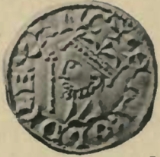
Harold Godwinson (c. 1022 – 14 October 1066) also known as Harold II, was the last Anglo-Saxon
Anglo-Saxons

Anglo-Saxons is the term usually used to describe the invading tribes in the south and east of Great Britain starting from the early 5th century AD, and their creation of the English nation, lasting until the Norman conquest of England of 1066....
 King of England
Kingdom of England

The Kingdom of England was, from 927 to 1707, a state in North-West Europe. The Kingdom of England spanned the southern two-thirds of the island of Great Britain and a number of smaller outlying islands?what is today the legal unit of England and Wales....
 before the Norman Conquest
Norman conquest of England

The Norman conquest of England began in 1066 AD with the invasion of the Kingdom of England by the troops of William I of England, Duke of Normandy , and his victory at the Battle of Hastings....
. Harold reigned from 5 January 1066, until his death at the Battle of Hastings
Battle of Hastings

The Battle of Hastings was the decisive Normans victory in the Norman Conquest of England. It was fought between the Norman army of William I of England, and the English people army led by Harold Godwinson....
 on 14 October of that same year, fighting the Norman
Normans

The Normans were the people who gave their names to Normandy, a region in northern France. They descended from Viking conquerors of the territory and the native population of mostly Frankish and Gallo-Roman stock....
 invaders, led by William the Conqueror
William I of England

William I , better known as William the Conqueror , was Duke of Normandy from 1035 and English monarchy from later 1066 to his death. William is sometimes also referred to as "William II" in relation to his position as the second Duke of Normandy of that name....
. Harold is one of only two English monarchs to have died in battle (the other being Richard III
Richard III of England

Richard III was List of the monarchs of the Kingdom of England of Kingdom of England from 1483 until his death. He was the last king from the House of York, and his defeat at the Battle of Bosworth Field marked the culmination of the Wars of the Roses and the end of the Plantagenet dynasty....
).

ld was a son of Godwin
Godwin, Earl of Wessex

Godwin of Wessex, also known as Godwine, Goodwin, Godwyn or Goodwyn was one of the most powerful lords in Kingdom of England under the Denmark king Canute the Great and his successors....
, the powerful Earl of Wessex
Earl of Wessex

The title Earl of Wessex has been created twice in British history, once in the pre-Conquest Anglo-Saxon nobility of England and once in the Peerage of the United Kingdom....
, and his wife Gytha Thorkelsdóttir
Gytha Thorkelsdóttir

Gytha Torkelsdotter was the daughter of Torkel Styrbj?rnsson . In 1019, she married the Anglo-Saxons nobleman Godwin, Earl of Wessex, apparently as his second wife ....
, whose supposed brother Ulf Jarl
Ulf Jarl

Ulf Jarl belonged to a prominent Sweden family since he was the son of Torkel Styrbj?rnsson who is considered to have been the son of Styrbj?rn the Strong and Tyra, the daughter of Harald I of Denmark....
 was the son-in-law of Sweyn I and the father of Sweyn II of Denmark
Sweyn II of Denmark

Sweyn II Estridsson Ulfsson. was the King of Denmark from 1047 until his death. He was the son of Ulf Jarl and Estrid Margarete Svendsdatter, daughter of Sweyn I of Denmark and sister of Canute the Great....
.


Discussion
Ask a question about 'Harold Godwinson'
Start a new discussion about 'Harold Godwinson'
Answer questions from other users
Full Discussion Forum


Recent Posts


Encyclopedia


Harold Godwinson (c. 1022 – 14 October 1066) also known as Harold II, was the last Anglo-Saxon
Anglo-Saxons

Anglo-Saxons is the term usually used to describe the invading tribes in the south and east of Great Britain starting from the early 5th century AD, and their creation of the English nation, lasting until the Norman conquest of England of 1066....
 King of England
Kingdom of England

The Kingdom of England was, from 927 to 1707, a state in North-West Europe. The Kingdom of England spanned the southern two-thirds of the island of Great Britain and a number of smaller outlying islands?what is today the legal unit of England and Wales....
 before the Norman Conquest
Norman conquest of England

The Norman conquest of England began in 1066 AD with the invasion of the Kingdom of England by the troops of William I of England, Duke of Normandy , and his victory at the Battle of Hastings....
. Harold reigned from 5 January 1066, until his death at the Battle of Hastings
Battle of Hastings

The Battle of Hastings was the decisive Normans victory in the Norman Conquest of England. It was fought between the Norman army of William I of England, and the English people army led by Harold Godwinson....
 on 14 October of that same year, fighting the Norman
Normans

The Normans were the people who gave their names to Normandy, a region in northern France. They descended from Viking conquerors of the territory and the native population of mostly Frankish and Gallo-Roman stock....
 invaders, led by William the Conqueror
William I of England

William I , better known as William the Conqueror , was Duke of Normandy from 1035 and English monarchy from later 1066 to his death. William is sometimes also referred to as "William II" in relation to his position as the second Duke of Normandy of that name....
. Harold is one of only two English monarchs to have died in battle (the other being Richard III
Richard III of England

Richard III was List of the monarchs of the Kingdom of England of Kingdom of England from 1483 until his death. He was the last king from the House of York, and his defeat at the Battle of Bosworth Field marked the culmination of the Wars of the Roses and the end of the Plantagenet dynasty....
).

Family background

Harold was a son of Godwin
Godwin, Earl of Wessex

Godwin of Wessex, also known as Godwine, Goodwin, Godwyn or Goodwyn was one of the most powerful lords in Kingdom of England under the Denmark king Canute the Great and his successors....
, the powerful Earl of Wessex
Earl of Wessex

The title Earl of Wessex has been created twice in British history, once in the pre-Conquest Anglo-Saxon nobility of England and once in the Peerage of the United Kingdom....
, and his wife Gytha Thorkelsdóttir
Gytha Thorkelsdóttir

Gytha Torkelsdotter was the daughter of Torkel Styrbj?rnsson . In 1019, she married the Anglo-Saxons nobleman Godwin, Earl of Wessex, apparently as his second wife ....
, whose supposed brother Ulf Jarl
Ulf Jarl

Ulf Jarl belonged to a prominent Sweden family since he was the son of Torkel Styrbj?rnsson who is considered to have been the son of Styrbj?rn the Strong and Tyra, the daughter of Harald I of Denmark....
 was the son-in-law of Sweyn I and the father of Sweyn II of Denmark
Sweyn II of Denmark

Sweyn II Estridsson Ulfsson. was the King of Denmark from 1047 until his death. He was the son of Ulf Jarl and Estrid Margarete Svendsdatter, daughter of Sweyn I of Denmark and sister of Canute the Great....
. Godwin and Gytha had several children, notably sons Sweyn
Sweyn Godwinson

Sweyn Godwinson was the eldest son of Godwin, Earl of Wessex, and brother of Harold II of England....
, Harold, Tostig
Tostig Godwinson

Tostig Godwinson was an Anglo-Saxons earl of Northumbria and brother of King Harold II of England, the last crowned Anglo-Saxon List of monarchs of England....
, Gyrth
Gyrth Godwinson

Gyrth Godwinson was the fourth son of Godwin, Earl of Wessex, and thus a younger brother of Harold II of England. He went with his eldest brother Sweyn Godwinson into exile to Flanders in 1051, but unlike Swegen he was able to return with the rest of the clan the following year....
 and Leofwine
Leofwine Godwinson

Leofwine Godwinson was a younger brother of Harold II of England, the fifth son of Godwin, Earl of Wessex.When the Godwin family was exiled from England in 1051 he went with Harold to Ireland....
 and a daughter, Edith of Wessex
Edith of Wessex

Edith of Wessex, , married King Edward the Confessor of England in 1045. The marriage produced no children. Later ecclesiastical writers claimed that this was either because Edward took a vow of celibacy, or because he refused to consummate the marriage because of his antipathy to Edith's family, the Godwins....
 (1020–75), who became the Queen consort
Queen consort

A queen consort is the title given to the wife of a reigning Monarch. Queens consort usually share their husbands' Royal and noble ranks and hold the feminine equivalent of their husbands' monarchical titles....
 of Edward the Confessor
Edward the Confessor

Saint Edward the Confessor , son of Ethelred the Unready and Emma of Normandy, was the penultimate Anglo-Saxons List of the monarchs of the Kingdom of England and the last of the House of Wessex, ruling from 1042 until his death....
.

Powerful nobleman

As a result of his sister's marriage to the king, Godwin's second son Harold was made Earl of East Anglia in 1045. Harold accompanied Godwin into exile in 1051, but helped him to regain his position a year later. When Godwin died in 1053, Harold succeeded him as Earl of Wessex
Wessex

West Saxon redirects here. For other meanings of Wessex or West Saxon see Wessex .Wessex , from the Old English Westseaxe , was an Anglo-Saxon kingdom of the West Saxons, in South West England, from the 6th century, until the emergence of the English state in the 9th century, under the Wessex dynasty....
 (a province at that time covering the southernmost third of England). This arguably made him the most powerful figure in England after the king.

In 1058 Harold also became Earl of Hereford
Hereford

Hereford is a cathedral city City status in the United Kingdom, civil parish and county town of Herefordshire, England. It lies on the River Wye, approximately east of the border with Wales, southwest of Worcester, and northwest of Gloucester....
, and replaced his late father as the focus of opposition to growing Norman
Normandy

Normandy is a geographical region corresponding to the former Duchy of Normandy. It is situated along the coast of France south of the English Channel between Brittany and Picardy and comprises territory in northern France and the Channel Islands....
 influence in England under the restored English monarchy (1042–66) of Edward the Confessor
Edward the Confessor

Saint Edward the Confessor , son of Ethelred the Unready and Emma of Normandy, was the penultimate Anglo-Saxons List of the monarchs of the Kingdom of England and the last of the House of Wessex, ruling from 1042 until his death....
, who had spent more than a quarter of a century in exile in Normandy.

He gained glory in a series of campaigns (1062–63) against the ruler of Gwynedd
Kingdom of Gwynedd

Gwynedd is one of several Wales successor states that emerged in 5th-century sub-Roman Britain. It was based on the former Brythonic tribal lands of the Ordovices, Gangani, and the Deceangli which were collectively known as Venedotia in late Romano-British documents....
, Gruffydd ap Llywelyn
Gruffydd ap Llywelyn

File:Wales 1039-63 .svgGruffydd ap Llywelyn , was the ruler of all Wales from 1055 until his death, one of very few able to make this boast. He was great-great-grandson to Hywel Dda and King Anarawd ap Rhodri of Gwynedd....
, who had conquered all of Wales
Wales

native_name = Cymru|conventional_long_name = Wales|common_name = Wales|image_flag = Flag of Wales 2.svg|national_motto = ...
; this conflict ended with Gruffydd's defeat, and death at the hands of his own troops, in 1063.

In 1064, Harold was apparently shipwrecked in Ponthieu
Ponthieu

Ponthieu is a Provinces of France of northern France. Its chief town is Abbeville....
. There is much speculation about this voyage. The earliest post-conquest Norman chroniclers report that at some prior time, Robert, Archbishop of Canterbury had been sent by the childless king to appoint as his heir Edward's maternal kinsman, William of Normandy, and that at this later date Harold was sent to swear fealty. Scholars disagree as to the reliability of this story. William, at least, seems to have believed he had been offered the succession, but there must have been some confusion either on William's part or perhaps by both men, since the English succession was neither inherited nor determined by the sitting monarch. Instead the Witenagemot
Witenagemot

The Witenagemot or the Witena gemot , also known as the Witan was a political institution in Anglo-Saxon England which operated from before the seventh century until the eleventh century....
, the assembly of the kingdom's leading notables, would convene after a king's death to select a successor. Other acts of Edward are inconsistent with his having made such a promise, such as his efforts to return his nephew Edward the Exile
Edward the Exile

Edward the Exile , also called Edward ?theling, son of King of England Edmund II of England and of Ealdgyth , gained the name of "Exile" from his life spent mostly far from the England of his forefathers....
, son of king Edmund Ironside
Edmund Ironside

Edmund Ironside or Eadmund , surnamed "Ironside" for his efforts to fend off the Denmark invasion led by Canute the Great, was Kingdom of England from 23 April to 30 November 1016....
, from Hungary
Hungary

Hungary , officially in English the Republic of Hungary , is a landlocked country in the Carpathian Basin of Central Europe, bordered by Austria, Slovakia, Ukraine, Romania, Serbia, Croatia, and Slovenia....
 in 1057. Later Norman chroniclers suggest alternative explanations for Harold's journey, that he was seeking the release of members of his family who had been held hostage since Godwin's exile in 1051, or even that he had simply been travelling along the English coast on a hunting and fishing expedition and had been driven across the channel by an unexpected storm. There is general agreement that he left from Bosham, and was blown off course, landing on the coast of Ponthieu, where he was held hostage by Count Guy
Guy I of Ponthieu

Guy I of Ponthieu was born sometime in the mid to late 1020s. He was the son of Count Enguerrand II of Ponthieu and the grandson of Hugh II of Ponthieu....
. Duke William arrived soon after and ordered Guy to turn Harold over to him.

Harold then apparently accompanied William to battle against William's enemy, Conan II, Duke of Brittany
Conan II, Duke of Brittany

Conan II of Rennes was Duke of Brittany, from 1040 to his death. Conan was the eldest child and heir of Alan III, Duke of Brittany by his wife Berthe de Blois, and member of the Dukes of Brittany....
. While crossing into Brittany
Brittany

Brittany is a former independent Celtic nations monarchy and duchy, now incorporated into France. It is also, more generally, the name of the cultural area whose limits correspond to the historic province and independent duchy....
 past the fortified abbey of Mont St Michel, Harold is recorded as rescuing two of William's soldiers from the quicksand
Quicksand

Quicksand is a colloid hydrogel consisting of fine granular matter , clay, and brine. In the name, as in that of Mercury , "quick" does not mean "fast," but "living" ....
. They pursued Conan from Dol de Bretagne to Rennes
Rennes

Rennes is a city in the east of Brittany in northwestern France. Rennes is the Capital of the Bretagne Regions of France, as well as the Ille-et-Vilaine Departments of France....
, and finally to Dinan
Dinan

Dinan is a walled Brittany town and a commune in France in the C?tes-d'Armor Departments of France in northwestern France. ...
, where he surrendered the fortress's keys on the point of a lance. William presented Harold with weapons and arms, knighting him. The Bayeux Tapestry, and other Norman sources, then record that Harold swore an oath on sacred relics to William to support his claim to the English throne. After Harold's death, the Normans were quick to point out that in accepting the crown of England, Harold had perjured himself of this alleged oath.

The chronicler Orderic Vitalis
Orderic Vitalis

Orderic Vitalis was an English historians in the Middle Ages who wrote one of the great contemporary chronicles of 11th and 12th century Normandy and England....
 wrote: "This Englishman was very tall and handsome, remarkable for his physical strength, his courage and eloquence, his ready jests and acts of valour. But what were these gifts to him without honour, which is the root of all good?".

Due to an unjust doubling of taxation instituted by Tostig in 1065 that threatened to plunge England into civil war, Harold supported Northumbria
Northumbria

Northumbria is primarily the name of both a medieval petty kingdom of the Angles people, in what is now north east England and southern Scotland, and of the earldom which succeeded it when a united Anglo-Saxon kingdom became England....
n rebels against his brother Tostig
Tostig Godwinson

Tostig Godwinson was an Anglo-Saxons earl of Northumbria and brother of King Harold II of England, the last crowned Anglo-Saxon List of monarchs of England....
 and replaced him with Morcar. This strengthened his acceptability as Edward's successor, but fatally divided his own family, driving Tostig into alliance with King Harald Hardrada
Harald III of Norway

Harald Sigurdsson , later given the epithet Hardrada was the Monarch of Norway from 1047 until 1066. He was also claimed to be the King of Denmark until 1064, often defeating Sweyn II army and forcing him to leave the country....
 ("Hard Reign") of Norway
Norway

Norway , officially the Kingdom of Norway, is a constitutional monarchy in Northern Europe that occupies the western portion of the Scandinavian Peninsula....
.

Marriages and children

.]] For some twenty years Harold was married More danico
More danico

The phrase more danico is a Mediaeval Latin legalistic expression which may be translated as "in the Denmark manner" or "by Norsemen customary law"....
 (latin: "in the Danish manner") to Edith Swannesha and had at least six children by her. The marriage was widely accepted by the laity, although Edith was considered Harold's mistress by the clergy. Their children were not treated as illegitimate. Among them was a daughter Gytha
Gytha of Wessex

Gytha of Wessex was one of several daughters of Edith Swanneck by Harold Godwinson, the last Anglo-Saxons king of Kingdom of England.According to Saxo Grammaticus, two of Harold's sons and a daughter escaped to the court of their uncle, king Sweyn II of Denmark of Denmark....
, later wife of the Russian prince Vladimir Monomakh. Through descendants of this Anglo-Russian marriage, she was a progenitor of English Queen Philippa of Hainault
Philippa of Hainault

Philippa of Hainault was the Queen consort of Edward III of England....
, and hence Harold is the ancestor of subsequent English kings.

About January 1066, Harold married Edith (or Ealdgyth)
Edith of Mercia

Edith of Mercia or Aldgyth of Mercia, , was a Queen consort of England. She was the daughter of Elfgar, Earl of Mercia, the wife of Gruffydd ap Llywelyn, ruler of Wales, and following the latter's death, she married King Harold II of England....
, daughter of Ælfgar, Earl of Mercia
Ælfgar, Earl of Mercia

?lfgar was son of Leofric, Earl of Mercia, possibly by his well-known wife Godgifu , although more probably by an earlier marriage. He succeeded to his father's title and responsibilities on the latter's death in 1057....
, and widow of the Welsh prince Gruffydd ap Llywelyn
Gruffydd ap Llywelyn

File:Wales 1039-63 .svgGruffydd ap Llywelyn , was the ruler of all Wales from 1055 until his death, one of very few able to make this boast. He was great-great-grandson to Hywel Dda and King Anarawd ap Rhodri of Gwynedd....
 an enemy of the English. Edith had two sons — possibly twins — named Harold and Ulf (born c. November 1066), both of whom survived into adulthood and probably lived out their lives in exile.

After her husband's death, the queen is said to have fled for refuge to her brothers Edwin, Earl of Mercia
Edwin, Earl of Mercia

Edwin was the elder brother of Morcar, Earl of Northumbria, son of ?lfgar, Earl of Mercia and grandson of Leofric, Earl of Mercia. He succeeded to his father's title and responsibilities on ?lfgar's death in 1062....
 and Morcar of Northumbria
Morcar of Northumbria

Morcar was the son of ?lfgar, Earl of Mercia and brother of Edwin, Earl of Mercia. He was himself the earl of Northumbria from 1065 to 1066, when he was replaced by William the Conqueror with Copsi....
 but both men made their peace with the Conqueror initially before rebelling and losing their lands and lives. Aldith may have fled abroad (possibly with Harold's mother, Gytha, or with Harold's daughter, Gytha).

Reign as king

At the end of 1065, king Edward the Confessor
Edward the Confessor

Saint Edward the Confessor , son of Ethelred the Unready and Emma of Normandy, was the penultimate Anglo-Saxons List of the monarchs of the Kingdom of England and the last of the House of Wessex, ruling from 1042 until his death....
 ailed and fell into a coma without clarifying his preference for the succession. On 5 January 1066, according to the Vita Ædwardi Regis, he died, but not before briefly regaining consciousness and commending his widow and the kingdom to Harold's "protection". The intent of this charge is ambiguous, as is the Bayeux Tapestry
Bayeux Tapestry

The Bayeux Tapestry is a 50 cm by 70 m long embroidery cloth?not an actual tapestry?which explains the events leading up to the Norman conquest of England as well as the events of the invasion itself....
, which simply depicts Edward pointing at a man thought to represent Harold. When the Witenagemot
Witenagemot

The Witenagemot or the Witena gemot , also known as the Witan was a political institution in Anglo-Saxon England which operated from before the seventh century until the eleventh century....
 convened the next day, they selected Harold to succeed, and his coronation followed on 6 January, the first coronation in Westminster Abbey
Westminster Abbey

The Collegiate Church of St Peter at Westminster, which is almost always referred to popularly and informally as Westminster Abbey, is a large, mainly Gothic architecture Church , in Westminster, London, just to the west of the Palace of Westminster....
. Although later Norman sources point to the suddenness of this coronation, it is possible that it took place because all the nobles of the land were present at Westminster for the feast of Epiphany, and not because of any usurpation of the throne on Harold's part.
Harold Dead Bayeux Tapestry
In early January of 1066, hearing that Harold had been crowned King, William
William I of England

William I , better known as William the Conqueror , was Duke of Normandy from 1035 and English monarchy from later 1066 to his death. William is sometimes also referred to as "William II" in relation to his position as the second Duke of Normandy of that name....
 Duke of Normandy
Duke of Normandy

Duke of Normandy is a title held or claimed by various Normans, France, England and United Kingdom rulers from the 10th century until the present, in recognition of their history....
 began plans to invade by building 700 warships and transports at Dives-sur-Mer
Dives-sur-Mer

Dives-sur-Mer is a Communes of France in the Calvados Departments of France in the Basse-Normandie Regions of France in northern France.Its postal code is 14160....
 on the Normandy coast. Initially William could not get support for the invasion but, claiming that Harold had sworn on sacred relics to support his claim to the throne after having been shipwrecked in Ponthieu
Ponthieu

Ponthieu is a Provinces of France of northern France. Its chief town is Abbeville....
, William was given the Church's blessing and nobles flocked to his cause. In anticipation of the invasion, Harold assembled his troops on the Isle of Wight
Isle of Wight

The Isle of Wight is an England island and county, located 3-8 km from the south coast of the mainland, in the English Channel. It is situated south of the county of Hampshire and is separated from mainland Britain by the Solent....
 but, claiming unfavourable winds, the invasion fleet remained in port. On 8 September with provisions running out Harold disbanded the army and he returned to London. On the same day Harald Hardrada
Harald III of Norway

Harald Sigurdsson , later given the epithet Hardrada was the Monarch of Norway from 1047 until 1066. He was also claimed to be the King of Denmark until 1064, often defeating Sweyn II army and forcing him to leave the country....
 of Norway, who also claimed the English crown joined Tostig and invaded, landing his fleet at the mouth of the Tyne
River Tyne

The River Tyne is a river in England. It is formed by the confluence of two rivers, the North Tyne and the South Tyne. These two rivers converge at Warden Rock near Hexham in Northumberland at a place dubbed 'The Meeting of the Waters'....
.

Invading what is now Yorkshire
Yorkshire

Yorkshire is a Historic counties of England of northern England and the largest in Great Britain. Because of its great size, over time functions were increasingly undertaken by its subdivisions, which have been subject to History of local government in Yorkshire....
, Harald Hardrada and Tostig defeated the English earls Edwin
Edwin, Earl of Mercia

Edwin was the elder brother of Morcar, Earl of Northumbria, son of ?lfgar, Earl of Mercia and grandson of Leofric, Earl of Mercia. He succeeded to his father's title and responsibilities on ?lfgar's death in 1062....
 of Mercia
Mercia

Mercia was one of the kingdoms of the Anglo-Saxons Heptarchy. It was centred on the valley of the River Trent and its tributaries in the region now known as the English Midlands....
 and Morcar of Northumbria at the Battle of Fulford
Battle of Fulford

The Battle of Fulford took place at the village of Fulford, near York in England on September 20 1066, when King Harald III of Norway Hardrada and Tostig, his England ally, fought and defeated the Northern Earls Edwin, Earl of Mercia and Morcar of Northumbria....
 near York
York

York is a walled city, sited at the confluence of the rivers River Ouse, Yorkshire and River Foss in North Yorkshire, England. The city status in the United Kingdom is noted for its rich heritage and it has played an important role throughout much of its almost 2,000 year existence....
 on 20 September. They were in turn defeated and slain by Harold's army five days later at the Battle of Stamford Bridge
Battle of Stamford Bridge

The Battle of Stamford Bridge took place at the village of Stamford Bridge, East Riding of Yorkshire in England on 25 September 1066. This was shortly after an invading Norway army under King Harald III of Norway defeated the army of the northern earls Edwin, Earl of Mercia and Morcar, Earl of Northumbria at the Battle of Fulford two miles s...
, Harold having led his army north on a forced march from London in four days and caught them by surprise. According to Snorri Sturluson
Snorri Sturluson

Snorri Sturluson was an Icelandic historian, poet and politician. He was two-time elected lawspeaker at the Icelandic parliament, the Althing....
, before the battle a man bravely rode up to Harald Hardrada and Tostig and offered Tostig his earldom if he would but turn on Harald Hardrada. When Tostig asked what his brother Harold would be willing to give Harald Hardrada for his trouble, the rider replied that he would be given seven feet of ground as he was taller than other men. Harald Hardrada was impressed with the rider and asked Tostig his name, Tostig replied that the rider was none other than Harold Godwinson. According to Henry of Huntingdon
Henry of Huntingdon

Henry of Huntingdon was an English historians in the Middle Ages and archdeacon of Huntingdon....
, "Six feet of ground or as much more as he needs, as he is taller than most men," was Harold's response. It is, however, unknown whether this conversation ever took place.

On 12 September William's fleet sailed. Several ships sank in storms and the fleet was forced to take shelter at Saint-Valery-sur-Somme
Saint-Valery-sur-Somme

Saint-Valery-sur-Somme is a village and Communes of France of the Somme Departments of France. The village is a popular tourist destination because of its medieval character and ramparts, Gothic church and long waterside boardwalk....
 and wait for the wind to change. On 27 September the Norman fleet finally set sail for England arriving it is believed the following day at Pevensey
Pevensey

Pevensey is a village and civil parish in the Wealden district of East Sussex, England. The main village is located 5 miles north-east of Eastbourne, one mile inland from Pevensey Bay....
 on the coast of East Sussex. Harold now again forced his army to march 241 miles (386 kilometres) to intercept William, who had landed perhaps 7000 men in Sussex, southern England
England

native_name =|conventional_long_name = England|common_name = England|image_flag = Flag of England.svg|image_coat = England COA.svg|symbol_type = Royal Coat of Arms...
. Harold established his army in hastily built earthworks
Earthworks (engineering)

Earthworks are engineering works created through the moving of massive quantities of soil or unformed rock . Engineers need to concern themselves with issues of geotechnical engineering and with quantity estimation to ensure that soil volumes in the Cut match those of the Fill dirt, while minimizing the distance of movement....
 near Hastings
Hastings

Hastings is a town and Borough status in the United Kingdom on the coast of East Sussex in England. It includes originally separate settlements, as well as the inevitable growth of the town through the building of new estates....
. The two armies clashed at the Battle of Hastings
Battle of Hastings

The Battle of Hastings was the decisive Normans victory in the Norman Conquest of England. It was fought between the Norman army of William I of England, and the English people army led by Harold Godwinson....
, near Senlac Hill (the present town of Battle
Battle, East Sussex

Battle is a small town in the local government district of Rother in East Sussex, England. It lies south southeast of London, east of Brighton and east of the county town of Lewes....
) close by Hastings
Hastings

Hastings is a town and Borough status in the United Kingdom on the coast of East Sussex in England. It includes originally separate settlements, as well as the inevitable growth of the town through the building of new estates....
 on 14 October, where after nine hours of hard fighting and less than 30 minutes from victory Harold was killed and his forces routed. His brothers Gyrth
Gyrth Godwinson

Gyrth Godwinson was the fourth son of Godwin, Earl of Wessex, and thus a younger brother of Harold II of England. He went with his eldest brother Sweyn Godwinson into exile to Flanders in 1051, but unlike Swegen he was able to return with the rest of the clan the following year....
 and Leofwine
Leofwine Godwinson

Leofwine Godwinson was a younger brother of Harold II of England, the fifth son of Godwin, Earl of Wessex.When the Godwin family was exiled from England in 1051 he went with Harold to Ireland....
 were also killed in the battle.

Death and burial

According to tradition, Harold was killed by an arrow in the eye, but it is unclear if the victim depicted in the Bayeux Tapestry
Bayeux Tapestry

The Bayeux Tapestry is a 50 cm by 70 m long embroidery cloth?not an actual tapestry?which explains the events leading up to the Norman conquest of England as well as the events of the invasion itself....
 is intended to be Harold, or whether indeed the tapestry's scene depicts that particular type of wound. Historians are divided over whether the Bayeux Tapestry depicts Harold being shot in the eye (the figure that has his name above) or whether Harold is actually the next figure being mutilated beneath a horse's hooves. Older etchings made of the tapestry made c. 1730 show the standing figure holding what appears to be part of a spear shaft, rather than clutching an arrow. The contemporary account of the battle "Carmen de Hastingae Proelio" (the Song of the Battle of Hastings), written shortly after the battle by Guy, Bishop of Amiens, says that Harold was killed by four knights, probably including Duke William, and his body brutally dismembered. Examination has shown that the second figure once had an arrow in its eye that had later been unstitched, but this may have been the work of overenthusiastic nineteenth century restorers which was soon removed. Whether he did, indeed, die by an arrow, or was killed by the sword, will probably never be known. Harold's wife, Edith Swannesha, was called to identify the body, which she did by some private mark known only to herself.

Harold's strong association with Bosham
Bosham

Bosham is a small coastal village and civil parish in the Chichester District of West Sussex, England, situated three miles west of Chichester on an inlet of Chichester Harbour....
, his birthplace, and the discovery of an Anglo-Saxon coffin in the church in 1954 has led some to speculate that King Harold was buried there. A request to exhume a grave in Bosham church was refused by the Diocese of Chichester
Chichester

Chichester is a cathedral city status in the United Kingdom in West Sussex, England. It has a long history as a settlement; its Ancient Rome past and its subsequent importance in Anglo-Saxon times are only its beginnings....
 in December 2003, the Chancellor ruling that the chances of establishing the identity of the body as Harold's were too slim to justify disturbing a burial place. A prior exhumation had revealed the remains of a man, estimated at up to 60 years of age from photographs of the remains, lacking a head, one leg and the lower part of his other leg, a description consistent with the fate of the king as depicted in the Carmen. The poem also claims Harold was buried by the sea which is consistent with it being at Bosham Church which is only yards from Chichester Harbour
Chichester Harbour

Chichester Harbour is a large natural harbour to the south west of the city of Chichester on the Solent. It straddles the boundary of West Sussex and Hampshire....
 and in sight of the English Channel
English Channel

The English Channel is an Arm of the Atlantic Ocean that separates England from northern France, and joins the North Sea to the Atlantic. It is about long and varies in width from at its widest, to only in the Strait of Dover....
.

There were legends of Harold's body being given a proper funeral years later in his church of Waltham Holy Cross
Waltham Abbey (abbey)

Waltham Abbey is an abbey Church , first consecrated in 1060, in the town of Waltham Abbey, Essex, England...
 in Essex
Essex

Essex is a counties of England in the East of England England. The county town is Chelmsford, and the highest point of the county is Chrishall Common near the village of Langley, Essex, close to the Hertfordshire border, which reaches ....
, which he had refounded in 1060. There is a legend that Henry I of England
Henry I of England

Henry I was the fourth son of William I the Conqueror. He succeeded his elder brother William II of England as King of England in 1100 and defeated his eldest brother, Robert Curthose, to become Duke of Normandy in 1106....
 met an elderly monk at Waltham Abbey, who was in fact a very old Harold. King Harold had a son posthumously, called Harold Haroldsson, who may have been this man, and may also be the occupant of the grave.

Legacy and legend

Harold's daughter Gytha of Wessex
Gytha of Wessex

Gytha of Wessex was one of several daughters of Edith Swanneck by Harold Godwinson, the last Anglo-Saxons king of Kingdom of England.According to Saxo Grammaticus, two of Harold's sons and a daughter escaped to the court of their uncle, king Sweyn II of Denmark of Denmark....
 married Vladimir Monomakh Grand Duke
Grand Duke

The title grand duke is used in Western Europe and particularly in Germanic languages countries for provincial sovereigns. Grand duke is of a protocolary rank below Monarch but higher than a sovereign duke....
 (Velikii Kniaz) of Kievan Rus'
Kievan Rus'

Kievan Rus' , also written as Kyivan Rus', was a medieval state which existed from approximately 880 to the middle of the 12th century. Founded by the Scandinavian traders called "Rus' " and centered in the city of Kiev , Rus' polity is considered an early predecessor of three modern East Slavs nations: Belarusians, Russians, and Ukrai...
 and is ancestor to dynasties of Galicia
Galicia (Central Europe)

Galicia is a historical region in East Central Europe, currently divided between Poland and Ukraine, named after Ukra?ni?n city of Halych.The nucleus of historic Galicia is formed of three regions of western Ukraine: Lvivska oblast, Ternopilska oblast and Ivano-Frankivsk Oblast....
, Smolensk
Smolensk

Smolensk is a types of inhabited localities in Russia and the administrative centre of Smolensk Oblast, located on the Dnieper River. Situated west-southwest of Moscow, this walled city was destroyed several times throughout its long history since it was on the invasion routes of both Napoleon and Hitler....
, and Yaroslavl
Yaroslavl

Yaroslavl is a types of inhabited localities in Russia in Russia, the administrative center of Yaroslavl Oblast, located north-east of Moscow....
, whose scions include Modest Mussorgsky
Modest Mussorgsky

Modest Petrovich Mussorgsky , one of the Russian composers known as the Five, was an innovator of Music of Russia. He strove to achieve a uniquely Russian musical identity, often in deliberate defiance of the established conventions of Western music....
 and Peter Kropotkin
Peter Kropotkin

name= Peter Kropotkin|image = Kropotkin Nadar.jpg|image_size =|caption = Kropotkin, by Nadar |birth_date = |birth_place = Moscow, Russia...
. Isabella of France
Isabella of France

Isabella of France , known as the She-Wolf of France, was the Queen consort of Edward II of England and mother of Edward III. She was the youngest surviving child and only surviving daughter of Philip IV of France and Joan I of Navarre....
 (consort of Edward II) was also a direct descendant of Harold via Gytha, and thus the bloodline of Harold was re-introduced to the Royal Line. Subsequently, undocumented claims that the Russian Orthodox Church
Russian Orthodox Church

The Russian Orthodox Church ; or The Moscow Patriarchate , also known as the Orthodox Christian Church of Russia, is a body of Christianity who constitute an Autocephaly Eastern Orthodox Church under the jurisdiction of the List of Metropolitans and Patriarchs of Moscow, in full communion with the other Eastern Orthodox Churches....
 has recently recognised Harold as a martyr
Martyr

The term martyr is most commonly used today to describe an individual who sacrifices his or her life in order to further a cause or belief for many....
 have been made. Ulf, along with Morcar and two others, were released from prison by King William as he lay dying in 1087. He threw his lot in with Robert Curthose, who knighted him, and disappeared from history. Two of his elder half-brothers, Godwine and Magnus, made a number of attempts at invading England in 1068 and 1069 with the aid of Diarmait mac Mail na mBo
Diarmait mac Mail na mBo

Diarmait mac Ma?l na mB? , was king of Leinster and a contender for the title of High King of Ireland.He was one of the most important and significant Kings in Ireland in the pre-Norman era....
. They raided Cornwall as late as 1082, but died in obscurity in Ireland.

Legend

A cult of hero-worship rose around Harold, and by the 12th century, legend says that Harold had indeed survived the battle, had spent two years in Winchester after the battle recovering from his wounds, and then travelled to Germany, where he spent years wandering as a pilgrim. As an old man, he supposedly returned to England, and lived as a hermit in a cave near Dover. As he lay dying, he confessed that although he went by the name of Christian, he had been born Harold Godwinson. Various versions of this story persisted throughout the Middle Ages, but have little basis in fact. Harold's wife was pregnant with a son when he died, who was named Harold also. He became a monk at Waltham Abbey and is said to have met Henry I, leading to the idea that Harold Godwinson had survived, instead of Harold Haroldson.

In popular culture


Literary interest in Harold revived in the 19th century, with the play Harold, by Alfred, Lord Tennyson, in 1876; and the novel Last of the Saxon Kings, by Edward Bulwer-Lytton, in 1848. Rudyard Kipling
Rudyard Kipling

Joseph Rudyard Kipling was an English author and poet. Born in Mumbai, British India , he is best known for his works of fiction The Jungle Book , Kim , many short stories, including The Man Who Would Be King ; and his poems, including Mandalay , Gunga Din , and If? ....
 wrote a story, The Tree of Justice (1910), describing how an old man who turns out to be Harold is brought before Henry I
Henry I of England

Henry I was the fourth son of William I the Conqueror. He succeeded his elder brother William II of England as King of England in 1100 and defeated his eldest brother, Robert Curthose, to become Duke of Normandy in 1106....
. E. A. Freeman wrote a serious history in History of the Norman Conquest of England (1870–79), in which Harold is seen as a great English hero. Fictional accounts based on the events surrounding Harold's struggle for and brief reign as king of England have been published, notably "The Golden Warrior" by Hope Muntz, "The Interim King" by James Colman McMillan, "Lord of Sunset" by Parke Godwin
Parke Godwin

Parke Godwin is an American writer known for his lyrical yet precise prose style and sardonic humor. He is also known for his novels of legendary figures placed in realistic historical settings; his retelling of the King Arthur is set in the 5th century during the collapse of the Roman empire, and his reinterpretation of Robin Hood takes p...
, and The Last English King
The Last English King

The Last English King is a historical novel by English people writer Julian Rathbone. The novel covers the events leading up to and including the Battle of Hastings....
 by Julian Rathbone.

The one-act play A Choice of Kings by John Mortimer
John Mortimer

Sir John Clifford Mortimer, Order of the British Empire, Queen's Counsel was an English barrister, dramatist, screenwriter and author....
 deals with his deception by William after his shipwreck.

On screen, Harold has been portrayed by Rex Reason
Rex Reason

Rex Reason is an United States actor.Rex Reason began his show business career in 1948 at the Pasadena Playhouse, performing as a stage actor for three years before coming to the notice of Hollywood....
 in the film Lady Godiva of Coventry
Lady Godiva of Coventry

Lady Godiva of Coventry is an American historical film, directed by Arthur Lubin and released in 1955 in film. It starred Maureen O'Hara in the title role....
 (1955), Patrick Newell
Patrick Newell

Patrick David Newell was a United Kingdom actor known for his large size. It is reputed he gained weight as a deliberate attempt to boost his career, marking him out for some niche roles....
 in the comedy film Father Came Too!
Father Came Too!

Father Came Too! is a British comedy film first released in 1963 in film. It starred James Robertson Justice, Stanley Baxter, Leslie Phillips, Sally Smith, Ronnie Barker and Kenneth Cope. It is a sequel to The Fast Lady....
 (1962), Michael Craig
Michael Craig (actor)

Michael Craig is a British actor, known for his work in film and television in both the United Kingdom and Australia.Film credits include: Sapphire , Doctor in the House, The Iron Maiden, Modesty Blaise , Turkey Shoot and Appointment With Death ....
 in a TV adaptation of A Choice of Kings in the ITV
ITV

ITV is a public service broadcasting in the United Kingdom television network of British television broadcasters, set up under the Independent Television Authority to provide competition to the BBC....
 Play of the Week series (1966), Barrie Ingham
Barrie Ingham

Barrie Ingham is an England actor in stage, TV and film....
 in the two-part BBC TV play Conquest (1966; part of the series Theatre 625
Theatre 625

Theatre 625 is a British television drama anthology series, produced by the BBC and transmitted on BBC Two from 1964 to 1968. It was one of the first regular programmes in the line-up of the channel, and the title highlighted the fact that it was produced and transmitted on the higher-definition 625-line format, which at the time only BBC...
), Norman Chappell in an episode of the TV comedy series Carry On Laughing
Carry On Laughing

Carry on Laughing was a television sitcom produced for Associated TeleVision which featured several stars of the famous Carry On films comedy film series....
 entitled "One in the Eye for Harold" (1975), and Jâms Thomas in an episode of the British educational TV series Historyonics entitled "1066" (2004).

The British gangster film The Long Good Friday
The Long Good Friday

The Long Good Friday is a Cinema of the United Kingdom gangster film starring Bob Hoskins and Helen Mirren. It was completed in 1979 in film but, because of release delays, it is generally credited as a 1980 film....
 alludes to the last days of Harold Goldwinson. It concerns a last-of-his-kind English gang kingpin named Harold facing threats from two foreign invaders at once, (Irish and American).

See also

  • House of Wessex family tree
    House of Wessex family tree

    The following chart is a family tree of the kings of the House of Wessex, a dynasty whose members were Kings of Wessex, and then, from Athelstan onwards, King of England....


Bibliography

  • Biography by P. Compton (1961); F. M. Stenton, Anglo-Saxon England (3d ed. 1971).
  • Biography by Ian W. Walker: Harold: The Last Anglo-Saxon King. Sutton Publishing, Stroud, Gloucestershire, 1997. ISBN 0-7509-1388-6


External links

  • A timeline of Harold Godwinson's life, includes information about places significant to Harold II's story.
  • Extensive and useful site, graphics-heavy, can be a little slow loading.
  • Geoff Boxell The rise and fall of King Harold II.
  • Regia Anglorum
  • Steven Lowe
  • Contemporary accounts of Harold's accession and the Norman invasion.
  • A commentary using the Bayeaux Tapestry as a primary source of information.


Literature


|- |-