

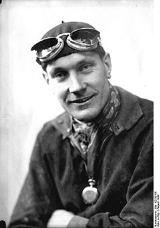
Hans Stuck

Encyclopedia
- This article is about the father; for the son, see Hans-Joachim Stuck.
Hans Stuck (sometimes called Hans Stuck von Villiez) (December 27, 1900 in Warsaw
Warsaw
Warsaw is the capital and largest city of Poland. It is located on the Vistula River, roughly from the Baltic Sea and from the Carpathian Mountains. Its population in 2010 was estimated at 1,716,855 residents with a greater metropolitan area of 2,631,902 residents, making Warsaw the 10th most...
– February 9, 1978 in Grainau
Grainau
Grainau is a municipality in the district of Garmisch-Partenkirchen, in Bavaria, Germany. It is located at the foot of the Zugspitze mountain, the tallest mountain in Germany in the sub-mountain range of the Wetterstein Alps which is a branch off the main mountain range it is connected to, the...
) was a German
Germany
Germany , officially the Federal Republic of Germany , is a federal parliamentary republic in Europe. The country consists of 16 states while the capital and largest city is Berlin. Germany covers an area of 357,021 km2 and has a largely temperate seasonal climate...
motor racing driver. Both his son Hans-Joachim Stuck (born 1951) and his grandsons Johannes and Ferdinand Stuck became race drivers.
Despite many successes in Grand Prix motor racing
Grand Prix motor racing
Grand Prix motor racing has its roots in organised automobile racing that began in France as far back as 1894. It quickly evolved from a simple road race from one town to the next, to endurance tests for car and driver...
for Auto Union
Auto Union
Auto Union was an amalgamation of four German automobile manufacturers, founded in 1932 and established in 1936 in Chemnitz, Saxony, during the Great Depression. The company has evolved into present day Audi, as a subsidiary of Volkswagen Group....
in the early 1930s, during the era of the famous "Silver Arrows
Silver Arrows
Silver Arrows was the name given by the press to Germany's dominant Mercedes-Benz and Auto Union Grand Prix motor racing cars between 1934 and 1939, and also later applied to the Mercedes-Benz Formula One and sports cars in 1954/55.For decades until the introduction of sponsorship liveries, each...
", he is now mostly known for his domination of hillclimbing
Hillclimbing
Hillclimbing is a branch of motorsport in which drivers compete against the clock to complete an uphill course....
, which earned him the nickname "Bergkönig" or "King of the Mountains".
Pre-WWII career
Stuck's experience with car racing started in 1922 with early morning runs bringing milk from his farm to MunichMunich
Munich The city's motto is "" . Before 2006, it was "Weltstadt mit Herz" . Its native name, , is derived from the Old High German Munichen, meaning "by the monks' place". The city's name derives from the monks of the Benedictine order who founded the city; hence the monk depicted on the city's coat...
, shortly after his first marriage. This eventually led to his taking up hill-climbing; he won his first race, at Baden-Baden, in 1923. A few years later, after a year as a privateer for Austro-Daimler
Austro-Daimler
Austro-Daimler was an Austrian automaker company, from 1899 until 1934. It was subsidiary of the German Daimler Motoren Gesellschaft .-Early history:...
, he became a works driver for them in 1927, doing well in hill climbs, and making his first appearance in a circuit race (the German Grand Prix
German Grand Prix
The German Grand Prix is an annual automobile race.Because Germany was banned from taking part in international events after World War II, the German GP only became part of the Formula One World Championship in 1951...
) that year as well. In 1931, Austro-Daimler left racing, and Stuck eventually wound up driving a Mercedes-Benz
Mercedes-Benz
Mercedes-Benz is a German manufacturer of automobiles, buses, coaches, and trucks. Mercedes-Benz is a division of its parent company, Daimler AG...
SSKL in sports car racing
Sports car racing
Sports car racing is a form of circuit auto racing with automobiles that have two seats and enclosed wheels. They may be purpose-built or related to road-going sports cars....
, where he continued to excel.
In 1933, his acquaintance with Adolf Hitler
Adolf Hitler
Adolf Hitler was an Austrian-born German politician and the leader of the National Socialist German Workers Party , commonly referred to as the Nazi Party). He was Chancellor of Germany from 1933 to 1945, and head of state from 1934 to 1945...
(whom he had met by chance on a hunting trip in 1925) led to his involvement with Ferdinand Porsche
Ferdinand Porsche
Ferdinand Porsche was an Austrian automotive engineer and honorary Doctor of Engineering. He is best known for creating the first hybrid vehicle , the Volkswagen Beetle, and the Mercedes-Benz SS/SSK, as well as the first of many Porsche automobiles...
and Auto Union in Hitler's plans for German auto racing. With his experience from racing up mountain passes in the Alps
Alps
The Alps is one of the great mountain range systems of Europe, stretching from Austria and Slovenia in the east through Italy, Switzerland, Liechtenstein and Germany to France in the west....
in the 1920s, he was virtually unbeatable when he got the new Auto Union car, which was designed by Porsche. Its rear mounted engine provided superior traction compared to conventional front engine designs, so that its (eventually) 500+ horse-power could be transformed into speed even on non-paved roads. In circuit racing, the new car was very hard to master, though, due to the swing axle
Swing axle
A swing axle is a simple type of independent suspension first used in early aircraft , such as the Sopwith and Fokker, usually with rubber bungee and no damping....
rear suspension
Suspension (vehicle)
Suspension is the term given to the system of springs, shock absorbers and linkages that connects a vehicle to its wheels. Suspension systems serve a dual purpose — contributing to the car's roadholding/handling and braking for good active safety and driving pleasure, and keeping vehicle occupants...
design initially adopted by Porsche (relatively advanced for its day, it is now utterly obsolete because of its many problems).
His career with Auto Union was quite successful. In 1934, he won the German, Swiss
1934 Swiss Grand Prix
The 1934 Swiss Grand Prix was a Grand Prix motor race run to the 750 kg formula, held at Circuit Bremgarten, near Bern, on 26 August 1934. It was supported earlier in the day by the voiturette-class I Prix de Berne. The main event was won by Hans Stuck in an Auto Union, having led the race...
and Czechoslovakian Grand Prix
Czechoslovakian Grand Prix
The Czechoslovakian Grand Prix was a Grand Prix motor racing event first held on September 28, 1930 at the Masaryk Circuit now referred to as the Brno Circuit. It was held in the town of Brno in Czechoslovakia .From 1934 onwards, the race was dominated by the German Silver Arrows...
races (as well as finishing second in the Italian
Italian Grand Prix
The Italian Grand Prix is one of the longest running events on the motor racing calendar. The first Italian Grand Prix motor racing championship took place on 4 September 1921 at Brescia...
and Eifel Grands Prix). There was no European Championship
European Championship (auto racing)
The European Drivers' Championship was an annual competition in auto racing that existed prior to the establishment of the Formula One world championship in 1950...
for the circuit races that year, or he would have won it. Wins in a number of hill-climb races brought him European Mountain Champion, the first of three he would eventually collect.
In 1935, he won the Italian Grand Prix (along with second at the German Grand Prix; he also won his usual collection of hill-climb wins, again taking the European Mountain Championship. 1936 was leaner; he placed second in the Tripoli
Tripoli Grand Prix
The Tripoli Grand Prix was a motor racing event first held in 1925 on a racing circuit outside Tripoli, the capital of what was then Italian Tripolitania...
and German Grands Prix, finishing second in the competition for the European Championship. After Stuck missed a number of hill-climbs because of injuries suffered in accidents, that year the European Mountain Championship fell to his famous team-mate, Bernd Rosemeyer
Bernd Rosemeyer
Bernd Rosemeyer was a German racing driver.- Career :...
. 1937 was equally lean, bringing only second places in the Rio de Janeiro and Belgian
Belgian Grand Prix
The Belgian Grand Prix is an automobile race, part of the Formula One World Championship....
Grands Prix.
1938 opened poorly; Stuck was either fired from, or quit, the Auto Union team (accounts from the two sides differ). After a series of injuries to other team drivers, as well as pressure from the German government (again, accounts differ as to what combination of factors was the cause), he was re-hired, and proved himself by winning a third European Mountain Championship, his last major pre-war success.
Post-WWII career
After the war, although Germans were banned from racing until 1950, Stuck obtained Austrian citizenship and immediately continued racing.A link with Alex von Falkenhausen led to Stuck driving for his team
Alex von Falkenhausen Motorenbau
Alex von Falkenhausen Motorenbau was a German racing car constructor. The team was started by Alexander von Falkenhausen, who was in the 1930s an important engineer in the development of BMW's model 328, along with Alfred Boning, Ernst Loof and Fritz Fiedler...
in Formula Two
Formula Two
Formula Two, abbreviated to F2, is a type of open wheel formula racing. It was replaced by Formula 3000 in 1985, but the FIA announced in 2008 that Formula Two would return for 2009 in the form of the FIA Formula Two Championship...
racing, although with little success.
He drove a Porsche Spyder in 1953, also with no success. A liaison with BMW
BMW
Bayerische Motoren Werke AG is a German automobile, motorcycle and engine manufacturing company founded in 1916. It also owns and produces the Mini marque, and is the parent company of Rolls-Royce Motor Cars. BMW produces motorcycles under BMW Motorrad and Husqvarna brands...
, starting in 1957, was more fruitful, although his first hill-climbs for them (in a Type 507
BMW 507
The BMW 507 is a roadster produced by BMW from 1956 to 1959. Initially intended to be exported to the United States at a rate of thousands per year, it ended up being too expensive, resulting in a total production figure of 252 cars and heavy losses for BMW....
) were not. A switch to their tiny BMW 700 RS
BMW 700
The BMW 700 was a small rear-engined car produced by BMW in various models from August 1959 to November 1965. It was the first BMW automobile with a monocoque structure. The 700 was a sales success at a time when BMW was close to financial ruin...
did the trick, and at age 60, he became German Hillclimb Champion for the last time. He decided to retire on a high note, and thereupon closed his professional driving career.
As an instructor on the Nürburgring
Nürburgring
The Nürburgring is a motorsport complex around the village of Nürburg, Germany. It features a modern Grand Prix race track built in 1984, and a much longer old North loop track which was built in the 1920s around the village and medieval castle of Nürburg in the Eifel mountains. It is located about...
, he taught his son Hans-Joachim the secrets of this challenging circuit.
Personal life
Stuck was born in WarsawWarsaw
Warsaw is the capital and largest city of Poland. It is located on the Vistula River, roughly from the Baltic Sea and from the Carpathian Mountains. Its population in 2010 was estimated at 1,716,855 residents with a greater metropolitan area of 2,631,902 residents, making Warsaw the 10th most...
in 1900. Although his parents were of Swiss ancestry, they had moved to Germany
Germany
Germany , officially the Federal Republic of Germany , is a federal parliamentary republic in Europe. The country consists of 16 states while the capital and largest city is Berlin. Germany covers an area of 357,021 km2 and has a largely temperate seasonal climate...
by the time Stuck was born, and he grew up there.
He was called up for military service in World War I
World War I
World War I , which was predominantly called the World War or the Great War from its occurrence until 1939, and the First World War or World War I thereafter, was a major war centred in Europe that began on 28 July 1914 and lasted until 11 November 1918...
in 1917. In 1918, his older brother Walter was killed, along with Walter's commanding officer; as a result, Stuck met the commander's sister, Ellen Hahndorff, and they were married in 1922. After several years, Stuck's involvement in the fast life off the track as well as on caused them to split up and divorce.
In 1931, he met Paula von Reznicek, a famous tennis player; they were married in 1932. The fact that she had a Jewish grandfather caused Stuck some problems with the rise of the Nazis
Nazism
Nazism, the common short form name of National Socialism was the ideology and practice of the Nazi Party and of Nazi Germany...
, but his personal relationship with Hitler saved him from serious trouble.
In 1939, he met Christa Thielmann, at that point engaged to Paula's youngest brother. Stuck and Paula divorced in 1948, and he married Christa that year. Their son, Hans-Joachim, was born in 1951.
Complete World Championship Grand Prix results
| Year | Entrant | Chassis | Engine | 1 | 2 | 3 | 4 | 5 | 6 | 7 | 8 | 9 | WDC | Points |
|---|---|---|---|---|---|---|---|---|---|---|---|---|---|---|
| 1951 1951 Formula One season The 1951 Formula One season was the second season of FIA Formula One motor racing. It featured the 1951 World Championship of Drivers, which commenced on May 27, 1951 and ended on October 28 after eight races... |
British Racing Motors Ltd British Racing Motors British Racing Motors was a British Formula One motor racing team. Founded in 1945, it raced from 1950 to 1977, competing in 197 Grands Prix and winning 17. In 1962, BRM won the Constructors' Title. At the same time, its driver, Graham Hill became World Champion... |
BRM British Racing Motors British Racing Motors was a British Formula One motor racing team. Founded in 1945, it raced from 1950 to 1977, competing in 197 Grands Prix and winning 17. In 1962, BRM won the Constructors' Title. At the same time, its driver, Graham Hill became World Champion... P15 |
BRM British Racing Motors British Racing Motors was a British Formula One motor racing team. Founded in 1945, it raced from 1950 to 1977, competing in 197 Grands Prix and winning 17. In 1962, BRM won the Constructors' Title. At the same time, its driver, Graham Hill became World Champion... V16 V16 engine A V16 engine is a V engine with 16 cylinders. Engines of this number of cylinders are uncommon in automotive use.A V16 engine is perfectly balanced regardless of the V angle without requiring counter-rotating balancing shafts which are necessary to balance Straight-4 and odd number of cylinder... |
SUI 1951 Swiss Grand Prix The 1951 Swiss Grand Prix was a Formula One motor race held at the Bremgarten on May 27, 1951. It was the first round of the 1951 World Drivers' Championship. The race saw the Formula One debut of British driver Stirling Moss.-Qualifying:-Race:... |
500 1951 Indianapolis 500 The 1951 Indianapolis 500 an automobile race which was held on Wednesday, May 30, 1951 at Indianapolis Motor Speedway. The event was the opening race of the 1951 AAA National Championship Trail and the second race of the 1951 World Championship of Drivers.... |
BEL 1951 Belgian Grand Prix The 1951 Belgian Grand Prix was a Formula One motor race held on June 17, 1951 at Circuit de Spa-Francorchamps. It was the third round of the 1951 World Drivers' Championship.- Race report :... |
FRA 1951 French Grand Prix The 1951 French Grand Prix was a Formula One motor race held at Reims-Gueux on 1 July 1951. It was the fourth round of the 1951 World Drivers' Championship and was won by Juan Manuel Fangio and Luigi Fagioli driving an Alfa Romeo... |
GBR 1951 British Grand Prix The 1951 British Grand Prix was a Formula One motor race held on 14 July 1951 at the Silverstone Circuit in Buckinghamshire, England. It was the fifth round of the 1951 World Drivers' Championship... DNS |
GER 1951 German Grand Prix The 1951 German Grand Prix was a Formula One motor race held on July 29, 1951 at the Nürburgring Nordschleife. It was the sixth round of the 1951 World Drivers' Championship.-Qualifying:-Race:- Drivers' Championship standings after the race :... |
ITA 1951 Italian Grand Prix The 1951 Italian Grand Prix was a Formula One motor race held on September 16, 1951 at Monza. It was the seventh round of the 1951 World Drivers' Championship.-Qualifying:-Race:- Notes :* Pole position: Juan Manuel Fangio - 1:53.2... |
ESP 1951 Spanish Grand Prix The 1951 Spanish Grand Prix was a Formula One motor race held on October 28, 1951 at Pedralbes Circuit. It was the eighth and final round of the 1951 World Drivers' Championship.... |
NC | 0 | |
| 1952 1952 Formula One season The 1952 Formula One season was the third season of FIA Formula One motor racing. In comparison to previous seasons, the 1952 season consisted of a relatively small number of Formula One races, following the FIA's decision to run the Grand Prix events counting towards the World Championship of... |
Alex von Falkenhausen Motorenbau Alex von Falkenhausen Motorenbau Alex von Falkenhausen Motorenbau was a German racing car constructor. The team was started by Alexander von Falkenhausen, who was in the 1930s an important engineer in the development of BMW's model 328, along with Alfred Boning, Ernst Loof and Fritz Fiedler... |
AFM Alex von Falkenhausen Motorenbau Alex von Falkenhausen Motorenbau was a German racing car constructor. The team was started by Alexander von Falkenhausen, who was in the 1930s an important engineer in the development of BMW's model 328, along with Alfred Boning, Ernst Loof and Fritz Fiedler... 4 |
Küchen Kuchen Kuchen , the German word for cake, is used in other languages as the name for several different types of sweet desserts, pastries, and gateaux... V8 |
SUI 1952 Swiss Grand Prix The 1952 Swiss Grand Prix was a Formula Two race held on May 18, 1952 at Bremgarten Circuit. It was the first round of the 1952 World Drivers' Championship, which was run to Formula Two rules in 1952 and 1953, rather than the Formula One regulations normally used.-Qualifying:-Race:- Notes :* Pole... Ret |
500 1952 Indianapolis 500 The 1952 Indianapolis 500 was an automobile race held on Friday, May 30, 1952 at the Indianapolis Motor Speedway. The event was the second round of the 1952 World Drivers' Championship. Troy Ruttman won the race, bringing the Borg-Warner Trophy home for car owner J.C. Agajanian.Bill Vukovich led... |
BEL 1952 Belgian Grand Prix The 1952 Belgian Grand Prix was a Formula Two race held on June 22, 1952 at Circuit de Spa-Francorchamps. It was the third round of the 1952 World Drivers' Championship, which was run to Formula Two rules in 1952 and 1953, rather than the Formula One regulations normally used.-Qualifying:-Race:-... |
FRA 1952 French Grand Prix The 1952 French Grand Prix was a Formula Two race held on July 6, 1952 at Rouen-Les-Essarts. It was the fourth round of the 1952 World Drivers' Championship, which was run to Formula Two rules in 1952 and 1953, rather than the Formula One regulations normally used.-Qualifying:-Race:- Notes :* Pole... |
GBR 1952 British Grand Prix The 1952 British Grand Prix was a Formula Two race held on July 19, 1952 at Silverstone Circuit. It was the fifth round of the 1952 World Drivers' Championship, which was run to Formula Two rules in 1952 and 1953, rather than the Formula One regulations normally used.-Qualifying:-Race:-Drivers'... |
GER 1952 German Grand Prix The 1952 German Grand Prix was a Formula Two race held on August 3, 1952 at the Nürburgring Nordschleife. It was the sixth round of the 1952 World Drivers' Championship, which was run to Formula Two rules in 1952 and 1953, rather than the Formula One regulations normally used.- Race report :Sadly... |
NED 1952 Dutch Grand Prix The 1952 Dutch Grand Prix was a Formula Two race held on August 17, 1952 at the Circuit Zandvoort. It was the seventh round of the 1952 World Drivers' Championship, which was run to Formula Two rules in 1952 and 1953, rather than the Formula One regulations normally used.- Race report :Mike... |
NC | 0 | ||
| Ecurie Espadon | Ferrari Scuderia Ferrari Scuderia Ferrari is the racing team division of the Ferrari automobile marque. The team currently only races in Formula One but has competed in numerous classes of motorsport since its formation in 1929, including sportscar racing.... 212 |
Ferrari Scuderia Ferrari Scuderia Ferrari is the racing team division of the Ferrari automobile marque. The team currently only races in Formula One but has competed in numerous classes of motorsport since its formation in 1929, including sportscar racing.... V12 V12 engine A V12 engine is a V engine with 12 cylinders mounted on the crankcase in two banks of six cylinders, usually but not always at a 60° angle to each other, with all 12 pistons driving a common crankshaft.... |
ITA 1952 Italian Grand Prix The 1952 Italian Grand Prix was a Formula Two race held on September 7, 1952 at Monza. It was the eighth and final round of the 1952 World Drivers' Championship, which was run to Formula Two rules in 1952 and 1953, rather than the Formula One regulations normally used.- Race report :Juan Manuel... DNQ |
|||||||||||
| 1953 1953 Formula One season As in , the 1953 Formula One season consisted of a small number of Formula One races, following the FIA's decision to once again run the World Drivers' Championship to Formula Two regulations rather than Formula One.... |
Hans Stuck | AFM Alex von Falkenhausen Motorenbau Alex von Falkenhausen Motorenbau was a German racing car constructor. The team was started by Alexander von Falkenhausen, who was in the 1930s an important engineer in the development of BMW's model 328, along with Alfred Boning, Ernst Loof and Fritz Fiedler... 4 |
Bristol Bristol Cars Bristol Cars is a manufacturer of hand-built luxury cars headquartered in Patchway, near Bristol, United Kingdom. Bristol have always been a low-volume manufacturer; the most recent published official production figures were for 1982, which stated that 104 cars were produced in that year... Straight-6 Straight-6 The straight-six engine or inline-six engine is a six-cylinder internal combustion engine with all six cylinders mounted in a straight line along the crankcase... |
ARG 1953 Argentine Grand Prix The 1953 Argentine Grand Prix was a Formula Two race held on January 18, 1953 at the Autódromo Juan y Óscar Gálvez, Buenos Aires. It was the first round of the 1953 World Drivers' Championship, which was run to Formula Two rules in 1952 and 1953, rather than the Formula One regulations normally... |
500 1953 Indianapolis 500 The 1953 Indianapolis 500 was an automobile race held on Saturday, May 30, 1953 at Indianapolis Motor Speedway. The event was the second round of the 1953 World Drivers' Championship.-Race:... |
NED 1953 Dutch Grand Prix The 1953 Dutch Grand Prix was a Formula Two race held on June 7, 1953 at the Circuit Zandvoort. It was the third round of the 1953 World Drivers' Championship, which was run to Formula Two rules in 1952 and 1953, rather than the Formula One regulations normally used.- Race report :The Ferraris... |
BEL 1953 Belgian Grand Prix The 1953 Belgian Grand Prix was a Formula Two race held on June 21, 1953 at Circuit de Spa-Francorchamps. It was the fourth round of the 1953 World Drivers' Championship, which was run to Formula Two rules in 1952 and 1953, rather than the Formula One regulations normally used.- Race report :A... |
FRA 1953 French Grand Prix The 1953 French Grand Prix was a Formula Two race held on July 5, 1953 at Reims-Gueux. It was the fifth round of the 1953 World Drivers' Championship, which was run to Formula Two rules in 1952 and 1953, rather than the Formula One regulations normally used.... |
GBR 1953 British Grand Prix The 1953 British Grand Prix was a Formula Two race held on 18 July 1953 at Silverstone Circuit. It was the sixth round of the 1953 World Drivers' Championship, which was run to Formula Two rules in 1952 and 1953, rather than the Formula One regulations normally used.- Classification :- Drivers'... |
GER 1953 German Grand Prix The 1953 German Grand Prix was a Formula Two race held on August 2, 1953 at the Nürburgring Nordschleife. It was the seventh round of the 1953 World Drivers' Championship, which was run to Formula Two rules in 1952 and 1953, rather than the Formula One regulations normally used.- Classification :-... Ret |
SUI 1953 Swiss Grand Prix The 1953 Swiss Grand Prix was a Formula Two race held on August 23, 1953 at Bremgarten Circuit. It was the eighth round of the 1953 World Drivers' Championship, which was run to Formula Two rules in 1952 and 1953, rather than the Formula One regulations normally used.It marked the brief return of... |
ITA 1953 Italian Grand Prix The 1953 Italian Grand Prix was a Formula Two race held on September 13, 1953 at Monza. It was the ninth and final round of the 1953 World Drivers' Championship, which was run to Formula Two rules in 1952 and 1953, rather than the Formula One regulations normally used... 14 |
NC | 0 |
Complete European Championship results
(Races in bold indicate pole position)| Year | Entrant | Make | 1 | 2 | 3 | 4 | 5 | EDC | Points |
|---|---|---|---|---|---|---|---|---|---|
| 1935 1935 Grand Prix season The 1935 Grand Prix season was the third AIACR European Championship season. The championship was won by Rudolf Caracciola, driving for the Mercedes-Benz team.-Teams:-Works teams:-Independent teams:-Private entries:... |
Auto Union Auto Union Auto Union was an amalgamation of four German automobile manufacturers, founded in 1932 and established in 1936 in Chemnitz, Saxony, during the Great Depression. The company has evolved into present day Audi, as a subsidiary of Volkswagen Group.... |
Auto Union Auto Union Auto Union was an amalgamation of four German automobile manufacturers, founded in 1932 and established in 1936 in Chemnitz, Saxony, during the Great Depression. The company has evolved into present day Audi, as a subsidiary of Volkswagen Group.... |
BEL 1935 Belgian Grand Prix The 1935 Belgian Grand Prix was a Grand Prix motor race held at Spa-Francorchamps on July 14, 1935.- Race :- Starting grid positions :-Notes:... |
GER 1935 German Grand Prix The 1935 German Grand Prix was a Grand Prix motor race held at the Nürburgring on July 28, 1935.- Race :- Starting grid positions :-Notes:*Ernst von Delius destroyed his car during practice, so shared Mays' car in the race.... 2 |
SUI 1935 Swiss Grand Prix The 1935 Swiss Grand Prix was a Grand Prix motor race held at Bremgarten on August 25, 1935.- Classification :-Notes:* Hanns Geier crashed in practice, ending his driving career.... 11 |
ITA 1935 Italian Grand Prix The 1935 Italian Grand Prix was a Grand Prix motor race held at Monza on September 8, 1935.- Classification :-Notes:* Paul Pietsch and René Dreyfus were called in so that Bernd Rosemeyer and Tazio Nuvolari, respectively, could take over their cars.... 1 |
ESP 1935 Spanish Grand Prix The 1935 Spanish Grand Prix was a Grand Prix motor race held at Lasarte on September 22, 1935.- Classification :-Notes:* Paul Pietsch took over from Achille Varzi after the latter's face was cut due to a stone smashing his windscreen. After treatment, Varzi took the car back but gave it back to... Ret |
3 | 21 |
| 1936 1936 Grand Prix Season The 1936 Grand Prix season was the fourth AIACR European Championship season. The championship was won by Bernd Rosemeyer, driving for the Auto Union team... |
Auto Union Auto Union Auto Union was an amalgamation of four German automobile manufacturers, founded in 1932 and established in 1936 in Chemnitz, Saxony, during the Great Depression. The company has evolved into present day Audi, as a subsidiary of Volkswagen Group.... |
Auto Union Auto Union Auto Union was an amalgamation of four German automobile manufacturers, founded in 1932 and established in 1936 in Chemnitz, Saxony, during the Great Depression. The company has evolved into present day Audi, as a subsidiary of Volkswagen Group.... |
MON 1936 Monaco Grand Prix The 1936 Monaco Grand Prix was a Grand Prix motor race held at Circuit de Monaco on April 13, 1936.Heavy rain contributed to a series of accidents, while a broken oil line on the Alfa Romeo of Mario Tadini led to so many wrecks in the chicane out of the tunnel it was almost impassable... 3 |
GER 1936 German Grand Prix The 1936 German Grand Prix was a Grand Prix motor race held at the Nürburgring on July 26, 1936.-Classification:... 2 |
SUI 1936 Swiss Grand Prix The 1936 Swiss Grand Prix was a Grand Prix motor race held at Bremgarten on August 23, 1936.-Classification:... 3 |
ITA 1936 Italian Grand Prix The 1936 Italian Grand Prix was a Grand Prix motor race held at Monza on September 13, 1936.-Classification:... Ret |
2 | 15 | |
| 1937 1937 Grand Prix Season The 1937 Grand Prix season was the fifth AIACR European Championship season. The championship was won by Rudolf Caracciola, driving for the Mercedes-Benz team... |
Auto Union Auto Union Auto Union was an amalgamation of four German automobile manufacturers, founded in 1932 and established in 1936 in Chemnitz, Saxony, during the Great Depression. The company has evolved into present day Audi, as a subsidiary of Volkswagen Group.... |
Auto Union Auto Union Auto Union was an amalgamation of four German automobile manufacturers, founded in 1932 and established in 1936 in Chemnitz, Saxony, during the Great Depression. The company has evolved into present day Audi, as a subsidiary of Volkswagen Group.... |
BEL 1937 Belgian Grand Prix The 1937 Belgian Grand Prix was a Grand Prix motor race held at Spa-Francorchamps on July 11, 1937.-Classification:... 2 |
GER 1937 German Grand Prix The 1937 German Grand Prix was a Grand Prix motor race held at the Nürburgring on July 25, 1937.Driver Ernst von Delius collided with Richard Seaman during this race on lap 6 and the accident was eventually fatal for von Delius, experiencing thrombosis. Von Delius was 25 years old.-Classification:... Ret |
MON 1937 Monaco Grand Prix The 1937 Monaco Grand Prix was a Grand Prix motor race held at the Circuit de Monaco on August 8, 1937.-Classification:... 4 |
SUI 1937 Swiss Grand Prix The 1937 Swiss Grand Prix was a 750 kg Formula race held on August 22, 1937 at the Bremgarten Circuit.-Race Report:After the start, Hans Stuck chopped across the nose of the other drivers to take the early lead, followed by Caracciola and Rosemeyer. Rosemeyer was soon in trouble though, under... 4 |
ITA 1937 Italian Grand Prix The 1937 Italian Grand Prix was a 750 kg Formula race held on September 12, 1937 at the Livorno Circuit.-Race report:Caracciola took an early lead from pole, Lang was second but he soon took the lead from Caracciola, the two Mercedes drivers pushing each other hard. Team manager Alfred... 9 |
5 | 20 |
| 1938 1938 Grand Prix season The 1938 Grand Prix season was the sixth AIACR European Championship season. The championship was won by Rudolf Caracciola, driving for the Mercedes-Benz team... |
Auto Union Auto Union Auto Union was an amalgamation of four German automobile manufacturers, founded in 1932 and established in 1936 in Chemnitz, Saxony, during the Great Depression. The company has evolved into present day Audi, as a subsidiary of Volkswagen Group.... |
Auto Union Auto Union Auto Union was an amalgamation of four German automobile manufacturers, founded in 1932 and established in 1936 in Chemnitz, Saxony, during the Great Depression. The company has evolved into present day Audi, as a subsidiary of Volkswagen Group.... |
FRA 1938 French Grand Prix The 1938 French Grand Prix was a Grand Prix motor race held at Reims-Gueux on July 3, 1938.-Classification:... |
GER 1938 German Grand Prix The 1938 German Grand Prix was a Grand Prix motor race held at the Nürburgring on July 24, 1938.-Classification:... 3 |
SUI 1938 Swiss Grand Prix The 1938 Swiss Grand Prix was a Grand Prix motor race held at Bremgarten on August 21, 1938.-Classification:... 4 |
ITA 1938 Italian Grand Prix The 1938 Italian Grand Prix was a Grand Prix motor race held at Monza on September 11, 1938.-Classification:... Ret |
5= | 20 | |
| 1939 1939 Grand Prix season The 1939 Grand Prix season was the seventh AIACR European Championship season. The championship winner was never officially announced by the AIACR due to the outbreak of World War II less than two weeks after the final event in Switzerland. The Italian GP initially had been a fifth event, but it... |
Auto Union Auto Union Auto Union was an amalgamation of four German automobile manufacturers, founded in 1932 and established in 1936 in Chemnitz, Saxony, during the Great Depression. The company has evolved into present day Audi, as a subsidiary of Volkswagen Group.... |
Auto Union Auto Union Auto Union was an amalgamation of four German automobile manufacturers, founded in 1932 and established in 1936 in Chemnitz, Saxony, during the Great Depression. The company has evolved into present day Audi, as a subsidiary of Volkswagen Group.... |
BEL 1939 Belgian Grand Prix The 1939 Belgian Grand Prix was a Grand Prix motor race held on June 25, 1939 at Spa-Francorchamps.Richard Seaman crashed at the La Source hairpin into a tree, causing the fuel line to break. Fuel rushed over the car and the car caught fire. Seaman couldn't move because his right hand was broken... |
FRA 1939 French Grand Prix The 1939 French Grand Prix was a Grand Prix motor race held at Reims-Gueux on July 9, 1939.-Classification:... 6 |
GER 1939 German Grand Prix The 1939 German Grand Prix was a Grand Prix motor race held at the Nürburgring on July 23, 1939.-Classification:... Ret |
SUI 1939 Swiss Grand Prix The 1939 Swiss Grand Prix was a motor race held at Bremgarten on August 20, 1939.The Grand Prix was run as a combined event for Grand Prix cars and Voiturettes. Each class had a heat with the best from each going through to a combined final.-Final:... 10 |
9= | 23 |
Further reading
- Chris Nixon, Racing the Silver Arrows: Mercedes-Benz versus Auto Union 1934-1939 (Osprey, London, 1986) pp. 30–37, 164-168