
All Topics  
Habsburg Monarchy


   Email Print
   Bookmark   Link


Habsburg Monarchy


The Habsburg Monarchy (or Habsburg Empire) covered the territories ruled by the junior Austrian
Austria

Austria , officially the Republic of Austria , is a landlocked country in Central Europe. It borders both Germany and the Czech Republic to the north, Slovakia and Hungary to the east, Slovenia and Italy to the south, and Switzerland and Liechtenstein to the west....
 branch of the House of Habsburg (1278-1780), and then by the successor House of Habsburg-Lorraine (since 1780), between 1526 and 1867/1918. The capital was mainly Vienna
Vienna

Vienna is the Capital of Republic of Austria and also one of the nine states of Austria. Vienna is Austria's primary city, with a population of about 1.7 million...
, except from 1583 to 1611, when the capital was Prague
Prague

Prague is the Capital and World's largest cities of the Czech Republic. Its official name is Hlavn? mesto Praha, meaning Prague, the Capital City....
. The monarchy from 1804 to 1867 is usually referred to as the "Austrian Empire
Austrian Empire

The Austrian Empire was a periodization successor state empire founded on a remnant of the Holy Roman Empire centered on what is today's Austria that officially lasted from 1804 to 1867....
" and from 1867 to 1918 as "Austria-Hungary
Austria-Hungary

Austria-Hungary, also known as the Austro-Hungarian Empire, the Dual Monarchy or the Kaiserlich und k?niglich Monarchy was a state in Central Europe ruled by the House of Habsburg, constitutionally a personal union between the crowns of the Austrian Empire and the Kingdom of Hungary....
".


Discussion
Ask a question about 'Habsburg Monarchy'
Start a new discussion about 'Habsburg Monarchy'
Answer questions from other users
Full Discussion Forum


Encyclopedia


The Habsburg Monarchy (or Habsburg Empire) covered the territories ruled by the junior Austrian
Austria

Austria , officially the Republic of Austria , is a landlocked country in Central Europe. It borders both Germany and the Czech Republic to the north, Slovakia and Hungary to the east, Slovenia and Italy to the south, and Switzerland and Liechtenstein to the west....
 branch of the House of Habsburg (1278-1780), and then by the successor House of Habsburg-Lorraine (since 1780), between 1526 and 1867/1918. The capital was mainly Vienna
Vienna

Vienna is the Capital of Republic of Austria and also one of the nine states of Austria. Vienna is Austria's primary city, with a population of about 1.7 million...
, except from 1583 to 1611, when the capital was Prague
Prague

Prague is the Capital and World's largest cities of the Czech Republic. Its official name is Hlavn? mesto Praha, meaning Prague, the Capital City....
. The monarchy from 1804 to 1867 is usually referred to as the "Austrian Empire
Austrian Empire

The Austrian Empire was a periodization successor state empire founded on a remnant of the Holy Roman Empire centered on what is today's Austria that officially lasted from 1804 to 1867....
" and from 1867 to 1918 as "Austria-Hungary
Austria-Hungary

Austria-Hungary, also known as the Austro-Hungarian Empire, the Dual Monarchy or the Kaiserlich und k?niglich Monarchy was a state in Central Europe ruled by the House of Habsburg, constitutionally a personal union between the crowns of the Austrian Empire and the Kingdom of Hungary....
". In some contexts, the term "Habsburg Empire" might also refer to extended Habsburg family possessions once ruled solely by Charles V, Holy Roman Emperor
Charles V, Holy Roman Emperor

Charles V was ruler of the Holy Roman Empire from 1519 and, as Charles I of Spain, of the Spanish realms from 1516 until his abdication in 1556....
, or to the Spanish Empire
Spanish Empire

The Spanish Empire was one of the largest empires in world history, and one of the first global empires. It included territories and colonies ruled by Spain in Europe, the Americas, Africa, Asia and Oceania between the 15th and late 19th centuries....
 ruled by the senior Spanish branch
Habsburg Spain

Habsburg Spain refers to the history of Spain over the 16th and 17th centuries , when Spain was ruled by the major branch of the Habsburg dynasty ....
 of the house.

The Habsburg family originated with the Habsburg Castle in modern Switzerland and after 1278 came to rule in Austria
Austria

Austria , officially the Republic of Austria , is a landlocked country in Central Europe. It borders both Germany and the Czech Republic to the north, Slovakia and Hungary to the east, Slovenia and Italy to the south, and Switzerland and Liechtenstein to the west....
 (the Habsburg Hereditary Lands). The Habsburg family grew to European prominence with the marriage and adoption treaty by Emperor Maximilian I
Maximilian I

Maximilian I may refer to:*Maximilian of Mexico, reigned April 1864 to May 1867*Maximilian I, Holy Roman Emperor, reigned 1508 to 1519*Maximilian I, Duke of Bavaria, reigned 1597 to September 1651...
 at the First Congress of Vienna
First Congress of Vienna

The First Congress of Vienna was held in 1515, attended by the Holy Roman Emperor, Maximilian I, Holy Roman Emperor, and the Jagiellonian brothers, Vladislaus II of Bohemia and Hungary, King of Hungary and King of Bohemia, and Sigismund I the Old, King of Poland and Grand Duke of Lithuania....
 in 1515 and the subsequent death of adopted Louis II (King of Bohemia and Hungary and Croatia) in 1526. Archduke Ferdinand of Austria
Ferdinand I, Holy Roman Emperor

Ferdinand I was a Central European monarch from the Habsburg. He was Holy Roman Emperor from 1558, King of Bohemia and King of Hungary and Croatia from 1526....
, the younger brother of the Holy Roman Emperor
Holy Roman Emperor

Image:HRR 14Jh.jpgThe Roman of the Emperor's title was a reflection of the translatio imperii principle that regarded the Holy Roman Emperors as the inheritors of the title of Emperor of the Western Roman Empire, a title left unclaimed in the West after the death of Julius Nepos in 480....
 Charles V
Charles V, Holy Roman Emperor

Charles V was ruler of the Holy Roman Empire from 1519 and, as Charles I of Spain, of the Spanish realms from 1516 until his abdication in 1556....
, was elected the next King of Bohemia
Bohemia

History...
, Croatia
Croatia

Croatia , officially the Republic of Croatia , is a Central European country at the crossroads of Pannonian Plain, Balkans, and the Mediterranean Sea....
 and Hungary
Hungary

Hungary , officially in English the Republic of Hungary , is a landlocked country in the Carpathian Basin of Central Europe, bordered by Austria, Slovakia, Ukraine, Romania, Serbia, Croatia, and Slovenia....
 following the death of Louis II of Hungary and Bohemia
Louis II of Hungary and Bohemia

Louis Jagiellon was List of Hungarian rulers and King of List of rulers of Bohemia from 1516 to 1526....
, in a battle
Battle of Mohács

The Battle of Moh?cs was fought on August 29, 1526 near Moh?cs, Hungary. In the battle, forces of the Kingdom of Hungary led by King of Hungary Louis II of Hungary and Bohemia were defeated by forces of the Ottoman Empire led by Sultan Suleiman the Magnificent....
 against the Turks at Mohács
Mohács

Moh?cs is a town in Baranya county, Hungary on the right bank of the Danube, 115 miles south of Budapest....
. From this point the Monarchy grew to a size where at times, it ruled more than half of Europe
Europe

Europe is, conventionally, one of the world's seven continents. Comprising the westernmost peninsula of Eurasia, Europe is generally divided from Asia to its east by the water divide of the Ural Mountains, the Ural , the Caspian Sea, and by the Caucasus Mountains to the southeast....
.

Terminology


Names of the territory that (with some exceptions) finally became Austria-Hungary
Austria-Hungary

Austria-Hungary, also known as the Austro-Hungarian Empire, the Dual Monarchy or the Kaiserlich und k?niglich Monarchy was a state in Central Europe ruled by the House of Habsburg, constitutionally a personal union between the crowns of the Austrian Empire and the Kingdom of Hungary....
:
  • Habsburg monarchy
    Habsburg Monarchy

    The Habsburg Monarchy covered the territories ruled by the junior Austria branch of the House of Habsburg , and then by the successor House of Habsburg-Lorraine , between 1526 and 1867/1918....
     or Austrian monarchy (1526–1867): This was an unofficial, but very frequent name – even at that time. The entity had no official name
    Official

    An official is someone who holds an office in an organisation or government and participates in the exercise of authority .A government official or functionary is an official who is involved in public administration or government, through either election, appointment, or employment....
    . Note that technically the term "Habsburg monarchy" can also refer to the period 1276–1918 when the Habsburgs ruled in the monarchy (archduchy) centered in present-day Austria and "Austrian monarchy" can refer to the monarchy centered in present-day Austria 1156–1867, but both terms are usually not used this way.
  • Austrian Empire
    Austrian Empire

    The Austrian Empire was a periodization successor state empire founded on a remnant of the Holy Roman Empire centered on what is today's Austria that officially lasted from 1804 to 1867....
     (1804–1867): This was the official name. Note that the German version is Kaisertum Österreich, i.e. the English translation empire refers to a territory ruled by an emperor
    Emperor

    An emperor is a monarch, usually the sovereign ruler of an empire or another type of imperial realm. Empress is the female equivalent. As a title, "empress" may indicate the wife of an emperor or a woman who rules in her own right ....
    , not just to a "widespreading dominion", more accurately the "Emperordom of Austria".
  • Austria-Hungary
    Austria-Hungary

    Austria-Hungary, also known as the Austro-Hungarian Empire, the Dual Monarchy or the Kaiserlich und k?niglich Monarchy was a state in Central Europe ruled by the House of Habsburg, constitutionally a personal union between the crowns of the Austrian Empire and the Kingdom of Hungary....
     or Austro-Hungarian Empire (1867–1918): This was the official name. An unofficial popular name was the Danubian Monarchy also often used was the term Doppel-Monarchie ("Double Monarchy") meaning two states under one crowned ruler.
  • Crownlands or crown-lands (Kronländer) (1849–1918): This is the name of all the individual parts of the Austrian Empire (since 1849) and then of Austria-Hungary. The Kingdom of Hungary (more exactly the Lands of the Hungarian Crown) was not considered a "crownland" anymore after the establishment of Austria-Hungary 1867, so that the "crownlands" became identical with what was called the Kingdoms and Lands represented in the Imperial Council (Die im Reichsrate vertretenen Königreiche und Länder).
The Hungarian parts of the Empire were called "Lands of the Holy Hungarian Crown of Saint Stephen" or "Lands of Holy (St.) Stephen's Crown" (Länder der Heiligen Stephans Krone).
The Bohemian (Czech) Lands were called "Lands of the St. Wenceslaus' Crown" (Länder der Wenzels-Krone). Names of some smaller territories:
  • Austrian lands (Österreichische Länder) or "Archduchies of Austria" (Erzherzogtümer von Österreich) - Lands up and below the Enns
    Enns River

    The Enns is a southern tributary of the Danube River and 254 km long....
     (ober und unter der Enns) (996–1918): This is the historical name of the parts of the Archduchy of Austria that became the present-day "Republic of Austria" (Republik Österreich) on November 12, 1918 (after Emperor Charles I had abdicated the throne). Modern day Austria is a semi-federal republic of nine states (Bundesländer) that are: Lower Austria, Upper Austria, Tyrol, Styria, Salzburg, Carinthia, Voralrlberg and Burgenland and the Capital of Vienna that is a state of its own. Burgenland
    Burgenland

    Burgenland is the easternmost and least populous Bundesland or Land of Austria. It consists of two Statutarstadt and seven districts with in total 171 municipalities....
    , came to Austria in 1921 by a referendum from Hungary. Salzburg
    Salzburg

    is the List of cities and towns in Austria#List of cities and towns by population size in Austria and the capital city of the states of Austria of Salzburg ....
     finally became Austrian in 1816 after Napoleonic wars (before it was ruled by prince-archbishops of Salzburg as an sovereign territory).
Vienna, Austria's capital became a state January 1, 1922, after being residence and capital of the Austrian Empire (Reichshaupt und Residenzstadt Wien) for the Habsburg monarchs for centuries. Upper and Lower Austria, historically, were split into "Austria above the Enns" and "Austria below the Enns" (the Enns river is the state-border between Upper- and Lower Austria). Upper Austria was enlarged after the Treaty of Teschen
Treaty of Teschen

The Treaty of Teschen was signed on May 13, 1779 in Teschen between Austria and Prussia, which officially ended the War of the Bavarian Succession....
 (1779) following the "War of the Bavarian Succession" by the so-called Innviertel
Innviertel

The Innviertel is a traditional Austrian region south-east of the Inn river. It belongs to the States of Austria of Upper Austria and borders the German States of Germany of Bavaria....
 ("Inn
Inn River

The Inn is a river in Switzerland, Austria and Germany. It is a right tributary of the Danube and is approximately 500km long. The highest point of its drainage basin is the summit of Piz Bernina, at 4,049 metres....
 Quarter"), formerly part of Bavaria.
  • Hereditary Lands (Erblande or Erbländer; mostly used Österreichische Erblande) or German Hereditary Lands (in the Austrian monarchy) or Austrian Hereditary Lands (Middle Ages
    Middle Ages

    File:Karl 1 mit papst gelasius gregor1 sacramentar v karl d kahlen.jpgThe Middle Ages of European history are a period in history which lasted for roughly a millennium, commonly dated from the fall of the Roman Empire in the 5th century to the beginning of the Early Modern Period in the 16th century, marked by the division of Western Christi...
     – 1849/1918): In a narrower sense these were the "original" Habsburg Austrian territories, i.e. basically the Austrian lands and Carniola
    Carniola

    Carniola is a Historical regions of Central Europe of Slovenia. As part of Austria-Hungary, the region was a crown land officially known as the Duchy of Carniola until 1918....
     (not Galicia
    Kingdom of Galicia and Lodomeria

    The Kingdom of Galicia and Lodomeria official ) was a kingdom dependent to the Habsburg Monarchy, the Austrian Empire and Austria?Hungary from 1772 to 1917; independent from July 26, 1917 to November 14, 1918....
    , Italian territories or the Austrian Netherlands).
    In a wider sense the Lands of the Bohemian Crown were also included in (from 1526; definitely from 1620/27) the Hereditary lands. The term was replaced by the term "Crownlands" (see above) in the 1849 March Constitution, but it was also used afterwards.
    The Erblande also included lots of small and smallest territories that were principalities, duchies or counties etc. some of them can namely be found in the reigning titles of the Habsburg monarchs like Graf (Earl/Count of) von Tyrol etc.


Territories

The territories ruled by the branch changed over the centuries, but the core always consisted of four blocs:
  • The Hereditary Lands, which covered most of the modern states of Austria
    Austria

    Austria , officially the Republic of Austria , is a landlocked country in Central Europe. It borders both Germany and the Czech Republic to the north, Slovakia and Hungary to the east, Slovenia and Italy to the south, and Switzerland and Liechtenstein to the west....
    , as well as territories in northeastern Italy
    Italy

    Italy , officially the Italian Republic , is a country located on the Italian Peninsula in Southern Europe and on the two largest islands in the Mediterranean Sea, Sicily and Sardinia....
     and (before 1797) southwestern Germany
    Germany

    Germany , officially the Federal Republic of Germany , is a country in Central Europe. It is bordered to the north by the North Sea, Denmark, and the Baltic Sea; to the east by Poland and the Czech Republic; to the south by Austria and Switzerland; and to the west by France, Luxembourg, Belgium, and the Netherlands....
    . To these were added in 1779 the Inn Quarter
    Innviertel

    The Innviertel is a traditional Austrian region south-east of the Inn river. It belongs to the States of Austria of Upper Austria and borders the German States of Germany of Bavaria....
     of Bavaria
    Bavaria

    Bavaria , with an area of and almost 12.5 million inhabitants, is a region located in the southeast of Germany and is the largest States of Germany of Germany by area....
    ; and in 1803 the Bishopric
    Bishopric

    Bishopric may refer to:*Diocese an ecclesiastical region run by a bishop in the Roman Catholic, Orthodox Christian, Anglican and some Lutheran churches....
    s of Trent
    Bishopric of Trent

    The Bishopric of Trento is a former territory of Northern Italy which was created in 1027 and existed until 1802, when it was absorbed into Habsburg territory in the Holy Roman Empire....
     and Brixen
    Bishopric of Brixen

    The Bishopric of Brixen is a former Roman Catholic Church diocese and also a former Prince-Bishop of the Holy Roman Empire in the present Province of Bolzano-Bozen....
    . The Napoleonic Wars
    Napoleonic Wars

    The Napoleonic Wars were a series of conflicts involving Napoleon I of France First French Empire and changing sets of European allies and opposing coalitions that ran from 1803 to 1815....
     caused disruptions where many parts of the Hereditary lands were lost, but all these, along with the former Archbishopric of Salzburg
    Archbishopric of Salzburg

    The Archbishopric of Salzburg was an Prince-Bishop of the Holy Roman Empire, roughly consisting of the present-day state of Salzburg in Austria....
    , which had previously been temporarily annexed between 1805 and 1809, were recovered at the peace in 1815, with the exception of the Vorlande. The Hereditary provinces included:
    • Archduchy of Austria
      Archduchy of Austria

      The Archduchy of Austria , one of the most important states within the Holy Roman Empire, was the center of the Habsburg Monarchy and the predecessor of the Austrian Empire....
       (Upper Austria
      Upper Austria

      Upper Austria is one of the nine States of Austria or Bundesl?nder of Austria. Its capital is Linz. Upper Austria borders on Germany and the Czech Republic, as well as on the other Austrian states of Lower Austria, Styria , and Salzburg ....
      );
    • Archduchy of Austria
      Archduchy of Austria

      The Archduchy of Austria , one of the most important states within the Holy Roman Empire, was the center of the Habsburg Monarchy and the predecessor of the Austrian Empire....
       (Lower Austria
      Lower Austria

      Lower Austria is one of the nine Bundesland or Bundesl?nder in Austria. The capital of Lower Austria is Sankt P?lten — the most recent capital town in Austria....
      );
    • Duchy of Styria
      Duchy of Styria

      The history of Styria concerns the region roughly corresponding to the modern state of Styria from its settlement by Slavs in the Dark Ages until the present....
      ;
    • Duchy of Carinthia
      Duchy of Carinthia

      The Duchy of Carinthia was a duchy located in southern Austria and parts of northern Slovenia. It was part of the Holy Roman Empire from 976 until the dissolution of the Empire in 1806, and a crownland of Austria-Hungary until its dissolution in 1918....
      ;
    • Duchy of Carniola
      Duchy of Carniola

      The Duchy of Carniola was an administrative unit of the Holy Roman Empire and the Habsburg Monarchy from 1364 to 1918. Its capital was Ljubljana....
      ;
    • The Adriatic port of Trieste
      Trieste

      Trieste is a city and port in northeastern Italy very near to the Slovenian border, to the North, East, and South. Trieste is located at the head of the Gulf of Trieste on the Adriatic Sea....
      ;
    • Istria
      Istria

      File:Istria Croatian Adriatic.pngIstria , formerly Histria , is the largest peninsula in the Adriatic Sea. The peninsula is located at the head of the Adriatic between the Gulf of Trieste and the Bay of Kvarner....
       (although much of Istria was Venetian
      Republic of Venice

      The Most Serene Republic of Venice or Venetian Republic was a state originating from the city of Venice . It existed for over a millennium, from the late 7th century AD until the year 1797....
       territory until 1797);
    • Gorizia and Gradisca
      Gorizia and Gradisca

      Gorizia and Gradisca was a Habsburg county in Central Europe, in what is now a multilingual border area of Italy and Slovenia. It was named for its two major urban centers, Gorizia and Gradisca d'Isonzo....
      ;
      • These lands (3–8) were often grouped together as Inner Austria
        Inner Austria

        Inner Austria was a term used from the late 14th to the 16th century referring to Styria , Carinthia , Carniola and the Windic march, the County of Gorizia, Trieste and assorted smaller Habsburg possessions bordering the area ....
        .
    • The County of Tyrol
      County of Tyrol

      The county of Tyrol was a independent county within the Holy Roman Empire, and later a Austria of Cisleithanian Austrian Empire. Today its territory is divided between the Italian region of Trentino-Alto Adige/S?dtirol and the Austrian state of Tyrol ....
       (although the Bishoprics of Trent and Brixen dominated what would become the South Tyrol before 1803);
    • The Vorarlberg
      Vorarlberg

      Vorarlberg is the westernmost and wealthiest States of Austria of Austria. Though it is the second smallest in terms of area , it borders three countries; Germany , Switzerland and Liechtenstein....
       (actually a collection of provinces, only united in the 19th century);
    • The Vorlande, a group of territories in Breisgau
      Breisgau

      Breisgau is the name of an Gau in southwest Germany, placed between the river Rhine and the foothills of the Black Forest around Freiburg im Breisgau in the state of Baden-W?rttemberg....
       and elsewhere in southwestern Germany lost in 1797 (although the Alsatian
      Alsace

      Alsace is the fourth-smallest of the 26 regions of France in land area , and the smallest in metropolitan France. It is also the sixth-most densely populated region in France , with 222 inhabitants per km? ....
       territories (Sundgau
      Sundgau

      Sundgau is a territory in southern Alsace, France. Its capital is Altkirch .Sundgau is a hilly region, bounded in the south by the Swiss border and the foothills of the Jura mountains, in the east by the valley of the Rhine, to the north by Mulhouse and the potassium-rich basin of Alsace, and to the west by the Belfort Gap....
      ) which had formed a part of it had been lost as early as 1648);
      • Vorarlberg and the Vorlande were often grouped together as Further Austria
        Further Austria

        Further Austria or Anterior Austria was the collective name for the old possessions of the Habsburgs in Baden and Swabia , Alsace and in Vorarlberg after the focus of the Habsburgs had moved to Austria....
         and mostly ruled jointly with Tyrol.
    • Grand Duchy of Salzburg (only after 1805);
  • The Lands of the Bohemian Crown – initially consisting of the five lands: Kingdom of Bohemia
    Kingdom of Bohemia

    The Kingdom of Bohemia was a country in Central Europe. It was formally established in 1212 by the Golden Bull of Sicily issued by the Holy Roman Emperor Frederick II, Holy Roman Emperor, by promoting the Duchy of Bohemia to the kingdom status, although some former rulers of Bohemia enjoyed a non-hereditary royal title....
    , March of Moravia, Silesia
    Silesia

    Silesia is a historical region of Central Europe located mostly in present-day Poland, with parts in the Czech Republic and Germany.Silesia is rich in mineral and natural resources, and includes several important industrial areas....
    , and Upper and Lower Lusatia
    Lusatia

    Lusatia is a historical region between the B?br and Kwisa rivers and the Elbe in the eastern German states of Free State of Saxony and Brandenburg and south-western Poland ....
    . Bohemian Diet
    Diet (assembly)

    In politics, a diet is a formal deliberative assembly. The term is derived from Medieval Latin dietas, and ultimately comes from the Latin dies, "day"....
      elected Ferdinand I, Holy Roman Emperor
    Ferdinand I, Holy Roman Emperor

    Ferdinand I was a Central European monarch from the Habsburg. He was Holy Roman Emperor from 1558, King of Bohemia and King of Hungary and Croatia from 1526....
     as king in 1526.
    • Lusatia was ceded to Saxony
      Saxony

      The Free State of Saxony is a States of Germany of Germany. Located in the southeastern part of present-day Germany. It is the tenth-largest German state in area and the sixth largest in population , of Germany's sixteen states....
       in 1635.
    • Most of Silesia was conquered by Prussia
      Kingdom of Prussia

      The Kingdom of Prussia was a Germany monarchy from 1701 to 1918 and, from 1871, was the leading state of the German Empire, comprising almost two-thirds of the area of the empire....
       in 1740–1742 and the remnants which stayed under Habsburg sovereignity were ruled as Duchy of Upper and Lower Silesia (Austrian Silesia).
  • The Kingdom of Hungary
    Kingdom of Hungary

    The Kingdom of Hungary , which existed from 1000 to 1918, and then from 1920 to 1946, was a considerable state in Central Europe....
     – Hungary had lost some two thirds of its territory to the Ottoman Empire
    Ottoman Empire

    The Ottoman Empire , also known by its contemporaries as the Turkish Empire or Turkey , was an empire that lasted from 1299?1923. It was Treaty of Lausanne by the Republic of Turkey, which was officially proclaimed on October 29, 1923....
     and the Princes of Transylvania
    Transylvania

    Transylvania is a historical region in the central part of Romania. Bounded on the east and south by the Carpathian mountains, historical Transylvania extended in the west to the Apuseni Mountains; however, the term frequently encompasses not only Transylvania proper, but also the historical regions of Crisana, Maramures, and Banat....
    , while the Habsburgs were restricted to the western and northern fringes of the former kingdom, called Royal Hungary
    Royal Hungary

    Royal Hungary was the name of a territory of medieval Hungary where the Habsburgs were recognized as King of Hungary and Croatia in the wake of the Ottoman Empire victory at the Battle of Moh?cs and subsequent partition of the country....
     at that time. In 1699, at the end of the Ottoman-Habsburg wars
    Ottoman-Habsburg wars

    The Ottoman-Habsburg wars refers to the military conflicts between the Ottoman Empire and the House of Habsburg of the Austrian Empire, Habsburg Spain and in certain times, the Holy Roman Empire and the Kingdom of Hungary....
    , almost the whole former kingdom came under Austrian rule, with the rest being picked up in 1718. The Kingdom of Hungary, at its fullest extent, included modern Hungary
    Hungary

    Hungary , officially in English the Republic of Hungary , is a landlocked country in the Carpathian Basin of Central Europe, bordered by Austria, Slovakia, Ukraine, Romania, Serbia, Croatia, and Slovenia....
     and Slovakia
    Slovakia

    Slovakia . It was amended in September 1998 to allow direct election of the president and again in February 2001 due to EU admission requirements....
    , most of Croatia
    Croatia

    Croatia , officially the Republic of Croatia , is a Central European country at the crossroads of Pannonian Plain, Balkans, and the Mediterranean Sea....
    , the Vojvodina
    Vojvodina

    The Autonomous Province of Vojvodina is an Subdivisions of Serbia in Serbia, containing about 27% of its total population according to the 2002 Census....
     in what is now Serbia
    Serbia

    Serbia , officially the Republic of Serbia , is a country in Central Europe and Balkans Europe, covering the southern part of the Pannonian Plain and the central part of the Balkans....
    , Transylvania
    Principality of Transylvania

    The Principality of Transylvania was a semi-independent state ruled by mostly Calvinism Hungarians princes. The Principality existed as a semi-independent state from 1571 to 1711, and as Principality/Grand Principality, within the Habsburg Monarchy / Austrian Empire from 1711 to 1867....
     in what is now Romania
    Romania

    Romania is a country located in Southeastern Europe Central Europe, North of the Balkan Peninsula, on the Lower Danube, within and outside the Carpathian Mountains, bordering on the Black Sea....
    , and Carpathian Ruthenia
    Carpathian Ruthenia

    Carpathian Ruthenia, List of acronyms and initialisms: A#AK Transcarpathian Ruthenia, Rusinko, Subcarpathian Rus, Subcarpathia is a small region in Central Europe, now mostly in western Ukraine's Zakarpattia Oblast , easternmost Slovakia , Poland's Lemkivshchyna and Romanian Maramures....
    , a small trans-Carpathian region now in Ukraine
    Ukraine

    Ukraine is a country in Eastern Europe. It is bordered by Russia to the east; Belarus to the north; Poland, Slovakia, and Hungary to the west; Romania and Moldova to the southwest; and the Black Sea and Sea of Azov to the south....
    . Between 1718 and 1739, various other Balkan territories, including the area around Belgrade
    Belgrade

    Belgrade is the capital and largest city of Serbia. The city lies on international waterway, at the confluence of the Sava River and Danube rivers, where the Pannonian Plain meets the Balkan Peninsula....
     and parts of western Wallachia
    Wallachia

    Wallachia or Walachia is a Historical regions of Romania and geographical region of Romania. It is situated north of the Danube and south of the Southern Carpathians....
    , were also attached, but were lost following an unsuccessful war with Turkey in 1739. Much of the area bordering the Ottoman Empire was separated out from Hungarian administration and formed into the Military Frontier
    Military Frontier

    File:Pomorisje.jpgMilitary Frontier was a borderland of Habsburg Monarchy and later the Austro-Hungarian Monarchy, which acted as the cordon sanitaire against the Ottoman Empire....
    , which was ruled directly from Vienna.
  • The Croatian Kingdom
    Croatia

    Croatia , officially the Republic of Croatia , is a Central European country at the crossroads of Pannonian Plain, Balkans, and the Mediterranean Sea....
     initially consisted of three regions: Croatia
    Croatia in the Habsburg Empire

    Following the Battle of Moh?cs, in 1527 the Kingdom of Croatia nobles needed to decide on a new king. The bulk of the Croatians convened the Parliament on Cetin and chose the suzerainty to the Austrian king Ferdinand I, Holy Roman Emperor of Habsburg....
    , Slavonia
    Slavonia

    Slavonia is a geographical and historical region in eastern Croatia. It is a fertile agricultural and forested lowland bounded, in part, by the Drava river in the north, the Sava river in the south, and the Danube river in the east....
     and Dalmatia
    Dalmatia

    Dalmatia is a region on the eastern coast of the Adriatic Sea, situated mostly in modern Croatia and spreading between the island of Rab in the northwest and the Bay of Kotor in the southeast....
    . The Croatian Sabor
    Parliament on Cetin

    After the Ottoman Empire defeated Kingdom of Hungary in the Middle Ages at the Battle of Moh?cs and with the death of Louis II of Hungary, their king, the Kingdom of Croatia n nobility gathered at the Parliament on Cetin to discuss their strategy and choose a new leader....
     elected Ferdinand I, Holy Roman Emperor
    Ferdinand I, Holy Roman Emperor

    Ferdinand I was a Central European monarch from the Habsburg. He was Holy Roman Emperor from 1558, King of Bohemia and King of Hungary and Croatia from 1526....
    , as King of Croatia on 1 January 1527 . The Croatian Kingdom remained within the Habsburg Monarchy until the Sabor declared its independence on 29 October 1918. After the Croatian–Hungarian Compromise
    Lands of the Crown of St. Stephen

    The historical term Lands of the Crown of Saint Stephen was used to denote a group territories connected to the Kingdom of Hungary . . This system of states is sometimes named Archiregnum Hungaricum using a medieval terminology....
     in 1868, the official name for Croatia was The Triunine Kingdom of Croatia, Slavonia and Dalmatia.
    • Central Croatia: In the 16th century, after Slavonia and Bosnia fell under Ottoman
      Ottoman Empire

      The Ottoman Empire , also known by its contemporaries as the Turkish Empire or Turkey , was an empire that lasted from 1299?1923. It was Treaty of Lausanne by the Republic of Turkey, which was officially proclaimed on October 29, 1923....
       and Dalmatia under Venetian
      Republic of Venice

      The Most Serene Republic of Venice or Venetian Republic was a state originating from the city of Venice . It existed for over a millennium, from the late 7th century AD until the year 1797....
       rule, Central Croatia was referred to as the Remnants of the remnants of the once great Croatian Kingdom .
    • Slavonia: In 16th century fell under Ottoman Empire
      Ottoman Empire

      The Ottoman Empire , also known by its contemporaries as the Turkish Empire or Turkey , was an empire that lasted from 1299?1923. It was Treaty of Lausanne by the Republic of Turkey, which was officially proclaimed on October 29, 1923....
      ; liberated and returned under the civil administration of Croatia
      Croatia

      Croatia , officially the Republic of Croatia , is a Central European country at the crossroads of Pannonian Plain, Balkans, and the Mediterranean Sea....
       in 1718.
    • Dalmatia: Between 1409 and 1420, the Republic of Venice took most of Dalmatia, which remained under Republic of Venice until its fall in 1797. Although Dalmatia was taken by Austrian Empire
      Austrian Empire

      The Austrian Empire was a periodization successor state empire founded on a remnant of the Holy Roman Empire centered on what is today's Austria that officially lasted from 1804 to 1867....
       in 1815, Austria was refusing to return Dalmatia under the civil administration of Croatia, despite continuous urges by Sabor.
      • Croatian and Slavonian Military Frontier
        Military Frontier

        File:Pomorisje.jpgMilitary Frontier was a borderland of Habsburg Monarchy and later the Austro-Hungarian Monarchy, which acted as the cordon sanitaire against the Ottoman Empire....
         (Vojna Krajina, Croatian Krajina
        Croatian Krajina

        The Croatian Krajina or Croatian Military Frontier is a territory formed out of the then Croatia in the union with Hungary in the late 16th century on the border of the Habsburg Empire and the Ottoman Empire, as part of the Military Frontier....
        , Slavonian Krajina
        Slavonian Krajina

        Slavonian Krajina or Slavonian Military Frontier was part of the Habsburg Military Frontier . It was formed out of the territories that Habsburgs conquered from the Ottoman Empire and included southern parts of Slavonia and Syrmia regions....
        ), which was a temporary zone along the border with Ottoman Empire formed in 16th century and administered directly by the military authorities of Habsburg Monarchy, not by Croatian Sabor and Ban
        Ban (title)

        Ban is a title used in several states in central and south-eastern Europe between the 7th century and the 20th century....
        . It returned under the civil administration of Croatia in 1881.
Over the course of its history, other lands were, at times, under Austrian Habsburg rule (some of these territories were secundo-genitures, i.e. ruled by other lines of Habsburg dynasty):
  • Duchy of Serbia
    History of Serbia

    One of the first Serbian states, Ra?ka , was founded in the first half of the 7th century on Byzantine territory by the Unknown Archont, the founder of the House of Vlastimirovic; it evolved into the Serbian Empire under the House of Nemanjic....
     (1688–1691; 1718–1739
    Serbia (1718-1739)

    Serbia was a province of the Habsburg Monarchy from 1718 to 1739. It was formed from the territory south of the rivers Sava and Danube that Habsburg Monarchy conquered from Ottoman Empire in 1718, but was returned under Ottoman administration in 1739....
    ; 1788–1791
    Kocina Krajina Serb rebellion

    Kocina Krajina Serb rebellion was an uprising of Serbs against the Ottoman Empire from Feb 1788 - 7 Sep 1788. Koca Andjelkovic was the leader of the uprising which was aided by the Habsburg Empire....
    );
  • The Austrian Netherlands, consisting of most of modern Belgium
    Belgium

    * A small German-speaking Community of Belgium exists in eastern Wallonia. Belgium's linguistic diversity and related political and cultural conflicts are reflected in the history of Belgium and a complex Communities and regions of Belgium....
     and Luxembourg
    Luxembourg

    Luxembourg , officially the Grand Duchy of Luxembourg , is a small landlocked country in western Europe, bordered by Belgium, France, and Germany....
     (1713–1792);
  • The Duchy of Milan
    Duchy of Milan

    The Duchy of Milan was a state in northern Italy from 1394 to 1797. It was part of the Holy Roman Empire, by then a decentralised entity, and was ruled by several dynasties, most of them major powers from outside Italy....
     (1713–1797);
  • The Kingdom of Naples
    Kingdom of Naples

    The Kingdom of Naples is the modern day name for a polity which existed on the southern part of the Italian peninsula. Also known contemporaneously, and somewhat confusingly, as the Kingdom of Sicily, this kingdom was founded after the secession of the island of Sicily from the old Kingdom of Sicily as a result of the Sicilian Vespers...
     (1713–1735);
  • The Kingdom of Sardinia
    Kingdom of Sardinia

    Kingdom of Sardinia, also known as Piedmont-Sardinia or Sardinia-Piedmont, was the name given to the possessions of the House of Savoy in 1720, when the island of Sardinia was awarded by the Treaty of London to Victor Amadeus II of Sardinia to compensate him for the loss of Sicily to Austrian Empire....
     (1713–1720);
  • The Banat of Temeswar
    Banat of Temeswar

    The Banat of Temeswar was a Habsburg Monarchy province that existed between 1718 and 1778. It was located in the present day region of Banat, which was named after this province....
     (1718–1918) (including Banat Krajina
    Banat Krajina

    The Banat Krajina or Banatian Military Frontier was a section of the Habsburg Monarchy's Military Frontier located in the Banat region ....
    ) (ceased to exist as a separate province in 1778);
  • Oltenia
    Oltenia

    Oltenia is a historical province and geographical region of Romania, in western Wallachia. It is situated between the Danube, the Southern Carpathians and the Olt River river ....
     (1718–1739 (de facto, 1737), as Grand-Voivodate (sometimes designated as Valachia Caesarea));
  • The Kingdom of Sicily
    Kingdom of Sicily

    The Kingdom of Sicily was a state that existed in the south of Italy from its founding by Roger II of Sicily in 1130 until 1816. The Kingdom of Sicily covered not only the island of Sicily itself, but also the whole Mezzogiorno region of southern Italy and, until 1530, the islands of Malta and Gozo....
     (1720–1735);
  • The Duchy of Parma
    Duchy of Parma

    The Duchy of Parma was created in 1545 from that part of the Duchy of Milan south of the Po River, as a fief for Pope Paul III's illegitimate son, Pier Luigi Farnese, Duke of Parma, centered on the city of Parma....
     (1735–1748);
  • The Kingdom of Galicia and Lodomeria
    Kingdom of Galicia and Lodomeria

    The Kingdom of Galicia and Lodomeria official ) was a kingdom dependent to the Habsburg Monarchy, the Austrian Empire and Austria?Hungary from 1772 to 1917; independent from July 26, 1917 to November 14, 1918....
    , in modern Poland
    Poland

    Poland , officially the Republic of Poland , is a country in Central Europe. Poland is bordered by Germany to the west; the Czech Republic and Slovakia to the south; Ukraine, Belarus and Lithuania to the east; and the Baltic Sea and Kaliningrad Oblast, a Russian Enclave and exclave, to the north....
     and Ukraine
    Ukraine

    Ukraine is a country in Eastern Europe. It is bordered by Russia to the east; Belarus to the north; Poland, Slovakia, and Hungary to the west; Romania and Moldova to the southwest; and the Black Sea and Sea of Azov to the south....
     (1772–1918)
  • Duchy of Bukovina (1774–1918);
  • New Galicia, the Polish lands, including Kraków
    Kraków

    Krak?w , in English also spelled Krakow or Cracow , is one of the largest and oldest cities in Poland, with a population of 756,336 in 2007 ....
    , taken in the Third Partition
    Third Partition

    Third Partition can refer to:*Third Partition of Poland*Third Partition of Luxembourg...
     (1795–1809);
  • Venetia
    Venetia

    Venetia is a name used mostly in a historical context for the area of Northeast Italy, corresponding approximately to the present-day Italian administrative regions of the Veneto and Friuli-Venezia Giulia....
     (1797–1805);
  • Kingdom of Dalmatia
    Kingdom of Dalmatia

    The Kingdom of Dalmatia was an administrative division of the Habsburg Monarchy from 1815 to 1918. Its capital was Zadar....
     (1797–1805, 1814–1918);
  • Kingdom of Lombardy-Venetia
    Kingdom of Lombardy-Venetia

    The Kingdom of Lombardy-Venetia was a kingdom in northern Italy, and part of the Austrian Empire. It was established after the defeat of Napoleon, according to the decisions of the Congress of Vienna, on 9 June 1815....
     (1814–1859);
  • Kraków
    Kraków

    Krak?w , in English also spelled Krakow or Cracow , is one of the largest and oldest cities in Poland, with a population of 756,336 in 2007 ....
    , which was incorporated into Galicia
    Kingdom of Galicia and Lodomeria

    The Kingdom of Galicia and Lodomeria official ) was a kingdom dependent to the Habsburg Monarchy, the Austrian Empire and Austria?Hungary from 1772 to 1917; independent from July 26, 1917 to November 14, 1918....
     (1846–1918);
  • Vojvodina of Serbia and Tamiš Banat (1849–1860) (dates are for existence of province only, see Banat of Temeswar);
  • Raška region occupation (1878-1913)
  • Bosnia and Herzegovina
    Bosnia and Herzegovina

    Bosnia and Herzegovina is a country on the Balkans peninsula of South Eastern Europe with an area of 51,129 square kilometres . Bordered by Croatia to the north, west and south, Serbia to the east, and Montenegro to the south, Bosnia and Herzegovina is Landlocked#Nearly landlocked, except for 26 kilometres of the Adriatic Sea coas...
     (1878–1918).


The boundaries of some of these territories varied over the time period indicated, and others were ruled by a subordinate (secundo-geniture) Habsburg line. The Habsburgs also held the title of Holy Roman Emperor
Holy Roman Emperor

Image:HRR 14Jh.jpgThe Roman of the Emperor's title was a reflection of the translatio imperii principle that regarded the Holy Roman Emperors as the inheritors of the title of Emperor of the Western Roman Empire, a title left unclaimed in the West after the death of Julius Nepos in 480....
 between 1438 and 1740, and again from 1745 to 1806.

Characteristics

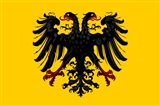
Flag of the Habsburg Monarchy
The various Habsburg possessions never really formed a single country - each province was governed according to its own particular customs. Until the mid 17th century, all of the provinces were not even necessarily ruled by the same person - junior members of the family often ruled portions of the Hereditary Lands as private apanages. Serious attempts at centralization began under Maria Theresa
Maria Theresa of Austria

Maria Theresa was the List of rulers of Austria, List of rulers of Hungary, List of rulers of Croatia, Queen of Bohemia, Grand Duchy of Tuscany and a Holy Roman Emperor by marriage to Francis I, Holy Roman Emperor....
 and especially her son Joseph II
Joseph II, Holy Roman Emperor

Joseph II was Holy Roman Emperor from 1765 to 1790 and ruler of the Habsburg Monarchy from 1780 to 1790. He was the eldest son of Empress Maria Theresa of Austria and her husband, Francis I, Holy Roman Emperor....
 in the mid to late 18th century, but many of these were abandoned following large scale resistance to Joseph's more radical reform attempts, although a more cautious policy of centralization continued during the revolutionary period and the long Metternichian
Klemens Wenzel von Metternich

Klemens Wenzel, Prince von Metternich was a Germany-Austrian politician and statesman and was one of the most important diplomats of his era. He was a major figure in the negotiations before and during the Congress of Vienna and is considered both a paradigm of foreign-policy management and a major figure in the development of diplomatic p...
 period
Age of Metternich

The Age of Metternich refers to the period of European politics in between the final defeat of Napoleon at Battle of Waterloo in 1815 and the Revolutions of 1848....
 which followed.

An even greater attempt at centralization began in 1849 following the suppression of the various revolutions of 1848
Revolutions of 1848 in the Habsburg areas

From March 1848 through July 1849, the Habsburg Monarchy Austrian Empire was threatened by revolutionary movements. Much of the revolutionary activity was of a nationalism character: the empire, ruled from Vienna, included Austrian ethnic German, Magyars, Slovenes, Poles, Czechs, Slovaks, Ruthenians, Romanians, Serbs, Italian people, and Croats, a...
. For the first time, ministers tried to transform the monarchy into a centralized bureaucratic state ruled from Vienna. The Kingdom of Hungary, in particular, ceased to exist as a separate entity, being divided into a series of districts. Following the Habsburg defeats in the Wars of 1859 and 1866, this policy was abandoned, and after several years of experimentation in the early 1860s, the famous Austro-Hungarian Compromise of 1867 was arrived at, by which the so-called Dual Monarchy of Austria-Hungary
Austria-Hungary

Austria-Hungary, also known as the Austro-Hungarian Empire, the Dual Monarchy or the Kaiserlich und k?niglich Monarchy was a state in Central Europe ruled by the House of Habsburg, constitutionally a personal union between the crowns of the Austrian Empire and the Kingdom of Hungary....
 was set up. In this system, the Kingdom of Hungary was given sovereignty and a parliament, with only a personal union and a joint foreign and military policy connecting it to the other Habsburg lands. Although the non-Hungarian Habsburg lands, often, but erroneously, referred to as "Austria," received their own central parliament (the Reichsrat, or Imperial Council) and ministries, as their official name - the Kingdoms and Lands Represented in the Imperial Council - shows that they remained something less than a genuine unitary state. When Bosnia and Herzegovina were annexed (after a long period of occupation and administration), they were not incorporated into either half of the monarchy. Instead, they were governed by the joint ministry of finance.

Austria-Hungary collapsed under the weight of the various unsolved ethnic problems that came to a head with its defeat in World War I
World War I

World War I, or the First World War , was a global military conflict which involved the Great powers, organized into two opposing military alliances: the Allies of World War I and the Central Powers....
. In the peace settlement that followed, significant territories were ceded to Romania
Romania

Romania is a country located in Southeastern Europe Central Europe, North of the Balkan Peninsula, on the Lower Danube, within and outside the Carpathian Mountains, bordering on the Black Sea....
 and Italy
Italy

Italy , officially the Italian Republic , is a country located on the Italian Peninsula in Southern Europe and on the two largest islands in the Mediterranean Sea, Sicily and Sardinia....
, new republics of Austria
Austria

Austria , officially the Republic of Austria , is a landlocked country in Central Europe. It borders both Germany and the Czech Republic to the north, Slovakia and Hungary to the east, Slovenia and Italy to the south, and Switzerland and Liechtenstein to the west....
 (the German-Austrian territories of the Hereditary lands) and Hungary
Hungary

Hungary , officially in English the Republic of Hungary , is a landlocked country in the Carpathian Basin of Central Europe, bordered by Austria, Slovakia, Ukraine, Romania, Serbia, Croatia, and Slovenia....
 (the Magyar core of the old kingdom) were created, and the remainder of the monarchy's territory was shared out among the new states of Poland
Poland

Poland , officially the Republic of Poland , is a country in Central Europe. Poland is bordered by Germany to the west; the Czech Republic and Slovakia to the south; Ukraine, Belarus and Lithuania to the east; and the Baltic Sea and Kaliningrad Oblast, a Russian Enclave and exclave, to the north....
, Kingdom of Serbs, Croats and Slovenes (later Yugoslavia), and Czechoslovakia
Czechoslovakia

Czechoslovakia was a sovereign state in Central Europe that existed from October 1918 until 1992 . On January 1, 1993, Czechoslovakia dissolution of Czechoslovakia into the Czech Republic and Slovakia....
.

Habsburg territories outside the Habsburg Monarchy

The Habsburg monarchy should not be confused with various other territories ruled at different times by members of the Habsburg dynasty. The senior Spanish line of the Habsburgs ruled over Spain
Spain

Spain or the Kingdom of Spain , is a country located in Southern Europe on the Iberian Peninsula.The Spanish constitution does not establish any official denomination of the country, even though Espa?a , Estado espa?ol and Naci?n espa?ola are used interchangeably....
 and various other territories from 1516 until it became extinct in 1700. A junior line ruled over Tuscany
Tuscany

Tuscany is a region in Italy. It has an area of and a population of about 3.6 million inhabitants. The regional capital is Florence.Tuscany is known for its landscapes and its artistic legacy....
 between 1765 and 1801, and again from 1814 to 1859. While exiled from Tuscany, this line ruled at Salzburg from 1803 to 1805, and in Würzburg
Würzburg

W?rzburg is a city in the region of Franconia which lies in the northern tip of Bavaria, Germany. Located on the Main River, it is the capital of the Regierungsbezirk Unterfranken....
 from 1805 to 1814. Another line ruled the Vorlande from 1803 to 1805, and Modena from 1814 to 1859, while Empress Marie Louise, Napoleon's
Napoleon I of France

Napoleon Bonaparte later known as Emperor Napoleon I, was a military and political leader of France whose actions shaped European politics in the early 19th century....
 second wife and the daughter of Austrian Emperor Francis, ruled over the Duchy of Parma
Duchy of Parma

The Duchy of Parma was created in 1545 from that part of the Duchy of Milan south of the Po River, as a fief for Pope Paul III's illegitimate son, Pier Luigi Farnese, Duke of Parma, centered on the city of Parma....
 between 1814 and 1847. Also, the Second Mexican Empire
Second Mexican Empire

The Second Mexican Empire was the name of Mexico under the regime established from 1864 to 1867. Using the pretext of collecting overdue loans to Mexico, Napoleon III of France justified the invasion by French troops....
, from 1863-1867, was headed by Maximilian I of Mexico
Maximilian I of Mexico

Maximilian I was a member of Austria's Imperial Habsburg-Lorraine family who was Emperor of Mexico. With the backing of Napoleon III of France and a group of Mexican monarchy, he was proclaimed Emperor of Mexico on 10 April 1864....
, the brother of Franz Josef II.

History


For a historical account, see:
  • History of Austria in the Habsburg Monarchy
    History of Austria

    This is the history of Austria. See also thehistory of Europe and history of present-day nations and states....
  • History of Hungary under the Habsburg Monarchy
    History of Hungary

    Hungary is a state in central Europe, its history under this name dating to the early Middle Ages, when the region previously known as Pannonia was colonized by the Magyar nomad people from what is now central-northern Russia....
  • Croatia in the Habsburg Empire
    Croatia in the Habsburg Empire

    Following the Battle of Moh?cs, in 1527 the Kingdom of Croatia nobles needed to decide on a new king. The bulk of the Croatians convened the Parliament on Cetin and chose the suzerainty to the Austrian king Ferdinand I, Holy Roman Emperor of Habsburg....
  • Kingdom of Bohemia: 1526-1648, 1648-1867, 1867-1918.
  • History of Slovakia within the Habsburg Monarchy
    History of Slovakia

    This article discusses the history of the territory of Slovakia....
  • Economy of the Habsburg Monarchy
    Economy of the Habsburg Monarchy

    =Economy of the Habsburg Monarchy=With the abolition of serfdom in the 18th century, the Habsburg Monarchy, with the major industrial, mining areas and forestry of regions Moravia and Bohemia leading the way, began to experience unprecedented economic growth....
  • History of the Balkans
    History of the Balkans

    The Balkans is an area of southeastern Europe situated at a major crossroads between mainland Europe and the Near East. The distinct identity and fragmentation of the Balkans owes much to its common and often violent history and to its very mountainous geography....


Rulers of the Habsburg Monarchy, 1526-1918


Habsburg

  • Ferdinand I
    Ferdinand I, Holy Roman Emperor

    Ferdinand I was a Central European monarch from the Habsburg. He was Holy Roman Emperor from 1558, King of Bohemia and King of Hungary and Croatia from 1526....
     1520-1564
  • Maximilian II
    Maximilian II, Holy Roman Emperor

    Maximilian II was king of Bohemia from 1562, king of Hungary from 1563, emperor of the Holy Roman Empire from 1564 and king of the Romans until his death....
     1564-1576 known as "the last Knight"
  • Rudolf II
    Rudolf II, Holy Roman Emperor

    Rudolf II , Holy Roman Emperor as Rudolf II , King of Hungary as Rudolf , King of Bohemia as Rudolf II and Archduke of Austria as Rudolf V . He was a member of the Habsburg family....
     1576-1612
  • Matthias
    Matthias, Holy Roman Emperor

    Matthias of the House of Habsburg, Holy Roman Emperor , King of Kingdom of Hungary , King of Bohemia .Matthias was born in the Archduchy of Austrian capital of Vienna to Maximilian II, Holy Roman Emperor and Maria of Spain....
     1612-1619
  • Ferdinand II
    Ferdinand II, Holy Roman Emperor

    Ferdinand II , of the House of Habsburg, Holy Roman Emperor , King of Bohemia , King of Hungary ....
     1619-1637
  • Ferdinand III
    Ferdinand III, Holy Roman Emperor

    Ferdinand III was Holy Roman Emperor February 15, 1637 – 1657. King of Hungary, King of Bohemia, Archduke of Austria, King of the Romans....
     1637-1657
  • Leopold I
    Leopold I, Holy Roman Emperor

    Leopold I, Holy Roman Emperor Habsburg , Holy Roman emperor, King of Hungary, King of Bohemia, was the second son of the emperor Ferdinand III, Holy Roman Emperor and his first wife Maria Anna of Spain....
     1657-1705
  • Joseph I
    Joseph I, Holy Roman Emperor

    Joseph I , Holy Roman Emperor, King of Bohemia, King of Hungary, King of the Romans was the elder son of Leopold I, Holy Roman Emperor and his third wife, Eleonore-Magdalena of Pfalz-Neuburg, who was the daughter of Philipp Wilhelm, Elector Palatine....
     1705-1711
  • Charles VI
    Charles VI, Holy Roman Emperor

    Charles VI was Holy Roman Emperor, King of Hungary from 1711 to 1740, Archduke of Austria. From 1703 to 1711 he was an active claimant to the List of Spanish monarchs as Charles III....
     1711-1740 "Karl VI." as Spanish King "Carlos III"
  • Maria Theresa
    Maria Theresa of Austria

    Maria Theresa was the List of rulers of Austria, List of rulers of Hungary, List of rulers of Croatia, Queen of Bohemia, Grand Duchy of Tuscany and a Holy Roman Emperor by marriage to Francis I, Holy Roman Emperor....
     1740-1780 correctly written "Maria Theresia"


Habsburg-Lorraine

  • Joseph II
    Joseph II, Holy Roman Emperor

    Joseph II was Holy Roman Emperor from 1765 to 1790 and ruler of the Habsburg Monarchy from 1780 to 1790. He was the eldest son of Empress Maria Theresa of Austria and her husband, Francis I, Holy Roman Emperor....
     1780-1790 known as "the great Reformer"
  • Leopold II
    Leopold II, Holy Roman Emperor

    Leopold II , born Peter Leopold Joseph Anton Joachim Pius Gotthard, was Holy Roman Emperor from 1790 to 1792, King of Hungary, archduke of Austria, and Grand Duke of Tuscany from 1765 to 1790....
     1790-1792 from 1765-1790 "Grandduke of Tuscany"
  • Francis II
    Francis II, Holy Roman Emperor

    Francis II was the last Holy Roman Emperor, ruling from 1792 until 6 August 1806, when he dissolved the Holy Roman Empire after the disastrous defeat of the Third Coalition by Napoleon I of France at the Battle of Austerlitz....
     1792-1835 correctly written "Franz"(became Emperor Francis I of Austria in 1804, at which point numbering starts anew)
  • Ferdinand I
    Ferdinand I of Austria

    Ferdinand I was Emperor of Austria, King of Hungary, King of Kingdom of Lombardy-Venetia, King of Bohemia. He chose to abdicate, after a series of revolts in 1848....
     1835-1848 known as "Ferdinand the Good" german: "Ferdinand der Gütige"
  • Francis Joseph I
    Franz Joseph I of Austria

    Franz Joseph I Karl of the Habsburg was Emperor of Austrian Empire, Apostolic King of Kingdom of Hungary from 1848 until 1916 ....
     1848-1916 Brother of Emperor Maximilian of Mexico (ruled 1864-1867)
  • Charles I
    Karl I of Austria

    Charles I was the last ruler of the Austria-Hungary. He was the last Emperor of Austria, the last Kingdom of Hungary, the last Croatia-Slavonia, and the last Kingdom of Bohemia , and the last monarch of the Habsburg dynasty....
     1916-1918 last reigning Monarch of Austria
  • Otto von Habsburg-Lothringen or sometimes called Otto von Österreich Crown Prince of Austria to be found as Otto von Habsburg
    Otto von Habsburg

    Otto von Habsburg has been the head of the House of Habsburg since 1922. He is the eldest son of Charles I of Austria, the last Emperor of Austria and King of Hungary,Croatia and Bohemia, and his wife, Zita of Bourbon-Parma....