
All Topics  
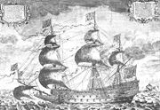
HMS Sovereign of the Seas

 
HMS Sovereign of the Seas

   Email Print
   Bookmark   Link


HMS Sovereign of the Seas


HMS Sovereign of the Seas was ordered as a 90-gun first rank ship of the line
Ship of the line

A ship-of-the-line was a type of naval warship constructed from the 17th century through the mid-19th century, to take part in the Naval tactics in the Age of Sail known as the line of battle, in which two columns of opposing warships would maneuver to bring the greatest weight of broadside guns to bear....
 of the English
Kingdom of England

The Kingdom of England was, from 927 to 1707, a state in North-West Europe. The Kingdom of England spanned the southern two-thirds of the island of Great Britain and a number of smaller outlying islands?what is today the legal unit of England and Wales....
 Royal Navy
Royal Navy

The Royal Navy of the United Kingdom is the oldest of the British Armed Forces . From the mid-18th century until well into the 20th century, it was the most powerful navy in the world, playing a key part in establishing the British Empire as the dominant world power from 1815 until the early 1940s....
, but at launch was armed with 102 bronze guns, at the insistence of the king. She was later renamed
Sovereign, and then Royal Sovereign. The ship was launched on 13 October 1637 and served from 1638 until 1697, when a fire burned the ship to the waterline at Chatham.

Sovereign of the Seas was ordered in August 1634 on personal initiative of Charles I of England
Charles I of England

Charles I was List of English monarchs, List of monarchs of Scotland and King of Ireland from 27 March 1625 until his capital punishment on 30 January 1649....
, who desired a giant Great Ship to be built.


Discussion
Ask a question about 'HMS Sovereign of the Seas'
Start a new discussion about 'HMS Sovereign of the Seas'
Answer questions from other users
Full Discussion Forum


Encyclopedia


HMS Sovereign of the Seas was ordered as a 90-gun first rank ship of the line
Ship of the line

A ship-of-the-line was a type of naval warship constructed from the 17th century through the mid-19th century, to take part in the Naval tactics in the Age of Sail known as the line of battle, in which two columns of opposing warships would maneuver to bring the greatest weight of broadside guns to bear....
 of the English
Kingdom of England

The Kingdom of England was, from 927 to 1707, a state in North-West Europe. The Kingdom of England spanned the southern two-thirds of the island of Great Britain and a number of smaller outlying islands?what is today the legal unit of England and Wales....
 Royal Navy
Royal Navy

The Royal Navy of the United Kingdom is the oldest of the British Armed Forces . From the mid-18th century until well into the 20th century, it was the most powerful navy in the world, playing a key part in establishing the British Empire as the dominant world power from 1815 until the early 1940s....
, but at launch was armed with 102 bronze guns, at the insistence of the king. She was later renamed
Sovereign, and then Royal Sovereign. The ship was launched on 13 October 1637 and served from 1638 until 1697, when a fire burned the ship to the waterline at Chatham.

History

HMS Sovereign of the Seas was ordered in August 1634 on personal initiative of Charles I of England
Charles I of England

Charles I was List of English monarchs, List of monarchs of Scotland and King of Ireland from 27 March 1625 until his capital punishment on 30 January 1649....
, who desired a giant Great Ship to be built. The decision provoked much opposition from the Brethren of Trinity House
Trinity House

The Corporation of Trinity House is the official General Lighthouse Authority for England, Wales and other British territorial waters . It is responsible for the provision and maintenance of navigational aids such as lighthouses, lightvessels, buoys and maritime radio/satellite communication systems....
, who pointed out that "There is no port in the Kingdome that can harbour this shipp. The wild sea must bee her port, her anchors and cables her safety; if either fayle, the shipp must perish, the King lose his jewel, four or five hundred man must die, and perhaps some great and noble peer". But the King overcame the objections with the help of John Pennington and from May 1635 she was built by Peter Pett
Peter Pett

Peter Pett, was an English Master Shipwright, and 2nd Resident Commissioner Pett of Chatham Dockyard, the son of the King's Master Shipwright Captain Phineas Pett....
 (later a Commissioner of the Navy), under the guidance of his father Phineas, the king's master shipwright, and was launched at Woolwich
Woolwich

Woolwich is a suburb in south-east London, England in the London Borough of Greenwich, on the south side of the River Thames, though the tiny exclave of North Woolwich is on the north side of the river....
 dockyard on 13 October 1637. As the second three-decked first-rate
First-rate

First-rate was the designation used by the Royal Navy for its largest ship of the line, those mounting 100 guns or more on three gundecks.First-rate vessels carried over 800 crew and displaced in excess of 2,000 tons....
 (the first three-decker being Prince Royal
HMS Prince Royal (1610)

HMS Prince Royal was a 55-gun Royal Ship of the English Royal Navy, built by Phineas Pett at Woolwich and launched in 1610.In 1641 she was rebuilt by Peter Pett at Woolwich as a 70-gun ship....
 of 1610), she was the predecessor of Nelson's Victory
HMS Victory

HMS Victory is a first rate ship of the line of the Royal Navy, started in 1759 and launched in 1765, most famous as Lord Nelson's flagship at the Battle of Trafalgar....
, although Revenge
HMS Revenge (1577)

Revenge was an English race-built galleon of 46 guns, built in 1577 and captured by the Spanish in 1591, sinking soon afterwards. She was the first of thirteen English and Royal Navy ships to bear the name....
, built in 1577 by Mathew Baker
Mathew Baker

Mathew Baker was one of the most renowned Tudor dynasty shipwrights, and the first to put the practice of shipbuilding down on paper.The first list of 'Master Shipwrights' appointed 'by Patent' by Henry VIII of England included 'John Smyth, Robert Holborn, Richard Bull and James Baker,' in 1537....
, was the inspiration providing the innovation of a single deck devoted entirely to broadside guns.

She was the most extravagantly decorated warship in the Royal Navy, completely adorned from stern to bow with gilded carvings against a black background, made by John Christmas and Mathias Christmas after a design by Anthony van Dyck
Anthony van Dyck

Sir Anthony van Dyck was a Flemish Baroque painting who became the leading court painter in England. He is most famous for his portraits of Charles I of England and his family and court, painted with a relaxed elegance that was to be the dominant influence on English school of painting for the next 150 years....
. The money spent making her, £65,586, helped to create the financial crisis for Charles I that contributed to the English Civil War
English Civil War

The English Civil War was a series of armed conflicts and political machinations between Roundhead and Cavalier. The First English Civil War and Second English Civil War civil wars pitted the supporters of Charles I of England against the supporters of the Long Parliament, while the Third English Civil War saw fighting between supporters...
. Charles had imposed a special tax, the 'Ship Money
Ship money

Ship money was a tax, the levy of which by Charles I of England without the consent of British Parliament was one of the causes of the English Civil War....
', to make possible such large naval expenditure. The gilding
Gilding

Gilding is the technique of applying a thin layer of gold to a surface. Gilding is performed through a mechanical process, known as leafing, or using one of many chemical processes....
 alone cost £6,691, which in those days was the price of an average warship. She carried 102 bronze cannon (King Charles explicitly ordered such a high number) and was thereby at the time the most powerfully armed ship in the world. The cannon were made by John Browne
John Browne (King's Gunfounder)

John Browne was the first holder of the post of King's Gunfounder, which was created in 1615. He was heavily involved in the Wealden iron industry, having control of six furnaces in Surrey and Sussex, two in the Forest of Dean as well as his own River Teise between Brenchley and Horsmonden....
. By 1642 her armament had been reduced to 90 guns. Until 1655, she was also exceptionally large for an English vessel; no other ships of Charles were heavier than the Prince Royal.

Peter Pett
The Sovereign of the Seas was not so much built because of tactical considerations, but as a deliberate attempt to bolster the reputation of the English crown. Her name was in itself a political statement as Charles tried to revive the perceived ancient right of the English kings to be recognised as the 'lords of the seas.' English ships demanded that other ships strike their flags in salute, even in foreign ports. The Dutch legal thinker Hugo Grotius
Hugo Grotius

Hugo Grotius worked as a jurist in the Dutch Republic. With Francisco de Vitoria and Alberico Gentili he laid the foundations for international law, based on natural law....
 had argued for a mare liberum, a sea free to be used by all. As such a concept was mainly favourable to Dutch trade, in reaction John Selden
John Selden

John Selden was an England jurist, scholar of England's ancient laws and constitution and scholar of Jewish law. He was known as a polymath showing true intellectual depth and breadth; John Milton hailed Selden as "the chief of learned men reputed in this land."...
 and William Monson in 1635 with special permission of Charles published Mare Clausum ("the Closed Sea"), a book, earlier repressed by James I
James I of England

James VI and I was List of monarchs of Scotland as James VI, and List of English monarchs and King of Ireland as James I. He ruled in Kingdom of Scotland as James VI from 24 July 1567, when he was only one year old, succeeding his mother Mary I of Scotland....
, trying to prove that King Edgar had already been recognised as Rex Marium, or "sovereign of the seas". The name of the ship explicitly referred to this dispute; King Edgar was the central theme of the transom carvings.

Rear-Admiral Sir William Symonds
William Symonds

Sir William Symonds was "Surveyor of the Navy" in the Royal Navy from 9 June 1832 to October 1847, and took part in the naval reforms instituted by the Whig First Lord of the Admiralty Sir James Robert George Graham in 1832....
 noted that after the ship's launch she was "cut down" and made a safe and fast ship. In the time of the Commonwealth of England
Commonwealth of England

The Commonwealth of England was the republic which ruled first Kingdom of England and Wales, and then Kingdom of Ireland and Kingdom of Scotland from 1649 to 1660....
 all ships named after royalty were renamed; it was first decided to change the name of the ship into Commonwealth, but in 1650 it became a simple Sovereign. In 1651 she was again made more manoeuvrable by reducing the number of cannon, served throughout the wars of the Commonwealth and became the flagship of General-at-sea Robert Blake
Robert Blake (admiral)

Robert Blake was one of the most important military commanders of the Commonwealth of England, and one of the most famous English admirals of the 17th century....
. She was involved in all of the great English naval conflicts fought against the United Provinces
Dutch Republic

The Republic of the Seven United Netherlands was a European republic between 1581 and 1795, in about the same location as the modern Kingdom of the Netherlands, which is the successor state....
 and France
France

France , officially the French Republic , is a country whose Metropolitan France is located in Western Europe and that also comprises various Overseas departments and territories of France....
, referred to as 'The Golden Devil' (den Gulden Duvel) by the Dutch.

When, during the First Anglo-Dutch War
First Anglo-Dutch War

The First Anglo?Dutch War was the first of the four Anglo-Dutch Wars. It was fought entirely at sea between the navies of the Commonwealth of England and the United Provinces of the Netherlands....
, on 21 October 1652 the States-General of the Netherlands
States-General of the Netherlands

The States-General is the parliament of the Netherlands. It consists of two chambers, the more important of which is the directly elected Tweede Kamer ....
 in a secret session determined the reward money for the crews of fireships that succeeded in destroying an enemy vessel, the Sovereign was singled out: an extra prize of 3000 guilders was promised 'in case they should ruin the ship named the Sovereign'. Although repeatedly occupied by the Dutch in the fiercest of engagements the Sovereign was retaken every time and remained in service for nearly sixty years as the best ship in the English fleet. By 1660 her armament had been increased to 100 guns. After the English Restoration
English Restoration

The English Restoration, or simply The Restoration began in 1660 when the English monarchy, Scottish monarchy and Irish monarchy were restored under Charles II of England after the Interregnum that followed the English Civil War....
 she was rebuilt at Chatham in 1660 as a first rate ship of the line of 100 guns, with flatter gundecks and renamed Royal Sovereign.

She was smaller than Naseby
HMS Royal Charles (1655)

HMS Royal Charles was an 80-gun First rate three-decker ship of the line of the Kingdom of England History of the Royal Navy#The formation of a fighting force, 1642?1689....
 (later renamed Royal Charles), but she was in regular service during the three Anglo-Dutch Wars
Anglo-Dutch Wars

The Anglo-Dutch Wars were fought in the 17th and 18th centuries between Kingdom of England and the Republic of the Seven United Provinces of the Netherlands for control over the seas and trade routes....
, surviving the Raid on the Medway
Raid on the Medway

The Raid on the Medway, sometimes called the Battle of Medway or the Battle of Chatham, was a successful Dutch Republic attack on the largest England naval ships, laid up in the dockyards of their main naval base Chatham, Kent, that took place in June 1667 during the Second Anglo-Dutch War....
 in 1667 by being elsewhere at the time. She underwent a second rebuild in 1685 at Chatham Dockyard
Chatham Dockyard

Chatham Dockyard, located on the River Medway and of which two-thirds is in Gillingham, Kent and one third in Chatham, Kent, Kent, England, came into existence at the time when, following the English Reformation, relations with the Catholic countries of Europe had worsened, leading to a requirement for additional defences....
, relaunching as a first rate of 100 guns, before tooking part in the outset of the War of the Grand Alliance
War of the Grand Alliance

The Nine Years' War ? often called the War of the Grand Alliance or the War of the League of Augsburg ? was a major war of the late 17th century fought primarily on mainland Europe but also encompassing theatres in Ireland and North America....
 against Louis XIV of France
Louis XIV of France

Louis XIV ruled as List of French monarchs and of King of Navarre. He ascended the throne a few months before his fifth birthday, but did not assume actual personal control of the government until the death of his prime minister , the Italians Jules Cardinal Mazarin, in 1661....
, participating in the Battle of Beachy Head
Battle of Beachy Head (1690)

The Battle of Beachy Head was a naval engagement fought on 10 July 1690 during the Nine Years' War. The battle was the greatest French tactical naval victory over their English and Dutch opponents during the war....
 (1690) and the Battle of La Hougue, when she was more than 50 years old. In that period she was the first ship in history that flew royals
Royal (sail)

A royal is a small sail flown immediately above the topgallant sail on square rigged sailing ships. It was originally called the "topgallant royal" and was used in light and favorable winds....
 above her topgallant sail
Topgallant sail

On a square rigged sailing vessel, a topgallant sail is the square-rigged sail or sails immediately above the topsail or topsails. It is also known as a gallant or garrant sail....
s.

Sovereign became leaky and defective with age during the reign of William III
William III of England

William III was a Prince of Orange by birth. From 1672 onwards, he governed as List_of_stadtholders_for_the_Low_Countries_provinces William III of Orange over Holland, Zeeland, Utrecht, Guelders, and Overijssel of the Dutch Republic....
, and was laid up at Chatham, ignominiously ending her days, on 27 January 1697, by being burnt to the water line as a result of having been set on fire either by accident, negligence or design. Some part of the popular folklore attributes the fire to an overturned candle.

In her honour, Naval tradition has kept the name of this ship afloat, and several other subsequent ships have been named HMS Royal Sovereign
HMS Royal Sovereign

Several ships of the Royal Navy have been named HMS Royal Sovereign:, the great prestige ship of Charles I of England, was launched in 1637 as a 102-gun First rate ship of the line....
.

See also

  • List of world's largest wooden ships
    List of world's largest wooden ships

    A list of the world's largest wooden ships is compiled below. The vessels are sorted by ship length including bowsprit, if known....


External links

  • .
  • High resolution photos of a model.