


Guide for the Perplexed

Encyclopedia
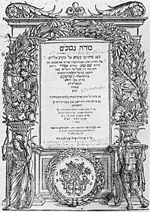
Hebrew language
Hebrew is a Semitic language of the Afroasiatic language family. Culturally, is it considered by Jews and other religious groups as the language of the Jewish people, though other Jewish languages had originated among diaspora Jews, and the Hebrew language is also used by non-Jewish groups, such...
:, translit.
Transliteration
Transliteration is a subset of the science of hermeneutics. It is a form of translation, and is the practice of converting a text from one script into another...
, דלאל̈ה אלחאירין ) is one of the major works of Rabbi
Rabbi
In Judaism, a rabbi is a teacher of Torah. This title derives from the Hebrew word רבי , meaning "My Master" , which is the way a student would address a master of Torah...
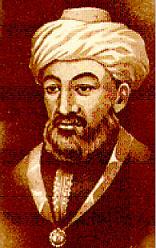
Moshe ben Maimon, better known as Maimonides
Maimonides
Moses ben-Maimon, called Maimonides and also known as Mūsā ibn Maymūn in Arabic, or Rambam , was a preeminent medieval Jewish philosopher and one of the greatest Torah scholars and physicians of the Middle Ages...
or "the Rambam". It was written in the 12th century in the form of a three-volume letter to his student, Rabbi Joseph ben Judah of Ceuta
Joseph ben Judah of Ceuta
Joseph ben Judah of Ceuta was a Jewish physician and poet, and disciple of Moses Maimonides.It is as an address to Joseph that Maimonides introduces his Guide for the Perplexed.- Life :...
, the son of Rabbi Judah, and is the main source of the Rambam's philosophical views, as opposed to his opinions on Jewish law
Halakha
Halakha — also transliterated Halocho , or Halacha — is the collective body of Jewish law, including biblical law and later talmudic and rabbinic law, as well as customs and traditions.Judaism classically draws no distinction in its laws between religious and ostensibly non-religious life; Jewish...
.
Since many of the philosophical concepts, such as his view of theodicy
Theodicy
Theodicy is a theological and philosophical study which attempts to prove God's intrinsic or foundational nature of omnibenevolence , omniscience , and omnipotence . Theodicy is usually concerned with the God of the Abrahamic religions Judaism, Christianity, and Islam, due to the relevant...
and the relationship between philosophy
Philosophy
Philosophy is the study of general and fundamental problems, such as those connected with existence, knowledge, values, reason, mind, and language. Philosophy is distinguished from other ways of addressing such problems by its critical, generally systematic approach and its reliance on rational...
and religion
Religion
Religion is a collection of cultural systems, belief systems, and worldviews that establishes symbols that relate humanity to spirituality and, sometimes, to moral values. Many religions have narratives, symbols, traditions and sacred histories that are intended to give meaning to life or to...
, are relevant beyond strictly Jewish theology
Theology
Theology is the systematic and rational study of religion and its influences and of the nature of religious truths, or the learned profession acquired by completing specialized training in religious studies, usually at a university or school of divinity or seminary.-Definition:Augustine of Hippo...
, it has been the work most commonly associated with Maimonides in the non-Jewish world and it is known to have influenced several major non-Jewish philosophers. Following its publication, "almost every philosophic work for the remainder of the Middle Ages
Middle Ages
The Middle Ages is a periodization of European history from the 5th century to the 15th century. The Middle Ages follows the fall of the Western Roman Empire in 476 and precedes the Early Modern Era. It is the middle period of a three-period division of Western history: Classic, Medieval and Modern...
cited, commented on, or criticized Maimonides' views." Within Judaism
Judaism
Judaism ) is the "religion, philosophy, and way of life" of the Jewish people...
, the Guide became widely popular, with many Jewish communities requesting copies of the manuscript, but also quite controversial, with some communities limiting its study or banning it altogether.
Contents
The Guide for the Perplexed was originally written in Arabic and was first translated into HebrewHebrew language
Hebrew is a Semitic language of the Afroasiatic language family. Culturally, is it considered by Jews and other religious groups as the language of the Jewish people, though other Jewish languages had originated among diaspora Jews, and the Hebrew language is also used by non-Jewish groups, such...
by a contemporary of Maimonides, Samuel ben Judah ibn Tibbon
Samuel ben Judah ibn Tibbon
Samuel ben Judah ibn Tibbon, more commonly known as Samuel ibn Tibbon , was a Jewish philosopher and doctor. He was born about 1150 in Lunel , and died about 1230 in Marseilles...
. The work is divided into three books. According to Maimonides, he wrote the Guide "to promote the true understanding of the real spirit of the Law, to guide those religious persons who, adhering to the Torah, have studied philosophy and are embarrassed by the contradictions between the teachings of philosophy and the literal sense of the Torah,"
and his main purpose is to expound on Maaseh Bereishit and Maaseh Merkavah
Merkabah
Merkabah is the throne-chariot of God, the four-wheeled vehicle driven by four "chayot" , each of which has four wings and the four faces of a man, lion, ox, and eagle...
, works of Jewish mysticism regarding the theology
Theology
Theology is the systematic and rational study of religion and its influences and of the nature of religious truths, or the learned profession acquired by completing specialized training in religious studies, usually at a university or school of divinity or seminary.-Definition:Augustine of Hippo...
of creation from Genesis and the passage of the Chariot from Ezekiel
Book of Ezekiel
The Book of Ezekiel is the third of the Latter Prophets in the Hebrew Bible, following the books of Isaiah and Jeremiah and preceding the Book of the Twelve....
, these being the two main mystical texts in the Tanakh
Tanakh
The Tanakh is a name used in Judaism for the canon of the Hebrew Bible. The Tanakh is also known as the Masoretic Text or the Miqra. The name is an acronym formed from the initial Hebrew letters of the Masoretic Text's three traditional subdivisions: The Torah , Nevi'im and Ketuvim —hence...
(Hebrew Bible). This analysis occurs in the third book, and from this perspective, the issues raised in the first two books are there to provide background and a progression in the mystical and philosophical knowledge required to ponder the climax.
Book One
Anthropomorphism
Anthropomorphism is any attribution of human characteristics to animals, non-living things, phenomena, material states, objects or abstract concepts, such as organizations, governments, spirits or deities. The term was coined in the mid 1700s...
. In the Bible, one can find many expressions which describe God
God
God is the English name given to a singular being in theistic and deistic religions who is either the sole deity in monotheism, or a single deity in polytheism....
in human terms, for instance the "hand of God". Maimonides was strongly against what he believed to be a heresy
Heresy
Heresy is a controversial or novel change to a system of beliefs, especially a religion, that conflicts with established dogma. It is distinct from apostasy, which is the formal denunciation of one's religion, principles or cause, and blasphemy, which is irreverence toward religion...
present in unlearned Jews who then assume God to be corporeal (or even possessing positive characteristics).
To explain his belief that this is not the case, Maimonides devoted more than 20 chapters in the beginning (and middle) of the first book to analysing Hebrew terms. Each chapter was about a term used to describe God (such as "mighty") and in each case, Maimonides presented a case that the word is a homonym
Homonym
In linguistics, a homonym is, in the strict sense, one of a group of words that often but not necessarily share the same spelling and the same pronunciation but have different meanings...
, whereby its usage when describing a physical entity is completely different from when describing God. This was done by close textual analysis
Content analysis
Content analysis or textual analysis is a methodology in the social sciences for studying the content of communication. Earl Babbie defines it as "the study of recorded human communications, such as books, websites, paintings and laws."According to Dr...
of the word in the Tanach in order to present what Maimonides saw as the proof that according to the Tanach, God is completely incorporeal: "[The Rambam] set up the incorporeality of God as a dogma, and placed any person who denied this doctrine upon a level with an idolater; he devoted much of the first part of the "Moreh Nevukhim" to the interpretation of the Biblical anthropomorphisms, endeavoring to define the meaning of each and to identify it with some transcendental metaphysical expression. Some of them are explained by him as perfect homonyms, denoting two or more absolutely distinct things; others, as imperfect homonyms, employed in some instances figuratively and in others homonymously."
This leads to Maimonides' notion that God cannot be described in any positive terms, but rather only in negative conceptions; see Negative theology: In the Jewish tradition. The Jewish Encyclopedia notes his view that "As to His essence, the only way to describe it is negatively. For instance, He is not physical, nor bound by time, nor subject to change, etc. These assertions do not involve any incorrect notions or assume any deficiency, while if positive essential attributes are admitted it may be assumed that other things coexisted with Him from eternity." Unrestrained anthropomorphism and perception of positive attributes is seen as a transgression as serious as idolatry
Idolatry
Idolatry is a pejorative term for the worship of an idol, a physical object such as a cult image, as a god, or practices believed to verge on worship, such as giving undue honour and regard to created forms other than God. In all the Abrahamic religions idolatry is strongly forbidden, although...
, because both are fundamental errors in the metaphysics of God's role in the universe, and that is the most important aspect of the world.
The first book also contains an analysis of the reasons why philosophy and mysticism are taught late in the Jewish tradition, and only to a few. Maimonides cites many examples of what he sees as the incapability of the masses of understanding these concepts. Thus, approaching them with a mind that is not yet learned in Torah
Torah
Torah- A scroll containing the first five books of the BibleThe Torah , is name given by Jews to the first five books of the bible—Genesis , Exodus , Leviticus , Numbers and Deuteronomy Torah- A scroll containing the first five books of the BibleThe Torah , is name given by Jews to the first five...
and other Jewish texts can lead to heresy and the transgressions considered the most serious by Maimonides.
The book ends (Chapters 73–76) with Maimonides' protracted exposition and criticism of a number of principles and methods identified with the schools of Jewish Kalam
Jewish Kalam
Jewish Kalam was an early-medieval style of Jewish philosophy that evolved in response to the Islamic Kalam, which in turn was a reaction against Aristotelian philosophy. The term "Jewish Kalam" is used by modern historians, but is not a term by which Jewish Kalamic thinkers designated themselves...
and Islamic Kalam, including the argument for creation ex nihilo
Ex nihilo
Ex nihilo is a Latin phrase meaning "out of nothing". It often appears in conjunction with the concept of creation, as in creatio ex nihilo, meaning "creation out of nothing"—chiefly in philosophical or theological contexts, but also occurs in other fields.In theology, the common phrase creatio ex...
and the unity and incorporeality of God. While he accepts the conclusions of the Kalam school (because of their consistency with Judaism), he disagrees with their methods and points out many perceived flaws in their arguments: "Maimonides exposes the weakness of these propositions, which he regards as founded not on a basis of positive facts, but on mere fiction...Maimonides criticizes especially the tenth proposition of the Mutakallimīn, according to which everything that is conceivable by imagination is admissible: e.g., that the terrestrial globe should become the all-encompassing sphere, or that this sphere should become the terrestrial globe."
Book Two
The book begins with the exposition of the physical structure of the universe, as seen by Maimonides. The world-view asserted in the work is essentially AristotelianAristotle
Aristotle was a Greek philosopher and polymath, a student of Plato and teacher of Alexander the Great. His writings cover many subjects, including physics, metaphysics, poetry, theater, music, logic, rhetoric, linguistics, politics, government, ethics, biology, and zoology...
, with a spherical earth in the centre, surrounded by concentric Heavenly Spheres
Heavenly Spheres
Heavenly Spheres is an a cappella choral album by the Studio de musique ancienne de Montréal under the direction of Christopher Jackson. Recorded in 1998, it features songs from the late 15th to early 16th century...
. While Aristotle's view with respect to the eternity of the universe is rejected, Maimonides extensively borrows his proofs of the existence of God and his concepts such as the Prime Mover
Cosmological argument
The cosmological argument is an argument for the existence of a First Cause to the universe, and by extension is often used as an argument for the existence of an "unconditioned" or "supreme" being, usually then identified as God...
: "But as Maimonides recognizes the authority of Aristotle in all matters concerning the sublunary world, he proceeds to show that the Biblical account of the creation of the nether world is in perfect accord with Aristotelian views. Explaining its language as allegorical and the terms employed as homonyms, he summarizes the first chapter of Genesis thus: God created the universe by producing on the first day the "reshit", or Intelligences, from which the spheres derived their existence and motion and thus became the source of the existence of the entire universe."
A novel point is that Maimonides connects the Heavenly Sphere with the concept of an angel
Angel
Angels are mythical beings often depicted as messengers of God in the Hebrew and Christian Bibles along with the Quran. The English word angel is derived from the Greek ἄγγελος, a translation of in the Hebrew Bible ; a similar term, ملائكة , is used in the Qur'an...
: these are seen as the same thing. The Spheres are essentially pure Intelligences who receive spiritual essence from the Prime Mover. This energy overflows from each one to the next and finally reaches earth and the physical domain. While novel in Judaism, this concept of intelligent spheres of existence also appears in Gnostic Christianity
Gnosticism
Gnosticism is a scholarly term for a set of religious beliefs and spiritual practices common to early Christianity, Hellenistic Judaism, Greco-Roman mystery religions, Zoroastrianism , and Neoplatonism.A common characteristic of some of these groups was the teaching that the realisation of Gnosis...
as Aeons, having been conceived at least eight hundred years before Maimonides. Maimonides' immediate source was probably Avicenna
Avicenna
Abū ʿAlī al-Ḥusayn ibn ʿAbd Allāh ibn Sīnā , commonly known as Ibn Sīnā or by his Latinized name Avicenna, was a Persian polymath, who wrote almost 450 treatises on a wide range of subjects, of which around 240 have survived...
, who may in turn have been influenced by the very similar scheme in Ismaili
Ismaili
' is a branch of Shia Islam. It is the second largest branch of Shia Islam, after the Twelvers...
thought.
This leads into a discussion about the merits of the debate whether the universe is eternal
Eternity
While in the popular mind, eternity often simply means existence for a limitless amount of time, many have used it to refer to a timeless existence altogether outside time. By contrast, infinite temporal existence is then called sempiternity. Something eternal exists outside time; by contrast,...
or created. As in the first book, Aristotle's theory of the eternity of the universe is seen as the best, philosophically. However, this is because Maimonides considered the proofs that the universe was created to be inferior. He still points out supposed problems with the Aristotelian view and states that, while Aristotle's argument is the best, the possession of Divine Revelation
Revelation
In religion and theology, revelation is the revealing or disclosing, through active or passive communication with a supernatural or a divine entity...
from the Torah is the extra piece of information necessary to decide the matter.
This is followed by a brief exposition of Creation as outlined in Genesis and theories about the possible end of the world
Eschatology
Eschatology is a part of theology, philosophy, and futurology concerned with what are believed to be the final events in history, or the ultimate destiny of humanity, commonly referred to as the end of the world or the World to Come...
. The second major part of the book is the discussion of the concept of prophecy
Prophecy
Prophecy is a process in which one or more messages that have been communicated to a prophet are then communicated to others. Such messages typically involve divine inspiration, interpretation, or revelation of conditioned events to come as well as testimonies or repeated revelations that the...
. Maimonides departs from the orthodox view in that he emphasizes the intellectual aspect of prophecy. According to this view, in Biblical times, when God still revealed himself through prophecy, it was possible to combine logic and intelligence with a knowledge of God through the tradition (i.e. the Written and Oral Torah) in order to achieve a certain level of prophecy. Maimonides outlines 11 levels of prophecy, with that of Moses
Moses
Moses was, according to the Hebrew Bible and Qur'an, a religious leader, lawgiver and prophet, to whom the authorship of the Torah is traditionally attributed...
being beyond the highest, and thus most unimpeded. Subsequent lower levels reduce the immediacy between God and prophet, allowing prophecies through increasingly external and indirect factors such as angel
Angel
Angels are mythical beings often depicted as messengers of God in the Hebrew and Christian Bibles along with the Quran. The English word angel is derived from the Greek ἄγγελος, a translation of in the Hebrew Bible ; a similar term, ملائكة , is used in the Qur'an...
s and dreams. Finally, the language and nature of the prophetic books of the Bible are described.
Book Three
The beginning of the third book is described as the climax of the whole work. This is the exposition of the mystical passage of the Chariot found in EzekielBook of Ezekiel
The Book of Ezekiel is the third of the Latter Prophets in the Hebrew Bible, following the books of Isaiah and Jeremiah and preceding the Book of the Twelve....
(cf. Merkavah mysticism). Traditionally, Jewish law
Halakha
Halakha — also transliterated Halocho , or Halacha — is the collective body of Jewish law, including biblical law and later talmudic and rabbinic law, as well as customs and traditions.Judaism classically draws no distinction in its laws between religious and ostensibly non-religious life; Jewish...
viewed this passage as extremely sensitive, and in theory, did not allow it to be taught explicitly at all. The only way to learn it properly was if a student had enough knowledge and wisdom to be able to interpret their teacher's hints by themselves, in which case the teacher was allowed to teach them indirectly. In practice, however, the mass of detailed rabbinic writings on this subject often crosses the line from hint to detailed teachings.
After justifying this "crossing of the line" from hints to direct instruction, Maimonides explains the basic mystical concepts via the Biblical terms referring to Spheres, elements and Intelligences. In these chapters, however, there is still very little in terms of direct explanation.
This is followed by an analysis of the moral
Morality
Morality is the differentiation among intentions, decisions, and actions between those that are good and bad . A moral code is a system of morality and a moral is any one practice or teaching within a moral code...
aspects of the universe. Maimonides deals with the problem of evil
Problem of evil
In the philosophy of religion, the problem of evil is the question of how to explain evil if there exists a deity that is omnibenevolent, omnipotent, and omniscient . Some philosophers have claimed that the existences of such a god and of evil are logically incompatible or unlikely...
(for which people are considered to be responsible because of free will
Free will
"To make my own decisions whether I am successful or not due to uncontrollable forces" -Troy MorrisonA pragmatic definition of free willFree will is the ability of agents to make choices free from certain kinds of constraints. The existence of free will and its exact nature and definition have long...
), trials and tests (especially those of Job
Book of Job
The Book of Job , commonly referred to simply as Job, is one of the books of the Hebrew Bible. It relates the story of Job, his trials at the hands of Satan, his discussions with friends on the origins and nature of his suffering, his challenge to God, and finally a response from God. The book is a...
and the story of the Binding of Isaac
Binding of Isaac
The Binding of Isaac Akedah or Akeidat Yitzchak in Hebrew and Dhabih in Arabic, is a story from the Hebrew Bible in which God asks Abraham to sacrifice his son, Isaac, on Mount Moriah...
) as well as other aspects traditionally attached to God in theology
Theology
Theology is the systematic and rational study of religion and its influences and of the nature of religious truths, or the learned profession acquired by completing specialized training in religious studies, usually at a university or school of divinity or seminary.-Definition:Augustine of Hippo...
, such as providence
Divine Providence
In Christian theology, divine providence, or simply providence, is God's activity in the world. " Providence" is also used as a title of God exercising His providence, and then the word are usually capitalized...
and omniscience
Omniscience
Omniscience omniscient point-of-view in writing) is the capacity to know everything infinitely, or at least everything that can be known about a character including thoughts, feelings, life and the universe, etc. In Latin, omnis means "all" and sciens means "knowing"...
: "Maimonides endeavors to show that evil has no positive existence, but is a privation of a certain capacity and does not proceed from God; when, therefore, evils are mentioned in Scripture as sent by God, the Scriptural expressions must be explained allegorically. Indeed, says Maimonides, all existing evils, with the exception of some which have their origin in the laws of production and destruction and which are rather an expression of God's mercy, since by them the species are perpetuated, are created by men themselves."
Maimonides then explains his views on the reasons for the 613 mitzvot
613 mitzvot
The 613 commandments is a numbering of the statements and principles of law, ethics, and spiritual practice contained in the Torah or Five Books of Moses...
, the 613 laws contained within the five books of Moses. Maimonides divides these laws into 14 sections - the same as in his Mishneh Torah
Mishneh Torah
The Mishneh Torah subtitled Sefer Yad ha-Hazaka is a code of Jewish religious law authored by Maimonides , one of history's foremost rabbis...
. However, he departs from traditional Rabbinic explanations in favour of a more physical/pragmatic
Pragmatism
Pragmatism is a philosophical tradition centered on the linking of practice and theory. It describes a process where theory is extracted from practice, and applied back to practice to form what is called intelligent practice...
approach.
Having culminated with the commandments
Ten Commandments
The Ten Commandments, also known as the Decalogue , are a set of biblical principles relating to ethics and worship, which play a fundamental role in Judaism and most forms of Christianity. They include instructions to worship only God and to keep the Sabbath, and prohibitions against idolatry,...
, Maimonides concludes the work with the notion of the perfect and harmonious life, founded on the correct worship of God. The possession of a correct philosophy underlying Judaism (as outlined in the Guide) is seen as being an essential aspect in true wisdom.
Reception
Heresy
Heresy is a controversial or novel change to a system of beliefs, especially a religion, that conflicts with established dogma. It is distinct from apostasy, which is the formal denunciation of one's religion, principles or cause, and blasphemy, which is irreverence toward religion...
. The Guide was often banned, and in some occasions, even burned.
In particular, the adversaries of Maimonides' Mishneh Torah
Mishneh Torah
The Mishneh Torah subtitled Sefer Yad ha-Hazaka is a code of Jewish religious law authored by Maimonides , one of history's foremost rabbis...
declared war against the "Guide." His views concerning angels, prophecy, and miracles — and especially his assertion that he would have had no difficulty in reconciling the biblical account of the creation with the doctrine of the eternity of the universe, had the Aristotelian
Aristotelianism
Aristotelianism is a tradition of philosophy that takes its defining inspiration from the work of Aristotle. The works of Aristotle were initially defended by the members of the Peripatetic school, and, later on, by the Neoplatonists, who produced many commentaries on Aristotle's writings...
proofs for it been conclusive — provoked the indignation of his coreligionists.
Likewise, some (most famously Rabbi Abraham ben David
Abraham ben David
Rabbeinu Abraham ben David was a Provençal rabbi, a great commentator on the Talmud, Sefer Halachot of Rabbi Yitzhak Alfasi and Mishne Torah of Maimonides, and is regarded as a father of Kabbalah and one of the key and important links in the chain of Jewish mystics...
, known as the RaBad) objected to Maimonides' raising the notion of the incorporeality of God as a dogma
Dogma
Dogma is the established belief or doctrine held by a religion, or a particular group or organization. It is authoritative and not to be disputed, doubted, or diverged from, by the practitioners or believers...
, claiming that great and wise men of previous generations held a different view. However, Rabbi Bahya ibn Paquda
Bahya ibn Paquda
Bahya ben Joseph ibn Paquda was a Jewish philosopher and rabbi who lived at Zaragoza, Spain, in the first half of the eleventh century...
's Chovot ha-Levavot argues strongly against the anthropomorphistic conception of the Deity; and the favor with which the Ravad looked upon it is sufficient ground on which to acquit him of the charge of having held anthropomorphistic views.
In contemporary Jewish circles, controversies regarding Aristotelian thought are significantly less heated, and, over time, many of Maimonides' ideas have become authoritative. As such, the book is seen as a legitimate and canonical, if somewhat abstruse, religious masterpiece.
The Guide had great influence in Christian thought, both Thomas Aquinas
Thomas Aquinas
Thomas Aquinas, O.P. , also Thomas of Aquin or Aquino, was an Italian Dominican priest of the Catholic Church, and an immensely influential philosopher and theologian in the tradition of scholasticism, known as Doctor Angelicus, Doctor Communis, or Doctor Universalis...
and Duns Scotus
Duns Scotus
Blessed John Duns Scotus, O.F.M. was one of the more important theologians and philosophers of the High Middle Ages. He was nicknamed Doctor Subtilis for his penetrating and subtle manner of thought....
making extensive use of it: the negative theology contained in it also influenced mystics such as Meister Eckhart
Meister Eckhart
Eckhart von Hochheim O.P. , commonly known as Meister Eckhart, was a German theologian, philosopher and mystic, born near Gotha, in the Landgraviate of Thuringia in the Holy Roman Empire. Meister is German for "Master", referring to the academic title Magister in theologia he obtained in Paris...
. It was also read and commented on in Islamic circles, and even today it remains in print in Arab countries.
Analysis
By Maimonides' own design, most readers of the Guide have come to the conclusion that his beliefs were orthodox, i.e. in line with the thinking of most rabbis of his day. He wrote that his Guide was addressed to only a select and educated readership, and that he is proposing ideas that are deliberately concealed from the masses. He writes in the introduction:..A sensible man should not demand of me, or hope that when we mention a subject, we shall make a complete exposition of it.
and
My object in adopting this arrangement is that the truths should be at one time apparent and at another time concealed. Thus we shall not be in opposition to the Divine Will (from which it is wrong to deviate) which has withheld from the multitude the truths required for the knowledge of God, according to the words, 'The secret of the Lord is with them that fear Him (Psalm 25:14)'
Marvin Fox comments on this:
It is one of the mysteries of our intellectual history that these explicit statements of Maimonides, together with his other extensive instructions on how to read his book, have been so widely ignored. No author could have been more open in informing his readers that they were confronting no ordinary book.
Marvin Fox writes further:
In his introduction to the Guide Maimonides speaks repeatedly of the "secret" doctrine that must be set forth in a way appropriate to its secret character. Rabbinic law, to which Maimonides as a loyal Jew is committed, prohibits any direct, public teaching of the secrets of the Torah. One is permitted to teach these only in private to selected students of proven competence...
It would seem that there is no way to write such a book without violating rabbinic law....Yet at times it is urgent to teach a body of sound doctrine to those who require it....The problem is to find a method for writing such book in a way that does not violate Jewish law while conveying its message successfully to those who are properly qualified....
According to Fox, Maimonides carefully assembled the Guide "so as to protect people without a sound scientific and philosophical education from doctrines that they cannot understand and that would only harm them, while making the truths available to students with the proper personal and intellectual preparation."
Aviezer Ravitzky writes:
Those who upheld a radical interpretation of the secrets of the Guide, from Joseph Caspi and Moses Narboni in the 14th century to Leo StraussLeo StraussLeo Strauss was a political philosopher and classicist who specialized in classical political philosophy. He was born in Germany to Jewish parents and later emigrated to the United States...
and Shlomo PinesShlomo PinesShlomo Pines was a scholar of Jewish and Islamic philosophy, best known for his English translation of Maimonides' Guide to the Perplexed.-Biography:...
in the 20th, proposed and developed tools and methods for the decoding of the concealed intentions of the Guide. Can we already find the roots of this approach in the writings of Samuel ben Judah ibn TibbonSamuel ben Judah ibn TibbonSamuel ben Judah ibn Tibbon, more commonly known as Samuel ibn Tibbon , was a Jewish philosopher and doctor. He was born about 1150 in Lunel , and died about 1230 in Marseilles...
, a few years after the writing of the Guide?...Ibn Tibbon's comments reveal his general approach toward the nature of the contradictions in the Guide: The interpreter need not be troubled by contradiction when one assertion is consistent with the "philosophic view" where as the other is completely satisfactory to "men of religion". Such contradictions are to be expected, and the worthy reader will know the reason for them and the direction they tend to...The correct reading of the Guide's chapters should be carried out in two complementary directions: on the one hand, one should distinguish each chapter from the rest, and on the other one should combine different chapters and construct out of them a single topic. Again, on the one hand, one should get to the bottom of the specific subject matter of each chapter, it's specific "innovation", an innovation not necessarily limited to the explicit subject matter of the chapter. On the other hand, one should combine scattered chapters which allude to one single topic so as to reconstruct the full scope of the topic.
Translations
The original version of the Guide was written in ArabicArabic language
Arabic is a name applied to the descendants of the Classical Arabic language of the 6th century AD, used most prominently in the Quran, the Islamic Holy Book...
. The first Hebrew
Hebrew language
Hebrew is a Semitic language of the Afroasiatic language family. Culturally, is it considered by Jews and other religious groups as the language of the Jewish people, though other Jewish languages had originated among diaspora Jews, and the Hebrew language is also used by non-Jewish groups, such...
translation (titled Moreh Nevukhim) was written in 1190 by a contemporary of Maimonides, Samuel ben Judah ibn Tibbon
Samuel ben Judah ibn Tibbon
Samuel ben Judah ibn Tibbon, more commonly known as Samuel ibn Tibbon , was a Jewish philosopher and doctor. He was born about 1150 in Lunel , and died about 1230 in Marseilles...
in southern France. This Hebrew edition has been used for many centuries. Another translation, less diffused at the time but today considered superior by some, was that of Judah al-Harizi.
A first complete translation in Latin (Rabbi Mossei Aegyptii Dux seu Director dubitantium aut perplexorum) was printed in Paris by Agostino Giustiniani/Augustinus Justinianus
Giustiniani
Giustiniani is the name of a prominent Italian family which originally belonged to Venice, but also established itself subsequently in Genoa, and at various times had representatives in Naples, Corsica and in the islands of the Archipelago, where they had been the last Genoese rulers of the Aegean...
in 1520.
A first critical edition was published by Salomon Munk in French
French language
French is a Romance language spoken as a first language in France, the Romandy region in Switzerland, Wallonia and Brussels in Belgium, Monaco, the regions of Quebec and Acadia in Canada, and by various communities elsewhere. Second-language speakers of French are distributed throughout many parts...
, in three volumes, from 1856 (Le Guide des égarés: Traité de Théologie et de Philosophie par Moïse ben Maimoun dit Maïmonide. Publié Pour la première fois dans l'arabe original et accompagné d'une traduction française et notes des critiques littéraires et explicatives par S. Munk).
The first complete English translation was The Guide for the Perplexed, by M. Friedländer, with Mr. Joseph Abrahams and Reverend H. Gollancz, dates from 1881. It was originally published in a three volume edition with footnotes. In 1904 it was republished in a less expensive one volume edition, without footnotes, with revisions. The second edition is still in use today, sold through Dover Publications
Dover Publications
Dover Publications is an American book publisher founded in 1941 by Hayward Cirker and his wife, Blanche. It publishes primarily reissues, books no longer published by their original publishers. These are often, but not always, books in the public domain. The original published editions may be...
. Despite the age of this publication it still has a good reputation, as Friendländer had solid command of Arabic and remained particularly faithful to the literal text of Maimonides' work.
Another translation to English was made by Chaim Rabin in 1952, also published in an abridged edition.
The most popular English translation is the two volume set The Guide of the Perplexed, translated by Shlomo Pines
Shlomo Pines
Shlomo Pines was a scholar of Jewish and Islamic philosophy, best known for his English translation of Maimonides' Guide to the Perplexed.-Biography:...
, with an extensive introductory essay by Leo Strauss
Leo Strauss
Leo Strauss was a political philosopher and classicist who specialized in classical political philosophy. He was born in Germany to Jewish parents and later emigrated to the United States...
, published in 1963.
A new modern Hebrew translation has been written by Prof. Michael Schwartz, professor emeritus of Tel Aviv University
Tel Aviv University
Tel Aviv University is a public university located in Ramat Aviv, Tel Aviv, Israel. With nearly 30,000 students, TAU is Israel's largest university.-History:...
's departments of Jewish philosophy and Arabic language and literature.
Translations exist also in Yiddish, Polish, and in most of the main languages, including Spanish, German, and Russian.
See also
- Yonah of Gerona
- God, A Guide for the PerplexedGod, A Guide for the PerplexedGod, A Guide for the Perplexed is a non-fiction book by Keith Ward arguing the compatibility between science and religion.In seven chapters Keith Ward takes the reader through the history of mankind's religious thought...
- Jewish philosophyJewish philosophyJewish philosophy , includes all philosophy carried out by Jews, or, in relation to the religion of Judaism. Jewish philosophy, until modern Enlightenment and Emancipation, was pre-occupied with attempts to reconcile coherent new ideas into the tradition of Rabbinic Judaism; thus organizing...
- KabbalahKabbalahKabbalah/Kabala is a discipline and school of thought concerned with the esoteric aspect of Rabbinic Judaism. It was systematized in 11th-13th century Hachmei Provence and Spain, and again after the Expulsion from Spain, in 16th century Ottoman Palestine...
- Nachmanides
- Mario Javier SabanMario Javier SabanMario Javier Saban , is an Argentinean theologian of Sephardi origin.Saban’s family descends from Spanish Jews sheltered in the Ottoman Empire in 1492....
- Baruch SpinozaBaruch SpinozaBaruch de Spinoza and later Benedict de Spinoza was a Dutch Jewish philosopher. Revealing considerable scientific aptitude, the breadth and importance of Spinoza's work was not fully realized until years after his death...
Further reading
- Joseph A. Buijs, Ed. Maimonides: A Collection of Critical Essays, University of Notre Dame Press
- Marvin Fox. Interpreting Maimonides. University of Chicago Press, 1990.
- Lenn E. Goodman Rambam: Readings in the Philosophy of Moses Maimonides, Gee Bee Tee, 1985
- Alfred Ivry Providence, Divine Omniscience and Possibility: The Case of Maimonides in "Divine Omniscience and Omnipotence in Medieval Philosophy" Ed. T. Rudavsky, 1985, D. Reidel Publishing Company
- Hannah Kasher Biblical Miracles and the Universality of Natural Laws: Maimonides' Three Methods of Harmonization The Journal of Jewish Thought and Philosophy Vol.8, pp. 25–52, 1998
- Menachem KellnerMenachem KellnerMenachem Kellner is a contemporary Jewish scholar of medieval Jewish philosophy with a particular focus on the philosophy of Maimonides. He is Professor of Jewish Thought at the University of Haifa and has taught courses in philosophy, religious studies and medieval and modern Jewish philosophy at...
. Dogma in Medieval Jewish Thought, Oxford University Press, 1986 - Menachem Kellner Maimonides' Allegiances to Science and Judaism The Torah U-Madda Journal, Volume 7, 1997, Yeshiva University, pp. 88–104
- Menachem Kellner Reading Rambam: Approaches to the Interpretation of Maimonides, Jewish History, Vol.5(2) Fall 1991
- Aviezer Ravitzky. Samuel Ibn Tibbon and the Esoteric Character of the Guide of the Perplexed. Association for Jewish Studies (AJS) Review, Vol.6, 1981:87-123.
- Leo StraussLeo StraussLeo Strauss was a political philosopher and classicist who specialized in classical political philosophy. He was born in Germany to Jewish parents and later emigrated to the United States...
, The Literary Character of the Guide for the Perplexed This essay has been printed in a number of volumes, including Buijs's volume (above) and as a chapter in Strauss's own "Persecution in the Art of Writing".
External links
- Original Judeo-ArabicJudeo-Arabic languagesThe Judeo-Arabic languages , are a continuum of Arabic dialects spoken by Jews living or formerly living in the Arab world; the term also refers more or less to Classical Arabic written in the Hebrew script, particularly in the Middle Ages. Just as with the rest of the Arab world, Arab Jews had...
full text- Seforim Online (#217) Munk and Joel edition (public domain, free download in PDF).
- Writings of Maimonides; manuscripts and early print editions. Jewish National and University Library
- Original text Transliterated to Arabic
- HebrewHebrew languageHebrew is a Semitic language of the Afroasiatic language family. Culturally, is it considered by Jews and other religious groups as the language of the Jewish people, though other Jewish languages had originated among diaspora Jews, and the Hebrew language is also used by non-Jewish groups, such...
Fulltext
- Latin Fulltext
- English Fulltext
- Friedlander translation at Wikisource
- Friedlander translation PDF
- Friedlander translation HTML
- Russian Fulltext of Part one
- Discussion
- Moreh Nevukhim Archives, Rabbi Gidon Rothstein
- Approaching the Guide: Penetrating Rambam’s Moreh Nevuchim, Rabbi Jonathan Blass
- Three series of video/audio shiurim on select sections of the Moreh Nevukhim, Rabbi Meir Triebitz- On Book I (Negative Theology), On Book II (Creation), On Book III (Divine Commandments)