

Great power

Encyclopedia
Nation
A nation may refer to a community of people who share a common language, culture, ethnicity, descent, and/or history. In this definition, a nation has no physical borders. However, it can also refer to people who share a common territory and government irrespective of their ethnic make-up...
or state
Sovereign state
A sovereign state, or simply, state, is a state with a defined territory on which it exercises internal and external sovereignty, a permanent population, a government, and the capacity to enter into relations with other sovereign states. It is also normally understood to be a state which is neither...
that has the ability to exert its influence on a global scale. Great powers characteristically possess military
Military
A military is an organization authorized by its greater society to use lethal force, usually including use of weapons, in defending its country by combating actual or perceived threats. The military may have additional functions of use to its greater society, such as advancing a political agenda e.g...
and economic
Economy
An economy consists of the economic system of a country or other area; the labor, capital and land resources; and the manufacturing, trade, distribution, and consumption of goods and services of that area...
strength and diplomatic
Diplomacy
Diplomacy is the art and practice of conducting negotiations between representatives of groups or states...
and cultural
Soft power
Soft power is the ability to obtain what one wants through co-option and attraction. It can be contrasted with 'hard power', that is the use of coercion and payment...
influence which may cause small powers
Small powers
There is a considerable literature on the foreign policy challenges of non-great powers, termed variously as middle powers, small states, regional powers, secondary powers and the like. The formalization of the division between small and great powers came about with the signing of the Treaty of...
to consider the opinions of great powers before taking actions of their own. International relations
International relations
International relations is the study of relationships between countries, including the roles of states, inter-governmental organizations , international nongovernmental organizations , non-governmental organizations and multinational corporations...
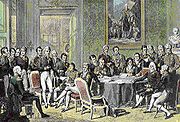
theorists have posited that great power status can be characterized into power capabilities, spatial aspects, and status dimensions. Sometimes the status of great powers is formally recognized in conferences such as the Congress of Vienna
Congress of Vienna
The Congress of Vienna was a conference of ambassadors of European states chaired by Klemens Wenzel von Metternich, and held in Vienna from September, 1814 to June, 1815. The objective of the Congress was to settle the many issues arising from the French Revolutionary Wars, the Napoleonic Wars,...
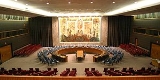
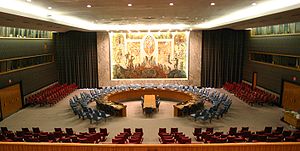
or an international structure such as the United Nations Security Council
United Nations Security Council
The United Nations Security Council is one of the principal organs of the United Nations and is charged with the maintenance of international peace and security. Its powers, outlined in the United Nations Charter, include the establishment of peacekeeping operations, the establishment of...
.
The term "great power" was first used to represent the most important powers in Europe
Europe
Europe is, by convention, one of the world's seven continents. Comprising the westernmost peninsula of Eurasia, Europe is generally 'divided' from Asia to its east by the watershed divides of the Ural and Caucasus Mountains, the Ural River, the Caspian and Black Seas, and the waterways connecting...
during the post-Napoleonic
Napoleon I of France
Napoleon Bonaparte was a French military and political leader during the latter stages of the French Revolution.As Napoleon I, he was Emperor of the French from 1804 to 1815...
era. The formalization of the division between small powers
Small powers
There is a considerable literature on the foreign policy challenges of non-great powers, termed variously as middle powers, small states, regional powers, secondary powers and the like. The formalization of the division between small and great powers came about with the signing of the Treaty of...
and great powers came about with the signing of the Treaty of Chaumont
Treaty of Chaumont
The Treaty of Chaumont was a rejected cease-fire offered by the Allies of the Sixth Coalition to Napoleon Bonaparte in 1814.Following discussions in late February 1814, representatives of Austria, Prussia, Russia, and Great Britain reconvened a meeting at Chaumont, Haute-Marne on 1 March 1814...
in 1814. Since then, the international balance of power
Balance of power in international relations
In international relations, a balance of power exists when there is parity or stability between competing forces. The concept describes a state of affairs in the international system and explains the behavior of states in that system...
has shifted numerous times, most dramatically during World War I
World War I
World War I , which was predominantly called the World War or the Great War from its occurrence until 1939, and the First World War or World War I thereafter, was a major war centred in Europe that began on 28 July 1914 and lasted until 11 November 1918...
and World War II
World War II
World War II, or the Second World War , was a global conflict lasting from 1939 to 1945, involving most of the world's nations—including all of the great powers—eventually forming two opposing military alliances: the Allies and the Axis...
. While some nations are widely considered to be great powers, there is no definitive list of them.
Characteristics
There are no set or defined characteristics of a great power. These characteristics have often been treated as empirical, self-evident to the assessor. However, this approach has the disadvantage of subjectivity. As a result, there have been attempts to derive some common criteria and to treat these as essential elements of great power status.Early writings on the subject tended to judge states by the realist
Realism (international relations)
In the study of international relations, Realism or political realism prioritizes national interest and security over ideology, moral concerns and social reconstructions...
criterion, as expressed by the historian A. J. P. Taylor
A. J. P. Taylor
Alan John Percivale Taylor, FBA was a British historian of the 20th century and renowned academic who became well known to millions through his popular television lectures.-Early life:...
when he noted that "The test of a great power is the test of strength for war." Later writers have expanded this test, attempting to define power in terms of overall military, economic, and political capacity. Kenneth Waltz
Kenneth Waltz
Kenneth Neal Waltz is a member of the faculty at the University of California, Berkeley and Columbia University and one of the most prominent scholars of international relations alive today...
, the founder of the neorealist theory of international relations, uses a set of five criteria to determine great power: population and territory; resource endowment; economic capability; political stability and competence; and military strength. These expanded criteria can be divided into three heads: power capabilities, spatial aspects, and status.
Power dimensions
This aspect has received mixed treatment, with some confusion as to the degree of power required. Writers have approached the concept of great power with differing conceptualizations of the world situation, from multi-polarity to overwhelming hegemony
Hegemony
Hegemony is an indirect form of imperial dominance in which the hegemon rules sub-ordinate states by the implied means of power rather than direct military force. In Ancient Greece , hegemony denoted the politico–military dominance of a city-state over other city-states...
. In his essay, 'French Diplomacy in the Postwar Period', the French historian Jean-Baptiste Duroselle spoke of the concept of multi-polarity: "A Great power is one which is capable of preserving its own independence against any other single power."
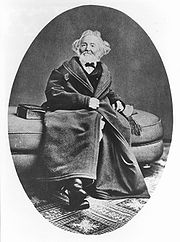
This differed from earlier writers, notably from Leopold von Ranke
Leopold von Ranke
Leopold von Ranke was a German historian, considered one of the founders of modern source-based history. Ranke set the standards for much of later historical writing, introducing such ideas as reliance on primary sources , an emphasis on narrative history and especially international politics .-...
, who clearly had a different idea of the world situation. In his essay 'The Great Powers', written in 1833, von Ranke wrote: "If one could establish as a definition of a Great power that it must be able to maintain itself against all others, even when they are united, then Frederick has raised Prussia to that position." These positions have been the subject of criticism.
Spatial dimension
All states have a geographic scope of interests, actions, or projected power. This is a crucial factor in distinguishing a great power from a regional power; by definition the scope of a regional power is restricted to its region. It has been suggested that a great power should be possessed of actual influence throughout the scope of the prevailing international system. Arnold J. ToynbeeArnold J. Toynbee
Arnold Joseph Toynbee CH was a British historian whose twelve-volume analysis of the rise and fall of civilizations, A Study of History, 1934–1961, was a synthesis of world history, a metahistory based on universal rhythms of rise, flowering and decline, which examined history from a global...
, for example, observes that "Great power may be defined as a political force exerting an effect co-extensive with the widest range of the society in which it operates. The Great powers of 1914 were 'world-powers' because Western society had recently become 'world-wide'."
Other suggestions have been made that a great power should have the capacity to engage in extra-regional affairs and that a great power ought to be possessed of extra-regional interests, two propositions which are often closely connected.
Status dimension
Formal or informal acknowledgment of a nation's great-power status has also been a criterion for being a great power. As political scientist George ModelskiGeorge Modelski
George Modelski is Professor of Political Science Emeritus in the University of Washington. Modelski has done work on long-term processes in global politics and economics, as well as the world urban macrodynamics and world system evolution.-Books:*Globalization as Evolutionary Process: Modeling...
notes, "The status of Great power is sometimes confused with the condition of being powerful, The office, as it is known, did in fact evolve from the role played by the great military states in earlier periods ... But the Great power system institutionalizes the position of the powerful state in a web of rights and obligations."
This approach restricts analysis to the post-Congress of Vienna epoch; it being there that great powers were first formally recognized. In the absence of such a formal act of recognition it has been suggested that great power status can arise by implication, by judging the nature of a state's relations with other great powers.
A further option is to examine a state's willingness to act as a great power. As a nation will seldom declare that it is acting as such, this usually entails a retrospective examination of state conduct. As a result this is of limited use in establishing the nature of contemporary powers, at least not without the exercise of subjective observation.
Other important criteria throughout history are that great powers should have enough influence to be included in discussions of political and diplomatic questions of the day, and have influence on the final outcome and resolution. Historically, when major political questions were addressed, several great powers met to discuss them. Before the era of groups like the United Nations, participants of such meetings were not officially named, but were decided based on their great power status. These were conferences which settled important questions based on major historical events. This might mean deciding the political resolution of various geographical and nationalist claims following a major conflict, or other contexts.
There are several historical conferences and treaties which display this pattern, such as the Congress of Vienna
Congress of Vienna
The Congress of Vienna was a conference of ambassadors of European states chaired by Klemens Wenzel von Metternich, and held in Vienna from September, 1814 to June, 1815. The objective of the Congress was to settle the many issues arising from the French Revolutionary Wars, the Napoleonic Wars,...
, the Congress of Berlin
Congress of Berlin
The Congress of Berlin was a meeting of the European Great Powers' and the Ottoman Empire's leading statesmen in Berlin in 1878. In the wake of the Russo-Turkish War of 1877–78, the meeting's aim was to reorganize the countries of the Balkans...
, the discussions of the Treaty of Versailles
Treaty of Versailles
The Treaty of Versailles was one of the peace treaties at the end of World War I. It ended the state of war between Germany and the Allied Powers. It was signed on 28 June 1919, exactly five years after the assassination of Archduke Franz Ferdinand. The other Central Powers on the German side of...
which redrew the map of Europe, and the Treaty of Westphalia.
History
Concert of Europe
The Concert of Europe , also known as the Congress System after the Congress of Vienna, was the balance of power that existed in Europe from the end of the Napoleonic Wars to the outbreak of World War I , albeit with major alterations after the revolutions of 1848...
as an attempt to preserve peace after the years of Napoleonic Wars
Napoleonic Wars
The Napoleonic Wars were a series of wars declared against Napoleon's French Empire by opposing coalitions that ran from 1803 to 1815. As a continuation of the wars sparked by the French Revolution of 1789, they revolutionised European armies and played out on an unprecedented scale, mainly due to...
.
Lord Castlereagh, the British Foreign Secretary
Secretary of State for Foreign and Commonwealth Affairs
The Secretary of State for Foreign and Commonwealth Affairs, commonly referred to as the Foreign Secretary, is a senior member of Her Majesty's Government heading the Foreign and Commonwealth Office and regarded as one of the Great Offices of State...
, first used the term in its diplomatic context, in a letter sent on February 13, 1814: "It affords me great satisfaction to acquaint you that there is every prospect of the Congress terminating with a general accord and Guarantee between the Great powers of Europe, with a determination to support the arrangement agreed upon, and to turn the general influence and if necessary the general arms against the Power that shall first attempt to disturb the Continental peace."
The Congress of Vienna consisted of five main powers: the United Kingdom
United Kingdom of Great Britain and Ireland
The United Kingdom of Great Britain and Ireland was the formal name of the United Kingdom during the period when what is now the Republic of Ireland formed a part of it....
, the Austrian Empire
Austrian Empire
The Austrian Empire was a modern era successor empire, which was centered on what is today's Austria and which officially lasted from 1804 to 1867. It was followed by the Empire of Austria-Hungary, whose proclamation was a diplomatic move that elevated Hungary's status within the Austrian Empire...
, Prussia
Prussia
Prussia was a German kingdom and historic state originating out of the Duchy of Prussia and the Margraviate of Brandenburg. For centuries, the House of Hohenzollern ruled Prussia, successfully expanding its size by way of an unusually well-organized and effective army. Prussia shaped the history...
, France
France
The French Republic , The French Republic , The French Republic , (commonly known as France , is a unitary semi-presidential republic in Western Europe with several overseas territories and islands located on other continents and in the Indian, Pacific, and Atlantic oceans. Metropolitan France...
, and Russia
Russian Empire
The Russian Empire was a state that existed from 1721 until the Russian Revolution of 1917. It was the successor to the Tsardom of Russia and the predecessor of the Soviet Union...
. These five primary participants constituted the original great powers as we know the term today. Other powers, such as Spain
Spain
Spain , officially the Kingdom of Spain languages]] under the European Charter for Regional or Minority Languages. In each of these, Spain's official name is as follows:;;;;;;), is a country and member state of the European Union located in southwestern Europe on the Iberian Peninsula...
, Portugal
Kingdom of Portugal
The Kingdom of Portugal was Portugal's general designation under the monarchy. The kingdom was located in the west of the Iberian Peninsula, Europe and existed from 1139 to 1910...
, and Sweden
Sweden
Sweden , officially the Kingdom of Sweden , is a Nordic country on the Scandinavian Peninsula in Northern Europe. Sweden borders with Norway and Finland and is connected to Denmark by a bridge-tunnel across the Öresund....
were consulted on certain specific issues, but they were not full participants. Hanover
Kingdom of Hanover
The Kingdom of Hanover was established in October 1814 by the Congress of Vienna, with the restoration of George III to his Hanoverian territories after the Napoleonic era. It succeeded the former Electorate of Brunswick-Lüneburg , and joined with 38 other sovereign states in the German...
, Bavaria
Bavaria
Bavaria, formally the Free State of Bavaria is a state of Germany, located in the southeast of Germany. With an area of , it is the largest state by area, forming almost 20% of the total land area of Germany...
, and Württemberg
Württemberg
Württemberg , formerly known as Wirtemberg or Wurtemberg, is an area and a former state in southwestern Germany, including parts of the regions Swabia and Franconia....
were also consulted on issues relating to Germany.
Of the five original great powers recognised at the Congress of Vienna, only France and the United Kingdom have maintained that status throughout to the present day, although France was conquered and occupied during World War II. After the Congress of Vienna, the British Empire
British Empire
The British Empire comprised the dominions, colonies, protectorates, mandates and other territories ruled or administered by the United Kingdom. It originated with the overseas colonies and trading posts established by England in the late 16th and early 17th centuries. At its height, it was the...
emerged as the pre-eminent power, due to its navy and the extent of its territories, which signalled the beginning of the Pax Britannica
Pax Britannica
Pax Britannica was the period of relative peace in Europe when the British Empire controlled most of the key maritime trade routes and enjoyed unchallenged sea power...
and of The Great Game
The Great Game
The Great Game or Tournament of Shadows in Russia, were terms for the strategic rivalry and conflict between the British Empire and the Russian Empire for supremacy in Central Asia. The classic Great Game period is generally regarded as running approximately from the Russo-Persian Treaty of 1813...
between Britain and Russia. The Balance of power between the Great Powers became a major influence in European politics, prompting Otto von Bismarck
Otto von Bismarck
Otto Eduard Leopold, Prince of Bismarck, Duke of Lauenburg , simply known as Otto von Bismarck, was a Prussian-German statesman whose actions unified Germany, made it a major player in world affairs, and created a balance of power that kept Europe at peace after 1871.As Minister President of...
to say "All politics reduces itself to this formula: try to be one of three, as long as the world is governed by the unstable equilibrium of five great powers."
Over time, the relative power of these five nations fluctuated, which by the dawn of the 20th century had served to create an entirely different balance of power. Some, such as the United Kingdom and Prussia (as part of the newly formed German state
German Empire
The German Empire refers to Germany during the "Second Reich" period from the unification of Germany and proclamation of Wilhelm I as German Emperor on 18 January 1871, to 1918, when it became a federal republic after defeat in World War I and the abdication of the Emperor, Wilhelm II.The German...
), experienced continued economic growth and political power. Others, such as Russia and Austria-Hungary, stagnated. At the same time, other states were emerging and expanding in power, largely through the process of industrialization. The foremost of these emerging powers were Japan
Empire of Japan
The Empire of Japan is the name of the state of Japan that existed from the Meiji Restoration on 3 January 1868 to the enactment of the post-World War II Constitution of...
after the Meiji Restoration
Meiji Restoration
The , also known as the Meiji Ishin, Revolution, Reform or Renewal, was a chain of events that restored imperial rule to Japan in 1868...
and the United States
United States
The United States of America is a federal constitutional republic comprising fifty states and a federal district...
after its civil war
American Civil War
The American Civil War was a civil war fought in the United States of America. In response to the election of Abraham Lincoln as President of the United States, 11 southern slave states declared their secession from the United States and formed the Confederate States of America ; the other 25...
, both of which had been minor powers in 1815. By the dawn of the 20th century the balance of world power had changed substantially since the Congress of Vienna. The Eight-Nation Alliance
Eight-Nation Alliance
The Eight-Nation Alliance was an alliance of Austria-Hungary, France, Germany, Italy, Japan, Russia, the United Kingdom, and the United States whose military forces intervened in China to suppress the anti-foreign Boxers and relieve the siege of the diplomatic legations in Beijing .- Events :The...
was a belligerent alliance of eight nations against the Boxer Rebellion
Boxer Rebellion
The Boxer Rebellion, also called the Boxer Uprising by some historians or the Righteous Harmony Society Movement in northern China, was a proto-nationalist movement by the "Righteous Harmony Society" , or "Righteous Fists of Harmony" or "Society of Righteous and Harmonious Fists" , in China between...
in China. It formed in 1900 and consisted of the five Congress powers plus Italy
Kingdom of Italy (1861–1946)
The Kingdom of Italy was a state forged in 1861 by the unification of Italy under the influence of the Kingdom of Sardinia, which was its legal predecessor state...
, Japan, and the United States, representing the great powers at the beginning of 20th century.
Great powers at war
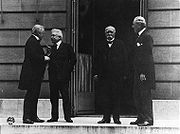
World War I
World War I , which was predominantly called the World War or the Great War from its occurrence until 1939, and the First World War or World War I thereafter, was a major war centred in Europe that began on 28 July 1914 and lasted until 11 November 1918...
and the resulting treaties of Versailles
Treaty of Versailles
The Treaty of Versailles was one of the peace treaties at the end of World War I. It ended the state of war between Germany and the Allied Powers. It was signed on 28 June 1919, exactly five years after the assassination of Archduke Franz Ferdinand. The other Central Powers on the German side of...
, St-Germain, and Trianon
Treaty of Trianon
The Treaty of Trianon was the peace agreement signed in 1920, at the end of World War I, between the Allies of World War I and Hungary . The treaty greatly redefined and reduced Hungary's borders. From its borders before World War I, it lost 72% of its territory, which was reduced from to...
witnessed Great Britain, France, Italy, Japan and the United States as the chief arbiters of the new world order. In the aftermath of World War I the German Empire was defeated, the Austria-Hungarian empire was divided into new, less powerful states and the Russian Empire
Russian Empire
The Russian Empire was a state that existed from 1721 until the Russian Revolution of 1917. It was the successor to the Tsardom of Russia and the predecessor of the Soviet Union...
fell to a revolution. During the Treaty of Versailles
Treaty of Versailles
The Treaty of Versailles was one of the peace treaties at the end of World War I. It ended the state of war between Germany and the Allied Powers. It was signed on 28 June 1919, exactly five years after the assassination of Archduke Franz Ferdinand. The other Central Powers on the German side of...
the "Big Three" — France, Great Britain and the United States — held noticeably more power and influence on the proceedings and outcome of the treaty than Italy or Japan. The victorious great powers also gained an acknowledgement of their status through permanent seats at the League of Nations
League of Nations
The League of Nations was an intergovernmental organization founded as a result of the Paris Peace Conference that ended the First World War. It was the first permanent international organization whose principal mission was to maintain world peace...
Council, where they acted as a type of executive
Executive (government)
Executive branch of Government is the part of government that has sole authority and responsibility for the daily administration of the state bureaucracy. The division of power into separate branches of government is central to the idea of the separation of powers.In many countries, the term...
body directing the Assembly of the League. But the Council began with only four permanent members — Great Britain, France, Italy, and Japan – because the United States, meant to be the fifth permanent member, left because the US Senate
United States Senate
The United States Senate is the upper house of the bicameral legislature of the United States, and together with the United States House of Representatives comprises the United States Congress. The composition and powers of the Senate are established in Article One of the U.S. Constitution. Each...
voted on 19 March 1920 against the ratification
Ratification
Ratification is a principal's approval of an act of its agent where the agent lacked authority to legally bind the principal. The term applies to private contract law, international treaties, and constitutionals in federations such as the United States and Canada.- Private law :In contract law, the...
of the Treaty of Versailles
Treaty of Versailles
The Treaty of Versailles was one of the peace treaties at the end of World War I. It ended the state of war between Germany and the Allied Powers. It was signed on 28 June 1919, exactly five years after the assassination of Archduke Franz Ferdinand. The other Central Powers on the German side of...
, thus preventing American participation in the League.
When World War II
World War II
World War II, or the Second World War , was a global conflict lasting from 1939 to 1945, involving most of the world's nations—including all of the great powers—eventually forming two opposing military alliances: the Allies and the Axis...
started in 1939, it divided the world into two alliances – the Allies
Allies of World War II
The Allies of World War II were the countries that opposed the Axis powers during the Second World War . Former Axis states contributing to the Allied victory are not considered Allied states...
(the United Kingdom
United Kingdom
The United Kingdom of Great Britain and Northern IrelandIn the United Kingdom and Dependencies, other languages have been officially recognised as legitimate autochthonous languages under the European Charter for Regional or Minority Languages...
and France at first, followed in 1941 by the Soviet Union
Soviet Union
The Soviet Union , officially the Union of Soviet Socialist Republics , was a constitutionally socialist state that existed in Eurasia between 1922 and 1991....
, the United States, and China); and the Axis powers
Axis Powers
The Axis powers , also known as the Axis alliance, Axis nations, Axis countries, or just the Axis, was an alignment of great powers during the mid-20th century that fought World War II against the Allies. It began in 1936 with treaties of friendship between Germany and Italy and between Germany and...
consisting of Germany, Italy and Japan.Even though the book: The Economics of World War II lists 7 great powers at the start of 1939 (the British Empire, the Empire of Japan, France, the Kingdom of Italy, Nazi Germany, the Soviet Union and the United States) This book focuses only on 6 of the 7 great powers that fought during World War II. This is because France surrendered shortly after the war began. The end of World War II saw the United States, United Kingdom, and Soviet Union emerge as the primary victors. The importance of the Republic of China
Republic of China
The Republic of China , commonly known as Taiwan , is a unitary sovereign state located in East Asia. Originally based in mainland China, the Republic of China currently governs the island of Taiwan , which forms over 99% of its current territory, as well as Penghu, Kinmen, Matsu and other minor...
and France was acknowledged by their inclusion, along with the other three, in the group of countries allotted permanent seats in the United Nations Security Council
United Nations Security Council
The United Nations Security Council is one of the principal organs of the United Nations and is charged with the maintenance of international peace and security. Its powers, outlined in the United Nations Charter, include the establishment of peacekeeping operations, the establishment of...
.
Since the end of the World Wars, the term "great power" has been joined by a number of other power classifications. Foremost among these is the concept of the superpower
Superpower
A superpower is a state with a dominant position in the international system which has the ability to influence events and its own interests and project power on a worldwide scale to protect those interests...
, used to describe those nations with overwhelming power and influence in the rest of the world. It was first coined in 1944 by William T.R. Fox
William Thornton Rickert Fox
William Thornton Rickert Fox , generally known as W.T.R. Fox or as William T.R. Fox, was an American foreign policy professor and international relations theoretician at the Columbia University . He is perhaps mostly known as the coiner of the term superpower in 1944...
and according to him, there were three superpowers: the British Empire
British Empire
The British Empire comprised the dominions, colonies, protectorates, mandates and other territories ruled or administered by the United Kingdom. It originated with the overseas colonies and trading posts established by England in the late 16th and early 17th centuries. At its height, it was the...
, the United States
United States
The United States of America is a federal constitutional republic comprising fifty states and a federal district...
, and the Soviet Union
Soviet Union
The Soviet Union , officially the Union of Soviet Socialist Republics , was a constitutionally socialist state that existed in Eurasia between 1922 and 1991....
. But by the mid 1950s the British Empire lost its superpower status, leaving the United States and the Soviet Union as the world's superpowers.The 1956 Suez Crisis
Suez Crisis
The Suez Crisis, also referred to as the Tripartite Aggression, Suez War was an offensive war fought by France, the United Kingdom, and Israel against Egypt beginning on 29 October 1956. Less than a day after Israel invaded Egypt, Britain and France issued a joint ultimatum to Egypt and Israel,...
suggested that the United Kingdom, financially weakened by two world wars, could not then pursue its foreign policy
Foreign policy
A country's foreign policy, also called the foreign relations policy, consists of self-interest strategies chosen by the state to safeguard its national interests and to achieve its goals within international relations milieu. The approaches are strategically employed to interact with other countries...
objectives on an equal footing with the new superpowers without sacrificing convertibility
Convertibility
Convertibility is the quality that allows money or other financial instruments to be converted into other liquid stores of value. Convertibility is an important factor in international trade, where instruments valued in different currencies must be exchanged....
of its reserve currency
Reserve currency
A reserve currency, or anchor currency, is a currency that is held in significant quantities by many governments and institutions as part of their foreign exchange reserves...
as a central goal of policy. – from superpower
Superpower
A superpower is a state with a dominant position in the international system which has the ability to influence events and its own interests and project power on a worldwide scale to protect those interests...
cited by Adam Klug and Gregor W. Smith, 'Suez and Sterling', Explorations in Economic History, Vol. 36, No. 3 (July 1999), pp. 181–203. The term middle power
Middle power
Middle power is a term used in the field of international relations to describe states that are not superpowers or great powers, but still have large or moderate influence and international recognition. There is no single specific definition of which countries are middle powers.-Definition:There is...
has emerged for those nations which exercise a degree of global influence, but are insufficient to be decisive on international affairs. Regional power
Regional power
In international relations, a regional power is a state that has power within a geographic region. States which wield unrivaled power and influence within a region of the world possess regional hegemony.-Characteristics:...
s are those whose influence is generally confined to their region of the world.
During the Cold War
Cold War
The Cold War was the continuing state from roughly 1946 to 1991 of political conflict, military tension, proxy wars, and economic competition between the Communist World—primarily the Soviet Union and its satellite states and allies—and the powers of the Western world, primarily the United States...
, the Asian power of Japan and the European powers of the United Kingdom, France, and West Germany
West Germany
West Germany is the common English, but not official, name for the Federal Republic of Germany or FRG in the period between its creation in May 1949 to German reunification on 3 October 1990....
rebuilt their economies. France and the United Kingdom maintained technologically advanced armed forces with power projection capabilities and maintain large defence budgets to this day. Yet, as the Cold War continued, authorities began to question if France and the United Kingdom could retain their long-held statuses as great powers.
China, with the world's largest population, has slowly risen to great power status, with large growth in economic and military power in the post-war period. After 1949, the Republic of China began to lose its recognition as the sole legitimate government of China by the other great powers, in favour of the People's Republic of China
People's Republic of China
China , officially the People's Republic of China , is the most populous country in the world, with over 1.3 billion citizens. Located in East Asia, the country covers approximately 9.6 million square kilometres...
. Subsequently, in 1971, it lost its permanent seat at the UN Security Council to the People's Republic of China.
Aftermath of the Cold War
China, France, Russia, the United Kingdom and the United States are referred to as great powers. These five nations are the only states to have permanent seats with veto power on the UN Security Council. They are also the recognized "Nuclear Weapons States" under the Nuclear Non-Proliferation TreatyNuclear Non-Proliferation Treaty
The Treaty on the Non-Proliferation of Nuclear Weapons, commonly known as the Non-Proliferation Treaty or NPT, is a landmark international treaty whose objective is to prevent the spread of nuclear weapons and weapons technology, to promote cooperation in the peaceful uses of nuclear energy and to...
.
After the dissolution of the Soviet Union
Dissolution of the Soviet Union
The dissolution of the Soviet Union was the disintegration of the federal political structures and central government of the Union of Soviet Socialist Republics , resulting in the independence of all fifteen republics of the Soviet Union between March 11, 1990 and December 25, 1991...
, its UN Security Council permanent seat was transferred to the Russian Federation in 1991, as its successor state. The newly formed Russian Federation emerged on the level of a great power, leaving the United States as the only remaining global superpowerThe fall of the Berlin wall
Berlin Wall
The Berlin Wall was a barrier constructed by the German Democratic Republic starting on 13 August 1961, that completely cut off West Berlin from surrounding East Germany and from East Berlin...
and the breakup of the Soviet Union
Soviet Union
The Soviet Union , officially the Union of Soviet Socialist Republics , was a constitutionally socialist state that existed in Eurasia between 1922 and 1991....
left the United States as the only remaining superpower in the 90's. (although some support a multipolar world view).
However, there is no unanimous agreement among authorities as to the current status of these powers or what precisely defines a "great" power. Sources have at times referred to China, France, the United Kingdom, and Russia as "middle powers".
Japan and Germany are usually classified as middle powers.
Germany is presented by Chancellor Angela Merkel
Angela Merkel
Angela Dorothea Merkel is the current Chancellor of Germany . Merkel, elected to the Bundestag from Mecklenburg-Vorpommern, has been the chairwoman of the Christian Democratic Union since 2000, and chairwoman of the CDU-CSU parliamentary coalition from 2002 to 2005.From 2005 to 2009 she led a...
, former president Johannes Rau
Johannes Rau
Johannes Rau was a German politician of the SPD. He was President of Germany from 1 July 1999 until 30 June 2004, and Minister-President of North Rhine-Westphalia from 1978 to 1998.-Education and work:...
, and leading media of the country, as a "middle" political power in Europe.
However, they are occasionally referred to as "economic" great powers and grouped with the other great powers,ref>http://www.webcitation.org/5kwqEr8pe despite their lack of permanent seats and veto power on the UN Security Council, nuclear weapons, or strategic military reach.
With continuing European integration
European integration
European integration is the process of industrial, political, legal, economic integration of states wholly or partially in Europe...
, the European Union
European Union
The European Union is an economic and political union of 27 independent member states which are located primarily in Europe. The EU traces its origins from the European Coal and Steel Community and the European Economic Community , formed by six countries in 1958...
is increasingly being seen as a great power in its own right, with representation at the WTO
World Trade Organization
The World Trade Organization is an organization that intends to supervise and liberalize international trade. The organization officially commenced on January 1, 1995 under the Marrakech Agreement, replacing the General Agreement on Tariffs and Trade , which commenced in 1948...
and at G8
G8
The Group of Eight is a forum, created by France in 1975, for the governments of seven major economies: Canada, France, Germany, Italy, Japan, the United Kingdom, and the United States. In 1997, the group added Russia, thus becoming the G8...
and G-20
G-20 major economies
The Group of Twenty Finance Ministers and Central Bank Governors is a group of finance ministers and central bank governors from 20 major economies: 19 countries plus the European Union, which is represented by the President of the European Council and by the European Central Bank...
summits. This is most notable in areas where the European Union has exclusive competence (i.e. economic affairs). It also reflects a non-traditional conception of Europe's world role as a global "civilian power", exercising collective influence in the functional spheres of trade and diplomacy, as an alternative to military dominance. The European Union is not a sovereign state
Sovereign state
A sovereign state, or simply, state, is a state with a defined territory on which it exercises internal and external sovereignty, a permanent population, a government, and the capacity to enter into relations with other sovereign states. It is also normally understood to be a state which is neither...
and has limited scope in the areas of foreign affairs and defence policy. These remain with the union's member states, which include three great powers in aggregate or economic terms: France, the United Kingdom, and Germany.
See also
- Energy superpowerEnergy superpowerThe term energy superpower does not have a clear definition. It has come to be used to refer to a nation that supplies large amounts of energy resources to a significant number of other states, and which therefore has the potential to influence world markets to gain a political or economic...
- G7 and G8G8The Group of Eight is a forum, created by France in 1975, for the governments of seven major economies: Canada, France, Germany, Italy, Japan, the United Kingdom, and the United States. In 1997, the group added Russia, thus becoming the G8...
respectively - Historical powersHistorical powersHistorical powers include great powers, nations, or empires in history.The term "Great power" represent the most important world powers. In a modern context, recognised great powers came about first in Europe during the post-Napoleonic era. The formalization of the division between small powers and...
- Middle powerMiddle powerMiddle power is a term used in the field of international relations to describe states that are not superpowers or great powers, but still have large or moderate influence and international recognition. There is no single specific definition of which countries are middle powers.-Definition:There is...
- Potential superpowersPotential superpowersA potential superpower is a state or a political and economic entity that is speculated to be, or to be in the process of becoming, a superpower at some point in the 21st century. Previously, it was considered by many sources that only the United States fulfilled the criteria to be considered a...
- Regional powerRegional powerIn international relations, a regional power is a state that has power within a geographic region. States which wield unrivaled power and influence within a region of the world possess regional hegemony.-Characteristics:...
- SuperpowerSuperpowerA superpower is a state with a dominant position in the international system which has the ability to influence events and its own interests and project power on a worldwide scale to protect those interests...
(and HyperpowerHyperpowerA hyperpower is a state that dominates all other states in every sphere of activity. A hyperpower is traditionally considered to be one step higher than a superpower. The definition and use of the term varies....
)
Further reading
- The Tragedy of Great Power Politics by John J. Mearsheimer
- Theory of International Politics by Kenneth N Waltz
- World Politics: Trend and Transformation by Eugene R. Witkopf
- The Rise and Fall of the Great PowersThe Rise and Fall of the Great PowersThe Rise and Fall of the Great Powers: Economic Change and Military Conflict From 1500 to 2000, by Paul Kennedy, first published in 1987, explores the politics and economics of the Great Powers from 1500 to 1980 and the reason for their decline...
by Paul Kennedy - France and the Nazi Threat: The Collapse of French Diplomacy 1932–1939 by Jean-Baptiste Duroselle, Introduction by Anthony Adamthwaite (Enigma Books, ISBN 1-929631-15-4)