

Great Royal Wife

Encyclopedia
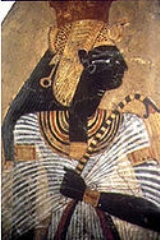
Great Royal Wife or Chief King's Wife (Ancient Egyptian: ḥmt nswt wrt) is the term used to refer to the chief wife of the pharaoh
of Ancient Egypt
. While most Ancient Egyptians were monogamous
, the pharaoh would have had other, lesser wives and concubines in addition to the Great Royal Wife. This arrangement would allow the pharaoh to enter into diplomatic marriages with the daughters of allies, as was the custom of ancient kings.
In the past the order of succession
in Ancient Egypt was thought to pass through the royal women. This theory, referred to as the Heiress Theory, has been rejected ever since the 1980s and is now not accepted by Egyptologists. The throne likely just passed to the eldest living son of the pharaoh. The mother of the heir to the throne was not always the Great Royal Wife, but once a pharaoh was crowned, it was possible to grant the mother of the king the title of Great Royal Wife, along with other titles. Examples include Iset
, the mother of Thutmosis III, Tiaa, the mother of Tuthmosis IV and Mutemwia, the mother of Amenhotep III
.
Meretseger
, the chief wife of Senusret III
, is the earliest queen whose name appears with this title; she also was the first consort
known to write her name in a cartouche
. However, she is only attested in the New Kingdom
so the title might be an anachronism. Perhaps the first holder of its title was Nubkhaes of the Second Intermediate Period.
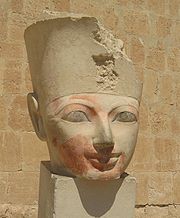 A special place in the history of great royal wives was taken by Hatshepsut
. She was Great Royal Wife to her half-brother Thutmose II
. During this time Hatshepsut also became a God's Wife of Amun
(the highest ranking priestess in the temple of Amun in Karnak). After the death of her husband, she became regent
because of the minority of her stepson, the only male heir (born to Iset), who eventually would become Thutmose III
. While he was still very young, however, Hatshepsut was crowned as pharaoh
and ruled very successfully in her own right for many years. Although other women before her had ruled Egypt, Hatshepsut was the first woman to take the title, pharaoh, as it was a new term being used for the rulers, not having been used before the eighteenth dynasty. When she became pharaoh, she designated her daughter, Neferure
, as God's Wife of Amun
to perform the duties of a priestess. Her daughter may have been the great royal wife of Thutmose III but there is no clear evidence for this proposed marriage.
Pharaoh
Pharaoh is a title used in many modern discussions of the ancient Egyptian rulers of all periods. The title originates in the term "pr-aa" which means "great house" and describes the royal palace...
of Ancient Egypt
Ancient Egypt
Ancient Egypt was an ancient civilization of Northeastern Africa, concentrated along the lower reaches of the Nile River in what is now the modern country of Egypt. Egyptian civilization coalesced around 3150 BC with the political unification of Upper and Lower Egypt under the first pharaoh...
. While most Ancient Egyptians were monogamous
Monogamy
Monogamy /Gr. μονός+γάμος - one+marriage/ a form of marriage in which an individual has only one spouse at any one time. In current usage monogamy often refers to having one sexual partner irrespective of marriage or reproduction...
, the pharaoh would have had other, lesser wives and concubines in addition to the Great Royal Wife. This arrangement would allow the pharaoh to enter into diplomatic marriages with the daughters of allies, as was the custom of ancient kings.
In the past the order of succession
Order of succession
An order of succession is a formula or algorithm that determines who inherits an office upon the death, resignation, or removal of its current occupant.-Monarchies and nobility:...
in Ancient Egypt was thought to pass through the royal women. This theory, referred to as the Heiress Theory, has been rejected ever since the 1980s and is now not accepted by Egyptologists. The throne likely just passed to the eldest living son of the pharaoh. The mother of the heir to the throne was not always the Great Royal Wife, but once a pharaoh was crowned, it was possible to grant the mother of the king the title of Great Royal Wife, along with other titles. Examples include Iset
Iset (queen)
Iset was a queen of the eighteenth dynasty of Egypt, and she was named after goddess Isis. She was a secondary wife or concubine of Thutmose II.- Biography :Iset was the mother of Thutmose III, the only son of Thutmose II...
, the mother of Thutmosis III, Tiaa, the mother of Tuthmosis IV and Mutemwia, the mother of Amenhotep III
Amenhotep III
Amenhotep III also known as Amenhotep the Magnificent was the ninth pharaoh of the Eighteenth dynasty. According to different authors, he ruled Egypt from June 1386 to 1349 BC or June 1388 BC to December 1351 BC/1350 BC after his father Thutmose IV died...
.
Meretseger
Meretseger (queen)
Meretseger was an Ancient Egyptian queen consort.-Biography:Meretseger appears in sources of the New Kingdom as the wife of Senusret III. According to that she would be the first Egyptian queen consort to bear the title Great Royal Wife, which became the standard title for chief wives of pharaohs...
, the chief wife of Senusret III
Senusret III
Khakhaure Senusret III was a pharaoh of Egypt. He ruled from 1878 BC to 1839 BC, and was the fifth monarch of the Twelfth Dynasty of the Middle Kingdom. Among his achievements was the building of the Sisostris Canal...
, is the earliest queen whose name appears with this title; she also was the first consort
Queen consort
A queen consort is the wife of a reigning king. A queen consort usually shares her husband's rank and holds the feminine equivalent of the king's monarchical titles. Historically, queens consort do not share the king regnant's political and military powers. Most queens in history were queens consort...
known to write her name in a cartouche
Cartouche
In Egyptian hieroglyphs, a cartouche is an ellipse with a horizontal line at one end, indicating that the text enclosed is a royal name, coming into use during the beginning of the Fourth Dynasty under Pharaoh Sneferu, replacing the earlier serekh...
. However, she is only attested in the New Kingdom
New Kingdom
The New Kingdom of Egypt, also referred to as the Egyptian Empire is the period in ancient Egyptian history between the 16th century BC and the 11th century BC, covering the Eighteenth, Nineteenth, and Twentieth Dynasties of Egypt....
so the title might be an anachronism. Perhaps the first holder of its title was Nubkhaes of the Second Intermediate Period.
Hatshepsut
Hatshepsut also Hatchepsut; meaning Foremost of Noble Ladies;1508–1458 BC) was the fifth pharaoh of the eighteenth dynasty of Ancient Egypt...
. She was Great Royal Wife to her half-brother Thutmose II
Thutmose II
Thutmose II was the fourth Pharaoh of the Eighteenth dynasty of Egypt. He built some minor monuments and initiated at least two minor campaigns but did little else during his rule and was probably strongly influenced by his wife, Hatshepsut...
. During this time Hatshepsut also became a God's Wife of Amun
God's Wife of Amun
God's Wife of Amun was the highest ranking priestess of the Amun cult, an important Ancient Egyptian religious institution centered in Thebes during the Egyptian 25th and 26th dynasties...
(the highest ranking priestess in the temple of Amun in Karnak). After the death of her husband, she became regent
Regent
A regent, from the Latin regens "one who reigns", is a person selected to act as head of state because the ruler is a minor, not present, or debilitated. Currently there are only two ruling Regencies in the world, sovereign Liechtenstein and the Malaysian constitutive state of Terengganu...
because of the minority of her stepson, the only male heir (born to Iset), who eventually would become Thutmose III
Thutmose III
Thutmose III was the sixth Pharaoh of the Eighteenth Dynasty. During the first twenty-two years of Thutmose's reign he was co-regent with his stepmother, Hatshepsut, who was named the pharaoh...
. While he was still very young, however, Hatshepsut was crowned as pharaoh
Pharaoh
Pharaoh is a title used in many modern discussions of the ancient Egyptian rulers of all periods. The title originates in the term "pr-aa" which means "great house" and describes the royal palace...
and ruled very successfully in her own right for many years. Although other women before her had ruled Egypt, Hatshepsut was the first woman to take the title, pharaoh, as it was a new term being used for the rulers, not having been used before the eighteenth dynasty. When she became pharaoh, she designated her daughter, Neferure
Neferure
Neferure was an Egyptian princess of the eighteenth dynasty. She was the daughter of two pharaohs, Hatshepsut and Thutmose II. She served in high offices in the government and the religious administration of Ancient Egypt.-Family:...
, as God's Wife of Amun
God's Wife of Amun
God's Wife of Amun was the highest ranking priestess of the Amun cult, an important Ancient Egyptian religious institution centered in Thebes during the Egyptian 25th and 26th dynasties...
to perform the duties of a priestess. Her daughter may have been the great royal wife of Thutmose III but there is no clear evidence for this proposed marriage.
Middle Kingdom
| Dynasty | Name | Husband | Comments |
|---|---|---|---|
| 12th dynasty Twelfth dynasty of Egypt The twelfth dynasty of ancient Egypt is often combined with Dynasties XI, XIII and XIV under the group title Middle Kingdom.-Rulers:Known rulers of the twelfth dynasty are as follows :... |
Meretseger Meretseger (queen) Meretseger was an Ancient Egyptian queen consort.-Biography:Meretseger appears in sources of the New Kingdom as the wife of Senusret III. According to that she would be the first Egyptian queen consort to bear the title Great Royal Wife, which became the standard title for chief wives of pharaohs... |
Senusret III Senusret III Khakhaure Senusret III was a pharaoh of Egypt. He ruled from 1878 BC to 1839 BC, and was the fifth monarch of the Twelfth Dynasty of the Middle Kingdom. Among his achievements was the building of the Sisostris Canal... |
Apparently the first holder of the title; though not definitively attested to in contemporary sources |
Second Intermediate Period
| Dynasty | Name | Husband | Comments |
|---|---|---|---|
| 13th dynasty Thirteenth dynasty of Egypt The thirteenth dynasty of ancient Egypt is often combined with Dynasties XI, XII and XIV under the group title Middle Kingdom. Other writers separate it from these dynasties and join it to Dynasties XIV through XVII as part of the Second Intermediate Period... |
Nubhotepti Nubhetepti Nubhetepti was an Ancient Egyptian queen with the titles king's wife and king's mother. She is mainly known from scarab seals, which are datable by style to the 13th Dynasty, around 1750 BC. She is also known from a statuette found at Semna. Her husband is unknown. However, king Hor had a daughter... |
Hor Hor Hor was an Egyptian king of the 13th Dynasty. He appears in the Turin King List as Au-ib-Rê. He most likely reigned only for a short time, not long enough to prepare a pyramid, which was in this dynasty still the common burial place for kings.-Burial:... |
|
| 13th dynasty Thirteenth dynasty of Egypt The thirteenth dynasty of ancient Egypt is often combined with Dynasties XI, XII and XIV under the group title Middle Kingdom. Other writers separate it from these dynasties and join it to Dynasties XIV through XVII as part of the Second Intermediate Period... |
Nubkhaes Nubkhaes (13rd dynasty) Nubkhaes was an Ancient Egyptian queen with the titles Great Royal Wife and the one united with the beauty of the white crown. She is so far only known from her family stela now in the Louvre and a few later references. The stela is the main monument of the queen... |
Sobekhotep V Sobekhotep V Sobekhotep V was an Egyptian king of the 13th Dynasty. His birth name was Sobekhotep, and his throne name was MerhotepreSobekhotep V appears in the Turin King List as the successor of Sobekhotep IV. According to this document, he only reigned for four years. Sobekhotep IV was perhaps his father, as... , Sobekhotep VI Sobekhotep VI Sobekhotep VI was an Egyptian king of the 13th Dynasty. His birth name was Sobekhotep, and his throne name was Khahotepre. -External links:* from Digital Egypt... or Wahibre Ibiau Wahibre Ibiau throne name: Wahibrebirth name: IbiauWahibre Ibiau was an Egyptian king of the 13th Dynasty, who reigned for 10 years, 8 months and 29 days according to the Turin King List. He is not known from many contemporary monuments. There are several scarab seals with his name as well as a stela of an... |
|
| 13th dynasty Thirteenth dynasty of Egypt The thirteenth dynasty of ancient Egypt is often combined with Dynasties XI, XII and XIV under the group title Middle Kingdom. Other writers separate it from these dynasties and join it to Dynasties XIV through XVII as part of the Second Intermediate Period... |
Ini Ineni (queen) Ineni was an Ancient Egyptian queen who lived during the Thirteenth Dynasty . She is so far only known from 21 scarabs and a seal impression from Kerma. She had the titles Great Royal Wife and she, who is united with the white crown. She is one of the first ancient Egyptian queens whose name was... |
Merneferre Ai Merneferre Ai Merneferre Ay was an Ancient Egyptian ruler of the Thirteenth dynasty of Egypt. He assumed the throne around 1700 BC... |
|
| 13th dynasty Thirteenth dynasty of Egypt The thirteenth dynasty of ancient Egypt is often combined with Dynasties XI, XII and XIV under the group title Middle Kingdom. Other writers separate it from these dynasties and join it to Dynasties XIV through XVII as part of the Second Intermediate Period... |
Nehyt | ? | Only known from two scarab seals |
| 13th dynasty Thirteenth dynasty of Egypt The thirteenth dynasty of ancient Egypt is often combined with Dynasties XI, XII and XIV under the group title Middle Kingdom. Other writers separate it from these dynasties and join it to Dynasties XIV through XVII as part of the Second Intermediate Period... |
Satsobek Satsobek Satsobek was an Ancient Egyptian queen with the titles Great Royal Wife and the one united with the white crown. She is so far only known from one scarab seal in a private collection. The scarab is datable on stylistical grounds to the Thirteenth Dynasty. Her husband remains unknown... |
? | Only known from one scarab seal |
| 13th dynasty Thirteenth dynasty of Egypt The thirteenth dynasty of ancient Egypt is often combined with Dynasties XI, XII and XIV under the group title Middle Kingdom. Other writers separate it from these dynasties and join it to Dynasties XIV through XVII as part of the Second Intermediate Period... |
Sathathor | ? | Only known from one scarab seal, reading of name not fully certain |
| 16th dynasty Sixteenth dynasty of Egypt The sixteenth dynasty of ancient Egypt was a dynasty of pharaohs that ruled in Upper Egypt for 50 years during the Second Intermediate Period The sixteenth dynasty of ancient Egypt (notated Dynasty XVI) was a dynasty of pharaohs that ruled in Upper Egypt for 50 years during the Second Intermediate... |
Mentuhotep Mentuhotep (queen) Mentuhotep was an Ancient Egyptian queen of the Second Intermediate Period. Her main title was Great Royal Wife. Another title was Khenemetneferhedjet She is only known from her burial equipment found in the 19th century in Thebes. The inscriptions of her coffin were copied, but the original... |
Djehuti Djehuti Djehuti, Djehuty or Thuty was a pharaoh of Ancient Egypt dating to the Second Intermediate period. Djehuti's prenomen, Sekhemre Sementawy, means "The Power of Re who Establishes the Two Lands."... |
|
| 16th dynasty Sixteenth dynasty of Egypt The sixteenth dynasty of ancient Egypt was a dynasty of pharaohs that ruled in Upper Egypt for 50 years during the Second Intermediate Period The sixteenth dynasty of ancient Egypt (notated Dynasty XVI) was a dynasty of pharaohs that ruled in Upper Egypt for 50 years during the Second Intermediate... |
Sitmut | Mentuhotep VI Mentuhotep VI Sankhenre Mentuhotep VI was a Pharaoh of Egypt of the 16th or 17th Theban dynasty based in Upper Egypt during the Second Intermediate Period. He was the successor of Neferhotep III and is assigned a reign of 1 year in the Turin Canon. Mentuhotep VI is attested by a single stela from Thebes... (?) |
|
| 17th dynasty Seventeenth dynasty of Egypt The Fifteenth, Sixteenth and Seventeenth Dynasties of ancient Egypt are often combined under the group title, Second Intermediate Period. The Seventeenth Dynasty dates approximately from 1580 to 1550 BC.-Rulers:... |
Nubkhaes | Sobekemsaf I Sobekemsaf I Sobekemsaf I was an Egyptian king of the Seventeenth dynasty of Egypt who reigned during the Second Intermediate Period, when Egypt was ruled by multiple kings... |
|
| 17th dynasty Seventeenth dynasty of Egypt The Fifteenth, Sixteenth and Seventeenth Dynasties of ancient Egypt are often combined under the group title, Second Intermediate Period. The Seventeenth Dynasty dates approximately from 1580 to 1550 BC.-Rulers:... |
Sobekemsaf | Inyotef VI | Wife of Inyotef VI and sister of an unknown king. Buried in Edfu. |
| 17th dynasty Seventeenth dynasty of Egypt The Fifteenth, Sixteenth and Seventeenth Dynasties of ancient Egypt are often combined under the group title, Second Intermediate Period. The Seventeenth Dynasty dates approximately from 1580 to 1550 BC.-Rulers:... |
Nubemhat | Sobekemsaf II Sobekemsaf II Sobekemsaf II Sekhemrewadjkhaw was a pharaoh of Egypt during the 17th Dynasty. He is attested by a series of inscriptions mentioning a mining expedition to the rock quarries at Wadi Hammamat in the Eastern Desert during his reign. One of the inscriptions is explicitly dated to his Year 7... |
|
| 17th dynasty Seventeenth dynasty of Egypt The Fifteenth, Sixteenth and Seventeenth Dynasties of ancient Egypt are often combined under the group title, Second Intermediate Period. The Seventeenth Dynasty dates approximately from 1580 to 1550 BC.-Rulers:... |
Tetisheri Tetisheri Tetisheri was the matriarch of the Egyptian royal family of the late 17th Dynasty and early 18th Dynasty.-Family:Tetisheri was the daughter of Tjenna and Neferu. The names of Tetisheri's parents are known from mummy bandages found in TT320.... |
Tao I the Elder Tao I the Elder Senakhtenre Tao I was a Pharaoh of Egypt of the Seventeenth dynasty of Egypt based in Upper Egypt during the Second Intermediate Period. He was born c.1605 BC and died c.1560 or 1558 BC at the latest. His prenomen Senakhtenre means "Perpetuated like Re."... |
Mother of Tao II the Brave Tao II the Brave Seqenenre Tao II, , called The Brave, ruled over the last of the local kingdoms of the Theban region of Egypt in the Seventeenth Dynasty during the Second Intermediate Period. He probably was the son and successor to Senaktenre Tao I the Elder and Queen Tetisheri... |
| 17th dynasty Seventeenth dynasty of Egypt The Fifteenth, Sixteenth and Seventeenth Dynasties of ancient Egypt are often combined under the group title, Second Intermediate Period. The Seventeenth Dynasty dates approximately from 1580 to 1550 BC.-Rulers:... |
Ahhotep I Ahhotep I Ahhotep I , was an Ancient Egyptian queen who lived circa 1560- 1530 BC, during the end of the Seventeenth dynasty of ancient Egypt, she was the daughter of Queen Tetisheri and Senakhtenre Tao I, and was likely the sister, as well as the wife, of pharaoh Seqenenre Tao... |
Tao II the Brave Tao II the Brave Seqenenre Tao II, , called The Brave, ruled over the last of the local kingdoms of the Theban region of Egypt in the Seventeenth Dynasty during the Second Intermediate Period. He probably was the son and successor to Senaktenre Tao I the Elder and Queen Tetisheri... |
Mother of Ahmose I Ahmose I Ahmose I was a pharaoh of ancient Egypt and the founder of the Eighteenth dynasty. He was a member of the Theban royal house, the son of pharaoh Tao II Seqenenre and brother of the last pharaoh of the Seventeenth dynasty, King Kamose... and Ahmose-Nefertari Ahmose-Nefertari Ahmose-Nefertari of Ancient Egypt was a Queen of Egypt. She was a daughter of Seqenenre Tao II and Ahhotep I, and royal sister and the great royal wife of pharaoh, Ahmose I. She was the mother of king Amenhotep I and may have served as his regent when he was young... |
New Kingdom
| Dynasty | Name | Husband | Comments |
|---|---|---|---|
| 18th dynasty Eighteenth dynasty of Egypt The eighteenth dynasty of ancient Egypt is perhaps the best known of all the dynasties of ancient Egypt... |
Ahmose-Nefertari Ahmose-Nefertari Ahmose-Nefertari of Ancient Egypt was a Queen of Egypt. She was a daughter of Seqenenre Tao II and Ahhotep I, and royal sister and the great royal wife of pharaoh, Ahmose I. She was the mother of king Amenhotep I and may have served as his regent when he was young... |
Ahmose I Ahmose I Ahmose I was a pharaoh of ancient Egypt and the founder of the Eighteenth dynasty. He was a member of the Theban royal house, the son of pharaoh Tao II Seqenenre and brother of the last pharaoh of the Seventeenth dynasty, King Kamose... |
Mother of Amenhotep I Amenhotep I Amenhotep I was the second Pharaoh of the 18th dynasty of Egypt. His reign is generally dated from 1526 to 1506 BC. He was born to Ahmose I and Ahmose-Nefertari, but had at least two elder brothers, Ahmose-ankh and Ahmose Sapair, and was not expected to inherit the throne... and Ahmose-Meritamon Ahmose-Meritamon Ahmose-Meritamun was a Queen of Egypt during the early Eighteenth dynasty of Egypt. She was both the sister and the wife of Pharaoh Amenhotep I... |
| 18th dynasty Eighteenth dynasty of Egypt The eighteenth dynasty of ancient Egypt is perhaps the best known of all the dynasties of ancient Egypt... |
Sitkamose | Ahmose I Ahmose I Ahmose I was a pharaoh of ancient Egypt and the founder of the Eighteenth dynasty. He was a member of the Theban royal house, the son of pharaoh Tao II Seqenenre and brother of the last pharaoh of the Seventeenth dynasty, King Kamose... (?) |
|
| 18th dynasty Eighteenth dynasty of Egypt The eighteenth dynasty of ancient Egypt is perhaps the best known of all the dynasties of ancient Egypt... |
Ahmose-Henuttamehu Ahmose-Henuttamehu Ahmose-Henuttamehu was a princess and queen of the late 17th-early 18th dynasties of Egypt.-Family:Ahmose-Henuttamehu was a daughter of Pharaoh Seqenenre Tao II by his sister-wife Ahmose Inhapy... |
Ahmose I Ahmose I Ahmose I was a pharaoh of ancient Egypt and the founder of the Eighteenth dynasty. He was a member of the Theban royal house, the son of pharaoh Tao II Seqenenre and brother of the last pharaoh of the Seventeenth dynasty, King Kamose... (?) |
Daughter of Queen Inhapi. |
| 18th dynasty Eighteenth dynasty of Egypt The eighteenth dynasty of ancient Egypt is perhaps the best known of all the dynasties of ancient Egypt... |
Ahmose-Meritamon Ahmose-Meritamon Ahmose-Meritamun was a Queen of Egypt during the early Eighteenth dynasty of Egypt. She was both the sister and the wife of Pharaoh Amenhotep I... |
Amenhotep I Amenhotep I Amenhotep I was the second Pharaoh of the 18th dynasty of Egypt. His reign is generally dated from 1526 to 1506 BC. He was born to Ahmose I and Ahmose-Nefertari, but had at least two elder brothers, Ahmose-ankh and Ahmose Sapair, and was not expected to inherit the throne... |
|
| 18th dynasty Eighteenth dynasty of Egypt The eighteenth dynasty of ancient Egypt is perhaps the best known of all the dynasties of ancient Egypt... |
Ahmose | Thutmose I Thutmose I Thutmose I was the third Pharaoh of the 18th dynasty of Egypt. He was given the throne after the death of the previous king Amenhotep I. During his reign, he campaigned deep into the Levant and Nubia, pushing the borders of Egypt further than ever before... |
Mother of Hatshepsut Hatshepsut Hatshepsut also Hatchepsut; meaning Foremost of Noble Ladies;1508–1458 BC) was the fifth pharaoh of the eighteenth dynasty of Ancient Egypt... |
| 18th dynasty Eighteenth dynasty of Egypt The eighteenth dynasty of ancient Egypt is perhaps the best known of all the dynasties of ancient Egypt... |
Hatshepsut Hatshepsut Hatshepsut also Hatchepsut; meaning Foremost of Noble Ladies;1508–1458 BC) was the fifth pharaoh of the eighteenth dynasty of Ancient Egypt... |
Thutmose II Thutmose II Thutmose II was the fourth Pharaoh of the Eighteenth dynasty of Egypt. He built some minor monuments and initiated at least two minor campaigns but did little else during his rule and was probably strongly influenced by his wife, Hatshepsut... |
second great royal wife to her father, Thutmose I, and later, ruling pharaoh with her daughter, Neferure Neferure Neferure was an Egyptian princess of the eighteenth dynasty. She was the daughter of two pharaohs, Hatshepsut and Thutmose II. She served in high offices in the government and the religious administration of Ancient Egypt.-Family:... , as great royal wife |
| 18th dynasty Eighteenth dynasty of Egypt The eighteenth dynasty of ancient Egypt is perhaps the best known of all the dynasties of ancient Egypt... |
Iset Iset (queen) Iset was a queen of the eighteenth dynasty of Egypt, and she was named after goddess Isis. She was a secondary wife or concubine of Thutmose II.- Biography :Iset was the mother of Thutmose III, the only son of Thutmose II... |
Thutmose II Thutmose II Thutmose II was the fourth Pharaoh of the Eighteenth dynasty of Egypt. He built some minor monuments and initiated at least two minor campaigns but did little else during his rule and was probably strongly influenced by his wife, Hatshepsut... |
Received the title from her son Thutmose III Thutmose III Thutmose III was the sixth Pharaoh of the Eighteenth Dynasty. During the first twenty-two years of Thutmose's reign he was co-regent with his stepmother, Hatshepsut, who was named the pharaoh... |
| 18th dynasty Eighteenth dynasty of Egypt The eighteenth dynasty of ancient Egypt is perhaps the best known of all the dynasties of ancient Egypt... |
Neferure Neferure Neferure was an Egyptian princess of the eighteenth dynasty. She was the daughter of two pharaohs, Hatshepsut and Thutmose II. She served in high offices in the government and the religious administration of Ancient Egypt.-Family:... (?) |
Thutmose III Thutmose III Thutmose III was the sixth Pharaoh of the Eighteenth Dynasty. During the first twenty-two years of Thutmose's reign he was co-regent with his stepmother, Hatshepsut, who was named the pharaoh... |
No evidence documents their marriage |
| 18th dynasty Eighteenth dynasty of Egypt The eighteenth dynasty of ancient Egypt is perhaps the best known of all the dynasties of ancient Egypt... |
Satiah Satiah Satiah was an Ancient Egyptian queen, the Great Royal Wife of Thutmose III.-Family:Satiah was the daughter of the royal nurse Ipu. It is possible that her father was the important official Ahmose Pen-Nekhebet... |
Thutmose III Thutmose III Thutmose III was the sixth Pharaoh of the Eighteenth Dynasty. During the first twenty-two years of Thutmose's reign he was co-regent with his stepmother, Hatshepsut, who was named the pharaoh... |
|
| 18th dynasty Eighteenth dynasty of Egypt The eighteenth dynasty of ancient Egypt is perhaps the best known of all the dynasties of ancient Egypt... |
Merytre-Hatshepsut Merytre-Hatshepsut Queen Merytre-Hatshepsut was the principal wife of Pharaoh Thutmose III and the mother of Amenhotep II.-Family:Merytre-Hatshepsut was of noble birth... |
Thutmose III Thutmose III Thutmose III was the sixth Pharaoh of the Eighteenth Dynasty. During the first twenty-two years of Thutmose's reign he was co-regent with his stepmother, Hatshepsut, who was named the pharaoh... |
Mother of Amenhotep II Amenhotep II Amenhotep II was the seventh Pharaoh of the 18th dynasty of Egypt. Amenhotep inherited a vast kingdom from his father Thutmose III, and held it by means of a few military campaigns in Syria; however, he fought much less than his father, and his reign saw the effective cessation of hostilities... |
| 18th dynasty Eighteenth dynasty of Egypt The eighteenth dynasty of ancient Egypt is perhaps the best known of all the dynasties of ancient Egypt... |
Tiaa Tiaa Tiaa or Tiya or Tiy was the third wife of Pharaoh Seti II, after Takhat II and Twosret. She is thought by some to have been Syrian . She was once thought to be the mother of Rameses-Siptah , the next Pharaoh of Egypt after the death of his predecessor Seti II... |
Amenhotep II Amenhotep II Amenhotep II was the seventh Pharaoh of the 18th dynasty of Egypt. Amenhotep inherited a vast kingdom from his father Thutmose III, and held it by means of a few military campaigns in Syria; however, he fought much less than his father, and his reign saw the effective cessation of hostilities... |
Received the title from her son Thutmose IV Thutmose IV Thutmose IV was the 8th Pharaoh of the 18th dynasty of Egypt, who ruled in approximately the 14th century BC... after her husband's death - Amenhotep II tried to break the royal lineage by not recording any of his wives, who may not have been royal, and Tiaa was identified only later, by her son |
| 18th dynasty Eighteenth dynasty of Egypt The eighteenth dynasty of ancient Egypt is perhaps the best known of all the dynasties of ancient Egypt... |
Nefertari Nefertari (18th dynasty) Nefertari was a queen of the Eighteenth dynasty of Egypt, the first Great Royal Wife of Pharaoh Thutmose IV.Her origins are unknown, it is likely that she was a commoner. On several depictions she and Queen Mother Tiaa are depicted as goddesses accompanying Thutmose... |
Thutmose IV Thutmose IV Thutmose IV was the 8th Pharaoh of the 18th dynasty of Egypt, who ruled in approximately the 14th century BC... |
|
| 18th dynasty Eighteenth dynasty of Egypt The eighteenth dynasty of ancient Egypt is perhaps the best known of all the dynasties of ancient Egypt... |
Iaret Iaret Iaret was a Great Royal Wife from the middle of the Eighteenth Dynasty of Ancient Egypt.-Family:laret was the daughter of Amunhotep II and wife of Thutmose IV... |
Thutmose IV Thutmose IV Thutmose IV was the 8th Pharaoh of the 18th dynasty of Egypt, who ruled in approximately the 14th century BC... |
|
| 18th dynasty Eighteenth dynasty of Egypt The eighteenth dynasty of ancient Egypt is perhaps the best known of all the dynasties of ancient Egypt... |
Tenettepihu | Thutmose IV Thutmose IV Thutmose IV was the 8th Pharaoh of the 18th dynasty of Egypt, who ruled in approximately the 14th century BC... ? |
Known from a shabti and funerary statue. Thought to date to the time of Tuthmosis IV? |
| 18th dynasty Eighteenth dynasty of Egypt The eighteenth dynasty of ancient Egypt is perhaps the best known of all the dynasties of ancient Egypt... |
Mutemwia | Thutmose IV Thutmose IV Thutmose IV was the 8th Pharaoh of the 18th dynasty of Egypt, who ruled in approximately the 14th century BC... |
Received the title from her son, Amenhotep III Amenhotep III Amenhotep III also known as Amenhotep the Magnificent was the ninth pharaoh of the Eighteenth dynasty. According to different authors, he ruled Egypt from June 1386 to 1349 BC or June 1388 BC to December 1351 BC/1350 BC after his father Thutmose IV died... , after her husband's death to make his own birth seem royal |
| 18th dynasty Eighteenth dynasty of Egypt The eighteenth dynasty of ancient Egypt is perhaps the best known of all the dynasties of ancient Egypt... |
Tiye Tiye Tiye was the daughter of Yuya and Tjuyu . She became the Great Royal Wife of the Egyptian pharaoh Amenhotep III.... |
Amenhotep III Amenhotep III Amenhotep III also known as Amenhotep the Magnificent was the ninth pharaoh of the Eighteenth dynasty. According to different authors, he ruled Egypt from June 1386 to 1349 BC or June 1388 BC to December 1351 BC/1350 BC after his father Thutmose IV died... |
Mother of Akhenaten Akhenaten Akhenaten also spelled Echnaton,Ikhnaton,and Khuenaten;meaning "living spirit of Aten") known before the fifth year of his reign as Amenhotep IV , was a Pharaoh of the Eighteenth dynasty of Egypt who ruled for 17 years and died perhaps in 1336 BC or 1334 BC... |
| 18th dynasty Eighteenth dynasty of Egypt The eighteenth dynasty of ancient Egypt is perhaps the best known of all the dynasties of ancient Egypt... |
Sitamun Sitamun Sitamun was an Ancient Egyptian princess and queen consort during the 18th dynasty.-Family:... |
Amenhotep III Amenhotep III Amenhotep III also known as Amenhotep the Magnificent was the ninth pharaoh of the Eighteenth dynasty. According to different authors, he ruled Egypt from June 1386 to 1349 BC or June 1388 BC to December 1351 BC/1350 BC after his father Thutmose IV died... |
Eldest daughter of Amenhotep III Amenhotep III Amenhotep III also known as Amenhotep the Magnificent was the ninth pharaoh of the Eighteenth dynasty. According to different authors, he ruled Egypt from June 1386 to 1349 BC or June 1388 BC to December 1351 BC/1350 BC after his father Thutmose IV died... and Tiye Tiye Tiye was the daughter of Yuya and Tjuyu . She became the Great Royal Wife of the Egyptian pharaoh Amenhotep III.... |
| 18th dynasty Eighteenth dynasty of Egypt The eighteenth dynasty of ancient Egypt is perhaps the best known of all the dynasties of ancient Egypt... |
Iset Iset (daughter of Amenhotep III) - Family :Isis was one of the daughters of Ancient Egyptian pharaoh Amenhotep III of the 18th dynasty and his Great Royal Wife Tiye. She was a sister of Akhenaten. Iset's other brother was Crown Prince Thutmose.... |
Amenhotep III Amenhotep III Amenhotep III also known as Amenhotep the Magnificent was the ninth pharaoh of the Eighteenth dynasty. According to different authors, he ruled Egypt from June 1386 to 1349 BC or June 1388 BC to December 1351 BC/1350 BC after his father Thutmose IV died... |
Daughter of Amenhotep III Amenhotep III Amenhotep III also known as Amenhotep the Magnificent was the ninth pharaoh of the Eighteenth dynasty. According to different authors, he ruled Egypt from June 1386 to 1349 BC or June 1388 BC to December 1351 BC/1350 BC after his father Thutmose IV died... and Tiye Tiye Tiye was the daughter of Yuya and Tjuyu . She became the Great Royal Wife of the Egyptian pharaoh Amenhotep III.... |
| 18th dynasty Eighteenth dynasty of Egypt The eighteenth dynasty of ancient Egypt is perhaps the best known of all the dynasties of ancient Egypt... |
Nebetnehat Nebetnehat Nebetnehat was an ancient Egyptian queen consort during the mid-18th dynasty. She was the Great Royal Wife of an unidentified pharaoh... |
Unidentified | Known from cartouche found on canopic fragments. She lived during the mid to late 18th dynasty |
| 18th dynasty Eighteenth dynasty of Egypt The eighteenth dynasty of ancient Egypt is perhaps the best known of all the dynasties of ancient Egypt... |
Nefertiti Nefertiti Nefertiti was the Great Royal Wife of the Egyptian Pharaoh Akhenaten. Nefertiti and her husband were known for a religious revolution, in which they started to worship one god only... |
Akhenaten Akhenaten Akhenaten also spelled Echnaton,Ikhnaton,and Khuenaten;meaning "living spirit of Aten") known before the fifth year of his reign as Amenhotep IV , was a Pharaoh of the Eighteenth dynasty of Egypt who ruled for 17 years and died perhaps in 1336 BC or 1334 BC... |
Possible daughter of Ay Ay Ay was the penultimate Pharaoh of Ancient Egypt's 18th dynasty. He held the throne of Egypt for a brief four-year period , although he was a close advisor to two and perhaps three of the pharaohs who ruled before him and was the power behind the throne during Tutankhamun's reign... |
| 18th dynasty Eighteenth dynasty of Egypt The eighteenth dynasty of ancient Egypt is perhaps the best known of all the dynasties of ancient Egypt... |
Meritaten Meritaten Meritaten also spelled Merytaten or Meryetaten was an ancient Egyptian queen of the eighteenth dynasty, who held the position of Great Royal Wife to Pharaoh Smenkhkare, who may have been a brother or son of Akhenaten... |
Smenkhkare Smenkhkare Smenkhkare was an ephemeral Ancient Egyptian Pharaoh of the late Eighteenth Dynasty, of whom very little is known for certain... |
Daughter of Akhenaten Akhenaten Akhenaten also spelled Echnaton,Ikhnaton,and Khuenaten;meaning "living spirit of Aten") known before the fifth year of his reign as Amenhotep IV , was a Pharaoh of the Eighteenth dynasty of Egypt who ruled for 17 years and died perhaps in 1336 BC or 1334 BC... and Nefertiti Nefertiti Nefertiti was the Great Royal Wife of the Egyptian Pharaoh Akhenaten. Nefertiti and her husband were known for a religious revolution, in which they started to worship one god only... |
| 18th dynasty Eighteenth dynasty of Egypt The eighteenth dynasty of ancient Egypt is perhaps the best known of all the dynasties of ancient Egypt... |
Ankhesenamen | Tutankhamen | Daughter of Akhenaten Akhenaten Akhenaten also spelled Echnaton,Ikhnaton,and Khuenaten;meaning "living spirit of Aten") known before the fifth year of his reign as Amenhotep IV , was a Pharaoh of the Eighteenth dynasty of Egypt who ruled for 17 years and died perhaps in 1336 BC or 1334 BC... and Nefertiti Nefertiti Nefertiti was the Great Royal Wife of the Egyptian Pharaoh Akhenaten. Nefertiti and her husband were known for a religious revolution, in which they started to worship one god only... |
| 18th dynasty Eighteenth dynasty of Egypt The eighteenth dynasty of ancient Egypt is perhaps the best known of all the dynasties of ancient Egypt... |
Tey Tey Tey was the wife of Kheperkheprure Ay , who was the penultimate pharaoh of Ancient Egypt's 18th dynasty. She was also the wetnurse of Queen Nefertiti.... |
Ay Ay Ay was the penultimate Pharaoh of Ancient Egypt's 18th dynasty. He held the throne of Egypt for a brief four-year period , although he was a close advisor to two and perhaps three of the pharaohs who ruled before him and was the power behind the throne during Tutankhamun's reign... |
|
| 18th dynasty Eighteenth dynasty of Egypt The eighteenth dynasty of ancient Egypt is perhaps the best known of all the dynasties of ancient Egypt... |
Mutnedjmet Mutnedjmet Mutnedjmet an Ancient Egyptian queen, the Great Royal Wife of Horemheb, the last ruler of the Eighteenth Dynasty... |
Horemheb Horemheb Horemheb was the last Pharaoh of the 18th Dynasty from either 1319 BC to late 1292 BC, or 1306 to late 1292 BC although he was not related to the preceding royal family and is believed to have been of common birth.Before he became pharaoh, Horemheb was the commander in chief... |
Probable daughter of Ay Ay Ay was the penultimate Pharaoh of Ancient Egypt's 18th dynasty. He held the throne of Egypt for a brief four-year period , although he was a close advisor to two and perhaps three of the pharaohs who ruled before him and was the power behind the throne during Tutankhamun's reign... and Tey Tey Tey was the wife of Kheperkheprure Ay , who was the penultimate pharaoh of Ancient Egypt's 18th dynasty. She was also the wetnurse of Queen Nefertiti.... |
| 19th dynasty Nineteenth dynasty of Egypt The Nineteenth Dynasty of ancient Egypt was one of the periods of the Egyptian New Kingdom. Founded by Vizier Ramesses I, whom Pharaoh Horemheb chose as his successor to the throne, this dynasty is best known for its military conquests in Palestine, Lebanon, and Syria.The warrior kings of the... |
Sitre | Ramesses I Ramesses I Menpehtyre Ramesses I was the founding Pharaoh of Ancient Egypt's 19th dynasty. The dates for his short reign are not completely known but the time-line of late 1292-1290 BC is frequently cited as well as 1295-1294 BC... |
Mother of Seti I Seti I Menmaatre Seti I was a Pharaoh of Ancient Egypt , the son of Ramesses I and Queen Sitre, and the father of Ramesses II... |
| 19th dynasty Nineteenth dynasty of Egypt The Nineteenth Dynasty of ancient Egypt was one of the periods of the Egyptian New Kingdom. Founded by Vizier Ramesses I, whom Pharaoh Horemheb chose as his successor to the throne, this dynasty is best known for its military conquests in Palestine, Lebanon, and Syria.The warrior kings of the... |
Tuya Queen Tuya Queen Tuya was the wife of Pharaoh Seti I of Egypt and mother of Princess Tia, Ramesses II and perhaps Henutmire. She was the daughter of Raia who was a military officer based on his title of Lieutenant of the chariotry... |
Seti I Seti I Menmaatre Seti I was a Pharaoh of Ancient Egypt , the son of Ramesses I and Queen Sitre, and the father of Ramesses II... |
Mother of Ramesses II Ramesses II Ramesses II , referred to as Ramesses the Great, was the third Egyptian pharaoh of the Nineteenth dynasty. He is often regarded as the greatest, most celebrated, and most powerful pharaoh of the Egyptian Empire... |
| 19th dynasty Nineteenth dynasty of Egypt The Nineteenth Dynasty of ancient Egypt was one of the periods of the Egyptian New Kingdom. Founded by Vizier Ramesses I, whom Pharaoh Horemheb chose as his successor to the throne, this dynasty is best known for its military conquests in Palestine, Lebanon, and Syria.The warrior kings of the... |
Nefertari Nefertari Nefertari also known as Nefertari Merytmut was one of the Great Royal Wives of Ramesses the Great. Nefertari means 'Beautiful Companion' and Meritmut means 'Beloved of [the Goddess] Mut'. She is one of the best known Egyptian queens, next to Cleopatra, Nefertiti and Hatshepsut... |
Ramesses II Ramesses II Ramesses II , referred to as Ramesses the Great, was the third Egyptian pharaoh of the Nineteenth dynasty. He is often regarded as the greatest, most celebrated, and most powerful pharaoh of the Egyptian Empire... |
|
| 19th dynasty Nineteenth dynasty of Egypt The Nineteenth Dynasty of ancient Egypt was one of the periods of the Egyptian New Kingdom. Founded by Vizier Ramesses I, whom Pharaoh Horemheb chose as his successor to the throne, this dynasty is best known for its military conquests in Palestine, Lebanon, and Syria.The warrior kings of the... |
Isetnofret Isetnofret Isetnofret was one of the Great Royal Wives of Pharaoh Ramesses II and was the mother of his heir, Merneptah... |
Ramesses II Ramesses II Ramesses II , referred to as Ramesses the Great, was the third Egyptian pharaoh of the Nineteenth dynasty. He is often regarded as the greatest, most celebrated, and most powerful pharaoh of the Egyptian Empire... |
Mother of Merenptah |
| 19th dynasty Nineteenth dynasty of Egypt The Nineteenth Dynasty of ancient Egypt was one of the periods of the Egyptian New Kingdom. Founded by Vizier Ramesses I, whom Pharaoh Horemheb chose as his successor to the throne, this dynasty is best known for its military conquests in Palestine, Lebanon, and Syria.The warrior kings of the... |
Bintanath Bintanath Bintanath was the firstborn daughter and later Great Royal Wife of the Egyptian Pharaoh Ramesses II.-Family:Bintanath was likely born during the reign of her grandfather Seti I. Her mother was Isetnofret, one of the two most prominent wives of Ramesses II... |
Ramesses II Ramesses II Ramesses II , referred to as Ramesses the Great, was the third Egyptian pharaoh of the Nineteenth dynasty. He is often regarded as the greatest, most celebrated, and most powerful pharaoh of the Egyptian Empire... |
Eldest daughter of Ramesses II Ramesses II Ramesses II , referred to as Ramesses the Great, was the third Egyptian pharaoh of the Nineteenth dynasty. He is often regarded as the greatest, most celebrated, and most powerful pharaoh of the Egyptian Empire... and Isetnofret Isetnofret Isetnofret was one of the Great Royal Wives of Pharaoh Ramesses II and was the mother of his heir, Merneptah... |
| 19th dynasty Nineteenth dynasty of Egypt The Nineteenth Dynasty of ancient Egypt was one of the periods of the Egyptian New Kingdom. Founded by Vizier Ramesses I, whom Pharaoh Horemheb chose as his successor to the throne, this dynasty is best known for its military conquests in Palestine, Lebanon, and Syria.The warrior kings of the... |
Meritamen Meritamen Meritamen was a daughter and later Great Royal Wife of Pharaoh Ramesses the Great.- Family :... |
Ramesses II Ramesses II Ramesses II , referred to as Ramesses the Great, was the third Egyptian pharaoh of the Nineteenth dynasty. He is often regarded as the greatest, most celebrated, and most powerful pharaoh of the Egyptian Empire... |
Daughter of Ramesses II Ramesses II Ramesses II , referred to as Ramesses the Great, was the third Egyptian pharaoh of the Nineteenth dynasty. He is often regarded as the greatest, most celebrated, and most powerful pharaoh of the Egyptian Empire... and Nefertari Nefertari Nefertari also known as Nefertari Merytmut was one of the Great Royal Wives of Ramesses the Great. Nefertari means 'Beautiful Companion' and Meritmut means 'Beloved of [the Goddess] Mut'. She is one of the best known Egyptian queens, next to Cleopatra, Nefertiti and Hatshepsut... |
| 19th dynasty Nineteenth dynasty of Egypt The Nineteenth Dynasty of ancient Egypt was one of the periods of the Egyptian New Kingdom. Founded by Vizier Ramesses I, whom Pharaoh Horemheb chose as his successor to the throne, this dynasty is best known for its military conquests in Palestine, Lebanon, and Syria.The warrior kings of the... |
Nebettawy Nebettawy Nebettawy was an Ancient Egyptian princess and queen, the fifth daughter and one of the eight Great Royal Wives of Pharaoh Ramesses II.-Life:... |
Ramesses II Ramesses II Ramesses II , referred to as Ramesses the Great, was the third Egyptian pharaoh of the Nineteenth dynasty. He is often regarded as the greatest, most celebrated, and most powerful pharaoh of the Egyptian Empire... |
Daughter of Ramesses II Ramesses II Ramesses II , referred to as Ramesses the Great, was the third Egyptian pharaoh of the Nineteenth dynasty. He is often regarded as the greatest, most celebrated, and most powerful pharaoh of the Egyptian Empire... and Nefertari Nefertari Nefertari also known as Nefertari Merytmut was one of the Great Royal Wives of Ramesses the Great. Nefertari means 'Beautiful Companion' and Meritmut means 'Beloved of [the Goddess] Mut'. She is one of the best known Egyptian queens, next to Cleopatra, Nefertiti and Hatshepsut... |
| 19th dynasty Nineteenth dynasty of Egypt The Nineteenth Dynasty of ancient Egypt was one of the periods of the Egyptian New Kingdom. Founded by Vizier Ramesses I, whom Pharaoh Horemheb chose as his successor to the throne, this dynasty is best known for its military conquests in Palestine, Lebanon, and Syria.The warrior kings of the... |
Henutmire Henutmire Henutmire was an Ancient Egyptian princess and queen, one of the eight Great Royal Wives of Pharaoh Ramesses II.-Life:She is possibly the third and youngest child of Seti I and Queen Tuya, and the younger sister of Ramesses II and Princess Tia. This theory is based on a statue of Queen Tuya, now in... |
Ramesses II Ramesses II Ramesses II , referred to as Ramesses the Great, was the third Egyptian pharaoh of the Nineteenth dynasty. He is often regarded as the greatest, most celebrated, and most powerful pharaoh of the Egyptian Empire... |
Sister or daughter of Ramesses II Ramesses II Ramesses II , referred to as Ramesses the Great, was the third Egyptian pharaoh of the Nineteenth dynasty. He is often regarded as the greatest, most celebrated, and most powerful pharaoh of the Egyptian Empire... |
| 19th dynasty Nineteenth dynasty of Egypt The Nineteenth Dynasty of ancient Egypt was one of the periods of the Egyptian New Kingdom. Founded by Vizier Ramesses I, whom Pharaoh Horemheb chose as his successor to the throne, this dynasty is best known for its military conquests in Palestine, Lebanon, and Syria.The warrior kings of the... |
Maathorneferure Maathorneferure Maathorneferure was an Ancient Egyptian queen, the Great Royal Wife of Ramesses II.-Family:Maathorneferure was a daughter of the Hittite king Hattusili III and his wife Queen Pudukhepa... |
Ramesses II Ramesses II Ramesses II , referred to as Ramesses the Great, was the third Egyptian pharaoh of the Nineteenth dynasty. He is often regarded as the greatest, most celebrated, and most powerful pharaoh of the Egyptian Empire... |
Hittite princess |
| 19th dynasty Nineteenth dynasty of Egypt The Nineteenth Dynasty of ancient Egypt was one of the periods of the Egyptian New Kingdom. Founded by Vizier Ramesses I, whom Pharaoh Horemheb chose as his successor to the throne, this dynasty is best known for its military conquests in Palestine, Lebanon, and Syria.The warrior kings of the... |
Isetnofret | Merenptah | Sister or niece of her husband |
| 19th dynasty Nineteenth dynasty of Egypt The Nineteenth Dynasty of ancient Egypt was one of the periods of the Egyptian New Kingdom. Founded by Vizier Ramesses I, whom Pharaoh Horemheb chose as his successor to the throne, this dynasty is best known for its military conquests in Palestine, Lebanon, and Syria.The warrior kings of the... |
Tawosret | Seti II Seti II Seti II , was the fifth ruler of the Nineteenth dynasty of Egypt and reigned from 1203 BC to 1197 BC. His throne name, Userkheperure Setepenre, meant "Powerful are the Manifestations of Re, Chosen by Re.' He was the son of Merneptah and wife Isisnofret and sat on the throne during a... |
Later pharaoh |
| 19th dynasty Nineteenth dynasty of Egypt The Nineteenth Dynasty of ancient Egypt was one of the periods of the Egyptian New Kingdom. Founded by Vizier Ramesses I, whom Pharaoh Horemheb chose as his successor to the throne, this dynasty is best known for its military conquests in Palestine, Lebanon, and Syria.The warrior kings of the... |
Takhat Takhat Takhat was an ancient Egyptian princess and queen of the 19th dynasty, the mother of the usurper pharaoh Amenmesse.There are not many facts known about her other than that she was Amenmesse's mother. She bore the titles King's Daughter and King's Wife. She might have been identical with Takhat, a... |
Seti II Seti II Seti II , was the fifth ruler of the Nineteenth dynasty of Egypt and reigned from 1203 BC to 1197 BC. His throne name, Userkheperure Setepenre, meant "Powerful are the Manifestations of Re, Chosen by Re.' He was the son of Merneptah and wife Isisnofret and sat on the throne during a... ? |
Depicted as the wife of Sety II on a (usurped) statue. May have been the mother of Amenmesse? |
| 20th dynasty Twentieth dynasty of Egypt The Eighteenth, Nineteenth, and Twentieth Dynasties of ancient Egypt are often combined under the group title, New Kingdom. This dynasty is considered to be the last one of the New Kingdom of Egypt, and was followed by the Third Intermediate Period.... |
Tiye-Mereniset | Setnakhte Setnakhte Userkhaure-setepenre Setnakhte was the first Pharaoh of the Twentieth Dynasty of the New Kingdom of Ancient Egypt and the father of Ramesses III.... |
Mother of Ramesses III Ramesses III Usimare Ramesses III was the second Pharaoh of the Twentieth Dynasty and is considered to be the last great New Kingdom king to wield any substantial authority over Egypt. He was the son of Setnakhte and Queen Tiy-Merenese. Ramesses III is believed to have reigned from March 1186 to April 1155 BCE... |
| 20th dynasty Twentieth dynasty of Egypt The Eighteenth, Nineteenth, and Twentieth Dynasties of ancient Egypt are often combined under the group title, New Kingdom. This dynasty is considered to be the last one of the New Kingdom of Egypt, and was followed by the Third Intermediate Period.... |
Iset Ta-Hemdjert Iset Ta-Hemdjert Iset Ta-Hemdjert or Isis Ta-Hemdjert, simply called Isis in her tomb, was an Ancient Egyptian queen of the twentieth dynasty; the Great Royal Wife of Ramesses III and the Royal Mother of Ramesses VI.... |
Ramesses III Ramesses III Usimare Ramesses III was the second Pharaoh of the Twentieth Dynasty and is considered to be the last great New Kingdom king to wield any substantial authority over Egypt. He was the son of Setnakhte and Queen Tiy-Merenese. Ramesses III is believed to have reigned from March 1186 to April 1155 BCE... |
Mother of Ramesses IV Ramesses IV Heqamaatre Ramesses IV was the third pharaoh of the Twentieth Dynasty of the New Kingdom of Ancient Egypt. His name prior to assuming the crown was Amonhirkhopshef... and Ramesses VI Ramesses VI Ramesses VI was the fifth ruler of the Twentieth dynasty of Egypt who reigned from 1145 BC to 1137 BC and a son of Ramesses III by Iset Ta-Hemdjert... |
| 20th dynasty Twentieth dynasty of Egypt The Eighteenth, Nineteenth, and Twentieth Dynasties of ancient Egypt are often combined under the group title, New Kingdom. This dynasty is considered to be the last one of the New Kingdom of Egypt, and was followed by the Third Intermediate Period.... |
(Dua-)Tentopet | Ramesses IV Ramesses IV Heqamaatre Ramesses IV was the third pharaoh of the Twentieth Dynasty of the New Kingdom of Ancient Egypt. His name prior to assuming the crown was Amonhirkhopshef... ? |
Possibly a wife of Ramses IV and the mother of Ramses V. Buried in QV 74. |
| 20th dynasty Twentieth dynasty of Egypt The Eighteenth, Nineteenth, and Twentieth Dynasties of ancient Egypt are often combined under the group title, New Kingdom. This dynasty is considered to be the last one of the New Kingdom of Egypt, and was followed by the Third Intermediate Period.... |
Ta-Henutwati | Ramesses V Ramesses V Usermare Sekhepenre Ramesses V was the fourth pharaoh of the Twentieth dynasty of Egypt and was the son of Ramesses IV and Queen Duatentopet.- Reign :... ? |
Queen mentioned in the Wilbour Papyrus. |
| 20th dynasty Twentieth dynasty of Egypt The Eighteenth, Nineteenth, and Twentieth Dynasties of ancient Egypt are often combined under the group title, New Kingdom. This dynasty is considered to be the last one of the New Kingdom of Egypt, and was followed by the Third Intermediate Period.... |
Nubkhesbed Nubkhesbed Nubkhesbed was an ancient Egyptian queen of the 20th dynasty. She was the Great Royal Wife of Pharaoh Ramesses VI and mother of Pharaoh Ramesses VII, Princess Iset and Princes Amenherkhepshef and Panebenkemyt.... |
Ramesses V Ramesses V Usermare Sekhepenre Ramesses V was the fourth pharaoh of the Twentieth dynasty of Egypt and was the son of Ramesses IV and Queen Duatentopet.- Reign :... |
Mother of Princess Isis, who would later be the God’s Wife of Amun. |
| 20th dynasty Twentieth dynasty of Egypt The Eighteenth, Nineteenth, and Twentieth Dynasties of ancient Egypt are often combined under the group title, New Kingdom. This dynasty is considered to be the last one of the New Kingdom of Egypt, and was followed by the Third Intermediate Period.... |
Baketwernel Baketwernel Baketwernel was an ancient Egyptian queen during the 20th dynasty. She is likely to have been the Great Royal Wife of Ramesses IX. She was buried in the tomb KV10, built for the late 19th dynasty usurper-pharaoh Amenmesse, where a chamber was redecorated for her use... |
Ramesses IX Ramesses IX Ramesses IX was the eighth king of the Twentieth dynasty of Egypt. He was the third longest serving king of this Dynasty after Ramesses III and Ramesses XI... |
|
| 20th dynasty Twentieth dynasty of Egypt The Eighteenth, Nineteenth, and Twentieth Dynasties of ancient Egypt are often combined under the group title, New Kingdom. This dynasty is considered to be the last one of the New Kingdom of Egypt, and was followed by the Third Intermediate Period.... |
Tyti Tyti Tyti was an ancient Egyptian queen of the 20th dynasty. It was uncertain which pharaoh was her husband, but he can now only be Ramesses III based on new evidence published in the 2010 issue of the Journal of Egyptian Archaeology . Her titles shown that she was the daughter, sister, wife and mother... |
Ramesses X Ramesses X Khepermare Ramesses X was the ninth ruler of the 20th dynasty of Ancient Egypt. His birth name was Amonhirkhepeshef. It is uncertain if his reign was 3 or 4 Years, but there is now a strong consensus among Egyptologists that it did not last as long as 9 Years, as was previously assumed... |
Possibly a wife of Ramesses X. Buried in QV52. |
| 20th dynasty Twentieth dynasty of Egypt The Eighteenth, Nineteenth, and Twentieth Dynasties of ancient Egypt are often combined under the group title, New Kingdom. This dynasty is considered to be the last one of the New Kingdom of Egypt, and was followed by the Third Intermediate Period.... |
Anuketemheb | unknown | Original owner of sarcophagus and canopic jars later used for Queen Takhat in KV10. Dates to the 19th or 20th dynasty. |
Third Intermediate Period
| Dynasty | Name | Husband | Comments |
|---|---|---|---|
| 21st dynasty Twenty-first dynasty of Egypt The Twenty-First, Twenty-Second, Twenty-Third, Twenty-Fourth, and Twenty-Fifth Dynasties of ancient Egypt are often combined under the group title, Third Intermediate Period.-Rulers:... |
Nedjmet | Herihor Herihor Herihor was an Egyptian army officer and High Priest of Amun at Thebes during the reign of Pharaoh Ramesses XI although Karl Jansen Winkeln has argued that Piankh preceded Herihor as High Priest at Thebes and that Herihor outlived Ramesses XI before being succeeded in this office by Pinedjem I,... |
Probable mother of Pinedjem I Pinedjem I Pinedjem I was the High Priest of Amun at Thebes in Ancient Egypt from 1070 BC to 1032 BC and the de facto ruler of the south of the country from 1054 BC. He was the son of the High Priest Piankh. However, many Egyptologists today believe that the succession in the Amun priesthood actually ran from... |
| 21st dynasty Twenty-first dynasty of Egypt The Twenty-First, Twenty-Second, Twenty-Third, Twenty-Fourth, and Twenty-Fifth Dynasties of ancient Egypt are often combined under the group title, Third Intermediate Period.-Rulers:... |
Mutnedjmet Mutnedjmet (21st dynasty) Mutnedjmet was an ancient Egyptian queen of the 21st dynasty. She was the Great Royal Wife of her brother, Psusennes I, and was the mother of Pharaoh Amenemope and Prince Ankhefenmut.... |
Psusennes I Psusennes I Psusennes I, or Greek Ψουσέννης], Pasibkhanu or Hor-Pasebakhaenniut I Egyptian ḥor-p3-sib3-ḫˁỉ--niwt] was the third king of the Twenty-first dynasty of Egypt who ruled from Tanis between 1047 – 1001 BC... |
|
| 23rd dynasty Twenty-third dynasty of Egypt The Twenty-third Dynasty of ancient Egypt was a separate regime of Meshwesh Libyan kings, who ruled ancient Egypt. This dynasty is often considered part of the Third Intermediate Period.-Rulers:... |
Karomama | Takelot II Takelot II Hedjkheperre Setepenre Takelot II Si-Ese was a pharaoh of the Twenty-Third Dynasty of Ancient Egypt in Middle and Upper Egypt. He has been identified as the High Priest of Amun Takelot F, son of the High Priest of Amun Nimlot C at Thebes and, thus, the son of Nimlot C and grandson of king Osorkon... |
Mother of Osorkon III Osorkon III Usermaatre Setepenamun Osorkon III Si-Ese was Pharaoh of Egypt in the 8th Century BC. He is the same person as the Crown Prince and High Priest of Amun Osorkon B, son of Takelot II by his Great Royal Wife Karomama II. Prince Osorkon B is best attested by his Chronicle—which consists of a series of... |
| 25th dynasty Twenty-fifth dynasty of Egypt The twenty-fifth dynasty of Egypt, known as the Nubian Dynasty or the Kushite Empire, was the last dynasty of the Third Intermediate Period of Ancient Egypt.... |
Khensa Khensa Khensa was a Nubian queen dated to the Twenty-fifth Dynasty of Egypt.Khensa is named as a King's Wife and King's Sister together with King Piye... |
Piye Piye Piye, was a Kushite king and founder of the Twenty-fifth dynasty of Egypt who ruled Egypt from 747 BCE to 716 BCE according to Peter Clayton. He ruled from the city of Napata, located deep in Nubia, Sudan... |
|
| 25th dynasty Twenty-fifth dynasty of Egypt The twenty-fifth dynasty of Egypt, known as the Nubian Dynasty or the Kushite Empire, was the last dynasty of the Third Intermediate Period of Ancient Egypt.... |
Peksater Peksater Peksater was a Nubian queen dated to the Twenty-fifth Dynasty of Egypt.-Biography:Peksater was the daughter of King Kashta and Queen Pebatjma. She appears with her husband Piye in a relief in the Amun Temple at Barkal. Piye is dressed as a high priest and officiates before the barque of Amun... |
Piye Piye Piye, was a Kushite king and founder of the Twenty-fifth dynasty of Egypt who ruled Egypt from 747 BCE to 716 BCE according to Peter Clayton. He ruled from the city of Napata, located deep in Nubia, Sudan... |
|
| 25th dynasty Twenty-fifth dynasty of Egypt The twenty-fifth dynasty of Egypt, known as the Nubian Dynasty or the Kushite Empire, was the last dynasty of the Third Intermediate Period of Ancient Egypt.... |
Takahatamon | Taharqa Taharqa Taharqa was a pharaoh of the Ancient Egyptian 25th dynasty and king of the Kingdom of Kush, which was located in Northern Sudan.Taharqa was the son of Piye, the Nubian king of Napata who had first conquered Egypt. Taharqa was also the cousin and successor of Shebitku. The successful campaigns of... |
|
| 25th dynasty Twenty-fifth dynasty of Egypt The twenty-fifth dynasty of Egypt, known as the Nubian Dynasty or the Kushite Empire, was the last dynasty of the Third Intermediate Period of Ancient Egypt.... |
Isetemkheb | Tanutamon | |
Late Period
| Dynasty | Name | Husband | Comments |
|---|---|---|---|
| 26th dynasty Twenty-sixth dynasty of Egypt The Twenty-sixth Dynasty of Egypt was the last native dynasty to rule Egypt before the Persian conquest in 525 BC . The Dynasty's reign The Twenty-sixth Dynasty of Egypt (also written Dynasty XXVI or Dynasty 26) was the last native dynasty to rule Egypt before the Persian conquest in 525 BC... |
Mehtienweskhet | Psamtik I | Mother of Necho II Necho II Necho II was a king of the Twenty-sixth dynasty of Egypt .Necho II is most likely the pharaoh mentioned in several books of the Bible . The Book of Kings states that Necho met King Josiah of the Kingdom of Judah at Megiddo and killed him... |
| 26th dynasty Twenty-sixth dynasty of Egypt The Twenty-sixth Dynasty of Egypt was the last native dynasty to rule Egypt before the Persian conquest in 525 BC . The Dynasty's reign The Twenty-sixth Dynasty of Egypt (also written Dynasty XXVI or Dynasty 26) was the last native dynasty to rule Egypt before the Persian conquest in 525 BC... |
Takhuit Takhuit Takhuit was the Great Royal Wife of Psamtik II. She dates to the Twenty-sixth dynasty of Egypt.-Biography:Takhuit was the wife of Psamtik II and the mother of Pharaoh Apries and the God's Wife of Amun Ankhnesneferibre... |
Psamtik II | Mother of Wahibre |
See also
- List of consorts of the Muhammad Ali Dynasty, for the modern queens and sultanas of Egypt
- God's Wife of AmunGod's Wife of AmunGod's Wife of Amun was the highest ranking priestess of the Amun cult, an important Ancient Egyptian religious institution centered in Thebes during the Egyptian 25th and 26th dynasties...
- Divine Adoratrice of AmunDivine Adoratrice of AmunThe Divine Adoratrice of Amun was a second title created for the chief priestess of the ancient Egyptian deity, Amun. During the first millennium BCE, when the holder of this office exercised her largest measure of influence, her position was an important appointment facilitating the transfer of...
- Interregnum queenInterregnum queenSome more recent research has other findings, but according to early twentieth century writers in 1932, an interregnum queen, is a Great Royal Wife of a previous pharaoh who rules as a regent in the place of her heir-son, who has not yet reached the age to solely assume the role of pharaoh of Egypt...
External links
- The Queens of Egypt by Dr. Sameh Arab