
Home      Discussion      Topics      Dictionary      Almanac
Signup       Login
Grand Junction Railway

Grand Junction Railway

Overview
The Grand Junction Railway (GJR) was an early railway company in the United Kingdom
United Kingdom
The United Kingdom of Great Britain and Northern IrelandIn the United Kingdom and Dependencies, other languages have been officially recognised as legitimate autochthonous languages under the European Charter for Regional or Minority Languages...

, which existed between 1833 and 1846 when it was merged into the London and North Western Railway
London and North Western Railway
The London and North Western Railway was a British railway company between 1846 and 1922. It was created by the merger of three companies – the Grand Junction Railway, the London and Birmingham Railway and the Manchester and Birmingham Railway...

. The line built by the company was the first trunk railway to be completed in England, and arguably the world's first long-distance railway with steam traction.
Discussion
Ask a question about 'Grand Junction Railway'
Start a new discussion about 'Grand Junction Railway'
Answer questions from other users
Full Discussion Forum
 
Unanswered Questions
Encyclopedia
The Grand Junction Railway (GJR) was an early railway company in the United Kingdom
United Kingdom
The United Kingdom of Great Britain and Northern IrelandIn the United Kingdom and Dependencies, other languages have been officially recognised as legitimate autochthonous languages under the European Charter for Regional or Minority Languages...

, which existed between 1833 and 1846 when it was merged into the London and North Western Railway
London and North Western Railway
The London and North Western Railway was a British railway company between 1846 and 1922. It was created by the merger of three companies – the Grand Junction Railway, the London and Birmingham Railway and the Manchester and Birmingham Railway...

. The line built by the company was the first trunk railway to be completed in England, and arguably the world's first long-distance railway with steam traction.

Today, the lines which made up the GJR form the central section of the West Coast Main Line
West Coast Main Line
The West Coast Main Line is the busiest mixed-traffic railway route in Britain, being the country's most important rail backbone in terms of population served. Fast, long-distance inter-city passenger services are provided between London, the West Midlands, the North West, North Wales and the...

.

History


Authorised by Parliament
Parliament of the United Kingdom
The Parliament of the United Kingdom of Great Britain and Northern Ireland is the supreme legislative body in the United Kingdom, British Crown dependencies and British overseas territories, located in London...

 in 1833 and designed by George Stephenson
George Stephenson
George Stephenson was an English civil engineer and mechanical engineer who built the first public railway line in the world to use steam locomotives...

 and Joseph Locke
Joseph Locke
Joseph Locke was a notable English civil engineer of the 19th century, particularly associated with railway projects...

, the Grand Junction Railway opened for business on 4 July 1837, running for 82 miles (132 km) from Birmingham
Birmingham
Birmingham is a city and metropolitan borough in the West Midlands of England. It is the most populous British city outside the capital London, with a population of 1,036,900 , and lies at the heart of the West Midlands conurbation, the second most populous urban area in the United Kingdom with a...

 through Wolverhampton
Wolverhampton
Wolverhampton is a city and metropolitan borough in the West Midlands, England. For Eurostat purposes Walsall and Wolverhampton is a NUTS 3 region and is one of five boroughs or unitary districts that comprise the "West Midlands" NUTS 2 region...

 (via Perry Barr
Perry Barr
Perry Barr is an inner-city area in north Birmingham, England. It is also a council constituency, managed by its own district committee. The constituency includes the smaller Perry Barr ward and the wards of Handsworth Wood, Lozells and East Handsworth, and Oscott, which elect three councillors to...

 and Bescot
Bescot Stadium railway station
Bescot Stadium railway station serves the Bescot area of Walsall in the West Midlands of England. The station, and all trains serving it are operated by London Midland. Bescot TMD is adjacent to the station.The station was originally known as Bescot...

), Stafford
Stafford
Stafford is the county town of Staffordshire, in the West Midlands region of England. It lies approximately north of Wolverhampton and south of Stoke-on-Trent, adjacent to the M6 motorway Junction 13 to Junction 14...

, Crewe
Crewe
Crewe is a railway town within the unitary authority area of Cheshire East and the ceremonial county of Cheshire, England. According to the 2001 census the urban area had a population of 67,683...

, and Warrington, then via the existing Warrington and Newton Railway
Warrington and Newton Railway
The Warrington and Newton Railway was an early railway company in England. It acted as a feeder to the original Liverpool and Manchester Railway , providing services from those two cities to and from Warrington...

 to join the Liverpool and Manchester Railway
Liverpool and Manchester Railway
The Liverpool and Manchester Railway was the world's first inter-city passenger railway in which all the trains were timetabled and were hauled for most of the distance solely by steam locomotives. The line opened on 15 September 1830 and ran between the cities of Liverpool and Manchester in North...

 at a triangular junction at Newton Junction
Earlestown railway station
Earlestown railway station is a railway station in Earlestown, Newton-le-Willows in Merseyside, England. Since recent restoration of a platform for Warrington Bank Quay to Liverpool trains, it is one of the few "triangular" stations in Britain ....

. The GJR established its chief engineering works at Crewe
Crewe Works
Crewe railway works is a British railway engineering facility built in 1840 by the Grand Junction Railway. It is located in the town of Crewe, in the county of Cheshire....

, moving there from Edge Hill, in Liverpool
Edge Hill railway works
Edge Hill railway works was built by the Liverpool and Manchester Railway around 1830 at Edge Hill, Liverpool. A second was built in 1839 by the Grand Junction Railway adjacent to it...

.

Shortly after opening with a temporary Birmingham terminus at Vauxhall
Duddeston railway station
Duddeston railway station is a railway station serving the Duddeston area of Birmingham. It is situated on the Redditch-Birmingham New Street-Lichfield Cross-City Line, and also on the Walsall line. Services on both lines are usually operated by Class 323 electrical multiple units...

, services were routed to and from Curzon Street station
Curzon Street railway station
Curzon Street railway station was a railway station in Birmingham that was used briefly for regular scheduled passenger services between 1838 and 1854 when it acted as the terminus for both the London and Birmingham Railway and the Grand Junction Railway, with lines connecting Birmingham to London...

, which it shared with the London and Birmingham Railway
London and Birmingham Railway
The London and Birmingham Railway was an early railway company in the United Kingdom from 1833 to 1846, when it became part of the London and North Western Railway ....

 (LBR) whose platforms were adjacent, providing a link between Liverpool, Manchester
Manchester
Manchester is a city and metropolitan borough in Greater Manchester, England. According to the Office for National Statistics, the 2010 mid-year population estimate for Manchester was 498,800. Manchester lies within one of the UK's largest metropolitan areas, the metropolitan county of Greater...

 and London
London
London is the capital city of :England and the :United Kingdom, the largest metropolitan area in the United Kingdom, and the largest urban zone in the European Union by most measures. Located on the River Thames, London has been a major settlement for two millennia, its history going back to its...

. The route between Curzon Street station
Curzon Street railway station
Curzon Street railway station was a railway station in Birmingham that was used briefly for regular scheduled passenger services between 1838 and 1854 when it acted as the terminus for both the London and Birmingham Railway and the Grand Junction Railway, with lines connecting Birmingham to London...

 and Vauxhall primarily consisted of the Birmingham Viaduct. It consisted of 28 arches, each 31 feet (9.4 m) wide and 28 feet (8.5 m) tall and crossed the River Rea
River Rea
The River Rea is a small river which passes through Birmingham, England. The name of the river derives from a root found in many Indo-European languages and means "to run" or "to flow". It frequently bursts its banks after heavy rain....

.

In 1840 the GJR absorbed the Chester and Crewe Railway
Chester and Crewe Railway
The Chester and Crewe Railway was an early British railway company absorbed by the Grand Junction Railway in 1840. The line was 11 miles in length, the engineer was Robert Stephenson and the contractor for the work was Thomas Brassey...

shortly before it opened. Seeing itself as part of a grand railway network, it encouraged the development of the North Union Railway
North Union Railway
The North Union Railway was an early British railway company, formed in 1834.-Origins:The North Union Railway resulted from the first railway amalgamation in British history. The two companies were the Wigan Branch Railway and the Wigan and Preston Junction Railway...

which took the tracks onward to Preston, and it also invested in the Lancaster and Carlisle Railway
Lancaster and Carlisle Railway
The Lancaster and Carlisle Railway was a British railway company authorised on 6 June 1844 to build a line between Lancaster and Carlisle in North-West England...

 and the Caledonian Railway
Caledonian Railway
The Caledonian Railway was a major Scottish railway company. It was formed in the early 19th century and it was absorbed almost a century later into the London, Midland and Scottish Railway, in the 1923 railway grouping, by means of the Railways Act 1921...

. In 1845 the GJR merged with the Liverpool and Manchester Railway, and consolidated its position by buying the North Union Railway in association with the Manchester and Leeds Railway
Manchester and Leeds Railway
The Manchester and Leeds Railway was a railway company in the United Kingdom which opened in 1839, connecting Manchester with Leeds via the North Midland Railway which it joined at Normanton....

.

In 1841 the company appointed Captain Mark Huish
Mark Huish
Captain Mark Huish was an English railway manager. He is best known for his term as General Manager of the London & North Western Railway, which he held for 12 years, beginning from the Company's formation in 1846....

 as the Secretary to the railway. Huish was ruthless in the development of the business and contributed significantly to the Company's success.

Profits


The GJR was very profitable, paying dividends of at least 10% from its opening and having a final capital value of over £5.75 million when it merged with the London and Birmingham Railway and Manchester and Birmingham Railway
Manchester and Birmingham Railway
The Manchester and Birmingham Railway was built between Manchester and Crewe and opened in stages from 1840. Between Crewe and Birmingham, trains were worked by the Grand Junction Railway...

 companies to became the London and North Western Railway
London and North Western Railway
The London and North Western Railway was a British railway company between 1846 and 1922. It was created by the merger of three companies – the Grand Junction Railway, the London and Birmingham Railway and the Manchester and Birmingham Railway...

 in 1846, and the London Midland and Scottish Railway in 1922.

Locomotives


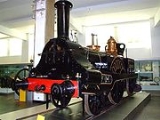
One locomotive Columbine has been preserved at the Science Museum (London)
Science Museum (London)
The Science Museum is one of the three major museums on Exhibition Road, South Kensington, London in the Royal Borough of Kensington and Chelsea. It is part of the National Museum of Science and Industry. The museum is a major London tourist attraction....

. This was GJR No. 49 and LNWR No. 1868

In popular culture

  • In the 2007 adaptation of Cranford, a (fictitious) railway line owned by the Grand Junction Railway is the subject of gossip when the railway line bypasses the village of Cranford.