

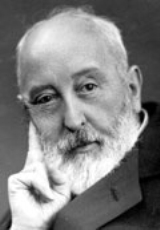
Governor-General of the Irish Free State

Encyclopedia
The Governor-General was the representative of the King in the 1922–1937 Irish Free State
. Until 1927 he was also the agent of the British government in the Irish state. By convention
the office of Governor-General
was largely ceremonial. Nonetheless it was controversial, as many nationalists
saw it as offensive to republican
principles and a symbol of Irish subservience to the United Kingdom
. For this reason the office had its role increasingly diminished until it was abolished entirely in 1937 retroactively applied to 1936.
The first two Governors-General lived in an official residence, the Viceregal Lodge, now known as Áras an Uachtaráin
and the residence of the President of Ireland
. The last Governor-General resided in a specially hired private residence in Booterstown
, County Dublin
.
assumed the right to choose the office-holder. This change arose from the Royal and Parliamentary Titles Act 1927
, enacted at Westminster
after an agreement reached between Britain and her dominions at an Imperial conference. Under this, the King now reigned in the Irish Free State as 'King of Ireland
' rather than 'King of the United Kingdom'. This meant that the King ceased to accept formal advice from the British Government in relation to his role in the Irish Free State, and henceforth accepted only the advice of the Irish Executive Council
(cabinet). The change meant that while Tim Healy
, the first Governor-General, was chosen with the agreement of the British Government, the British Government had no role in the selection of his two successors. The Free State constitution
did not provide that the Governor-General would serve a fixed term of office, but in 1927 the Irish Government decided that no Governor-General would serve a term of longer than five years.
. His formal duties included the following:
Until 1928 the Governor-General served an additional role as the British Government's agent in the Free State. This meant that all official correspondence between the British and Irish governments went through the Governor-General, and that he had access to British government papers. It also meant that he could receive secret instructions from the British Government, and so, for example, on assuming office Tim Healy was formally advised by the British Government to veto any law that attempted to abolish the controversial Oath of Allegiance
to the Crown sworn by Irish parliamentarians.
However, at the same Imperial conference from which the change in the mode of the Governor-General's appointment arose, it was agreed that henceforth the Governors-General
of Dominions such as the Free State would lose the second half of their dual role, and no longer be representatives of the British Government, with this role being carried out instead by High Commissioner
s. Furthermore, because, under the changes agreed, the British Government lost the right to advise the King in relation to the Irish Free State, it could no longer issue binding instructions to the Irish Governor-General.
in 1922 it was under the terms of the 1921 Anglo-Irish Treaty
. While Irish political leaders favoured the creation of a republic
the treaty required, instead, that the new state would be a Dominion within the British Empire
under a form of constitutional monarchy
. Central to the agreed system of government was to be a "Representative of the Crown". The new office was not named in the treaty, but the committee charged with drawing up the Free State constitution, under Michael Collins
, decided, after considering a number of names, including "President of Ireland", that the representative would bear the title of Governor-General, the same as that used by the Crown's representative in other Dominions, such as Canada
, Newfoundland
, Australia
, New Zealand
and South Africa
. The Crown's representative was to be bound by the same constitutional conventions as the Governors-General of other dominions, which would limit him to a largely ceremonial role. It was hoped that, if he was given the same title as that used in other dominions, then, if the British government attempted to violate convention by using the office of Governor-General to interfere in the Free State's affairs, these other nations would see their own autonomy threatened and might object.
and Edward, the Prince of Wales
. However the Irish Government let it be known that it wished Tim Healy, a former Parnell
ite MP, to be appointed, and the British Government ultimately agreed.
When it came to selecting Healy's successor the Irish Government chose James McNeill, a former member of Collins's constitution committee and former chairman of Dublin County Council
, and in 1928 he was sworn in. Because, unlike his predecessor he was not the United Kingdom's representative in the Free State but merely the personal representative of the King, McNeill found himself with less influence than Healy had possessed.
party of Éamon de Valera
. Because it opposed the very existence of the governor-generalship, de Valera's government decided to boycott and humiliate McNeill. This policy was followed, for example, during the Eucharistic Congress in 1932
when McNeill was sidelined and on one occasion the army's
band was withdrawn from a function that he attended. On another occasion, two ministers publicly stormed out of a diplomatic function when McNeill arrived as the guest of the French Government. In late 1932 de Valera and McNeill clashed when McNeill published his private correspondence with de Valera, and de Valera sought McNeill's dismissal. King George V, however, acting as peacemaker, persuaded de Valera to withdraw the request on the basis that McNeill was due to finish his term of office within a few weeks. He then persuaded McNeill to bring forward his retirement to 1 November, 1932. On McNeill's retirement de Valera advised the King to appoint Domhnall Ua Buachalla, a former Fianna Fáil TD
to the post. The new Governor-General was formally advised by the government to withdraw from public life and confine himself to formal functions such as issuing proclamations, dissolving Dáil Éireann and appointing cabinets.
abdicated
from all his thrones, including the throne of Ireland (as created in the Royal and Parliamentary Titles Act), De Valera decided to use the situation as an opportunity to finally abolish the governor-generalship. As a result of the Constitution (Amendment No. 27) Act 1936, all reference to the King and his official representative was removed from the Constitution. However de Valera was later advised by his own Attorney-General and senior advisors that the amendment was not sufficient to abolish the office entirely, which still continued by virtue of Letters Patent, Orders-in-Council and statute law. Though officially insisting that the office had been abolished (de Valera instructed Ua Buachalla to act as though he had left office and to leave his official residence) de Valera introduced a second law, the Executive Powers (Consequential Provisions) Act, 1937 to completely eliminate the post from Irish law. Under its own terms the Act applied retroactively, so that the office would be deemed to have been fully abolished in December 1936. In December 1937, under the new Constitution of Ireland
, the void was filled as most of the functions that had been performed by the Governor General until 1936 were vested in a new office of President of Ireland.
Ua Buachalla and de Valera, although once close friends, fell out over Ua Buachalla's treatment in the abolition of the governor-generalship, with Ua Buachalla initiating legal proceedings to sue de Valera. However their relationship was eventually healed and, when de Valera later became President of Ireland, he appointed Ua Buachalla to the Council of State in 1959. Ua Buachalla was the last surviving Governor-General, and died aged 97 on 30 October 1963.
Irish Free State
The Irish Free State was the state established as a Dominion on 6 December 1922 under the Anglo-Irish Treaty, signed by the British government and Irish representatives exactly twelve months beforehand...
. Until 1927 he was also the agent of the British government in the Irish state. By convention
Constitutional convention (political custom)
A constitutional convention is an informal and uncodified procedural agreement that is followed by the institutions of a state. In some states, notably those Commonwealth of Nations states that follow the Westminster system and whose political systems derive from British constitutional law, most...
the office of Governor-General
Governor-General
A Governor-General, is a vice-regal person of a monarch in an independent realm or a major colonial circonscription. Depending on the political arrangement of the territory, a Governor General can be a governor of high rank, or a principal governor ranking above "ordinary" governors.- Current uses...
was largely ceremonial. Nonetheless it was controversial, as many nationalists
Irish nationalism
Irish nationalism manifests itself in political and social movements and in sentiment inspired by a love for Irish culture, language and history, and as a sense of pride in Ireland and in the Irish people...
saw it as offensive to republican
Irish Republicanism
Irish republicanism is an ideology based on the belief that all of Ireland should be an independent republic.In 1801, under the Act of Union, the Kingdom of Great Britain and the Kingdom of Ireland merged to form the United Kingdom of Great Britain and Ireland...
principles and a symbol of Irish subservience to the United Kingdom
United Kingdom
The United Kingdom of Great Britain and Northern IrelandIn the United Kingdom and Dependencies, other languages have been officially recognised as legitimate autochthonous languages under the European Charter for Regional or Minority Languages...
. For this reason the office had its role increasingly diminished until it was abolished entirely in 1937 retroactively applied to 1936.
The first two Governors-General lived in an official residence, the Viceregal Lodge, now known as Áras an Uachtaráin
Áras an Uachtaráin
Áras an Uachtaráin , formerly the Viceregal Lodge, is the official residence of the President of Ireland. It is located in the Phoenix Park on the northside of Dublin.-Origins:...
and the residence of the President of Ireland
President of Ireland
The President of Ireland is the head of state of Ireland. The President is usually directly elected by the people for seven years, and can be elected for a maximum of two terms. The presidency is largely a ceremonial office, but the President does exercise certain limited powers with absolute...
. The last Governor-General resided in a specially hired private residence in Booterstown
Booterstown
Booterstown,, is a coastal townland and civil parish, situated in the Dún Laoghaire Rathdown County Council area of the former County Dublin, about south of the city of Dublin in Ireland.-Location and access:...
, County Dublin
County Dublin
County Dublin is a county in Ireland. It is part of the Dublin Region and is also located in the province of Leinster. It is named after the city of Dublin which is the capital of Ireland. County Dublin was one of the first of the parts of Ireland to be shired by King John of England following the...
.
Governors-General of the Irish Free State, 1922–1936
| No. | Name | Picture | Entered Office | Left Office |
|---|---|---|---|---|
| 1. | Timothy Michael Healy Timothy Michael Healy Timothy Michael Healy, KC , also known as Tim Healy, was an Irish nationalist politician, journalist, author, barrister and one of the most controversial Irish Members of Parliament in the House of Commons of the United Kingdom of Great Britain and Ireland... |
6 December 1922 | 31 January 1928 | |
| 2. | James McNeill James McNeill James McNeill was an Irish politician and diplomat, who served as first High Commissioner to London and second Governor-General of the Irish Free State.... |
1 February 1928 | 1 November 1932 | |
| 3. | Domhnall Ua Buachalla | 27 November 1932 | 11 December 1936 |
Selection
The Governor-General was formally appointed by the King, but in practice chosen by politicians. Until 1927 he was selected by the British Government, but after that date the Irish GovernmentIrish Government
The Government of Ireland is the cabinet that exercises executive authority in Ireland.-Members of the Government:Membership of the Government is regulated fundamentally by the Constitution of Ireland. The Government is headed by a prime minister called the Taoiseach...
assumed the right to choose the office-holder. This change arose from the Royal and Parliamentary Titles Act 1927
Royal and Parliamentary Titles Act 1927
The Royal and Parliamentary Titles Act 1927 [17 & 18 Geo. 5 c. 4] was an Act of Parliament of the United Kingdom that authorised the alteration of the British monarch's royal style and titles, and altered the formal name of the British Parliament, in recognition of much of Ireland separating from...
, enacted at Westminster
Parliament of the United Kingdom
The Parliament of the United Kingdom of Great Britain and Northern Ireland is the supreme legislative body in the United Kingdom, British Crown dependencies and British overseas territories, located in London...
after an agreement reached between Britain and her dominions at an Imperial conference. Under this, the King now reigned in the Irish Free State as 'King of Ireland
King of Ireland
A monarchical polity has existed in Ireland during three periods of its history, finally ending in 1801. The designation King of Ireland and Queen of Ireland was used during these periods...
' rather than 'King of the United Kingdom'. This meant that the King ceased to accept formal advice from the British Government in relation to his role in the Irish Free State, and henceforth accepted only the advice of the Irish Executive Council
Executive Council of the Irish Free State
The Executive Council was the cabinet and de facto executive branch of government of the 1922–1937 Irish Free State. Formally, the role of the Executive Council was to "aid and advise" the Governor-General who would exercise the executive authority on behalf of the King...
(cabinet). The change meant that while Tim Healy
Timothy Michael Healy
Timothy Michael Healy, KC , also known as Tim Healy, was an Irish nationalist politician, journalist, author, barrister and one of the most controversial Irish Members of Parliament in the House of Commons of the United Kingdom of Great Britain and Ireland...
, the first Governor-General, was chosen with the agreement of the British Government, the British Government had no role in the selection of his two successors. The Free State constitution
Constitution of the Irish Free State
The Constitution of the Irish Free State was the first constitution of the independent Irish state. It was enacted with the adoption of the Constitution of the Irish Free State Act 1922, of which it formed a part...
did not provide that the Governor-General would serve a fixed term of office, but in 1927 the Irish Government decided that no Governor-General would serve a term of longer than five years.
Role
Under the Constitution of the Irish Free State, the Governor General was bound to act in accordance with the "law, practice and constitutional usage" relevant to the Governor General of CanadaGovernor General of Canada
The Governor General of Canada is the federal viceregal representative of the Canadian monarch, Queen Elizabeth II...
. His formal duties included the following:
- Executive authority: The executive authorityExecutive (government)Executive branch of Government is the part of government that has sole authority and responsibility for the daily administration of the state bureaucracy. The division of power into separate branches of government is central to the idea of the separation of powers.In many countries, the term...
of the state was formally 'vested' in the King but 'exercised' by the Governor General, on the 'advice' of the Executive Council. - Appointment of the cabinet: The President of the Executive CouncilPresident of the Executive Council of the Irish Free StateThe President of the Executive Council of the Irish Free State was the head of government or prime minister of the Irish Free State which existed from 1922 to 1937...
(prime minister) was appointed by the Governor General after being selected by Dáil ÉireannDáil Éireann (Irish Free State)Dáil Éireann served as the directly elected lower house of the Oireachtas of the Irish Free State from 1922 to 1937. The Free State constitution described the role of the house as that of a "Chamber of Deputies". Until 1936 the Free State Oireachtas also included an upper house known as the Seanad...
(the lower house of parliament). The remaining ministers were appointed on the nomination of the president, subject to a vote of consent in the Dáil. - Convention and dissolution of the legislature: The Governor-General, on behalf of the King, convened and dissolved the OireachtasOireachtas of the Irish Free StateThe Oireachtas of the Irish Free State was the legislature of the Irish Free State from 1922 until 1937. It was established by the 1922 Constitution of Ireland which was based from the Anglo-Irish Treaty...
on the advice of the Executive Council. - Signing bills into law: The King was formally, along with the Dáil and the SenateSeanad Éireann (Irish Free State)Seanad Éireann was the upper house of the Oireachtas of the Irish Free State from 1922–1936. It has also been known simply as the Senate, or as the First Seanad. The Senate was established under the 1922 Constitution of the Irish Free State but a number of constitutional amendments were...
, one of three components of the Oireachtas. No bill could become law until it received the Royal AssentRoyal AssentThe granting of royal assent refers to the method by which any constitutional monarch formally approves and promulgates an act of his or her nation's parliament, thus making it a law...
, given by the Governor-General on behalf of the King. The Governor-General theoretically had the right to veto a bill or "reserve" it "for the signification of the King's pleasure", in effect postponing a decision on whether or not to enact the bill, for a maximum of one year. - Appointment of judges: All judges were appointed by the Governor-General, on the advice of the Executive Council.
Until 1928 the Governor-General served an additional role as the British Government's agent in the Free State. This meant that all official correspondence between the British and Irish governments went through the Governor-General, and that he had access to British government papers. It also meant that he could receive secret instructions from the British Government, and so, for example, on assuming office Tim Healy was formally advised by the British Government to veto any law that attempted to abolish the controversial Oath of Allegiance
Oath of Allegiance (Ireland)
The Irish Oath of Allegiance was a controversial provision in the Anglo-Irish Treaty of 1921, which Irish TDs and Senators were required to take, in order to take their seats in Dáil Éireann and Seanad Éireann .-Text of the Oath:The Oath was included in Article 17 of the Irish Free State's 1922...
to the Crown sworn by Irish parliamentarians.
However, at the same Imperial conference from which the change in the mode of the Governor-General's appointment arose, it was agreed that henceforth the Governors-General
Governor-General
A Governor-General, is a vice-regal person of a monarch in an independent realm or a major colonial circonscription. Depending on the political arrangement of the territory, a Governor General can be a governor of high rank, or a principal governor ranking above "ordinary" governors.- Current uses...
of Dominions such as the Free State would lose the second half of their dual role, and no longer be representatives of the British Government, with this role being carried out instead by High Commissioner
High Commissioner
High Commissioner is the title of various high-ranking, special executive positions held by a commission of appointment.The English term is also used to render various equivalent titles in other languages.-Bilateral diplomacy:...
s. Furthermore, because, under the changes agreed, the British Government lost the right to advise the King in relation to the Irish Free State, it could no longer issue binding instructions to the Irish Governor-General.
Origins
When the Irish Free State seceded from the United KingdomUnited Kingdom of Great Britain and Ireland
The United Kingdom of Great Britain and Ireland was the formal name of the United Kingdom during the period when what is now the Republic of Ireland formed a part of it....
in 1922 it was under the terms of the 1921 Anglo-Irish Treaty
Anglo-Irish Treaty
The Anglo-Irish Treaty , officially called the Articles of Agreement for a Treaty Between Great Britain and Ireland, was a treaty between the Government of the United Kingdom of Great Britain and Ireland and representatives of the secessionist Irish Republic that concluded the Irish War of...
. While Irish political leaders favoured the creation of a republic
Republic
A republic is a form of government in which the people, or some significant portion of them, have supreme control over the government and where offices of state are elected or chosen by elected people. In modern times, a common simplified definition of a republic is a government where the head of...
the treaty required, instead, that the new state would be a Dominion within the British Empire
British Empire
The British Empire comprised the dominions, colonies, protectorates, mandates and other territories ruled or administered by the United Kingdom. It originated with the overseas colonies and trading posts established by England in the late 16th and early 17th centuries. At its height, it was the...
under a form of constitutional monarchy
Constitutional monarchy
Constitutional monarchy is a form of government in which a monarch acts as head of state within the parameters of a constitution, whether it be a written, uncodified or blended constitution...
. Central to the agreed system of government was to be a "Representative of the Crown". The new office was not named in the treaty, but the committee charged with drawing up the Free State constitution, under Michael Collins
Michael Collins (Irish leader)
Michael "Mick" Collins was an Irish revolutionary leader, Minister for Finance and Teachta Dála for Cork South in the First Dáil of 1919, Director of Intelligence for the IRA, and member of the Irish delegation during the Anglo-Irish Treaty negotiations. Subsequently, he was both Chairman of the...
, decided, after considering a number of names, including "President of Ireland", that the representative would bear the title of Governor-General, the same as that used by the Crown's representative in other Dominions, such as Canada
Canada
Canada is a North American country consisting of ten provinces and three territories. Located in the northern part of the continent, it extends from the Atlantic Ocean in the east to the Pacific Ocean in the west, and northward into the Arctic Ocean...
, Newfoundland
Dominion of Newfoundland
The Dominion of Newfoundland was a British Dominion from 1907 to 1949 . The Dominion of Newfoundland was situated in northeastern North America along the Atlantic coast and comprised the island of Newfoundland and Labrador on the continental mainland...
, Australia
Australia
Australia , officially the Commonwealth of Australia, is a country in the Southern Hemisphere comprising the mainland of the Australian continent, the island of Tasmania, and numerous smaller islands in the Indian and Pacific Oceans. It is the world's sixth-largest country by total area...
, New Zealand
New Zealand
New Zealand is an island country in the south-western Pacific Ocean comprising two main landmasses and numerous smaller islands. The country is situated some east of Australia across the Tasman Sea, and roughly south of the Pacific island nations of New Caledonia, Fiji, and Tonga...
and South Africa
Union of South Africa
The Union of South Africa is the historic predecessor to the present-day Republic of South Africa. It came into being on 31 May 1910 with the unification of the previously separate colonies of the Cape, Natal, Transvaal and the Orange Free State...
. The Crown's representative was to be bound by the same constitutional conventions as the Governors-General of other dominions, which would limit him to a largely ceremonial role. It was hoped that, if he was given the same title as that used in other dominions, then, if the British government attempted to violate convention by using the office of Governor-General to interfere in the Free State's affairs, these other nations would see their own autonomy threatened and might object.
Government of W.T. Cosgrave
The first two Governors-General of the Irish Free State assumed office under the pro-Treaty, Cumann na nGaedheal government of W. T. Cosgrave. When it came to choosing the first Governor-General there was speculation about a number of possible candidates, including the famed Irish painter Sir John LaveryJohn Lavery
Sir John Lavery was an Irish painter best known for his portraits.Belfast-born John Lavery attended the Haldane Academy, in Glasgow, in the 1870s and the Académie Julian in Paris in the early 1880s. He returned to Glasgow and was associated with the Glasgow School...
and Edward, the Prince of Wales
Edward VIII of the United Kingdom
Edward VIII was King of the United Kingdom and the Dominions of the British Commonwealth, and Emperor of India, from 20 January to 11 December 1936.Before his accession to the throne, Edward was Prince of Wales and Duke of Cornwall and Rothesay...
. However the Irish Government let it be known that it wished Tim Healy, a former Parnell
Charles Stewart Parnell
Charles Stewart Parnell was an Irish landowner, nationalist political leader, land reform agitator, and the founder and leader of the Irish Parliamentary Party...
ite MP, to be appointed, and the British Government ultimately agreed.
When it came to selecting Healy's successor the Irish Government chose James McNeill, a former member of Collins's constitution committee and former chairman of Dublin County Council
Dublin County Council
Dublin County Council was a local authority for the administrative county of County Dublin in the Republic of Ireland. It was established by the Local Government Act 1898....
, and in 1928 he was sworn in. Because, unlike his predecessor he was not the United Kingdom's representative in the Free State but merely the personal representative of the King, McNeill found himself with less influence than Healy had possessed.
Government of Éamon de Valera
In 1932 Cosgrave's government lost power to the anti-Treaty, Fianna FáilFianna Fáil
Fianna Fáil – The Republican Party , more commonly known as Fianna Fáil is a centrist political party in the Republic of Ireland, founded on 23 March 1926. Fianna Fáil's name is traditionally translated into English as Soldiers of Destiny, although a more accurate rendition would be Warriors of Fál...
party of Éamon de Valera
Éamon de Valera
Éamon de Valera was one of the dominant political figures in twentieth century Ireland, serving as head of government of the Irish Free State and head of government and head of state of Ireland...
. Because it opposed the very existence of the governor-generalship, de Valera's government decided to boycott and humiliate McNeill. This policy was followed, for example, during the Eucharistic Congress in 1932
Eucharistic Congress of Dublin (1932)
The 31st International Eucharistic Congress, held in Dublin 22–26 June 1932, was one of the largest eucharistic congresses of the 20th century....
when McNeill was sidelined and on one occasion the army's
Irish Army
The Irish Army, officially named simply the Army is the main branch of the Defence Forces of Ireland. Approximately 8,500 men and women serve in the Irish Army, divided into three infantry Brigades...
band was withdrawn from a function that he attended. On another occasion, two ministers publicly stormed out of a diplomatic function when McNeill arrived as the guest of the French Government. In late 1932 de Valera and McNeill clashed when McNeill published his private correspondence with de Valera, and de Valera sought McNeill's dismissal. King George V, however, acting as peacemaker, persuaded de Valera to withdraw the request on the basis that McNeill was due to finish his term of office within a few weeks. He then persuaded McNeill to bring forward his retirement to 1 November, 1932. On McNeill's retirement de Valera advised the King to appoint Domhnall Ua Buachalla, a former Fianna Fáil TD
Teachta Dála
A Teachta Dála , usually abbreviated as TD in English, is a member of Dáil Éireann, the lower house of the Oireachtas . It is the equivalent of terms such as "Member of Parliament" or "deputy" used in other states. The official translation of the term is "Deputy to the Dáil", though a more literal...
to the post. The new Governor-General was formally advised by the government to withdraw from public life and confine himself to formal functions such as issuing proclamations, dissolving Dáil Éireann and appointing cabinets.
Abolition
In December 1936, when King Edward VIIIEdward VIII of the United Kingdom
Edward VIII was King of the United Kingdom and the Dominions of the British Commonwealth, and Emperor of India, from 20 January to 11 December 1936.Before his accession to the throne, Edward was Prince of Wales and Duke of Cornwall and Rothesay...
abdicated
Edward VIII abdication crisis
In 1936, a constitutional crisis in the British Empire was caused by King-Emperor Edward VIII's proposal to marry Wallis Simpson, a twice-divorced American socialite....
from all his thrones, including the throne of Ireland (as created in the Royal and Parliamentary Titles Act), De Valera decided to use the situation as an opportunity to finally abolish the governor-generalship. As a result of the Constitution (Amendment No. 27) Act 1936, all reference to the King and his official representative was removed from the Constitution. However de Valera was later advised by his own Attorney-General and senior advisors that the amendment was not sufficient to abolish the office entirely, which still continued by virtue of Letters Patent, Orders-in-Council and statute law. Though officially insisting that the office had been abolished (de Valera instructed Ua Buachalla to act as though he had left office and to leave his official residence) de Valera introduced a second law, the Executive Powers (Consequential Provisions) Act, 1937 to completely eliminate the post from Irish law. Under its own terms the Act applied retroactively, so that the office would be deemed to have been fully abolished in December 1936. In December 1937, under the new Constitution of Ireland
Constitution of Ireland
The Constitution of Ireland is the fundamental law of the Irish state. The constitution falls broadly within the liberal democratic tradition. It establishes an independent state based on a system of representative democracy and guarantees certain fundamental rights, along with a popularly elected...
, the void was filled as most of the functions that had been performed by the Governor General until 1936 were vested in a new office of President of Ireland.
Ua Buachalla and de Valera, although once close friends, fell out over Ua Buachalla's treatment in the abolition of the governor-generalship, with Ua Buachalla initiating legal proceedings to sue de Valera. However their relationship was eventually healed and, when de Valera later became President of Ireland, he appointed Ua Buachalla to the Council of State in 1959. Ua Buachalla was the last surviving Governor-General, and died aged 97 on 30 October 1963.
See also
- Great Seal of the Irish Free StateGreat Seal of the Irish Free StateThe Great Seal of the Irish Free State is the seal which was used to seal official documents of the Irish Free State by the Governor-General. The Great Seal is currently on public display at National Museum of Ireland at Collins Barracks, Dublin.Both sides of the Great Seal feature an image of...
- History of the Republic of IrelandHistory of the Republic of IrelandThe Irish state originally came into being in 1922 as the Irish Free State, a dominion of the British Commonwealth, having seceded from the United Kingdom under the Anglo-Irish Treaty. It comprises of 26 of Ireland's 32 counties...
- Irish head of state from 1936 to 1949
- Governor of Northern IrelandGovernor of Northern IrelandThe Governor of Northern Ireland was the principal officer and representative in Northern Ireland of the British monarch. The office was established on 9 December 1922 and abolished on 18 July 1973.-Overview:...