


Governor-General of Australia

Encyclopedia
The Governor-General of the Commonwealth of Australia is the representative in Australia
at federal/national level of the Australian monarch (currently Queen Elizabeth II). He or she exercises the supreme executive power of the Commonwealth. The functions and roles of the Governor-General include appointing ambassador
s, ministers and judge
s, giving Royal Assent
to legislation, issuing writs for elections and bestowing honours. The Governor-General is President of the Federal Executive Council
and Commander-in-Chief of the Australian Defence Force
. All these things are done and all these posts are held under the authority of the Australian Constitution
. Further, the Governor-General acts as vice-regal representative to the Australian Capital Territory
.
The Constitution provides that a "Governor-General appointed by the Queen shall be Her Majesty's representative in the Commonwealth
. . ." The Constitution grants the Governor-General a wide range of powers, but in practice he or she follows the conventions of the Westminster system
and (with rare exceptions) acts only on the advice of the Prime Minister of Australia
or other ministers. Even in the appointment of the prime minister, the Governor-General rarely exercises any discretion, usually appointing the leader of the largest party or coalition of parties in the House of Representatives
.
Beyond constitutional functions, the Governor-General has an important ceremonial role. He or she travels widely throughout Australia to open conferences, attend services and commemorations and generally provide encouragement to individuals and groups who are contributing to their communities
. When travelling abroad, the governor-general is seen as the representative of Australia, and of the Queen of Australia, and is treated as a head of state.
The main official residence of the Governor-General is Government House, Canberra
. There is a second official residence, Admiralty House in Sydney. When visiting the other states, the Governor-General is usually a guest at the Government Houses in the state capitals.
The current Governor-General and the first female to hold the role is Quentin Bryce
. The Governor-General is supported by a staff headed by the Official Secretary to the Governor-General
; the current Official Secretary is Stephen Brady
.
When a Governor-General is overseas on official duties or unable to perform their functions, or the office is vacant, the senior state governor is appointed as Administrator of the Commonwealth, and is effectively acting Governor-General.
, who may consult privately with staff or colleagues, or with the monarch. The person would also be approached privately to see if he or she is willing to accept the appointment.
The Prime Minister then provides the nomination to the monarch. The monarch may, in theory, decline the Prime Minister's advice and ask for another nomination or even appoint a person of their own choice, but no such cases have been recorded since November 1930, when James Scullin
's proposed appointment of Sir Isaac Isaacs
was fiercely opposed by the British government. This was not because of any lack of regard for Isaacs personally, but because the British government considered that the choice of Governors-General was (since the 1926 Imperial Conference
) a matter for the monarch's decision alone. (However, it became very clear in a conversation between Scullin and King George V's
Private Secretary, Lord Stamfordham
, on 11 November 1930, that this was merely the official reason for the objection, the real reason being that an Australian, no matter how highly regarded personally, was not considered appropriate to be Governor-General.) Scullin was equally insistent that the monarch must act on the relevant Prime Minister's direct advice (the practice until 1926 was that Dominion prime ministers advised the monarch indirectly, through the British government, which effectively had a veto over any proposal it did not agree with). Scullin cited the precedents of the Prime Minister of South Africa, J. B. M. Hertzog, who had recently insisted on his choice of Lord Clarendon
as Governor-General of that country, and the selection of an Irishman as Governor-General of the Irish Free State
– both of these appointments were agreed to despite royal disfavour.
Despite these precedents, George V was still very reluctant to accept Scullin's recommendation of Sir Isaac Isaacs, and asked him to consider Field Marshal Sir William Birdwood
. However, Scullin stood firm, and on 29 November the King agreed to Isaacs's appointment, but made it clear that he did so only because he felt he had no option. This right to not only advise the monarch directly, but also to expect that advice to be accepted, was soon taken up by all the other Dominion Prime Ministers. This, among other things, led to the Statute of Westminster 1931
and to the formal separation of the crowns of the Dominions. Now, the Queen of Australia is generally bound by constitutional convention to accept the advice of the Australian Prime Minister and state Premiers about Australian and state constitutional matters respectively, however the practice of Premiers advising the monarch has only become the convention since the passage of the Australia Acts (1986)
.
Having agreed to the appointment, the monarch then permits it to be publicly announced in advance, usually several months before the end of the current Governor-General's term. During these months, the person is referred to as the "Governor-General-designate". The actual appointment is made by the monarch. After receiving his or her commission, the Governor-General makes an Oath of Allegiance
and an Oath of Office
to the monarch, and issues a proclamation assuming office. The oaths are usually made in a ceremony on the floor of the Senate
, and are administered by the Chief Justice of Australia
.
) have the style "His/Her Excellency" during their tenure, but no style applies to former governors-general purely by virtue of their former office.
Sir William McKell
(1947–53) was knight
ed during his term of office, but all the other governors-general until 1989 were already either peers
or knights; the only Australian peer was Lord Casey
(1965–69). All until 1989 were members of the Privy Council of the United Kingdom and thus had the additional style "The Right Honourable
". Bill Hayden
(1989–96) was the first Governor-General to have no title, although as a former Federal minister, he has the style "The Honourable
". The incumbent, Quentin Bryce
, is the first Governor-General to have no title or pre-nominal
style for life.
, except Sir Issac Isaacs
(1931–36) and Sir William McKell
(1947–53). There have been only Australian occupants since then. Various Governors-General had previously served as governors of an Australian state or colony: Lord Hopetoun
(Victoria 1889–95); Lord Tennyson
(South Australia 1899–1902); Lord Gowrie
(South Australia 1928–34; and New South Wales 1935–36); Major General Michael Jeffery
(Western Australia 1993–2000); Quentin Bryce
(Queensland 2003–08). Sir Ronald Munro Ferguson had been offered the governorship of South Australia in 1895 and of Victoria in 1910, but refused both appointments. Lord Northcote
was Governor of Bombay. Lord Casey was Governor of Bengal
in between his periods of service to the Australian Parliament
.
Former leading politicians and members of the judiciary have figured prominently. Lord Dudley
was Lord Lieutenant of Ireland
1902–05. Lord Stonehaven
(as John Baird) was Minister for Transport in the Cabinets of Andrew Bonar Law and Stanley Baldwin
; and after his return to Britain he became Chairman of the UK Conservative Party
. Sir Isaac Isaacs was successively Commonwealth Attorney-General, a High Court judge, and Chief Justice. Sir William McKell was Premier of New South Wales. Lord Dunrossil
(as William Morrison) was Speaker of the UK House of Commons. Lord De L'Isle
was Secretary of State for Air
in Winston Churchill
's Cabinet 1951–55. More recent Governors-General in this category include Lord Casey, Sir Paul Hasluck
, Sir John Kerr, Sir Ninian Stephen
, Bill Hayden and Sir William Deane
.
Significant post-retirement activities of earlier Governors-General have included: Lord Tennyson was appointed Deputy Governor of the Isle of Wight
; Sir Ronald Munro Ferguson (by now Lord Novar) became Secretary of State for Scotland
; and Lord Gowrie became Chairman of the Marylebone Cricket Club
(Lord Forster
had also held this post, before his appointment as Governor-General).
Of the ten Australians appointed since 1965, Lord Casey, Sir Paul Hasluck and Bill Hayden were former federal parliamentarians
; Sir John Kerr was the Chief Justice
of the Supreme Court of New South Wales
; Sir Ninian Stephen and Sir William Deane were appointed from the bench of the High Court
; Sir Zelman Cowen
was a vice-chancellor of the University of Queensland
and constitutional lawyer; Peter Hollingworth
was the Anglican
Archbishop
of Brisbane
; and Major-General Michael Jeffery was a retired military officer
and former Governor of Western Australia
. Quentin Bryce's appointment was announced during her term as Governor of Queensland; she had previously been the Federal Sex Discrimination Commissioner.
Sir Isaac Isaacs and Sir Zelman Cowen were Jewish; Bill Hayden is an avowed atheist
and he made an affirmation rather than swear an oath at the beginning of his commission; the remaining Governors-General have been at least nominally Christian
. None have had an indigenous
or non-European background.
The current Governor-General, Quentin Bryce, who was sworn in on 5 September 2008, is the first woman appointed to the post.
The salary of the Governor-General is regulated by the Constitution, which fixed an annual amount of 10,000 pounds
, unless the parliament decides otherwise. The Constitution states that the salary of the Governor-General may not be increased during his or her term of office. Under the Governor-General Act of 1974 each new commission has resulted in a pay increase. Today, the law ensures the salary is higher than that for the Chief Justice
of the High Court, over a five year period. The annual salary during Michael Jeffery
's term was $365,000. Quentin Bryce
's salary is $394,000. Until 2001, Governors-General did not pay income tax on their salary; this was changed after the Queen agreed to pay tax.
Three Governors-General have resigned their commission. The first Governor-General, Lord Hopetoun
, asked to be recalled to Britain in 1903 over a dispute about funding for the post. Sir John Kerr resigned in 1977 after accepting the position of Australian Ambassador to UNESCO in Paris, a post which ultimately he did not take up. In 2003, Peter Hollingworth
stood aside temporarily while certain allegations against him were resolved, and the letters patent
of the office were amended to take account of this circumstance. He later resigned to "protect the vice-regal office from persistent controversy".
In 1961, Lord Dunrossil
became the first and, to date, only Governor-General to die in office.
A Governor-General may be recalled or dismissed by the Queen before their term is complete. By convention, this may only be advised by the Prime Minister. The Prime Minister has the option of naming an immediate replacement or letting the vacancy provisions take effect.
As no Australian Governor-General has ever been dismissed, it is unclear how quickly the Queen would act on such advice. The constitutional crisis of 1975 prominently raised the possibility of the Prime Minister and the Governor-General attempting to dismiss each other at the same time.
A vacancy occurs on the resignation, death or incapacity of the Governor-General. A temporary vacancy occurs when the Governor-General is overseas on official business representing Australia. A temporary vacancy also occurred in 2003 when Peter Hollingworth stood aside.
Section 4 of the Constitution allows the Queen to appoint an Administrator
to carry out the role of Governor-General when there is a vacancy. By convention, the longest serving state governor holds a dormant commission
, allowing an assumption of office to commence whenever a vacancy occurs. In 1975, Labor
Prime Minister Gough Whitlam
recommended to the Queen that Sir Colin Hannah
, then Governor of Queensland
, have his dormant commission revoked for having made public political statements.
 Sections 61 and 68 of the Constitution provide that the Governor-General exercises certain powers as the Queen's representative. The limited form of this representation was explained in a 1988 Constitutional Commission report which concluded "the Governor-General is in no sense a delegate of the Queen. The independence of the office is highlighted by changes which have been made in recent years to the Royal instruments relating to it".
Although the Governor-General and the Queen occasionally observe certain formalities, in practice the Governor-General carries out her constitutional responsibilities without reference to the Queen. In 1975, the Queen, through her Private Secretary, wrote that she "has no part in the decisions which the Governor-General must take in accordance with the Constitution". Sir Robert Garran
noted as early as 1901 that the governor-general was distinguished from other Empire governors-general by the fact that "the principal and most important of his powers and functions, legislative as well as executive, are expressly conferred on him by the terms of the Constitution itself. They are legislative and executive powers and functions conferred on the Governor-General, not by Royal authority, but by statutory authority," a view held also by Andrew Inglis Clark
, who assisted Sir Samuel Griffith
with drafts of the constitution and later became Senior Judge of the Supreme Court of Tasmania
. Clark and W. Harrison Moore, who had contributed to the first draft of the constitution put before the 1897 Adelaide Convention and was Professor of Law at the University of Melbourne
, postulated that the letters patent
and the royal instructions issued by Queen Victoria were unnecessary "or even of doubtful legality".
Sir David Smith
stated in 1988 that "the Governor-General is in no sense a delegate of the Queen. The independence of the office is highlighted by changes which have been made in recent years to the Royal instruments relating to it". He later opined that the governor-general's role was more than a representative of the sovereign, explaining: "under section 2 of the Constitution the Governor-General is the Queen's representative and exercises certain royal prerogative powers and functions; under section 61 of the Constitution the Governor-General is the holder of a quite separate and independent office created, not by the Crown, but by the Constitution, and empowered to exercise, in his own right as Governor-General and not as a representative or delegate of the Queen, all the powers and functions of Australia's head of state."
The Queen chose not to intervene during the 1975 Australian constitutional crisis, on the basis that it was a matter "clearly placed within the jurisdiction of the Governor-General".
and the House of Representatives
. Section 5 states that "the Governor-General may appoint such times for holding the sessions of the Parliament ... prorogue the Parliament [and] dissolve the House of Representatives." These provisions make it clear that the Queen's role in the parliament is in name only and the actual responsibility belongs to the Governor-General. Such decisions are usually taken on the advice of the Prime Minister, although this is not stated in the Constitution.
The Governor-General has a ceremonial role in swearing in and accepting the resignations of Members of Parliament. He or she appoints a deputy, to whom members make an oath of allegiance
before they take their seats. On the day parliament opens, the Governor-General makes a speech, entirely written by the government, explaining the government's proposed legislative program.
The most important power is found in section 58: "When a proposed law passed by both Houses of Parliament is presented to the Governor-General for the Queen's assent, he shall declare ... that he assents in the Queen's name." This makes any proposed law effective.
Sections 58 to 60 allow the Governor-General to withhold assent, suggest changes, refer to the Queen or proclaim that the Queen has annulled the legislation. A number of Governors-General have reserved Royal Assent for particular legislation for the Queen. Such assent has usually been given during a scheduled visit to Australia by the Queen. On other occasions Royal Assent has been given elsewhere. Examples of this have been the Flags Act
(1953), the Royal Styles and Titles Acts (1953 and 1973), and the Australia Act
(1986).
and parliamentary secretaries
.
In the Constitution, the words "Governor-General-in-council" mean the Governor-General acting with the advice of the Council. Powers exercised in council, which are not reserve powers, include:
All such actions are taken on the advice of ministers.
Section 68, says "command-in-chief of naval and military forces ... is vested in the Governor-General as the Queen's representative". In practice, this role is ceremonial, with actual authority in the hands of the Defence Minister and the Chief of the Defence Force (CDF).
In an administrative sense, the office of Governor-General is regulated by the Governor-General Act 1974.
The reserve powers are:
These powers are generally and routinely exercised on Ministerial advice, but the Governor-General retains the ability to act independently in certain circumstances, as governed by convention. It is generally held that the Governor-General may use their powers without ministerial advice in the following situations:
The use of the reserve powers may arise in the following circumstances:
The above is not an exhaustive list, and new situations may arise. The most notable use of the reserve powers occurred in November 1975 in the course of the 1975 Australian constitutional crisis. On this occasion the Governor-General, Sir John Kerr, dismissed the government of Gough Whitlam
when the Senate
withheld Supply to the government, even though Whitlam retained the confidence of the House of Representatives
. Kerr determined that he had both the right and the duty to dismiss the government and commission a new government that would recommend a dissolution of the Parliament. Events surrounding the dismissal remain extremely controversial.
described one of his functions as being "Chief Mourner" at prominent funerals. In Commentaries on the Constitution of the Commonwealth of Australia, Garran noted that, since the Australian executive is national in nature (being dependent on the nationally elected House of Representatives, rather than the Senate), "the Governor-General, as the official head of the Executive, does not in the smallest degree represent any federal element; if he represents anything he is the image and embodiment of national unity and the outward and visible representation of the Imperial relationship of the Commonwealth."
This role can become controversial, however, if the Governor-General becomes unpopular with sections of the community. The public role adopted by Sir John Kerr was curtailed considerably after the constitutional crisis of 1975; Sir William Deane's public statements on political issues produced some hostility towards him; and some charities disassociated themselves from Peter Hollingworth
after the issue of his management of sex abuse cases during his time as Anglican Archbishop of Brisbane became a matter of controversy.
At one time Governors-General wore the traditional Windsor uniform
on formal occasions. However, this fell into disuse during the tenure of Sir Paul Hasluck
.
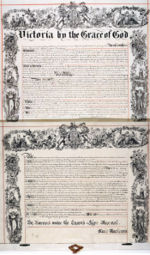

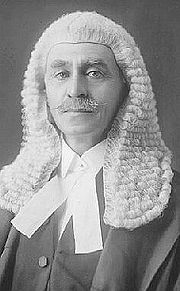 The office of Governor-General was previously used during colonial times in Australia. Sir Charles FitzRoy
(Governor of New South Wales from 1846–1855) and Sir William Denison
(Governor of New South Wales from 1855–1861) also carried the additional title of Governor-General because their jurisdiction extended to other colonies in Australia. Later each colony was granted its own governor and thus the title of Governor-General lapsed until the establishment of the Commonwealth in 1901.
The office of Governor-General for the Commonwealth of Australia was conceived during the debates and conventions leading up to federation
. The first Governor-General, the Earl of Hopetoun
, was a previous Governor of Victoria. He was appointed in July 1900, returning to Australia shortly before the inauguration of the Commonwealth of Australia on 1 January 1901. His first act was to appoint the inaugural Prime Minister, Edmund Barton
, since the first federal elections were not held until March.
Early Governors-General were British and were appointed by the King on the recommendation of the Colonial Office
. The Australian Government was merely asked, as a matter of courtesy, whether they approved of the choice or not. Governors-General were expected to exercise a supervisory role over the Australian Government in the manner of a colonial Governor. In a very real sense, they represented the British Government. They had the right to "reserve" legislation passed by the Parliament of Australia
: in other words, to ask the Colonial Office
in London for an opinion before giving the Royal Assent
. This power was used several times.
The early Governors-General frequently sought advice on the exercise of their powers from two judges of the High Court of Australia
, Sir Samuel Griffith
and Sir Edmund Barton
. This practice has continued from time to time since.
During the 1920s the importance of the position declined. As a result of decisions made at the 1926 Imperial Conference
, the Governor-General ceased to be the diplomatic representative of the British Government, and the British right of supervision over Australian affairs was abolished. However, it was still unclear just whose prerogative it now was to decide who new governors-general would be. In 1930, King George V
and the Australian Prime Minister James Scullin
discussed the appointment of a new governor-general to replace Lord Stonehaven, whose term was coming to an end. The King maintained that it was now his sole prerogative to choose a governor-general, and he wanted Field-Marshal Sir William Birdwood
for the Australian post. Scullin recommended the Australian jurist Sir Isaac Isaacs
, and he insisted that George V act on the advice of his Australian Prime Minister in this matter. Scullin was partially influenced by the precedent set by the Government of the Irish Free State, which always insisted upon the Governor-General of the Irish Free State
being an Irishman.
The King approved Scullin's choice, albeit with some displeasure. The usual wording of official announcements of this nature was "The King has been pleased to appoint ...", but on this occasion the announcement said merely "The King has appointed ...", and his Private Secretary Lord Stamfordham asked the Solicitor-General, Sir Robert Garran
, to make sure Scullin was aware of the exact wording. The appointment was denounced by the opposition Nationalist Party of Australia
as being "practically republican", but the precedent had been set. The convention was gradually established throughout the Commonwealth that the Governor-General is a citizen of the country concerned, and is appointed on the advice of the government of that country.
In 1931, this transformation was concluded with the appointment of the first Australian Governor-General, Isaacs, and the first British Representative in Australia, Ernest Crutchley. In 1935, the first British High Commissioner to Australia, Geoffrey Whiskard, was appointed.
After Scullin's defeat in 1931, non-Labor
governments continued to recommend British people for appointment as Governor-General, but it was still a matter solely between the Australian government and the monarch. In 1947 Labor appointed a second Australian Governor-General, William McKell
, who was in office as the Labor Premier of New South Wales. The then Leader of the Opposition, Robert Menzies
, called McKell's appointment "shocking and humiliating".
In 1965, the Menzies conservative government appointed an Australian, Lord Casey
, and the position has since been held only by Australians. Suggestions during the early 1980s that the Prince of Wales
might become the Governor-General came to nothing due to the constitutional difficulty that would be created if Prince Charles became King. In 2007, it was reported in the media that Prince William might also become Governor-General. This suggestion was repudiated by both the Prime Minister (John Howard
) and Clarence House
.
. The Chief Scout is nominated by the Scouting Association's National Executive Committee and is invited by the President of the Scout Association to accept the appointment. Bill Hayden
declined this office on the grounds of his atheism
, which was incompatible with the Scout Promise. He did however serve as the Association's Patron during his term of office.
and Lady Casey.
Major General Jeffery's retirement on 5 September 2008 marked the first time in Australia's history that six former governors-general were still living. There had been five living former governors-general at a number of previous times, most recently immediately prior to Major General Jeffery's retirement, and going back to the period 8 October 1925 (when Lord Forster retired) to 2 December 1928 (when Lord Tennyson died).
Australia
Australia , officially the Commonwealth of Australia, is a country in the Southern Hemisphere comprising the mainland of the Australian continent, the island of Tasmania, and numerous smaller islands in the Indian and Pacific Oceans. It is the world's sixth-largest country by total area...
at federal/national level of the Australian monarch (currently Queen Elizabeth II). He or she exercises the supreme executive power of the Commonwealth. The functions and roles of the Governor-General include appointing ambassador
Ambassador
An ambassador is the highest ranking diplomat who represents a nation and is usually accredited to a foreign sovereign or government, or to an international organization....
s, ministers and judge
Judge
A judge is a person who presides over court proceedings, either alone or as part of a panel of judges. The powers, functions, method of appointment, discipline, and training of judges vary widely across different jurisdictions. The judge is supposed to conduct the trial impartially and in an open...
s, giving Royal Assent
Royal Assent
The granting of royal assent refers to the method by which any constitutional monarch formally approves and promulgates an act of his or her nation's parliament, thus making it a law...
to legislation, issuing writs for elections and bestowing honours. The Governor-General is President of the Federal Executive Council
Federal Executive Council
The Federal Executive Council is the formal body holding executive authority under the Constitution of Australia. It is equivalent to the other Executive Councils in other Commonwealth Realms such as the Executive Council of New Zealand and is equivalent to the Privy councils in Canada and the...
and Commander-in-Chief of the Australian Defence Force
Australian Defence Force
The Australian Defence Force is the military organisation responsible for the defence of Australia. It consists of the Royal Australian Navy , Australian Army, Royal Australian Air Force and a number of 'tri-service' units...
. All these things are done and all these posts are held under the authority of the Australian Constitution
Constitution of Australia
The Constitution of Australia is the supreme law under which the Australian Commonwealth Government operates. It consists of several documents. The most important is the Constitution of the Commonwealth of Australia...
. Further, the Governor-General acts as vice-regal representative to the Australian Capital Territory
Australian Capital Territory
The Australian Capital Territory, often abbreviated ACT, is the capital territory of the Commonwealth of Australia and is the smallest self-governing internal territory...
.
The Constitution provides that a "Governor-General appointed by the Queen shall be Her Majesty's representative in the Commonwealth
Australia
Australia , officially the Commonwealth of Australia, is a country in the Southern Hemisphere comprising the mainland of the Australian continent, the island of Tasmania, and numerous smaller islands in the Indian and Pacific Oceans. It is the world's sixth-largest country by total area...
. . ." The Constitution grants the Governor-General a wide range of powers, but in practice he or she follows the conventions of the Westminster system
Westminster System
The Westminster system is a democratic parliamentary system of government modelled after the politics of the United Kingdom. This term comes from the Palace of Westminster, the seat of the Parliament of the United Kingdom....
and (with rare exceptions) acts only on the advice of the Prime Minister of Australia
Prime Minister of Australia
The Prime Minister of the Commonwealth of Australia is the highest minister of the Crown, leader of the Cabinet and Head of Her Majesty's Australian Government, holding office on commission from the Governor-General of Australia. The office of Prime Minister is, in practice, the most powerful...
or other ministers. Even in the appointment of the prime minister, the Governor-General rarely exercises any discretion, usually appointing the leader of the largest party or coalition of parties in the House of Representatives
Australian House of Representatives
The House of Representatives is one of the two houses of the Parliament of Australia; it is the lower house; the upper house is the Senate. Members of Parliament serve for terms of approximately three years....
.
Beyond constitutional functions, the Governor-General has an important ceremonial role. He or she travels widely throughout Australia to open conferences, attend services and commemorations and generally provide encouragement to individuals and groups who are contributing to their communities
Community
The term community has two distinct meanings:*a group of interacting people, possibly living in close proximity, and often refers to a group that shares some common values, and is attributed with social cohesion within a shared geographical location, generally in social units larger than a household...
. When travelling abroad, the governor-general is seen as the representative of Australia, and of the Queen of Australia, and is treated as a head of state.
The main official residence of the Governor-General is Government House, Canberra
Government House, Canberra
Government House, Canberra, commonly known as Yarralumla, is the official residence of the Governor-General of Australia. It is located in the suburb of Yarralumla, in the City of Canberra, in the Australian Capital Territory....
. There is a second official residence, Admiralty House in Sydney. When visiting the other states, the Governor-General is usually a guest at the Government Houses in the state capitals.
The current Governor-General and the first female to hold the role is Quentin Bryce
Quentin Bryce
Quentin Bryce, AC, CVO is the 25th and current Governor-General of Australia and former Governor of Queensland....
. The Governor-General is supported by a staff headed by the Official Secretary to the Governor-General
Official Secretary to the Governor-General of Australia
The Official Secretary to the Governor-General of Australia and his staff provide governors-general with the necessary support to enable them to carry out their constitutional, statutory, ceremonial and public duties. The position of Official Secretary was established in 1901, although only...
; the current Official Secretary is Stephen Brady
Stephen Brady
Stephen Brady, CVO is a senior Australian career diplomat. In 1999 he and his partner Peter Stephens became the world's first officially acknowledged gay ambassadorial couple, when they were presented to Queen Margrethe II of Denmark at the start of Brady's posting as Australian Ambassador to...
.
When a Governor-General is overseas on official duties or unable to perform their functions, or the office is vacant, the senior state governor is appointed as Administrator of the Commonwealth, and is effectively acting Governor-General.
Method of appointment
In practice, the selection of a governor-general is a matter for the Prime Minister of AustraliaPrime Minister of Australia
The Prime Minister of the Commonwealth of Australia is the highest minister of the Crown, leader of the Cabinet and Head of Her Majesty's Australian Government, holding office on commission from the Governor-General of Australia. The office of Prime Minister is, in practice, the most powerful...
, who may consult privately with staff or colleagues, or with the monarch. The person would also be approached privately to see if he or she is willing to accept the appointment.
The Prime Minister then provides the nomination to the monarch. The monarch may, in theory, decline the Prime Minister's advice and ask for another nomination or even appoint a person of their own choice, but no such cases have been recorded since November 1930, when James Scullin
James Scullin
James Henry Scullin , Australian Labor politician and the ninth Prime Minister of Australia. Two days after he was sworn in as Prime Minister, the Wall Street Crash of 1929 occurred, marking the beginning of the Great Depression and subsequent Great Depression in Australia.-Early life:Scullin was...
's proposed appointment of Sir Isaac Isaacs
Isaac Isaacs
Sir Isaac Alfred Isaacs GCB GCMG KC was an Australian judge and politician, was the third Chief Justice of Australia, ninth Governor-General of Australia and the first born in Australia to occupy that post. He is the only person ever to have held both positions of Chief Justice of Australia and...
was fiercely opposed by the British government. This was not because of any lack of regard for Isaacs personally, but because the British government considered that the choice of Governors-General was (since the 1926 Imperial Conference
1926 Imperial Conference
The 1926 Imperial Conference was the sixth Imperial Conference held amongst the Prime Ministers of the dominions of the British Empire. It was held in London from 19 October to 22 November 1926...
) a matter for the monarch's decision alone. (However, it became very clear in a conversation between Scullin and King George V's
George V of the United Kingdom
George V was King of the United Kingdom and the British Dominions, and Emperor of India, from 6 May 1910 through the First World War until his death in 1936....
Private Secretary, Lord Stamfordham
Arthur Bigge, 1st Baron Stamfordham
Arthur John Bigge, 1st Baron Stamfordham, GCB, GCVO, GCIE, KCSI, KCMG , ISO, PC , was a British soldier and courtier. He was Private Secretary to Queen Victoria during the last few years of her reign, and to King George V during most of his reign...
, on 11 November 1930, that this was merely the official reason for the objection, the real reason being that an Australian, no matter how highly regarded personally, was not considered appropriate to be Governor-General.) Scullin was equally insistent that the monarch must act on the relevant Prime Minister's direct advice (the practice until 1926 was that Dominion prime ministers advised the monarch indirectly, through the British government, which effectively had a veto over any proposal it did not agree with). Scullin cited the precedents of the Prime Minister of South Africa, J. B. M. Hertzog, who had recently insisted on his choice of Lord Clarendon
George Villiers, 6th Earl of Clarendon
George Herbert Hyde Villiers, 6th Earl of Clarendon KG, PC , known as Lord Hyde from 1877 to 1914, was a British Conservative politician...
as Governor-General of that country, and the selection of an Irishman as Governor-General of the Irish Free State
Governor-General of the Irish Free State
The Governor-General was the representative of the King in the 1922–1937 Irish Free State. Until 1927 he was also the agent of the British government in the Irish state. By convention the office of Governor-General was largely ceremonial...
– both of these appointments were agreed to despite royal disfavour.
Despite these precedents, George V was still very reluctant to accept Scullin's recommendation of Sir Isaac Isaacs, and asked him to consider Field Marshal Sir William Birdwood
William Birdwood, 1st Baron Birdwood
Field Marshal William Riddell Birdwood, 1st Baron Birdwood, GCB, GCSI, GCMG, GCVO, GBE, CIE, DSO was a First World War British general who is best known as the commander of the Australian and New Zealand Army Corps during the Gallipoli Campaign in 1915.- Youth and early career :Birdwood was born...
. However, Scullin stood firm, and on 29 November the King agreed to Isaacs's appointment, but made it clear that he did so only because he felt he had no option. This right to not only advise the monarch directly, but also to expect that advice to be accepted, was soon taken up by all the other Dominion Prime Ministers. This, among other things, led to the Statute of Westminster 1931
Statute of Westminster 1931
The Statute of Westminster 1931 is an Act of the Parliament of the United Kingdom. Passed on 11 December 1931, the Act established legislative equality for the self-governing dominions of the British Empire with the United Kingdom...
and to the formal separation of the crowns of the Dominions. Now, the Queen of Australia is generally bound by constitutional convention to accept the advice of the Australian Prime Minister and state Premiers about Australian and state constitutional matters respectively, however the practice of Premiers advising the monarch has only become the convention since the passage of the Australia Acts (1986)
Australia Act 1986
The Australia Act 1986 is the name given to a pair of separate but related pieces of legislation: one an Act of the Commonwealth Parliament of Australia, the other an Act of the Parliament of the United Kingdom...
.
Having agreed to the appointment, the monarch then permits it to be publicly announced in advance, usually several months before the end of the current Governor-General's term. During these months, the person is referred to as the "Governor-General-designate". The actual appointment is made by the monarch. After receiving his or her commission, the Governor-General makes an Oath of Allegiance
Oath of allegiance
An oath of allegiance is an oath whereby a subject or citizen acknowledges a duty of allegiance and swears loyalty to monarch or country. In republics, modern oaths specify allegiance to the country's constitution. For example, officials in the United States, a republic, take an oath of office that...
and an Oath of Office
Oath of office
An oath of office is an oath or affirmation a person takes before undertaking the duties of an office, usually a position in government or within a religious body, although such oaths are sometimes required of officers of other organizations...
to the monarch, and issues a proclamation assuming office. The oaths are usually made in a ceremony on the floor of the Senate
Australian Senate
The Senate is the upper house of the bicameral Parliament of Australia, the lower house being the House of Representatives. Senators are popularly elected under a system of proportional representation. Senators are elected for a term that is usually six years; after a double dissolution, however,...
, and are administered by the Chief Justice of Australia
Chief Justice of Australia
The Chief Justice of Australia is the informal title for the presiding justice of the High Court of Australia and the highest-ranking judicial officer in the Commonwealth of Australia...
.
Styles and titles of governors-general
Governors-general (and their spousesSpouse of the Governor-General of Australia
The Spouse of the Governor-General of Australia generally assists the office-holder in welcoming ambassadors and their spouses, and in performing their other official duties. The Governor-General's spouse traditionally participates in celebratory occasions, attends functions and, as a patron of...
) have the style "His/Her Excellency" during their tenure, but no style applies to former governors-general purely by virtue of their former office.
Sir William McKell
William McKell
Sir William John McKell GCMG , Australian politician, was Premier of New South Wales from 1941 to 1947, and was the 12th Governor-General of Australia. He was also the oldest Governor General of Australia, at 93 when he died....
(1947–53) was knight
Knight
A knight was a member of a class of lower nobility in the High Middle Ages.By the Late Middle Ages, the rank had become associated with the ideals of chivalry, a code of conduct for the perfect courtly Christian warrior....
ed during his term of office, but all the other governors-general until 1989 were already either peers
Peerage
The Peerage is a legal system of largely hereditary titles in the United Kingdom, which constitute the ranks of British nobility and is part of the British honours system...
or knights; the only Australian peer was Lord Casey
Richard Casey, Baron Casey
Richard Gardiner Casey, Baron Casey KG GCMG CH DSO MC KStJ PC was an Australian politician, diplomat and the 16th Governor-General of Australia.-Early life:...
(1965–69). All until 1989 were members of the Privy Council of the United Kingdom and thus had the additional style "The Right Honourable
The Right Honourable
The Right Honourable is an honorific prefix that is traditionally applied to certain people in the United Kingdom, Canada, Australia, New Zealand, the Anglophone Caribbean and other Commonwealth Realms, and occasionally elsewhere...
". Bill Hayden
Bill Hayden
William George "Bill" Hayden AC was the 21st Governor-General of Australia. Prior to this, he represented the Australian Labor Party in parliament; he was a minister in the government of Gough Whitlam, and later became Leader of the Opposition, narrowly losing the 1980 federal election to the...
(1989–96) was the first Governor-General to have no title, although as a former Federal minister, he has the style "The Honourable
The Honourable
The prefix The Honourable or The Honorable is a style used before the names of certain classes of persons. It is considered an honorific styling.-International diplomacy:...
". The incumbent, Quentin Bryce
Quentin Bryce
Quentin Bryce, AC, CVO is the 25th and current Governor-General of Australia and former Governor of Queensland....
, is the first Governor-General to have no title or pre-nominal
Pre-nominal letters
Pre-nominal letters are a title which is placed before the name of a person as distinct from a post-nominal title which is placed after the name. Examples of pre-nominal titles, for instance professional titles include: Doctor, Captain, Eur Ing , Ir and Professor; whilst other common social titles...
style for life.
Backgrounds of governors-general
All the governors-general until 1965 were BritishBritish people
The British are citizens of the United Kingdom, of the Isle of Man, any of the Channel Islands, or of any of the British overseas territories, and their descendants...
, except Sir Issac Isaacs
Isaac Isaacs
Sir Isaac Alfred Isaacs GCB GCMG KC was an Australian judge and politician, was the third Chief Justice of Australia, ninth Governor-General of Australia and the first born in Australia to occupy that post. He is the only person ever to have held both positions of Chief Justice of Australia and...
(1931–36) and Sir William McKell
William McKell
Sir William John McKell GCMG , Australian politician, was Premier of New South Wales from 1941 to 1947, and was the 12th Governor-General of Australia. He was also the oldest Governor General of Australia, at 93 when he died....
(1947–53). There have been only Australian occupants since then. Various Governors-General had previously served as governors of an Australian state or colony: Lord Hopetoun
John Hope, 1st Marquess of Linlithgow
John Adrian Louis Hope, 1st Marquess of Linlithgow KT, GCMG, GCVO, PC , also known as Viscount Aithrie before 1873 and as The 7th Earl of Hopetoun between 1873 and 1902, was a Scottish aristocrat, politician and colonial administrator. He is best known for his brief and controversial tenure as the...
(Victoria 1889–95); Lord Tennyson
Hallam Tennyson, 2nd Baron Tennyson
Hallam Tennyson, 2nd Baron Tennyson, GCMG, PC , the second Governor-General of Australia, was born at Chapel House, Twickenham, in Surrey, England. Named after his father's late friend Arthur Hallam, he was the elder son of Alfred Tennyson, the most popular and prominent poet of late Victorian...
(South Australia 1899–1902); Lord Gowrie
Alexander Hore-Ruthven, 1st Earl of Gowrie
Brigadier General Alexander Gore Arkwright Hore-Ruthven, 1st Earl of Gowrie VC, GCMG, CB, DSO & Bar, PC was a British soldier and colonial governor and the tenth Governor-General of Australia. Serving for 9 years and 7 days, he is the longest serving Governor-General in Australia's history...
(South Australia 1928–34; and New South Wales 1935–36); Major General Michael Jeffery
Michael Jeffery
Major General Philip Michael Jeffery AC, CVO, MC was the 24th Governor-General of Australia , the first Australian career soldier to be appointed governor-general...
(Western Australia 1993–2000); Quentin Bryce
Quentin Bryce
Quentin Bryce, AC, CVO is the 25th and current Governor-General of Australia and former Governor of Queensland....
(Queensland 2003–08). Sir Ronald Munro Ferguson had been offered the governorship of South Australia in 1895 and of Victoria in 1910, but refused both appointments. Lord Northcote
Henry Northcote, 1st Baron Northcote
Henry Stafford Northcote, 1st Baron Northcote GCMG, GCIE, CB, PC , known as Sir Henry Northcote, Bt, between 1887 and 1900, was a Conservative politician and colonial administrator...
was Governor of Bombay. Lord Casey was Governor of Bengal
Governor of Bengal
From 1690, a governor represented the British East India Company in Bengal, which had been granted the right to establish a trading post by the local rulers, the nawabs of Murshidabad, who were nominal vassals of the Mughal emperor in Delhi....
in between his periods of service to the Australian Parliament
Parliament of Australia
The Parliament of Australia, also known as the Commonwealth Parliament or Federal Parliament, is the legislative branch of the government of Australia. It is bicameral, largely modelled in the Westminster tradition, but with some influences from the United States Congress...
.
Former leading politicians and members of the judiciary have figured prominently. Lord Dudley
William Ward, 2nd Earl of Dudley
William Humble Ward, 2nd Earl of Dudley, KP, GCB, GCMG, GCVO, KStJ, PC, TD, DL , styled Viscount Ednam before 1885, was a British Conservative politician...
was Lord Lieutenant of Ireland
Lord Lieutenant of Ireland
The Lord Lieutenant of Ireland was the British King's representative and head of the Irish executive during the Lordship of Ireland , the Kingdom of Ireland and the United Kingdom of Great Britain and Ireland...
1902–05. Lord Stonehaven
John Baird, 1st Viscount Stonehaven
John Lawrence Baird, 1st Viscount Stonehaven, GCMG, DSO, PC, JP, DL , known as Sir John Baird, Bt, between 1920 and 1925 and as The Lord Stonehaven between 1925 and 1928, was a British Conservative politician, who served as a Member of Parliament, government minister, and was later the eighth...
(as John Baird) was Minister for Transport in the Cabinets of Andrew Bonar Law and Stanley Baldwin
Stanley Baldwin
Stanley Baldwin, 1st Earl Baldwin of Bewdley, KG, PC was a British Conservative politician, who dominated the government in his country between the two world wars...
; and after his return to Britain he became Chairman of the UK Conservative Party
Conservative Party (UK)
The Conservative Party, formally the Conservative and Unionist Party, is a centre-right political party in the United Kingdom that adheres to the philosophies of conservatism and British unionism. It is the largest political party in the UK, and is currently the largest single party in the House...
. Sir Isaac Isaacs was successively Commonwealth Attorney-General, a High Court judge, and Chief Justice. Sir William McKell was Premier of New South Wales. Lord Dunrossil
William Morrison, 1st Viscount Dunrossil
William Shepherd Morrison, 1st Viscount Dunrossil, GCMG, MC, KStJ, PC, QC , the 14th Governor-General of Australia, was born in Scotland and educated at George Watson's College and the University of Edinburgh. He joined the British Army in the First World War and served with an artillery regiment...
(as William Morrison) was Speaker of the UK House of Commons. Lord De L'Isle
William Sidney, 1st Viscount De L'Isle
William Philip Sidney, 1st Viscount De L'Isle and 6th Baron De L'Isle and Dudley VC KG GCMG GCVO KStJ PC , was the 15th Governor-General of Australia and the final non-Australian to hold the office...
was Secretary of State for Air
Secretary of State for Air
The Secretary of State for Air was a cabinet level British position. The person holding this position was in charge of the Air Ministry. It was created on 10 January 1919 to manage the Royal Air Force...
in Winston Churchill
Winston Churchill
Sir Winston Leonard Spencer-Churchill, was a predominantly Conservative British politician and statesman known for his leadership of the United Kingdom during the Second World War. He is widely regarded as one of the greatest wartime leaders of the century and served as Prime Minister twice...
's Cabinet 1951–55. More recent Governors-General in this category include Lord Casey, Sir Paul Hasluck
Paul Hasluck
Sir Paul Meernaa Caedwalla Hasluck KG GCMG GCVO KStJ was an Australian historian, poet, public servant and politician, and the 17th Governor-General of Australia.-Early life:...
, Sir John Kerr, Sir Ninian Stephen
Ninian Stephen
Sir Ninian Martin Stephen, is a retired politician and judge, who served as the 20th Governor-General of Australia and as a Justice in the High Court of Australia.-Early life:...
, Bill Hayden and Sir William Deane
William Deane
Sir William Patrick Deane, AC, KBE, QC , Australian judge and the 22nd Governor-General of Australia.-Early life:William Deane was born in Melbourne, Victoria. He was educated at Catholic schools including St. Joseph's College, Hunters Hill and at the University of Sydney, where he graduated in...
.
Significant post-retirement activities of earlier Governors-General have included: Lord Tennyson was appointed Deputy Governor of the Isle of Wight
Isle of Wight
The Isle of Wight is a county and the largest island of England, located in the English Channel, on average about 2–4 miles off the south coast of the county of Hampshire, separated from the mainland by a strait called the Solent...
; Sir Ronald Munro Ferguson (by now Lord Novar) became Secretary of State for Scotland
Secretary of State for Scotland
The Secretary of State for Scotland is the principal minister of Her Majesty's Government in the United Kingdom with responsibilities for Scotland. He heads the Scotland Office , a government department based in London and Edinburgh. The post was created soon after the Union of the Crowns, but was...
; and Lord Gowrie became Chairman of the Marylebone Cricket Club
Marylebone Cricket Club
Marylebone Cricket Club is a cricket club in London founded in 1787. Its influence and longevity now witness it as a private members' club dedicated to the development of cricket. It owns, and is based at, Lord's Cricket Ground in St John's Wood, London NW8. MCC was formerly the governing body of...
(Lord Forster
Henry Forster, 1st Baron Forster
Henry William Forster, 1st Baron Forster, GCMG, PC, DL , was a British Conservative Party politician who became the seventh Governor-General of Australia-Background and education:...
had also held this post, before his appointment as Governor-General).
Of the ten Australians appointed since 1965, Lord Casey, Sir Paul Hasluck and Bill Hayden were former federal parliamentarians
Member of Parliament
A Member of Parliament is a representative of the voters to a :parliament. In many countries with bicameral parliaments, the term applies specifically to members of the lower house, as upper houses often have a different title, such as senate, and thus also have different titles for its members,...
; Sir John Kerr was the Chief Justice
Chief Justice
The Chief Justice in many countries is the name for the presiding member of a Supreme Court in Commonwealth or other countries with an Anglo-Saxon justice system based on English common law, such as the Supreme Court of Canada, the Constitutional Court of South Africa, the Court of Final Appeal of...
of the Supreme Court of New South Wales
Supreme Court of New South Wales
The Supreme Court of New South Wales is the highest state court of the Australian State of New South Wales...
; Sir Ninian Stephen and Sir William Deane were appointed from the bench of the High Court
High Court of Australia
The High Court of Australia is the supreme court in the Australian court hierarchy and the final court of appeal in Australia. It has both original and appellate jurisdiction, has the power of judicial review over laws passed by the Parliament of Australia and the parliaments of the States, and...
; Sir Zelman Cowen
Zelman Cowen
Sir Zelman Cowen, was the 19th Governor-General of Australia. He is currently the oldest living former Governor-General of Australia.-Early life:...
was a vice-chancellor of the University of Queensland
University of Queensland
The University of Queensland, also known as UQ, is a public university located in state of Queensland, Australia. Founded in 1909, it is the oldest and largest university in Queensland and the fifth oldest in the nation...
and constitutional lawyer; Peter Hollingworth
Peter Hollingworth
Peter John Hollingworth AC, OBE is an Australian Anglican bishop. He served as the Archbishop of Brisbane for 11 years before becoming the 23rd Governor-General of Australia from 2001 until 2003....
was the Anglican
Anglican Church of Australia
The Anglican Church of Australia is a member church of the Anglican Communion. It was previously officially known as the Church of England in Australia and Tasmania...
Archbishop
Archbishop
An archbishop is a bishop of higher rank, but not of higher sacramental order above that of the three orders of deacon, priest , and bishop...
of Brisbane
Brisbane
Brisbane is the capital and most populous city in the Australian state of Queensland and the third most populous city in Australia. Brisbane's metropolitan area has a population of over 2 million, and the South East Queensland urban conurbation, centred around Brisbane, encompasses a population of...
; and Major-General Michael Jeffery was a retired military officer
Officer (armed forces)
An officer is a member of an armed force or uniformed service who holds a position of authority. Commissioned officers derive authority directly from a sovereign power and, as such, hold a commission charging them with the duties and responsibilities of a specific office or position...
and former Governor of Western Australia
Governor of Western Australia
The Governor of Western Australia is the representative in Western Australia of Australia's Monarch, Queen Elizabeth II. The Governor performs important constitutional, ceremonial and community functions, including:* presiding over the Executive Council;...
. Quentin Bryce's appointment was announced during her term as Governor of Queensland; she had previously been the Federal Sex Discrimination Commissioner.
Sir Isaac Isaacs and Sir Zelman Cowen were Jewish; Bill Hayden is an avowed atheist
Atheism
Atheism is, in a broad sense, the rejection of belief in the existence of deities. In a narrower sense, atheism is specifically the position that there are no deities...
and he made an affirmation rather than swear an oath at the beginning of his commission; the remaining Governors-General have been at least nominally Christian
Christian
A Christian is a person who adheres to Christianity, an Abrahamic, monotheistic religion based on the life and teachings of Jesus of Nazareth as recorded in the Canonical gospels and the letters of the New Testament...
. None have had an indigenous
Indigenous Australians
Indigenous Australians are the original inhabitants of the Australian continent and nearby islands. The Aboriginal Indigenous Australians migrated from the Indian continent around 75,000 to 100,000 years ago....
or non-European background.
The current Governor-General, Quentin Bryce, who was sworn in on 5 September 2008, is the first woman appointed to the post.
Tenure
The Constitution does not set a term of office, so a Governor-General may continue to hold office for any agreed length of time, however a typical term of office is five years. At the end of this period, a commission is occasionally extended by a short period.The salary of the Governor-General is regulated by the Constitution, which fixed an annual amount of 10,000 pounds
Australian pound
The pound was the currency of Australia from 1910 until 13 February 1966, when it was replaced by the Australian dollar. It was subdivided into 20 shillings, each of 12 pence.- Earlier Australian currencies :...
, unless the parliament decides otherwise. The Constitution states that the salary of the Governor-General may not be increased during his or her term of office. Under the Governor-General Act of 1974 each new commission has resulted in a pay increase. Today, the law ensures the salary is higher than that for the Chief Justice
Chief Justice of Australia
The Chief Justice of Australia is the informal title for the presiding justice of the High Court of Australia and the highest-ranking judicial officer in the Commonwealth of Australia...
of the High Court, over a five year period. The annual salary during Michael Jeffery
Michael Jeffery
Major General Philip Michael Jeffery AC, CVO, MC was the 24th Governor-General of Australia , the first Australian career soldier to be appointed governor-general...
's term was $365,000. Quentin Bryce
Quentin Bryce
Quentin Bryce, AC, CVO is the 25th and current Governor-General of Australia and former Governor of Queensland....
's salary is $394,000. Until 2001, Governors-General did not pay income tax on their salary; this was changed after the Queen agreed to pay tax.
Three Governors-General have resigned their commission. The first Governor-General, Lord Hopetoun
John Hope, 1st Marquess of Linlithgow
John Adrian Louis Hope, 1st Marquess of Linlithgow KT, GCMG, GCVO, PC , also known as Viscount Aithrie before 1873 and as The 7th Earl of Hopetoun between 1873 and 1902, was a Scottish aristocrat, politician and colonial administrator. He is best known for his brief and controversial tenure as the...
, asked to be recalled to Britain in 1903 over a dispute about funding for the post. Sir John Kerr resigned in 1977 after accepting the position of Australian Ambassador to UNESCO in Paris, a post which ultimately he did not take up. In 2003, Peter Hollingworth
Peter Hollingworth
Peter John Hollingworth AC, OBE is an Australian Anglican bishop. He served as the Archbishop of Brisbane for 11 years before becoming the 23rd Governor-General of Australia from 2001 until 2003....
stood aside temporarily while certain allegations against him were resolved, and the letters patent
Letters patent
Letters patent are a type of legal instrument in the form of a published written order issued by a monarch or president, generally granting an office, right, monopoly, title, or status to a person or corporation...
of the office were amended to take account of this circumstance. He later resigned to "protect the vice-regal office from persistent controversy".
In 1961, Lord Dunrossil
William Morrison, 1st Viscount Dunrossil
William Shepherd Morrison, 1st Viscount Dunrossil, GCMG, MC, KStJ, PC, QC , the 14th Governor-General of Australia, was born in Scotland and educated at George Watson's College and the University of Edinburgh. He joined the British Army in the First World War and served with an artillery regiment...
became the first and, to date, only Governor-General to die in office.
A Governor-General may be recalled or dismissed by the Queen before their term is complete. By convention, this may only be advised by the Prime Minister. The Prime Minister has the option of naming an immediate replacement or letting the vacancy provisions take effect.
As no Australian Governor-General has ever been dismissed, it is unclear how quickly the Queen would act on such advice. The constitutional crisis of 1975 prominently raised the possibility of the Prime Minister and the Governor-General attempting to dismiss each other at the same time.
A vacancy occurs on the resignation, death or incapacity of the Governor-General. A temporary vacancy occurs when the Governor-General is overseas on official business representing Australia. A temporary vacancy also occurred in 2003 when Peter Hollingworth stood aside.
Section 4 of the Constitution allows the Queen to appoint an Administrator
Administrator (Australia)
The title Administrator of the Government has several uses in Australia.-Administrator of the Commonwealth:At the Commonwealth level, Section 4 of the Australian Constitution provides that:...
to carry out the role of Governor-General when there is a vacancy. By convention, the longest serving state governor holds a dormant commission
Dormant commission
A dormant commission is a commission which lies dormant or sleeping until it is triggered by a particular event. The concept appears in the constitutional affairs of Commonwealth realm nations....
, allowing an assumption of office to commence whenever a vacancy occurs. In 1975, Labor
Australian Labor Party
The Australian Labor Party is an Australian political party. It has been the governing party of the Commonwealth of Australia since the 2007 federal election. Julia Gillard is the party's federal parliamentary leader and Prime Minister of Australia...
Prime Minister Gough Whitlam
Gough Whitlam
Edward Gough Whitlam, AC, QC , known as Gough Whitlam , served as the 21st Prime Minister of Australia. Whitlam led the Australian Labor Party to power at the 1972 election and retained government at the 1974 election, before being dismissed by Governor-General Sir John Kerr at the climax of the...
recommended to the Queen that Sir Colin Hannah
Colin Hannah
Air Marshal Sir Colin Thomas Hannah KCMG, KCVO, KBE, CB was a senior commander in the Royal Australian Air Force and a Governor of Queensland. Born in Western Australia, he was a member of the Militia before joining the RAAF in 1935. After graduating as a pilot, Hannah served in Nos. 22 and...
, then Governor of Queensland
Governors of Queensland
The Governor of Queensland is the representative in the state of Queensland of the Queen of Australia. The Governor performs the same constitutional and ceremonial functions at the state level as does the Governor-General of Australia at the national level....
, have his dormant commission revoked for having made public political statements.
Constitutional role and functions
Although the Governor-General and the Queen occasionally observe certain formalities, in practice the Governor-General carries out her constitutional responsibilities without reference to the Queen. In 1975, the Queen, through her Private Secretary, wrote that she "has no part in the decisions which the Governor-General must take in accordance with the Constitution". Sir Robert Garran
Robert Garran
Sir Robert Randolph Garran GCMG KC was an Australian lawyer and public servant, an early leading expert in Australian constitutional law, the first employee of the Government of Australia and the first Solicitor-General of Australia...
noted as early as 1901 that the governor-general was distinguished from other Empire governors-general by the fact that "the principal and most important of his powers and functions, legislative as well as executive, are expressly conferred on him by the terms of the Constitution itself. They are legislative and executive powers and functions conferred on the Governor-General, not by Royal authority, but by statutory authority," a view held also by Andrew Inglis Clark
Andrew Inglis Clark
Andrew Inglis Clark was an Australian barrister, politician, electoral reformer and jurist. He initially qualified engineer, however he re-trained as a barrister in order to effectively fight for social causes which deeply concerned him...
, who assisted Sir Samuel Griffith
Samuel Griffith
Sir Samuel Walker Griffith GCMG QC, was an Australian politician, Premier of Queensland, Chief Justice of the High Court of Australia and a principal author of the Constitution of Australia.-Early life:...
with drafts of the constitution and later became Senior Judge of the Supreme Court of Tasmania
Supreme Court of Tasmania
The Supreme Court of Tasmania is the highest State court in the Australian State of Tasmania. In the Australian court hierarchy, the Supreme Court of Tasmania is in the middle level, and is able to both receive appeals from lower courts, and able to be appealed from.The ordinary sittings of the...
. Clark and W. Harrison Moore, who had contributed to the first draft of the constitution put before the 1897 Adelaide Convention and was Professor of Law at the University of Melbourne
University of Melbourne
The University of Melbourne is a public university located in Melbourne, Victoria. Founded in 1853, it is the second oldest university in Australia and the oldest in Victoria...
, postulated that the letters patent
Letters patent
Letters patent are a type of legal instrument in the form of a published written order issued by a monarch or president, generally granting an office, right, monopoly, title, or status to a person or corporation...
and the royal instructions issued by Queen Victoria were unnecessary "or even of doubtful legality".
Sir David Smith
David Smith (Australian public servant)
Sir David Iser Smith, KCVO, AO, is a retired Australian public servant. He was the Official Secretary to the Governor-General of Australia between 1973 and 1990, serving Sir Paul Hasluck, Sir John Kerr, Sir Zelman Cowen, Sir Ninian Stephen and Bill Hayden.-Biography:David Smith was born in 1933,...
stated in 1988 that "the Governor-General is in no sense a delegate of the Queen. The independence of the office is highlighted by changes which have been made in recent years to the Royal instruments relating to it". He later opined that the governor-general's role was more than a representative of the sovereign, explaining: "under section 2 of the Constitution the Governor-General is the Queen's representative and exercises certain royal prerogative powers and functions; under section 61 of the Constitution the Governor-General is the holder of a quite separate and independent office created, not by the Crown, but by the Constitution, and empowered to exercise, in his own right as Governor-General and not as a representative or delegate of the Queen, all the powers and functions of Australia's head of state."
The Queen chose not to intervene during the 1975 Australian constitutional crisis, on the basis that it was a matter "clearly placed within the jurisdiction of the Governor-General".
Role in parliament
The Constitution describes the Parliament of the Commonwealth as consisting of the Queen, the SenateAustralian Senate
The Senate is the upper house of the bicameral Parliament of Australia, the lower house being the House of Representatives. Senators are popularly elected under a system of proportional representation. Senators are elected for a term that is usually six years; after a double dissolution, however,...
and the House of Representatives
Australian House of Representatives
The House of Representatives is one of the two houses of the Parliament of Australia; it is the lower house; the upper house is the Senate. Members of Parliament serve for terms of approximately three years....
. Section 5 states that "the Governor-General may appoint such times for holding the sessions of the Parliament ... prorogue the Parliament [and] dissolve the House of Representatives." These provisions make it clear that the Queen's role in the parliament is in name only and the actual responsibility belongs to the Governor-General. Such decisions are usually taken on the advice of the Prime Minister, although this is not stated in the Constitution.
The Governor-General has a ceremonial role in swearing in and accepting the resignations of Members of Parliament. He or she appoints a deputy, to whom members make an oath of allegiance
Oath of Allegiance (Australia)
In Australia the Oath of Allegiance and the Affirmation of Allegiance are oaths of allegiance made to the monarch of Australia. Both are defined by the Constitution of Australia....
before they take their seats. On the day parliament opens, the Governor-General makes a speech, entirely written by the government, explaining the government's proposed legislative program.
The most important power is found in section 58: "When a proposed law passed by both Houses of Parliament is presented to the Governor-General for the Queen's assent, he shall declare ... that he assents in the Queen's name." This makes any proposed law effective.
Sections 58 to 60 allow the Governor-General to withhold assent, suggest changes, refer to the Queen or proclaim that the Queen has annulled the legislation. A number of Governors-General have reserved Royal Assent for particular legislation for the Queen. Such assent has usually been given during a scheduled visit to Australia by the Queen. On other occasions Royal Assent has been given elsewhere. Examples of this have been the Flags Act
Flags Act 1953
The Flags Act 1953 is an act of the Parliament of Australia which defines the official Flag of Australia. Queen Elizabeth II gave Royal Assent on 14 February 1954 after opening the Commonwealth Parliament during her 1954 Royal Tour...
(1953), the Royal Styles and Titles Acts (1953 and 1973), and the Australia Act
Australia Act 1986
The Australia Act 1986 is the name given to a pair of separate but related pieces of legislation: one an Act of the Commonwealth Parliament of Australia, the other an Act of the Parliament of the United Kingdom...
(1986).
Role in executive government
At the start of Chapter 2 on executive government, the Constitution says "The executive power of the Commonwealth is vested in the Queen and is exercisable by the Governor-General as the Queen's representative". The Governor-General presides over a Federal Executive Council. By convention, the Prime Minister is appointed to this Council and advises as to which parliamentarians shall become ministersMinister (government)
A minister is a politician who holds significant public office in a national or regional government. Senior ministers are members of the cabinet....
and parliamentary secretaries
Parliamentary Secretary
A Parliamentary Secretary is a member of a Parliament in the Westminster system who assists a more senior minister with his or her duties.In the parliamentary systems of several Commonwealth countries, such as the United Kingdom, Canada and Australia, it is customary for the prime minister to...
.
In the Constitution, the words "Governor-General-in-council" mean the Governor-General acting with the advice of the Council. Powers exercised in council, which are not reserve powers, include:
- establishing government departments
- appointing federal judges, and
- appointing ambassadors and high commissioners.
All such actions are taken on the advice of ministers.
Section 68, says "command-in-chief of naval and military forces ... is vested in the Governor-General as the Queen's representative". In practice, this role is ceremonial, with actual authority in the hands of the Defence Minister and the Chief of the Defence Force (CDF).
In an administrative sense, the office of Governor-General is regulated by the Governor-General Act 1974.
Reserve powers
In the United Kingdom, the reserve powers of the Crown are not explicitly stated in constitutional enactments and are the province of convention, but in Australia, the powers are explicitly given to the Governor-General in the Constitution but it is their use that is the subject of convention.The reserve powers are:
- The power to dissolve (or refuse to dissolve) the House of Representatives. (Section 5 of the Constitution)
- The power to dissolve Parliament on the occasion of a deadlock. (Section 57)
- The power to withhold assent to Bills. (Section 58)
- The power to appoint (or dismiss) Ministers. (Section 64)
These powers are generally and routinely exercised on Ministerial advice, but the Governor-General retains the ability to act independently in certain circumstances, as governed by convention. It is generally held that the Governor-General may use their powers without ministerial advice in the following situations:
- if an election results in a Parliament in which no party has a majority, the Governor-General may select the Prime Minister
- if a Prime Minister loses the support of the House of Representatives, the Governor-General may appoint a new Prime Minister
- if a Prime Minister advises a dissolution of the House of Representatives, the Governor-General may refuse that request, or request further reasons why it should be granted. It is worth noting that convention does not give the Governor-General the ability to dissolve either the House of Representatives or the Senate without advice.
The use of the reserve powers may arise in the following circumstances:
- if a Prime Minister advises a dissolution of Parliament on the occasion of a deadlock between the Houses, the Governor-General may refuse that request
- if the Governor-General is not satisfied with a legislative Bill presented to him/her, he or she may refuse Royal Assent
- if a Prime Minister resigns after losing a vote of confidence, the Governor-General may select a new replacement contrary to the advice of the outgoing Prime Minister
- if a Prime Minister is unable to obtain Supply and refuses to resign or advise a dissolution, the Governor-General may dismiss him or her and appoint a new Prime Minister.
The above is not an exhaustive list, and new situations may arise. The most notable use of the reserve powers occurred in November 1975 in the course of the 1975 Australian constitutional crisis. On this occasion the Governor-General, Sir John Kerr, dismissed the government of Gough Whitlam
Gough Whitlam
Edward Gough Whitlam, AC, QC , known as Gough Whitlam , served as the 21st Prime Minister of Australia. Whitlam led the Australian Labor Party to power at the 1972 election and retained government at the 1974 election, before being dismissed by Governor-General Sir John Kerr at the climax of the...
when the Senate
Australian Senate
The Senate is the upper house of the bicameral Parliament of Australia, the lower house being the House of Representatives. Senators are popularly elected under a system of proportional representation. Senators are elected for a term that is usually six years; after a double dissolution, however,...
withheld Supply to the government, even though Whitlam retained the confidence of the House of Representatives
Australian House of Representatives
The House of Representatives is one of the two houses of the Parliament of Australia; it is the lower house; the upper house is the Senate. Members of Parliament serve for terms of approximately three years....
. Kerr determined that he had both the right and the duty to dismiss the government and commission a new government that would recommend a dissolution of the Parliament. Events surrounding the dismissal remain extremely controversial.
Ceremonial role
As well as the formal constitutional role, the Governor-General has a ceremonial role, though the extent and nature of this role has depended on the expectations of the time, the individual in office at the time, the wishes of the incumbent government, and their reputation in the wider community. Governors-General generally become patrons of various charitable institutions, present honours and awards, host functions for various groups of people including ambassadors to and from other countries, and travel widely throughout Australia. Sir William DeaneWilliam Deane
Sir William Patrick Deane, AC, KBE, QC , Australian judge and the 22nd Governor-General of Australia.-Early life:William Deane was born in Melbourne, Victoria. He was educated at Catholic schools including St. Joseph's College, Hunters Hill and at the University of Sydney, where he graduated in...
described one of his functions as being "Chief Mourner" at prominent funerals. In Commentaries on the Constitution of the Commonwealth of Australia, Garran noted that, since the Australian executive is national in nature (being dependent on the nationally elected House of Representatives, rather than the Senate), "the Governor-General, as the official head of the Executive, does not in the smallest degree represent any federal element; if he represents anything he is the image and embodiment of national unity and the outward and visible representation of the Imperial relationship of the Commonwealth."
This role can become controversial, however, if the Governor-General becomes unpopular with sections of the community. The public role adopted by Sir John Kerr was curtailed considerably after the constitutional crisis of 1975; Sir William Deane's public statements on political issues produced some hostility towards him; and some charities disassociated themselves from Peter Hollingworth
Peter Hollingworth
Peter John Hollingworth AC, OBE is an Australian Anglican bishop. He served as the Archbishop of Brisbane for 11 years before becoming the 23rd Governor-General of Australia from 2001 until 2003....
after the issue of his management of sex abuse cases during his time as Anglican Archbishop of Brisbane became a matter of controversy.
At one time Governors-General wore the traditional Windsor uniform
Windsor uniform
The Windsor uniform is a type of dress worn by male members of the House of Windsor. The uniform was introduced by George III in 1779.The first Court Uniform was the Windsor Coat or Uniform, dating from c.1778. This is now an evening tail coat of dark blue cloth, lapelled, with scarlet collar and...
on formal occasions. However, this fell into disuse during the tenure of Sir Paul Hasluck
Paul Hasluck
Sir Paul Meernaa Caedwalla Hasluck KG GCMG GCVO KStJ was an Australian historian, poet, public servant and politician, and the 17th Governor-General of Australia.-Early life:...
.
History
Charles Augustus FitzRoy
Sir Charles Augustus FitzRoy, KCH, KCB was a British military officer, politician and member of the aristocracy, who held governorships in several British colonies during the 19th century.-Family and peerage:...
(Governor of New South Wales from 1846–1855) and Sir William Denison
William Denison
Sir William Thomas Denison, KCB was Lieutenant Governor of Van Diemen's Land from 1847 to 1855, Governor of New South Wales from 20 January 1855 to 22 January 1861, and Governor of Madras from 1861 to 1866....
(Governor of New South Wales from 1855–1861) also carried the additional title of Governor-General because their jurisdiction extended to other colonies in Australia. Later each colony was granted its own governor and thus the title of Governor-General lapsed until the establishment of the Commonwealth in 1901.
The office of Governor-General for the Commonwealth of Australia was conceived during the debates and conventions leading up to federation
Federation of Australia
The Federation of Australia was the process by which the six separate British self-governing colonies of New South Wales, Queensland, South Australia, Tasmania, Victoria and Western Australia formed one nation...
. The first Governor-General, the Earl of Hopetoun
John Hope, 1st Marquess of Linlithgow
John Adrian Louis Hope, 1st Marquess of Linlithgow KT, GCMG, GCVO, PC , also known as Viscount Aithrie before 1873 and as The 7th Earl of Hopetoun between 1873 and 1902, was a Scottish aristocrat, politician and colonial administrator. He is best known for his brief and controversial tenure as the...
, was a previous Governor of Victoria. He was appointed in July 1900, returning to Australia shortly before the inauguration of the Commonwealth of Australia on 1 January 1901. His first act was to appoint the inaugural Prime Minister, Edmund Barton
Edmund Barton
Sir Edmund Barton, GCMG, KC , Australian politician and judge, was the first Prime Minister of Australia and a founding justice of the High Court of Australia....
, since the first federal elections were not held until March.
Early Governors-General were British and were appointed by the King on the recommendation of the Colonial Office
Secretary of State for the Colonies
The Secretary of State for the Colonies or Colonial Secretary was the British Cabinet minister in charge of managing the United Kingdom's various colonial dependencies....
. The Australian Government was merely asked, as a matter of courtesy, whether they approved of the choice or not. Governors-General were expected to exercise a supervisory role over the Australian Government in the manner of a colonial Governor. In a very real sense, they represented the British Government. They had the right to "reserve" legislation passed by the Parliament of Australia
Parliament of Australia
The Parliament of Australia, also known as the Commonwealth Parliament or Federal Parliament, is the legislative branch of the government of Australia. It is bicameral, largely modelled in the Westminster tradition, but with some influences from the United States Congress...
: in other words, to ask the Colonial Office
Colonial Office
Colonial Office is the government agency which serves to oversee and supervise their colony* Colonial Office - The British Government department* Office of Insular Affairs - the American government agency* Reichskolonialamt - the German Colonial Office...
in London for an opinion before giving the Royal Assent
Royal Assent
The granting of royal assent refers to the method by which any constitutional monarch formally approves and promulgates an act of his or her nation's parliament, thus making it a law...
. This power was used several times.
The early Governors-General frequently sought advice on the exercise of their powers from two judges of the High Court of Australia
High Court of Australia
The High Court of Australia is the supreme court in the Australian court hierarchy and the final court of appeal in Australia. It has both original and appellate jurisdiction, has the power of judicial review over laws passed by the Parliament of Australia and the parliaments of the States, and...
, Sir Samuel Griffith
Samuel Griffith
Sir Samuel Walker Griffith GCMG QC, was an Australian politician, Premier of Queensland, Chief Justice of the High Court of Australia and a principal author of the Constitution of Australia.-Early life:...
and Sir Edmund Barton
Edmund Barton
Sir Edmund Barton, GCMG, KC , Australian politician and judge, was the first Prime Minister of Australia and a founding justice of the High Court of Australia....
. This practice has continued from time to time since.
During the 1920s the importance of the position declined. As a result of decisions made at the 1926 Imperial Conference
1926 Imperial Conference
The 1926 Imperial Conference was the sixth Imperial Conference held amongst the Prime Ministers of the dominions of the British Empire. It was held in London from 19 October to 22 November 1926...
, the Governor-General ceased to be the diplomatic representative of the British Government, and the British right of supervision over Australian affairs was abolished. However, it was still unclear just whose prerogative it now was to decide who new governors-general would be. In 1930, King George V
George V of the United Kingdom
George V was King of the United Kingdom and the British Dominions, and Emperor of India, from 6 May 1910 through the First World War until his death in 1936....
and the Australian Prime Minister James Scullin
James Scullin
James Henry Scullin , Australian Labor politician and the ninth Prime Minister of Australia. Two days after he was sworn in as Prime Minister, the Wall Street Crash of 1929 occurred, marking the beginning of the Great Depression and subsequent Great Depression in Australia.-Early life:Scullin was...
discussed the appointment of a new governor-general to replace Lord Stonehaven, whose term was coming to an end. The King maintained that it was now his sole prerogative to choose a governor-general, and he wanted Field-Marshal Sir William Birdwood
William Birdwood, 1st Baron Birdwood
Field Marshal William Riddell Birdwood, 1st Baron Birdwood, GCB, GCSI, GCMG, GCVO, GBE, CIE, DSO was a First World War British general who is best known as the commander of the Australian and New Zealand Army Corps during the Gallipoli Campaign in 1915.- Youth and early career :Birdwood was born...
for the Australian post. Scullin recommended the Australian jurist Sir Isaac Isaacs
Isaac Isaacs
Sir Isaac Alfred Isaacs GCB GCMG KC was an Australian judge and politician, was the third Chief Justice of Australia, ninth Governor-General of Australia and the first born in Australia to occupy that post. He is the only person ever to have held both positions of Chief Justice of Australia and...
, and he insisted that George V act on the advice of his Australian Prime Minister in this matter. Scullin was partially influenced by the precedent set by the Government of the Irish Free State, which always insisted upon the Governor-General of the Irish Free State
Governor-General of the Irish Free State
The Governor-General was the representative of the King in the 1922–1937 Irish Free State. Until 1927 he was also the agent of the British government in the Irish state. By convention the office of Governor-General was largely ceremonial...
being an Irishman.
The King approved Scullin's choice, albeit with some displeasure. The usual wording of official announcements of this nature was "The King has been pleased to appoint ...", but on this occasion the announcement said merely "The King has appointed ...", and his Private Secretary Lord Stamfordham asked the Solicitor-General, Sir Robert Garran
Robert Garran
Sir Robert Randolph Garran GCMG KC was an Australian lawyer and public servant, an early leading expert in Australian constitutional law, the first employee of the Government of Australia and the first Solicitor-General of Australia...
, to make sure Scullin was aware of the exact wording. The appointment was denounced by the opposition Nationalist Party of Australia
Nationalist Party of Australia
The Nationalist Party of Australia was an Australian political party. It was formed on 17 February 1917 from a merger between the conservative Commonwealth Liberal Party and the National Labor Party, the name given to the pro-conscription defectors from the Australian Labor Party led by Prime...
as being "practically republican", but the precedent had been set. The convention was gradually established throughout the Commonwealth that the Governor-General is a citizen of the country concerned, and is appointed on the advice of the government of that country.
In 1931, this transformation was concluded with the appointment of the first Australian Governor-General, Isaacs, and the first British Representative in Australia, Ernest Crutchley. In 1935, the first British High Commissioner to Australia, Geoffrey Whiskard, was appointed.
After Scullin's defeat in 1931, non-Labor
Australian Labor Party
The Australian Labor Party is an Australian political party. It has been the governing party of the Commonwealth of Australia since the 2007 federal election. Julia Gillard is the party's federal parliamentary leader and Prime Minister of Australia...
governments continued to recommend British people for appointment as Governor-General, but it was still a matter solely between the Australian government and the monarch. In 1947 Labor appointed a second Australian Governor-General, William McKell
William McKell
Sir William John McKell GCMG , Australian politician, was Premier of New South Wales from 1941 to 1947, and was the 12th Governor-General of Australia. He was also the oldest Governor General of Australia, at 93 when he died....
, who was in office as the Labor Premier of New South Wales. The then Leader of the Opposition, Robert Menzies
Robert Menzies
Sir Robert Gordon Menzies, , Australian politician, was the 12th and longest-serving Prime Minister of Australia....
, called McKell's appointment "shocking and humiliating".
In 1965, the Menzies conservative government appointed an Australian, Lord Casey
Richard Casey, Baron Casey
Richard Gardiner Casey, Baron Casey KG GCMG CH DSO MC KStJ PC was an Australian politician, diplomat and the 16th Governor-General of Australia.-Early life:...
, and the position has since been held only by Australians. Suggestions during the early 1980s that the Prince of Wales
Charles, Prince of Wales
Prince Charles, Prince of Wales is the heir apparent and eldest son of Queen Elizabeth II and Prince Philip, Duke of Edinburgh. Since 1958 his major title has been His Royal Highness The Prince of Wales. In Scotland he is additionally known as The Duke of Rothesay...
might become the Governor-General came to nothing due to the constitutional difficulty that would be created if Prince Charles became King. In 2007, it was reported in the media that Prince William might also become Governor-General. This suggestion was repudiated by both the Prime Minister (John Howard
John Howard
John Winston Howard AC, SSI, was the 25th Prime Minister of Australia, from 11 March 1996 to 3 December 2007. He was the second-longest serving Australian Prime Minister after Sir Robert Menzies....
) and Clarence House
Clarence House
Clarence House is a royal home in London, situated on The Mall, in the City of Westminster. It is attached to St. James's Palace and shares the palace's garden. For nearly 50 years, from 1953 to 2002, it was home to Queen Elizabeth, the Queen Mother, but is since then the official residence of The...
.
Patronage
The Governor-General is generally invited to become Patron of various charitable and service organisations. Historically the Governor-General has also served as Chief Scout of AustraliaScouts Australia
Scouts Australia is an organisation for children and young adults from 6 to 26 years of age. Scouts Australia is part of the global Scouting movement and has been a national member of the World Organization of the Scout Movement since 1953...
. The Chief Scout is nominated by the Scouting Association's National Executive Committee and is invited by the President of the Scout Association to accept the appointment. Bill Hayden
Bill Hayden
William George "Bill" Hayden AC was the 21st Governor-General of Australia. Prior to this, he represented the Australian Labor Party in parliament; he was a minister in the government of Gough Whitlam, and later became Leader of the Opposition, narrowly losing the 1980 federal election to the...
declined this office on the grounds of his atheism
Atheism
Atheism is, in a broad sense, the rejection of belief in the existence of deities. In a narrower sense, atheism is specifically the position that there are no deities...
, which was incompatible with the Scout Promise. He did however serve as the Association's Patron during his term of office.
Spouses
Spouses of governors-general have no official duties, but carry out the role of vice-regal consort. They are entitled to the style Her Excellency or His Excellency during the office-holder's term of office. Most spouses of governors-general have been content to be background figures providing them with support. Some, however, have been notable in their own right, such as Dame Alexandra HasluckAlexandra Hasluck
Dame Alexandra Hasluck, AD, alternatively named Lady Hasluck , was an author and social historian in Western Australia...
and Lady Casey.
Former Australian Governors-General
The living former Governors-General are:- 1977–1982: The Right HonourableThe Right HonourableThe Right Honourable is an honorific prefix that is traditionally applied to certain people in the United Kingdom, Canada, Australia, New Zealand, the Anglophone Caribbean and other Commonwealth Realms, and occasionally elsewhere...
Sir Zelman CowenZelman CowenSir Zelman Cowen, was the 19th Governor-General of Australia. He is currently the oldest living former Governor-General of Australia.-Early life:...
, AK, GCMG, GCVO, QCQueen's CounselQueen's Counsel , known as King's Counsel during the reign of a male sovereign, are lawyers appointed by letters patent to be one of Her [or His] Majesty's Counsel learned in the law... - 1982–1989: The Right Honourable Sir Ninian StephenNinian StephenSir Ninian Martin Stephen, is a retired politician and judge, who served as the 20th Governor-General of Australia and as a Justice in the High Court of Australia.-Early life:...
, KG, AK, GCMG, GCVO, KBE, QC - 1989–1996: The Honourable Bill HaydenBill HaydenWilliam George "Bill" Hayden AC was the 21st Governor-General of Australia. Prior to this, he represented the Australian Labor Party in parliament; he was a minister in the government of Gough Whitlam, and later became Leader of the Opposition, narrowly losing the 1980 federal election to the...
, AC - 1996–2001: The Honourable Sir William DeaneWilliam DeaneSir William Patrick Deane, AC, KBE, QC , Australian judge and the 22nd Governor-General of Australia.-Early life:William Deane was born in Melbourne, Victoria. He was educated at Catholic schools including St. Joseph's College, Hunters Hill and at the University of Sydney, where he graduated in...
, AC, KBE - 2001–2003: The Most Reverend ArchbishopArchbishopAn archbishop is a bishop of higher rank, but not of higher sacramental order above that of the three orders of deacon, priest , and bishop...
Peter HollingworthPeter HollingworthPeter John Hollingworth AC, OBE is an Australian Anglican bishop. He served as the Archbishop of Brisbane for 11 years before becoming the 23rd Governor-General of Australia from 2001 until 2003....
, AC, OBE - 2003–2008: Major GeneralMajor GeneralMajor general or major-general is a military rank used in many countries. It is derived from the older rank of sergeant major general. A major general is a high-ranking officer, normally subordinate to the rank of lieutenant general and senior to the ranks of brigadier and brigadier general...
Michael JefferyMichael JefferyMajor General Philip Michael Jeffery AC, CVO, MC was the 24th Governor-General of Australia , the first Australian career soldier to be appointed governor-general...
, AC, CVO, MCMilitary CrossThe Military Cross is the third-level military decoration awarded to officers and other ranks of the British Armed Forces; and formerly also to officers of other Commonwealth countries....
Major General Jeffery's retirement on 5 September 2008 marked the first time in Australia's history that six former governors-general were still living. There had been five living former governors-general at a number of previous times, most recently immediately prior to Major General Jeffery's retirement, and going back to the period 8 October 1925 (when Lord Forster retired) to 2 December 1928 (when Lord Tennyson died).
See also
- History of AustraliaHistory of AustraliaThe History of Australia refers to the history of the area and people of Commonwealth of Australia and its preceding Indigenous and colonial societies. Aboriginal Australians are believed to have first arrived on the Australian mainland by boat from the Indonesian archipelago between 40,000 to...
- Constitutional history of AustraliaConstitutional history of Australia-Emergence of the Commonwealth of Australia:After European settlement in 1788, Australia was politically organised as a number of separate British colonies, eventually six in all...
- Governors of the Australian statesGovernors of the Australian statesThe Governors of the Australian states are the representatives of the Queen of Australia in each of that country's six states. The Governors perform the same constitutional and ceremonial functions at the state level as does the Governor-General of Australia at the national level...
- British EmpireBritish EmpireThe British Empire comprised the dominions, colonies, protectorates, mandates and other territories ruled or administered by the United Kingdom. It originated with the overseas colonies and trading posts established by England in the late 16th and early 17th centuries. At its height, it was the...
- Governor-GeneralGovernor-GeneralA Governor-General, is a vice-regal person of a monarch in an independent realm or a major colonial circonscription. Depending on the political arrangement of the territory, a Governor General can be a governor of high rank, or a principal governor ranking above "ordinary" governors.- Current uses...
(links to other countries which have Governors-General)
Further reading
(pp 515, 519, 548)- Sir Zelman CowenZelman CowenSir Zelman Cowen, was the 19th Governor-General of Australia. He is currently the oldest living former Governor-General of Australia.-Early life:...
, A Public Life: The Memoirs of Zelman Cowen, Miegunyah Press, 2006. - Donald MarkwellDonald MarkwellFor the Montgomery, Alabama, talk radio personality, Don Markwell, see Don Markwell Professor Donald John 'Don' Markwell is an Australian social scientist and college president...
, The Crown and Australia, University of London 1987 -http://www.kcl.ac.uk/content/1/c6/01/65/70/DMarkwell.pdf - Donald MarkwellDonald MarkwellFor the Montgomery, Alabama, talk radio personality, Don Markwell, see Don Markwell Professor Donald John 'Don' Markwell is an Australian social scientist and college president...
, "Griffith, Barton and the early Governor-Generals: aspects of Australia's constitutional development", Public Law Review, 1999.
External links
- The Office of the Governor-General
- The use of the reserve powers
- A Mirror to the People a 58 minute documentary film on the Office of Governor-General of Australia 1999. Dir: Daryl Dellora. Features Sir William Deane, Sir Zelman Cowen, Sir Ninian Stephen. Special Commendation ATOM Awards.