
All Topics  
Gone with the Wind

 
Gone With the Wind

   Email Print
   Bookmark   Link


Gone with the Wind


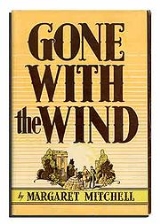
Gone with the Wind is a romantic drama and the only novel by Margaret Mitchell
Margaret Mitchell

Margaret Munnerlyn Mitchell Marsh , popularly known as Margaret Mitchell, was an United States of America author, who won the Pulitzer Prize in 1937 for her novel Gone with the Wind....
. The story follows Scarlett O'Hara, the daughter of a plantation owner in Georgia during and after the Civil War. It is set in Jonesboro and Atlanta during the American Civil War
American Civil War

The American Civil War , also known as the War Between the States and several Naming the American Civil War, was a civil war in the United States....
 and Reconstruction. The novel won the 1937 Pulitzer Prize
Pulitzer Prize

The Pulitzer Prize is an United States award regarded as the highest national honor in newspaper journalism, literary achievements and musical composition....
 and was adapted into an Academy Award-winning 1939 film of the same name
Gone with the Wind (film)

Gone with the Wind is a 1939 in film Cinema of the United States drama film-romance film-film adapted from Margaret Mitchell's 1936 in literature Gone with the Wind and directed by Victor Fleming ....
. It was also adapted during the 1970s into a stage musical titled Scarlett
Scarlett (musical)

Scarlett is a musical theatre with a score by Harold Rome. The original Japanese language book is by Kazuo Kikuta. The Tokyo production was directed by American director/choreographer Joe Layton, with musical direction by Lehman Engel....
; there is also a 2008 new musical stage adaptation in London
London

London is the capital of both England and the United Kingdom, and the most populous municipality in the European Union. An important settlement for two millennia, History of London goes back to its founding by the Roman Empire....
's West End
West End theatre

West End theatre is a popular term for mainstream professional theatre staged in the large theatres of London's "Theatreland". Along with New York City's Broadway theatre, West End theatre is usually considered to represent the highest level of commercial theatre in the English language world....
 titled Gone With The Wind
Gone With The Wind (musical)

Gone With The Wind is a musical theatre based on the famous Gone With The Wind, with music and lyrics by Margaret Martin, and a book by Martin, adapted by Sir Trevor Nunn....
.


Discussion
Ask a question about 'Gone with the Wind'
Start a new discussion about 'Gone with the Wind'
Answer questions from other users
Full Discussion Forum


Recent Posts


Quotations


All had suffered crushing misfortunes and had not been crushed.

And the wind swept through Georgia. SHERMAN! Leaving behind him a path of destruction sixty miles wide, from Atlanta to the sea.

Charles Hamilton: to Scarlett Don't cry, darling. The war'll be over in a few weeks, and then I'll be coming back to you.

Frank Kennedy: about Scarlett She can get mad quicker than any woman I ever saw.

Great balls of fire. Don't bother me anymore, and don't call me sugar.

I can shoot straight, if I don't have to shoot too far.


Encyclopedia


Gone with the Wind is a romantic drama and the only novel by Margaret Mitchell
Margaret Mitchell

Margaret Munnerlyn Mitchell Marsh , popularly known as Margaret Mitchell, was an United States of America author, who won the Pulitzer Prize in 1937 for her novel Gone with the Wind....
. The story follows Scarlett O'Hara, the daughter of a plantation owner in Georgia during and after the Civil War. It is set in Jonesboro and Atlanta during the American Civil War
American Civil War

The American Civil War , also known as the War Between the States and several Naming the American Civil War, was a civil war in the United States....
 and Reconstruction. The novel won the 1937 Pulitzer Prize
Pulitzer Prize

The Pulitzer Prize is an United States award regarded as the highest national honor in newspaper journalism, literary achievements and musical composition....
 and was adapted into an Academy Award-winning 1939 film of the same name
Gone with the Wind (film)

Gone with the Wind is a 1939 in film Cinema of the United States drama film-romance film-film adapted from Margaret Mitchell's 1936 in literature Gone with the Wind and directed by Victor Fleming ....
. It was also adapted during the 1970s into a stage musical titled Scarlett
Scarlett (musical)

Scarlett is a musical theatre with a score by Harold Rome. The original Japanese language book is by Kazuo Kikuta. The Tokyo production was directed by American director/choreographer Joe Layton, with musical direction by Lehman Engel....
; there is also a 2008 new musical stage adaptation in London
London

London is the capital of both England and the United Kingdom, and the most populous municipality in the European Union. An important settlement for two millennia, History of London goes back to its founding by the Roman Empire....
's West End
West End theatre

West End theatre is a popular term for mainstream professional theatre staged in the large theatres of London's "Theatreland". Along with New York City's Broadway theatre, West End theatre is usually considered to represent the highest level of commercial theatre in the English language world....
 titled Gone With The Wind
Gone With The Wind (musical)

Gone With The Wind is a musical theatre based on the famous Gone With The Wind, with music and lyrics by Margaret Martin, and a book by Martin, adapted by Sir Trevor Nunn....
. It is the only novel by Mitchell published during her lifetime, and it took her ten years to write it. The novel is one of the most popular books of all time, selling more than 30 million copies (see list of best-selling books
List of best-selling books

This page provides lists of best-selling single-volume books, book series, authors, and children's books to date and in any language. For some books, accurate accounting has proven impossible, so the book is excluded or an educated guess by an expert is provided....
). Over the years, the novel has also been analyzed for its symbolism and treatment of mythological archetype
Archetype

An archetype is an original model of a person, ideal example, or a prototype after which others are copied, patterned, or emulated; a symbol universally recognized by all....
s.

Time
Time (magazine)

Time is a weekly United States newsmagazine, similar to Newsweek and U.S. News & World Report. A European edition is published from London....
 magazine included the novel in its TIME 100 Best English-language Novels from 1923 to 2005.

Title

The title is taken from the first line of the third stanza of the poem Non Sum Qualis eram Bonae Sub Regno Cynarae by Ernest Dowson
Ernest Dowson

Ernest Christopher Dowson , born in Lee, London, was an English people poet, novelist and writer of short stories associated with the Decadent movement....
: "I have forgot much, Cynara! gone with the wind." The novel's protagonist
Protagonist

A protagonist is the main Character of a drama or Narrative. The word "protagonist" derives from the Greek language p??ta????st?? , "one who plays the first part, chief actor." In the theatre of Ancient Greece, three actors played all of the main dramatic roles in a tragedy; the leading role was played by the protagonist, while the othe...
 Scarlett O'Hara
Scarlett O'Hara

Scarlett O'Hara is the protagonist in Margaret Mitchell's 1936 novel Gone with the Wind and in the later Gone with the Wind . She also is the main character in the 1970 musical Scarlett and the 1991 book Scarlett , a sequel to Gone with the Wind that was written by Alexandra Ripley and adapted for a television mini-series in...
 also uses the title phrase in a line in the book: when her home area is overtaken by the Yankees
Union Army

The Union Army was the army that fought for the Union during the American Civil War. It was also known as the Federal Army, the U.S....
, she wonders to herself if her home, a plantation called Tara, is still standing, or if it was "also gone with the wind which had swept through Georgia". More generally, the title has been interpreted as referring to the entire way of life of the antebellum
Antebellum

"Antebellum" is an expression derived from Latin that means "before war" .In United States history and historiography, "antebellum" is commonly used, in lieu of "pre-Civil War," in reference to the period of increasing sectionalism that led up to the American Civil War....
 South as having "Gone with the Wind".

The book was almost titled quoting the end line in the book, "Tomorrow is another day"; but the publisher at the time noted there were several books close to the same title, so she was asked to find another title, and "Gone with the Wind" was chosen.

Part One

The novel opens at Tara, the O'Hara plantation
Tara Plantation

Tara, the fictional plantation found in Margaret Mitchell's 1936 novel Gone with the Wind, was located near Jonesborough , Georgia . As the locale of the final, decisive defeat of the Confederate States of America defenders in the Battle of Jonesborough, Jonesboro, with its surrounding farmland, is a location of historical significance....
 in Georgia
Georgia (U.S. state)

Georgia is a U.S. state in the United States and was one of the original Thirteen Colonies that revolted against United Kingdom rule in the American Revolution....
, with Scarlett O'Hara flirting idly with Brent and Stuart Tarleton, twin brothers who live on a nearby plantation. The twins are talking about the upcoming war which has no interest to Scarlett. According to the twins, the Yankees had already been shelled out of Fort Sumter "the day before yesterday" (which occurred on April 13, 1861), leaving the impression that the date of the opening is probably April 15, 1861. Amidst the chatter, the pair tell Scarlett that Ashley Wilkes, the man Scarlett secretly loves, is to marry his cousin Melanie Hamilton, a plain and gentle lady from Atlanta
Atlanta, Georgia

Atlanta is the Capital and most populous city in Georgia , as well as the 33rd largest city in the United States of America with a population of 519,145....
. Scarlett hurries to find her father, Gerald O'Hara, who confirms that Ashley does intend to marry Melanie. He warns Scarlett that she and Ashley would make a terrible match and encourages her to consider the attentions of one of the other local beaux.

Scarlett is miserable until she concludes that Ashley does not know she is in love with him. She plots to make Ashley jealous by surrounding herself with men at the barbecue the next day at the Wilkes plantation of Twelve Oaks, then admit to him that she prefers him above all the others. Among the fawning gentlemen are Melanie's brother, Charles Hamilton, and Frank Kennedy, the beau of her sister, Suellen O'Hara. Things do not go according to plan. After Scarlett pulls Ashley into the library and confesses her love, Ashley says that he loves her, but he will still marry Melanie. The unreceived Rhett Butler, resting on a couch during the emotional scene, sees Scarlett throw a vase across the room in anger after Ashley leaves. Surprised by his presence, Scarlett tells Rhett that he is no gentleman, and Rhett responds by telling her that she is no lady. Rhett is impressed by her fire, thus cementing the saga that soon will unfold.

Later in the day, when the news of Lincoln's call for troops arrives and as the men at the party excitedly leave to join the war, Scarlett impulsively accepts a marriage proposal from Charles Hamilton in an attempt to make Ashley jealous.

Both couples marry within weeks. Scarlett bitterly regrets her decision, but receives a warm welcome from Melanie, who now considers Scarlett to be her sister. Two months later, Charles dies of measles
Measles

Measles is a infection of the respiratory system caused by a virus, specifically a paramyxovirus of the genus Morbillivirus. Morbilliviruses, like other paramyxoviruses, are enveloped, single-stranded, negative-sense RNA viruses....
 and pneumonia
Pneumonia

Pneumonia is an Inflammation illness of the lung. Frequently, it is described as lung parenchyma/alveolus inflammation and abnormal alveolar filling with fluid ....
 at a military camp, before he had an opportunity to fight on the battlefield, confirming Scarlett's opinion of his unheroic weakness. Her lamentations include the fact she is forced to dress in all black, and that she cannot go to any parties.

As a widow, Scarlett is resentful of the stringent mourning rituals of the day: a year of wearing unadorned black extended by wartime protocol, living quietly at home, and limited social interaction. She gives birth to a son Wade Hampton Hamilton. (In keeping with tradition, Scarlett names him for Charles' commanding officer). She is more distressed over her boredom and new motherhood than at Charles' death. Her mother, Ellen O'Hara, believing Scarlett to be pining away from a broken heart, sends her to Atlanta to Charles' elderly aunt Aunt Pittypat and Melanie in an attempt to raise her spirits.

Part Two

At the bazaar, Melanie and Scarlett donate their wedding rings for the cause. Rhett returns Melanie's ring, and she then sees Rhett as a perfect gentleman. Against the background of war, Scarlett stays in Atlanta and enjoys the company of Rhett. He ostensibly calls on Aunt Pittypat, as widows cannot properly receive male callers. Aunt Pittypat is uncomfortable with Rhett's presence, but Melanie firmly declares that he is a good man. Rhett's sharp wit and sarcastic charm both infuriate and beguile Scarlett, although she continues to carry a torch for Ashley. When Ashley comes home for Christmas in 1863, Scarlett becomes acutely aware of the privileges Melanie holds as his wife. The day Ashley leaves, Scarlett again reveals her feelings to him, hoping Ashley will break down and allow himself to reveal he loves her, too.

Ashley has a more important matter to discuss with Scarlett. Sensing the end of the war and the fall of the South, he makes Scarlett promise that she will look after Melanie and see his family through the upcoming crisis in his absence. Scarlett blindly agrees to his promise. As Ashley heads for the door, Scarlett clings to him desperately and they share a passionate, forbidden embrace. Scarlett sobs that she loves him and that she only married Charles to hurt him. Ashley says nothing and wrenches himself from her grasp. He hurries from the house and away from Scarlett.

Ashley has left Melanie with child. Word comes that Ashley has been killed, but eventually the news changes that he is missing. Rhett pulls strings and finds out that he is in an enemy prison in Illinois.

Part Three

The tide of war turns against the South. When the Yankees finally begin their siege of Atlanta, the city evacuates. Aunt Pittypat flees to family in Macon, and Scarlett, Melanie, Wade and Prissy remain in the house. In the nearly deserted town, Rhett comes to see Scarlett and asks her to become his mistress. She refuses because she sees nothing in it except a passel of brats.

Dr. Meade forbids Melanie and Scarlett to leave Atlanta, as Melanie is about to give birth. Scarlett must deliver Melanie's baby with only the help of Prissy, as everyone has fled or is too busy caring for wounded soldiers to spare time to help. After a drawn out and damaging birthing, Melanie is nearly dead from blood loss. Scarlett goes outside for air as Prissy bathes the infant. A soldier walks by informing Scarlett that the army is leaving Atlanta.

Scarlett sends Prissy out to find Rhett. He arrives to assist them but the best he can provide is a broken-down horse and a dilapidated wagon stolen from the Army. He carts the weakened Melanie, her infant son Beau, Prissy, Wade, and Scarlett out of Atlanta. In a fit of conscience, he abandons them at Rough and Ready on the road back to Tara to turn back and fight for the South. Before he leaves, he kisses Scarlett and tells her he loves her, but she angrily pushes him away.

Arriving at Tara, Scarlett finds the house in ruins, the crops burned, most of the slaves run off, her mother dead, her father demented, and her two sisters sick with typhoid. The reins of authority had been thrust into her hands. Forced to take up "slave work" and bouts of near starvation, Scarlett realizes her compassion and loyalty to the land of Tara. When a lone Yankee soldier arrives looking to loot and assault Scarlett, she shoots him. Melanie, still weak, comes running with Charles' sword, but it is too heavy for her to lift. Nonetheless, Scarlett feels the beginnings of comradeship with her sister-in-law. The two loot the dead soldier's pockets and knapsack before swearing each other to secrecy about his death. They bury him under the arbor.

Months later, news reaches Tara the war is over and the Confederacy dissolved. Soldiers begin straggling home. On their way, some seek the refuge of Tara for food and hospitality. Comrades bring a wounded soldier named Will Benteen, whom Carreen nurses back to health. Benteen remains at Tara after he recovers, takes on more responsibility, and shifts Scarlett's heavy load onto his own shoulders. Suellen's beau Frank Kennedy asks Scarlett for her sister’s hand in marriage and Scarlett gives her consent.

The only word of Ashley is that he was in a Yankee prison for the last year of the war and a letter to Melanie telling her that he is on his way. One day he appears coming up the long road towards Tara. Melanie and Scarlett both rush to greet him, but Will stops Scarlett, saying, "Don't ruin the moment" Scarlett reluctantly hangs back, but is euphoric over Ashley's return.

Part Four

Will returns from town with the news the Union has raised taxes on Tara to $300.

Dejected, Scarlett seeks comfort from Ashley as he chops wood. She laments her life at Tara and asks him to run away with her. When Scarlett cries, Ashley embraces her. Telling her to stop crying, Ashley kisses her. After kissing her, he says he loves her. He tells her his honor will not allow him to leave Melanie and their child. Scarlett says if she doesn't have him, nothing is left her. Ashley picks up the red dirt clay from the ground, presses it to her skin, and reminds her she still has Tara.

As Scarlett returns to the house, Jonas Wilkerson, former overseer of Tara, arrives. He wants to buy Tara for himself and his wife, Emmie Slattery, thinking that Scarlett will not have the money to pay the taxes. Scarlett orders him to leave, throwing a handful of dirt at him. Wilkerson threatens to buy Tara once she and her family are unable to pay the taxes and are evicted.

Frantic to save Tara and anxious to keep Jonas and Emmie out, Scarlett goes to Atlanta to beg Rhett for money, willing to offer herself to him as his mistress to save her home and family. By asking Mammy to sew dress out of her deceased mother's curtains, Scarlett is able to feign wealth in front of Rhett and pretends an interest in him. Butler momentarily buys it until he takes notice of her ragged hands, which suggest the back-breaking work she's been doing. He announces he wouldn't give her the money if he could. She says she hopes he gets hanged and storms out in the rain.

Upon leaving the jail, she runs into Frank Kennedy, now a successful store owner, and in desperation, manipulates Frank to believe that an impatient Suellen is to marry someone else. Frank, saddened by Suellen's supposed defection and unable to resist Scarlett's charms, marries her and gives her the tax money. After Rhett gets out of jail, he lends her more so that she can buy a sawmill, with the promise that she will not use the money to help Ashley Wilkes.

To her dismay, Scarlett becomes pregnant with Frank’s child. She earns the wrath of Atlanta society's "Old Guarde" when she appears pregnant in public and succeeding in business, although she compromises by agreeing not to be seen outside the house whilst pregnant after a certain date. Her daughter is named Ella Lorena, a subtle reference to the Civil War Era song Lorena
Lorena

Lorena is a municipality/county in the state of S?o Paulo in Brazil. The population in 2004 is 77,843, the density is 186.9/km? and the area is 416.5 km?....
 (Joseph Philbrick Webster
Joseph Philbrick Webster

Joseph Philbrick Webster, also known as J.P. Webster , was an American songwriter and composer most notable for his musical compositions during the Antebellum and American Civil War periods of United States history, and his post-war religious hymms....
, the composer of the song, had an interest in a girl named Ella at the time of writing, in addition to the title "Lorena"). Ella was named after her grandmother, Ellen.

Scarlett receives word from Tara that her father Gerald has died. When she returns to Tara for the funeral, Will tells her about the circumstances of his death. Suellen tried to persuade a disoriented Gerald to sign the Ironclad Oath
Ironclad oath

The Ironclad Oath was a key factor in the removing of ex-Confederate States of America from the political arena during the Reconstruction era of the United States of the United States in the 1860s....
 (to the Union government) for a fee. Briefly lucid, Gerald realizes her intentions, flies into a rage and disowns Suellen. In an attempt to jump a fence with his horse, he falls and breaks his neck.

The community despises Suellen for her part in Gerald's death. Scarlett, struggling with her family’s poverty, quietly agrees with her. Despite his love for Carreen, Will announces his intention to marry Suellen to assuage the community’s animosity toward her. Carreen, unable to recover from the death of Brent Tarleton at Gettysburg
Gettysburg

Gettysburg may refer to:...
, enters the convent.

After Gerald's funeral, Scarlett plots to stop Ashley from leaving for the North to find work. By faking a flood of tears, she persuades Melanie to compel Ashley to help her with the mill as a way of repaying Scarlett for evacuating her and Beau from a falling Atlanta. Thus, Scarlett manipulates Ashley into returning to Atlanta to run her sawmill.

Scarlett regularly drives alone to and from the sawmill, despite being warned against it by acquaintances. One day she is assaulted by a poor white man and his black companion as she drives through the woods near a shantytown. Her former slave, Big Sam, appears and fights off the attackers. To avenge the attack, Frank, Ashley, and local men (part of the Ku Klux Klan
Ku Klux Klan

Ku Klux Klan is the name of several past and present secret domestic militant organizations in the United States, originating in the southern states and eventually having national scope, that are best known for advocating white supremacy and acting as terrorists while hidden behind conical hats, masks and white robes....
), plan to raid the shantytown. Local law enforcement officers find out about the plan and inform Rhett of their plans over a game of cards. During the raid, Ashley is injured and Frank is killed.

To save the survivors from being hanged, Rhett persuades Belle Watling, the local madam, to fabricate a phony alibi by letting the survivors into her brothel through the back door and pretending to throw them out the front door in full sight of the public. She threatens her prostitutes that she will beat them if they don't lie to the authorities that the men were there all evening. The men are furious that Rhett humiliated them like this, but Rhett earns the admiration of Melanie Wilkes for saving their lives and Caroline Meade silently agrees.

Following Frank’s funeral, Rhett unceremoniously proposes to Scarlett, wanting to marry her before she marries someone else. Belle Watling hears that Melanie wishes to pay a call on her in order to thank her for saving Ashley's life on the night of the raid. To forestall the visit, which would scandalize Atlanta society, Belle stops by Melanie's house in a closed carriage to see Melanie. Melanie offers Belle her friendship in return. Scarlett remains disapproving of Belle Watling, even after her part in saving her beloved Ashley's life.

Part Five

Scarlett marries Rhett in 1868 and finds her marriage surprisingly pleasant. Other than refusing to help Ashley Wilkes, Rhett spoils her. Scarlett spends time with newly rich Yankees, portrayed as having few scruples. Scarlett builds a mansion and spends lavishly. The Old Guard cut Scarlett and Rhett out of society for keeping company with Yankees and flaunting their wealth.

Only Melanie's undying loyalty keeps Scarlett in the fold at all. Scarlett learns that she is pregnant and gives birth to a baby girl. While they name the infant Eugenia Victoria (for Queen Victoria and French Empress Eugénie de Montijo
Eugénie de Montijo

Eug?nie de Montijo, born Do?a Mar?a Eugenia Ignacia Augustina de Palafox de Guzm?n Portocarrero y Kirkpatrick, 18th Marchioness of Ardales, 18th Marchioness of Moya, 19th Countess of Teba, 10th Countess of Montijo and ?th Countess of Ablitas, became on marriage Eug?nie, Empress of the French was Empress Consort of France , the wi...
), Melanie, while talking to Rhett, mentions the child's eyes are as blue as the Bonnie Blue flag, inadvertently creating the lasting nickname of Bonnie Blue Butler. Rhett is immensely proud of the child and spoils her unabashedly.

Ashley mentions he hates the thought of Rhett's hands on Scarlett's body and feels chagrined at the ruin of her figure. Not wanting to further betray her love for Ashley, Scarlett informs Rhett she does not want to have any more children and she will no longer share his bed. Rhett becomes bitterly angry, but does nothing to change her mind. He tells her there are other beds.

Now rejected by Scarlett, Rhett turns to their daughter Bonnie for comfort. Rhett decides Bonnie should have every desire and turns to winning over Atlanta. He lavishes Bonnie with all the love and affection he intended to give to his wife.

In April 1871, Melanie plans a surprise birthday party for Ashley. Scarlett goes to her mill after being asked by Melanie to stall him. She and Ashley chat about old times at Twelve Oaks. He hugs her in an attempt to console her, because she is overwhelmed by the memories and hates to look back at the past. However, India Wilkes, Mrs. Elsing, and Archie witness and misinterpret this embrace, all suspecting Scarlett's true feelings for Ashley. They eagerly spread the rumor. Later that evening, Rhett, having heard from Archie, forces Scarlett out of bed and to the party in her most flamboyant dress. Incapable of believing anything bad about her beloved sister-in-law, Melanie stands by Scarlett's side so that all will know she believes the gossip to be false.

At home later that night, Scarlett finds Rhett drunk. Blind with jealousy, he tells Scarlett he loves her and could kill her to make her forget Ashley. Picking her up, he carries her up the stairs and the two make passionate, uninhibited love. Scarlett wakes up alone the next morning, eager to see her husband. Rhett stays away as he is horrified at his behavior, returning three days later to inform Scarlett that he is leaving with Bonnie for an extended trip. Atlanta society chooses sides between India and Scarlett. Melanie continues to support Scarlett and rejects India, her husband's own sister.

Scarlett discovers she is pregnant again. For the first time, she is glad. In July 1871, Rhett returns after three months. After he rebuffs Scarlett's attempts at reconciliation, she tells him she does not want the baby. Hurt, Rhett scornfully says, "Cheer up. Maybe you'll have a miscarriage." Enraged, Scarlett tries to attack him, but he dodges her slap. She is thrown off balance and can't prevent herself from falling down the stairs.

She suffers a miscarriage. Rhett, frantic with guilt, sits in his room drinking to the point of oblivion, convinced that he has killed Scarlett. When Melanie visits to tell him Scarlett is doing better, he cries to Melanie about his jealousy. He refrains from telling Melanie about Scarlett's true feelings for Ashley.

Scarlett goes to Tara to recuperate with Wade and Ella in tow. After she recovers, Rhett tricks Scarlett into selling the sawmills to Ashley. Rhett spends his time edging Bonnie back into Southern society.

After her fourth birthday (by most estimations sometime in the summer of 1873), Bonnie dies while trying to jump her horse, 'Mr. Butler', the same way as her grandfather Gerald O'Hara did. Scarlett blames Rhett, Rhett blames himself, and they refuse to see each other.

Scarlett regrets what she said and desperately wants to see him, but a chasm has formed between the two. They continue living together as strangers passing in the halls.

While Scarlett is away at Marietta with Wade and Ella, she receives an urgent telegram from Rhett that Melanie is gravely ill. Scarlett rushes back to Atlanta to learn that Melanie is dying from complications of a miscarriage. After having Beau, she was warned by doctors not to have any more children, but Melanie always desired more children and became pregnant. Rhett drops Scarlett off at the Wilkes home and leaves.

On her deathbed, Melanie tells Scarlett to watch out for Ashley and to be good to Rhett because he loves her. Scarlett goes to Ashley to find strength to help him in his grief, but she finds someone more adrift than she is. She realizes she never really loved Ashley. Rather she loved the 'noble knight' and memories of her carefree childhood, which he represented to her.

She rushes home through the mist to share her revelation with Rhett, now drained of his love for Scarlett. He rejects her overtures and tells her he is leaving her, that he had already planned to before Scarlett left for Marietta. Scarlett cries, "But what will I do? Where will I go?" Rhett replies with the famous line, "My dear, I don't give a damn." (The movie inserted the word "frankly.")

He goes up the stairs to bed to return, presumably, to his hometown of Charleston. Devastated by her realization of true love and the consequences of her past selfishness, Scarlett decides to go back to Tara. She is sure she can think of a solution. She still believes Rhett will return to her if she tries to reconcile. The book ends with Scarlett's proclamation: "After all, tomorrow is another day!"

Characters


Butler Family

  • Scarlett O'Hara
    Scarlett O'Hara

    Scarlett O'Hara is the protagonist in Margaret Mitchell's 1936 novel Gone with the Wind and in the later Gone with the Wind . She also is the main character in the 1970 musical Scarlett and the 1991 book Scarlett , a sequel to Gone with the Wind that was written by Alexandra Ripley and adapted for a television mini-series in...
     – protagonist, willful and spoiled Southern debutante and daughter of a rich plantation owner. Scarlett will do anything to keep her land and get what she wants.
  • Rhett Butler
    Rhett Butler

    Rhett Butler is a fictional character, and one of the main protagonists of Gone with the Wind by Margaret Mitchell....
     – Scarlett's love interest and third husband, often publicly shunned for scandalous behavior, sometimes accepted for his charm. He is financially a very shrewd man and initially appears to love Scarlett dearly.
  • Wade Hampton Hamilton – Scarlett and Charles Hamilton’s shy, timid son.
  • Ella Lorena Kennedy – Scarlett and Frank Kennedy’s homely and flighty daughter.
  • Eugenie Victoria "Bonnie Blue" Butler – Scarlett and Rhett's pretty, beloved, pampered daughter.
Note: In the movie, Scarlett didn't have any children with her first two husbands. The only child she had was Bonnie with Rhett Butler.

Wilkes Family

  • Ashley Wilkes
    Ashley Wilkes

    George Ashley Wilkes is a fictional character in the Margaret Mitchell's 1936 novel Gone with the Wind and the later Gone with the Wind . The character also appears in the 1991 book Scarlett , a sequel to Gone with the Wind written by Alexandra Ripley, and in Rhett Butler's People by Donald McCaig....
     – the man Scarlett loves, Melanie's husband, a gentleman and dreamer, who nevertheless sees that the Southern way of life is doomed.
  • Melanie Hamilton Wilkes
    Melanie Wilkes

    Melanie Hamilton Wilkes is a fictional character first appearing in the novel Gone with the Wind by Margaret Mitchell. In the Gone with the Wind she was portrayed by Olivia de Havilland....
     – Ashley's wife and second cousin, a true lady. Called "mealy-mouth" by Scarlett, but she quietly has a backbone of steel. Although maligned by Scarlett, she is actually Scarlett's most stalwart supporter.
  • Beau Wilkes – Melanie's and Ashley's lovable son, delivered by Scarlett.
  • India Wilkes
    India Wilkes

    India Wilkes is the sister of Ashley Wilkes and the rival of Scarlett O'Hara in the novel and film Gone with the Wind. She's a jealous character who despises Scarlett because Scarlett stole the attention of Stuart Tarleton, who courted India previously....
     – Ashley's sister. Almost engaged to Stuart Tarleton, she bitterly hates Scarlett for stealing his attention before he is killed at Gettysburg. Lives with Aunt Pittypat after Scarlett marries Rhett and moves out.
  • Honey Wilkes – boy-crazy sister of India and Ashley. Originally "intended" to marry Charles Hamilton until Scarlett marries him, following the war, she marries a man from Mississippi, and moves to his home state with him.
  • John Wilkes- Owner of Twelve Oaks Plantation and patriarch of the Wilkes family. Killed in the Civil War.


Note: In the film, India Wilkes was in love with Charles Hamilton and hates Scarlett for stealing him away.

O'Hara Family

  • Gerald O'Hara – Scarlett's fiery Irish father.
  • Ellen O'Hara – Scarlett's beloved mother, of aristocratic French ancestry, a true southern lady.
  • Scarlett O'Hara – Protagonist of the novel.
  • Suellen O'Hara – Scarlett's younger sister, whiny and lazy, originally is to be married to Frank Kennedy, but later marries Will Benteen.
  • Carreen O'Hara – Scarlett's youngest sister, gentle and kind, joins a convent in Charleston.
  • Eulalie & Pauline – Ellen's sisters who live in Charleston. They are aristocratic, and are concerned with social status.


Other characters

  • Mammy – Scarlett's nurse from birth; a slave. Cited by Rhett as "the real head of the household." She has a no-nonsense attitude and is outspoken and opinionated. She chastises Scarlett often.
  • Prissy – A young slave girl who features Scarlett's life. She is portrayed as flighty and silly.
  • Pork – The O'Hara family's butler, favored by Gerald.
  • Dilcey – Pork's wife, a strong, outspoken slave woman, Prissy's mother.
  • Charles Hamilton – Melanie's brother, Scarlett's first husband, shy and loving.
  • Frank Kennedy – Suellen's former beau, Scarlett's second husband, an older man who only wants peace and quiet.
  • Belle Watling – a madam; Rhett is her friend and loyal customer. She is portrayed as a kind-hearted, poor, country woman.
  • Archie; An ex-convict and former Confederate soldier who is taken in by Melanie.
  • Jonas Wilkerson – former overseer of Tara, father of Emmie Slattery's illegitimate baby.
  • Emmie Slattery – later wife of Jonas Wilkerson
  • Will Benteen – Confederate soldier who seeks refuge at Tara and stays on to help with the plantation, in love with Carreen but marries Suellen.
  • Aunt Pittypat Hamilton – Charles' and Melanie's vaporish aunt who lives in Atlanta.
  • Uncle Peter – Aunt Pittypat's houseman and driver.


Setting

  • Tara Plantation
    Tara Plantation

    Tara, the fictional plantation found in Margaret Mitchell's 1936 novel Gone with the Wind, was located near Jonesborough , Georgia . As the locale of the final, decisive defeat of the Confederate States of America defenders in the Battle of Jonesborough, Jonesboro, with its surrounding farmland, is a location of historical significance....
     – The O'Hara home and plantation
  • Twelve Oaks – The Wilkes plantation.
  • Peachtree Street – location of Aunt Pittypat's home in Atlanta, where much of the book takes place, and site of Scarlett and Rhett's own large home.


Politics

The book includes a vivid description of the fall of Atlanta in 1864 and the devastation of war (some of that aspect was missing from the 1939 film
Gone with the Wind (film)

Gone with the Wind is a 1939 in film Cinema of the United States drama film-romance film-film adapted from Margaret Mitchell's 1936 in literature Gone with the Wind and directed by Victor Fleming ....
). The novel showed considerable historical research. According to her biography, Mitchell herself was ten years old before she learned that the South had lost the war. Mitchell's sweeping narrative of war and loss helped the book win the Pulitzer Prize
Pulitzer Prize

The Pulitzer Prize is an United States award regarded as the highest national honor in newspaper journalism, literary achievements and musical composition....
 on May 3, 1937.

An episode in the book dealt with the early Ku Klux Klan
Ku Klux Klan

Ku Klux Klan is the name of several past and present secret domestic militant organizations in the United States, originating in the southern states and eventually having national scope, that are best known for advocating white supremacy and acting as terrorists while hidden behind conical hats, masks and white robes....
. In the immediate aftermath of the War, Scarlett is assaulted by poor southerners living in shanties, whereupon her former black slave Big Sam saves her life. In response, Scarlett's male friends attempt to make a retaliatory nighttime raid on the encampment. Northern soldiers try to stop the attacks, and Rhett helps Ashley, who is shot, to get help through his prostitute friend Belle. Scarlett's husband Frank is killed. This raid is presented sympathetically as being necessary and justified, while the law-enforcement officers trying to catch the perpetrators are depicted as oppressive Northern occupiers.

Although the Klan is not mentioned in that scene (though Rhett tells Archie to burn the "robes"), the book notes that Scarlett finds the Klan abominable. She believed the men should all just stay at home (she wanted both to be petted for her ordeal and to give the hated Yankees no more reason to tighten martial law, which is bad for her businesses). Rhett is also mentioned to be no great lover of the Klan. At one point, he said that if it were necessary, he would join in an effort to join "society". The novel never explicitly states whether this drastic step was necessary in his view. The local chapter later breaks up under the pressure from Rhett and Ashley.

Scarlett expresses views that were common of the era. Some examples:

  • "How stupid negroes were! They never thought of anything unless they were told." — Scarlett thinks to herself, after returning to Tara after the fall of Atlanta.
  • "How dared they laugh, the black apes!...She'd like to have them all whipped until the blood ran down...What devils the Yankees were to set them free!" — Scarlett again thinking to herself, seeing free blacks after the war.
  • However, she is kind to Pork, her father's trusted manservant. He tells Scarlett that if she were as nice to white people as she is to black, a lot more people would like her.
  • She almost loses her temper when the Yankee women say they would never have a black nurse in their house and talk about Uncle Peter, Aunt Pittypat's beloved and loyal servant, as if he were a mule. Scarlett informs them that Uncle Peter is a member of the family, which bewilders the Yankee women and leads them to misinterpret the situation.


Inspirations

As several elements of Gone with the Wind have parallels with Margaret Mitchell's own life, her experiences may have provided some inspiration for the story in context. Mitchell's understanding of life and hardship during the American Civil War
American Civil War

The American Civil War , also known as the War Between the States and several Naming the American Civil War, was a civil war in the United States....
, for example, came from elderly relatives and neighbors passing war stories to her generation.

While Margaret Mitchell used to say that her Gone with the Wind characters were not based on real people, modern researchers have found similarities to some of the people in Mitchell's own life as well as to individuals she knew or she heard of. Mitchell's maternal grandmother, Annie Fitzgerald Stephens, was born in 1845; she was the daughter of an Irish immigrant, who owned a large plantation on Tara Road in Clayton County, south of Atlanta, and who married an American woman named Ellen, and had several children, all daughters.

Many researchers believe that the physical brutality and low regard for women exhibited by Rhett Butler
Rhett Butler

Rhett Butler is a fictional character, and one of the main protagonists of Gone with the Wind by Margaret Mitchell....
 was based on Mitchell's first husband, Red Upshaw. She divorced him after she learned he was a bootlegger
Rum-running

Rum-running is the business of smuggling or transporting of alcoholic beverages illegally, usually to circumvent taxation or prohibition. The term usually applies to transport of goods over water, over land it is commonly referred to as bootlegging....
 amid rumors of abuse and infidelity.

After a stay at the plantation called The Woodlands, and later Barnsley Gardens, Mitchell may have gotten the inspiration for the dashing scoundrel from Sir Godfrey Barnsley of Adairsville, Georgia.

Martha Bulloch Roosevelt
Martha Bulloch

Martha Bulloch Roosevelt was the mother of US President Theodore Roosevelt and the paternal grandmother of Eleanor Roosevelt. She married Theodore Roosevelt, Sr., and had four children....
, the mother of US president Theodore Roosevelt
Theodore Roosevelt

Theodore Roosevelt , also known as T.R., and to the public as Teddy, was the List of Presidents of the United States President of the United States....
 may have been an inspiration for Scarlett O'Hara. Roosevelt biographer David McCullough
David McCullough

David Gaub McCullough is an United States author, narrator, and lecturer. He is a two-time winner of the Pulitzer Prize and the National Book Award, and a recipient of the Presidential Medal of Freedom, the United States' highest civilian award....
 discovered that Mitchell, as a reporter for The Atlanta Journal
The Atlanta Journal-Constitution

The Atlanta Journal-Constitution is the only major daily newspaper in Atlanta, Georgia, United States and metro Atlanta. The AJC, as it is called, is the flagship publication of Cox Enterprises....
,
conducted an interview with one of Martha's closest friends and bridesmaid, Evelyn King Williams, then 87. In that interview, she described Martha's physical appearance, beauty, grace, and intelligence in detail. The similarities between Martha and the Scarlett character are striking.

George Trenholm as historical basis for Rhett Butler

It made international news in 1989 when Dr. E. Lee Spence, an underwater archaeologist and shipwreck expert from Charleston, South Carolina, announced his discovery that Margaret Mitchell
Margaret Mitchell

Margaret Munnerlyn Mitchell Marsh , popularly known as Margaret Mitchell, was an United States of America author, who won the Pulitzer Prize in 1937 for her novel Gone with the Wind....
 had actually taken much of her compelling story of love, greed and war from real life and that Mitchell had actually based most of Rhett Butler
Rhett Butler

Rhett Butler is a fictional character, and one of the main protagonists of Gone with the Wind by Margaret Mitchell....
 on the life of George Alfred Trenholm. Like Rhett, Trenholm was a tall, handsome, shipping magnate
Magnate

Magnate, from the Late Latin magnas, a great man, itself from Latin magnus 'great', designates a noble or other man in a high social position, by birth, wealth or other qualities....
 from Charleston, South Carolina, and made millions of dollars from blockade running. Both the real life Trenholm and the fictional Rhett were accused of making off with much of the Confederate treasury and were thrown in prison after the Civil War where they were visited by a beautiful woman with a "fast" reputation. Spence's literary discovery that had its roots in his prior discoveries of some of Trenholm's wrecked blockade runners made international news.

In his book, , Dr. Spence reveals what the editors of Life magazine called "overwhelming evidence" that shipping and banking magnate George Trenholm
George Trenholm

George Alfred Trenholm was a prominent politician in the Confederate States of America.George Alfred Trenholm was born in Charleston, South Carolina....
 was the historical basis for Mitchell's romantic sea captain. Spence's book gives a compelling case against Mitchell's statements that Rhett was pure fiction.

Symbolism

Over the past years, the novel Gone with the Wind has also been analyzed for its symbolism
Symbolism

Symbolism is the applied use of symbols: iconic representations that carry particular meanings.The term "symbolism" is limited to use in contrast to "representationalism"; defining the general directions of a linear spectrum - where in all symbolic concepts can be viewed in relation, and where changes in context may imply systemic changes...
 and mythological treatment of archetype
Archetype

An archetype is an original model of a person, ideal example, or a prototype after which others are copied, patterned, or emulated; a symbol universally recognized by all....
s. Scarlett has been characterized as a heroic figure struggling and attempting to twist life to suit her own wishes. The land is considered a source of strength, as in the plantation Tara, whose name is almost certainly drawn from the Hill of Tara in Ireland, a mysterious and poorly-understood archeological site that has traditionally been connected to the temporal and/or spiritual authority of the ancient Irish kings.

Sequels

Although Mitchell refused to write a sequel to Gone With The Wind, Mitchell's estate authorised Alexandra Ripley
Alexandra Ripley

Alexandra Ripley, n?e Braid was an United States writer best known as the author of Scarlett , the sequel to Gone with the Wind. Her first novel was Who's the Lady in the President's Bed? ....
 to write the novel Scarlett
Scarlett (novel)

Scarlett is a novel written in 1991 by Alexandra Ripley as a sequel to Margaret Mitchell's Gone with the Wind. It was adapted as a television mini-series of Scarlett in 1994 starring Timothy Dalton as Rhett Butler and Joanne Whalley-Kilmer as Scarlett O'Hara....
 in 1991.

Author Pat Conroy
Pat Conroy

Pat Conroy , is a New York Times New York Times bestseller list author who has written several acclaimed novels and memoirs....
 was approached to write a follow-up, but the project was ultimately abandoned.

In 2000, the copyright holders attempted to suppress publication of Alice Randall
Alice Randall

Alice Randall is an United States author and songwriter. Randall grew up in Washington, D.C.. She attended Harvard University, where she earned an honors degree in English and American literature, before moving to Nashville in 1983 to become a country songwriter....
’s The Wind Done Gone
The Wind Done Gone

The Wind Done Gone is the first novel written by Alice Randall. It is a historical fiction parallel novel that reinterprets the famous United States novel Gone with the Wind by Margaret Mitchell....
, a book that retold the story from the point of view of the slaves. A federal appeals court denied the plaintiffs an injunction
Injunction

An injunction is an equitable remedy in the form of a court order, whereby a party is required to do, or to refrain from doing, certain acts. The party that fails to adhere to the injunction faces civil or criminal penalties and may have to pay damages or accept sanctions for failing to follow the court's order....
 against publication in Suntrust v. Houghton Mifflin
Suntrust v. Houghton Mifflin

Suntrust v. Houghton Mifflin Co., Case citation per curiam, opinion at 268 F.3d 1257, was a case decided by the United States Court of Appeals for the Eleventh Circuit against the owner of Margaret Mitchell's Gone with the Wind, vacating an injunction prohibiting the publisher of Alice Randall's The Wind Done Gone from dis...
 (2001), on the basis that the book was parody
Parody

A parody , in contemporary usage, is a work created to mock, comment on, or poke fun at an original work, its subject, or author, or some other target, by means of humorous, satiric or ironic imitation....
 protected by the First Amendment
First Amendment to the United States Constitution

The First Amendment to the United States Constitution is the part of the United States Bill of Rights that expressly prohibits the United States Congress from making laws "Establishment Clause of the First Amendment" or that prohibit the Free Exercise Clause of the First Amendment, laws that infringe the Freedom of speech in the United State...
. The parties subsequently settled out of court to allow the book to be published. After its release, the book became a New York Times bestseller.

In 2002, the copyright holders blocked distribution of an unauthorised sequel published in the U.S, The Winds of Tara by Katherine Pinotti, alleging copyright infringement. The story follows Scarlett as she returns to Tara where a family issue threatens Tara and the family's reputation. In it Scarlett shows just how far she will go to protect her family and her home. The book was immediately removed from bookstores by publisher Xlibris. The book sold in excess of 2,000 copies within 2 weeks before being removed. More recently, in 2008, Australian publisher Fontaine Press re-published "The Winds of Tara" exclusively for their domestic market, avoiding U.S. copyright restrictions.

A second sequel was released in November 2007. The story covers the same time period as Gone with the Wind and is told from Rhett Butler’s perspective – although it begins years before and ends after. Written by Donald McCaig
Donald McCaig

Donald McCaig is an United States novelist, poet and essayist. His most recent work is "Rhett Butler's People", a sequel to "Gone with the Wind" authorized by the Margaret Mitchell estate....
, this novel is titled Rhett Butler's People
Rhett Butler's People

Rhett Butler's People by Donald McCaig is an authorized sequel to Gone with the Wind. It was published in November 2007.Fully authorized by the Margaret Mitchell estate, Rhett Butler?s People is a novel that parallels Gone with the Wind from Rhett Butler's perspective....
 (2007).

Adaptations

Gone With The Wind has been adapted several times for stage and screen, most famously in the 1939 film
Gone with the Wind (film)

Gone with the Wind is a 1939 in film Cinema of the United States drama film-romance film-film adapted from Margaret Mitchell's 1936 in literature Gone with the Wind and directed by Victor Fleming ....
 starring Clark Gable
Clark Gable

Clark Gable was an Cinema of the United States, nicknamed "The King of Hollywood" in his heyday. In , the American Film Institute named Gable seventh among the AFI's 100 Years......
 and Vivien Leigh
Vivien Leigh

Vivien Leigh, Lady Olivier , was an English actress. She won two Academy Awards for playing "southern belles": Scarlett O'Hara in Gone with the Wind and Blanche DuBois in the film version of A Streetcar Named Desire , a role she had also played on stage in London's West End Theatre....
.

On stage it has been adapted as a musical
Musical theatre

Musical theatre is a form of theatre combining music, songs, spoken dialogue and dance. The emotional content of the piece ? humor, pathos, love, anger ? as well as the story itself, is communicated through the words, music, movement and technical aspects of the entertainment as an integrated whole....
 Scarlett
Scarlett (musical)

Scarlett is a musical theatre with a score by Harold Rome. The original Japanese language book is by Kazuo Kikuta. The Tokyo production was directed by American director/choreographer Joe Layton, with musical direction by Lehman Engel....
 (premiering in 1972). The musical opened in the West End followed by a pre-Broadway tryout in 1973 (with Leslie Ann Warren as Scarlett). The book and was again adapted as a musical called Gone With The Wind
Gone With The Wind (musical)

Gone With The Wind is a musical theatre based on the famous Gone With The Wind, with music and lyrics by Margaret Martin, and a book by Martin, adapted by Sir Trevor Nunn....
 which premiered at the New London Theatre
New London Theatre

The New London Theatre is a West End theatre located on the corners of Drury Lane and Parker Street in Covent Garden, in the London Borough of Camden....
 in 2008 in a production directed by Trevor Nunn
Trevor Nunn

Sir Trevor Robert Nunn Order of the British Empire is an England theatre director and film director....
.

The Japanese Takarazuka Revue
Takarazuka Revue

The Takarazuka Revue is a Japanese all-female musical theater in the city of Takarazuka, Hyogo, Hyogo Prefecture, Japan. Women play both male and female roles in lavish, Broadway-style productions ? most of their plays are Western-style musicals, and sometimes they are stories adapted from shojo manga and folktales of China and Japan....
 has also adapted the novel into a musical with the same name. The first performance was in 1977, performed by the Moon Troupe. It has been performed several times since by the group, the most recent being in 2004 (performed by the Cosmos Troupe).

See also

  • Southern Renaissance
    Southern Renaissance

    The Southern Renaissance was the reinvigoration of United States Southern literature that began in the 1920s and 1930s with the appearance of writers such as William Faulkner, Caroline Gordon, Elizabeth Madox Roberts, Katherine Anne Porter, Allen Tate, Tennessee Williams, and Robert Penn Warren, among others....
  • Southern literature
    Southern literature

    Southern literature is defined as American literature about the Southern United States or by writers from this region. Characteristics of Southern literature include a focus on a common American history, the significance of family, a sense of community and one?s role within it, the region's dominant religion and the burdens/rewards religion...
  • Lost Laysen
    Lost Laysen

    Lost Laysen is a novella written by Margaret Mitchell in 1916, although it was not published until 1996.Mitchell, who is best known as the author of Gone with the Wind, was believed to have only written one full book during her lifetime....
    , a 1916 novella written by Mitchell and the only other known literary work of hers to ever be published.
  • Western Costume
    Western Costume

    Western Costume is a costume warehouse in Hollywood, California which supplies costumes and costuming supplies to the film and TV industry. One of the oldest businesses in the industry, the company outdates any studio or production company currently in operation....
    , a costume supplier for the film
  • Scarlett
    Scarlett (novel)

    Scarlett is a novel written in 1991 by Alexandra Ripley as a sequel to Margaret Mitchell's Gone with the Wind. It was adapted as a television mini-series of Scarlett in 1994 starring Timothy Dalton as Rhett Butler and Joanne Whalley-Kilmer as Scarlett O'Hara....
    , an authorized sequel to Gone with the Wind
  • Rhett Butler's People
    Rhett Butler's People

    Rhett Butler's People by Donald McCaig is an authorized sequel to Gone with the Wind. It was published in November 2007.Fully authorized by the Margaret Mitchell estate, Rhett Butler?s People is a novel that parallels Gone with the Wind from Rhett Butler's perspective....
    , an authorized sequel to Gone with the Wind


Bibliography

  • O. Levitski and O. Dumer, "Bestsellers: Color Symbolism and Mythology in Margaret Mitchell’s Novel Gone with the Wind" (literary analysis), Americana: The Institute for the Study of American Popular Culture, September 2006, webpage:
  • Treasures of the Confederate Coast: the "real Rhett Butler" & Other Revelations by Dr. E. Lee Spence, (Narwhal Press, Charleston/Miami, ©1995)[ISBN 1886391017] [ISBN 1886391009]
  • Matthews, James W. “The Civil War of 1936: Gone with the Wind and Absalom, Absalom!Georgia Review 21 (Winter 1967): 462-69
  • May, Robert E. “Gone with the Wind as Southern History: A Reappraisal.” Southern Quarterly 17.1 (Fall 1978): 51-64
  • Ryan, Tim A. Calls and Responses: The American Novel of Slavery since Gone with the Wind Baton Rouge: Louisiana State UP, 2008
  • Molly Haskall, Frankly, My Dear: Gone with the Wind Revisited, Yale University Press


External links