
All Topics  
Ginkgo

 
Ginkgo

   Email Print
   Bookmark   Link


Ginkgo


Ginkgo (Ginkgo biloba; in Chinese ??, pinyin
Pinyin

Pinyin, more formally Hanyu pinyin, is the most commonly used Romanization system for Standard Mandarin. Hanyu is the Chinese Language, and pinyin means "phonetics", or more literally, "spelling sound" or "spelled sound"....
 romanization, yín xěng), frequently misspelled as "Gingko", and also known as the Maidenhair Tree after Adiantum, is a unique species
Species

In biology, a species is one of the basic units of biological classification and a taxonomic rank. A species is often defined as a group of organisms capable of interbreeding and producing fertile offspring....
 of tree
TREE

TREE was a Boston hardcore punk band formed in the summer of 1990. They were active in the Boston music scene until disbanding in 2002....
 with no close living relatives. The ginkgo is classified in its own division, the Ginkgophyta, comprising the single class Ginkgoopsida, order Ginkgoales, family Ginkgoaceae
Ginkgoaceae

The Ginkgoaceae is a family of gymnosperms which appeared during the Mesozoic Era, of which the only extant representative is Ginkgo biloba, which is for this reason sometimes regarded as a living fossil....
, genus Ginkgo and is the only extant species within this group.


Discussion
Ask a question about 'Ginkgo'
Start a new discussion about 'Ginkgo'
Answer questions from other users
Full Discussion Forum


Recent Posts


Encyclopedia


Ginkgo (Ginkgo biloba; in Chinese ??, pinyin
Pinyin

Pinyin, more formally Hanyu pinyin, is the most commonly used Romanization system for Standard Mandarin. Hanyu is the Chinese Language, and pinyin means "phonetics", or more literally, "spelling sound" or "spelled sound"....
 romanization, yín xěng), frequently misspelled as "Gingko", and also known as the Maidenhair Tree after Adiantum, is a unique species
Species

In biology, a species is one of the basic units of biological classification and a taxonomic rank. A species is often defined as a group of organisms capable of interbreeding and producing fertile offspring....
 of tree
TREE

TREE was a Boston hardcore punk band formed in the summer of 1990. They were active in the Boston music scene until disbanding in 2002....
 with no close living relatives. The ginkgo is classified in its own division, the Ginkgophyta, comprising the single class Ginkgoopsida, order Ginkgoales, family Ginkgoaceae
Ginkgoaceae

The Ginkgoaceae is a family of gymnosperms which appeared during the Mesozoic Era, of which the only extant representative is Ginkgo biloba, which is for this reason sometimes regarded as a living fossil....
, genus Ginkgo and is the only extant species within this group. It is one of the best-known examples of a living fossil
Living fossil

Living fossil is an informal term for any living species of organism which appears to be the same as a species otherwise only known from fossils and which has no close living relatives....
, because Ginkgoales (other than G. biloba) are not known from the fossil record after the Pliocene
Pliocene

The Pliocene epoch is the period in the geologic timescale that extends from 5.332 million to 1.806 million years before present.The Pliocene is the second epoch of the Neogene period in the Cenozoic era....
.

For centuries it was thought to be extinct in the wild, but is now known to grow in at least two small areas in Zhejiang
Zhejiang

Zhejiang is an eastern coastal province of China of the People's Republic of China. The word Zhejiang was the old name of the Qiantang River, which passes through Hangzhou, the provincial capital....
 province in Eastern China
China

China is a Culture of China, an ancient civilization, and, depending on perspective, a national or multinational entity extending over a large area in East Asia....
, in the Tian Mu Shan Reserve. However, recent studies indicate high genetic uniformity among ginkgo trees from these areas, arguing against a natural origin of these populations and suggesting that the ginkgo trees in these areas may have been planted and preserved by Chinese monks over a period of about 1000 years. Whether native ginkgo populations still exist has not been demonstrated unequivocally and is therefore uncertain.

The relationship of Ginkgo to other plant groups remains uncertain. It has been placed loosely in the divisions Spermatophyta and Pinophyta
Pinophyta

The conifers, division Pinophyta, also known as division Coniferae, are one of 13 or 14 division level taxon within the Plant. They are Conifer cone-bearing seed plants with Vascular plant tissue; all extant conifers are woody plants, the great majority being trees with just a few being shrubs....
, but no consensus has been reached. Since Ginkgo seeds are not protected by an ovary
Ovary (plants)

In the flowering plants, an ovary is a part of the female reproductive organ of the flower or gynoecium. Specifically, it is the part of the carpel which holds the ovule and is located above or below or at the point of connection with the base of the petals and sepals....
 wall, it can morphologically be considered a gymnosperm
Gymnosperm

Gymnosperm is a group of spermatophyte seed-bearing plants with ovules on scales, which are usually arranged in cone-like structures. The other major group of seed-bearing plants, the angiosperms, [from the Greek, 'angion' - container] have ovules enclosed in a carpel, a sporophyll with fused margins....
. The apricot-like structures produced by female ginkgo trees are technically not fruit
Fruit

The term fruit has different meanings dependent on context, and the term is not synonymous in food preparation and biology. In botany, which is the scientific study of plants, fruits are the ripened Ovary of flowering plants....
s, but are seeds that have a shell that consists of a soft and fleshy section (the sarcotesta
Sarcotesta

The sarcotesta is the outermost fleshy covering of Cycad seeds. Below this layer is usually the sclerotesta, the coating that makes direct contact with the cycad seed....
), and a hard section (the sclerotesta
Sclerotesta

Sclerotesta is the innermost fleshy coating of cycad seeds, usually located directly below the Sarcotesta....
).

Description

Radziejowice Ginkgo Biloba01
Ginkgos are very large trees, normally reaching a height of 20–35 m (66-115 feet), with some specimens in China being over 50 m (164 feet). The tree has an angular crown and long, somewhat erratic branches, and is usually deep rooted and resistant to wind and snow damage. Young trees are often tall and slender, and sparsely branched; the crown becomes broader as the tree ages. During autumn, the leaves turn a bright yellow, then fall, sometimes within a short space of time (1–15 days). A combination of resistance to disease, insect-resistant wood and the ability to form aerial roots and sprouts makes ginkgos very long-lived, with some specimens claimed to be more than 2,500 years old: One of the oldest Ginkgo trees is in Shanghai, within the Yuyuan Garden; it is four centuries old. A 3,000 year-old ginkgo has been reported in Shandong
Shandong

For the people of Shandong, see Shandong people is a coastal political divisions of China of eastern People's Republic of China. Its abbreviation is 'Lu', after the state of Lu that existed here during the Spring and Autumn Period....
 province in China.

Some old Ginkgos produce aerial roots, known as chi chi (Japanese; "nipples") or zhong-ru (Mandarin Chinese), which form on the undersides of large branches and grow downwards. Chi chi growth is very slow, and may take hundreds of years to occur. The function, if any, of these thick aerial roots is unknown.

Stem

Ginkgo branches grow in length by growth of shoots with regularly spaced leaves, as seen on most trees. From the axils of these leaves, "spur shoots" (also known as short shoots) develop on second-year growth. Short shoots have very short internodes (so they may grow only one or two centimeters in several years) and their leaves are usually unlobed. They are short and knobby, and are arranged regularly on the branches except on first-year growth. Because of the short internodes, leaves appear to be clustered at the tips of short shoots, and reproductive structures are formed only on them (see pictures below - seeds and leaves are visible on short shoots). In Ginkgos, as in other plants that possess them, short shoots allow the formation of new leaves in the older parts of the crown. After a number of years, a short shoot may change into a long (ordinary) shoot, or vice versa.

Leaves

The leaves
Leaf

In botany, a leaf is an above-ground plant Organ specialized for photosynthesis. For this purpose, a leaf is typically flat and thin, to expose the cells containing chloroplast to light over a broad area, and to allow light to penetrate fully into the tissues....
 are unique among seed plants, being fan-shaped with veins radiating out into the leaf blade, sometimes bifurcating (splitting) but never anastomosing
Anastomosis

An anastomosis is a network of streams that both branch out and reconnect, such as blood vessels or leaf veins. The term is used in medicine, biology, mycology and geology....
 to form a network. Two veins enter the leaf blade at the base and fork repeatedly in two; this is known as dichotomous venation. The leaves are usually 5-10 cm (2-4 inches), but sometimes up to 15 cm (6 inches) long. The old popular name "Maidenhair tree" is because the leaves resemble some of the pinnae of the Maidenhair fern
Maidenhair fern

Adiantum is a genus of about 200 species of ferns in the family Pteridaceae, though some researchers place it in its own family, Adiantaceae....
 Adiantum capillus-veneris.

Leaves of long shoots are usually notched or lobed, but only from the outer surface, between the veins. They are borne both on the more rapidly-growing branch tips, where they are alternate and spaced out, and also on the short, stubby spur shoots, where they are clustered at the tips.

Reproduction

Ginkgos are dioecious
Plant sexuality

Plant sexuality covers the wide variety of sexual reproduction systems found across the plant kingdom. This article describes Morphology aspects of sexual reproduction of plants....
, with separate sexes, some trees being female
Female

Female is the sex of an organism, or a part of an organism, which produces mobile ovum . The ova are defined as the larger gametes in a heterogamous reproduction system, while the smaller, usually motile gamete, the spermatozoon, is produced by the male....
 and others being male
Malé

Mal? , population 104,403 , is the Capital , the largest city in terms of population, and the name of an island in the Maldives. It is located at the southern edge of North Male' Atoll Kaafu Atoll....
. Male plants produce small pollen cones
Conifer cone

A cone is an organ on plants in the division Pinophyta that contains the plant sexuality structures. The familiar woody cone is the female cone, which produces seeds....
 with sporophyll
Sporophyll

A sporophyll is a leaf that produces spores. Sporophylls are part of the diploid sporophyte generation, and the spores are produced by meiosis and will germinate to produce haploid gametophytes....
s each bearing two microsporangia spirally arranged around a central axis.

Female plants do not produce cones. Two ovule
Ovule

Ovule literally means "small ovum." In seed plants, the ovule is the structure that gives rise to and contains the female reproductive cells. It consists of three parts: The integuments forming its outer layer, the nucellus , and the megaspore-derived female gametophyte in its center....
s are formed at the end of a stalk, and after pollination
Pollination

Pollination in flowering plants and gymnosperms is the process that transfers pollen, which contain the male gametes to where the female gamete are contained within the carpel; in gymnosperms the pollen is directly applied to the ovule itself....
, one or both develop into seeds. The seed is 1.5-2 cm long. Its fleshy outer layer (the sarcotesta
Sarcotesta

The sarcotesta is the outermost fleshy covering of Cycad seeds. Below this layer is usually the sclerotesta, the coating that makes direct contact with the cycad seed....
) is light yellow-brown, soft, and fruit
Fruit

The term fruit has different meanings dependent on context, and the term is not synonymous in food preparation and biology. In botany, which is the scientific study of plants, fruits are the ripened Ovary of flowering plants....
-like. It is attractive in appearance, but contains butanoic acid and smells like rancid butter
Butter

Butter is a dairy product made by churning fresh or fermentation cream or milk. It is generally used as a spread and a condiment, as well as in cooking applications such as baking, sauce making, and frying....
 (which contains the same chemical) or feces when fallen. Beneath the sarcotesta is the hard sclerotesta
Sclerotesta

Sclerotesta is the innermost fleshy coating of cycad seeds, usually located directly below the Sarcotesta....
 (what is normally known as the "shell" of the seed) and a papery endotesta, with the nucellus surrounding the female gametophyte
Gametophyte

In plants and algae that undergo alternation of generations, a gametophyte is the multicellular structure, or phase, that is haploid, containing a single set of chromosomes:...
 at the center.

The fertilization of ginkgo seeds occurs via motile sperm, as in cycads, ferns, mosses and algae. The sperm are large (about 250-300 micrometres) and are similar to the sperm of cycads, which are slightly larger. Ginkgo sperm were first discovered by the Japanese botanist Sakugoro Hirase in 1896. The sperm have a complex multi-layered structure, which is a continuous belt of basal bodies that form the base of several thousand flagella which actually have a cilia-like motion. The flagella/cilia apparatus pulls the body of the sperm forwards. The sperm have only a tiny distance to travel to the archegonia, of which there are usually two or three. Two sperm are produced, one of which successfully fertilizes the ovule. Although it is widely held that fertilization of ginkgo seeds occurs just before or after they fall in early autumn, embryos ordinarily occur in seeds just before and after they drop from the tree.

Distribution and habitat

Although Ginkgo biloba and other species of the genus were once widespread throughout the world, the tree currently occurs in the wild only in the northwest of Zhejiang province in the Tianmu Shan mountain reserve in eastern China
China

China is a Culture of China, an ancient civilization, and, depending on perspective, a national or multinational entity extending over a large area in East Asia....
, but even its status as a naturally occurring species there is questionable. In other areas of China it has been long cultivated and it is common in the southern third of the country. It has also been commonly cultivated in North America for over 200 years, but during that time it has never become significantly naturalised.

Where it occurs in the wild it is found infrequently in deciduous forests and valleys on acidic loess
Loess

Loess is a homogeneous, typically nonstratified, porous, friable,slightly coherent, often calcareous, fine-grained, silty, pale yellow or buff, windblown sediment....
 (i.e. fine, silty soil) with good drainage. The soil it inhabits is typically in the pH range of 5 to 5.5.

Taxonomy and naming

The species was initially described by the father of taxonomy Linnaeus in 1771, the specific epithet biloba derived from the Latin
Latin

Latin is an Italic language, historically spoken in Latium and Ancient Rome. Through the Military history of the Roman Empire, Latin spread throughout the Mediterranean and a large part of Europe....
 bis 'two' and loba 'lobed', referring to the shape of the leaves.

Etymology

The older Chinese name for this plant is ?? yínguo ('silver fruit'). The most usual names today are ?? bái guo ('white fruit') and yínxěng ('silver apricot
Apricot

The Apricot is a species of Prunus, classified with the plum in the subgenus Prunus. The native range is somewhat uncertain due to its extensive prehistoric cultivation, but most likely in northern and western China and Central Asia, possibly also Korea and Japan....
'). The former name was borrowed
Loanword

A loanword is a word directly taken into one language from another with little or no translation. By contrast, a calque or loan translation is a related concept whereby it is the Meaning or idiom that is borrowed rather than the lexical item itself....
 directly in Vietnamese
Vietnamese language

Vietnamese , formerly known under French colonization as Annamese , is the national language and official language language of Vietnam. It is the mother tongue of the Vietnamese people , who constitute 86% of Demographics of Vietnam, and of about three million overseas Vietnamese, most of whom live in the United States....
 (as b?ch qu?). The latter name was borrowed in Japanese
Japanese language

IPA: [n?iho?go] is a language spoken by over 130 million people in Japan and in Japanese emigrant communities. It is related to the Ryukyuan languages....
 (as ???? "ginnan") and Korean
Korean language

Korean is the official language of North Korea and South Korea. It is also one of the two official languages in the Yanbian Korean Autonomous Prefecture in People's Republic of China....
 (as ?? "eunhaeng"), when the tree itself was introduced from China.

The scientific name Ginkgo appears to be due to a process akin to folk etymology. Chinese characters
Kanji

are the Chinese characters that are used in the modern Japanese language logogram along with hiragana , katakana , Arabic numerals, and the occasional use of the Latin alphabet....
 typically have multiple pronunciations in Japanese, and the characters ?? used for ginnan can also be pronounced ginkyo. Engelbert Kaempfer
Engelbert Kaempfer

Engelbert Kaempfer was a Germany naturalist, traveller and physician....
, the first Westerner to see the species in 1690, wrote down this pronunciation in his Amoenitates Exoticae (1712); his y was misread as a g, and the misspelling stuck.

Prehistory

The Ginkgo is a living fossil
Living fossil

Living fossil is an informal term for any living species of organism which appears to be the same as a species otherwise only known from fossils and which has no close living relatives....
, with fossils recognisably related to modern Ginkgo from the Permian
Permian

The PermianThe term "Permian" was introduced into geology in 1841 by Sir Roderick Murchison, president of the Geological Society of London, who identified typical strata in extensive Russian explorations undertaken with Edouard de Verneuil; Murchison asserted in 1841 that he named his "Permian system" after the ancient kingdom...
, dating back 270 million years. They diversified and spread throughout Laurasia
Laurasia

Laurasia was a supercontinent that most recently existed as a part of the split of the Pangaean supercontinent in the late Mesozoic era . It included most of the landmasses which make up today's continents of the northern hemisphere, chiefly Laurentia , Baltica, Siberia , Kazakhstania, and the North China Craton and East China Craton craton...
 during the middle Jurassic
Jurassic

The Jurassic is a geologic period that extends from about annum to  Ma, that is, from the end of the Triassic to the beginning of the Cretaceous....
 and Cretaceous
Cretaceous

The Cretaceous , usually abbreviated K for its German translation Kreide, is a geologic period from circa to million years ago . In the geologic timescale, the Cretaceous follows on the Jurassic period and is followed by the Paleogene period....
, but became much rarer thereafter. By the Paleocene
Paleocene

The Paleocene or Palaeocene, "early dawn of the recent" is a geologic epoch that lasted from 65.5 ? 0.3 Mega-annum to 55.8 ? 0.2 Ma . It is the first epoch of the Palaeogene Period in the modern Cenozoic era ....
, Ginkgo adiantoides was the only Ginkgo species left in the Northern Hemisphere
Northern Hemisphere

The Northern Hemisphere is the half of a planet that is north of the equator?the word sphere literally means 'half sphere'. It is also that half of the celestial sphere north of the celestial equator....
 (but see below), while a markedly different (and poorly documented) form persisted in the Southern Hemisphere
Southern Hemisphere

The Southern Hemisphere is the half of a planet that is south of the equator?the word sphere literally means 'half ball'. It is also that half of the celestial sphere south of the celestial equator....
. At the end of the Pliocene
Pliocene

The Pliocene epoch is the period in the geologic timescale that extends from 5.332 million to 1.806 million years before present.The Pliocene is the second epoch of the Neogene period in the Cenozoic era....
, Ginkgo fossils disappeared from the fossil record everywhere except in a small area of central China where the modern species survived. It is doubtful whether the Northern Hemisphere fossil species of Ginkgo can be reliably distinguished; given the slow pace of evolution in the genus, there may have been only two in total; what is today called G. biloba (including G. adiantoides), and G. gardneri from the Paleocene
Paleocene

The Paleocene or Palaeocene, "early dawn of the recent" is a geologic epoch that lasted from 65.5 ? 0.3 Mega-annum to 55.8 ? 0.2 Ma . It is the first epoch of the Palaeogene Period in the modern Cenozoic era ....
 of Scotland
Scotland

conventional_long_name = ScotlandAlba|common_name= Scotland|image_flag = Flag of Scotland.svg|flag_width = 130px...
.

At least morphologically, G. gardneri and the Southern Hemisphere species are the only known post-Jurassic taxa that can be unequivocally recognised. The remainder may have been ecotypes or subspecies
Subspecies

In biology, subspecies is the taxonomic rank immediately subordinate to a species. A subspecies is a taxonomic group which is less distinct than the Common descent or species from which it originates....
. The implications would be that G. biloba had occurred over an extremely wide range, had remarkable genetic flexibility and, though evolving
Evolution

In biology, evolution is change in the heritability trait of a population of organisms from one generation to the next. These changes are caused by a combination of three main processes: variation, reproduction, and selection....
 genetically, never showed much speciation
Speciation

Speciation is the evolutionary process by which new biological species arise. The biologist Orator F. Cook seems to have been the first to coin the term 'speciation' for the splitting of lineages or 'cladogenesis,' as opposed to 'anagenesis' or 'phyletic evolution' occurring within lineages....
. The occurrence of G. gardneri seems a Caledonia
Caledonia

Caledonia is the Latin name given by the Ancient Rome to the land in today's Scotland north of their Roman provinces of Roman Britain, beyond the Frontiers of the Roman Empire of their Roman Empire....
n mountain endemic, and the somewhat greater diversity on the Southern Hemisphere, suggests that old mountain ranges on the Northern Hemisphere could hold other, presently undiscovered, fossil Ginkgo species. It seems unlikely that ancient DNA
DNA

Deoxyribonucleic acid is a nucleic acid that contains the genetics instructions used in the development and functioning of all known living organisms and some viruses....
 from subfossils can shed any light on this question, since the distribution of Ginkgo was already relictual in late prehistoric times. While it may seem improbable that a species may exist as a contiguous entity for many millions of years, many of the Ginkgo's life-history parameters fit. These are: extreme longevity; slow reproduction rate; (in Cenozoic and later times) a wide, apparently contiguous, but steadily contracting distribution coupled with, as far as can be demonstrated from the fossil record, extreme ecological conservatism (being restricted to light soils around rivers); and a low population density.

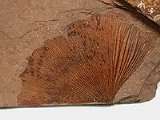
Image:Ginkgo adiantoides.jpg|Ginkgo adiantoides Eocene fossil leaf from the Tranquille Shale of British Columbia, Canada. Image:Fossil Plant Ginkgo.jpg|Fossil Ginkgo leaves from the Jurassic of England

Ginkgo has been used for classifying plants with leaves
Leaf

In botany, a leaf is an above-ground plant Organ specialized for photosynthesis. For this purpose, a leaf is typically flat and thin, to expose the cells containing chloroplast to light over a broad area, and to allow light to penetrate fully into the tissues....
 that have more than four veins
Leaf

In botany, a leaf is an above-ground plant Organ specialized for photosynthesis. For this purpose, a leaf is typically flat and thin, to expose the cells containing chloroplast to light over a broad area, and to allow light to penetrate fully into the tissues....
 per segment, while Baiera for those with less than four veins per segment. Sphenobaiera has been used to classify plants with a broadly wedge-shaped leaf that lacks a distinct leaf stem. Trichopitys is distinguished by having multiple-forked leaves with cylindrical (not flattened) thread-like ultimate divisions; it is one of the earliest fossils ascribed to the Ginkgophyta.

Cultivation and uses

Ginkgo has long been cultivated in China
China

China is a Culture of China, an ancient civilization, and, depending on perspective, a national or multinational entity extending over a large area in East Asia....
; some planted trees at temples are believed to be over 1,500 years old. The first record of Europeans encountering it is in 1690 in Japanese temple gardens, where the tree was seen by the German botanist Engelbert Kaempfer. Because of its status in Buddhism
Buddhism

Buddhism is a family of beliefs and practices considered by most to be a religionand is based on the teachings attributed to Siddhartha Gautama, commonly known as "The Buddha" , who was born in what is today Nepal....
 and Confucianism
Confucianism

Confucianism is a China Ethics and Philosophy developed from the teachings of the Chinese philosopher Confucius . It focuses on human morality and right action....
, the Ginkgo is also widely planted in Korea and parts of Japan; in both areas, some naturalization has occurred, with Ginkgos seeding into natural forests.

In some areas, most intentionally planted Ginkgos are male cultivar
Cultivar

A cultivar is a cultivated plant that has been selected and given a unique name because of its decorative or useful characteristics; it is usually distinct from similar plants and when Plant propagation it retains those characteristics....
s grafted onto plants propagated from seed, because the male trees will not produce the malodorous seeds. The popular cultivar 'Autumn Gold' is a clone of a male plant.

Ginkgos adapt well to the urban environment, tolerating pollution and confined soil spaces. They rarely suffer disease problems, even in urban conditions, and are attacked by few insects. For this reason, and for their general beauty, ginkgos are excellent urban and shade trees, and are widely planted along many streets. The ginkgo is the official tree of the city of Kumamoto, and two leaves form the symbol of the University of Tokyo
University of Tokyo

The , abbreviated as , is a major research university located in Tokyo, Japan. The University has 10 faculty with a total of around 30,000 students, 2,100 of whom are foreign....
, the main campus of which is famous for its numerous ginkgos.

Ginkgos are also popular subjects for growing as penjing
Penjing

Penjing , also known as penzai , tray landscape, potted scenery, potted landscape, and miniature trees and rockery is the ancient China art of growing trees and plants, kept small by skilled pruning and formed to create an aesthetic shape and the complex illusion of age....
 and bonsai
Bonsai

Bonsai 'Bonsai' is a Japanese pronunciation of the earlier Chinese term penzai . The word bonsai is used in the West as an umbrella term for all miniature trees in containers or pots....
; they can be kept artificially small and tended over centuries. Furthermore, the trees are easy to propagate from seed.

Extreme examples of the Ginkgo's tenacity may be seen in Hiroshima
Hiroshima

The Japanese city of is the capital of Hiroshima Prefecture, and the largest city in the Chugoku region of western Honshu, the largest of Japan's islands....
, Japan
Japan

Japan is an island country in East Asia. Located in the Pacific Ocean, it lies to the east of the Sea of Japan, People's Republic of China, North Korea, South Korea and Russia, stretching from the Sea of Okhotsk in the north to the East China Sea and Taiwan in the south....
, where four trees growing between 1–2 km from the 1945 atom bomb explosion were among the few living things in the area to survive the blast (). While almost all other plants (and animals) in the area were destroyed, the ginkgos, though charred, survived and were soon healthy again. The trees are alive to this day.

Culinary use

Ginkgo Penjing Montreal Botanical Gardens
The nut-like gametophytes inside the seeds are particularly esteemed in Asia, and are a traditional Chinese food. Ginkgo nuts are used in congee, and are often served at special occasions such as weddings and the Chinese New Year
Chinese New Year

Chinese New Year or Spring Festival is the most important of the traditional Chinese holidays. It is often called the Lunar New Year, especially by people in mainland China and Taiwan....
 (as part of the vegetarian dish called Buddha's delight
Buddha's delight

Buddha's delight, often transliteration as Lu?h?n zhai, lo han jai, or lo hon jai, is a vegetarianism dish well known in Chinese cuisine....
). In Chinese culture, they are believed to have health benefits; some also consider them to have aphrodisiac
Aphrodisiac

An aphrodisiac is a substance which is used in the belief that it increases sexual desire. The name comes from Aphrodite, the Greek mythology of sensuality....
 qualities. Japanese cooks add Ginkgo seeds (called ginnan) to dishes such as chawanmushi
Chawanmushi

Chawanmushi is an egg custard dish found in Japan that uses the seeds of ginkgo. Unlike many other custards, it is usually eaten as an appetizer....
, and cooked seeds are often eaten along with other dishes. The seeds are available canned, sold as "White Nuts", and can be found in many Asian food stores in the West.

When eaten by children, in large quantities (over 5 seeds a day), or over a long period of time, the raw gametophyte (meat) of the seed can cause poisoning by MPN (4-methoxypyridoxine). MPN is heat-stable. Studies have demonstrated that convulsions caused by MPN can be prevented or terminated with pyridoxine
Pyridoxine

Pyridoxine is one of the compounds that can be called vitamin B6, along with Pyridoxal and Pyridoxamine. It differs from pyridoxamine by the substituent at the '4' position....
.

Some people are sensitive to the chemicals in the sarcotesta, the outer fleshy coating. These people should handle the seeds with care when preparing the seeds for consumption, wearing disposable gloves. The symptoms are dermatitis
Dermatitis

Dermatitis is a blanket term meaning any "inflammation of the skin" . There are several different types of dermatitis. The different kinds usually have in common an allergic reaction to specific allergens....
 or blister
Blister

A blister is a small pocket of fluid within the upper layers of the skin, typically caused by forceful rubbing , burning, freezing, chemical exposure or infection....
s similar to that caused by contact with poison-ivy. However, seeds with the fleshy coating removed are perfectly safe to handle.

Medicinal uses

Extracts of Ginkgo leaves contain flavonoid
Flavonoid

The term flavonoid refers to a class of plant secondary metabolites. According to the IUPAC nomenclature, they can be classified into:*flavonoids, derived from 2-phenylchromone structure...
 glycosides and terpenoids (ginkgolide
Ginkgolide

Ginkgolides are biologically active terpenoid lactones present in Ginkgo. It is a diterpenoid, i.e. it has 20-carbon skeleton and is synthesized from geranylgeranyl pyrophosphate....
s, bilobalide
Bilobalide

Bilobalide is biologically active terpenoid trilactone present in Ginkgo.Chemically it is -9--10,10a-dihydro-8,9-dihydroxy-4H,5aH,9H-furo[2,3-b]furo[3',2':2,3]cyclopenta [1,2-c]furan-2,4,7-trione....
s) and have been used pharmaceutically. Ginkgo supplements are usually taken in the range of 40–200 mg per day.

In memory and dementia
Ginkgo has many alleged nootropic
Nootropic

Memory enhancers are often referred to as "smart drugs", "study drugs", "smart nutrients", "cognitive enhancers", "brain enhancers" or in the scientific literature as nootropics....
 properties, and is mainly used as memory
Memory

In psychology, memory is an organism's mental ability to store, retain and recall information. Traditional studies of memory began in the fields of philosophy, including techniques of mnemonic....
and concentration
Attention

Attention is the cognitive process of selectively concentrating on one aspect of the environment while ignoring other things. Examples include listening carefully to what someone is saying while ignoring other conversations in a room or listening to a cell phone conversation while driving a car....
 enhancer, and anti-vertigo
Vertigo (medical)

Vertigo is a specific type of dizziness, a major symptom of a balance disorder. It is the sensation of spinning or swaying while the body is actually stationary with respect to the surroundings....
 agent. However, studies differ about its efficacy. The largest and longest independent clinical trial to assess ginkgo biloba’s ability to prevent memory loss that the supplement does not prevent or delay dementia or Alzheimer’s disease. Some controversy over the conclusions drawn by some studies that were allegedly funded by a firm which marketed Ginkgo. Slate
Slate (magazine)

Slate is an English language online current affairs and culture magazine created in 1996 by former The New Republic editor Michael Kinsley, initially under the ownership of Microsoft, as part of MSN....
, an Internet-based magazine owned by The Washington Post Company, :

In 2002, a long-anticipated paper appeared in JAMA
Journal of the American Medical Association

JAMA: The Journal of the American Medical Association is an international peer-reviewed general medical journal, published 48 times per year by the American Medical Association....
 () titled "Ginkgo for memory enhancement: a randomized controlled trial." This Williams College study, sponsored by the National Institute on Aging
National Institute on Aging

The 'National Institute on Aging' is a division of the U.S. National Institutes of Health , located in Bethesda, Maryland.The NIA leads a broad scientific effort to understand the nature of aging and to extend the healthy, active years of life....
 rather than Schwabe, examined the effects of ginkgo consumption on healthy volunteers older than 60. The conclusion, now cited in the National Institutes of Health
National Institutes of Health

The National Institutes of Health is an agency of the United States Department of Health and Human Services and is the primary agency of the United States government responsible for biomedical and health-related research....
's , said: "When taken following the manufacturer's instructions, ginkgo provides no measurable benefit in memory or related cognitive function to adults with healthy cognitive function."


According to some studies, in a few cases, Ginkgo can significantly improve attention in healthy individuals. The effect is almost immediate and reaches its peak in 2.5 hours after the intake.

A 2004 conference paper summarizes how various trials indicate that Ginkgo shows promise in the treatment of Alzheimer's disease
Alzheimer's disease

Alzheimer's disease , also called Alzheimer disease, Senile Dementia of the Alzheimer Type or simply Alzheimer's, is the most common form of dementia....
, though a 2008 study found it ineffective at treating dementia
Dementia

Dementia is the progressive decline in cognition due to damage or disease in the body beyond what might be expected from normal aging. Although dementia is far more common in the geriatric population, it may occur in any stage of adulthood....
.

In ongoing studies, a research team led by Luan Luo, PhD, associate professor at the University of Maryland School of Pharmacy, found that giving mice with the human Alzheimer’s gene the ginkgo extract called Egb 761 improved the process of making new nerve cells in part of the brain much affected by the disease. The team found evidence that the protective effect of the extract also could be due to decreasing senile plaques or the clumping of beta-amyloid in the brain tissues.

In other symptoms
Out of the many conflicting research results, Ginkgo extract may have three effects on the human body: improvement in blood flow (including microcirculation in small capillaries) to most tissues and organs; protection against oxidative cell damage from free radicals; and blockage of many of the effects of platelet-activating factor
Platelet-activating factor

Platelet-activating factor, also known as a PAF, PAF-acether or AGEPC is a potent phospholipid activator and mediator of many leukocyte functions, including platelet aggregation, inflammation, and anaphylaxis....
 (platelet aggregation, blood clotting) that have been related to the development of a number of cardiovascular, renal, respiratory and central nervous system
Central nervous system

The central nervous system is the part of the nervous system that functions to coordinate the activity of all parts of the bodies of multicellular organisms....
 disorders. Ginkgo can be used for intermittent claudication
Intermittent claudication

Intermittent claudication is a clinical diagnosis given for muscle pain , classically calf muscle, which occurs during exercise and is relieved by a short period of rest....
.

Some studies suggest a link between ginkgo and the easing of the symptoms of tinnitus
Tinnitus

Tinnitus is the perception of sound within the human ear in the absence of corresponding external sound.Tinnitus can be perceived in one or both ears or in the head....
.

A study conducted in 2003 by the Department of Dermatology, Postgraduate Institute of Medical Education and Research in Chandigarh, India concluded that Ginkgo is an effective treatment for arresting the development of vitiligo.

Side effects
Ginkgo may have undesirable effects, especially for individuals with blood circulation disorders and those taking anticoagulant
Anticoagulant

An anticoagulant is a substance that prevents blood coagulation; that is, it stops blood from clotting. A group of pharmaceuticals called anticoagulants can be used in vivo as a medication for thrombosis disorders....
s such as ibuprofen
Ibuprofen

Ibuprofen is a non-steroidal anti-inflammatory drug originally marketed as Brufen, and since then under various other trademarks , most notably Nurofen, Advil and Motrin....
, aspirin
Aspirin

Aspirin , also known as acetylsalicylic acid , is a salicylate medication, often used as an analgesic to relieve minor aches and pains, as an antipyretic to reduce fever, and as an anti-inflammatory medication....
, or warfarin
Warfarin

Warfarin is an anticoagulant. It was initially marketed as a pesticide against rats and mice, and is still popular for this purpose, although more potent poisons such as brodifacoum have since been developed....
, although recent studies have found that ginkgo has little or no effect on the anticoagulant properties or pharmacodynamics of warfarin. Ginkgo should also not be used by people who are taking certain types of antidepressants (monoamine oxidase inhibitor
Monoamine oxidase inhibitor

Monoamine oxidase inhibitors are a class of powerful Antidepressants prescribed for the treatment of clinical depression. They are particularly effective in treating atypical depression, and have also shown efficacy in smoking cessation....
s and selective serotonin reuptake inhibitor
Selective serotonin reuptake inhibitor

Selective serotonin reuptake inhibitors or serotonin-specific reuptake inhibitor are a class of antidepressants used in the treatment of Clinical depression, anxiety disorders, and some personality disorders....
s) or by pregnant
Pregnancy

Pregnancy is the carrying of one or more offspring, known as a fetus or embryo, inside the uterus of a female. In a pregnancy, there can be multiple gestations, as in the case of twins or Multiple birth....
 women, without first consulting a doctor.

Ginkgo side effects and cautions include: possible increased risk of bleeding, gastrointestinal discomfort, nausea, vomiting, diarrhea, headaches, dizziness, heart palpitations, and restlessness. If any side effects are experienced, consumption should be stopped immediately.

Ginkgo biloba leaves contain long chain alkylphenol
Alkylphenol

Alkylphenols are a family of organic compounds synthesized through the alkylation of phenols. The term includes several chemicals, the most commercially important of which are: propylphenol, butylphenol, amylphenol, heptylphenol, octylphenol, nonylphenol, dodecylphenol and Long Chain Alkylphenol ....
s together with the extremely potent allergens, the urushiol
Urushiol

Urushiol is an organic oil toxin found in plants of the Linnaean taxonomy Anacardiaceae, especially Toxicodendron spp. . It causes an allergic skin rash on contact, known as urushiol-induced contact dermatitis....
s (similar to poison ivy).

See also

  • André Michaux
    André Michaux

    Andr? Michaux was a France botany and explorer....
    , introduced the ginkgo to North America
    North America

    North America is the northern continent of the Americas, situated in the Earth's northern hemisphere and almost totally in the western hemisphere....
  • Antioxidant
    Antioxidant

    An antioxidant is a molecule capable of slowing or preventing the Redox of other molecules. Oxidation is a chemical reaction that transfers electrons from a substance to an oxidizing agent....
  • Ginkgo/Wanapum State Park
    Ginkgo/Wanapum State Park

    Ginkgo Petrified Forest State Park/Wanapum Recreational Area is a state park at Vantage, Washington including 27,000 feet of freshwater shoreline on the Columbia River....
     in central Washington
    Washington

    Washington is a U.S. state in the Pacific Northwest region of the United States. Washington was carved out of the western part of Washington Territory which had been ceded by Britain in 1846 by the Oregon Treaty as settlement of the Oregon Boundary Dispute....
    , USA
  • Herbalism
    Herbalism

    Herbalism is a traditional medicinal or folk medicine practice based on the use of plants and plant extracts. Herbalism is also known as botanical medicine, medical herbalism, herbal medicine, herbology, and phytotherapy....
  • List of edible seeds
    List of edible seeds

    A list of edible seeds here includes seeds that are directly foodstuffs, rather than yielding derived products.A variety of species can provide edible seeds....
  • Naturopathic medicine
    Naturopathic medicine

    Naturopathy is an alternative medicine which emphasizes the body's intrinsic ability to heal and maintain itself. Naturopaths use natural remedies such as herbs and foods rather than surgery or synthetic medication....


External links

  • : by the Ottawa Horticultural Society