
Home      Discussion      Topics      Dictionary      Almanac
Signup       Login
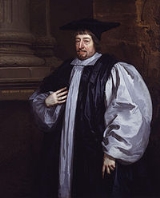
Gilbert Sheldon

Gilbert Sheldon

Overview

He was born in Stanton, Staffordshire
Stanton, Staffordshire
Stanton is a small village situated at the eastern end of the Weaver Hills, Staffordshire, England . The landscape around the village is mainly pastureland bounded by dry stone walls.-History:...

 in the parish of Ellastone
Ellastone
Ellastone is a village in central England on the Staffordshire side of the River Dove, between Uttoxeter and Ashbourne.-Location and history:...

, on 19 July 1598, the youngest son of Roger Sheldon; his father worked for Gilbert Talbot, 7th Earl of Shrewsbury
Gilbert Talbot, 7th Earl of Shrewsbury
Gilbert Talbot, 7th Earl of Shrewsbury and Waterford KG , was the son of George Talbot, 6th Earl of Shrewsbury, by the latter's first marriage to Gertrude Manners, daughter of the first Earl of Rutland....

. He was educated at Trinity College, Oxford
Trinity College, Oxford
The College of the Holy and Undivided Trinity in the University of Oxford, of the foundation of Sir Thomas Pope , or Trinity College for short, is one of the constituent colleges of the University of Oxford in England. It stands on Broad Street, next door to Balliol and Blackwells, and opposite...

; he matriculated at Oxford on 1 July 1614, graduated B.A. from Trinity College on 27 November 1617, and M.A. on 28 June, 1620. In 1619 he was incorporated at Cambridge. In 1622 he was elected fellow of All Souls' College, where he took the degrees of B.D. on 11 November 1628 and D.D.
Discussion
Ask a question about 'Gilbert Sheldon'
Start a new discussion about 'Gilbert Sheldon'
Answer questions from other users
Full Discussion Forum
 
Encyclopedia

Early life


He was born in Stanton, Staffordshire
Stanton, Staffordshire
Stanton is a small village situated at the eastern end of the Weaver Hills, Staffordshire, England . The landscape around the village is mainly pastureland bounded by dry stone walls.-History:...

 in the parish of Ellastone
Ellastone
Ellastone is a village in central England on the Staffordshire side of the River Dove, between Uttoxeter and Ashbourne.-Location and history:...

, on 19 July 1598, the youngest son of Roger Sheldon; his father worked for Gilbert Talbot, 7th Earl of Shrewsbury
Gilbert Talbot, 7th Earl of Shrewsbury
Gilbert Talbot, 7th Earl of Shrewsbury and Waterford KG , was the son of George Talbot, 6th Earl of Shrewsbury, by the latter's first marriage to Gertrude Manners, daughter of the first Earl of Rutland....

. He was educated at Trinity College, Oxford
Trinity College, Oxford
The College of the Holy and Undivided Trinity in the University of Oxford, of the foundation of Sir Thomas Pope , or Trinity College for short, is one of the constituent colleges of the University of Oxford in England. It stands on Broad Street, next door to Balliol and Blackwells, and opposite...

; he matriculated at Oxford on 1 July 1614, graduated B.A. from Trinity College on 27 November 1617, and M.A. on 28 June, 1620. In 1619 he was incorporated at Cambridge. In 1622 he was elected fellow of All Souls' College, where he took the degrees of B.D. on 11 November 1628 and D.D. on 25 June 1634. In 1622 he was ordained, and shortly afterwards he became domestic chaplain to Thomas Coventry, 1st Baron Coventry
Thomas Coventry, 1st Baron Coventry
Thomas Coventry, 1st Baron Coventry , was a prominent English lawyer, politician and judge during the early 17th century.-Education and early legal career:...

.

In March 1626 be was elected warden of All Souls' on the death of Richard Astley. He had already made the acquaintance of William Laud
William Laud
Archbishop William Laud was Archbishop of Canterbury from 1633 to 1645. One of the High Church Caroline divines, he opposed radical forms of Puritanism...

, and corresponded with him on college business, university politics, and on the conversion of William Chillingworth
William Chillingworth
William Chillingworth was a controversial English churchman.-Early life:He was born in Oxford, where his father served as mayor; William Laud was his godfather. In June 1618 he became a scholar of Trinity College, Oxford, of which he was made a fellow in June 1628...

 from Roman Catholicism. Sheldon was not initially a Laudian, and he resisted (unsuccessfully) Laud's appointment of Jeremy Taylor
Jeremy Taylor
Jeremy Taylor was a clergyman in the Church of England who achieved fame as an author during The Protectorate of Oliver Cromwell. He is sometimes known as the "Shakespeare of Divines" for his poetic style of expression and was often presented as a model of prose writing...

 to a fellowship at All Souls'. In 1634 and 1640 he was pro-vice-chancellor. In 1638 he was on the commission of visitation for Merton College; the visit produced a report requiring reforms.

During the years 1632-1639 he received the livings of Hackney
London Borough of Hackney
The London Borough of Hackney is a London borough of north London, and forms part of inner London.Between 1999 and 2001 serious concerns were expressed about Hackney's performance as a council by the Audit Commission, and many aspects of council services were failing...

 (1633); Oddington, Oxfordshire
Oddington, Oxfordshire
Oddington is a village and civil parish about south of Bicester in Oxfordshire, England. The village is close to the River Ray on the northern edge of Otmoor.-History:...

; Ickford
Ickford
Ickford is a village and is also a civil parish within Aylesbury Vale district in Buckinghamshire, England. It is near the border with Oxfordshire, about four miles west of Thame. As a result, many residents subscribe to the Thame Gazette, as well as the village paper: the Ickford Informer.The...

, Buckinghamshire
Buckinghamshire
Buckinghamshire is a ceremonial and non-metropolitan home county in South East England. The county town is Aylesbury and the largest town in ceremonial Buckinghamshire is Milton Keynes....

 (1636); and Newington, Oxfordshire
Newington, Oxfordshire
Newington is a village and civil parish in South Oxfordshire, about north of Wallingford.The Church of England parish church of Saint Giles dates from the 12th century....

; besides being a prebendary
Prebendary
A prebendary is a post connected to an Anglican or Catholic cathedral or collegiate church and is a type of canon. Prebendaries have a role in the administration of the cathedral...

 of Gloucester
Gloucester Cathedral
Gloucester Cathedral, or the Cathedral Church of St Peter and the Holy and Undivided Trinity, in Gloucester, England, stands in the north of the city near the river...

 from 1632. Sheldon gravitated towards the Great Tew
Great Tew
Great Tew is a village and civil parish in the Cotswold Hills in Oxfordshire, England, about southwest of Banbury.-Early and Mediaeval history:...

 circle of Lucius Cary
Lucius Cary, 2nd Viscount Falkland
Lucius Cary, 2nd Viscount Falkland was an English politician, soldier and author.-Life:Lucius was born either in 1609 or 1610 as the son of Sir Henry Cary, afterwards 1st Viscount Falkland, and his wife Elizabeth Tanfield, whose father Sir Lawrence Tanfield was at that time Lord Chief Baron of the...

 (Falkland), and was on friendly terms with Edward Hyde
Edward Hyde, 1st Earl of Clarendon
Edward Hyde, 1st Earl of Clarendon was an English historian and statesman, and grandfather of two British monarchs, Mary II and Queen Anne.-Early life:...

; he had no Puritan
Puritan
A Puritan of 16th and 17th-century England was an associate of any number of religious groups advocating for more "purity" of worship and doctrine, as well as personal and group piety. Puritans felt that the English Reformation had not gone far enough, and that the Church of England was tolerant...

 sympathies. He became a royal chaplain through Coventry, and the king intended preferment for him, plans interrupted by the political crises.

Civil War period


He was intimate with the Royalist leaders, and participated in the negotiations for the Uxbridge
Treaty of Uxbridge
The Treaty of Uxbridge of early 1645 was a significant but abortive negotiation to try to end the First English Civil War.-Background:Parliament drew up 27 articles in November 1644 and presented them to Charles I of England at Oxford. Much input into these Propositions of Uxbridge was from...

 treaty of 1645. During this period he became with Henry Hammond
Henry Hammond
Henry Hammond , was an English churchman.-Early life:He was born at Chertsey in Surrey on 18 August 1605, the youngest son of John Hammond, physician. He was educated at Eton College, and from age 13 at Magdalen College, Oxford, becoming demy or scholar in 1619. On 11 December 1622 he graduated...

 one of the churchmen closest to the king, and attended him in Oxford, later in Newmarket
Newmarket
Newmarket is a market town in the English county of Suffolk, approximately 65 miles north of London, which has become famous because of its connection with race horses and thoroughbred horse racing at Newmarket Racecourse. It is the largest racehorse training centre in Britain, and home to several...

 and finally in the Isle of Wight
Isle of Wight
The Isle of Wight is an English island and a county, located 3-5 miles from the south coast of the mainland, in the English Channel. It is separated from mainland England by the Solent and is situated south of the county of Hampshire...

. When the parliamentarians occupied Oxford in 1646 he resisted the visitation, but was finally and physically ejected from All Souls in early 1648. Taken into custody, he was to have been imprisoned in Wallingford Castle
Wallingford Castle
The remains of Wallingford Castle, once an important royal castle and defensive stronghold, are situated in Wallingford in the English county of Oxfordshire , adjacent to the River Thames.-History:...

 with Hammond but the commander was unwilling to have them. He was freed, with restrictions on his movements, later that year.

He lived quietly for a dozen years in the Midlands, at Sneltson in Derbyshire or with friends in Staffordshire and Nottinghamshire
Nottinghamshire
Nottinghamshire is an English county in the East Midlands, which borders South Yorkshire, Lincolnshire, Leicestershire and Derbyshire...

. He was active in fundraising for the poor clergy and for Charles II
Charles II of England
Charles II was the King of England, Scotland, and Ireland.Charles II's father King Charles I was executed at Whitehall on 30 January 1649, at the climax of the English Civil War. The English Parliament did not proclaim Charles II king at this time. Instead they passed a statute making such a...

 in exile. He corresponded with Jeremy Taylor, whom he supported, and with Hyde. On the death of John Palmer, whom the visitors had made warden of All Souls' in his place, on 4 March 1659, he was quietly reinstated.

Bishop of London


In 1660 he became bishop of London
Bishop of London
The Bishop of London is the Ordinary of the Church of England Diocese of London in the Province of Canterbury.The diocese covers 458 km² of 17 boroughs of Greater London north of the River Thames and a small part of the County of Surrey...

 and master of the Savoy. Since William Juxon
William Juxon
William Juxon was an English churchman, Bishop of London from 1633 to 1649 and Archbishop of Canterbury from 1660 until his death.-Life:...

 was now Archbishop of Canterbury, but was aged and infirm, Sheldon in practical terms exercised many of the powers of the archbishopric in the period to 1663, and he was on the privy council. He was commissioned to consecrate the new Scottish bishops.

The Savoy Conference
Savoy Conference
The Savoy Conference of 1661 was a significant liturgical discussion that took place, after the Restoration of Charles II, in an attempt to effect a reconciliation within the Church of England.-Proceedings:...

 of 1661 was held at his lodgings. He hardly participated, but was understood to be pulling strings in terms of the outcome. In his formulation, Puritan
Puritan
A Puritan of 16th and 17th-century England was an associate of any number of religious groups advocating for more "purity" of worship and doctrine, as well as personal and group piety. Puritans felt that the English Reformation had not gone far enough, and that the Church of England was tolerant...

 objections should be set out and considered; the point of the Conference was liturgical, to look into reform of the Book of Common Prayer
Book of Common Prayer
The Book of Common Prayer is the common title of a number of prayer books of the Church of England and of other Anglican churches, used throughout the Anglican Communion. The first book, published in 1549 , in the reign of Edward VI, was a product of the English Reformation following the break with...

. The subsequent Uniformity Act 1662 was very much in line with Sheldon's thinking. The Act was a sequel to Sheldon's successful orchestration of opposition to Charles II's intended Declaration of Indulgence, earlier in 1662.

Archbishop


He was consecrated archbishop of Canterbury
Archbishop of Canterbury
Also see Leaders of ChristianityThe Archbishop of Canterbury is the chief bishop and principal leader of the Church of England, the symbolic head of the worldwide Anglican Communion and the diocesan bishop of the Diocese of Canterbury, the see that churches must be in communion with in order to be...

 in 1663. He was greatly interested in the welfare of Oxford University, of which he became Chancellor in 1667, succeeding Lord Clarendon
Edward Hyde, 1st Earl of Clarendon
Edward Hyde, 1st Earl of Clarendon was an English historian and statesman, and grandfather of two British monarchs, Mary II and Queen Anne.-Early life:...

, as Hyde now was. The Sheldonian Theatre
Sheldonian Theatre
The Sheldonian Theatre, located in Oxford, England, was built from 1664 to 1668 after a design by Christopher Wren for the University of Oxford. The building is named after Gilbert Sheldon, chancellor of the university at the time and the project's main financial backer...

 at Oxford was built and endowed at his expense.

He accepted much purely secular work, acting as arbiter on petitions presented through him, and taking up investigations passed on by the king, especially in connection with the navy. Sheldon lost political influence after the fall of Clarendon in 1667, and by making Charles's philandering a matter of religious reproach. He was vocal against the Royal Declaration of Indulgence
Royal Declaration of Indulgence
The Royal Declaration of Indulgence was Charles II of England's attempt to extend religious liberty to Protestant nonconformists in his realms, by suspending the execution of the penal laws that punished recusants from the Church of England. Charles issued the Declaration on 15 March 1672...

 of 1672.

Further reading

  • Victor D. Sutch (1973), Gilbert Sheldon, Architect of Anglican Survival 1640-1675