
All Topics  
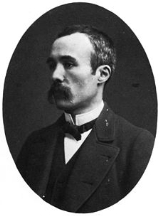
Georges Clemenceau

 
Georges Clemenceau

   Email Print
   Bookmark   Link


Georges Clemenceau


Georges Benjamin Clemenceau (September 28,1841 – November 24, 1929) was a French statesman
Statesman

A statesman or stateswoman or statesperson is usually a politician or other notable figure of state who has had a long and respected career in politics at the national and international level....
, physician
Physician

A physician, medical practitioner, doctor of medicine, or medical doctor practices medicine, and is concerned with maintaining or restoring human health through the study, diagnosis, and treatment of disease and injury....
, and journalist
Journalist

A journalist is a person who practices journalism, the gathering and dissemination of information about current events, trends, issues, and people while striving for viewpoints that aren't biased....
. He served as the prime minister of France
List of Prime Ministers of France

Early Modern France...
 from 1906-1909 and 1917-1920. For nearly the final year of World War I
World War I

World War I, or the First World War , was a global military conflict which involved the Great powers, organized into two opposing military alliances: the Allies of World War I and the Central Powers....
 he led France, and was one of the major voices behind the Treaty of Versailles
Treaty of Versailles

The Treaty of Versailles was one of the peace treaty at the end of World War I. It ended the declaration of war between German Empire and Allies of World War I....
. He is commonly nicknamed le Tigre (the Tiger) and le Père-la-Victoire (Father Victory) for his determination as a wartime leader.

enceau was born at Mouilleron-en-Pareds
Mouilleron-en-Pareds

Mouilleron-en-Pareds is a village, located in France, where Jean de Lattre de Tassigny and Georges Clemenceau were born....
, Vendée
Vendée

The Vend?e [] is a departments of France in the Pays-de-la-Loire region in west central France, on the Atlantic Ocean. The name Vend?e is taken from the Vend?e River which runs through the south-eastern part of the department....
, France
France

France , officially the French Republic , is a country whose Metropolitan France is located in Western Europe and that also comprises various Overseas departments and territories of France....
.


Discussion
Ask a question about 'Georges Clemenceau'
Start a new discussion about 'Georges Clemenceau'
Answer questions from other users
Full Discussion Forum


Quotations


It is easier to make war than make peace.

Il est plus facile de faire la guerre que la paix., Speech, "Discours de Paix," Verdun (20 July 1919)

My home policy: I wage war. My foreign policy: I wage war. All the time I wage war.

Politique intérieure, je fais la guerre; politique extérieure, je fais la guerre. Je fais toujours la guerre., Speech, "Discours de Guerre," Chambre des Députés, Assemblée Nationale, Paris (8 March 1918)


Encyclopedia


Georges Benjamin Clemenceau (September 28,1841 – November 24, 1929) was a French statesman
Statesman

A statesman or stateswoman or statesperson is usually a politician or other notable figure of state who has had a long and respected career in politics at the national and international level....
, physician
Physician

A physician, medical practitioner, doctor of medicine, or medical doctor practices medicine, and is concerned with maintaining or restoring human health through the study, diagnosis, and treatment of disease and injury....
, and journalist
Journalist

A journalist is a person who practices journalism, the gathering and dissemination of information about current events, trends, issues, and people while striving for viewpoints that aren't biased....
. He served as the prime minister of France
List of Prime Ministers of France

Early Modern France...
 from 1906-1909 and 1917-1920. For nearly the final year of World War I
World War I

World War I, or the First World War , was a global military conflict which involved the Great powers, organized into two opposing military alliances: the Allies of World War I and the Central Powers....
 he led France, and was one of the major voices behind the Treaty of Versailles
Treaty of Versailles

The Treaty of Versailles was one of the peace treaty at the end of World War I. It ended the declaration of war between German Empire and Allies of World War I....
. He is commonly nicknamed le Tigre (the Tiger) and le Père-la-Victoire (Father Victory) for his determination as a wartime leader.

Biography


Early years

Clemenceau was born at Mouilleron-en-Pareds
Mouilleron-en-Pareds

Mouilleron-en-Pareds is a village, located in France, where Jean de Lattre de Tassigny and Georges Clemenceau were born....
, Vendée
Vendée

The Vend?e [] is a departments of France in the Pays-de-la-Loire region in west central France, on the Atlantic Ocean. The name Vend?e is taken from the Vend?e River which runs through the south-eastern part of the department....
, France
France

France , officially the French Republic , is a country whose Metropolitan France is located in Western Europe and that also comprises various Overseas departments and territories of France....
. In Revolutionary times the Vendée had the a hotbed of monarchist sympathies
Revolt in the Vendée

The War in Vend?e was a civil war and counterrevolution in Vend?e between House of Bourbon and French First Republic during the French Revolution....
 but now it was fiercely republican. This town would also be famous as the birthplace of another famous politico-military figure in Frence history: Jean de Lattre de Tassigny
Jean de Lattre de Tassigny

Jean Joseph Marie Gabriel de Lattre de Tassigny was a France military hero of World War II....
.

Clemenceau's mother was from a Huguenot
Huguenot

The Huguenots were members of the Protestantism Reformed Church of France of France from the sixteenth to the eighteenth centuries....
 family. His father Benjamin was the village physician who hoped that his son would follow in his footsteps. A fervent republican, the elder Clemenceau fought in 1830 in the revolt against Charles X
Charles X of France

Charles X ruled as List of French monarchs and List of Navarrese monarchs from 20 May 1824 until the July Revolution, when he Abdication. He was the last king of the senior House of Bourbon line to reign over France....
 and later against Louis Phillippe. Arrested on the orders of Emperor Napoleon III after his attempted assasination by Felice Orsini
Felice Orsini

Felice Orsini was an Italy revolutionary and leader of the Carbonari who tried to assassinate Napoleon III of France, List of French monarchs....
, Clemenceau had been sentenced to exile in Algeria but was set free in Marseilles before the deportation order was carried out.

After his studies in the Nantes Lycée, Georges received his baccalaureat of letters in 1858. He then decided to enroll in medical school like his father. During his first few years in the Nantes school, as he himself pointed out, he was disruptive. He opposed the infatuation other students and faculty had with religion and the imperial ideals.

Journalism and Exile

In 1861 Clemenceau left for Paris to pursue his studies where he began frequenting artistic and Republican circles in the Latin Quarter
Latin Quarter

Latin Quarter is a part of the 5th arrondissement in Paris.Latin Quarter may also refer to:* Latin Quarter , a British pop/rock band*Latin Quarter, Aarhus, part of Midtbyen, Aarhus C, Denmark...
. He co-founded a weekly newsletter in December called Le Travail along with some friends. On Februrary 23, 1862 he was arrested by the police for having placed posters summoning a demonstration. He spent 77 days in the Mazas prison.

In the midst of all of this he became a doctor on May 13, 1865 even though he took part in founding several magazines and writing many articles, most attacking the Imperial regime of Napoleon III. It soon became advisable to leave when the Imperial agents began cracking down on dissidents (sending most of them to Devil's Island
Devil's Island

Devil's Island is the smallest and northernmost island of the three ?les du Salut located about off the coast of French Guiana. It has an area of 14 hectare ....
). On July 25th of that year he set sail for the United States, perfecting his English along the way.

He took a post teaching French and horseback riding at a girls' school in Stamford, Connecticut. He later married one of his students, Mary Plummer. They had three children but unhappily it ended in divorce. During this time he joined French exile clubs in New York opposing the imperial regime.

The Beginning of the Third Republic

He returned to Paris after the fall of the regime with the defeat at Sedan. He took part in the Paris Commune
Paris Commune

The Paris Commune was a government that briefly ruled Paris from March 28 to May 28, 1871. It existed before the split between Anarchism and Socialism, and is hailed by both as the first seizure of power by the working class....
 but was there to establish the third Republic. His political career began in earnest at this time.

He was elected to the Paris municipal council on 23 July 1871 for the Clignancourt quarter, and retained his seat till 1876, passing through the offices of secretary and vice-president, and becoming president in 1875.

In 1876 he stood again for the Chamber of Deputies
Chamber of Deputies

Chamber of deputies is the name given to a legislative body such as the lower house of a bicameral legislature, or can refer to a unicameral legislature....
, and was elected for the 18th arrondissement. He joined the far left
Far left

Far left and extreme left are terms used to discuss the position a group or person occupies within the political spectrum. The terms far left and far right are often used to imply that someone is an Extremism....
, and his energy and mordant eloquence speedily made him the leader of the Radical section. In 1877, after the Seize Mai crisis, he was one of the republican majority who denounced the de Broglie
Albert, 4th duc de Broglie

Jacques-Victor-Albert, 4th duc de Broglie , was a France monarchist politician.....
 ministry, and he took a leading part in resisting the anti-republican policy of which the Seize Mai incident was a manifestation. His demand in 1879 for the indictment of the de Broglie ministry brought him into particular prominence.

Clemenceau By Beaux 1920
In 1880 he started his newspaper, La Justice, which became the principal organ of Parisian Radicalism. From this time onwards, throughout Jules Grévy
Jules Grévy

Fran?ois Paul Jules Gr?vy was a President of the France French Third Republic and one of the leaders of the Opportunist Republicans faction. Given that his predecessors where monarchists who tried without success to restore the French monarchy, Gr?vy is seen as the first real republican President of France....
's presidency, his reputation as a political critic and destroyer of ministries ("le Tombeur de ministères") who yet would not take office himself grew rapidly. Leading the Far Left in the National Assembly, he was an active opponent of Jules Ferry
Jules Ferry

Jules Fran?ois Camille Ferry was a France statesman, and ardent imperialist...
's colonial policy (which he opposed on moral grounds and also as a form of diversion from the “Revenge against Germany
Revanchism

Revanchism is a term used since the 1870s to describe a political manifestation of the will to reverse territorial losses incurred by a country, often following a war....
”) and of the Opportunist party, and in 1885 it was his instrumentalization of the Tonkin disaster
Sino-French War

The Sino-French War was a limited conflict fought between August 1884 and April 1885 to decide whether France should replace China in control of Tonkin ....
 which principally determined the fall of the Ferry cabinet.

At the elections of 1885
French legislative election, 1885

The 1885 general election was held on October 14 and 18, 1885.ResultsSources ...
 he advocated a strong Radical programme, and was returned both for his old seat in Paris and for the Var
Var (département)

The Var is a French departments of France in Provence, in southeast France. It takes its name from the Var River, which used to flow along its eastern boundary, but which now flows into the Mediterranean further to the east....
, selecting the latter. Refusing to form a ministry to replace the one he had overthrown, he supported the Right in keeping Freycinet
Charles de Freycinet

Charles Louis de Saulces de Freycinet was a French statesman and President of the Council during the Third Republic , part of the Opportunist Republicans faction....
 in power in 1886, and was responsible for the inclusion of General Boulanger in the Freycinet cabinet as War Minister. When Boulanger showed himself as an ambitious pretender, Clemenceau withdrew his support and became a vigorous opponent of the heterogeneous Boulangist movement, though the Radical press and a section of the party continued to patronize the general.

By his exposure of the Wilson scandal, and by his personal plain speaking, Clemenceau contributed largely to Jules Grévy
Jules Grévy

Fran?ois Paul Jules Gr?vy was a President of the France French Third Republic and one of the leaders of the Opportunist Republicans faction. Given that his predecessors where monarchists who tried without success to restore the French monarchy, Gr?vy is seen as the first real republican President of France....
's resignation of the presidency in 1887, having himself declined Grévy's request to form a cabinet on the downfall of Maurice Rouvier
Maurice Rouvier

Maurice Rouvier was a France statesman.He was born in Aix-en-Provence, and spent his early career in business at Marseille. He supported L?on Gambetta's candidature there in 1867, and in 1870 he founded an anti-imperial journal, L'Egalit?....
's Cabinet. He was also primarily responsible, by advising his followers to vote for neither Floquet
Charles Floquet

Charles Thomas Floquet was a France statesman.He was born at Saint-Jean-Pied-de-Port . He studied law in Paris, France, and was called to the bar in 1851....
, Ferry, or Freycinet, for the election of an "outsider" (Sadi Carnot
Marie François Sadi Carnot

Marie Fran?ois Sadi Carnot was a France statesman, the fourth president of the Third French Republic. He served as the President of France from 1887 until his assassination in 1894....
) as president.

The split in the Radical party over Boulangism weakened his hands, and its collapse made his help unnecessary to the moderate republicans. A further misfortune occurred in the Panama affair
Panama scandals

The Panama scandals was a corruption affair that broke out in the French Third Republic in 1892, linked to the building of the Panama Canal. Close to a billion francs were lost when the government took bribes to keep quiet about the Panama Canal Company's financial troubles, in what is regarded as the largest monetary corruption scandal of...
, as Clemenceau's relations with Cornelius Herz led to his being included in the general suspicion. Although he remained the leading spokesman of French Radicalism, his hostility to the Russian alliance so increased his unpopularity that in the 1893 election
French legislative election, 1893

The 1893 general election was held on August 20 and September 3, 1893.ResultsSources ...
 he was defeated for his Chamber seat, having held it continuously since 1876.

After his 1893 defeat, Clemenceau confined his political activities to journalism. His career was further overclouded by the long-drawn-out Dreyfus case, in which he took an active part as a supporter of Emile Zola
Émile Zola

?mile Fran?ois Zola was an influential France writer, the most important exemplar of the literary school of Naturalism , an important contributor to the development of Naturalism , and a major figure in the political liberalization of France and in the exoneration of the falsely accused and convicted army officer Alfred Dreyfus....
 and an opponent of the anti-Semitic and Nationalist campaigns.

On 13 January 1898 Clemenceau, as owner and editor of the Paris daily L'Aurore
L'Aurore

L?Aurore was a literary, liberal, and socialist newspaper published in Paris, France, from 1897 to 1914. Its most famous headline was ?mile Zola?s ?J'accuse ?, concerning the Dreyfus Affair....
, published Émile Zola's "J'accuse
J'Accuse

may refer to:* J'accuse , an open letter of ?mile Zola's concerning the Dreyfus affair* J'accuse , a 1919 French film directed by Abel Gance* J'accuse! , a 1938 French film directed by Abel Gance...
" on the front page of his paper. Clemenceau decided that the controversial story that would become a famous part of the Dreyfus Affair
Dreyfus Affair

The Dreyfus Affair was a political scandal which divided France in the 1890s and the early 1900s. It involved the conviction for treason in November 1894 of Captain Alfred Dreyfus, a young French artillery officer of Alsatian History of the Jews in France descent....
 would be in the form of an open letter to the President, Félix Faure
Félix Faure

F?lix Fran?ois Faure was President of France from 1895 until his death....
.

In 1900 he withdrew from La Justice to found a weekly review, Le Bloc, in which Clemenceau was practically the sole contributor. Le Bloc lasted until 15 March 1902. On 6 April 1902 he was triumphally elected senator for the Var, although he had previously continually demanded the suppression of the Senate, considered a strong-house of conservatism. He sat with the Radical-Socialist Party and moderated somehow his positions, although he still vigorously supported the Combes
Émile Combes

?mile Combes was a French statesman, charged in 1902 of the constitution of the Bloc des gauches 's cabinet....
 ministry, who spearheaded the anti-clericalist Republican struggle. In June 1903 he undertook the direction of the journal L'Aurore, which he had founded. In it he led the campaign for the revision of the Dreyfus affair, and for the separation of Church and State
Separation of church and state

Separation of church and state is a political and legal doctrine that government and religion institutions are to be kept separate and independent from each other....
, which was implemented by the 1905 Act .

In March 1906 the fall of the Rouvier
Maurice Rouvier

Maurice Rouvier was a France statesman.He was born in Aix-en-Provence, and spent his early career in business at Marseille. He supported L?on Gambetta's candidature there in 1867, and in 1870 he founded an anti-imperial journal, L'Egalit?....
 ministry, owing to the riots provoked by the inventories of church property, and the Radicals' victory during the 1906 legislative election
French legislative election, 1906

The 1906 general election was held on May 6 and 20, 1906.ResultsSources ...
, at last brought Clemenceau to power as Minister of the Interior in the Sarrien
Ferdinand Sarrien

Jean Marie Ferdinand Sarrien was a France politician of the French Third Republic. He headed a cabinet supported by the Bloc des gauches parliamentary majority....
 cabinet. On a domestic level, Clemenceau reformed the police forces and ordered repressive policies towards the workers' movement. He supported the formation of scientifical police by Alphonse Bertillon
Alphonse Bertillon

Alphonse Bertillon was a France law enforcement officer and biometrics researcher who created anthropometry, an identification system based on physical measurements....
, as well as of the Brigades du Tigre ("Tiger's Brigades") by Célestin Hennion.

The miners' strike in the Pas de Calais after the disaster at Courrieres
Courrières mine disaster

The Courri?res mine disaster, Europe's worst mining accident, caused the death of 1,099 miners in Northern France on 10 March 1906. It seems that this disaster was surpassed only by the Benxihu Colliery accident in China on April 26, 1942, which killed 1,549 miners....
 (more than a thousand victims), leading to the threat of disorder on the 1st of May 1906, prompted him to employ the military; and his attitude in the matter — as well as the repression of the wine-growers' strike in the Languedoc-Roussillon
Languedoc-Roussillon

Languedoc-Roussillon is one of the 26 Regions of France of France. It comprises five departments of France, and borders the other French regions of Provence-Alpes-C?te d'Azur, Rh?ne-Alpes, Auvergne , Midi-Pyr?n?es on the one side, and Spain, Andorra and the Mediterranean sea on the other side....
 — alienated the SFIO
Sfio

Sfio, or Safe/Fast String/File I/O, is a C I/O Library developed by David Korn and Kiem-Phong Vo AT&T Labs Research, intended as a replacement for the standard C stdio.h....
 Socialist party, from which he definitively broke in his notable reply in the Chamber to Jean Jaurès
Jean Jaurès

Jean L?on Jaur?s was a French Socialism leader. Initially an Opportunist Republican, he evolved into one of the first Social Democracy, becoming the leader, in 1902, of the French Socialist Party , which opposed Jules Guesde's revolutionary Socialist Party of France....
, leader of the SFIO, in June 1906.

This speech marked him out as the strong man of the day in French politics; and when the Sarrien ministry resigned in October, he became premier. During 1907 and 1908 his premiership was notable for the way in which the new Entente cordiale
Entente Cordiale

The Entente cordiale is a series of agreements signed on 8 April 1904 between the United Kingdom of Great Britain and Ireland and French Third Republic....
 with England was cemented, and for the successful part which France played in European politics, in spite of difficulties with Germany and attacks by the Socialist party in connection with Morocco
Morocco

Morocco , officially the Kingdom of Morocco , is a country located in North Africa with a population of nearly 34 million and an area just under 447,000 km2....
 (First Moroccan Crisis
First Moroccan Crisis

The First Moroccan Crisis was the international crisis over the international status of Morocco between March 1905 and May 1906....
 in 1905-06, settled by the Algeciras Conference
Algeciras Conference

The Algeciras Conference of 1906 took place in Algeciras, Spain, and lasted from January 16 to April 7. The purpose of the conference was to find an issue to the First Moroccan Crisis between France and Germany, which arose as Germany attempted to prevent France from establishing a protectorate over Morocco....
).

Clemenceau was defeated however on 20 July 1909 in a discussion in the Chamber on the state of the navy, in which bitter words were exchanged between him and Théophile Delcassé
Théophile Delcassé

Th?ophile Delcass? was a French statesman....
, former president of the Council whom Clemenceau had helped in his downfall. Clemenceau refused to respond to Delcassé's technical questions, and resigned after his proposal for the order of the day vote was rejected. He was succeeded as premier by Aristide Briand
Aristide Briand

Aristide Briand was a France statesman who served several terms as Prime Minister of France and won the Nobel Peace Prize....
, with a reconstructed cabinet.

Between 1909 and 1912, Clemenceau dedicated his times to travels, conferences and also to the treatment of his sickness. He went to South America in 1910, traveling to Brazil, Uruguay and Argentina (where he went as far as Santa Ana de Tucuman in the North-West of Argentina). There, he was amazed by the influence of French culture and of the French Revolution
French Revolution

The French Revolution was a period of political and social upheaval and radical change in the history of France, during which the French governmental structure, previously an absolute monarchy with feudalism for the aristocracy and Roman Catholic Church clergy, underwent radical change to forms based on Age of Enlightenment principles of cit...
 on local elites . In 1912, he was operated on because of a problem of the prostate
Prostate

The prostate is a compound tubuloalveolar exocrine gland of the male mammalian reproductive system. Females do not have a prostate gland, although females do have tiny paraurethral Skene's glands connected to the distal third of the urethra in the prevaginal space that are homologous to the prostate....
.

He published the first issue of the Journal du Var on 10 April 1910, before creating L'Homme libre (The Free Man) newspaper, based in Paris, on 6 May 1913, in which he published daily his editorial. In these tribunes, Clemenceau focused more and more on foreign policy, and condemned the Socialists' anti-militarism. When World War I
World War I

World War I, or the First World War , was a global military conflict which involved the Great powers, organized into two opposing military alliances: the Allies of World War I and the Central Powers....
 broke out, his newspaper was one of the first to be censored
Censorship in France

In standard conditions, France does not have censorship laws, being a liberal democracy respectful of freedom of press. However, there was a strong governemental control over radio and television in the 1950-70s....
, being completely suspended from 29 September 1914 to 7 October. In response, Clemenceau changed its name to L'Homme enchaîné (The Man in Chains), and criticized both the lack of transparency of the government and its inefficacity, while defending the patriotic Union sacrée against the German Empire.

World War I

When World War I broke out in 1914 Clemenceau refused to act as justice minister under the French Prime Minister.

In November 1917 Clemenceau was appointed prime minsiter. Unlike his predecessors, he immediately halted disagreement and called for peace among senior politicians.

When Clemenceau became Prime Minister in 1917 victory seemed to be a long way off. There was little activity on the Front because it was believed that there should be limited attacks until the American support arrived. At this time, Italy was on the defensive, Russia had virtually stopped fighting – and it was believed they would be making a separate peace with Germany. At home the government had to combat increasing resentment against the war. They also had to handle increasing demonstrations against the war, scarcity of resources and air raids – which were causing huge physical damage to Paris as well as damaging the morale of its citizens. It was also believed that many politicians secretly wanted peace. It was a challenging situation for Clemenceau, because after years of criticising other men during the war, he suddenly found himself in a position of supreme power. He was also isolated politically. He did not have close links with any parliamentary leaders (especially after years of criticism) and so had to rely on himself and his own circle of friends.

Clemenceau's ascension to power meant little to the men in the trenches at first. They thought of him as "Just another Politician", and the monthly assessment of troop morale found that only a minority found comfort in his appointment. Slowly, however, as time passed, the confidence he inspired in a few began to grow throughout all the fighting men. They were encouraged by his many visits to the trenches. This confidence began to spread from the trenches to the home front and it was said "We believed in Clemenceau rather in the way that our ancestors believed in Joan of Arc."

Clemenceau was also well received by the media because they felt that France was in need for strong leadership. It was widely recognised that throughout the war he was never discouraged and he never stopped believing that France could achieve total victory. There were sceptics, however, that believed that Clemenceau, like other war time leaders, would have a short time in office. It was said that "Like everyone else … Clemenceau will not last long- only long enough to clean up [the war]."

He supported the policy of total war – "We present ourselves before you with the single thought of total war" – and the policy of "la guerre jusqu'au bout" (war until the end). One of his speeches advocating these policies was so effective it left a vivid impression on Winston Churchill
Winston Churchill

Sir Winston Leonard Spencer-Churchill, Order of the Garter, Order of Merit, Order of the Companions of Honour, Territorial Decoration, Fellow of the Royal Society, Her Majesty's Most Honourable Privy Council, Queen's Privy Council for Canada was a Politics of the United Kingdom known chiefly for his leadership of the United King...
. These policies promised victory with justice, loyalty to the fighting men and immediate and severe punishment of crimes against France. Joseph Caillaux, a German appeaser and former French prime minister, adamantly disagreed with Clemenceau's policies. Caillaux was an avid believer in negotiated peace – which could only be achieved by surrendering to Germany. Clemenceau believed that Caillaux was a threat to national security and that if France were to be victorious, his challenge had to be overcome. Unlike previous ministers, Clemenceau was not afraid to act against Caillaux. It was decided by the parliamentary committee that he would be arrested and imprisoned for three years. Clemenceau believed, in the words of Jean Ybarnégaray, that Caillaux's crime "was not to have believed in victory [and] to have gambled on his nations defeat".

It was believed by some in Paris that the arrest of Caillaux and others was a sign that Clemenceau had begun a Reign of Terror
Reign of Terror

The Reign of Terror or simply The Terror was a period of violence that occurred fifteen months after the onset of the French Revolution, incited by conflict between rival political factions, the Girondins and the Jacobin Club, and marked by mass executions of "enemies of the revolution." Estimates vary widely as to how many were kil...
. This was only really believed by the enemies of Clemenceau, but the many trials and arrests aroused great public excitement, one newspaper ironically reported "The war must be over, for no one is talking about it anymore". These trials, far from making the public fear the government, inspired confidence as the they felt that for the first time in the war, action was being taken and they were being firmly governed. Although there were accusations that Clemenceau's "firm government" was actually a dictatorship, the claims were not supported. Clemenceau was still held accountable to the people and media and he relaxed censorship on political views as he believed that newspapers had the right to criticize political figures - "The right to insult members of the government is inviolable". The only powers that Clemenceau assumed were those that he thought necessary to win the war.

In 1918, Clemenceau thought that France should adopt Woodrow Wilson
Woodrow Wilson

Thomas Woodrow Wilson was the List of Presidents of the United States President of the United States. A devout Presbyterianism and leading intellectual of the Progressive Era, he served as President of Princeton University of Princeton University from 1902 to 1910, and then as the Governor of New Jersey from 1911 to 1913....
's Fourteen Points
Fourteen Points

The Fourteen Points were listed in a speech delivered by United States President of the United States Woodrow Wilson to a Joint session of the United States Congress of United States Congress on January 8, 1918....
, despite believing that some were utopian, mainly because one of the points called for the return of the disputed territory of Alsace-Lorraine
Alsace-Lorraine

Alsace-Lorraine was a territorial entity created by the German Empire in 1871 after the annexation of most of Alsace and the Moselle region of Lorraine in the Franco-Prussian War....
 to France. This meant that victory would fulfill one war aim that was very close to the hearts of the French people. Clemenceau was also very sceptical about the League of Nations
League of Nations

The League of Nations was an inter-governmental organization founded as a result of the Treaty of Versailles in 1919?1920. At its greatest extent from 28 September 1934 to 23 February 1935, it had 58 members....
, believing that it could succeed only in a utopian society.

As war minister Clemenceau was also in close contact with his generals. Although it was necessary for these meetings to take place, they were not always beneficial as he did not always make the most effective decisions concerning military issues. He did, however, mostly heed the advice of the more experienced generals. As well as talking strategy with the generals he also went to the trenches to see the Poilu
Poilu

Poilu is a warmly informal term for a French World War I infantryman, meaning, literally, hairy one. The term came into popular usage in France during the era of Napoleon Bonaparte and his massive citizen armies, though the term grognard was also common....
 , the French infantrymen. He wanted to talk to them and assure them that their government was actually looking after them. The Poilu had great respect for Clemenceau and his disregard for danger as he often visited soldiers only yards away from German frontlines. These visits to the trenches contributed to Clemenceau's title Le Père de la Victoire (Father of Victory).

On 21 March the Germans began their great spring offensive
Spring Offensive

The 1918 Spring Offensive or Kaiserschlacht and also known as the Ludendorff Offensive was a series of German attacks along the Western Front during World War I, which marked the deepest advances by either side since 1914....
. The Allies were caught off guard as they were waiting for the majority of the American troops to arrive. As the Germans advanced on the 24th of March, the British Fifth army retreated and a gap was created in the British/French lines - giving them access to Paris. This defeat cemented Clemenceau's belief, and that of the other allies, that a coordinated, unified command was the best option. It was decided that Foch would be appointed to the supreme command.

The German line continued to advance and Clemenceau believed that they could not rule out the fall of Paris (see appendix 2.0). It was believed that if "the tiger" as well as Foch and Pétain stayed in power, for even another week, France would be lost. It was thought that a government headed by Briand would be beneficial to France because he would make peace with Germany on advantageous terms. Clemenceau adamantly opposed these opinions and he gave an inspirational speech to parliament and "the chamber" voted their confidence in him 377 votes to 110.

Post-WWI

As Allied counter-offensives began to push the Germans back, with the help of American reinforcements, it became clear that the Germans could no longer win the war. Although they still occupied allied territory, they did not have sufficient resources and manpower to continue the attack. As countries allied to Germany began to ask for an armistice, it was obvious that Germany would soon follow. On 11 November an armistice with Germany was signed – Clemenceau saw this as an admission of defeat. Clemenceau was embraced in the streets and attracted admiring crowds. He was a strong, energetic, positive leader who was key to the allied victory of 1918.

It was decided that a peace conference would be held in Versailles, France. On 14 December Woodrow Wilson
Woodrow Wilson

Thomas Woodrow Wilson was the List of Presidents of the United States President of the United States. A devout Presbyterianism and leading intellectual of the Progressive Era, he served as President of Princeton University of Princeton University from 1902 to 1910, and then as the Governor of New Jersey from 1911 to 1913....
 received an enormous welcome. His 14 points and the concept of a league of nations had made a big impact on the war weary French. Clemenceau realized at their first meeting that he was a man of principle and conscience but narrow minded.

It was decided that since the conference was being held in France, Clemenceau would be the most appropriate president. He also spoke both English and French, the official languages of the conference.

The Conference progress was much slower than anticipated and decisions were being constantly adjourned. It was this slow pace that induced Clemenceau to give an interview showing his irritation to an American journalist. He said he believed that Germany had won the war industrially and commercially as their factories were intact and its debts would soon be overcome through ‘manipulation’. In a short time, he believed, the German economy would be much stronger than the French.

When Clemenceau returned to the council of ten on 1 March he found that little had changed. One issue that had not changed was a dispute over the long running Eastern Frontier and control of the German province Rhineland. Clemenceau believed that Germany’s possession of the territory left France without a natural frontier in the East and so simplified invasion into France for an attacking army. The issue was finally resolved when Lloyd George and Woodrow Wilson guaranteed immediate military assistance if Germany attacked without provocation. It was also decided that the Allies would occupy the territory for 15 years, and that Germany could never rearm the area.

There was increasing discontent among Clemenceau, Lloyd George and Woodrow Wilson about slow progress and information leaks surrounding the Council of Ten. They began to meet in a smaller group, called the Council of Four. This offered greater privacy and security and increased the efficiency of the decision making process. Another major issue which the Council of Four discussed was the future of the German Saar province. Clemenceau believed that France was entitled to the province and its coal mines after Germany deliberately damaged the coal mines in Northern France. Wilson, however, resisted the French claim so firmly that Clemenceau accused him of being ‘pro German’. Lloyd George came to a compromise and the coal mines were given to France and the territory placed under French administration for 15 years, after which a vote would determine whether the province would rejoin Germany.

Although Clemenceau had little knowledge of the Austrian-Hungarian empire, he supported the causes of its smaller ethnic groups and his adamancy lead to the stringent terms in the Treaty of Trianon
Treaty of Trianon

The Treaty of Trianon is the peace treaty concluded at the end of World War I by the Allies of World War I, on one side, and Hungary, seen as a successor of Austria-Hungary, on the other....
 which dismantled Hungary. Rather than recognizing territories of the Austrian-Hungarian empire solely within the principles of self-determination, Clemenceau sought to weaken Hungary just as Germany and remove the threat of such a large power within Central Europe. The entire Czechoslovakian state was seen a potential buffer from Communism and this encompassed majority Hungarian territories.

Clemenceau did not have experience or knowledge in economics or finance but was under strong public and parliamentary pressure to make Germany’s reparation bill as big as possible. It was generally agreed that Germany should not pay more than it could afford, but the estimates of what it could afford varied greatly. Figures ranged between £2000 million which was quite modest compared to another estimate of £20,000 million. Clemenceau realised that any compromise would anger both the French and British citizens and that the only option was to establish a reparations commission which would examine Germany’s capacity for reparations. This meant that the French government was not directly involved in the issue of reparations.

Clemenceau's First Ministry, 25 October 1906 - 24 July 1909

  • Georges Clemenceau - President of the Council and Minister of the Interior
  • Stéphen Pichon
    Stéphen Pichon

    St?phen Pichon was a French politician of the Third French Republic. He served as French Minister to China , including the period of the Boxer Uprising....
     - Minister of Foreign Affairs
  • Georges Picquart
    Georges Picquart

    File:Picquart.jpgMarie Georges Picquart , was a French army officer and Minister of War. He is best known for his role in exposing the truth in the Dreyfus Affair....
     - Minister of War
  • Joseph Caillaux
    Joseph Caillaux

    Joseph-Marie-Auguste Caillaux was a major French politician of the French Third Republic. The leader of the Radical Party , he favored a policy of conciliation with Germany during his premiership from 1911 to 1912, which led to the maintenance of the peace during the Second Moroccan Crisis of 1911....
     - Minister of Finance
  • René Viviani
    René Viviani

    Jean Rapha?l Adrien Ren? Viviani was a France politician of the French Third Republic, who served as Prime Minister of France for the first year of World War I....
     - Minister of Labour and Social Security Provisions
  • Edmond Guyot-Dessaigne - Minister of Justice
  • Gaston Thomson
    Gaston Thomson

    Gaston Thomson was a France politician born January 29, 1848 in Oran and died May 14, 1932, at B?ne .He was a member of the National Assembly of France for the Departments of France of Constantine for fifty years and three months....
     - Minister of Marine
  • Aristide Briand
    Aristide Briand

    Aristide Briand was a France statesman who served several terms as Prime Minister of France and won the Nobel Peace Prize....
     - Minister of Public Instruction, Fine Arts, and Worship
  • Joseph Ruau - Minister of Agriculture
  • Raphaël Milliès-Lacroix - Minister of Colonies
  • Louis Barthou
    Louis Barthou

    Jean Louis Barthou was a France politician of the French Third Republic....
     - Minister of Public Works, Posts, and Telegraphs
  • Gaston Doumergue
    Gaston Doumergue

    Pierre-Paul-Henri-Gaston Doumergue was a French politician of the French Third Republic.Doumergue came from a Protestant family. Beginning as a Radical Party , he turned more towards the political right in his old age....
     - Minister of Commerce and Industry.


Changes
  • 4 January 1908 - Aristide Briand
    Aristide Briand

    Aristide Briand was a France statesman who served several terms as Prime Minister of France and won the Nobel Peace Prize....
     succeeds Guyot-Dessaigne as Minister of Justice. Gaston Doumergue
    Gaston Doumergue

    Pierre-Paul-Henri-Gaston Doumergue was a French politician of the French Third Republic.Doumergue came from a Protestant family. Beginning as a Radical Party , he turned more towards the political right in his old age....
     succeeds Briand as Minister of Public Instruction and Fine Arts. Briand remains Minister of Worship. Jean Cruppi
    Jean Cruppi

    Jean Cruppi was a France politician of the Third French Republic....
     succeeds Doumergue as Minister of Commerce and Industry.
  • 22 October 1908 - Alfred Picard succeeds Thomson as Minister of Marine.


Clemenceau's Second Ministry, 16 November 1917 - 20 January 1920

  • Georges Clemenceau - President of the Council and Minister of War
  • Stéphen Pichon
    Stéphen Pichon

    St?phen Pichon was a French politician of the Third French Republic. He served as French Minister to China , including the period of the Boxer Uprising....
     - Minister of Foreign Affairs
  • Louis Loucheur
    Louis Loucheur

    Louis Loucheur was a France politician in the French Third Republic, member of the conservative Republican Federation....
     - Minister of Armaments and War Manufacturing
  • Jules Pams - Minister of the Interior
  • Louis Lucien Klotz - Minister of Finance
  • Pierre Colliard - Minister of Labour and Social Security Provisions
  • Louis Nail - Minister of Justice
  • Georges Leygues
    Georges Leygues

    Georges Leygues was a France politician of the French Third Republic. During his time as Minister of Marine he worked with the navy's chief of staff Henri Salaun in unsuccessful attempts to gain naval re-armament priority for government funding over army rearmament such as the Maginot Line....
     - Minister of Marine
  • Louis Lafferre - Minister of Public Instruction and Fine Arts
  • Victor Boret - Minister of Agriculture and Supply
  • Henry Simon - Minister of Colonies
  • Albert Claveille - Minister of Public Works and Transport
  • Étienne Clémentel - Minister of Commerce, Industry, Maritime Transports, Merchant Marine, Posts, and Telegraphs
  • Charles Jonnart
    Charles Jonnart

    Charles C?lestin Auguste Jonnart was a French politician.Born into a bourgeois family in the North, Charles Jonnart was educated at Saint-Omer, then in Paris....
     - Minister of Liberated Regions and Blockade.


Changes
  • 23 November 1917 - Albert Lebrun
    Albert Lebrun

    Albert Lebrun was a France politician, President of France from 1932 to 1940, and as such was the last president of the French Third Republic. He was a member of the center-right Democratic Republican Alliance ....
     succeeds Jonnart as Minister of Liberated Regions and Blockade.
  • 26 November 1918 - Louis Loucheur
    Louis Loucheur

    Louis Loucheur was a France politician in the French Third Republic, member of the conservative Republican Federation....
     becomes Minister of Industrial Reconstitution. His office of Minister of Armaments and War Manufacturing is abolished.
  • 24 December 1918 - The office of Minister of Blockade is abolished. Lebrun remains Minister of Liberated Regions.
  • 5 May 1919 - Albert Claveille succeeds Clémentel as Minister of Merchant Marine. He remains Minister of Public Works and Transport, while Clémentel remains Minister of Commerce, Industry, Posts, and Telegraphs
  • 20 July 1919 - Joseph Noullens succeeds Boret as Minister of Agriculture and Supply.
  • 6 November 1919 - André Tardieu
    André Tardieu

    Andr? Pierre Gabriel Am?d?e Tardieu was three times Prime Minister of France and a dominant figure of French political life in 1929-1932....
     succeeds Lebrun as Minister of Liberated Regions.
  • 27 November 1919 - Léon Bérard
    Léon Bérard

    L?on B?rard was a French politician and lawyer.He was Minister of Public Instruction in 1919 and from 1921 to 1924, and Minister of Justice from 1931 to 1932 and was elected to the Acad?mie fran?aise in 1934....
     succeeds Lafferre as Minister of Public Instruction and Fine Arts. Louis Dubois
    Louis Dubois

    Louis DuBois was a Huguenot colonist in New Netherland who, with two of his sons and nine other refugees, founded the village of New Paltz, New York....
     succeeds Clémentel as Minister of Commerce, Industry, Posts, and Telegraphs.
  • 2 December 1919 - Paul Jourdain succeeds Colliard as Minister of Labour and Social Security Provisions.


Other information

  • On 20 February 1919, during the Paris Peace Conference
    Paris Peace Conference, 1919

    The Paris Peace Conference was the meeting of the Allied victors in World War I to set the peace terms for Germany and other defeated nations, and to deal with the empires of the defeated powers following the Armistice of 1918....
    , he was shot and wounded in an assassination attempt by an anarchist. Clemenceau often joked about the "assassin's" bad marksmanship – “We have just won the most terrible war in history, yet here is a Frenchman who misses his target 6 out of 7 times at point-blank range. Of course this fellow must be punished for the careless use of a dangerous weapon and for poor marksmanship. I suggest that he be locked up for eight years, with intensive training in a shooting gallery.


  • Clemenceau is largely attributed with originating the phrase, "Any man who is not a socialist at age 20 has no heart. Any man who is still a socialist at age 40 has no head." Variations on this theme were later attributed to Disraeli, Shaw, Churchill, Bismarck, and Bertrand Russell.


  • After relaxing censorship laws he was asked by the chief censor if he would abolish all censorship. Clemenceau replied acidly, "I am not a complete idiot".


  • He was so angry like many Allied military and political leaders over what he perceived as General
    General

    A General officer is an Officer of high military rank. The term or equivalent is used by nearly every country in the world. General can be used as a generic term for all grades of general officer, or it can specifically refer to a single rank that is just called general....
     John J. Pershing
    John J. Pershing

    John Joseph "Black Jack" Pershing, Order of the Bath was an officer in the United States Army. He is the only person to be promoted in his own lifetime to the highest rank ever held in the United States Army?General of the Armies....
    's refusal to allow the US troops to be used as replacements for depleted Allied divisions that he attempted to have Pershing relieved of command


  • France's diplomatic position at the Paris Peace Conference was repeatedly jeopardized by Clemenceau's mistrust of David Lloyd George
    David Lloyd George

    David Lloyd George, 1st Earl Lloyd-George of Dwyfor Order of Merit , Privy Council of the United Kingdom was a United Kingdom statesman and the only Wales Prime Minister of the United Kingdom - he is also the only one to have spoken English language as a second language, Welsh language having been his first....
    , Woodrow Wilson
    Woodrow Wilson

    Thomas Woodrow Wilson was the List of Presidents of the United States President of the United States. A devout Presbyterianism and leading intellectual of the Progressive Era, he served as President of Princeton University of Princeton University from 1902 to 1910, and then as the Governor of New Jersey from 1911 to 1913....
    , and his intense dislike of French President Raymond Poincaré
    Raymond Poincaré

    Raymond Poincar? was a France conservatism statesman who served as Prime Minister of France on five separate occasions and as President of France from 1913 to 1920....
    . When negotiations reached a stalemate, Clemenceau had a habit of shouting at the other heads of state and storming out of the room rather than participating in further discussion.


  • James Douglas, Jr.
    James Douglas, Jr.

    James Stuart Douglas, Jr , popularly known as "Rawhide Jimmy", was the son of James Douglas ; both men were important figures in Arizona and Sonora mining history....
     bought an apartment in Paris for his friend Georges Clemenceau in 1926, for his retirement home. This building later became the Musée Clémenceau
    Musée Clemenceau

    The Mus?e Clemenceau is a house museum located in the 16th arrondissement of Paris at 8, rue Benjamin Franklin, Paris, France. It is open several afternoons per week; an admission fee is charged....
    .


  • Clemenceau, Arizona
    Clemenceau, Arizona

    Clemenceau is a ghost town in Yavapai County, Arizona, Arizona, United States. It was built as a company town in 1917 to serve the new smelter for James Douglas, Jr.'s United Verde Extension mine in Jerome, Arizona....
     was named to honor Georges Clemenceau by his friend James Douglas, Jr.
    James Douglas, Jr.

    James Stuart Douglas, Jr , popularly known as "Rawhide Jimmy", was the son of James Douglas ; both men were important figures in Arizona and Sonora mining history....
     in 1917


  • Mount Clemenceau
    Mount Clémenceau

    Mount Clemenceau is the fourth highest mountain in the Canadian Rockies. The peak was originally named "Pyramid" in 1892 by Arthur Coleman. The mountain was renamed by the Interprovincial Boundary Survey in 1919 to its present name, which is for Georges Clemenceau, premier of France during World War I....
     (3,658m) in the Canadian Rockies
    Canadian Rockies

    The Canadian Rockies comprise the Canada segment of the North American Rocky Mountains mountain range. The southern end in Alberta and British Columbia borders Idaho and Montana of the United States....
     was named after Clemenceau in 1919.


  • The French aircraft carrier Clemenceau was named after Georges Clemenceau.


  • The Cuba
    Cuba

    The Republic of Cuba is a country in the Caribbean. It consists of the island of Cuba , the island of Isla de la Juventud, and several adjacent small islands....
    n Romeo y Julieta
    Romeo y Julieta (cigar brand)

    Romeo y Julieta is the name of two brands of premium cigar, one produced on the island of Cuba for Habanos SA, the Cuban state-owned tobacco company, and the other produced in La Romana, Dominican Republic, Dominican Republic for Altadis....
     cigar
    Cigar

    A cigar is a tightly rolled bundle of dried and fermented tobacco which is ignited so that its smoke may be drawn into the smoker's mouth. Cigar tobacco is grown in significant quantities in Brazil, Cameroon, Cuba, Dominican Republic, Honduras, Indonesia, Mexico, Nicaragua, Sumatra, the Philippines, and the Eastern United States....
     brand once produced a size named the Clemenceau in his honor and the Dominican-made
    Dominican Republic

    The Dominican Republic is a nation on the island of Hispaniola, part of the Greater Antilles archipelago in the Caribbean region. The western third of the island is occupied by the nation of Haiti, making Hispaniola one of two Caribbean islands that are List of divided islands, Saint Martin being the other....
     variety still does.


  • A character named "George Clemenceau" portrayed by Cyril Cusack
    Cyril Cusack

    Cyril James Cusack was an Irish people Shakespearean actor, who appeared in more than 90 films....
     appears in the The Young Indiana Jones Chronicles
    The Young Indiana Jones Chronicles

    The Young Indiana Jones Chronicles, also known as The Adventures of Young Indiana Jones, is an Emmy Award-winning United States television series that ran from 1992 to 1996....
     episode Paris, May 1919.


  • One of Beirut's
    Beirut

    Beirut is the Capital and largest city of Lebanon with a population of over 2.1 million as of 2007. Located on a peninsula at the midpoint of Lebanon's coastline with the Mediterranean sea, it serves as the country's largest and main seaport and also forms the Beirut District area, which consists of the city and its suburbs....
     streets is named in honor of Georges Clemenceau. See Rue Clémenceau
    Rue Clémenceau

    Rue Cl?menceau is a commercial and residential street in Beirut, Lebanon, located near Rue Hamra and the American University of Beirut.The street was named in honor of Georges Clemenceau who accepted the post of premier of France in 1917 during World War I....


  • Clemenceau's famous line "War is too important to be left to the generals" is quoted by the character General Ripper in the movie Dr. Strangelove.


  • Clemenceau was a very sharp-tongued man. On general Lyautey, a well-known homosexual, he said "he's a remarkable man who got bollocks between the legs, unhappily they don't belong to him".


  • He appeared in the 1930 German film Dreyfus
    Dreyfus (1930 film)

    Dreyfus was a 1930 film on the Dreyfus affair, based on a novel by Bruno Weil . It was translated into English as Dreyfus ....
    , played by Paul Bildt
    Paul Bildt

    Paul Bildt was a Germany film actor. He appeared in over 180 films between 1910 in film and 1956 in film.He was born and died in Berlin, Germany....
    .


External links