
All Topics  
George I of Great Britain

 
George I of Great Britain

   Email Print
   Bookmark   Link


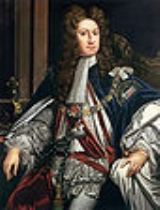
George I of Great Britain


George I (George Louis; ; 28 May 1660 – 11 June 1727) was King of Great Britain
List of British monarchs

This is a list of the monarchs of Kingdom of Great Britain and the United Kingdom. The Kingdom of Great Britain was formed on 1 May 1707 with the merger of the Kingdom of England and the Kingdom of Scotland, which had been in personal union under the House of Stuart since 24 March 1603....
 and Ireland
King of Ireland

The designation King of Ireland and Queen of Ireland was used during three periods of History of Ireland....
 from 1 August 1714 until his death, and ruler of Hanover
Electorate of Hanover

The Electorate of Brunswick-L?neburg became the ninth Electorate of the Holy Roman Empire in 1692, when the Holy Roman Emperor, Leopold I, Holy Roman Emperor, elevated Duke Ernest Augustus, Elector of Brunswick-L?neburg to the rank of Prince-elector of the Empire as a reward for aid given in the War of the Grand Alliance....
 in the Holy Roman Empire
Holy Roman Empire

The Holy Roman Empire was a union of territories in Central Europe during the Middle Ages and the Early modern Europe under a Holy Roman Emperor....
 from 1698.

George was born in Lower Saxony
Lower Saxony

Lower Saxony lies in northern Germany and is second in area and fourth in population among the sixteen States of Germany of Germany. In rural areas Low German is still spoken, but the number of speakers is declining....
 in what is now Germany, and eventually inherited the title and lands of the Duke of Brunswick-Lüneburg. A succession of European wars expanded his German domains during his lifetime, and in 1708 he was ratified as Prince-elector
Prince-elector

The Prince-Electors of the Holy Roman Empire were the members of the electoral college of the Holy Roman Empire, having the function of Imperial election the Holy Roman Emperors....
 of Hanover.


Discussion
Ask a question about 'George I of Great Britain'
Start a new discussion about 'George I of Great Britain'
Answer questions from other users
Full Discussion Forum


Encyclopedia


George I (George Louis; ; 28 May 1660 – 11 June 1727) was King of Great Britain
List of British monarchs

This is a list of the monarchs of Kingdom of Great Britain and the United Kingdom. The Kingdom of Great Britain was formed on 1 May 1707 with the merger of the Kingdom of England and the Kingdom of Scotland, which had been in personal union under the House of Stuart since 24 March 1603....
 and Ireland
King of Ireland

The designation King of Ireland and Queen of Ireland was used during three periods of History of Ireland....
 from 1 August 1714 until his death, and ruler of Hanover
Electorate of Hanover

The Electorate of Brunswick-L?neburg became the ninth Electorate of the Holy Roman Empire in 1692, when the Holy Roman Emperor, Leopold I, Holy Roman Emperor, elevated Duke Ernest Augustus, Elector of Brunswick-L?neburg to the rank of Prince-elector of the Empire as a reward for aid given in the War of the Grand Alliance....
 in the Holy Roman Empire
Holy Roman Empire

The Holy Roman Empire was a union of territories in Central Europe during the Middle Ages and the Early modern Europe under a Holy Roman Emperor....
 from 1698.

George was born in Lower Saxony
Lower Saxony

Lower Saxony lies in northern Germany and is second in area and fourth in population among the sixteen States of Germany of Germany. In rural areas Low German is still spoken, but the number of speakers is declining....
 in what is now Germany, and eventually inherited the title and lands of the Duke of Brunswick-Lüneburg. A succession of European wars expanded his German domains during his lifetime, and in 1708 he was ratified as Prince-elector
Prince-elector

The Prince-Electors of the Holy Roman Empire were the members of the electoral college of the Holy Roman Empire, having the function of Imperial election the Holy Roman Emperors....
 of Hanover. At the age of 54, after the death of Queen Anne
Anne of Great Britain

Anne became Queen of England, Queen of Scots and Kingdom of Ireland on 8 March 1702, succeeding her brother-in-law, William III of England. Her Roman Catholic father, James II of England, was Glorious Revolution in 1688/9; her brother-in-law and her sister then became joint monarchs as William III & II and Mary II of England, the only such c...
, he ascended the British throne as the first monarch of the House of Hanover
House of Hanover

The House of Hanover is a Germanic peoples Royal family dynasty which has ruled the Duchy of Brunswick-L?neburg , the Kingdom of Hanover and the Kingdom of Great Britain and the Kingdom of Ireland....
. Although over fifty Catholics
Roman Catholic Church

The Roman Catholic Church, officially known as the Catholic Church is the world's largest Christianity Ecclesia , representing over half of all Christians and one-sixth of the world population....
 bore closer blood relationships to Anne, the Act of Settlement 1701
Act of Settlement 1701

The Act of Settlement is an act of the Parliament of England, originally filed in 1700, and passed in 1701, to settle the Order of succession to the List of English monarchs on the Electress Sophia of Hanover a granddaughter of James I of England and her Protestantism heirs....
 prohibited Catholics from inheriting the throne, and George was Anne's closest living Protestant
Protestantism

Protestantism is a movement within Christianity that originated in the sixteenth-century Protestant Reformation. It is considered to be one of the three principal traditions of Christianity, together with Roman Catholicism and Eastern Orthodoxy....
 relative. In reaction, the Jacobites
Jacobitism

Jacobitism was the political movement dedicated to the restoration of the House of Stuart kings to the thrones of Kingdom of England, Kingdom of Scotland, and Kingdom of Ireland....
 attempted to depose George and replace him with Anne's Catholic half-brother, James Francis Edward Stuart
James Francis Edward Stuart

Prince James, Prince of Wales was the son of the deposed James II of England. As such, he claimed the English, Scottish and Irish thrones from the death of his father in 1701, when he was proclaimed king of England, Scotland and Ireland by his cousin Louis XIV of France....
, but their attempts failed.

During George's reign the powers of the monarchy diminished and Britain began a transition to the modern system of Cabinet government
Cabinet government

Cabinet government refers to any government in which most executive power is invested in a Cabinet - often the members act with cabinet collective responsibility....
 led by a Prime Minister
Prime minister

A prime minister is the most senior minister of Cabinet in the Executive branch of government in a parliamentary system. The position is usually held by, but need not always be held by, a politician....
. Towards the end of his reign, actual power was held by Sir Robert Walpole
Robert Walpole

Robert Walpole, 1st Earl of Orford, Order of the Garter, Order of the Bath, Privy Council of Great Britain , known before 1742 as Sir Robert Walpole, was a Kingdom of Great Britain statesman who is generally regarded as having been the first Prime Minister of the United Kingdom....
, Great Britain's first de facto
De facto

De facto is a Latin expression that means "concerning the fact" or in practice but not necessarily ordained by law. It is commonly used in contrast to de jure when referring to matters of law, governance, or technique that are found in the common experience as created or developed without or contrary to a regulation....
 Prime Minister
Prime minister

A prime minister is the most senior minister of Cabinet in the Executive branch of government in a parliamentary system. The position is usually held by, but need not always be held by, a politician....
. George died on a trip to his native Hanover, where he was buried.

Early life

George was born on 28 May 1660 in Osnabrück
Osnabrück

Osnabr?ck is a city in Lower Saxony, Germany, some 80 km NNE of Dortmund, 45 km NE of M?nster, and some 100 km due west of Hannover. It lies in a valley penned between the Wiehengebirge and the northern tip of the Teutoburg Forest....
, then part of the Holy Roman Empire
Holy Roman Empire

The Holy Roman Empire was a union of territories in Central Europe during the Middle Ages and the Early modern Europe under a Holy Roman Emperor....
. He was the oldest son of Ernest Augustus, Duke of Brunswick-Lüneburg
Brunswick-Lüneburg

Brunswick-L?neburg was a historical duchy during the period from the late Middle Ages through the late Early Modern era within the North-Western domains of the Holy Roman Empire....
, and his wife, Sophia of the Rhineland Palatinate
Sophia of Hanover

Sophia of Hanover was the youngest daughter of Frederick V, Elector Palatine, of the House of Wittelsbach, the "Winter King" of Bohemia, and Elizabeth of Bohemia....
. Sophia was the granddaughter of King James I
James I of England

James VI and I was List of monarchs of Scotland as James VI, and List of English monarchs and King of Ireland as James I. He ruled in Kingdom of Scotland as James VI from 24 July 1567, when he was only one year old, succeeding his mother Mary I of Scotland....
 of England through her mother, Elizabeth of Bohemia
Elizabeth of Bohemia

Elisabeth, Electress Palatine and Queen of Bohemia was the eldest daughter of James I of England, King of England, Scotland and Ireland, and Anne of Denmark....
.

For the first year of his life, George was the only heir to his father's and three childless uncles' German territories. In 1661, George's brother, Frederick Augustus, was born, and the two boys (known as Görgen and Gustchen within the family) were brought up together. Their mother was absent for almost a year, 1664–5, during a long and convalescent holiday in Italy, but she corresponded regularly with her sons' governess and took a great interest in her sons' upbringing, even more so on her return. After Sophia's tour, she bore Ernest Augustus another four sons and a daughter. In her letters, Sophia describes George as a responsible, conscientious child who set an example to his younger brothers and sisters.

By 1675, George's eldest uncle had died without issue, but his remaining two uncles had married, putting George's inheritance in jeopardy as his uncles' estates might pass to their own sons, if they had any, instead of to George. George's father had taken him hunting and riding, and introduced him to military matters; mindful of his uncertain future, Ernest Augustus took the fifteen-year-old George on campaign in the Franco-Dutch War
Franco-Dutch War

The Franco-Dutch War, often called simply the Dutch War was a war fought by the France, the Swedish Empire, the Bishopric of M?nster, the Archbishopric of Cologne and the Kingdom of England against the Dutch Republic, which was later joined by Holy Roman Emperor, Brandenburg and Spain to form a Quadruple Alliance....
 with a deliberate purpose of testing and training his son in battle.

In 1679, another uncle died unexpectedly without sons, and Ernest Augustus became reigning Duke of Calenberg
Calenberg

Calenberg was a dynastic division of the Duchy of Brunswick-L?neburg in the Holy Roman Empire. It existed as a separate entity from 1485 until 1705, when it was merged with L?neburg-Celle to form the state of Electorate of Hanover....
-Göttingen
Principality of Göttingen

The principality of G?ttingen was a subdivision of the Duchy of Brunswick-L?neburg in the Holy Roman Empire with G?ttingen as its capital. It was split off from the principality of Brunswick in 1279 in the course of an estate division among members of the House of Welf....
, with his capital at Hanover
Hanover

Hanover or Hannover#Definitions , on the river Leine, is the capital city of the Federal states of Germany of Lower Saxony , Germany and was once by personal union the family seat of the House of Hanover, in their dignities as the dukes of Brunswick-L?neburg ....
. George's surviving uncle, George William of Celle
George William, Duke of Brunswick-Lüneburg

George William was duke of Brunswick-L?neburg and ruled first over the Calenberg subdivision of the duchy, then over the Principality of L?neburg subdivision....
, had married his mistress in order to legitimize his only daughter, Sophia Dorothea of Celle
Sophia Dorothea of Celle

Sophia Dorothea was the wife and cousin of George Louis, Duke of Brunswick-L?neburg, later George I of Great Britain, and mother of George II of Great Britain through an arranged marriage of state, instigated by the machinations of Sophia of Hanover....
, but looked unlikely to have any further children. Under Salic law
Salic law

Salic law was an important body of traditional law codified for governing the Salian Franks in the early Middle Ages during the reign of King Clovis I in the 6th century....
, where inheritance of territory was restricted to the male line, the succession of George and his brothers to his father's and uncle's territories now seemed secure. In 1682, the family agreed to adopt the principle of primogeniture
Primogeniture

Primogeniture is the common law right of the firstborn son to inherit the entire Estate , to the exclusion of younger siblings. It is the tradition brought by the Normans to England in 1066....
, meaning George would inherit all the territory, and not have to share it with his brothers.

Marriage

The same year, George married his first cousin, Sophia Dorothea, thereby securing additional incomes that would have been outside Salic laws requiring male inheritance. The marriage of state
Marriage of state

A marriage of state in ancient use is a diplomatic marriage or union between two members of different nation-states or internally, between two power blocks, usually in authoritarian societies and is a practice which dates back into pre-history, as far back as early Grecian cultures in western society, and of similar antiquity in other civiliz...
 was arranged primarily as it ensured a healthy annual income, and assisted the eventual unification of Hanover and Celle. His mother Sophia was at first against the marriage, looking down on Sophia Dorothea's mother (who was not of royal birth) and concerned by Sophia Dorothea's legitimated status, but was eventually won over by the advantages inherent in the marriage.

In 1683, George and his brother, Frederick Augustus, served in the Great Turkish War
Great Turkish War

The Great Turkish War refers to a series of conflicts between the Ottoman Empire and contemporary European powers, then joined into a Holy League, during the second half of the 17th century....
 at the Battle of Vienna
Battle of Vienna

The Battle of Vienna , Ukrainian language: ????????? ?????? took place on 12 September 1683 after Vienna had been besieged by the Ottoman Empire for two months....
, and Sophia Dorothea bore George a son, George Augustus. The following year, Frederick Augustus was informed of the adoption of primogeniture, meaning he would no longer receive part of his father's territory as he had expected. It led to a breach between father and son, and between the brothers, that lasted until Frederick Augustus's death in battle in 1690. With the imminent formation of a single Hanoverian state, and the Hanoverians' continuing contributions to the Empire's wars, Ernest Augustus was made an Elector of the Holy Roman Empire in 1692. George's prospects were now better than ever, as the sole heir to his father's electorate and his uncle's duchy.

Sophia Dorothea had a second child, a daughter named after her, in 1687 but there were no other pregnancies. The couple became estranged—George preferred the society of his mistress, Melusine von der Schulenburg, by whom he had two daughters in 1692 and 1693; and Sophia Dorothea, meanwhile, had her own romance with the Swedish
Sweden

Sweden , officially the Kingdom of Sweden , is a Nordic countries on the Scandinavian Peninsula in Northern Europe. Sweden has land borders with Norway to the west and Finland to the northeast, and it is connected to Denmark by the ?resund Bridge in the south....
 Count Philip Christoph von Königsmarck
Philip Christoph von Königsmarck

Philip Christoph von K?nigsmarck or Philipp Christoph K?nigsmarck, was a Sweden count and military. He was the lover of Sophia Dorothea of Celle, the wife of George I of Great Britain.It is alleged that two of those involved in his death made confessions years later....
. Threatened with the scandal of an elopement, the Hanoverian court, including George's brothers and Sophia, urged the lovers to desist, but to no avail. According to diplomatic sources from Hanover's enemies, in July 1694, the count was killed, possibly with the connivance of George, and his body thrown into the river Leine
Leine

The Leine is a river in Thuringia and Lower Saxony, Germany. It is a left tributary of the Aller river and 281 km in length.The river's source is located close to the town of Leinefelde in Thuringia....
 weighted with stones. The murder was claimed to have been committed by four of Ernest Augustus's courtiers, one of whom (Don Nicolò Montalbano) was paid the enormous sum of 150,000 thaler
Thaler

The Thaler was a silver coin used throughout Europe for almost four hundred years. Its name lives on in various currencies as the dollar or Slovenian tolar....
s, which was about one hundred times the annual salary of the highest-paid minister. Sources in Hanover itself, including Sophia, denied any knowledge of Königsmarck's whereabouts.

George's marriage to Sophia Dorothea was dissolved, not on the grounds that either of them had committed adultery, but on the grounds that Sophia Dorothea had abandoned her husband. With the concurrence of her father, George had Sophia Dorothea imprisoned in the Castle of Ahlden
Castle of Ahlden

Ahlden Castle is a castle at Ahlden on the L?neburg Heath in Lower Saxony, Germany. It was built in 1549 on the Aller, which has since changed its course....
 in her native Celle
Celle

Celle is a town and capital of the district of Celle , in Lower Saxony, Germany. The town is situated in the southernmost part of the L?neburg Heath on the banks of the river Aller, a tributary of the Weser....
. She was denied access to her children and father, forbidden to remarry and only allowed to walk unaccompanied within the castle courtyard. She was however endowed with an income, establishment and servants, and was allowed to ride in a carriage outside her castle, albeit under supervision.

Electoral reign

Ernest Augustus died on 23 January 1698, leaving all of his territories to George, with the exception of the Prince-Bishopric of Osnabrück
Prince-Bishopric of Osnabrück

The Prince-Bishopric of Osnabr?ck was a prince-bishopric centered on the Roman Catholic Diocese of Osnabr?ck. The diocese was erected in 772 and is the oldest see founded by Charlemagne, in order to Christianize the conquered stem-duchy of Duchy of Saxony....
, an office he had held since 1661. George thus became Duke of Brunswick-Lüneburg
Brunswick-Lüneburg

Brunswick-L?neburg was a historical duchy during the period from the late Middle Ages through the late Early Modern era within the North-Western domains of the Holy Roman Empire....
 (also known as Hanover, after its capital) as well as Archbannerbearer
Prince-elector

The Prince-Electors of the Holy Roman Empire were the members of the electoral college of the Holy Roman Empire, having the function of Imperial election the Holy Roman Emperors....
 and a Prince-Elector
Prince-elector

The Prince-Electors of the Holy Roman Empire were the members of the electoral college of the Holy Roman Empire, having the function of Imperial election the Holy Roman Emperors....
 of the Holy Roman Empire
Holy Roman Empire

The Holy Roman Empire was a union of territories in Central Europe during the Middle Ages and the Early modern Europe under a Holy Roman Emperor....
. His court in Hanover was graced by many cultural icons, such as the mathematician Gottfried Leibniz
Gottfried Leibniz

Gottfried Wilhelm Leibniz was a Germany polymath who wrote primarily in Latin and French language.He occupies an equally grand place in both the history of philosophy and the history of mathematics....
 and the composer Georg Friederich Händel.

Shortly after George's accession to his paternal dukedom, the second-in-line to the English and Scottish thrones, Prince William, Duke of Gloucester died. The Parliament of England
Parliament of England

The Parliament of England was the legislature of the Kingdom of England. Its roots can be traced back to the early medieval period. In a series of developments, it came increasingly to constrain the power of the King of England, and went on after the Act of Union 1707 to merge with the Parliament of Scotland and form the main basis of the Pa...
 passed the Act of Settlement 1701
Act of Settlement 1701

The Act of Settlement is an act of the Parliament of England, originally filed in 1700, and passed in 1701, to settle the Order of succession to the List of English monarchs on the Electress Sophia of Hanover a granddaughter of James I of England and her Protestantism heirs....
, whereunder George's mother, Sophia, was designated heir to the English throne if the then-reigning monarch (William III
William III of England

William III was a Prince of Orange by birth. From 1672 onwards, he governed as List_of_stadtholders_for_the_Low_Countries_provinces William III of Orange over Holland, Zeeland, Utrecht, Guelders, and Overijssel of the Dutch Republic....
) and his sister-in-law, Princess Anne of Denmark
Anne of Great Britain

Anne became Queen of England, Queen of Scots and Kingdom of Ireland on 8 March 1702, succeeding her brother-in-law, William III of England. Her Roman Catholic father, James II of England, was Glorious Revolution in 1688/9; her brother-in-law and her sister then became joint monarchs as William III & II and Mary II of England, the only such c...
 (later Queen Anne), died without surviving issue. The succession was so designed because Sophia was the closest Protestant relative of the British Royal Family
British Royal Family

The British Royal Family is the group of close relatives of the Monarchy of the United Kingdom. The term is also commonly applied to the same group of people as the relations of the monarch in his or her Commonwealth realm#The Crown in the Commonwealth realmss, thus sometimes at variance with official national terms for the family....
; Fifty-six Catholics
Roman Catholic Church

The Roman Catholic Church, officially known as the Catholic Church is the world's largest Christianity Ecclesia , representing over half of all Christians and one-sixth of the world population....
 with superior hereditary claims were bypassed. The likelihood of any of them converting to Protestantism for the sake of the succession was remote, and some had already refused.

In August 1701, George was invested with the Order of the Garter
Order of the Garter

The Most Noble Order of the Garter is an order of chivalry, or knighthood, originating in medieval England, and presently bestowed on recipients in the United Kingdom and other Commonwealth realms; it is the pinnacle of the Orders, decorations, and medals of the United Kingdom....
, and, within six weeks, the nearest Catholic claimant to the throne of England, ex-King James II
James II of England

James II and VII was List of English monarchs, List of Scottish monarchs, and King of Ireland from 6 February 1685. He was the last Roman Catholic Church monarch to reign over the Kingdoms of Kingdom of England, Kingdom of Scotland, and Kingdom of Ireland....
, died. William III died the following March, and Sophia became heir presumptive to the new Queen of England, Anne. Sophia was in her seventy-first year, older than Anne by thirty-five years, but she was very fit and healthy, and invested time and energy in securing the succession either for herself or her son. However, it was George who understood the complexities of English politics and constitutional law
History of the British constitution

The History of the Constitution of the United Kingdom is a story that begins before the creation of the United Kingdom itself and continues to the present day....
, which required further acts in 1705 to naturalize Sophia and her heirs as English citizens, and detail arrangements for the transfer of power through a Regency Council. The same year, George's surviving uncle died and he inherited further German dominions: Lüneberg-Grubenhagen
Grubenhagen

The Principality of Grubenhagen was a subdivision of the Duchy of Brunswick-L?neburg in the Holy Roman Empire. It is also known as Brunswick-Grubenhagen....
, centred on Celle
Celle

Celle is a town and capital of the district of Celle , in Lower Saxony, Germany. The town is situated in the southernmost part of the L?neburg Heath on the banks of the river Aller, a tributary of the Weser....
.

Shortly after George's accession in Hanover, the War of the Spanish Succession
War of the Spanish Succession

War of the Spanish Succession was a war fought in 1701-1714, in which several European powers combined to stop a possible unification of the Kingdoms of Spain and France under a single Bourbon monarch, upsetting the European Balance of power in international relations....
 broke out. At issue was the right of Philip
Philip V of Spain

Philip V of Spain , born Philippe de France, fils de France and Counts and Dukes of Anjou, was king of Spain from 1700 to 1724 and 1724 to 1746, the first of the House of Bourbon dynasty in Spain....
, the grandson of the French King Louis XIV
Louis XIV of France

Louis XIV ruled as List of French monarchs and of King of Navarre. He ascended the throne a few months before his fifth birthday, but did not assume actual personal control of the government until the death of his prime minister , the Italians Jules Cardinal Mazarin, in 1661....
, to succeed to the Spanish throne under the terms of King Charles II of Spain
Charles II of Spain

Charles II , was the last Habsburg Spain of Spain and the ruler of nearly all of Italy , the Spanish territories in the Southern Low Countries, and Spanish empire, stretching from Mexico to the Philippines....
's will
Will (law)

In common law, a will or testament is a document by which a person regulates the rights of others over his or her property or family after death....
. The Holy Roman Empire
Holy Roman Empire

The Holy Roman Empire was a union of territories in Central Europe during the Middle Ages and the Early modern Europe under a Holy Roman Emperor....
, the United Provinces
Dutch Republic

The Republic of the Seven United Netherlands was a European republic between 1581 and 1795, in about the same location as the modern Kingdom of the Netherlands, which is the successor state....
, England, Hanover and many other German states opposed Philip's right to succeed because they feared that France would become too powerful if it also controlled Spain. As part of the war effort George invaded his neighbouring state, Brunswick-Wolfenbüttel, which was pro-French, writing out some of the battle orders himself. The invasion succeeded with few lives lost, and as a reward, the Hanoverian claim to Saxony-Lauenburg
Duchy of Saxe-Lauenburg

The Duchy of Saxe-Lauenburg , also known as the Duchy of Lauenburg, was a Reichsfrei duchy that existed from 1296–1803 and 1814–1876 in the extreme southeast region of Schleswig-Holstein....
, which George's uncle had invaded and annexed on the death of its ruler several years before, was recognised by the British and Dutch.

In 1706, the Elector of Bavaria
Maximilian II Emanuel, Elector of Bavaria

Maximilian II , also known as Max Emanuel or Maximilian Emanuel, was a Wittelsbach ruler of Bavaria and an elector of the Holy Roman Empire....
 was deprived of his offices and titles for siding with France against the Empire. The following year, George was made Imperial Field Marshal, in command of the Empire's army stationed along the Rhine. His tenure was not altogether successful, partly because he was deceived by his ally John Churchill, 1st Duke of Marlborough
John Churchill, 1st Duke of Marlborough

John Churchill, 1st Duke of Marlborough Order of the Garter was an England soldier and statesman whose career spanned the reigns of five monarchs throughout the late 17th and early 18th centuries....
 into a diversionary attack, and partly because the Emperor Joseph
Joseph I, Holy Roman Emperor

Joseph I , Holy Roman Emperor, King of Bohemia, King of Hungary, King of the Romans was the elder son of Leopold I, Holy Roman Emperor and his third wife, Eleonore-Magdalena of Pfalz-Neuburg, who was the daughter of Philipp Wilhelm, Elector Palatine....
 appropriated the funds necessary for George's campaign for his own use. Despite this, the German princes knew, or at least thought, that he had acquitted himself well. In 1708, they formally confirmed George's position as a Prince-Elector
Prince-elector

The Prince-Electors of the Holy Roman Empire were the members of the electoral college of the Holy Roman Empire, having the function of Imperial election the Holy Roman Emperors....
 in recognition or because of his service. George did not hold Marlborough's actions against him, which he appreciated were part of a plan to lure French forces from the main attack.

In 1709, George resigned as Field Marshal, never to go on active service again, and in 1710 was conferred the dignity of Archtreasurer of the Empire, formerly held by the Elector Palatine—the absence of the Elector of Bavaria allowed a re-shuffling of offices. In 1711, the Emperor Joseph died, which threatened to destroy the balance of power in the opposite direction, and the war ended in 1713 with the ratification of the Treaty of Utrecht
Treaty of Utrecht

The Treaty of Utrecht that established the Peace of Utrecht, rather than a single document, comprises a series of individual peace treaty signed in the Dutch Republic city of Utrecht in March and April 1713....
. Philip was allowed to succeed to the Spanish throne, but he was removed from the line of succession to the French throne, and the Elector of Bavaria was restored.

Accession in Great Britain

Though both England and Scotland recognised Anne as their Queen, only the English Parliament had settled on Sophia, Electress of Hanover, as the heir. The Estates of Scotland (the Scottish Parliament)
Parliament of Scotland

The Parliament of Scotland, officially the Estates of Parliament, was the legislature of the Independence Kingdom of Scotland.The unicameral parliament of Scotland is first found on record during the early thirteenth century, and the first meeting for which reliable evidence survives was at Kirkliston in 1235, during the reign of A...
 had not yet formally settled the question over who would succeed to the Scottish throne on Anne's death. In 1703, the Estates passed a bill that declared that their selection for Queen Anne's successor would not be the same individual as the successor to the English throne, unless England granted full freedom of trade to Scottish merchants in England and its colonies. At first, Royal Assent
Royal Assent

The granting of Royal Assent is the formal method by which a constitutional monarchy completes the legislative process of lawmaking by formally assenting to an Act of Parliament....
 was withheld but the following year Anne capitulated to the wishes of the Estates, and assent was granted to the bill, which became the Act of Security 1704
Act of Security 1704

The Act of Security 1704 was a response by the Parliament of Scotland to the Parliament of England's Act of Settlement 1701. Queen Anne of Great Britain's last surviving child, William, Duke of Gloucester had died in 1700, and both parliaments needed to find a Protestant successor....
. In response, the English Parliament passed measures which threatened to restrict Anglo-Scottish trade and cripple the Scottish economy if the Estates did not agree to the Hanoverian succession. Eventually, in 1707, both Parliaments agreed an Act of Union
Acts of Union 1707

The Acts of Union were a pair of Act of Parliament passed in 1707 by the Parliament of Scotland and the Parliament of England to put into effect the terms of the Treaty of Union that had been agreed on 22 July 1706, following negotiation between commissioners representing the parliaments of the two countries....
, creating the largest free trade area in eighteenth-century Europe. It united England and Scotland into a single political entity, the Kingdom of Great Britain
Kingdom of Great Britain

The Kingdom of Great Britain, also known as the United Kingdom of Great Britain, was a country in North-West Europe, in existence from 1707 to 1801....
, and established the rules of succession as laid down by the Act of Settlement 1701
Act of Settlement 1701

The Act of Settlement is an act of the Parliament of England, originally filed in 1700, and passed in 1701, to settle the Order of succession to the List of English monarchs on the Electress Sophia of Hanover a granddaughter of James I of England and her Protestantism heirs....
.

George's mother, the Electress Sophia, died on 28 May 1714 at the age of 83. She had collapsed after rushing to shelter from a shower of rain in Herrenhausen gardens
Herrenhausen Gardens

The Herrenhausen Gardens , located in Lower Saxony capital of Hanover are made up of the Great Garden , the Berggarten, the Georgengarten and the Welfengarten. The gardens are a heritage of the Kings of Hanover....
. George was now Queen Anne's direct heir. He swiftly revised the membership of the Regency Council that would take power after Anne's death, as it was known that Anne's health was failing and politicians in Britain were jostling for power. She suffered a stroke, which left her unable to speak, and died on 1 August. The list of regents was opened, the members sworn in, and George was proclaimed King of Great Britain and Ireland. Partly due to contrary winds, which kept him in The Hague
The Hague

The Hague is the third largest city in the Netherlands after Amsterdam and Rotterdam, with a population of 475,904 and an area of approximately 100 km?....
 awaiting passage, he did not arrive in Britain until 18 September. George was crowned at Westminster Abbey
Westminster Abbey

The Collegiate Church of St Peter at Westminster, which is almost always referred to popularly and informally as Westminster Abbey, is a large, mainly Gothic architecture Church , in Westminster, London, just to the west of the Palace of Westminster....
 on 20 October.

James I
James I of England

James VI and I was List of monarchs of Scotland as James VI, and List of English monarchs and King of Ireland as James I. He ruled in Kingdom of Scotland as James VI from 24 July 1567, when he was only one year old, succeeding his mother Mary I of Scotland....


King of England,
Scotland and Ireland
See Ancestors
James I of England

James VI and I was List of monarchs of Scotland as James VI, and List of English monarchs and King of Ireland as James I. He ruled in Kingdom of Scotland as James VI from 24 July 1567, when he was only one year old, succeeding his mother Mary I of Scotland....

See Descendants
Descendants of James I of England

James VI and I was List of monarchs of Scotland, List of English monarchs, and King of Ireland....
Daughter Granddaughter Great-grandson
Elizabeth of Bohemia

Elisabeth, Electress Palatine and Queen of Bohemia was the eldest daughter of James I of England, King of England, Scotland and Ireland, and Anne of Denmark....


Electress Palatine and
Queen of Bohemia
See Descendants
Sophia of Hanover
Sophia of Hanover

Sophia of Hanover was the youngest daughter of Frederick V, Elector Palatine, of the House of Wittelsbach, the "Winter King" of Bohemia, and Elizabeth of Bohemia....

Sophia of Hanover

Electress of Hanover
See Descendants
George I
George I of Great Britain

George I was List of British Monarchs#House of Hanover and King of Ireland from 1 August 1714 until his death, and ruler of Electorate of Hanover in the Holy Roman Empire from 1698....

Georgeigreatbritain

King George I of Great Britain
See Descendants


George mainly lived in Great Britain after 1714, though he visited his home in Hanover in 1716, 1719, 1720, 1723 and 1725; in total George spent about one fifth of his reign as King in Germany. A clause in the Act of Settlement that forbade the British monarch from leaving the country without Parliament's permission was unanimously repealed in 1716. During all but the first of the King's absences, power was vested in a Regency Council rather than his son, George Augustus, Prince of Wales.

Within a year of George's accession, the Whigs
British Whig Party

The Whigs are often described as one of two political party in Kingdom of England and later the United Kingdom from the late 17th to the mid-19th centuries....
 won an overwhelming victory in the general election of 1715
British general election, 1715

The British general election of 1715 returned members to serve in the British House of Commons of the 5th Parliament of Great Britain to be held, after the merger of the Parliament of England and the Parliament of Scotland in 1707....
. Several members of the defeated Tory
Tory

In the political tradition of some List of countries where English is an official language, the term Tory may refer to a variety of Political party and creeds since it was originally used in the late 17th century to describe opponents to the Whig Party ....
 Party sympathised with the Jacobites
Jacobitism

Jacobitism was the political movement dedicated to the restoration of the House of Stuart kings to the thrones of Kingdom of England, Kingdom of Scotland, and Kingdom of Ireland....
, and some disgruntled Tories sided with a Jacobite rebellion, which became known as "The Fifteen". The Jacobites sought to put Anne's Catholic half-brother, James
James Francis Edward Stuart

Prince James, Prince of Wales was the son of the deposed James II of England. As such, he claimed the English, Scottish and Irish thrones from the death of his father in 1701, when he was proclaimed king of England, Scotland and Ireland by his cousin Louis XIV of France....
 (whom they called "James III", and who was known to his opponents as the "Pretender") on the Throne. The Pretender's supporters, led by Lord Mar
John Erskine, 22nd Earl of Mar

John Erskine, 22nd and de jure 6th Earl of Mar, Order of the Thistle , Scotland Jacobitism, was the eldest son of the Charles Erskine, 21st Earl of Mar , from whom he inherited estates that were heavily loaded with debt....
, an embittered Scottish nobleman who had previously supported the "Glorious Revolution", instigated rebellion in Scotland, where support for Jacobitism was stronger than in England. The Fifteen, however, was a dismal failure; Lord Mar's battle plans were poor, and the Pretender arrived late with too little money and too few arms. By the end of the year, the rebellion had all but collapsed. Faced with impending defeat, Lord Mar and the Pretender fled to France in February 1716. After the rebellion was defeated, although there were some executions and forfeitures, George acted to moderate the Government's response, showed leniency, and spent the income from the forfeited estates on schools for Scotland and paying off part of the national debt.

George's distrust of the Tories aided the passing of power to the Whigs. Whig dominance would grow to be so great under George that the Tories would not return to power for another half-century. After the election, the Whig-dominated Parliament passed the Septennial Act 1715
Septennial Act 1715

The Septennial Act 1715 was an Act of Parliament of the Parliament of Great Britain of the Kingdom of Great Britain in May 1716 , to increase the maximum length of a Parliament from 3 years to 7 years....
, which extended the maximum duration of Parliament to seven years (although it could be dissolved earlier by the Sovereign). Thus, Whigs already in power could remain in such a position for a greater period of time.

Wars and rebellion


After his accession in Great Britain, George's relationship with his son (which had always been poor) worsened. George Augustus, Prince of Wales, encouraged opposition to his father's policies, including measures designed to increase religious freedom in Britain and expand Hanover's German territories at the expense of Sweden. In 1717, the birth of a grandson led to a major quarrel between George and the Prince of Wales. The King, supposedly following custom, appointed the Lord Chamberlain
Lord Chamberlain

The Lord Chamberlain or Lord Chamberlain of the Household is one of the chief officers of the Royal Household in the United Kingdom, and is to be distinguished from the Lord Great Chamberlain, one of the Great Officer of State....
, the Duke of Newcastle
Thomas Pelham-Holles, 1st Duke of Newcastle-upon-Tyne

Thomas Pelham-Holles, 1st Duke of Newcastle-upon-Tyne and 1st Duke of Newcastle-under-Lyne, Order of the Garter, Privy Council of Great Britain was a Kingdom of Great Britain British Whig Party statesman, whose official life extended throughout the Whig supremacy of the 18th century....
, as one of the baptism
Baptism

In Christianity, baptism is the ritual act, with the use of water, by which one is admitted as a full member of the Christian Church and, in the view of some, as a member of the particular Church in which the baptism is administered....
al sponsors of the child. The King was angered when the Prince of Wales, disliking Newcastle, verbally insulted the Duke at the christening, which the Duke misunderstood as a challenge to a duel. The Prince was told to leave the royal residence, St. James's Palace
St. James's Palace

St. James's Palace is one of London's oldest palaces. It is situated on Pall Mall, London in London, just north of St. James's Park....
. The Prince's new home, Leicester House
Leicester Square

Leicester Square is a pedestrianised city square in the West End of London of London, England. The Square lies within an area bound by Lisle Street, to the north; Charing Cross Road, to the east; Orange Street, to the south; and Whitcomb Street, to the west....
, became a meeting place for the King's political opponents. George and his son were later reconciled, at the insistence of Walpole and the desire of the Princess of Wales
Caroline of Ansbach

Caroline of Brandenburg-Ansbach, later Queen Caroline; Wilhelmina Charlotte Caroline was the queen consort of George II of Great Britain....
, who had moved out with her husband but missed her children who had been left in the care of the King. Following the quarrel at the baptism, father and son would never again be on cordial terms.

George was active in directing British foreign policy during his early reign. In 1717, he contributed to the creation of the Triple Alliance
Triple Alliance (1717)

The Triple Alliance was a treaty between the Dutch Republic, France and Kingdom of Great Britain, against Spain, attempting to maintain the agreement of the 1713 Treaty of Utrecht ....
, an anti-Spanish league composed of Great Britain, France and the United Provinces. In 1718, the Holy Roman Empire
Holy Roman Empire

The Holy Roman Empire was a union of territories in Central Europe during the Middle Ages and the Early modern Europe under a Holy Roman Emperor....
 was added to the body, which became known as the Quadruple Alliance
Quadruple Alliance

The term "Quadruple Alliance" refers to several historical military alliances; none of which remain in effect.# The Quadruple Alliance of August 1673 was an alliance between the Holy Roman Empire, the Kingdom of Spain, Charles IV, Duke of Lorraine, and the Dutch Republic of the Netherlands, in the context of the Franco-Dutch War....
. The subsequent War of the Quadruple Alliance
War of the Quadruple Alliance

The War of the Quadruple Alliance was a result of the ambitions of King Philip V of Spain, his wife, Isabella Farnese, and his chief minister Giulio Alberoni to retake territories in Italy and to claim the French throne....
 involved the same issue as the War of the Spanish Succession. The Treaty of Utrecht (1713) had recognised the grandson of King Louis XIV of France, Philip, as the King of Spain on the condition that he gave up his rights to succeed to the French throne. Upon the death of Louis XIV in 1715, however, Philip sought to overturn the treaty. Spain supported a Jacobite-led invasion of Scotland in 1719, but stormy seas allowed only about three hundred Spanish troops to arrive in Scotland. A base was established at Eilean Donan
Eilean Donan

Eilean Donan , is a small island in Loch Duich in the western Scottish Highlands of Scotland. It is connected to the mainland by a footbridge and lies about half a mile from the village of Dornie....
 Castle on the west Scottish coast, only for it to be destroyed by British ships a month later. Attempts by the Jacobites to recruit Scottish clansmen yielded a fighting force of only about a thousand men. The Jacobites were poorly equipped, and were easily defeated by British artillery
Artillery

Artillery is a military Combat Arms which employs any apparatus, machine, an assortment of tools or instruments, a system or systems used as weapons for the discharge of large projectiles in combat as a major contribution of fire power within the overall military capability of an armed force....
 at the Battle of Glen Shiel
Battle of Glen Shiel

The Battle of Glen Shiel was a battle in Glen Shiel, in the West Scottish Highlands of Scotland on 10 June 1719, between the British government and an alliance of Jacobitism and Spaniards, resulting in a victory for the British forces....
. The clansmen dispersed into the Highlands
Scottish Highlands

The Scottish Highlands include the rugged and mountainous regions of Scotland north and west of the Highland Boundary Fault, although the exact boundaries are not clearly defined, particularly to the east....
, and the Spaniards surrendered. The invasion never posed any serious threat to George's government. With even the French fighting against him in the War, Philip's armies fared poorly. As a result, the Spanish and French thrones remained separate.

Simultaneously, Hanover gained from the resolution of the Great Northern War
Great Northern War

The Great Northern War was a war in which the so-called Northern Alliance composed of Russia, Denmark-Norway, Polish?Lithuanian Commonwealth and Saxony engaged Sweden to challenge them for the supremacy in the Baltic Sea....
, which had been caused by rivalry between Sweden
Swedish Empire

Sweden was, between 1611 and 1718, one of the great powers of Europe. In modern historiography this period is known as the Swedish Empire, or stormaktstiden ....
 and Russia
Russian Empire

File:Russian Emperor Flag.jpgFile:Romanov Flag.svgThe Russian Empire was a state that existed from 1721 until the Russian Revolution of 1917....
 for control of the Baltic
Baltic Sea

The Baltic Sea is a brackish inland sea located in Northern Europe, from 53?N to 66?N latitude and from 20?E to 26?E longitude. It is bounded by the Scandinavian Peninsula, the mainland of Europe, and the Denmark islands....
. The Swedish territories of Bremen and Verden
Bremen-Verden

Bremen-Verden, but formally Duchy of Bremen and Principality of Verden were two territories of the Holy Roman Empire, which emerged and gained Imperial immediacy in 1180....
 were ceded to Hanover in 1719, with Hanover paying Sweden a money compensation for the loss of territory.

Ministries

In Hanover, the King was absolute monarch. All government expenditure above 50 thalers (between 12 and 13 British pounds
Pound sterling

----The pound sterling , subdivided into 100 pence , is the currency of the United Kingdom, its Crown dependency and the British Overseas Territories of South Georgia and the South Sandwich Islands and British Antarctic Territory....
), and the appointment of all army officers, all ministers, and even government officials above the level of copyist, was in his personal control. In contrast, in Great Britain, George had to govern through Parliament.

In 1715, when the Whigs came to power, George's chief ministers included Sir Robert Walpole, Lord Townshend
Charles Townshend, 2nd Viscount Townshend

Charles Townshend, 2nd Viscount Townshend , was a British British Whig Party statesman. He served for a decade as Secretary of State, directing British foreign policy....
 (Walpole's brother-in-law), Lord Stanhope
James Stanhope, 1st Earl Stanhope

James Stanhope, 1st Earl Stanhope, Privy Council of Great Britain , English and British statesman and soldier, was born in Paris, the eldest of the seven children of the Hon....
 and Lord Sunderland
Charles Spencer, 3rd Earl of Sunderland

Charles Spencer, 3rd Earl of Sunderland was an English statesman.He was the second son of Robert Spencer, 2nd Earl of Sunderland and Anne Spencer, Countess of Sunderland , daughter of George Digby, 2nd Earl of Bristol....
. In 1717, Lord Townshend was dismissed and Walpole resigned from the Cabinet over disagreements with their colleagues; Lord Stanhope became supreme in foreign affairs, and Lord Sunderland the same in domestic matters.

Lord Sunderland's power began to wane in 1719. He introduced a Peerage Bill, which attempted to limit the size of the House of Lords
House of Lords

The House of Lords is the second house of the Parliament of the United Kingdom and is also commonly referred to as "the Lords". The Parliament comprises the British monarchy, the British House of Commons , and the Lords....
 by restricting new creations. The measure would have solidified Sunderland's control of the House by preventing the creation of opposition peers but it was defeated after Walpole led the opposition to the bill by delivering what was considered "the most brilliant speech of his career". Walpole and Townshend were reappointed as ministers the following year and a new, supposedly unified, Whig government formed.

Greater problems arose over financial speculation and the management of the national debt. Certain government bonds could not be redeemed without the consent of the bondholder and had been issued when interest rates were high; consequently, each bond represented a long-term drain on public finances, as bonds were hardly ever redeemed. In 1719, the South Sea Company
The South Sea Company

The South Sea Company was a Kingdom of Great Britain joint stock company that traded in South America during the 18th century. Founded in 1711, the company was granted a monopoly to trade in Spain's Spanish colonization of the Americas as part of a treaty during the War of Spanish Succession....
 proposed to take over £31 million (three fifths) of the British national debt by exchanging government securities for stock in the company. The Company bribed Lord Sunderland, Melusine von der Schulenburg and Lord Stanhope's cousin, Charles Stanhope
Charles Stanhope

Charles Stanhope may refer to:*Charles Stanhope , British MP for Derby 1730-6*Charles Stanhope , British MP for Milborne Port 1717-1722 and Aldborough 1734-5...
, who was Secretary of the Treasury, to support their plan. The Company enticed bondholders to convert their high-interest, irredeemable bonds to low-interest, easily-tradeable stocks by offering apparently preferential financial gains. Company prices rose rapidly; the shares had cost £128 on 1 January 1720, but were valued at £500 when the conversion scheme opened in May; on 24 June the price reached a peak of £1050. The company's success led to the speculative flotation of other companies, some of a bogus nature, and the Government, in an attempt to suppress these schemes and with the support of the Company, passed the Bubble Act
Bubble Act

Bubble Act of 1720 was an Act of Parliament of the Parliament of Great Britain that forbade all joint-stock company not authorised by royal charter....
. With the rise in the market now halted, uncontrolled selling began in August, which caused the stock to plummet to £150 by the end of September. Many individuals—including aristocrats—lost vast sums and some were completely ruined. George, who had been in Hanover since June, returned to London in November—sooner than he wanted or was usual—at the request of the ministry.

The economic crisis, known as the South Sea Bubble, made George and his ministers extremely unpopular. In 1721, Lord Stanhope, though personally innocent, collapsed and died after a stressful debate in the House of Lords, and Lord Sunderland resigned from public office. Lord Sunderland retained a degree of personal influence with George until his sudden death in 1722 allowed the rise of Sir Robert Walpole. Walpole became de facto Prime Minister
Prime Minister of the United Kingdom

The Prime Minister of the United Kingdom of Great Britain and Northern Ireland is the political leader of the United Kingdom and the head of government Her Majesty's Government....
, although the title was not formally applied to him (officially, he was First Lord of the Treasury
First Lord of the Treasury

The First Lord of the Treasury is the head of the Government agency exercising the ancient office of Lord High Treasurer in the United Kingdom, and is usually?but not always?also the Prime Minister of the United Kingdom....
 and Chancellor of the Exchequer
Chancellor of the Exchequer

The Chancellor of the Exchequer is the title held by the British Cabinet of the United Kingdom Minister who is responsible for all economic and financial matters....
). His management of the South Sea crisis, by rescheduling the debts and arranging some compensation, helped the return to financial stability. Through Walpole's skillful management of Parliament, George managed to avoid direct implication in the Company’s fraudulent actions. Claims that George had received free stock as a bribe are not supported by evidence, indeed receipts in the Royal Archives
Royal Archives

The Royal Archives, also known as the Queen's Archives, are a division of the Royal Household of the Monarch of the United Kingdom. It is operationally under the control of the Keeper of the Royal Archives, who is customarily the Private Secretary to the Sovereign....
 show that he paid for his subscriptions and that he lost money in the crash.

Later years

As requested by Walpole, George revived The Most Honourable Order of the Bath
Order of the Bath

The Most Honourable Order of the Bath is a United Kingdom order of chivalry founded by George I of Great Britain on 18 May 1725. The name derives from the medieval ceremony for creating a knight, which involved bathing as one of its elements....
 in 1725, which enabled Walpole to reward or gain political supporters by offering them the honour. Walpole became extremely powerful, and was largely able to appoint ministers of his own choosing. Unlike his predecessor, Queen Anne, George rarely attended meetings of the Cabinet; most of his communications were in private. George only exercised substantial influence with respect to British foreign policy. He, with the aid of Lord Townshend, arranged for the ratification by Great Britain, France and Prussia
Prussia

Prussia was, most recently, a historic state originating out of the Duchy of Prussia and the Margraviate of Brandenburg. This state had for centuries substantial influence on Germany and European history....
 of the Treaty of Hanover
Treaty of Hanover

The Treaty of Hanover was developed in response to the Treaty of Vienna in which King Philip V of Spain allied himself with Habsburg Austria after his daughter's engagement to Louis XV of France was broken off....
, which was designed to counter-balance the Austro-Spanish Treaty of Vienna
Treaty of Vienna (1725)

The Treaty of Vienna was signed on April 30, 1725 between Emperor Charles VI of Austria and King Philip V of Spain.The treaty guaranteed the Pragmatic Sanction of the Habsburgs, which was first declared in 1713....
 and protect British trade.

George, although increasingly reliant on Walpole, could still have replaced his ministers at will. Walpole was actually afraid of being removed towards the end of George I's reign, but such fears were put to an end when George died during his sixth trip to his native Hanover since his accession as King. George suffered a stroke on the road between Delden
Delden

Delden is a city in the Netherlands province of Overijssel and, since 2001, in the Municipalities in the Netherlands of Hof van Twente.Although its population is small, it gained City rights in the Low Countries in 1333....
 and Nordhorn
Nordhorn

Nordhorn is the district seat of Grafschaft Bentheim in Lower Saxony's southwesternmost corner near the border with the Netherlands and the boundary with North Rhine-Westphalia....
 on the 9 June 1727. He was taken by carriage to the prince-bishop's palace at Osnabrück where he died in the early hours of 11 June 1727. He was buried in the Chapel of Leine Castle
Leineschloss

The Leineschloss , situated on the Leine in Hanover, Germany, is the former residence of the Hanoverian kings and the current seat of the Landtag of Lower Saxony....
 but his remains were moved to the chapel at Herrenhausen
Herrenhausen Gardens

The Herrenhausen Gardens , located in Lower Saxony capital of Hanover are made up of the Great Garden , the Berggarten, the Georgengarten and the Welfengarten. The gardens are a heritage of the Kings of Hanover....
 after World War II
World War II

World War II, or the Second World War , was a global military conflict which involved a Participants in World War II, including all of the great powers, organised into two opposing military alliances: the Allies of World War II and the Axis powers....
.

George was succeeded by his son, George Augustus, who took the throne as George II
George II of Great Britain

George II was King of Great Britain and King of Ireland, Duke of Brunswick-L?neburg and Prince-elector#High Offices and Prince-Elector of the Holy Roman Empire from 11 June 1727 until his death....
. It was widely assumed, even by Walpole for a time, that George II planned to remove Walpole from office but was prevented from doing so by his wife, Queen Caroline. However, Walpole commanded a substantial majority in Parliament and George II had little choice but to retain him or risk ministerial instability. In subsequent reigns, the power of the Sovereign further deteriorated, and the power of the Prime Minister increased.

Legacy

George was ridiculed by his British subjects; some of his contemporaries, such as Lady Mary Wortley Montagu, thought him unintelligent on the flimsy grounds that he was wooden in public. Though he was unpopular due to his supposed inability to speak English
English language

English is a West Germanic language that originated in Anglo-Saxon England and has lingua franca status in many parts of the world as a result of the military, economic, scientific, political and cultural influence of the British Empire in the 18th, 19th and early 20th centuries and that of the United States from the mid 20th century onwa...
, such an inability may not have existed later in his reign, as documents from that time show that he understood, spoke and wrote English. He certainly spoke fluent German
German language

German is a West Germanic languages, thus related to and classified alongside English language and Dutch language. It is one of the world's world language and the most widely spoken mother tongue in the European Union....
 and French
French language

French is a Romance language spoken around the world by around 80 million people as first language, by 190 million as second language, and by about another 200 million people as an acquired tongue, with significant speakers in 54 countries....
, good Latin, and some Italian
Italian language

Italian is a Romance languages spoken by about 63 million people as a first language, primarily in Italy. In Switzerland, Italian is one of four Linguistic geography of Switzerlands....
 and Dutch
Dutch language

Dutch is a West Germanic languages spoken by over 22 million people as a first language, and about 5 million people as a second language."1% of the EU population claims to speak Dutch well enough in order to have a conversation." Outside the European Union the number of second language speakers of Dutch is very small. Most native...
. His treatment of his wife, Sophia Dorothea, became something of a scandal. The British perceived him as too German, and, in the opinion of historian Ragnhild Hatton
Ragnhild Hatton

Ragnhild Marie Hatton,...
, wrongly assumed that he had a succession of German mistresses. However, in Europe he was seen as a progressive ruler supportive of the Enlightenment, who permitted his critics to publish without risk of severe censorship, and provided sanctuary to Voltaire
Voltaire

Fran?ois-Marie Arouet , better known by the pen name Voltaire, was a French Age of Enlightenment writer, essayist, and philosophy known for his wit, philosophical sport, and defense of civil liberty, including freedom of religion and free trade....
, when the philosopher was exiled from Paris
Paris

Paris is the Capital of France and the country's largest city. It is situated on the river Seine, in northern France, at the heart of the ?le-de-France Regions of France ....
 in 1726. European and British sources agree that George was reserved, temperate and financially prudent; George disliked to be in the public light at social events, avoided the royal box at the opera and often travelled incognito to the house of a friend to play cards.

Despite some unpopularity, the Protestant George I was seen by most of his subjects as a better alternative to the Roman Catholic Pretender James
James Francis Edward Stuart

Prince James, Prince of Wales was the son of the deposed James II of England. As such, he claimed the English, Scottish and Irish thrones from the death of his father in 1701, when he was proclaimed king of England, Scotland and Ireland by his cousin Louis XIV of France....
. William Makepeace Thackeray
William Makepeace Thackeray

William Makepeace Thackeray was an England novelist of the 19th century. He was famous for his satire works, particularly Vanity Fair , a panoramic portrait of English society....
 indicates such ambivalent feelings when he writes, "His heart was in Hanover. He was more than fifty-four years of age when he came amongst us: we took him because we wanted him, because he served our turn; we laughed at his uncouth German ways, and sneered at him ... I, for one, would have been on his side in those days. Cynical, and selfish, as he was, he was better than a King out of St Germains
Saint-Germain-en-Laye

ame=Saint-Germain-en-Laye|image =|caption=Ch?teau de Saint-Germain-en-Laye in the town centre|map_size=270px|adjustable_map =St-Germain-en-Laye_map.png|...
 [James the Pretender] with a French King's orders in his pocket, and a swarm of Jesuits
Society of Jesus

The Society of Jesus is a Roman Catholic religious order of clerks regular whose members are called Jesuits, Soldiers of Jesus Christ, and Foot soldiers of the Pope, because the founder, Saint Ignatius of Loyola, was a knight before becoming a Holy Orders....
 in his train."

Writers of the nineteenth century, such as Thackeray, Sir Walter Scott
Walter Scott

Sir Walter Scott, 1st Baronet, was a prolific Scotland historical novelist and poet popular throughout Europe during his time.In some ways Scott was the first English-language author to have a truly international career in his lifetime, with many contemporary readers all over Europe, Australia, and North America....
 and Lord Mahon
Philip Stanhope, 5th Earl Stanhope

Philip Henry Stanhope, 5th Earl Stanhope , was an England historian, better known as Lord Mahon. He was the son of the Philip Stanhope, 4th Earl Stanhope....
 were reliant on biased first-hand accounts published in the previous century, such as Lord Hervey's memoirs, and looked back on the Jacobite cause with romantic, even sympathetic, eyes. They, in turn, influenced British authors of the first half of the twentieth century, such as G. K. Chesterton
G. K. Chesterton

Gilbert Keith Chesterton was one of the most influential English writers of the 20th century. His prolific and diverse output included journalism, philosophy, poetry, biography, Christian apologetics, fantasy and detective fiction....
, who introduced further anti-German and anti-Protestant bias into the interpretation of George's reign. However, in the wake of World War II
World War II

World War II, or the Second World War , was a global military conflict which involved a Participants in World War II, including all of the great powers, organised into two opposing military alliances: the Allies of World War II and the Axis powers....
, continental European archives were opened to historians of the later twentieth century, and nationalistic anti-German feeling subsided. George's life and reign were re-explored by scholars, such as Beattie and Hatton, and his character, abilities and motives re-assessed in a more generous light. As John H. Plumb noted, "Some historians have exaggerated the king's indifference to English affairs and made his ignorance of the English language seem more important than it was. He had little difficulty in communicating with his ministers in French, and his interest in all matters affecting both foreign policy and the court was profound." Yet the character of George I remains elusive—he was in turn genial and affectionate in private letters to his daughter, and then dull and awkward in public. Perhaps his own mother summed him up when "explaining to those who regarded him as cold and overserious that he could be jolly, that he took things to heart, that he felt deeply and sincerely and was more sensitive than he cared to show."

Whatever his true character, he ascended a precarious throne, and either by political wisdom and guile, or through accident and indifference, he left it secure in the hands of the Hanoverians and of Parliament.

Titles, styles, honours and arms


Titles and styles

  • 28 May 1660 – 18 December 1679: His Highness Duke Georg Ludwig of Brunswick-Lüneburg


  • 18 December 1679 – October 1692: His Highness The Hereditary Prince of Brunswick-Lüneburg
  • October 1692 – 23 January 1698: His Serene Highness The Electoral Prince of Hanover
  • 23 January 1698 – 1 August 1714: His Most Serene Highness George Louis, Archbannerbearer of the Holy Roman Empire and Prince-Elector, Duke of Brunswick-Lüneburg
  • 1 August 1714 – 11 June 1727: His Majesty The King


In Great Britain, George I used the official style "George, by the Grace of God, King of Great Britain
List of British monarchs

This is a list of the monarchs of Kingdom of Great Britain and the United Kingdom. The Kingdom of Great Britain was formed on 1 May 1707 with the merger of the Kingdom of England and the Kingdom of Scotland, which had been in personal union under the House of Stuart since 24 March 1603....
, France
English claims to the French throne

The English claims to the French throne have a long and rather complex history between the 1340s and the 1800s.From 1340 to 1801, with only brief intervals in 1360-1369 and 1420-1422, the kings and queens of Kingdom of England, and after the Acts of Union 1707 in 1707 the kings and queens of Kingdom of Great Britain, also bore the title of '...
 and Ireland
Kingdom of Ireland

The Kingdom of Ireland was the name given to the Irish state from 1541, by the Crown of Ireland Act 1542 of the Parliament of Ireland. It was based on the contested legitimacy of the right of conquest....
, Defender of the Faith
Fidei defensor

Fidei defensor is an originally Latin title which translates to Defender of the Faith in English language and D?fenseur de la Foi in French language....
, etc." In some cases (especially in treaties), the formula "Duke of Brunswick-Lüneburg
Brunswick-Lüneburg

Brunswick-L?neburg was a historical duchy during the period from the late Middle Ages through the late Early Modern era within the North-Western domains of the Holy Roman Empire....
, Archtreasurer
Treasurer

In many governments, a treasurer is the person responsible for running the treasury. Treasurers are also employed by organizations such as clubs to look after funds....
 and Prince-Elector
Prince-elector

The Prince-Electors of the Holy Roman Empire were the members of the electoral college of the Holy Roman Empire, having the function of Imperial election the Holy Roman Emperors....
 of the Holy Roman Empire
Holy Roman Empire

The Holy Roman Empire was a union of territories in Central Europe during the Middle Ages and the Early modern Europe under a Holy Roman Emperor....
" was added before the phrase "etc."

Arms

George I's arms
Heraldry

Heraldry is the profession, study, or art of devising, granting, and blazoning Coat of arms and ruling on questions of rank or protocol, as exercised by an officer of arms....
 were: Quarterly, I Gules three lions passant guardant in pale Or (for England) impaling Or a lion rampant within a tressure flory-counter-flory Gules (for Scotland); II Azure three fleurs-de-lys Or (for France); III Azure a harp Or stringed Argent (for Ireland); IV tierced per pale and per chevron (for Hanover
Hanover

Hanover or Hannover#Definitions , on the river Leine, is the capital city of the Federal states of Germany of Lower Saxony , Germany and was once by personal union the family seat of the House of Hanover, in their dignities as the dukes of Brunswick-L?neburg ....
), I Gules two lions passant guardant Or (for Brunswick
Braunschweig

Braunschweig , known as Brunswiek in Low German, is a city of 245,810 people , located in Lower Saxony, Germany. It is located north of the Harz mountains at the farthest navigable point of the Oker river, which connects to the North Sea via the rivers Aller and Weser....
), II Or a semy of hearts Gules a lion rampant Azure (for Lüneburg
Lüneburg

L?neburg, also known as Lueneburg and Lunenburg in English language, is a city in the Germany Bundesland of Lower Saxony. The city is located about 45 km — a thirty-minute train ride — southeast of fellow Hanseatic League city Hamburg....
), III Gules a horse courant Argent (for the medieval Duchy of Saxony
Duchy of Saxony

The medi?val Duchy of Saxony was a late Early Middle Ages "Carolingian stem duchy" covering the greater part of Northern Germany. It covered the area of the modern German states of Lower Saxony, North Rhine-Westphalia, and Saxony-Anhalt and most of Schleswig-Holstein....
, which was divided into the three parts of Eastphalia
Eastphalia

Eastphalia is a historical region in northern Germany, encompassing the eastern part of the historic Duchy of Saxony, roughly demarcated by the rivers of Leine and Saale....
, Angria
Angria

Angria, Engria, or Engern is a historical region in present-day western Germany states of Lower Saxony and North Rhine-Westphalia. It was the central region of the Middle Ages Duchy of Saxony lying along the middle reaches of the Weser river between Westphalia and Eastphalia....
 and Westphalia
Duchy of Westphalia

The Duchy of Westphalia was a historic territory in the greater region of Westphalia, located in the east of modern North Rhine-Westphalia, Germany....
), overall an escutcheon Gules charged with the crown of Charlemagne
Charlemagne

Charlemagne was List of Frankish kings from 768 to his death. He expanded the Franks kingdoms into a Carolingian Empire that incorporated much of Western Europe and Central Europe....
 Or (for the dignity of Archtreasurer
Treasurer

In many governments, a treasurer is the person responsible for running the treasury. Treasurers are also employed by organizations such as clubs to look after funds....
 of the Holy Roman Empire
Holy Roman Empire

The Holy Roman Empire was a union of territories in Central Europe during the Middle Ages and the Early modern Europe under a Holy Roman Emperor....
)
.

In popular culture

On screen, George has been portrayed by Peter Bull
Peter Bull

Lieutenant-Commander Peter Cecil Bull, Distinguished Service Cross was a United Kingdom character actor. He was the son of Hammersmith Member of Parliament William James Bull....
 in Saraband for Dead Lovers
Saraband for Dead Lovers

Saraband for Dead Lovers is a 1948 in film costume drama film starring Stewart Granger and Joan Greenwood. It is based on the novel by Helen de Guerry Simpson...
 (1948), Eric Pohlmann
Eric Pohlmann

Eric Pohlmann was an Austrians-United Kingdom theatre, film and television character actor.Born Erich Pollak in Vienna, Austria-Hungary, he was a classically trained actor who studied under the renowned director Max Reinhardt ....
 in Rob Roy, the Highland Rogue
Rob Roy, the Highland Rogue

Rob Roy, the Highland Rogue is a 1953 in film film, made by Walt Disney Productions. This film is about Robert Roy MacGregor.Richard Todd related in his autobiography that the extras were soldiers of the Argyll and Sutherland Highlanders who had just returned from the Korean War....
 (1953), Otto Waldis in The Iron Glove (1954), and Steve Plytas
Steve Plytas

'Steve Plytas' was an actor who has worked in United Kingdom films and television.Film roles include: The Moon-Spinners, The Spy Who Came in from the Cold , Theatre of Death, Oh! What a Lovely War, On Her Majesty's Secret Service , Revenge of the Pink Panther, Carry On Emmannuelle, Superman IV: The Quest for Pea...
 in an episode of the Granada Television
Granada Television

Granada Television is the United Kingdom ITV contractor for North West England. It previously held the "North of England" weekday franchise, which also covered most of Yorkshire, from 1954 until 1968 when its broadcast area was divided into two franchises....
 series Rogues' Gallery entitled "A Bed-Full of Miracles" (1969).

Ancestors


Issue


He also had three illegitimate children with his mistress Ehrengard Melusine von der Schulenburg
Ehrengard Melusine von der Schulenburg, Duchess of Kendal and Munster

Ehrengard Melusine von der Schulenburg, Duchess of Kendal and Duchess of Munster was born at Emden. Her middle name was probably given in reference to the Melusine legends....
:
  • Anna Luise Sophie von der Schulenburg, Countess of Dölitz (1692–1773), who married Ernst August Philipp von dem Bussche zu Ippenburg (1681–1761)
  • Melusina von der Schulenburg, Countess of Walsingham
    Melusina von der Schulenburg, Countess of Walsingham

    Petronilla Melusine von der Schulenburg, Countess of Walsingham was the illegitimate daughter of King George I of Great Britain and his long-term mistress Ehrengard Melusine von der Schulenburg, Duchess of Kendal and Munster....
     (1693–1778), who married Philip Dormer Stanhope, 4th Earl of Chesterfield
  • Margaret Gertrude von der Schulenburg, Countess of Oeynhausen (1701–1726), who married Albrecht Wolfgang, Count of Schaumburg-Lippe.


See also

  • List of British monarchs
    List of British monarchs

    This is a list of the monarchs of Kingdom of Great Britain and the United Kingdom. The Kingdom of Great Britain was formed on 1 May 1707 with the merger of the Kingdom of England and the Kingdom of Scotland, which had been in personal union under the House of Stuart since 24 March 1603....
  • Succession to the British Throne
    Succession to the British Throne

    Succession to the British monarchy is governed both by common law and statute. Under common law the crown is passed on by primogeniture. In other words, an individual's male children are preferred over his or her female children, and an older child is preferred over a younger child of the same gender, with children representing their deceas...


Further reading


|-