

Gelonus

Encyclopedia
Gelonus, was according to Herodotus
, the capital of the Scythia
n tribe Budini
.
(Inquiries book 4), Herodotus
writes that the Gelonii
were formerly Greeks, having settled away from the coastal emporia
among the Budini
, where they "use a tongue partly Scythian and partly Greek":
The fortified settlement of Gelonus was reached by the Persian army of Darius in his assault on Scythia during the 5th century BC, already burned to the ground, the Budini having abandoned it before the Persian advance. The Scythians sent a message to Darius: "We are free as wind and what you can catch in our land is only the wind". By employing a scorched earth
strategy, they avoided battles, leaving "earth without grass" by burning the steppe
in front of the advancing Persians (Herodotus). The Persian army returned without a single battle or any significant success.
According to some researchers, the Budini
s were a Finnic tribe ruled by the Scythians.
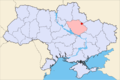
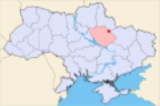
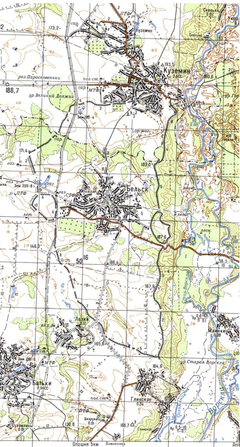 Excavations at Bilske Horodyshche (Більське городище) near the village of Belsk in the Ukraine have led to suggestions by archaeologist Boris Shramko
and others identifying it as the Scythian capital Gelonus. It is strategically situated on the exact boundary between the steppe
and forest-steppe. Several other locations have traditionally been named by Russian archaeologists, such as Saratov
(according to Ivan Zabelin) or a location near the Don River
closer to the Volga River
.
According to Herodotus each side of Gelonus is 30 stades long, the area in today's units would be about 30 square kilometres. The archeological site around Belsk, including necropolis, comprises about 80 km², and the fortifications enclose some 40 km². The north-south axis, along the Vorskla River
is 17 km long. The remains of walls up to 12 metres are visible today and stretch over the horizon. The total length of the ramparts is 33 km. Inside the fortification, lay three "keeps", 150,000 m², 650,000 m², and 720,000 m² in area, surrounded by eroded earth walls still up to 16 metres high. Several kurgans reminded the inhabitants of the ancient Scythian burial tradition.
, Gelonus was the son of Echidna
and Heracles
, he had an older brother Agathyrus and a younger Scythes. Hylea is pointed to be where was the Echidna's cave between people Arimi or Harimi, the Greeks on the Euxine believed that this was somewhere in Scythia.
Herodotus
Herodotus was an ancient Greek historian who was born in Halicarnassus, Caria and lived in the 5th century BC . He has been called the "Father of History", and was the first historian known to collect his materials systematically, test their accuracy to a certain extent and arrange them in a...
, the capital of the Scythia
Scythia
In antiquity, Scythian or Scyths were terms used by the Greeks to refer to certain Iranian groups of horse-riding nomadic pastoralists who dwelt on the Pontic-Caspian steppe...
n tribe Budini
Budini
The Budini were an ancient people who lived in Scythia, in what is today Ukraine.Herodotus wrote in his Histories :...
.
Search for Gelonus
In his account of ScythiaScythia
In antiquity, Scythian or Scyths were terms used by the Greeks to refer to certain Iranian groups of horse-riding nomadic pastoralists who dwelt on the Pontic-Caspian steppe...
(Inquiries book 4), Herodotus
Herodotus
Herodotus was an ancient Greek historian who was born in Halicarnassus, Caria and lived in the 5th century BC . He has been called the "Father of History", and was the first historian known to collect his materials systematically, test their accuracy to a certain extent and arrange them in a...
writes that the Gelonii
Gelonians
The Gelonians , also known as Helonians , are mentioned as a nation in northwestern Scythia by Herodotus. Herodotus states that they were originally Hellenes who settled among the Budinoi, and that they are bilingual in Greek and the Scythian language.Their capital was called Gelonos or Helonos,...
were formerly Greeks, having settled away from the coastal emporia
Emporia
Emporia can be several things:Places in the United States* Emporia, Florida* Emporia, Indiana* Emporia, Kansas* Emporia, VirginiaOther uses* Emporia , an ancient term for Phoenician city-states in north Africa...
among the Budini
Budini
The Budini were an ancient people who lived in Scythia, in what is today Ukraine.Herodotus wrote in his Histories :...
, where they "use a tongue partly Scythian and partly Greek":
The fortified settlement of Gelonus was reached by the Persian army of Darius in his assault on Scythia during the 5th century BC, already burned to the ground, the Budini having abandoned it before the Persian advance. The Scythians sent a message to Darius: "We are free as wind and what you can catch in our land is only the wind". By employing a scorched earth
Scorched earth
A scorched earth policy is a military strategy or operational method which involves destroying anything that might be useful to the enemy while advancing through or withdrawing from an area...
strategy, they avoided battles, leaving "earth without grass" by burning the steppe
Steppe
In physical geography, steppe is an ecoregion, in the montane grasslands and shrublands and temperate grasslands, savannas, and shrublands biomes, characterized by grassland plains without trees apart from those near rivers and lakes...
in front of the advancing Persians (Herodotus). The Persian army returned without a single battle or any significant success.
According to some researchers, the Budini
Budini
The Budini were an ancient people who lived in Scythia, in what is today Ukraine.Herodotus wrote in his Histories :...
s were a Finnic tribe ruled by the Scythians.
Boris Shramko
Boris Shramko is a Ukrainian historian and professor of history.Excavations at Bilske Horodyshche near the village of Belsk in the Ukraine have led to suggestions by archaeologist Boris Shramko and others identifying it as the Scythian capital Gelonus...
and others identifying it as the Scythian capital Gelonus. It is strategically situated on the exact boundary between the steppe
Steppe
In physical geography, steppe is an ecoregion, in the montane grasslands and shrublands and temperate grasslands, savannas, and shrublands biomes, characterized by grassland plains without trees apart from those near rivers and lakes...
and forest-steppe. Several other locations have traditionally been named by Russian archaeologists, such as Saratov
Saratov
-Modern Saratov:The Saratov region is highly industrialized, due in part to the rich in natural and industrial resources of the area. The region is also one of the more important and largest cultural and scientific centres in Russia...
(according to Ivan Zabelin) or a location near the Don River
Don River (Russia)
The Don River is one of the major rivers of Russia. It rises in the town of Novomoskovsk 60 kilometres southeast from Tula, southeast of Moscow, and flows for a distance of about 1,950 kilometres to the Sea of Azov....
closer to the Volga River
Volga River
The Volga is the largest river in Europe in terms of length, discharge, and watershed. It flows through central Russia, and is widely viewed as the national river of Russia. Out of the twenty largest cities of Russia, eleven, including the capital Moscow, are situated in the Volga's drainage...
.
According to Herodotus each side of Gelonus is 30 stades long, the area in today's units would be about 30 square kilometres. The archeological site around Belsk, including necropolis, comprises about 80 km², and the fortifications enclose some 40 km². The north-south axis, along the Vorskla River
Vorskla River
The Vorskla River , located in Russia and northeastern Ukraine, is a south-flowing tributary of the Dnieper River.An ancient fort, thought to be Gelonos, is on the Vorskla south of Okhtyrka. In 1399, the Battle of the Vorskla River was fought in the area...
is 17 km long. The remains of walls up to 12 metres are visible today and stretch over the horizon. The total length of the ramparts is 33 km. Inside the fortification, lay three "keeps", 150,000 m², 650,000 m², and 720,000 m² in area, surrounded by eroded earth walls still up to 16 metres high. Several kurgans reminded the inhabitants of the ancient Scythian burial tradition.
Mythology
In Greek mythologyMythology
The term mythology can refer either to the study of myths, or to a body or collection of myths. As examples, comparative mythology is the study of connections between myths from different cultures, whereas Greek mythology is the body of myths from ancient Greece...
, Gelonus was the son of Echidna
Echidna (mythology)
In Greek mythology, Echidna was half woman half snake, known as the "Mother of All Monsters" because most of the monsters in Greek myth were mothered by her...
and Heracles
Heracles
Heracles ,born Alcaeus or Alcides , was a divine hero in Greek mythology, the son of Zeus and Alcmene, foster son of Amphitryon and great-grandson of Perseus...
, he had an older brother Agathyrus and a younger Scythes. Hylea is pointed to be where was the Echidna's cave between people Arimi or Harimi, the Greeks on the Euxine believed that this was somewhere in Scythia.
External links
- Photos from Site
- Russian military topographic map. On it in SW part : visible miles of black crossed lines - the rest of ancient walls
- http://www.e-paranoids.com/g/ge/gelonus.html
- Bilske Horodyshche
- Boris Shramko. Bilske Horodyshche in Poltava Region
- The Legend about the city of Gelon
- Antiquity Reviews: A platform for studying the Scythians
