


Gas tungsten arc welding

Encyclopedia
Gas tungsten arc welding (GTAW), also known as tungsten inert gas (TIG) welding, is an arc welding
process that uses a nonconsumable tungsten
electrode
to produce the weld
. The weld area is protected from atmospheric contamination by a shielding gas
(usually an inert gas
such as argon
), and a filler metal
is normally used, though some welds, known as autogenous welds, do not require it. A constant-current
welding power supply
produces energy which is conducted across the arc through a column of highly ionized gas and metal vapors known as a plasma
.
GTAW is most commonly used to weld thin sections of stainless steel
and non-ferrous metals such as aluminum, magnesium
, and copper
alloys. The process grants the operator greater control over the weld than competing processes such as shielded metal arc welding
and gas metal arc welding
, allowing for stronger, higher quality welds. However, GTAW is comparatively more complex and difficult to master, and furthermore, it is significantly slower than most other welding techniques. A related process, plasma arc welding
, uses a slightly different welding torch to create a more focused welding arc and as a result is often automated.
in 1800 by Humphry Davy
, arc welding developed slowly. C. L. Coffin
had the idea of welding in an inert gas atmosphere in 1890, but even in the early 20th century, welding non-ferrous materials like aluminum and magnesium remained difficult, because these metals reacted rapidly with the air, resulting in porous and dross
-filled welds. Processes using flux-covered electrodes did not satisfactorily protect the weld area from contamination. To solve the problem, bottled inert gases were used in the beginning of the 1930s. A few years later, a direct current
, gas-shielded welding process emerged in the aircraft industry for welding magnesium.
This process was perfected in 1941, and became known as heliarc or tungsten inert gas welding, because it utilized a tungsten electrode and helium as a shielding gas. Initially, the electrode overheated quickly, and in spite of tungsten's high melting temperature
, particles of tungsten were transferred to the weld. To address this problem, the polarity of the electrode was changed from positive to negative, but this made it unsuitable for welding many non-ferrous materials. Finally, the development of alternating current
units made it possible to stabilize the arc and produce high quality aluminum and magnesium welds.
Developments continued during the following decades. Linde Air Products developed water-cooled torches that helped to prevent overheating when welding with high currents. Additionally, during the 1950s, as the process continued to gain popularity, some users turned to carbon dioxide
as an alternative to the more expensive welding atmospheres consisting of argon and helium
. However, this proved unacceptable for welding aluminum and magnesium because it reduced weld quality, and as a result, it is rarely used with GTAW today.
In 1953, a new process based on GTAW was developed, called plasma arc welding. It affords greater control and improves weld quality by using a nozzle to focus the electric arc, but is largely limited to automated systems, whereas GTAW remains primarily a manual, hand-held method. Development within the GTAW process has continued as well, and today a number of variations exist. Among the most popular are the pulsed-current, manual programmed, hot-wire, dabber, and increased penetration GTAW methods.
.
To strike the welding arc, a high frequency generator (similar to a Tesla coil
) provides an electric spark
; this spark is a conductive path for the welding current through the shielding gas and allows the arc to be initiated while the electrode and the workpiece are separated, typically about 1.5 – apart. This high voltage, high frequency burst can be damaging to some vehicle electrical systems and electronics, because induced voltages on vehicle wiring can also cause small conductive sparks in the vehicle wiring or within semiconductor packaging. Vehicle 12V power may conduct across these ionized paths, driven by the high-current 12V vehicle battery. These currents can be sufficiently destructive as to disable the vehicle; thus the warning to disconnect
the vehicle battery power from both +12 and ground before using welding equipment on vehicles.
An alternate way to initiate the arc is the "scratch start". Scratching the electrode against the work with the power on also serves to strike an arc, in the same way as SMAW ("stick") arc welding. However, scratch starting can cause contamination of the weld and electrode. Some GTAW equipment is capable of a mode called "touch start" or "lift arc"; here the equipment reduces the voltage on the electrode to only a few volts, with a current limit of one or two amps (well below the limit that causes metal to transfer and contamination of the weld or electrode). When the GTAW equipment detects that the electrode has left the surface and a spark is present, it immediately (within microseconds) increases power, converting the spark to a full arc.
Once the arc is struck, the welder moves the torch in a small circle to create a welding pool, the size of which depends on the size of the electrode and the amount of current. While maintaining a constant separation between the electrode and the workpiece, the operator then moves the torch back slightly and tilts it backward about 10–15 degrees from vertical. Filler metal is added manually to the front end of the weld pool as it is needed.
Welders often develop a technique of rapidly alternating between moving the torch forward (to advance the weld pool) and adding filler metal. The filler rod is withdrawn from the weld pool each time the electrode advances, but it is never removed from the gas shield to prevent oxidation of its surface and contamination of the weld. Filler rods composed of metals with low melting temperature, such as aluminum, require that the operator maintain some distance from the arc while staying inside the gas shield. If held too close to the arc, the filler rod can melt before it makes contact with the weld puddle. As the weld nears completion, the arc current is often gradually reduced to allow the weld crater to solidify and prevent the formation of crater cracks at the end of the weld.
s wear protective clothing, including heavy leather
glove
s and protective long sleeve jackets, to avoid exposure to extreme heat and flames. Due to the absence of smoke in GTAW, the electric arc can seem brighter than in shielded metal arc welding
, making operators especially susceptible to arc eye and skin irritations not unlike sunburn
. Helmet
s with dark face plates are worn to prevent this exposure to ultraviolet light, and in recent years, new helmets often feature a liquid crystal
-type face plate that self-darkens upon exposure to high amounts of UV light. Transparent welding curtains, made of a polyvinyl chloride
plastic film, are often used to shield nearby workers and bystanders from exposure to the UV light from the electric arc.
Welders are also often exposed to dangerous gases and particulate matter. While smoke is not produced, the brightness of the arc in GTAW can cause surrounding air to break down and form ozone
. Similarly, the brightness and heat can cause poisonous fumes to form from cleaning and degreasing materials. Cleaning operations using these agents should not be performed near the site of welding, and proper ventilation is necessary to protect the welder.
canisters before burial.
The level of heat input also affects weld quality. Low heat input, caused by low welding current or high welding speed, can limit penetration and cause the weld bead to lift away from the surface being welded. If there is too much heat input, however, the weld bead grows in width while the likelihood of excessive penetration and spatter increase. Additionally, if the welding torch is too far from the workpiece the shielding gas becomes ineffective causing porosity within the weld. This results in a weld with pinholes, which is weaker than a typical weld.
If the amount of current used exceeds the capability of the electrode, tungsten inclusions in the weld may result. Known as tungsten spitting, it can be identified with radiography
and prevented by changing the type of electrode or increasing the electrode diameter. In addition, if the electrode is not well protected by the gas shield or the operator accidentally allows it to contact the molten metal, it can become dirty or contaminated. This often causes the welding arc to become unstable, requiring that electrode be ground with a diamond abrasive to remove the impurity.
), while water cooling is required for high-current welding (up to about 600 A). The torches are connected with cables to the power supply and with hoses to the shielding gas source and where used, the water supply.
The internal metal parts of a torch are made of hard alloys of copper or brass
in order to transmit current and heat effectively. The tungsten electrode must be held firmly in the center of the torch with an appropriately sized collet
, and ports around the electrode provide a constant flow of shielding gas. Collets are sized according to the diameter of the tungsten electrode they hold. The body of the torch is made of heat-resistant, insulating plastics covering the metal components, providing insulation from heat and electricity to protect the welder.
The size of the welding torch nozzle depends on the amount of shielded area desired. The size of the gas nozzle will depend upon the diameter of the electrode, the joint configuration, and the availability of access to the joint by the welder. The inside diameter of the nozzle is preferably at least three times the diameter of the electrode, but there are no hard rules. The welder will judge the effectiveness of the shielding and increase the nozzle size to increase the area protected by the external gas shield as needed. The nozzle must be heat resistant and thus is normally made of alumina or a ceramic material, but fused quartz
, a glass-like substance, offers greater visibility. Devices can be inserted into the nozzle for special applications, such as gas lenses or valves to improve the control shielding gas flow to reduce turbulence and introduction of contaminated atmosphere into the shielded area. Hand switches to control welding current can be added to the manual GTAW torches.
 The preferred polarity of the GTAW system depends largely on the type of metal being welded. Direct current with a negatively charged electrode (DCEN) is often employed when welding steel
s, nickel
, titanium
, and other metals. It can also be used in automatic GTA welding of aluminum or magnesium when helium is used as a shielding gas. The negatively charged electrode generates heat by emitting electrons which travel across the arc, causing thermal ionization of the shielding gas and increasing the temperature of the base material. The ionized shielding gas flows toward the electrode, not the base material, and this can allow oxides to build on the surface of the weld. Direct current with a positively charged electrode (DCEP) is less common, and is used primarily for shallow welds since less heat is generated in the base material. Instead of flowing from the electrode to the base material, as in DCEN, electrons go the other direction, causing the electrode to reach very high temperatures. To help it maintain its shape and prevent softening, a larger electrode is often used. As the electrons flow toward the electrode, ionized shielding gas flows back toward the base material, cleaning the weld by removing oxides and other impurities and thereby improving its quality and appearance.
Alternating current, commonly used when welding aluminum and magnesium manually or semi-automatically, combines the two direct currents by making the electrode and base material alternate between positive and negative charge. This causes the electron flow to switch directions constantly, preventing the tungsten electrode from overheating while maintaining the heat in the base material. Surface oxides are still removed during the electrode-positive portion of the cycle and the base metal is heated more deeply during the electrode-negative portion of the cycle. Some power supplies enable operators to use an unbalanced alternating current wave by modifying the exact percentage of time that the current spends in each state of polarity, giving them more control over the amount of heat and cleaning action supplied by the power source. In addition, operators must be wary of rectification, in which the arc fails to reignite as it passes from straight polarity (negative electrode) to reverse polarity (positive electrode). To remedy the problem, a square wave
power supply can be used, as can high-frequency voltage to encourage ignition.
The electrode used in GTAW is made of tungsten or a tungsten alloy, because tungsten has the highest melting temperature among pure metals, at 3422 °C (6,191.6 °F). As a result, the electrode is not consumed during welding, though some erosion (called burn-off) can occur. Electrodes can have either a clean finish or a ground finish—clean finish electrodes have been chemically cleaned, while ground finish electrodes have been ground to a uniform size and have a polished surface, making them optimal for heat conduction. The diameter of the electrode can vary between 0.5 and 6.4 mm (0.0196850393700787 and 0.251968503937008 in), and their length can range from 75 to 610 mm (3 to 24 in).
A number of tungsten alloys have been standardized by the International Organization for Standardization
and the American Welding Society in ISO 6848 and AWS A5.12, respectively, for use in GTAW electrodes, and are summarized in the adjacent table.
Filler metals are also used in nearly all applications of GTAW, the major exception being the welding of thin materials. Filler metals are available with different diameters and are made of a variety of materials. In most cases, the filler metal in the form of a rod is added to the weld pool manually, but some applications call for an automatically fed filler metal, which often is stored on spools or coils.
es are necessary in GTAW to protect the welding area from atmospheric gases such as nitrogen
and oxygen
, which can cause fusion defects, porosity, and weld metal embrittlement
if they come in contact with the electrode, the arc, or the welding metal. The gas also transfers heat from the tungsten electrode to the metal, and it helps start and maintain a stable arc.
The selection of a shielding gas depends on several factors, including the type of material being welded, joint design, and desired final weld appearance. Argon is the most commonly used shielding gas for GTAW, since it helps prevent defects due to a varying arc length. When used with alternating current, the use of argon results in high weld quality and good appearance. Another common shielding gas, helium, is most often used to increase the weld penetration in a joint, to increase the welding speed, and to weld metals with high heat conductivity, such as copper and aluminum. A significant disadvantage is the difficulty of striking an arc with helium gas, and the decreased weld quality associated with a varying arc length.
Argon-helium mixtures are also frequently utilized in GTAW, since they can increase control of the heat input while maintaining the benefits of using argon. Normally, the mixtures are made with primarily helium (often about 75% or higher) and a balance of argon. These mixtures increase the speed and quality of the AC welding of aluminum, and also make it easier to strike an arc. Another shielding gas mixture, argon-hydrogen
, is used in the mechanized welding of light gauge stainless steel, but because hydrogen can cause porosity, its uses are limited. Similarly, nitrogen can sometimes be added to argon to help stabilize the austenite
in austentitic stainless steels and increase penetration when welding copper. Due to porosity problems in ferritic steels and limited benefits, however, it is not a popular shielding gas additive.
and zinc
. Its applications involving carbon steels are limited not because of process restrictions, but because of the existence of more economical steel welding techniques, such as gas metal arc welding and shielded metal arc welding. Furthermore, GTAW can be performed in a variety of other-than-flat positions, depending on the skill of the welder and the materials being welded.
) layer that forms on aluminium metal within minutes of exposure to air. This oxide layer must be removed for welding to occur. When alternating current is used, pure tungsten electrodes or zirconiated tungsten electrodes are preferred over thoriated electrodes, as the latter are more likely to "spit" electrode particles across the welding arc into the weld. Blunt electrode tips are preferred, and pure argon shielding gas should be employed for thin workpieces. Introducing helium allows for greater penetration in thicker workpieces, but can make arc starting difficult.
Direct current of either polarity, positive or negative, can be used to weld aluminum and magnesium as well. Direct current with a negatively charged electrode (DCEN) allows for high penetration. Argon is commonly used as a shielding gas for DCEN welding of aluminum. Shielding gases with high helium contents are often used for higher penetration in thicker materials. Thoriated electrodes are suitable for use in DCEN welding of aluminum. Direct current with a positively charged electrode (DCEP) is used primarily for shallow welds, especially those with a joint thickness of less than 1.6 mm (0.062992125984252 in). A thoriated tungsten electrode is commonly used, along with a pure argon shielding gas.
and stainless steels, the selection of a filler material is important to prevent excessive porosity. Oxides on the filler material and workpieces must be removed before welding to prevent contamination, and immediately prior to welding, alcohol or acetone should be used to clean the surface. Preheating is generally not necessary for mild steels less than one inch thick, but low alloy steels may require preheating to slow the cooling process and prevent the formation of martensite
in the heat-affected zone
. Tool steel
s should also be preheated to prevent cracking in the heat-affected zone. Austenitic stainless steels do not require preheating, but martensitic and ferritic chromium stainless steels do. A DCEN power source is normally used, and thoriated electrodes, tapered to a sharp point, are recommended. Pure argon is used for thin workpieces, but helium can be introduced as thickness increases.
and oxidation. In some joints, a compatible filler metal is chosen to help form the bond, and this filler metal can be the same as one of the base materials (for example, using a stainless steel filler metal with stainless steel and carbon steel as base materials), or a different metal (such as the use of a nickel filler metal for joining steel and cast iron
). Very different materials may be coated or "buttered" with a material compatible with a particular filler metal, and then welded. In addition, GTAW can be used in cladding
or overlaying dissimilar materials.
When welding dissimilar metals, the joint must have an accurate fit, with proper gap dimensions and bevel angles. Care should be taken to avoid melting excessive base material. Pulsed current is particularly useful for these applications, as it helps limit the heat input. The filler metal should be added quickly, and a large weld pool should be avoided to prevent dilution of the base materials.
s, drill bit
s, and mower blades.
Arc welding
Arc welding is a type of welding that uses a welding power supply to create an electric arc between an electrode and the base material to melt the metals at the welding point. They can use either direct or alternating current, and consumable or non-consumable electrodes...
process that uses a nonconsumable tungsten
Tungsten
Tungsten , also known as wolfram , is a chemical element with the chemical symbol W and atomic number 74.A hard, rare metal under standard conditions when uncombined, tungsten is found naturally on Earth only in chemical compounds. It was identified as a new element in 1781, and first isolated as...
electrode
Electrode
An electrode is an electrical conductor used to make contact with a nonmetallic part of a circuit...
to produce the weld
Welding
Welding is a fabrication or sculptural process that joins materials, usually metals or thermoplastics, by causing coalescence. This is often done by melting the workpieces and adding a filler material to form a pool of molten material that cools to become a strong joint, with pressure sometimes...
. The weld area is protected from atmospheric contamination by a shielding gas
Shielding gas
Shielding gases are inert or semi-inert gases that are commonly used in several welding processes, most notably gas metal arc welding and gas tungsten arc welding . Their purpose is to protect the weld area from atmospheric gases, such as oxygen, nitrogen, carbon dioxide, and water vapour...
(usually an inert gas
Inert gas
An inert gas is a non-reactive gas used during chemical synthesis, chemical analysis, or preservation of reactive materials. Inert gases are selected for specific settings for which they are functionally inert since the cost of the gas and the cost of purifying the gas are usually a consideration...
such as argon
Argon
Argon is a chemical element represented by the symbol Ar. Argon has atomic number 18 and is the third element in group 18 of the periodic table . Argon is the third most common gas in the Earth's atmosphere, at 0.93%, making it more common than carbon dioxide...
), and a filler metal
Filler metal
A filler metal is a metal added in the making of a joint through welding, brazing, or soldering. Four types of filler metals exist—covered electrodes, bare electrode wire or rod, tubular electrode wire and welding fluxes...
is normally used, though some welds, known as autogenous welds, do not require it. A constant-current
Current source
A current source is an electrical or electronic device that delivers or absorbs electric current. A current source is the dual of a voltage source. The term constant-current sink is sometimes used for sources fed from a negative voltage supply...
welding power supply
Welding power supply
A welding power supply is a device that provides an electric current to perform welding. Welding usually requires high current and it can need above 12,000 amperes in spot welding. Low current can also be used; welding two razor blades together at 5 amps with gas tungsten arc welding is a good...
produces energy which is conducted across the arc through a column of highly ionized gas and metal vapors known as a plasma
Plasma (physics)
In physics and chemistry, plasma is a state of matter similar to gas in which a certain portion of the particles are ionized. Heating a gas may ionize its molecules or atoms , thus turning it into a plasma, which contains charged particles: positive ions and negative electrons or ions...
.
GTAW is most commonly used to weld thin sections of stainless steel
Stainless steel
In metallurgy, stainless steel, also known as inox steel or inox from French "inoxydable", is defined as a steel alloy with a minimum of 10.5 or 11% chromium content by mass....
and non-ferrous metals such as aluminum, magnesium
Magnesium
Magnesium is a chemical element with the symbol Mg, atomic number 12, and common oxidation number +2. It is an alkaline earth metal and the eighth most abundant element in the Earth's crust and ninth in the known universe as a whole...
, and copper
Copper
Copper is a chemical element with the symbol Cu and atomic number 29. It is a ductile metal with very high thermal and electrical conductivity. Pure copper is soft and malleable; an exposed surface has a reddish-orange tarnish...
alloys. The process grants the operator greater control over the weld than competing processes such as shielded metal arc welding
Shielded metal arc welding
Shielded metal arc welding , also known as manual metal arc welding, flux shielded arc welding or informally as stick welding, is a manual arc welding process that uses a consumable electrode coated in flux to lay the weld...
and gas metal arc welding
Gas metal arc welding
Gas metal arc welding , sometimes referred to by its subtypes metal inert gas welding or metal active gas welding, is a semi-automatic or automatic arc welding process in which a continuous and consumable wire electrode and a shielding gas are fed through a welding gun...
, allowing for stronger, higher quality welds. However, GTAW is comparatively more complex and difficult to master, and furthermore, it is significantly slower than most other welding techniques. A related process, plasma arc welding
Plasma arc welding
Plasma arc welding is an arc welding process similar to gas tungsten arc welding . The electric arc is formed between an electrode and the workpiece...
, uses a slightly different welding torch to create a more focused welding arc and as a result is often automated.
Development
After the discovery of the electric arcElectric arc
An electric arc is an electrical breakdown of a gas which produces an ongoing plasma discharge, resulting from a current flowing through normally nonconductive media such as air. A synonym is arc discharge. An arc discharge is characterized by a lower voltage than a glow discharge, and relies on...
in 1800 by Humphry Davy
Humphry Davy
Sir Humphry Davy, 1st Baronet FRS MRIA was a British chemist and inventor. He is probably best remembered today for his discoveries of several alkali and alkaline earth metals, as well as contributions to the discoveries of the elemental nature of chlorine and iodine...
, arc welding developed slowly. C. L. Coffin
C. L. Coffin
Charles L. Coffin of Detroit was awarded for an arc welding process using a metal electrode. This was the first time that metal melted from the electrode carried across the arc to deposit filler metal in the joint to make a weld. About the same time, N.G. Slavianoff, a Russian, presented the same...
had the idea of welding in an inert gas atmosphere in 1890, but even in the early 20th century, welding non-ferrous materials like aluminum and magnesium remained difficult, because these metals reacted rapidly with the air, resulting in porous and dross
Dross
Dross is a mass of solid impurities floating on a molten metal. It appears usually on the melting of low-melting-point metals or alloys such as tin, lead, zinc or aluminium, or by oxidation of the metal. It can also consist of impurities such as paint leftovers...
-filled welds. Processes using flux-covered electrodes did not satisfactorily protect the weld area from contamination. To solve the problem, bottled inert gases were used in the beginning of the 1930s. A few years later, a direct current
Direct current
Direct current is the unidirectional flow of electric charge. Direct current is produced by such sources as batteries, thermocouples, solar cells, and commutator-type electric machines of the dynamo type. Direct current may flow in a conductor such as a wire, but can also flow through...
, gas-shielded welding process emerged in the aircraft industry for welding magnesium.
This process was perfected in 1941, and became known as heliarc or tungsten inert gas welding, because it utilized a tungsten electrode and helium as a shielding gas. Initially, the electrode overheated quickly, and in spite of tungsten's high melting temperature
Melting point
The melting point of a solid is the temperature at which it changes state from solid to liquid. At the melting point the solid and liquid phase exist in equilibrium. The melting point of a substance depends on pressure and is usually specified at standard atmospheric pressure...
, particles of tungsten were transferred to the weld. To address this problem, the polarity of the electrode was changed from positive to negative, but this made it unsuitable for welding many non-ferrous materials. Finally, the development of alternating current
Alternating current
In alternating current the movement of electric charge periodically reverses direction. In direct current , the flow of electric charge is only in one direction....
units made it possible to stabilize the arc and produce high quality aluminum and magnesium welds.
Developments continued during the following decades. Linde Air Products developed water-cooled torches that helped to prevent overheating when welding with high currents. Additionally, during the 1950s, as the process continued to gain popularity, some users turned to carbon dioxide
Carbon dioxide
Carbon dioxide is a naturally occurring chemical compound composed of two oxygen atoms covalently bonded to a single carbon atom...
as an alternative to the more expensive welding atmospheres consisting of argon and helium
Helium
Helium is the chemical element with atomic number 2 and an atomic weight of 4.002602, which is represented by the symbol He. It is a colorless, odorless, tasteless, non-toxic, inert, monatomic gas that heads the noble gas group in the periodic table...
. However, this proved unacceptable for welding aluminum and magnesium because it reduced weld quality, and as a result, it is rarely used with GTAW today.
In 1953, a new process based on GTAW was developed, called plasma arc welding. It affords greater control and improves weld quality by using a nozzle to focus the electric arc, but is largely limited to automated systems, whereas GTAW remains primarily a manual, hand-held method. Development within the GTAW process has continued as well, and today a number of variations exist. Among the most popular are the pulsed-current, manual programmed, hot-wire, dabber, and increased penetration GTAW methods.
Operation
Manual gas tungsten arc welding is often considered the most difficult of all the welding processes commonly used in industry. Because the welder must maintain a short arc length, great care and skill are required to prevent contact between the electrode and the workpiece. Similar to torch welding, GTAW normally requires two hands, since most applications require that the welder manually feed a filler metal into the weld area with one hand while manipulating the welding torch in the other. However, some welds combining thin materials (known as autogenous or fusion welds) can be accomplished without filler metal; most notably edge, corner, and butt jointsWelding joints
Welding joints are formed by welding two or more workpieces, made of metals or plastics, according to a particular geometry. The most common types are butt and lap joints; there are various lesser used welding joints including flange and corner joints....
.
To strike the welding arc, a high frequency generator (similar to a Tesla coil
Tesla coil
A Tesla coil is a type of resonant transformer circuit invented by Nikola Tesla around 1891. It is used to produce high voltage, low current, high frequency alternating current electricity. Tesla coils produce higher current than the other source of high voltage discharges, electrostatic machines...
) provides an electric spark
Electric spark
An electric spark is a type of electrostatic discharge that occurs when an electric field creates an ionized electrically conductive channel in air producing a brief emission of light and sound. A spark is formed when the electric field strength exceeds the dielectric field strength of air...
; this spark is a conductive path for the welding current through the shielding gas and allows the arc to be initiated while the electrode and the workpiece are separated, typically about 1.5 – apart. This high voltage, high frequency burst can be damaging to some vehicle electrical systems and electronics, because induced voltages on vehicle wiring can also cause small conductive sparks in the vehicle wiring or within semiconductor packaging. Vehicle 12V power may conduct across these ionized paths, driven by the high-current 12V vehicle battery. These currents can be sufficiently destructive as to disable the vehicle; thus the warning to disconnect
the vehicle battery power from both +12 and ground before using welding equipment on vehicles.
An alternate way to initiate the arc is the "scratch start". Scratching the electrode against the work with the power on also serves to strike an arc, in the same way as SMAW ("stick") arc welding. However, scratch starting can cause contamination of the weld and electrode. Some GTAW equipment is capable of a mode called "touch start" or "lift arc"; here the equipment reduces the voltage on the electrode to only a few volts, with a current limit of one or two amps (well below the limit that causes metal to transfer and contamination of the weld or electrode). When the GTAW equipment detects that the electrode has left the surface and a spark is present, it immediately (within microseconds) increases power, converting the spark to a full arc.
Once the arc is struck, the welder moves the torch in a small circle to create a welding pool, the size of which depends on the size of the electrode and the amount of current. While maintaining a constant separation between the electrode and the workpiece, the operator then moves the torch back slightly and tilts it backward about 10–15 degrees from vertical. Filler metal is added manually to the front end of the weld pool as it is needed.
Welders often develop a technique of rapidly alternating between moving the torch forward (to advance the weld pool) and adding filler metal. The filler rod is withdrawn from the weld pool each time the electrode advances, but it is never removed from the gas shield to prevent oxidation of its surface and contamination of the weld. Filler rods composed of metals with low melting temperature, such as aluminum, require that the operator maintain some distance from the arc while staying inside the gas shield. If held too close to the arc, the filler rod can melt before it makes contact with the weld puddle. As the weld nears completion, the arc current is often gradually reduced to allow the weld crater to solidify and prevent the formation of crater cracks at the end of the weld.
Safety
Like other arc welding processes, GTAW can be dangerous if proper precautions are not taken. WelderWelder
A welder is a tradesman who specializes in welding materials together. The materials to be joined can be metals or varieties of plastic or polymer...
s wear protective clothing, including heavy leather
Leather
Leather is a durable and flexible material created via the tanning of putrescible animal rawhide and skin, primarily cattlehide. It can be produced through different manufacturing processes, ranging from cottage industry to heavy industry.-Forms:...
glove
Glove
A glove is a garment covering the hand. Gloves have separate sheaths or openings for each finger and the thumb; if there is an opening but no covering sheath for each finger they are called "fingerless gloves". Fingerless gloves with one large opening rather than individual openings for each...
s and protective long sleeve jackets, to avoid exposure to extreme heat and flames. Due to the absence of smoke in GTAW, the electric arc can seem brighter than in shielded metal arc welding
Shielded metal arc welding
Shielded metal arc welding , also known as manual metal arc welding, flux shielded arc welding or informally as stick welding, is a manual arc welding process that uses a consumable electrode coated in flux to lay the weld...
, making operators especially susceptible to arc eye and skin irritations not unlike sunburn
Sunburn
A sunburn is a burn to living tissue, such as skin, which is produced by overexposure to ultraviolet radiation, commonly from the sun's rays. Usual mild symptoms in humans and other animals include red or reddish skin that is hot to the touch, general fatigue, and mild dizziness. An excess of UV...
. Helmet
Helmet
A helmet is a form of protective gear worn on the head to protect it from injuries.Ceremonial or symbolic helmets without protective function are sometimes used. The oldest known use of helmets was by Assyrian soldiers in 900BC, who wore thick leather or bronze helmets to protect the head from...
s with dark face plates are worn to prevent this exposure to ultraviolet light, and in recent years, new helmets often feature a liquid crystal
Liquid crystal
Liquid crystals are a state of matter that have properties between those of a conventional liquid and those of a solid crystal. For instance, an LC may flow like a liquid, but its molecules may be oriented in a crystal-like way. There are many different types of LC phases, which can be...
-type face plate that self-darkens upon exposure to high amounts of UV light. Transparent welding curtains, made of a polyvinyl chloride
Polyvinyl chloride
Polyvinyl chloride, commonly abbreviated PVC, is a thermoplastic polymer. It is a vinyl polymer constructed of repeating vinyl groups having one hydrogen replaced by chloride. Polyvinyl chloride is the third most widely produced plastic, after polyethylene and polypropylene. PVC is widely used in...
plastic film, are often used to shield nearby workers and bystanders from exposure to the UV light from the electric arc.
Welders are also often exposed to dangerous gases and particulate matter. While smoke is not produced, the brightness of the arc in GTAW can cause surrounding air to break down and form ozone
Ozone
Ozone , or trioxygen, is a triatomic molecule, consisting of three oxygen atoms. It is an allotrope of oxygen that is much less stable than the diatomic allotrope...
. Similarly, the brightness and heat can cause poisonous fumes to form from cleaning and degreasing materials. Cleaning operations using these agents should not be performed near the site of welding, and proper ventilation is necessary to protect the welder.
Applications
While the aerospace industry is one of the primary users of gas tungsten arc welding, the process is used in a number of other areas. Many industries use GTAW for welding thin workpieces, especially nonferrous metals. It is used extensively in the manufacture of space vehicles, and is also frequently employed to weld small-diameter, thin-wall tubing such as those used in the bicycle industry. In addition, GTAW is often used to make root or first pass welds for piping of various sizes. In maintenance and repair work, the process is commonly used to repair tools and dies, especially components made of aluminum and magnesium. Because the weld metal is not transferred directly across the electric arc like most open arc welding processes, a vast assortment of welding filler metal is available to the welding engineer. In fact, no other welding process permits the welding of so many alloys in so many product configurations. Filler metal alloys, such as elemental aluminum and chromium, can be lost through the electric arc from volatilization. This loss does not occur with the GTAW process. Because the resulting welds have the same chemical integrity as the original base metal or match the base metals more closely, GTAW welds are highly resistant to corrosion and cracking over long time periods, GTAW is the welding procedure of choice for critical welding operations like sealing spent nuclear fuelSpent nuclear fuel
Spent nuclear fuel, occasionally called used nuclear fuel, is nuclear fuel that has been irradiated in a nuclear reactor...
canisters before burial.
Quality
Gas tungsten arc welding, because it affords greater control over the weld area than other welding processes, can produce high-quality welds when performed by skilled operators. Maximum weld quality is assured by maintaining cleanliness—all equipment and materials used must be free from oil, moisture, dirt and other impurities, as these cause weld porosity and consequently a decrease in weld strength and quality. To remove oil and grease, alcohol or similar commercial solvents may be used, while a stainless steel wire brush or chemical process can remove oxides from the surfaces of metals like aluminum. Rust on steels can be removed by first grit blasting the surface and then using a wire brush to remove any embedded grit. These steps are especially important when negative polarity direct current is used, because such a power supply provides no cleaning during the welding process, unlike positive polarity direct current or alternating current. To maintain a clean weld pool during welding, the shielding gas flow should be sufficient and consistent so that the gas covers the weld and blocks impurities in the atmosphere. GTA welding in windy or drafty environments increases the amount of shielding gas necessary to protect the weld, increasing the cost and making the process unpopular outdoors.The level of heat input also affects weld quality. Low heat input, caused by low welding current or high welding speed, can limit penetration and cause the weld bead to lift away from the surface being welded. If there is too much heat input, however, the weld bead grows in width while the likelihood of excessive penetration and spatter increase. Additionally, if the welding torch is too far from the workpiece the shielding gas becomes ineffective causing porosity within the weld. This results in a weld with pinholes, which is weaker than a typical weld.
If the amount of current used exceeds the capability of the electrode, tungsten inclusions in the weld may result. Known as tungsten spitting, it can be identified with radiography
Radiography
Radiography is the use of X-rays to view a non-uniformly composed material such as the human body. By using the physical properties of the ray an image can be developed which displays areas of different density and composition....
and prevented by changing the type of electrode or increasing the electrode diameter. In addition, if the electrode is not well protected by the gas shield or the operator accidentally allows it to contact the molten metal, it can become dirty or contaminated. This often causes the welding arc to become unstable, requiring that electrode be ground with a diamond abrasive to remove the impurity.
Equipment
The equipment required for the gas tungsten arc welding operation includes a welding torch utilizing a nonconsumable tungsten electrode, a constant-current welding power supply, and a shielding gas source.Welding torch
GTAW welding torches are designed for either automatic or manual operation and are equipped with cooling systems using air or water. The automatic and manual torches are similar in construction, but the manual torch has a handle while the automatic torch normally comes with a mounting rack. The angle between the centerline of the handle and the centerline of the tungsten electrode, known as the head angle, can be varied on some manual torches according to the preference of the operator. Air cooling systems are most often used for low-current operations (up to about 200 AAmpere
The ampere , often shortened to amp, is the SI unit of electric current and is one of the seven SI base units. It is named after André-Marie Ampère , French mathematician and physicist, considered the father of electrodynamics...
), while water cooling is required for high-current welding (up to about 600 A). The torches are connected with cables to the power supply and with hoses to the shielding gas source and where used, the water supply.
The internal metal parts of a torch are made of hard alloys of copper or brass
Brass
Brass is an alloy of copper and zinc; the proportions of zinc and copper can be varied to create a range of brasses with varying properties.In comparison, bronze is principally an alloy of copper and tin...
in order to transmit current and heat effectively. The tungsten electrode must be held firmly in the center of the torch with an appropriately sized collet
Collet
A collet is a holding device—specifically, a subtype of chuck—that forms a collar around the object to be held and exerts a strong clamping force on the object when it is tightened, usually via a tapered outer collar. It may be used to hold a workpiece or a tool.A collet is a sleeve with a ...
, and ports around the electrode provide a constant flow of shielding gas. Collets are sized according to the diameter of the tungsten electrode they hold. The body of the torch is made of heat-resistant, insulating plastics covering the metal components, providing insulation from heat and electricity to protect the welder.
The size of the welding torch nozzle depends on the amount of shielded area desired. The size of the gas nozzle will depend upon the diameter of the electrode, the joint configuration, and the availability of access to the joint by the welder. The inside diameter of the nozzle is preferably at least three times the diameter of the electrode, but there are no hard rules. The welder will judge the effectiveness of the shielding and increase the nozzle size to increase the area protected by the external gas shield as needed. The nozzle must be heat resistant and thus is normally made of alumina or a ceramic material, but fused quartz
Fused quartz
Fused quartz and fused silica are types of glass containing primarily silica in amorphous form. They are manufactured using several different processes...
, a glass-like substance, offers greater visibility. Devices can be inserted into the nozzle for special applications, such as gas lenses or valves to improve the control shielding gas flow to reduce turbulence and introduction of contaminated atmosphere into the shielded area. Hand switches to control welding current can be added to the manual GTAW torches.
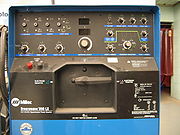
Power supply
Gas tungsten arc welding uses a constant current power source, meaning that the current (and thus the heat) remains relatively constant, even if the arc distance and voltage change. This is important because most applications of GTAW are manual or semiautomatic, requiring that an operator hold the torch. Maintaining a suitably steady arc distance is difficult if a constant voltage power source is used instead, since it can cause dramatic heat variations and make welding more difficult.Steel
Steel is an alloy that consists mostly of iron and has a carbon content between 0.2% and 2.1% by weight, depending on the grade. Carbon is the most common alloying material for iron, but various other alloying elements are used, such as manganese, chromium, vanadium, and tungsten...
s, nickel
Nickel
Nickel is a chemical element with the chemical symbol Ni and atomic number 28. It is a silvery-white lustrous metal with a slight golden tinge. Nickel belongs to the transition metals and is hard and ductile...
, titanium
Titanium
Titanium is a chemical element with the symbol Ti and atomic number 22. It has a low density and is a strong, lustrous, corrosion-resistant transition metal with a silver color....
, and other metals. It can also be used in automatic GTA welding of aluminum or magnesium when helium is used as a shielding gas. The negatively charged electrode generates heat by emitting electrons which travel across the arc, causing thermal ionization of the shielding gas and increasing the temperature of the base material. The ionized shielding gas flows toward the electrode, not the base material, and this can allow oxides to build on the surface of the weld. Direct current with a positively charged electrode (DCEP) is less common, and is used primarily for shallow welds since less heat is generated in the base material. Instead of flowing from the electrode to the base material, as in DCEN, electrons go the other direction, causing the electrode to reach very high temperatures. To help it maintain its shape and prevent softening, a larger electrode is often used. As the electrons flow toward the electrode, ionized shielding gas flows back toward the base material, cleaning the weld by removing oxides and other impurities and thereby improving its quality and appearance.
Alternating current, commonly used when welding aluminum and magnesium manually or semi-automatically, combines the two direct currents by making the electrode and base material alternate between positive and negative charge. This causes the electron flow to switch directions constantly, preventing the tungsten electrode from overheating while maintaining the heat in the base material. Surface oxides are still removed during the electrode-positive portion of the cycle and the base metal is heated more deeply during the electrode-negative portion of the cycle. Some power supplies enable operators to use an unbalanced alternating current wave by modifying the exact percentage of time that the current spends in each state of polarity, giving them more control over the amount of heat and cleaning action supplied by the power source. In addition, operators must be wary of rectification, in which the arc fails to reignite as it passes from straight polarity (negative electrode) to reverse polarity (positive electrode). To remedy the problem, a square wave
Square wave
A square wave is a kind of non-sinusoidal waveform, most typically encountered in electronics and signal processing. An ideal square wave alternates regularly and instantaneously between two levels...
power supply can be used, as can high-frequency voltage to encourage ignition.
Electrode
| ISO Class |
ISO Color |
AWS Class |
AWS Color |
Alloy |
|---|---|---|---|---|
| WP | Green | EWP | Green | None |
| WC20 | Gray | EWCe-2 | Orange | ~2% CeO2 |
| WL10 | Black | EWLa-1 | Black | ~1% La2O3 Lanthanum(III) oxide Lanthanum oxide is La2O3, an inorganic compound containing the rare earth element lanthanum and oxygen. It is used to develop ferroelectric materials, and in optical materials.-Properties:... |
| WL15 | Gold | EWLa-1.5 | Gold | ~1.5% La2O3 |
| WL20 | Sky-blue | EWLa-2 | Blue | ~2% La2O3 |
| WT10 | Yellow | EWTh-1 | Yellow | ~1% ThO2 |
| WT20 | Red | EWTh-2 | Red | ~2% ThO2 |
| WT30 | Violet | ~3% ThO2 | ||
| WT40 | Orange | ~4% ThO2 | ||
| WY20 | Blue | ~2% Y2O3 Yttrium(III) oxide Yttrium oxide is Y2O3. It is an air-stable, white solid substance. Yttrium oxide is used as a common starting material for both materials science as well as inorganic compounds.-Materials science:... |
||
| WZ3 | Brown | EWZr-1 | Brown | ~0.3% ZrO2 |
| WZ8 | White | ~0.8% ZrO2 |
The electrode used in GTAW is made of tungsten or a tungsten alloy, because tungsten has the highest melting temperature among pure metals, at 3422 °C (6,191.6 °F). As a result, the electrode is not consumed during welding, though some erosion (called burn-off) can occur. Electrodes can have either a clean finish or a ground finish—clean finish electrodes have been chemically cleaned, while ground finish electrodes have been ground to a uniform size and have a polished surface, making them optimal for heat conduction. The diameter of the electrode can vary between 0.5 and 6.4 mm (0.0196850393700787 and 0.251968503937008 in), and their length can range from 75 to 610 mm (3 to 24 in).
A number of tungsten alloys have been standardized by the International Organization for Standardization
International Organization for Standardization
The International Organization for Standardization , widely known as ISO, is an international standard-setting body composed of representatives from various national standards organizations. Founded on February 23, 1947, the organization promulgates worldwide proprietary, industrial and commercial...
and the American Welding Society in ISO 6848 and AWS A5.12, respectively, for use in GTAW electrodes, and are summarized in the adjacent table.
- Pure tungsten electrodes (classified as WP or EWP) are general purpose and low cost electrodes. They have poor heat resistance and electron emission. They find limited use in AC welding of e.g. magnesium and aluminium.
- CeriumCeriumCerium is a chemical element with the symbol Ce and atomic number 58. It is a soft, silvery, ductile metal which easily oxidizes in air. Cerium was named after the dwarf planet . Cerium is the most abundant of the rare earth elements, making up about 0.0046% of the Earth's crust by weight...
oxide (or ceria) as an alloying element improves arc stability and ease of starting while decreasing burn-off. Cerium addition is not as effective as thorium, but cerium is not radioactive. - Using an alloy of lanthanumLanthanumLanthanum is a chemical element with the symbol La and atomic number 57.Lanthanum is a silvery white metallic element that belongs to group 3 of the periodic table and is the first element of the lanthanide series. It is found in some rare-earth minerals, usually in combination with cerium and...
oxide (or lanthana) has a similar effect. Addition of 1% lanthanum has the same effect as 2% of cerium. - ThoriumThoriumThorium is a natural radioactive chemical element with the symbol Th and atomic number 90. It was discovered in 1828 and named after Thor, the Norse god of thunder....
oxide (or thoria) alloy electrodes were designed for DC applications and can withstand somewhat higher temperatures while providing many of the benefits of other alloys. However, it is somewhat radioactiveRadioactive contaminationRadioactive contamination, also called radiological contamination, is radioactive substances on surfaces, or within solids, liquids or gases , where their presence is unintended or undesirable, or the process giving rise to their presence in such places...
. Inhalation of the thorium grinding dust during preparation of the electrode is hazardous to one's health. As a replacement to thoriated electrodes, electrodes with larger concentrations of lanthanum oxide can be used. Larger additions than 0.6% do not have additional improving effect on arc starting, but they help with electron emission. Higher percentage of thorium also makes tungsten more resistant to contamination. - Electrodes containing zirconiumZirconiumZirconium is a chemical element with the symbol Zr and atomic number 40. The name of zirconium is taken from the mineral zircon. Its atomic mass is 91.224. It is a lustrous, grey-white, strong transition metal that resembles titanium...
oxide (or zirconia) increase the current capacity while improving arc stability and starting and increasing electrode life. Zirconium-tungsten electrodes melt easier than thorium-tungsten. - In addition, electrode manufacturers may create alternative tungsten alloys with specified metal additions, and these are designated with the classification EWG under the AWS system.
Filler metals are also used in nearly all applications of GTAW, the major exception being the welding of thin materials. Filler metals are available with different diameters and are made of a variety of materials. In most cases, the filler metal in the form of a rod is added to the weld pool manually, but some applications call for an automatically fed filler metal, which often is stored on spools or coils.
Shielding gas
As with other welding processes such as gas metal arc welding, shielding gasShielding gas
Shielding gases are inert or semi-inert gases that are commonly used in several welding processes, most notably gas metal arc welding and gas tungsten arc welding . Their purpose is to protect the weld area from atmospheric gases, such as oxygen, nitrogen, carbon dioxide, and water vapour...
es are necessary in GTAW to protect the welding area from atmospheric gases such as nitrogen
Nitrogen
Nitrogen is a chemical element that has the symbol N, atomic number of 7 and atomic mass 14.00674 u. Elemental nitrogen is a colorless, odorless, tasteless, and mostly inert diatomic gas at standard conditions, constituting 78.08% by volume of Earth's atmosphere...
and oxygen
Oxygen
Oxygen is the element with atomic number 8 and represented by the symbol O. Its name derives from the Greek roots ὀξύς and -γενής , because at the time of naming, it was mistakenly thought that all acids required oxygen in their composition...
, which can cause fusion defects, porosity, and weld metal embrittlement
Embrittlement
Embrittlement is a loss of ductility of a material, making it brittle. Various materials have different mechanisms of embrittlement.* Hydrogen embrittlement is the effect of hydrogen absorption on some metals and alloys....
if they come in contact with the electrode, the arc, or the welding metal. The gas also transfers heat from the tungsten electrode to the metal, and it helps start and maintain a stable arc.
The selection of a shielding gas depends on several factors, including the type of material being welded, joint design, and desired final weld appearance. Argon is the most commonly used shielding gas for GTAW, since it helps prevent defects due to a varying arc length. When used with alternating current, the use of argon results in high weld quality and good appearance. Another common shielding gas, helium, is most often used to increase the weld penetration in a joint, to increase the welding speed, and to weld metals with high heat conductivity, such as copper and aluminum. A significant disadvantage is the difficulty of striking an arc with helium gas, and the decreased weld quality associated with a varying arc length.
Argon-helium mixtures are also frequently utilized in GTAW, since they can increase control of the heat input while maintaining the benefits of using argon. Normally, the mixtures are made with primarily helium (often about 75% or higher) and a balance of argon. These mixtures increase the speed and quality of the AC welding of aluminum, and also make it easier to strike an arc. Another shielding gas mixture, argon-hydrogen
Hydrogen
Hydrogen is the chemical element with atomic number 1. It is represented by the symbol H. With an average atomic weight of , hydrogen is the lightest and most abundant chemical element, constituting roughly 75% of the Universe's chemical elemental mass. Stars in the main sequence are mainly...
, is used in the mechanized welding of light gauge stainless steel, but because hydrogen can cause porosity, its uses are limited. Similarly, nitrogen can sometimes be added to argon to help stabilize the austenite
Austenite
Austenite, also known as gamma phase iron, is a metallic non-magnetic allotrope of iron or a solid solution of iron, with an alloying element. In plain-carbon steel, austenite exists above the critical eutectoid temperature of ; other alloys of steel have different eutectoid temperatures...
in austentitic stainless steels and increase penetration when welding copper. Due to porosity problems in ferritic steels and limited benefits, however, it is not a popular shielding gas additive.
Materials
Gas tungsten arc welding is most commonly used to weld stainless steel and nonferrous materials, such as aluminum and magnesium, but it can be applied to nearly all metals, with notable exceptions being leadLead
Lead is a main-group element in the carbon group with the symbol Pb and atomic number 82. Lead is a soft, malleable poor metal. It is also counted as one of the heavy metals. Metallic lead has a bluish-white color after being freshly cut, but it soon tarnishes to a dull grayish color when exposed...
and zinc
Zinc
Zinc , or spelter , is a metallic chemical element; it has the symbol Zn and atomic number 30. It is the first element in group 12 of the periodic table. Zinc is, in some respects, chemically similar to magnesium, because its ion is of similar size and its only common oxidation state is +2...
. Its applications involving carbon steels are limited not because of process restrictions, but because of the existence of more economical steel welding techniques, such as gas metal arc welding and shielded metal arc welding. Furthermore, GTAW can be performed in a variety of other-than-flat positions, depending on the skill of the welder and the materials being welded.
Aluminum and magnesium
Aluminum and magnesium are most often welded using alternating current, but the use of direct current is also possible, depending on the properties desired. Before welding, the work area should be cleaned and may be preheated to 175 to 200 °C (347 to 392 F) for aluminum or to a maximum of 150 °C (302 °F) for thick magnesium workpieces to improve penetration and increase travel speed. AC current can provide a self-cleaning effect, removing the thin, refractory aluminium oxide (sapphireSapphire
Sapphire is a gemstone variety of the mineral corundum, an aluminium oxide , when it is a color other than red or dark pink; in which case the gem would instead be called a ruby, considered to be a different gemstone. Trace amounts of other elements such as iron, titanium, or chromium can give...
) layer that forms on aluminium metal within minutes of exposure to air. This oxide layer must be removed for welding to occur. When alternating current is used, pure tungsten electrodes or zirconiated tungsten electrodes are preferred over thoriated electrodes, as the latter are more likely to "spit" electrode particles across the welding arc into the weld. Blunt electrode tips are preferred, and pure argon shielding gas should be employed for thin workpieces. Introducing helium allows for greater penetration in thicker workpieces, but can make arc starting difficult.
Direct current of either polarity, positive or negative, can be used to weld aluminum and magnesium as well. Direct current with a negatively charged electrode (DCEN) allows for high penetration. Argon is commonly used as a shielding gas for DCEN welding of aluminum. Shielding gases with high helium contents are often used for higher penetration in thicker materials. Thoriated electrodes are suitable for use in DCEN welding of aluminum. Direct current with a positively charged electrode (DCEP) is used primarily for shallow welds, especially those with a joint thickness of less than 1.6 mm (0.062992125984252 in). A thoriated tungsten electrode is commonly used, along with a pure argon shielding gas.
Steels
For GTA welding of carbonPlain-carbon steel
Carbon steel, also called plain-carbon steel, is steel where the main interstitial alloying constituent is carbon. The American Iron and Steel Institute defines carbon steel as: "Steel is considered to be carbon steel when no minimum content is specified or required for chromium, cobalt,...
and stainless steels, the selection of a filler material is important to prevent excessive porosity. Oxides on the filler material and workpieces must be removed before welding to prevent contamination, and immediately prior to welding, alcohol or acetone should be used to clean the surface. Preheating is generally not necessary for mild steels less than one inch thick, but low alloy steels may require preheating to slow the cooling process and prevent the formation of martensite
Martensite
Martensite, named after the German metallurgist Adolf Martens , most commonly refers to a very hard form of steel crystalline structure, but it can also refer to any crystal structure that is formed by displacive transformation. It includes a class of hard minerals occurring as lath- or...
in the heat-affected zone
Heat-affected zone
The heat-affected zone is the area of base material, either a metal or a thermoplastic, which has had its microstructure and properties altered by welding or heat intensive cutting operations. The heat from the welding process and subsequent re-cooling causes this change in the area surrounding...
. Tool steel
Tool steel
Tool steel refers to a variety of carbon and alloy steels that are particularly well-suited to be made into tools. Their suitability comes from their distinctive hardness, resistance to abrasion, their ability to hold a cutting edge, and/or their resistance to deformation at elevated temperatures...
s should also be preheated to prevent cracking in the heat-affected zone. Austenitic stainless steels do not require preheating, but martensitic and ferritic chromium stainless steels do. A DCEN power source is normally used, and thoriated electrodes, tapered to a sharp point, are recommended. Pure argon is used for thin workpieces, but helium can be introduced as thickness increases.
Dissimilar metals
Welding dissimilar metals often introduces new difficulties to GTAW welding, because most materials do not easily fuse to form a strong bond. However, welds of dissimilar materials have numerous applications in manufacturing, repair work, and the prevention of corrosionCorrosion
Corrosion is the disintegration of an engineered material into its constituent atoms due to chemical reactions with its surroundings. In the most common use of the word, this means electrochemical oxidation of metals in reaction with an oxidant such as oxygen...
and oxidation. In some joints, a compatible filler metal is chosen to help form the bond, and this filler metal can be the same as one of the base materials (for example, using a stainless steel filler metal with stainless steel and carbon steel as base materials), or a different metal (such as the use of a nickel filler metal for joining steel and cast iron
Cast iron
Cast iron is derived from pig iron, and while it usually refers to gray iron, it also identifies a large group of ferrous alloys which solidify with a eutectic. The color of a fractured surface can be used to identify an alloy. White cast iron is named after its white surface when fractured, due...
). Very different materials may be coated or "buttered" with a material compatible with a particular filler metal, and then welded. In addition, GTAW can be used in cladding
Cladding (metalworking)
Cladding is the bonding together of dissimilar metals. It is distinct from welding or gluing as a method to fasten the metals together. Cladding is often achieved by extruding two metals through a die as well as pressing or rolling sheets together under high pressure.The United States Mint uses...
or overlaying dissimilar materials.
When welding dissimilar metals, the joint must have an accurate fit, with proper gap dimensions and bevel angles. Care should be taken to avoid melting excessive base material. Pulsed current is particularly useful for these applications, as it helps limit the heat input. The filler metal should be added quickly, and a large weld pool should be avoided to prevent dilution of the base materials.
Pulsed-current
In the pulsed-current mode, the welding current rapidly alternates between two levels. The higher current state is known as the pulse current, while the lower current level is called the background current. During the period of pulse current, the weld area is heated and fusion occurs. Upon dropping to the background current, the weld area is allowed to cool and solidify. Pulsed-current GTAW has a number of advantages, including lower heat input and consequently a reduction in distortion and warpage in thin workpieces. In addition, it allows for greater control of the weld pool, and can increase weld penetration, welding speed, and quality. A similar method, manual programmed GTAW, allows the operator to program a specific rate and magnitude of current variations, making it useful for specialized applications.Dabber
The dabber variation is used to precisely place weld metal on thin edges. The automatic process replicates the motions of manual welding by feeding a cold filler wire into the weld area and dabbing (or oscillating) it into the welding arc. It can be used in conjunction with pulsed current, and is used to weld a variety of alloys, including titanium, nickel, and tool steels. Common applications include rebuilding seals in jet engines and building up saw blades, milling cutterMilling cutter
Milling cutters are cutting tools typically used in milling machines or machining centres . They remove material by their movement within the machine or directly from the cutter's shape .-Features of a milling cutter:Milling cutters come in several shapes and many sizes...
s, drill bit
Drill bit
Drill bits are cutting tools used to create cylindrical holes. Bits are held in a tool called a drill, which rotates them and provides torque and axial force to create the hole. Specialized bits are also available for non-cylindrical-shaped holes....
s, and mower blades.