
All Topics  
Gallic Empire


   Email Print
   Bookmark   Link


Gallic Empire


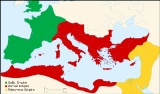
The Gallic Empire (in Latin
Latin

Latin is an Italic language, historically spoken in Latium and Ancient Rome. Through the Military history of the Roman Empire, Latin spread throughout the Mediterranean and a large part of Europe....
 Imperium Galliarum) is the modern name for the independent realm that existed from 260 to 273, during the Roman Empire
Roman Empire

The Roman Empire was the Roman Republic phase of the Ancient Rome, characterised by an autocracy form of government and large territorial holdings in Europe and around the Mediterranean....
's Crisis of the Third Century
Crisis of the Third Century

Crisis of the Third Century was the crumbling and near collapse of the Roman Empire between 235 and 284 caused by invasion, civil war, Plague of Cyprian, and economic collapse....
.

The Gallic Empire consisted of the breakaway Roman provinces of Gaul
Roman Gaul

Roman Gaul consisted of an area of provincial rule in the Roman Empire, in modern day France, Belgium, Luxembourg, and western Germany. Roman control of the area lasted for 600 years....
, Britannia
Roman Britain

Roman Britain refers to those parts of the island of Great Britain controlled by the Roman Empire between AD 43 and 410. The Romans referred to their province as Britannia....
, and Hispania
Hispania

Hispania was the name given by the Ancient Rome to the whole of the Iberian Peninsula . When Rome was a Roman Republic, Hispania was divided into Roman provinces: Hispania Citerior and Hispania Ulterior....
, including the peaceful Baetica
Hispania Baetica

Hispania Baetica was one of three Imperial Roman provincesin Hispania, . Hispania Baetica was bordered to the west by Lusitania , and to the northeast by Hispania Tarraconensis....
 in the south. The crisis was ignited when Emperor Valerian
Valerian (emperor)

Publius Licinius Valerianus , commonly known in English language as Valerian or Valerian I, was the Roman Emperor from 253 to 260....
 was captured by the Sassanid Persians, leaving his son Gallienus
Gallienus

Publius Licinius Egnatius Gallienus ruled the Roman Empire as co-emperor with his father Valerian from 253 to 260, and then as the sole Roman Emperor from 260 to 268....
 in very shaky control. As governors in Pannonia staged unsuccessful local revolts, this took the emperor to the Danube, leaving Postumus
Postumus

Marcus Cassianius Latinius Postumus was a Roman emperor of Batavi origin. He usurped power from Gallienus in 260 and formed the so called Gallic Empire....
, who was governor of Germania Superior
Germania Superior

Germania Superior , so called for the reason that it lay upstream of Germania Inferior, was a Roman province of the Roman Empire. It comprised the area of western Switzerland, the French Jura mountains and Alsace regions and south-western Germany....
 and Inferior
Germania Inferior

Germania Inferior was a Ancient Rome Roman provinces located on the left bank of the Rhine, in today's southern and western Netherlands, parts of Flanders, and North Rhine-Westphalia left of the Rhine....
, in charge at the Rhine.

The imperial heir Saloninus
Saloninus

Publius Licinius Cornelius Saloninus was Roman Emperor in 260.Saloninus was born around the year 242. His father was the later emperor Gallienus, his mother Cornelia Salonina....
 and the praetorian prefect Silvanus remained at Colonia Agrippina (Cologne
Cologne

Cologne is Germany's fourth-largest city , and is the largest city both in the German Federal State of North Rhine-Westphalia and within the Rhine-Ruhr, one of the major European metropolitan areas with more than ten million inhabitants....
), to keep the young heir out of danger and perhaps also as a control on Postumus' ambitions.


Discussion
Ask a question about 'Gallic Empire'
Start a new discussion about 'Gallic Empire'
Answer questions from other users
Full Discussion Forum


Timeline

258   Gaul, Britain and Spain break off from the Roman Empire to form the Gallic Empire

259   Postumus revolts against Gallienus, in Gaul. The western provinces of Britain and Spain join his independent realm—which is called in modern times the Gallic Empire.

268   Victorinus becomes the fourth Emperor of the Gallic Empire, following the murders of his predecessors.

268   Died

268   Died

268   Died

271   Victorinus, Emperor of the Gallic Empire is assassinated by Attitianus, reportedly for reasons of personal revenge. Domitianus presumably serves as Emperor for a few days before replaced by Tetricus I.

271   Died

271   Died

273   Tetricus I and Tetricus II are deposed as Gallic Emperors by Aurelian.


Encyclopedia


The Gallic Empire (in Latin
Latin

Latin is an Italic language, historically spoken in Latium and Ancient Rome. Through the Military history of the Roman Empire, Latin spread throughout the Mediterranean and a large part of Europe....
 Imperium Galliarum) is the modern name for the independent realm that existed from 260 to 273, during the Roman Empire
Roman Empire

The Roman Empire was the Roman Republic phase of the Ancient Rome, characterised by an autocracy form of government and large territorial holdings in Europe and around the Mediterranean....
's Crisis of the Third Century
Crisis of the Third Century

Crisis of the Third Century was the crumbling and near collapse of the Roman Empire between 235 and 284 caused by invasion, civil war, Plague of Cyprian, and economic collapse....
.

The Gallic Empire consisted of the breakaway Roman provinces of Gaul
Roman Gaul

Roman Gaul consisted of an area of provincial rule in the Roman Empire, in modern day France, Belgium, Luxembourg, and western Germany. Roman control of the area lasted for 600 years....
, Britannia
Roman Britain

Roman Britain refers to those parts of the island of Great Britain controlled by the Roman Empire between AD 43 and 410. The Romans referred to their province as Britannia....
, and Hispania
Hispania

Hispania was the name given by the Ancient Rome to the whole of the Iberian Peninsula . When Rome was a Roman Republic, Hispania was divided into Roman provinces: Hispania Citerior and Hispania Ulterior....
, including the peaceful Baetica
Hispania Baetica

Hispania Baetica was one of three Imperial Roman provincesin Hispania, . Hispania Baetica was bordered to the west by Lusitania , and to the northeast by Hispania Tarraconensis....
 in the south. The crisis was ignited when Emperor Valerian
Valerian (emperor)

Publius Licinius Valerianus , commonly known in English language as Valerian or Valerian I, was the Roman Emperor from 253 to 260....
 was captured by the Sassanid Persians, leaving his son Gallienus
Gallienus

Publius Licinius Egnatius Gallienus ruled the Roman Empire as co-emperor with his father Valerian from 253 to 260, and then as the sole Roman Emperor from 260 to 268....
 in very shaky control. As governors in Pannonia staged unsuccessful local revolts, this took the emperor to the Danube, leaving Postumus
Postumus

Marcus Cassianius Latinius Postumus was a Roman emperor of Batavi origin. He usurped power from Gallienus in 260 and formed the so called Gallic Empire....
, who was governor of Germania Superior
Germania Superior

Germania Superior , so called for the reason that it lay upstream of Germania Inferior, was a Roman province of the Roman Empire. It comprised the area of western Switzerland, the French Jura mountains and Alsace regions and south-western Germany....
 and Inferior
Germania Inferior

Germania Inferior was a Ancient Rome Roman provinces located on the left bank of the Rhine, in today's southern and western Netherlands, parts of Flanders, and North Rhine-Westphalia left of the Rhine....
, in charge at the Rhine.

The imperial heir Saloninus
Saloninus

Publius Licinius Cornelius Saloninus was Roman Emperor in 260.Saloninus was born around the year 242. His father was the later emperor Gallienus, his mother Cornelia Salonina....
 and the praetorian prefect Silvanus remained at Colonia Agrippina (Cologne
Cologne

Cologne is Germany's fourth-largest city , and is the largest city both in the German Federal State of North Rhine-Westphalia and within the Rhine-Ruhr, one of the major European metropolitan areas with more than ten million inhabitants....
), to keep the young heir out of danger and perhaps also as a control on Postumus' ambitions. Before long, after some successful border skirmishes, Postumus took control of Colonia Agrippina, and put the young heir and his guardian to death.

Postumus set up the Empire's capital at Cologne, with its own senate, two annually elected consuls (not all of the names of the consuls have survived) and its own praetorian guard. Postumus himself seems to have held the office of consul five times.

Antoninianus Tetricus I Ric 0080
Beyond a mere symptom of chaos in the third century crisis, the Gallic Empire can be interpreted as a measure of provincial identification competing with the traditional sense of romanitas, of the cohesive loyalties of individual legions, and of the power accumulated by entrenched Romanized aristocratic kinship networks whose local power bases ranged from the Rhine to Baetica, although the extent of "Gaulish" self-identification that nationalist historians have inferred is probably inflated. Postumus declared his sole intention was to protect Gaul — this was his larger Imperial task — and in 261 he repelled mixed groups of Franks
Franks

The Franks or Frankish people were a West Germanic ethnic group first identified in the 3rd century as living north and east of the Lower Rhine River....
 and Alamanni
Alamanni

The Alamanni, Allemanni, or Alemanni were originally an alliance of Germanic languagess located around the upper Main river . One of the earliest references to them is the cognomen Alamannicus assumed by Caracalla, who ruled the Roman Empire from 211?17 and claimed thereby to be their defeater....
 to hold the Rhine limes
Limes

A limes was a border defense or delimiting system of Ancient Rome. It marked the Borders of the Roman Empire.The Latin language noun limes had a number of different meanings: a path or balk delimiting Field , a boundary line or marker, any road or path, any channel, such as a stream channel, or any distinction or difference....
 secure, though lands beyond the upper Rhine and Danube had to be abandoned to the barbarians within a couple of years.

The Gallic emperors are known primarily from the coin
Coin

A coin is a piece of hard material, usually metal or a metallic material, usually in the shape of a Disk , and most often issued by a government....
s they minted. The political and military history of the Gallic Empire can be sketched through their careers. Their names are as follows:

  • Postumus
    Postumus

    Marcus Cassianius Latinius Postumus was a Roman emperor of Batavi origin. He usurped power from Gallienus in 260 and formed the so called Gallic Empire....
     260 - 268
    • (Laelianus
      Laelianus

      Ulpius Cornelius Laelianus was a Roman usurper against Postumus, the emperor of the Gallic Empire.OriginsLittle is known about Laelianus....
       268, usurper)
  • Marius
    Marcus Aurelius Marius

    Marcus Aurelius Marius was emperor of the Gallic Empire in 268.According to later tradition, he was a blacksmith by trade who rose through the ranks of the Roman army to become an officer....
     268
  • Victorinus
    Victorinus

    Marcus Piavonius Victorinus was emperor of the secessionist Gallic Empire from 268 to 270 or 271, following the brief reign of Marcus Aurelius Marius....
     268 - 270
    • (Domitianus
      Domitianus

      Domitianus II was a Roman military commander who declared himself emperor of the secessionist Gallic Empire for a short time in about 271.There are only two historical references for his existence, neither of which names him as an emperor....
       271? usurper)
  • Tetricus I
    Tetricus I

    Caius Pius Esuvius Tetricus was Emperor of the Gallic Empire from 270/271 to 273, following the murder of Victorinus. Tetricus, who ruled with his son, Tetricus II, was the last of the Gallic emperors....
     270 - 273 (residence Trier
    Trier

    Trier is a city in Germany on the banks of the Moselle River. It is the oldest city in Germany, founded in or before 16 BC. Trier is not the only city claiming to be Germany's oldest, but it is the only one that bases this assertion on having the longest history as a city, as opposed to a mere settlement or army camp....
    )
    • Tetricus II
      Tetricus II

      Caius Pius Esuvius Tetricus was the son of Tetricus I, Emperor of the Gallic Empire .In 273, he was raised to the rank of caesar , with the title of princeps iuventutis, and in January 274 he started his first consulship, together with his father....
       270 - 273 (son of Tetricus; caesar
      Caesar (title)

      Caesar , Latin: Caesar , is a title of emperor character. It derives from the Roman naming convention#Cognomen of Julius Caesar, the Roman dictator....
      )


See also

  • Palmyrene Empire
    Palmyrene Empire

    The Palmyrene Empire was a splinter empire that broke off the Roman Empire during the Crisis of the Third Century. It encompassed the Roman provinces of Syria , Syria Palaestina, Aegyptus and large parts of Asia Minor....


External links