
All Topics  
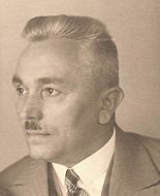
Friedrich Kellner


   Email Print
   Bookmark   Link


Friedrich Kellner


August Friedrich Kellner (February 1, 1885 – November 4, 1970) was a mid-level official in Germany
Germany

Germany , officially the Federal Republic of Germany , is a country in Central Europe. It is bordered to the north by the North Sea, Denmark, and the Baltic Sea; to the east by Poland and the Czech Republic; to the south by Austria and Switzerland; and to the west by France, Luxembourg, Belgium, and the Netherlands....
 who worked as a justice inspector in Mainz
Mainz

Mainz is a city in Germany and the capital of the Germany States of Germany of Rhineland-Palatinate. It was a politically important seat of the Prince-elector of Mainz under the Holy Roman Empire, and previously was a Roman Empire fort city which commanded the west bank of the Rhine River and formed part of the northernmost frontier of th...
 and Laubach
Laubach

Laubach is a town known as a ?Luftkurort,? a climatic health resort. It has a population of approximately 10,000 people, and it is located in the district of Giessen, in Hesse, Germany....
. During the First World War, Kellner was an infantryman in a Hessian
Hesse

Hesse is a States of Germany of Germany with an area of 21,110 km? and just over six million inhabitants. The state capital is Wiesbaden. Hesse's largest city is nearby Frankfurt am Main....
 regiment. After the war he became a political organizer for the Social Democratic Party of Germany
Social Democratic Party of Germany

The Social Democratic Party of Germany is Germany's oldest political party. After World War II, under the leadership of Kurt Schumacher, the SPD reestablished itself as an ideological party, representing the interests of the working class and the trade unions....
, which was the leading political party during the time of the turbulent and short-lived Weimar Republic
Weimar Republic

The Weimar Republic was the democracy and republican period of Germany from 1919 to 1933. Following World War I, the republic emerged from the German Revolution in November 1918....
, the name given to Germany’s first democracy
Democracy

Democracy is a form of government in which power is held directly or indirectly by citizens under a free electoral system. It is derived from the Greek language d?????at?a , "popular government" which was coined from d???? , "people" and ???t?? , "rule, strength" in the middle of the 5th-4th century BC to denote the political syst...
.


Discussion
Ask a question about 'Friedrich Kellner'
Start a new discussion about 'Friedrich Kellner'
Answer questions from other users
Full Discussion Forum


Quotations


Spineless politics do not change the mind of a tyrant. - Friedrich Kellner diary, May 29, 1940.

To trample democracy with ones feet and to give power to a single man over almost eighty million people is so terrible that one can very probably tremble over the events which will come here. - Friedrich Kellner diary, Sep. 17, 1939.

Terror is trump. Common, brutal suppression methods are considered as sanctified laws. Old Fighters.

are holy ones. From the district leader upwards there are only Gods! - Friedrich Kellner diary, October 7, 1939.

The Conqueror from Berlin,.

as he has named himself, has completely conquered Germany. And not only that. Unfortunately, many, all too many Germans living abroad, also have fallen for the cunning propaganda. - Friedrich Kellner diary, Oct. 14, 1939.

We can bear up under everything, if we have only the certainty that the monster Hitler with his insatiable bloodletting and plundering will have committed soon his last shameful deed. - Friedrich Kellner diary, March 28, 1945.


Encyclopedia


August Friedrich Kellner (February 1, 1885 – November 4, 1970) was a mid-level official in Germany
Germany

Germany , officially the Federal Republic of Germany , is a country in Central Europe. It is bordered to the north by the North Sea, Denmark, and the Baltic Sea; to the east by Poland and the Czech Republic; to the south by Austria and Switzerland; and to the west by France, Luxembourg, Belgium, and the Netherlands....
 who worked as a justice inspector in Mainz
Mainz

Mainz is a city in Germany and the capital of the Germany States of Germany of Rhineland-Palatinate. It was a politically important seat of the Prince-elector of Mainz under the Holy Roman Empire, and previously was a Roman Empire fort city which commanded the west bank of the Rhine River and formed part of the northernmost frontier of th...
 and Laubach
Laubach

Laubach is a town known as a ?Luftkurort,? a climatic health resort. It has a population of approximately 10,000 people, and it is located in the district of Giessen, in Hesse, Germany....
. During the First World War, Kellner was an infantryman in a Hessian
Hesse

Hesse is a States of Germany of Germany with an area of 21,110 km? and just over six million inhabitants. The state capital is Wiesbaden. Hesse's largest city is nearby Frankfurt am Main....
 regiment. After the war he became a political organizer for the Social Democratic Party of Germany
Social Democratic Party of Germany

The Social Democratic Party of Germany is Germany's oldest political party. After World War II, under the leadership of Kurt Schumacher, the SPD reestablished itself as an ideological party, representing the interests of the working class and the trade unions....
, which was the leading political party during the time of the turbulent and short-lived Weimar Republic
Weimar Republic

The Weimar Republic was the democracy and republican period of Germany from 1919 to 1933. Following World War I, the republic emerged from the German Revolution in November 1918....
, the name given to Germany’s first democracy
Democracy

Democracy is a form of government in which power is held directly or indirectly by citizens under a free electoral system. It is derived from the Greek language d?????at?a , "popular government" which was coined from d???? , "people" and ???t?? , "rule, strength" in the middle of the 5th-4th century BC to denote the political syst...
. Kellner campaigned against Adolf Hitler
Adolf Hitler

Adolf Hitler was an Austrian-born Germany politician and the leader of the National Socialist German Workers Party , popularly known as the Nazi Party....
 and the Nazis. At the beginning of World War II
World War II

World War II, or the Second World War , was a global military conflict which involved a Participants in World War II, including all of the great powers, organised into two opposing military alliances: the Allies of World War II and the Axis powers....
, Kellner began writing in a diary
Diary

For other uses of the term 'diary', see Diary .A 'diary' is a record with discrete entries arranged by Calendar date reporting on what has happened over the course of a day or other period....
 to record his observations of the Nazi regime. He titled his work Mein Widerstand, meaning "My Opposition". After the war Kellner served on denazification
Denazification

File:Denazification-street.jpgDenazification was an Allies_of_World_War_II initiative to rid Germany and Austrian society, culture, press, economy, judiciary, and politics of any remnants of the Nazism regime....
 boards, and he also helped to reestablish the Social Democratic Party. He gave his diary to his American grandson in 1968 to translate into English and to bring it to the attention of the public. He explained his purpose for writing the diary:

"I could not fight the Nazis in the present, as they had the power to still my voice, so I decided to fight them in the future. I would give the coming generations a weapon against any resurgence of such evil. My eyewitness account would record the barbarous acts, and also show the way to stop them."


Biography


Family and education

Kellner was born in Vaihingen an der Enz, a town on the Enz River
Enz

The Enz is a left tributary of the Neckar in Baden-W?rttemberg.It is 112 km long.Its headstreams – the Little Enz and the Big Enz – rise in the northern Black Forest, the latter at Enzkl?sterle....
 in southern Germany
Germany

Germany , officially the Federal Republic of Germany , is a country in Central Europe. It is bordered to the north by the North Sea, Denmark, and the Baltic Sea; to the east by Poland and the Czech Republic; to the south by Austria and Switzerland; and to the west by France, Luxembourg, Belgium, and the Netherlands....
. At the time of his birth, Vaihingen was part of the Kingdom of Württemberg
Kingdom of Württemberg

The Kingdom of W?rttemberg was a state that existed from 1806 to 1918 and is currently located in Baden-W?rttemberg, Germany....
 in the German Empire
German Empire

The German Empire is the name commonly used in English to describe Germany from the unification of Germany and proclamation of William I, German Emperor as German Emperor on 18 January 1871, to 1918, when it became Weimar republic after defeat in World War I and the abdication of William II, German Emperor ....
. Kellner was the only child of Georg Friedrich Kellner, a baker and confectioner from the town of Arnstadt
Arnstadt

Arnstadt is a town in Ilm-Kreis, Thuringia, Germany, situated on the Gera River. It is one of the oldest towns in Thuringia and is nicknamed Das Tor zum Th?ringer Wald, The Gate to the Thuringian Forest....
 in Thuringia
Thuringia

The Free State of Thuringia is located in central Germany. It has an area of and 2.29 million inhabitants, making it the sixth smallest by area and the fifth smallest by population of Germany's sixteen States of Germany ....
, and Barbara Wilhelmine Vaigle from Bietigheim-Bissingen
Bietigheim-Bissingen

Bietigheim-Bissingen is the second-biggest town in the Ludwigsburg , Baden-W?rttemberg, Germany with 42,515 inhabitants in 2007. It is situated on the river Enz, close to its confluence with the Neckar, about 22 km north of Stuttgart, and 20 km south of Heilbronn....
 near Ludwigsburg
Ludwigsburg

Ludwigsburg is a city in Germany, about 12 km north of Stuttgart's city center, near the river Neckar. It is the capital of the Ludwigsburg , and belongs to the Stuttgart Region in the Stuttgart ....
. The Kellner family could trace its beginnings to when the Protestant reformer, Martin Luther
Martin Luther

Martin Luther was a Germans monk, theology, university professor, priest, father of Protestantism, and Protestant Reformers whose ideas started the Protestant Reformation and changed the course of Western culture....
, lived and preached not far from Arnstadt. The Kellners were Evangelical Lutherans
Evangelical Church in Germany

Evangelical Church in Germany is a federation of 23 regional Lutheran, Reformed churches and United and uniting churches Protestant churches. In fact only one member church is not restricted to a certain territory....
.

When Friedrich Kellner was four years old, his family moved to Mainz
Mainz

Mainz is a city in Germany and the capital of the Germany States of Germany of Rhineland-Palatinate. It was a politically important seat of the Prince-elector of Mainz under the Holy Roman Empire, and previously was a Roman Empire fort city which commanded the west bank of the Rhine River and formed part of the northernmost frontier of th...
 where his father became the master baker at Goebels Zuckerwerk (Goebels Confectionery).

After completing Volksschule
Volksschule

A Volkschule was an 18th century system of state-supported primary schools established in the Habsburg Austrian Empire. Attendance was supposedly compulsory, but a 1781 census reveals that only one fourth of the school-age children attended....
, primary school, Kellner had a nine year course of non-classical study in the Oberrealschule
Realschule

The Realschule is a type of secondary school in Germany, Austria, Switzerland, and Liechtenstein. It has also existed in Croatia , Denmark , Sweden , Hungary and Russian Empire ....
 in Mainz. In 1902 he completed his final exams at Goetheschule, which qualified him for an apprenticeship in courthouse administration.

In 1903 he started work as a junior clerk in the Mainz courthouse, remaining there until 1933. He advanced in the administrative ranks to justice secretary, then to court accountant, and in April 1920 to justice inspector.

Military service and marriage

From September 1907 through October 1908 Kellner fulfilled his initial military reserve duty in the 6th Infantry Company of the Leibregiments Großherzogin (3. Großherzoglich Hessisches
Grand Duchy of Hesse

The Grand Duchy of Hesse was a former state that existed in modern-day Germany. It was formed in 1806 after the dissolution of the Holy Roman Empire as a result of the actions of Napoleon, who then elevated the former Landgraviate of Hesse-Darmstadt to the level of grand duchy....
) Nr. 117 in Mainz. In 1911, he completed an additional two months reserve training.

When the First World War
World War I

World War I, or the First World War , was a global military conflict which involved the Great powers, organized into two opposing military alliances: the Allies of World War I and the Central Powers....
 began in 1914, Kellner was called up for active duty as a sergeant and deputy-officer in the Prinz Carl Infantry Regiment (4. Großherzoglich Hessisches Regiment) Nr. 118, in Worms
Worms, Germany

Worms is a city in Rhineland-Palatinate, Germany, on the Rhine River. At the end of 2004, it had 85,829 inhabitants.Established by the Celts who called it Borbetomagus, Worms today remains embattled with the cities Trier and Cologne over title of "Oldest City in Germany"....
. Within the first month of his return to army service, Kellner was in eight engagements in Belgium
Belgium

* A small German-speaking Community of Belgium exists in eastern Wallonia. Belgium's linguistic diversity and related political and cultural conflicts are reflected in the history of Belgium and a complex Communities and regions of Belgium....
 and France
French Third Republic

The French Third Republic was the political regime of France between the Second French Empire and the Vichy France. It was a republican parliamentary democracy that was created on 4 September 1870 following the collapse of the Empire of Napoleon III of France in the Franco-Prussian War....
, including fights at Neufchâteau, Revigny-Laimont, and Rinarville, associated with what has become known as the Battle of the Frontiers
Battle of the Frontiers

The Battle of the Frontiers was a series of battles fought along the eastern frontier of France and in southern Belgium shortly after the outbreak of World War I....
. His regiment also fought at the First Battle of the Marne
First Battle of the Marne

The First Battle of the Marne was a World War I battle fought between the 5th and 12th of September 1914. It resulted in a France-United Kingdom victory against the German Empire Wehrmacht under Chief of Staff Helmuth von Moltke the Younger....
 from September 5 through September 12. Under a prolonged bombardment in the trenches near Reims
Reims

The city of Reims lies in the Champagne-Ardenne region in northeastern France 129 km east-northeast of Paris.Founded by the Gauls, it became a major city during the period of the Roman Empire....
, he was wounded and was sent to St. Rochus
Roch

Saint Roch , also known as Rock or Rocco in English, was a Christian saint, a confessor whose death is commemorated on 16 August; he is specially invoked against the Black Death....
 Hospital in Mainz to recover. He spent the remainder of the war as a quartermaster secretary for the 13th Army Corps
List of German corps in WWII

List of military corps ? List of German corps in WWIIThis is a list of German army corps that existed during World War II....
 in Frankfurt am Main.

In 1913, a few months prior to being called up for service in the war, Kellner married Pauline Preuss (January 19, 1888 - February 8, 1970), who was from Mainz. Their son, Karl Friedrich Wilhelm (a.k.a. Fred William), who was to be their only child, was born in Mainz on February 29, 1916.

Political activism


Kellner welcomed the birth of German democracy after the war. In 1919 he became a political organizer for the Mainz branch of the Social Democratic Party of Germany
Social Democratic Party of Germany

The Social Democratic Party of Germany is Germany's oldest political party. After World War II, under the leadership of Kurt Schumacher, the SPD reestablished itself as an ideological party, representing the interests of the working class and the trade unions....
, the (SPD). Throughout the 1920’s and into the 1930’s, he spoke out against the danger posed to the fragile democracy by the extremists in the Communist Party
Communist Party of Germany

The Communist Party of Germany was a major political party in Germany between 1918 and 1933, and a minor party in West Germany in the postwar period....
 and the Nazi Party. At rallies near the Gutenberg Museum, which honored Johannes Gutenberg
Johannes Gutenberg

Johannes Gensfleisch zur Laden zum Gutenberg was a Germany goldsmith and printer who is credited with being the first European to use movable type printing, in around 1439, and the global inventor of the mechanical printing press....
, the founder of the printing press, Kellner would hold above his head Adolf Hitler
Adolf Hitler

Adolf Hitler was an Austrian-born Germany politician and the leader of the National Socialist German Workers Party , popularly known as the Nazi Party....
’s book, Mein Kampf
Mein Kampf

Mein Kampf, in English language: My Struggle, is a book dictated by Adolf Hitler. It combines elements of autobiography with an exposition of Adolf Hitler's political beliefs....
, and yell out to the crowd: "Gutenberg, your printing press has been violated by this evil book." He would often be accosted by brown-shirted thugs from the Nazi Party, known as Storm Troopers
Storm troopers

Storm troopers could refer to the following:*Sturmabteilung - A paramilitary organisation that aided Hitler's rise to power in the 1930s*Imperial stormtrooper - A military unit from the Star Wars universe...
.

Two weeks before Adolf Hitler was sworn in as Chancellor
Chancellor of Germany (German Reich)

The head of government of the German Reich was called Reich Chancellor or short Chancellor from 1871 until 1945. This designation stems from the German chancellor tradition from the Middle Ages and the early modern era....
 in January 1933, and before the beginning of Hitler's murderous purge of his political opponents, Kellner and his family moved to the village of Laubach
Laubach

Laubach is a town known as a ?Luftkurort,? a climatic health resort. It has a population of approximately 10,000 people, and it is located in the district of Giessen, in Hesse, Germany....
 in Hesse
Hesse

Hesse is a States of Germany of Germany with an area of 21,110 km? and just over six million inhabitants. The state capital is Wiesbaden. Hesse's largest city is nearby Frankfurt am Main....
, where he worked as the chief justice inspector in the district court. In 1935 his son immigrated to the United States
United States

The United States of America is a Federal government constitutional republic comprising U.S. state and a federal district. The country is situated mostly in central North America, where its Contiguous United States and Washington, D.C., the Capital districts and territories, lie between the Pacific Ocean and Atlantic Oceans, Borders of the U...
 in order to avoid service in the Wehrmacht
Wehrmacht

Wehrmacht was the name of the unified armed forces of Germany from 1935 to 1945. It consisted of the Heer , the Kriegsmarine and the Luftwaffe ....
, Hitler’s army.

During the November pogrom of 1938, known as Kristallnacht
Kristallnacht

File:1938 Interior of Berlin synagogue after Kristallnacht.jpgKristallnacht or the Night of Broken Glass or "night of shattered crystal" was a pogrom in Nazi Germany on November 9?10, 1938....
 ("Night of the Broken Glass"), Friedrich and Pauline Kellner tried to stop the rioting. When Kellner approached the presiding judge to bring charges against the leaders of the riot, Judge Schmitt instead opened an investigation into the Kellners’ religious heritage. The Kellner family documents, which included baptismal records dating back three hundred years, proved Kellner and his wife were Christians. On November 18, 1938, the district judge in Darmstadt
Darmstadt

Darmstadt is a city in the States of Germany of Hesse in Germany, located in the southern part of the Frankfurt Rhine Main Area.The city of Darmstadt was founded by the Counts of Katzenelnbogen in 1330, though settlement in the area is known to have been present as early as the late 11th century....
 closed the case in Kellner’s favor: “Doubts about the Kellner bloodlines cannot be validated.” A finding to the contrary could have meant imprisonment and death.

The war years


From his reading of Mein Kampf, Kellner believed the election of Adolf Hitler would mean another war in Europe
Europe

Europe is, conventionally, one of the world's seven continents. Comprising the westernmost peninsula of Eurasia, Europe is generally divided from Asia to its east by the water divide of the Ural Mountains, the Ural , the Caspian Sea, and by the Caucasus Mountains to the southeast....
, and events soon were to support his view. Within a few years after coming to power, Hitler abrogated the Treaty of Versailles
Treaty of Versailles

The Treaty of Versailles was one of the peace treaty at the end of World War I. It ended the declaration of war between German Empire and Allies of World War I....
, re-militarized the Rhineland
Remilitarization of the Rhineland

The Remilitarization of the Rhineland by the Germany Wehrmacht took place on 7 March 1936 when German forces entered the Rhineland....
, expanded the German military forces, and spent great sums to outfit those forces with modern weaponry. Although the leaders in the democracies were concerned about such rearmament, they failed to take action to stop it. On September 1, 1939, in coordination with the Soviet Union, Hitler ordered the German armed forces to invade Poland. It was on this day that Friedrich Kellner began to record his observations in a secret diary that he entitled Mein Widerstand, "My Opposition". He wanted the coming generations to know how easily young democracies could turn into dictatorships, and how people were too willing to believe propaganda
Nazi propaganda

Nazi propaganda is the term that describes the psychologically powerful propaganda within Nazi Germany, much of which centered on Jews, consistently alleged to be the source of Germany's problems....
 rather than resist tyranny and terrorism.

Kellner did not confine himself to the diary. He continued to express his views, and in February 1940 he was summoned to the district court in Giessen where he was warned by the president of the court, Hermann Colnot, to moderate his views. A few months later he was summoned to the mayor’s office in Laubach where he was warned by the mayor and the local Nazi Party leader that he and his wife would be sent to a concentration camp
Nazi concentration camps

Nazi Germany under Adolf Hitler maintained concentration camps throughout the territories it controlled. The first Nazism concentration camps were greatly expanded in Germany after the Reichstag fire in 1933, and were intended to hold political prisoners and opponents of the regime....
 if he continued to be a "bad influence" on the population of Laubach. A report written by the district Nazi leader, Hermann Engst, shows that authorities were planning to punish Kellner at the conclusion of the war. ,

Throughout the first two years of the war, Kellner looked to America to provide support for England and France. Numerous entries in the diary reveal Kellner’s belief that Germany had no chance to win if America would put aside its neutrality and do more than just send supplies to England. When America entered the war in 1941, the diary entries show Kellner’s impatience for the Allies to mount an effective invasion of the continent, and to bring the fight to the Germans on their own territory. When the invasion of Normandy
Battle of Normandy

The Invasion of Normandy was the invasion and establishment of Western Allies forces in Normandy, France, during Operation Overlord in World War II....
 took place on June 6, 1944, Kellner inscribed in large letters in the entry of that date: “Endlich!,” meaning “Finally!”

Kellner rarely wrote about his personal situation. He wrote primarily about Nazi policies and propaganda, and about the war. He noted the injustices in the court system, and recorded the inhumane deeds and genocidal intentions of the Nazis. In all of this he considered the German people as accomplices before and after the fact: first voting Hitler into power, and then acquiescing in his abuse of that power. One of the most important historical entries in the diary was written on October 28, 1941. Most Germans after the war would insist they knew nothing at all about the state-sponsored genocide
The Holocaust

The Holocaust , also known as , Churben is the term generally used to describe the genocide of approximately six million European Jews during World War II, as part of a program of deliberate extermination planned and executed by Nazi Germany under Adolf Hitler....
 of the Jew
Jew

A Jew is a member of the Jewish people, an ethnoreligious group that traces its ancestry to the Israelites or Hebrews of the Ancient Near East....
s, yet very early in the war Kellner recorded this in his diary, showing that even in the small towns, the average citizen knew what was occurring:

A soldier on vacation here said he was an eyewitness to terrible atrocities in the occupied parts of Poland
History of Poland (1939–1945)

The history of Poland from 1939 to 1945 encompasses the German invasion of Poland through to the end of World War II. On September 1, 1939, without a formal declaration of war, Germany invaded Poland....
. He watched as naked Jewish men and women were placed in front of a long deep trench and upon the order of the SS
Schutzstaffel

The , abbreviated SS- or - was a major Nazi organization under Adolf Hitler and the Nazi Party. The SS grew from a small paramilitary unit to a powerful force that served as the F?hrer's "Praetorian Guard," the Nazi Party's "Shield Squadron" and a force that, fielding almost a million men, managed to exert as much political influence as th...
 were shot by Ukrainians
Ukrainians

Ukrainians are an East Slavs ethnic group primarily living in Ukraine, or more broadly?citizens of Ukraine . Some 200 years ago and times prior to that, Ukrainians were usually referred to and known as Rusyny ....
 in the back of their heads and they fell into the ditch. Then the ditch was filled with dirt even as he could hear screams coming from people still alive in the ditch.
These inhuman atrocities were so terrible that some of the Ukrainians, who were used as tools, suffered nervous breakdowns. All the soldiers who had knowledge of these bestial actions of these Nazi sub-humans were of the opinion that the German people should be shaking in their shoes because of the coming retribution.
There is no punishment that would be hard enough to be applied to these Nazi beasts. Of course, when the retribution comes, the innocent will have to suffer along with them. But because ninety-nine percent of the German population is guilty, directly or indirectly, for the present situation, we can only say that those who travel together will hang together. , Friedrich Kellner exhibit. Retrieved 2007-05-14


After the war

The war came to an end for Kellner on March 29, 1945, when the Americans marched into Laubach. Only a few days earlier, beginning on March 23, 1945, in a series of coordinated events between the British and American forces, the Allies had crossed the Rhine River
Operation Plunder

Commencing on the night of 23 March, 1945 during World War II, Operation Plunder was the crossing of the Rhine river at Rees, Germany, Wesel, and south of the Lippe River by the British Second Army, under Lieutenant-General Miles Dempsey , and the U.S....
 in their invasion of the German homeland. With the approval of the occupation forces, the new mayor of Laubach made Kellner deputy mayor. Kellner aided in the denazification
Denazification

File:Denazification-street.jpgDenazification was an Allies_of_World_War_II initiative to rid Germany and Austrian society, culture, press, economy, judiciary, and politics of any remnants of the Nazism regime....
 process, which primarily meant removing former Nazis from positions of power in the region. Kellner helped to resurrect the Social Democratic Party in Laubach, and he became the regional party chairman.

Kellner wrote only a few more entries in the diary. In one of the last entries, on May 8, 1945, the day Germany officially surrendered to the Allies, Kellner noted:
“If now, after the collapse, should any of these lackeys of Adolf Hitler have the insolence to claim they were merely harmless onlookers, let them feel the scourge of avenging mankind …. Whoever cries about having lost the Nazi system or wants to resurrect National Socialism is to be treated as a lunatic.”
Kellner served as chief justice inspector and administrator of the Laubach courthouse until 1948. He was appointed district auditor in the regional court in Giessen
Gießen

Gie?en is a town in the States of Germany of Hessen, capital of both the Gie?en and the Gie?en . The population is approximately 71,000, with roughly 22,000 university students....
 until his retirement in 1950. For the next three years he was a legal advisor in Laubach. In 1956 he returned to politics and was Laubach’s leading councilor and deputy mayor until he retired in1960 at age 75.

On July 19, 1966, Kellner received compensation from the Federal Republic of Germany because of the injustices committed against him during the time of National Socialism. The compensation ruling included this statement:
“Kellner's political opposition was recognized by the ruling powers and they took measures against him. In a memorandum dated June 23, 1937, they noted that Kellner had not been active enough for the National Socialist movement, and that he has caused disturbances with the local party. Further, the incidents in the year 1940 (the threatened incarceration in a concentration camp) had really an unfavorable effect. It was Kellner's open opposition to National Socialism which prevented possible promotions and damaged him in his service.”


Kellner and his wife arranged to have their son, Fred William Kellner, sent to the United States in 1935 out of concern he might otherwise have to fight for Hitler. Fred William returned to Germany in 1945 as a member of the U.S. Army. He was unable to cope with the devastation he witnessed, and in 1953 he took his own life. He is buried in the American Legion Tomb in Neuilly, France, on the outskirts of Paris. Fred’s son, Robert Scott Kellner, grew up in a children's home in Connecticut. In 1960, while in the United States Navy
United States Navy

The United States Navy is the navy of the United States Armed Forces. It is one of the seven uniformed services of the United States. The U.S. Navy currently has approximately 331,682 personnel on active duty as of 31 December 2008 and 124,000 in the United States Navy Reserve....
 and traveling through Germany, Robert Scott Kellner located his grandparents, Friedrich and Pauline Kellner, and learned of the existence of the diary. In 1968 Friedrich Kellner gave his diary to his American grandson to translate and bring to the attention of the public. He believed his observations during WWII could have meaning in the increasing hostilities in the world brought about by the Cold War
Cold War

The Cold War was the continuing state of conflict, tension and competition that existed between a number of world powers, including the United States, the Soviet Union, People's Republic of China, France, United Kingdom and those countries' respective allies from the mid-1940s to the early 1990s....
 with Communism, and the proliferation of neo-Nazi cults.

Decades later, Robert Scott Kellner would use the diary to combat the resurgence of fascism and anti-Semitism
Anti-Semitism

Antisemitism is prejudice against or hostility towards Jews.This prejudice or hostility is usually characterized by a combination of Religion, Race , cultural and ethnic group biases....
 in the twenty-first century, and to counter historical revisionists who would deny the Holocaust and other Nazi atrocities. He offered a copy of the diary to the Iran
Iran

Iran , officially the Islamic Republic of Iran and formerly known internationally as Persian Empire until 1935, is a country in Central Eurasia, located on the northeastern shore of the Persian Gulf and the southern shore of the Caspian Sea....
ian president, Mahmoud Ahmadinejad
Mahmoud Ahmadinejad

Mahmoud Ahmadinejad is the sixth and current President of Iran of the Islamic Republic of Iran. He became president on August 6, 2005, after winning the Iranian presidential election, 2005....
, who has referred to the Holocaust as "a myth" and has called for Israel to be "wiped off the map." In his offer to Ahmadinejad, Kellner said: "We need to renounce ideologies that do not uphold, above all else, human life and personal liberty." Friedrich and Pauline Kellner spent their last few years in Mainz, where Kellner had first begun his service as a law administrator and a political activist. He served as a volunteer legal advisor in Mainz from 1962 until 1969. After Pauline's death on February 8, 1970, Friedrich returned to Laubach for the remaining few months of his life. He died on November 4, 1970, in the regional hospital in Lich
Lich, Germany

Lich is a town in the Gie?en , in Hesse, Germany. It is situated 12 km southeast of Gie?en.It is the home of the brewery and leading regional brand Licher Privatbrauerei ....
, not far from Laubach. He was buried at the side of his wife in the Main Cemetery, Hauptfriedhof, in Mainz.

Works


Diary


My Opposition consists of 10 volumes with a total of 861 pages. The volumes are sheets of accounting paper bound together by string. There are 676 individually dated entries beginning in September 1939 through May 1945. More than 500 newspaper clippings are pasted onto the pages of the diary. The diary is written in a script called Sütterlin
Sütterlin

S?tterlinschrift , or S?tterlin for short, is the last widely used form of the old Kurrent . In Germany, the old German cursive script developed in the 16th century replacing the Gothic handwriting at the same time that bookletters developed into the Fraktur ....
, the old German handwriting which was banned in 1941 and replaced by modern Latin lettering to make German easier for the conquered nations of Europe to read and understand.

There are separate pages written in 1938 and 1939, considered preliminary pages to the diary, that explain Kellner’s intentions. He meant for his observations to detail the events of those years, and to offer a prescription for future generations to prevent what occurred in Germany during Adolf Hitler’s rise to power, when a fledgling democracy willingly embraced dictatorship to solve political disputes. Kellner foresaw Germany’s defeat, and warned against a recurrence of totalitarianism
Totalitarianism

Totalitarianism is a concept used to describe political systems whereby a state regulates nearly every aspect of public and private life. Totalitarian regimes or movements maintain themselves in political power by means of an official all-embracing ideology and propaganda disseminated through the state-controlled mass media, single-party st...
. He prescribed unrelenting resistance against any ideology that threatened personal liberty and ignored the sanctity of human life.

Reception of the diary

The diary’s first public appearance was at the George Bush Presidential Library and Museum, where it was on display to commemorate the 60th anniversary of VE Day, the end of the war in Europe. It has since been exhibited in other museums in the United States and in Germany. In October 2007, an exhibit of diary facsimilies was at The Great Synagogue of Stockholm
Stockholm Synagogue

The Great Synagogue of Stockholm , is located on the small street Wahrendorffsgatan close to the park Kungstr?dg?rden on Norrmalm, Stockholm, and was built 1867-1870 according to designs made in 1862 by the architect Fredrik Wilhelm Scholander....
, in Stockholm
Stockholm

is the capital and largest city of Sweden. It is the site of the national Swedish Government of Sweden, the Parliament of Sweden, and the official residence of the Swedish Monarchy of Sweden....
, Sweden
Sweden

Sweden , officially the Kingdom of Sweden , is a Nordic countries on the Scandinavian Peninsula in Northern Europe. Sweden has land borders with Norway to the west and Finland to the northeast, and it is connected to Denmark by the ?resund Bridge in the south....
. A permanent Kellner exhibit is at the Heimatmuseum in Laubach, Germany. Coincidentally, this museum is located on the same street as the courthouse where Kellner wrote the diary.

In Giessen, where Kellner worked as district auditor from 1948 to 1950, the Holocaust Literature Research Unit of the Justus Liebig University of Giessen
University of Giessen

The University of Gie?en is officially called Justus Liebig-Universit?t Gie?en after its most famous member, Justus von Liebig, the founder of modern agricultural chemistry and inventor of artificial fertiliser....
 has established the Kellner Project. The deputy director of the group, Dr. Sascha Feuchert, considers Kellner's work one of the most extensive diaries of the Nazi period.

A number of major universities in the United States, such as Purdue
Purdue University

Purdue University, located in West Lafayette, Indiana, Indiana, United States, is the flagship university of the six campuses within the Purdue University System....
, Columbia
Columbia University

Columbia University in the City of New York , is a private university in the United States and a member of the Ivy League. Columbia's main campus lies in the Morningside Heights, Manhattan neighborhood in the borough of Manhattan, in New York City....
, and Stanford
Stanford University

Leland Stanford Junior University, commonly referred to as Stanford University or Stanford, is a private university research university located in Stanford, California, California, United States....
, have offered to make the diary part of their libraries. The directors of the Yad Vashem
Yad Vashem

File:Yad Vashem BW 3.JPGYad Vashem is Israel's official memorial to the Jewish victims of the Holocaust established in 1953 through the Yad Vashem Law passed by the Knesset, Israel's parliament....
 Holocaust Museum in Jerusalem
Jerusalem

Jerusalem is the capital of Israel and its List of Israeli cities in both population and area, with a population of 747,600 residents over an area of if Positions on Jerusalem East Jerusalem is included....
 and the United States Holocaust Memorial Museum
United States Holocaust Memorial Museum

The United States Holocaust Memorial Museum is the United States's living memorial to the Holocaust. Located among monuments and memorial on the National Mall in Washington, D.C., the USHMM is dedicated to help leaders and citizens of the world to confront hatred, prevent genocide, promote human dignity, and strengthen democracy....
 in Washington, D.C.
Washington, D.C.

Washington, D.C. , formally the District of Columbia and commonly referred to as Washington, the District, or simply D.C., is the Capital of the United States, founded on July 16, 1790....
, have also requested the diary for their archives.

In 2007 CCI Entertainment, a Canadian
Canada

Canada is a country occupying most of northern North America, extending from the Atlantic Ocean in the east to the Pacific Ocean in the west and northward into the Arctic Ocean....
 film company, produced a documentary film entitled My Opposition: the Diaries of Friedrich Kellner
My Opposition: the Diaries of Friedrich Kellner

My Opposition - The Diaries of Friedrich Kellner is a 2007 documentary film about an orphaned American who went in search of his German grandfather and discovered a secret diary written during the time of the Third Reich....
,
which interweaves the stories of Kellner and his American grandson. The documentary had its American premiere at the George Bush Presidential Library on September 26, 2007. It was shown in the theater of the Dag Hammarskjöld
Dag Hammarskjöld

Dag Hjalmar Agne Carl Hammarskj?ld was a Swedish diplomat, Christian mystic, and the second United Nations Secretary-General of the United Nations....
 Library at the United Nations
United Nations

The United Nations is an international organization whose stated aims are to facilitate cooperation in international law, international security, economic development, Social change, human rights and achieving world peace....
 on November 10, 2008, to commemorate the 70th anniversary of Kristallnacht.

External links

  • (Video about Friedrich Kellner's diary)