
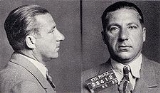
Frank Costello was an Italian
New York CityNew York is the most populous city in the United States and the center of the New York Metropolitan Area, one of the most populous metropolitan areas in the world. New York exerts a significant impact upon global commerce, finance, media, art, fashion, research, technology, education, and...
gangsterA gangster is a criminal who is a member of a gang. Some gangs are considered to be part of organized crime. Gangsters are also called mobsters, a term derived from mob and the suffix -ster....
who rose to the top of America's underworld, controlled a vast gambling empire across the
United StatesThe United States of America is a federal constitutional republic comprising fifty states and a federal district...
and enjoyed political influence.
Nicknamed the "Prime Minister of the Underworld", he became one of the most powerful and influential
MafiaThe Mafia is a criminal syndicate that emerged in the mid-nineteenth century in Sicily, Italy. It is a loose association of criminal groups that share a common organizational structure and code of conduct, and whose common enterprise is protection racketeering...
bosses in
AmericanThe United States of America is a federal constitutional republic comprising fifty states and a federal district...
history, eventually leading the Luciano crime family (later called the
Genovese crime familyThe Genovese crime family , is one of the "Five Families" that dominates organized crime activities in New York City, United States, within the nationwide criminal phenomenon known as the Mafia . The Genovese crime family has been nicknamed the "Ivy League" and "Rolls Royce" of organized crime...
).
Early years
Costello was born in
LauropoliCassano allo Ionio is a small town and comune in province of Cosenza of Calabria, southern Italy, known in Roman times as Cassanum. It lies in fertile region in the concave recess of a steep mountain, 60 km NE from the town of Cosenza, 10 km W of the archaeological site of...
, a mountain village in
CalabriaCalabria , in antiquity known as Bruttium, is a region in southern Italy, south of Naples, located at the "toe" of the Italian Peninsula. The capital city of Calabria is Catanzaro....
,
ItalyItaly , officially the Italian Republic languages]] under the European Charter for Regional or Minority Languages. In each of these, Italy's official name is as follows:;;;;;;;;), is a unitary parliamentary republic in South-Central Europe. To the north it borders France, Switzerland, Austria and...
in 1891. In 1900, he boarded a ship to the
United StatesThe United States of America is a federal constitutional republic comprising fifty states and a federal district...
with his mother and his brother Edward in order to join their father, who had moved to New York's
East HarlemEast Harlem, also known as Spanish Harlem and El Barrio, is a section of Harlem in the northeastern part of the New York City borough of Manhattan. East Harlem is one of the largest predominantly Latino communities in New York City. It includes the area formerly known as Italian Harlem, in which...
several years earlier and opened a small neighborhood Italian grocery store. While Costello was still a boy, his brother introduced him to gang activities. By age 13, Costello had become a member of a local gang and started using the name Frankie. Costello continued to commit petty crimes, and went to jail for assault and robbery in 1908, 1912 and 1917. In 1918, Costello married Lauretta Giegerman, a Jewish girl who was the sister of a close friend. That same year, Costello served ten months in jail for carrying a concealed weapon. After his release, Costello decided to avoid street rackets and use his brain to make money as a criminal. Foregoing the use of violence as a road to success and wealth, Costello claimed that he never again carried a gun. Costello would not return to jail for 37 years.
Alliance with Luciano
While working for the Morello gang, Costello met Charlie "Lucky" Luciano, the Sicilian leader of Manhattan's
Lower East SideThe Lower East Side, LES, is a neighborhood in the southeastern part of the New York City borough of Manhattan. It is roughly bounded by Allen Street, East Houston Street, Essex Street, Canal Street, Eldridge Street, East Broadway, and Grand Street....
gang. The two Italians immediately became friends and partners. Several older members of Luciano's family disapproved of this growing partnership; they were mostly old-school mafiosi who were unwilling to work with anyone who was not Sicilian, let alone anyone not Italian. To Luciano's shock, they warned him against working with Costello, whom they called "the dirty Calabrian." Along with Italian-American associates
Vito GenoveseVito "Don Vito" Genovese was an Italian mafioso who rose to power in America during the Castellammarese War to later become leader of the Genovese crime family. Genovese served as mentor to future mob boss Vincent "The Chin" Gigante...
and
Tommy "Three-Finger Brown" LuccheseGaetano "Tommy" Lucchese , also known as "Tom Brown" or "Three-Finger Brown", was an American mobster who became the Boss of the Lucchese crime family in New York City...
and Jewish associates
Meyer LanskyMeyer Lansky , known as the "Mob's Accountant", was a Polish-born American organized crime figure who, along with his associate Charles "Lucky" Luciano, was instrumental in the development of the "National Crime Syndicate" in the United States...
and
Benjamin "Bugsy" SiegelBenjamin "Bugsy" Siegel was an American gangster who was involved with the Genovese crime family...
, the gang became involved in robbery, theft,
extortionExtortion is a criminal offence which occurs when a person unlawfully obtains either money, property or services from a person, entity, or institution, through coercion. Refraining from doing harm is sometimes euphemistically called protection. Extortion is commonly practiced by organized crime...
, gambling and narcotics. The Luciano-Costello-Lansky-Siegel alliance prospered even further with the passage of
ProhibitionThe National Prohibition Act, known informally as the Volstead Act, was the enabling legislation for the Eighteenth Amendment which established prohibition in the United States...
in 1920. The gang went into bootlegging, backed by criminal financier
Arnold RothsteinArnold Rothstein , nicknamed "The Brain", was a New York businessman and gambler who became a famous kingpin of the Jewish mafia. Rothstein was also widely reputed to have been behind baseball's Black Sox Scandal, in which the 1919 World Series was fixed...
.
The success of the young Italians let them make business deals with the leading Jewish and Irish criminals of the era, including
Dutch SchultzDutch Schultz was a New York City-area Jewish American gangster of the 1920s and 1930s who made his fortune in organized crime-related activities such as bootlegging alcohol and the numbers racket...
,
Owney "The Killer" MaddenOwney "The Killer" Madden was a leading underworld figure in Manhattan, most notable for his involvement in organized crime during Prohibition. He also ran the famous Cotton Club and was a leading boxing promoter in the 1930s.-Early life:Owen Vincent Madden was born at 25 Somerset Street, in...
and
William "Big Bill" DwyerWilliam Vincent Dwyer , known as "Big Bill" Dwyer, was an early Prohibition gangster and bootlegger in New York during the 1920s. He used his profits to purchase sports properties, including the New York Americans and Pittsburgh Pirates of the National Hockey League , as well as the Brooklyn...
. Rothstein became a mentor to Costello, Luciano, Lansky and Siegel while they conducted bootlegging business with Bronx beer baron Schultz. In 1922, Costello, Luciano, and their closest Italian associates joined the Sicilian Mafia crime family led by
Joe "the Boss" MasseriaGiuseppe "Joe the Boss" Masseria was an early Mafia don in the United States. He was boss of what is now called the Genovese crime family, one of the New York Mafia's Five Families, from 1922 to 1931.-Early days:...
, a top Italian underworld boss. By 1924, Costello had become a close associate of
Hell's KitchenHell's Kitchen, also known as Clinton and Midtown West, is a neighborhood of Manhattan in New York City between 34th Street and 59th Street, from 8th Avenue to the Hudson River....
's Irish crime bosses Dwyer and Madden. Costello became deeply involved in their rum-running operations, known as "The Combine"; this could have prompted his name change.
In 1926, Combine boss Bill Dwyer was convicted of bribing a
United States Coast GuardThe United States Coast Guard is a branch of the United States Armed Forces and one of the seven U.S. uniformed services. The Coast Guard is a maritime, military, multi-mission service unique among the military branches for having a maritime law enforcement mission and a federal regulatory agency...
official and sentenced to two years in jail. After Dwyer was imprisoned, Costello took over the Combine's operations with Owney Madden. This caused friction between Madden and top Dwyer lieutenant,
Charles "Vannie" HigginsCharles "Vannie" Higgins was a New York mobster and one of the most prominent bootleggers during the Prohibition era. Known as "Brooklyn's Last Irish Boss", Higgins was notorious for his escapes from law enforcement....
. Higgins, referred to as Brooklyn's "Last Irish Crime Boss," believed he should be running the Combine, not Costello. Thus, the "Manhattan Beer Wars" began between Higgins on one side, and Costello, Madden, and Schultz on the other. At this particular time, Schultz was also having problems with gangsters Jack "Legs" Diamond and Vincent "Mad Dog" Coll. With Higgins' help, these two hoodlums had begun to rival Schultz and his partners. Eventually, the Costello-Madden-Schultz alliance was destroyed by New York's underworld.
Costello continued to be a very influential gangster throughout the 1920s. Costello kept close associates Luciano, Lansky and Siegel involved in most of his gambling rackets, which included punch cards, slot machines, bookmaking and floating casinos. Costello eventually became known as the "Prime Minister of the Underworld" for his cultivation of associations and business relationships with New York's criminals, politicians, businessmen, judges, and police officials. As he followed the "Big Three" ideology of mixing crime, business and politics, Costello's underworld influence grew. His fellow gangsters considered Frank to be an important link between the
MafiaThe Mafia is a criminal syndicate that emerged in the mid-nineteenth century in Sicily, Italy. It is a loose association of criminal groups that share a common organizational structure and code of conduct, and whose common enterprise is protection racketeering...
and the politicians of
Tammany HallTammany Hall, also known as the Society of St. Tammany, the Sons of St. Tammany, or the Columbian Order, was a New York political organization founded in 1786 and incorporated on May 12, 1789 as the Tammany Society...
, New York's
Democratic PartyThe Democratic Party is one of two major contemporary political parties in the United States, along with the Republican Party. The party's socially liberal and progressive platform is largely considered center-left in the U.S. political spectrum. The party has the lengthiest record of continuous...
organization. This relationship gave Costello and his associates, including Luciano, the opportunity to buy the favors of politicians, judges, district attorneys, cops, city officials and anyone else they needed to bribe in order to freely run their criminal operations.
In 1927, Costello, Luciano, and former Chicago gangster John "Johnny the Fox" Torrio organized a group of top East Coast rum-runners into a large bootlegging operation. This gang was able to pool their Canadian and European liquor sources, maximize profits, minimize overhead, and gain an advantage over their competition. The operation was known as the "Big Seven Group", the first concrete move in organizing the American underworld into a national crime syndicate. In May 1929, Costello, Luciano, Torrio, Lansky, and Atlantic City/
South JerseySouth Jersey comprises the southern portions of the U.S. state of New Jersey between the lower Delaware River and the Atlantic Ocean. The designation is a colloquial one, reflecting not only geographical but perceived cultural differences from the northern part of the state, with no official...
crime boss, Enoch "Nucky" Johnson hosted a crime convention in Atlantic City,
New JerseyNew Jersey is a state in the Northeastern and Middle Atlantic regions of the United States. , its population was 8,791,894. It is bordered on the north and east by the state of New York, on the southeast and south by the Atlantic Ocean, on the west by Pennsylvania and on the southwest by Delaware...
. This convention included the members of the "Big Seven Group" and the top crime leaders from across the nation. This was the first true underworld meeting and the biggest step in forming a
National Crime SyndicateThe National Crime Syndicate was the name given by the press to a loosely-organized multi-ethnic organized crime syndicate. Its origins are uncertain....
that would control criminal operations, dictate policy, enforce rules, and maintain authority in the national underworld. Masseria and
Salvatore MaranzanoSalvatore Maranzano was an organized crime figure from the town of Castellammare del Golfo, Sicily, and an early Cosa Nostra boss in the United States. He instigated the Castellammarese War to seize control of the American Mafia operations, and briefly became the Mafia's "Boss of Bosses"...
were not invited because their Old World ideas ran counter to the convention's goals.
The Castellammarese War
By 1928, Costello and Luciano were considered to be two young, ambitious, and powerful gangsters on the rise. However, an internal conflict in the Italian underworld would sidetrack Costello and associates. Masseria was facing a challenge from Maranzano, a recent arrival from
PalermoPalermo is a city in Southern Italy, the capital of both the autonomous region of Sicily and the Province of Palermo. The city is noted for its history, culture, architecture and gastronomy, playing an important role throughout much of its existence; it is over 2,700 years old...
, Sicily who was born in
Castellammare del GolfoCastellammare del Golfo is a town and comune in the Trapani Province of Sicily. The name is roughly translated "Sea- Fortress of the Gulf", deriving from the medieval fortress in the harbor...
, Sicily. When Maranzano arrived in New York in 1925, his access to money and manpower let him quickly set up rumrunning, bootlegging, extortion and gambling operations that directly competed with Masseria, Costello's boss. On October 10, 1928, Joe Masseria eliminated his top rival for the coveted "boss of bosses" title, Brooklyn boss,
Salvatore "Tata" D'AquilaSalvatore "Toto" D'Aquila was a New York City mobster from the Mustache Pete-era and the first boss of the Gambino crime family....
. However, Masseria still had to deal with the powerful and influential Maranzano and his
Castellammarese ClanThe Castellammarese War was a bloody power struggle for control of the Italian-American Mafia between partisans of Joe "The Boss" Masseria and those of Salvatore Maranzano. It was so called because Maranzano was based in Castellammare del Golfo, Sicily...
.
Joe Masseria became an underworld dictator, requiring absolute loyalty and obedience from the other four
New York familiesThe Five Families are the five original Italian-American Mafia crime families which have dominated organized crime in America since 1931. The Five Families in New York remain as the powerhouse of the Italian Mafia in the United States.-History:...
. In 1930, Masseria demanded a $10,000 tribute from the leader of Maranzano's crime family and got it. The Castellammarese Clan leader, Nicola "Cola" Schiro fled New York in fear, leaving Maranzano as the new leader. By 1931, a series of killings in Detroit, Chicago and New York involving Castellammarese clan members and associates caused Maranzano and his family to declare war against Joe Masseria and his allies. These allies included Costello and his associates, Luciano,
Vito GenoveseVito "Don Vito" Genovese was an Italian mafioso who rose to power in America during the Castellammarese War to later become leader of the Genovese crime family. Genovese served as mentor to future mob boss Vincent "The Chin" Gigante...
and
Joe AdonisJoe Adonis , also known as "Joey A", "Joe Adone", "Joe Arosa", "James Arosa", and "Joe DiMeo", was a New York mobster who was an important participant in the formation of the modern Cosa Nostra crime families.-Early years:Adonis was born Giuseppe Antonio Doto in the small town of Montemarano,...
. Another Masseria ally was the large Mineo crime family (formerly D'Aquila), whose members included Costello associates
Albert "The Mad Hatter" AnastasiaAlbert Anastasia was boss of what is now called the Gambino crime family, one of New York City's Five Families, from 1951-1957. He also ran a gang of contract killers called Murder Inc. which enforced the decisions of the Commission, the ruling council of the American Mafia...
,
Carlo Gambino"Don" Carlo Gambino, was a Sicilian mafioso who became Boss of the Gambino crime family, that still bears his name today. After the 1957 Apalachin Convention he unexpectedly seized control of the Commission of the American Mafia. Gambino was known for being low-key and secretive...
, and
Frank ScaliceFrancesco "Frank" Scalice also known as Don Cheech and Wacky, was an Italian-American mobster active in New York City, who led the future Gambino crime family from 1930 to 1931, and was underboss from 1951 to 1957.-Boss:Scalice was born in Palermo, Sicily in 1893, and later emigrated to the US,...
. The Castellammarese clan included
Joseph "Joe Bananas" BonannoJoseph Charles Bonanno, Sr. was a Sicilian-born American mafioso who became the boss of the Bonanno crime family. He was nicknamed "Joe Bananas," a name he despised.-Early life:...
and
Stefano MagaddinoStefano Magaddino was an Sicilian mafioso who became the boss of the Buffalo crime family in western New York. His underworld influence stretched from Ohio and Southern Ontario as far north as Montreal, Quebec...
, the Profaci crime family which included Joseph Profaci and
Joseph MaglioccoJoseph Magliocco, also known as "Joe Malayak" was a New York mobster and the boss of the Profaci crime family from 1962 to 1963...
, along with former Masseria allies the Riena family, which included Gaetano "Tom" Riena,
Gaetano "Tommy" GaglianoGaetano "Tommy" Gagliano was an American gangster who founded the Lucchese crime family, one of the powerful "Five Families" of New York City, and served as its low-profile Boss for over two decades...
and Gaetano Lucchese.
The Castellammarese war raged on between the Masseria and Maranzano factions for almost two years. This internal war devastated the Prohibition era operations and street rackets that the New York families controlled with the Irish crime groups. The Castellammarese war cut into gang profits and in some cases completely destroyed the underworld rackets of crime family members.
Several of the younger gang members on both sides realized that if the war did not stop soon, the Italian crime families could be left on the fringe of New York's criminal underworld while the Irish crime bosses became dominant. However, it was inevitable that a breach would eventually occur due to a fundamental philosophical difference between the Old World crime bosses and their younger underlings. Masseria, Maranzano and others who had begun their careers in Italy were known as "
Mustache PeteMustache Petes was the name given to members of the Sicilian Mafia who came to the United States as adults in the early 1900s.-History:...
s" because they were not willing to work with non-Italians, and were skeptical of dealing with non-Sicilians. Costello, Luciano and their group of "Young Turks," on the other hand, believed that as long as there was money to be made, they should deal with anyone regardless of ethnic roots. Costello, Luciano, Seigel and Lansky decided to end the Castellammarese War, and secretly planned to eliminate one "Mustache Pete" immediately, then bide their time and kill the other one.
Luciano and Costello set their plan in motion by secretly agreeing to betray Masseria if Maranzano would end the war. On April 15, 1931, Masseria was gunned down at Scarpato's restaurant in Coney Island by Albert Anastasia, Vito Genovese, Joe Adonis and Bugsy Seigel. Luciano then took over Masseria's family, with Costello as his
consigliereConsigliere is a position within the leadership structure of Sicilian and American Mafia crime families. The word was popularized by Mario Puzo's novel The Godfather , and its film adaptation...
.
However, at a secret meeting in
Upstate New YorkUpstate New York is the region of the U.S. state of New York that is located north of the core of the New York metropolitan area.-Definition:There is no clear or official boundary between Upstate New York and Downstate New York...
, Maranzano surprised everyone by naming himself
boss of all bossesCapo di tutti capi or capo dei capi is Italian for "boss of all bosses" or "boss of bosses". It is a phrase used mainly by the media, public and the law enforcement community to indicate a supremely powerful crime boss in the Sicilian or American Mafia who holds great influence over the whole...
. Although they had planned to get rid of Maranzano anyway, Costello and Luciano came to believe that Maranzano was even more power-hungry than Masseria had ever been, and moved up their timetable. Maranzano served as boss of bosses until September 10, 1931, when he was killed in his 9th floor Helmsley Building office in Manhattan by gunmen posing as IRS agents. Hired by Lansky and Luciano, the shooters allegedly included Schultz gang lieutenant,
Abraham "Bo" WeinbergAbraham "Bo" Weinberg was a Russian-born, Jewish New York City mobster who became a hitman and chief lieutenant for the Prohibition-era gang boss Dutch Schultz. As Schultz expanded his bootlegging operations into Manhattan during Prohibition, he recruited Abe Weinberg and his brother George into...
and
Murder, Inc.Murder, Inc. was the name given by the press to organized crime groups in the 1920s through the 1940s that resulted in hundreds of murders on behalf of the American Mafia and Jewish Mafia groups who together formed the early organized crime groups in New York and...
gunman, Samuel "Red" Levine. It has been estimated that the Castellammarese War led to about 60 deaths among gangsters.
Years as Consigliere
In 1931, after the killings of Mafia bosses Joe Masseria and Salvatore Maranzano, Charles Luciano became the leader of the new Luciano crime family, with Vito Genovese as underboss and Frank Costello as consigliere. Costello quickly became one of the biggest earners for the Luciano family and began to carve his own niche in the underworld. Costello controlled the slot machine and bookmaking operations for the Luciano crime family with associate Philip "Dandy Phil" Kastel. Costello placed approximately 25,000 slot machines in the bars, restaurants, cafes, drug stores, gas stations, and bus stops throughout New York. However, in 1934 mayor Fiorello La Guardia confiscated thousands of Costello's slot machines, loaded them on a barge, and dumped them into the river. Costello's next move was to accept Louisiana governor,
Huey LongHuey Pierce Long, Jr. , nicknamed The Kingfish, served as the 40th Governor of Louisiana from 1928–1932 and as a U.S. Senator from 1932 to 1935. A Democrat, he was noted for his radical populist policies. Though a backer of Franklin D...
's proposal to put slot machines throughout Louisiana for 10% of the take. Frank Costello placed Kastel as the overseer of the Louisiana slot operation. Kastel had the assistance of New Orleans mafioso
Carlos "Little Man" MarcelloCarlos "The Little Man" Marcello was a Sicilian-American mafioso who became the boss of the New Orleans crime family during the 1940s and held this position for the next 30 years.-Early life:...
, who knew every place in New Orleans that could take one of Costello's "
one-arm banditsA slot machine , informally fruit machine , the slots , poker machine or "pokies" or simply slot is a casino gambling machine with three or more reels which spin when a button is pushed...
". Frank Costello brought in millions of dollars in profit from slot machines and bookmaking to the Luciano Family. In fact, Costello and Frank Erickson, the overseer of Costello's bookmaking operations, are credited with starting the layoff and odds systems used by bookies and gamblers all across North America.
In 1936, Luciano was convicted of running a prostitution ring and sent to
DannemoraDannemora is a town in Clinton County, New York, United States. The population was 4,898 at the 2010 census. The name is reportedly from a locale in Sweden.The Town of Dannemora contains a village also called Dannemora...
prison, known as "
SiberiaSiberia is an extensive region constituting almost all of Northern Asia. Comprising the central and eastern portion of the Russian Federation, it was part of the Soviet Union from its beginning, as its predecessor states, the Tsardom of Russia and the Russian Empire, conquered it during the 16th...
", in
Upstate New YorkUpstate New York is the region of the U.S. state of New York that is located north of the core of the New York metropolitan area.-Definition:There is no clear or official boundary between Upstate New York and Downstate New York...
, for 30 to 50 years. Luciano attempted to rule the
crime familyA crime family is a term used to describe a unit of an organized crime syndicate, often operating within a specific geographic territory. The term is used almost exclusively to refer to units of the Mafia, both in Sicily and in the United States, although it is occasionally used to refer to other...
from prison with the help of Costello and Lansky, but it was difficult to do far away from the streets of New York. Luciano finally named his underboss, Vito Genovese, as the acting boss of the Luciano family. However, Genovese was himself indicted for murder in 1937 and had to flee to his hometown of Naples, Italy. Genovese ingratiated himself with
Benito MussoliniBenito Amilcare Andrea Mussolini was an Italian politician who led the National Fascist Party and is credited with being one of the key figures in the creation of Fascism....
and the Fascists by donating $250,000 to them from a cash hoard of $750,000 carried in a suitcase. Luciano then appointed Frank Costello acting boss.
Boss
The departure of Vito Genovese to Italy left Frank Costello in firm control of the Luciano crime family. With the help of his top capos, Joe Adonis,
Anthony CarfanoAnthony Carfano , also known as "Little Augie Pisano", was a New York gangster who became a caporegime, or group leader, in the Luciano crime family under mob bosses Charles "Lucky" Luciano and Frank Costello....
(also known as "Little Augie Pisano") and Michael "Trigger Mike" Coppola, the crime family ran smoothly and undeterred. Costello's rule was very profitable, with rackets going from coast to coast: slots in New Orleans with
Carlos MarcelloCarlos "The Little Man" Marcello was a Sicilian-American mafioso who became the boss of the New Orleans crime family during the 1940s and held this position for the next 30 years.-Early life:...
, gambling in
FloridaFlorida is a state in the southeastern United States, located on the nation's Atlantic and Gulf coasts. It is bordered to the west by the Gulf of Mexico, to the north by Alabama and Georgia and to the east by the Atlantic Ocean. With a population of 18,801,310 as measured by the 2010 census, it...
with
Meyer LanskyMeyer Lansky , known as the "Mob's Accountant", was a Polish-born American organized crime figure who, along with his associate Charles "Lucky" Luciano, was instrumental in the development of the "National Crime Syndicate" in the United States...
, and illegal race wires with
Bugsy SiegelBenjamin "Bugsy" Siegel was an American gangster who was involved with the Genovese crime family...
in
Los AngelesLos Ángeles is the capital of the province of Biobío, in the commune of the same name, in Region VIII , in the center-south of Chile. It is located between the Laja and Biobío rivers. The population is 123,445 inhabitants...
. Costello also enjoyed more political strength than any other mobster in the US. Costello was a popular and well-liked boss; he equitably shared the profits from family operations, and did not demand a large cut of his underlings' criminal earnings. He apparently was the owner of New York's third biggest poultry meat supply firms and a chain of MeatMarts; he did not need to be greedy. Costello also expanded the family's operations to include casinos in
Las VegasLas Vegas is the most populous city in the U.S. state of Nevada and is also the county seat of Clark County, Nevada. Las Vegas is an internationally renowned major resort city for gambling, shopping, and fine dining. The city bills itself as The Entertainment Capital of the World, and is famous...
and
CubaThe Republic of Cuba is an island nation in the Caribbean. The nation of Cuba consists of the main island of Cuba, the Isla de la Juventud, and several archipelagos. Havana is the largest city in Cuba and the country's capital. Santiago de Cuba is the second largest city...
. However, Costello always stayed clear of drug trafficking; he believed that the Mafia did not need narcotics to make money. This aversion to selling drugs was not shared by Genovese, a known drug dealer throughout his criminal career. After Luciano's prison sentence was commuted and he was deported to Italy in 1946, Costello became the undisputed boss of the Luciano crime family.
Genovese and Kefauver
After Genovese's return to the US and the dismissal of 1936 murder charge, he began a campaign to regain the family leadership from Costello. Genovese started building loyalty among family soldiers by lending them money or by doing them favors that they someday would have to reciprocate. The resentment Genovese felt for Costello was multiplied by the fact that Genovese was no longer a top boss in the family; he was just a "capo" (
caporegimeA caporegime or capodecina, usually shortened to just a capo, is a term used in the Mafia for a high ranking made member of a crime family who heads a "crew" of soldiers and has major social status and influence in the organization...
), a street boss in charge of a crew of soldiers. However, Genovese was treated as a "don" by the capos and street soldiers who committed most of the violent crimes (i.e., murder, robbery, etc.). In contrast, Frank Costello controlled the support of the capos and soldiers who ran the white collar crime rackets (i.e., gambling, loansharking, construction, etc.) and the family's many legitimate investments. Costello's position as a
CommissionThe Commission is the governing body of the American Mafia. Formed in 1931, the Commission replaced the "Boss of all Bosses" title, with a ruling committee, consisting of the New York Five Families bosses and the boss of the Chicago Outfit...
member and his popularity as a top boss kept him safe from any assassination attempt or power move by Genovese. To unseat Costello, Genovese needed more support from the Luciano family and the other Commission members. Genovese was also dissuaded from a direct attack on Costello by the strength of underboss,
Guarino "Willie Moore" MorettiGuarino "Willie" Moretti was an underboss of the Genovese crime family and a cousin of family boss Frank Costello.-Life:...
, a Costello cousin and staunch ally who commanded a small army of soldiers in New Jersey.
From May 1950 to May 1951, the US Senate conducted a large scale investigation of organized crime, commonly known as the
Kefauver HearingsThe United States Senate Special Committee to Investigate Crime in Interstate Commerce was a special committee of the United States Senate which existed from 1950 to 1951 and which investigated organized crime which crossed state borders in the United States...
. The entire country was held in awe by the parade of over 600 gangsters, pimps, bookmakers, politicians and mob lawyers testifying before Congress, showcased on television. The hearings were called by a Special Committee of the
United States SenateThe United States Senate is the upper house of the bicameral legislature of the United States, and together with the United States House of Representatives comprises the United States Congress. The composition and powers of the Senate are established in Article One of the U.S. Constitution. Each...
chaired by Senator
Estes KefauverCarey Estes Kefauver July 26, 1903 – August 10, 1963) was an American politician from Tennessee. A member of the Democratic Party, he served in the U.S...
of
TennesseeTennessee is a U.S. state located in the Southeastern United States. It has a population of 6,346,105, making it the nation's 17th-largest state by population, and covers , making it the 36th-largest by total land area...
, who had been appointed to investigate organized crime in Interstate Commerce.
By this time, Costello had become a powerful and respected underworld figure; however, Costello still craved the respectability of high society. Costello allegedly consulted a psychiatrist on achieving this goal, but ultimately failed to gain legitimate respectability. During the Kefauver hearings, Costello became the star attraction, being billed as America's #1 gangster and the
de factoDe facto is a Latin expression that means "concerning fact." In law, it often means "in practice but not necessarily ordained by law" or "in practice or actuality, but not officially established." It is commonly used in contrast to de jure when referring to matters of law, governance, or...
leader of New York's
Tammany HallTammany Hall, also known as the Society of St. Tammany, the Sons of St. Tammany, or the Columbian Order, was a New York political organization founded in 1786 and incorporated on May 12, 1789 as the Tammany Society...
. As the underworld grapevine put it, "Nobody in New York City can be made a judge without Costello's consent."
Costello agreed to testify at the hearings and not take the
Fifth AmendmentThe Fifth Amendment to the United States Constitution, which is part of the Bill of Rights, protects against abuse of government authority in a legal procedure. Its guarantees stem from English common law which traces back to the Magna Carta in 1215...
, in contrast to all the previous underworld figures to take the stand. The Special Committee and the TV networks had agreed not to broadcast Frank Costello's face, only his hands. During the questioning, Costello nervously refused to answer certain questions and skirted around others. When asked by the committee, "What have you done for your country Mr. Costello?", the raspy-voiced Costello's reply evoked a rare laugh at the hearings: "Paid my tax!" Costello eventually walked out of the hearings.
Costello found the 1950s to be very trying, as the high visibility he received during the Kefauver Hearings brought additional law enforcement and media scrutiny. However, Costello's greatest troubles began with the assassination of Willie Moretti, his right hand man. His mental condition had prompted Moretti to reveal some embarrassing details at the
Kefauver hearingsThe United States Senate Special Committee to Investigate Crime in Interstate Commerce was a special committee of the United States Senate which existed from 1950 to 1951 and which investigated organized crime which crossed state borders in the United States...
. As a result, the Commission ordered Moretti's elimination, which happened October 4, 1951 in a New Jersey restaurant. In addition to Moretti's death, Costello was convicted on contempt of Senate charges in August 1952 for the hearings walkout, and went to jail for 18 months. Released after 14 months, Costello was charged with
tax evasionTax evasion is the general term for efforts by individuals, corporations, trusts and other entities to evade taxes by illegal means. Tax evasion usually entails taxpayers deliberately misrepresenting or concealing the true state of their affairs to the tax authorities to reduce their tax liability,...
in 1954 and sentenced to five years imprisonment. Costello served 11 months of this sentence before it was overturned on appeal. In 1956, Costello was again convicted and sent to prison. In early 1957, he was again released on appeal.
Assassination attempt
Vito Genovese finally made his move on the embattled Frank Costello. It started in 1956 when
Joe AdonisJoe Adonis , also known as "Joey A", "Joe Adone", "Joe Arosa", "James Arosa", and "Joe DiMeo", was a New York mobster who was an important participant in the formation of the modern Cosa Nostra crime families.-Early years:Adonis was born Giuseppe Antonio Doto in the small town of Montemarano,...
, a powerful Costello ally, chose voluntary deportation to
ItalyItaly , officially the Italian Republic languages]] under the European Charter for Regional or Minority Languages. In each of these, Italy's official name is as follows:;;;;;;;;), is a unitary parliamentary republic in South-Central Europe. To the north it borders France, Switzerland, Austria and...
, instead of a long prison sentence. Adonis' departure had left Costello weakened, but Genovese still had to neutralize one more powerful Costello ally,
Albert AnastasiaAlbert Anastasia was boss of what is now called the Gambino crime family, one of New York City's Five Families, from 1951-1957. He also ran a gang of contract killers called Murder Inc. which enforced the decisions of the Commission, the ruling council of the American Mafia...
. Anastasia, the Brooklyn waterfront boss, had taken over the second largest family in the US after the disappearance of boss Vincent Mangano and the murder of brother
Philip ManganoPhilip "Phil" Mangano was consigliere of the Gambino crime family in New York City from 1931 to 1951 when his brother, Vincent Mangano, was boss....
on April 14, 1951. With the addition of Albert Anastasia to the Commission in 1951, the so-called "Liberal faction", which included Costello, began to get stronger. In 1953, another Liberal ally, boss
Tommy LuccheseGaetano "Tommy" Lucchese , also known as "Tom Brown" or "Three-Finger Brown", was an American mobster who became the Boss of the Lucchese crime family in New York City...
, was added to the Commission. As a result, the "Conservative faction" that controlled the Commission from 1936–53, was now rivaled by the Liberal Costello-Anastasia-Lucchese alliance. However, Genovese converted this reversal into an opportunity of conflict by approaching Lucchese and Anastasia's underboss
Carlo Gambino"Don" Carlo Gambino, was a Sicilian mafioso who became Boss of the Gambino crime family, that still bears his name today. After the 1957 Apalachin Convention he unexpectedly seized control of the Commission of the American Mafia. Gambino was known for being low-key and secretive...
about switching sides. The potential reward in eliminating Costello and Anastasia was control of the Luciano and Anastasia crime families by Genovese and Gambino.
Vito Genovese had patiently waited 10 years after his deportation from Italy to make his final move against Frank Costello, and time had finally arrived. On May 2, 1957, soon after Costello's release from prison, an attempt was made on his life. As Costello was walking to the elevator in the lobby of his Manhattan apartment building, he was shot in the head by Genovese driver and protege,
Vincente "The Chin" GiganteVincent Gigante was a short lived professional light heavyweight boxer who was known as "The Chin" Gigante. He fought 25 matches and lost four, boxing 121 rounds. On February 19, 1945, he fought Pete Petrello in Madison Square Garden and won by a knock out in the second round. During his successful...
. Before making the shot, Gigante called out "This is for you Frank!" On hearing this, Costello turned his head and the bullet entered the right side of his scalp, traveled around his head, and stopped over his left ear. Gigante fled the scene thinking the fallen Costello was dead. However, Gigante's unintentional warning had saved Costello and left him with only a scalp wound. After the abortive hit, Gigante went on the lam and lost a great deal of weight from his 6'2, 300 pound frame to conceal his identity. However, Gigante finally turned himself in to face mob trial, hoping that Costello would adhere to the Mafia code of secrecy, "Omertà". Costello refused to identify his shooter and Gigante was eventually acquitted.
Vito Genovese now ordered all the Luciano crime family members loyal to him to show their support by attending a meeting at his New Jersey mansion. All the family's capos showed up except Costello loyalist Anthony Carfano (who was murdered for this insult on September 25, 1959). Even though the attempt on Costello's life had failed, Vito Genovese went on to appoint himself boss of the Luciano crime family. He then called for a national Commission meeting to discuss Mafia affairs in New York and other important issues. The Luciano crime family, the most powerful, influential and wealthy crime family in America, was now officially renamed the Genovese crime family.
After recovering from the assassination attempt, Frank Costello and Vito Genovese made peace before the 1957
Apalachin meetingThe Apalachin Meeting was a historic summit of the American Mafia held on November 14, 1957, at the home of mobster Joseph "Joe the Barber" Barbara in Apalachin, New York. The meeting was attended by roughly 100 Mafiosi from the United States, Canada, and Italy...
. Costello abdicated as family boss in favor of Genovese. In return, Genovese let Costello keep all of his gambling operations in Louisiana and Florida, and his legitimate business interests. Officially, Costello was demoted to the rank of soldier within the crime family, but he was never looked at as less than a top level boss in the criminal organization he helped build, "Cosa Nostra" or "This Thing of Ours."
Retirement
During his retirement, Costello was known as "The Prime Minister of the Underworld". He still retained power and influence in New York's Mafia and remained busy throughout his final years. La Cosa Nostra bosses and old associates such as
Carlo Gambino"Don" Carlo Gambino, was a Sicilian mafioso who became Boss of the Gambino crime family, that still bears his name today. After the 1957 Apalachin Convention he unexpectedly seized control of the Commission of the American Mafia. Gambino was known for being low-key and secretive...
and
Tommy LuccheseGaetano "Tommy" Lucchese , also known as "Tom Brown" or "Three-Finger Brown", was an American mobster who became the Boss of the Lucchese crime family in New York City...
still paid visits to Costello at his
Waldorf AstoriaThe Waldorf-Astoria is a luxury hotel in New York. It has been housed in two historic landmark buildings in New York City. The first, designed by architect Henry J. Hardenbergh, was on the Fifth Avenue site of the Empire State Building. The present building at 301 Park Avenue in Manhattan is a...
penthouse, seeking advice on important Mafia affairs. Costello's old friend,
Meyer LanskyMeyer Lansky , known as the "Mob's Accountant", was a Polish-born American organized crime figure who, along with his associate Charles "Lucky" Luciano, was instrumental in the development of the "National Crime Syndicate" in the United States...
kept in touch with him.
In 1973, at age 82, Frank Costello died of a
heart attackMyocardial infarction or acute myocardial infarction , commonly known as a heart attack, results from the interruption of blood supply to a part of the heart, causing heart cells to die...
at a
ManhattanManhattan is the oldest and the most densely populated of the five boroughs of New York City. Located primarily on the island of Manhattan at the mouth of the Hudson River, the boundaries of the borough are identical to those of New York County, an original county of the state of New York...
hospital. He is buried in Saint Michael's Cemetery in Queens.
As a testament to Costello's fame and influence,
Carmine GalanteCarmine Galante, also known as "Lilo" and "Cigar" was a mobster and acting boss of the Bonanno crime family...
ordered the bombing of Frank Costello's burial site soon after his release from prison in 1974. By blasting the bronze doors off Costello's mausoleum, Galante announced his return to the New York Cosa Nostra scene and finally achieved revenge on his old enemy.
Popular culture
- Costello has been portrayed in several movies by actors James Andronica in Gangster Wars
-Synopsis:The film tells the story of three teenagers, based on real life gangsters Charles "Lucky" Luciano , Benjamin "Bugsy" Siegel and Michael Lasker , growing up in New York's ghettos during the early 1900s to their rise though organized crime.-Adaptation:This movie is based on...
(1981), Carmine CaridiCarmine Caridi is an American television and film actor. He has appeared in a wide variety of roles over the past 30 years. He lives in West Hollywood.- Career :...
in BugsyBugsy is a 1991 American crime-drama film which tells the story of mobster Bugsy Siegel. It stars Warren Beatty, Annette Bening, Harvey Keitel, Ben Kingsley, Elliott Gould, Joe Mantegna, Bebe Neuwirth, and Bill Graham....
(1991), Costas MandylorCostas Mandylor is a Greek Australian actor. He is perhaps best known for his role as Kenny in Picket Fences, and for portraying Mark Hoffman in the Saw films.-Early life:...
in MobstersMobsters is a 1991 crime-drama film detailing the creation of the The Commission. Set in New York City, taking place from 1917 to 1931, it is a semi-fictitious account of the rise of Charles "Lucky" Luciano, Meyer Lansky, Frank Costello, and Benjamin "Bugsy" Siegel.-Plot:This highly dramatized...
(1991), and by Kirk BaltzKirk Baltz is an American actor who has starred in film and on television.-Career:Baltz is best known for his role as Marvin Nash, an LAPD police officer in the famous torture scene of the 1992 Quentin Tarantino film Reservoir Dogs. Kirk also starred in another film written by Tarantino, 1994's...
in the television movie Kingfish: A Story of Huey P. Long (1995).
- The character of "Vito Corleone
Vito Andolini Corleone is a fictional character and the main character in Mario Puzo's novel The Godfather, as well as Francis Ford Coppola's The Godfather trilogy, where he was portrayed by Marlon Brando in The Godfather and by Robert De Niro in The Godfather Part II. Premiere Magazine listed Vito...
" in the book and 1972 film The GodfatherThe Godfather is a 1972 American epic crime film directed by Francis Ford Coppola, based on the 1969 novel by Mario Puzo. With a screenplay by Puzo, Coppola and an uncredited Robert Towne, the film stars Marlon Brando, Al Pacino, James Caan, Robert Duvall, Sterling Hayden, John Marley, Richard...
is based on a composite of mid-20th Century New York Mafia figures, perhaps chief among them Frank Costello. The Corleone character featured similar mannerisms (including a raspy voice) and political connections, as well as many events from his real life. (Like Costello, Don Corleone voices disapproval of the drug traffic, which he labels a "dirty business"). Marlon BrandoMarlon Brando, Jr. was an American movie star and political activist. "Unchallenged as the most important actor in modern American Cinema" according to the St...
, who played Corleone, apparently used tapes of Costello from the Kefauver hearingsThe United States Senate Special Committee to Investigate Crime in Interstate Commerce was a special committee of the United States Senate which existed from 1950 to 1951 and which investigated organized crime which crossed state borders in the United States...
as the basis for the character's accent.
- Costello was the godfather
A godparent, in many denominations of Christianity, is someone who sponsors a child's baptism. A male godparent is a godfather, and a female godparent is a godmother...
to ABC NewsABC News is the news gathering and broadcasting division of American broadcast television network ABC, a subsidiary of The Walt Disney Company...
reporter and Federal Bureau of InvestigationThe Federal Bureau of Investigation is an agency of the United States Department of Justice that serves as both a federal criminal investigative body and an internal intelligence agency . The FBI has investigative jurisdiction over violations of more than 200 categories of federal crime...
(FBI) Assistant Director for the Office of Public Affairs John MillerJohn Miller is an American journalist and a former government official.He is the former Associate Deputy Director of National Intelligence for Analytic Transformation and Technology...
. Miller's father and Costello were close friends.
- Referenced in Allen Ginsberg
Irwin Allen Ginsberg was an American poet and one of the leading figures of the Beat Generation in the 1950s. He vigorously opposed militarism, materialism and sexual repression...
's poem, "Hadda Be Playing on the Jukebox". The line is written, "It had to be FBI chief J. Edgar Hoover / and Frank Costello syndicate mouthpiece / meeting in Central Park, New York weekends, / reported Time magazine". The poem was later performed live (with music) by the band Rage Against The MachineRage Against the Machine is an American rock band from Los Angeles, California. Formed in 1991, the group's line-up consists of vocalist Zack de la Rocha, bassist and backing vocalist Tim Commerford, guitarist Tom Morello and drummer Brad Wilk...
on the album Live & Rare.
- The film The Departed
The Departed is a 2006 American crime thriller film, fashioned as a remake of the 2002 Hong Kong film Infernal Affairs. The film was directed by Martin Scorsese and written by William Monahan...
features an Irish mob boss named "Frank Costello" (played by Jack NicholsonJohn Joseph "Jack" Nicholson is an American actor, film director, producer and writer. He is renowned for his often dark portrayals of neurotic characters. Nicholson has been nominated for an Academy Award twelve times, and has won the Academy Award for Best Actor twice: for One Flew Over the...
) in present-day Boston. Nicholson's character is not related to the real-life Costello except in name; the character was based on Boston mobster "Whitey" BulgerJames Joseph "Whitey" Bulger, Jr. is a former organized crime figure from Boston, Massachusetts.Local folklore depicted Bulger as a Robin Hood-style social bandit dedicated to protecting the neighborhood and its residents. Bulger allegedly masterminded a protection racket targeting drug kingpins...
.
External links