

Foster care

Encyclopedia
Foster care is the term used for a system in which a minor who has been made a ward
is placed in the private home of a state certified caregiver referred to as a "foster parent".
The state via the family court
and child protection agency stand in loco parentis
to the minor, making all legal decisions while the foster parent is responsible for the day to day care of said minor. The foster parent is remunerated
by the state for their services.
Foster care is intended to be a short term situation until a permanent placement can be made:
In 2009, there were about 123,000 children ready for adoptive families in the nations foster care systems. African American children represented 41% of children in foster care, white children represented 40% and Hispanic children represented 15% in the year 2000.
Children may enter foster care via voluntary or involuntary means. Voluntary placement may occur when a biological parent or lawful guardian is unable or unwilling to care for a child.
Involuntary placement occurs when a child is removed from their biological parent or lawful guardian due to the risk or actual occurrence of physical or psychological harm. In the US, most children enter foster care due to neglect.
In the United States
, foster home licensing requirements vary from state to state but are generally overseen by each state's Department of Social Services or Human Services. In some states, counties have this responsibility. Each state's services are monitored by the federal Department of Health and Human Services through reviews such as Child and Family Services Review
s, Title IV-E Foster Care Eligibility Reviews, Adoption and Foster Care Analysis and Reporting System and Statewide Automated Child Welfare Information System Assessment Reviews.
The foster parent licensing process is often similar to the process to become licensed to adopt. It requires preparation classes as well as an application process. The application varies but may include: a minimum age, verification that your income allows you to meet your expenses, a criminal record check at local, state and federal levels including finger printing and no prior record of child abuse or neglect; a reference from a doctor to ensure that all household members are free from diseases that a child could catch and in sufficient health to parent a child and; letters of reference from an employer and others who know them.
Children found to be unable to function in a foster home may be placed in Residential Treatment Centers (RTCs) or other such group home
s. In theory, the focus of treatment in such facilities is to prepare the child for a return to a foster home, to an adoptive home, or to the birth parents when applicable. But two major reviews of the scholarly literature have questioned these facilities' effectiveness.
There are some children in foster care who are difficult to place in permanent homes through the normal adoption process. These children are often said to require “special-needs adoption.” In this context, "special needs" can include situations where children have specific chronic medical problems, mental health issues, behavioral problems, and learning disabilities. In some cases, sibling groups, and older children qualify as "special needs." Governments offer a variety of incentives and services to facilitate this class of adoptions.
Findings of a grand jury investigation in Santa Clara, California
:
(ASFA) was passed. This reduced the time children are allowed to remain in foster care before being available for adoption
. The new law requires state child welfare
agencies to identify cases where "aggravated circumstances" make permanent separation of child from the birth family the best option for the safety and well-being of the child. One of the main components of ASFA is the imposition of stricter time limits on reunification efforts. Proponents of ASFA claimed that before the law was passed, the lack of such legislation was the reason it was common for children to languish in care for years with no permanent living situation identified.
Opponents of ASFA argued that the real reason children languished in foster care was that too many were taken needlessly from their parents in the first place. Since ASFA did not address this, opponents said, it would not accomplish its goals, and would only slow a decline in the foster care population that should have occurred anyway because of a decline in reported child abuse
.
Ten years after ASFA became law, the number of children in foster care on any given day has been about 7,000 fewer than when ASFA was passed
The Foster Care Independence Act
of 1999, helps foster youth who are aging out
of care to achieve self-sufficiency. The U.S. government has also funded the Education and Training Voucher Program in recent years in order to help youth who age out of care to obtain college or vocational training at a free or reduced cost. Chafee and ETV money is administered by each state as they see fit.
The Fostering Connections to Success and Increasing Adoptions Act of 2008
is the most recent piece of major federal legislation addressing the foster care system. This bill extended various benefits and funding for foster children between the age of 18 and 21 and for Indian children in tribal areas. The legislation also strengthens requirements for states in their treatment of siblings and introduces mechanisms to provide financial incentives for guardianship and adoption.
er who removed children from their natural parents into foster care without obtaining judicial authorization, was acting without due process and without exigency (emergency conditions) violated the 14th Amendment and Title 42 United State Code Section 1983. The Fourteenth Amendment to the United States Constitution
says that a state may not make a law that abridges "... the privileges or immunities of citizens of the United States" and no state may "deprive any person of life, liberty, or property, without due process of law; nor deny to any person within its jurisdiction the equal protection of the laws."
Title 42 United States Code Section 1983 states that citizens can sue in federal courts
any person that acting under a color of law
to deprive the citizens of their civil rights under the pretext of a regulation of a state.
In case of Santosky v. Kramer, 455 US 745, Supreme Court
reviewed a case when Department of Social Services removed two younger children from their natural parents only because the parents had been previously found negligent toward their oldest daughter. When the third child was only three days old, DSS transferred him to a foster home on the ground that immediate removal was necessary to avoid imminent danger to his life or health. The Supreme Court vacated previous judgment and stated: "Before a State may sever completely and irrevocably the rights of parents in their natural child, due process requires that the State support its allegations by at least clear and convincing evidence. <..> But until the State proves parental unfitness, the child and his parents share a vital interest in preventing erroneous termination of their natural relationship".
Also District of Columbia Court of Appeals conclude that the lower trial court erred in rejecting the relative custodial arrangement selected by the natural mother who tried to preserve her relationship with the child. The previous judgment granting the foster mother's adoption petition was reversed, and the case remanded to the trial court to vacate the orders granting adoption and denying custody, and to enter an order granting custody to the child's relative.
In 2007 Deanna Fogarty-Hardwick obtained a jury verdict against Orange County (California) and two of its social workers for violating her Fourteenth Amendment rights to familial association by unlawfully placing her kids in foster care. The $4.9 million verdict grew to a $9.5 million judgment as the County lost each of its successive appeals. The case finally ended in 2011 when the United States Supreme Court denied Orange County's request to overturn the verdict.
In some cases children are placed in home-based care following a child protection substantiation and where they are found to be in need of a safer and more stable environment. In other situations parents may be incapable of providing adequate care for the child, or accommodation may be needed during times of family conflict or crisis. In the significant number of cases substance abuse is a major contributing factor.
Respite care is a type of foster care that is used to provide short-term (and often regular) accommodation for children whose parents are ill or unable to care for them on a temporary basis. It is also used to provide a break for the parent or primary carer to hopefully decrease the chances of the situation escalating to one which would lead to the removal of the child(ren).
As with the majority of child protection services, states and territories are responsible for funding home-based care. Non-government organizations are widely used, however, to provide these services.
In the case of Aboriginal and Torres Strait Islander children in particular, but not exclusively, placing the child within the wider family or community is preferred This is consistent with the Aboriginal Child Placement Principle.
In a study of adults who were in foster care in Oregon
and Washington state, they were found to have double the incidence of depression
, 20% as compared to 10% and were found to have a higher rate of post-traumatic stress disorder
(PTSD) than combat veterans with 25% of those studied having PTSD. Children in foster care have a higher probability of having Attention Deficit Hyperactivity Disorder, and deficits in executive functioning
, anxiety
as well other developmental problems. These children experience higher degrees of incarceration
, poverty
, homelessness
, and suicide
.
Recent studies in the U.S. suggest that foster care placements are more detrimental to children than remaining in a troubled home.
doesn't fully develop until approximately the age of twenty, and one of the most critical periods of brain development occurs in the first 3–4 years.
The processes that govern the development of personality traits, stress response and cognitive skills are formed during this period. The developing brain is directly influenced by negative environmental factors including lack of stimulation due to emotional neglect, poor nutrition
, exposure to violence in the home environment and child abuse.
Negative environmental influences have a direct effect on all areas of neurodevelopment: neurogenesis
(creation of new neurons), apoptosis
(death and reabsorption of neurons), migration (of neurons to different regions of the brain), synaptogenesis
(creation of synapses), synaptic sculpturing (determining the make-up of the synapse), arborization (the growth of dendritic connections, myelinzation (protective covering of neurons), and an enlargement of the brain's ventricles, which can cause cortical
atrophy.
Most of the processes involved in healthy neurodevelopment are predicated upon the establishment of close nurturing relationships and environmental stimulation. Foster children have elevated levels of cortisol
, a stress
hormone
in comparison to children raised by their biological parents. Elevated cortisol levels can compromise the immune system. (Harden BJ, 2004).
Negative environmental influences during this critical period of brain development can have lifelong consequences.
effects in which physiological and behavioral (intellectual) transfer of information across generations-not-yet-conceived is effected. In the Överkalix study
in Sweden, the effects of epigentic inheritance were shown to have a direct correlation to the environmental influences faced by the parents and grandparents. Many physiological and behavioral characteristics ascribed to Mendelian inheritance
are due in fact to transgenerational epigenetic inheritance. The implications in terms of foster care and the cost to society as a whole is that the stress, deprivation and other negative environmetal factors many foster children are subjected to has a detrimental effect not only their physical, emotional and cognitive well-being, but that the damage can transcend generations.
In studies of the adult offspring of Holocaust survivors, parental PTSD was a risk factor for the development of PTSD in adult offspring in comparison to those whose parents went through the Holocaust without developing PTSD. The offspring of survivors with PTSD had lower levels of urinary cortisol excretion, salivary cortisol and enhanced plasma cortisol suppression in response to low dose dexamethasone administration than offspring of survivors without PTSD. Low cortisol levels are associated with parental, particularly maternal, PTSD. This is in contrast to the normal stress response in which cortisol levels are elevated after exposure to a stressor. The results of the study point to the involvement of epigenetic mechanisms.
{| class="wikitable" style="text-align:center; margin-left:1em; float:right"
|-
|bgcolor=| Epigenetic Effects of Abuse
|-
|bgcolor=|
Foster care is the term used for a system in which a minor who has been made a ward
is placed in the private home of a state certified caregiver referred to as a "foster parent".
The state via the family court
and child protection agency stand in loco parentis
to the minor, making all legal decisions while the foster parent is responsible for the day to day care of said minor. The foster parent is remunerated
by the state for their services.
Foster care is intended to be a short term situation until a permanent placement can be made:
In 2009, there were about 123,000 children ready for adoptive families in the nations foster care systems. African American children represented 41% of children in foster care, white children represented 40% and Hispanic children represented 15% in the year 2000.
Children may enter foster care via voluntary or involuntary means. Voluntary placement may occur when a biological parent or lawful guardian is unable or unwilling to care for a child.
Involuntary placement occurs when a child is removed from their biological parent or lawful guardian due to the risk or actual occurrence of physical or psychological harm. In the US, most children enter foster care due to neglect.
In the United States
, foster home licensing requirements vary from state to state but are generally overseen by each state's Department of Social Services or Human Services. In some states, counties have this responsibility. Each state's services are monitored by the federal Department of Health and Human Services through reviews such as Child and Family Services Review
s, Title IV-E Foster Care Eligibility Reviews, Adoption and Foster Care Analysis and Reporting System and Statewide Automated Child Welfare Information System Assessment Reviews.
The foster parent licensing process is often similar to the process to become licensed to adopt. It requires preparation classes as well as an application process. The application varies but may include: a minimum age, verification that your income allows you to meet your expenses, a criminal record check at local, state and federal levels including finger printing and no prior record of child abuse or neglect; a reference from a doctor to ensure that all household members are free from diseases that a child could catch and in sufficient health to parent a child and; letters of reference from an employer and others who know them.
Children found to be unable to function in a foster home may be placed in Residential Treatment Centers (RTCs) or other such group home
s. In theory, the focus of treatment in such facilities is to prepare the child for a return to a foster home, to an adoptive home, or to the birth parents when applicable. But two major reviews of the scholarly literature have questioned these facilities' effectiveness.
There are some children in foster care who are difficult to place in permanent homes through the normal adoption process. These children are often said to require “special-needs adoption.” In this context, "special needs" can include situations where children have specific chronic medical problems, mental health issues, behavioral problems, and learning disabilities. In some cases, sibling groups, and older children qualify as "special needs." Governments offer a variety of incentives and services to facilitate this class of adoptions.
Findings of a grand jury investigation in Santa Clara, California
:
(ASFA) was passed. This reduced the time children are allowed to remain in foster care before being available for adoption
. The new law requires state child welfare
agencies to identify cases where "aggravated circumstances" make permanent separation of child from the birth family the best option for the safety and well-being of the child. One of the main components of ASFA is the imposition of stricter time limits on reunification efforts. Proponents of ASFA claimed that before the law was passed, the lack of such legislation was the reason it was common for children to languish in care for years with no permanent living situation identified.
Opponents of ASFA argued that the real reason children languished in foster care was that too many were taken needlessly from their parents in the first place. Since ASFA did not address this, opponents said, it would not accomplish its goals, and would only slow a decline in the foster care population that should have occurred anyway because of a decline in reported child abuse
.
Ten years after ASFA became law, the number of children in foster care on any given day has been about 7,000 fewer than when ASFA was passed
The Foster Care Independence Act
of 1999, helps foster youth who are aging out
of care to achieve self-sufficiency. The U.S. government has also funded the Education and Training Voucher Program in recent years in order to help youth who age out of care to obtain college or vocational training at a free or reduced cost. Chafee and ETV money is administered by each state as they see fit.
The Fostering Connections to Success and Increasing Adoptions Act of 2008
is the most recent piece of major federal legislation addressing the foster care system. This bill extended various benefits and funding for foster children between the age of 18 and 21 and for Indian children in tribal areas. The legislation also strengthens requirements for states in their treatment of siblings and introduces mechanisms to provide financial incentives for guardianship and adoption.
er who removed children from their natural parents into foster care without obtaining judicial authorization, was acting without due process and without exigency (emergency conditions) violated the 14th Amendment and Title 42 United State Code Section 1983. The Fourteenth Amendment to the United States Constitution
says that a state may not make a law that abridges "... the privileges or immunities of citizens of the United States" and no state may "deprive any person of life, liberty, or property, without due process of law; nor deny to any person within its jurisdiction the equal protection of the laws."
Title 42 United States Code Section 1983 states that citizens can sue in federal courts
any person that acting under a color of law
to deprive the citizens of their civil rights under the pretext of a regulation of a state.
In case of Santosky v. Kramer, 455 US 745, Supreme Court
reviewed a case when Department of Social Services removed two younger children from their natural parents only because the parents had been previously found negligent toward their oldest daughter. When the third child was only three days old, DSS transferred him to a foster home on the ground that immediate removal was necessary to avoid imminent danger to his life or health. The Supreme Court vacated previous judgment and stated: "Before a State may sever completely and irrevocably the rights of parents in their natural child, due process requires that the State support its allegations by at least clear and convincing evidence. <..> But until the State proves parental unfitness, the child and his parents share a vital interest in preventing erroneous termination of their natural relationship".
Also District of Columbia Court of Appeals conclude that the lower trial court erred in rejecting the relative custodial arrangement selected by the natural mother who tried to preserve her relationship with the child. The previous judgment granting the foster mother's adoption petition was reversed, and the case remanded to the trial court to vacate the orders granting adoption and denying custody, and to enter an order granting custody to the child's relative.
In 2007 Deanna Fogarty-Hardwick obtained a jury verdict against Orange County (California) and two of its social workers for violating her Fourteenth Amendment rights to familial association by unlawfully placing her kids in foster care. The $4.9 million verdict grew to a $9.5 million judgment as the County lost each of its successive appeals. The case finally ended in 2011 when the United States Supreme Court denied Orange County's request to overturn the verdict.
In some cases children are placed in home-based care following a child protection substantiation and where they are found to be in need of a safer and more stable environment. In other situations parents may be incapable of providing adequate care for the child, or accommodation may be needed during times of family conflict or crisis. In the significant number of cases substance abuse is a major contributing factor.
Respite care is a type of foster care that is used to provide short-term (and often regular) accommodation for children whose parents are ill or unable to care for them on a temporary basis. It is also used to provide a break for the parent or primary carer to hopefully decrease the chances of the situation escalating to one which would lead to the removal of the child(ren).
As with the majority of child protection services, states and territories are responsible for funding home-based care. Non-government organizations are widely used, however, to provide these services.
In the case of Aboriginal and Torres Strait Islander children in particular, but not exclusively, placing the child within the wider family or community is preferred This is consistent with the Aboriginal Child Placement Principle.
In a study of adults who were in foster care in Oregon
and Washington state, they were found to have double the incidence of depression
, 20% as compared to 10% and were found to have a higher rate of post-traumatic stress disorder
(PTSD) than combat veterans with 25% of those studied having PTSD. Children in foster care have a higher probability of having Attention Deficit Hyperactivity Disorder, and deficits in executive functioning
, anxiety
as well other developmental problems. These children experience higher degrees of incarceration
, poverty
, homelessness
, and suicide
.
Recent studies in the U.S. suggest that foster care placements are more detrimental to children than remaining in a troubled home.
doesn't fully develop until approximately the age of twenty, and one of the most critical periods of brain development occurs in the first 3–4 years.
The processes that govern the development of personality traits, stress response and cognitive skills are formed during this period. The developing brain is directly influenced by negative environmental factors including lack of stimulation due to emotional neglect, poor nutrition
, exposure to violence in the home environment and child abuse.
Negative environmental influences have a direct effect on all areas of neurodevelopment: neurogenesis
(creation of new neurons), apoptosis
(death and reabsorption of neurons), migration (of neurons to different regions of the brain), synaptogenesis
(creation of synapses), synaptic sculpturing (determining the make-up of the synapse), arborization (the growth of dendritic connections, myelinzation (protective covering of neurons), and an enlargement of the brain's ventricles, which can cause cortical
atrophy.
Most of the processes involved in healthy neurodevelopment are predicated upon the establishment of close nurturing relationships and environmental stimulation. Foster children have elevated levels of cortisol
, a stress
hormone
in comparison to children raised by their biological parents. Elevated cortisol levels can compromise the immune system. (Harden BJ, 2004).
Negative environmental influences during this critical period of brain development can have lifelong consequences.
effects in which physiological and behavioral (intellectual) transfer of information across generations-not-yet-conceived is effected. In the Överkalix study
in Sweden, the effects of epigentic inheritance were shown to have a direct correlation to the environmental influences faced by the parents and grandparents. Many physiological and behavioral characteristics ascribed to Mendelian inheritance
are due in fact to transgenerational epigenetic inheritance. The implications in terms of foster care and the cost to society as a whole is that the stress, deprivation and other negative environmetal factors many foster children are subjected to has a detrimental effect not only their physical, emotional and cognitive well-being, but that the damage can transcend generations.
In studies of the adult offspring of Holocaust survivors, parental PTSD was a risk factor for the development of PTSD in adult offspring in comparison to those whose parents went through the Holocaust without developing PTSD. The offspring of survivors with PTSD had lower levels of urinary cortisol excretion, salivary cortisol and enhanced plasma cortisol suppression in response to low dose dexamethasone administration than offspring of survivors without PTSD. Low cortisol levels are associated with parental, particularly maternal, PTSD. This is in contrast to the normal stress response in which cortisol levels are elevated after exposure to a stressor. The results of the study point to the involvement of epigenetic mechanisms.
{| class="wikitable" style="text-align:center; margin-left:1em; float:right"
|-
|bgcolor=| Epigenetic Effects of Abuse
|-
|bgcolor=|
Foster care is the term used for a system in which a minor who has been made a ward
is placed in the private home of a state certified caregiver referred to as a "foster parent".
The state via the family court
and child protection agency stand in loco parentis
to the minor, making all legal decisions while the foster parent is responsible for the day to day care of said minor. The foster parent is remunerated
by the state for their services.
Foster care is intended to be a short term situation until a permanent placement can be made:
In 2009, there were about 123,000 children ready for adoptive families in the nations foster care systems. African American children represented 41% of children in foster care, white children represented 40% and Hispanic children represented 15% in the year 2000.
Children may enter foster care via voluntary or involuntary means. Voluntary placement may occur when a biological parent or lawful guardian is unable or unwilling to care for a child.
Involuntary placement occurs when a child is removed from their biological parent or lawful guardian due to the risk or actual occurrence of physical or psychological harm. In the US, most children enter foster care due to neglect.
In the United States
, foster home licensing requirements vary from state to state but are generally overseen by each state's Department of Social Services or Human Services. In some states, counties have this responsibility. Each state's services are monitored by the federal Department of Health and Human Services through reviews such as Child and Family Services Review
s, Title IV-E Foster Care Eligibility Reviews, Adoption and Foster Care Analysis and Reporting System and Statewide Automated Child Welfare Information System Assessment Reviews.
The foster parent licensing process is often similar to the process to become licensed to adopt. It requires preparation classes as well as an application process. The application varies but may include: a minimum age, verification that your income allows you to meet your expenses, a criminal record check at local, state and federal levels including finger printing and no prior record of child abuse or neglect; a reference from a doctor to ensure that all household members are free from diseases that a child could catch and in sufficient health to parent a child and; letters of reference from an employer and others who know them.
Children found to be unable to function in a foster home may be placed in Residential Treatment Centers (RTCs) or other such group home
s. In theory, the focus of treatment in such facilities is to prepare the child for a return to a foster home, to an adoptive home, or to the birth parents when applicable. But two major reviews of the scholarly literature have questioned these facilities' effectiveness.
There are some children in foster care who are difficult to place in permanent homes through the normal adoption process. These children are often said to require “special-needs adoption.” In this context, "special needs" can include situations where children have specific chronic medical problems, mental health issues, behavioral problems, and learning disabilities. In some cases, sibling groups, and older children qualify as "special needs." Governments offer a variety of incentives and services to facilitate this class of adoptions.
Findings of a grand jury investigation in Santa Clara, California
:
(ASFA) was passed. This reduced the time children are allowed to remain in foster care before being available for adoption
. The new law requires state child welfare
agencies to identify cases where "aggravated circumstances" make permanent separation of child from the birth family the best option for the safety and well-being of the child. One of the main components of ASFA is the imposition of stricter time limits on reunification efforts. Proponents of ASFA claimed that before the law was passed, the lack of such legislation was the reason it was common for children to languish in care for years with no permanent living situation identified.
Opponents of ASFA argued that the real reason children languished in foster care was that too many were taken needlessly from their parents in the first place. Since ASFA did not address this, opponents said, it would not accomplish its goals, and would only slow a decline in the foster care population that should have occurred anyway because of a decline in reported child abuse
.
Ten years after ASFA became law, the number of children in foster care on any given day has been about 7,000 fewer than when ASFA was passed
The Foster Care Independence Act
of 1999, helps foster youth who are aging out
of care to achieve self-sufficiency. The U.S. government has also funded the Education and Training Voucher Program in recent years in order to help youth who age out of care to obtain college or vocational training at a free or reduced cost. Chafee and ETV money is administered by each state as they see fit.
The Fostering Connections to Success and Increasing Adoptions Act of 2008
is the most recent piece of major federal legislation addressing the foster care system. This bill extended various benefits and funding for foster children between the age of 18 and 21 and for Indian children in tribal areas. The legislation also strengthens requirements for states in their treatment of siblings and introduces mechanisms to provide financial incentives for guardianship and adoption.
er who removed children from their natural parents into foster care without obtaining judicial authorization, was acting without due process and without exigency (emergency conditions) violated the 14th Amendment and Title 42 United State Code Section 1983. The Fourteenth Amendment to the United States Constitution
says that a state may not make a law that abridges "... the privileges or immunities of citizens of the United States" and no state may "deprive any person of life, liberty, or property, without due process of law; nor deny to any person within its jurisdiction the equal protection of the laws."
Title 42 United States Code Section 1983 states that citizens can sue in federal courts
any person that acting under a color of law
to deprive the citizens of their civil rights under the pretext of a regulation of a state.
In case of Santosky v. Kramer, 455 US 745, Supreme Court
reviewed a case when Department of Social Services removed two younger children from their natural parents only because the parents had been previously found negligent toward their oldest daughter. When the third child was only three days old, DSS transferred him to a foster home on the ground that immediate removal was necessary to avoid imminent danger to his life or health. The Supreme Court vacated previous judgment and stated: "Before a State may sever completely and irrevocably the rights of parents in their natural child, due process requires that the State support its allegations by at least clear and convincing evidence. <..> But until the State proves parental unfitness, the child and his parents share a vital interest in preventing erroneous termination of their natural relationship".
Also District of Columbia Court of Appeals conclude that the lower trial court erred in rejecting the relative custodial arrangement selected by the natural mother who tried to preserve her relationship with the child. The previous judgment granting the foster mother's adoption petition was reversed, and the case remanded to the trial court to vacate the orders granting adoption and denying custody, and to enter an order granting custody to the child's relative.
In 2007 Deanna Fogarty-Hardwick obtained a jury verdict against Orange County (California) and two of its social workers for violating her Fourteenth Amendment rights to familial association by unlawfully placing her kids in foster care. The $4.9 million verdict grew to a $9.5 million judgment as the County lost each of its successive appeals. The case finally ended in 2011 when the United States Supreme Court denied Orange County's request to overturn the verdict.
In some cases children are placed in home-based care following a child protection substantiation and where they are found to be in need of a safer and more stable environment. In other situations parents may be incapable of providing adequate care for the child, or accommodation may be needed during times of family conflict or crisis. In the significant number of cases substance abuse is a major contributing factor.
Respite care is a type of foster care that is used to provide short-term (and often regular) accommodation for children whose parents are ill or unable to care for them on a temporary basis. It is also used to provide a break for the parent or primary carer to hopefully decrease the chances of the situation escalating to one which would lead to the removal of the child(ren).
As with the majority of child protection services, states and territories are responsible for funding home-based care. Non-government organizations are widely used, however, to provide these services.
In the case of Aboriginal and Torres Strait Islander children in particular, but not exclusively, placing the child within the wider family or community is preferred This is consistent with the Aboriginal Child Placement Principle.
In a study of adults who were in foster care in Oregon
and Washington state, they were found to have double the incidence of depression
, 20% as compared to 10% and were found to have a higher rate of post-traumatic stress disorder
(PTSD) than combat veterans with 25% of those studied having PTSD. Children in foster care have a higher probability of having Attention Deficit Hyperactivity Disorder, and deficits in executive functioning
, anxiety
as well other developmental problems. These children experience higher degrees of incarceration
, poverty
, homelessness
, and suicide
.
Recent studies in the U.S. suggest that foster care placements are more detrimental to children than remaining in a troubled home.
doesn't fully develop until approximately the age of twenty, and one of the most critical periods of brain development occurs in the first 3–4 years.
The processes that govern the development of personality traits, stress response and cognitive skills are formed during this period. The developing brain is directly influenced by negative environmental factors including lack of stimulation due to emotional neglect, poor nutrition
, exposure to violence in the home environment and child abuse.
Negative environmental influences have a direct effect on all areas of neurodevelopment: neurogenesis
(creation of new neurons), apoptosis
(death and reabsorption of neurons), migration (of neurons to different regions of the brain), synaptogenesis
(creation of synapses), synaptic sculpturing (determining the make-up of the synapse), arborization (the growth of dendritic connections, myelinzation (protective covering of neurons), and an enlargement of the brain's ventricles, which can cause cortical
atrophy.
Most of the processes involved in healthy neurodevelopment are predicated upon the establishment of close nurturing relationships and environmental stimulation. Foster children have elevated levels of cortisol
, a stress
hormone
in comparison to children raised by their biological parents. Elevated cortisol levels can compromise the immune system. (Harden BJ, 2004).
Negative environmental influences during this critical period of brain development can have lifelong consequences.
effects in which physiological and behavioral (intellectual) transfer of information across generations-not-yet-conceived is effected. In the Överkalix study
in Sweden, the effects of epigentic inheritance were shown to have a direct correlation to the environmental influences faced by the parents and grandparents. Many physiological and behavioral characteristics ascribed to Mendelian inheritance
are due in fact to transgenerational epigenetic inheritance. The implications in terms of foster care and the cost to society as a whole is that the stress, deprivation and other negative environmetal factors many foster children are subjected to has a detrimental effect not only their physical, emotional and cognitive well-being, but that the damage can transcend generations.
In studies of the adult offspring of Holocaust survivors, parental PTSD was a risk factor for the development of PTSD in adult offspring in comparison to those whose parents went through the Holocaust without developing PTSD. The offspring of survivors with PTSD had lower levels of urinary cortisol excretion, salivary cortisol and enhanced plasma cortisol suppression in response to low dose dexamethasone administration than offspring of survivors without PTSD. Low cortisol levels are associated with parental, particularly maternal, PTSD. This is in contrast to the normal stress response in which cortisol levels are elevated after exposure to a stressor. The results of the study point to the involvement of epigenetic mechanisms.
{| class="wikitable" style="text-align:center; margin-left:1em; float:right"
|-
|bgcolor=| Epigenetic Effects of Abuse
|-
|bgcolor=|
"In addition, the effects of abuse may extend beyond the immediate victim into subsequent generations as a consequence of epigenetic effects transmitted directly to offspring and/or behavioral changes in affected individuals. (Neighh GN et al. 2009)
|}
It has been suggested in various studies that the deleterious epigentic effects may be somewhat ameliorated through pharmacological manipulations in adulthood via the administration of nerve growth factor-inducible protein A
, and through the inhibition of a class of enzymes known as the histone deacetylases (HDACs). "HDAC inhibitors (HDACIs) such as Trichostatin A
(TSA); "TSA can be used to alter gene expression by interfering with the removal of acetyl groups from histones", and L-methionine
an essential amino acid, have been developed for the treatment of a variety of malignancies and neurodegenerative disorders. Drug combination approaches have also shown promise for the treatment of mood disorders including bipolar disorder, anxiety and depression."
In a study conducted in Oregon and Washington state, the rate of PTSD in adults who were in foster care for one year between the ages of 14-18 was found to be higher than that of combat veterans, with 25 percent of those in the study meeting the diagnostic criteria as compared to 12-13 percent of Iraq war veterans and 15 percent of Vietnam war veterans, and a rate of 4% in the general population. The recovery rate for foster home alumni was 28.2% as opposed to 47% in the general population.
"More than half the study participants reported clinical levels of mental illness, compared to less than a quarter of the general population".
Obesity
children in foster care are more prone to becoming overweight and obese, and in a study done in the United Kingdom, 35% of foster children experienced an increase in Body Mass Index
(BMI) once in care.
Hyperphagic Short Stature syndrome (HSS) is a condition characterized by short stature due to insufficient growth hormone production, an excessive appetite (hyperphagia) and mild learning disabilities. While it is believed to have genetic component, HSS is triggered by being exposed to an environment of high psychosocial stress; it is not uncommon in children in foster homes or other stressful environments. HSS improves upon removal from the stressful environment.
Food Maintenance Syndrome is characterized by a set of aberrant eating behaviors of children in foster care. It is "a pattern of excessive eating and food acquisition and maintenance behaviors without concurrent obesity"; it resembles "the behavioral correlates of Hyperphagic Short Stature". It is hypothesised that this syndrome is triggered by the stress and maltreatment foster children are subjected to, it was prevalent amongst 25 percent of the study group in New Zealand
.
Bulimia Nervosa
is seven times more prevalent among former foster children than in the general population.
, emotional deprivation, and physical neglect
. In one study in the United Kingdom
"foster children were 7-8 times, and children in residential care 6 times more likely to be assessed by a pediatrician for abuse
than a child in the general population".
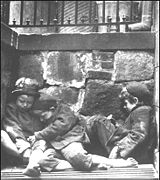 Nearly half of foster kids in the U.S. become homeless when they turn 18. "One of every 10 foster children stays in foster care longer than seven years, and each year about 15,000 reach the age of majority and leave foster care without a permanent family—many to join the ranks of the homeless or to commit crimes and be imprisoned.
Three out of 10 of the United States homeless are former foster children. According to the results of the Casey Family Study of Foster Care Alumni, up to 80 percent are doing poorly—with a quarter to a third of former foster children at or below the poverty line, three times the national poverty rate. Very frequently, people who are homeless had multiple placements as children: some were in foster care, but others experienced "unofficial" placements in the homes of family or friends.
Individuals with a history foster care tend to become homeless at an earlier age than those who were not in foster care and Caucasians
who become homeless are more likely to have a history of foster care than Hispanics or African Americans . The length of time a person remains homeless is prolonged in indiviuals who were in foster care.
youths who aged out of the system, 23 percent had a history of suicide attempts.
A Swedish
study utilizing the data of almost one million people including 22,305 former foster children who had been in care prior to their teens, concluded:
Death rate
Children in foster care have an overall higher mortality rate than children in the general population. A study conducted in Finland
among current and former foster children up to age 24 found a higher mortality rate due to substance abuse, accidents, suicide and illness. The deaths due to illness were attributed to an increased incidence of acute
and
chronic
medical conditions and developmental delays
among children in foster care.
Georgia Senator Nancy Schaefer
published a report "The Corrupt Business of Child Protective Services" stating:
| style="background:silver;" colspan="5"| Educational outcomes of ex-foster children in the Northwest Alumni Study*
|-
|
|-
|
|}
Several studies have indicated that foster care children tend to underachieve academically with many never completing high school. In a study conducted in Philadelphia by Johns Hopkins University
it was found that; among high school students who are in foster care, have been abused and neglected, or receive out of home placement by the courts, the probability of dropping out of school is greater than 75%.
drugs were tested on HIV-positive foster children at Incarnation Children’s Center in Harlem. The agency has also been accused of racism, some comparing the trials to the Tuskegee syphilis experiment, as 98 percent of children in foster care in New York City belong to ethnic minorities.
insurance receive psychotropic medication at a rate that was 3 times higher than that of Medicaid-insured youth who qualify by low family income. In a review (September 2003 to August 2004) of the medical records of 32,135 Texas foster care 0–19 years-old, 12,189 were prescribed psychotropic medication, resulting in an annual prevalence of 37.9% of these children being prescribed medication. 41.3% received 3 different classes of these drugs during July 2004, and 15.9% received 4 different classes. The most frequently used medications were antidepressants (56.8%), attention-deficit/hyperactivity disorder drugs (55.9%), and antipsychotic agents (53.2%).
Psychiatrists prescribed 93% of the psychotropic medication, and it was noted in the review of these cases that the use of expensive, brand name, patent protected medication was prevalent. In the case of SSRIs the use of the most expensive medications was noted to be 74%, in the general market only 28% are for brand name SSRI's vs generics. The average out-of-pocket expense per prescription was $34.75 for generics and $90.17 for branded products, a $55.42, difference.
found that the rate of sexual abuse within the foster-care system is more than four times as high as in the general population; in group homes, the rate of sexual abuse is more than 28 times that of the general population. An Indiana study found three times more physical abuse and twice the rate of sexual abuse in foster homes than in the general population. A study of foster children in Oregon and Washington State found that nearly one third reported being abused by a foster parent or another adult in a foster home. These statistics do not speak to the situation these children are coming from, but it does show the very large problem of child-on-child sexual abuse within the system. There have been several notable lawsits concerning sexual abuse and negligence that caused review of the foster care system in some states:
In 2010, an ex-foster child was awarded $30 million by jury trial in California
(Santa Clara County) for sexual abuse damages that happened to him in his foster home from 1995 to 1999. The foster parent, John Jackson, was licensed by the state, despite the fact that he abused his own wife and son, overdosed on drugs and was arrested for drunken driving. In 2006, Jackson was convicted in Santa Clara County of nine counts of lewd or lascivious acts on a child by force, violence, duress, menace and fear, and seven counts of lewd or lascivious acts on a child under 14, according to the Santa Clara County District Attorney's Office. The sex acts he forced the children in his foster care to perform sent him to prison for 220 years. Later in 2010, Giarretto Institute, the private foster family agency responsible for licensing and monitoring Jackson's foster home and others, also was found to be negligent and liable for 75 percent of the abuse that was inflicted on the victim, and Jackson himself was liable for the rest.
In 2009, Oregon Department of Human Services
agreed to pay $2 million into a fund for the future care of twins who were allegedly abused by their foster parents; this was the largest such settlement in the agency's history. According to the civil rights
suit filed on request of twins' adoptive mother in December 2007 in U.S. Federal Court
, the children were kept in makeshift cages—cribs covered with chicken wire secured by duct tape—in a darkened bedroom known as "the dungeon." The brother and sister often went without food, water or human touch. The boy, who had a shunt put into his head at birth to drain fluid, didn't receive medical attention, so when police rescued the twins he was nearly comatose. The same foster family previously took into their care hundreds of other children over nearly four decades. DHS said the foster parents deceived child welfare workers during the checkup visits.
Several lawsuits were brought in 2008 against the Florida
Department of Children & Families (DCF), accusing it of mishandling reports that Thomas Ferrara, 79, a foster parent, was molesting young girls. The suits claimed that even though there were records of sexual misconduct allegations against Ferrara in 1992, 1996, and 1999, the DCF continued to place foster children with Ferrara and his then-wife until 2000. Ferrara was arrested in 2001, after a 9-year-old girl told detectives he regularly molested her over two years and threatened to hurt her mother if she told anyone. Records show that Ferrara had as many as 400 children go through his home during his 16 years as a licensed foster parent (from 1984 to 2000). Officials stated that the lawsuits over Ferrara ended up costing the DCF almost $2.26 million. Similary, in 2007 Florida
's DCF paid $1.2 million to settle a lawsuit that alleged DCF ignored complaints that another mentally disabled Immokalee girl was being raped by her foster father, Bonifacio Velazquez, until the 15-year-old gave birth to a child.
In a class action
lawsuit Charlie and Nadine H. v. McGreevey was filed in federal court
by "Children’s Rights" New York organization on behalf of children in the custody of the New Jersey Division of Youth and Family Services
(DYFS). The complaint alleged violations of the childrens' constitutional rights and their rights under Title IV-E of the Social Security Act
, the Child Abuse Prevention and Treatment Act
, Early Periodic Screening Diagnosis and Treatment, 504 of the Rehabilitation Act, the Americans with Disabilities Act
, and the Multiethnic Placement Act (MEPA). In July 2002, the federal court granted plaintiffs’ experts access to 500 children’s case files, allowing plaintiffs to collect information concerning harm to children in foster care through a case record review. These files revealed numerous cases in which foster children were abused, and DYFS failed to take proper action. On June 9, 2004, the child welfare panel appointed by the parties approved the NJ State’s Reform Plan. The court accepted the plan on June 17, 2004. The same organization also filed similar lawsuits against several other states in recent years that caused some of the states to start child welfare reforms.
s although most were not. In the period after World War II the policy was dubbed the "Child Migrants Programme"
. The prime consideration was money as it was cheaper to care for children in commonwealth countries than it was in the United Kingdom. At least 10,000 children, some as young as 3, were shipped to Australia after the war, most to join the ranks of the "Forgotten Australians
", the term given for those who experienced care in foster homes and institutions in the 20th century. Among these Forgotten Australians were members of the "Stolen Generation
", the children of Australian Aborigines
, forcibly removed from their homes and raised in white institutions. In 2008 Australian Prime Minister
, Kevin Rudd
apologised to the approximately 500,000 "forgotten Australians" and in 2010 British Prime Minister Gordon Brown
issued a similar apology to those who were victimised by the Child Migrants Programme.
. Adult neurogenesis
has been shown to be an ongoing process.
"... all those experiences are of much significance which show how the judgment of the senses may be modified by experience and by training derived under various circumstances, and may be adapted to the new conditions..." - Hermann von Helmholtz
, 1866
While having a background in foster homes—especially in instances of sexual abuse—can be the precipitating factor in a wide variety of psychological and cognitive deficits such as ADHD, and PTSD,
it may also serve to obfuscate the true cause of underlying issues. The foster care experience may have nothing to do with the symptoms, or on the other hand, the symptoms may be exacerbated by having a history of foster care and the attendant abuses.
Children in the child welfare system have often experienced significant and repeated traumas. Dyadic Developmental Psychotherapy
is one of the approaches that has been used to treat the resulting trauma and attachment difficulties caused by chronic early maltreatment within a care-giving relationship.
are curious to learn about their family background and medial history, searches to locate former foster parents have potential to be just as captivating, technically challenging, and convoluted as searching for biological parents. A successful reunion with a loving set of benevolent caregiving foster parents also has potential to create positive emotional responses, stimulate happiness through an increased sense of connectedness and sense of indebtedness, and provide a uniquely treasured experience for children who were fostered.
Ward (law)
In law, a ward is someone placed under the protection of a legal guardian. A court may take responsibility for the legal protection of an individual, usually either a child or incapacitated person, in which case the ward is known as a ward of the court, or a ward of the state, in the United States,...
is placed in the private home of a state certified caregiver referred to as a "foster parent".
The state via the family court
Family court
A family court is a court convened to decide matters and make orders in relation to family law, such as custody of children. In common-law jurisdictions "family courts" are statutory creations primarily dealing with equitable matters devolved from a court of inherent jurisdiction, such as a...
and child protection agency stand in loco parentis
In loco parentis
The term in loco parentis, Latin for "in the place of a parent"" refers to the legal responsibility of a person or organization to take on some of the functions and responsibilities of a parent...
to the minor, making all legal decisions while the foster parent is responsible for the day to day care of said minor. The foster parent is remunerated
Remuneration
Remuneration is the total compensation that an employee receives in exchange for the service they perform for their employer. Typically, this consists of monetary rewards, also referred to as wage or salary...
by the state for their services.
Foster care is intended to be a short term situation until a permanent placement can be made:
- Reunification with the biological parent(s)
- When it is deemed in the child's best interest. This is generally the first choice.
- Adoption
- Preferably by a biological family member such as an auntAuntAn aunt is a person who is the sister or sister-in-law of a parent. A man with an equivalent relationship is an uncle, and the reciprocal relationship is that of a nephew or niece....
or grandparentGrandparentGrandparents are the parents of a person's own parent, whether that be a father or a mother. Every sexually-reproducing creature who is not a genetic chimera has a maximum of four genetic grandparents, eight genetic great-grandparents, sixteen genetic great-great-grandparents, etc...
. - If no biological family member is willing or able to adopt, the next preference is for the child to be adopted by the foster parents or by someone else involved in the child's life (such as a teacherTeacherA teacher or schoolteacher is a person who provides education for pupils and students . The role of teacher is often formal and ongoing, carried out at a school or other place of formal education. In many countries, a person who wishes to become a teacher must first obtain specified professional...
or coachCoach (sport)In sports, a coach is an individual involved in the direction, instruction and training of the operations of a sports team or of individual sportspeople.-Staff:...
). This is to maintain continuity in the child's life. - If neither above option are available, the child may be adopted by someone who is a stranger to the child.
- Preferably by a biological family member such as an aunt
- Permanent transfer of guardianship
- If none of these options are viable the plan for the minor may enter OPPLA (Other Planned Permanent Living Arrangement). This option allows the child to stay in custody of the state and the child can stay placed in a foster home, with a relative or an Independent Living Center or long term care facility (for children with development disabilities, physical disabilities or mental disabilities).
Foster care placement
547,415 children were in publicly supported foster care in the United States in September 2000. In 2009, there were 423,773 children in foster care, a drop of about 20% in a decade.In 2009, there were about 123,000 children ready for adoptive families in the nations foster care systems. African American children represented 41% of children in foster care, white children represented 40% and Hispanic children represented 15% in the year 2000.
Children may enter foster care via voluntary or involuntary means. Voluntary placement may occur when a biological parent or lawful guardian is unable or unwilling to care for a child.
Involuntary placement occurs when a child is removed from their biological parent or lawful guardian due to the risk or actual occurrence of physical or psychological harm. In the US, most children enter foster care due to neglect.
Regulation, administration, and oversight
The policies regarding foster care as well as the criteria to be met in order to become a foster parent vary according to legal jurisdiction.In the United States
United States
The United States of America is a federal constitutional republic comprising fifty states and a federal district...
, foster home licensing requirements vary from state to state but are generally overseen by each state's Department of Social Services or Human Services. In some states, counties have this responsibility. Each state's services are monitored by the federal Department of Health and Human Services through reviews such as Child and Family Services Review
Child and Family Services Review
The Child and Family Services Reviews are conducted by the Children's Bureau, within the United States Department of Health and Human Services, to help States improve safety, permanency, and well-being outcomes for children and families who receive services through the child welfare system...
s, Title IV-E Foster Care Eligibility Reviews, Adoption and Foster Care Analysis and Reporting System and Statewide Automated Child Welfare Information System Assessment Reviews.
The foster parent licensing process is often similar to the process to become licensed to adopt. It requires preparation classes as well as an application process. The application varies but may include: a minimum age, verification that your income allows you to meet your expenses, a criminal record check at local, state and federal levels including finger printing and no prior record of child abuse or neglect; a reference from a doctor to ensure that all household members are free from diseases that a child could catch and in sufficient health to parent a child and; letters of reference from an employer and others who know them.
Children found to be unable to function in a foster home may be placed in Residential Treatment Centers (RTCs) or other such group home
Group home
A group home is a private residence designed or converted to serve as a non-secure home for unrelated persons who share a common characteristic.-Types of group homes:...
s. In theory, the focus of treatment in such facilities is to prepare the child for a return to a foster home, to an adoptive home, or to the birth parents when applicable. But two major reviews of the scholarly literature have questioned these facilities' effectiveness.
There are some children in foster care who are difficult to place in permanent homes through the normal adoption process. These children are often said to require “special-needs adoption.” In this context, "special needs" can include situations where children have specific chronic medical problems, mental health issues, behavioral problems, and learning disabilities. In some cases, sibling groups, and older children qualify as "special needs." Governments offer a variety of incentives and services to facilitate this class of adoptions.
Funding and system incentives
A law passed by Congress in 1961 allowed AFDC (welfare) payments to pay for foster care which was previously made only to children in their own homes. This made aided funding foster care for states and localities, facilitating rapid growth. In some cases, the state of Texas paid mental treatment centers as much as $101,105 a year per child. Observers of the growth trend note that a county will only continue to receive funding while it keeps the child in its care. This may create a "perverse financial incentive" to place and retain children in foster care rather than leave them with their parents, and incentives are sometimes set up for maximum intervention. A National Coalition for Child Protection Reform issue paper states "children often are removed from their families `prematurely or unnecessarily' because federal aid formulas give states `a strong financial incentive' to do so rather than provide services to keep families together."Findings of a grand jury investigation in Santa Clara, California
Santa Clara, California
Santa Clara , founded in 1777 and incorporated in 1852, is a city in Santa Clara County, in the U.S. state of California. The city is the site of the eighth of 21 California missions, Mission Santa Clara de Asís, and was named after the mission. The Mission and Mission Gardens are located on the...
:
Foster care legislation since 1990
In 1997, the Adoption and Safe Families ActAdoption and Safe Families Act
The Adoption and Safe Families Act was signed into law by President Bill Clinton on November 19, 1997 after having been approved by the United States Congress earlier in the month....
(ASFA) was passed. This reduced the time children are allowed to remain in foster care before being available for adoption
Adoption
Adoption is a process whereby a person assumes the parenting for another and, in so doing, permanently transfers all rights and responsibilities from the original parent or parents...
. The new law requires state child welfare
Child welfare
Child protection is used to describe a set of usually government-run services designed to protect children and young people who are underage and to encourage family stability...
agencies to identify cases where "aggravated circumstances" make permanent separation of child from the birth family the best option for the safety and well-being of the child. One of the main components of ASFA is the imposition of stricter time limits on reunification efforts. Proponents of ASFA claimed that before the law was passed, the lack of such legislation was the reason it was common for children to languish in care for years with no permanent living situation identified.
Opponents of ASFA argued that the real reason children languished in foster care was that too many were taken needlessly from their parents in the first place. Since ASFA did not address this, opponents said, it would not accomplish its goals, and would only slow a decline in the foster care population that should have occurred anyway because of a decline in reported child abuse
Child abuse
Child abuse is the physical, sexual, emotional mistreatment, or neglect of a child. In the United States, the Centers for Disease Control and Prevention and the Department of Children And Families define child maltreatment as any act or series of acts of commission or omission by a parent or...
.
Ten years after ASFA became law, the number of children in foster care on any given day has been about 7,000 fewer than when ASFA was passed
The Foster Care Independence Act
Foster Care Independence Act
The Foster Care Independence Act is an Act of Congress signed into law by President Bill Clinton on December 14, 1999.The Act supports provision of health insurance to former foster children, up to the age of 21, by way of states using Medicaid funds. It permits such youths to have assets up to...
of 1999, helps foster youth who are aging out
Aging out
Aging out is American popular culture vernacular used to describe anytime a youth leaves a formal system of care designed to provide services below a certain age level.There are a variety of applications of the phrase throughout the youth development field...
of care to achieve self-sufficiency. The U.S. government has also funded the Education and Training Voucher Program in recent years in order to help youth who age out of care to obtain college or vocational training at a free or reduced cost. Chafee and ETV money is administered by each state as they see fit.
The Fostering Connections to Success and Increasing Adoptions Act of 2008
Fostering Connections to Success and Increasing Adoptions Act of 2008
The Fostering Connections to Success and Increasing Adoptions Act of 2008 was an Act of Congress in the United States signed into law by President George W. Bush on October 7, 2008. It was previously unanimously passed in both the House of Representatives and in the Senate...
is the most recent piece of major federal legislation addressing the foster care system. This bill extended various benefits and funding for foster children between the age of 18 and 21 and for Indian children in tribal areas. The legislation also strengthens requirements for states in their treatment of siblings and introduces mechanisms to provide financial incentives for guardianship and adoption.
Constitutional issues
In May 2007, the United States 9th Circuit Court of Appeals found in ROGERS v. COUNTY OF SAN JOAQUIN, No. 05-16071 that a CPS social workSocial work
Social Work is a professional and academic discipline that seeks to improve the quality of life and wellbeing of an individual, group, or community by intervening through research, policy, community organizing, direct practice, and teaching on behalf of those afflicted with poverty or any real or...
er who removed children from their natural parents into foster care without obtaining judicial authorization, was acting without due process and without exigency (emergency conditions) violated the 14th Amendment and Title 42 United State Code Section 1983. The Fourteenth Amendment to the United States Constitution
Fourteenth Amendment to the United States Constitution
The Fourteenth Amendment to the United States Constitution was adopted on July 9, 1868, as one of the Reconstruction Amendments.Its Citizenship Clause provides a broad definition of citizenship that overruled the Dred Scott v...
says that a state may not make a law that abridges "... the privileges or immunities of citizens of the United States" and no state may "deprive any person of life, liberty, or property, without due process of law; nor deny to any person within its jurisdiction the equal protection of the laws."
Title 42 United States Code Section 1983 states that citizens can sue in federal courts
United States federal courts
The United States federal courts make up the judiciary branch of federal government of the United States organized under the United States Constitution and laws of the federal government.-Categories:...
any person that acting under a color of law
Color (law)
In U.S. law, the term color of denotes the “mere semblance of legal right”, the “pretense or appearance of” right; hence, an action done under color of law colors the law to the circumstance, yet said apparently legal action contravenes the law....
to deprive the citizens of their civil rights under the pretext of a regulation of a state.
In case of Santosky v. Kramer, 455 US 745, Supreme Court
Supreme Court of the United States
The Supreme Court of the United States is the highest court in the United States. It has ultimate appellate jurisdiction over all state and federal courts, and original jurisdiction over a small range of cases...
reviewed a case when Department of Social Services removed two younger children from their natural parents only because the parents had been previously found negligent toward their oldest daughter. When the third child was only three days old, DSS transferred him to a foster home on the ground that immediate removal was necessary to avoid imminent danger to his life or health. The Supreme Court vacated previous judgment and stated: "Before a State may sever completely and irrevocably the rights of parents in their natural child, due process requires that the State support its allegations by at least clear and convincing evidence. <..> But until the State proves parental unfitness, the child and his parents share a vital interest in preventing erroneous termination of their natural relationship".
Also District of Columbia Court of Appeals conclude that the lower trial court erred in rejecting the relative custodial arrangement selected by the natural mother who tried to preserve her relationship with the child. The previous judgment granting the foster mother's adoption petition was reversed, and the case remanded to the trial court to vacate the orders granting adoption and denying custody, and to enter an order granting custody to the child's relative.
In 2007 Deanna Fogarty-Hardwick obtained a jury verdict against Orange County (California) and two of its social workers for violating her Fourteenth Amendment rights to familial association by unlawfully placing her kids in foster care. The $4.9 million verdict grew to a $9.5 million judgment as the County lost each of its successive appeals. The case finally ended in 2011 when the United States Supreme Court denied Orange County's request to overturn the verdict.
Australia
Home-based care, which includes foster care, is provided to children who are in need of care and protection. Children and young people are provided with alternative accommodation while they are unable to live with their parents. As well as foster care, this can include placements with relatives or kin, and residential care. In most cases, children in home-based care are also on a care and protection order.In some cases children are placed in home-based care following a child protection substantiation and where they are found to be in need of a safer and more stable environment. In other situations parents may be incapable of providing adequate care for the child, or accommodation may be needed during times of family conflict or crisis. In the significant number of cases substance abuse is a major contributing factor.
Respite care is a type of foster care that is used to provide short-term (and often regular) accommodation for children whose parents are ill or unable to care for them on a temporary basis. It is also used to provide a break for the parent or primary carer to hopefully decrease the chances of the situation escalating to one which would lead to the removal of the child(ren).
As with the majority of child protection services, states and territories are responsible for funding home-based care. Non-government organizations are widely used, however, to provide these services.
Current policy
There is strong emphasis in current Australian policy and practice to keep children with their families wherever possible. In the event that children are placed in home-based care, every effort is made to reunite children with their families wherever possible.In the case of Aboriginal and Torres Strait Islander children in particular, but not exclusively, placing the child within the wider family or community is preferred This is consistent with the Aboriginal Child Placement Principle.
The negative effects of foster care
Individuals who were in foster care experience higher rates of physical and psychiatric morbidity than the general population and suffer from not being able to trust and that can lead to placements breaking down.In a study of adults who were in foster care in Oregon
Oregon
Oregon is a state in the Pacific Northwest region of the United States. It is located on the Pacific coast, with Washington to the north, California to the south, Nevada on the southeast and Idaho to the east. The Columbia and Snake rivers delineate much of Oregon's northern and eastern...
and Washington state, they were found to have double the incidence of depression
Depression (mood)
Depression is a state of low mood and aversion to activity that can affect a person's thoughts, behaviour, feelings and physical well-being. Depressed people may feel sad, anxious, empty, hopeless, helpless, worthless, guilty, irritable, or restless...
, 20% as compared to 10% and were found to have a higher rate of post-traumatic stress disorder
Post-traumatic stress disorder
Posttraumaticstress disorder is a severe anxiety disorder that can develop after exposure to any event that results in psychological trauma. This event may involve the threat of death to oneself or to someone else, or to one's own or someone else's physical, sexual, or psychological integrity,...
(PTSD) than combat veterans with 25% of those studied having PTSD. Children in foster care have a higher probability of having Attention Deficit Hyperactivity Disorder, and deficits in executive functioning
Frontal lobe disorder
Frontal lobe disorder is an impairment of the frontal lobe that occurs as a result of a number of diseases as well as head trauma. The frontal lobe of the brain plays a key role in higher mental functions such as motivation, planning, social behaviour, and speech production...
, anxiety
Anxiety
Anxiety is a psychological and physiological state characterized by somatic, emotional, cognitive, and behavioral components. The root meaning of the word anxiety is 'to vex or trouble'; in either presence or absence of psychological stress, anxiety can create feelings of fear, worry, uneasiness,...
as well other developmental problems. These children experience higher degrees of incarceration
Incarceration
Incarceration is the detention of a person in prison, typically as punishment for a crime .People are most commonly incarcerated upon suspicion or conviction of committing a crime, and different jurisdictions have differing laws governing the function of incarceration within a larger system of...
, poverty
Poverty
Poverty is the lack of a certain amount of material possessions or money. Absolute poverty or destitution is inability to afford basic human needs, which commonly includes clean and fresh water, nutrition, health care, education, clothing and shelter. About 1.7 billion people are estimated to live...
, homelessness
Homelessness
Homelessness describes the condition of people without a regular dwelling. People who are homeless are unable or unwilling to acquire and maintain regular, safe, and adequate housing, or lack "fixed, regular, and adequate night-time residence." The legal definition of "homeless" varies from country...
, and suicide
Suicide
Suicide is the act of intentionally causing one's own death. Suicide is often committed out of despair or attributed to some underlying mental disorder, such as depression, bipolar disorder, schizophrenia, alcoholism, or drug abuse...
.
Recent studies in the U.S. suggest that foster care placements are more detrimental to children than remaining in a troubled home.
Neurodevelopment
Foster care has been shown in various studies to have deleterious consequences on the physical health and mental wellbeing of those who were in foster care. Many children enter foster care at a very young age, a period where the development of mental and psychological processes are at one of their critical peaks. The human brainHuman brain
The human brain has the same general structure as the brains of other mammals, but is over three times larger than the brain of a typical mammal with an equivalent body size. Estimates for the number of neurons in the human brain range from 80 to 120 billion...
doesn't fully develop until approximately the age of twenty, and one of the most critical periods of brain development occurs in the first 3–4 years.
The processes that govern the development of personality traits, stress response and cognitive skills are formed during this period. The developing brain is directly influenced by negative environmental factors including lack of stimulation due to emotional neglect, poor nutrition
Nutrition
Nutrition is the provision, to cells and organisms, of the materials necessary to support life. Many common health problems can be prevented or alleviated with a healthy diet....
, exposure to violence in the home environment and child abuse.
Negative environmental influences have a direct effect on all areas of neurodevelopment: neurogenesis
Neurogenesis
Neurogenesis is the process by which neurons are generated from neural stem and progenitor cells. Most active during pre-natal development, neurogenesis is responsible for populating the growing brain with neurons. Recently neurogenesis was shown to continue in several small parts of the brain of...
(creation of new neurons), apoptosis
Apoptosis
Apoptosis is the process of programmed cell death that may occur in multicellular organisms. Biochemical events lead to characteristic cell changes and death. These changes include blebbing, cell shrinkage, nuclear fragmentation, chromatin condensation, and chromosomal DNA fragmentation...
(death and reabsorption of neurons), migration (of neurons to different regions of the brain), synaptogenesis
Synaptogenesis
Synaptogenesis is the formation of synapses. Although it occurs throughout a healthy person's lifespan, an explosion of synapse formation occurs during early brain development...
(creation of synapses), synaptic sculpturing (determining the make-up of the synapse), arborization (the growth of dendritic connections, myelinzation (protective covering of neurons), and an enlargement of the brain's ventricles, which can cause cortical
Cerebral cortex
The cerebral cortex is a sheet of neural tissue that is outermost to the cerebrum of the mammalian brain. It plays a key role in memory, attention, perceptual awareness, thought, language, and consciousness. It is constituted of up to six horizontal layers, each of which has a different...
atrophy.
Most of the processes involved in healthy neurodevelopment are predicated upon the establishment of close nurturing relationships and environmental stimulation. Foster children have elevated levels of cortisol
Cortisol
Cortisol is a steroid hormone, more specifically a glucocorticoid, produced by the adrenal gland. It is released in response to stress and a low level of blood glucocorticoids. Its primary functions are to increase blood sugar through gluconeogenesis; suppress the immune system; and aid in fat,...
, a stress
Stress (biology)
Stress is a term in psychology and biology, borrowed from physics and engineering and first used in the biological context in the 1930s, which has in more recent decades become commonly used in popular parlance...
hormone
Hormone
A hormone is a chemical released by a cell or a gland in one part of the body that sends out messages that affect cells in other parts of the organism. Only a small amount of hormone is required to alter cell metabolism. In essence, it is a chemical messenger that transports a signal from one...
in comparison to children raised by their biological parents. Elevated cortisol levels can compromise the immune system. (Harden BJ, 2004).
Negative environmental influences during this critical period of brain development can have lifelong consequences.
Epigenetic effects of environment
Gene expression can be affected by the environment through epigenetic mechanisms. Negative environmental influences, such as maternal deprivation, child abuse and stress have been shown to have a profound effect on gene expression, including transgenerational epigeneticTransgenerational epigenetics
Epigenetic inheritance is the transmittance of information from one generation to the next that affects the traits of offspring without alteration of the primary structure of DNA or from environmental cues...
effects in which physiological and behavioral (intellectual) transfer of information across generations-not-yet-conceived is effected. In the Överkalix study
Överkalix study
The Överkalix study was a study conducted on the physiological effects of various environmental factors on transgenerational epigenetic inheritance. The study was conducted utilizing historical records, including harvests and food prices, in Överkalix, a small isolated municipality in northeast...
in Sweden, the effects of epigentic inheritance were shown to have a direct correlation to the environmental influences faced by the parents and grandparents. Many physiological and behavioral characteristics ascribed to Mendelian inheritance
Mendelian inheritance
Mendelian inheritance is a scientific description of how hereditary characteristics are passed from parent organisms to their offspring; it underlies much of genetics...
are due in fact to transgenerational epigenetic inheritance. The implications in terms of foster care and the cost to society as a whole is that the stress, deprivation and other negative environmetal factors many foster children are subjected to has a detrimental effect not only their physical, emotional and cognitive well-being, but that the damage can transcend generations.
In studies of the adult offspring of Holocaust survivors, parental PTSD was a risk factor for the development of PTSD in adult offspring in comparison to those whose parents went through the Holocaust without developing PTSD. The offspring of survivors with PTSD had lower levels of urinary cortisol excretion, salivary cortisol and enhanced plasma cortisol suppression in response to low dose dexamethasone administration than offspring of survivors without PTSD. Low cortisol levels are associated with parental, particularly maternal, PTSD. This is in contrast to the normal stress response in which cortisol levels are elevated after exposure to a stressor. The results of the study point to the involvement of epigenetic mechanisms.
{| class="wikitable" style="text-align:center; margin-left:1em; float:right"
|-
|bgcolor=| Epigenetic Effects of Abuse
|-
|bgcolor=|
Foster care is the term used for a system in which a minor who has been made a ward
Ward (law)
In law, a ward is someone placed under the protection of a legal guardian. A court may take responsibility for the legal protection of an individual, usually either a child or incapacitated person, in which case the ward is known as a ward of the court, or a ward of the state, in the United States,...
is placed in the private home of a state certified caregiver referred to as a "foster parent".
The state via the family court
Family court
A family court is a court convened to decide matters and make orders in relation to family law, such as custody of children. In common-law jurisdictions "family courts" are statutory creations primarily dealing with equitable matters devolved from a court of inherent jurisdiction, such as a...
and child protection agency stand in loco parentis
In loco parentis
The term in loco parentis, Latin for "in the place of a parent"" refers to the legal responsibility of a person or organization to take on some of the functions and responsibilities of a parent...
to the minor, making all legal decisions while the foster parent is responsible for the day to day care of said minor. The foster parent is remunerated
Remuneration
Remuneration is the total compensation that an employee receives in exchange for the service they perform for their employer. Typically, this consists of monetary rewards, also referred to as wage or salary...
by the state for their services.
Foster care is intended to be a short term situation until a permanent placement can be made:
- Reunification with the biological parent(s)
- When it is deemed in the child's best interest. This is generally the first choice.
- Adoption
- Preferably by a biological family member such as an auntAuntAn aunt is a person who is the sister or sister-in-law of a parent. A man with an equivalent relationship is an uncle, and the reciprocal relationship is that of a nephew or niece....
or grandparentGrandparentGrandparents are the parents of a person's own parent, whether that be a father or a mother. Every sexually-reproducing creature who is not a genetic chimera has a maximum of four genetic grandparents, eight genetic great-grandparents, sixteen genetic great-great-grandparents, etc...
. - If no biological family member is willing or able to adopt, the next preference is for the child to be adopted by the foster parents or by someone else involved in the child's life (such as a teacherTeacherA teacher or schoolteacher is a person who provides education for pupils and students . The role of teacher is often formal and ongoing, carried out at a school or other place of formal education. In many countries, a person who wishes to become a teacher must first obtain specified professional...
or coachCoach (sport)In sports, a coach is an individual involved in the direction, instruction and training of the operations of a sports team or of individual sportspeople.-Staff:...
). This is to maintain continuity in the child's life. - If neither above option are available, the child may be adopted by someone who is a stranger to the child.
- Preferably by a biological family member such as an aunt
- Permanent transfer of guardianship
- If none of these options are viable the plan for the minor may enter OPPLA (Other Planned Permanent Living Arrangement). This option allows the child to stay in custody of the state and the child can stay placed in a foster home, with a relative or an Independent Living Center or long term care facility (for children with development disabilities, physical disabilities or mental disabilities).
Foster care placement
547,415 children were in publicly supported foster care in the United States in September 2000. In 2009, there were 423,773 children in foster care, a drop of about 20% in a decade.In 2009, there were about 123,000 children ready for adoptive families in the nations foster care systems. African American children represented 41% of children in foster care, white children represented 40% and Hispanic children represented 15% in the year 2000.
Children may enter foster care via voluntary or involuntary means. Voluntary placement may occur when a biological parent or lawful guardian is unable or unwilling to care for a child.
Involuntary placement occurs when a child is removed from their biological parent or lawful guardian due to the risk or actual occurrence of physical or psychological harm. In the US, most children enter foster care due to neglect.
Regulation, administration, and oversight
The policies regarding foster care as well as the criteria to be met in order to become a foster parent vary according to legal jurisdiction.In the United States
United States
The United States of America is a federal constitutional republic comprising fifty states and a federal district...
, foster home licensing requirements vary from state to state but are generally overseen by each state's Department of Social Services or Human Services. In some states, counties have this responsibility. Each state's services are monitored by the federal Department of Health and Human Services through reviews such as Child and Family Services Review
Child and Family Services Review
The Child and Family Services Reviews are conducted by the Children's Bureau, within the United States Department of Health and Human Services, to help States improve safety, permanency, and well-being outcomes for children and families who receive services through the child welfare system...
s, Title IV-E Foster Care Eligibility Reviews, Adoption and Foster Care Analysis and Reporting System and Statewide Automated Child Welfare Information System Assessment Reviews.
The foster parent licensing process is often similar to the process to become licensed to adopt. It requires preparation classes as well as an application process. The application varies but may include: a minimum age, verification that your income allows you to meet your expenses, a criminal record check at local, state and federal levels including finger printing and no prior record of child abuse or neglect; a reference from a doctor to ensure that all household members are free from diseases that a child could catch and in sufficient health to parent a child and; letters of reference from an employer and others who know them.
Children found to be unable to function in a foster home may be placed in Residential Treatment Centers (RTCs) or other such group home
Group home
A group home is a private residence designed or converted to serve as a non-secure home for unrelated persons who share a common characteristic.-Types of group homes:...
s. In theory, the focus of treatment in such facilities is to prepare the child for a return to a foster home, to an adoptive home, or to the birth parents when applicable. But two major reviews of the scholarly literature have questioned these facilities' effectiveness.
There are some children in foster care who are difficult to place in permanent homes through the normal adoption process. These children are often said to require “special-needs adoption.” In this context, "special needs" can include situations where children have specific chronic medical problems, mental health issues, behavioral problems, and learning disabilities. In some cases, sibling groups, and older children qualify as "special needs." Governments offer a variety of incentives and services to facilitate this class of adoptions.
Funding and system incentives
A law passed by Congress in 1961 allowed AFDC (welfare) payments to pay for foster care which was previously made only to children in their own homes. This made aided funding foster care for states and localities, facilitating rapid growth. In some cases, the state of Texas paid mental treatment centers as much as $101,105 a year per child. Observers of the growth trend note that a county will only continue to receive funding while it keeps the child in its care. This may create a "perverse financial incentive" to place and retain children in foster care rather than leave them with their parents, and incentives are sometimes set up for maximum intervention. A National Coalition for Child Protection Reform issue paper states "children often are removed from their families `prematurely or unnecessarily' because federal aid formulas give states `a strong financial incentive' to do so rather than provide services to keep families together."Findings of a grand jury investigation in Santa Clara, California
Santa Clara, California
Santa Clara , founded in 1777 and incorporated in 1852, is a city in Santa Clara County, in the U.S. state of California. The city is the site of the eighth of 21 California missions, Mission Santa Clara de Asís, and was named after the mission. The Mission and Mission Gardens are located on the...
:
Foster care legislation since 1990
In 1997, the Adoption and Safe Families ActAdoption and Safe Families Act
The Adoption and Safe Families Act was signed into law by President Bill Clinton on November 19, 1997 after having been approved by the United States Congress earlier in the month....
(ASFA) was passed. This reduced the time children are allowed to remain in foster care before being available for adoption
Adoption
Adoption is a process whereby a person assumes the parenting for another and, in so doing, permanently transfers all rights and responsibilities from the original parent or parents...
. The new law requires state child welfare
Child welfare
Child protection is used to describe a set of usually government-run services designed to protect children and young people who are underage and to encourage family stability...
agencies to identify cases where "aggravated circumstances" make permanent separation of child from the birth family the best option for the safety and well-being of the child. One of the main components of ASFA is the imposition of stricter time limits on reunification efforts. Proponents of ASFA claimed that before the law was passed, the lack of such legislation was the reason it was common for children to languish in care for years with no permanent living situation identified.
Opponents of ASFA argued that the real reason children languished in foster care was that too many were taken needlessly from their parents in the first place. Since ASFA did not address this, opponents said, it would not accomplish its goals, and would only slow a decline in the foster care population that should have occurred anyway because of a decline in reported child abuse
Child abuse
Child abuse is the physical, sexual, emotional mistreatment, or neglect of a child. In the United States, the Centers for Disease Control and Prevention and the Department of Children And Families define child maltreatment as any act or series of acts of commission or omission by a parent or...
.
Ten years after ASFA became law, the number of children in foster care on any given day has been about 7,000 fewer than when ASFA was passed
The Foster Care Independence Act
Foster Care Independence Act
The Foster Care Independence Act is an Act of Congress signed into law by President Bill Clinton on December 14, 1999.The Act supports provision of health insurance to former foster children, up to the age of 21, by way of states using Medicaid funds. It permits such youths to have assets up to...
of 1999, helps foster youth who are aging out
Aging out
Aging out is American popular culture vernacular used to describe anytime a youth leaves a formal system of care designed to provide services below a certain age level.There are a variety of applications of the phrase throughout the youth development field...
of care to achieve self-sufficiency. The U.S. government has also funded the Education and Training Voucher Program in recent years in order to help youth who age out of care to obtain college or vocational training at a free or reduced cost. Chafee and ETV money is administered by each state as they see fit.
The Fostering Connections to Success and Increasing Adoptions Act of 2008
Fostering Connections to Success and Increasing Adoptions Act of 2008
The Fostering Connections to Success and Increasing Adoptions Act of 2008 was an Act of Congress in the United States signed into law by President George W. Bush on October 7, 2008. It was previously unanimously passed in both the House of Representatives and in the Senate...
is the most recent piece of major federal legislation addressing the foster care system. This bill extended various benefits and funding for foster children between the age of 18 and 21 and for Indian children in tribal areas. The legislation also strengthens requirements for states in their treatment of siblings and introduces mechanisms to provide financial incentives for guardianship and adoption.
Constitutional issues
In May 2007, the United States 9th Circuit Court of Appeals found in ROGERS v. COUNTY OF SAN JOAQUIN, No. 05-16071 that a CPS social workSocial work
Social Work is a professional and academic discipline that seeks to improve the quality of life and wellbeing of an individual, group, or community by intervening through research, policy, community organizing, direct practice, and teaching on behalf of those afflicted with poverty or any real or...
er who removed children from their natural parents into foster care without obtaining judicial authorization, was acting without due process and without exigency (emergency conditions) violated the 14th Amendment and Title 42 United State Code Section 1983. The Fourteenth Amendment to the United States Constitution
Fourteenth Amendment to the United States Constitution
The Fourteenth Amendment to the United States Constitution was adopted on July 9, 1868, as one of the Reconstruction Amendments.Its Citizenship Clause provides a broad definition of citizenship that overruled the Dred Scott v...
says that a state may not make a law that abridges "... the privileges or immunities of citizens of the United States" and no state may "deprive any person of life, liberty, or property, without due process of law; nor deny to any person within its jurisdiction the equal protection of the laws."
Title 42 United States Code Section 1983 states that citizens can sue in federal courts
United States federal courts
The United States federal courts make up the judiciary branch of federal government of the United States organized under the United States Constitution and laws of the federal government.-Categories:...
any person that acting under a color of law
Color (law)
In U.S. law, the term color of denotes the “mere semblance of legal right”, the “pretense or appearance of” right; hence, an action done under color of law colors the law to the circumstance, yet said apparently legal action contravenes the law....
to deprive the citizens of their civil rights under the pretext of a regulation of a state.
In case of Santosky v. Kramer, 455 US 745, Supreme Court
Supreme Court of the United States
The Supreme Court of the United States is the highest court in the United States. It has ultimate appellate jurisdiction over all state and federal courts, and original jurisdiction over a small range of cases...
reviewed a case when Department of Social Services removed two younger children from their natural parents only because the parents had been previously found negligent toward their oldest daughter. When the third child was only three days old, DSS transferred him to a foster home on the ground that immediate removal was necessary to avoid imminent danger to his life or health. The Supreme Court vacated previous judgment and stated: "Before a State may sever completely and irrevocably the rights of parents in their natural child, due process requires that the State support its allegations by at least clear and convincing evidence. <..> But until the State proves parental unfitness, the child and his parents share a vital interest in preventing erroneous termination of their natural relationship".
Also District of Columbia Court of Appeals conclude that the lower trial court erred in rejecting the relative custodial arrangement selected by the natural mother who tried to preserve her relationship with the child. The previous judgment granting the foster mother's adoption petition was reversed, and the case remanded to the trial court to vacate the orders granting adoption and denying custody, and to enter an order granting custody to the child's relative.
In 2007 Deanna Fogarty-Hardwick obtained a jury verdict against Orange County (California) and two of its social workers for violating her Fourteenth Amendment rights to familial association by unlawfully placing her kids in foster care. The $4.9 million verdict grew to a $9.5 million judgment as the County lost each of its successive appeals. The case finally ended in 2011 when the United States Supreme Court denied Orange County's request to overturn the verdict.
Australia
Home-based care, which includes foster care, is provided to children who are in need of care and protection. Children and young people are provided with alternative accommodation while they are unable to live with their parents. As well as foster care, this can include placements with relatives or kin, and residential care. In most cases, children in home-based care are also on a care and protection order.In some cases children are placed in home-based care following a child protection substantiation and where they are found to be in need of a safer and more stable environment. In other situations parents may be incapable of providing adequate care for the child, or accommodation may be needed during times of family conflict or crisis. In the significant number of cases substance abuse is a major contributing factor.
Respite care is a type of foster care that is used to provide short-term (and often regular) accommodation for children whose parents are ill or unable to care for them on a temporary basis. It is also used to provide a break for the parent or primary carer to hopefully decrease the chances of the situation escalating to one which would lead to the removal of the child(ren).
As with the majority of child protection services, states and territories are responsible for funding home-based care. Non-government organizations are widely used, however, to provide these services.
Current policy
There is strong emphasis in current Australian policy and practice to keep children with their families wherever possible. In the event that children are placed in home-based care, every effort is made to reunite children with their families wherever possible.In the case of Aboriginal and Torres Strait Islander children in particular, but not exclusively, placing the child within the wider family or community is preferred This is consistent with the Aboriginal Child Placement Principle.
The negative effects of foster care
Individuals who were in foster care experience higher rates of physical and psychiatric morbidity than the general population and suffer from not being able to trust and that can lead to placements breaking down.In a study of adults who were in foster care in Oregon
Oregon
Oregon is a state in the Pacific Northwest region of the United States. It is located on the Pacific coast, with Washington to the north, California to the south, Nevada on the southeast and Idaho to the east. The Columbia and Snake rivers delineate much of Oregon's northern and eastern...
and Washington state, they were found to have double the incidence of depression
Depression (mood)
Depression is a state of low mood and aversion to activity that can affect a person's thoughts, behaviour, feelings and physical well-being. Depressed people may feel sad, anxious, empty, hopeless, helpless, worthless, guilty, irritable, or restless...
, 20% as compared to 10% and were found to have a higher rate of post-traumatic stress disorder
Post-traumatic stress disorder
Posttraumaticstress disorder is a severe anxiety disorder that can develop after exposure to any event that results in psychological trauma. This event may involve the threat of death to oneself or to someone else, or to one's own or someone else's physical, sexual, or psychological integrity,...
(PTSD) than combat veterans with 25% of those studied having PTSD. Children in foster care have a higher probability of having Attention Deficit Hyperactivity Disorder, and deficits in executive functioning
Frontal lobe disorder
Frontal lobe disorder is an impairment of the frontal lobe that occurs as a result of a number of diseases as well as head trauma. The frontal lobe of the brain plays a key role in higher mental functions such as motivation, planning, social behaviour, and speech production...
, anxiety
Anxiety
Anxiety is a psychological and physiological state characterized by somatic, emotional, cognitive, and behavioral components. The root meaning of the word anxiety is 'to vex or trouble'; in either presence or absence of psychological stress, anxiety can create feelings of fear, worry, uneasiness,...
as well other developmental problems. These children experience higher degrees of incarceration
Incarceration
Incarceration is the detention of a person in prison, typically as punishment for a crime .People are most commonly incarcerated upon suspicion or conviction of committing a crime, and different jurisdictions have differing laws governing the function of incarceration within a larger system of...
, poverty
Poverty
Poverty is the lack of a certain amount of material possessions or money. Absolute poverty or destitution is inability to afford basic human needs, which commonly includes clean and fresh water, nutrition, health care, education, clothing and shelter. About 1.7 billion people are estimated to live...
, homelessness
Homelessness
Homelessness describes the condition of people without a regular dwelling. People who are homeless are unable or unwilling to acquire and maintain regular, safe, and adequate housing, or lack "fixed, regular, and adequate night-time residence." The legal definition of "homeless" varies from country...
, and suicide
Suicide
Suicide is the act of intentionally causing one's own death. Suicide is often committed out of despair or attributed to some underlying mental disorder, such as depression, bipolar disorder, schizophrenia, alcoholism, or drug abuse...
.
Recent studies in the U.S. suggest that foster care placements are more detrimental to children than remaining in a troubled home.
Neurodevelopment
Foster care has been shown in various studies to have deleterious consequences on the physical health and mental wellbeing of those who were in foster care. Many children enter foster care at a very young age, a period where the development of mental and psychological processes are at one of their critical peaks. The human brainHuman brain
The human brain has the same general structure as the brains of other mammals, but is over three times larger than the brain of a typical mammal with an equivalent body size. Estimates for the number of neurons in the human brain range from 80 to 120 billion...
doesn't fully develop until approximately the age of twenty, and one of the most critical periods of brain development occurs in the first 3–4 years.
The processes that govern the development of personality traits, stress response and cognitive skills are formed during this period. The developing brain is directly influenced by negative environmental factors including lack of stimulation due to emotional neglect, poor nutrition
Nutrition
Nutrition is the provision, to cells and organisms, of the materials necessary to support life. Many common health problems can be prevented or alleviated with a healthy diet....
, exposure to violence in the home environment and child abuse.
Negative environmental influences have a direct effect on all areas of neurodevelopment: neurogenesis
Neurogenesis
Neurogenesis is the process by which neurons are generated from neural stem and progenitor cells. Most active during pre-natal development, neurogenesis is responsible for populating the growing brain with neurons. Recently neurogenesis was shown to continue in several small parts of the brain of...
(creation of new neurons), apoptosis
Apoptosis
Apoptosis is the process of programmed cell death that may occur in multicellular organisms. Biochemical events lead to characteristic cell changes and death. These changes include blebbing, cell shrinkage, nuclear fragmentation, chromatin condensation, and chromosomal DNA fragmentation...
(death and reabsorption of neurons), migration (of neurons to different regions of the brain), synaptogenesis
Synaptogenesis
Synaptogenesis is the formation of synapses. Although it occurs throughout a healthy person's lifespan, an explosion of synapse formation occurs during early brain development...
(creation of synapses), synaptic sculpturing (determining the make-up of the synapse), arborization (the growth of dendritic connections, myelinzation (protective covering of neurons), and an enlargement of the brain's ventricles, which can cause cortical
Cerebral cortex
The cerebral cortex is a sheet of neural tissue that is outermost to the cerebrum of the mammalian brain. It plays a key role in memory, attention, perceptual awareness, thought, language, and consciousness. It is constituted of up to six horizontal layers, each of which has a different...
atrophy.
Most of the processes involved in healthy neurodevelopment are predicated upon the establishment of close nurturing relationships and environmental stimulation. Foster children have elevated levels of cortisol
Cortisol
Cortisol is a steroid hormone, more specifically a glucocorticoid, produced by the adrenal gland. It is released in response to stress and a low level of blood glucocorticoids. Its primary functions are to increase blood sugar through gluconeogenesis; suppress the immune system; and aid in fat,...
, a stress
Stress (biology)
Stress is a term in psychology and biology, borrowed from physics and engineering and first used in the biological context in the 1930s, which has in more recent decades become commonly used in popular parlance...
hormone
Hormone
A hormone is a chemical released by a cell or a gland in one part of the body that sends out messages that affect cells in other parts of the organism. Only a small amount of hormone is required to alter cell metabolism. In essence, it is a chemical messenger that transports a signal from one...
in comparison to children raised by their biological parents. Elevated cortisol levels can compromise the immune system. (Harden BJ, 2004).
Negative environmental influences during this critical period of brain development can have lifelong consequences.
Epigenetic effects of environment
Gene expression can be affected by the environment through epigenetic mechanisms. Negative environmental influences, such as maternal deprivation, child abuse and stress have been shown to have a profound effect on gene expression, including transgenerational epigeneticTransgenerational epigenetics
Epigenetic inheritance is the transmittance of information from one generation to the next that affects the traits of offspring without alteration of the primary structure of DNA or from environmental cues...
effects in which physiological and behavioral (intellectual) transfer of information across generations-not-yet-conceived is effected. In the Överkalix study
Överkalix study
The Överkalix study was a study conducted on the physiological effects of various environmental factors on transgenerational epigenetic inheritance. The study was conducted utilizing historical records, including harvests and food prices, in Överkalix, a small isolated municipality in northeast...
in Sweden, the effects of epigentic inheritance were shown to have a direct correlation to the environmental influences faced by the parents and grandparents. Many physiological and behavioral characteristics ascribed to Mendelian inheritance
Mendelian inheritance
Mendelian inheritance is a scientific description of how hereditary characteristics are passed from parent organisms to their offspring; it underlies much of genetics...
are due in fact to transgenerational epigenetic inheritance. The implications in terms of foster care and the cost to society as a whole is that the stress, deprivation and other negative environmetal factors many foster children are subjected to has a detrimental effect not only their physical, emotional and cognitive well-being, but that the damage can transcend generations.
In studies of the adult offspring of Holocaust survivors, parental PTSD was a risk factor for the development of PTSD in adult offspring in comparison to those whose parents went through the Holocaust without developing PTSD. The offspring of survivors with PTSD had lower levels of urinary cortisol excretion, salivary cortisol and enhanced plasma cortisol suppression in response to low dose dexamethasone administration than offspring of survivors without PTSD. Low cortisol levels are associated with parental, particularly maternal, PTSD. This is in contrast to the normal stress response in which cortisol levels are elevated after exposure to a stressor. The results of the study point to the involvement of epigenetic mechanisms.
{| class="wikitable" style="text-align:center; margin-left:1em; float:right"
|-
|bgcolor=| Epigenetic Effects of Abuse
|-
|bgcolor=|
Foster care is the term used for a system in which a minor who has been made a ward
Ward (law)
In law, a ward is someone placed under the protection of a legal guardian. A court may take responsibility for the legal protection of an individual, usually either a child or incapacitated person, in which case the ward is known as a ward of the court, or a ward of the state, in the United States,...
is placed in the private home of a state certified caregiver referred to as a "foster parent".
The state via the family court
Family court
A family court is a court convened to decide matters and make orders in relation to family law, such as custody of children. In common-law jurisdictions "family courts" are statutory creations primarily dealing with equitable matters devolved from a court of inherent jurisdiction, such as a...
and child protection agency stand in loco parentis
In loco parentis
The term in loco parentis, Latin for "in the place of a parent"" refers to the legal responsibility of a person or organization to take on some of the functions and responsibilities of a parent...
to the minor, making all legal decisions while the foster parent is responsible for the day to day care of said minor. The foster parent is remunerated
Remuneration
Remuneration is the total compensation that an employee receives in exchange for the service they perform for their employer. Typically, this consists of monetary rewards, also referred to as wage or salary...
by the state for their services.
Foster care is intended to be a short term situation until a permanent placement can be made:
- Reunification with the biological parent(s)
- When it is deemed in the child's best interest. This is generally the first choice.
- Adoption
- Preferably by a biological family member such as an auntAuntAn aunt is a person who is the sister or sister-in-law of a parent. A man with an equivalent relationship is an uncle, and the reciprocal relationship is that of a nephew or niece....
or grandparentGrandparentGrandparents are the parents of a person's own parent, whether that be a father or a mother. Every sexually-reproducing creature who is not a genetic chimera has a maximum of four genetic grandparents, eight genetic great-grandparents, sixteen genetic great-great-grandparents, etc...
. - If no biological family member is willing or able to adopt, the next preference is for the child to be adopted by the foster parents or by someone else involved in the child's life (such as a teacherTeacherA teacher or schoolteacher is a person who provides education for pupils and students . The role of teacher is often formal and ongoing, carried out at a school or other place of formal education. In many countries, a person who wishes to become a teacher must first obtain specified professional...
or coachCoach (sport)In sports, a coach is an individual involved in the direction, instruction and training of the operations of a sports team or of individual sportspeople.-Staff:...
). This is to maintain continuity in the child's life. - If neither above option are available, the child may be adopted by someone who is a stranger to the child.
- Preferably by a biological family member such as an aunt
- Permanent transfer of guardianship
- If none of these options are viable the plan for the minor may enter OPPLA (Other Planned Permanent Living Arrangement). This option allows the child to stay in custody of the state and the child can stay placed in a foster home, with a relative or an Independent Living Center or long term care facility (for children with development disabilities, physical disabilities or mental disabilities).
Foster care placement
547,415 children were in publicly supported foster care in the United States in September 2000. In 2009, there were 423,773 children in foster care, a drop of about 20% in a decade.In 2009, there were about 123,000 children ready for adoptive families in the nations foster care systems. African American children represented 41% of children in foster care, white children represented 40% and Hispanic children represented 15% in the year 2000.
Children may enter foster care via voluntary or involuntary means. Voluntary placement may occur when a biological parent or lawful guardian is unable or unwilling to care for a child.
Involuntary placement occurs when a child is removed from their biological parent or lawful guardian due to the risk or actual occurrence of physical or psychological harm. In the US, most children enter foster care due to neglect.
Regulation, administration, and oversight
The policies regarding foster care as well as the criteria to be met in order to become a foster parent vary according to legal jurisdiction.In the United States
United States
The United States of America is a federal constitutional republic comprising fifty states and a federal district...
, foster home licensing requirements vary from state to state but are generally overseen by each state's Department of Social Services or Human Services. In some states, counties have this responsibility. Each state's services are monitored by the federal Department of Health and Human Services through reviews such as Child and Family Services Review
Child and Family Services Review
The Child and Family Services Reviews are conducted by the Children's Bureau, within the United States Department of Health and Human Services, to help States improve safety, permanency, and well-being outcomes for children and families who receive services through the child welfare system...
s, Title IV-E Foster Care Eligibility Reviews, Adoption and Foster Care Analysis and Reporting System and Statewide Automated Child Welfare Information System Assessment Reviews.
The foster parent licensing process is often similar to the process to become licensed to adopt. It requires preparation classes as well as an application process. The application varies but may include: a minimum age, verification that your income allows you to meet your expenses, a criminal record check at local, state and federal levels including finger printing and no prior record of child abuse or neglect; a reference from a doctor to ensure that all household members are free from diseases that a child could catch and in sufficient health to parent a child and; letters of reference from an employer and others who know them.
Children found to be unable to function in a foster home may be placed in Residential Treatment Centers (RTCs) or other such group home
Group home
A group home is a private residence designed or converted to serve as a non-secure home for unrelated persons who share a common characteristic.-Types of group homes:...
s. In theory, the focus of treatment in such facilities is to prepare the child for a return to a foster home, to an adoptive home, or to the birth parents when applicable. But two major reviews of the scholarly literature have questioned these facilities' effectiveness.
There are some children in foster care who are difficult to place in permanent homes through the normal adoption process. These children are often said to require “special-needs adoption.” In this context, "special needs" can include situations where children have specific chronic medical problems, mental health issues, behavioral problems, and learning disabilities. In some cases, sibling groups, and older children qualify as "special needs." Governments offer a variety of incentives and services to facilitate this class of adoptions.
Funding and system incentives
A law passed by Congress in 1961 allowed AFDC (welfare) payments to pay for foster care which was previously made only to children in their own homes. This made aided funding foster care for states and localities, facilitating rapid growth. In some cases, the state of Texas paid mental treatment centers as much as $101,105 a year per child. Observers of the growth trend note that a county will only continue to receive funding while it keeps the child in its care. This may create a "perverse financial incentive" to place and retain children in foster care rather than leave them with their parents, and incentives are sometimes set up for maximum intervention. A National Coalition for Child Protection Reform issue paper states "children often are removed from their families `prematurely or unnecessarily' because federal aid formulas give states `a strong financial incentive' to do so rather than provide services to keep families together."Findings of a grand jury investigation in Santa Clara, California
Santa Clara, California
Santa Clara , founded in 1777 and incorporated in 1852, is a city in Santa Clara County, in the U.S. state of California. The city is the site of the eighth of 21 California missions, Mission Santa Clara de Asís, and was named after the mission. The Mission and Mission Gardens are located on the...
:
Foster care legislation since 1990
In 1997, the Adoption and Safe Families ActAdoption and Safe Families Act
The Adoption and Safe Families Act was signed into law by President Bill Clinton on November 19, 1997 after having been approved by the United States Congress earlier in the month....
(ASFA) was passed. This reduced the time children are allowed to remain in foster care before being available for adoption
Adoption
Adoption is a process whereby a person assumes the parenting for another and, in so doing, permanently transfers all rights and responsibilities from the original parent or parents...
. The new law requires state child welfare
Child welfare
Child protection is used to describe a set of usually government-run services designed to protect children and young people who are underage and to encourage family stability...
agencies to identify cases where "aggravated circumstances" make permanent separation of child from the birth family the best option for the safety and well-being of the child. One of the main components of ASFA is the imposition of stricter time limits on reunification efforts. Proponents of ASFA claimed that before the law was passed, the lack of such legislation was the reason it was common for children to languish in care for years with no permanent living situation identified.
Opponents of ASFA argued that the real reason children languished in foster care was that too many were taken needlessly from their parents in the first place. Since ASFA did not address this, opponents said, it would not accomplish its goals, and would only slow a decline in the foster care population that should have occurred anyway because of a decline in reported child abuse
Child abuse
Child abuse is the physical, sexual, emotional mistreatment, or neglect of a child. In the United States, the Centers for Disease Control and Prevention and the Department of Children And Families define child maltreatment as any act or series of acts of commission or omission by a parent or...
.
Ten years after ASFA became law, the number of children in foster care on any given day has been about 7,000 fewer than when ASFA was passed
The Foster Care Independence Act
Foster Care Independence Act
The Foster Care Independence Act is an Act of Congress signed into law by President Bill Clinton on December 14, 1999.The Act supports provision of health insurance to former foster children, up to the age of 21, by way of states using Medicaid funds. It permits such youths to have assets up to...
of 1999, helps foster youth who are aging out
Aging out
Aging out is American popular culture vernacular used to describe anytime a youth leaves a formal system of care designed to provide services below a certain age level.There are a variety of applications of the phrase throughout the youth development field...
of care to achieve self-sufficiency. The U.S. government has also funded the Education and Training Voucher Program in recent years in order to help youth who age out of care to obtain college or vocational training at a free or reduced cost. Chafee and ETV money is administered by each state as they see fit.
The Fostering Connections to Success and Increasing Adoptions Act of 2008
Fostering Connections to Success and Increasing Adoptions Act of 2008
The Fostering Connections to Success and Increasing Adoptions Act of 2008 was an Act of Congress in the United States signed into law by President George W. Bush on October 7, 2008. It was previously unanimously passed in both the House of Representatives and in the Senate...
is the most recent piece of major federal legislation addressing the foster care system. This bill extended various benefits and funding for foster children between the age of 18 and 21 and for Indian children in tribal areas. The legislation also strengthens requirements for states in their treatment of siblings and introduces mechanisms to provide financial incentives for guardianship and adoption.
Constitutional issues
In May 2007, the United States 9th Circuit Court of Appeals found in ROGERS v. COUNTY OF SAN JOAQUIN, No. 05-16071 that a CPS social workSocial work
Social Work is a professional and academic discipline that seeks to improve the quality of life and wellbeing of an individual, group, or community by intervening through research, policy, community organizing, direct practice, and teaching on behalf of those afflicted with poverty or any real or...
er who removed children from their natural parents into foster care without obtaining judicial authorization, was acting without due process and without exigency (emergency conditions) violated the 14th Amendment and Title 42 United State Code Section 1983. The Fourteenth Amendment to the United States Constitution
Fourteenth Amendment to the United States Constitution
The Fourteenth Amendment to the United States Constitution was adopted on July 9, 1868, as one of the Reconstruction Amendments.Its Citizenship Clause provides a broad definition of citizenship that overruled the Dred Scott v...
says that a state may not make a law that abridges "... the privileges or immunities of citizens of the United States" and no state may "deprive any person of life, liberty, or property, without due process of law; nor deny to any person within its jurisdiction the equal protection of the laws."
Title 42 United States Code Section 1983 states that citizens can sue in federal courts
United States federal courts
The United States federal courts make up the judiciary branch of federal government of the United States organized under the United States Constitution and laws of the federal government.-Categories:...
any person that acting under a color of law
Color (law)
In U.S. law, the term color of denotes the “mere semblance of legal right”, the “pretense or appearance of” right; hence, an action done under color of law colors the law to the circumstance, yet said apparently legal action contravenes the law....
to deprive the citizens of their civil rights under the pretext of a regulation of a state.
In case of Santosky v. Kramer, 455 US 745, Supreme Court
Supreme Court of the United States
The Supreme Court of the United States is the highest court in the United States. It has ultimate appellate jurisdiction over all state and federal courts, and original jurisdiction over a small range of cases...
reviewed a case when Department of Social Services removed two younger children from their natural parents only because the parents had been previously found negligent toward their oldest daughter. When the third child was only three days old, DSS transferred him to a foster home on the ground that immediate removal was necessary to avoid imminent danger to his life or health. The Supreme Court vacated previous judgment and stated: "Before a State may sever completely and irrevocably the rights of parents in their natural child, due process requires that the State support its allegations by at least clear and convincing evidence. <..> But until the State proves parental unfitness, the child and his parents share a vital interest in preventing erroneous termination of their natural relationship".
Also District of Columbia Court of Appeals conclude that the lower trial court erred in rejecting the relative custodial arrangement selected by the natural mother who tried to preserve her relationship with the child. The previous judgment granting the foster mother's adoption petition was reversed, and the case remanded to the trial court to vacate the orders granting adoption and denying custody, and to enter an order granting custody to the child's relative.
In 2007 Deanna Fogarty-Hardwick obtained a jury verdict against Orange County (California) and two of its social workers for violating her Fourteenth Amendment rights to familial association by unlawfully placing her kids in foster care. The $4.9 million verdict grew to a $9.5 million judgment as the County lost each of its successive appeals. The case finally ended in 2011 when the United States Supreme Court denied Orange County's request to overturn the verdict.
Australia
Home-based care, which includes foster care, is provided to children who are in need of care and protection. Children and young people are provided with alternative accommodation while they are unable to live with their parents. As well as foster care, this can include placements with relatives or kin, and residential care. In most cases, children in home-based care are also on a care and protection order.In some cases children are placed in home-based care following a child protection substantiation and where they are found to be in need of a safer and more stable environment. In other situations parents may be incapable of providing adequate care for the child, or accommodation may be needed during times of family conflict or crisis. In the significant number of cases substance abuse is a major contributing factor.
Respite care is a type of foster care that is used to provide short-term (and often regular) accommodation for children whose parents are ill or unable to care for them on a temporary basis. It is also used to provide a break for the parent or primary carer to hopefully decrease the chances of the situation escalating to one which would lead to the removal of the child(ren).
As with the majority of child protection services, states and territories are responsible for funding home-based care. Non-government organizations are widely used, however, to provide these services.
Current policy
There is strong emphasis in current Australian policy and practice to keep children with their families wherever possible. In the event that children are placed in home-based care, every effort is made to reunite children with their families wherever possible.In the case of Aboriginal and Torres Strait Islander children in particular, but not exclusively, placing the child within the wider family or community is preferred This is consistent with the Aboriginal Child Placement Principle.
The negative effects of foster care
Individuals who were in foster care experience higher rates of physical and psychiatric morbidity than the general population and suffer from not being able to trust and that can lead to placements breaking down.In a study of adults who were in foster care in Oregon
Oregon
Oregon is a state in the Pacific Northwest region of the United States. It is located on the Pacific coast, with Washington to the north, California to the south, Nevada on the southeast and Idaho to the east. The Columbia and Snake rivers delineate much of Oregon's northern and eastern...
and Washington state, they were found to have double the incidence of depression
Depression (mood)
Depression is a state of low mood and aversion to activity that can affect a person's thoughts, behaviour, feelings and physical well-being. Depressed people may feel sad, anxious, empty, hopeless, helpless, worthless, guilty, irritable, or restless...
, 20% as compared to 10% and were found to have a higher rate of post-traumatic stress disorder
Post-traumatic stress disorder
Posttraumaticstress disorder is a severe anxiety disorder that can develop after exposure to any event that results in psychological trauma. This event may involve the threat of death to oneself or to someone else, or to one's own or someone else's physical, sexual, or psychological integrity,...
(PTSD) than combat veterans with 25% of those studied having PTSD. Children in foster care have a higher probability of having Attention Deficit Hyperactivity Disorder, and deficits in executive functioning
Frontal lobe disorder
Frontal lobe disorder is an impairment of the frontal lobe that occurs as a result of a number of diseases as well as head trauma. The frontal lobe of the brain plays a key role in higher mental functions such as motivation, planning, social behaviour, and speech production...
, anxiety
Anxiety
Anxiety is a psychological and physiological state characterized by somatic, emotional, cognitive, and behavioral components. The root meaning of the word anxiety is 'to vex or trouble'; in either presence or absence of psychological stress, anxiety can create feelings of fear, worry, uneasiness,...
as well other developmental problems. These children experience higher degrees of incarceration
Incarceration
Incarceration is the detention of a person in prison, typically as punishment for a crime .People are most commonly incarcerated upon suspicion or conviction of committing a crime, and different jurisdictions have differing laws governing the function of incarceration within a larger system of...
, poverty
Poverty
Poverty is the lack of a certain amount of material possessions or money. Absolute poverty or destitution is inability to afford basic human needs, which commonly includes clean and fresh water, nutrition, health care, education, clothing and shelter. About 1.7 billion people are estimated to live...
, homelessness
Homelessness
Homelessness describes the condition of people without a regular dwelling. People who are homeless are unable or unwilling to acquire and maintain regular, safe, and adequate housing, or lack "fixed, regular, and adequate night-time residence." The legal definition of "homeless" varies from country...
, and suicide
Suicide
Suicide is the act of intentionally causing one's own death. Suicide is often committed out of despair or attributed to some underlying mental disorder, such as depression, bipolar disorder, schizophrenia, alcoholism, or drug abuse...
.
Recent studies in the U.S. suggest that foster care placements are more detrimental to children than remaining in a troubled home.
Neurodevelopment
Foster care has been shown in various studies to have deleterious consequences on the physical health and mental wellbeing of those who were in foster care. Many children enter foster care at a very young age, a period where the development of mental and psychological processes are at one of their critical peaks. The human brainHuman brain
The human brain has the same general structure as the brains of other mammals, but is over three times larger than the brain of a typical mammal with an equivalent body size. Estimates for the number of neurons in the human brain range from 80 to 120 billion...
doesn't fully develop until approximately the age of twenty, and one of the most critical periods of brain development occurs in the first 3–4 years.
The processes that govern the development of personality traits, stress response and cognitive skills are formed during this period. The developing brain is directly influenced by negative environmental factors including lack of stimulation due to emotional neglect, poor nutrition
Nutrition
Nutrition is the provision, to cells and organisms, of the materials necessary to support life. Many common health problems can be prevented or alleviated with a healthy diet....
, exposure to violence in the home environment and child abuse.
Negative environmental influences have a direct effect on all areas of neurodevelopment: neurogenesis
Neurogenesis
Neurogenesis is the process by which neurons are generated from neural stem and progenitor cells. Most active during pre-natal development, neurogenesis is responsible for populating the growing brain with neurons. Recently neurogenesis was shown to continue in several small parts of the brain of...
(creation of new neurons), apoptosis
Apoptosis
Apoptosis is the process of programmed cell death that may occur in multicellular organisms. Biochemical events lead to characteristic cell changes and death. These changes include blebbing, cell shrinkage, nuclear fragmentation, chromatin condensation, and chromosomal DNA fragmentation...
(death and reabsorption of neurons), migration (of neurons to different regions of the brain), synaptogenesis
Synaptogenesis
Synaptogenesis is the formation of synapses. Although it occurs throughout a healthy person's lifespan, an explosion of synapse formation occurs during early brain development...
(creation of synapses), synaptic sculpturing (determining the make-up of the synapse), arborization (the growth of dendritic connections, myelinzation (protective covering of neurons), and an enlargement of the brain's ventricles, which can cause cortical
Cerebral cortex
The cerebral cortex is a sheet of neural tissue that is outermost to the cerebrum of the mammalian brain. It plays a key role in memory, attention, perceptual awareness, thought, language, and consciousness. It is constituted of up to six horizontal layers, each of which has a different...
atrophy.
Most of the processes involved in healthy neurodevelopment are predicated upon the establishment of close nurturing relationships and environmental stimulation. Foster children have elevated levels of cortisol
Cortisol
Cortisol is a steroid hormone, more specifically a glucocorticoid, produced by the adrenal gland. It is released in response to stress and a low level of blood glucocorticoids. Its primary functions are to increase blood sugar through gluconeogenesis; suppress the immune system; and aid in fat,...
, a stress
Stress (biology)
Stress is a term in psychology and biology, borrowed from physics and engineering and first used in the biological context in the 1930s, which has in more recent decades become commonly used in popular parlance...
hormone
Hormone
A hormone is a chemical released by a cell or a gland in one part of the body that sends out messages that affect cells in other parts of the organism. Only a small amount of hormone is required to alter cell metabolism. In essence, it is a chemical messenger that transports a signal from one...
in comparison to children raised by their biological parents. Elevated cortisol levels can compromise the immune system. (Harden BJ, 2004).
Negative environmental influences during this critical period of brain development can have lifelong consequences.
Epigenetic effects of environment
Gene expression can be affected by the environment through epigenetic mechanisms. Negative environmental influences, such as maternal deprivation, child abuse and stress have been shown to have a profound effect on gene expression, including transgenerational epigeneticTransgenerational epigenetics
Epigenetic inheritance is the transmittance of information from one generation to the next that affects the traits of offspring without alteration of the primary structure of DNA or from environmental cues...
effects in which physiological and behavioral (intellectual) transfer of information across generations-not-yet-conceived is effected. In the Överkalix study
Överkalix study
The Överkalix study was a study conducted on the physiological effects of various environmental factors on transgenerational epigenetic inheritance. The study was conducted utilizing historical records, including harvests and food prices, in Överkalix, a small isolated municipality in northeast...
in Sweden, the effects of epigentic inheritance were shown to have a direct correlation to the environmental influences faced by the parents and grandparents. Many physiological and behavioral characteristics ascribed to Mendelian inheritance
Mendelian inheritance
Mendelian inheritance is a scientific description of how hereditary characteristics are passed from parent organisms to their offspring; it underlies much of genetics...
are due in fact to transgenerational epigenetic inheritance. The implications in terms of foster care and the cost to society as a whole is that the stress, deprivation and other negative environmetal factors many foster children are subjected to has a detrimental effect not only their physical, emotional and cognitive well-being, but that the damage can transcend generations.
In studies of the adult offspring of Holocaust survivors, parental PTSD was a risk factor for the development of PTSD in adult offspring in comparison to those whose parents went through the Holocaust without developing PTSD. The offspring of survivors with PTSD had lower levels of urinary cortisol excretion, salivary cortisol and enhanced plasma cortisol suppression in response to low dose dexamethasone administration than offspring of survivors without PTSD. Low cortisol levels are associated with parental, particularly maternal, PTSD. This is in contrast to the normal stress response in which cortisol levels are elevated after exposure to a stressor. The results of the study point to the involvement of epigenetic mechanisms.
{| class="wikitable" style="text-align:center; margin-left:1em; float:right"
|-
|bgcolor=| Epigenetic Effects of Abuse
|-
|bgcolor=|
"In addition, the effects of abuse may extend beyond the immediate victim into subsequent generations as a consequence of epigenetic effects transmitted directly to offspring and/or behavioral changes in affected individuals. (Neighh GN et al. 2009)
|}
It has been suggested in various studies that the deleterious epigentic effects may be somewhat ameliorated through pharmacological manipulations in adulthood via the administration of nerve growth factor-inducible protein A
VGF
VGF or VGF nerve growth factor inducible is a protein and neuropeptide that may play a role in regulating energy homeostasis, metabolism and synaptic plasticity. The protein was first discovered in 1985 by Lewi et al. in an experiment with PC12 cells and its name is non-acronymic...
, and through the inhibition of a class of enzymes known as the histone deacetylases (HDACs). "HDAC inhibitors (HDACIs) such as Trichostatin A
Trichostatin A
Trichostatin A is an organic compound that serves as an antifungal antibiotic and selectively inhibits the class I and II mammalian histone deacetylase families of enzymes, but not class III HDACs . TSA inhibits the eukaryotic cell cycle during the beginning of the growth stage...
(TSA); "TSA can be used to alter gene expression by interfering with the removal of acetyl groups from histones", and L-methionine
Methionine
Methionine is an α-amino acid with the chemical formula HO2CCHCH2CH2SCH3. This essential amino acid is classified as nonpolar. This amino-acid is coded by the codon AUG, also known as the initiation codon, since it indicates mRNA's coding region where translation into protein...
an essential amino acid, have been developed for the treatment of a variety of malignancies and neurodegenerative disorders. Drug combination approaches have also shown promise for the treatment of mood disorders including bipolar disorder, anxiety and depression."
Post traumatic stress disorder
Children in foster care have a higher incidence of Post traumatic stress disorder (PTSD).In one study (Dubner and Motta, 1999) 60% of children in foster care who had experienced sexual abuse had PTSD, and 42% of those who had been physically abused fulfilled the PTSD criteria. PTSD was also found in 18% of the children who were not abused. These children may have developed PTSD due to witnessing violence in the home. (Marsenich, 2002).In a study conducted in Oregon and Washington state, the rate of PTSD in adults who were in foster care for one year between the ages of 14-18 was found to be higher than that of combat veterans, with 25 percent of those in the study meeting the diagnostic criteria as compared to 12-13 percent of Iraq war veterans and 15 percent of Vietnam war veterans, and a rate of 4% in the general population. The recovery rate for foster home alumni was 28.2% as opposed to 47% in the general population.
"More than half the study participants reported clinical levels of mental illness, compared to less than a quarter of the general population".
Eating disorders
Foster children are at increased risk for a variety of eating disorders, in comparison to the general population.Obesity
Obesity
Obesity is a medical condition in which excess body fat has accumulated to the extent that it may have an adverse effect on health, leading to reduced life expectancy and/or increased health problems...
children in foster care are more prone to becoming overweight and obese, and in a study done in the United Kingdom, 35% of foster children experienced an increase in Body Mass Index
Body mass index
The body mass index , or Quetelet index, is a heuristic proxy for human body fat based on an individual's weight and height. BMI does not actually measure the percentage of body fat. It was invented between 1830 and 1850 by the Belgian polymath Adolphe Quetelet during the course of developing...
(BMI) once in care.
Hyperphagic Short Stature syndrome (HSS) is a condition characterized by short stature due to insufficient growth hormone production, an excessive appetite (hyperphagia) and mild learning disabilities. While it is believed to have genetic component, HSS is triggered by being exposed to an environment of high psychosocial stress; it is not uncommon in children in foster homes or other stressful environments. HSS improves upon removal from the stressful environment.
Food Maintenance Syndrome is characterized by a set of aberrant eating behaviors of children in foster care. It is "a pattern of excessive eating and food acquisition and maintenance behaviors without concurrent obesity"; it resembles "the behavioral correlates of Hyperphagic Short Stature". It is hypothesised that this syndrome is triggered by the stress and maltreatment foster children are subjected to, it was prevalent amongst 25 percent of the study group in New Zealand
New Zealand
New Zealand is an island country in the south-western Pacific Ocean comprising two main landmasses and numerous smaller islands. The country is situated some east of Australia across the Tasman Sea, and roughly south of the Pacific island nations of New Caledonia, Fiji, and Tonga...
.
Bulimia Nervosa
Bulimia nervosa
Bulimia nervosa is an eating disorder characterized by binge eating and purging or consuming a large amount of food in a short amount of time, followed by an attempt to rid oneself of the food consumed, usually by purging and/or by laxative, diuretics or excessive exercise. Bulimia nervosa is...
is seven times more prevalent among former foster children than in the general population.
Disorganized attachment
A study by Dante Cicchetti found that 80% of abused and maltreated infants in his study exhibited symptoms of disorganized attachment. Children with histories of maltreatment, such as physical and psychological neglect, physical abuse, and sexual abuse, are at risk of developing psychiatric problems. These children may be described as experiencing trauma as the result of abuse or neglect, inflicted by a primary caregiver, which disrupts the normal development of secure attachment. Such children are at risk of developing a disorganized attachment. Disorganized attachment is associated with a number of developmental problems, including dissociative symptoms, as well as depressive, anxiety, and acting-out symptoms.Child abuse
Children in foster care experience high rates of child abuseChild abuse
Child abuse is the physical, sexual, emotional mistreatment, or neglect of a child. In the United States, the Centers for Disease Control and Prevention and the Department of Children And Families define child maltreatment as any act or series of acts of commission or omission by a parent or...
, emotional deprivation, and physical neglect
Neglect
Neglect is a passive form of abuse in which a perpetrator is responsible to provide care for a victim who is unable to care for himself or herself, but fails to provide adequate care....
. In one study in the United Kingdom
United Kingdom
The United Kingdom of Great Britain and Northern IrelandIn the United Kingdom and Dependencies, other languages have been officially recognised as legitimate autochthonous languages under the European Charter for Regional or Minority Languages...
"foster children were 7-8 times, and children in residential care 6 times more likely to be assessed by a pediatrician for abuse
Abuse
Abuse is the improper usage or treatment for a bad purpose, often to unfairly or improperly gain benefit. Abuse can come in many forms, such as: physical or verbal maltreatment, injury, sexual assault, violation, rape, unjust practices; wrongful practice or custom; offense; crime, or otherwise...
than a child in the general population".
Poverty and homelessness
Three out of 10 of the United States homeless are former foster children. According to the results of the Casey Family Study of Foster Care Alumni, up to 80 percent are doing poorly—with a quarter to a third of former foster children at or below the poverty line, three times the national poverty rate. Very frequently, people who are homeless had multiple placements as children: some were in foster care, but others experienced "unofficial" placements in the homes of family or friends.
Individuals with a history foster care tend to become homeless at an earlier age than those who were not in foster care and Caucasians
Caucasian race
The term Caucasian race has been used to denote the general physical type of some or all of the populations of Europe, North Africa, the Horn of Africa, Western Asia , Central Asia and South Asia...
who become homeless are more likely to have a history of foster care than Hispanics or African Americans . The length of time a person remains homeless is prolonged in indiviuals who were in foster care.
Suicide-death rate
Children in foster care are at a greater risk of suicide, the increased risk of suicide is still prevalent after leaving foster care and occurs at a higher rate than the general population. In a small study of twenty-two TexanTexas
Texas is the second largest U.S. state by both area and population, and the largest state by area in the contiguous United States.The name, based on the Caddo word "Tejas" meaning "friends" or "allies", was applied by the Spanish to the Caddo themselves and to the region of their settlement in...
youths who aged out of the system, 23 percent had a history of suicide attempts.
A Swedish
Sweden
Sweden , officially the Kingdom of Sweden , is a Nordic country on the Scandinavian Peninsula in Northern Europe. Sweden borders with Norway and Finland and is connected to Denmark by a bridge-tunnel across the Öresund....
study utilizing the data of almost one million people including 22,305 former foster children who had been in care prior to their teens, concluded:
Death rate
Children in foster care have an overall higher mortality rate than children in the general population. A study conducted in Finland
Finland
Finland , officially the Republic of Finland, is a Nordic country situated in the Fennoscandian region of Northern Europe. It is bordered by Sweden in the west, Norway in the north and Russia in the east, while Estonia lies to its south across the Gulf of Finland.Around 5.4 million people reside...
among current and former foster children up to age 24 found a higher mortality rate due to substance abuse, accidents, suicide and illness. The deaths due to illness were attributed to an increased incidence of acute
Acute (medicine)
In medicine, an acute disease is a disease with either or both of:# a rapid onset, as in acute infection# a short course ....
and
chronic
Chronic (medicine)
A chronic disease is a disease or other human health condition that is persistent or long-lasting in nature. The term chronic is usually applied when the course of the disease lasts for more than three months. Common chronic diseases include asthma, cancer, diabetes and HIV/AIDS.In medicine, the...
medical conditions and developmental delays
Developmental disability
Developmental disability is a term used in the United States and Canada to describe lifelong disabilities attributable to mental or physical impairments, manifested prior to age 18. It is not synonymous with "developmental delay" which is often a consequence of a temporary illness or trauma during...
among children in foster care.
Georgia Senator Nancy Schaefer
Nancy Schaefer
Nancy Schaefer was an American politician and conservative activist, who served in the Georgia State Senate from 2004 to 2008.Born in Clayton, Schaefer became a prominent conservative political activist in Georgia in the 1980s...
published a report "The Corrupt Business of Child Protective Services" stating:
"The National Center on Child Abuse and Neglect in 1998 reported that six times as many children died in foster care than in the general public and that once removed to official “safety”, these children are far more likely to suffer abuse, including sexual molestation than in the general population".
Poor academic prospects
{| class="wikitable" style="text-align:center; margin-left:1em; float:right; width:350px;"| style="background:silver;" colspan="5"| Educational outcomes of ex-foster children in the Northwest Alumni Study*
|-
|
- 56% completed high school compared to 82% of the general population, although an additional 29% of former foster children received a G.E.D. compared to an additional 5% of the general population.
- 42.7% completed some education beyond high schoolHigh schoolHigh school is a term used in parts of the English speaking world to describe institutions which provide all or part of secondary education. The term is often incorporated into the name of such institutions....
. - 20.6% completed any degree or certificate beyond high school
- 16.1% completed a vocational degreeVocational schoolA vocational school , providing vocational education, is a school in which students are taught the skills needed to perform a particular job...
; 21.9% for those over 25. - 1.8% complete a bachelors degreeBachelor of ArtsA Bachelor of Arts , from the Latin artium baccalaureus, is a bachelor's degree awarded for an undergraduate course or program in either the liberal arts, the sciences, or both...
, 2.7% for over 25, the completion rate for the general population in the same age group is 24%, a sizable difference.
|-
|
*The study reviewed case records for 659 foster care alumni in Northwest USA, and interviewed 479 of them
between September 2000 and January 2002.
between September 2000 and January 2002.
|}
Several studies have indicated that foster care children tend to underachieve academically with many never completing high school. In a study conducted in Philadelphia by Johns Hopkins University
Johns Hopkins University
The Johns Hopkins University, commonly referred to as Johns Hopkins, JHU, or simply Hopkins, is a private research university based in Baltimore, Maryland, United States...
it was found that; among high school students who are in foster care, have been abused and neglected, or receive out of home placement by the courts, the probability of dropping out of school is greater than 75%.
Drug testing
Throughout the 1990s, experimental HIVHIV
Human immunodeficiency virus is a lentivirus that causes acquired immunodeficiency syndrome , a condition in humans in which progressive failure of the immune system allows life-threatening opportunistic infections and cancers to thrive...
drugs were tested on HIV-positive foster children at Incarnation Children’s Center in Harlem. The agency has also been accused of racism, some comparing the trials to the Tuskegee syphilis experiment, as 98 percent of children in foster care in New York City belong to ethnic minorities.
Unnecessary/over medication
Studies have revealed that youth in foster care covered by MedicaidMedicaid
Medicaid is the United States health program for certain people and families with low incomes and resources. It is a means-tested program that is jointly funded by the state and federal governments, and is managed by the states. People served by Medicaid are U.S. citizens or legal permanent...
insurance receive psychotropic medication at a rate that was 3 times higher than that of Medicaid-insured youth who qualify by low family income. In a review (September 2003 to August 2004) of the medical records of 32,135 Texas foster care 0–19 years-old, 12,189 were prescribed psychotropic medication, resulting in an annual prevalence of 37.9% of these children being prescribed medication. 41.3% received 3 different classes of these drugs during July 2004, and 15.9% received 4 different classes. The most frequently used medications were antidepressants (56.8%), attention-deficit/hyperactivity disorder drugs (55.9%), and antipsychotic agents (53.2%).
Psychiatrists prescribed 93% of the psychotropic medication, and it was noted in the review of these cases that the use of expensive, brand name, patent protected medication was prevalent. In the case of SSRIs the use of the most expensive medications was noted to be 74%, in the general market only 28% are for brand name SSRI's vs generics. The average out-of-pocket expense per prescription was $34.75 for generics and $90.17 for branded products, a $55.42, difference.
Sexual abuse and negligence
One study by Johns Hopkins UniversityJohns Hopkins University
The Johns Hopkins University, commonly referred to as Johns Hopkins, JHU, or simply Hopkins, is a private research university based in Baltimore, Maryland, United States...
found that the rate of sexual abuse within the foster-care system is more than four times as high as in the general population; in group homes, the rate of sexual abuse is more than 28 times that of the general population. An Indiana study found three times more physical abuse and twice the rate of sexual abuse in foster homes than in the general population. A study of foster children in Oregon and Washington State found that nearly one third reported being abused by a foster parent or another adult in a foster home. These statistics do not speak to the situation these children are coming from, but it does show the very large problem of child-on-child sexual abuse within the system. There have been several notable lawsits concerning sexual abuse and negligence that caused review of the foster care system in some states:
In 2010, an ex-foster child was awarded $30 million by jury trial in California
California
California is a state located on the West Coast of the United States. It is by far the most populous U.S. state, and the third-largest by land area...
(Santa Clara County) for sexual abuse damages that happened to him in his foster home from 1995 to 1999. The foster parent, John Jackson, was licensed by the state, despite the fact that he abused his own wife and son, overdosed on drugs and was arrested for drunken driving. In 2006, Jackson was convicted in Santa Clara County of nine counts of lewd or lascivious acts on a child by force, violence, duress, menace and fear, and seven counts of lewd or lascivious acts on a child under 14, according to the Santa Clara County District Attorney's Office. The sex acts he forced the children in his foster care to perform sent him to prison for 220 years. Later in 2010, Giarretto Institute, the private foster family agency responsible for licensing and monitoring Jackson's foster home and others, also was found to be negligent and liable for 75 percent of the abuse that was inflicted on the victim, and Jackson himself was liable for the rest.
In 2009, Oregon Department of Human Services
Oregon Department of Human Services
The Oregon Department of Human Services is the primary health and human services agency of the government of the U.S. state of Oregon. The ODHS was established in 1971 as the Oregon Department of Human Resources but renamed in 1999...
agreed to pay $2 million into a fund for the future care of twins who were allegedly abused by their foster parents; this was the largest such settlement in the agency's history. According to the civil rights
Civil liberties
Civil liberties are rights and freedoms that provide an individual specific rights such as the freedom from slavery and forced labour, freedom from torture and death, the right to liberty and security, right to a fair trial, the right to defend one's self, the right to own and bear arms, the right...
suit filed on request of twins' adoptive mother in December 2007 in U.S. Federal Court
United States federal courts
The United States federal courts make up the judiciary branch of federal government of the United States organized under the United States Constitution and laws of the federal government.-Categories:...
, the children were kept in makeshift cages—cribs covered with chicken wire secured by duct tape—in a darkened bedroom known as "the dungeon." The brother and sister often went without food, water or human touch. The boy, who had a shunt put into his head at birth to drain fluid, didn't receive medical attention, so when police rescued the twins he was nearly comatose. The same foster family previously took into their care hundreds of other children over nearly four decades. DHS said the foster parents deceived child welfare workers during the checkup visits.
Several lawsuits were brought in 2008 against the Florida
Florida
Florida is a state in the southeastern United States, located on the nation's Atlantic and Gulf coasts. It is bordered to the west by the Gulf of Mexico, to the north by Alabama and Georgia and to the east by the Atlantic Ocean. With a population of 18,801,310 as measured by the 2010 census, it...
Department of Children & Families (DCF), accusing it of mishandling reports that Thomas Ferrara, 79, a foster parent, was molesting young girls. The suits claimed that even though there were records of sexual misconduct allegations against Ferrara in 1992, 1996, and 1999, the DCF continued to place foster children with Ferrara and his then-wife until 2000. Ferrara was arrested in 2001, after a 9-year-old girl told detectives he regularly molested her over two years and threatened to hurt her mother if she told anyone. Records show that Ferrara had as many as 400 children go through his home during his 16 years as a licensed foster parent (from 1984 to 2000). Officials stated that the lawsuits over Ferrara ended up costing the DCF almost $2.26 million. Similary, in 2007 Florida
Florida
Florida is a state in the southeastern United States, located on the nation's Atlantic and Gulf coasts. It is bordered to the west by the Gulf of Mexico, to the north by Alabama and Georgia and to the east by the Atlantic Ocean. With a population of 18,801,310 as measured by the 2010 census, it...
's DCF paid $1.2 million to settle a lawsuit that alleged DCF ignored complaints that another mentally disabled Immokalee girl was being raped by her foster father, Bonifacio Velazquez, until the 15-year-old gave birth to a child.
In a class action
Class action
In law, a class action, a class suit, or a representative action is a form of lawsuit in which a large group of people collectively bring a claim to court and/or in which a class of defendants is being sued...
lawsuit Charlie and Nadine H. v. McGreevey was filed in federal court
United States federal courts
The United States federal courts make up the judiciary branch of federal government of the United States organized under the United States Constitution and laws of the federal government.-Categories:...
by "Children’s Rights" New York organization on behalf of children in the custody of the New Jersey Division of Youth and Family Services
Division of Youth and Family Services
The Division of Youth and Family Services is New Jersey's child protection agency. It is part of the Department of Children and Families. Before 1996 It was called Child Protection Services.-History:...
(DYFS). The complaint alleged violations of the childrens' constitutional rights and their rights under Title IV-E of the Social Security Act
Social Security (United States)
In the United States, Social Security refers to the federal Old-Age, Survivors, and Disability Insurance program.The original Social Security Act and the current version of the Act, as amended encompass several social welfare and social insurance programs...
, the Child Abuse Prevention and Treatment Act
Child Abuse Prevention and Treatment Act
The Child Abuse Prevention and Treatment Act provides federal funding to States in support of prevention, assessment, investigation, prosecution, and treatment activities and also provides grants to public agencies and nonprofit organizations for demonstration programs and projects...
, Early Periodic Screening Diagnosis and Treatment, 504 of the Rehabilitation Act, the Americans with Disabilities Act
Americans with Disabilities Act of 1990
The Americans with Disabilities Act of 1990 is a law that was enacted by the U.S. Congress in 1990. It was signed into law on July 26, 1990, by President George H. W. Bush, and later amended with changes effective January 1, 2009....
, and the Multiethnic Placement Act (MEPA). In July 2002, the federal court granted plaintiffs’ experts access to 500 children’s case files, allowing plaintiffs to collect information concerning harm to children in foster care through a case record review. These files revealed numerous cases in which foster children were abused, and DYFS failed to take proper action. On June 9, 2004, the child welfare panel appointed by the parties approved the NJ State’s Reform Plan. The court accepted the plan on June 17, 2004. The same organization also filed similar lawsuits against several other states in recent years that caused some of the states to start child welfare reforms.
Strip Searches
Sometimes children who have been taken from their homes due to abuse or neglect are temporarily placed into shelters if a foster home is not immediately available. Some of these shelters are wings of juvenile detention facilities. Sometimes the foster children placed into these shelter wings are subjected to strip searches similar to those performed on juvenile offenders.The lost children (Australia)
An estimated 150,000 British children were sent to overseas colonies and countries in the commonwealth such as Australia. This practice was in effect from the beginning of the nineteenth century until 1967. Many of these children were sent to orphanages, foster homes and religious institutions, where they were used as a free source of labour and many were severely abused and neglected. These children were classified as orphanOrphan
An orphan is a child permanently bereaved of or abandoned by his or her parents. In common usage, only a child who has lost both parents is called an orphan...
s although most were not. In the period after World War II the policy was dubbed the "Child Migrants Programme"
Home children
Home Children is a common term used to refer to the child migration scheme founded by Annie MacPherson in 1869, under which more than 100,000 children were sent to Australia, Canada, New Zealand, and South Africa from the United Kingdom....
. The prime consideration was money as it was cheaper to care for children in commonwealth countries than it was in the United Kingdom. At least 10,000 children, some as young as 3, were shipped to Australia after the war, most to join the ranks of the "Forgotten Australians
Forgotten Australians
Forgotten Australians is a term applied to the more than 500,000 non-indigenous, child migrants and indigenous children who experienced care in institutions or outside a home setting during the 20th century. Many of these children were abused physically, emotionally, or sexually while in care...
", the term given for those who experienced care in foster homes and institutions in the 20th century. Among these Forgotten Australians were members of the "Stolen Generation
Stolen Generation
The Stolen Generations were the children of Australian Aboriginal and Torres Strait Islander descent who were removed from their families by the Australian Federal and State government agencies and church missions, under acts of their respective parliaments...
", the children of Australian Aborigines
Australian Aborigines
Australian Aborigines , also called Aboriginal Australians, from the latin ab originem , are people who are indigenous to most of the Australian continentthat is, to mainland Australia and the island of Tasmania...
, forcibly removed from their homes and raised in white institutions. In 2008 Australian Prime Minister
Prime minister
A prime minister is the most senior minister of cabinet in the executive branch of government in a parliamentary system. In many systems, the prime minister selects and may dismiss other members of the cabinet, and allocates posts to members within the government. In most systems, the prime...
, Kevin Rudd
Kevin Rudd
Kevin Michael Rudd is an Australian politician who was the 26th Prime Minister of Australia from 2007 to 2010. He has been Minister for Foreign Affairs since 2010...
apologised to the approximately 500,000 "forgotten Australians" and in 2010 British Prime Minister Gordon Brown
Gordon Brown
James Gordon Brown is a British Labour Party politician who was the Prime Minister of the United Kingdom and Leader of the Labour Party from 2007 until 2010. He previously served as Chancellor of the Exchequer in the Labour Government from 1997 to 2007...
issued a similar apology to those who were victimised by the Child Migrants Programme.
Therapeutic intervention
The negative physical, psychological, cognitive and epigenetic effects of foster care have been established in innumerable studies in various countries. The Casey Family Programs Northwest Foster Care Alumni Study was a fairly extensive study into various aspects of the psychosocial effects of foster care noted that 80% of ex-foster children are doing "poorly".Neuroplasticity
The human brain however has been shown to have a fair degree of neuroplasticityNeuroplasticity
Neuroplasticity is a non-specific neuroscience term referring to the ability of the brain and nervous system in all species to change structurally and functionally as a result of input from the environment. Plasticity occurs on a variety of levels, ranging from cellular changes involved in...
. Adult neurogenesis
Neurogenesis
Neurogenesis is the process by which neurons are generated from neural stem and progenitor cells. Most active during pre-natal development, neurogenesis is responsible for populating the growing brain with neurons. Recently neurogenesis was shown to continue in several small parts of the brain of...
has been shown to be an ongoing process.
"... all those experiences are of much significance which show how the judgment of the senses may be modified by experience and by training derived under various circumstances, and may be adapted to the new conditions..." - Hermann von Helmholtz
Hermann von Helmholtz
Hermann Ludwig Ferdinand von Helmholtz was a German physician and physicist who made significant contributions to several widely varied areas of modern science...
, 1866
While having a background in foster homes—especially in instances of sexual abuse—can be the precipitating factor in a wide variety of psychological and cognitive deficits such as ADHD, and PTSD,
it may also serve to obfuscate the true cause of underlying issues. The foster care experience may have nothing to do with the symptoms, or on the other hand, the symptoms may be exacerbated by having a history of foster care and the attendant abuses.
Children in the child welfare system have often experienced significant and repeated traumas. Dyadic Developmental Psychotherapy
Dyadic Developmental Psychotherapy
Dyadic Developmental Psychotherapy is a treatment approach for families that have children with symptoms of emotional disorders, including Complex Trauma and disorders of attachment. It was originally developed by psychologist Daniel Hughes as an intervention for children whose emotional distress...
is one of the approaches that has been used to treat the resulting trauma and attachment difficulties caused by chronic early maltreatment within a care-giving relationship.
Foster Parent and Child Reunions
Foster parents play an important pivotal role in the lives of infants placed in their care during critical developmental periods. When orphaned, fostered, or adopted children suffering from genealogical bewildermentGenealogical bewilderment
Genealogical bewilderment is a term referring to potential identity problems that could be experienced by a child who was either fostered, adopted, or conceived via an assisted reproductive technology procedure such as surrogacy or gamete donation . There is some controversy surrounding this...
are curious to learn about their family background and medial history, searches to locate former foster parents have potential to be just as captivating, technically challenging, and convoluted as searching for biological parents. A successful reunion with a loving set of benevolent caregiving foster parents also has potential to create positive emotional responses, stimulate happiness through an increased sense of connectedness and sense of indebtedness, and provide a uniquely treasured experience for children who were fostered.
Foster care In popular culture
- Fictional characters
- In the Fox television show, BonesBones (TV series)Bones is an American crime drama television series that premiered on the Fox Network on September 13, 2005. The show is based on forensic anthropology and forensic archaeology, with each episode focusing on an FBI case file concerning the mystery behind human remains brought by FBI Special Agent...
, forensic anthropologist Dr. Temperance Brennan (played by Emily Deschanel) grew up in foster care when her parents went missing. - ABC's Secret Life of the American Teenager's Ricky (played by Dareen Kagasoff) is in foster care.
- On TNT's LeverageLeverage (TV series)Leverage is an American television drama series on TNT that premiered in December 2008. The series is produced by director/executive producer Dean Devlin's production company Electric Television...
, Parker (played by Beth RiesgrafBeth RiesgrafBeth Jean Riesgraf is an American actress, best known for her portrayal of Parker in the TNT TV series Leverage.Originally from Belle Plaine, Minnesota - Riesgraf is the youngest of six girls...
) and Hardison (played by Aldis HodgeAldis HodgeAldis Hodge is an American actor currently starring as Alec Hardison on the TNT series Leverage.-Life and career:Aldis Alexander Basil Hodge was born in Onslow County, North Carolina on September 20, 1986. While both of his parents served in the U.S...
) both grew up in foster care. While Hardison had a good experience with his "nana", Parker had several bad experiences with several bad foster families. - The main and title character in the book The Great Gilly HopkinsThe Great Gilly Hopkins-Plot summary:Gilly Hopkins is going to yet another foster home in Thompson Park, Maryland, with her social worker, Miss Ellis. At 11 years of age, she has spent the better part of her life being bounced from one set of foster parents to the next...
is a foster child who wishes to be reunited with their mother.
- In the Fox television show, Bones
- Famous former foster children
- Allison AndersAllison AndersAllison Anders is an American film and television director. Anders has directed many independent films, on which she frequently collaborates with fellow UCLA film school graduate Kurt Voss.-Biography:...
, writer and director - Alonzo MourningAlonzo MourningAlonzo Harding Mourning, Jr. is a former American professional basketball player, who played most of his 15-year NBA career for the Miami Heat....
, NBA Defensive Player of the Year in 1999 & 2000 and seven-time NBA All-Star - Babe RuthBabe RuthGeorge Herman Ruth, Jr. , best known as "Babe" Ruth and nicknamed "the Bambino" and "the Sultan of Swat", was an American Major League baseball player from 1914–1935...
, American Major League baseball player - Eddie MurphyEddie MurphyEdward Regan "Eddie" Murphy is an American stand-up comedian, actor, writer, singer, director, and musician....
, actor - Eriq La SalleEriq La SalleEriq La Salle is an American actor and director, known for his portrayals of Darryl in the 1988 comedy film Coming to America and Dr. Peter Benton on the NBC drama series ER.-Early life:...
, actor - Esai MoralesEsai MoralesEsai Manuel Morales is an American actor. He is well known for his role as Bob Morales in the 1987 biopic La Bamba. He also appeared in the PBS drama American Family and in the Showtime series Resurrection Blvd.. However, he is best known for his roles as Lt...
, actor - Marilyn MonroeMarilyn MonroeMarilyn Monroe was an American actress, singer, model and showgirl who became a major sex symbol, starring in a number of commercially successful motion pictures during the 1950s....
, actress, singer and model - Victoria RowellVictoria RowellVictoria "Vicki" Lynn Rowell is an American actress and dancer. She is best known for her portrayal of ballerina-turned-model Drucilla Winters on the CBS daytime drama The Young and the Restless, and medical examiner/pathologist Dr. Amanda Bentley on the CBS drama Diagnosis: Murder...
, dancer - Wayne DyerWayne DyerWayne Walter Dyer is an American self-help advocate, author, and lecturer.- Early life :Dyer was born in Detroit, Michigan, to Melvin Lyle and Hazel Irene Dyer and spent much of his adolescence in an orphanage on the east side of Detroit. Dr. Wayne Dyer is a 1958 graduate of Denby High School;...
, author, motivational speaker, spiritual leader
- Allison Anders
See also
- Attachment theoryAttachment theoryAttachment theory describes the dynamics of long-term relationships between humans. Its most important tenet is that an infant needs to develop a relationship with at least one primary caregiver for social and emotional development to occur normally. Attachment theory is an interdisciplinary study...
- Complex post-traumatic stress disorderComplex post-traumatic stress disorderComplex post-traumatic stress disorder is a psychological injury that results from protracted exposure to prolonged social and/or interpersonal trauma with lack or loss of control, disempowerment, and in the context of either captivity or entrapment, i.e. the lack of a viable escape route for the...
- Crown wardCrown wardA ward of the state, also known as a Crown ward is a term used in Canada to describe a foster child who has been made the legal responsibility of the government. The Children's Aid Society or a court can make a child a Crown ward if the child cannot be reunited with his/her natural family...
- Foster care adoptionFoster care adoptionFoster care adoption is a type of domestic adoption where the child is initially placed into a foster care system and is subsequently placed for adoption. Children may be placed into foster care for a variety of reasons, including removal from the home by a governmental agency because of maltreatment...
- GrandfamiliesGrandfamiliesGrandfamily is a recently coined, infrequently used, term in the United States that refers to a family where grandparents, great-grandparents, other relatives, or close family friends are raising a child because the biological parents are unwilling or unable to do so. Legal custody of a child may...
- Reactive attachment disorderReactive attachment disorderReactive attachment disorder is described in clinical literature as a severe and relatively uncommon disorder that can affect children. RAD is characterized by markedly disturbed and developmentally inappropriate ways of relating socially in most contexts...
- Residential educationResidential educationResidential Education, broadly defined, is a pre-college education provided in an environment where students both live and learn outside of their family homes. Varied forms of residential education have been in existence in the United States since before the nation's founding...
Further reading
- Hurley, Kendra (2002). "Almost Home" Retrieved June 27, 2006.
- Knowlton, Paul E. (2001). "The Original Foster Care Survival Guide"; A first person account directed to successfully aging out of foster care.
- McCutcheon, James, 2010. "Historical Analysis and Contemporary Assessment of Foster Care in Texas: Perceptions of Social Workers in a Private, Non-Profit Foster Care Agency". Applied Research Projects. Texas State University Paper 332.
External links
