
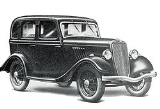
Ford Motor Company Limited was the manufacturing and sales arm of the
Ford Motor CompanyThe Ford Motor Company is an American multinational corporation based in Dearborn, Michigan, a suburb of Detroit. The automaker was founded by Henry Ford and incorporated on June 16, 1903. In addition to the Ford, Lincoln, and Mercury brands, Ford also owns Volvo Cars of Sweden, and a small stake...
for the United Kingdom and originally also Ireland. The firm both sold and manufactured cars, commercial vehicles, and farm tractors for sale in the United Kingdom and other countries. In 1967,
Ford EuropeFord Europe is the European division of the Ford Motor Company that is based in America.-History:It was founded in 1967 on a merger between the British and German divisions of the Ford Motor company....
was formed with Ford of Britain becoming part of the new group.
The first Ford cars, three Model As, were imported into the UK in 1903 and the first dealership in
SouthamptonSouthampton is the largest city in the ceremonial county of Hampshire, on the south coast of England, and is situated south-west of London and north-west of Portsmouth. Southampton is a major port and the closest city to the New Forest...
opened in 1910.
Ford Motor Company Limited was the manufacturing and sales arm of the
Ford Motor CompanyThe Ford Motor Company is an American multinational corporation based in Dearborn, Michigan, a suburb of Detroit. The automaker was founded by Henry Ford and incorporated on June 16, 1903. In addition to the Ford, Lincoln, and Mercury brands, Ford also owns Volvo Cars of Sweden, and a small stake...
for the United Kingdom and originally also Ireland. The firm both sold and manufactured cars, commercial vehicles, and farm tractors for sale in the United Kingdom and other countries. In 1967,
Ford EuropeFord Europe is the European division of the Ford Motor Company that is based in America.-History:It was founded in 1967 on a merger between the British and German divisions of the Ford Motor company....
was formed with Ford of Britain becoming part of the new group.
1903–1918
The first Ford cars, three Model As, were imported into the UK in 1903 and the first dealership in
SouthamptonSouthampton is the largest city in the ceremonial county of Hampshire, on the south coast of England, and is situated south-west of London and north-west of Portsmouth. Southampton is a major port and the closest city to the New Forest...
opened in 1910. In 1909 the Ford Motor Company (England) Ltd. was established with an office in 55 Shaftesbury Avenue, London under the chairmanship of
Percival PerryPercival Lea Dewhurst Perry, 1st Baron Perry, KBE was the first chairman of Ford of Britain Limited and of the Slough Trading Company.-Career:...
. An assembly plant in an old Tram factory in
Trafford ParkTrafford Park is an area of the Metropolitan Borough of Trafford, in Greater Manchester, England. Located opposite Salford Quays, on the southern side of the Manchester Ship Canal, it is west-southwest of Manchester city centre, and north of Stretford....
,
ManchesterManchester is a city and metropolitan borough of Greater Manchester, England. In 2007, the population of the city was estimated to be 458,100...
was opened in 1911 employing 60 people to make the Model T and the company was re-registered as Henry Ford & Son, Ltd. This was the first Ford factory outside North America. At first the cars were assembled from imported chassis and mechanical parts with bodies sourced locally, but in 1914 Britain's first moving assembly line for car production started with 21 cars an hour being built. Six thousand cars were produced in 1913 and the Model T became the country's biggest selling car with 30 % of the market. After the First World War, the Trafford Park plant was extended, and in 1919, 41 % of British registered cars were Fords.
In 1917, a plant opened in
CorkCork is the second largest city in the Republic of Ireland and the island of Ireland's third most populous city. It is the principal city and administrative centre of County Cork and the largest city in the province of Munster...
, Ireland initially for tractor manufacture but from 1921 cars as well were built. This factory was the first to be purpose built by Ford in Europe. It closed in 1984.
1918–1939
Although the Manchester plant was served by the
Manchester Ship CanalThe Manchester Ship Canal is a long river navigation in North West England. Designed to give the city of Manchester direct access to the sea, it was built between 1887 and 1894 at a cost of about £15 million , and in its day was the largest navigation canal in the world.The canal generally...
, Ford decided that access to a deep water port was required and in 1923 a new site was chosen by the River Thames at
DagenhamDagenham is a suburban town in the London Borough of Barking and Dagenham, situated east of Charing Cross, in East London.-Etymology:Dagenham as Dæccanhaam is first recorded in a charter of Barking Abbey dating from 687 AD...
,
East London. Construction started in 1929, and in October 1931, Britain and
Europe's largest car plantThe Ford Dagenham assembly plant was a major car assembly plant operated by the UK subsidiary of the Ford Motor Company. The plant was located at Dagenham, on the north bank of the River Thames and a short distance to the east of London. Between and 1931 and 2002 it produced 10,980,368 vehicles...
opened producing the Model AA truck and Model A car. The company also at the same time changed its name to the Ford Motor Co. Ltd. This was at the height of the
DepressionThe Great Depression was a severe worldwide economic depression in the decade preceding World War II. The timing of the Great Depression varied across nations, but in most countries it started in about 1929 and lasted until the late 1930s or early 1940s...
and the Model A was too expensive to tax and run in Britain and very few were sold, only five in the first three months. A smaller car was urgently needed and this came in 1933 with the 933 cc Model Y, a car much more suited to the market and becoming in 1935 Britain's first £100 car. Between 1932 and 1937 over 157,000 were made at Dagenham and Cork and at its peak it captured 41 % of its market sector.
World War 2
During the Second World War, the Dagenham plant turned out 360,000 vehicles and a new factory in
UrmstonUrmston is a town within the Metropolitan Borough of Trafford, in Greater Manchester, England, with a population of around 41,000. It lies about six miles to the southwest of Manchester city centre, within the historic county boundaries of Lancashire...
, Manchester made 34,000
Rolls-Royce MerlinThe Rolls-Royce Merlin is a British, liquid-cooled, 27-litre capacity, V-12 piston aero engine, designed and built by Rolls-Royce Limited...
engines.
1945–1967
After World War Two, civilian production resumed and Dagenham made 115,000 vehicles in 1946 and factories in
WalthamstowWalthamstow is a town in the London Borough of Waltham Forest, North East London, England, located north east of Charing Cross. Walthamstow is bordered to the north by Chingford, south by Leyton and Leytonstone, east by the southern reaches of Epping Forest at Woodford and west by Tottenham and...
in
EssexEssex is a county in the East of England region of the United Kingdom. The county town of Essex is Chelmsford.-History:In pre-Roman Britain the territories of Suffolk and Essex were home to the Trinovantes tribe, which had grown wealthy through intensive trade with the Roman Empire, contemporary...
(later
London[]London is the capital of England and the United Kingdom. It has been a major settlement for two millennia, and the history of London goes back to its founding by the Romans, when it was named Londinium. London's core, the ancient City of London, the 'square mile', retains its medieval boundaries...
) and
LangleyLangley is a village in the unitary authority of Slough, Berkshire in South East England.Langley was transferred from Buckinghamshire to Berkshire in 1974....
in
BuckinghamshireBuckinghamshire is a ceremonial and non-metropolitan home county in South East England. The county town is Aylesbury and the largest town in ceremonial Buckinghamshire is Milton Keynes....
(later
BerkshireBerkshire is a county in the South East of England. It is also often referred to as the Royal County of Berkshire because of the presence of the royal residence of Windsor Castle in the county; this usage, which dates to the 19th century at least, was recognised by the Queen in 1958, and Letters...
) were acquired. In 1953, Briggs Motor Bodies was purchased, giving the company more control of its supplies and at the same time acquiring further plants at
DoncasterDoncaster is a large town in South Yorkshire, England, and the principal settlement of the Metropolitan Borough of Doncaster. The town is located about from Sheffield and is popularly referred to as "Donny"...
,
SouthamptonSouthampton is the largest city in the ceremonial county of Hampshire, on the south coast of England, and is situated south-west of London and north-west of Portsmouth. Southampton is a major port and the closest city to the New Forest...
,
CroydonCroydon is a major commercial centre in Greater London and the principal settlement of the London Borough of Croydon. It is south of Charing Cross, and is one of the major metropolitan centres identified in the London Plan...
and
RomfordRomford is a large suburban town in northeast London, England and the administrative headquarters of the London Borough of Havering. It is located northeast of Charing Cross and is one of the major metropolitan centres identified in the London Plan...
. By 1953, Ford of Britain directly employed 40,000 people.
In 1962, Ford opened
a factoryHalewood Body & Assembly is a Jaguar Land Rover production facility based in Halewood, Knowsley, Merseyside, England.Halewood was originally opened by the Ford Motor Company on 2 October 1963 to build the then small-saloon sized Ford Anglia...
at
HalewoodHalewood is a suburb of Liverpool, Merseyside, England and is in the Metropolitan Borough of Knowsley. The district lies at Liverpool's southeastern boundary, bordered by the suburbs of Hunts Cross and Woolton....
near
LiverpoolLiverpool is a city and metropolitan borough of Merseyside, England, along the eastern side of the Mersey Estuary. It was founded as a borough in 1207 and was granted city status in 1880...
to make the Anglia. This closed as a Ford plant when the last Escort came off the production line in 2000 and was then converted to make the
Jaguar X-TypeThe X-Type is a compact executive car which has been produced since 2001 by Jaguar, British luxury car manufacturer. It is the smallest of the current range of Jaguar saloons, and is the only estate car in the Jaguar range...
in 2001.
Another new factory opened at
BasildonBasildon is a town located in the Basildon District of the county of Essex, England.It lies east of central London and south of the county town of Chelmsford...
in 1964 to make tractors, and in 1965, a further plant was acquired in
SwanseaSwansea is a coastal city and county in Wales. Swansea is in the historic county boundaries of Glamorgan. Situated on the sandy South West Wales coast, the county area includes the Gower peninsula and the Lliw uplands...
to make chassis components and axles.
Commercial vehicles
Ford produced a range of commercial vehicles starting with the Model TT in 1917. From 1933 to 1939, these were badged as "Fordson"s, this changed to "Fordson Thames" until 1957 after which it became plain "Thames" until 1965. From 1965, they reverted to being called "Ford". After the closure of Trafford Park most of the larger commercials were built at Langley. The truck operation was sold to the
IvecoIveco is an Italian truck, bus, and diesel engine manufacturer, based in Turin, Italy. It is a subsidiary of the Fiat Group, and produces around 200,000 commercial vehicles and 460,000 diesel engines annually, and for the year ended 2007 the company had €11,196 million in sales .The name is an...
group of Italy in 1986 and became Iveco Ford (48 % owned by Ford). The Langley plant closed in 1997.
Passenger cars
- Ford Model T
The Ford Model T is an automobile that was produced by Henry Ford's Ford Motor Company from 1908 through 1927. The Model T set 1908 as the historic year that the automobile came into popular usage...
(1913–1927)
- Ford Model A
The Model A was the designation of two cars made by Ford Motor Company, one in 1903 and one beginning in 1927:* Ford Model A * Ford Model A...
(1928–1931)
- Ford Model B
The Model B was a new Ford automobile produced in model year 1932. It was a much updated version of the Model A and was replaced by the 1935 Ford Model 48. Strictly speaking the Model B was a four-cylinder car with an "Improved Four-Cylinder Engine", but it was at this time that Ford began...
(1932–1935)
- Ford Model Y
The Model Y was the first Ford specifically designed for markets outside the United States of America, replacing the Model A in Europe. The car was powered by a 933 cc, 8 hp Ford Sidevalve engine, and was in production in England from 1932 until September 1937, in France from 1932 to...
(1932–1937)
- Ford 7Y
Ford 7Y is a car from Ford built in the United Kingdom between 1938 and 1939.It was officially marketed as a Ford "Eight", and was a rebodied and slightly larger version of the Ford Model Y. During that time 65,098 cars were produced. The car was powered by a 933 cc, 8 hp Ford Sidevalve engine.A...
(1937–1939)
- Ford V8 (1932–1939)
- Ford Model C Ten
The Ford Model C Ten was a car from Ford built in the United Kingdom between 1934 and 1937. The car was also assembled in Spain between 1934 and 1936...
(1935–1937)
- Ford 7W
The Ford 7W Ten was a car from Ford built in the United Kingdom between 1937 and 1938.The car was an updated version of the Model C Ten with the same 1172 cc engine and used the same transverse leaf front and rear suspension but the chassis was now of box section type. The brakes were...
(1937–1938)
- Ford Anglia
The Ford Anglia was a British car from Ford in the UK. It was related to the Ford Prefect and the later Ford Popular. The Ford Anglia name was applied to four models of car between 1939 and 1967....
(1939–1967)
- Ford Prefect
The Ford Prefect is a line of British cars produced by the UK section of the Ford Motor Company, and a more upmarket version of its direct siblings the Ford Popular and Ford Anglia. It was introduced in 1938 and remained in production till 1941: returning to the market in 1945, it was offered till...
(1939–1961)
- Ford V8 Pilot
The Ford Pilot was a large car from Ford introduced in August 1947. It was effectively replaced in 1951 with the launch of Ford UK's Zephyr Six and Consul models, though V8 Pilots were still offered for sale, being gradually withdrawn during that year. During the period of manufacture 22,155 cars...
(1947–1951)
- Ford Consul
The Ford Consul is a car manufactured by Ford in Britain.Between 1951 and 1962 the Consul was the four cylinder base model of the three model Ford Zephyr range. Consul, Zephyr and Zephyr Zodiac. In the 1962 restyle it was renamed the Zephyr 4, the mid range model becoming the Zephyr 6 and the top...
(1950–1962)
- Ford Zephyr
The Ford Zephyr is a car manufactured by the Ford Motor Company in the United Kingdom. Between 1950 and 1972, it was sold as a more powerful six-cylinder saloon to complement the four-cylinder Ford Consul: from 1962 the Zephyr itself was offered in both four- and six-cylinder versions.The Zephyr...
(1951–1972)
- Ford Zodiac (1954–1972)
- Ford Popular
The Ford Popular is best known as a car from Ford built in England between 1953 and 1962. When launched, it was Britain's lowest priced car.The name Popular was also used by Ford to describe its 1930s Y Type model...
(1953–1962)
- Ford Escort/Squire
The Ford Squire is a car from Ford for the United Kingdom market built between 1955 and 1959.It was a two door, four seat estate design, the brother to the Ford Prefect 100E four door saloon, sharing the same 1172 cc Ford Sidevalve engine and other parts and the same interior trim...
(1955–1961)
- Ford Consul Classic
The Ford Consul Classic or 'Consul 315' was a mid-sized car built by Ford in the UK from 1961 to 1963. Available with two or four doors, in Standard or De Luxe versions, with floor or column gearshift. It is commonly referred to as the Ford 109E , though four such codes are possible as explained...
(1961–1963)
- Ford Capri
Ford Capri was a name used by the Ford Motor Company for three separate automobile models:* The Ford Consul Capri coupé, produced by Ford of Britain between 1961 and 1964* The Ford Capri coupé, produced by Ford Europe from 1969 to 1986...
(1961–1964)
- Ford Cortina
The Ford Cortina is a mid-sized family car built by Ford of Britain in various guises from 1962 to 1982.The Cortina was Ford's mass-market mid-sized car and sold in enormous numbers, making it common on British roads and was Britain's best-selling car of the 1970s. It was replaced in 1982 by the...
(1962–1982)
- Ford Corsair
The Ford, Consul Corsair, manufactured by Ford Motor Company in the United Kingdom, was a midsize car introduced at the London Motor Show in October 1963 and available as either a saloon or estate from 1964 until 1970...
(1963–1970)
- Ford Escort
The Ford Escort is a small family car manufactured by the Ford Motor Company from 1968 to 2003. Although it was originally a European model, the Escort badge has also been applied to several different designs in North America over the years .The first use of the Ford Escort name was in the 1950s...
(1968–2000)
- Ford Capri
Ford Capri was a name used by the Ford Motor Company for three separate automobile models:* The Ford Consul Capri coupé, produced by Ford of Britain between 1961 and 1964* The Ford Capri coupé, produced by Ford Europe from 1969 to 1986...
(1969–1986)
- Ford Granada
Ford Motor Company used the Ford Granada for unrelated vehicles sold in different markets:* The European Ford Granada was built and marketed in Europe from 1972 to 1985...
(1972–1994)
- Ford Sierra
The Ford Sierra is a large family car built by Ford Europe from 1982 until 1993. It was designed by Uwe Bahnsen, Robert Lutz and Patrick le Quément. The code used during development was "Project Toni"....
(1982–1993)
Commercial vehicles
Note – cwt is the abbreviation of hundredweight (112 pounds or 1/20 ton)
- Fordson tractor
Fordson was a brand name used on a range of mass produced all-purpose tractors manufactured by Henry Ford and Son from 1917 until 1920 when it was merged into the Ford Motor Company, which used the name until 1964...
(1917–1964)
- Ford Model TT
The Ford Model TT truck was rated at one ton. It was based on the Ford Model T, but with a heavier frame and rear axle. It was often equipped with a ruckstell axle or some other accessory gearbox which allowed the truck to have an intermediate gear between low and high, which was useful for hill...
1 ton (1917–)
- Ford Model AA
Ford Model AA is a truck from Ford. As the Model T and TT became obsolete and needed to be replaced, Henry Ford began initial designs on the Model A and Model AA in 1926. Basic chassis layout was done rapidly and mechanical development was moved forward quickly. Body design and style was...
30cwt (1928–)
- Ford Model BB (1932–)
- Ford Model Y
The Model Y was the first Ford specifically designed for markets outside the United States of America, replacing the Model A in Europe. The car was powered by a 933 cc, 8 hp Ford Sidevalve engine, and was in production in England from 1932 until September 1937, in France from 1932 to...
5 cwt (1932–1937)
- Thames/Fordson E83W
The Ford E83W, also sold under the Fordson brand, was a 10 cwt light commercial vehicle from Ford built at the Dagenham plant in the United Kingdom between 1938 and 1957. They were sold in Australia as the Ten-Ten....
10cwt van and pick-up (1938–1957)
- Fordson E04C 5 cwt (1945–1948)
- Fordson E494C 5 cwt (1948–1954)
- Thames/Fordson 300E 5 cwt (1954)
- Thames 400E
The Ford Thames 400E was a commercial vehicle made by Ford of Britain and introduced in 1957. Production of the range continued until September 1965, by which time a total of 187,000 had been built.-History:...
10,12,15 cwt
- Thames 300E
The Ford Thames 300E is a panel van produced by Ford of Britain from 1954 to 1961. The Thames name was given to all available sizes of commercial vehicle produced by Ford in Britain during the 1950s and until the arrival in 1965 of the UK built Ford Transit.The 300E was introduced in July 1954,...
5 & 7 cwt (1954–1961)
- Thames 307E
The Ford Thames 307E was a small panel van based on the recently introduced Ford Anglia 105E and launched by Ford of Britain in the summer of 1961. It replaced the Ford Thames 300E and, like its predecessor it was more usually known to contemporaries as the Ford 5 cwt or the Ford 7 cwt vans...
5 & 7 cwt (1961–)
- Thames Trader
The Thames Trader was a range of trucks manufactured by the British arm of the Ford Motor Company built between 1957 and 1965. The distinctive cab design, which sets it apart from all other British commercial vehicles, was a forward-control design and the Thames Trader model covered a much wider...
30 cwt, 2, 3, 4, 5 and 7-ton (1957–1962)
- Thames Trader MkII (1962–1965)
- Ford H (1962–)
- Ford K (Trader rename) (1965–)
- Ford Transit
The Ford Transit is a range of panel vans, minibuses and pickup trucks, produced by the Ford Motor Company in Europe.The Transit has been the best-selling light commercial vehicle in Europe for 40 years, and in some countries the term "Transit" has passed into common usage as a generic term...
(1965–)
- Ford D 2 to 8 tons
- Ford D800
- Ford D1000 (1967–)
- Ford R-Series
The Ford R-Series is a range of bus and coach chassis evolved from designs made by Ford's Thames commercial vehicle subsidiary until the mid-1960s. A number of components were shared with the D-series lorry, including the engine which was mounted vertically at the front of the vehicle, ahead of the...
- Ford Transcontinental
The Ford Transcontinental was a heavy goods vehicle tractor and rigid unit manufactured between 1975 and 1983 by Ford of Britain.Assembled almost entirely from bought in OEM component parts it was introduced to fill a perceived gap in the market in anticipation of the relaxation of weight...
(1975–1983)
- Ford Cargo
The European Ford Cargo was originally a lightweight truck when launched in 1981 by Ford of the United Kingdom.The Cargo was styled by Patrick le Quément. It included windows which extended down to floor level in the doors to enable drivers to see pathways in urban locations easier when parking...
(1981–1993)
External links