
Home      Discussion      Topics      Dictionary      Almanac
Signup       Login
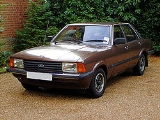
Ford Cortina

Ford Cortina

Overview
As the 1960s dawned, BMC
British Motor Corporation
The British Motor Corporation, or commonly known as BMC was a vehicle manufacturer from United Kingdom, formed by the merger of the Austin Motor Company and the Nuffield Organisation in 1952...

 were revelling in the success of their new Mini
Mini
The Mini is a small car that was made by the British Motor Corporation and its successors from 1959 until 2000. The original is considered a British icon of the 1960s, and its space-saving front-wheel-drive layout influenced a generation of car-makers...

 – the first successful true minicar to be built in Britain
United Kingdom
The United Kingdom of Great Britain and Northern IrelandIn the United Kingdom and Dependencies, other languages have been officially recognised as legitimate autochthonous languages under the European Charter for Regional or Minority Languages...

 in the postwar era. Management at Ford of Britain
Ford of Britain
Ford of Britain is a British wholly owned subsidiary of Ford of Europe, a subsidiary of Ford Motor Company. Its business started in 1909 and has its registered office in Brentwood, Essex...

 in Dagenham felt that they could not develop a similar small car to the same scale as the production cost would be too high, so instead they set about creating a larger family car which they could sell in large numbers. The result was the Cortina, a distinctively styled car aimed at buyers of the Morris Oxford
Morris Oxford
After the Second World War the Oxford MO replaced the 10. It was introduced in 1948 and was produced until 1954. The design was shared with Nuffield Organisation stable-mate Wolseley 4/50....

 and Vauxhall Victor
Vauxhall Victor
The original Victor, launched on 28 February 1957, was dubbed the F series and saw a production run totalling over 390,000 units. The car was of unitary construction and featured a large glass area with heavily curved windscreen and rear window. Following then current American styling trends, the...

, that was launched on 20 September 1962. Despite its eye catching modern styling, the car was from the start designed to be easy and inexpensive to produce: in Britain
Ford of Britain
Ford of Britain is a British wholly owned subsidiary of Ford of Europe, a subsidiary of Ford Motor Company. Its business started in 1909 and has its registered office in Brentwood, Essex...

 the front-wheel drive configuration used by Ford of Germany for their new similarly sized model
Ford Taunus P4
The Ford Taunus 12 M was a small family saloon/sedan produced by Ford of Germany between 1962 and 1966.The Taunus 12M name had been used for the car’s predecessor and it would apply also to subsequent Ford models which is why the 12M introduced in 1962 is usually identified, in retrospect, as the...

 was rejected in favour of the tried and tested rear-wheel drive layout. The car was branded as the Consul Cortina until a modest facelift in 1964, after which it was sold simply as the Cortina. The car confirmed Ford's reputation for offering a lot of car for the money: the estate version, in particular, provided class-leading load capacity.
Discussion
Ask a question about 'Ford Cortina'
Start a new discussion about 'Ford Cortina'
Answer questions from other users
Full Discussion Forum
 
Unanswered Questions
Encyclopedia
As the 1960s dawned, BMC
British Motor Corporation
The British Motor Corporation, or commonly known as BMC was a vehicle manufacturer from United Kingdom, formed by the merger of the Austin Motor Company and the Nuffield Organisation in 1952...

 were revelling in the success of their new Mini
Mini
The Mini is a small car that was made by the British Motor Corporation and its successors from 1959 until 2000. The original is considered a British icon of the 1960s, and its space-saving front-wheel-drive layout influenced a generation of car-makers...

 – the first successful true minicar to be built in Britain
United Kingdom
The United Kingdom of Great Britain and Northern IrelandIn the United Kingdom and Dependencies, other languages have been officially recognised as legitimate autochthonous languages under the European Charter for Regional or Minority Languages...

 in the postwar era. Management at Ford of Britain
Ford of Britain
Ford of Britain is a British wholly owned subsidiary of Ford of Europe, a subsidiary of Ford Motor Company. Its business started in 1909 and has its registered office in Brentwood, Essex...

 in Dagenham felt that they could not develop a similar small car to the same scale as the production cost would be too high, so instead they set about creating a larger family car which they could sell in large numbers. The result was the Cortina, a distinctively styled car aimed at buyers of the Morris Oxford
Morris Oxford
After the Second World War the Oxford MO replaced the 10. It was introduced in 1948 and was produced until 1954. The design was shared with Nuffield Organisation stable-mate Wolseley 4/50....

 and Vauxhall Victor
Vauxhall Victor
The original Victor, launched on 28 February 1957, was dubbed the F series and saw a production run totalling over 390,000 units. The car was of unitary construction and featured a large glass area with heavily curved windscreen and rear window. Following then current American styling trends, the...

, that was launched on 20 September 1962. Despite its eye catching modern styling, the car was from the start designed to be easy and inexpensive to produce: in Britain
Ford of Britain
Ford of Britain is a British wholly owned subsidiary of Ford of Europe, a subsidiary of Ford Motor Company. Its business started in 1909 and has its registered office in Brentwood, Essex...

 the front-wheel drive configuration used by Ford of Germany for their new similarly sized model
Ford Taunus P4
The Ford Taunus 12 M was a small family saloon/sedan produced by Ford of Germany between 1962 and 1966.The Taunus 12M name had been used for the car’s predecessor and it would apply also to subsequent Ford models which is why the 12M introduced in 1962 is usually identified, in retrospect, as the...

 was rejected in favour of the tried and tested rear-wheel drive layout. The car was branded as the Consul Cortina until a modest facelift in 1964, after which it was sold simply as the Cortina. The car confirmed Ford's reputation for offering a lot of car for the money: the estate version, in particular, provided class-leading load capacity.

The Cortina was available with 1.2 L and 1.5 L four-cylinder engines
Straight-4
The inline-four engine or straight-four engine is an internal combustion engine with all four cylinders mounted in a straight line, or plane along the crankcase. The single bank of cylinders may be oriented in either a vertical or an inclined plane with all the pistons driving a common crankshaft....

 in two-door and four-door saloon and four-door estate forms. Standard, Deluxe, Super and GT trims were offered but not across all body styles. Estates offered the option of fake wood side and tailgate trim, aping American-style estates, for a short time. There were two main variants of the Mark 1. The Mark 1a possessed elliptical front side-lights, whereas the Mark 1b had a re-designed front grill incorporating the squarer side-lights. A notable variant was the Lotus Cortina
Lotus Cortina
The Lotus-Cortina is a high-performance car, which was produced in the United Kingdom from 1963 to 1970 by the Ford in collaboration with Lotus Cars. The original version, which was based on the Ford Cortina Mark 1, was promoted by Ford as the "Consul Cortina developed by Lotus", with "Consul"...

.

Advertising of the revised version, which appeared at the London Motor Show in October 1964, made much of the newly introduced "Aeroflow" through-flow ventilation, evidenced by the extractor vents on the rear pillars. A subsequent test on a warm day involving the four different Cortina models manufactured between 1964 and 1979 determined that the air delivery from the simple eye-ball outlets on the 1964 Mark I Cortina was actually greater than that on the Mark II, the Mark III or the Mark IV. The dashboard, instruments and controls were revised, for a the second time, having already been reworked in October 1963 when round instruments replaced the strip speedometer with which the car had been launched: twelve years later, however, the painted steel dashboard, its "knobs scattered all over the place and its heater controls stuck underneath as a very obvious afterthought" on the 1964 Mark I Cortina was felt to have aged much less well than the car's ventilation system. It was also in 1964 that front disc brakes became standard across the range.

The Cortina was launched a few weeks before the London Motor Show of October 1962 with a 1197 cc 3-bearing engine, which was an enlarged version of the 997 cc engine then fitted in the Ford Anglia
Ford Anglia
The 1949 model, code E494A, was a makeover of the previous model with a rather more 1940s style front-end, including the sloped, twin-lobed radiator grille. Again it was a very spartan vehicle and in 1948 was Britain's lowest priced four wheel car....

. A few months later, in January 1963, the Cortina Super was announced with a 5-bearing 1499 cc engine. Versions of the larger engine found their way into subsequent variations, including the Cortina GT which appeared in Spring 1963 with lowered suspension and engine tuned to give a claimed output of 78 bhp ahead of the 60 bhp claimed for the Cortina 1500 Super. The engines used across the Mark I range were of identical design, differing only in capacity and setup. The formula used was a four-cylinder pushrod (Over Head Valve) design that came to be known as the "pre-crossflow" version as both inlet and exhaust ports were located on the same side of the head. The most powerful version of this engine (used in the GT Cortina) was 1498 cc (1500) and produced 78 bhp. This engine contained a different camshaft
Camshaft
A camshaft is a shaft to which a cam is fastened or of which a cam forms an integral part.-History:An early cam was built into Hellenistic water-driven automata from the 3rd century BC. The camshaft was later described in Iraq by Al-Jazari in 1206. He employed it as part of his automata,...

 profile, a different cast of head featuring larger ports, tubular exhaust headers and a Weber double barrel carburettor.

Lotus Cortina models were solely offered as two-door saloons all in white with a contrasting green side flash down each flank. Lotus Cortinas had a unique 1558 cc twin-cam engine by Lotus
Lotus Cars
Lotus Cars is a British manufacturer of sports and racing cars based at the former site of RAF Hethel, a World War II airfield in Norfolk. The company designs and builds race and production automobiles of light weight and fine handling characteristics...

, but based on the Cortina's Kent
Ford Kent engine
The Ford Kent is an internal combustion engine from Ford of Europe. Originally developed in 1959 for the Ford Anglia, it is an in-line four-cylinder engine with a cast-iron cylinder head and block.-Pre-Crossflow:...

OHV
Overhead valve
An overhead valve engine, also informally called pushrod engine or I-head engine, is a type of piston engine that places the camshaft within the cylinder block , and uses pushrods or rods to actuate rocker arms above the cylinder...

 engine. Aluminium was used for some body panels. For a certain time, it also had a unique A-frame rear suspension, but this proved fragile and the model soon reverted to the standard Cortina semi-elliptic rear end.

Mark II (1966–1970)


The second incarnation of the Cortina was designed by Roy Haynes
Roy Haynes (designer)
Roy D. Haynes was a British automobile designer. Haynes worked for Ford where he was responsible for the design of the 1966 Cortina MkII. In 1967 he moved to BMC where he created the 1969 Mini Clubman facelift for the Mini, and where he designed the 1971 Morris Marina.Haynes was replaced as...

, and launched on 18 October 1966, four years after the original Cortina. Although the launch was accompanied by the slogan "New Cortina is more Cortina", the car, at precisely 168 inches (427 cm) long, was fractionally shorter than before. Nevertheless, 2½ inches (6 cm) of extra width and curved side panels did give the car a measurable improvement in interior space. In addition to the wider body and track, headline improvements included a smaller turning circle, softer suspension, self adjusting brakes and clutch together with the availability on the smaller-engined models, for the UK and some other markets, of a new five bearing 1300 cc engine.

A stripped-out 1200 cc version running the engine of the Ford Anglia
Ford Anglia
The 1949 model, code E494A, was a makeover of the previous model with a rather more 1940s style front-end, including the sloped, twin-lobed radiator grille. Again it was a very spartan vehicle and in 1948 was Britain's lowest priced four wheel car....

 Super was also available for certain markets where the 1300 cc engine attracted a higher rate of tax. The 1500 cc engines were at first carried over, but for 1967, they received a new crossflow cylinder head
Crossflow cylinder head
A crossflow cylinder head is a cylinder head that features the intake and exhaust ports on opposite sides. The gases can be thought to flow across the head...

 design, making them more efficient. At this time, they became 1600 cc in size, with the Lotus Cortina continuing with its own unique engine.

Again, a Lotus
Lotus Cars
Lotus Cars is a British manufacturer of sports and racing cars based at the former site of RAF Hethel, a World War II airfield in Norfolk. The company designs and builds race and production automobiles of light weight and fine handling characteristics...

 version was produced (this time done in-house at Ford) but the most admired was the 1600E that came out in late 1967.

The Cortina was Britain's most popular new car in 1967, achieving the goal that Ford had been trying to achieve since it set out to create the original Cortina back in 1960.

Again, two-door and four-door saloons were offered with base, Deluxe, Super, GT and, later, 1600E trims available, but again, not across all body styles and engine options. A few months after the introduction of the saloon versions, a four-door estate was launched, released on the UK market on 15 February 1967: much was made at the time of its class topping load capacity.

The Cortina 1600E, marketed to broaden the Cortina's appeal into a higher market segment, was introduced at the Paris Motor Show in October 1967, a year after the arrived of the Cortina Mark II . It combined the lowered Lotus Cortina's suspension with the high-tune GT 1600 Kent engine and luxury trim featuring a burr walnut woodgrain-trimmed dashboard and door cappings, bucket seating, sports steering wheel and full instrumentation inside, while a black grille, tail panel, front fog lights and plated Rostyle wheel
Rostyle wheel
Rostyle wheels are a notable design of wheels for cars made by the British firm of Rubery Owen, a diversified industrial company which made many car parts. The wheels had an unusual pressed steel form to imitate the few ribs of mag wheels at the time, but were painted black and aluminium...

s featured outside.

Ford New Zealand developed its own variant of this model called the GTE.

For 1969, the Mark II range was given subtle revisions, with separate "FORD" block letters mounted on the bonnet and boot lids, a blacked out grille and chrome strips on top and below the taillights running the full width of the tail panel marking them out.

A 3.0-litre Essex V6-engined
V6 engine
A V6 engine is a V engine with six cylinders mounted on the crankcase in two banks of three cylinders, usually set at either a right angle or an acute angle to each other, with all six pistons driving a common crankshaft...

 variant was developed privately in South Africa by Basil Green, and was sold through the Grosvenor Ford network of dealers as the Cortina Perana; a similar model appeared later in Britain and was known as the Cortina Savage. Savage was available with 1600E trim in all three body styles, while her South African stablemate was offered only as 4-door saloon initially with GT trim and later E trim.

TC Mark III (1970–1976)


In the late 1960s, Ford set about developing a third-generation Cortina, which would be produced in higher volumes than before. It was the last European car engineered by Harley Copp
Harley Copp
Harley F. Copp , was a car designer and automotive safety consultant.A 35 year veteran of the Ford Motor Company, Copp made his name leading the engineering design of various Ford products of the 1950s including the Continental Mark II in 1953 and the Falcon of 1959...

 as Vice President Engineering and head of Brentwood, before he returned to Detroit.

The Mark III Detroit-inspired "coke bottle"-shape
Coke bottle styling
Coke bottle styling is a term used to describe any automotive body styling bearing an overall body shape resembling the classic glass Coca-Cola soft drink's contour bottle design. It is a style of automobile bodies with outward curving fenders with a narrow center. In contrast to "straight-edge"...

d Cortina TC was a hit amongst fleet buyers. It replaced both the Cortina Mark II and the larger, more expensive Ford Corsair
Ford Corsair
The Ford Consul Corsair, manufactured by Ford Motor Company in the United Kingdom, was a midsize car introduced at the London Motor Show in October 1963 and available as either a saloon or estate from 1964 until 1970...

 by offering more trim levels and the option of larger engines than the Mark II.

The MacPherson strut
MacPherson strut
The MacPherson strut is a type of car suspension system which uses the axis of a telescopic damper as the upper steering pivot. It is widely used in modern vehicles and named after Earle S. MacPherson, who developed the design.-History:...

 front suspension was replaced with more conventional double A-arm suspension to give the car a soft 'freeway' ride which gave the larger engines distinct understeer.

Ford UK originally wanted to call it something other than Cortina, but the name stuck. Although the Mark III looked significantly larger than the boxier Mark II, it was actually the same overall length, but 4 inches (100 mm) wider. Within the overall length, a wheelbase lengthened by more than 3 inches (76 mm) also contributed to the slightly more spacious interior.

Trim levels were now Base, L (for Luxury), XL (Xtra Luxury), GT (Grand Touring) and GXL (Grand Xtra Luxury). 1.3 L, 1.6 L and 2.0 L engines were offered, the 1.6 L having two distinct types - the Kent
Ford Kent engine
The Ford Kent is an internal combustion engine from Ford of Europe. Originally developed in 1959 for the Ford Anglia, it is an in-line four-cylinder engine with a cast-iron cylinder head and block.-Pre-Crossflow:...

unit for models up to GT trim and a SOHC Pinto
Ford Pinto engine
The Ford Pinto engine was the unofficial but generic nickname for a 4-cylinder internal combustion engine built by Ford Europe. In Ford sales literature it was referred to as the EAO or OHC engine and because it was designed to the metric system, it was sometimes called the "Metric engine". The...

unit for the GT and GXL, the latter of which was also offered in 1600 form for a short while. 2.0 L variants used a larger version of the 1600 Pinto unit and were available in all trim levels except base.

Although no longer than its predecessor, the Mark III was a heavier car, reflecting a trend towards improving secondary safety by making car bodies more substantial. Weight was also increased by the stout cross-member incorporated into the new simplified front suspension set-up, and by the inclusion of far more sound deadening material which insulated the cabin from engine and exhaust noise, making the car usefully quieter than its predecessor, though on many cars the benefit was diminished by high levels of wind noise apparently resulting from poor door fit around the windows. Four-speed manual transmission
Manual transmission
A manual transmission, also known as a manual gearbox or standard transmission is a type of transmission used in motor vehicle applications...

s were by now almost universally offered in the UK for this class of car, and contemporary road tests commented on the rather large gap between second and third gear, and the resulting temptation to slip the clutch when accelerating through the gears in the smaller-engined cars: it was presumably in tacit acknowledgment of the car's marginal power-to-weight ratio that Ford no longer offered the automatic transmission
Automatic transmission
An automatic transmission is one type of motor vehicle transmission that can automatically change gear ratios as the vehicle moves, freeing the driver from having to shift gears manually...

 option with the smallest 1298 cc-engined Cortina.

Four headlights and Rostyle wheel
Rostyle wheel
Rostyle wheels are a notable design of wheels for cars made by the British firm of Rubery Owen, a diversified industrial company which made many car parts. The wheels had an unusual pressed steel form to imitate the few ribs of mag wheels at the time, but were painted black and aluminium...

s marked out the GT and GXL versions, while the GXL also had bodyside rubstrips, a vinyl roof and a brushed metal and black tail panel on the GXL and plain black one on the GT. All models featured a downward sloping dashboard with deeply recessed dials and all coil suspension all round. In general styling and technical make up, many observed that the Mark III aped the Vauxhall Victor
Vauxhall Victor
The original Victor, launched on 28 February 1957, was dubbed the F series and saw a production run totalling over 390,000 units. The car was of unitary construction and featured a large glass area with heavily curved windscreen and rear window. Following then current American styling trends, the...

 FD of 1967.

The Cortina went on sale on 23 October 1970, but sales got off to a particularly slow start because of production difficulties that culminated with a ten-week strike at Ford's plant between April and June 1971, which was at the time reported to have cost production of 100,000 vehicles, equivalent to almost a quarter of the output for a full year.

During 1971 the spring rates and damper settings were altered along with the front suspension bushes which reduced the bounciness of the ride and low speed ride harshness which had generated press criticism at the time of the Cortina III's launch.

Volumes recovered, and with the aging Austin/Morris 1100/1300
BMC ADO16
ADO16 is the codename for the development of what became the Morris 1100, a small family car built by the British Motor Corporation and, later, British Leyland...

 now losing out to various newer models, the Cortina was Britain's top selling car in 1972, closely followed by the Escort.

In late 1973 following a facelift, the Cortina was redesignated TD. Outside, there were revised grilles, rectangular headlights for the XL, GT and the new 2000E (the "E" standing for executive), which replaced the GXL. The 1.3 L Kent engine was carried over but now, 1.6 L models all used the more modern 1.6 L SOHC engine
Ford Pinto engine
The Ford Pinto engine was the unofficial but generic nickname for a 4-cylinder internal combustion engine built by Ford Europe. In Ford sales literature it was referred to as the EAO or OHC engine and because it was designed to the metric system, it was sometimes called the "Metric engine". The...

. Whilst the TD Cortina still had double A-arm suspension with coils at the front and a four-link system at the rear, handling was improved.
Inside, the car received a neater dashboard that no longer sloped away from the driver's line of sight and upgraded trim. The 2000E reverted to the classy treatment offered by the 1600E and later Ghia models instead of the faux wood-grain trim offered by the GXL.

Like many other Cortinas, Mk.3s were prone to rust and as a result only about 1000 now survive.
Because of their rarity and the fact that they are now seen as an iconic car of the mid-70s, prices for MK.3s are rising steadily, with the best examples fetching several thousand pounds.

The Mark III was never sold in the US, although it was available in Canada
Canada
Canada is a North American country consisting of ten provinces and three territories. Located in the northern part of the continent, it extends from the Atlantic Ocean in the east to the Pacific Ocean in the west, and northward into the Arctic Ocean...

 until 1973.

In addition to four-cylinder
V4 engine
A V4 engine is a V form engine with four cylinders and three main bearings.-Automobile use:Lancia produced several narrow-angle V4 engines from the 1920s through 1960s for cars like the Lambda, Augusta, Artena, Aprilia, Ardea, Appia, and Fulvia....

 models, the Mark III was available in South Africa as the 'Big Six' L and GL with the Essex V6 2.5L engine and Perana (very rare), GT and XLE with the Essex V6 3.0L engine. There was also a pickup truck
Pickup truck
A pickup truck is a light motor vehicle with an open-top rear cargo area .-Definition:...

 version available.

Ford Australia built its own versions using both the UK four-cylinder engines (1.6 and 2.0) and locally made inline six-cylinder engines from its Falcon line.

For Japan, the cars were literally narrowed by a few millimetres on arrival in the country in order that they fit into a lower tax bracket – this was done by bending the wheel arches inwards.

Mark IV (1976–1979)


The fourth-generation Cortina was a more conventional design than its predecessor, but this was largely appreciated by fleet buyers. Generally a rebody of the Mark III, as an integration of Ford's model range, this car was really a rebadged Ford Taunus. However, although the updated Taunus was introduced to Continental Europe in January 1976, Ford were able to continue selling the Cortina Mark III in undiminished numbers in the UK until they were ready to launch its successor as the Dagenham
Ford Dagenham assembly plant
Ford Dagenham is a major automotive factory located in Dagenham, United Kingdom operated by the Ford of Europe subsidiary of the Ford Motor Company...

 built Cortina Mark IV, which went on sale on 29 September 1976.

Many parts were carried over, most notably the running gear. The raised driving position and the new instrument panel had, along with some of the suspension upgrades, already been introduced to the Cortina Mark III in 1975, so that from the driving position the new car looked much more familiar to owners of recent existing Cortinas than from the outside.

The most obvious change was the new body, which achieved the marketing department objective of larger windows giving a better view out and a brighter feel to the cabin, but at the expense of body weight which was increased, albeit only marginally, by approximately 30 lb (14 kg). Ford claimed an overall increase in window area of some 15%, with "40% better visibility" through the wider deeper back window. Regardless of how these figures were computed, there must have been substantial weight-saving gains through reduced steel usage in the design, given the unavoidable extra weight of glass.

This series spawned the first Ghia top-of-the-range model, which replaced the 2000E. The 2.3-litre Ford Cologne V6 engine
Ford Cologne V6 engine
The original Ford Cologne V6, also known as the 'Ford Taunus V6', is a series of 60° cast iron block V6 engines produced continuously by the Ford Motor Company in Cologne, Germany since 1968...

 was introduced in 1977 as an engine above the 2.0l Pinto engine, already a staple of the Capri and Granada ranges. However, 2.3-litre Cortinas never sold particularly well in the UK. The Cologne V6 was certainly a much smoother and more refined power unit than the Pinto, but the V6 models were more expensive to fuel and insure and were only slightly faster, being about 0.5 seconds faster from 0-60 and having a top speed of about 109 mph compared to the 104 mph of the 2.0-litre models. The 2.0 Ford Cologne V6 engine
Ford Cologne V6 engine
The original Ford Cologne V6, also known as the 'Ford Taunus V6', is a series of 60° cast iron block V6 engines produced continuously by the Ford Motor Company in Cologne, Germany since 1968...

 continued to be offered on Taunus badged cars in parallel with the Pinto unit, and offers here an interesting comparison with the similarly sized in-line four-cylinder Pinto engine. The V6 with a lower compression ratio offered less power and less performance, needing over an extra second to reach 50 mph (80 km/h). It did, however, consume 12½% less fuel and was considered by motor journalists to be a far quieter and smoother unit. The 2.3 L was available to the GL, S and Ghia variants. A 1.6 Ghia option was also introduced at the same time as the 2.3V6 models in response to private and fleet buyers who wanted Ghia refinements with the improved fuel economy of the smaller 1.6 Pinto engine. Few cars were sold with the 1.6 engine though, the 2.0 Pinto was always by far the most common engine option for Ghia models.
Two-door and 4-door saloons and a five-door estate
Station wagon
A station wagon is a body style variant of a sedan/saloon with its roof extended rearward over a shared passenger/cargo volume with access at the back via a third or fifth door , instead of a trunk lid...

 were offered with all other engines being carried over. However, at launch only 1.3-engined cars could be ordered in the UK with the two-door body, and then only with "standard" or "L" equipment packages. In practice, relatively few two-door Mark IV Cortinas were sold. There was a choice of base, L, GL, S (for Sport) and Ghia trims, again not universal to all engines and body styles
Car body style
Automobiles' body styles are highly variable. Some body styles remain in production, while others become less common or obsolete. They may or may not correlate to a car's price, size or intended market classification. The same car model might be available in multiple body styles comprising a...

.Rostyle wheels were fitted as standard to all Mk.4 GL, S and Ghia models, with alloy wheels available as an extra cost option. The dashboard was carried over intact from the last of the Mark III Cortinas while the estate used the rear body pressings of the previous 1970 release Taunus.

Throughout its production life, the Mk.4 was the most popular new car in the United Kingdom. Despite this it is now the rarest of all Cortinas with only about 200-250 examples left according to DVLA records. Scant rustproofing (much improved on the later Cortina 80/Mk.5 models) and popularity with banger racers accelerated its demise.
And as with other best-selling mass produced cars of the time such as the Morris Marina and Vauxhall Viva, the Mk.4 Cortina did not acquire classic status while there were large numbers of them still around and able to be preserved.
Both Mk.4 Cortina S models are now particularly rare with less than a dozen 2.0S and just 2 of the 2.3S models thought to survive today. Any Mk4 2.3 model is a very rare car in the UK now, with only about 20 remaining according to the DVLA.
The S models were discontinued when Mk.4 production ended in August 1979. In their place, optional 'S' equipment packs were available as an upgrade for most Mk.5 models.
Again, Ford Australia built its own versions with the 2.0-litre 4-cylinder
Straight-4
The inline-four engine or straight-four engine is an internal combustion engine with all four cylinders mounted in a straight line, or plane along the crankcase. The single bank of cylinders may be oriented in either a vertical or an inclined plane with all the pistons driving a common crankshaft....

 Pinto unit and the Ford Falcon's
Ford Falcon (Australia)
The Ford Falcon is a full-size car which has been manufactured by Ford Australia since 1960. Each model from the XA series of 1972 onward has been designed, developed and built in Australia and/or New Zealand, following the phasing out of the American Falcon of 1960–71 which had been re-engineered...

 3.3 and 4.1L 6-cylinder unit. Interior door hardware and steering columns were shared with the Falcons and the Aussie versions also had their own instrument clusters, optional air conditioning and much larger bumpers. A considerable number were exported to New Zealand under a free trade agreement where they were sold alongside locally assembled models similar to those available in the UK.

Mark V (1979–1982)


The Mark V was announced on 24 August 1979. Officially it was known as "Cortina 80", although the Mark V tag was given to it immediately on release, by the press, insiders and the general public.

A large update on the Mark IV, it was really a step between a facelift and a rebody. The Mark V differentiated itself from the Mark IV by having revised headlights with larger turn indicators incorporated (which now showed to the side too), a wider slatted grille said to be more aerodynamically efficient, a flattened roof, more glass area, slimmer C-pillars with revised vent covers, larger, slatted tail lights (on saloon models) and upgraded trim.

Prices started at £3,475 for a basic 1.3-litre-engined model.

Improvements were also made to the engine range, with slight improvements to both fuel economy and
power output compared to the Mk.IV. For example, the 2.3V6 engine was given electronic ignition and a slight boost in power output to 116 bhp, compared to the 108 bhp of the Mk.IV.
Ford also claimed improved corrosion protection on Mk.V models; as a result, more Mk.V's have survived; however, corrosion was still quite a problem. Cars that were rust-proofed from new with treatments such as Waxoyl or Ziebart have tended to fare a lot better than untreated cars with only factory rust-proofing.

By contrast, the estate models combined the Mk IV's bodyshell (which was initially from the 1970 Ford Taunus) with Mk V front body pressings.

Variants included the Base, L, GL and Ghia variants (all available in both saloon and estate forms), together with Base and L spec 2-door sedan versions (this bodystyle was available up to Ghia V6 level on overseas markets). An optional "S" pack was also available for most models,
For the final model year of 1982 this consisted of front and rear bumper overriders, sports driving lamps, an 'S' badge on the boot, tachometer, 4 spoke steering wheel, revised suspension settings, front gas shock absorbers,'Sports' gear lever knob, sports road wheels, 185/70 SR x 13 tyres and Fishnet Recaro sports seats (optional).
Various "special editions" were announced, including the Calypso and Carousel. The final production model was the Crusader special edition which was available as a 1.3, 1.6 and 2.0 saloons or 1.6 and 2.0 estates. The Crusader was a final run-out model which buyers clamoured
for in 1982, instead of buying a newly introduced Sierra.
It was the best-specified Cortina produced to date and 30,000 were sold, which also made it Ford's best-selling special edition model.
Another much rarer special edition model was the Cortina Huntsman, of which 150 were produced.
By this time, the Cortina was starting to feel the competition from a rejuvenated (and Opel influenced) Vauxhall
Vauxhall Motors
Vauxhall Motors is a British automotive company owned by General Motors and headquartered in Luton. It was founded in 1857 as a pump and marine engine manufacturer, began manufacturing cars in 1903 and was acquired by GM in 1925. It has been the second-largest selling car brand in the UK for...

, which with the 1981 release Cavalier
Vauxhall Cavalier
The Vauxhall Cavalier is a large family car sold primarily in the UK by Vauxhall Motors, the British division of General Motors , from 1975 to 1995...

 J-Car, was starting to make inroads on the Cortina's traditional fleet market, largely helped by the front wheel drive benefits of weight and grip.

Up to and including 1981, the Cortina was the best selling car in Britain. Even during its final production year, 1982, the Cortina was Britain's second best selling car and most popular large family car. On the continent, the Taunus version was competing with more modern and practical designs like the Talbot Alpine, Volkswagen Passat
Volkswagen Passat
The Volkswagen Passat is a large family car marketed by Volkswagen Passenger Cars through six design generations since 1973. Between the Volkswagen Golf / Volkswagen Jetta and the Volkswagen Phaeton in the current Volkswagen line-up, the Passat and its derivatives have been badged variously as...

 and Opel Ascona
Opel Ascona
The Opel Ascona was a mid-sized car produced by Opel. It had three generations produced from 1970 to 1988. In motorsport, the Ascona 400 rally car driven by Walter Röhrl won the World Rally Championship drivers' title in the 1982 season....

, but the brand image of Ford's blue oval ensured the Cortina was a success in virtually every country where it was sold.

The very last Cortina – a silver Crusader – rolled off the Dagenham
Ford Dagenham assembly plant
Ford Dagenham is a major automotive factory located in Dagenham, United Kingdom operated by the Ford of Europe subsidiary of the Ford Motor Company...

 production line in 22 July 1982 on the launch of the ultramodern Sierra
Ford Sierra
The Ford Sierra is a large family car that was built by Ford Europe from 1982 until 1993. It was designed by Uwe Bahnsen, Robert Lutz and Patrick le Quément. The code used during development was "Project Toni"....

, though there were still a few leaving the forecourt as late as 1987, with one final unregistered Cortina GL leaving a Derbyshire dealership in 2005. The last Cortina built remains in existence to this day, and is now in the ownership of the Ford Heritage Centre in Dagenham
Dagenham
Dagenham is a large suburb in East London, forming the eastern part of the London Borough of Barking and Dagenham and located east of Charing Cross. It was historically an agrarian village in the county of Essex and remained mostly undeveloped until 1921 when the London County Council began...

, Essex
Essex
Essex is a ceremonial and non-metropolitan county in the East region of England, and one of the home counties. It is located to the northeast of Greater London. It borders with Cambridgeshire and Suffolk to the north, Hertfordshire to the west, Kent to the South and London to the south west...

, not far from the factory where it was assembled.

1982 was also the year in which the Cortina lost its title as Britain's best selling car, having held that position every year since 1972. It was still selling well though, and the number one position had been taken by another Ford product: the Escort.

Sales success


The Ford Cortina was a very popular car in Britain throughout its lifespan. In 1967, it interrupted the Austin/Morris 1100/1300s reign as Britain's best selling car. From 1972 to 1981, the Cortina enjoyed an unbroken run as Britain best selling car every year. Its key rivals in the 1960s were the Morris Oxford and Austin/Morris 1800, during the 1970s it was competing with the Vauxhall Cavalier, Austin Maxi and Morris Marina. At the end of its life it was facing stiff competition from the more advanced and practical second generation Vauxhall Cavalier, but was still more popular.

The final incarnation of the Cortina was Britain's best selling car for the 1980 and 1981 calendar years, and combined with Mark IV sales the Cortina also topped the sales charts for 1979. Even in 1982, when during its final year of production it was pushed off the top of the charts by the Ford Escort, the Cortina was still hugely popular with buyers.

The Cortina was also a very popular selling car in New Zealand throughout its production and continued to be sold new until 1984.

Although the last Cortina rolled off the production line in 1982, thousands of them remained in stock (with more than 11,000 being sold in 1983), and the final six examples didn't find homes until 1987.

As recently as the early 1990s, Cortinas were still a common sight on British roads, and in May 1992 The Times
The Times
The Times is a British daily national newspaper, first published in London in 1785 under the title The Daily Universal Register . The Times and its sister paper The Sunday Times are published by Times Newspapers Limited, a subsidiary since 1981 of News International...

newspaper revealed that the Mark IV and Mark V models were still among the 10 most common cars on Britain's roads.

By 2000, however, the vast majority of them were no longer roadworthy. In August 2006, following a survey by Auto Express
Auto Express
Auto Express is a weekly motoring magazine sold in the United Kingdom published by Dennis Publishing. The Editor-in-Chief is Steve Fowler.Launched in September 1988, its 1000th issue was published on 20 February 2008. It's only weekly competitor in Britain is the long established Autocar...

, it was identified as the second most scrapped car to be sold in Britain since 1976. Of the 1,065,682 Mark IV and Mark V Cortinas registered in the UK, just 2,010 were still on the road – fewer than one in 500. It was second only to the Morris Marina
Morris Marina
The Morris Marina is a car which was manufactured by the Morris division of British Leyland in the UK throughout the 1970s, which was a period of great turbulence and difficulty for the British car industry. It was known in some markets as the Austin Marina, Leyland Marina, and Morris 1.7...

, which had ceased production two years before the Cortina and fared even worse with less than one in 1000 still registered.

A total of nearly 2,600,000 Cortinas were sold in Britain, and in March 2009 it was revealed that the Cortina was still the third most popular car ever sold there, despite having been out of production for nearly three decades.

Racing and rallying


The Cortina also raced in rallies and Lotus
Lotus Cars
Lotus Cars is a British manufacturer of sports and racing cars based at the former site of RAF Hethel, a World War II airfield in Norfolk. The company designs and builds race and production automobiles of light weight and fine handling characteristics...

 did some sportier editions of the Cortina Mark I and Mark II referred to as the Lotus Cortina
Lotus Cortina
The Lotus-Cortina is a high-performance car, which was produced in the United Kingdom from 1963 to 1970 by the Ford in collaboration with Lotus Cars. The original version, which was based on the Ford Cortina Mark 1, was promoted by Ford as the "Consul Cortina developed by Lotus", with "Consul"...

.

This car is, today, used for racing, because of its powerful cast iron engine. The car can have imported cylinder heads, with hydraulic valves, which give an enormous power boost.

The Cortina was also a popular car in UK Banger racing
Banger racing
Banger Racing is a tarmac or dirt track racing type of motorsport event popularised in both North America and Europe and especially United Kingdom, Ireland, Belgium and the Netherlands in which drivers of old vehicles race against one another around a race track and the race is...

 in the late '80s and throughout the 90's proving to be a competitive car and also lasting it out in Demolition Derby
Demolition derby
Demolition derby is a motorsport usually presented at county fairs and festivals. While rules vary from event to event, the typical demolition derby event consists of five or more drivers competing by deliberately ramming their vehicles into one another...

s.

Other cars using Cortina engines


The Kent
Ford Kent engine
The Ford Kent is an internal combustion engine from Ford of Europe. Originally developed in 1959 for the Ford Anglia, it is an in-line four-cylinder engine with a cast-iron cylinder head and block.-Pre-Crossflow:...

 engines used in the Cortina, being lightweight, reliable and inexpensive, were popular with several low-volume sports car manufacturers, including Morgan
Morgan Motor Company
The Morgan Motor Company is a British motor car manufacturer. The company was founded in 1910 by Harry Frederick Stanley Morgan, generally known as "HFS" and was run by him until he died, aged 77, in 1959. Peter Morgan, son of H.F.S., ran the company until a few years before his death in 2003...

 who used them in the 1962–81 4/4 (and continue to use Ford engines in most of their current models). The engines are also found in a number of British kit cars, and until recently was the basis of Formula Ford racing, until replaced by the "Zetec" engine.

The Kent engines were also used in several smaller Fords, most notably the Escort, lower end Capris
Ford Capri
Ford Capri was a name used by the Ford Motor Company for three different automobile models. The Ford Consul Capri coupé was produced by Ford of Britain between 1961 and 1964. The Ford Capri coupé was produced by Ford of Europe from 1969 to 1986...

 and Fiesta
Ford Fiesta
The Ford Fiesta is a front wheel drive supermini/subcompact manufactured and marketed by Ford Motor Company and built in Europe, Brazil, Argentina, Mexico, Venezuela, China, India, Thailand and South Africa...

.

Non-United Kingdom sales and manufacture


The Cortina was also sold in other right hand drive markets such as the Republic of Ireland
Republic of Ireland
Ireland , described as the Republic of Ireland , is a sovereign state in Europe occupying approximately five-sixths of the island of the same name. Its capital is Dublin. Ireland, which had a population of 4.58 million in 2011, is a constitutional republic governed as a parliamentary democracy,...

 where it was assembled locally, Australia
Australia
Australia , officially the Commonwealth of Australia, is a country in the Southern Hemisphere comprising the mainland of the Australian continent, the island of Tasmania, and numerous smaller islands in the Indian and Pacific Oceans. It is the world's sixth-largest country by total area...

, New Zealand
New Zealand
New Zealand is an island country in the south-western Pacific Ocean comprising two main landmasses and numerous smaller islands. The country is situated some east of Australia across the Tasman Sea, and roughly south of the Pacific island nations of New Caledonia, Fiji, and Tonga...

, Indonesia
Indonesia
Indonesia , officially the Republic of Indonesia , is a country in Southeast Asia and Oceania. Indonesia is an archipelago comprising approximately 13,000 islands. It has 33 provinces with over 238 million people, and is the world's fourth most populous country. Indonesia is a republic, with an...

, Malaysia, Singapore
Singapore
Singapore , officially the Republic of Singapore, is a Southeast Asian city-state off the southern tip of the Malay Peninsula, north of the equator. An island country made up of 63 islands, it is separated from Malaysia by the Straits of Johor to its north and from Indonesia's Riau Islands by the...

, Thailand
Thailand
Thailand , officially the Kingdom of Thailand , formerly known as Siam , is a country located at the centre of the Indochina peninsula and Southeast Asia. It is bordered to the north by Burma and Laos, to the east by Laos and Cambodia, to the south by the Gulf of Thailand and Malaysia, and to the...

, Malta
Malta
Malta , officially known as the Republic of Malta , is a Southern European country consisting of an archipelago situated in the centre of the Mediterranean, south of Sicily, east of Tunisia and north of Libya, with Gibraltar to the west and Alexandria to the east.Malta covers just over in...

 and South Africa
South Africa
The Republic of South Africa is a country in southern Africa. Located at the southern tip of Africa, it is divided into nine provinces, with of coastline on the Atlantic and Indian oceans...

. Mark III Cortina estates were adopted as police cars in Hong Kong
Hong Kong
Hong Kong is one of two Special Administrative Regions of the People's Republic of China , the other being Macau. A city-state situated on China's south coast and enclosed by the Pearl River Delta and South China Sea, it is renowned for its expansive skyline and deep natural harbour...

. The Cortina was also assembled in left hand drive in the Philippines
Philippines
The Philippines , officially known as the Republic of the Philippines , is a country in Southeast Asia in the western Pacific Ocean. To its north across the Luzon Strait lies Taiwan. West across the South China Sea sits Vietnam...

, in South Korea
South Korea
The Republic of Korea , , is a sovereign state in East Asia, located on the southern portion of the Korean Peninsula. It is neighbored by the People's Republic of China to the west, Japan to the east, North Korea to the north, and the East China Sea and Republic of China to the south...

 (by Hyundai
Hyundai Motor Company
Hyundai Motor Company is a Korean multinational automaker based in Seoul, South Korea which, along with Kia, comprises the Hyundai Kia Automotive Group, the world's fourth largest automaker as of 2009. As of 2011, it is the world's fastest growing automaker for two years running...

) and in Taiwan
Taiwan
Taiwan , also known, especially in the past, as Formosa , is the largest island of the same-named island group of East Asia in the western Pacific Ocean and located off the southeastern coast of mainland China. The island forms over 99% of the current territory of the Republic of China following...

 (by Ford Lio Ho
Ford Lio Ho
Ford Lio Ho is an automaker based in Taiwan. It is 70% owned by Dearborn, Michigan-based Ford Motor Company. Its current passenger car range includes the Fiesta , the Focus, and the Mondeo , as well as the i-MAX and the Escape. Its commercial vehicle range consists of the Ranger and the...

) until the early 1980s.

The first two generations of the car were also sold through American Ford dealers in the 1960s. The Cortina competed fairly successfully there against most of the other small imports of its day, including GM
General Motors
General Motors Company , commonly known as GM, formerly incorporated as General Motors Corporation, is an American multinational automotive corporation headquartered in Detroit, Michigan and the world's second-largest automaker in 2010...

's Opel Kadett
Opel Kadett
The Opel Kadett is a small family car produced by the German automobile manufacturer Opel between 1937 and 1940, and then again from 1962 until 1991 , when it was replaced by the Opel Astra.-Original model :...

, the Renault Dauphine
Renault Dauphine
Renault Dauphine is a rear-engined economy car manufactured by Renault in one body style — a three-box, four-door sedan — as the successor to the Renault 4CV, with over two million examples marketed worldwide during its production from 1956-1967....

, and the just-appearing Toyota
Toyota Motor Corporation
, , , commonly known simply as Toyota and abbreviated as TMC, is a multinational automaker headquartered in Toyota, Aichi, Japan. In 2010, Toyota Motor Corporation employed 317,734 people worldwide, and was the world's largest automobile manufacturer by production.The company was founded by...

s and Datsun
Datsun
Datsun was an automobile marque. The name was created in 1931 by the DAT Motorcar Co. for a new car model, spelling it as "Datson" to indicate its smaller size when compared to the existing, larger DAT car. Later, in 1933 after Nissan Motor Co., Ltd...

s, although none of them approached the phenomenal success of the Volkswagen Beetle
Volkswagen Beetle
The Volkswagen Type 1, widely known as the Volkswagen Beetle or Volkswagen Bug, is an economy car produced by the German auto maker Volkswagen from 1938 until 2003...

. The Cortina was withdrawn from the US market when Ford decided to produce a domestic small car in 1971, the Ford Pinto
Ford Pinto
The Ford Pinto is a subcompact car produced by the Ford Motor Company for the model years 1971–1980. The car's name derives from the Pinto horse. Initially offered as a two-door sedan, Ford offered "Runabout" hatchback and wagon models the following year, competing in the U.S. market with the AMC...

, though it continued in Canada until the end of the 1973 model year.

The third generation Cortina was also sold in some continental Europe
Continental Europe
Continental Europe, also referred to as mainland Europe or simply the Continent, is the continent of Europe, explicitly excluding European islands....

an markets, such as Scandinavia
Scandinavia
Scandinavia is a cultural, historical and ethno-linguistic region in northern Europe that includes the three kingdoms of Denmark, Norway and Sweden, characterized by their common ethno-cultural heritage and language. Modern Norway and Sweden proper are situated on the Scandinavian Peninsula,...

, alongside the Taunus. A small number were exported to Japan
Japan
Japan is an island nation in East Asia. Located in the Pacific Ocean, it lies to the east of the Sea of Japan, China, North Korea, South Korea and Russia, stretching from the Sea of Okhotsk in the north to the East China Sea and Taiwan in the south...

, with the rear of the bodyshell compressed to make it narrower — this was because cars in Japan were taxed on width, and having a narrower body enabled the Cortina to avoid being heavily taxed.

The Ford Cortina was also assembled in the Amsterdam Ford Factory from the launch in 1962 until 1975. Production was for the Dutch market, but also for export to non EU countries and even for export to the UK if the demand there was higher than the UK production capacity.

Australia


Mark I
In Australia, the Mark I Ford Cortinas sold well, helped by some outstanding successes on the racetrack. The most notable performances were in the Armstrong 500 races at the Mount Panorama circuit, Bathurst, New South Wales
New South Wales
New South Wales is a state of :Australia, located in the east of the country. It is bordered by Queensland, Victoria and South Australia to the north, south and west respectively. To the east, the state is bordered by the Tasman Sea, which forms part of the Pacific Ocean. New South Wales...

 where the Cortina GT was first across the line in 1963 and 1964 and the locally developed GT500 took the flag in 1965.

Mark II

The Mark IIs continued the sales success, being offered in five different models - the 220, 240, 440, GT and the rare "L" luxury model which featured solid wood panelling on the dashboard and doors. The GT was readily identified by its bumperettes on the front and rear.
Even rarer was the GTL with a much lightened flywheel but all the L features.

TC

The Mark III was introduced into the Australian market in August 1971 as the TC Cortina. and was offered in L, XL and XLE trim levels. It was initially available with 1600 cc "Cross-Flow" and 2000 cc SOHC four-cylinder engines. In September 1972 Ford Australia launched a six-cylinder version of the TC, using the 200ci and 250ci in-line engines from the Australian Ford Falcon
Ford Falcon (Australia)
The Ford Falcon is a full-size car which has been manufactured by Ford Australia since 1960. Each model from the XA series of 1972 onward has been designed, developed and built in Australia and/or New Zealand, following the phasing out of the American Falcon of 1960–71 which had been re-engineered...

 range. These engines had a blue rocker cover for the 200ci (3.3-litre) and a red rocker cover for the 250ci (4.1-litre). The 1600 cc engine option was discontinued in June 1973.

The TC six-cylinder models had twin 5" headlights which distinguished them from the four-cylinder cars which had single 7" sealed beam headlights on each side. To hold the larger engines, the chassis
Chassis
A chassis consists of an internal framework that supports a man-made object. It is analogous to an animal's skeleton. An example of a chassis is the underpart of a motor vehicle, consisting of the frame with the wheels and machinery.- Vehicles :In the case of vehicles, the term chassis means the...

 had reinforced side rails and centre pillar, and a tubular crossmember
Crossmember
A crossmember is a structural section of steel, usually boxed, that is bolted across the underside of a monocoque / unibody motor vehicle, to support the internal combustion engine and / or transmission...

 support under the transmission. In addition, the firewall panels were shaped to accommodate the longer engines and wider bell housing
Bell housing
"Bell housing" is a colloquial/slang term for the portion of the transmission that covers the flywheel and the clutch or torque converter of the transmission on vehicles powered by internal combustion engines. This housing is bolted to the engine block and derives its name from the bell-like...

, and were manufactured from thicker metal. This change was spread across the Cortina range so that the four-cylinder models benefited too. But this was not enough to prevent the additional front mass of the larger engines causing roll steer, resulting in relatively unsophisticated handling by today's standards, especially on rough roads. Braking was also an issue under harsh conditions.
In 1973 to 1974, Ford Australia proposed a three-door coupé
Coupé
A coupé or coupe is a closed car body style , the precise definition of which varies from manufacturer to manufacturer, and over time...

 version of the Cortina, in order to compete with the upcoming Holden Torana
Holden Torana
The Holden Torana is a car which was produced by General Motors–Holden's , the Australian subsidiary of General Motors from 1967 to 1980. The name comes from an Aboriginal word meaning "to fly". The first Torana appeared in 1967 and was a four-cylinder compact vehicle that had its origins in the...

 hatchback. It would also be a local Capri replacement. This car would have used the Pinto tailgate and other parts from around the world (such as the longer 2-door Cortina doors). However, Ford rejected the idea, as a unique model, particularly a small coupé for Australia could not be justified on cost grounds.

TD

The TD Cortina, released October 1974, was offered in L, XL and XLE trim levels and could be identified by its plastic grille. Early TDs used single round headlights for both four- and six-cylinder models but rectangular units were part of the mid-life facelift of March 1976. When fitted with the optional "Rallye" Pack, the later models featured round headlights and quartz halogen driving lights.

Both the TC and TD six-cylinder models were immediately recognized over the four-cylinder versions by the raised 'power bulge' in the center of the bonnet. It was widely believed that this was to allow clearance of the air filter. However, it was a purely a cosmetic change, as a four-cylinder bonnet will fit over a six-cylinder Cortina's engine bay. Basic transmission for the six-cylinder model was originally a three-speed manual floor shift, with a four-speed Borg-Warner single rail transmission available, taken straight from the Falcon GT. Also available was a Borg-Warner M35 three-speed automatic across all models. From 1976 the six-cylinder engines featured a revised crossflow cylinder head, keeping in line with the Falcon.

TE

The Mark IV was released in Australia in 1977 as the TE Cortina. It had trim levels of L, GL and Ghia with a few other short run variants, such as the 'S' pack. The TE featured the 2.0L Pinto motor and 4-speed manual gearboxes as used in earlier models, and the 200ci (3.3 Litre) and 250ci (4.1 Litre) OHV sixes with a crossflow cylinder head. Late in the TE's life, in 1980, the 6-cylinder heads were changed to an Alloy design, mirroring the engine development of the Ford Falcon XD range, The external door handles were also used from the XD Falcon range although the Falcon handles were black, the Cortina's chrome. The front windscreen and passenger, drivers windows as well as a slightly revised dash were also carried over from the Australian TD Cortina.
Aside from the engines, the Australian TE had minor exterior differences to the Cortina models sold elsewhere. Bumpers were the most noticeable differences, as the TE had larger chromed steel bumpers with rubber coated ends and additional indicators in the front wings. The whole TE range had a higher centre pressing in the bonnet to accommodate the six-cylinder engine's air cleaner. This change is not obvious unless you have the two different bonnets side by side.
There was a proposal in 1975 by Ford Australia
Ford Australia
Ford Australia is the Australian subsidiary of Ford Motor Company and was founded in Geelong, Victoria, in 1925 as an outpost of Ford Motor Company of Canada, Limited. At that time, Ford Canada was a separate company from Ford USA...

 to simply facelift the TD (Mark III) series Cortina for 1977, rather than introduce the Mark IV. A prototype facelift was made; however, Ford instead went with a re-engineered Mark IV (née the German Ford Taunus).

TF

The Mark V was released in Australia in 1980 as the TF Cortina and was offered in L, GL and Ghia variants and with an optional S-Pack also available. The TF had minor exterior differences to the Cortina models sold elsewhere with rubber RIM moulded bumpers being the most noticeable. Another example was that the TF's front numberplate was mounted below the front bumper, further distinguishing it from its European Mark V counterparts. Like the TE, the whole TF range had a higher centre pressing in the bonnet to accommodate the six-cylinder engine's air cleaner.

In the late 1970s, the Cortina wagons were built in Renault
Renault
Renault S.A. is a French automaker producing cars, vans, and in the past, autorail vehicles, trucks, tractors, vans and also buses/coaches. Its alliance with Nissan makes it the world's third largest automaker...

's local Heidelberg factory in Melbourne, (now closed), as Ford Australia's own factories did not have the capacity. For the last year of Australian Cortina production, 1981, a Ghia wagon was produced, although this was also listed in the September 1980 factory brochure.

Despite the TF Cortina introducing worthwhile improvements in ride, handling, noise reduction and fuel consumption, the Cortina generally was seen by the motoring press as outdated, and buyers generally preferred the rival products — in marked contrast to New Zealand
New Zealand
New Zealand is an island country in the south-western Pacific Ocean comprising two main landmasses and numerous smaller islands. The country is situated some east of Australia across the Tasman Sea, and roughly south of the Pacific island nations of New Caledonia, Fiji, and Tonga...

 where the Cortina was a highly regarded success.

Ford Australia, however, found enough customers to last to the end of the model's life. In 1982 it was replaced initially by the smaller Ford Meteor
Ford Meteor
Introduced in 1981, Ford Meteor was the name given to the sedan version of the Ford Laser, based on the Mazda Familia in markets including Australia and South Africa. Following much the same strategy in Europe was the Ford Orion, a four-door saloon which had Escort mechanicals...

 (a rebadged Mazda 323 sedan) and then the Ford Telstar
Ford Telstar
The Ford Telstar is an automobile that was sold by the Ford Motor Company in Asia, Australasia and Africa, comparable in size to the European Ford Sierra and the American Ford Tempo. It has been progressively replaced by the Ford Mondeo....

 saloon / hatchback range in 1983.

New Zealand


The New Zealand
New Zealand
New Zealand is an island country in the south-western Pacific Ocean comprising two main landmasses and numerous smaller islands. The country is situated some east of Australia across the Tasman Sea, and roughly south of the Pacific island nations of New Caledonia, Fiji, and Tonga...

 Cortina range generally followed that of Britain. Overall CKD assembly ran from 1962 to 1983, at Ford's Lower Hutt
Lower Hutt
Lower Hutt is a city in the Wellington region of New Zealand. Its council has adopted the name Hutt City Council, but neither the New Zealand Geographic Board nor the Local Government Act recognise the name Hutt City. This alternative name can lead to confusion, as there are two cities in the...

 (Seaview) plant.

The Mark IV Cortina range, introduced into local assembly early in 1977, was very similar to that offered in the UK - a main specification difference, however, was the use of metric instrumentation, and that a 2-door sedan was not offered. Engine sizes of 1.6 and 2.0 litres were available. The 2.0 L was a very popular fleet vehicle and the transport of thousands of sales reps in New Zealand over the years.

Additionally there were limited imports of Australian Mark IV Cortinas, equipped with both 2.0 four-cylinder engines which featured more emissions control equipment than the UK-sourced cars, and the Falcon's 4.1 L six-cylinder engines.

The Mark V range was introduced early in 1980, a range that featured 1.6 base, 2.0 L, 2.0 GL, 2.0 Ghia, 2.3 V6 Ghia, and wagon variants for the 1.6 base and 2.0 L. In 1982 the 2.0 GL model was discontinued and replaced with a 2.0 S (Sport) model, and unlike in the UK, it was a model in its own right. A 2.0 "van" was also introduced — essentially a Cortina estate without rear seats, aimed towards fleet buyers.

All 2.0-litre models had the option of automatic transmission
Automatic transmission
An automatic transmission is one type of motor vehicle transmission that can automatically change gear ratios as the vehicle moves, freeing the driver from having to shift gears manually...

, and with the 2.3 V6, it was the only transmission offered.

A unique option, offered under guarantee by a dealership, South Auckland Ford, was a turbocharger
Turbocharger
A turbocharger, or turbo , from the Greek "τύρβη" is a centrifugal compressor powered by a turbine that is driven by an engine's exhaust gases. Its benefit lies with the compressor increasing the mass of air entering the engine , thereby resulting in greater performance...

.

The Ghia models were similarly equipped to UK models, but only the 2.3 V6 models featured imported Ford alloy wheels. Ford 'Rostyle' steel rims were fitted to all 2.0 GL, Ghia and S models, optionally on the other models. New Zealand Ghia models, however, did not feature a steel sliding sunroof (fitted as standard on UK Ghia models), although some models did feature an aftermarket sunroof.

Unlike Australia, the Cortina was always a popular car in New Zealand, and was missed by many when it ceased production in mid-1983, notably after Ford New Zealand
Ford New Zealand
Ford New Zealand is the New Zealand subsidiary of Ford Motor Company. It began in 1936. Since the closure of its assembly plant in Wiri, Auckland in 1997, all of its product offerings are fully imported, from Australia, Japan and increasingly, Europe...

 had scoured the globe for surplus assembly kits, a number of which came from Cork
Cork (city)
Cork is the second largest city in the Republic of Ireland and the island of Ireland's third most populous city. It is the principal city and administrative centre of County Cork and the largest city in the province of Munster. Cork has a population of 119,418, while the addition of the suburban...

 in Ireland
Republic of Ireland
Ireland , described as the Republic of Ireland , is a sovereign state in Europe occupying approximately five-sixths of the island of the same name. Its capital is Dublin. Ireland, which had a population of 4.58 million in 2011, is a constitutional republic governed as a parliamentary democracy,...

. Station wagons (estate models) remained available until 1984. The Cortina range was finally replaced by the 1983 Ford Telstar
Ford Telstar
The Ford Telstar is an automobile that was sold by the Ford Motor Company in Asia, Australasia and Africa, comparable in size to the European Ford Sierra and the American Ford Tempo. It has been progressively replaced by the Ford Mondeo....

 range and the 1984 Ford Sierra
Ford Sierra
The Ford Sierra is a large family car that was built by Ford Europe from 1982 until 1993. It was designed by Uwe Bahnsen, Robert Lutz and Patrick le Quément. The code used during development was "Project Toni"....

 station wagon.

Compared with Britain and many other countries where the Cortina was originally exported, in New Zealand it has a far superior survival rate due to the climate being far drier and more favorable to the preservation of rust-free classic cars. It is not uncommon to see examples in everyday use especially New Zealand's rural areas, and obtaining spare parts to keep them on the roads is yet to become a significant problem.

Portugal


P100 pickup
From 1971, the Cortina formed the basis of the Ford P100
Ford P100
The Ford P100 was a pickup truck built from 1971 to 1993; initially in South Africa, and later Portugal upon the design of a medium-sized Ford car, originally the Ford Cortina and from 1988 the Ford Sierra.-Description:...

 pick-up truck, which was produced for Europe
Europe
Europe is, by convention, one of the world's seven continents. Comprising the westernmost peninsula of Eurasia, Europe is generally 'divided' from Asia to its east by the watershed divides of the Ural and Caucasus Mountains, the Ural River, the Caspian and Black Seas, and the waterways connecting...

 in Portugal
Portugal
Portugal , officially the Portuguese Republic is a country situated in southwestern Europe on the Iberian Peninsula. Portugal is the westernmost country of Europe, and is bordered by the Atlantic Ocean to the West and South and by Spain to the North and East. The Atlantic archipelagos of the...

 and other continents in South Africa
South Africa
The Republic of South Africa is a country in southern Africa. Located at the southern tip of Africa, it is divided into nine provinces, with of coastline on the Atlantic and Indian oceans...

. Ironically, the MK5 Cortina based P100 was launched in 1982, the year that the standard Cortina was being replaced by the Sierra. However, it remained a popular choice with pick-up truck buyers until the Sierra-based P100 was launched in 1988; this version lasted until the end of Sierra production in early 1993.

South Africa


In South Africa, the Cortina range included V6
V6 engine
A V6 engine is a V engine with six cylinders mounted on the crankcase in two banks of three cylinders, usually set at either a right angle or an acute angle to each other, with all six pistons driving a common crankshaft...

 "Essex"-engined variants, in both 2.5L and 3.0L forms.

From July 1971, a locally designed pick-up truck version (known in Afrikaans
Afrikaans
Afrikaans is a West Germanic language, spoken natively in South Africa and Namibia. It is a daughter language of Dutch, originating in its 17th century dialects, collectively referred to as Cape Dutch .Afrikaans is a daughter language of Dutch; see , , , , , .Afrikaans was historically called Cape...

 as a "bakkie") was also offered, and this remained in production after the Cortina was replaced by the Sierra.

The Cortina pickup was exported to the UK, in a lengthened wheelbase form, as the Ford p100
Ford P100
The Ford P100 was a pickup truck built from 1971 to 1993; initially in South Africa, and later Portugal upon the design of a medium-sized Ford car, originally the Ford Cortina and from 1988 the Ford Sierra.-Description:...

until 1988, when Ford divested from South Africa, and a European built pick-up truck version of the Sierra was introduced in its place.

The Mk V model range, introduced in 1980 for the South African market included: 1.3L (1980–1982), 1.6L GL (1980–1983), 2.0 GL, Ghia, (1980–1984), 3.0 XR6 (1980–1983), 1.6L Estate (1980–1983), 2.0 GL Estate (1980–1983), 3.0 GLS (1980–1984), 1.6 One-Tonner (1980–1985), 3.0 One-Tonner (1980–1985).

The XR6 was a sports version which used the Essex v6 and featured body aerofoils and sport seats.

In 1981 a version called the XR6 Intercepter was released as a homologation special made to compete in production car racing. They featured triple Weber dcnf carburetors, aggressive camshaft, tubular exhaust manifold, suspension revisions and wider Ronal 13inch wheels. They produced 118 kW and were only availabe in red. 200 were produced.

Later on a special edition XR6 TF was released to celebrate 'Team Fords' racing success with the XR6. They were essentially XR6s in exterior and interior Team Ford colours, which were blue and white.

In 1983 a special version was created by Simpson Ford to appease the demand for an Intercepter-like Cortina and was sold through Ford dealerships countrywide. It was called the XR6 X-ocet and featured a Holley carbureter, aggressive camshaft and tuned exhaust. They came in red with a white lower quarter and did 0-100 km/h in 8.5 seconds with a top speed of 195 km/h.

South African Mk V models differed slightly from UK models with different wheels, bumpers and interior trim.

External links