


Forbes Field

Encyclopedia
Forbes Field was a baseball park
in the Oakland
neighborhood of Pittsburgh, Pennsylvania
, from 1909 to 1971. It was the third home of the Pittsburgh Pirates
Major League Baseball
(MLB) team, and the first home of the Pittsburgh Steelers
, the city's National Football League
(NFL) franchise. The stadium also served as the home football
field for the University of Pittsburgh
"Pitt" Panthers from 1909 to 1924. The stadium was named after British general John Forbes who fought in the French and Indian War
, and named the city in 1758.
The US$
1 million ($ in present-day terms) project was initiated by Pittsburgh Pirates' owner Barney Dreyfuss
, with the goal of replacing his franchise's then-current home, Exposition Park
. The stadium was made of concrete and steel (one of the first of its kind) in order to increase its lifespan. The Pirates opened Forbes Field on June 30, 1909 against Chicago Cubs
, and would play the final game also against the Cubs on June 28, 1970. The field itself featured a large playing surface, with the batting cage
placed in the deepest part of center field during games. Seating was altered multiple times throughout the stadium's life; at times fans were permitted to sit on the grass in the outfield during overflow crowds. The Pirates won three World Series while at Forbes Field and the other original tenant, the Pittsburgh Panthers football team
had five undefeated seasons before moving in 1924.
Some remnants of the ballpark still stand, surrounded by the campus of the University of Pittsburgh. Fans gather on the site annually on the anniversary of Bill Mazeroski
's World Series winning home run
, in what author Jim O'Brien writes is "one of the most unique expressions of a love of the game to be found in a major league city".
' owner Barney Dreyfuss
began to look for ground to build a larger capacity replacement for the team's then-current home, Exposition Park
. Dreyfuss purchased seven acre
s of land near the Carnegie Library of Pittsburgh
, adjacent to Schenley Park
, with assistance from his friend, industrialist Andrew Carnegie
. The low-priced land was selected so Dreyfuss could spend more on the stadium itself. Dreyfuss signed a contract that he would "make the ballpark ... of a design that would harmonize with the other structures in the Schenley Park district." The site was initially labeled "Dreyfuss's Folly" due to its long distance—a 10-minute trolley
ride—from downtown Pittsburgh
, but the land around the park developed and criticisms were dropped. Official Pirates' records show that Forbes Field cost US$
1 million for site acquisition and construction, however some estimates place the cost at twice that amount.
Dreyfuss announced that unlike established wooden ballparks such as the Polo Grounds
, he would build a three-tiered stadium out of steel and concrete to increase longevity—the first of its kind in the nation. Charles Wellford Leavitt, Jr.
was contracted to design the stadium's grandstand. A civil engineer
, Leavitt had founded an engineering and landscape architecture firm in 1897. He had gained experience in steel and concrete constructs while designing the Belmont
and Saratoga
racetracks. Based on Dreyfuss' architectural requirements, Leavitt presented a plan for Forbes Field—the only ballpark he would design. Pirates' manager Fred Clarke
also had input into the stadium's design, giving groundskeepers advice on the field, in addition to designing and patent
ing a device to spread and remove a canvas tarpaulin over the infield in case of rain.
Initial work on the land began on January 1, 1909, but ground was not officially broken until March 1. Nicola Building Company built the stadium in 122 days and play began less than four months after ground was broken, on June 30. Though the scoreboard was operated by hand, the ballpark featured multiple innovations such as ramps and elevators to assist fan movement throughout the park, a room for the umpires, and a visiting team clubhouse similar to the Pirates'. The facade of the stadium featured "buff-colored terra cotta" spelling out "PAC" for the Pittsburgh Athletic Company. The light green steelwork contrasted with the red slate of the roof. Some members of the press urged Dreyfuss to name the stadium after himself. However, the owner decided on Forbes Field, in honor of General John Forbes, who captured Fort Duquesne
from the French in 1758 and rebuilt a new "Fort Pitt
" at the site. In 1935, after Dreyfuss' death, there was renewed media interest in renaming the stadium "Dreyfuss Field". His widow, Florence, resisted. However, a monument to Dreyfuss was placed in center field just in front of the wall.
by a score of 8–1 at Exposition Park. The two teams opened Forbes Field the following day. Fans began to arrive at the stadium six and one-half hours early for the 3:30 pm game. The game started at 3:30 p.m. Weather conditions were reported as clear skies with a temperature around 80 degrees. Of the crowd, the Pittsburgh Press
wrote, "the ceremonies were witnessed by the largest throng that ever attended an event of this kind in this or any other city in the country ... Forbes Field is so immense—so far beyond anything else in America in the way of a baseball park—that old experts, accustomed to judging crowds at a glance, were at a loss for reasonable figures." Records show that the first game was attended by a standing-room only crowd of 30,338. Various National League
officials and owners were present for the opening pre-game ceremonies, including league president Harry Pulliam
, Civil War
veteran and manager of Pittsburgh's first professional baseball team Al Pratt
, and American League
president Ban Johnson
. Pittsburgh Mayor William A. Magee
threw out the stadium's ceremonial first pitch. The Chicago Cubs
won the first game by a score of 3–2. Dreyfuss declared, "This is indeed the happiest day of my life." The stadium was widely considered the best in the league.
It is more accurate to say Mayor Magee threw out the first ball. He was in the second tier and threw the ball to John M. Morin, Director of Public Safety, on the field below. Morin then went to the mound and threw the first pitch to the Pirate catcher.
Pictures depict the flag at Forbes Field at half staff on opening day. This occurred to honor recently deceased presidents of the Philadelphia Phillies and the Boston Doves.
The first batter at Forbes Field was future Hall of Famer Johnny Evers
, the Cubs second baseman and lead off batter. He was hit by a pitch and later in the inning scored the first run. The first hit by a Pirate was by catcher George Gibson, who eventually became a Pirate manager.
 Barney Dreyfuss "hated cheap home run
s and vowed he'd have none in his park", which led him to design a large playing field for Forbes Field. The original distances to the outfield fence in left, center, and right field were
360 feet (109.7 m), 462 feet (140.8 m), and 376 feet (114.6 m) respectively.
In 1925, the right field grandstand was extended into the corner and into fair territory
, reducing the foul line distance from 376 feet (114.6 m) to 300 feet (91.4 m). Due to the reduced distance, Dreyfuss erected a 28 feet (8.5 m) high screen to limit home runs.
Even at this long distance from home plate, the wall stood 12 feet (3.7 m) in height in all around the field, with the right field wall reduced to 9.5 feet (2.9 m) following the 1925 construction (topped by the screen). The backstop was set at 110 feet (33.5 m) behind home plate, larger than the average of 60 feet (18.3 m) in most stadiums of the time. Additional seating eventually cut down the plate-to-screen distance to a still larger-than-average 75 feet (22.9 m).
With such a large outfield space, triples
and inside-the-park home run
s were common. The Pirates hit a record eight triples in a single game, on May 30, 1925. Conversely, the stadium was one of the most difficult to hit over-the-fence home runs. The closeness of the right field line from 1925 onward was the only area that compromised Dreyfuss' original design concept. Even at that, the right field wall angled sharply out to 375 feet (114.3 m), a typical distance for a major league power alley. The final three home runs of Babe Ruth
's career were hit in Forbes Field on May 25, 1935; the third of these cleared the 89 feet (27.1 m) right field roof and was considered the longest home run in the park's history.
Although Forbes Field developed a reputation as a "pitcher-friendly" ballpark, there was never a no-hitter
thrown in the more than 4,700 games at the stadium.
The field itself consisted of natural grass grown in Crestline, Ohio
.
The batting cage was placed just to the left of the 457 feet (139.3 m) center field "Death Valley" marker during games, because it was believed impossible to hit the ball that far. The open part of the cage faced the wall, the back of the cage effectively serving as a convex fence. In right- and left-center fields, light towers stood on the field, and like the batting cage and flagpole in center field, were in-play.
In 1947, well after Dreyfuss' death, and upon the arrival of veteran slugger Hank Greenberg
, the bullpen
s were moved from foul territory to the base of the scoreboard in left field and were fenced in, cutting 30 feet (9.1 m) from the left field area, from 365 feet (111.3 m) to 335 feet (102.1 m) down the line and 406 feet (123.7 m) to 376 feet (114.6 m) in left-center field. These were not abnormal major league outfield distances, but the obvious attempt to take advantage of Greenberg's bat led the media to dub the area "Greenberg Gardens". Greenberg retired after the season, but by then Ralph Kiner
was an established slugger with the Pirates, and the bullpen was redubbed "Kiner's Korner". Kiner was traded after the 1953 season, and the field was restored to its previous configuration in time for the 1954 season.
The final posted dimensions of the ballpark were left field line 365 feet (111.3 m), left-center field 406 feet (123.7 m), deepest left-center 457 feet (139.3 m), deep right-center 436 feet (132.9 m), right-center field 375 feet (114.3 m), and right field line 300 feet (91.4 m). The only marker in exact straightaway center field was the Barney Dreyfuss monument, which sat on the playing field just in front of the wall.
Forbes Field's ivy-covered walls featured no advertising, except a 32 feet (9.8 m) United States Marine
billboard during the 1943 season.
The infield developed a "rock-hard" surface throughout the stadium's history. During the final game of the 1960 World Series
, Yankees shortstop
Tony Kubek
was struck in the neck with a ball that had bounced off the hard dirt surface, breaking up a potentially rally-killing double play
and causing Kubek to have to exit the game. Pittsburgh went on to win the game and the championship. Groundskeepers would burn gasoline on the mound to dry it off. Because of the bounces, Pirates' play-by-play announcer Bob Prince
nicknamed the ballpark, The House of Thrills.
defeated by the New York Giants
, at the Steelers' highest-attended game at the stadium.
wrote that The House of Thrills had become "as joyless as a prison exercise yard". Following a plan to expand their adjacent campus, the University of Pittsburgh purchased Forbes Field in 1958, with an agreement to lease the stadium to the Pirates until a replacement could be built. A proposal for a new sports stadium in Pittsburgh was first made in 1948, but plans did not attract much attention until the late 1950s. Construction began on Three Rivers Stadium
on April 25, 1968. The Pittsburgh Pirates and the Chicago Cubs played a double-header on June 28, 1970. Pittsburgh won the first game 3–2. In the later game Al Oliver
hit the last home run in the park, and Matty Alou
drove in two runs as the Pirates closed the 62-year old stadium with a 4–1 victory. The 40,918 spectators in attendance stood and cheered as Bill Mazeroski retired Willie Smith for the final out at the stadium. Pirates Hall of Famer
Roberto Clemente
played fifteen seasons at Forbes Field. He was emotional during the last game saying, "I spent half my life there."
The abandoned structure suffered two separate fires that damaged the park, on December 24, 1970 and July 17, 1971. Eleven days after the second fire, demolition began, and the site was cleared for use by the University of Pittsburgh.
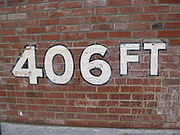 The portion of the left field wall over which Bill Mazeroski
hit his walk-off home run to end the 1960 World Series, between the scoreboard and the "406 FT" sign, no longer stands at its original location. A portion of that wall, including the distance marker, had been sliced off and moved to the Allegheny Club at Three Rivers Stadium. Before the Three Rivers demolition, the section of the wall was salvaged, and in 2009 it was restored and placed on the Riverwalk outside of PNC Park
.
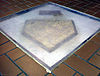 Meanwhile, the original location of that wall is outlined by bricks extending from the left-center field wall across Roberto Clemente Drive and into the sidewalk. A plaque embedded in the sidewalk marks the spot where Mazeroski's home run cleared the wall. The left-center and center field brick wall with "457 FT" and "436 FT" painted on it still stands at its original location, along with the stadium's flagpole, adjacent to the University of Pittsburgh's
Mervis
and Posvar Halls. Despite not technically being the correct section of wall where Mazeroski's famous home run cleared, it is often locally referred to as "Mazeroski's Wall." This portion of the wall remained after Forbes Field was torn down, and was refurbished in 2006 in time for the All-Star Game
hosted in Pittsburgh. In addition, a wooden replica of an entrance to the stadium, including a ticket window and players entrance, was constructed and placed near the remaining wall in 2006. The home plate used in the stadium's final game remains preserved in the University of Pittsburgh's Posvar Hall
. However, its location has been altered; author John McCollister wrote, "Had architects placed home plate in its precise spot about half of the Pirates fans could not view it. The reason: it would have to be on display in the fifth stall of the ladies' restroom." However, the original location of the home plate has been more recently determined by others to be approximately 81 feet away from its current display, just inside the GSPIA
/Economics Library, and not in a restroom as has been popularly believed.
A ceremony is held each October 13 at the outfield wall in Oakland to listen to a taped broadcast of the final game of the 1960 World Series. The tradition was started by Squirrel Hill
resident Saul Finkelstein, who at 1:05 pm on October 13, 1985, sat alone at the base of the flagpole and listened to the NBC
radio broadcast of Chuck Thompson
and Jack Quinlan
. Finkelstein continued the tradition for eight more years, until word spread and other people began attending in 1993. On October 13, 2000—the game's 40th anniversary—over 600 people attended to listen to the broadcast, including Mazeroski himself. For the 50th anniversary, on October 13, 2010, a plaque honoring Mazeroski was dedicated and more than 1,000 attended the broadcast, including Mazeroski and several other former Pirates.
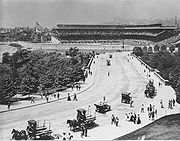 In 1909, Forbes Field's opening season, the Pirates beat the Detroit Tigers in the World Series
. It would be the only meeting of eventual Hall of Famers
Honus Wagner
and Ty Cobb
.
On October 2, 1920, Forbes Field hosted the last triple-header in MLB history.
On August 5, 1921, Forbes Field was the site of the first live radio broadcast of a Major League Baseball game in the United States. Harold W. Arlin announced the play-by-play action between the Pittsburgh Pirates and the Philadelphia Phillies over KDKA
from a box seat next to the first-base dugout. Regular broadcasts began in 1938 by A.K. “Rosey” Roswell, a local humorist and friend of owner Bill Benswanger. Roswell is quoted as describing his broadcasting with, “It’s not just play-by-play that matters. It’s what you say in between the pitches that counts.” His style influenced junior partner Bob Prince who began broadcasting in 1948. Roswell broadcast games at Forbes Field until his death in 1955.
In 1925, the Pirates became the first team to come back from a three game to one deficit to defeat the Washington Senators
and win the World Series
. Pittsburgh's third and final World Series championship while they played at Forbes Field came in 1960. Bill Mazeroski
hit the first home run to end a World Series and as of 2010, the only walk-off home run
in World Series Game Seven history.
Two unassisted triple play
s were turned at Forbes Field. The first took place on May 7, 1925, when Pittsburgh's Glenn Wright
achieved the feat. Two seasons later, in 1927, Jimmy Cooney
—who had been a victim of the first triple play—also acquired three outs by himself.
On May 25, 1935, at Forbes Field, Babe Ruth hit the last three home runs of his career as his Boston Braves lost to the Pirates, 11-7. His last home run cleared the right field stands roofline, making him the first player to ever do so.
Most of the game-action scenes from the 1951 film Angels in the Outfield
were filmed at the stadium.
On May 28, 1956, Dale Long
of the Pirates took what one author has stated was the first-ever curtain call
in baseball history, after hitting home runs in eight consecutive games caused fans to cheer for five minutes.
The Homestead Grays
of the Negro leagues
played all home games at Forbes Field from 1922 to 1939. Grays owner Cumberland Posey
became friends with Dreyfuss, who rarely missed a Grays game. In 1930, Josh Gibson
made his premiere for the Grays at Forbes Field. Also in 1930, the Grays and the Kansas City Monarchs
played the first baseball game at night in Pittsburgh on July 18, 1930. A crowd of over 15,000 was expected. Floodlights were installed the day before the game after they were transported from Cleveland, where the Grays and Monarchs had played on July 16. Six members of the Grays' 1936 team have been inducted into the Baseball Hall of Fame
. Beginning in 1937, the Grays won nine consecutive Negro National League championships.
The University of Pittsburgh's baseball team
would also often use Forbes Field for home games.
moved from Exposition Park
into Forbes Field upon its opening in 1909 and played there until 1924 when it moved into the larger Pitt Stadium
only a few blocks away. In their first game at Forbes Field on October 16, 1909, the Panthers defeated Bucknell University
18–6. In 1910, Pitt's second year at Forbes Field, the Panthers went undefeated without allowing a single point. The Panthers had several successful seasons while playing at Forbes Field, including five in which they went undefeated and were awarded national championship
titles in 1910, 1915, 1916, 1917, and 1918. During their years at Forbes Field, Pitt's teams were led by Hall of Fame
coaches Joe Thompson
, Glenn "Pop" Warner
and Jock Sutherland
. Forbes Field was the site of yet another broadcasting first when on October 8, 1921, Harold W. Arlin announced live play-by-play action of the Pitt-West Virginia football game on radio station KDKA, the first live radio broadcast
of a college football game in the United States.
Pittsburgh native, Art Rooney
founded his NFL team under the name the Pittsburgh Pirates, on July 8, 1933, for $2,500 ($ in present-day terms). The franchise's first game, against the New York Giants
, was held on September 20, 1933, at Forbes Field. The Giants won the game 23–2 in front of 25,000 people. Rooney wrote of the game, "The Giants won. Our team looks terrible. The fans didn't get their money's worth." The Pirates would rebound to gain their first ever franchise victory a week later at Forbes Field, against the Chicago Cardinals. The NFL's Pirates were renamed the Steelers in 1940, and otherwise struggled during much of their three-decades of tenancy at Forbes. The club achieved its first winning record in 1942
; its tenth season of existence. On November 30, 1952, the Steelers met the New York Giants at Forbes Field for a snowy afternoon game. Pittsburgh entered the game with a 3–6 record, but went on to set multiple team records, including scoring nine touchdowns, to win the game 63–7. Excited by their team's play, the 15,140 spectators ran onto the field and began to tear the field goal posts
out of the ground. The University of Pittsburgh's acquisition of Forbes Field in 1958 gave the Steelers some options, and they began transferring some of their home games to the much larger Pitt Stadium that year. The Steelers played their final game at Forbes Field on December 1, 1963. The franchise would move to Pitt Stadium exclusively the following season.

—the only boxer to beat Gene Tunney
—defeated Mike Gibbons
in a ten round bout at Forbes Field. On July 18, 1951, the heavyweight boxing championship was held at the stadium. In seven rounds, Ezzard Charles
was knocked out by Jersey Joe Walcott
. Another bout on September 25, 1939, was attended by 17,000 people including Art Rooney and Pie Traynor
. Pittsburgh native Billy Conn
defended his light heavyweight title against Melio Bettina
, whom he had beaten months earlier. Conn won the bout by decision in 15 rounds. Two years later, on June 18, 1941, Conn fought Joe Louis
at New York City's Polo Grounds
, in an attempt to become the world heavyweight champion. The Pirates and the New York Giants
, who were playing at Forbes Field, were called into their dugouts while the 24,738 fans in attendance listened to the radio broadcast of the hour-long bout. Conn led the bout into the final round, but fought for the knockout and was knocked out himself.
On Sunday, October 17, 1909 at 3:00 p.m. a Communion Service was held at Forbes Field as the culmination of the International Centennial Celebration and Conventions of the Disciples of Christ marking the 100th anniversary of the signing of the "Declaration and Address"
by Thomas Campbell in September 1809. Campbell was a founding father of the American Restoration Movement
(Disciples of Christ, Christian Church, Churches of Christ). Delegates and members of churches from all over the world were present.
The Mine Safety and Health Administration
hosted a mine rescue
and safety demonstration at Forbes on October 30, 1911. The event included first-aid and rescue demonstrations. Around 15,000 attended the event, including President William H. Taft. Forbes Field also hosted circus
es and concerts.
, intended to form a panorama. Each image enlarges greatly and reveals considerable detail.
Baseball park
A baseball park, also known as a baseball stadium, ball park, or ballpark is a venue where baseball is played. It consists of the playing field and the surrounding spectator seating...
in the Oakland
Oakland (Pittsburgh)
Oakland is the academic, cultural, and healthcare center of Pittsburgh and is Pennsylvania's third largest "Downtown". Only Center City Philadelphia and Downtown Pittsburgh can claim more economic and social activity than Oakland...
neighborhood of Pittsburgh, Pennsylvania
Pennsylvania
The Commonwealth of Pennsylvania is a U.S. state that is located in the Northeastern and Mid-Atlantic regions of the United States. The state borders Delaware and Maryland to the south, West Virginia to the southwest, Ohio to the west, New York and Ontario, Canada, to the north, and New Jersey to...
, from 1909 to 1971. It was the third home of the Pittsburgh Pirates
Pittsburgh Pirates
The Pittsburgh Pirates are a Major League Baseball club based in Pittsburgh, Pennsylvania. They play in the Central Division of the National League, and are five-time World Series Champions...
Major League Baseball
Major League Baseball
Major League Baseball is the highest level of professional baseball in the United States and Canada, consisting of teams that play in the National League and the American League...
(MLB) team, and the first home of the Pittsburgh Steelers
Pittsburgh Steelers
The Pittsburgh Steelers are a professional football team based in Pittsburgh, Pennsylvania. The team currently belongs to the North Division of the American Football Conference in the National Football League . Founded in , the Steelers are the oldest franchise in the AFC...
, the city's National Football League
National Football League
The National Football League is the highest level of professional American football in the United States, and is considered the top professional American football league in the world. It was formed by eleven teams in 1920 as the American Professional Football Association, with the league changing...
(NFL) franchise. The stadium also served as the home football
American football
American football is a sport played between two teams of eleven with the objective of scoring points by advancing the ball into the opposing team's end zone. Known in the United States simply as football, it may also be referred to informally as gridiron football. The ball can be advanced by...
field for the University of Pittsburgh
University of Pittsburgh
The University of Pittsburgh, commonly referred to as Pitt, is a state-related research university located in Pittsburgh, Pennsylvania, United States. Founded as Pittsburgh Academy in 1787 on what was then the American frontier, Pitt is one of the oldest continuously chartered institutions of...
"Pitt" Panthers from 1909 to 1924. The stadium was named after British general John Forbes who fought in the French and Indian War
French and Indian War
The French and Indian War is the common American name for the war between Great Britain and France in North America from 1754 to 1763. In 1756, the war erupted into the world-wide conflict known as the Seven Years' War and thus came to be regarded as the North American theater of that war...
, and named the city in 1758.
The US$
United States dollar
The United States dollar , also referred to as the American dollar, is the official currency of the United States of America. It is divided into 100 smaller units called cents or pennies....
1 million ($ in present-day terms) project was initiated by Pittsburgh Pirates' owner Barney Dreyfuss
Barney Dreyfuss
Bernhard "Barney" Dreyfuss was an executive in Major League Baseball who owned the Pittsburgh Pirates franchise from 1900 to 1932....
, with the goal of replacing his franchise's then-current home, Exposition Park
Exposition Park (Pittsburgh)
Exposition Park was a baseball park in Pittsburgh, Pennsylvania from 1890 to circa 1915. It was located on the north side of the Allegheny River across from Pittsburgh's downtown area. Prior to the construction of this version of Exposition Park, two previous ballparks of the same name were...
. The stadium was made of concrete and steel (one of the first of its kind) in order to increase its lifespan. The Pirates opened Forbes Field on June 30, 1909 against Chicago Cubs
Chicago Cubs
The Chicago Cubs are a professional baseball team located in Chicago, Illinois. They are members of the Central Division of Major League Baseball's National League. They are one of two Major League clubs based in Chicago . The Cubs are also one of the two remaining charter members of the National...
, and would play the final game also against the Cubs on June 28, 1970. The field itself featured a large playing surface, with the batting cage
Batting cage
A batting cage is an enclosed cage for baseball players to practice the skill of batting.It is usually made of netting or a chain-link fence and rectangular in shape. A batter stands at one end of the cage, with a pitching machine at the opposing end...
placed in the deepest part of center field during games. Seating was altered multiple times throughout the stadium's life; at times fans were permitted to sit on the grass in the outfield during overflow crowds. The Pirates won three World Series while at Forbes Field and the other original tenant, the Pittsburgh Panthers football team
Pittsburgh Panthers football
Pittsburgh Panthers football is the intercollegiate football team of the University of Pittsburgh, often referred to as "Pitt", located in Pittsburgh, Pennsylvania. Traditionally the most popular sport at the university, Pitt football has played at the highest level of American college football...
had five undefeated seasons before moving in 1924.
Some remnants of the ballpark still stand, surrounded by the campus of the University of Pittsburgh. Fans gather on the site annually on the anniversary of Bill Mazeroski
Bill Mazeroski
William Stanley Mazeroski , nicknamed "Maz", is a former Major League Baseball player who spent his entire career with the Pittsburgh Pirates...
's World Series winning home run
1960 World Series
The 1960 World Series was played between the Pittsburgh Pirates of the National League and the New York Yankees of the American League from October 5 to October 13, 1960...
, in what author Jim O'Brien writes is "one of the most unique expressions of a love of the game to be found in a major league city".
Planning and design
In 1903, Pittsburgh PiratesPittsburgh Pirates
The Pittsburgh Pirates are a Major League Baseball club based in Pittsburgh, Pennsylvania. They play in the Central Division of the National League, and are five-time World Series Champions...
' owner Barney Dreyfuss
Barney Dreyfuss
Bernhard "Barney" Dreyfuss was an executive in Major League Baseball who owned the Pittsburgh Pirates franchise from 1900 to 1932....
began to look for ground to build a larger capacity replacement for the team's then-current home, Exposition Park
Exposition Park (Pittsburgh)
Exposition Park was a baseball park in Pittsburgh, Pennsylvania from 1890 to circa 1915. It was located on the north side of the Allegheny River across from Pittsburgh's downtown area. Prior to the construction of this version of Exposition Park, two previous ballparks of the same name were...
. Dreyfuss purchased seven acre
Acre
The acre is a unit of area in a number of different systems, including the imperial and U.S. customary systems. The most commonly used acres today are the international acre and, in the United States, the survey acre. The most common use of the acre is to measure tracts of land.The acre is related...
s of land near the Carnegie Library of Pittsburgh
Carnegie Library of Pittsburgh
The Carnegie Library of Pittsburgh is the public library system in Pittsburgh, Pennsylvania. Its main branch is located in the Oakland neighborhood of Pittsburgh, and it has 19 branch locations throughout the city...
, adjacent to Schenley Park
Schenley Park
Schenley Park is a large municipal park located in Pittsburgh, Pennsylvania, between the neighborhoods of Oakland, Greenfield, and Squirrel Hill. It is also listed on the National Register of Historic Places as a historic district...
, with assistance from his friend, industrialist Andrew Carnegie
Andrew Carnegie
Andrew Carnegie was a Scottish-American industrialist, businessman, and entrepreneur who led the enormous expansion of the American steel industry in the late 19th century...
. The low-priced land was selected so Dreyfuss could spend more on the stadium itself. Dreyfuss signed a contract that he would "make the ballpark ... of a design that would harmonize with the other structures in the Schenley Park district." The site was initially labeled "Dreyfuss's Folly" due to its long distance—a 10-minute trolley
Tram
A tram is a passenger rail vehicle which runs on tracks along public urban streets and also sometimes on separate rights of way. It may also run between cities and/or towns , and/or partially grade separated even in the cities...
ride—from downtown Pittsburgh
Downtown Pittsburgh, Pennsylvania
Downtown Pittsburgh, colloquially referred to as the Golden Triangle and officially the Central Business District, is the urban Downtown center of Pittsburgh. It is located at the confluence of the Allegheny River and the Monongahela River whose joining forms the Ohio River. The "triangle" is...
, but the land around the park developed and criticisms were dropped. Official Pirates' records show that Forbes Field cost US$
United States dollar
The United States dollar , also referred to as the American dollar, is the official currency of the United States of America. It is divided into 100 smaller units called cents or pennies....
1 million for site acquisition and construction, however some estimates place the cost at twice that amount.
Dreyfuss announced that unlike established wooden ballparks such as the Polo Grounds
Polo Grounds
The Polo Grounds was the name given to four different stadiums in Upper Manhattan, New York City, used by many professional teams in both baseball and American football from 1880 until 1963...
, he would build a three-tiered stadium out of steel and concrete to increase longevity—the first of its kind in the nation. Charles Wellford Leavitt, Jr.
Charles Wellford Leavitt
Charles Wellford Leavitt was an American landscape architect, urban planner, and civil engineer who designed everything from elaborate gardens on Long Island, New York and New Jersey estates to federal parks in Cuba, hotels in Puerto Rico, plans of towns in Florida, New York and elsewhere...
was contracted to design the stadium's grandstand. A civil engineer
Civil engineering
Civil engineering is a professional engineering discipline that deals with the design, construction, and maintenance of the physical and naturally built environment, including works like roads, bridges, canals, dams, and buildings...
, Leavitt had founded an engineering and landscape architecture firm in 1897. He had gained experience in steel and concrete constructs while designing the Belmont
Belmont Park
Belmont Park is a major thoroughbred horse-racing facility located in Elmont in the Town of Hempstead in Nassau County, New York, on Long Island adjoining New York City. It first opened on May 4, 1905...
and Saratoga
Saratoga Race Course
Saratoga Race Course is a Thoroughbred horse racing track in Saratoga Springs, New York, United States. It opened on August 3, 1863, and is the oldest organized sporting venue of any kind in the United States. It is typically open for racing from late July through early September.-History:John...
racetracks. Based on Dreyfuss' architectural requirements, Leavitt presented a plan for Forbes Field—the only ballpark he would design. Pirates' manager Fred Clarke
Fred Clarke
Fred Clifford Clarke was a Major League Baseball player from 1894 to and manager from 1897 to 1915. A Hall of Famer, Clarke played for and managed both the Louisville Colonels and Pittsburgh Pirates. He was a left fielder and left-handed batter.Of the nine pennants in Pittsburgh franchise...
also had input into the stadium's design, giving groundskeepers advice on the field, in addition to designing and patent
Patent
A patent is a form of intellectual property. It consists of a set of exclusive rights granted by a sovereign state to an inventor or their assignee for a limited period of time in exchange for the public disclosure of an invention....
ing a device to spread and remove a canvas tarpaulin over the infield in case of rain.
Initial work on the land began on January 1, 1909, but ground was not officially broken until March 1. Nicola Building Company built the stadium in 122 days and play began less than four months after ground was broken, on June 30. Though the scoreboard was operated by hand, the ballpark featured multiple innovations such as ramps and elevators to assist fan movement throughout the park, a room for the umpires, and a visiting team clubhouse similar to the Pirates'. The facade of the stadium featured "buff-colored terra cotta" spelling out "PAC" for the Pittsburgh Athletic Company. The light green steelwork contrasted with the red slate of the roof. Some members of the press urged Dreyfuss to name the stadium after himself. However, the owner decided on Forbes Field, in honor of General John Forbes, who captured Fort Duquesne
Battle of Fort Duquesne
The Battle of Fort Duquesne was a British assault on the eponymous French fort that was repulsed with heavy losses on 14 September 1758, during the French and Indian War....
from the French in 1758 and rebuilt a new "Fort Pitt
Fort Pitt (Pennsylvania)
Fort Pitt was a fort built at the location of Pittsburgh, Allegheny County, Pennsylvania.-French and Indian War:The fort was built from 1759 to 1761 during the French and Indian War , next to the site of former Fort Duquesne, at the confluence the Allegheny River and the Monongahela River...
" at the site. In 1935, after Dreyfuss' death, there was renewed media interest in renaming the stadium "Dreyfuss Field". His widow, Florence, resisted. However, a monument to Dreyfuss was placed in center field just in front of the wall.
Opening
On June 29, 1909, the Pittsburgh Pirates defeated the Chicago CubsChicago Cubs
The Chicago Cubs are a professional baseball team located in Chicago, Illinois. They are members of the Central Division of Major League Baseball's National League. They are one of two Major League clubs based in Chicago . The Cubs are also one of the two remaining charter members of the National...
by a score of 8–1 at Exposition Park. The two teams opened Forbes Field the following day. Fans began to arrive at the stadium six and one-half hours early for the 3:30 pm game. The game started at 3:30 p.m. Weather conditions were reported as clear skies with a temperature around 80 degrees. Of the crowd, the Pittsburgh Press
Pittsburgh Press
The Pittsburgh Press is an online newspaper in Pittsburgh, Pennsylvania, USA, currently owned and operated by the Pittsburgh Post-Gazette. Historically, it was a major afternoon paper...
wrote, "the ceremonies were witnessed by the largest throng that ever attended an event of this kind in this or any other city in the country ... Forbes Field is so immense—so far beyond anything else in America in the way of a baseball park—that old experts, accustomed to judging crowds at a glance, were at a loss for reasonable figures." Records show that the first game was attended by a standing-room only crowd of 30,338. Various National League
National League
The National League of Professional Baseball Clubs, known simply as the National League , is the older of two leagues constituting Major League Baseball, and the world's oldest extant professional team sports league. Founded on February 2, 1876, to replace the National Association of Professional...
officials and owners were present for the opening pre-game ceremonies, including league president Harry Pulliam
Harry Pulliam
Harry Clay Pulliam was an American baseball executive who served as the sixth President of the National League, from 1903 until his death , in the period in which the NL and the fledgling American League settled their hostilities and formed a National Agreement which led to the creation of the...
, Civil War
American Civil War
The American Civil War was a civil war fought in the United States of America. In response to the election of Abraham Lincoln as President of the United States, 11 southern slave states declared their secession from the United States and formed the Confederate States of America ; the other 25...
veteran and manager of Pittsburgh's first professional baseball team Al Pratt
Al Pratt (baseball)
Albert G. Pratt , nicknamed "Uncle Al", was an American right-handed pitcher and outfielder in the National Association for the Cleveland Forest Citys, and was a manager in Major League Baseball with the Pittsburgh Alleghenys of the American Association.A native of Pittsburgh, Pennsylvania, Pratt...
, and American League
American League
The American League of Professional Baseball Clubs, or simply the American League , is one of two leagues that make up Major League Baseball in the United States and Canada. It developed from the Western League, a minor league based in the Great Lakes states, which eventually aspired to major...
president Ban Johnson
Ban Johnson
Byron Bancroft "Ban" Johnson , was an American executive in professional baseball who served as the founder and first president of the American League ....
. Pittsburgh Mayor William A. Magee
William A. Magee
William Anderson Magee was born in Pittsburgh's Hill District neighborhood the site of the present day Mellon Arena and the region's hub for African American culture. Before becoming mayor he gained his reputation by serving as Assistant District Attorney for Allegheny County of which Pittsburgh...
threw out the stadium's ceremonial first pitch. The Chicago Cubs
Chicago Cubs
The Chicago Cubs are a professional baseball team located in Chicago, Illinois. They are members of the Central Division of Major League Baseball's National League. They are one of two Major League clubs based in Chicago . The Cubs are also one of the two remaining charter members of the National...
won the first game by a score of 3–2. Dreyfuss declared, "This is indeed the happiest day of my life." The stadium was widely considered the best in the league.
It is more accurate to say Mayor Magee threw out the first ball. He was in the second tier and threw the ball to John M. Morin, Director of Public Safety, on the field below. Morin then went to the mound and threw the first pitch to the Pirate catcher.
Pictures depict the flag at Forbes Field at half staff on opening day. This occurred to honor recently deceased presidents of the Philadelphia Phillies and the Boston Doves.
The first batter at Forbes Field was future Hall of Famer Johnny Evers
Johnny Evers
John Joseph Evers was a Major League Baseball player and manager. He was elected to the Baseball Hall of Fame by the Veterans Committee in 1946...
, the Cubs second baseman and lead off batter. He was hit by a pitch and later in the inning scored the first run. The first hit by a Pirate was by catcher George Gibson, who eventually became a Pirate manager.
Playing field
Home run
In baseball, a home run is scored when the ball is hit in such a way that the batter is able to reach home safely in one play without any errors being committed by the defensive team in the process...
s and vowed he'd have none in his park", which led him to design a large playing field for Forbes Field. The original distances to the outfield fence in left, center, and right field were
360 feet (109.7 m), 462 feet (140.8 m), and 376 feet (114.6 m) respectively.
In 1925, the right field grandstand was extended into the corner and into fair territory
Fair ball
In baseball, a fair ball is a batted ball that entitles the batter to attempt to reach first base. In order for a batted ball to be fair, it must be hit in such a way that it:...
, reducing the foul line distance from 376 feet (114.6 m) to 300 feet (91.4 m). Due to the reduced distance, Dreyfuss erected a 28 feet (8.5 m) high screen to limit home runs.
Even at this long distance from home plate, the wall stood 12 feet (3.7 m) in height in all around the field, with the right field wall reduced to 9.5 feet (2.9 m) following the 1925 construction (topped by the screen). The backstop was set at 110 feet (33.5 m) behind home plate, larger than the average of 60 feet (18.3 m) in most stadiums of the time. Additional seating eventually cut down the plate-to-screen distance to a still larger-than-average 75 feet (22.9 m).
With such a large outfield space, triples
Triple (baseball)
In baseball, a triple is the act of a batter safely reaching third base after hitting the ball, with neither the benefit of a fielder's misplay nor another runner being put out on a fielder's choice....
and inside-the-park home run
Inside-the-park home run
In baseball parlance, an inside-the-park home run, "leg home run", or "quadruple", is a play where a batter hits a home run without hitting the ball out of play.-Discussion:...
s were common. The Pirates hit a record eight triples in a single game, on May 30, 1925. Conversely, the stadium was one of the most difficult to hit over-the-fence home runs. The closeness of the right field line from 1925 onward was the only area that compromised Dreyfuss' original design concept. Even at that, the right field wall angled sharply out to 375 feet (114.3 m), a typical distance for a major league power alley. The final three home runs of Babe Ruth
Babe Ruth
George Herman Ruth, Jr. , best known as "Babe" Ruth and nicknamed "the Bambino" and "the Sultan of Swat", was an American Major League baseball player from 1914–1935...
's career were hit in Forbes Field on May 25, 1935; the third of these cleared the 89 feet (27.1 m) right field roof and was considered the longest home run in the park's history.
Although Forbes Field developed a reputation as a "pitcher-friendly" ballpark, there was never a no-hitter
No-hitter
A no-hitter is a baseball game in which one team has no hits. In Major League Baseball, the team must be without hits during the entire game, and the game must be at least nine innings. A pitcher who prevents the opposing team from achieving a hit is said to have "thrown a no-hitter"...
thrown in the more than 4,700 games at the stadium.
The field itself consisted of natural grass grown in Crestline, Ohio
Crestline, Ohio
While the Census Bureau recognizes Crestline as a village, its 2000 population of 5,088 makes it a city under Ohio law.Crestline operates under a mayor-council system, with a council of eight members...
.
The batting cage was placed just to the left of the 457 feet (139.3 m) center field "Death Valley" marker during games, because it was believed impossible to hit the ball that far. The open part of the cage faced the wall, the back of the cage effectively serving as a convex fence. In right- and left-center fields, light towers stood on the field, and like the batting cage and flagpole in center field, were in-play.
In 1947, well after Dreyfuss' death, and upon the arrival of veteran slugger Hank Greenberg
Hank Greenberg
Henry Benjamin "Hank" Greenberg , nicknamed "Hammerin' Hank" or "The Hebrew Hammer," was an American professional baseball player in the 1930s and 1940s. A first baseman primarily for the Detroit Tigers, Greenberg was one of the premier power hitters of his generation...
, the bullpen
Bullpen
In baseball, the bullpen is the area where relief pitchers warm-up before entering a game. Depending on the ballpark, it may be situated in foul territory along the baselines or just beyond the outfield fence. Also, a team's roster of relief pitchers is metonymically referred to as "the bullpen"...
s were moved from foul territory to the base of the scoreboard in left field and were fenced in, cutting 30 feet (9.1 m) from the left field area, from 365 feet (111.3 m) to 335 feet (102.1 m) down the line and 406 feet (123.7 m) to 376 feet (114.6 m) in left-center field. These were not abnormal major league outfield distances, but the obvious attempt to take advantage of Greenberg's bat led the media to dub the area "Greenberg Gardens". Greenberg retired after the season, but by then Ralph Kiner
Ralph Kiner
Ralph McPherran Kiner is an American former Major League Baseball player and has been an announcer for the New York Mets since the team's inception. Though injuries forced his retirement from active play after 10 seasons, Kiner's tremendous slugging outpaced nearly all of his National League...
was an established slugger with the Pirates, and the bullpen was redubbed "Kiner's Korner". Kiner was traded after the 1953 season, and the field was restored to its previous configuration in time for the 1954 season.
The final posted dimensions of the ballpark were left field line 365 feet (111.3 m), left-center field 406 feet (123.7 m), deepest left-center 457 feet (139.3 m), deep right-center 436 feet (132.9 m), right-center field 375 feet (114.3 m), and right field line 300 feet (91.4 m). The only marker in exact straightaway center field was the Barney Dreyfuss monument, which sat on the playing field just in front of the wall.
Forbes Field's ivy-covered walls featured no advertising, except a 32 feet (9.8 m) United States Marine
United States Marine Corps
The United States Marine Corps is a branch of the United States Armed Forces responsible for providing power projection from the sea, using the mobility of the United States Navy to deliver combined-arms task forces rapidly. It is one of seven uniformed services of the United States...
billboard during the 1943 season.
The infield developed a "rock-hard" surface throughout the stadium's history. During the final game of the 1960 World Series
1960 World Series
The 1960 World Series was played between the Pittsburgh Pirates of the National League and the New York Yankees of the American League from October 5 to October 13, 1960...
, Yankees shortstop
Shortstop
Shortstop, abbreviated SS, is the baseball fielding position between second and third base. Shortstop is often regarded as the most dynamic defensive position in baseball, because there are more right-handed hitters in baseball than left-handed hitters, and most hitters have a tendency to pull the...
Tony Kubek
Tony Kubek
Anthony Christopher "Tony" Kubek is a retired American professional baseball player and television broadcaster....
was struck in the neck with a ball that had bounced off the hard dirt surface, breaking up a potentially rally-killing double play
Double play
In baseball, a double play for a team or a fielder is the act of making two outs during the same continuous playing action. In baseball slang, making a double play is referred to as "turning two"....
and causing Kubek to have to exit the game. Pittsburgh went on to win the game and the championship. Groundskeepers would burn gasoline on the mound to dry it off. Because of the bounces, Pirates' play-by-play announcer Bob Prince
Bob Prince
Robert Ferris Prince was an American radio and television sportscaster and commentator best known for his 28-year stint as the voice of the Pittsburgh Pirates Major League Baseball club, with whom he earned the nickname “The Gunner” and became a cultural icon in Pittsburgh, Pennsylvania.Prince was...
nicknamed the ballpark, The House of Thrills.
Seating and tickets
Forbes Field had an original capacity of 25,000, the largest in the league at the time. Seating at the stadium was remodeled numerous times, peaking at a capacity of 41,000 in 1925 and closing in 1970 at 35,000 seats. On opening day, ticket prices ranged from $1.25 for box seats and $1 for reserved grand stand sections; temporary bleachers were set up for the occasion and cost $0.50. Ticket prices were considered high for the day and steel pillars supporting the roof occasionally blocked fans' views of the field. Two thousand bleachers were situated along the left field side, tickets were sold for a maximum of $1. When winning streaks would attract high attendance to games, fans were permitted to sit on the grass in right field, provided they would agree to allow a player to catch any ball hit in the area. The lowest season of attendance came in 1914 when 139,620 people attended games; the highest at the stadium came in 1960, when 1,705,828 people watched the Pirates play. On September 23, 1956, the stadium's largest crowd, 44,932, gathered to see the home team play the Brooklyn Dodgers. The game was cut short in the top of the ninth inning, after a rain delay forced it past the Pennsylvania Sunday curfew. The Dodgers won the game 8–2 the following day. At 200 people, June 10, 1938 marked the smallest crowd to ever attend a Pirates game. On September 30, 1962, a crowd of 40,916 people saw the SteelersPittsburgh Steelers
The Pittsburgh Steelers are a professional football team based in Pittsburgh, Pennsylvania. The team currently belongs to the North Division of the American Football Conference in the National Football League . Founded in , the Steelers are the oldest franchise in the AFC...
defeated by the New York Giants
New York Giants
The New York Giants are a professional American football team based in East Rutherford, New Jersey, representing the New York City metropolitan area. The Giants are currently members of the Eastern Division of the National Football Conference in the National Football League...
, at the Steelers' highest-attended game at the stadium.
Closing and demolition
Though Forbes Field was praised upon its opening, it began to show its age after 60 years of use. The park was the second oldest baseball field in the league at the time—younger than only Shibe Park in Philadelphia. The location of the park, which was initially criticized for not being developed, grew into a "bustling business district" which led to a lack of parking space. One sportswriterSports journalism
Sports journalism is a form of journalism that reports on sports topics and events.While the sports department within some newspapers has been mockingly called the toy department, because sports journalists do not concern themselves with the 'serious' topics covered by the news desk, sports...
wrote that The House of Thrills had become "as joyless as a prison exercise yard". Following a plan to expand their adjacent campus, the University of Pittsburgh purchased Forbes Field in 1958, with an agreement to lease the stadium to the Pirates until a replacement could be built. A proposal for a new sports stadium in Pittsburgh was first made in 1948, but plans did not attract much attention until the late 1950s. Construction began on Three Rivers Stadium
Three Rivers Stadium
Three Rivers Stadium was a multi-purpose stadium located in Pittsburgh, Pennsylvania from 1970 to 2000. It was home to the Pittsburgh Pirates and the Pittsburgh Steelers, the city's Major League Baseball franchise and National Football League franchise respectively.Built as a replacement to...
on April 25, 1968. The Pittsburgh Pirates and the Chicago Cubs played a double-header on June 28, 1970. Pittsburgh won the first game 3–2. In the later game Al Oliver
Al Oliver
Albert Oliver, Jr. is a former Major League Baseball player. Over the course of his 18-year career, he played for the Pittsburgh Pirates , Texas Rangers , Montreal Expos , San Francisco Giants , Philadelphia Phillies , Los Angeles Dodgers and Toronto Blue Jays...
hit the last home run in the park, and Matty Alou
Matty Alou
Mateo Rojas "Matty" Alou was a Dominican outfielder who spent fifteen seasons in Major League Baseball with the San Francisco Giants , Pittsburgh Pirates , St. Louis Cardinals , Oakland Athletics , New York Yankees and San Diego Padres...
drove in two runs as the Pirates closed the 62-year old stadium with a 4–1 victory. The 40,918 spectators in attendance stood and cheered as Bill Mazeroski retired Willie Smith for the final out at the stadium. Pirates Hall of Famer
National Baseball Hall of Fame and Museum
The National Baseball Hall of Fame and Museum is an American history museum and hall of fame, located at 25 Main Street in Cooperstown, New York, operated by private interests serving as the central point for the study of the history of baseball in the United States and beyond, the display of...
Roberto Clemente
Roberto Clemente
Roberto Clemente Walker was a Puerto Rican Major League Baseball right fielder. He was born in Carolina, Puerto Rico, the youngest of seven children. Clemente played his entire 18-year baseball career with the Pittsburgh Pirates . He was awarded the National League's Most Valuable Player Award in...
played fifteen seasons at Forbes Field. He was emotional during the last game saying, "I spent half my life there."
The abandoned structure suffered two separate fires that damaged the park, on December 24, 1970 and July 17, 1971. Eleven days after the second fire, demolition began, and the site was cleared for use by the University of Pittsburgh.
Memorials
In 1955, a statue of Honus Wagner was dedicated in Schenley Plaza adjacent to Forbes Field. Several thousand fans attended the dedication as well as Wagner himself. His failing health caused him to never leave his open convertible which he arrived in. The 1800 pound statue was moved to Three River Stadium in 1970. Today, the statue stands at the home plate entrance of PNC Park.Bill Mazeroski
William Stanley Mazeroski , nicknamed "Maz", is a former Major League Baseball player who spent his entire career with the Pittsburgh Pirates...
hit his walk-off home run to end the 1960 World Series, between the scoreboard and the "406 FT" sign, no longer stands at its original location. A portion of that wall, including the distance marker, had been sliced off and moved to the Allegheny Club at Three Rivers Stadium. Before the Three Rivers demolition, the section of the wall was salvaged, and in 2009 it was restored and placed on the Riverwalk outside of PNC Park
PNC Park
PNC Park is a baseball park located in Pittsburgh, Pennsylvania. It is the fifth home of the Pittsburgh Pirates, the city's Major League Baseball franchise. It opened during the 2001 Major League Baseball season, after the controlled implosion of the Pirates' previous home, Three Rivers Stadium...
.
University of Pittsburgh
The University of Pittsburgh, commonly referred to as Pitt, is a state-related research university located in Pittsburgh, Pennsylvania, United States. Founded as Pittsburgh Academy in 1787 on what was then the American frontier, Pitt is one of the oldest continuously chartered institutions of...
Mervis
Mervis Hall
Mervis Hall is an academic building at the University of Pittsburgh in Pittsburgh, Pennsylvania, United States that houses the Katz Graduate School of Business. The building was built by the IKM/SGE partnership on the former site of Forbes Field and dedicated in 1983...
and Posvar Halls. Despite not technically being the correct section of wall where Mazeroski's famous home run cleared, it is often locally referred to as "Mazeroski's Wall." This portion of the wall remained after Forbes Field was torn down, and was refurbished in 2006 in time for the All-Star Game
2006 Major League Baseball All-Star Game
The 2006 Major League Baseball All-Star Game was the 77th playing of the midseason exhibition baseball game between the all-stars of the American League and National League , the two leagues comprising Major League Baseball. The game was held on July 11, 2006 at PNC Park in Pittsburgh,...
hosted in Pittsburgh. In addition, a wooden replica of an entrance to the stadium, including a ticket window and players entrance, was constructed and placed near the remaining wall in 2006. The home plate used in the stadium's final game remains preserved in the University of Pittsburgh's Posvar Hall
Wesley W. Posvar Hall
Wesley W. Posvar Hall , formerly known as Forbes Quadrangle, is a landmark building on the campus of the University of Pittsburgh in Pittsburgh, Pennsylvania, United States. At it is the largest academic-use building on campus, providing administrative offices, classrooms, lecture halls, a food...
. However, its location has been altered; author John McCollister wrote, "Had architects placed home plate in its precise spot about half of the Pirates fans could not view it. The reason: it would have to be on display in the fifth stall of the ladies' restroom." However, the original location of the home plate has been more recently determined by others to be approximately 81 feet away from its current display, just inside the GSPIA
University of Pittsburgh Graduate School of Public and International Affairs
The Graduate School of Public and International Affairs is one of 17 schools comprising the University of Pittsburgh. Founded in 1957 to study national and international public administration, GSPIA contains several highly ranked programs...
/Economics Library, and not in a restroom as has been popularly believed.
A ceremony is held each October 13 at the outfield wall in Oakland to listen to a taped broadcast of the final game of the 1960 World Series. The tradition was started by Squirrel Hill
Squirrel Hill
Squirrel Hill is a residential neighborhood in the east end of Pittsburgh, Pennsylvania, United States. The city officially divides it into two neighborhoods, Squirrel Hill North and Squirrel Hill South, but it is almost universally treated as a single neighborhood...
resident Saul Finkelstein, who at 1:05 pm on October 13, 1985, sat alone at the base of the flagpole and listened to the NBC
NBC
The National Broadcasting Company is an American commercial broadcasting television network and former radio network headquartered in the GE Building in New York City's Rockefeller Center with additional major offices near Los Angeles and in Chicago...
radio broadcast of Chuck Thompson
Chuck Thompson
Charles L. "Chuck" Thompson was an American sportscaster best known for his broadcasts of Major League Baseball's Baltimore Orioles and the National Football League's Baltimore Colts...
and Jack Quinlan
Jack Quinlan
Jack Quinlan was an American sportscaster. He was best known for covering the Chicago Cubs first on WIND 1955-56, then on WGN radio from 1957 to 1964, his broadcast partner was Hall of Famer Lou Boudreau 1957 to April 1960, 1961 to 1964 and Cubs legend Charlie Grimm April 1960 to October...
. Finkelstein continued the tradition for eight more years, until word spread and other people began attending in 1993. On October 13, 2000—the game's 40th anniversary—over 600 people attended to listen to the broadcast, including Mazeroski himself. For the 50th anniversary, on October 13, 2010, a plaque honoring Mazeroski was dedicated and more than 1,000 attended the broadcast, including Mazeroski and several other former Pirates.
Baseball
1909 World Series
The 1909 World Series featured the Pittsburgh Pirates and the Detroit Tigers. The Pirates won the Series in seven games to capture their first championship of the modern Major League Baseball era and the second championship in the club's history....
. It would be the only meeting of eventual Hall of Famers
National Baseball Hall of Fame and Museum
The National Baseball Hall of Fame and Museum is an American history museum and hall of fame, located at 25 Main Street in Cooperstown, New York, operated by private interests serving as the central point for the study of the history of baseball in the United States and beyond, the display of...
Honus Wagner
Honus Wagner
-Louisville Colonels:Recognizing his talent, Barrow recommended Wagner to the Louisville Colonels. After some hesitation about his awkward figure, Wagner was signed by the Colonels, where he hit .338 in 61 games....
and Ty Cobb
Ty Cobb
Tyrus Raymond "Ty" Cobb , nicknamed "The Georgia Peach," was an American Major League Baseball outfielder. He was born in Narrows, Georgia...
.
On October 2, 1920, Forbes Field hosted the last triple-header in MLB history.
On August 5, 1921, Forbes Field was the site of the first live radio broadcast of a Major League Baseball game in the United States. Harold W. Arlin announced the play-by-play action between the Pittsburgh Pirates and the Philadelphia Phillies over KDKA
KDKA (AM)
KDKA is a radio station licensed to Pittsburgh, Pennsylvania, USA. Created by the Westinghouse Electric Corporation on November 2, 1920, it is one of the world's first modern radio stations , a distinction that has also been challenged by other stations, although it has claimed to be the first in...
from a box seat next to the first-base dugout. Regular broadcasts began in 1938 by A.K. “Rosey” Roswell, a local humorist and friend of owner Bill Benswanger. Roswell is quoted as describing his broadcasting with, “It’s not just play-by-play that matters. It’s what you say in between the pitches that counts.” His style influenced junior partner Bob Prince who began broadcasting in 1948. Roswell broadcast games at Forbes Field until his death in 1955.
In 1925, the Pirates became the first team to come back from a three game to one deficit to defeat the Washington Senators
Minnesota Twins
The Minnesota Twins are a professional baseball team based in Minneapolis, Minnesota. They play in the Central Division of Major League Baseball's American League. The team is named after the Twin Cities area of Minneapolis and St. Paul. They played in Metropolitan Stadium from 1961 to 1981 and the...
and win the World Series
1925 World Series
In the 1925 World Series, the Pittsburgh Pirates beat the defending champion Washington Senators in seven games.In a reversal of fortune on all counts from the previous 1924 World Series, when Washington's Walter Johnson had come back from two losses to win the seventh and deciding game, Johnson...
. Pittsburgh's third and final World Series championship while they played at Forbes Field came in 1960. Bill Mazeroski
Bill Mazeroski
William Stanley Mazeroski , nicknamed "Maz", is a former Major League Baseball player who spent his entire career with the Pittsburgh Pirates...
hit the first home run to end a World Series and as of 2010, the only walk-off home run
Walk-off home run
In baseball, a walk-off home run is a home run that ends the game. It must be a home run that gives the home team the lead in the bottom of the final inning of the game—either the ninth inning, or any extra inning, or any other regularly scheduled final inning...
in World Series Game Seven history.
Two unassisted triple play
Unassisted triple play
In baseball, an unassisted triple play occurs when a defensive player makes all three putouts by himself in one continuous play, without any teammates touching the ball . In Major League Baseball , it is one of the rarest of individual feats, along with hitting four home runs in one game and the...
s were turned at Forbes Field. The first took place on May 7, 1925, when Pittsburgh's Glenn Wright
Glenn Wright
Forest Glenn Wright, nicknamed "Buckshot" , was a former professional baseball player who played short stop in the Major Leagues from 1924-1935. Wright would play for the Pittsburgh Pirates, Brooklyn Dodgers, and Chicago White Sox...
achieved the feat. Two seasons later, in 1927, Jimmy Cooney
Jimmy Cooney (1920s shortstop)
James Edward Cooney , nicknamed "Scoops," was an American shortstop in Major League Baseball who played for six different teams between and . Listed at 5' 11", 160 lb., Cooney batted and threw right-handed. His father Jimmy Sr...
—who had been a victim of the first triple play—also acquired three outs by himself.
On May 25, 1935, at Forbes Field, Babe Ruth hit the last three home runs of his career as his Boston Braves lost to the Pirates, 11-7. His last home run cleared the right field stands roofline, making him the first player to ever do so.
Most of the game-action scenes from the 1951 film Angels in the Outfield
Angels in the Outfield (1951 film)
Angels in the Outfield is a 1951 American black-and-white film starring Paul Douglas and Janet Leigh, directed by Clarence Brown, and released by Metro-Goldwyn-Mayer...
were filmed at the stadium.
On May 28, 1956, Dale Long
Dale Long
Richard Dale Long was a first baseman in professional baseball. Between 1951 and 1963, Long played in Major League Baseball with the Pittsburgh Pirates , St. Louis Browns , Chicago Cubs , San Francisco Giants , New York Yankees and Washington Senators...
of the Pirates took what one author has stated was the first-ever curtain call
Curtain call
A curtain call occurs at the end of a performance when individuals return to the stage to be recognized by the audience for their performance. In musical theater, the performers typically recognize the orchestra and its conductor at the end of the curtain call...
in baseball history, after hitting home runs in eight consecutive games caused fans to cheer for five minutes.
The Homestead Grays
Homestead Grays
The Homestead Grays were a professional baseball team that played in the Negro leagues in the United States. The team was formed in 1912 by Cumberland Posey, and would remain in continuous operation for 38 seasons. The team was based in Homestead, Pennsylvania, adjacent to Pittsburgh.-Franchise...
of the Negro leagues
Negro league baseball
The Negro leagues were United States professional baseball leagues comprising teams predominantly made up of African Americans. The term may be used broadly to include professional black teams outside the leagues and it may be used narrowly for the seven relatively successful leagues beginning in...
played all home games at Forbes Field from 1922 to 1939. Grays owner Cumberland Posey
Cumberland Posey
Cumberland Willis "Cum" Posey, Jr. was an American baseball player, manager, and team owner in the Negro leagues, as well as a star professional basketball player and team owner....
became friends with Dreyfuss, who rarely missed a Grays game. In 1930, Josh Gibson
Josh Gibson
Joshua Gibson was an American catcher in baseball's Negro leagues. He played for the Homestead Grays from 1930 to 1931, moved to the Pittsburgh Crawfords from 1932 to 1936, and returned to the Grays from 1937 to 1939 and 1942 to 1946...
made his premiere for the Grays at Forbes Field. Also in 1930, the Grays and the Kansas City Monarchs
Kansas City Monarchs
The Kansas City Monarchs were the longest-running franchise in the history of baseball's Negro Leagues. Operating in Kansas City, Missouri and owned by J.L. Wilkinson, they were charter members of the Negro National League from 1920 to 1930. J.L. Wilkinson was the first Caucasian owner at the time...
played the first baseball game at night in Pittsburgh on July 18, 1930. A crowd of over 15,000 was expected. Floodlights were installed the day before the game after they were transported from Cleveland, where the Grays and Monarchs had played on July 16. Six members of the Grays' 1936 team have been inducted into the Baseball Hall of Fame
National Baseball Hall of Fame and Museum
The National Baseball Hall of Fame and Museum is an American history museum and hall of fame, located at 25 Main Street in Cooperstown, New York, operated by private interests serving as the central point for the study of the history of baseball in the United States and beyond, the display of...
. Beginning in 1937, the Grays won nine consecutive Negro National League championships.
The University of Pittsburgh's baseball team
Pittsburgh Panthers baseball
Pittsburgh Panthers baseball is the NCAA Division I intercollegiate baseball program of the University of Pittsburgh, often referred to as "Pitt", located in Pittsburgh, Pennsylvania. The Pitt baseball team competes in the Big East Conference and plays their home games at Charles L. Cost Field in...
would also often use Forbes Field for home games.
Football
The University of Pittsburgh's football teamPittsburgh Panthers football
Pittsburgh Panthers football is the intercollegiate football team of the University of Pittsburgh, often referred to as "Pitt", located in Pittsburgh, Pennsylvania. Traditionally the most popular sport at the university, Pitt football has played at the highest level of American college football...
moved from Exposition Park
Exposition Park (Pittsburgh)
Exposition Park was a baseball park in Pittsburgh, Pennsylvania from 1890 to circa 1915. It was located on the north side of the Allegheny River across from Pittsburgh's downtown area. Prior to the construction of this version of Exposition Park, two previous ballparks of the same name were...
into Forbes Field upon its opening in 1909 and played there until 1924 when it moved into the larger Pitt Stadium
Pitt Stadium
Pitt Stadium was a stadium located on the campus of the University of Pittsburgh in the Oakland section of Pittsburgh in the U.S. state of Pennsylvania from 1925 to 1999. It served primarily as the home of the University of Pittsburgh's football team, the Pittsburgh Panthers...
only a few blocks away. In their first game at Forbes Field on October 16, 1909, the Panthers defeated Bucknell University
Bucknell University
Bucknell University is a private liberal arts university located alongside the West Branch Susquehanna River in the rolling countryside of Central Pennsylvania in the town of Lewisburg, 30 miles southeast of Williamsport and 60 miles north of Harrisburg. The university consists of the College of...
18–6. In 1910, Pitt's second year at Forbes Field, the Panthers went undefeated without allowing a single point. The Panthers had several successful seasons while playing at Forbes Field, including five in which they went undefeated and were awarded national championship
NCAA Division I FBS National Football Championship
A college football national championship in the highest level of collegiate play in the United States, currently the National Collegiate Athletic Association Division I Football Bowl Subdivision , is a designation awarded annually by various third-party organizations to their selection of the best...
titles in 1910, 1915, 1916, 1917, and 1918. During their years at Forbes Field, Pitt's teams were led by Hall of Fame
College Football Hall of Fame
The College Football Hall of Fame is a hall of fame and museum devoted to college football. Located in South Bend, Indiana, it is connected to a convention center and situated in the city's renovated downtown district, two miles south of the University of Notre Dame campus. It is slated to move...
coaches Joe Thompson
Joseph H. Thompson
Joseph "Colonel Joe" Henry Thompson was a highly decorated World War I veteran, recipient of the Medal of Honor, lawyer, Pennsylvania state legislator, head football coach of the University of Pittsburgh Panthers, and College Football Hall of Fame inductee....
, Glenn "Pop" Warner
Glenn Scobey Warner
Glenn Scobey Warner , most commonly known as Pop Warner, was an American football player and coach...
and Jock Sutherland
Jock Sutherland
Dr. John Bain "Jock" Sutherland, D.D.S., was an American football coach. He coached college football at Lafayette College and the University of Pittsburgh and professional football for the Brooklyn Dodgers and Pittsburgh Steelers...
. Forbes Field was the site of yet another broadcasting first when on October 8, 1921, Harold W. Arlin announced live play-by-play action of the Pitt-West Virginia football game on radio station KDKA, the first live radio broadcast
1921 West Virginia vs. Pittsburgh football game
The 1921 West Virginia vs. Pittsburgh football game was a college football game between the and the played on October 8, 1921. It was the seventeenth meeting of the Backyard Brawl, an ongoing rivalry game between the two programs....
of a college football game in the United States.
Pittsburgh native, Art Rooney
Art Rooney
Arthur Joseph "Art" Rooney, Sr. , often referred to as "The Chief", was the founding owner of the Pittsburgh Steelers American football franchise in the National Football League.-Family history:...
founded his NFL team under the name the Pittsburgh Pirates, on July 8, 1933, for $2,500 ($ in present-day terms). The franchise's first game, against the New York Giants
New York Giants
The New York Giants are a professional American football team based in East Rutherford, New Jersey, representing the New York City metropolitan area. The Giants are currently members of the Eastern Division of the National Football Conference in the National Football League...
, was held on September 20, 1933, at Forbes Field. The Giants won the game 23–2 in front of 25,000 people. Rooney wrote of the game, "The Giants won. Our team looks terrible. The fans didn't get their money's worth." The Pirates would rebound to gain their first ever franchise victory a week later at Forbes Field, against the Chicago Cardinals. The NFL's Pirates were renamed the Steelers in 1940, and otherwise struggled during much of their three-decades of tenancy at Forbes. The club achieved its first winning record in 1942
1942 Pittsburgh Steelers season
The 1942 Pittsburgh Steelers season marked the club's tenth anniversary as a member of the National Football League. The team improved on their previous season result of 1–9–1 with a record of 7–4–0, which was good enough for 2nd place in the NFL East...
; its tenth season of existence. On November 30, 1952, the Steelers met the New York Giants at Forbes Field for a snowy afternoon game. Pittsburgh entered the game with a 3–6 record, but went on to set multiple team records, including scoring nine touchdowns, to win the game 63–7. Excited by their team's play, the 15,140 spectators ran onto the field and began to tear the field goal posts
Field goal (football)
A field goal in American football and Canadian football is a goal that may be scored during general play . Field goals may be scored by a placekick or the now practically extinct drop kick.The drop kick fell out of favor in 1934 when the shape of the ball was changed...
out of the ground. The University of Pittsburgh's acquisition of Forbes Field in 1958 gave the Steelers some options, and they began transferring some of their home games to the much larger Pitt Stadium that year. The Steelers played their final game at Forbes Field on December 1, 1963. The franchise would move to Pitt Stadium exclusively the following season.
Boxing and other events
Boxing bouts were held at Forbes Field from the 1910s to the 1950s, attracting crowds of over 15,000 people. On June 23, 1919, Harry "The Pittsburgh Windmill" GrebHarry Greb
Harry Greb was an American boxer. He was World Middleweight boxing Champion from 1923 to 1926 and American Light Heavyweight title holder 1922–1923. He fought a recorded 303 times in his 13 year-career, against the best opposition the talent-rich 1910s & 20s could provide him, frequently squaring...
—the only boxer to beat Gene Tunney
Gene Tunney
James Joseph "Gene" Tunney was the world heavyweight boxing champion from 1926-1928 who defeated Jack Dempsey twice, first in 1926 and then in 1927. Tunney's successful title defense against Dempsey is one of the most famous bouts in boxing history and is known as The Long Count Fight...
—defeated Mike Gibbons
Mike Gibbons
Mike Gibbons was an American boxer from 1908 to 1922. The brother of heavyweight Tommy Gibbons, Mike claimed Middleweight Champion of the World status in 1909 following Stanley Ketchel's murder. Although he never won the title, Gibbons is regarded as one of the all-time best welter and...
in a ten round bout at Forbes Field. On July 18, 1951, the heavyweight boxing championship was held at the stadium. In seven rounds, Ezzard Charles
Ezzard Charles
Ezzard Mack Charles was an African-American professional boxer and former world heavyweight champion. He holds wins over numerous Hall of Fame fighters in three different weight classes. Charles retired with a record of 93 wins, 25 losses and 1 draw.-Career:He was born in Lawrenceville, Georgia,...
was knocked out by Jersey Joe Walcott
Jersey Joe Walcott
Arnold Raymond Cream , better known as Jersey Joe Walcott, was a world heavyweight boxing champion. He broke the world's record for the oldest man to win the world's Heavyweight title when he earned it at the age of , a record that would be broken on November 5, 1994, by George Foreman, who...
. Another bout on September 25, 1939, was attended by 17,000 people including Art Rooney and Pie Traynor
Pie Traynor
Harold Joseph "Pie" Traynor was an American professional baseball player, manager, scout and radio broadcaster. He played his entire Major League Baseball career as a third baseman with the Pittsburgh Pirates . He batted and threw right-handed...
. Pittsburgh native Billy Conn
Billy Conn
William David Conn , better known as Billy Conn, was an American Light-Heavyweight boxing champion famed for his fights with Joe Louis. He had a professional boxing record of 63 wins, 11 losses and 1 draw, with 14 wins by knockout...
defended his light heavyweight title against Melio Bettina
Melio Bettina
Melio Bettina was a professional boxer.-Amateur career:Bettina won the 1935 Intercity Golden Gloves at light-heavyweight by decision over Tony Zale.-Pro career:...
, whom he had beaten months earlier. Conn won the bout by decision in 15 rounds. Two years later, on June 18, 1941, Conn fought Joe Louis
Joe Louis
Joseph Louis Barrow , better known as Joe Louis, was the world heavyweight boxing champion from 1937 to 1949. He is considered to be one of the greatest heavyweights of all time...
at New York City's Polo Grounds
Polo Grounds
The Polo Grounds was the name given to four different stadiums in Upper Manhattan, New York City, used by many professional teams in both baseball and American football from 1880 until 1963...
, in an attempt to become the world heavyweight champion. The Pirates and the New York Giants
San Francisco Giants
The San Francisco Giants are a Major League Baseball team based in San Francisco, California, playing in the National League West Division....
, who were playing at Forbes Field, were called into their dugouts while the 24,738 fans in attendance listened to the radio broadcast of the hour-long bout. Conn led the bout into the final round, but fought for the knockout and was knocked out himself.
On Sunday, October 17, 1909 at 3:00 p.m. a Communion Service was held at Forbes Field as the culmination of the International Centennial Celebration and Conventions of the Disciples of Christ marking the 100th anniversary of the signing of the "Declaration and Address"
Declaration and address
The Declaration and Address was written by Thomas Campbell in 1809. It was the founding document for the Christian Association of Washington, a short lived religious movement of the 19th century. The Christian Association ultimately led to what is now known as the Restoration Movement. In many...
by Thomas Campbell in September 1809. Campbell was a founding father of the American Restoration Movement
Restoration Movement
The Restoration Movement is a Christian movement that began on the American frontier during the Second Great Awakening of the early 19th century...
(Disciples of Christ, Christian Church, Churches of Christ). Delegates and members of churches from all over the world were present.
The Mine Safety and Health Administration
Mine Safety and Health Administration
The Mine Safety and Health Administration is an agency of the United States Department of Labor which administers the provisions of the Federal Mine Safety and Health Act of 1977 to enforce compliance with mandatory safety and health standards as a means to eliminate fatal accidents, to reduce...
hosted a mine rescue
Mine rescue
Mine rescue is the very specialized job of rescuing miners and others who have become trapped or injured underground in mines because of mining accidents and disasters such as explosions caused by firedamp, roof falls or floods.- Expert volunteers :...
and safety demonstration at Forbes on October 30, 1911. The event included first-aid and rescue demonstrations. Around 15,000 attended the event, including President William H. Taft. Forbes Field also hosted circus
Circus
A circus is commonly a travelling company of performers that may include clowns, acrobats, trained animals, trapeze acts, musicians, hoopers, tightrope walkers, jugglers, unicyclists and other stunt-oriented artists...
es and concerts.
Seating capacity
The seating capacity went as followed for baseball:- 23,000 (1909-1914)
- 25,000 (1915-1924)
- 41,000 (1925-1937)
- 40,000 (1938)
- 33,537 (1939-1941)
- 33,467 (1942-1946)
- 33,730 (1947-1952)
- 34,249 (1953-1959)
- 35,000 (1960-1970)
Gallery: 1910s Panorama
Forbes Field in the early 1910s from the Library of CongressLibrary of Congress
The Library of Congress is the research library of the United States Congress, de facto national library of the United States, and the oldest federal cultural institution in the United States. Located in three buildings in Washington, D.C., it is the largest library in the world by shelf space and...
, intended to form a panorama. Each image enlarges greatly and reveals considerable detail.
External links
- Forbes Field Forever
- Pittsburgh Pirates ballpark timeline
- 360° panorama at the Forbes Field home plate in the University of Pittsburgh's Posvar Hall
- 360° panorama at the remnant of the outfield wall of Forbes Field in Oakland
- 360° panorama of the annual celebration of the 1960 World Series win at the wall remnant in Oakland
- Multimedia presentation: Forbes Field– Exploring our grand (and long gone) ballpark