


Food processing

Encyclopedia
Food processing is the set of methods and techniques used to transform raw ingredient
s into food
or to transform food into other forms for consumption
by human
s or animals either in the home or by the food processing industry
. Food processing typically takes clean, harvest
ed crops or butcher
ed animal products and uses these to produce attractive, marketable
and often long shelf-life food products. Similar processes are used to produce animal feed
.
Extreme examples of food processing include the delicate preparation of deadly fugu fish or preparing space food
for consumption under zero gravity.
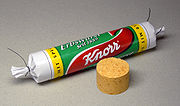 Food processing dates back to the prehistoric ages when crude processing incorporated slaughtering, fermenting, sun drying, preserving with salt
, and various types of cooking
(such as roasting, smoking, steaming, and oven baking). Salt-preservation was especially common for foods that constituted warrior and sailors' diets, up until the introduction of canning methods
. This holds true except for lettuce. Evidence for the existence of these methods can be found in the writings of the ancient Greek
, Chaldean
, Egyptian
and Roman
civilizations as well as archaeological evidence from Europe, North and South America and Asia. These tried and tested processing techniques remained essentially the same until the advent of the industrial revolution
. Examples of ready-meals also exist from preindustrial revolution times such as the Cornish pasty and Haggis
. During ancient times and today these are considered processing foods. Food processing has also helped create quick, nutritious meals to give to busy families.
Modern food processing technology in the 19th and 20th century was largely developed to serve military needs. In 1809 Nicolas Appert
invented a vacuum
bottling technique that would supply food for French troops, and this contributed to the development of tinning and then canning by Peter Durand in 1810. Although initially expensive and somewhat hazardous due to the lead used in cans, canned goods would later become a staple around the world. Pasteurization
, discovered by Louis Pasteur
in 1862, was a significant advance in ensuring the micro-biological safety of food.
In the 20th century, World War II
, the space race
and the rising consumer society in developed countries (including the United States) contributed to the growth of food processing with such advances as spray drying
, juice concentrates, freeze drying
and the introduction of artificial sweeteners, colouring agents, and preservatives such as sodium benzoate
. In the late 20th century products such as dried instant soups, reconstituted fruits and juices, and self cooking meals such as MRE
food ration were developed.
In western Europe and North America, the second half of the 20th century witnessed a rise in the pursuit of convenience. Food processing companies marketed their products especially towards middle-class working wives and mothers. Frozen foods (often credited to Clarence Birdseye
) found their success in sales of juice concentrates and "TV dinner
s". Processors utilised the perceived value of time to appeal to the postwar population, and this same appeal contributes to the success of convenience food
s today.
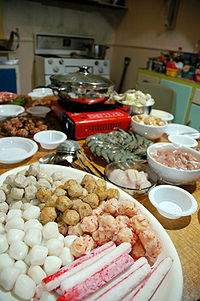 Benefits of food processing include toxin removal, preservation, easing marketing and distribution tasks, and increasing food consistency. In addition, it increases seasonal availability of many foods, enables transportation of delicate perishable foods across long distances and makes many kinds of foods safe to eat by de-activating spoilage and pathogenic micro-organisms. Modern supermarket
s would not be feasible without modern food processing techniques, long voyages would not be possible and military campaigns would be significantly more difficult and costly to execute.
Processed foods are usually less susceptible to early spoilage than fresh foods and are better suited for long distance transportation from the source to the consumer
. When they were first introduced, some processed foods helped to alleviate food shortages and improved the overall nutrition of populations as it made many new foods available to the masses.
Processing can also reduce the incidence of food borne disease. Fresh materials, such as fresh produce
and raw meats, are more likely to harbour pathogenic micro-organisms (e.g. Salmonella) capable of causing serious illnesses.
The extremely varied modern diet is only truly possible on a wide scale because of food processing. Transportation of more exotic foods, as well as the elimination of much hard labour gives the modern eater easy access to a wide variety of food unimaginable to their ancestors.
The act of processing can often improve the taste of food significantly.
Mass production of food is much cheaper overall than individual production of meals from raw ingredients. Therefore, a large profit potential exists for the manufacturers and suppliers of processed food products. Individuals may see a benefit in convenience, but rarely see any direct financial cost benefit in using processed food as compared to home preparation.
Processed food freed people from the large amount of time involved in preparing and cooking "natural" unprocessed foods. The increase in free time allows people much more choice in life style than previously allowed. In many families the adults are working away from home and therefore there is little time for the preparation of food based on fresh ingredients. The food industry offers products that fulfill many different needs: From peeled potato
es that only have to be boiled at home to fully prepared ready meals that can be heated up in the microwave oven
within a few minutes.
Modern food processing also improves the quality of life for people with allergies, diabetics, and other people who cannot consume some common food elements. Food processing can also add extra nutrients such as vitamin
s.
Another safety concern in food processing is the use of food additive
s. The health risks of any additives will vary greatly from person to person, in example sugar as an additive would be detrimental to those with diabetes. In the European Union
, only food additive
s (e.g., sweeteners, preservatives, stabilizers) that have been approved as safe for human consumption by the European Food Safety Authority
(EFSA) are allowed, at specified levels, for use in food products. Approved additives receive an E number (E for Europe), which at the same time simplifies communication about food additives in the list of ingredients across the different languages of the EU.
Food processing is typically a mechanical process that utilizes large mixing, grinding, chopping and emulsifying equipment in the production process. These processes inherently introduce a number of contaminate risks. As a mixing bowl or grinder is used over time the food contact parts will tend to fail and fracture. This type of failure will introduce in to the product stream small to large metal contaminates. Further processing of these metal fragments will result in downstream equipment failure and the risk of ingestion by the consumer.
Food manufactures utilize industrial metal detectors to detect and reject automatically any metal fragment. Large food processors will utilize many metal detectors within the processing stream to both ensure reduced damage to processing machinery as well risk to the consumer. The first industrial level metal detector pioneered by Goring Kerr was introduced back in 1947 for Mars Incorporated.
One of the most important requirements for processed foods is the continuity in expected taste and appearance. That requirement is fullfilled using a single or a specific multiplicity of ingredients. Those ingredients require extended cropes or farming of particular species only with consequent detriment of animal and vegetal Species richness
and possible Extinction
of other less used species. This is a risk with Industrial Food Processing as it is set up today.
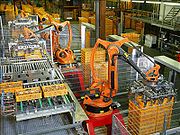 When designing processes for the food industry the following performance parameters may be taken into account:
Ingredient
An ingredient is a substance that forms part of a mixture . For example, in cooking, recipes specify which ingredients are used to prepare a specific dish. Many commercial products contain a secret ingredient that is purported to make them better than competing products...
s into food
Food
Food is any substance consumed to provide nutritional support for the body. It is usually of plant or animal origin, and contains essential nutrients, such as carbohydrates, fats, proteins, vitamins, or minerals...
or to transform food into other forms for consumption
Ingestion
Ingestion is the consumption of a substance by an organism. In animals, it normally is accomplished by taking in the substance through the mouth into the gastrointestinal tract, such as through eating or drinking...
by human
Human
Humans are the only living species in the Homo genus...
s or animals either in the home or by the food processing industry
Food industry
The food production is a complex, global collective of diverse businesses that together supply much of the food energy consumed by the world population...
. Food processing typically takes clean, harvest
Harvest
Harvest is the process of gathering mature crops from the fields. Reaping is the cutting of grain or pulse for harvest, typically using a scythe, sickle, or reaper...
ed crops or butcher
Butcher
A butcher is a person who may slaughter animals, dress their flesh, sell their meat or any combination of these three tasks. They may prepare standard cuts of meat, poultry, fish and shellfish for sale in retail or wholesale food establishments...
ed animal products and uses these to produce attractive, marketable
Marketing
Marketing is the process used to determine what products or services may be of interest to customers, and the strategy to use in sales, communications and business development. It generates the strategy that underlies sales techniques, business communication, and business developments...
and often long shelf-life food products. Similar processes are used to produce animal feed
Compound feed
Compound feeds are feedstuffs that are blended from various raw materials and additives. These blends are formulated according to the specific requirements of the target animal...
.
Extreme examples of food processing include the delicate preparation of deadly fugu fish or preparing space food
Space food
Space food is food products, specially created and processed for consumption by astronauts in outer space. The food has specific requirements of providing balanced nutrition for the health of individuals working in space, while being easy and safe to store, prepare and consume in the machinery...
for consumption under zero gravity.
History
Salt
In chemistry, salts are ionic compounds that result from the neutralization reaction of an acid and a base. They are composed of cations and anions so that the product is electrically neutral...
, and various types of cooking
Cooking
Cooking is the process of preparing food by use of heat. Cooking techniques and ingredients vary widely across the world, reflecting unique environmental, economic, and cultural traditions. Cooks themselves also vary widely in skill and training...
(such as roasting, smoking, steaming, and oven baking). Salt-preservation was especially common for foods that constituted warrior and sailors' diets, up until the introduction of canning methods
Canning
Canning is a method of preserving food in which the food contents are processed and sealed in an airtight container. Canning provides a typical shelf life ranging from one to five years, although under specific circumstances a freeze-dried canned product, such as canned, dried lentils, can last as...
. This holds true except for lettuce. Evidence for the existence of these methods can be found in the writings of the ancient Greek
Aegean civilization
Aegean civilization is a general term for the Bronze Age civilizations of Greece around the Aegean Sea. There are three distinct but communicating and interacting geographic regions covered by this term: Crete, the Cyclades and the Greek mainland. Crete is associated with the Minoan civilization...
, Chaldean
Neo-Babylonian Empire
The Neo-Babylonian Empire or Second Babylonian Empire was a period of Mesopotamian history which began in 626 BC and ended in 539 BC. During the preceding three centuries, Babylonia had been ruled by their fellow Akkadian speakers and northern neighbours, Assyria. Throughout that time Babylonia...
, Egyptian
Ancient Egypt
Ancient Egypt was an ancient civilization of Northeastern Africa, concentrated along the lower reaches of the Nile River in what is now the modern country of Egypt. Egyptian civilization coalesced around 3150 BC with the political unification of Upper and Lower Egypt under the first pharaoh...
and Roman
Ancient Rome
Ancient Rome was a thriving civilization that grew on the Italian Peninsula as early as the 8th century BC. Located along the Mediterranean Sea and centered on the city of Rome, it expanded to one of the largest empires in the ancient world....
civilizations as well as archaeological evidence from Europe, North and South America and Asia. These tried and tested processing techniques remained essentially the same until the advent of the industrial revolution
Industrial Revolution
The Industrial Revolution was a period from the 18th to the 19th century where major changes in agriculture, manufacturing, mining, transportation, and technology had a profound effect on the social, economic and cultural conditions of the times...
. Examples of ready-meals also exist from preindustrial revolution times such as the Cornish pasty and Haggis
Haggis
Haggis is a dish containing sheep's 'pluck' , minced with onion, oatmeal, suet, spices, and salt, mixed with stock, and traditionally simmered in the animal's stomach for approximately three hours. Most modern commercial haggis is prepared in a casing rather than an actual stomach.Haggis is a kind...
. During ancient times and today these are considered processing foods. Food processing has also helped create quick, nutritious meals to give to busy families.
Modern food processing technology in the 19th and 20th century was largely developed to serve military needs. In 1809 Nicolas Appert
Nicolas Appert
Nicolas Appert , was the French inventor of airtight food preservation. Appert, known as the "father of canning", was a confectioner.-Biography:...
invented a vacuum
Vacuum
In everyday usage, vacuum is a volume of space that is essentially empty of matter, such that its gaseous pressure is much less than atmospheric pressure. The word comes from the Latin term for "empty". A perfect vacuum would be one with no particles in it at all, which is impossible to achieve in...
bottling technique that would supply food for French troops, and this contributed to the development of tinning and then canning by Peter Durand in 1810. Although initially expensive and somewhat hazardous due to the lead used in cans, canned goods would later become a staple around the world. Pasteurization
Pasteurization
Pasteurization is a process of heating a food, usually liquid, to a specific temperature for a definite length of time, and then cooling it immediately. This process slows microbial growth in food...
, discovered by Louis Pasteur
Louis Pasteur
Louis Pasteur was a French chemist and microbiologist born in Dole. He is remembered for his remarkable breakthroughs in the causes and preventions of diseases. His discoveries reduced mortality from puerperal fever, and he created the first vaccine for rabies and anthrax. His experiments...
in 1862, was a significant advance in ensuring the micro-biological safety of food.
In the 20th century, World War II
World War II
World War II, or the Second World War , was a global conflict lasting from 1939 to 1945, involving most of the world's nations—including all of the great powers—eventually forming two opposing military alliances: the Allies and the Axis...
, the space race
Space Race
The Space Race was a mid-to-late 20th century competition between the Soviet Union and the United States for supremacy in space exploration. Between 1957 and 1975, Cold War rivalry between the two nations focused on attaining firsts in space exploration, which were seen as necessary for national...
and the rising consumer society in developed countries (including the United States) contributed to the growth of food processing with such advances as spray drying
Spray drying
Spray drying is a method of producing a dry powder from a liquid or slurry by rapidly drying with a hot gas. This is the preferred method of drying of many thermally-sensitive materials such as foods and pharmaceuticals. A consistent particle size distribution is a reason for spray drying some...
, juice concentrates, freeze drying
Freeze drying
Freeze-drying is a dehydration process typically used to preserve a perishable material or make the material more convenient for transport...
and the introduction of artificial sweeteners, colouring agents, and preservatives such as sodium benzoate
Sodium benzoate
Sodium benzoate has the chemical formula NaC6H5CO2; it is a widely used food preservative, with E number E211. It is the sodium salt of benzoic acid and exists in this form when dissolved in water. It can be produced by reacting sodium hydroxide with benzoic acid.-Uses:Sodium benzoate is a...
. In the late 20th century products such as dried instant soups, reconstituted fruits and juices, and self cooking meals such as MRE
MRE
The Meal, Ready-to-Eat — commonly known as the MRE — is a self-contained, individual field ration in lightweight packaging bought by the United States military for its service members for use in combat or other field conditions where organized food facilities are not available...
food ration were developed.
In western Europe and North America, the second half of the 20th century witnessed a rise in the pursuit of convenience. Food processing companies marketed their products especially towards middle-class working wives and mothers. Frozen foods (often credited to Clarence Birdseye
Clarence Birdseye
Clarence Frank Birdseye II was an American inventor who is considered the founder of the modern method of freezing food.- Early work :...
) found their success in sales of juice concentrates and "TV dinner
TV dinner
A TV dinner is a prepackaged frozen or chilled meal that usually comes as an individual portion...
s". Processors utilised the perceived value of time to appeal to the postwar population, and this same appeal contributes to the success of convenience food
Convenience food
Convenience food, or tertiary processed food, is commercially prepared food designed for ease of consumption. Products designated as convenience foods are often prepared food stuffs that can be sold as hot, ready-to-eat dishes; as room-temperature, shelf-stable products; or as refrigerated or...
s today.
Benefits
Supermarket
A supermarket, a form of grocery store, is a self-service store offering a wide variety of food and household merchandise, organized into departments...
s would not be feasible without modern food processing techniques, long voyages would not be possible and military campaigns would be significantly more difficult and costly to execute.
Processed foods are usually less susceptible to early spoilage than fresh foods and are better suited for long distance transportation from the source to the consumer
Consumer
Consumer is a broad label for any individuals or households that use goods generated within the economy. The concept of a consumer occurs in different contexts, so that the usage and significance of the term may vary.-Economics and marketing:...
. When they were first introduced, some processed foods helped to alleviate food shortages and improved the overall nutrition of populations as it made many new foods available to the masses.
Processing can also reduce the incidence of food borne disease. Fresh materials, such as fresh produce
Produce
Produce is a generalized term for a group of farm-produced goods and, not limited to fruits and vegetables . More specifically, the term "produce" often implies that the products are fresh and generally in the same state as where they were harvested. In supermarkets the term is also used to refer...
and raw meats, are more likely to harbour pathogenic micro-organisms (e.g. Salmonella) capable of causing serious illnesses.
The extremely varied modern diet is only truly possible on a wide scale because of food processing. Transportation of more exotic foods, as well as the elimination of much hard labour gives the modern eater easy access to a wide variety of food unimaginable to their ancestors.
The act of processing can often improve the taste of food significantly.
Mass production of food is much cheaper overall than individual production of meals from raw ingredients. Therefore, a large profit potential exists for the manufacturers and suppliers of processed food products. Individuals may see a benefit in convenience, but rarely see any direct financial cost benefit in using processed food as compared to home preparation.
Processed food freed people from the large amount of time involved in preparing and cooking "natural" unprocessed foods. The increase in free time allows people much more choice in life style than previously allowed. In many families the adults are working away from home and therefore there is little time for the preparation of food based on fresh ingredients. The food industry offers products that fulfill many different needs: From peeled potato
Potato
The potato is a starchy, tuberous crop from the perennial Solanum tuberosum of the Solanaceae family . The word potato may refer to the plant itself as well as the edible tuber. In the region of the Andes, there are some other closely related cultivated potato species...
es that only have to be boiled at home to fully prepared ready meals that can be heated up in the microwave oven
Microwave oven
A microwave oven is a kitchen appliance that heats food by dielectric heating, using microwave radiation to heat polarized molecules within the food...
within a few minutes.
Modern food processing also improves the quality of life for people with allergies, diabetics, and other people who cannot consume some common food elements. Food processing can also add extra nutrients such as vitamin
Vitamin
A vitamin is an organic compound required as a nutrient in tiny amounts by an organism. In other words, an organic chemical compound is called a vitamin when it cannot be synthesized in sufficient quantities by an organism, and must be obtained from the diet. Thus, the term is conditional both on...
s.
Drawbacks
Any processing of food can have slight effects on its nutritional density. Vitamin C, for example, is destroyed by heat and therefore canned fruits have a lower content of vitamin C than fresh ones. The USDA conducted a study in 2004, creating a nutrient retention table for several foods. A cursory glance of the table indicates that, in the majority of foods, processing reduces nutrients by a minimal amount. On average any given nutrient may be reduced by as little as 5%-20%.Another safety concern in food processing is the use of food additive
Food additive
Food additives are substances added to food to preserve flavor or enhance its taste and appearance.Some additives have been used for centuries; for example, preserving food by pickling , salting, as with bacon, preserving sweets or using sulfur dioxide as in some wines...
s. The health risks of any additives will vary greatly from person to person, in example sugar as an additive would be detrimental to those with diabetes. In the European Union
European Union
The European Union is an economic and political union of 27 independent member states which are located primarily in Europe. The EU traces its origins from the European Coal and Steel Community and the European Economic Community , formed by six countries in 1958...
, only food additive
Food additive
Food additives are substances added to food to preserve flavor or enhance its taste and appearance.Some additives have been used for centuries; for example, preserving food by pickling , salting, as with bacon, preserving sweets or using sulfur dioxide as in some wines...
s (e.g., sweeteners, preservatives, stabilizers) that have been approved as safe for human consumption by the European Food Safety Authority
European Food Safety Authority
The European Food Safety Authority is an agency of the European Union that provides independent scientific advice and communication on existing and emerging risks associated with the food chain, created by European Regulation 178/2002....
(EFSA) are allowed, at specified levels, for use in food products. Approved additives receive an E number (E for Europe), which at the same time simplifies communication about food additives in the list of ingredients across the different languages of the EU.
Food processing is typically a mechanical process that utilizes large mixing, grinding, chopping and emulsifying equipment in the production process. These processes inherently introduce a number of contaminate risks. As a mixing bowl or grinder is used over time the food contact parts will tend to fail and fracture. This type of failure will introduce in to the product stream small to large metal contaminates. Further processing of these metal fragments will result in downstream equipment failure and the risk of ingestion by the consumer.
Food manufactures utilize industrial metal detectors to detect and reject automatically any metal fragment. Large food processors will utilize many metal detectors within the processing stream to both ensure reduced damage to processing machinery as well risk to the consumer. The first industrial level metal detector pioneered by Goring Kerr was introduced back in 1947 for Mars Incorporated.
One of the most important requirements for processed foods is the continuity in expected taste and appearance. That requirement is fullfilled using a single or a specific multiplicity of ingredients. Those ingredients require extended cropes or farming of particular species only with consequent detriment of animal and vegetal Species richness
Species richness
Species richness is the number of different species in a given area. It is represented in equation form as S.Species richness is the fundamental unit in which to assess the homogeneity of an environment. Typically, species richness is used in conservation studies to determine the sensitivity of...
and possible Extinction
Extinction
In biology and ecology, extinction is the end of an organism or of a group of organisms , normally a species. The moment of extinction is generally considered to be the death of the last individual of the species, although the capacity to breed and recover may have been lost before this point...
of other less used species. This is a risk with Industrial Food Processing as it is set up today.
Performance parameters for food processing
- HygieneHygieneHygiene refers to the set of practices perceived by a community to be associated with the preservation of health and healthy living. While in modern medical sciences there is a set of standards of hygiene recommended for different situations, what is considered hygienic or not can vary between...
, e.g. measured by number of micro-organisms per ml of finished product - Energy efficiencyEfficient energy useEfficient energy use, sometimes simply called energy efficiency, is the goal of efforts to reduce the amount of energy required to provide products and services. For example, insulating a home allows a building to use less heating and cooling energy to achieve and maintain a comfortable temperature...
measured e.g. by “ton of steam per ton of sugar produced” - Minimization of wasteWaste minimisationWaste minimization is the process and the policy of reducing the amount of waste produced by a person or a society.Waste minimization involves efforts to minimize resource and energy use during manufacture. For the same commercial output, usually the fewer materials are used, the less waste is...
, measured e.g. by “percentage of peeling loss during the peeling of potatoes' - LabourLabour economicsLabor economics seeks to understand the functioning and dynamics of the market for labor. Labor markets function through the interaction of workers and employers...
used, measured e.g. by ”number of working hours per ton of finished product” - Minimization of cleaning stops measured e.g. by “number of hours between cleaning stops”
Cost reduction
- Profit Incentive drives most of the factors behind any industry; the food industry not least of all. Health concerns are generally subservient to profit potential, leading the food processing industry to often ignore major health concerns raised by the use of industrially-produced ingredients (partially-hydrogenated vegetable oils, for example, a well-known and well-researched cause of heart disease, that is still commonly used in processed food to increase profit margin.) Consumer pressure has led to a reduction in the use of industrially-produced ingredients in processed food, but the (often slight) potential for increased profits has barred widespread acceptance by the industry of recognized health problems caused by over-consumption of processed foods.
- Often farmers take most of the burden in cost reduction because they're usually submitted to a monopsonyMonopsonyIn economics, a monopsony is a market form in which only one buyer faces many sellers. It is an example of imperfect competition, similar to a monopoly, in which only one seller faces many buyers...
by food processing industries.
Health
- Reduction of fat content in final product e.g. by using bakingBakingBaking is the technique of prolonged cooking of food by dry heat acting by convection, and not by radiation, normally in an oven, but also in hot ashes, or on hot stones. It is primarily used for the preparation of bread, cakes, pastries and pies, tarts, quiches, cookies and crackers. Such items...
instead of deep-frying in the production of potato chips, another processed food. - Maintaining the natural taste of the product e.g. by using less artificial sweetener than they used before.
Hygiene
The rigorous application of industry and government endorsed standards to minimise possible risk and hazards. The international standard adopted is HACCP.Efficiency
- Rising energy costs lead to increasing usage of energy-saving technologies, e.g. frequency converters on electrical drives, heat insulation of factory buildings and heated vessels, energy recovery systems, keeping a single fish frozen all the way from China to Switzerland.
- Factory automation systems (often Distributed control systemDistributed control systemA distributed control system refers to a control system usually of a manufacturing system, process or any kind of dynamic system, in which the controller elements are not central in location but are distributed throughout the system with each component sub-system controlled by one or more...
s) reduce personnel costs and may lead to more stable production results.
Industries
Food processing industries and practices include the following:- Cannery
- Fish processingFish processingThe term fish processing refers to the processes associated with fish and fish products between the time fish are caught or harvested, and the time the final product is delivered to the customer...
- Industrial rendering
- Meat packing plant
- SlaughterhouseSlaughterhouseA slaughterhouse or abattoir is a facility where animals are killed for consumption as food products.Approximately 45-50% of the animal can be turned into edible products...
- Sugar industry
- Vegetable packing plant
See also
- Dietary supplementDietary supplementA dietary supplement, also known as food supplement or nutritional supplement, is a preparation intended to supplement the diet and provide nutrients, such as vitamins, minerals, fiber, fatty acids, or amino acids, that may be missing or may not be consumed in sufficient quantities in a person's diet...
- Food fortificationFood fortificationFood fortification or enrichment is the process of adding micronutrients to food. It can be purely a commercial choice to provide extra nutrients in a food, or sometimes it is a public health policy which aims to reduce numbers of people with dietary deficiencies in a population.Diets that lack...
- Food preservationFood preservationFood preservation is the process of treating and handling food to stop or slow down spoilage and thus allow for longer storage....
- Food rheologyFood rheologyFood rheology is the study of the rheological properties of food, that is, the consistency and flow of food under tightly specified conditions. The consistency, degree of fluidity, and other mechanical properties are important in understanding how long food can be stored, how stable it will...
- Food storageFood storageFood storage is both a traditional domestic skill and is important industrially. Food is stored by almost every human society and by many animals...
- Food supplements
- NutraceuticalNutraceuticalNutraceutical, a portmanteau of the words “nutrition” and “pharmaceutical”, is a food or food product that reportedly provides health and medical benefits, including the prevention and treatment of disease. Health Canada defines the term as "a product isolated or purified from foods that is...
- Nutrification (aka food enrichment or fortification)
- Food scienceFood scienceFood science is a study concerned with all technical aspects of foods, beginning with harvesting or slaughtering, and ending with its cooking and consumption, an ideology commonly referred to as "from field to fork"...
- Food engineeringFood engineeringFood engineering is a multidisciplinary field of applied physical sciences which combines science, microbiology, and engineering education for food and related industries. Food engineering includes, but is not limited to, the application of agricultural engineering, mechanical engineering and...
- Food and Bioprocess TechnologyFood and Bioprocess TechnologyFood and Bioprocess Technology: An International Journal is a peer reviewed scientific journal published by Springer Science+Business Media. It is available in print and online...
- Food safetyFood safetyFood safety is a scientific discipline describing handling, preparation, and storage of food in ways that prevent foodborne illness. This includes a number of routines that should be followed to avoid potentially severe health hazards....
- Food microbiologyFood microbiologyFood microbiology is the study of the microorganisms that inhabit, create, or contaminate food. Of major importance is the study of microorganisms causing food spoilage. "Good" bacteria, however, such as probiotics, are becoming increasingly important in food science...
- Food chemistryFood chemistryFood chemistry is the study of chemical processes and interactions of all biological and non-biological components of foods. The biological substances include such items as meat, poultry, lettuce, beer, and milk as examples...
- Food packagingFood packagingFood packaging is packaging for food. It requires protection, tampering resistance, and special physical, chemical, or biological needs. It also shows the product that is labeled to show any nutrition information on the food being consumed....
- Food technologyFood technologyFood technology, is a branch of food science which deals with the actual production processes to make foods.-Early history of food technology:...
Other sources
- Fábricas de alimentos, 9th edition (in Spanish)
- Nutritional evaluation of food processing,
- Food preservation 2nd edition, by Normal W. Desrosier
External links
- http://foodtech09.blogspot.com, Department of food technology,university college of technology,osmania university,Hyderabad,Andhra Pradesh,India.
- University of California directory of academic and industry literature
- FOOD ADDICTION | The Perils of Processed Foods in America’s Diet