

Fire and brimstone

Encyclopedia
Fire and brimstone is an idiomatic expression of signs of God's wrath in the Hebrew Bible
(Old Testament
) and the New Testament
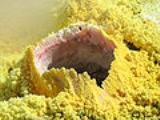
. In the Bible, they often appear in reference to the fate of the unfaithful. "Brimstone," possibly the ancient name for sulfur
, evokes the acrid odor of volcanic
activity. The term is also used, sometimes pejoratively, to describe a style of Christian preaching
that uses vivid descriptions of judgment and eternal damnation
to encourage repentance.
 In The King James translation of the Bible often renders passages about fiery torments with the phrase "fire and brimstone". In Genesis 19, God
destroys Sodom and Gomorrah
via a rain of fire and brimstone, and in Deuteronomy
29, the Israelites are threatened with the same punishment should they abandon their covenant with God. Elsewhere, divine judgments involving fire and sulfur are prophesied against Assyria
(Isaiah
30), Edom
(Isaiah 34), Gog
(Ezekiel
38), and all the wicked (Psalm 11).
As an interesting side note, the breath of God, in Isaiah 30:33, is compared to Brimstone: "The Breath of Jehovah, like a stream of Brimstone, doth kindle it."
Fire and brimstone frequently appear as agents of divine wrath throughout the Book of Revelation
culminating in chapters 19–21, wherein the devil and the ungodly are cast into a lake of fire and brimstone as an eternal punishment:
"And the beast
was taken, and with him the false prophet
that wrought miracles before him, with which he deceived them that had received the mark of the beast, and them that worshipped his image. These both were cast alive into a lake of fire burning with brimstone" (Revelation
19:20, KJV).
"And the devil that deceived them was cast into the lake of fire and brimstone, where the beast and the false prophet are, and shall be tormented day and night for ever and ever" (Revelation 20:10, KJV).
"But the fearful, and unbelieving, and the abominable, and murderers, and whoremongers
, and sorcerers, and idolaters, and all liar
s, shall have their part in the lake which burneth with fire and brimstone: which is the second death" (Revelation 21:8, KJV).
The specific mentions to brimstone are, of course, translational; later translations (i.e. NIV
) refer instead to sulfur. Also, there is disagreement over the interpretation. One view is that they show how sinfulness and rejection of God's love can result in serious problems. Others suggest that they represent an active inflicting of punishment by God.
ic passages, especially Chapter 26:160-175 which reads: "The people of Lut rejected the apostles. Behold, their brother Lut said to them: "Will ye not fear (God)? "I am to you an apostle worthy of all trust. "So fear God and obey me. "No reward do I ask of you for it: my reward is only from the lord of the Worlds. "Of all the creatures in the world, will ye approach males, "And leave those whom God has created for you to be your mates? Nay, ye are a people transgressing (all limits)!" They said: "If thou desist not, O Lut! thou wilt assuredly be cast out!" He said: "I do detest your doings." "O my Lord! deliver me and my family from such things as they do!" So We delivered him and his family,- all Except an old woman who lingered behind. But the rest We destroyed utterly. We rained down on them a shower (of brimstone): and evil was the shower on those who were admonished (but heeded not)! Verily in this is a Sign: but most of them do not believe. And verily thy Lord is He, the Exalted in Might Most Merciful."
Puritan
preacher Thomas Vincent
(an eyewitness of the Great Fire of London
) authored a book called "Fire and Brimstone in Hell", first published in 1670. In it he quotes from Psalm 11:6 "Upon the wicked he shall rain snares, fire and brimstone, and a horrible tempest, this shall be the portion of their cup."
Preachers such as Jonathan Edwards and George Whitefield
were referred to as "fire and brimstone preachers" during the Great Awakening
of the 1730s and 1740s. Edwards' "Sinners in the Hands of an Angry God
" remains among the best-known sermons from this period. Reports of one occasion when Edwards preached it said that many of the audience burst out weeping, and others cried out in anguish or even fainted.
Bible
The Bible refers to any one of the collections of the primary religious texts of Judaism and Christianity. There is no common version of the Bible, as the individual books , their contents and their order vary among denominations...
(Old Testament
Old Testament
The Old Testament, of which Christians hold different views, is a Christian term for the religious writings of ancient Israel held sacred and inspired by Christians which overlaps with the 24-book canon of the Masoretic Text of Judaism...
) and the New Testament
New Testament
The New Testament is the second major division of the Christian biblical canon, the first such division being the much longer Old Testament....
. In the Bible, they often appear in reference to the fate of the unfaithful. "Brimstone," possibly the ancient name for sulfur
Sulfur
Sulfur or sulphur is the chemical element with atomic number 16. In the periodic table it is represented by the symbol S. It is an abundant, multivalent non-metal. Under normal conditions, sulfur atoms form cyclic octatomic molecules with chemical formula S8. Elemental sulfur is a bright yellow...
, evokes the acrid odor of volcanic
Volcano
2. Bedrock3. Conduit 4. Base5. Sill6. Dike7. Layers of ash emitted by the volcano8. Flank| 9. Layers of lava emitted by the volcano10. Throat11. Parasitic cone12. Lava flow13. Vent14. Crater15...
activity. The term is also used, sometimes pejoratively, to describe a style of Christian preaching
Sermon
A sermon is an oration by a prophet or member of the clergy. Sermons address a Biblical, theological, religious, or moral topic, usually expounding on a type of belief, law or behavior within both past and present contexts...
that uses vivid descriptions of judgment and eternal damnation
Damnation
Damnation is the concept of everlasting divine punishment and/or disgrace, especially the punishment for sin as threatened by God . A damned being "in damnation" is said to be either in Hell, or living in a state wherein they are divorced from Heaven and/or in a state of disgrace from God's favor...
to encourage repentance.
Biblical references
God
God is the English name given to a singular being in theistic and deistic religions who is either the sole deity in monotheism, or a single deity in polytheism....
destroys Sodom and Gomorrah
Sodom and Gomorrah
Sodom and Gomorrah were cities mentioned in the Book of Genesis and later expounded upon throughout the Hebrew Bible, the New Testament and Deuterocanonical sources....
via a rain of fire and brimstone, and in Deuteronomy
Deuteronomy
The Book of Deuteronomy is the fifth book of the Hebrew Bible, and of the Jewish Torah/Pentateuch...
29, the Israelites are threatened with the same punishment should they abandon their covenant with God. Elsewhere, divine judgments involving fire and sulfur are prophesied against Assyria
Assyria
Assyria was a Semitic Akkadian kingdom, extant as a nation state from the mid–23rd century BC to 608 BC centred on the Upper Tigris river, in northern Mesopotamia , that came to rule regional empires a number of times through history. It was named for its original capital, the ancient city of Assur...
(Isaiah
Book of Isaiah
The Book of Isaiah is the first of the Latter Prophets in the Hebrew Bible, preceding the books of Ezekiel, Jeremiah and the Book of the Twelve...
30), Edom
Edom
Edom or Idumea was a historical region of the Southern Levant located south of Judea and the Dead Sea. It is mentioned in biblical records as a 1st millennium BC Iron Age kingdom of Edom, and in classical antiquity the cognate name Idumea was used to refer to a smaller area in the same region...
(Isaiah 34), Gog
Gog
Gog, Gogg or Gogs may refer to:Biblical:* Gog and MagogPeople:* Anikó Góg, Hungarian triathlete* Gog or "gogledd", a person from North Wales from the Welsh word for "north"...
(Ezekiel
Book of Ezekiel
The Book of Ezekiel is the third of the Latter Prophets in the Hebrew Bible, following the books of Isaiah and Jeremiah and preceding the Book of the Twelve....
38), and all the wicked (Psalm 11).
As an interesting side note, the breath of God, in Isaiah 30:33, is compared to Brimstone: "The Breath of Jehovah, like a stream of Brimstone, doth kindle it."
Fire and brimstone frequently appear as agents of divine wrath throughout the Book of Revelation
Book of Revelation
The Book of Revelation is the final book of the New Testament. The title came into usage from the first word of the book in Koine Greek: apokalupsis, meaning "unveiling" or "revelation"...
culminating in chapters 19–21, wherein the devil and the ungodly are cast into a lake of fire and brimstone as an eternal punishment:
"And the beast
Antichrist
The term or title antichrist, in Christian theology, refers to a leader who fulfills Biblical prophecies concerning an adversary of Christ, while resembling him in a deceptive manner...
was taken, and with him the false prophet
False prophet
In religion, a false prophet is one who falsely claims the gift of prophecy, or who uses that gift for evil ends. Often, someone who is considered a "true prophet" by some people is simultaneously considered a "false prophet" by others....
that wrought miracles before him, with which he deceived them that had received the mark of the beast, and them that worshipped his image. These both were cast alive into a lake of fire burning with brimstone" (Revelation
Book of Revelation
The Book of Revelation is the final book of the New Testament. The title came into usage from the first word of the book in Koine Greek: apokalupsis, meaning "unveiling" or "revelation"...
19:20, KJV).
"And the devil that deceived them was cast into the lake of fire and brimstone, where the beast and the false prophet are, and shall be tormented day and night for ever and ever" (Revelation 20:10, KJV).
"But the fearful, and unbelieving, and the abominable, and murderers, and whoremongers
Pimp
A pimp is an agent for prostitutes who collects part of their earnings. The pimp may receive this money in return for advertising services, physical protection, or for providing a location where she may engage clients...
, and sorcerers, and idolaters, and all liar
Liar
Liar or The Liar may refer to:* A person who tells a lie- Film and television :* Liar , UK name for the 1997 film Deceiver, starring Chris Penn, Tim Roth, Ellen Burstyn, and Renée Zellweger...
s, shall have their part in the lake which burneth with fire and brimstone: which is the second death" (Revelation 21:8, KJV).
The specific mentions to brimstone are, of course, translational; later translations (i.e. NIV
New International Version
The New International Version is an English translation of the Christian Bible. Published by Zondervan in the United States and by Hodder & Stoughton in the UK, it has become one of the most popular modern translations in history.-History:...
) refer instead to sulfur. Also, there is disagreement over the interpretation. One view is that they show how sinfulness and rejection of God's love can result in serious problems. Others suggest that they represent an active inflicting of punishment by God.
Islamic reference
The story of prophet Lot finds mention in several Qur'anQur'an
The Quran , also transliterated Qur'an, Koran, Alcoran, Qur’ān, Coran, Kuran, and al-Qur’ān, is the central religious text of Islam, which Muslims consider the verbatim word of God . It is regarded widely as the finest piece of literature in the Arabic language...
ic passages, especially Chapter 26:160-175 which reads: "The people of Lut rejected the apostles. Behold, their brother Lut said to them: "Will ye not fear (God)? "I am to you an apostle worthy of all trust. "So fear God and obey me. "No reward do I ask of you for it: my reward is only from the lord of the Worlds. "Of all the creatures in the world, will ye approach males, "And leave those whom God has created for you to be your mates? Nay, ye are a people transgressing (all limits)!" They said: "If thou desist not, O Lut! thou wilt assuredly be cast out!" He said: "I do detest your doings." "O my Lord! deliver me and my family from such things as they do!" So We delivered him and his family,- all Except an old woman who lingered behind. But the rest We destroyed utterly. We rained down on them a shower (of brimstone): and evil was the shower on those who were admonished (but heeded not)! Verily in this is a Sign: but most of them do not believe. And verily thy Lord is He, the Exalted in Might Most Merciful."
History
Brimstone was not only associated with the wrath of God or judgment but it was also used as a purifying agent. The Greek Orthodox would burn brimstone to ward off evil and disease. Some might state that this is why God's breath is compared with Brimstone and why brimstone is often used in carrying out divine judgment. That is, the brimstone is used to purify the land from evil.Puritan
Puritan
The Puritans were a significant grouping of English Protestants in the 16th and 17th centuries. Puritanism in this sense was founded by some Marian exiles from the clergy shortly after the accession of Elizabeth I of England in 1558, as an activist movement within the Church of England...
preacher Thomas Vincent
Thomas Vincent
Thomas Vincent was an English Puritan minister and author.-Life:Both his father and brother were prominent ministers. He was the second son of John Vincent and elder brother of Nathaniel Vincent, born at Hertford in May 1634...
(an eyewitness of the Great Fire of London
Great Fire of London
The Great Fire of London was a major conflagration that swept through the central parts of the English city of London, from Sunday, 2 September to Wednesday, 5 September 1666. The fire gutted the medieval City of London inside the old Roman City Wall...
) authored a book called "Fire and Brimstone in Hell", first published in 1670. In it he quotes from Psalm 11:6 "Upon the wicked he shall rain snares, fire and brimstone, and a horrible tempest, this shall be the portion of their cup."
Preachers such as Jonathan Edwards and George Whitefield
George Whitefield
George Whitefield , also known as George Whitfield, was an English Anglican priest who helped spread the Great Awakening in Britain, and especially in the British North American colonies. He was one of the founders of Methodism and of the evangelical movement generally...
were referred to as "fire and brimstone preachers" during the Great Awakening
First Great Awakening
The First Awakening was a Christian revitalization movement that swept Protestant Europe and British America, and especially the American colonies in the 1730s and 1740s, leaving a permanent impact on American religion. It resulted from powerful preaching that gave listeners a sense of personal...
of the 1730s and 1740s. Edwards' "Sinners in the Hands of an Angry God
Sinners in the Hands of an Angry God
"Sinners in the Hands of an Angry God" is a sermon written by American Christian theologian Jonathan Edwards, preached on July 8, 1741 in Enfield, Connecticut. Like Edwards' other sermons and writings, it combines vivid imagery of Hell with observations of the world and citations of scripture...
" remains among the best-known sermons from this period. Reports of one occasion when Edwards preached it said that many of the audience burst out weeping, and others cried out in anguish or even fainted.