
Home      Discussion      Topics      Dictionary      Almanac
Signup       Login
Ferdinand von Zeppelin

Ferdinand von Zeppelin

Discussion
Ask a question about 'Ferdinand von Zeppelin'
Start a new discussion about 'Ferdinand von Zeppelin'
Answer questions from other users
Full Discussion Forum
 
Encyclopedia

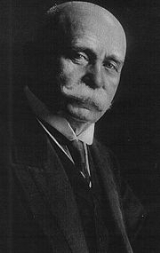
Ferdinand Adolf Heinrich August Graf von Zeppelin (also known as Ferdinand Graf von Zeppelin, Graf Zeppelin and in English, Count Zeppelin) (8 July 1838 – 8 March 1917) was a German general and later aircraft manufacturer, the founder of the Zeppelin
Zeppelin
For the English rock group, please see Led Zeppelin. For other meanings please see Zeppelin .A Zeppelin is a type of rigid airship pioneered by the German Count Ferdinand von Zeppelin in the early 20th century. It was based on designs he had outlined in 1874 and detailed in 1893...

 Airship
Airship
An airship or dirigible is a lighter-than-air aircraft that can be steered and propelled through the air using rudders and propellers or other thrust...

 company. He was born in Konstanz
Konstanz
Konstanz is a university town of around 80,000 inhabitants at the western end of Lake Constance in the south-west corner of Germany, bordering Switzerland.-Location:...

, Grand Duchy of Baden
Grand Duchy of Baden
The Grand Duchy of Baden was a historical state in the southwest of Germany, on the right bank of the Rhine. It existed between 1806 and 1918.-History:...

 (now part of Baden-Württemberg
Baden-Württemberg
Baden-Württemberg is one of the 16 states of the Federal Republic of Germany. Baden-Württemberg is in the southwestern part of the country to the east of the Upper Rhine—but one which has some of its major cities straddling the banks of the Neckar River...

, Germany).

Family and personal life


Ferdinand was the son of Württemberg
Württemberg
Württemberg , formerly known as Wirtemberg, is an area and a former state in southwestern Germany, including parts of the regions Swabia and Franconia....

 Minister and Hofmarschall
Hofmarschall
The Hofmarschall was the administrative official in charge of a princely German court, supervising all its economic affairs....

 Friedrich Jerôme Wilhelm Karl Graf von Zeppelin (1807–1886) and his wife Amélie Françoise Pauline (born Macaire d'Hogguer) (1816–1852). Ferdinand spent his childhood with his sister and brother at their Girsberg manor near Constance
Constance
Constance is a female given name. The name derives from Latin and means "constant."Constance has many different variations, including Connie, Constancia, Constanze, Constanza, Konstanze, etc....

, where he was educated by private resident teachers. and lived there until his death.

In Berlin on 7 August 1869 Ferdinand married Isabella Freiin von Wolff from the house of Alt-Schwanenburg (Livonia). They had a daughter, Helene (Hella) von Zeppelin (1879–1967) who in 1909 married Alexander Graf von Brandenstein-Zeppelin (1881–1949).

Ferdinand had a nephew Baron Max von Gemmingen who was to later volunteer at the start of World War I
World War I
World War I , also known as the First World War, the Great War, and the War to End All Wars, was a global military conflict which involved most of the world's great powers, assembled in two opposing alliances: the Triple Entente and the Triple Alliance...

, after he was past military age, to become general staff officer assigned to the military airship LZ 12 Sachsen.

Army career


In 1853 Count Zeppelin left to attend the polytechnic at Stuttgart, and in 1855 he became a cadet of the military school at Ludwigsburg
Ludwigsburg
Ludwigsburg is a city in Germany, about north of Stuttgart's city center, near the river Neckar. It is the capital of the Ludwigsburg District , and belongs to the Stuttgart Region in the Administrative region of Stuttgart.- History :The middle of Neckarland, in which Ludwigsburg lies, was...

 and then started his career as an army officer in the army of Württemberg.

By 1858 Zeppelin was Leutnant in the Army of Württemberg
Army of Württemberg
The army of the German state of Württemberg was until 1918 known in Germany as the Württembergische Armee. Its troops were maintained by Württemberg for its national defence and as a unit of the Swabian Circle, the Confederation of the Rhine, the German Confederation and finally of the Imperial...

 and that year he was given leave to study science, engineering and chemistry at Tübingen
Tübingen
Tübingen, a traditional university town in Baden-Württemberg, Germany, is situated 30 km southwest of Stuttgart, on a ridge between the Neckar and Ammer rivers.-History:...

. The Prussia
Prussia
Prussia was a historic state originating out of the Duchy of Prussia and the Margraviate of Brandenburg. For centuries this state had substantial influence on German and European history...

ns mobilising for the Austro-Sardinian War
Second Italian War of Independence
The Second War of Italian Independence, Franco-Austrian War, Austro-Sardinian War, or Austro-Piedmontese War, was fought by Napoleon III of France and the Kingdom of Piedmont-Sardinia against the Austrian Empire in 1859...


interrupted this study in 1859 when he was called up to the (Prussian engineering corps
Military engineer
A military engineer is primarily responsible for the design and construction of offensive, defensive, and logistical structures for warfare. Other duties include the layout, placement, maintenance and dismantling of defensive minefields and the clearing of enemy minefields and the construction...

) at Ulm
Ulm
Ulm is a city in the German Bundesland of Baden-Württemberg, situated on the River Danube. The city, whose population is estimated at 120,000 , forms an urban district of its own and is the administrative seat of the Alb-Donau district. Ulm, founded around 850, is rich in history and traditions...

.

In 1863 Zeppelin took leave to act as an observer for the Northern Potomac army in the American Civil War
American Civil War
The American Civil War , also known as the War Between the States and several other names, was a civil war in the United States of America. Eleven Southern slave states declared their secession from the United States and formed the Confederate States of America...

 against the Confederates
Confederate States of America
The Confederate States of America was a separatist political entity existing between 1861 to 1865, established by eleven southern slave states of the United States of America, each of which had previously declared their secession from the United States...

, and later took part in an expedition with Russians and Indians to the source of the Mississippi river and he made his first ascent with Steiner's captive balloon.

In 1865 Zeppelin is appointed adjutant of the King of Württemberg
Charles I of Württemberg
Charles I was the third King of Württemberg, from 25 June 1864 until his death in 1891.He was born 6 March 1823 at Stuttgart, as HRH Charles Frederick Alexander, Crown Prince of Württemberg the son of William I, King of Württemberg and his third wife Pauline of Württemberg .He studied in Berlin...

 and as general staff officer participates in the Austro-Prussian War
Austro-Prussian War
The Austro-Prussian War was a war fought in 1866 between the Austrian Empire and its German allies on one side and the Kingdom of Prussia with its German allies and Italy on the other, that...

 of 1866 and is awarded the Ritterkreuz (Knight's Cross
Knight's Cross
Knight's Cross refers to a distinguishing grade or level of various orders that denotes bravery and leadership on the battlefield....

) of the Order of Distinguished Service of Württemberg. In the Franco-Prussian War
Franco-Prussian War
The Franco-Prussian War or Franco-German War, often referred to in France as the 1870 War was a conflict between France and Prussia. Prussia was aided by the North German Confederation, of which it was a member, and the South German states of Baden, Württemberg and Bavaria...

 of 1870/1871 his extended ride behind enemy lines (an example of reconnaissance in force) made him famous among Germans.

From 1882 until 1885 Zeppelin was commander of the Uhlan
Uhlan
Uhlans were Polish light cavalry armed with lances, sabres and pistols. The title was later used by lancer regiments in the Prussian and Austrian armies....

 regiment in Ulm, and lastly as envoy of Württemberg in Berlin.

In 1890 his role as commander was criticised, leading to his fall from imperial grace and he had to retire from the Army, albeit with the rank of Generalleutnant.

Airships


Ferdinand von Zeppelin visited the balloon camp of Prof. Thaddeus S. C. Lowe
Thaddeus S. C. Lowe
Thaddeus Sobieski Constantine Lowe , also known as Professor T. S. C. Lowe, was an American Civil War aeronaut, scientist and inventor. Lowe lived a life that was full of claims to fame. Despite being born of poor pioneer farming stock, Lowe showed an interest in meteorology with his intent study...

 during the Peninsular Campaign of the American Civil War
American Civil War
The American Civil War , also known as the War Between the States and several other names, was a civil war in the United States of America. Eleven Southern slave states declared their secession from the United States and formed the Confederate States of America...

. The balloons were placed off limits to civilian riders and Lowe was not to entertain the curious von Zeppelin. He sent him to another balloon camp where the German aeronaut John Steiner could be of more help to the young man. In 1869 von Zeppelin returned to America to meet and learn from the experienced Prof. Lowe to gain all the knowledge he could in ballooning.

From the 1880s onward, Zeppelin was preoccupied with the idea of guidable balloons. He had already outlined an overall construction system in 1874, and had written to the King of Württemberg
Charles I of Württemberg
Charles I was the third King of Württemberg, from 25 June 1864 until his death in 1891.He was born 6 March 1823 at Stuttgart, as HRH Charles Frederick Alexander, Crown Prince of Württemberg the son of William I, King of Württemberg and his third wife Pauline of Württemberg .He studied in Berlin...

 stating that Germany was behind France and that only large airships were practical for military use.

After his forced resignation from the military in 1890, Zeppelin worked fulltime on his concept. He hired engineer Theodor Gross to make tests of possible materials, and had the engines of the time assessed for both fuel efficiency and power to weight ratio. He also had air propellers tested and strove to obtain higher purity hydrogen gas from suppliers. Zeppelin was so confident of his concept that in June 1891 he wrote to the King of Württemberg's secretary, announcing he was to start building, and shortly after requested a review from the Prussian Army's Chief of General Staff. The next day Zeppelin gave up as he realised he had underestimated air resistance such that the best engines of the time would not achieve a sufficient velocity.

Zeppelin rethought his position and resumed work on hearing that Rudolf Hans Bartsch von Sigsfeld made light but powerful engines, information soon shown to be overoptimistic. Whereupon Zeppelin urged his supporter Max von Duttenhofer to press Daimler-Motoren-Gesellschaft for more efficient engines so as not to fall behind the French. Duttenhofer wrote to Gross threatening to withdraw support, and Zeppelin shortly sacked Gross, citing Gross' lack of support and that he was "an obstacle in my path".

Despite these setbacks Zeppelin's organization had refined his idea: a rigid aluminium framework covered in a fabric envelope; separate multiple internal gas cells, each free to expand and contract thus obviating the need for ballonet
Ballonet
Ballonets are air-filled flexible containers that are located inside the envelope of a non-rigid or semi-rigid airship. Such an airship can have one or more ballonets, commonly one fore and one aft...

s; modular frame allowing addition of sections and gas cells; controls, engines and gondola rigidly attached. After publishing the idea in 1892 he hired engineer Theodor Kober
Theodor Kober
Theodore Kober was a twentieth century German aviation engineer who contributed to the building of the first Zeppelin. As an engineer Kober had worked for a balloon manufacturer and in the 1890s Count Ferdinand von Zeppelin enlisted him to produce designs for his airship concept. After several...

 who started work testing and further refining the design. Zeppelin submitted Kober's 1893 detailed designs to the Prussian Airship Service, whose committee reviewed it in 1894. In June 1895 this committee then recommended minimum funds be granted, but withdrew and finally rejected the design in July.

On month later, in August 1895, Zeppelin received a patent for Kober's design, described as an "airship-train" (.)

In early 1896 Zeppelin's lecture on steerable airship designs given to the Association of German Engineers (VDI)
Verein Deutscher Ingenieure
Verein Deutscher Ingenieure is an organization of 135,000 engineers and natural scientists.Established in 1856, the VDI is today the largest engineering association in Western Europe....

 so impressed them that the VDI launched a public appeal for financial support for him. This led to a first contact with Carl Berg
Carl Berg (airship builder)
Carl Berg was a German entrepeneur and airship builder.Berg came from a commercial iron-works family. His great grandfather founded a button-making factory on 1786 in Lüdenscheid. In the following generations the factory developed into an important metal-working company...

 who supplied aluminium alloys which Zeppelin had tested, and by May 1898 they, together with Philipp Holzmann
Philipp Holzmann
Philipp Holzmann AG was a German construction company based in Frankfurt am Main.The company was founded in 1849 by Johann Philipp Holzmann at Sprendlingen in present-day Dreieich near Frankfurt am Main as Philipp Holzmann & Cie...

, Daimler, Max von Eyth
Max Eyth
Max Eyth was a German engineer and writer. He was born to Edward Eyth a teacher of Greek and history at an evangelical seminar and his wife Julie. He lived from 1841 to 1852 in Schöntal Abbey and began classes at Stuttgart University in 1852 where he studied mechanical engineering.-External...

, Carl von Linde
Carl von Linde
Professor Doctor Carl Paul Gottfried von Linde was a German engineer who developed refrigeration and gas separation technologies...

, and Friedrich Voith, had formed the joint stock company Gesellschaft zur Förderung der Luftschiffart. Zeppelin invested 441,000 Marks, over half the total capital. Actual construction then started of what was to be the first successful rigid airship, the Zeppelin LZ1
Zeppelin LZ1
The Zeppelin LZ1 was the first truly successful experimental rigid airship, first flown from a floating hangar on Lake Constance, near Friedrichshafen in southern Germany, at 20:03 on 2 July 1900....

.

Legends later arose that Zeppelin had used the patent and design of David Schwarz
David Schwarz (aviation inventor)
David Schwarz a Hungarian aviation pioneer of Jewish ancestry, spending most of his life in Croatia....

's airship of 1897, but these were rejected by Eckener in 1938 and by later reviewers. Zeppelin's design was "radically different" in both its scale and its framework from that of Schwarz.

Zeppelin made three flights with the LZ 1
Zeppelin LZ1
The Zeppelin LZ1 was the first truly successful experimental rigid airship, first flown from a floating hangar on Lake Constance, near Friedrichshafen in southern Germany, at 20:03 on 2 July 1900....

 over the Bodensee. The flights became more and more successful, igniting a public euphoria which allowed the Count to pursue the development of his vehicle. In fact, the second version of his airship was entirely financed through donations and a lottery. The final financial breakthrough only came after the Zeppelin LZ4 crashed in 1908 at Echterdingen. The crash sparked public interest in the development of the airships. A subsequent collection campaign raised 6.5 million German marks and the money was used to create the 'Luftschiffbau-Zeppelin GmbH
Luftschiffbau Zeppelin
Luftschiffbau Zeppelin GmbH is a German company which, during the early 20th century, was a leader in the design and manufacture of rigid airships, specifically of the Zeppelin type. The company was founded by Count Ferdinand von Zeppelin...

' and a Zeppelin foundation.

The same year the military administration bought the LZ3 and put it to use as the renamed Z1. Starting in 1909, Zeppelins also were used in civilian aviation. Up until 1914 the German Aviation Association (Deutsche Luftschiffahrtsgesellschaft or DELAG) transported 37,250 people on over 1600 flights without an incident.Within a few short years the zeppelin revolution began creating the age of air transportation.

Other aircraft

  • 1899 unrealised plans for a paddlewheel aeroplane
  • 1912 financial support of Flugzeugbau Friedrichshafen
    Flugzeugbau Friedrichshafen
    Flugzeugbau Friedrichshafen GmbH was a German aircraft manufacturing company. It was founded in 1912 in Friedrichshafen, Germany by Theodor Kober who had previously worked for the Zeppelin company. The town, which was located by the Bodensee, was already famous in aviation circles as the place...

     which was to supply 850 aeroplanes 1917/1918;
  • 1914 commissions Claude Dornier
    Claudius Dornier
    Claude Honoré Desiré Dornier born in Kempten im Allgäu was a German airplane builder and founder of Dornier GmbH...

     to develop flying boats
  • 1914 founds Versuchsbau Gotha-Ost with Robert Bosch
    Robert Bosch
    Robert Bosch was a German industrialist, engineer and inventor, founder of Robert Bosch GmbH.-Biography:...

     which built a number of Riesenflugzeug (giant aircraft)
    R-planes
    R-planes were large German Army bombers in World War I. The R classification was short for "Riesenflugzeug" . The manufacturer's name preceded the letter R followed by a Roman numeral, e.g. Dornier Rs.III or Staaken R.XIV....

     such as the Zeppelin-Staaken R.VI


Legacy


Count Zeppelin died 1917, before the end of World War I
World War I
World War I , also known as the First World War, the Great War, and the War to End All Wars, was a global military conflict which involved most of the world's great powers, assembled in two opposing alliances: the Triple Entente and the Triple Alliance...

. He therefore did not witness either the provisional shutdown of the Zeppelin project due to the Treaty of Versailles
Treaty of Versailles
The Treaty of Versailles was one of the peace treaties at the end of World War I. It ended the state of war between Germany and the Allied Powers. It was signed on 28 June 1919, exactly five years after the assassination of Archduke Franz Ferdinand. The other Central Powers on the German side of...

 or the second resurgence of the zeppelins under his successor Hugo Eckener
Hugo Eckener
Dr. Hugo Eckener was the manager of the Luftschiffbau Zeppelin during the inter-war years, and was commander of the famous Graf Zeppelin for most of its record-setting flights, including the first airship flight around the world, making him the most successful airship commander in history...

.

Unfinished WWII German aircraft carrier Graf Zeppelin
German aircraft carrier Graf Zeppelin
Graf Zeppelin was the only aircraft carrier launched by Germany during World War II and represented part of the Kriegsmarine's attempt to create a well-balanced oceangoing fleet, capable of projecting German naval power far beyond the narrow confines of the Baltic and North Seas...

 and airships LZ 127 and LZ 130 Graf Zeppelin were named after him.

The British rock group Led Zeppelin
Led Zeppelin
Led Zeppelin were an English rock band formed in 1968 by Jimmy Page , Robert Plant , John Paul Jones and John Bonham . With their heavy, guitar-driven sound, Led Zeppelin are regarded as one of the first heavy metal bands, helping to pioneer the genre...

's name derives from his airship as well. His granddaughter, Countess Eva Von Zeppelin, even once threatened to sue Led Zeppelin for illegal use of their family name while performing in Copenhagen.

In the Monty Python's Flying Circus
Monty Python's Flying Circus
Monty Python’s Flying Circus is a BBC sketch comedy programme from the Monty Python comedy team, and the group's initial claim to fame. The show was noted for its surreality, risqué or innuendo-laden humour, sight gags, and sketches without punchlines...

skit, "The Golden Age of Ballooning" (from episode 40), Count Zeppelin was featured. He became outraged at suggestions that his airship was just a balloon and that he was thinking of naming it after Bismarck
Otto von Bismarck
Otto Eduard Leopold von Bismarck was a Prussian German statesman and aristocrat of the 19th century. As Ministerpräsident of Prussia from 1862–1890, he oversaw the unification of Germany. In 1867 he became Chancellor of the North German Confederation...

. The offending parties (including von Bülow
Bernhard von Bülow
Prince Bernhard Heinrich Karl Martin von Bülow, born Bernhard Heinrich Karl Martin von Bülow was a German statesman who served as Chancellor of the German Empire from 1900 to 1909.-Family:...

 and Tirpitz
Alfred von Tirpitz
Alfred von Tirpitz was a German Admiral, Secretary of State of the Imperial Naval Office, the powerful administrative branch of the Kaiserliche Marine from 1897 until 1916....

) were hurled out of the zeppelin, crashing through the roof of a house.

See also

  • Airship
    Airship
    An airship or dirigible is a lighter-than-air aircraft that can be steered and propelled through the air using rudders and propellers or other thrust...

  • Zeppelin
    Zeppelin
    For the English rock group, please see Led Zeppelin. For other meanings please see Zeppelin .A Zeppelin is a type of rigid airship pioneered by the German Count Ferdinand von Zeppelin in the early 20th century. It was based on designs he had outlined in 1874 and detailed in 1893...

  • Hindenburg disaster
    Hindenburg disaster
    The Hindenburg disaster took place on Thursday 6 May 1937 as the LZ 129 Hindenburg caught fire and was destroyed within one minute while attempting to dock with its mooring mast at the Lakehurst Naval Air Station, which is located adjacent to the borough of Lakehurst in Manchester Township, New...

  • Timeline of hydrogen technologies
    Timeline of hydrogen technologies
    Timeline of hydrogen technologies A timeline of the history of hydrogen technology.-1600s:* 1625 - First description of hydrogen by Johann Baptista van Helmont...


External links


(Gravestone in Stuttgart, biography and images)