

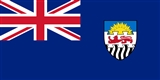
Federation of Rhodesia and Nyasaland

Encyclopedia
The Federation of Rhodesia and Nyasaland, also known as the Central African Federation (CAF), was a semi-independent state
Sovereign state
A sovereign state, or simply, state, is a state with a defined territory on which it exercises internal and external sovereignty, a permanent population, a government, and the capacity to enter into relations with other sovereign states. It is also normally understood to be a state which is neither...
in southern Africa
Africa
Africa is the world's second largest and second most populous continent, after Asia. At about 30.2 million km² including adjacent islands, it covers 6% of the Earth's total surface area and 20.4% of the total land area...
that existed from 1953 to the end of 1963, comprising the former self-governing colony of Southern Rhodesia
Southern Rhodesia
Southern Rhodesia was the name of the British colony situated north of the Limpopo River and the Union of South Africa. From its independence in 1965 until its extinction in 1980, it was known as Rhodesia...
and the British
United Kingdom
The United Kingdom of Great Britain and Northern IrelandIn the United Kingdom and Dependencies, other languages have been officially recognised as legitimate autochthonous languages under the European Charter for Regional or Minority Languages...
protectorates of Northern Rhodesia
Northern Rhodesia
Northern Rhodesia was a territory in south central Africa, formed in 1911. It became independent in 1964 as Zambia.It was initially administered under charter by the British South Africa Company and formed by it in 1911 by amalgamating North-Western Rhodesia and North-Eastern Rhodesia...
, and Nyasaland
Nyasaland
Nyasaland or the Nyasaland Protectorate, was a British protectorate located in Africa, which was established in 1907 when the former British Central Africa Protectorate changed its name. Since 1964, it has been known as Malawi....
. It was a federal realm of the British Crown — neither a colony nor a dominion, although the British Sovereign was represented by a governor general, as usual for dominions. It was intended eventually to become a dominion in the Commonwealth of Nations
Commonwealth of Nations
The Commonwealth of Nations, normally referred to as the Commonwealth and formerly known as the British Commonwealth, is an intergovernmental organisation of fifty-four independent member states...
.
The Federation was established on 1 August 1953, with the aim of forging a middle way between a fully independent majority-ruled state and the white-dominated territories of South Africa
South Africa
The Republic of South Africa is a country in southern Africa. Located at the southern tip of Africa, it is divided into nine provinces, with of coastline on the Atlantic and Indian oceans...
, Angola
Angola (Portugal)
Angola is the common name by which the Portuguese colony in southwestern Africa was known across different periods of time...
, and Mozambique. It was intended to be a permanent entity, but ultimately crumbled because the black African nationalists wanted a greater share of power than the dominant minority white population was willing to concede.
The rulers of the new black African states were united in wanting to end colonialism in Africa. With most of the world moving away from colonialism during this time (late 1950s – early 1960s), the United Kingdom
United Kingdom
The United Kingdom of Great Britain and Northern IrelandIn the United Kingdom and Dependencies, other languages have been officially recognised as legitimate autochthonous languages under the European Charter for Regional or Minority Languages...
was subjected to pressure to de-colonize from both the United Nations
United Nations
The United Nations is an international organization whose stated aims are facilitating cooperation in international law, international security, economic development, social progress, human rights, and achievement of world peace...
and the Organization of African Unity. These groups supported the aspirations of the black African nationalists and accepted their claims to speak on behalf of the people.
The federation officially ended on 31 December 1963, when Northern Rhodesia gained independence from the UK as the new nation of Zambia
Zambia
Zambia , officially the Republic of Zambia, is a landlocked country in Southern Africa. The neighbouring countries are the Democratic Republic of the Congo to the north, Tanzania to the north-east, Malawi to the east, Mozambique, Zimbabwe, Botswana and Namibia to the south, and Angola to the west....
and Nyasaland gained independence as the new nation of Malawi
Malawi
The Republic of Malawi is a landlocked country in southeast Africa that was formerly known as Nyasaland. It is bordered by Zambia to the northwest, Tanzania to the northeast, and Mozambique on the east, south and west. The country is separated from Tanzania and Mozambique by Lake Malawi. Its size...
. Southern Rhodesia became known as Rhodesia
Rhodesia
Rhodesia , officially the Republic of Rhodesia from 1970, was an unrecognised state located in southern Africa that existed between 1965 and 1979 following its Unilateral Declaration of Independence from the United Kingdom on 11 November 1965...
and is now Zimbabwe
Zimbabwe
Zimbabwe is a landlocked country located in the southern part of the African continent, between the Zambezi and Limpopo rivers. It is bordered by South Africa to the south, Botswana to the southwest, Zambia and a tip of Namibia to the northwest and Mozambique to the east. Zimbabwe has three...
.
Constitutional origins
It was commonly understood that Southern Rhodesia would be the dominant territory in the federation — economically, electorally, and militarily. How much so defined much of the lengthy constitutional negotiations and modifications that followed. African political opposition and nationalist aspirations, for the time, were mute.Decisive factors in both the creation and dissolution of the Federation were the significant difference between the number of Africans and Europeans in the Federation, and the difference between the number of Europeans in Southern Rhodesia compared to the Northern Protectorates.
Compounding this was the significant growth in Southern Rhodesia's European settler population (overwhelmingly British migrants), unlike in the Northern Protectorates. This was to greatly shape future developments in the Federation. In 1939, approximately 60,000 Europeans resided in Southern Rhodesia; shortly before the Federation was established there were 135,000; by the time the Federation was dissolved they had reached 223,000 (though newcomers could only vote after three years of residency). Nyasaland showed the least European and greatest African population growth.
| Year | | Southern Rhodesia | | Northern Rhodesia | | Nyasaland | | Total | ||||
|---|---|---|---|---|---|---|---|---|
| White | Black | White | Black | White | Black | White | Black | |
| 1927 | 38,200 (3.98%) | 922,000 (96.02%) | 4,000 (0.4%) | 1,000,000 (99.6%) | 1,700 (0.13%) | 1,350,000 (99.87%) | 43,900 (1.32%) | 3,272,000 (98.68%) |
| 1946 | 80,500 (4.79%) | 1,600,000 (95.21%) | 21,919 (1.32%) | 1,634,980 (97.68%) | 2,300 (0.10%) | 2,340,000 (99.90%) | 104,719 (1.84%) | 5,574,980 (98.16%) |

Rather than a federation, Huggins favoured an amalgamation, creating a single state. But after World War II
World War II
World War II, or the Second World War , was a global conflict lasting from 1939 to 1945, involving most of the world's nations—including all of the great powers—eventually forming two opposing military alliances: the Allies and the Axis...
, Britain opposed this because Southern Rhodesia would dominate the property and income franchise (which excluded the vast majority of Africans) owing to its much larger European population. A federation
Federation
A federation , also known as a federal state, is a type of sovereign state characterized by a union of partially self-governing states or regions united by a central government...
was intended to curtail this.
The fate of the Federation was contested in the British government by two principal organisations in deep ideological, personal and professional rivalry — the Colonial Office
Colonial Office
Colonial Office is the government agency which serves to oversee and supervise their colony* Colonial Office - The British Government department* Office of Insular Affairs - the American government agency* Reichskolonialamt - the German Colonial Office...
(CO) and the Commonwealth Relations Office (CRO; and previously with it the Dominion Office, abolished in 1947). The CO ruled the northern territories of Nyasaland and Northern Rhodesia, while the CRO was formally but indirectly in charge of Southern Rhodesia. The Northern Territories opposed a Southern Rhodesian hegemony, one that the CRO promoted. Significantly, the CO tended to be more sympathetic to African rights than the CRO, which tended to promote the interests of the Southern Rhodesian (and to a lesser extent, Northern Rhodesian) European settler populations.
It was convenient to have all three territories colonised by Cecil Rhodes under one constitution. But, for Huggins and the Rhodesian establishment, the central economic motive behind the CAF (or amalgamation) had always been the abundant copper
Copper
Copper is a chemical element with the symbol Cu and atomic number 29. It is a ductile metal with very high thermal and electrical conductivity. Pure copper is soft and malleable; an exposed surface has a reddish-orange tarnish...
deposits of Northern Rhodesia. Unlike the Rhodesias, Nyasaland had no sizeable deposits of minerals and its tiny community of Europeans, largely Scottish
Scottish people
The Scottish people , or Scots, are a nation and ethnic group native to Scotland. Historically they emerged from an amalgamation of the Picts and Gaels, incorporating neighbouring Britons to the south as well as invading Germanic peoples such as the Anglo-Saxons and the Norse.In modern use,...
, was relatively sympathetic to African aspirations. Its inclusion in the Federation was always more a symbolic gesture than a practical necessity. Ironically, it was to be largely Nyasaland and its African population where the impetus for destabilization of the CAF arose, leading to its dissolution.
Arduous negotiations
On 8 November 1950, the first negotiations for a federal state for the Rhodesias and Nyasaland began. While many points of contention were worked out in the conferences that followed, several proved to be acute, and some, seemingly insurmountable. The negotiations and conferences were arduous. Southern Rhodesia and the Northern Territories had very different traditions for the 'Native Question' (black Africans) and the roles they were designed to play in civil society.An agreement would likely not have been reached without Sir Andrew Cohen
Andrew Cohen (statesman)
Sir Andrew Benjamin Cohen KCMG KCVO OBE was Governor of Uganda from 1952 to 1957.- Early life and education :...
, CO Assistant Undersecretary for African Affairs. He became one of the central architects and driving forces behind the creation of the Federation, often seemingly singlehandedly untangling deadlocks and outright walkouts on the part of the respective parties.
Cohen, who was Jewish and traumatized by the Holocaust, was an anti-racialist and an advocate of African rights. But he compromised his ideals to avoid what he saw as an even greater risk than the continuation of the paternalistic white ascendancy system of Southern Rhodesia — its becoming an even less flexible, radical white supremacy, like the National Party government in South Africa
South Africa
The Republic of South Africa is a country in southern Africa. Located at the southern tip of Africa, it is divided into nine provinces, with of coastline on the Atlantic and Indian oceans...
. Historian Robert Blake
Robert Blake, Baron Blake
Robert Norman William Blake, Baron Blake was an English historian. He is best known for his 1966 biography of Benjamin Disraeli, 1st Earl of Beaconsfield, and for The Conservative Party from Peel to Churchill, which grew out of his 1968 Ford lectures...
writes, "In that sense, Apartheid can be regarded as the father of Federation."
It took nearly three years for the CAF to be established.
Elaborate structure
Following the insistences and reassurances of Southern Rhodesian Prime MinisterPrime minister
A prime minister is the most senior minister of cabinet in the executive branch of government in a parliamentary system. In many systems, the prime minister selects and may dismiss other members of the cabinet, and allocates posts to members within the government. In most systems, the prime...
, Sir Godfrey Martin Huggins, a little more than 25,000 white Southern Rhodesians voted in a referendum for a federal government, versus nearly 15,000 against. Africans in all three territories were resolutely against it.
The semi-independent federation was finally established, with five branches of government: one Federal, three Territorial, and one British. This often translated into confusion and jurisdictional rivalry among various levels of government. According to Blake, it proved to be "one of the most elaborately governed countries in the world."
Huggins became the first Prime Minister from 1953 to 1956, followed by Sir Roy Welensky
Roy Welensky
Sir Raphael "Roy" Welensky, KCMG was a Northern Rhodesian politician and the second and last prime minister of the Federation of Rhodesia and Nyasaland...
from 1956 to the Federation's dissolution in 1963.
Huggins resigned as Southern Rhodesia's Prime Minister to become Prime Minister of the Federation. The position of Prime Minister of Southern Rhodesia was once again, as until Britain's Ministerial Titles Act of 1933, reduced to a Premier and taken by the soon-to-be controversial Sir Garfield Todd
Garfield Todd
Sir Reginald Stephen Garfield Todd was a reformist Prime Minister of Southern Rhodesia from 1953 to 1958 and later became an opponent of white minority rule in Rhodesia. He was born in Invercargill, New Zealand.-Background:...
.
In Southern Rhodesia, most United Rhodesia Party
United Rhodesia Party
The name United Rhodesia Party and the acronym, URP, refer to two political parties in Southern Rhodesia.The first was the party, led by Sir Godfrey Martin Huggins, and which in 1933 came to power in the colony...
(UP) cabinet members joined Huggins. There was a marked exodus to the more prestigious realm of Federal politics, and it was considered that Todd's position and Territorial politics in general had become relatively unimportant, a place for the less ambitious politician. In fact, it was to prove decisive both to the future demise of the CAF, and to the rise of the Rhodesian Front.
Economic growth and political liberalism
Despite its convoluted government structure, the CAF economy was a success. In the first year of the federation, its GDP was an impressive £350 million; two years later it was nearly £450 million. Yet the average income of a European remained approximately ten times that of an African employed in the cash economy, representing only one third of local Africans.In 1955, the creation of the Kariba
Kariba Dam
The Kariba Dam is a hydroelectric dam in the Kariba Gorge of the Zambezi river basin between Zambia and Zimbabwe. It is one of the largest dams in the world, standing tall and long.- Construction :...
hydro-electric power station
Hydroelectricity
Hydroelectricity is the term referring to electricity generated by hydropower; the production of electrical power through the use of the gravitational force of falling or flowing water. It is the most widely used form of renewable energy...
was announced. It was a remarkable feat of engineering creating the largest human-built dam on the planet at the time and costing £78 million. Its location highlighted the rivalry among Southern and Northern Rhodesia, with the former attaining its favoured location for the dam.
The CAF brought a decade of liberalism with respect to African rights. There were African junior ministers in the Southern Rhodesia-dominated CAF, while a decade earlier only 70 Africans qualified to vote in the Southern Rhodesian elections.
The property and income-qualified franchise of the CAF was, therefore, now much looser. While this troubled many whites, they continued to follow Huggins with the CAF's current structure, largely owing to the economic growth. But to Africans, this increasingly proved unsatisfactory and their leaders began to voice demands for majority rule.
Rise of African nationalism
African dissent in the CAF grew, and at the same time British circles expressed objections to its structure and purpose — full Commonwealth membership leading to independence.In June 1956, Northern Rhodesia’s Governor, Sir Arthur Benson, wrote a highly confidential letter heavily criticizing the federation in general (and the new constitution planned for it) and Federal Prime Minister, Sir Roy Welensky, in particular. Nearly two years later, Huggins (now Lord Malvern) somehow obtained a copy of it and disclosed its contents to Welensky.
Relations between Whitehall and the CAF cabinet were never to recover. These events, for the first time brought the attention of British Tory
Conservative Party (UK)
The Conservative Party, formally the Conservative and Unionist Party, is a centre-right political party in the United Kingdom that adheres to the philosophies of conservatism and British unionism. It is the largest political party in the UK, and is currently the largest single party in the House...
Prime Minister, Harold Macmillan
Harold Macmillan
Maurice Harold Macmillan, 1st Earl of Stockton, OM, PC was Conservative Prime Minister of the United Kingdom from 10 January 1957 to 18 October 1963....
, to a crisis emerging in the CAF, but apparently he did not fully comprehend the gravity of the situation, attributing the row to the old CO-CRO rivalry and to Welensky taking personal offence to the letter’s contents.
The issues of this specific row were in the immediate sense resolved quietly with some constitutional amendments, but it is now known that Welensky was seriously considering contingencies for a Unilateral Declaration of Independence
Unilateral Declaration of Independence (Rhodesia)
The Unilateral Declaration of Independence of Rhodesia from the United Kingdom was signed on November 11, 1965, by the administration of Ian Smith, whose Rhodesian Front party opposed black majority rule in the then British colony. Although it declared independence from the United Kingdom it...
for the federation, though he ended up opting against it.
Meanwhile, towards the end of the decade, in the Northern Territories, Africans protested against the white minority rule of CAF. In July 1958, Dr. Hastings Banda
Hastings Banda
Hastings Kamuzu Banda was the leader of Malawi and its predecessor state, Nyasaland, from 1961 to 1994. After receiving much of his education overseas, Banda returned to his home country to speak against colonialism and advocate for independence...
, the leader of African National Congress (ANC) of Nyasaland (later Malawi Congress Party
Malawi Congress Party
The Malawi Congress Party is a political party in Malawi.It was the successor to the Nyasaland African Congress , which was banned in 1959.The MCP was founded by Hastings Banda and other NAC leaders in 1960....
) returned to Nyasaland, while in October the militant Kenneth Kaunda
Kenneth Kaunda
Kenneth David Kaunda, known as KK, served as the first President of Zambia, from 1964 to 1991.-Early life:Kaunda was the youngest of eight children. He was born at Lubwa Mission in Chinsali, Northern Province of Northern Rhodesia, now Zambia...
became the leader of the Zambian African National Congress
Zambian African National Congress
The Zambian African National Congress was a political organisation dedicated to promoting the rights of black people in Zambia. ZANC was formed in 1958, following a split from the Northern Rhodesian African National Congress. The president of ZANC was Kenneth Kaunda. In 1959 the party was banned...
(ZANC), a faction from the Northern Rhodesian ANC. The increasingly rattled CAF authorities banned ZANC in March 1959, and in June imprisoned Kaunda for nine months. While Kaunda was in jail, his loyal lieutenant Mainza Chona
Mainza Chona
Mainza Mathias Chona served as Prime Minister of Zambia on two occasions: 25 August 1973 to 27 May 1975 and 20 July 1977 to 15 June 1978. He also held various government positions, including Justice Minister , Home Affairs Minister and Minister of Legal Affairs and Attorney-General...
worked with other African nationalists to create the United National Independence Party
United National Independence Party
The United National Independence Party is a political party in Zambia. It governed that country from 1964 to 1991 under the presidency of Kenneth Kaunda....
(UNIP), a successor to ZANC. In early 1959, unrest broke out in Nyasaland, which, according to historian Robert Blake, was "economically the poorest, politically the most advanced and numerically the least Europeanized of the three Territories."
The CAF government declared a state of emergency. Banda and the rest of Nyasaland’s ANC leadership were arrested and their party outlawed. Southern Rhodesian troops were deployed to bring order. British Labour MP John Stonehouse was expelled from Southern Rhodesia shortly before the state of emergency was proclaimed in Nyasaland, which outraged the British Labour Party.
The affair drew the whole concept of the federation into question and even Macmillan began to express misgivings about its political viability, although economically, he felt it was sound. A Royal Commission to advise Macmillan on the future of the CAF, to be led by Walter Monckton, was in the works. Commonwealth Secretary, Sir Alec Douglas-Home
Alec Douglas-Home
Alexander Frederick Douglas-Home, Baron Home of the Hirsel, KT, PC , known as The Earl of Home from 1951 to 1963 and as Sir Alec Douglas-Home from 1963 to 1974, was a British Conservative politician who served as Prime Minister of the United Kingdom from October 1963 to October 1964.He is the last...
was sent to prepare Welensky, who was distinctly displeased about the arrival of the Commission.
Welensky at least found Douglas-Home in support of the existence of the CAF. By contrast, Douglas-Home’s rival, Colonial Secretary Iain Macleod
Iain Macleod
Iain Norman Macleod was a British Conservative Party politician and government minister.-Early life:...
, favored African rights and dissolving the federation. Although Macmillan at the time supported Douglas-Home, the changes were already on the horizon. In Britain, Macmillan said that it was essential "to keep the Tory party on modern and progressive lines", noting electoral developments and especially the rise of the Liberal Party.
Dissolution
By the early 1960s, Macmillan went on his famous African tour leading to his Wind of Change speechWind of Change (speech)
The Wind of Change speech was a historically important address made by British Prime Minister Harold Macmillan to the Parliament of South Africa, on 3 February 1960 in Cape Town. He had spent a month in Africa visiting a number of British colonies, as they were at the time...
in the parliament
Parliament of South Africa
The Parliament of South Africa is South Africa's legislature and under the country's current Constitution is composed of the National Assembly and the National Council of Provinces....
of the Cape. Change was well underway. By 1960, French African colonies had already become independent. Belgium more hastily vacated its colony and thousands of European refugees fled the Belgian Congo
Belgian Congo
The Belgian Congo was the formal title of present-day Democratic Republic of the Congo between King Leopold II's formal relinquishment of his personal control over the state to Belgium on 15 November 1908, and Congolese independence on 30 June 1960.-Congo Free State, 1884–1908:Until the latter...
from the brutalities of the civil war and into Southern Rhodesia.
During the Congolese crisis, Africans increasingly viewed CAF Prime Minister, Sir Roy Welensky, as an arch-reactionary and his support for Katanga separatism added to this. Ironically, a few years later, in his by-election campaign against Ian Smith
Ian Smith
Ian Douglas Smith GCLM ID was a politician active in the government of Southern Rhodesia, the Federation of Rhodesia and Nyasaland, Rhodesia, Zimbabwe Rhodesia and Zimbabwe from 1948 to 1987, most notably serving as Prime Minister of Rhodesia from 13 April 1964 to 1 June 1979...
’s Rhodesian Front
Rhodesian Front
The Rhodesian Front was a political party in Southern Rhodesia when the country was under white minority rule. Led first by Winston Field, and, from 1964, by Ian Smith, the Rhodesian Front was the successor to the Dominion Party, which was the main opposition party in Southern Rhodesia during the...
, RF supporters heckled the comparatively moderate Welensky with cries of 'bloody Jew,' 'Communist,' and 'traitor'.
The new Commonwealth Secretary, Duncan Sandys, negotiated the '1961 Constitution', a new constitution for the CAF which greatly reduced Britain's powers over it. But by 1962, the British and the CAF cabinet had agreed that Nyasaland should be allowed to secede, though Southern Rhodesian Premier Sir Edgar Whitehead committed the British to keep this secret until after the 1962 election in the territory. A year later, the same status was given to Northern Rhodesia, decisively ending the Federation of Rhodesia and Nyasaland in the immediate future.
In 1963, the Victoria Falls conference was held, partly as a last effort to save the CAF, and partly as a forum to dissolve it. After nearly collapsing several times, it ended by 5 July 1963, and the state was virtually dissolved. Only the appropriation of its assets remained as a formality.
By 31 December, the Federation of Rhodesia and Nyasaland was formally dissolved and its assets distributed among the territorial governments. Southern Rhodesia obtained the vast majority of these including the assets of the Federal army, to which it had overwhelmingly contributed. In 1964, Northern Rhodesia
Northern Rhodesia
Northern Rhodesia was a territory in south central Africa, formed in 1911. It became independent in 1964 as Zambia.It was initially administered under charter by the British South Africa Company and formed by it in 1911 by amalgamating North-Western Rhodesia and North-Eastern Rhodesia...
gained independence as the Republic of Zambia, obtaining majority rule
Majority rule
Majority rule is a decision rule that selects alternatives which have a majority, that is, more than half the votes. It is the binary decision rule used most often in influential decision-making bodies, including the legislatures of democratic nations...
and led by Kenneth Kaunda
Kenneth Kaunda
Kenneth David Kaunda, known as KK, served as the first President of Zambia, from 1964 to 1991.-Early life:Kaunda was the youngest of eight children. He was born at Lubwa Mission in Chinsali, Northern Province of Northern Rhodesia, now Zambia...
. The same year, the Nyasaland Protectorate became the Republic of Malawi led by Hastings Banda
Hastings Banda
Hastings Kamuzu Banda was the leader of Malawi and its predecessor state, Nyasaland, from 1961 to 1994. After receiving much of his education overseas, Banda returned to his home country to speak against colonialism and advocate for independence...
.
On 11 November 1965 Southern Rhodesia made a unilateral declaration of independence
Unilateral Declaration of Independence (Rhodesia)
The Unilateral Declaration of Independence of Rhodesia from the United Kingdom was signed on November 11, 1965, by the administration of Ian Smith, whose Rhodesian Front party opposed black majority rule in the then British colony. Although it declared independence from the United Kingdom it...
from the United Kingdom proposed by the Rhodesian Front
Rhodesian Front
The Rhodesian Front was a political party in Southern Rhodesia when the country was under white minority rule. Led first by Winston Field, and, from 1964, by Ian Smith, the Rhodesian Front was the successor to the Dominion Party, which was the main opposition party in Southern Rhodesia during the...
government led by Prime Minister Ian Smith
Ian Smith
Ian Douglas Smith GCLM ID was a politician active in the government of Southern Rhodesia, the Federation of Rhodesia and Nyasaland, Rhodesia, Zimbabwe Rhodesia and Zimbabwe from 1948 to 1987, most notably serving as Prime Minister of Rhodesia from 13 April 1964 to 1 June 1979...
. This attracted the world's attention and created outrage in Britain. In time, Zambia and Malawi became single-party state
Single-party state
A single-party state, one-party system or single-party system is a type of party system government in which a single political party forms the government and no other parties are permitted to run candidates for election...
s and later democratized.
Historical legacy
Although the Federation of Rhodesia and Nyasaland only lasted for 10 years, it had an important impact on Central Africa.Its white minority rule, having several hundred thousand Europeans, primarily in Southern Rhodesia, versus millions of Africans, was largely driven by anachronistic reformism. It was a paternalistic, mild racism as exhibited by Huggins, which had more in common with the late 19th than the mid-20th century.
At the same time, the British influenced and affiliated the federation, contrasted with the only other regional power, the Union of South Africa
Union of South Africa
The Union of South Africa is the historic predecessor to the present-day Republic of South Africa. It came into being on 31 May 1910 with the unification of the previously separate colonies of the Cape, Natal, Transvaal and the Orange Free State...
. The dissolution of the CAF highlighted the independent African-led nations of Zambia and Malawi, while Southern Rhodesia remained ruled by a white minority government until Zimbabwean independence in 1980. Much of that period was marked by civil war.
Following Southern Rhodesia's unilateral declaration of independence, a growing conflict emerged between two of the former CAF territories — Zambia (supporting African nationalists) and Southern Rhodesia (supported by South Africa) — with much heated diplomatic rhetoric, and at times, outright military hostility.
Postage stamps

Postage stamp
A postage stamp is a small piece of paper that is purchased and displayed on an item of mail as evidence of payment of postage. Typically, stamps are made from special paper, with a national designation and denomination on the face, and a gum adhesive on the reverse side...
s in 1954, all with a portrait of Queen Elizabeth II
Elizabeth II of the United Kingdom
Elizabeth II is the constitutional monarch of 16 sovereign states known as the Commonwealth realms: the United Kingdom, Canada, Australia, New Zealand, Jamaica, Barbados, the Bahamas, Grenada, Papua New Guinea, the Solomon Islands, Tuvalu, Saint Lucia, Saint Vincent and the Grenadines, Belize,...
. See main article at Postage stamps of the Federation of Rhodesia and Nyasaland
Postage stamps of the Federation of Rhodesia and Nyasaland
The Federation of Rhodesia and Nyasaland, also known as the Central African Federation , was a semi-independent state in southern Africa that existed from 1953 to the end of 1963....
.
See also
- Governor-General of the Federation of Rhodesia and NyasalandGovernor-General of the Federation of Rhodesia and NyasalandThis is a list of the men who served as Governor-General of the Federation of Rhodesia and Nyasaland . The Federation was formed on 1 August 1953 from the former colonies of Southern Rhodesia, Northern Rhodesia and Nyasaland, and was formally dissolved on 31 December 1963.-List of Governors-General...
- Prime Minister of the Federation of Rhodesia and NyasalandPrime Minister of the Federation of Rhodesia and NyasalandThis is a list of the men who served as Prime Minister of the Federation of Rhodesia and Nyasaland . The Federation was formed on 1 August 1953 from the former colonies of Southern Rhodesia, Northern Rhodesia and Nyasaland, and was formally dissolved on 31 December 1963.-List of Prime Ministers of...
- Federation of Rhodesia and Nyasaland election, 1953
- Federation of Rhodesia and Nyasaland election, 1958
- Federation of Rhodesia and Nyasaland election, 1962
- Flag of the Federation of Rhodesia and NyasalandFlag of the Federation of Rhodesia and NyasalandThe Flag of the Federation of Rhodesia and Nyasaland was a modified British Blue Ensign. Centered in the fly of the flag was a depiction of the shield from the Federation's Coat of Arms...
- Government of the Federation of Rhodesia and NyasalandGovernment of the Federation of Rhodesia and NyasalandThe Government of the Federation of Rhodesia and Nyasaland was established in 1953 and ran the Federation until its dissolution at the end of 1963. The members of the government were accountable to, and drawn from, the unicameral Federal Parliament....
- Unilateral Declaration of Independence