

Federalist Society

Encyclopedia
The Federalist Society for Law and Public Policy Studies, most frequently called simply the Federalist Society, is an organization of conservatives seeking reform of the current American legal system
in accordance with a textualist
and/or originalist
interpretation of the U.S. Constitution
. The Federalist Society began at Yale Law School
, Harvard Law School
, and the University of Chicago Law School
in 1982 as a student organization that challenged what its members perceived as the orthodox American liberal ideology
found in most law schools. The Society asserts that it "is founded on the principles that the state exists to preserve freedom
, that the separation of governmental powers is central to our Constitution
, and that it is emphatically the province and duty of the judiciary to say what the law is, not what it should be."
The Society is a membership organization that features a Student Division, a Lawyers Division, and a Faculty Division. The Society currently has chapters at over 200 United States
law schools and claims a membership of over 10,000 law students. The Lawyers Division comprises over 30,000 practicing attorneys
(organized as "lawyers chapters" and "practice groups" within the Society's Lawyers Division) in sixty cities. Its headquarters are in Washington, D.C.
Through speaking events, lectures, and other activities, the Federalist Society provides a forum
for legal experts of opposing views to interact with members of the legal profession
, the judiciary
, law students, and academics.
, Robert Bork
, Theodore Olson
, David M. McIntosh
, and Steven Calabresi
, and its members have included Supreme Court justices Antonin Scalia
, John G. Roberts, Clarence Thomas
and Samuel Alito
.
The Society looks to Federalist Paper
Number 78 for an articulation of the virtue of judicial restraint
, as written by Alexander Hamilton
: "It can be of no weight to say that the courts, on the pretense of a repugnancy, may substitute their own pleasure to the constitutional intentions of the legislature.... The courts must declare the sense of the law; and if they should be disposed to exercise WILL instead of JUDGMENT, the consequence would equally be the substitution of their pleasure to that of the legislative body."
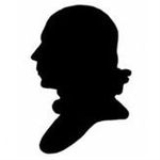
Its logo is a silhouette of former President and Constitution author James Madison
, who co-wrote the Federalist Papers. Commissioner Paul S. Atkins
of the U.S. Securities and Exchange Commission considered Federalist Society members "the heirs of James Madison's legacy" in a speech he gave in January 2008 to the Federalist Society Lawyers' Chapter of Dallas, Texas
. Madison is generally credited as the father of the Constitution and became the fourth President of the United States
.
The Society's name is said to have been based on the 18th-century Federalist Party; however, James Madison associated with Thomas Jefferson
and the Democratic-Republican Party in opposition to Federalist Party policies borne from a loose interpretation of the Commerce Clause
. The Federalist Society's views are more associated with the general meaning of Federalism (particularly the New Federalism) and the content of the Federalist Papers
than with the later Federalist Party.
set forth in its "Statement of Principles", the Society has created a network of intellectual
s and others, occupying all levels of the legal community. The Student Division has more than 10,000 law students as members, and the Society draws on the national office's network of legal experts to provide speakers for differing viewpoints at law school events. The activities of the Student Division are complemented by the activities of the Lawyers Division, which comprises more than 30,000 legal professionals, and the Faculty Division, which includes many professors of law and jurisprudence and other legal specialists in the academic community.
The Society seeks to debate constitutional issues and public policy questions, and this commitment extends to inviting speakers who do not agree with the society's principles. For example, past invitees include Justice Stephen Breyer
and law professor Alan Dershowitz
, two legal authorities who disagree with many of the Society's views. Society member and UCLA law professor Eugene Volokh
explained this willingness to discuss other views by writing, "We think that a fair debate between us and our liberal adversaries will win more converts for our positions than for the other side’s." In the words of Dan Lowenstein, a Democrat and political appointee of former California governor Jerry Brown
, "The Federalist Society is one of the few student organizations putting on public events that contribute to the intellectual life of the law school." The Federalist Society's guide to forming and running a chapter of the society claims that the organization "creates an informal network of people with shared views which can provide assistance in job placement."
’s decision to terminate the American Bar Association
’s nearly half-century-old monopoly on rating judicial nominees' qualifications for office. Since the administration of President Dwight D. Eisenhower
, the American Bar Association has provided the service to presidents of both parties and the nation by vetting the qualifications of those under consideration for lifetime appointment to the federal judiciary. The Federalist Society believed the ABA showed a liberal bias in its recommendations.
For example, while former Supreme Court clerks nominated to the Court of Appeals by Democrats
had an average rating of slightly below "well qualified," similar Republican
nominees were rated on average as only "qualified/well qualified."
In addition the ABA gave Ronald Reagan
's judicial nominees Richard Posner
and Frank H. Easterbrook
its lowest possible ratings of "qualified/not qualified". Judges Posner and Easterbrook have gone on to become the two most highly cited judges in the federal appellate judiciary.
The Federalist Society for Law and Public Policy Studies, most frequently called simply the Federalist Society, is an organization of conservatives seeking reform of the current American legal system
in accordance with a textualist
and/or originalist
interpretation of the U.S. Constitution
. The Federalist Society began at Yale Law School
, Harvard Law School
, and the University of Chicago Law School
in 1982 as a student organization that challenged what its members perceived as the orthodox American liberal ideology
found in most law schools. The Society asserts that it "is founded on the principles that the state exists to preserve freedom
, that the separation of governmental powers is central to our Constitution
, and that it is emphatically the province and duty of the judiciary to say what the law is, not what it should be."
The Society is a membership organization that features a Student Division, a Lawyers Division, and a Faculty Division. The Society currently has chapters at over 200 United States
law schools and claims a membership of over 10,000 law students. The Lawyers Division comprises over 30,000 practicing attorneys
(organized as "lawyers chapters" and "practice groups" within the Society's Lawyers Division) in sixty cities. Its headquarters are in Washington, D.C.
Through speaking events, lectures, and other activities, the Federalist Society provides a forum
for legal experts of opposing views to interact with members of the legal profession
, the judiciary
, law students, and academics.
, Robert Bork
, Theodore Olson
, David M. McIntosh
, and Steven Calabresi
, and its members have included Supreme Court justices Antonin Scalia
, John G. Roberts, Clarence Thomas
and Samuel Alito
.
The Society looks to Federalist Paper
Number 78 for an articulation of the virtue of judicial restraint
, as written by Alexander Hamilton
: "It can be of no weight to say that the courts, on the pretense of a repugnancy, may substitute their own pleasure to the constitutional intentions of the legislature.... The courts must declare the sense of the law; and if they should be disposed to exercise WILL instead of JUDGMENT, the consequence would equally be the substitution of their pleasure to that of the legislative body."
Its logo is a silhouette of former President and Constitution author James Madison
, who co-wrote the Federalist Papers. Commissioner Paul S. Atkins
of the U.S. Securities and Exchange Commission considered Federalist Society members "the heirs of James Madison's legacy" in a speech he gave in January 2008 to the Federalist Society Lawyers' Chapter of Dallas, Texas
. Madison is generally credited as the father of the Constitution and became the fourth President of the United States
.
The Society's name is said to have been based on the 18th-century Federalist Party; however, James Madison associated with Thomas Jefferson
and the Democratic-Republican Party in opposition to Federalist Party policies borne from a loose interpretation of the Commerce Clause
. The Federalist Society's views are more associated with the general meaning of Federalism (particularly the New Federalism) and the content of the Federalist Papers
than with the later Federalist Party.
set forth in its "Statement of Principles", the Society has created a network of intellectual
s and others, occupying all levels of the legal community. The Student Division has more than 10,000 law students as members, and the Society draws on the national office's network of legal experts to provide speakers for differing viewpoints at law school events. The activities of the Student Division are complemented by the activities of the Lawyers Division, which comprises more than 30,000 legal professionals, and the Faculty Division, which includes many professors of law and jurisprudence and other legal specialists in the academic community.
The Society seeks to debate constitutional issues and public policy questions, and this commitment extends to inviting speakers who do not agree with the society's principles. For example, past invitees include Justice Stephen Breyer
and law professor Alan Dershowitz
, two legal authorities who disagree with many of the Society's views. Society member and UCLA law professor Eugene Volokh
explained this willingness to discuss other views by writing, "We think that a fair debate between us and our liberal adversaries will win more converts for our positions than for the other side’s." In the words of Dan Lowenstein, a Democrat and political appointee of former California governor Jerry Brown
, "The Federalist Society is one of the few student organizations putting on public events that contribute to the intellectual life of the law school." The Federalist Society's guide to forming and running a chapter of the society claims that the organization "creates an informal network of people with shared views which can provide assistance in job placement."
’s decision to terminate the American Bar Association
’s nearly half-century-old monopoly on rating judicial nominees' qualifications for office. Since the administration of President Dwight D. Eisenhower
, the American Bar Association has provided the service to presidents of both parties and the nation by vetting the qualifications of those under consideration for lifetime appointment to the federal judiciary. The Federalist Society believed the ABA showed a liberal bias in its recommendations.
For example, while former Supreme Court clerks nominated to the Court of Appeals by Democrats
had an average rating of slightly below "well qualified," similar Republican
nominees were rated on average as only "qualified/well qualified."
In addition the ABA gave Ronald Reagan
's judicial nominees Richard Posner
and Frank H. Easterbrook
its lowest possible ratings of "qualified/not qualified". Judges Posner and Easterbrook have gone on to become the two most highly cited judges in the federal appellate judiciary.
The Federalist Society for Law and Public Policy Studies, most frequently called simply the Federalist Society, is an organization of conservatives seeking reform of the current American legal system
in accordance with a textualist
and/or originalist
interpretation of the U.S. Constitution
. The Federalist Society began at Yale Law School
, Harvard Law School
, and the University of Chicago Law School
in 1982 as a student organization that challenged what its members perceived as the orthodox American liberal ideology
found in most law schools. The Society asserts that it "is founded on the principles that the state exists to preserve freedom
, that the separation of governmental powers is central to our Constitution
, and that it is emphatically the province and duty of the judiciary to say what the law is, not what it should be."
The Society is a membership organization that features a Student Division, a Lawyers Division, and a Faculty Division. The Society currently has chapters at over 200 United States
law schools and claims a membership of over 10,000 law students. The Lawyers Division comprises over 30,000 practicing attorneys
(organized as "lawyers chapters" and "practice groups" within the Society's Lawyers Division) in sixty cities. Its headquarters are in Washington, D.C.
Through speaking events, lectures, and other activities, the Federalist Society provides a forum
for legal experts of opposing views to interact with members of the legal profession
, the judiciary
, law students, and academics.
, Robert Bork
, Theodore Olson
, David M. McIntosh
, and Steven Calabresi
, and its members have included Supreme Court justices Antonin Scalia
, John G. Roberts, Clarence Thomas
and Samuel Alito
.
The Society looks to Federalist Paper
Number 78 for an articulation of the virtue of judicial restraint
, as written by Alexander Hamilton
: "It can be of no weight to say that the courts, on the pretense of a repugnancy, may substitute their own pleasure to the constitutional intentions of the legislature.... The courts must declare the sense of the law; and if they should be disposed to exercise WILL instead of JUDGMENT, the consequence would equally be the substitution of their pleasure to that of the legislative body."
Its logo is a silhouette of former President and Constitution author James Madison
, who co-wrote the Federalist Papers. Commissioner Paul S. Atkins
of the U.S. Securities and Exchange Commission considered Federalist Society members "the heirs of James Madison's legacy" in a speech he gave in January 2008 to the Federalist Society Lawyers' Chapter of Dallas, Texas
. Madison is generally credited as the father of the Constitution and became the fourth President of the United States
.
The Society's name is said to have been based on the 18th-century Federalist Party; however, James Madison associated with Thomas Jefferson
and the Democratic-Republican Party in opposition to Federalist Party policies borne from a loose interpretation of the Commerce Clause
. The Federalist Society's views are more associated with the general meaning of Federalism (particularly the New Federalism) and the content of the Federalist Papers
than with the later Federalist Party.
set forth in its "Statement of Principles", the Society has created a network of intellectual
s and others, occupying all levels of the legal community. The Student Division has more than 10,000 law students as members, and the Society draws on the national office's network of legal experts to provide speakers for differing viewpoints at law school events. The activities of the Student Division are complemented by the activities of the Lawyers Division, which comprises more than 30,000 legal professionals, and the Faculty Division, which includes many professors of law and jurisprudence and other legal specialists in the academic community.
The Society seeks to debate constitutional issues and public policy questions, and this commitment extends to inviting speakers who do not agree with the society's principles. For example, past invitees include Justice Stephen Breyer
and law professor Alan Dershowitz
, two legal authorities who disagree with many of the Society's views. Society member and UCLA law professor Eugene Volokh
explained this willingness to discuss other views by writing, "We think that a fair debate between us and our liberal adversaries will win more converts for our positions than for the other side’s." In the words of Dan Lowenstein, a Democrat and political appointee of former California governor Jerry Brown
, "The Federalist Society is one of the few student organizations putting on public events that contribute to the intellectual life of the law school." The Federalist Society's guide to forming and running a chapter of the society claims that the organization "creates an informal network of people with shared views which can provide assistance in job placement."
’s decision to terminate the American Bar Association
’s nearly half-century-old monopoly on rating judicial nominees' qualifications for office. Since the administration of President Dwight D. Eisenhower
, the American Bar Association has provided the service to presidents of both parties and the nation by vetting the qualifications of those under consideration for lifetime appointment to the federal judiciary. The Federalist Society believed the ABA showed a liberal bias in its recommendations.
For example, while former Supreme Court clerks nominated to the Court of Appeals by Democrats
had an average rating of slightly below "well qualified," similar Republican
nominees were rated on average as only "qualified/well qualified."
In addition the ABA gave Ronald Reagan
's judicial nominees Richard Posner
and Frank H. Easterbrook
its lowest possible ratings of "qualified/not qualified". Judges Posner and Easterbrook have gone on to become the two most highly cited judges in the federal appellate judiciary.
Law of the United States
The law of the United States consists of many levels of codified and uncodified forms of law, of which the most important is the United States Constitution, the foundation of the federal government of the United States...
in accordance with a textualist
Textualism
Textualism is a formalist theory of statutory interpretation, holding that a statute's ordinary meaning should govern its interpretation, as opposed to inquiries into non-textual sources such as the intention of the legislature in passing the law, the problem it was intended to remedy, or...
and/or originalist
Originalism
In the context of United States constitutional interpretation, originalism is a principle of interpretation that tries to discover the original meaning or intent of the constitution. It is based on the principle that the judiciary is not supposed to create, amend or repeal laws but only to uphold...
interpretation of the U.S. Constitution
United States Constitution
The Constitution of the United States is the supreme law of the United States of America. It is the framework for the organization of the United States government and for the relationship of the federal government with the states, citizens, and all people within the United States.The first three...
. The Federalist Society began at Yale Law School
Yale Law School
Yale Law School, or YLS, is the law school of Yale University in New Haven, Connecticut, United States. Established in 1824, it offers the J.D., LL.M., J.S.D. and M.S.L. degrees in law. It also hosts visiting scholars, visiting researchers and a number of legal research centers...
, Harvard Law School
Harvard Law School
Harvard Law School is one of the professional graduate schools of Harvard University. Located in Cambridge, Massachusetts, it is the oldest continually-operating law school in the United States and is home to the largest academic law library in the world. The school is routinely ranked by the U.S...
, and the University of Chicago Law School
University of Chicago Law School
The University of Chicago Law School was founded in 1902 as the graduate school of law at the University of Chicago and is among the most prestigious and selective law schools in the world. The U.S. News & World Report currently ranks it fifth among U.S...
in 1982 as a student organization that challenged what its members perceived as the orthodox American liberal ideology
Ideology
An ideology is a set of ideas that constitutes one's goals, expectations, and actions. An ideology can be thought of as a comprehensive vision, as a way of looking at things , as in common sense and several philosophical tendencies , or a set of ideas proposed by the dominant class of a society to...
found in most law schools. The Society asserts that it "is founded on the principles that the state exists to preserve freedom
Freedom (political)
Political freedom is a central philosophy in Western history and political thought, and one of the most important features of democratic societies...
, that the separation of governmental powers is central to our Constitution
United States Constitution
The Constitution of the United States is the supreme law of the United States of America. It is the framework for the organization of the United States government and for the relationship of the federal government with the states, citizens, and all people within the United States.The first three...
, and that it is emphatically the province and duty of the judiciary to say what the law is, not what it should be."
The Society is a membership organization that features a Student Division, a Lawyers Division, and a Faculty Division. The Society currently has chapters at over 200 United States
United States
The United States of America is a federal constitutional republic comprising fifty states and a federal district...
law schools and claims a membership of over 10,000 law students. The Lawyers Division comprises over 30,000 practicing attorneys
Lawyer
A lawyer, according to Black's Law Dictionary, is "a person learned in the law; as an attorney, counsel or solicitor; a person who is practicing law." Law is the system of rules of conduct established by the sovereign government of a society to correct wrongs, maintain the stability of political...
(organized as "lawyers chapters" and "practice groups" within the Society's Lawyers Division) in sixty cities. Its headquarters are in Washington, D.C.
Washington, D.C.
Washington, D.C., formally the District of Columbia and commonly referred to as Washington, "the District", or simply D.C., is the capital of the United States. On July 16, 1790, the United States Congress approved the creation of a permanent national capital as permitted by the U.S. Constitution....
Through speaking events, lectures, and other activities, the Federalist Society provides a forum
for legal experts of opposing views to interact with members of the legal profession
Lawyer
A lawyer, according to Black's Law Dictionary, is "a person learned in the law; as an attorney, counsel or solicitor; a person who is practicing law." Law is the system of rules of conduct established by the sovereign government of a society to correct wrongs, maintain the stability of political...
, the judiciary
Judiciary
The judiciary is the system of courts that interprets and applies the law in the name of the state. The judiciary also provides a mechanism for the resolution of disputes...
, law students, and academics.
Background
The society was begun by a group including Edwin MeeseEdwin Meese
Edwin "Ed" Meese, III is an attorney, law professor, and author who served in official capacities within the Ronald Reagan Gubernatorial Administration , the Reagan Presidential Transition Team , and the Reagan White House , eventually rising to hold the position of the 75th Attorney General of...
, Robert Bork
Robert Bork
Robert Heron Bork is an American legal scholar who has advocated the judicial philosophy of originalism. Bork formerly served as Solicitor General, Acting Attorney General, and judge for the United States Court of Appeals for the District of Columbia Circuit...
, Theodore Olson
Theodore Olson
Theodore Bevry Olson is a former United States Solicitor General, serving from June 2001 to July 2004 under President George W. Bush.- Early life :...
, David M. McIntosh
David M. McIntosh
David Martin McIntosh is a lawyer who served as a Republican representative from Indiana from January 3, 1995, to January 3, 2001. McIntosh was the Republican candidate for Governor of Indiana in 2000, losing to incumbent Democrat Frank O'Bannon He is currently a candidate in Indiana's 5th...
, and Steven Calabresi
Steven Calabresi
Steven G. Calabresi is a professor of law at Northwestern University School of Law. He is also a visiting professor at Brown University.Calabresi co-founded the Federalist Society when a student at Yale University, and is an active conservative author and commentator.Among others, he has...
, and its members have included Supreme Court justices Antonin Scalia
Antonin Scalia
Antonin Gregory Scalia is an American jurist who serves as an Associate Justice of the Supreme Court of the United States. As the longest-serving justice on the Court, Scalia is the Senior Associate Justice...
, John G. Roberts, Clarence Thomas
Clarence Thomas
Clarence Thomas is an Associate Justice of the Supreme Court of the United States. Succeeding Thurgood Marshall, Thomas is the second African American to serve on the Court....
and Samuel Alito
Samuel Alito
Samuel Anthony Alito, Jr. is an Associate Justice of the U.S. Supreme Court. He was nominated by President George W. Bush and has served on the court since January 31, 2006....
.
The Society looks to Federalist Paper
Federalist Papers
The Federalist Papers are a series of 85 articles or essays promoting the ratification of the United States Constitution. Seventy-seven of the essays were published serially in The Independent Journal and The New York Packet between October 1787 and August 1788...
Number 78 for an articulation of the virtue of judicial restraint
Judicial restraint
Judicial restraint is a theory of judicial interpretation that encourages judges to limit the exercise of their own power. It asserts that judges should hesitate to strike down laws unless they are obviously unconstitutional...
, as written by Alexander Hamilton
Alexander Hamilton
Alexander Hamilton was a Founding Father, soldier, economist, political philosopher, one of America's first constitutional lawyers and the first United States Secretary of the Treasury...
: "It can be of no weight to say that the courts, on the pretense of a repugnancy, may substitute their own pleasure to the constitutional intentions of the legislature.... The courts must declare the sense of the law; and if they should be disposed to exercise WILL instead of JUDGMENT, the consequence would equally be the substitution of their pleasure to that of the legislative body."
Its logo is a silhouette of former President and Constitution author James Madison
James Madison
James Madison, Jr. was an American statesman and political theorist. He was the fourth President of the United States and is hailed as the “Father of the Constitution” for being the primary author of the United States Constitution and at first an opponent of, and then a key author of the United...
, who co-wrote the Federalist Papers. Commissioner Paul S. Atkins
Paul S. Atkins
Paul S. Atkins is Managing Director of Patomak Partners LLC, which provides consulting services regarding financial services industry matters, including regulatory compliance, risk and crisis management, trade analysis, and strategy. He is also Senior Partner of Sphere Consulting LLC, a public...
of the U.S. Securities and Exchange Commission considered Federalist Society members "the heirs of James Madison's legacy" in a speech he gave in January 2008 to the Federalist Society Lawyers' Chapter of Dallas, Texas
Dallas, Texas
Dallas is the third-largest city in Texas and the ninth-largest in the United States. The Dallas-Fort Worth Metroplex is the largest metropolitan area in the South and fourth-largest metropolitan area in the United States...
. Madison is generally credited as the father of the Constitution and became the fourth President of the United States
President of the United States
The President of the United States of America is the head of state and head of government of the United States. The president leads the executive branch of the federal government and is the commander-in-chief of the United States Armed Forces....
.
The Society's name is said to have been based on the 18th-century Federalist Party; however, James Madison associated with Thomas Jefferson
Thomas Jefferson
Thomas Jefferson was the principal author of the United States Declaration of Independence and the Statute of Virginia for Religious Freedom , the third President of the United States and founder of the University of Virginia...
and the Democratic-Republican Party in opposition to Federalist Party policies borne from a loose interpretation of the Commerce Clause
Commerce Clause
The Commerce Clause is an enumerated power listed in the United States Constitution . The clause states that the United States Congress shall have power "To regulate Commerce with foreign Nations, and among the several States, and with the Indian Tribes." Courts and commentators have tended to...
. The Federalist Society's views are more associated with the general meaning of Federalism (particularly the New Federalism) and the content of the Federalist Papers
Federalist Papers
The Federalist Papers are a series of 85 articles or essays promoting the ratification of the United States Constitution. Seventy-seven of the essays were published serially in The Independent Journal and The New York Packet between October 1787 and August 1788...
than with the later Federalist Party.
Aims and membership
In working to promote the ideologyIdeology
An ideology is a set of ideas that constitutes one's goals, expectations, and actions. An ideology can be thought of as a comprehensive vision, as a way of looking at things , as in common sense and several philosophical tendencies , or a set of ideas proposed by the dominant class of a society to...
set forth in its "Statement of Principles", the Society has created a network of intellectual
Intellectual
An intellectual is a person who uses intelligence and critical or analytical reasoning in either a professional or a personal capacity.- Terminology and endeavours :"Intellectual" can denote four types of persons:...
s and others, occupying all levels of the legal community. The Student Division has more than 10,000 law students as members, and the Society draws on the national office's network of legal experts to provide speakers for differing viewpoints at law school events. The activities of the Student Division are complemented by the activities of the Lawyers Division, which comprises more than 30,000 legal professionals, and the Faculty Division, which includes many professors of law and jurisprudence and other legal specialists in the academic community.
The Society seeks to debate constitutional issues and public policy questions, and this commitment extends to inviting speakers who do not agree with the society's principles. For example, past invitees include Justice Stephen Breyer
Stephen Breyer
Stephen Gerald Breyer is an Associate Justice of the U.S. Supreme Court. Appointed by President Bill Clinton in 1994, and known for his pragmatic approach to constitutional law, Breyer is generally associated with the more liberal side of the Court....
and law professor Alan Dershowitz
Alan Dershowitz
Alan Morton Dershowitz is an American lawyer, jurist, and political commentator. He has spent most of his career at Harvard Law School where in 1967, at the age of 28, he became the youngest full professor of law in its history...
, two legal authorities who disagree with many of the Society's views. Society member and UCLA law professor Eugene Volokh
Eugene Volokh
Eugene Volokh is an American legal commentator and the Gary T. Schwartz Professor of Law at the UCLA School of Law...
explained this willingness to discuss other views by writing, "We think that a fair debate between us and our liberal adversaries will win more converts for our positions than for the other side’s." In the words of Dan Lowenstein, a Democrat and political appointee of former California governor Jerry Brown
Jerry Brown
Edmund Gerald "Jerry" Brown, Jr. is an American politician. Brown served as the 34th Governor of California , and is currently serving as the 39th California Governor...
, "The Federalist Society is one of the few student organizations putting on public events that contribute to the intellectual life of the law school." The Federalist Society's guide to forming and running a chapter of the society claims that the organization "creates an informal network of people with shared views which can provide assistance in job placement."
Activities
Federalist Society members helped to encourage President George W. BushGeorge W. Bush
George Walker Bush is an American politician who served as the 43rd President of the United States, from 2001 to 2009. Before that, he was the 46th Governor of Texas, having served from 1995 to 2000....
’s decision to terminate the American Bar Association
American Bar Association
The American Bar Association , founded August 21, 1878, is a voluntary bar association of lawyers and law students, which is not specific to any jurisdiction in the United States. The ABA's most important stated activities are the setting of academic standards for law schools, and the formulation...
’s nearly half-century-old monopoly on rating judicial nominees' qualifications for office. Since the administration of President Dwight D. Eisenhower
Dwight D. Eisenhower
Dwight David "Ike" Eisenhower was the 34th President of the United States, from 1953 until 1961. He was a five-star general in the United States Army...
, the American Bar Association has provided the service to presidents of both parties and the nation by vetting the qualifications of those under consideration for lifetime appointment to the federal judiciary. The Federalist Society believed the ABA showed a liberal bias in its recommendations.
For example, while former Supreme Court clerks nominated to the Court of Appeals by Democrats
Democratic Party (United States)
The Democratic Party is one of two major contemporary political parties in the United States, along with the Republican Party. The party's socially liberal and progressive platform is largely considered center-left in the U.S. political spectrum. The party has the lengthiest record of continuous...
had an average rating of slightly below "well qualified," similar Republican
Republican Party (United States)
The Republican Party is one of the two major contemporary political parties in the United States, along with the Democratic Party. Founded by anti-slavery expansion activists in 1854, it is often called the GOP . The party's platform generally reflects American conservatism in the U.S...
nominees were rated on average as only "qualified/well qualified."
In addition the ABA gave Ronald Reagan
Ronald Reagan
Ronald Wilson Reagan was the 40th President of the United States , the 33rd Governor of California and, prior to that, a radio, film and television actor....
's judicial nominees Richard Posner
Richard Posner
Richard Allen Posner is an American jurist, legal theorist, and economist who is currently a judge on the United States Court of Appeals for the Seventh Circuit in Chicago and a Senior Lecturer at the University of Chicago Law School...
and Frank H. Easterbrook
Frank H. Easterbrook
Frank Hoover Easterbrook is the Chief Judge of the United States Court of Appeals for the Seventh Circuit. He has been Chief Judge since November 2006, and has been a judge on the court since 1985...
its lowest possible ratings of "qualified/not qualified". Judges Posner and Easterbrook have gone on to become the two most highly cited judges in the federal appellate judiciary.
The Federalist Society for Law and Public Policy Studies, most frequently called simply the Federalist Society, is an organization of conservatives seeking reform of the current American legal system
Law of the United States
The law of the United States consists of many levels of codified and uncodified forms of law, of which the most important is the United States Constitution, the foundation of the federal government of the United States...
in accordance with a textualist
Textualism
Textualism is a formalist theory of statutory interpretation, holding that a statute's ordinary meaning should govern its interpretation, as opposed to inquiries into non-textual sources such as the intention of the legislature in passing the law, the problem it was intended to remedy, or...
and/or originalist
Originalism
In the context of United States constitutional interpretation, originalism is a principle of interpretation that tries to discover the original meaning or intent of the constitution. It is based on the principle that the judiciary is not supposed to create, amend or repeal laws but only to uphold...
interpretation of the U.S. Constitution
United States Constitution
The Constitution of the United States is the supreme law of the United States of America. It is the framework for the organization of the United States government and for the relationship of the federal government with the states, citizens, and all people within the United States.The first three...
. The Federalist Society began at Yale Law School
Yale Law School
Yale Law School, or YLS, is the law school of Yale University in New Haven, Connecticut, United States. Established in 1824, it offers the J.D., LL.M., J.S.D. and M.S.L. degrees in law. It also hosts visiting scholars, visiting researchers and a number of legal research centers...
, Harvard Law School
Harvard Law School
Harvard Law School is one of the professional graduate schools of Harvard University. Located in Cambridge, Massachusetts, it is the oldest continually-operating law school in the United States and is home to the largest academic law library in the world. The school is routinely ranked by the U.S...
, and the University of Chicago Law School
University of Chicago Law School
The University of Chicago Law School was founded in 1902 as the graduate school of law at the University of Chicago and is among the most prestigious and selective law schools in the world. The U.S. News & World Report currently ranks it fifth among U.S...
in 1982 as a student organization that challenged what its members perceived as the orthodox American liberal ideology
Ideology
An ideology is a set of ideas that constitutes one's goals, expectations, and actions. An ideology can be thought of as a comprehensive vision, as a way of looking at things , as in common sense and several philosophical tendencies , or a set of ideas proposed by the dominant class of a society to...
found in most law schools. The Society asserts that it "is founded on the principles that the state exists to preserve freedom
Freedom (political)
Political freedom is a central philosophy in Western history and political thought, and one of the most important features of democratic societies...
, that the separation of governmental powers is central to our Constitution
United States Constitution
The Constitution of the United States is the supreme law of the United States of America. It is the framework for the organization of the United States government and for the relationship of the federal government with the states, citizens, and all people within the United States.The first three...
, and that it is emphatically the province and duty of the judiciary to say what the law is, not what it should be."
The Society is a membership organization that features a Student Division, a Lawyers Division, and a Faculty Division. The Society currently has chapters at over 200 United States
United States
The United States of America is a federal constitutional republic comprising fifty states and a federal district...
law schools and claims a membership of over 10,000 law students. The Lawyers Division comprises over 30,000 practicing attorneys
Lawyer
A lawyer, according to Black's Law Dictionary, is "a person learned in the law; as an attorney, counsel or solicitor; a person who is practicing law." Law is the system of rules of conduct established by the sovereign government of a society to correct wrongs, maintain the stability of political...
(organized as "lawyers chapters" and "practice groups" within the Society's Lawyers Division) in sixty cities. Its headquarters are in Washington, D.C.
Washington, D.C.
Washington, D.C., formally the District of Columbia and commonly referred to as Washington, "the District", or simply D.C., is the capital of the United States. On July 16, 1790, the United States Congress approved the creation of a permanent national capital as permitted by the U.S. Constitution....
Through speaking events, lectures, and other activities, the Federalist Society provides a forum
for legal experts of opposing views to interact with members of the legal profession
Lawyer
A lawyer, according to Black's Law Dictionary, is "a person learned in the law; as an attorney, counsel or solicitor; a person who is practicing law." Law is the system of rules of conduct established by the sovereign government of a society to correct wrongs, maintain the stability of political...
, the judiciary
Judiciary
The judiciary is the system of courts that interprets and applies the law in the name of the state. The judiciary also provides a mechanism for the resolution of disputes...
, law students, and academics.
Background
The society was begun by a group including Edwin MeeseEdwin Meese
Edwin "Ed" Meese, III is an attorney, law professor, and author who served in official capacities within the Ronald Reagan Gubernatorial Administration , the Reagan Presidential Transition Team , and the Reagan White House , eventually rising to hold the position of the 75th Attorney General of...
, Robert Bork
Robert Bork
Robert Heron Bork is an American legal scholar who has advocated the judicial philosophy of originalism. Bork formerly served as Solicitor General, Acting Attorney General, and judge for the United States Court of Appeals for the District of Columbia Circuit...
, Theodore Olson
Theodore Olson
Theodore Bevry Olson is a former United States Solicitor General, serving from June 2001 to July 2004 under President George W. Bush.- Early life :...
, David M. McIntosh
David M. McIntosh
David Martin McIntosh is a lawyer who served as a Republican representative from Indiana from January 3, 1995, to January 3, 2001. McIntosh was the Republican candidate for Governor of Indiana in 2000, losing to incumbent Democrat Frank O'Bannon He is currently a candidate in Indiana's 5th...
, and Steven Calabresi
Steven Calabresi
Steven G. Calabresi is a professor of law at Northwestern University School of Law. He is also a visiting professor at Brown University.Calabresi co-founded the Federalist Society when a student at Yale University, and is an active conservative author and commentator.Among others, he has...
, and its members have included Supreme Court justices Antonin Scalia
Antonin Scalia
Antonin Gregory Scalia is an American jurist who serves as an Associate Justice of the Supreme Court of the United States. As the longest-serving justice on the Court, Scalia is the Senior Associate Justice...
, John G. Roberts, Clarence Thomas
Clarence Thomas
Clarence Thomas is an Associate Justice of the Supreme Court of the United States. Succeeding Thurgood Marshall, Thomas is the second African American to serve on the Court....
and Samuel Alito
Samuel Alito
Samuel Anthony Alito, Jr. is an Associate Justice of the U.S. Supreme Court. He was nominated by President George W. Bush and has served on the court since January 31, 2006....
.
The Society looks to Federalist Paper
Federalist Papers
The Federalist Papers are a series of 85 articles or essays promoting the ratification of the United States Constitution. Seventy-seven of the essays were published serially in The Independent Journal and The New York Packet between October 1787 and August 1788...
Number 78 for an articulation of the virtue of judicial restraint
Judicial restraint
Judicial restraint is a theory of judicial interpretation that encourages judges to limit the exercise of their own power. It asserts that judges should hesitate to strike down laws unless they are obviously unconstitutional...
, as written by Alexander Hamilton
Alexander Hamilton
Alexander Hamilton was a Founding Father, soldier, economist, political philosopher, one of America's first constitutional lawyers and the first United States Secretary of the Treasury...
: "It can be of no weight to say that the courts, on the pretense of a repugnancy, may substitute their own pleasure to the constitutional intentions of the legislature.... The courts must declare the sense of the law; and if they should be disposed to exercise WILL instead of JUDGMENT, the consequence would equally be the substitution of their pleasure to that of the legislative body."
Its logo is a silhouette of former President and Constitution author James Madison
James Madison
James Madison, Jr. was an American statesman and political theorist. He was the fourth President of the United States and is hailed as the “Father of the Constitution” for being the primary author of the United States Constitution and at first an opponent of, and then a key author of the United...
, who co-wrote the Federalist Papers. Commissioner Paul S. Atkins
Paul S. Atkins
Paul S. Atkins is Managing Director of Patomak Partners LLC, which provides consulting services regarding financial services industry matters, including regulatory compliance, risk and crisis management, trade analysis, and strategy. He is also Senior Partner of Sphere Consulting LLC, a public...
of the U.S. Securities and Exchange Commission considered Federalist Society members "the heirs of James Madison's legacy" in a speech he gave in January 2008 to the Federalist Society Lawyers' Chapter of Dallas, Texas
Dallas, Texas
Dallas is the third-largest city in Texas and the ninth-largest in the United States. The Dallas-Fort Worth Metroplex is the largest metropolitan area in the South and fourth-largest metropolitan area in the United States...
. Madison is generally credited as the father of the Constitution and became the fourth President of the United States
President of the United States
The President of the United States of America is the head of state and head of government of the United States. The president leads the executive branch of the federal government and is the commander-in-chief of the United States Armed Forces....
.
The Society's name is said to have been based on the 18th-century Federalist Party; however, James Madison associated with Thomas Jefferson
Thomas Jefferson
Thomas Jefferson was the principal author of the United States Declaration of Independence and the Statute of Virginia for Religious Freedom , the third President of the United States and founder of the University of Virginia...
and the Democratic-Republican Party in opposition to Federalist Party policies borne from a loose interpretation of the Commerce Clause
Commerce Clause
The Commerce Clause is an enumerated power listed in the United States Constitution . The clause states that the United States Congress shall have power "To regulate Commerce with foreign Nations, and among the several States, and with the Indian Tribes." Courts and commentators have tended to...
. The Federalist Society's views are more associated with the general meaning of Federalism (particularly the New Federalism) and the content of the Federalist Papers
Federalist Papers
The Federalist Papers are a series of 85 articles or essays promoting the ratification of the United States Constitution. Seventy-seven of the essays were published serially in The Independent Journal and The New York Packet between October 1787 and August 1788...
than with the later Federalist Party.
Aims and membership
In working to promote the ideologyIdeology
An ideology is a set of ideas that constitutes one's goals, expectations, and actions. An ideology can be thought of as a comprehensive vision, as a way of looking at things , as in common sense and several philosophical tendencies , or a set of ideas proposed by the dominant class of a society to...
set forth in its "Statement of Principles", the Society has created a network of intellectual
Intellectual
An intellectual is a person who uses intelligence and critical or analytical reasoning in either a professional or a personal capacity.- Terminology and endeavours :"Intellectual" can denote four types of persons:...
s and others, occupying all levels of the legal community. The Student Division has more than 10,000 law students as members, and the Society draws on the national office's network of legal experts to provide speakers for differing viewpoints at law school events. The activities of the Student Division are complemented by the activities of the Lawyers Division, which comprises more than 30,000 legal professionals, and the Faculty Division, which includes many professors of law and jurisprudence and other legal specialists in the academic community.
The Society seeks to debate constitutional issues and public policy questions, and this commitment extends to inviting speakers who do not agree with the society's principles. For example, past invitees include Justice Stephen Breyer
Stephen Breyer
Stephen Gerald Breyer is an Associate Justice of the U.S. Supreme Court. Appointed by President Bill Clinton in 1994, and known for his pragmatic approach to constitutional law, Breyer is generally associated with the more liberal side of the Court....
and law professor Alan Dershowitz
Alan Dershowitz
Alan Morton Dershowitz is an American lawyer, jurist, and political commentator. He has spent most of his career at Harvard Law School where in 1967, at the age of 28, he became the youngest full professor of law in its history...
, two legal authorities who disagree with many of the Society's views. Society member and UCLA law professor Eugene Volokh
Eugene Volokh
Eugene Volokh is an American legal commentator and the Gary T. Schwartz Professor of Law at the UCLA School of Law...
explained this willingness to discuss other views by writing, "We think that a fair debate between us and our liberal adversaries will win more converts for our positions than for the other side’s." In the words of Dan Lowenstein, a Democrat and political appointee of former California governor Jerry Brown
Jerry Brown
Edmund Gerald "Jerry" Brown, Jr. is an American politician. Brown served as the 34th Governor of California , and is currently serving as the 39th California Governor...
, "The Federalist Society is one of the few student organizations putting on public events that contribute to the intellectual life of the law school." The Federalist Society's guide to forming and running a chapter of the society claims that the organization "creates an informal network of people with shared views which can provide assistance in job placement."
Activities
Federalist Society members helped to encourage President George W. BushGeorge W. Bush
George Walker Bush is an American politician who served as the 43rd President of the United States, from 2001 to 2009. Before that, he was the 46th Governor of Texas, having served from 1995 to 2000....
’s decision to terminate the American Bar Association
American Bar Association
The American Bar Association , founded August 21, 1878, is a voluntary bar association of lawyers and law students, which is not specific to any jurisdiction in the United States. The ABA's most important stated activities are the setting of academic standards for law schools, and the formulation...
’s nearly half-century-old monopoly on rating judicial nominees' qualifications for office. Since the administration of President Dwight D. Eisenhower
Dwight D. Eisenhower
Dwight David "Ike" Eisenhower was the 34th President of the United States, from 1953 until 1961. He was a five-star general in the United States Army...
, the American Bar Association has provided the service to presidents of both parties and the nation by vetting the qualifications of those under consideration for lifetime appointment to the federal judiciary. The Federalist Society believed the ABA showed a liberal bias in its recommendations.
For example, while former Supreme Court clerks nominated to the Court of Appeals by Democrats
Democratic Party (United States)
The Democratic Party is one of two major contemporary political parties in the United States, along with the Republican Party. The party's socially liberal and progressive platform is largely considered center-left in the U.S. political spectrum. The party has the lengthiest record of continuous...
had an average rating of slightly below "well qualified," similar Republican
Republican Party (United States)
The Republican Party is one of the two major contemporary political parties in the United States, along with the Democratic Party. Founded by anti-slavery expansion activists in 1854, it is often called the GOP . The party's platform generally reflects American conservatism in the U.S...
nominees were rated on average as only "qualified/well qualified."
In addition the ABA gave Ronald Reagan
Ronald Reagan
Ronald Wilson Reagan was the 40th President of the United States , the 33rd Governor of California and, prior to that, a radio, film and television actor....
's judicial nominees Richard Posner
Richard Posner
Richard Allen Posner is an American jurist, legal theorist, and economist who is currently a judge on the United States Court of Appeals for the Seventh Circuit in Chicago and a Senior Lecturer at the University of Chicago Law School...
and Frank H. Easterbrook
Frank H. Easterbrook
Frank Hoover Easterbrook is the Chief Judge of the United States Court of Appeals for the Seventh Circuit. He has been Chief Judge since November 2006, and has been a judge on the court since 1985...
its lowest possible ratings of "qualified/not qualified". Judges Posner and Easterbrook have gone on to become the two most highly cited judges in the federal appellate judiciary.
The Federalist Society for Law and Public Policy Studies, most frequently called simply the Federalist Society, is an organization of conservatives seeking reform of the current American legal system
Law of the United States
The law of the United States consists of many levels of codified and uncodified forms of law, of which the most important is the United States Constitution, the foundation of the federal government of the United States...
in accordance with a textualist
Textualism
Textualism is a formalist theory of statutory interpretation, holding that a statute's ordinary meaning should govern its interpretation, as opposed to inquiries into non-textual sources such as the intention of the legislature in passing the law, the problem it was intended to remedy, or...
and/or originalist
Originalism
In the context of United States constitutional interpretation, originalism is a principle of interpretation that tries to discover the original meaning or intent of the constitution. It is based on the principle that the judiciary is not supposed to create, amend or repeal laws but only to uphold...
interpretation of the U.S. Constitution
United States Constitution
The Constitution of the United States is the supreme law of the United States of America. It is the framework for the organization of the United States government and for the relationship of the federal government with the states, citizens, and all people within the United States.The first three...
. The Federalist Society began at Yale Law School
Yale Law School
Yale Law School, or YLS, is the law school of Yale University in New Haven, Connecticut, United States. Established in 1824, it offers the J.D., LL.M., J.S.D. and M.S.L. degrees in law. It also hosts visiting scholars, visiting researchers and a number of legal research centers...
, Harvard Law School
Harvard Law School
Harvard Law School is one of the professional graduate schools of Harvard University. Located in Cambridge, Massachusetts, it is the oldest continually-operating law school in the United States and is home to the largest academic law library in the world. The school is routinely ranked by the U.S...
, and the University of Chicago Law School
University of Chicago Law School
The University of Chicago Law School was founded in 1902 as the graduate school of law at the University of Chicago and is among the most prestigious and selective law schools in the world. The U.S. News & World Report currently ranks it fifth among U.S...
in 1982 as a student organization that challenged what its members perceived as the orthodox American liberal ideology
Ideology
An ideology is a set of ideas that constitutes one's goals, expectations, and actions. An ideology can be thought of as a comprehensive vision, as a way of looking at things , as in common sense and several philosophical tendencies , or a set of ideas proposed by the dominant class of a society to...
found in most law schools. The Society asserts that it "is founded on the principles that the state exists to preserve freedom
Freedom (political)
Political freedom is a central philosophy in Western history and political thought, and one of the most important features of democratic societies...
, that the separation of governmental powers is central to our Constitution
United States Constitution
The Constitution of the United States is the supreme law of the United States of America. It is the framework for the organization of the United States government and for the relationship of the federal government with the states, citizens, and all people within the United States.The first three...
, and that it is emphatically the province and duty of the judiciary to say what the law is, not what it should be."
The Society is a membership organization that features a Student Division, a Lawyers Division, and a Faculty Division. The Society currently has chapters at over 200 United States
United States
The United States of America is a federal constitutional republic comprising fifty states and a federal district...
law schools and claims a membership of over 10,000 law students. The Lawyers Division comprises over 30,000 practicing attorneys
Lawyer
A lawyer, according to Black's Law Dictionary, is "a person learned in the law; as an attorney, counsel or solicitor; a person who is practicing law." Law is the system of rules of conduct established by the sovereign government of a society to correct wrongs, maintain the stability of political...
(organized as "lawyers chapters" and "practice groups" within the Society's Lawyers Division) in sixty cities. Its headquarters are in Washington, D.C.
Washington, D.C.
Washington, D.C., formally the District of Columbia and commonly referred to as Washington, "the District", or simply D.C., is the capital of the United States. On July 16, 1790, the United States Congress approved the creation of a permanent national capital as permitted by the U.S. Constitution....
Through speaking events, lectures, and other activities, the Federalist Society provides a forum
for legal experts of opposing views to interact with members of the legal profession
Lawyer
A lawyer, according to Black's Law Dictionary, is "a person learned in the law; as an attorney, counsel or solicitor; a person who is practicing law." Law is the system of rules of conduct established by the sovereign government of a society to correct wrongs, maintain the stability of political...
, the judiciary
Judiciary
The judiciary is the system of courts that interprets and applies the law in the name of the state. The judiciary also provides a mechanism for the resolution of disputes...
, law students, and academics.
Background
The society was begun by a group including Edwin MeeseEdwin Meese
Edwin "Ed" Meese, III is an attorney, law professor, and author who served in official capacities within the Ronald Reagan Gubernatorial Administration , the Reagan Presidential Transition Team , and the Reagan White House , eventually rising to hold the position of the 75th Attorney General of...
, Robert Bork
Robert Bork
Robert Heron Bork is an American legal scholar who has advocated the judicial philosophy of originalism. Bork formerly served as Solicitor General, Acting Attorney General, and judge for the United States Court of Appeals for the District of Columbia Circuit...
, Theodore Olson
Theodore Olson
Theodore Bevry Olson is a former United States Solicitor General, serving from June 2001 to July 2004 under President George W. Bush.- Early life :...
, David M. McIntosh
David M. McIntosh
David Martin McIntosh is a lawyer who served as a Republican representative from Indiana from January 3, 1995, to January 3, 2001. McIntosh was the Republican candidate for Governor of Indiana in 2000, losing to incumbent Democrat Frank O'Bannon He is currently a candidate in Indiana's 5th...
, and Steven Calabresi
Steven Calabresi
Steven G. Calabresi is a professor of law at Northwestern University School of Law. He is also a visiting professor at Brown University.Calabresi co-founded the Federalist Society when a student at Yale University, and is an active conservative author and commentator.Among others, he has...
, and its members have included Supreme Court justices Antonin Scalia
Antonin Scalia
Antonin Gregory Scalia is an American jurist who serves as an Associate Justice of the Supreme Court of the United States. As the longest-serving justice on the Court, Scalia is the Senior Associate Justice...
, John G. Roberts, Clarence Thomas
Clarence Thomas
Clarence Thomas is an Associate Justice of the Supreme Court of the United States. Succeeding Thurgood Marshall, Thomas is the second African American to serve on the Court....
and Samuel Alito
Samuel Alito
Samuel Anthony Alito, Jr. is an Associate Justice of the U.S. Supreme Court. He was nominated by President George W. Bush and has served on the court since January 31, 2006....
.
The Society looks to Federalist Paper
Federalist Papers
The Federalist Papers are a series of 85 articles or essays promoting the ratification of the United States Constitution. Seventy-seven of the essays were published serially in The Independent Journal and The New York Packet between October 1787 and August 1788...
Number 78 for an articulation of the virtue of judicial restraint
Judicial restraint
Judicial restraint is a theory of judicial interpretation that encourages judges to limit the exercise of their own power. It asserts that judges should hesitate to strike down laws unless they are obviously unconstitutional...
, as written by Alexander Hamilton
Alexander Hamilton
Alexander Hamilton was a Founding Father, soldier, economist, political philosopher, one of America's first constitutional lawyers and the first United States Secretary of the Treasury...
: "It can be of no weight to say that the courts, on the pretense of a repugnancy, may substitute their own pleasure to the constitutional intentions of the legislature.... The courts must declare the sense of the law; and if they should be disposed to exercise WILL instead of JUDGMENT, the consequence would equally be the substitution of their pleasure to that of the legislative body."
Its logo is a silhouette of former President and Constitution author James Madison
James Madison
James Madison, Jr. was an American statesman and political theorist. He was the fourth President of the United States and is hailed as the “Father of the Constitution” for being the primary author of the United States Constitution and at first an opponent of, and then a key author of the United...
, who co-wrote the Federalist Papers. Commissioner Paul S. Atkins
Paul S. Atkins
Paul S. Atkins is Managing Director of Patomak Partners LLC, which provides consulting services regarding financial services industry matters, including regulatory compliance, risk and crisis management, trade analysis, and strategy. He is also Senior Partner of Sphere Consulting LLC, a public...
of the U.S. Securities and Exchange Commission considered Federalist Society members "the heirs of James Madison's legacy" in a speech he gave in January 2008 to the Federalist Society Lawyers' Chapter of Dallas, Texas
Dallas, Texas
Dallas is the third-largest city in Texas and the ninth-largest in the United States. The Dallas-Fort Worth Metroplex is the largest metropolitan area in the South and fourth-largest metropolitan area in the United States...
. Madison is generally credited as the father of the Constitution and became the fourth President of the United States
President of the United States
The President of the United States of America is the head of state and head of government of the United States. The president leads the executive branch of the federal government and is the commander-in-chief of the United States Armed Forces....
.
The Society's name is said to have been based on the 18th-century Federalist Party; however, James Madison associated with Thomas Jefferson
Thomas Jefferson
Thomas Jefferson was the principal author of the United States Declaration of Independence and the Statute of Virginia for Religious Freedom , the third President of the United States and founder of the University of Virginia...
and the Democratic-Republican Party in opposition to Federalist Party policies borne from a loose interpretation of the Commerce Clause
Commerce Clause
The Commerce Clause is an enumerated power listed in the United States Constitution . The clause states that the United States Congress shall have power "To regulate Commerce with foreign Nations, and among the several States, and with the Indian Tribes." Courts and commentators have tended to...
. The Federalist Society's views are more associated with the general meaning of Federalism (particularly the New Federalism) and the content of the Federalist Papers
Federalist Papers
The Federalist Papers are a series of 85 articles or essays promoting the ratification of the United States Constitution. Seventy-seven of the essays were published serially in The Independent Journal and The New York Packet between October 1787 and August 1788...
than with the later Federalist Party.
Aims and membership
In working to promote the ideologyIdeology
An ideology is a set of ideas that constitutes one's goals, expectations, and actions. An ideology can be thought of as a comprehensive vision, as a way of looking at things , as in common sense and several philosophical tendencies , or a set of ideas proposed by the dominant class of a society to...
set forth in its "Statement of Principles", the Society has created a network of intellectual
Intellectual
An intellectual is a person who uses intelligence and critical or analytical reasoning in either a professional or a personal capacity.- Terminology and endeavours :"Intellectual" can denote four types of persons:...
s and others, occupying all levels of the legal community. The Student Division has more than 10,000 law students as members, and the Society draws on the national office's network of legal experts to provide speakers for differing viewpoints at law school events. The activities of the Student Division are complemented by the activities of the Lawyers Division, which comprises more than 30,000 legal professionals, and the Faculty Division, which includes many professors of law and jurisprudence and other legal specialists in the academic community.
The Society seeks to debate constitutional issues and public policy questions, and this commitment extends to inviting speakers who do not agree with the society's principles. For example, past invitees include Justice Stephen Breyer
Stephen Breyer
Stephen Gerald Breyer is an Associate Justice of the U.S. Supreme Court. Appointed by President Bill Clinton in 1994, and known for his pragmatic approach to constitutional law, Breyer is generally associated with the more liberal side of the Court....
and law professor Alan Dershowitz
Alan Dershowitz
Alan Morton Dershowitz is an American lawyer, jurist, and political commentator. He has spent most of his career at Harvard Law School where in 1967, at the age of 28, he became the youngest full professor of law in its history...
, two legal authorities who disagree with many of the Society's views. Society member and UCLA law professor Eugene Volokh
Eugene Volokh
Eugene Volokh is an American legal commentator and the Gary T. Schwartz Professor of Law at the UCLA School of Law...
explained this willingness to discuss other views by writing, "We think that a fair debate between us and our liberal adversaries will win more converts for our positions than for the other side’s." In the words of Dan Lowenstein, a Democrat and political appointee of former California governor Jerry Brown
Jerry Brown
Edmund Gerald "Jerry" Brown, Jr. is an American politician. Brown served as the 34th Governor of California , and is currently serving as the 39th California Governor...
, "The Federalist Society is one of the few student organizations putting on public events that contribute to the intellectual life of the law school." The Federalist Society's guide to forming and running a chapter of the society claims that the organization "creates an informal network of people with shared views which can provide assistance in job placement."
Activities
Federalist Society members helped to encourage President George W. BushGeorge W. Bush
George Walker Bush is an American politician who served as the 43rd President of the United States, from 2001 to 2009. Before that, he was the 46th Governor of Texas, having served from 1995 to 2000....
’s decision to terminate the American Bar Association
American Bar Association
The American Bar Association , founded August 21, 1878, is a voluntary bar association of lawyers and law students, which is not specific to any jurisdiction in the United States. The ABA's most important stated activities are the setting of academic standards for law schools, and the formulation...
’s nearly half-century-old monopoly on rating judicial nominees' qualifications for office. Since the administration of President Dwight D. Eisenhower
Dwight D. Eisenhower
Dwight David "Ike" Eisenhower was the 34th President of the United States, from 1953 until 1961. He was a five-star general in the United States Army...
, the American Bar Association has provided the service to presidents of both parties and the nation by vetting the qualifications of those under consideration for lifetime appointment to the federal judiciary. The Federalist Society believed the ABA showed a liberal bias in its recommendations.
For example, while former Supreme Court clerks nominated to the Court of Appeals by Democrats
Democratic Party (United States)
The Democratic Party is one of two major contemporary political parties in the United States, along with the Republican Party. The party's socially liberal and progressive platform is largely considered center-left in the U.S. political spectrum. The party has the lengthiest record of continuous...
had an average rating of slightly below "well qualified," similar Republican
Republican Party (United States)
The Republican Party is one of the two major contemporary political parties in the United States, along with the Democratic Party. Founded by anti-slavery expansion activists in 1854, it is often called the GOP . The party's platform generally reflects American conservatism in the U.S...
nominees were rated on average as only "qualified/well qualified."
In addition the ABA gave Ronald Reagan
Ronald Reagan
Ronald Wilson Reagan was the 40th President of the United States , the 33rd Governor of California and, prior to that, a radio, film and television actor....
's judicial nominees Richard Posner
Richard Posner
Richard Allen Posner is an American jurist, legal theorist, and economist who is currently a judge on the United States Court of Appeals for the Seventh Circuit in Chicago and a Senior Lecturer at the University of Chicago Law School...
and Frank H. Easterbrook
Frank H. Easterbrook
Frank Hoover Easterbrook is the Chief Judge of the United States Court of Appeals for the Seventh Circuit. He has been Chief Judge since November 2006, and has been a judge on the court since 1985...
its lowest possible ratings of "qualified/not qualified". Judges Posner and Easterbrook have gone on to become the two most highly cited judges in the federal appellate judiciary.
Further reading
- Fiss, Owen. What is the Federalist Society?. 15 Harvard Journal of Law and Public Policy 5 (1992)
See also
- United States ConstitutionUnited States ConstitutionThe Constitution of the United States is the supreme law of the United States of America. It is the framework for the organization of the United States government and for the relationship of the federal government with the states, citizens, and all people within the United States.The first three...
- American Bar AssociationAmerican Bar AssociationThe American Bar Association , founded August 21, 1878, is a voluntary bar association of lawyers and law students, which is not specific to any jurisdiction in the United States. The ABA's most important stated activities are the setting of academic standards for law schools, and the formulation...
- American Constitution Society
External links
- The Federalist Society
- List of chapters from the official website
- New York Times, August 1, 2005, "Debating the Subtle Sway of the Federalist Society"
- Federalist Society response to August 1, 2005, New York Times article
- Washington Post, July 29, 2005, "What the Federalist Society Stands For"
- 26th Annual Student Symposium Homepage, hosted by Northwestern University School of Law
- 25th Annual Student Symposium Homepage, hosted by Columbia Law School